King's College London
London, United Kingdom · Urban
Navigating the journey to King's College London requires clarity about the UK UCAS system, subject-specific entry requirements, and the new personal statement format — not just academic grades.
Campus
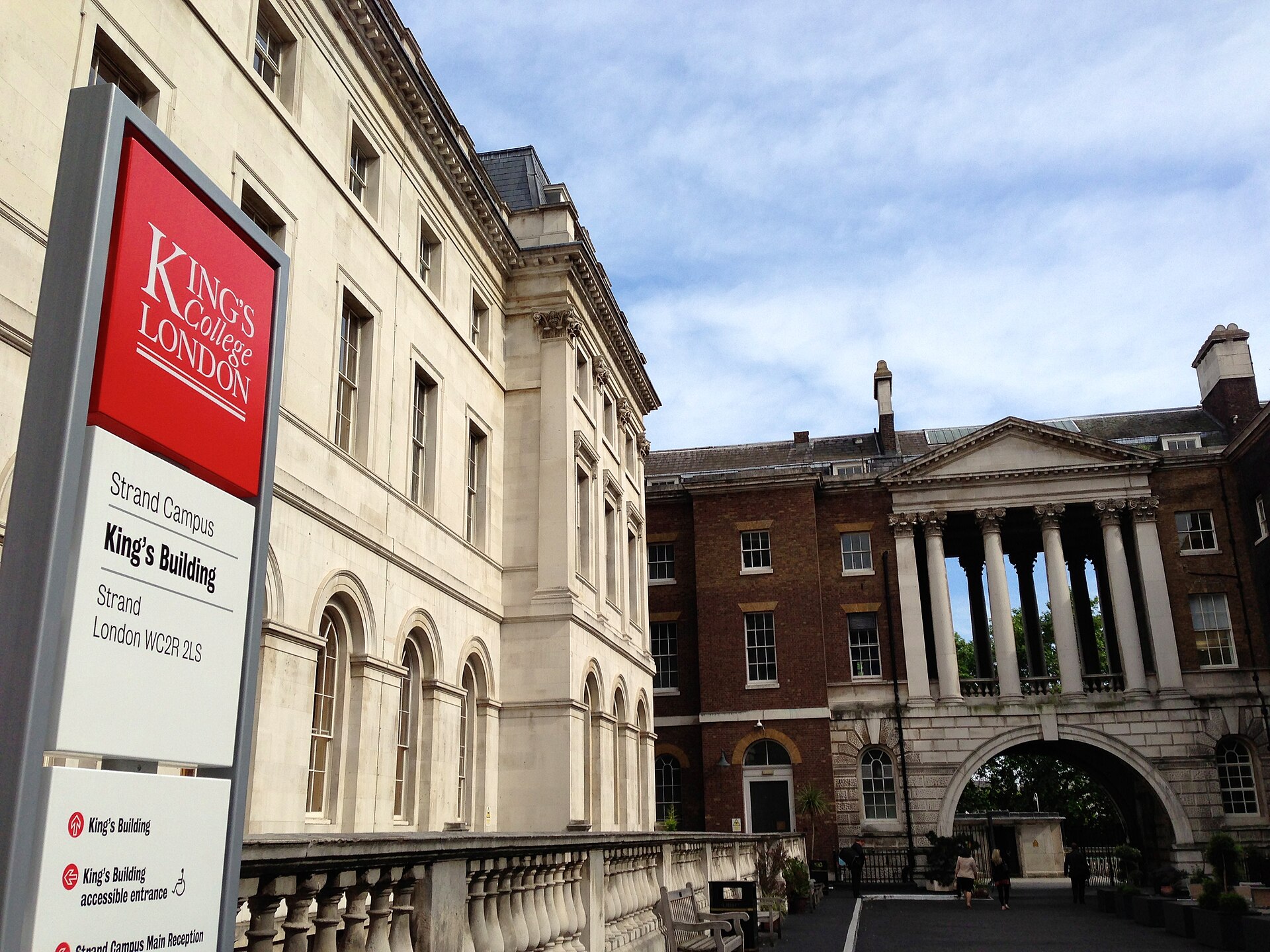
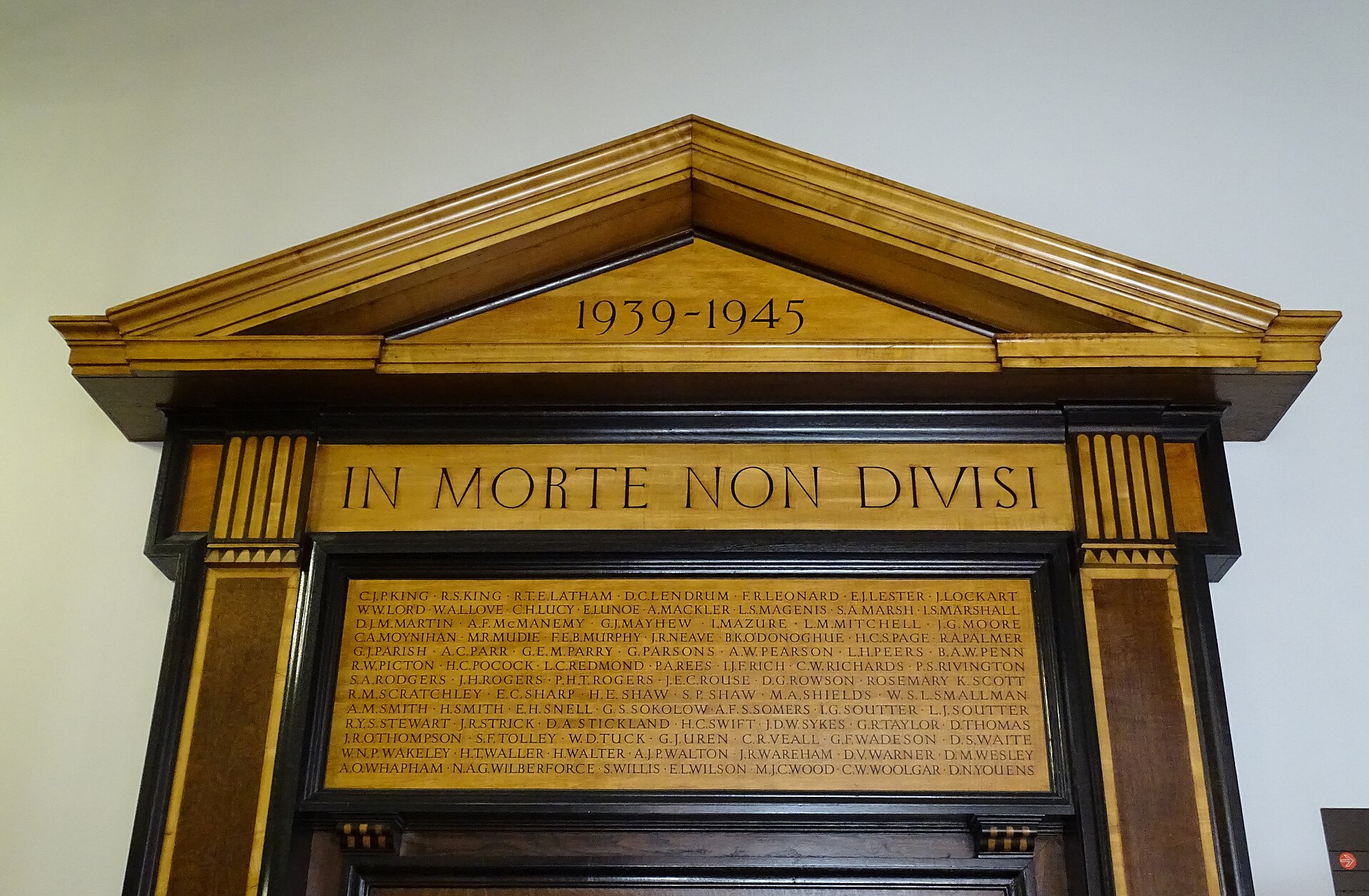
King's College London — campus in pictures
Real, freely-licensed photographs of the campus (via Wikimedia Commons).




Why King's College London — Research, London, and Professional Excellence
KCL is not a generalist university. It is an institution with extraordinary depth in specific areas — medicine, dentistry, law, war studies, and the humanities — where professional training and world-class research converge. For international students who want to study in one of the world's great cities at one of the UK's most respected institutions, King's is a rare and genuinely compelling choice.
KCL Acceptance Rate & KCL Admissions Profile
Stats
Profile Stats
Rea Vs Rd
KCL Admissions Requirements — Grades, Tests & UCAS Personal Statement
- IB: 35+ overall; competitive courses require 36–39+
- A-Level: AAA to A*A*A for top programmes
- Required subjects strictly enforced per programme
- GPA equivalent minimum 3.5 for international qualifications
- Medicine & Dentistry: UCAT required before October deadline
- Law: LNAT required by 31 December
- Dental Therapy & Hygiene: CASPer required
- Most other programmes: no admissions test required
- New 2026 format: three structured questions, ~1,000 chars each
- Total character allowance: 4,000 characters
- Academic reference submitted through UCAS by your school
- Single statement applies to all five UCAS choices simultaneously
KCL Application Components — UCAS, Personal Statement & Tests
King's College London accepts applications exclusively through UCAS. Below is every component of a complete KCL application — required and course-specific — with strategic notes for each.
KCL UCAS Personal Statement — Writing the Three Questions
Tips
Prompts
What KCL Admissions Officers Are Looking For
KCL's admissions process is primarily academic and programme-specific. Every application is evaluated by subject-specialist tutors against programme-specific criteria. Understanding what each programme's admissions tutor values — and why — is the foundation of a strong KCL application strategy.
KCL Fees, Aid & Scholarships for International Students
Studying at KCL as an international student is a significant financial commitment. Tuition fees of approximately $41,000 USD per year, combined with London's high cost of living, make careful financial planning essential before applying. Internal scholarship provision is limited — most significant funding comes from external sources.
All figures are approximate USD conversions of GBP costs. Actual costs depend on the exchange rate at the time of payment and vary by programme. Medicine and clinical programmes may carry higher tuition fees.
Stats
Contribution Tiers
| Note | Range | Percent | Percent Value |
|---|---|---|---|
| Most humanities, science, and social science programmes | 3-year degree | ~$186,000 total | 60 |
| Business, Law (LLB), some science programmes | 3-4 years | ~$186,000–$248,000 | 75 |
| Dentistry (BDS) | 5-year degree | ~$310,000 total | 90 |
| Medicine (MBBS) | 5–6 years | ~$310,000–$372,000 total | 100 |
Key Dates
Advantages
- UCAS gives equal consideration to all on-time applications — no advantage to submitting earlier within the window
- Medicine and Dentistry applicants who submit by 15 October are considered fully; late applications are not considered
- Applying to five UCAS choices simultaneously with one application and one personal statement
- Early preparation of UCAT, LNAT, and personal statement strengthens application quality
- Conditional offers received months before A-Level results; unconditional offers follow results confirmation
Disadvantages
- No REA/ED equivalent — there is no early round offering a higher acceptance rate advantage
- A single personal statement must serve all five UCAS choices simultaneously — it cannot be tailored per university
- Medicine requires the October deadline, which gives limited time after starting Year 13
- UCAT must be sat in summer/early autumn — missing the window prevents medicine application that cycle
- UCAS decisions are received over several months — there is no single notification day
KCL Interviews — Who Gets Interviewed and How to Prepare
Most KCL undergraduate programmes do not conduct interviews — academic performance and personal statement are the primary evaluation criteria. Medicine and Dentistry are significant exceptions, using Multiple Mini Interviews (MMIs). MMIs consist of a series of short stations (typically five to eight minutes each) assessing communication, ethical reasoning, empathy, and situational judgement. Preparation for MMIs is substantively different from preparation for a traditional interview.
Meta
Questions
KCL Campuses, Halls & Residential Life
King's College London has no single enclosed campus and no Harvard-style residential house system. Instead, it operates five distinct campuses embedded across central and south London — each associated with different faculties and NHS teaching hospitals. First-year students are guaranteed accommodation in halls of residence if they apply by the relevant deadline.
Houses
Lottery Steps
- First year: KCL guarantees accommodation to international first-year students who meet the application deadline
- Halls are located near the Strand, Waterloo, and Guy's campuses — and at other central London locations
- Second year and beyond: most students move to private accommodation in areas including Peckham, Brixton, Clapham, Bermondsey, and Bermondsey
- Accommodation is allocated by application — not by lottery or blocking group system
- International students are strongly advised to apply for accommodation at the earliest opportunity, as demand significantly exceeds supply
KCL Faculties & Undergraduate Programmes
- {"label":"Flagship department","value":"War Studies"}
- {"label":"World ranking — War Studies","value":"#1 globally"}
- {"label":"Notable subjects","value":"History, Philosophy, Music, Classics"}
- {"label":"Typical A-Level offer","value":"ABB–AAA"}
- {"label":"UK Law School Rank","value":"Top 5"}
- {"label":"Admissions test","value":"LNAT (by 31 December)"}
- {"label":"Notable specialisms","value":"International law, human rights, corporate"}
- {"label":"Typical A-Level offer","value":"AAA–A*AA"}
- {"label":"Programme length (Medicine)","value":"5–6 years"}
- {"label":"Admissions test","value":"UCAT (by October deadline)"}
- {"label":"NHS teaching hospitals","value":"King's College, Guy's, St Thomas'"}
- {"label":"Typical IB offer (Medicine)","value":"38+ with Chemistry HL"}
- {"label":"Flagship programme","value":"International Relations"}
- {"label":"Notable joint degrees","value":"PPE, Politics & International Relations"}
- {"label":"Proximity to government","value":"Walking distance to Parliament"}
- {"label":"Typical A-Level offer","value":"AAB–AAA"}
- {"label":"Required subject (CS/Maths)","value":"Mathematics A-Level or IB HL"}
- {"label":"Typical A-Level offer","value":"AAB–A*AA depending on programme"}
- {"label":"Location","value":"Strand campus"}
- {"label":"Key research areas","value":"Quantum tech, AI, materials science"}
- {"label":"AACSB Accreditation","value":"Yes"}
- {"label":"Location","value":"Strand campus"}
- {"label":"Key employer sectors","value":"City of London finance, consulting"}
- {"label":"Typical A-Level offer","value":"ABB–AAB"}
Research & Extracurricular Opportunities at KCL
Career Outcomes & KCL Alumni Network
KCL graduates enter professional life with the combination of a Russell Group degree, London-market exposure during their studies, and the professional credibility of one of the UK's top seven universities. For Medicine, Dentistry, Law, and Nursing, graduation leads directly into structured professional training programmes with clear career pathways.
Stats
Categories
Our KCL Admissions Track Record & Student Success Stories
Faqs
Does KCL consider SAT or ACT scores?+
KCL is a UK university that evaluates international students on qualifications equivalent to UK A-Levels or the International Baccalaureate. SAT and ACT scores are not required and do not play a primary role in KCL's admissions process. Students from US-curriculum schools are typically assessed on AP scores, IB results, or their national school-leaving qualification.
What is the new UCAS personal statement format for 2026 entry?+
From 2026 entry, UCAS replaced the single free-form personal statement with three structured questions: (1) Why do you want to study this course or subject? (2) How have your qualifications and studies helped you prepare? (3) What else have you done outside of education to prepare, and why is it useful? Each question allows approximately 1,000 characters, with a total of 4,000 characters across all three.
Do I need an admissions test to apply to KCL?+
It depends on your programme. Medicine and Dentistry require UCAT (completed before the October UCAS deadline). Law requires LNAT (by 31 December). Dental Therapy and Dental Hygiene require CASPer. Most other programmes at KCL do not require a separate admissions test. Always check your specific programme page.
Does KCL interview international undergraduate applicants?+
Most KCL undergraduate programmes do not conduct interviews. Medicine and Dentistry are significant exceptions — KCL uses Multiple Mini Interviews (MMIs) for medical and dental applicants. Some other health science programmes may also interview. Check your specific programme page on the KCL undergraduate prospectus.
What IB score do I need for King's College London?+
KCL's IB requirements vary by programme. The overall typical minimum is 35 points (from KCL's published data). Competitive programmes — including Medicine, Law, and Computer Science — typically require 36 to 39+ points with specific Higher Level subject requirements. Less competitive programmes may accept 32 points. Always check your specific programme page for the exact IB offer.
Does KCL offer financial aid or scholarships for international undergraduate students?+
KCL's internal scholarship provision for international undergraduates is limited. The university primarily directs students to external scholarship sources including Chevening (UK government), Commonwealth Scholarship Commission, and the GREAT Scholarship (British Council). Internal partial fee waivers may be available. KCL does not operate need-blind admissions or guarantee meeting full financial need for international students.
How does KCL compare to UCL and Imperial College London?+
KCL, UCL, and Imperial are all Russell Group universities ranked in the global top 50 and located in London. KCL is distinguished by its particular strength in medicine, dentistry, nursing, psychiatry, law, and humanities. For sciences and engineering, UCL and Imperial are typically ranked higher. KCL's War Studies department is the world's largest and most respected. The choice between them is primarily about programme strength, campus setting, and academic culture.
Is KCL's acceptance rate the same across all programmes?+
No. KCL's overall acceptance rate of 14% is an average across all programmes. Medicine and Dentistry are significantly more competitive. Some humanities and social science programmes have somewhat higher acceptance rates within KCL's portfolio. The 14% figure is a useful reference point but does not accurately represent the selectivity of any individual programme.
Book a Free KCL Admissions Strategy Session
In 60 minutes our KCL admissions specialists will evaluate your academic profile against your target programme's specific requirements, assess your personal statement strategy, identify UCAT or LNAT preparation needs, and build a realistic UCAS application plan.
- No commitment required
- KCL and Russell Group specialists with UK admissions expertise
- Personalised UCAS strategy — programme-specific, not generic advice
KCL Academic Requirements
KCL Academic Requirements — The Honest Breakdown for International Students
What grades, qualifications, and academic profile do KCL's admitted students actually need? And how do IB, A-Level, and other international curricula translate to KCL's programme-specific conditional offers?
Grades & Academic Standards
KCL and Academic Grades — What the Programme Requirements Show
KCL does not use a GPA system. Offers are made in terms of specific qualifications — A-Level grades or IB scores — in specific subjects. For international students whose systems report a GPA, the minimum GPA equivalent is 3.5, though competitive programmes require significantly above this.
Strong predicted grades in the right subjects are the baseline — not the differentiator. Within the academically qualified pool, super-curricular engagement and personal statement quality determine outcomes for the most competitive programmes.
Academic Context
Class Rank and School Context — How KCL Reads Academic Performance
KCL does not use class rank. Academic performance is evaluated through specific grade thresholds in specific subjects, within the context of each applicant's school curriculum and national education system. The programme's published entry requirements are the reference point — not a relative class rank.
SAT at UK Universities
SAT and KCL — What US-Curriculum Students Need to Know
KCL is a UK university and does not require or evaluate SAT scores as a primary admissions criterion. For students applying from a US-curriculum school, KCL's standard assessment route is through AP exam scores or IB Diploma results — not SAT.
| Label | Score | Percent |
|---|---|---|
| SAT requirement for KCL | None | 0 |
| AP exam equivalent (strong performance) | 5 in relevant subjects | 85 |
| IB route (preferred for US-curriculum international students) | 35+ points | 70 |
ACT at UK Universities
ACT Scores and KCL — Why They Are Not Part of the Equation
KCL does not require or evaluate ACT scores. The ACT is a US standardised test not used in UK university admissions. International students from US-curriculum schools should apply through AP, IB, or equivalent UK-recognised qualifications.
Metrics
Comparison Cards
Test Policy
KCL Test Policy — What 'Optional' Means in the UK Context
KCL's test policy is 'optional' in the sense that no standardised aptitude test (SAT/ACT equivalent) is required. However, course-specific admissions tests — UCAT, LNAT, CASPer — are mandatory where they apply and are not optional in any sense.
Submit Items
Withhold Items
Qualifications
A-Levels and IB at KCL — Specific Programme Benchmarks
- {"label":"Overall band (typical minimum)","value":"35 points"}
- {"label":"Competitive programmes (Medicine, Law, CS)","value":"36–39+ points"}
- {"label":"HL expectations","value":"6,6,6 to 7,7,6 depending on programme; specific HLs required per course"}
- {"label":"Medicine","value":"Chemistry HL required; Biology HL strongly expected; high UCAT score essential"}
- {"label":"Range across KCL programmes","value":"ABB (less competitive) to A*A*A (Medicine, top sciences)"}
- {"label":"Most Russell Group-standard KCL programmes","value":"ABB to AAA"}
- {"label":"Required subjects","value":"Specified per programme — always check course page"}
- {"label":"Excluded subjects","value":"General Studies, Critical Thinking, Thinking Skills, Global Perspectives"}
AP Examinations
AP Exams at KCL — How US-Curriculum Students Are Evaluated
KCL does not evaluate AP courses in the same systematic way as US universities. AP results can serve as supporting evidence for students from US-curriculum international schools, typically on a subject-by-subject basis as part of the international qualifications assessment.
Academic Rigour
Rigour of Secondary School Record — KCL's Core Academic Criterion
KCL explicitly evaluates the rigour of your secondary school academic record — specifically, whether you have studied the right subjects at the right level for your intended programme. Unlike holistic US admissions, KCL's rigour evaluation is subject-specific and non-negotiable for most programmes.
Taking the required subjects at a competitive level — and performing well in them — is the non-negotiable foundation of every KCL application.
Subject Preparation
Subject Preparation — What KCL Expects by Programme Area
KCL's academic expectations vary significantly by faculty and programme. The expectations below reflect what the most competitive KCL programmes look for from international applicants in terms of subject preparation and academic depth.
Language Proficiency
English Language Requirements for International KCL Applicants
KCL uses a banded system for English language requirements, with the band required depending on your specific programme. Minimum requirements are: IELTS Academic 6.5 overall, TOEFL iBT 100, or Duolingo 120. All results must be from a single test sitting and no more than two years old.
KCL enforces English language requirements strictly. Submitting IELTS scores below the required band — even by one mark — will result in offers being withdrawn or visa applications failing. Do not underestimate this requirement: London academic and professional environments are high-register English environments, and KCL's standard is set accordingly.
By Programme
Academic Requirements by KCL Programme — Benchmarks and Signals
KCL makes programme-specific offers — you apply to a named programme, not to a college. The requirements below are illustrative ranges; always check the official programme page for the exact offer for your entry year.
| Signals | Expectation | Concentration |
|---|---|---|
| UCAT 680+; Chemistry & Biology HL; care experience | Chemistry A-Level or IB HL required; Biology strongly expected; IB 38+ | Medicine (MBBS) |
| UCAT 660+; care experience; Chemistry HL | Chemistry A-Level or IB HL required; IB 36+; A-Level AAA | Dentistry (BDS) |
| LNAT 27+; strong essay performance; legal reading | Essay-based A-Levels; IB 36+; A-Level AAA | Law (LLB) |
| Mathematics HL 7; programming projects; UKMT | Mathematics A-Level or IB HL required; IB 35+; A-Level ABB–AAB | Computer Science |
| Policy engagement; MUN; political reading | Humanities/social science profile; IB 35+; A-Level ABB–AAA | International Relations |
| War Studies reading; policy analysis; global affairs engagement | Essay-based subjects; IB 35+; A-Level ABB–AAA | War Studies |
| Analytical essay subjects; critical reading; argumentation | History, English, Politics; IB 33+; A-Level ABB | History / Philosophy |
| Care experience; Biology A-Level; patient-facing volunteering | Biology A-Level or IB HL expected; IB 33+; A-Level BBB | Nursing |
International Education Systems
KCL and International Education Systems — How Your Curriculum Is Evaluated
Roadmap
Building an Academic Profile for KCL — What to Do at Each Stage
- Research KCL's programme-specific entry requirements now — subject choices made at GCSE/MYP stage constrain A-Level or IB HL options.
- For Medicine: prioritise Chemistry, Biology, Mathematics at IGCSE/MYP level.
- For Law: develop strong essay-writing habits; prioritise History, English, and analytical subjects.
- For STEM: Mathematics foundation is non-negotiable from Year 9 onwards.
- Start engaging with your intended subject beyond the school curriculum.
- For Medicine: arrange care or clinical observation experience.
- For Law: read legal theory, engage with current legal cases and policy debates.
- For all programmes: build a reading log of subject-specific material that will inform your personal statement.
- Secure the predicted grades your target KCL programme requires — these must be credible, not aspirational.
- If applying to Medicine/Dentistry, begin UCAT preparation in Year 12.
- If applying to Law, register for LNAT and practise analytical reading and essay writing.
- Begin English language test (IELTS/TOEFL) preparation if English is not your first language.
- UCAT testing window: July–August (must be completed before October for Medicine/Dentistry).
- Begin drafting all three UCAS personal statement questions.
- Research your specific KCL programme thoroughly — admissions tutors expect programme-specific knowledge in the personal statement.
- Medicine and Dentistry: submit by 15 October — hard deadline with no exceptions.
- Law: complete LNAT by 31 December.
- All other programmes: submit by 29 January standard deadline.
- Finalise personal statement, confirm academic reference, upload English language results if required.
Common Pitfalls
Academic Mistakes That Cost KCL Applications — And How to Avoid Them
Real Outcomes
What Academic Profiles Tychr's KCL-Admitted Students Had
The following profiles represent the academic backgrounds of students Tychr has supported through successful KCL applications. They illustrate the range of academic preparation that works — and what differentiated each application within the qualified pool.
Faqs
Does KCL use UCAS tariff points to make offers?+
No. KCL explicitly does not use UCAS tariff points. Entry requirements are expressed in specific qualifications and grade levels. A tariff-based calculation that meets another university's threshold does not translate to a KCL offer.
What IB score do I need for KCL?+
The typical minimum IB band is 35 points, but this varies significantly by programme. Medicine requires 38 or more with Chemistry HL and Biology HL. Law typically requires 36+. Humanities and social science programmes may accept 33–35. Always check the specific programme page for the exact offer for your entry year.
Are General Studies or Critical Thinking A-Levels counted by KCL?+
No. KCL does not count General Studies, Critical Thinking, Thinking Skills, or Global Perspectives A-Levels. Only academic A-Level subjects contribute to KCL's three-A-Level requirement.
Can I apply to two different programmes at KCL through UCAS?+
Yes. UCAS allows up to five choices across all UK universities. You can use more than one choice for different KCL programmes. However, be aware that your single personal statement must work for all choices simultaneously — applying to Medicine and Law at KCL with one statement is strategically difficult.
Does KCL accept predicted IB or A-Level grades, or must I have achieved results?+
KCL makes conditional offers based on predicted grades for applicants still studying. Your school submits predicted grades through UCAS as part of your reference. You receive a conditional offer before results — and the condition is met or not on results day. Applicants with achieved results can apply to KCL directly through UCAS with a full offer possible.
Cost & Financial Aid
The Real Cost of KCL for International Students — And How to Fund It.
Studying at King's College London as an international student costs approximately $62,000 USD per year. Internal scholarship funding is limited. Here is exactly what it costs, what external funding is available, and how to plan your finances before you apply.
Cost Transparency
What KCL Actually Costs — The Full Annual Figure
KCL's tuition fees are set by the university — not by UK government regulation, since international students are not subject to the UK domestic fee cap. Fees are reviewed annually and typically increase each year. Medicine and clinical programmes may carry higher tuition fees than the standard international undergraduate rate.
KCL Aid Policy
KCL Financial Aid Policy — What Exists and What Does Not
KCL's internal financial support for international undergraduates is limited. The university does not operate a need-blind admissions policy and does not guarantee meeting any portion of international students' demonstrated financial need. Admissions and funding are entirely separate matters at KCL.
Why KCL Costs What It Does
Why KCL Costs What It Does — The Honest Explanation
Funding Application Walkthrough
Applying for KCL Funding — The Process Step by Step
Securing funding for a KCL education as an international student requires a multi-source approach. Internal KCL scholarships are limited and competitive. External schemes — especially home-country government programmes — are the primary funding source for most international KCL undergraduates.
- Visit kcl.ac.uk/study/funding
- Search by nationality, faculty, and study level
- Note application deadlines — some require application at offer stage
- Chevening Scholarship (UK Government — primarily postgraduate but check for undergraduate funding)
- GREAT Scholarship (British Council — check for your country and level)
- Commonwealth Scholarship Commission — for Commonwealth citizens
- Your home country's government outbound scholarship scheme
- India: ICCR (Indian Council for Cultural Relations)
- China: CSC (China Scholarship Council)
- Indonesia: LPDP (Indonesia Endowment Fund for Education)
- Malaysia: JPA / MARA
- Nigeria: various government and state bursary schemes
INTERNATIONAL STUDENT AID
Financial Aid for International KCL Students — The Full Picture
KCL's financial aid provision for international undergraduates is substantively different from the need-based aid programmes at top US universities. Understanding what exists — and what does not — is essential for financial planning.
FUNDING SCENARIOS
What Financial Support Looks Like at KCL — Realistic Scenarios
KCL Funding by Scenario
Internal KCL funding amounts are illustrative. Actual award availability changes each year. Check kcl.ac.uk/study/funding for current internal scholarship offerings.
Most international undergraduate students at KCL self-fund the majority of their costs. The most significant funding available is through government-to-government scholarship schemes, not KCL's own financial aid. Plan finances on the basis that you will receive no KCL funding, and treat any award as a supplement.
| Grant | Income | Contribution |
|---|---|---|
| Up to full cost (tuition + living) | Eligible government scholarship recipients | £0 |
| £5,000–£10,000 per year (partial fee waiver) | Eligible KCL internal award recipients | Remainder of ~$62,000/year |
| Variable — depends on scheme | GREAT Scholarship / British Council award | Varies by country and scheme |
| None — full self-funding | Most international KCL students | ~$62,000/year in full |
Table Headers
QUALIFICATION CRITERIA
KCL Scholarships — What Exists and Who Qualifies
KCL does not separate merit scholarships from need-based aid in the way US universities do. The limited internal funding available is typically awarded on a combination of academic merit and financial need criteria specific to each award — not through a single unified programme.
EXTERNAL FUNDING
External Scholarships — The Primary Funding Route for International KCL Students
For most international undergraduate students, the primary route to significant financial support at KCL is through external scholarship programmes. These are listed in KCL's funding database and administered independently of UCAS and KCL's admissions process.
DEBT & LOANS
KCL and Student Loans — What International Students Need to Know
KCL does not operate a no-loan policy. The university does not issue financial aid packages and therefore does not control whether international students take loans. Loan availability depends on the student's home country and personal circumstances — not on KCL's institutional policy.
PART-TIME WORK
Working While Studying at KCL — What International Students Can Do
KCL does not operate a formal work-study programme equivalent to the US system. However, international students on a UK Student Visa are typically permitted to work up to 20 hours per week during term time and full-time during official holidays.
- Student ambassador and campus tour guide roles through KCL Student Services
- Library and administrative roles across KCL campuses
- Research assistant positions in faculty labs (STEM and social science)
- KCL Students' Union (KCLSU) catering, bars, and event staffing
- Internship and placement roles in London employers (term-time, part-time)
- NHS volunteering and healthcare assistant roles (health science students)
BENCHMARKING
KCL vs. Other Universities — Financial Aid Comparison
| Policy | School | No Loans | Typical Cost |
|---|---|---|---|
| Need-blind (global); full-need met; no loans | Harvard / Princeton / MIT | Yes | $0 (for qualifying low-income families) |
| Need-aware (international); significant aid available | Yale / Columbia / Dartmouth | Partial | $10,000–$30,000/year |
| No institutional aid for internationals; external scholarships | KCL / UCL / Imperial | N/A — no institutional aid programme | ~$62,000/year (full cost for most) |
| Domestic-fee-capped for UK students; international pays market rate | Oxbridge (Oxford / Cambridge) | N/A | ~$45,000–$65,000/year (international) |
| Low/no tuition; cost of living applies | Top German / Dutch public universities | N/A | ~$12,000–$20,000/year (living + modest fees) |
COST ANALYSIS
KCL vs. Alternatives — What You Actually Pay
For low-income international students, Harvard with a $0 expected contribution is genuinely less expensive than KCL at $62,000/year. The sticker price at a US need-blind university is not the real price. The decision between KCL and a US alternative should account for financial aid — not just rankings and programme prestige.
| Policy | School | Contribution | Four Year Cost |
|---|---|---|---|
| Need-blind, full-need met, no loans | Harvard (family income <$85K/yr) | ~$0/year | ~$0 |
| Need-blind, full-need met, no loans | Princeton (family income <$95K/yr) | ~$0/year | ~$0 |
| No institutional aid; external scholarships only | KCL (no scholarship) | ~$62,000/year | ~$186,000 |
| No institutional aid; partial fee waiver | KCL (with internal partial award) | ~$55,000–$58,000/year | ~$165,000–$174,000 |
| Full government scholarship | KCL (Chevening / home-govt scholarship) | ~$0/year (if full scholarship) | ~$0 (if maintained) |
| Low tuition; cost of living | Top German public university | ~$10,000–$15,000/year | ~$40,000–$60,000 |
FINANCIAL QUERIES
Financial Concerns at KCL — Who to Contact and What to Do
KCL does not have a financial aid appeals process in the US sense because it does not issue need-based aid packages. However, if an internal scholarship offer has been received and circumstances have materially changed, students can contact KCL Student Finance to discuss their situation.
There is no formal aid appeal process at KCL for international undergraduates because there is no baseline aid package to appeal. If your financial circumstances change significantly after enrolling — unexpected family hardship, currency crisis, loss of family income — KCL's Student Advice and Wellbeing team can discuss available hardship funds and alternative support options.
How To Appeal
- Contact KCL Student Finance for queries about tuition fee payment plans or deferrals
- Contact KCL Student Advice and Wellbeing for hardship fund applications if circumstances change during enrolment
- For scholarship queries, contact the specific scholarship awarding body — not KCL, for externally-administered awards
When To Appeal
- Family financial circumstances have changed materially since confirming your KCL place
- A currency devaluation in your home country has significantly altered the real cost of your fees
- You have been awarded an external scholarship and want to understand how it interacts with any KCL award
- You need to discuss a tuition fee payment plan for the current academic year
TIMELINE & PLANNING
Planning for KCL Costs — What to Do and When
UCAS Personal Statement Strategy
The KCL Personal Statement — Everything You Need to Write Three Questions That Work.
A complete guide to the 2026 UCAS personal statement format, what KCL admissions tutors read for, and the specific strategies that produce personal statements that open the door to the UK's most competitive programmes.
The 2026 UCAS Personal Statement — Format, Structure, and What Changed
From 2026 entry, UCAS fundamentally changed its personal statement format. The single 4,000-character free-form essay was replaced by three structured questions, each with approximately 1,000 characters (around 150 words). The total character allowance remains 4,000 characters. Each question has a minimum of 350 characters.
This change is significant for KCL applicants. The old format rewarded students who could write a seamless 4,000-character narrative combining motivation, preparation, and experience into one flowing text. The new format requires precision: each box is read separately, each question has a distinct purpose, and spilling content from one question into another — or repeating yourself across boxes — wastes the limited space. Every sentence in every box must earn its place.
Your UCAS personal statement is read by every university on your five-choice list simultaneously — not just KCL. Do not mention KCL by name. Write a statement that demonstrates genuine engagement with your chosen subject. This will serve all five institutions reading it.
The Three UCAS Questions — Official Prompts and Strategic Guidance
These are the three questions that make up the 2026 UCAS personal statement. Each is distinct and must be answered as a self-contained response — do not write one continuous essay split into three parts.
UCAS Personal Statement Strategy — What KCL Admissions Tutors Actually Read For
KCL admissions tutors are subject specialists — a Medicine admissions tutor is a clinician or medical researcher; a Law admissions tutor is a legal scholar; a War Studies admissions tutor is a military historian or strategic analyst. When they read your personal statement, they are evaluating whether you understand what their field actually involves and whether you have begun to engage with it seriously at a level that suggests readiness for university study.
The most common strategic mistake in KCL personal statements is treating the statement as a character reference — a document about who you are — rather than an academic argument about why you are ready to study a specific subject. KCL admissions tutors are not asking 'who are you?' They are asking 'do you understand what this subject is, and have you begun to engage with it at an appropriate level?' Your three answers should collectively demonstrate: genuine intellectual engagement with the subject, evidence of preparation beyond the school syllabus, and the analytical communication skills expected at university level.
The UCAS personal statement is a single document applied to up to five UCAS choices. If your five choices span significantly different subjects — say, Medicine at KCL and Management at another university — you face a fundamental strategic problem: a statement that serves Medicine admissions cannot simultaneously serve Management admissions. Applying within a single subject area is always the stronger strategic position.
Question-by-Question Strategy — How to Maximise Each of Your Three Boxes
Choosing What to Write About — The 'Only You' Test for KCL Personal Statements
With approximately 150 words per question, every sentence must be specific, relevant, and original. Apply the following test to every paragraph: could any other applicant to your KCL programme have written this? If yes — if the content is generic enthusiasm for medicine, or a standard description of work experience, or a sentence any law applicant could have written — rewrite it. The most memorable personal statements are those where the intellectual engagement is clearly genuine and specific.
For KCL Medicine applicants: specific clinical experiences with genuine reflection on what you observed about the doctor-patient relationship, the limits of medicine, or the ethical complexity of clinical decision-making. For KCL Law applicants: a specific case, statute, or legal argument you engaged with and found genuinely intellectually interesting — not just morally important, but intellectually complex. For KCL Humanities and Social Sciences: a specific text, argument, or historical problem that disrupted your prior understanding and that you have continued to think about.
Common UCAS Personal Statement Mistakes — What Undermines KCL Applications
- Writing about why you want to study at KCL rather than why you want to study the subject — KCL is one of up to five universities reading your statement simultaneously, and the focus must be the discipline.
- Writing one continuous essay split across three boxes — admissions tutors read each question independently; a single flowing text split into three parts fails to answer each question on its own terms.
- Listing super-curricular activities without analysis — Question 3 asks what you did and why it deepened your motivation; not just what you did.
- Generic enthusiasm statements that could apply to any applicant — 'I have always been passionate about helping people' or 'medicine combines science and humanity' are statements every Medicine applicant makes; they add nothing.
- Repeating qualification information that is already on your UCAS form — Question 2 asks for skill and intellectual reflection, not a repeat of your predicted grade list.
- Mentioning KCL by name — your statement is read by all five UCAS institutions simultaneously; naming KCL signals to the others that you are prioritising a competitor.
- Not having the statement critically reviewed by a subject-expert teacher — particularly for Medicine and Law, expert feedback on the intellectual content of the statement (not just the writing) is invaluable.
- Applying to radically different subjects across your five UCAS choices and trying to address all of them in one personal statement — focus on one subject area; breadth of subject choices undermines personal statement coherence.
UCAS Personal Statement — Frequently Asked Questions
How many characters is each UCAS question for 2026 entry?+
Each of the three UCAS questions for 2026 entry allows approximately 1,000 characters (around 150 words). The total character limit across all three questions is 4,000 characters, with a minimum of 350 characters per question. This replaced the previous single 4,000-character free-form format.
Should I write one essay and split it across the three questions?+
No. Each question should be answered as a self-contained response. Admissions tutors read each box separately. Writing one continuous essay split into three parts will make your responses incoherent, leave questions partially unanswered, and signal that you have not read the instructions carefully.
Can I mention KCL by name in my personal statement?+
You can, but it is almost never strategically useful. Your UCAS personal statement is read by every university you apply to, not just KCL. Mentioning KCL by name means the other four institutions read a statement that appears to prioritise a competitor. Focus entirely on the subject — not the institution.
How important is the personal statement relative to grades for KCL Medicine?+
For Medicine at KCL, grades and UCAT performance are the primary filters that determine interview eligibility. Within the pool of academically qualified applicants with UCAT scores above the threshold, the personal statement and reference become significantly more important as differentiating factors at interview stage. A weak personal statement from a high-UCAT applicant is noticed.
Does KCL give feedback on rejected personal statements?+
No. Like most UK universities, KCL does not provide individual feedback on unsuccessful applications. You will receive notification through UCAS Hub, but specific reasons for the decision are not disclosed.
What do KCL Medicine admissions tutors look for in the personal statement?+
KCL Medicine admissions tutors look for evidence that you understand what clinical medicine involves, not just what it leads to. This means specific engagement with clinical settings (observation, care experience) with genuine reflection on what you observed, awareness of the ethical and professional dimensions of medicine, evidence of reading in medical science or medical ethics, and clarity about why medicine rather than another health science. Generic statements about 'wanting to help people' are ineffective. Specific, reflectively described clinical experience is essential.
Does the character limit differ between the three questions?+
The 2026 UCAS format allocates approximately 1,000 characters per question, with each having a minimum of 350 characters. You do not have to use the full 1,000 characters for every question — but given the competitive context of KCL admissions, using the available space fully and efficiently is strongly advisable.
Should I address all the universities on my UCAS list in my personal statement?+
No — and attempting to do so is one of the most common strategic errors. Your personal statement should focus on the subject, not on individual institutions. A statement that tries to appeal to five different university cultures will be generic and unfocused. A statement that makes the strongest possible academic case for your readiness to study a specific subject will serve all five institutions far better than one that tries to personalise for each.
Courses — schools, degrees & intake
64 degrees across 9 groupings.
King's Business School · 16 degrees
Accounting & Finance BSc
Accounting & Finance with Year in Industry BSc
Business Management BSc
Business Management with Year in Industry BSc
Economics BSc
Economics & Management BSc
Economics & Management with Year in Industry BSc
Data Analytics for Business & Finance BSc
Data Analytics for Business & Finance with Year in Industry BSc
International Business Analytics & Management BSc
International Management BSc
Management & Modern Languages BA
Marketing BSc
Marketing with Year in Industry BSc
Computer Science with Management & a Year in Industry BSc
Mathematics with Management & Finance BSc
The Dickson Poon School of Law · 12 degrees
Law LLB
Law with Criminology LLB
Politics, Philosophy & Law LLB
English Law & French Law LLB and Master 1 en Droit
English Law & German Law LLB and LLM or First State Exam
English Law & Hong Kong Law LLB and JD
English Law & Spanish Law LLB and Grado en Derecho
English Law & American Law LLB and JD
Law with Transnational Legal Studies LLB
Law LLB with a Year on Exchange in Singapore
Law with a Year Abroad LLB
Politics, Philosophy & Law with a Year Abroad LLB
Faculty of Natural, Mathematical & Engineering Sciences · 12 degrees
Artificial Intelligence BSc
Artificial Intelligence MSci
Artificial Intelligence & Philosophy BSc
Artificial Intelligence with a Year in Industry BSc
Computer Science BSc
Computer Science MSci
Mathematics BSc
Mathematics MSci
Physics BSc
Physics MSci
Chemistry BSc
Electronic Engineering BEng
Faculty of Life Sciences & Medicine · 8 degrees
Medicine MBBS
Anatomy, Developmental & Human Biology BSc
Biochemistry BSc
Biomedical Engineering BEng
Biomedical Engineering MEng
Biomedical Science BSc
Neuroscience BSc
Pharmacology BSc
Faculty of Dentistry, Oral & Craniofacial Sciences · 1 degrees
Dentistry BDS
Institute of Psychiatry, Psychology & Neuroscience · 1 degrees
Psychology BSc
Faculty of Arts & Humanities · 6 degrees
Ancient History BA
English BA
English Language & Linguistics BA
History BA
Music BMus
Philosophy BA
Faculty of Social Sciences & Public Policy · 5 degrees
International Relations BA
War Studies BA
War Studies & History BA
Geography BSc
Global Health & Social Medicine BA
Florence Nightingale Faculty of Nursing, Midwifery & Palliative Care · 3 degrees
Nursing BSc (Adult)
Nursing BSc (Mental Health)
Midwifery BSc
Want your real chances at King's College London?
Create a free TYCHR account for your personalised admit-chance, a shortlist you can track, exact entry requirements, and essay + counselling help.