King Abdulaziz University
Jeddah, Saudi Arabia · Urban
Navigating the journey to one of the Arab world's premier research universities requires understanding a system that is academically rigorous, culturally distinct, and strategically positioned at the heart of the Gulf's most ambitious transformation.
Campus
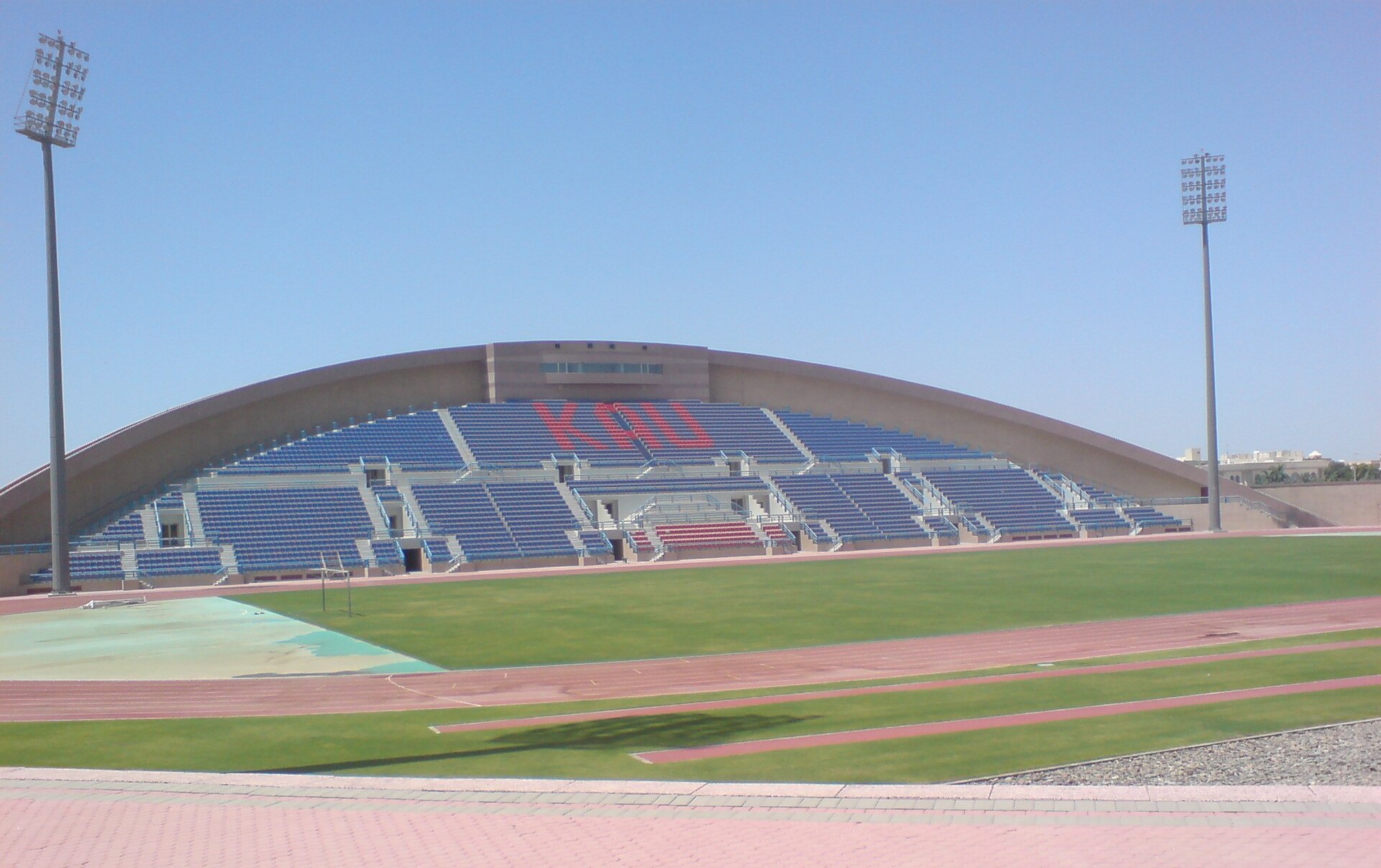
King Abdulaziz University — campus in pictures
Real, freely-licensed photographs of the campus (via Wikimedia Commons).





Why King Abdulaziz University — Arab World Prestige, Research & Gulf Career Access
KAU is not merely the second-ranked university in Saudi Arabia — it is the institution that has most consistently driven the Kingdom's research output, shaped its medical and engineering professions, and connected international scholarship with the Arab and Islamic intellectual tradition. For students seeking a globally ranked education at exceptional value, with direct access to the Gulf's economic transformation, it is a compelling and underrated destination.
KAU Acceptance Rate & Admissions Profile
Stats
Profile Stats
Rea Vs Rd
KAU Admissions Requirements — Academics, Language & Credential Requirements
- High-distinction results in secondary school are the primary criterion
- Competitive programmes (Medicine, Engineering) demand top-percentile grades
- Course rigour in relevant subjects matters as much as overall GPA
- Attested transcripts from all secondary schools required
- IELTS Academic minimum: 5.5 overall (English-medium programmes)
- TOEFL iBT minimum: 70 (English-medium programmes)
- Duolingo English Test minimum: 95
- Arabic proficiency required for Arabic-medium undergraduate programmes
- IB Diploma: recognised — strong HL performance in relevant subjects expected
- A-Levels: well understood by Saudi admissions offices; three strong subjects minimum
- National certificates (CBSE, FSC, Thanaweya): require Saudi MoE equivalency
- All qualifications need official attestation and Ministry of Education equivalency approval
KAU Application Components — Direct Application, Documents & Process
KAU operates a direct application system — applicants apply through the university's own online portal. Below is every component of a complete KAU international application, with strategic notes for each.
KAU Application Statements — Writing for a Saudi Direct-Apply System
Tips
Prompts
What KAU Admissions Looks For in International Applicants
KAU evaluates international applicants holistically but with a primary emphasis on academic record and programme fit. Understanding what the admissions process prioritises — and preparing accordingly — is the foundation of a strong application.
KAU Funding & Scholarships for International Students
KAU is one of the most affordable globally ranked universities in the world. As a Saudi public institution heavily subsidised by the state, it charges international students approximately $7,500 per year in tuition — far below comparable Western research universities. Scholarships are available but competitive; most international students are self-funded.
Cost figures are approximate USD equivalents from KAU's published data. Individual situations vary. Confirm all costs and scholarship availability directly with KAU's International Students Office.
Stats
Contribution Tiers
| Note | Range | Percent | Percent Value |
|---|---|---|---|
| Saudi bilateral scholarship — fully funded including living costs | Bilateral Agreement Countries | 100% | 100 |
| IsDB scholarship for member-country students — covers tuition and subsistence | IsDB Member Countries | 80% | 80 |
| KAU merit scholarship — partial tuition support for outstanding research students | KAU Merit Awards | 40% | 40 |
| Faculty research assistantship for PhD and research Master's students | Research Assistantships | Variable | 30 |
| Full tuition plus living expenses self-funded — the baseline scenario | Self-Funded | 0% aid | 0 |
Key Dates
Advantages
- Main intake has the broadest programme availability
- September start aligns with most international academic calendars
- More time to prepare documents during summer break
- Larger cohort of incoming international students
- Best opportunity to connect with new student orientation programmes
Disadvantages
- Application window closes in July — Ministry of Education equivalency process must begin months earlier
- Competition is highest in the main intake
- Less time between receiving offer and visa processing for September start
- Some popular programmes may reach capacity before the window closes
- Saudi summer heat can be intense for students arriving in August
KAU Interview Process — What to Expect
KAU does not conduct formal interviews for most undergraduate applicants. The application is evaluated on documents — academic records, language scores, and the credential package. For some graduate programmes and competitive professional faculties, an informal or formal interview may be part of the selection process. PhD applicants should arrange a meeting with their intended supervisor before the formal application, which functions as the most important 'interview' in the process.
Meta
Questions
KAU Campus & Residential Life
King Abdulaziz University operates on a gender-segregated campus model consistent with Saudi cultural norms — a fundamental aspect of life at KAU that all international applicants should understand clearly before applying. Male and female students have separate campuses with parallel facilities. Both are well-equipped with libraries, sports facilities, dining, and residential accommodation.
Houses
Lottery Steps
- All admitted students are assigned to gender-appropriate campus facilities
- On-campus residential accommodation is available for international students on both male and female campuses
- Dormitories are allocated based on programme and year of study
- International students are encouraged to take on-campus housing to minimise off-campus logistics
- The medical campus includes hospital-adjacent housing for clinical training students
KAU Faculties & Academic Programmes
- {"label":"Key disciplines","value":"Civil, Mechanical, Electrical, Chemical, Computer"}
- {"label":"Research centres","value":"Multiple accredited labs"}
- {"label":"Programme language","value":"Primarily Arabic; some English postgraduate"}
- {"label":"Entrance selectivity","value":"High — requires strong Math and Physics"}
- {"label":"Programme","value":"MBBS (6 years)"}
- {"label":"Teaching hospital","value":"KAU Medical Centre"}
- {"label":"Language","value":"Arabic and English"}
- {"label":"Selectivity","value":"Highest at KAU"}
- {"label":"Unique advantage","value":"Direct Red Sea coral reef access"}
- {"label":"Research focus","value":"Marine biodiversity, aquaculture, climate impact"}
- {"label":"Field stations","value":"Red Sea coastline facilities"}
- {"label":"Global standing","value":"Internationally recognised research output"}
- {"label":"Programmes","value":"Business Administration, Economics, Islamic Economics"}
- {"label":"Distinctive offering","value":"Islamic Economics (unique globally)"}
- {"label":"Language","value":"Arabic; some English postgraduate"}
- {"label":"Industry links","value":"Saudi banks, Vision 2030 financial sector"}
- {"label":"Key programmes","value":"CS, Information Systems, AI, Cybersecurity"}
- {"label":"Growth sector","value":"Fastest growing programme in Saudi Arabia"}
- {"label":"Language","value":"Arabic; postgraduate increasingly English"}
- {"label":"Outcomes","value":"Strong Saudi tech sector placement"}
- {"label":"Programme","value":"PharmD (6 years)"}
- {"label":"Selectivity","value":"High — requires strong Chemistry and Biology"}
- {"label":"Clinical training","value":"KAU hospital network"}
- {"label":"Language","value":"Arabic and English"}
Research & Extracurricular Opportunities at KAU
Career Outcomes & KAU Graduate Network
KAU graduates enter a Saudi economy undergoing its most significant transformation in decades. Vision 2030 is creating sustained demand across technology, healthcare, energy, finance, and infrastructure — and KAU's national reputation and government connections position graduates directly inside that opportunity. For international graduates, positions in multinational firms operating in the Kingdom and across the Gulf Cooperation Council are common pathways.
Stats
Categories
Tychr's KAU & Gulf University Admissions Track Record
Faqs
Can international students apply to KAU?+
Yes. KAU actively enrols international students from across the Muslim world and beyond. International students make up approximately 5% of the total 80,000-student population. Both undergraduate and postgraduate programmes are open to international applicants.
What is the application fee at KAU?+
There is no application fee to apply to King Abdulaziz University. This removes one of the most common financial barriers to applying internationally — you can apply without any upfront cost.
What language are courses taught in?+
Many undergraduate programmes — particularly in Arts, Humanities, Islamic Studies, and some Sciences — are taught in Arabic. A growing number of postgraduate and professional programmes are offered in English. Always check the specific faculty and programme page for language of instruction before applying, as this varies significantly between programmes.
Does KAU have gender-segregated campuses?+
Yes. KAU operates separate campuses for male and female students, consistent with Saudi cultural norms. Both campuses have full academic and residential facilities. This is a fundamental feature of studying at KAU that international students should understand and accept before applying.
How do I get my qualifications recognised for KAU?+
International qualifications must be attested by your country's Ministry of Education and the Saudi Arabian embassy in your country, then receive equivalency approval from the Saudi Ministry of Education. This process can take 6–12 weeks, sometimes longer. Start this process as soon as you receive your final results — it is the most common cause of delayed applications.
Is Saudi Arabia a good place to study as an international student?+
Saudi Arabia is a safe and rapidly modernising country. Jeddah in particular has a large expatriate community and a cosmopolitan character. Since Vision 2030 launched, social policies have liberalised considerably — entertainment venues, mixed-gender public spaces, and cultural activities have expanded. Students should research current entry requirements, cultural expectations, and visa regulations for their nationality.
Are there scholarships for international students at KAU?+
Yes, but they are limited. The most reliable routes are: (1) bilateral education scholarships through your home government's agreement with Saudi Arabia — check with the Saudi embassy in your country; (2) Islamic Development Bank scholarships for students from IsDB member countries; (3) faculty research assistantships for postgraduate students. Do not rely on scholarship funding without a self-funded backup plan.
What is the acceptance rate at KAU?+
KAU admits approximately 25% of applicants overall. However, acceptance rates vary significantly by programme — Medicine, Pharmacy, and Engineering are substantially more selective than this average. International students compete within the 5% international allocation.
Book a Free KAU Admissions Strategy Session
In 60 minutes our KAU admissions specialists will evaluate your academic profile, map your credential attestation timeline, develop your motivation letter strategy, and identify the scholarship routes most relevant to your background and target programme.
- No commitment required
- Gulf & Saudi admissions specialists
- Personalised credential and statement strategy
KAU Academic Requirements
KAU Academic Standards — The Honest Breakdown for International Students
What academic profile does KAU expect? How does it evaluate IB, A-Levels, and other international qualifications? And what does it take to compete for Medicine, Engineering, and Marine Sciences?
GPA & Academic Performance
KAU and Academic Performance — What the Evidence Suggests
KAU does not publish a formal minimum GPA. In practice, competitive entry to the most sought-after faculties — particularly Medicine, Pharmacy, and Engineering — requires results in the top percentile of your qualification system. The standard varies by faculty and fluctuates year by year based on applicant volume.
A strong GPA is necessary but not sufficient. What distinguishes competitive applicants to KAU's most selective programmes is the combination of high grades specifically in the relevant subject areas — not aggregate performance alone.
Academic Context
How KAU Reads Academic Performance Across Different Systems
KAU admits students from across the world with widely different qualification systems. The Saudi Ministry of Education equivalency process is the institutional mechanism through which academic records are standardised — but KAU's admissions offices also exercise direct contextual judgment about the rigour and relevance of different qualifications.
SAT Policy at KAU
SAT Scores at KAU — Not Required, Rarely Decisive
KAU does not require SAT scores for admission. The test policy is optional. No SAT band data is published for KAU's admitted students, as the test is not a standard part of the evaluation.
| Label | Score | Percent |
|---|---|---|
| Required for admission | No | 0 |
| Accepted if submitted | Yes | 50 |
| Primary evaluation criterion | Secondary school transcript | 100 |
ACT Policy at KAU
ACT Scores at KAU — Not Part of the Standard Evaluation
The ACT is not required for KAU admission and is rarely submitted by applicants. KAU's evaluation centres on secondary school academic records and applicable language proficiency tests.
Metrics
Comparison Cards
Testing Strategy
KAU Test-Optional Policy — The Strategic Reality
KAU's test policy is optional — standardised tests (SAT, ACT) are not required components of the international application. The evaluation is primarily based on secondary school results. However, optional does not mean irrelevant for students who already have strong scores in test-optional contexts.
Submit Items
Withhold Items
International Qualifications
IB, A-Levels & Other Qualifications at KAU — How They Are Assessed
- {"label":"Competitive range (STEM)","value":"36+ points; 6s and 7s in HL Biology, Chemistry, Physics, Mathematics"}
- {"label":"HL expectations","value":"Strong Higher Level performance in subjects relevant to intended programme"}
- {"label":"Subject rigour","value":"HL Mathematics (Analysis & Approaches) and HL Sciences for STEM; HL Language A and Humanities for Arts programmes"}
- {"label":"Arabic requirement","value":"For Arabic-medium programmes: Arabic Language B (SL or HL) or equivalent Arabic proficiency test"}
- {"label":"Competitive range","value":"AAA – A*A*A in relevant subjects"}
- {"label":"Subject rigour","value":"Biology, Chemistry, Physics and/or Mathematics for STEM; appropriate humanities subjects for Arts and Law"}
- {"label":"Additional subjects","value":"Four A-Levels (including Mathematics Further) can strengthen engineering applications"}
Advanced Placement at KAU
AP Courses at KAU — A Supplementary Signal, Not a Core Requirement
AP courses and scores are not a standard part of the KAU evaluation framework. Students from US-curriculum international schools who have AP scores may submit them as supplementary academic information, but they are not an expected component of the application.
Academic Rigour
Rigour of Secondary School Record — How KAU Reads Academic Challenge
KAU places primary weight on academic performance in secondary school, but the rigour of the courses taken — relative to what was available in your school system — is a contextual factor that experienced admissions readers consider, particularly for graduate applications.
Taking the most demanding subjects available at your school in the areas most relevant to your intended programme.
Subject Preparation by Faculty
Academic Preparation by Discipline — What KAU's Competitive Faculties Expect
KAU's competitive faculties have implicit academic preparation expectations that go beyond the minimum admission thresholds. Understanding what strong preparation looks like for each major discipline helps international students plan their secondary school subject choices strategically.
Language Requirements
English & Arabic Language Requirements at KAU
English language requirements at KAU apply specifically to English-medium programmes — primarily at postgraduate level and in some professional undergraduate tracks. Most undergraduate programmes are conducted in Arabic, for which separate Arabic proficiency requirements apply.
The minimum scores listed are thresholds, not targets. Competitive English-medium postgraduate programmes at KAU typically see applicants well above these minimums. A score of IELTS 6.5–7.0 for a competitive master's programme signals genuine academic English proficiency; 5.5 meets the minimum but is the floor, not the aim.
By Faculty/Programme
Academic Requirements by Faculty — What Different Programmes Expect
KAU admits students to specific faculties, not a general college. The academic requirements below reflect the typical profile expected for international applicants targeting each faculty's most competitive programmes.
| Signals | Expectation | Concentration |
|---|---|---|
| Top-percentile Bio/Chem/Physics; possibly aptitude test | HL Bio + Chem + Physics/Math; A-Levels: AAA in sciences | Medicine (MBBS) |
| Strong Math and Physics; science competition participation | HL Math + Physics; A-Levels: AA in Math & Physics | Engineering (All tracks) |
| Mathematical foundations; programming projects | HL Math AA or A-Level Math A; computing background | Computer Science |
| Biology and Chemistry strength; ecology experience | HL Bio + Chem; field research exposure | Marine Sciences |
| Math + Economics background; Islamic studies awareness | Math and Economics at secondary level | Islamic Economics |
| Arabic language strength; humanities/law background | Strong Arabic language; relevant humanities | Law |
| Chemistry and Biology; clinical interest | HL Chem + Bio; A-Levels: AA in Chemistry and Biology | Pharmacy (PharmD) |
| Arabic literary tradition; writing excellence | Strong Arabic language arts performance | Arts & Humanities (Arabic) |
International Qualification Systems
How KAU Evaluates Different International Curricula
Roadmap
Building an Academic Profile for KAU — What to Do at Each Stage
- Choose subjects aligned with your intended faculty: sciences for Medicine, Engineering, Pharmacy, Marine; humanities and Arabic for Law, Islamic Studies.
- Begin Arabic language study if you plan to apply to Arabic-medium programmes — the earlier the better.
- Research KAU's faculty pages to understand the language of instruction for your target programme.
- Identify whether your secondary school system will be easily understood by the Saudi MoE equivalency process.
- Select the highest available level in your most relevant subjects (HL for IB, A-Level rather than AS, Advanced rather than standard courses).
- Begin preparing for IELTS or TOEFL if applying to English-medium programmes — aim well above the minimum (6.5+ for IELTS).
- Research scholarship availability: bilateral agreements with Saudi Arabia, IsDB scholarships, and KAU merit programmes.
- Identify potential supervisors at KAU if pursuing graduate research programmes.
- Contact your Ministry of Education to begin the official attestation process for your secondary qualifications — allow 6–12 weeks minimum.
- Sit language tests and obtain official score certificates.
- For graduate applicants: draft your motivation letter or research statement and reach out to KAU faculty supervisors.
- Prepare a complete document checklist and verify that every item is correctly attested.
- Apply through KAU's online admissions portal during the designated application window.
- Submit all attested documents, language scores, and any supplementary materials.
- Follow up on the MoE equivalency certificate status — this is typically the last bottleneck.
- Contact the KAU International Students Office to confirm receipt and completeness of your application package.
Common Pitfalls
Academic Mistakes That Cost KAU Applications — And How to Avoid Them
Illustrative Profiles
Academic Profiles That Win KAU Admissions — What Works
The following profiles represent the academic backgrounds of students Tychr has helped navigate Gulf and Saudi university applications. They illustrate the combination of academic preparation, language readiness, and credential organisation that works — and what made each application competitive.
Faqs
Does KAU require a minimum GPA for international students?+
KAU does not publish a minimum GPA. In practice, competitive entry to Medicine, Pharmacy, and Engineering requires very high results in relevant subjects from your secondary qualification. For most other programmes, strong but not necessarily top-percentile grades are sufficient.
Is the IB Diploma accepted at KAU?+
Yes. The IB Diploma is recognised by KAU and the Saudi Ministry of Education. Strong HL performance in subjects relevant to your intended programme is important. There is no published minimum total IB score — aim as high as possible, with particular strength in your HL subject combination.
Does SAT or ACT matter for KAU admission?+
No. KAU's test policy is optional — SAT and ACT are not required and are rarely submitted. The primary evaluation is your secondary school transcript. Language proficiency tests (IELTS/TOEFL) are the standardised tests that actually matter for English-medium programme applications.
What IELTS score do I need for KAU?+
The published minimum for English-medium programmes is IELTS 5.5. In practice, competitive applicants for postgraduate programmes score 6.5–7.0 or above. Aim to exceed the minimum rather than just meet it.
How long does the Saudi MoE equivalency process take?+
Typically 6–12 weeks, sometimes longer depending on the qualification type and the efficiency of the attestation chain (school attestation → national Ministry of Education attestation → Saudi embassy attestation → MoE equivalency). Start this process immediately after receiving your final results, not after deciding to apply.
Cost & Financial Planning
KAU Costs Far Less Than Its Global Ranking Suggests. Here's the Full Picture.
As a Saudi public university, KAU is heavily state-subsidised. At approximately $7,500 per year in tuition for international students, it is among the most affordable globally-ranked research universities in the world. Here is the complete cost picture and how to fund your education.
Cost Transparency
What KAU Actually Costs — The Full Annual Breakdown
KAU's low cost structure reflects Saudi state investment in higher education as a public good. The Saudi government subsidises the university heavily, which is what makes $7,500 annual tuition for international students possible at a #143 QS-ranked institution. The cost difference between KAU and a comparable US or UK research university is not quality — it is the source of funding.
Aid Framework
KAU's Approach to Financial Support — How Aid Works at a Saudi Public University
KAU does not operate a Western-style need-blind, full-need financial aid programme. International students are primarily self-funded or supported through bilateral scholarship agreements between their home government and the Kingdom of Saudi Arabia. This is fundamentally different from Harvard-style need-based grants — but the low baseline cost means that even self-funded study is highly affordable relative to Western alternatives.
Structural Affordability
Why KAU Can Be This Affordable — The Structural Foundation
Funding Process Walkthrough
How to Secure Funding for KAU — Step by Step
KAU does not have a centralised institutional financial aid application equivalent to the CSS Profile or FAFSA. Funding is accessed through multiple parallel routes — this guide walks through each.
- Contact the Saudi Arabian Cultural Mission (SACM) or embassy in your country
- Ask specifically about bilateral scholarship programmes for your nationality
- Research the Islamic Development Bank scholarship portal (IsDB) if you are from a member country
- Check your home country's Ministry of Education for outbound scholarship programmes to Saudi Arabia
- Email the KAU International Students Office before submitting your application
- Inquire specifically about any merit scholarships currently available for your nationality and intended programme
- Request information on research assistantships if applying to a postgraduate programme
- Ask about housing subsidies or reduced-cost accommodation for scholarship holders
- Visit the IsDB scholarship portal
- Confirm your country is an IsDB member state
- Check current open scholarship cycles — typically announced 6–9 months before study begins
- Prepare all required documents: transcripts, language scores, project proposal where required
International Student Funding
Financial Support for International Students at KAU — All Available Channels
International students at KAU access funding through three primary channels: bilateral government scholarships, regional body scholarships, and faculty research assistantships. Understanding these channels and their eligibility requirements is the foundation of financial planning for a KAU education.
Financial Support Overview
KAU Funding Coverage by Award Type
Typical Coverage by Funding Pathway
Funding coverage varies by scholarship programme and annual availability. Verify directly with the awarding body before including scholarship income in your financial plan.
For self-funded students, the annual total cost of approximately $16,000 is already far below comparable Western research universities. Scholarship support — where available — can reduce this to near-zero. Most international students at KAU are self-funded and find the cost highly manageable.
| Grant | Income | Contribution |
|---|---|---|
| Full coverage — tuition, living, travel | Bilateral Agreement Scholarship | $0 personal cost |
| Typically tuition + subsistence allowance | IsDB Scholarship | Minimal personal costs |
| Partial — tuition reduction or stipend | KAU Merit Award | Reduced but not eliminated |
| Stipend ~$500–$1,000/month | Research Assistantship (PhD) | Tuition may remain payable |
| $0 | Self-Funded (most common) | ~$16,000/year |
Table Headers
Merit vs Need-Based Support
Merit and Need-Based Support at KAU — What Exists and Who Qualifies
KAU does not operate a large-scale need-based aid programme comparable to US Ivy League institutions. Funding is primarily merit-based for the most competitive institutional awards, or need-based with merit criteria for bilateral and regional scholarships.
External Funding Sources
External Scholarships for KAU Students — Additional Funding Avenues
In addition to university and government-level funding, several external organisations award scholarships relevant to students studying in Saudi Arabia and the Gulf region. These can supplement self-funded study or complement partial institutional awards.
No Institutional Loan Programme
Student Loans at KAU — What Exists and What Doesn't
KAU does not offer student loans to international students, and Saudi Arabia does not have a national student loan system equivalent to the US FAFSA loan programme or the UK Student Loans Company. International students should not expect or plan for loan-based funding.
Student Employment
Part-Time Work & Student Employment at KAU — The Realistic Picture
Saudi Arabia has strict regulations around employment for international students on student visas. Part-time work rights are significantly more limited than in countries like Australia, Canada, or the UK. International students should not plan to supplement their income through part-time work without first confirming current regulations.
- Research assistant roles within faculty research groups (available for postgraduate students; provide stipend and research experience)
- Teaching assistant positions for graduate students with strong academic records
- Laboratory support roles in science faculties (available for postgraduate students)
- KAU campus administrative support (limited availability, subject to visa regulations)
Regional & Global Benchmarking
KAU vs Other Universities — Financial Aid and Cost Comparison
| Policy | School | No Loans | Typical Cost |
|---|---|---|---|
| State-subsidised; bilateral scholarships available | KAU (Saudi Arabia) | No institutional loans | ~$7,500/year (tuition) |
| State-subsidised; competitive scholarship programmes | KFUPM (Saudi Arabia) | No institutional loans | Comparable to KAU |
| State-funded; low/no tuition for citizens; higher for internationals | King Abdullah University of Science & Technology (KAUST) | No loans; full scholarships for all admitted | $0 — all admitted students receive full funding at KAUST |
| State-subsidised; regional scholarships available | American University of Beirut | No institutional loans | ~$20,000–$25,000/year |
| Government-funded; limited international aid | UAE universities (e.g., UAEU, Khalifa) | No institutional loans | ~$12,000–$20,000/year |
| Need-blind, full-need, no loans (for international students) | Harvard University (US) | Yes — all grants | $0 for low-income families |
| Limited international aid | UK Russell Group | No institutional grants to internationals | ~$30,000–$45,000/year |
Real Cost Analysis
The True Cost of KAU vs Global Alternatives
A self-funded international student at KAU pays approximately $64,000 over four years. A self-funded international student at a comparable-ranked UK or US institution pays $120,000–$200,000 over the same period. The quality-to-cost ratio at KAU is among the best available in global higher education for international students who are not eligible for significant institutional aid elsewhere.
| Policy | School | Contribution | Four Year Cost |
|---|---|---|---|
| State-subsidised; self-funded international students | KAU | ~$7,500/year tuition | ~$64,000 (4 years, total COA) |
| Fully funded — all admitted postgraduate students | KAUST (Saudi Arabia, postgrad only) | $0 | $0 |
| Bilateral scholarship holder at KAU | KAU (scholarship) | Minimal to $0 | Minimal to $0 |
| Limited international aid | UK Russell Group (international student) | ~$30,000–$45,000/year | ~$120,000–$180,000 |
| Limited international aid | US State University (out-of-state/international) | ~$35,000–$50,000/year | ~$140,000–$200,000 |
| Need-aware; limited aid for internationals | Canadian university (international) | ~$25,000–$35,000/year | ~$100,000–$140,000 |
Addressing Funding Shortfalls
What to Do If Your Funding Plan Doesn't Work Out
KAU does not have a formal financial aid appeals process equivalent to US university aid offices, as most international students are self-funded rather than receiving institutional aid. However, there are steps to take if a scholarship decision does not go your way or if your circumstances change after admission.
KAU's low baseline cost means that funding shortfalls at KAU are significantly less catastrophic than at a high-cost institution. If a bilateral scholarship you were expecting does not come through, the gap to self-fund is manageable for many families in a way that a $80,000/year US university cost gap would not be.
How To Appeal
- Contact the KAU International Students Office to ask about any emergency or supplementary funding available for enrolled students
- Contact the IsDB or your home government scholarship body to enquire about reapplication or deferral
- Speak directly with your faculty supervisor (for graduate students) about research assistantship availability
- Re-evaluate your housing plan — moving from on-campus to shared off-campus accommodation can reduce annual living costs
When To Appeal
- An expected bilateral scholarship was withdrawn or not awarded after acceptance
- Family financial circumstances changed significantly between application and enrolment
- A research assistantship you were expecting did not materialise after arrival
- Your initial cost estimates proved significantly lower than actual costs
Financial Planning Timeline
Planning Your KAU Education Finances — What to Do and When
APPLICATION & STATEMENT GUIDE
Applying to KAU — Statements, Documents & How the Process Works
King Abdulaziz University does not use a US-style supplemental essay system or a UK-style UCAS personal statement as the primary admission vehicle. The Saudi university admission process is primarily academic-record-based. However, for graduate programmes and competitive undergraduate tracks, a personal statement or motivation letter is often required — and crafting it well can genuinely differentiate your application.
A complete guide to KAU's written application requirements, how the direct-apply system works, and the specific strategies that produce strong motivation letters and research statements for Saudi university admission.
APPLICATION SYSTEM
KAU's Application System — What You Need to Know
KAU uses a direct application process via its online admissions portal at kau.edu.sa. There is no Common App, UCAS, or equivalent central clearing system for Saudi universities. Each applicant applies directly to KAU, selecting their intended faculty and programme.
For most undergraduate applicants, the written component of the application is minimal: a statement confirming your programme choice and motivation may be requested, but the decisive factors are your academic transcript, qualifications, and language proficiency scores. For graduate applicants — especially those applying to research Master's or PhD programmes — a research statement or motivation letter is typically required and carries genuine weight. Students applying to competitive professional faculties (Medicine, Engineering) should expect possible aptitude assessments administered by the faculty.
Always check the KAU official admissions portal for the most current requirements for your specific programme, as they can change between application cycles.
Required Items
Optional Items
WRITTEN COMPONENTS
Written Requirements by Programme Type
Unlike US universities, KAU does not publish universal essay prompts. The written components vary by faculty and level. Below are the typical requirements by programme type.
MOTIVATION LETTER STRATEGY
How to Write a Strong KAU Motivation Letter
While KAU's application is not essay-heavy, the motivation letter or research statement — when required — is your primary opportunity to present yourself beyond your transcript. For competitive programmes, it matters significantly.
The most effective KAU motivation letters are specific, disciplined, and honest. They open with a clear statement of what you want to study and why, move into your relevant academic and professional background, and close with a concrete articulation of your goals. Avoid generic statements about 'passion for learning' or vague claims about wanting to 'make a difference'. Admissions evaluators at KAU are interested in academic seriousness, programme alignment, and genuine motivation for studying in Saudi Arabia.
If you are applying to a programme taught in Arabic, write your letter in Arabic. For English-medium programmes, write in English. Having a native speaker of the target language review your letter is strongly recommended.
Looking For List
- Specific explanation of why this programme at KAU — not generic admiration for the university
- Clear connection between previous academic experience and the intended programme
- Honest, substantiated reasons for choosing Saudi Arabia and the Gulf context
- Concrete career goals that make the programme choice logical and coherent
Tired Of List
- Generic 'passion for learning' openings that could apply to any university
- Vague claims about wanting to contribute to Saudi society without specific substance
- Letters written in the wrong language for the programme's medium of instruction
- PhD proposals without a named potential supervisor or specific research question
DOCUMENT STRATEGY
Making Every Application Document Count
Since KAU's admission is primarily document-based, every element of your application package matters.
WHAT TO WRITE ABOUT
Choosing Your Statement Angle — The Three Core Questions
When writing your motivation letter or personal statement for KAU, the most effective approach is to answer three questions with specificity: Why this field? Why KAU? Why now?
COMMON MISTAKES
Application Pitfalls to Avoid
- Submitting a generic motivation letter that does not mention KAU, its specific programmes, or Saudi Arabia at all
- Writing in the wrong language — Arabic for Arabic-medium programmes, English for English-medium ones; misalignment signals poor research
- Failing to secure a supervisor's informal agreement before submitting a PhD application — a proposal without a willing supervisor is significantly weaker
- Underestimating the attestation and credential equivalency timeline — start at least 3–4 months early; this is the most common cause of missed application windows
- Overlooking the zero-application-fee advantage — the absence of a financial barrier means you should apply even if uncertain; the cost risk is zero
- Applying to an Arabic-taught programme without honestly assessing your Arabic proficiency level and securing the appropriate qualification evidence
- Submitting a PhD research proposal without clearly linking your proposed research to KAU's specific facilities, faculty expertise, or Red Sea research environment
- Treating the 25% overall acceptance rate as representative of programme-level selectivity — Medicine and Engineering are substantially more selective
APPLICATION FAQs
KAU Application & Statement — Frequently Asked Questions
Does KAU require an application essay for undergraduate admission?+
Generally no — undergraduate admission at KAU is primarily academic record-based. Some faculties may request a brief statement of intent within the online application form, but this is not equivalent to the US Common App essay or UCAS personal statement in length or weight.
What should a postgraduate motivation letter for KAU include?+
A strong KAU motivation letter for postgraduate study should include: (1) your academic background and relevant qualifications, (2) your specific research interests or professional goals, (3) why KAU's faculty or facilities are right for your work, and (4) your career objectives post-graduation. Aim for 600–1,000 words and write it in the language of instruction of your programme.
Is Arabic required for the application?+
It depends on the programme. For Arabic-medium programmes, the application and all communication will be in Arabic. For English-medium programmes, the application may be completed in English. KAU's admissions office can confirm language requirements for your specific programme.
Should I contact a faculty member before applying for a PhD?+
Yes, strongly recommended. PhD research at KAU is typically conducted under a specific supervisor's guidance. Reaching out to a potential supervisor by email, sharing your CV and research interests, and securing their informal agreement to supervise you significantly improves both your application strength and your chances of a successful research experience.
How long should my research proposal be for a PhD application?+
Typical PhD research proposals are 1,500–3,000 words. They should include a problem statement, literature review summary, proposed methodology, and expected outcomes. Follow any specific guidelines provided by KAU's graduate studies office or your target faculty.
Is there an interview as part of the KAU application?+
For some graduate programmes and competitive undergraduate faculties, an interview may be part of the selection process. Prepare by reviewing your research interests, academic background, and reasons for choosing KAU and Saudi Arabia. For PhD applicants, the informal conversation with a potential supervisor often functions as the most important 'interview' in the process.
Can I apply to KAU without knowing Arabic?+
Yes, if you are applying to English-medium programmes (typically postgraduate). For Arabic-medium undergraduate programmes, Arabic proficiency is required and will be assessed. Learning even basic Arabic before arrival is strongly recommended for daily life in Jeddah regardless of programme language.
What is the difference between a motivation letter and a research proposal at KAU?+
A motivation letter (used for taught Master's and some undergraduate applications) describes your background, interests, and reasons for choosing KAU. A research proposal (required for research Master's and PhD applications) is a formal academic document that identifies a specific research problem, reviews relevant literature, proposes a methodology, and explains how KAU's resources support the work. The latter is significantly more technical and longer.
Courses — schools, degrees & intake
76 degrees across 17 groupings.
Faculty of Engineering · 12 degrees
Chemical Engineering
Civil Engineering
Electrical Engineering (Biomedical)
Electrical Engineering (Computer)
Electrical Engineering (Electronics and Communications)
Electrical Engineering (Power and Machines)
Industrial Engineering
Mechanical Engineering (Aeronautical)
Mechanical Engineering (Production and Mechanical Systems Design)
Mechanical Engineering (Thermal Engineering and Desalination Technology)
Mining Engineering
Nuclear Engineering
Faculty of Economics and Administration · 9 degrees
Health Services and Hospital Administration
Public Administration
Accounting
Business Administration
Finance
Human Resource Management
Management Information Systems
Marketing
Economics
Faculty of Applied Medical Sciences · 4 degrees
Clinical Nutrition
Clinical Psychology
Medical Laboratory Sciences
Radiologic Sciences
Faculty of Environmental Sciences · 5 degrees
Arid Land Agricultural (General Program)
Arid Land Agricultural (Renewable Natural Resources)
Environment
Hydrology and Water Resources Management
Meteorology
Faculty of Marine Sciences · 4 degrees
Marine Biology
Marine Chemistry
Marine Geology
Marine Physics
Faculty of Business · 4 degrees
Accounting
Human Resource Management
Law
Marketing
Faculty of Arts and Humanities · 10 degrees
English Language
French Language and Translation
Arabic Language
Chinese Language
Counseling Psychology
Geography and Geographic Information Systems
History
Information Science
Sharia
Social Science and Social Work
Faculty of Science · 7 degrees
Astrophysics
Botany
Chemistry
Microbiology
Zoology
Biochemistry
Statistics
Faculty of Medicine · 1 degrees
Medicine and Surgery (MBBS)
Faculty of Dentistry · 1 degrees
Bachelor of Dental Surgery (BDS)
Faculty of Nursing · 1 degrees
Bachelor of Science in Nursing
Faculty of Pharmacy · 1 degrees
Bachelor of Pharmacy (B.Pharm)
Faculty of Medicine - Rabigh · 1 degrees
Medicine and Surgery (MBBS)
Faculty of Applied Medical Sciences - Rabigh · 2 degrees
Medical Laboratory Sciences
Nursing
Faculty of Engineering - Rabigh · 6 degrees
Architectural Engineering
Chemical and Materials Engineering
Civil and Environmental Engineering
Electrical Engineering
Industrial Engineering
Mechanical Engineering
Faculty of Science and Arts - Rabigh · 5 degrees
English Language
Microbiology
Physics
Chemistry
Mathematics
Faculty of Computing and Information Technology - Rabigh · 3 degrees
Computer Science
Information Systems
Information Technology
Want your real chances at King Abdulaziz University?
Create a free TYCHR account for your personalised admit-chance, a shortlist you can track, exact entry requirements, and essay + counselling help.