← All universities

Karlsruhe Institute of Technology

Karlsruhe, Germany · Urban

TU9PublicResearchTechnical
Acceptance
25.0%
QS World
#102
Tuition/yr
$3,240
Students
23,000
Founded
1825

GERMANY'S LEADING TECHNICAL UNIVERSITY

KIT is one of Germany's premier research universities, ranked #102 globally by QS and #7 nationally. Born from the 1825 University of Karlsruhe and a major Helmholtz national research centre, KIT uniquely combines rigorous university education with the scale of a national laboratory. For internationally ambitious students pursuing engineering, computer science, physics, or industrial management, KIT offers world-class facilities, very low tuition, and a gateway into Germany's formidable industrial ecosystem.

Karlsruhe Institute of Technology Admissions Guide for

Campus

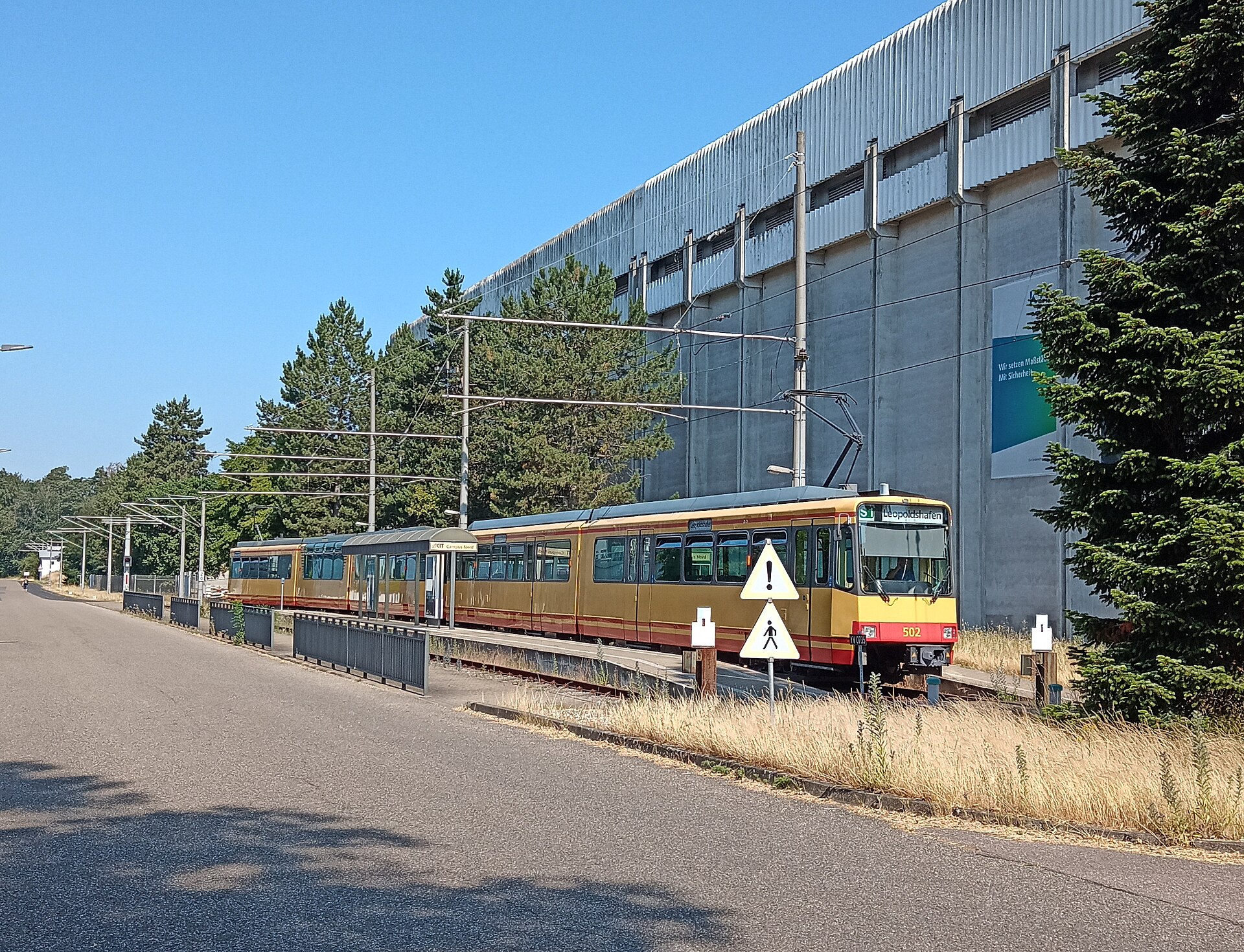
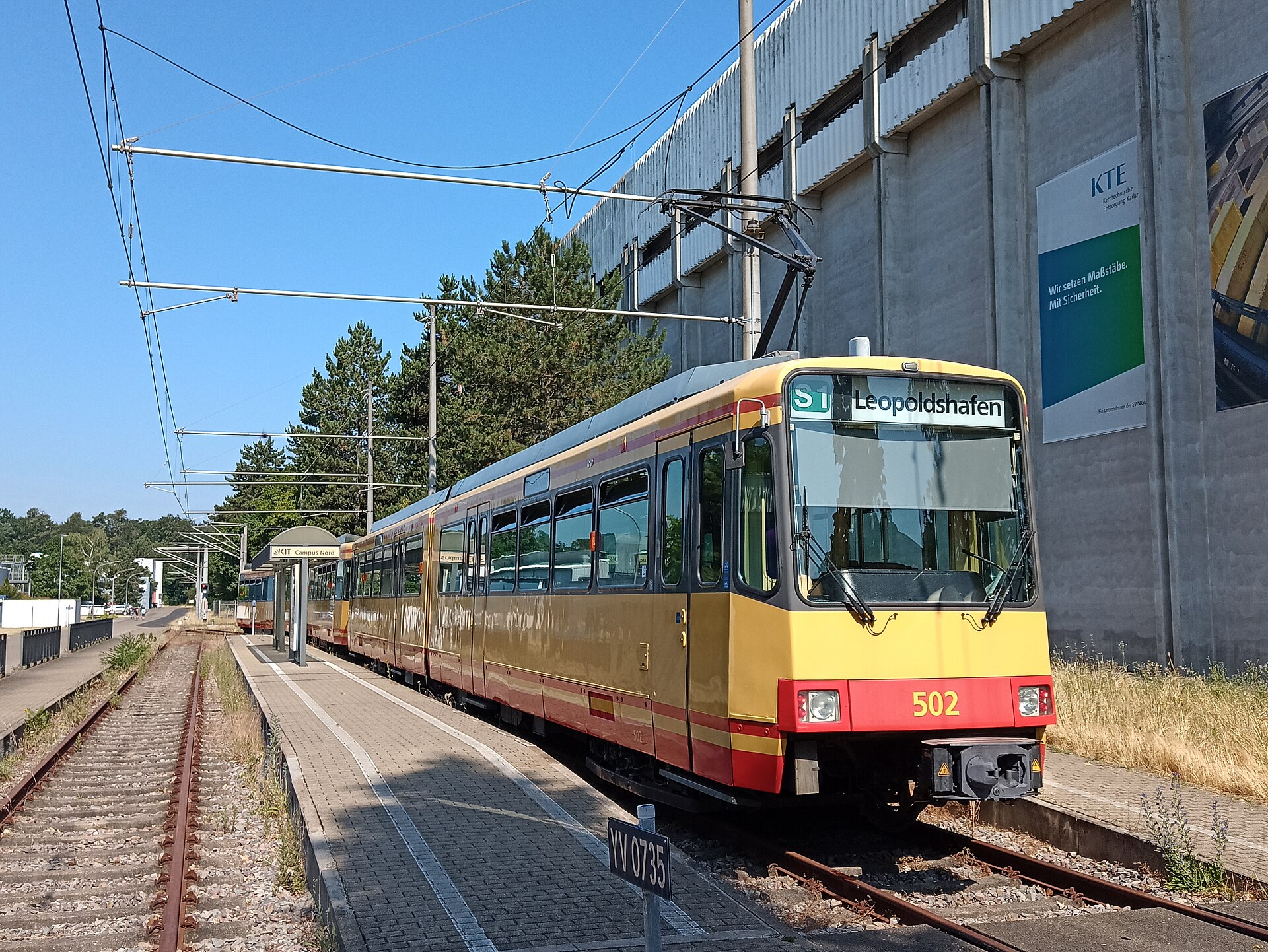
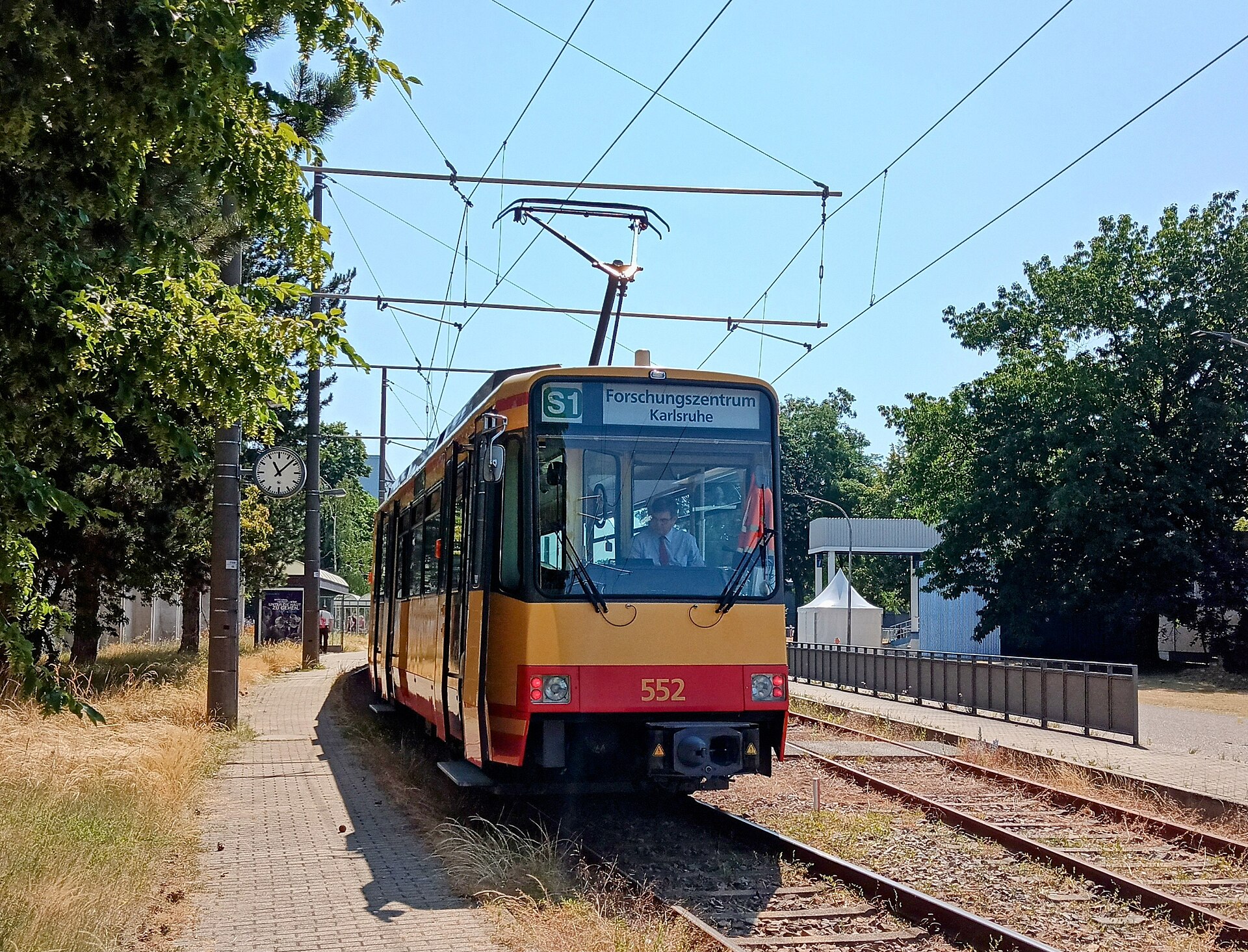
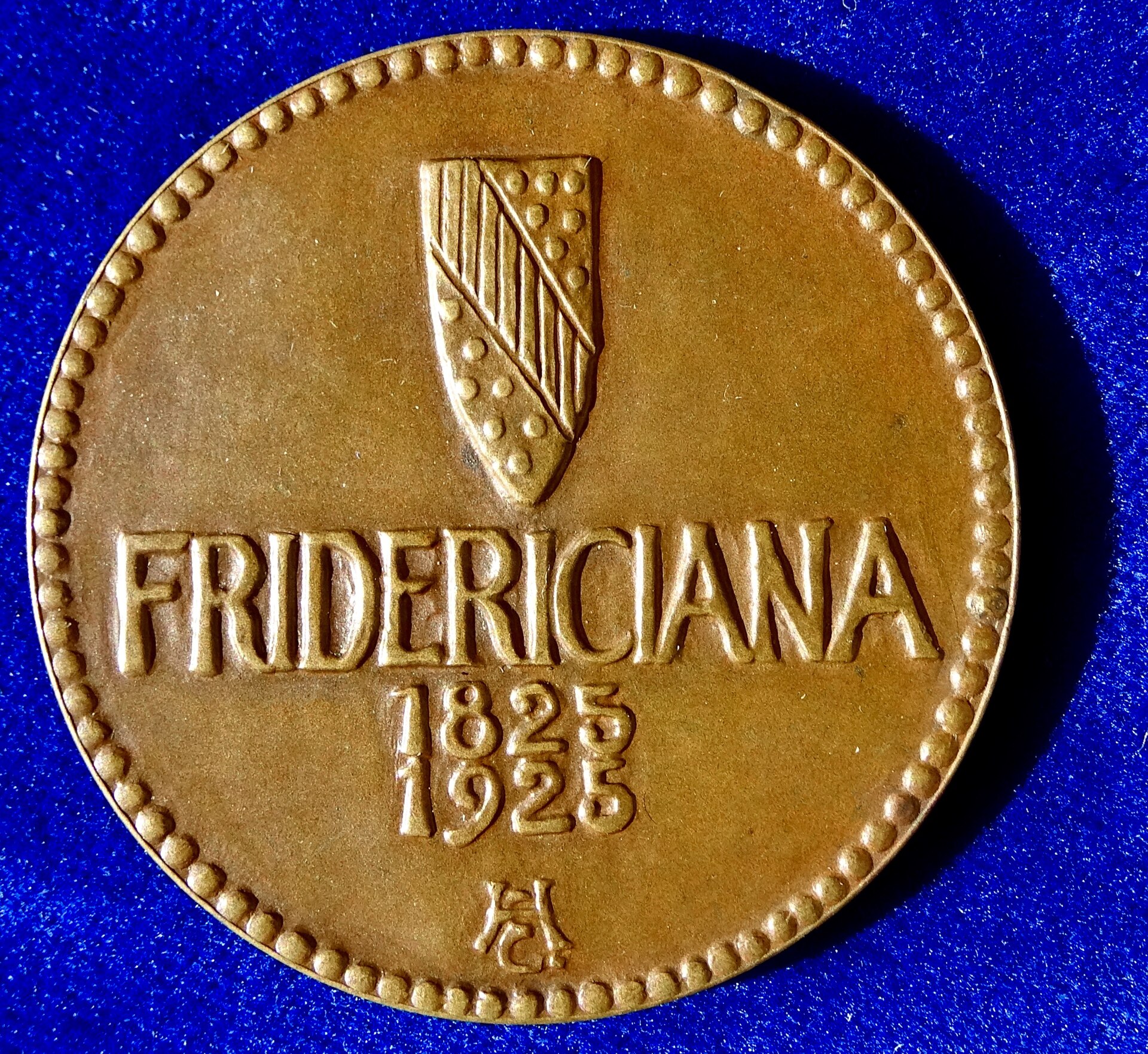
Karlsruhe Institute of Technology — campus in pictures

Real, freely-licensed photographs of the campus (via Wikimedia Commons).
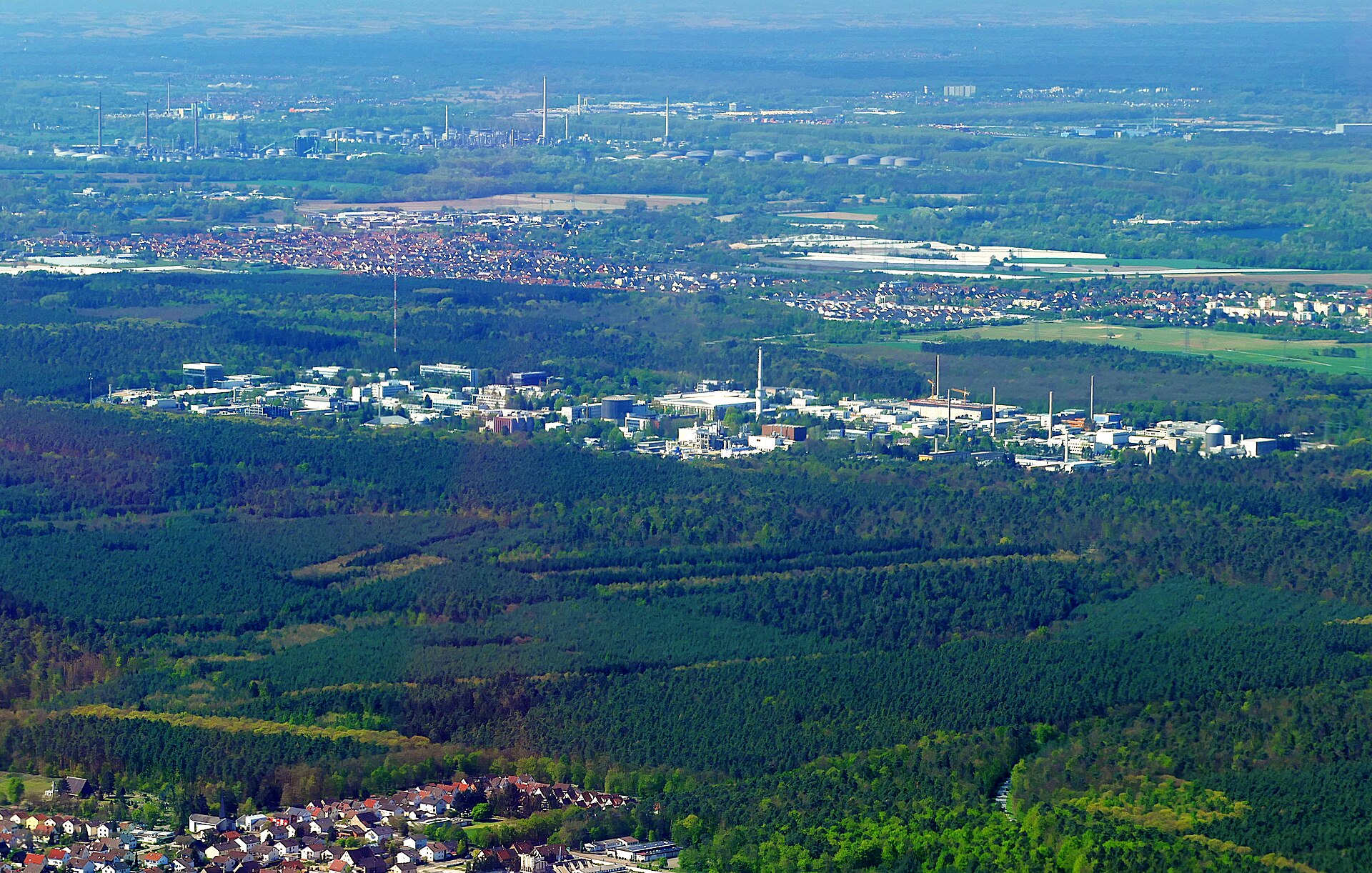
KarlsruheKITcampusNord2019 04 20 12 00 14
KarlsruheKITcampusNord2019 04 20 12 00 14Rolf Kickuth · CC BY-SA 4.0 · via Wikimedia Commons
Zug der Karlsruher Stadtbahn im Bahnhof KIT Campus Nord 2
Zug der Karlsruher Stadtbahn im Bahnhof KIT Campus Nord 2Metrophil · CC BY-SA 4.0 · via Wikimedia Commons
Zug der Karlsruher Stadtbahn im Bahnhof KIT Campus Nord 3
Zug der Karlsruher Stadtbahn im Bahnhof KIT Campus Nord 3Metrophil · CC BY-SA 4.0 · via Wikimedia Commons
Zug der Karlsruher Stadtbahn im Bahnhof KIT Campus Nord
Zug der Karlsruher Stadtbahn im Bahnhof KIT Campus NordMetrophil · CC BY-SA 4.0 · via Wikimedia Commons
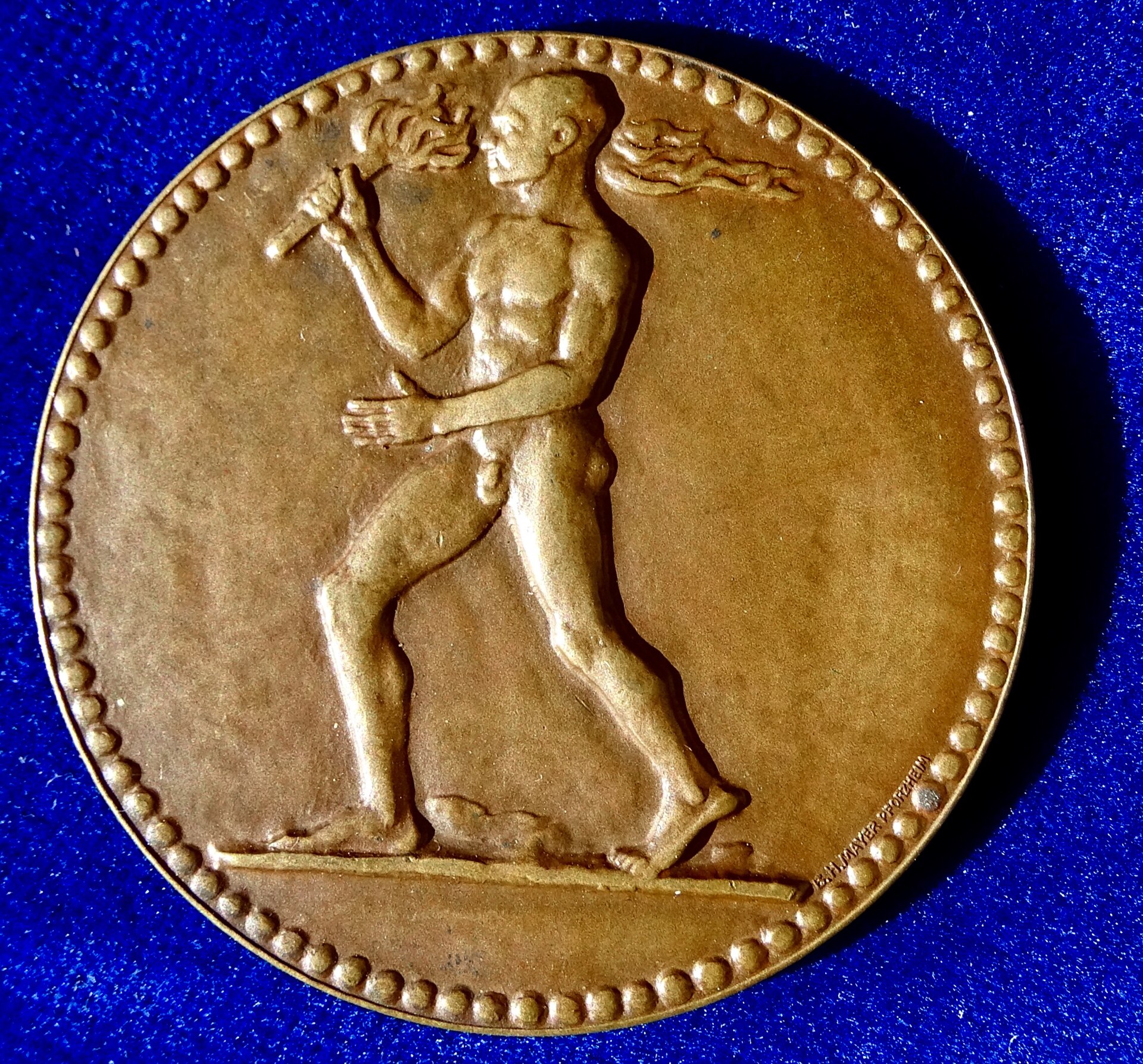
German Medal FRIDERICIANA 1825 1925 Karlsruhe, reverse
German Medal FRIDERICIANA 1825 1925 Karlsruhe, reverseBerlin-George · Public domain · via Wikimedia Commons
German Medal FRIDERICIANA 1825 1925, obverse
German Medal FRIDERICIANA 1825 1925, obverseBerlin-George · Public domain · via Wikimedia Commons

Why KIT — Research Power, Industry Links & Affordable Excellence

KIT sits at a rare intersection: a top-100 global university with near-zero tuition fees (by global standards), a dual mandate as both a university and a national research centre, and a location in the heart of one of Europe's most technology-dense regions. For students who can commit to the German system, KIT delivers world-class engineering and science education at an investment that is difficult to match anywhere.

01TU9 Founding Member
KIT is one of Germany's nine elite technical universities (TU9). Membership signals engineering credibility recognised by recruiters across Europe and globally. TU9 degrees carry exceptional weight in German industry, multinational corporations, and graduate school admissions worldwide.
02Excellence Initiative & National Research Centre
KIT holds 'University of Excellence' status under Germany's federal Excellence Initiative and is a member of the Helmholtz Association — Germany's largest scientific organisation. Students gain access to large-scale research infrastructure including particle accelerators, hydrogen test facilities, and supercomputers typically unavailable to undergraduates.
03Exceptional Value — Top-100 at Minimal Cost
Non-EU international students pay only €1,500 per semester — approximately €3,000 per year — while studying at a QS #102 university. Total annual cost of attendance is estimated at approximately $15,500. No other institution of comparable global standing offers this combination of quality and affordability.
04Industry-Embedded Location
Karlsruhe is in Baden-Württemberg, home to Bosch, SAP, Daimler, Porsche, SEW-Eurodrive, and hundreds of Mittelstand engineering firms. KIT's proximity to this industrial corridor translates directly into internship pipelines, collaborative research projects, and exceptional graduate employment rates — 93% of graduates enter employment shortly after graduation.

KIT Acceptance Rate & Admissions Profile

KIT is more selective than most European public universities, but selectivity works differently here: admission is determined primarily by your school-leaving grades against a programme-level numerus clausus (NC) threshold, not by holistic review. In competitive programmes like Computer Science and Industrial Engineering, the NC grade cutoff shifts each semester based on the applicant pool.

Stats

~25%
Overall Acceptance Rate
#102
QS World Rank
#140
THE World Rank

Profile Stats

32+
IB Indicative Score
20%
International Students
93%
Employment Rate (Graduates)
#7
National Rank (Germany)
Overall acceptance rate — varies significantly by programme NC threshold
https://www.sle.kit.edu/english/vorstudium/88.php

Rea Vs Rd

Rd Label: Non-NC Programmes (open entry)
Rd Value: High
Rea Label: NC Programmes (Computer Science, Industrial Engineering)
Rea Value: Competitive grade threshold

KIT Admissions Requirements — Grades, Language & Qualification

School-Leaving Grades (NC)
Value: Top Tier Nationally
Your secondary school leaving certificate grades are the primary and often sole selection criterion. For NC programmes (Computer Science, Industrial Engineering, Mechanical Engineering), you need grades in the top tier of your national system. NC thresholds shift each semester — check the previous cycle's cutoffs on the KIT admissions website.
  • IB Diploma: 32+ points indicative for competitive programmes
  • A-Levels: AAA–ABB competitive for engineering and science
  • Mathematics is a mandatory prerequisite for all technical programmes
  • Grades are converted into the German scale via official equivalency tables
German Language (B.Sc. Programmes)
Value: C1 / DSH-2
All German-taught bachelor's programmes require C1-level German by enrolment. The accepted certificates are DSH-2 (HRK-accredited only), TestDaF (minimum 4 in each of 4 sub-tests), DSD Level 2, Goethe C1, or telc Deutsch C1 Hochschule. B1-level German is sufficient at the application stage.
  • DSH-2 or TestDaF 4x4 required at enrolment — not at application
  • B1-level German certificate needed at time of application
  • Begin German lessons at least 2 years before your intended enrolment
  • Failing to meet this requirement by enrolment forfeits admission
English (Master's & English-Taught Programmes)
Value: IELTS 6.5 / TOEFL 90
English-taught master's programmes require IELTS Academic ≥ 6.5 or TOEFL iBT ≥ 90. Applicants whose entire prior education was conducted in English may request an exemption — confirm with the specific programme office.
  • IELTS Academic 6.5 minimum (no sub-score minimum stated)
  • TOEFL iBT 90 minimum (institutional TOEFL not accepted)
  • UNIcert Level III / C1 accepted as an alternative
  • English-taught master's: no German language requirement at admission

KIT Application Components — Direct Portal, Documents & Language Certificates

KIT uses a direct online application system — there is no Common App, UCAS, or equivalent centralised platform. Applications are submitted through KIT's own digital portal. The required documents differ significantly between bachelor's and master's applicants.

01RequiredOnline Application via KIT Portal
KIT's application portal opens on 15 May for Winter Semester entry. Complete all application fields online and upload required documents digitally. The portal generates a checklist of required materials based on your nationality and target programme.
02RequiredSchool-Leaving Certificate & Transcripts
Your higher secondary qualification (IB Diploma, A-Levels, national leaving certificate with officially certified translation into German or English). KIT checks qualification status against the Anabin database for your country.
03RequiredGerman Language Certificate (German-taught programmes)
At application: B1-level German certificate. At enrolment: DSH-2 (HRK-accredited), TestDaF 4×4, DSD 2, Goethe C1, or telc C1 Hochschule. English-taught master's programmes instead require IELTS ≥ 6.5 or TOEFL ≥ 90.
04Master's RequiredBachelor's Transcripts with Module Descriptions
Detailed transcripts with module-level descriptions (content summaries, weekly contact hours per module, grade conversion). KIT assesses subject compatibility between your bachelor's degree and the target master's — module handbooks are often required.
05Many ProgrammesMotivation Letter (Motivationsschreiben)
Many master's programmes require a structured academic motivation letter explaining your background, reasons for choosing this specific programme and KIT, research interests, and career trajectory. This is the primary personal writing component.
06Some ProgrammesLetters of Recommendation
Selected master's programmes require one or two academic reference letters from supervisors or thesis advisers. Check your specific programme's requirements — not all master's programmes require references.
07OptionalCV and Research Portfolio
A structured academic and professional CV is strongly recommended for master's applicants. Research portfolios or writing samples may be submitted for research-intensive programmes to demonstrate academic depth beyond grades alone.
https://www.sle.kit.edu/english/vorstudium/88.php

KIT Written Application — Motivation Letters, Scholarship Statements & Strategy

Tips

Write for the programme, not the university
KIT reviewers read hundreds of motivation letters. The ones that stand out are specific — they reference your target programme's exact research tracks, faculty, or curriculum features, not just 'KIT's reputation' or 'Germany's engineering excellence.'
Structure is more important than narrative
German academic culture values clear structure and analytical precision over storytelling. Organise your motivation letter in logical sections: academic background, reasons for this programme, research interests, career goals. Don't bury your strongest qualifications in narrative prose.
Be honest about your language trajectory
If you are applying to a German-taught programme and are still completing your language preparation, address this directly and concisely. Reviewers appreciate transparency — explain exactly where you are and the specific steps you are taking to reach DSH-2 by enrolment.
Concrete career goals outperform aspirational statements
German academic reviewers respond to grounded professional intentions. 'I intend to join the automotive R&D sector in Germany and contribute to sustainable powertrain development' is more credible than 'I want to change the world through engineering innovation.'

Prompts

Master's Motivation Letter (Motivationsschreiben)
Describe your academic background and qualifications, your reasons for choosing this specific programme and KIT, your research interests or professional goals, and how this master's degree fits into your broader career trajectory. No single verbatim prompt — requirements vary by programme. Download your programme's official application guidelines.
DAAD Scholarship Personal Statement
DAAD scholarship applications require a detailed statement covering your academic and professional background, your specific study or research plan, the scientific merit of the proposed project, your connection to Germany, and (for development-oriented programmes) the expected impact on your home country. Requirements vary by DAAD programme.
Deutschlandstipendium Statement
Describe your academic achievements, social or intercultural engagement, and personal motivation for your studies. Both academic excellence and broader personal characteristics — volunteer work, leadership, community contribution — are evaluated.
The most common KIT application writing mistake. Submitting a generic motivation letter that could apply to any German university — without referencing KIT's specific programmes, research groups, or curriculum.

What KIT Admissions Evaluates

KIT's admissions process is primarily grades-based and qualification-based — a defining feature of the German higher education system. There is no holistic personal profile review of the kind used at US or UK universities. However, understanding exactly what KIT evaluates — and what matters most — is essential for a competitive application.

01Academic Qualification Recognition
Your school-leaving qualification is evaluated against the Anabin database — Germany's official recognition system for foreign qualifications. Your country and specific certificate type determine whether you are eligible for direct entry or need additional steps. This check comes before any grade comparison.
02Grade Performance vs. NC Threshold
For NC programmes (Computer Science, Industrial Engineering, Mechanical Engineering), your grades are converted into the German grade scale and compared against the semester's numerus clausus threshold. Admission is offered in grade rank order until places are filled. The threshold shifts each cycle.
03Mathematics and Subject Prerequisites
KIT engineering and science programmes require demonstrated competence in advanced mathematics and relevant sciences (Physics for engineering, Chemistry for chemical engineering). Missing prerequisite coverage in your school-leaving certificate can result in conditional admission or rejection.
04Language Proficiency Documentation
For German-taught programmes: B1-level German at application, C1-level (DSH-2 or TestDaF 4×4) by enrolment. For English-taught master's: IELTS ≥ 6.5 or TOEFL ≥ 90. These are hard requirements — documentary proof is mandatory.
05Academic Fit (Master's Programmes)
For master's entry, KIT evaluates how closely your bachelor's degree subject coverage matches the master's programme prerequisites. Detailed module-level analysis is conducted. Strong subject alignment is the most reliable predictor of successful master's admission.
06Motivation Letter Quality (Master's)
For competitive master's programmes, the Motivationsschreiben distinguishes between candidates with similar academic profiles. A programme-specific, analytically structured letter that demonstrates genuine understanding of the chosen field and KIT's offerings is a meaningful differentiator.

KIT Financial Aid & Scholarships for International Students

KIT does not offer large-scale institution-administered financial aid for incoming international students of the kind found at US private universities. Instead, the German model relies on very low statutory tuition fees as the primary affordability mechanism, supplemented by external scholarships (principally DAAD) and Germany's national Deutschlandstipendium programme.

Tuition figures are from KIT's official fee schedule. DAAD stipend amounts are from DAAD's published rates and may change. Individual scholarship awards are determined separately by each awarding body.

Stats

~€3,000
Annual non-EU tuition
$15,500
Estimated annual cost of attendance
€300/mo
Deutschlandstipendium (merit award)
~€992/mo
DAAD main scholarship stipend (students)

Contribution Tiers

RangePercentPercent ValueNote
DAAD ScholarshipFull stipend90Monthly stipend ~€992 (students); competitive application; visit daad.de
Deutschlandstipendium€300/month40KIT-administered merit award; open to all students including international
Home-Government ScholarshipsVaries60Gulf, Indian, Malaysian, Turkish, Chinese government programmes for Germany study
Werkstudent / Hiwi WorkUp to 120 days/yr30Part-time student employment at KIT research groups; typically €12–15/hr
How Financial Support Works in Germany. KIT does not operate a loan-based aid system. Financial support is provided through external scholarships (DAAD, Deutschlandstipendium) and Germany's tuition-free philosophy for EU students. Non-EU international students benefit primarily from KIT's very low tuition fees — approximately €3,000 per year — which represent the core affordability mechanism in the German public university model.
Key Funding Pathways for International Students
https://www.intl.kit.edu/istudies/12591.php

Key Dates

Application Portal Opens (Winter Semester)
Date: 15 May
Deadline: NC Bachelor's & NC Master's (international)
Date: 15 July
Deadline: Non-NC Master's (Winter Semester)
Date: 30 September
Deadline: Summer Semester (higher-semester entry only)
Date: 15 January
Deadline: Non-NC Master's (Summer Semester)
Date: 31 March

Advantages

  • Winter Semester (October start) is the main intake for international students
  • Non-NC master's programmes accept rolling applications up to 30 September
  • Earlier application improves housing search and visa processing time
  • Summer Semester entry is generally limited to higher-semester transfer students
  • Early applicants receive conditional admission offers that facilitate visa applications

Disadvantages

  • All documents must be received by KIT on the deadline — postmark dates are irrelevant
  • Summer Semester entry for bachelor's is highly restricted for international students
  • Portal opens only on 15 May — applications submitted before are not accepted
  • Missing the July 15 deadline forfeits your application for that cycle
  • Visa processing takes 6–12 weeks; apply immediately after receiving your admission letter
Winter vs Summer Semester Entry. Unlike US universities with Early Action / Regular Decision rounds, KIT uses fixed preclusive deadlines tied to semester start dates. The Winter Semester (October start) is strongly preferred for international students. Understanding the deadline structure is critical — there is no appeals or extension process.
Tychr's Application Timing Recommendation. Apply for Winter Semester entry. Submit your application as early in the May–July window as possible — not because earlier guarantees an advantage in NC ranking, but because it gives you maximum time to gather and certify required documents, secure housing, and process your German student visa. Visa processing typically takes 6–12 weeks and must be completed before lectures begin.
Why Winter Semester Is the Right Entry Point
KIT Application Rounds — Winter vs Summer & Deadline Strategy
https://www.sle.kit.edu/english/vorstudium/3968.php

KIT Admissions Interview — Does KIT Interview Applicants?

KIT does not conduct admissions interviews for bachelor's programmes — admission is entirely grades and documentation-based at bachelor's level. For master's programmes, interviews are programme-specific: some competitive master's programmes conduct selection interviews (typically a 30–60 minute video call or in-person meeting at KIT) while most do not. Check your specific programme's admissions requirements carefully. Where interviews are conducted, they evaluate technical knowledge, research aptitude, and programme fit rather than personal character in the US alumni-interview sense.

Meta

No formal admissions interview for bachelor's programmes
Format
Some programmes conduct optional or mandatory selection interviews
Master's
Technical knowledge, research interests, programme fit
Evaluates
30–60 min video call or in-person at KIT
Typical Format

Questions

Why this specific programme at KIT?
Tip: Be specific: name the research group, faculty member, or curriculum track you are targeting. Generic answers about KIT's reputation are weak.
How does your bachelor's degree prepare you for this programme?
Tip: Describe a specific module, thesis, project, or internship and explain concretely how it prepared you for this master's.
What are your main research interests within this field?
Tip: Demonstrate technical depth in your field. For engineering/CS programmes, this may include technical questions about fundamentals.
What are your professional goals after completing this degree?
Tip: Be concrete: name a company type, sector, or research pathway. German academic interviewers respond well to grounded professional goals.
How is your German language preparation progressing?
Tip: If your German is still in progress, acknowledge it honestly and describe the specific steps you are taking. Transparency builds trust.

KIT Campus & Residential Life

KIT does not operate a residential college system in the Oxford/Yale sense. Student accommodation is handled through the Studentenwerk Karlsruhe — the student services body — and the private rental market. Karlsruhe is compact and affordable, and most students live within cycling distance of campus.

Houses

Studentenwerk Karlsruhe Dormitories
Tag: Studentenwerk
Affordable student halls; apply immediately after admission
International Guest House
Tag: International
Short-term accommodation for newly arrived international students
WG (Wohngemeinschaft — shared flat)
Tag: Private
Most common student housing; €350–500/month in Karlsruhe
Private Rental Apartments
Tag: Private
Single apartments available; higher cost but greater independence
WG-Gesucht / Studenten-WG
Tag: Online
Germany's main platforms for finding shared student accommodation

Lottery Steps

  • Apply for Studentenwerk dormitory housing immediately after receiving your admission offer — demand exceeds supply
  • New international students can apply to the International Guest House for short-term accommodation on arrival
  • Most students ultimately settle in WGs (shared flats) — the standard German student living arrangement
  • KIT's campus is urban and walkable; most neighbourhoods within 3km are cycling-accessible to all faculties
  • Karlsruhe's cost of living is moderate by German standards — lower than Munich, Frankfurt, or Berlin

KIT Faculties & Academic Programmes

Faculty of Computer Science (Informatik)
Label: Engineering & Technology
  • {"label":"Degree type","value":"B.Sc. / M.Sc."}
  • {"label":"Language","value":"German (B.Sc.) / English (M.Sc.)"}
  • {"label":"NC status","value":"NC (competitive)"}
  • {"label":"QS subject rank","value":"Top 200 globally"}
One of Germany's leading CS faculties, with research strength in algorithms, AI, human-computer interaction, and software engineering. The English-taught M.Sc. in Computer Science is highly regarded internationally.
Faculty of Mechanical Engineering (Maschinenbau)
Label: Engineering
  • {"label":"Degree type","value":"B.Sc. / M.Sc."}
  • {"label":"Language","value":"German (B.Sc.) / English (M.Sc.)"}
  • {"label":"NC status","value":"NC in some specialisations"}
  • {"label":"Industry links","value":"Daimler, Bosch, Porsche, Schaeffler"}
KIT's flagship engineering faculty, with strong links to Baden-Württemberg's automotive and mechanical industrial ecosystem. Research spans thermodynamics, materials science, production technology, and lightweight construction.
Faculty of Electrical Engineering and Information Technology
Label: Engineering
  • {"label":"Degree type","value":"B.Sc. / M.Sc."}
  • {"label":"Language","value":"German (B.Sc.) / English (M.Sc.)"}
  • {"label":"Research areas","value":"Power systems, communications, microelectronics"}
  • {"label":"Key employer","value":"SEW-Eurodrive, ABB, Siemens"}
Covers power engineering, high-frequency technology, information technology, and biomedical engineering. Internationally oriented master's tracks available in English.
Faculty of Physics
Label: Natural Sciences
  • {"label":"Degree type","value":"B.Sc. / M.Sc."}
  • {"label":"Language","value":"German (B.Sc.) / English (M.Sc.)"}
  • {"label":"Clusters of Excellence","value":"Elementary particle physics"}
  • {"label":"Research infrastructure","value":"Synchrotron KARA, FLUTE"}
KIT Physics is ranked among Germany's best, with clusters of excellence in fundamental particle physics and condensed matter. Doctoral pathways into CERN and Helmholtz research are well-established.
Industrial Engineering & Management (Wirtschaftsingenieurwesen)
Label: Engineering + Business
  • {"label":"Degree type","value":"B.Sc. / M.Sc."}
  • {"label":"Language","value":"German"}
  • {"label":"NC status","value":"NC (competitive)"}
  • {"label":"Career outcomes","value":"Consulting, automotive, industrial management"}
Germany's Wirtschaftsingenieurwesen degree combines rigorous engineering with management and economics — a profile highly prized by German blue-chip employers and consulting firms. One of KIT's most applied-to programmes.
Faculty of Chemistry and Biosciences
Label: Natural Sciences
  • {"label":"Degree type","value":"B.Sc. / M.Sc."}
  • {"label":"Research focus","value":"Synthesis, catalysis, biological chemistry"}
  • {"label":"Industry links","value":"BASF, Bayer, Evonik"}
  • {"label":"PhD pipeline","value":"Strong into chemical industry and academia"}
Covers chemistry, biochemistry, and chemical biology, with strong connections to the German chemical industry corridor. Research infrastructure includes large-scale synthesis and analytical facilities.

Research & Extracurricular Opportunities at KIT

KIT Research Centres & Helmholtz Access
Category: Undergraduate & Graduate Research
As a Helmholtz Association member, KIT gives students access to national-scale research infrastructure: the Karlsruhe Research Accelerator (KARA), hydrogen test facilities, the high-performance computing centre (SCC), and the Large-Scale Research Programme institutes. Undergraduate research involvement is possible through thesis projects and Hiwi student assistant positions.
Formula Student & Technical Competitions
Category: Engineering Student Teams
KIT hosts Formula Student teams that compete internationally — Gotthard Moto (electric), KA-RaceIng (combustion) — as well as robotics teams, solar car projects, and other engineering student competitions. These teams operate with professional-grade facilities and significant industry sponsorship.
KIT Career Service & Industry Events
Category: Career & Industry
KIT's Career Service facilitates industry connections through campus recruiting events (KIT Karrieremesse), company presentations, and the Job and Career Platform. Baden-Württemberg's industrial density means KIT students have exceptional internship access to Bosch, SAP, Siemens, and Mittelstand firms.
Student Organisations & AStA
Category: Student Life — 200+ Groups
KIT's AStA student union coordinates social and political student life. Over 200 student groups span technical clubs, cultural associations, sports, arts, and international exchange. The International Welcome Office runs arrival events, language tandems, and integration programmes for incoming international students.
Scroll right to explore KIT's research programmes and student life opportunities.

Career Outcomes & KIT Graduate Network

KIT's location in Baden-Württemberg — Germany's most industrially productive state — gives graduates exceptional proximity to some of the world's most respected engineering and technology employers. The combination of TU9 recognition, Helmholtz research scale, and geographic embedding in Germany's industrial heartland creates a career springboard that is hard to replicate.

Stats

93%
Graduate employment rate
$54,000
Average starting salary (USD equivalent)
#102
QS World Rank
20%
International students
23,000
Students enrolled
Member
TU9 elite technical university group

Categories

Engineering & Automotive
Bosch, Daimler-Benz, Porsche, SEW-Eurodrive, Schaeffler, ZF Friedrichshafen — KIT engineering graduates are among the most sought-after in Germany's automotive and mechanical engineering sectors, aided by geographic proximity and industry-collaborative research.
Technology & Software
SAP (headquartered 60km from KIT in Walldorf), IBM Germany, T-Systems, and a growing German tech startup scene in Berlin, Munich, and Hamburg recruit actively from KIT Computer Science and Industrial Engineering graduates.
Research & Academia
KIT's Helmholtz Association membership and Clusters of Excellence create strong doctoral pathways. Graduates pursue PhDs at KIT, other TU9 institutions, CERN, and leading European research universities. The postdoctoral-to-industry path is well-established in engineering and natural sciences.

Our KIT Admissions Track Record & Student Success Stories

Siddharth A.
Tychr helped me understand that KIT's master's admission was genuinely about academic fit — not a personal statement. We focused my motivation letter on my specific thesis work and how it connected to the Algorithms group I was applying to. I received my admission offer three weeks after submitting.
Country: India
Program: KIT — M.Sc. Computer Science
Class Year: Class of 2025
Residential: Karlsruhe WG
Academic Profile: IB 39 · B.Tech. 8.4 CGPA
Yara F.
The German language requirement felt impossible when I started. Tychr mapped out a realistic 18-month path to DSH-2 alongside my A-Level preparation. I passed TestDaF (4×4) two months before my enrolment deadline — not one day to spare, but it worked.
Country: UAE
Program: KIT — B.Sc. Mechanical Engineering
Class Year: Class of 2026
Residential: Studentenwerk Dormitory
Academic Profile: A-Levels AAB · TestDaF 4×4
Chen W.
I applied for the DAAD RISE programme as an undergraduate and spent a summer in a KIT research lab. That experience — plus Tychr's help with the DAAD master's scholarship application — led to a full scholarship for my M.Sc. in Electrical Engineering.
Country: China
Program: KIT — M.Sc. Electrical Engineering
Class Year: Class of 2024
Residential: Private apartment, Karlsruhe
Academic Profile: GPA 3.8 · IELTS 7.0 · DAAD Scholar

Faqs

Can I study at KIT without knowing German?+

Yes — but primarily at master's level. KIT offers a substantial portfolio of fully English-taught master's programmes in Computer Science, Mechanical Engineering, Electrical Engineering, Physics, and more. Most bachelor's programmes are taught in German and require C1-level German (DSH-2 or TestDaF 4×4 minimum) at enrolment. If you plan to study at bachelor's level, begin German lessons at least two years before your intended start.

What is the numerus clausus (NC) and how does it affect my chances?+

The NC is a grade-cutoff system used in high-demand programmes where applications exceed available places. KIT sets NC thresholds each semester based on the applicant pool — so the exact required grade changes every cycle. Popular programmes like Computer Science, Industrial Engineering, and Mechanical Engineering have NC restrictions. Check the previous semester's NC values on the KIT admissions website as a guide, but note they are not guaranteed to repeat.

Is my IB Diploma, A-Level, or national qualification accepted?+

KIT accepts international qualifications but verifies them against the Anabin database — Germany's official recognition system. Depending on your country and qualification, you may be directly admitted, required to complete prerequisite study, or asked to sit the Feststellungsprüfung assessment. An IB score of 32 points or above is the indicative benchmark for competitive programmes. Always verify your qualification's specific Anabin status before applying.

How much does it cost to study at KIT as an international student?+

Non-EU international students pay €1,500 per semester (approximately €3,000 per year) in tuition fees, plus a mandatory administrative contribution of €151.20 per semester. Total annual cost of attendance — including tuition, housing, food, insurance, and transport — is estimated at approximately $15,500. This is substantially lower than comparable-quality universities in the UK, US, or Australia.

When should I apply for Winter Semester entry?+

The application portal opens 15 May. The hard deadline for international non-EU students applying to NC bachelor's and NC master's programmes is 15 July — all documents must be received by KIT on this date (postmark dates are irrelevant). Non-NC master's programmes accept applications up to 30 September. Apply as early as possible within the May–July window to allow time for document certification and visa processing.

Does KIT offer scholarships for international students?+

KIT administers the Deutschlandstipendium (€300/month merit award, open to all students including international) and annually awards the DAAD Prize to an outstanding international student. The primary route for external funding is DAAD (German Academic Exchange Service), which offers monthly stipends of approximately €992 for master's students. Many countries also have government scholarship programmes for study in Germany — check your home country's education ministry.

What are KIT's strongest academic departments?+

KIT is particularly strong in Mechanical Engineering, Computer Science (Informatik), Electrical Engineering and Information Technology, Physics, Industrial Engineering & Management (Wirtschaftsingenieurwesen), and Chemistry. These reflect KIT's dual identity as both a traditional technical university and a national research centre with large-scale laboratory facilities.

Can I work while studying at KIT as an international student?+

Yes. Non-EU students on a German student visa are permitted to work up to 120 full days or 240 half-days per year without special permission. KIT student assistant (Hiwi) positions in research groups are common and typically pay €12–15 per hour. Working at KIT research groups also builds directly relevant research experience for doctoral applications.

Book a Free KIT Admissions Strategy Session

In 60 minutes our KIT admissions specialists will evaluate your academic profile and qualification recognition status, clarify your NC position in your target programme, map your German language preparation timeline, and identify DAAD and other scholarship options relevant to your profile.

  • No commitment required
  • German university admissions specialists
  • Personalised strategy for your qualification and target programme
Getting into KIT is not about a perfect application essay — it's about arriving with the right grades, the right language preparation, and a precise understanding of what KIT's programme review actually looks for.

KIT Academic Requirements

KIT Academic Requirements — The Honest Breakdown for International Students

What grades, language certificates, and academic profile do KIT's admitted students actually need? And how does Germany's numerus clausus and qualification-recognition system work for students from IB, A-Level, and other international curricula?

32+
Indicative IB Score
For competitive NC programmes
6.5
IELTS Minimum
English-taught master's programmes
90
TOEFL Minimum
TOEFL iBT for English-taught programmes
DSH-2
German Language (B.Sc.)
Required at enrolment — not at application
#102
QS World Rank
Among world's best technical universities
~25%
Acceptance Rate
Programme-level NC restrictions vary

Grades & NC Thresholds

KIT and Grades — What the NC System Actually Means

The honest picture: KIT does not set a published minimum GPA in the Western sense. Admission is determined by your school-leaving certificate grades converted into the German grade scale (1.0 = best, 4.0 = minimum passing), then compared against each programme's numerus clausus threshold — which shifts each semester based on the applicant pool.

Strong grades are a necessary condition for competitive NC programmes, but not the only factor — Anabin recognition status and subject prerequisite coverage also determine eligibility before any grade comparison is made.

32+
IB Diploma indicative score for competitive NC programmes
1.0–2.5
German grade equivalent target for NC programmes
What this means for international students. International students from IB, A-Level, and other systems are not evaluated on a GPA of 4.0 or equivalent — they are assessed through official conversion tables that translate their national grade into the German grade scale. Higher scores in your national system produce better German grade equivalents, which is what determines your NC position.
Grade trajectory vs. final grade. Unlike US holistic admissions, KIT does not weight grade trajectory — a student with an upward trend is assessed only on final or predicted grades. Consistency across subjects matters because the full certificate is converted, not a subset of grades.

Academic Recognition Framework

Anabin, NC, and School Context — How KIT Reads International Academic Records

Germany's university system evaluates academic qualifications through a formalised recognition framework — the Anabin database — rather than through individualised reader assessment of school profiles. This makes the process more transparent but also more document-dependent than US or UK admissions.

How KIT contextualises your academic record
Every international school-leaving certificate is checked against Anabin, which assigns a status (H+, H, H-, or not recognised) to your specific qualification from your specific country. The Anabin status determines whether you can apply directly or need additional steps. Students from countries where qualifications receive H- status may need to complete the Feststellungsprüfung (assessment test) or an additional year of study before qualifying for direct entry.
What this means practically
Check the Anabin database before investing time in your KIT application. Your country's standard secondary leaving certificate may or may not be directly recognised. IB Diploma holders from internationally-recognised IB schools are generally well-placed, as are A-Level holders. If your qualification has H- status, you may need to complete a Studienkolleg preparation year — factor this into your timeline.
For students with complex recognition situations. For students from countries with H- Anabin status or complex recognition pathways, Tychr's KIT specialists can map the specific steps required for your qualification — including whether a Studienkolleg or Feststellungsprüfung is part of your path, and the timeline implications.

SAT at KIT

SAT at KIT — Not Required, Not Relevant

KIT does not use the SAT in its admissions process. The SAT is an American standardised test that has no formal role in German university admissions. International students applying to KIT should not sit the SAT for KIT admissions purposes.

LabelScorePercent
SAT requirementNone0
Replaces SAT for language assessmentIELTS 6.5 / TOEFL 9065
What replaces the SAT Math dimension. For students from US curriculum schools, the closest meaningful benchmark is the rigorousness of your AP or IB mathematics, not your SAT Math score. KIT evaluates subject knowledge through your school-leaving certificate grades rather than standardised aptitude tests.
Where to direct test preparation instead. Students who have sat the SAT for other universities (US applications) can list it in their KIT application if they choose, but it carries no admissions weight. Focus your preparation energy on German language proficiency (if targeting German-taught programmes) or IELTS/TOEFL (for English-taught master's).
The only test that matters at KIT. The 'test' that matters most at KIT is the German language test (DSH-2 or TestDaF) for German-taught programmes. This requires sustained preparation over 12–24 months and is far more consequential for your KIT application than any standardised aptitude test.

ACT at KIT

ACT at KIT — Not Required

KIT does not require or consider ACT scores. Like the SAT, the ACT is an American college admission test that plays no role in the German university admissions system.

Metrics

ACT requirement
Score: None

Comparison Cards

Key language test: German (B.Sc.)
DSH-2 or TestDaF 4×4 — the language certification that determines eligibility for German-taught bachelor's programmes. Requires sustained preparation.
Key language test: English (M.Sc.)
IELTS Academic ≥ 6.5 or TOEFL iBT ≥ 90 — required for English-taught master's programmes. Generally less challenging to reach than German C1.
Academic qualification
Your school-leaving certificate grades (IB, A-Level, national leaving certificate) converted into the German grade scale via official Anabin equivalency.
No superscore — single qualification assessment. There is no superscoring concept at KIT. Admissions decisions are based on your school-leaving certificate grades and language certificates, not on test composites across multiple sittings.
Tychr's recommendation for KIT-bound students. Do not sit SAT or ACT for KIT. Direct your standardised test preparation effort to IELTS or TOEFL if you plan to enter an English-taught master's, or to DSH/TestDaF preparation if you plan to study in German. These are the credentials that carry admissions weight at KIT.

Testing at KIT

KIT's Testing Framework — Language Certificates, Not SAT/ACT

KIT is not 'test-optional' in the US sense. Rather, it uses a completely different testing framework: language proficiency certificates replace standardised aptitude tests. Understanding which certificate applies to your target programme is essential.

Submit Items

IELTS Academic ≥ 6.5 — submit with your master's application for English-taught programmes.
TOEFL iBT ≥ 90 — submit with your master's application (institutional TOEFL not accepted).
DSH-2 certificate from an HRK-accredited institution — required for enrolment in German-taught programmes.

Withhold Items

SAT and ACT scores — do not submit; they carry no admissions weight.
Below-minimum IELTS or TOEFL scores — submitting a score below the threshold does not help and may flag your application.
What testing means at KIT. For German-taught programmes: B1-level German at application, full C1 (DSH-2 or TestDaF 4×4) by enrolment. For English-taught master's programmes: IELTS ≥ 6.5 or TOEFL iBT ≥ 90. No other standardised test is required or considered.
The common misconception. Many international students mistakenly focus on SAT/ACT preparation for KIT, or assume that test-optional means language tests are not required either. Neither is correct. Language proficiency is a hard gate — missing it by enrolment forfeits admission even if all other components are complete.

IB & A-Level

IB Diploma and A-Level at KIT — Specific Benchmarks

IB Diploma
  • {"label":"Indicative competitive score","value":"32+ points total"}
  • {"label":"Mathematics","value":"HL Mathematics (Analysis & Approaches strongly preferred for engineering/CS/physics)"}
  • {"label":"Sciences","value":"HL Physics (engineering), HL Chemistry (chemical engineering), HL Computer Science (CS)"}
  • {"label":"Conversion","value":"IB points are converted into the German grade scale; higher totals = stronger NC position"}
Note: KIT evaluates total IB points rather than individual HL combinations when calculating the NC equivalent — but subject choice still matters for prerequisite coverage in your target programme. Strong HL Mathematics scores are particularly important for engineering and natural science programmes.
A-Levels
  • {"label":"Competitive grade range","value":"AAA–ABB in relevant subjects for competitive programmes"}
  • {"label":"Mathematics","value":"A-Level Mathematics essentially required for engineering and natural sciences; Further Mathematics strengthens physics and CS applications"}
  • {"label":"Sciences","value":"A-Level Physics (engineering/physics), Chemistry (chemistry/chemical engineering)"}
  • {"label":"Recognition","value":"UK A-Levels generally hold H+ or H Anabin status — confirm your school's accreditation"}
Note: A-Level applicants from UK-system international schools are generally well-positioned. Three strong A-Level grades in relevant subjects are competitive. Predicted grades are accepted at application stage; confirmed grades required at enrolment.

Advanced Placement (AP)

AP Courses at KIT — How They Factor into German Admissions

AP (Advanced Placement) is an American College Board programme. KIT does not specifically consider AP course scores in its admissions process. However, US-curriculum students applying to KIT can reference AP coursework as evidence of subject coverage and academic rigour — particularly for mathematics and sciences.

What KIT values from AP students
Strong AP scores in Mathematics (Calculus BC, Statistics), sciences (Physics C, Chemistry, Computer Science A), and related subjects demonstrate the prerequisite subject coverage that KIT's technical programmes require. While AP scores are not directly converted into the German grade scale, they provide supplementary evidence of academic preparation.
AP vs. IB for KIT
For US-curriculum students, the IB Diploma is generally better recognised in the German Anabin system than a standard US high school diploma with AP courses. If available, pursuing IB rather than (or alongside) AP courses may simplify the Anabin recognition process.
When AP evidence helps
For master's applications, AP exam results in relevant subjects can supplement your bachelor's transcript as evidence of foundational knowledge — particularly if your bachelor's degree did not explicitly cover certain prerequisite areas.
KIT does not offer course credit for AP exam scores in the way US universities do. Credit transfer for specific courses may be possible based on your transcript module descriptions — consult your programme's admissions office.
International students from non-US systems should not pursue AP courses specifically for KIT — the IB Diploma or A-Level system is appropriate for their context and is evaluated through the standard Anabin pathway.

Academic Rigour

Secondary School Rigour — What It Means in the German Context

In the German admissions system, 'rigour of secondary school record' means something specific: the breadth and depth of your school-leaving certificate's subject coverage in areas relevant to your target programme, combined with the highest possible grades in those subjects.

For KIT engineering and science programmes, strong HL (or A-Level) mathematics and the relevant sciences are not optional extras — they are prerequisite foundations.

The KIT-specific element. Unlike US universities where rigour is evaluated contextually (the best courses at your specific school), KIT assesses absolute subject coverage: did you study mathematics and sciences at an advanced level? This is verified through your school-leaving certificate and module descriptions.
What rigour means for KIT technical programmes. For engineering applicants, this means advanced secondary mathematics (IB HL Maths Analysis & Approaches, or A-Level Maths with Further Maths for physics) plus at least one advanced science. For CS applicants, advanced mathematics plus some programming exposure is the expected baseline.
What KIT looks for in secondary preparation. A student who took IB HL Mathematics, HL Physics, and HL Chemistry simultaneously demonstrates the academic foundation KIT's technical faculties expect. Missing key prerequisites — particularly advanced mathematics — may result in a conditional admission offer or outright ineligibility for specific programmes.

Subject Foundations

Mathematics and Science Preparation — What KIT Expects

KIT's engineering and science programmes are mathematically intensive from the first semester. Students arrive knowing what is expected — but many underestimate how demanding German university-level mathematics can be, especially in lecture formats without the tutorial support common in UK or Australian systems.

Mathematics
IB HL Mathematics (Analysis & Approaches) or A-Level Mathematics (with Further Mathematics for physics/CS) is the minimum to compete. Calculus, linear algebra, and analytical geometry at advanced secondary level are treated as prerequisite, not introductory, material. Students without a strong mathematics foundation struggle significantly in KIT's first-year engineering courses.
Physics
Secondary-level mechanics, electromagnetism, thermodynamics, and waves are assumed knowledge for Mechanical, Electrical, and Civil Engineering programmes. IB HL Physics or A-Level Physics at grade A/B provides the right foundation. Physics research infrastructure at KIT (KARA synchrotron, FLUTE linac) creates real opportunities for physics PhD pathways.
Computer Science
KIT's CS programmes teach programming fundamentals from scratch — but students with prior programming experience (Python, Java, C++) and algorithmic thinking have a substantial advantage in the competitive early semesters. Familiarity with discrete mathematics and data structures is particularly valuable.

Language Proficiency

English Language Requirements for KIT International Applicants

English language requirements at KIT apply only to English-taught programmes — primarily at master's level. German-taught programmes require German language proficiency, not English tests. The distinction is critical and determines which test you need to prepare for.

For English-taught master's programmes, IELTS 6.5 is the minimum threshold — but many competitive applicants score higher. A score of 7.0+ is a more comfortable buffer, particularly for programmes with significant academic reading and writing in English.

Test: IELTS Academic
Score: 6.5 minimum
Test: TOEFL iBT
Score: 90 minimum
Test: UNIcert III
Score: C1 equivalent
Practical guidance — English exemptions. Applicants whose entire prior degree (bachelor's) was completed in English at an English-medium institution may be eligible to request an exemption from the language test requirement. Contact the specific programme's admissions office to confirm — exemption policies vary by programme.
https://www.intl.kit.edu/istudies/17619.php

KIT has formal prerequisite coverage requirements for master's programmes — the subject alignment between your bachelor's and the target master's is explicitly evaluated. The table below outlines indicative expectations by programme area.

Rows

ConcentrationExpectationSignals
Computer Science (M.Sc.)B.Sc. in CS, Software Engineering, or closely related field; algorithms, data structures, mathematics backgroundResearch or project experience; programming proficiency in C++ or Java
Mechanical Engineering (M.Sc.)B.Sc. in Mechanical or closely related engineering; thermodynamics, mechanics, materials science coveredThesis in relevant specialisation; internship in engineering firm
Electrical Engineering (M.Sc.)B.Sc. in Electrical, Electronics, or Communications Engineering; signals, circuits, electrodynamicsLaboratory or research experience; MATLAB/simulation skills
Physics (M.Sc.)B.Sc. in Physics with quantum mechanics, statistical mechanics, electrodynamics coveredResearch experience; physics Olympiad background
Industrial Engineering (Wirtschaftsingenieurwesen)B.Sc. in Industrial Engineering or combined engineering+management degree; mathematics, basic economicsInternship in consulting or industry; quantitative project work
Chemistry / Chemical Engineering (M.Sc.)B.Sc. in Chemistry, Chemical Engineering, or Biochemistry; organic, inorganic, physical chemistry coveredLaboratory research experience; publication or thesis in relevant area

Curriculum Evaluation

How KIT Evaluates International Curricula

KIT uses the Anabin database in combination with curriculum analysis to evaluate international qualifications. The process is systematic rather than reader-based — understanding it demystifies why your qualification may or may not be directly recognised.

1Anabin Status Check
KIT looks up your specific school-leaving certificate from your specific country in the Anabin database. The database assigns H+ (fully recognised), H (recognised with conditions), H- (recognised with significant conditions), or an unrecognised status. Your status determines whether you apply directly or need additional steps.
2Grade Conversion
Your grades are converted into the German grade scale (1.0–4.0) using official conversion formulas published by the German university system. The conversion formula used varies by country and qualification type.
3NC Comparison
Your converted grade is compared against the programme's NC threshold for the current semester. Admission offers are made in order of converted grade until places are filled. Remaining applicants are placed on a waiting list or rejected.
4Subject Prerequisites Check
For technical programmes, KIT verifies that your school-leaving certificate includes the required prerequisite subjects (typically advanced mathematics and relevant sciences). Missing prerequisites may result in conditional admission or programme-specific bridging requirements.

PATHWAY TO KIT

Building Your KIT Academic Profile — Year by Year

1Years 9–10: Build Mathematical Foundations
Secure advanced placement in mathematics at the highest level your school offers. Begin distinguishing yourself in sciences. If German is your target language of study, start German lessons now — reaching B1 by Year 12 is a realistic goal with two to three years of consistent study.
2Year 11: Choose Your IB / A-Level Subjects Strategically
Select IB HL Mathematics (Analysis & Approaches) and relevant science subjects: HL Physics for engineering, HL Chemistry for chemical engineering. A-Level students: Mathematics is non-negotiable; add Further Mathematics for physics and CS applications. CS applicants: IB HL Computer Science or equivalent experience strengthens your profile.
3Year 12: Research Programmes, Check Anabin, Begin German Seriously
Research KIT's specific programmes and the NC cutoffs from the most recent semester. Verify your qualification's Anabin status now — not after you graduate. If your qualification requires additional steps, Year 12 is when to begin planning for them. Intensify German study toward B2.
4Year 12–13: Target DSH-2 or IELTS/TOEFL
If targeting German-taught programmes: sit the DSH or TestDaF after reaching C1 level — allow 4–6 weeks per exam preparation cycle. If targeting English-taught master's: prepare for IELTS Academic (target 6.5+) or TOEFL iBT (target 90+). Do not leave language testing to the final month before the application deadline.
5Final Year: Apply in May–July for Winter Semester Entry
The KIT application portal opens 15 May. Gather all required documents early: certified school-leaving certificate with translation, language certificates, module descriptions (master's), and programme-specific materials. Submit well before the 15 July hard deadline. Immediately begin your student visa application and housing search after receiving the admission offer.

COMMON MISTAKES

Academic Pitfalls International KIT Applicants Must Avoid

  • Underestimating the German language requirement — C1 (DSH-2 or TestDaF 4×4) by enrolment is mandatory for German-taught bachelor's; starting German in Year 13 is too late for Bachelor's entry
  • Not checking Anabin before applying — your school-leaving certificate's status determines your entire application pathway; a H- status may require a Studienkolleg preparation year
  • Missing the July 15 deadline — all documents must be received by KIT on this date; postmark dates are irrelevant, and there are no extensions
  • Assuming the NC threshold stays constant — cutoffs shift each semester based on the applicant pool; the previous semester's cutoff is a guide only, not a guarantee
  • Confusing NC and non-NC programmes — most programmes fall into one of these categories but the distinction is critical; non-NC programmes accept all qualified applicants while NC programmes have competitive grade cutoffs
  • Neglecting prerequisite subject coverage — missing key subjects (particularly advanced mathematics) can result in a conditional offer or rejection even with otherwise excellent grades
  • Preparing for SAT/ACT — these carry no weight at KIT; invest preparation time in language certificates instead
  • Submitting incomplete module descriptions for master's applications — KIT evaluates subject fit at a granular level; incomplete module information delays or prejudices the assessment

ADMITTED STUDENT PROFILES

What KIT Students Actually Look Like

KIT admits a diverse international cohort — 20% of its 23,000 students are international. The profiles below represent the types of students who successfully navigate KIT's admissions process. All statistics are indicative and drawn from the facts file and general knowledge of KIT's academic profile.

The IB Engineer
IB Diploma with 35 points (7 in HL Maths AA, 6 in HL Physics, 6 in HL Chemistry); German B2 at application, DSH-2 completed six months before enrolment; applying to B.Sc. Mechanical Engineering. NC position well within the usual threshold range.
The International Master's Student
B.Tech. or B.Sc. from a well-regarded university in India, China, or the Middle East; strong academic record; IELTS 6.5 or TOEFL 92; applying to M.Sc. Computer Science (English-taught) with well-aligned undergraduate coursework in algorithms, databases, and software engineering.
The DAAD Scholar
Outstanding academic record from home country (top 5–10% of bachelor's cohort); successfully applied for DAAD master's scholarship; English proficiency well above minimum; applying to a research-intensive master's with identified faculty alignment; motivation letter that demonstrates genuine research focus.

ACADEMIC FAQS

Academic Questions Answered

Does KIT accept IB 32 as a guaranteed entry for all programmes?+

No. IB 32 is the indicative score for competitive NC programmes based on general guidance — it is not a guaranteed threshold. The actual NC cutoff shifts each semester based on the applicant pool. In a highly competitive semester, the effective converted grade may require higher than 32 IB points. Check the most recent NC values on the KIT admissions website.

What if my bachelor's GPA falls below a clean first or distinction?+

For master's admission, KIT evaluates your bachelor's degree's subject coverage and grade in combination. A strong academic record in closely relevant subjects matters more than a perfect GPA in less relevant modules. However, some competitive master's programmes with NC restrictions will use a converted grade comparison — strong subject-area performance is important.

Can I apply to KIT with a US high school diploma and AP courses?+

A standard US high school diploma with AP courses may have H- or complex Anabin status depending on your school's accreditation. It is advisable to verify your specific school's status in Anabin before applying. IB Diploma holders from internationally-accredited schools generally have more straightforward recognition paths. Contact KIT's International Students Office for guidance on your specific situation.

How long does it take to reach DSH-2 / C1 German from zero?+

From zero German, reaching C1 typically requires 18–24 months of intensive study (10+ hours per week). From A1/A2, the timeline shortens to 12–18 months. Students who begin German in Year 10 or 11 and study consistently are well-positioned to reach DSH-2 by the time they enrol. Immersive programmes (DAAD language courses, language schools in Germany) can accelerate this timeline.

Does KIT require a language test even if I studied in English for my bachelor's?+

For English-taught master's programmes: if your entire prior education was conducted in English, you may request an exemption from the English language test requirement. Contact the specific programme's admissions office. For German-taught programmes, the German language requirement applies regardless of your language of prior instruction.

COST & FINANCIAL AID

An Honest Look at KIT's Cost for International Students

KIT represents one of the most affordable routes to a world-ranked technical university education available anywhere. Non-EU international students pay approximately €3,000 per year in tuition — a fraction of comparable programmes in the US, UK, or Australia. Total annual cost of attendance (including living expenses) is estimated at approximately $15,500.

Germany's public university system was designed to be accessible, and KIT maintains that tradition even as it expanded its international tuition fee category. For students who can navigate the German academic system and language requirements, KIT offers extraordinary value — world-ranked engineering education at an investment that is difficult to match anywhere.

~$3,240
Annual tuition (non-EU)
~$15,500
Total cost of attendance (annual)
$75
Application fee
~$12,000
Annual cost of living

COST BREAKDOWN

Annual Cost Estimates for KIT (2025–26)

All figures are annual estimates. Tuition figures are sourced from KIT's official pages; living cost estimates are based on Karlsruhe's cost of living and are approximate. EUR/USD conversion uses approximately 1.08.

ComponentAnnual Estimate UsdNotes
Tuition (non-EU international students)$3,240€1,500/semester; approximately €3,000/year (official KIT fee)
Administrative contribution (Studentenwerksbeitrag)~$330€151.20/semester; includes semester public transport ticket for Karlsruhe
Housing (Karlsruhe)$5,400–$7,200Studentenwerk dormitory €300–400/month; private WG €350–500/month
Food & groceries$2,400–$3,600Mensa (student cafeteria) meals €1.50–€3.50; cooking at home is cheaper
Health insurance$1,200–$1,500Statutory health insurance required; student rates apply (approximately €120/month)
Books & study materials$300–$600Many resources available digitally through KIT library; engineering textbooks can be expensive
Personal expenses & leisure$1,200–$2,400Variable; Karlsruhe's student life is affordable
Estimated Total Cost of Attendance~$15,500From facts file; varies with lifestyle, housing situation, and programme
https://www.intl.kit.edu/istudies/12591.php

FINANCIAL AID OVERVIEW

Financial Aid Policy at KIT

KIT does not operate a need-blind or large-scale merit scholarship programme for incoming international students of the kind found at elite US private universities. Financial support for international students comes primarily through external funding bodies — most notably the German Academic Exchange Service (DAAD) — and Germany's national Deutschlandstipendium programme.

Within Germany's public university system, the philosophy is that low statutory tuition fees are the primary form of affordability support. International students are expected to demonstrate financial self-sufficiency as part of the German student visa process. KIT's International Students Office advises on scholarship opportunities and the financial documentation required for visa applications.

Since avgAidPct data is not available for KIT, no percentage figure is stated. Qualitative description reflects the German system's structure accurately.

https://www.intl.kit.edu/istudies/12591.php

AFFORDABILITY COMMITMENT

KIT's Commitment to Accessible Education

KIT's affordability is structural rather than programme-specific — it is built into the German public university funding model. The non-EU international student tuition fee of €3,000 per year represents a deliberate policy choice to make world-ranked technical education accessible at a global scale.

Germany's federal and state governments subsidise higher education heavily — KIT's operational budget is largely state-funded, not tuition-dependent. This means low fees are sustainable rather than promotional. EU/EEA students pay only the administrative contribution (approximately €151.20 per semester) — essentially free university education. Non-EU students pay €1,500 per semester, which still represents a fraction of what comparable-quality programmes cost in the UK, US, Australia, or the Netherlands.

Government Subsidised Model
KIT receives the majority of its operating funding from the Baden-Württemberg state government and the German federal government through the Helmholtz Association. Tuition fees are a small fraction of KIT's total revenue, not a primary funding mechanism.
EU Students: Effectively Free
EU/EEA students pay only the Studentenwerksbeitrag of approximately €151.20 per semester — covering the administration and semester transport ticket. There is no per-credit or per-semester tuition for EU nationals.
Non-EU: Still Globally Competitive
At €3,000 per year in tuition for a QS #102 institution, non-EU KIT students benefit from one of the most favourable quality-to-cost ratios in global higher education.

HOW TO SECURE FUNDING

Steps to Secure Financial Support for KIT

1Research DAAD Scholarships Early (12–18 months before start)
Visit daad.de and funding-guide.de at least 12–18 months before your intended start date. DAAD has specific programmes by country of origin and academic level (bachelor's, master's, doctoral). Identify eligible programmes and their application deadlines — many close 6–12 months before the study period begins.
2Apply for Deutschlandstipendium Through KIT (after admission)
After receiving your KIT admission offer, monitor the KIT scholarship pages for the Deutschlandstipendium application cycle (typically opens in the summer). Prepare a compelling academic CV and brief personal statement emphasising academic achievement and social/intercultural engagement.
3Check Home-Country Government Programmes
Many countries have government scholarship or student-loan programmes for study in Germany. Gulf states (Saudi Arabia, UAE, Kuwait), India (various state programmes), Malaysia (JPA), Turkey (Türkiye Bursları), and China (CSC) all have programmes for Germany-bound students. Check your home government's education ministry before assuming no funding is available.
4Open a German Blocked Account (Sperrkonto)
Your German student visa requires proof of financial resources — typically a blocked account (Sperrkonto) containing approximately €11,208 per year (verify the current required amount with the German embassy in your country). Providers include Deutsche Bank, Fintiba, Expatrio, and Coracle. Funds are released in monthly instalments.
5Plan for Part-Time Work (Werkstudent / Hiwi)
Non-EU students on a German student visa may work up to 120 full days or 240 half-days per year without special permission. Hiwi positions (student research assistants) at KIT research groups typically pay €12–15/hour and provide valuable research experience alongside income.

AID FOR INTERNATIONAL STUDENTS

Financial Aid Specifically for International Students at KIT

International students at KIT are eligible for the same scholarship programmes as domestic students where eligibility criteria do not restrict by nationality. The key distinction is that KIT does not operate a separate international student financial aid programme — funding is accessed through the general scholarship pathways described here.

DAAD (Main Route)
The primary funding route for international students coming to Germany. DAAD offers a wide range of programmes — by country, academic level, and study period. Monthly stipends are approximately €992 for master's students and include health insurance and travel allowances. Apply directly through DAAD's website.
Deutschlandstipendium
Germany's national merit scholarship, co-funded by private donors and the federal government. KIT administers its own round, open to all enrolled students including internationals. Awards €300/month. Selection based on academic performance and social/intercultural engagement. Apply through KIT after admission.
Bi-National and Partner Country Scholarships
Several bilateral agreements between Germany and other countries create scholarship pools for specific nationalities. Examples include KAAD (Catholic-academic), Konrad-Adenauer-Stiftung, Heinrich Böll Stiftung, and Friedrich Ebert Stiftung — all open to international students with relevant profiles.

TYPICAL AID AMOUNTS

What Financial Support Looks Like in Practice

Because KIT does not publish an average financial aid percentage for international students (the avgAidPct figure is not available), all figures below are sourced from DAAD's published rates and KIT's publicly stated scholarship values.

A DAAD master's scholarship covering stipend plus health insurance typically offsets a large portion of total annual costs at KIT, given the already-low tuition. No income-band or percentage aid table is presented because this data is not published by KIT.

~€992
DAAD master's stipend (monthly)
€300
Deutschlandstipendium (monthly)
~€3,000
Annual non-EU tuition

MERIT & NEED-BASED

Merit and Need-Based Opportunities at KIT

KIT and the German scholarship system offer merit-based programmes. Purely need-based aid of the kind found at US need-blind universities does not exist in the German public university model — instead, the low tuition serves as the structural need-support mechanism.

MERITDeutschlandstipendium — Merit Award
KIT's primary merit scholarship, open to all students. Awards €300/month based on academic achievement and social engagement. Applications open annually after semester start. Competitive — apply with a strong academic record and documented extracurricular or intercultural contributions.
MERITDAAD Scholarships — Merit-Based
DAAD programmes are highly competitive and merit-based. Selection criteria include academic excellence, a convincing study or research plan, and fit with the programme's objectives. Many DAAD programmes additionally consider the development relevance of the applicant's goals.
MERIT + PROFILEFoundation Scholarships — Merit + Values
Konrad-Adenauer-Stiftung, Heinrich Böll Stiftung, Friedrich Ebert Stiftung, Hanns-Seidel-Stiftung, and others offer scholarships to students who align with their political, cultural, or social values alongside strong academic records. Worth investigating for applicants with a clear societal or political engagement profile.

EXTERNAL SCHOLARSHIPS

External Scholarship Opportunities for KIT Students

The most impactful financial support for international KIT students typically comes from external bodies — DAAD, home-government programmes, and German political foundations — rather than from KIT itself.

PRIMARY ROUTEDAAD Scholarships
Germany's main international scholarship body. Hundreds of programmes for bachelor's, master's, and doctoral study. Monthly stipend approximately €992 (students) to €1,365 (doctoral). Applications through daad.de. Competitive — strong academic record and well-developed study plan required.
Source: https://www.daad.de/en/
DOCTORAL LEVELHelmholtz Association Research Fellowships
KIT as a Helmholtz member institution offers doctoral fellowships through the Helmholtz Research School framework. For students intending a research PhD at KIT, Helmholtz doctoral programmes provide funding, structured training, and access to national research infrastructure.
Source: https://www.helmholtz.de/en/
COUNTRY-SPECIFICHome Government Scholarships for Germany
Gulf states (Saudi Cultural Attaché, UAE government), India (various state government and private foundations), Malaysia (JPA), China (CSC), Turkey (Türkiye Bursları) all run programmes specifically for students studying engineering and science in Germany. Stipend amounts and eligibility vary. Check your home country's education ministry.
VALUES-BASEDGerman Political Foundation Scholarships
Konrad-Adenauer-Stiftung, Heinrich Böll Stiftung, Friedrich Ebert Stiftung, Hanns-Seidel-Stiftung — open to international students at German universities. Cover living costs plus health insurance. Selection emphasises academic excellence plus societal engagement aligned with the foundation's values.

LOAN POLICY

Student Loans at KIT — What Is Available

KIT does not operate its own student loan programme. Germany's national student loan equivalent is BAföG (Bundesausbildungsförderungsgesetz), which is generally available only to German nationals and EU citizens who meet residency requirements.

Non-EU international students are typically not eligible for BAföG. Alternative loan options include: KfW student loans (the German government's development bank offers student loans to students enrolled at German universities — eligibility conditions apply; check current criteria for non-EU students); private German banks; and student loan programmes administered by your home government. The blocked-account requirement for German student visas (approximately €11,208 per year) is the primary mechanism ensuring financial solvency, rather than a loan-dependent system.

The German system's philosophy is that very low tuition (not loans) is the appropriate response to affordability. For non-EU students, demonstrating pre-existing financial resources through the blocked account is the standard model.

WORK WHILE STUDYING

Working During Your Studies at KIT

Germany's student visa framework permits non-EU students to work a meaningful amount during their studies — enough to provide significant supplementary income without risking full-time status.

NON-EU STUDENTSPermitted Work Hours
Up to 120 full days or 240 half-days per year without special employment permit. This equates to roughly 20 hours per week during semester — a full working week during semester breaks. Exceeding this requires special permit approval from the Ausländerbehörde.
KIT RESEARCH JOBSHiwi Positions at KIT
Student research assistant (Hiwi / studentische Hilfskraft) positions are common at KIT, particularly in engineering and natural science research groups. Typically pay €12–15 per hour, contractual hours 10–20/week during semester. Provides income and directly relevant research experience for doctoral applications.
INDUSTRYWerkstudent at Industry Partners
Baden-Württemberg's industrial density creates genuine Werkstudent (student employee) opportunities at Bosch, SAP, Daimler, and Mittelstand firms near Karlsruhe. Werkstudent contracts are typically 20 hours/week during semester and pay minimum wage or above — often €15–20/hour in technical roles. German language ability expands access significantly.
CAMPUSMensa and Campus Employment
The Studierendenwerk Karlsruhe employs students in the Mensa cafeteria, libraries, and administrative functions. Lower hourly rates than technical positions but more accessible for students still developing German language skills.

GLOBAL COST COMPARISON

KIT vs. Global Alternatives — Cost in Context

For internationally ambitious students who might otherwise target UK, Australian, or US universities, KIT offers a compelling cost comparison for comparable quality. Numbers below are approximate and drawn from publicly available tuition schedules.

Comparison figures are approximate and for illustrative purposes only. Always verify with each institution's current fee schedule. KIT's cost advantage versus UK and Dutch competitors is significant; versus ETH Zurich (also very low tuition) the main difference is cost of living — Zurich is substantially more expensive than Karlsruhe.

UniversityAnnual TuitionCost Of AttendanceRanking
KIT (Germany)~€3,000 (~$3,240)~$15,500QS #102
Imperial College London (UK)~£35,000+ (undergraduate)~$65,000+QS Top 10
ETH Zurich (Switzerland)~CHF 730 (~$800) per semester~$30,000–$40,000QS Top 10
Delft University of Technology (Netherlands)~€18,000 (non-EU)~$26,000–$30,000QS Top 60
TU Munich (Germany)~€3,000 (non-EU, approx)~$18,000–$22,000QS Top 40

TRUE COST

The True Cost of a KIT Education

The true cost calculation for a KIT education must include the language investment — particularly for students targeting German-taught bachelor's programmes who need to reach C1 German from lower levels.

For a student beginning German at B0 level and investing 18–24 months in structured language courses to reach DSH-2, the total language preparation cost can range from $3,000 to $10,000 depending on course type (online, in-country, intensive). Added to the three-to-four year total cost of attendance ($46,500–$62,000 for non-EU students), the total economic investment including language preparation remains dramatically lower than a comparable UK or Australian engineering degree. For master's students entering English-taught programmes, there is no German language investment required — the true cost is simply the two-year cost of attendance ($31,000 total).

Bachelor's Path (German-taught)
3–4 years at ~$15,500/year + language preparation investment = $46,500–$72,000 total for full degree path including language prep. Still substantially below UK/US/Australia equivalents.
Master's Path (English-taught)
2 years at ~$15,500/year = ~$31,000 total cost of attendance. No German language investment required. Comparable to one year of tuition alone at many UK or US graduate programmes.
What the Degree Buys
A TU9 member institution degree with Helmholtz research access, a 93% graduate employment rate, a $54,000 average starting salary, and direct access to Germany's engineering and technology industrial ecosystem — at a fraction of Anglo-Saxon alternatives.

SCHOLARSHIP APPEALS & REAPPLICATION

What to Do If Scholarship Applications Are Unsuccessful

Unlike US financial aid appeals (which challenge the aid office's need assessment), KIT scholarship 'appeals' take the form of reapplication in the next cycle or application to alternative programmes. The steps below maximise your chances across multiple cycles.

1Request Feedback from DAAD
If your DAAD application is rejected, request feedback on your application. DAAD does not always provide detailed feedback but will indicate whether the issue was academic profile, study plan quality, or programme oversubscription. Use this to strengthen a reapplication.
2Strengthen Your Motivation Letter and Study Plan
The most common weakness in rejected scholarship applications is a generic or underdeveloped study plan. Work with Tychr to revise your DAAD or Deutschlandstipendium statement — be more specific about research questions, KIT faculty alignment, and professional goals.
3Apply to Alternative Scholarship Programmes in Parallel
Apply simultaneously to multiple programmes — DAAD, Deutschlandstipendium, home-government programmes, and German foundation scholarships. No single programme has a high success rate for competitive applicants; a portfolio approach maximises cumulative probability.
4Enrol and Build a Record, Then Apply Again
For Deutschlandstipendium: students already enrolled at KIT with a strong academic record have a better application than pre-arrival applicants. Enrolling, demonstrating academic excellence in the first semester, and applying in the next Deutschlandstipendium cycle is a viable strategy.

FINANCIAL PLANNING

Planning Your KIT Finances — A Practical Guide

Financial planning for a KIT education involves three phases: pre-departure preparation, in-Germany establishment, and ongoing management. Each has distinct requirements.

Steps

1Pre-Departure: Visa Financial Documentation
Open a German blocked account (Sperrkonto) with the required amount (approximately €11,208 per year — verify the current figure with the German embassy). Providers: Fintiba, Expatrio, Coracle, Deutsche Bank. Allow 2–3 weeks for account opening and certification.
2On Arrival: Statutory Health Insurance
Enrol in German statutory health insurance (gesetzliche Krankenversicherung) immediately on arrival. Student rates are approximately €120–€130/month with major providers (TK, AOK, DAK). Proof of insurance is required for enrolment at KIT.
3Semester 1: Establish Hiwi or Werkstudent Employment
Once settled into your study routine, apply for Hiwi positions in KIT research groups relevant to your field. Start in Semester 2 if Semester 1 is too intense — a KIT first semester in engineering or CS is demanding.
4Ongoing: Apply for Deutschlandstipendium Each Cycle
The Deutschlandstipendium application cycle repeats annually. Build your record each semester and reapply. Social or intercultural engagement (language tandem, mentoring, student organisation leadership) strengthens each subsequent application.
5Tax Return: Recover VAT and Income Tax
Students working in Germany are subject to German income tax but are typically below the taxable income threshold. File an annual tax return (Steuererklärung) — students with low incomes frequently receive a full refund of withheld taxes. Use ELSTER (Germany's free online tax portal) or a student tax service.

Faqs

How much money do I need to show for a German student visa?+

Approximately €11,208 per year (verify the current required amount with the German embassy in your country — this figure is updated periodically). This is typically demonstrated through a blocked account (Sperrkonto) that releases funds monthly during your studies.

Is the semester contribution refundable if I leave KIT?+

The administrative semester contribution (Studentenwerksbeitrag) of approximately €151.20 per semester is generally non-refundable once the semester begins. Tuition fees for international students may be partially refundable if you deregister before the semester starts — check KIT's Studierendensekretariat for the current refund policy.

Can I use my blocked account funds freely once I arrive in Germany?+

No. A blocked account (Sperrkonto) releases a fixed monthly amount — approximately €934/month if you hold the full €11,208 annual requirement. You cannot withdraw the full balance immediately. This is by design — it ensures funds last through the academic year.

Are there cost differences between German-taught and English-taught programmes?+

Tuition fees are the same regardless of language of instruction — €1,500/semester for non-EU students across all programmes. Living costs are identical. The difference is in language preparation investment, not tuition.

Does DAAD cover full costs or only partial support?+

DAAD master's scholarships for full study periods typically include a monthly stipend (approximately €992), a health insurance subsidy, a travel allowance, and a study and research allowance. Combined, this generally covers most or all living costs at Karlsruhe — the low KIT tuition means a DAAD scholar's total out-of-pocket expense can be very small.

APPLICATION & WRITTEN COMPONENTS

The Written Components of Your KIT Application

KIT is a German public university that uses a direct application system — not Common App, UCAS, or Coalition. There are no US-style supplemental essays. However, written personal statements and motivation letters play a meaningful role for master's programme applicants and scholarship candidates. This guide explains exactly what written components exist, when they matter most, and how to approach them strategically.

If you are applying to a bachelor's programme, the written component is minimal — the application is primarily grades and qualification-based. The guidance below is most relevant for master's applicants and scholarship candidates.

OVERVIEW

Does KIT Require Essays?

KIT's application process does not include open-ended personal essays of the kind required by US or UK universities. The core of a KIT application is academic documentation — qualifications, grades, and language certificates. What essays exist are structured, purpose-driven, and fundamentally different in character from narrative personal statements.

For bachelor's applicants, the written requirement is essentially zero beyond administrative forms. For master's applicants, the picture is different: many programmes require a Motivationsschreiben (motivation letter) and sometimes a research statement or portfolio. For scholarship applications (DAAD, Deutschlandstipendium), personal statements are required and critically important. Understanding which category you are in determines how much writing you need to prepare.

GRADES-FIRSTBachelor's Applications
Admission is based almost entirely on your school-leaving grades and qualification recognition through Anabin. There is no personal statement required in the standard bachelor's application portal. Language certificates and administrative documents are the main written submissions.
MOTIVATION LETTER OFTEN REQUIREDMaster's Applications
Many master's programmes at KIT require a Motivationsschreiben (motivation letter) as part of the application. Some also request a CV, letters of recommendation, and evidence of relevant practical or research experience. Always check your specific programme's requirements on the KIT programme pages — there is no single universal requirement.
PERSONAL STATEMENT REQUIREDScholarship Applications
DAAD scholarships and the Deutschlandstipendium require detailed personal statements describing your academic path, motivation for the chosen programme, career goals, and (for some DAAD programmes) contribution to your home country's development. These are evaluated competitively and require serious, structured preparation.
https://www.intl.kit.edu/istudies/9074.php

WRITTEN COMPONENTS

The Key Written Documents — Prompts and Strategy

No verbatim standardised essay prompts exist at KIT in the way US supplements do. The following documents represent the main written submissions — each with its typical content expectations and Tychr's strategic guidance.

MASTER'S — MANY PROGRAMMESMaster's Programme Motivation Letter (Motivationsschreiben)
Official Text: KIT master's programmes typically ask you to describe your academic background and qualifications, your reasons for choosing this specific programme and KIT, your research interests or professional goals, and how this degree fits into your broader career trajectory. No standard verbatim prompt exists — requirements vary by programme. Always download and follow your specific programme's official application instructions from the KIT programme pages.
Strategic Guide: Write a precise, analytically structured letter of 1–2 pages. Open with a specific statement of why this programme at KIT — reference the programme's particular research tracks, faculty, or curriculum features. Describe your academic background with concrete module and thesis references. Connect your past to your future. Close with a brief, confident statement of fit. German academic readers value structure and concision over narrative flourish.
Source: https://www.intl.kit.edu/istudies/9074.php
SCHOLARSHIP APPLICATIONDAAD Scholarship Personal Statement
Official Text: DAAD scholarship applications require a detailed motivation letter outlining your academic and professional background, the specific study or research plan, the scientific merit and feasibility of the proposed project, the connection to Germany and KIT, and for some programmes, the expected impact on your home country's development. Specific requirements vary significantly by DAAD programme — read the programme guidelines precisely.
Strategic Guide: DAAD applications are evaluated against explicit programme criteria — academic merit, feasibility of the study plan, and (for development-oriented programmes) home-country relevance. Be concrete about your research questions and realistic about timelines. Generic enthusiasm for Germany or KIT without a specific plan is a disqualifying weakness. The development-impact component should be genuinely connected to your field.
Source: https://www.daad.de/en/
KIT SCHOLARSHIPDeutschlandstipendium Personal Statement
Official Text: The Deutschlandstipendium application asks you to describe your academic achievements, social engagement, and personal motivation for your studies. The statement should demonstrate both academic excellence and broader personal characteristics — intercultural engagement, social commitment, or leadership. Application guidelines are published on the KIT scholarship pages.
Strategic Guide: For the Deutschlandstipendium, academic merit alone is not sufficient — the programme explicitly values social and intercultural engagement. Describe concrete activities: volunteer work, community projects, language tandem partnerships, tutoring, leadership roles. Be specific rather than abstract. Quantify where possible ('organised exchange programme for 40 students,' not 'was involved in student exchange').
Source: https://www.kit.edu/english/

MOTIVATION LETTER STRATEGY

How to Write a Strong Motivation Letter for KIT

The German motivation letter is different in character from a US Common App personal statement or a UK UCAS personal statement. It is less about storytelling and more about structured academic self-presentation — who you are academically, why you have chosen this specific programme, and where you intend to go. Understanding this difference is the first step to writing a competitive one.

Structure your motivation letter in three to four clearly demarcated sections. Open with a brief, specific statement of why you are applying to this programme at KIT — reference the programme's particular strengths, a specific faculty member's research focus, or a distinctive curriculum feature that aligns with your interests. In the second section, describe your academic background concisely: your degree, key modules, your thesis or research project, and how they have prepared you for this master's. In the third section, connect your past to your future — explain how this master's degree fits into your career or research trajectory with concrete specificity. Close with a brief statement of why you are a strong candidate. Aim for one to two pages; German academic readers value focused, well-structured writing over length.

ADDITIONAL DOCUMENTS

Supporting Materials That Strengthen Your KIT Application

Academic CV (Lebenslauf)
A structured German-style CV listing education, research projects, internships, publications, awards, and technical skills in reverse chronological order. Unlike narrative CVs, German academic CVs are factual and concise — typically two pages. Include relevant software skills, programming languages, or laboratory techniques explicitly.
Letters of Recommendation
Where required by your master's programme, letters should come from academic supervisors, thesis advisers, or professors who can speak concretely to your research aptitude and academic character. One strong specific letter from someone who knows your work well outweighs two generic endorsements. Avoid asking for references too late — allow at least six weeks.
Bachelor's Transcripts with Module Descriptions
KIT requires detailed module-level information for master's applications — not just grades, but descriptions of each module's content, teaching format, and weekly contact hours. Obtain the module handbook or course catalogue from your institution and include it with your official transcripts. This document is taken seriously in KIT's subject-fit evaluation.
Research Portfolio or Writing Samples
Some research-intensive master's programmes may accept or request a sample of academic writing (thesis excerpt, published paper, or conference contribution). Even where not required, strongly research-oriented applicants can voluntarily include a brief research statement — typically one page — explaining specific research interests and potential directions.

WHAT TO WRITE ABOUT

Choosing the Right Focus for Your Motivation Letter

The most common and most damaging mistake in KIT motivation letters is being generic — writing a letter that could apply to any German university with minimal modification. KIT reviewers who read hundreds of applications identify and dismiss generic letters quickly. The guidance below explains how to be genuinely specific.

Be programme-specific, not university-generic
Research your specific programme's focus areas, research tracks, faculty research groups, and signature features. Reference them explicitly. If you are applying to the M.Sc. Computer Science, specify whether it is algorithms, data science, or software systems that connects most to your background — and why.
Connect your bachelor's to the master's concretely
Explain how specific modules, your thesis topic, or a research project in your bachelor's degree directly prepared you for this master's. KIT evaluates academic fit at the module level — make it easy for reviewers to see the connection between what you have studied and what they teach.
Be honest about your language trajectory
If you are applying to a German-taught programme and your German is currently at B2, acknowledge this directly and explain your specific plan to reach DSH-2 by enrolment. German academic reviewers appreciate transparency over silence on an obvious question — and they will ask if you don't address it.
Career goals: concrete over aspirational
German academic reviewers respond better to grounded, realistic professional goals than vague aspirational statements. Name an industry, sector, company type, or research pathway: 'I intend to work in the R&D division of a German automotive supplier focused on electric powertrain systems' carries more weight than 'I want to make a difference in sustainable engineering.'

COMMON MISTAKES

Written Application Mistakes to Avoid at KIT

  • Using the same motivation letter for multiple German universities without tailoring it to KIT and the specific programme — reviewers identify this immediately
  • Writing a personal narrative essay in US or UK style when a structured academic motivation letter is expected
  • Failing to address the connection between your bachelor's degree and the target master's programme — KIT evaluates academic fit explicitly and this is central to the evaluation
  • Exceeding the recommended length (1–2 pages for a motivation letter) — German academic writing culture values concision; longer is not better
  • Making unsupported claims about research interests without connecting them to actual coursework, a thesis, or a specific project you have completed
  • Ignoring the language question in your letter — if German proficiency is required for the programme, do not avoid discussing your language preparation
  • Submitting poorly formatted or unstructured documents — German academic culture values clear headings, logical paragraph structure, and professional presentation
  • Writing the DAAD personal statement without reading the specific programme's evaluation criteria — DAAD criteria vary significantly between programmes
  • Underestimating the Deutschlandstipendium's social engagement criterion — treating it as a purely academic merit award leads to weak applications

WRITTEN COMPONENT FAQS

Application Writing Questions Answered

Does KIT require a personal essay for bachelor's admission?+

No. Bachelor's admission at KIT is primarily grades-based and does not include a personal essay or statement. The written components of a bachelor's application are administrative documents: your school-leaving certificate with certified translation, language certificates, and application portal fields. No personal narrative writing is required.

What is the difference between a German Motivationsschreiben and a US-style personal essay?+

A US personal essay is typically a personal narrative revealing character, growth, and perspective through a specific story or experience. A German Motivationsschreiben is a structured academic self-presentation: it explains who you are academically, why you have chosen this specific programme, and where you intend to go professionally. It is more formal, more analytical, and considerably less personal in tone.

How long should my motivation letter be?+

Typically one to two pages (approximately 400–800 words). Some programmes specify a word or page limit — always follow the official programme guidance exactly. German academic readers value focused, well-structured letters. Exceeding two pages is rarely appropriate and signals poor editing discipline.

Should I write my motivation letter in German or English?+

For German-taught programmes, write in German. For English-taught programmes, write in English. If the programme is bilingual or the official instructions are unclear on language, contact the programme's admissions office before assuming. Writing in the wrong language can disqualify your application.

How important is the motivation letter compared to grades for master's admission?+

At KIT, grades and academic qualification remain the primary selection criterion. However, for master's programmes with NC restrictions where many applicants have similar converted grades, the motivation letter and supporting documents differentiate the final shortlist. A weak motivation letter is unlikely to override strong grades, but a strong one can reinforce a borderline application.

What should I write in the DAAD scholarship personal statement?+

DAAD statements should describe your academic trajectory and achievements, your specific study or research plan for the proposed period at KIT, the scientific rationale for your project, the relevance of choosing Germany and KIT specifically, and (for development-oriented DAAD programmes) the expected contribution to your home country's development. Follow the specific DAAD programme guidelines precisely — requirements vary significantly between programmes.

Can I reuse my master's motivation letter for the DAAD application?+

Not directly. The master's motivation letter focuses on programme fit and academic background. The DAAD personal statement additionally requires a specific research or study plan with feasibility and timeline, and often a development-impact component. The two documents overlap in background information but serve different purposes and require distinct sections that cannot simply be copied from one to the other.

What tone should I use — formal or conversational?+

Formal and professional throughout. German academic writing culture is more formal than US or UK equivalents. Avoid contractions, colloquialisms, and conversational phrasing. Write in complete, clear sentences. The closest English-language equivalent in tone is a formal cover letter for a competitive research position — professional, structured, and direct.

Courses — schools, degrees & intake

45 degrees across 11 groupings.

Faculty of Architecture · 1 degrees

Architecture

BachelorsEntry IB 32 minimum; German DSH-2 or TestDaF 4x4 required; NC admission — competitive by Abitur GPA equivalentDeadline 2026-07-15

Faculty of Civil Engineering, Geo and Environmental Sciences · 9 degrees

Civil Engineering

BachelorsEntry IB 32 minimum; German DSH-2 or TestDaF 4x4 required; open admission (no NC)Deadline 2026-09-15

Geodesy and Geoinformatics

BachelorsEntry IB 32 minimum; German DSH-2 or TestDaF 4x4 required; open admission (no NC)Deadline 2026-09-15

Applied Geosciences

BachelorsEntry IB 32 minimum; German DSH-2 or TestDaF 4x4 required; open admission (no NC)Deadline 2026-09-15

Applied Environmental Informatics and Earth Observation

BachelorsEntry IB 32 minimum; German DSH-2 or TestDaF 4x4 required; open admission (no NC)Deadline 2026-09-15

Geoecology

BachelorsEntry IB 32 minimum; German DSH-2 or TestDaF 4x4 required; NC admission — competitive by Abitur GPA equivalentDeadline 2026-07-15

Geophysics

BachelorsEntry IB 32 minimum; German DSH-2 or TestDaF 4x4 required; open admission (no NC)Deadline 2026-09-15

Meteorology and Climate Physics

BachelorsEntry IB 32 minimum; German DSH-2 or TestDaF 4x4 required; open admission (no NC)Deadline 2026-09-15

Environment and Georesources Management

BachelorsEntry IB 32 minimum; German DSH-2 or TestDaF 4x4 required; open admission (no NC)Deadline 2026-09-15

Geography Teaching Degree

BachelorsEntry IB 32 minimum; German DSH-2 or TestDaF 4x4 required; open admission (no NC)Deadline 2026-09-15

Faculty of Chemistry and Biosciences · 6 degrees

Chemistry

BachelorsEntry IB 32 minimum; German DSH-2 or TestDaF 4x4 required; open admission (no NC)Deadline 2026-07-15

Biology

BachelorsEntry IB 32 minimum; German DSH-2 or TestDaF 4x4 required; NC admission — competitive by Abitur GPA equivalentDeadline 2026-07-15

Chemical Biology

BachelorsEntry IB 32 minimum; German DSH-2 or TestDaF 4x4 required; NC admission — competitive by Abitur GPA equivalentDeadline 2026-07-15

Food Chemistry

BachelorsEntry IB 32 minimum; German DSH-2 or TestDaF 4x4 required; open admission (no NC)Deadline 2026-09-15

Biology Teaching Degree

BachelorsEntry IB 32 minimum; German DSH-2 or TestDaF 4x4 required; NC admission appliesDeadline 2026-07-15

Chemistry Teaching Degree

BachelorsEntry IB 32 minimum; German DSH-2 or TestDaF 4x4 required; open admission (no NC)Deadline 2026-07-15

Faculty of Chemical and Process Engineering · 2 degrees

Chemical and Process Engineering

BachelorsEntry IB 32 minimum; German DSH-2 or TestDaF 4x4 required; open admission (no NC)Deadline 2026-09-15

Bioengineering

BachelorsEntry IB 32 minimum; German DSH-2 or TestDaF 4x4 required; NC admission — competitive by Abitur GPA equivalentDeadline 2026-07-15

Faculty of Electrical Engineering and Information Technology · 3 degrees

Electrical Engineering and Information Technology

BachelorsEntry IB 32 minimum; German DSH-2 or TestDaF 4x4 required; open admission (no NC)Deadline 2026-09-15

Mechatronics and Information Technology

BachelorsEntry IB 32 minimum; German DSH-2 or TestDaF 4x4 required; NC admission — competitive by Abitur GPA equivalentDeadline 2026-07-15

Biomedical Engineering

BachelorsEntry IB 32 minimum; German DSH-2 or TestDaF 4x4 required; NC admission — competitive by Abitur GPA equivalentDeadline 2026-07-15

Faculty of Humanities and Social Sciences · 10 degrees

German Literature

BachelorsEntry IB 32 minimum; German DSH-2 or TestDaF 4x4 required; open admission (no NC)Deadline 2026-09-15

Liberal Arts and Sciences

BachelorsEntry IB 32 minimum; German DSH-2 or TestDaF 4x4 required; open admission (no NC)Deadline 2026-09-15

Pedagogics

BachelorsEntry IB 32 minimum; German DSH-2 or TestDaF 4x4 required; open admission (no NC)Deadline 2026-09-15

History of Art

BachelorsEntry IB 32 minimum; German DSH-2 or TestDaF 4x4 required; open admission (no NC)Deadline 2026-09-15

Sports Science

BachelorsEntry IB 32 minimum; German DSH-2 or TestDaF 4x4 required; NC admission — competitive by Abitur GPA equivalentDeadline 2026-07-15

Engineering Pedagogics

BachelorsEntry IB 32 minimum; German DSH-2 or TestDaF 4x4 required; open admission (no NC)Deadline 2026-09-15

Philosophy/Ethics Teaching Degree

BachelorsEntry IB 32 minimum; German DSH-2 or TestDaF 4x4 required; open admission (no NC)Deadline 2026-09-15

Sports Teaching Degree

BachelorsEntry IB 32 minimum; German DSH-2 or TestDaF 4x4 required; NC admission appliesDeadline 2026-07-15

German Literature Teaching Degree

BachelorsEntry IB 32 minimum; German DSH-2 or TestDaF 4x4 required; open admission (no NC)Deadline 2026-09-15

Natural Sciences and Technology Teaching Degree

BachelorsEntry IB 32 minimum; German DSH-2 or TestDaF 4x4 required; open admission (no NC)Deadline 2026-09-15

Faculty of Computer Science (Informatics) · 2 degrees

Informatics (Computer Science)

BachelorsEntry IB 32 minimum; German DSH-2 or TestDaF 4x4 required; NC admission — competitive by Abitur GPA equivalentDeadline 2026-07-15

Informatics Teaching Degree

BachelorsEntry IB 32 minimum; German DSH-2 or TestDaF 4x4 required; open admission (no NC)Deadline 2026-09-15

Faculty of Mathematics · 4 degrees

Mathematics

BachelorsEntry IB 32 minimum; German DSH-2 or TestDaF 4x4 required; open admission (no NC)Deadline 2026-09-15

Economathematics

BachelorsEntry IB 32 minimum; German DSH-2 or TestDaF 4x4 required; open admission (no NC)Deadline 2026-09-15

Computational and Data Science

BachelorsEntry IB 32 minimum; German DSH-2 or TestDaF 4x4 required; open admission (no NC)Deadline 2026-09-15

Mathematics Teaching Degree

BachelorsEntry IB 32 minimum; German DSH-2 or TestDaF 4x4 required; open admission (no NC)Deadline 2026-09-15

Faculty of Mechanical Engineering · 3 degrees

Mechanical Engineering

BachelorsEntry IB 32 minimum; German DSH-2 or TestDaF 4x4 required; open admission (no NC)Deadline 2026-09-15

Mechanical Engineering (International)

BachelorsEntry IB 32 minimum; IELTS 6.5 or TOEFL 90; NC admission — competitive admission appliesDeadline 2026-04-30

Materials Science and Engineering

BachelorsEntry IB 32 minimum; German DSH-2 or TestDaF 4x4 required; open admission (no NC)Deadline 2026-09-15

Faculty of Physics · 2 degrees

Physics

BachelorsEntry IB 32 minimum; German DSH-2 or TestDaF 4x4 required; open admission (no NC)Deadline 2026-09-15

Physics Teaching Degree

BachelorsEntry IB 32 minimum; German DSH-2 or TestDaF 4x4 required; open admission (no NC)Deadline 2026-09-15

Faculty of Business and Economics · 3 degrees

Industrial Engineering and Management

BachelorsEntry IB 32 minimum; German DSH-2 or TestDaF 4x4 required; NC admission — competitive by Abitur GPA equivalentDeadline 2026-07-15

Information Systems (Business Informatics)

BachelorsEntry IB 32 minimum; German DSH-2 or TestDaF 4x4 required; NC admission — competitive by Abitur GPA equivalentDeadline 2026-07-15

Digital Economics

BachelorsEntry IB 32 minimum; German DSH-2 or TestDaF 4x4 required; NC admission — competitive by Abitur GPA equivalentDeadline 2026-07-15

Want your real chances at Karlsruhe Institute of Technology?

Create a free TYCHR account for your personalised admit-chance, a shortlist you can track, exact entry requirements, and essay + counselling help.