Johns Hopkins University
Baltimore, United States · Urban
Founded in 1876 as America's first research university on the German model, Johns Hopkins sits at the intersection of discovery and impact. Home to the world-ranked Bloomberg School of Public Health, the #1 undergraduate Biomedical Engineering programme, and a hospital that defines modern medicine, Hopkins is the destination for students who want to do more than study a discipline — they want to reshape it.
Campus
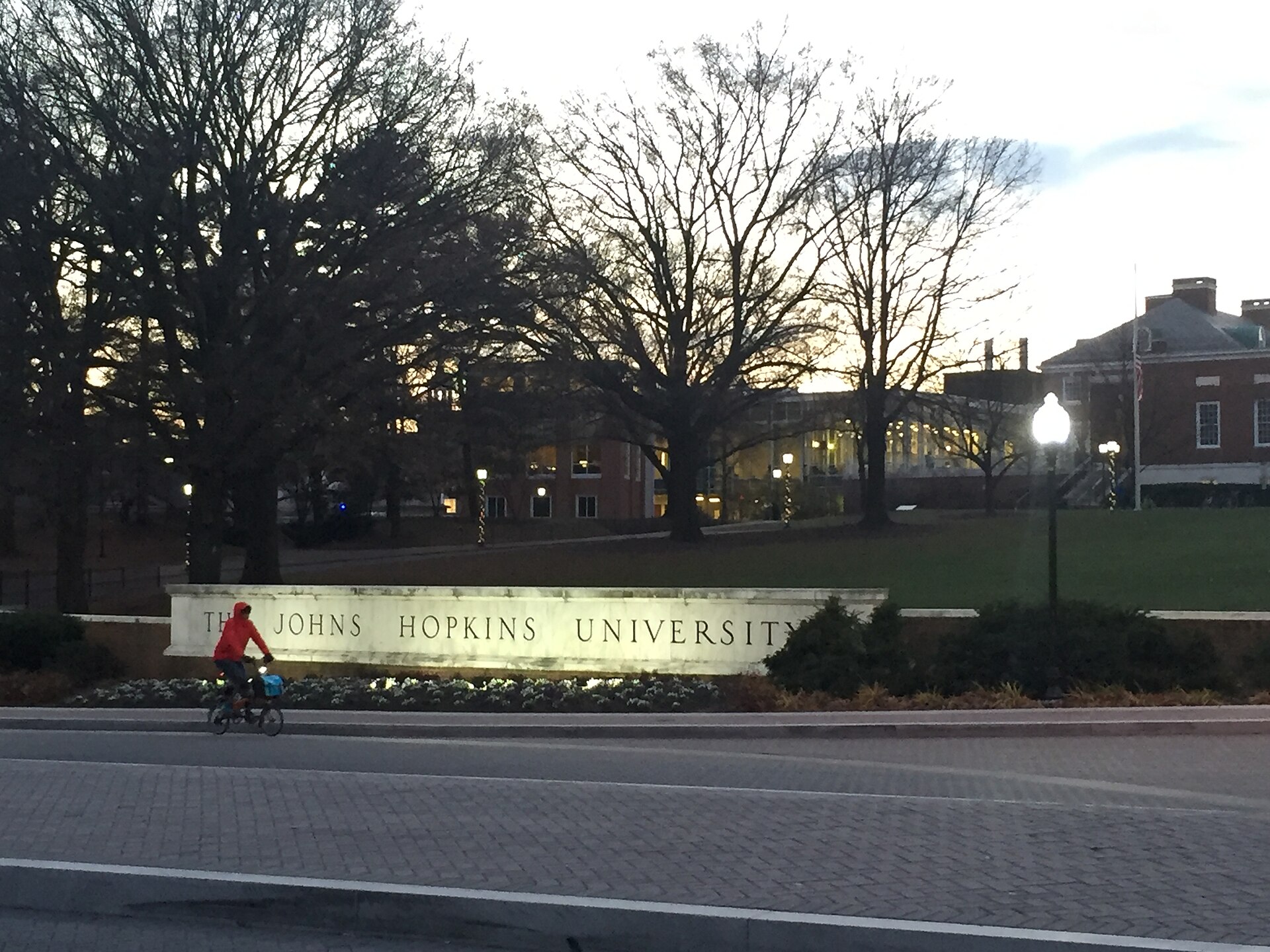
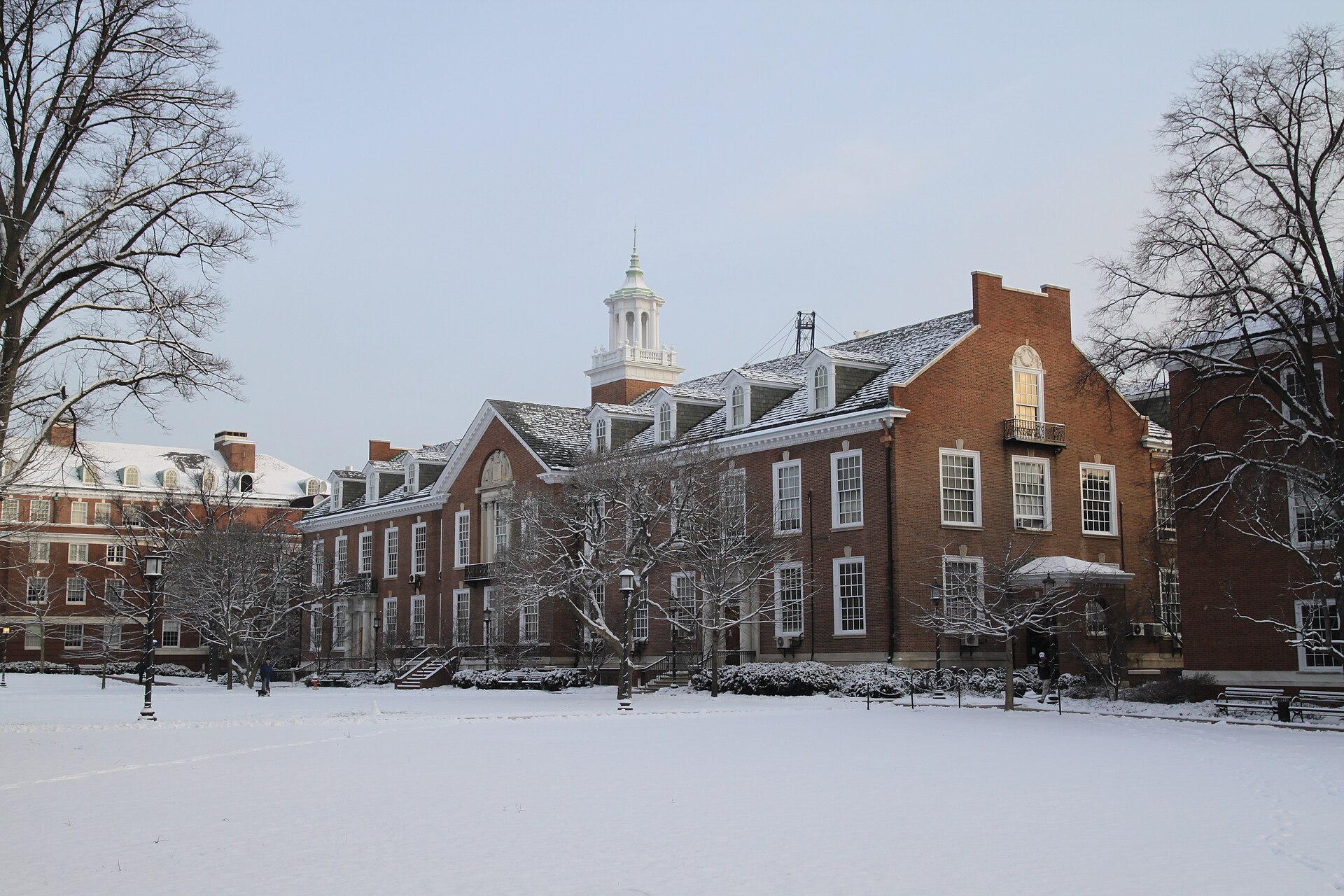
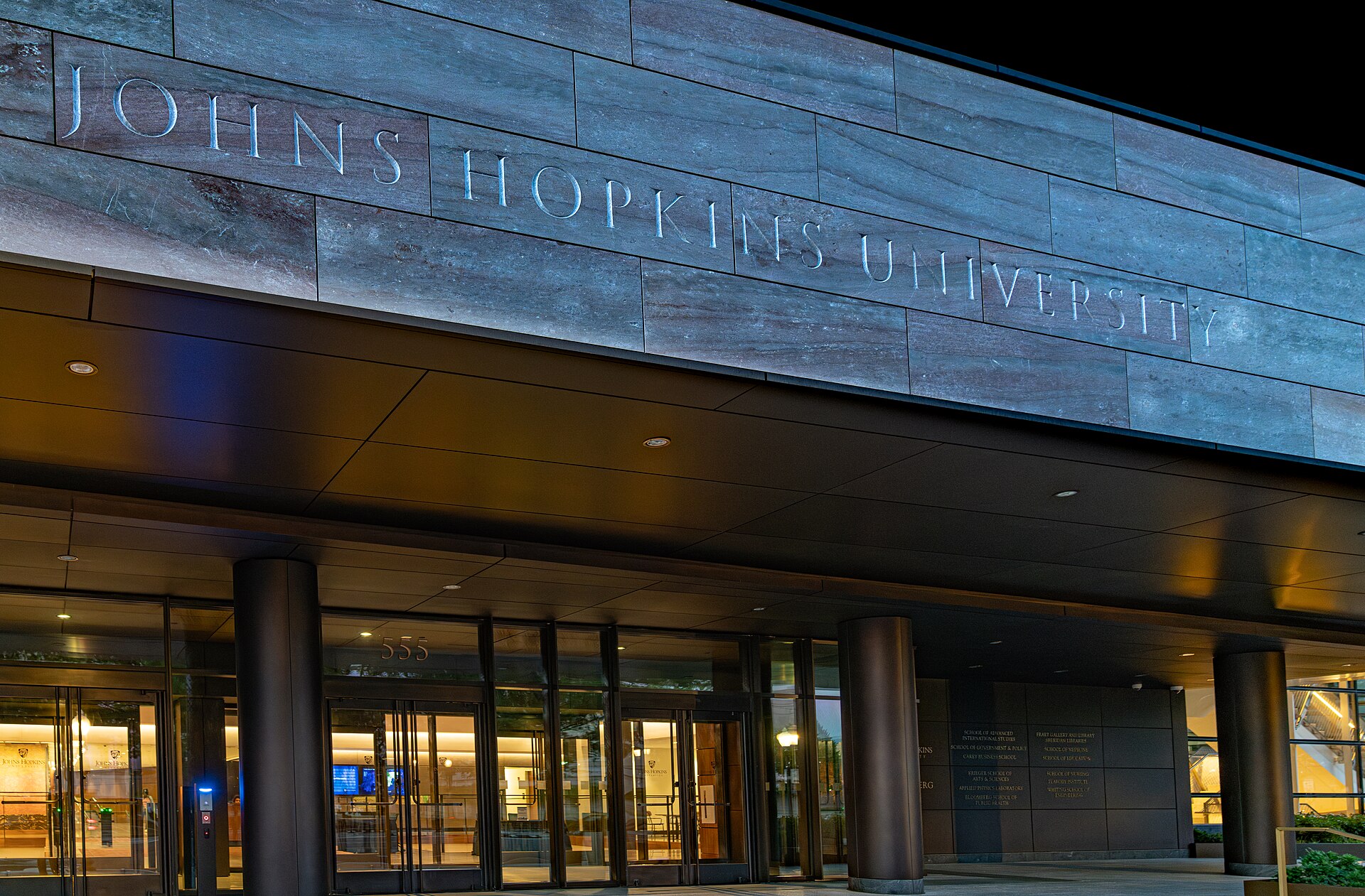
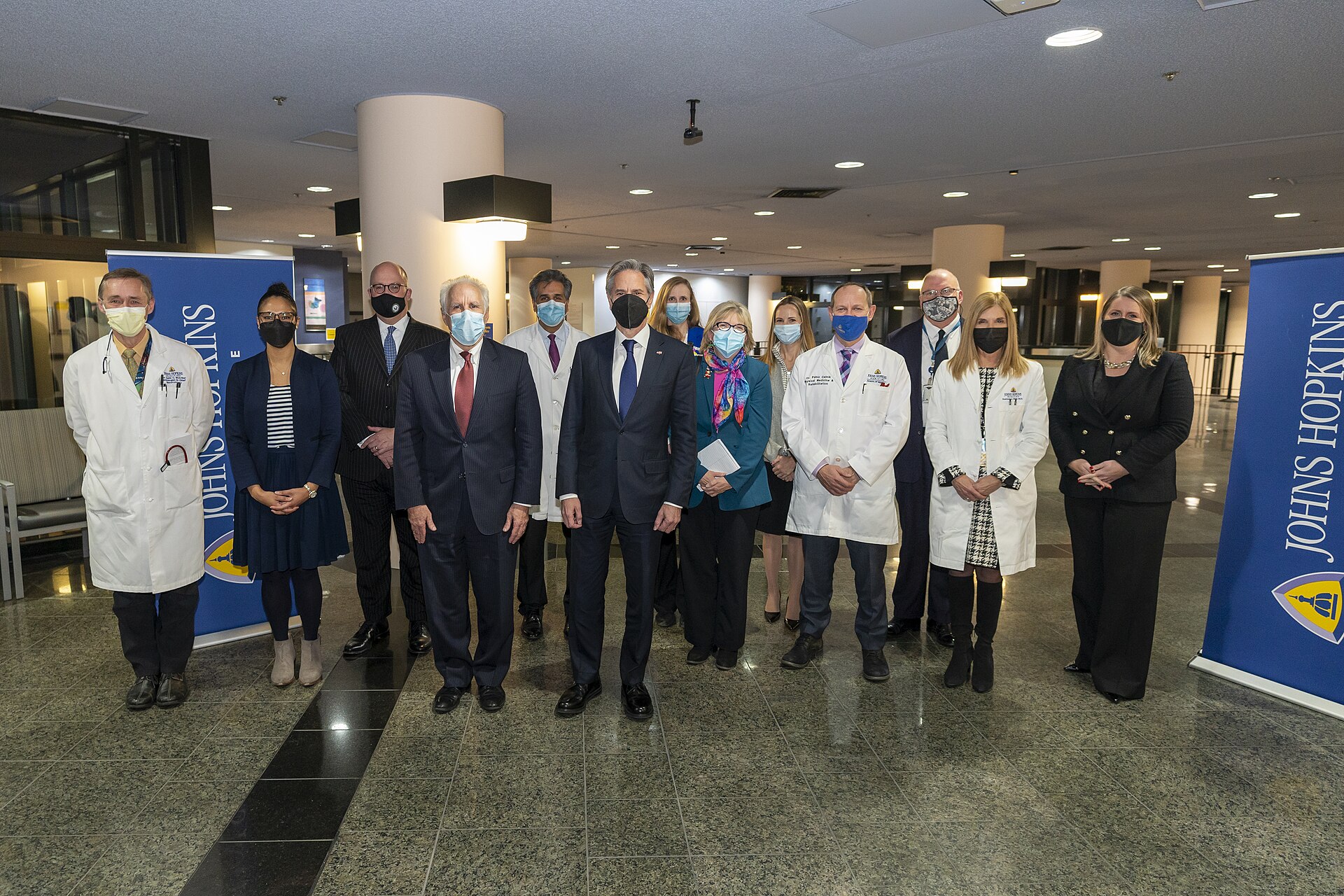
Johns Hopkins University — campus in pictures
Real, freely-licensed photographs of the campus (via Wikimedia Commons).


Why Hopkins — Research, Medicine & Global Impact
Johns Hopkins is not simply another Ivy-adjacent institution. It occupies a singular position: the university where medicine, engineering, public health, and international affairs converge with undergraduate education at the highest research intensity in the country. For ambitious international students, Hopkins represents a specific intellectual environment — one where undergraduates are expected to be producers of knowledge, not just consumers of it.
Hopkins Acceptance Rate & Admitted Student Profile
Stats
Profile Stats
Rea Vs Rd
Hopkins Admissions Requirements — Academics, SAT/ACT & International Credentials
- Near-perfect GPA in the most rigorous courses available
- Course selection matters as much as grades — Hopkins reads transcripts in context
- IB, A-Level, AP, CBSE, and other international curricula all evaluated
- Teacher recommendations validate intellectual character beyond grades
- SAT or ACT is REQUIRED at Hopkins — not optional
- Hopkins superscores the SAT across test sittings
- Middle 50%: SAT 1530–1560, ACT 34–36
- Self-report scores on application; official reports required at enrolment
- IB: 41+ points, 7s in Higher Level subjects relevant to intended field
- A-Levels: A*A*A minimum for competitive applications
- CBSE/ISC: 98%+ in relevant Science/Mathematics subjects
- National competition and Olympiad results add meaningful signal
Hopkins Application Components — Common App, Essays & Requirements
Hopkins accepts the Common Application, Coalition on Scoir, and QuestBridge. Below is every component of a complete Hopkins application, with strategic notes for each.
Hopkins Essays — Writing the Supplement & Personal Statement
Tips
Prompts
What Hopkins Admissions Officers Are Looking For
Hopkins uses a holistic evaluation process. Every application is read by multiple admissions officers and evaluated across several dimensions. Understanding what each dimension means — and what evidence satisfies it — is the foundation of a strong Hopkins application strategy.
Hopkins Financial Aid & Scholarships for International Students
Johns Hopkins's sticker price of approximately $92,000 per year is among the highest in the US. The honest picture for international families: Hopkins is need-aware (your financial need is considered in the admissions decision), but if you are admitted, Hopkins meets 100% of your demonstrated need without loans. Submit your financial aid application at the same time as your admissions application — there is no second chance.
Hopkins is need-aware for international applicants — financial circumstances may be a factor in the admissions decision. Apply for aid simultaneously with your application; you cannot add a request later.
Stats
Contribution Tiers
| Note | Range | Percent | Percent Value |
|---|---|---|---|
| Families with very limited income may qualify for near-zero contribution | Low Income | Near 100% | 95 |
| Significant grant aid available; parental contribution scales with income | Middle Income | Substantial | 70 |
| Partial grant aid may still be available depending on family circumstances | Higher Income | Partial | 35 |
Key Dates
Advantages
- Higher acceptance rate in ED rounds vs Regular Decision
- Signals genuine first-choice commitment to Hopkins
- Earlier decision — ED I results in December, ED II in February
- Demonstrated interest and institutional fit are taken seriously
- ED II offers a second early window if ED I is missed
Disadvantages
- ED I and ED II are binding — if admitted with sufficient aid, you must attend
- Cannot compare financial aid offers against other schools before committing
- Application must be complete by the respective ED deadline
- If deferred from ED I, you may wait until March without other early decisions
- Hopkins is need-aware for internationals — binding commitment before aid comparison is a real risk
Hopkins Interview — Format, Questions & Preparation
Hopkins alumni conduct interviews for many applicants worldwide. The interview is typically a 30–45 minute conversation and is informational and conversational in nature — your interviewer submits a brief report on your intellectual engagement and personal character. Not all applicants are offered interviews; if offered, accept it and prepare thoughtfully.
Meta
Questions
Hopkins Residential Life & Campus Housing
Hopkins does not have a residential house system in the Harvard sense. Instead, first and second-year students are required to live on campus in Homewood's residential halls, building a tight-knit community during the formative undergraduate years. Most upperclassmen move into the vibrant surrounding neighbourhoods — Charles Village, Remington, and Hampden — which are an integral part of the Hopkins undergraduate experience.
Houses
Lottery Steps
- All first-year students live on campus in assigned residence halls on the Homewood campus
- Second-year students are also required to live on campus — a rule that strengthens community formation
- Upperclassmen (Years 3–4) typically rent off-campus housing in Charles Village and surrounding neighbourhoods
- On-campus housing includes traditional corridor-style halls, suite-style options, and modern apartment units
- Baltimore's relatively low cost of living makes off-campus housing in Years 3–4 genuinely affordable by US East Coast standards
Hopkins Schools & Undergraduate Programmes
- {"label":"Undergraduate majors offered","value":"50+"}
- {"label":"Pre-med students enrolled","value":"Significant"}
- {"label":"Student:faculty ratio","value":"6:1"}
- {"label":"Research labs accessible to undergraduates","value":"3,000+"}
- {"label":"BME national ranking","value":"#1"}
- {"label":"Engineering departments","value":"10+"}
- {"label":"Years at #1 in BME","value":"25+"}
- {"label":"Cross-registration with Krieger","value":"Yes"}
- {"label":"Global ranking","value":"#1"}
- {"label":"Founded","value":"1916"}
- {"label":"Undergraduate access","value":"Seminars + research"}
- {"label":"Focus areas","value":"Epidemiology, Health Policy, Biostatistics"}
- {"label":"Flagship programme","value":"M.D."}
- {"label":"Founded","value":"1893"}
- {"label":"Hospital ranking","value":"Top 5 nationally"}
- {"label":"Pre-med undergraduate access","value":"Research + shadowing"}
- {"label":"Flagship programme","value":"MA in International Studies"}
- {"label":"Global campuses","value":"Washington DC, Bologna, Nanjing"}
- {"label":"Undergraduate access","value":"Courses + speaker events"}
- {"label":"Policy specialisations","value":"Diplomacy, Economics, Security"}
- {"label":"Flagship programme","value":"MBA"}
- {"label":"Founded","value":"2007"}
- {"label":"Undergraduate access","value":"Minor in Business"}
- {"label":"Location","value":"Washington DC + Baltimore"}
Research & Extracurricular Opportunities at Hopkins
Career Outcomes & Hopkins Alumni Network
Hopkins graduates enter a world shaped in large part by the research, medicine, and public health work Johns Hopkins itself drives. The 91% employment and graduate school placement rate, with an average starting salary of $78,000, reflects both the quality of the education and the strength of the Hopkins alumni network across medicine, research, policy, and industry.
Stats
Categories
Our Hopkins Admissions Track Record & Student Success Stories
Faqs
Is Johns Hopkins test-optional for international students?+
No. Hopkins requires standardised testing — the SAT or ACT is a mandatory component of the application for all applicants, including international students. You may self-report scores during the application process; admitted students who enrol must submit official reports from the testing agency.
Does applying Early Decision meaningfully improve my chances?+
Yes. ED applicants demonstrate genuine first-choice commitment to Hopkins, and the ED acceptance rate has historically been higher than the overall rate. Both ED I (November 1) and ED II (January 2) are binding — if admitted and your financial aid package is sufficient, you must withdraw all other applications.
Which school do I apply to — Krieger or Whiting?+
You apply directly to either the Krieger School of Arts and Sciences (humanities, natural sciences, social sciences, pre-med tracks) or the Whiting School of Engineering (all engineering disciplines, including the #1-ranked BME programme). Choose based on your intended field. Transferring between schools after admission is possible but not guaranteed.
Do international students receive financial aid at Hopkins?+
Hopkins is need-aware for international citizens — financial circumstances are considered in the admissions decision. However, if admitted, Hopkins meets 100% of demonstrated financial need without loans for all students, including internationals. Apply for aid at the same time as you apply for admission — you cannot add a request later.
What is the supplemental essay for 2026–2027?+
The prompt asks about engaging across differences and how your experiences have shaped the way you think about building bridges, enhancing community, and working with others. Word limit: 350 words. This is the only Hopkins-specific essay required.
Is Hopkins academically collaborative or competitive?+
Hopkins has a deliberately cultivated collaborative culture — students describe it as intense but cooperative. The administration has invested in this by design, and it shows in how study groups, research teams, and extracurricular projects operate. It is demanding, but not the cutthroat zero-sum environment sometimes associated with elite pre-med programmes.
Can international students receive merit scholarships at Hopkins?+
All applicants, including international students, are automatically considered for merit scholarships at the time of admission — no separate application needed. Merit awards are limited and competitive; the majority of international student aid is need-based. QuestBridge partners with Hopkins for full scholarships for outstanding low-income students.
Does Hopkins prefer any particular major or intended field?+
Hopkins does not explicitly prefer one field, but you apply to either Krieger or Whiting, so your stated academic direction matters. Pre-med and STEM applicants are a large and competitive group; humanities and social science applicants to Krieger may find a slightly different competitive landscape. Apply to the school that matches your genuine academic direction.
Book a Free Hopkins Admissions Strategy Session
In 60 minutes our Hopkins admissions specialists will evaluate your academic profile, identify your application strengths and gaps, develop your supplemental essay and activity strategy, and determine whether ED I, ED II, or Regular Decision gives you the best odds of admission.
- No commitment required
- Hopkins specialists with real application knowledge
- Personalised strategy — not generic advice
Hopkins Academic Requirements
Hopkins Academic Requirements — The Honest Breakdown for International Students
What GPA, test scores, and academic profile do Hopkins's admitted students actually have? And what does Hopkins's holistic review mean for students from IB, A-Level, AP, CBSE, and other international curricula?
GPA & Class Rank
Hopkins and GPA — What the Data Shows
The honest picture: Hopkins does not publish a minimum GPA. In practice, the vast majority of admitted students present near-perfect academic records. A 3.9+ unweighted GPA or equivalent is the typical floor — but a 3.9 is the starting point, not the differentiator.
A 3.9 GPA is a baseline expectation, not a distinguishing feature. What distinguishes admitted students is the combination of exceptional grades in exceptionally rigorous courses, not grades alone. Course selection — your choice of HL levels, AP subjects, or A-Level combinations — is evaluated as seriously as your final marks.
Academic Context
Class Rank and School Context — How Hopkins Reads Academic Performance
Hopkins reads every application with reference to the specific school's curriculum, grading norms, and course offerings. A student at a school that offers only three AP courses is not evaluated on the same basis as one at a school with a full IB Diploma programme.
Standardised Testing
SAT Scores at Hopkins — What You Actually Need
Hopkins SAT Data — Admitted Student Band
| Label | Score | Percent |
|---|---|---|
| 25th percentile | 1530 | 75 |
| 75th percentile | 1560 | 95 |
| Target for strong candidacy | 1560+ | 90 |
Standardised Testing
ACT Scores at Hopkins — The Data and the Strategy
Hopkins ACT Data — Admitted Student Band
Metrics
Comparison Cards
Testing Strategy
Hopkins Test Policy — Required Testing, Strategic Submission
Unlike many of its peer institutions, Johns Hopkins requires standardised testing — the SAT or ACT is mandatory for all applicants, including international students. Understanding what this means strategically, and how to optimise your score submission, is essential for Hopkins applicants.
Submit Items
Withhold Items
Curricula
A-Levels and IB at Hopkins — Specific Benchmarks
- {"label":"Competitive range","value":"41–45 points"}
- {"label":"HL expectations","value":"7,7,6 or 7,7,7 at Higher Level in subjects relevant to intended major"}
- {"label":"Subject rigour for Whiting (Engineering)","value":"HL Mathematics AA + HL Physics or Chemistry with 7s"}
- {"label":"Subject rigour for Krieger (Pre-Med)","value":"HL Biology + HL Chemistry with 7s"}
- {"label":"Extended Essay","value":"A or B grade; subject should connect to intended field if possible"}
- {"label":"Competitive range","value":"A*A*A to A*A*A*"}
- {"label":"For Whiting (Engineering)","value":"A-Level Mathematics + Further Mathematics or Physics at A*"}
- {"label":"For Krieger (Sciences)","value":"Chemistry + Biology at A* for pre-med track"}
- {"label":"GCSE/IGCSE record","value":"Strong foundation; 9s and 8s in relevant subjects reinforce predicted grades"}
Advanced Placement
AP Courses at Hopkins — What Counts and What to Take
For students at US schools or international schools that offer AP courses, Advanced Placement performance is a significant component of the academic profile. Hopkins's admissions committee reads AP course selection and scores alongside GPA and school context.
Academic Rigour
'Rigour of Secondary School Record' — Hopkins's Most Critical Academic Factor
Hopkins lists 'Rigour of secondary school record' as one of the most important academic factors in its admissions process — alongside grades and standardised testing. Understanding what this means for your specific curriculum, and how to demonstrate it, is fundamental.
Taking the most challenging courses available at your specific school, in the subjects most relevant to your intellectual interests.
Subject Preparation
Mathematics, Science & Humanities Preparation — What Hopkins Expects
Hopkins has no formal prerequisites for admission — students are admitted to either Krieger or Whiting and choose their major. However, the academic preparation expected for competitive Hopkins applications varies significantly by intended field, particularly for quantitative and pre-medical tracks.
Language Proficiency
English Language Requirements for International Hopkins Applicants
Hopkins requires English proficiency tests for international students whose first language is not English and whose secondary schooling was not conducted entirely in English. The minimum thresholds are published; competitive applicants should aim to exceed them.
The Hopkins application essays — particularly the 350-word supplement — are themselves the most visible English proficiency test. A student who writes with precision, clarity, and genuine voice demonstrates English fluency more convincingly than any test score. Strong test scores and strong essays together make the strongest case.
By Major / Field
Academic Preparation by Intended Major — What Different Paths Expect
Hopkins admits students to either Krieger School of Arts & Sciences or Whiting School of Engineering — not to a specific major. You declare your major during your first year. However, the academic profile should be coherent with your intended field of study and the school you are applying to.
| Signals | Expectation | Concentration |
|---|---|---|
| AMC/AIME participation; proof-based thinking in essays | HL Maths AA / A-Level Further Maths at A* | Applied Mathematics & Statistics |
| Competitive programming; original projects; USACO | HL Maths + CS background / AP CS A with 5 | Computer Science (Whiting) |
| Engineering projects; design thinking; hackathons | HL Maths AA + HL Physics or Chemistry | Biomedical Engineering (Whiting) |
| Research publications; laboratory experience; science olympiad | HL Chemistry + Biology at 7 / A* A-Levels | Molecular & Cellular Biology |
| Neuroscience research; clinical experience; cognitive science reading | HL Biology + Chemistry 7s / strong sciences | Neuroscience |
| Econometric projects; statistical analysis; economic research papers | HL Maths AA + Economics or equivalent | Economics (Krieger) |
| MUN; policy writing; government internship; language study | Strong humanities profile; IB English A + Global Politics | International Studies |
| Clinical volunteering; community health research; public health awareness | HL Biology/Chemistry + Social Sciences | Public Health (pre-Bloomberg SPH) |
International Systems
Hopkins and International Education Systems — How Your Curriculum Is Evaluated
Roadmap
Building an Academic Profile for Hopkins — What to Do at Each Stage
- Select IGCSE/MYP subjects that open the widest possible options for IB HL or A-Level choices.
- Prioritise mathematics and sciences alongside strong humanities — especially for pre-med or engineering interest.
- Identify one or two genuine academic interests and begin pursuing them independently — reading, online courses, early contact with a research topic.
- Begin one extracurricular commitment with the intention of growing within it over four years.
- IB Higher Level subject selection — choose for intellectual ambition and your intended major, not for grade protection.
- A-Level subject combination finalised, including whether to pursue Further Mathematics.
- Begin SAT or ACT diagnostic testing if targeting US universities.
- Research and apply to competitive summer programmes (research placements, clinical volunteering, academic competitions) — deadlines are often in November–January of Grade 10.
- Pursue research or a meaningful independent project actively — through a university lab, summer programme, or supervised independent work.
- Engage with academic competitions in your strongest subject area.
- Take the SAT or ACT for the first time — target April or May to allow a retake in September–October before the ED I deadline.
- Maintain or improve academic performance — predicted grades are submitted to Hopkins and must be credible.
- Finalise SAT/ACT scores by October at the latest for the November 1 ED I deadline.
- Begin Personal Statement drafting in August; Hopkins supplement drafting in August as well.
- Request teacher recommendations by September — give recommenders at least 6–8 weeks.
- Submit ED I by November 1 if Hopkins is your clear first choice; ED II by January 2 if you need more time.
Common Pitfalls
Academic Mistakes That Hurt Hopkins Applications — And How to Avoid Them
Real Outcomes
What Academic Profiles Tychr's Hopkins-Admitted Students Had
The following profiles represent the academic backgrounds typical of students Tychr has helped gain Hopkins admission or Hopkins-equivalent outcomes. They illustrate the range of preparation that works — and what made each application compelling.
Faqs
Is a 3.9 GPA enough for Hopkins?+
A 3.9 unweighted GPA is the typical floor for admitted students — it is a baseline expectation, not a distinguishing feature. What distinguishes admitted students is the combination of strong grades in rigorous courses, strong test scores (which are required at Hopkins), and evidence of intellectual engagement beyond the classroom.
What IB score do I need for Hopkins?+
Admitted Hopkins students typically present IB scores of 41 or above. This generally means 7s in all three Higher Level subjects. Scores below 39 are below the competitive range for most Hopkins applicants; scores of 43–45 are very strong.
Does Hopkins prefer SAT or ACT?+
No preference. Take the test you score higher on. If in doubt, take a diagnostic of both before committing to preparation in one.
Can I apply to Hopkins without test scores?+
No. Hopkins requires standardised testing — the SAT or ACT is mandatory for all applicants including international students. This policy is explicitly stated on the official admissions website. There is no test-optional pathway at Hopkins.
Does Hopkins accept students who were not top of their class?+
Hopkins evaluates everything in context. A student who was in the top 5% of a highly competitive international school reads differently from one who was top of a school with limited curriculum options. What matters is performance relative to the opportunities available and evidence of genuine academic ambition.
Financial Aid & Cost
What Hopkins Actually Costs — The Honest Picture for International Families
Hopkins's sticker price of ~$92,000 per year is real — but so is its commitment to meet 100% of demonstrated need without loans for every admitted student. The critical nuance for international applicants: Hopkins is need-aware, meaning financial circumstances may affect your admission. Apply for aid at the same time you apply for admission.
Cost Transparency
What Hopkins Actually Costs — The Full Annual Figure
Hopkins's tuition of $66,670 per year is the fixed cost. Room and board, personal expenses, books, and travel bring the total to approximately $92,000 annually. Baltimore is significantly more affordable than peer university cities — New York, Boston, or San Francisco — which makes off-campus living in Years 3–4 genuinely manageable. The sticker price is the worst-case scenario; admitted students with demonstrated need pay substantially less.
Aid Policy
Hopkins's Need-Aware Policy — What It Means and Why It Matters for Internationals
This is the critical distinction for international applicants: unlike Harvard, Princeton, and MIT, which are need-blind for international students, Hopkins is need-aware. Your family's financial circumstances may be a factor in whether you are admitted. This does not mean financial need automatically hurts your application — but it is a consideration in borderline decisions. If you are admitted, however, Hopkins meets 100% of your demonstrated need without loans — the same commitment it makes to every admitted student globally.
Institutional Commitment
Why Hopkins Can Afford This — The Institutional Commitment
Financial Aid Walkthrough
Applying for Hopkins Financial Aid — Step by Step
Hopkins financial aid requires a separate application — it is not automatic. Here is the complete process for international students.
- On Common App, Coalition, or QuestBridge, indicate that you are requesting financial aid
- For international students, this triggers the JHU ISFAA or CSS Profile process
- You cannot add a financial aid request after you submit your application
- CSS Profile (College Board code 5332): available at cssprofile.collegeboard.org
- JHU ISFAA: free alternative for international students; available through Hopkins's financial aid office
- Gather parent income documentation, tax records, and bank statements before completing
- {"date":"November 15","label":"ED I Applicants"}
- {"date":"January 15","label":"ED II and RD Applicants"}
International Students
Hopkins Financial Aid for International Students — How It Works
Hopkins's financial aid programme extends to international students — with an important caveat. Understanding exactly how the programme works for non-US citizens is essential for international families planning for the Hopkins cost.
Financial Aid Estimates
What Hopkins Financial Aid Looks Like — General Income Guidance
Qualitative Aid Guidance by Family Income Level
Hopkins does not publish a detailed income-band aid table. Specific award amounts depend on the full CSS Profile/JHU ISFAA assessment. The guidance above is qualitative. Use Hopkins's Net Price Calculator at apply.jhu.edu for an individualised estimate.
For families with genuine financial need — below approximately $100,000 annual income in many country contexts — Hopkins's grant can cover a substantial portion or all of the cost of attendance. Hopkins uses its own formula to determine the Expected Family Contribution; the CSS Profile or JHU ISFAA is the only way to know your specific award. Use Hopkins's Net Price Calculator (available on the official website) for a preliminary estimate.
| Grant | Income | Contribution |
|---|---|---|
| Potentially near full coverage | Low income (varies by country context) | Near $0 parental contribution |
| Significant grant aid | Middle income | Scaled percentage of annual income |
| Partial grant aid may be available | Higher income | Higher expected parental contribution |
| Minimal to no institutional aid | High income (above ~$250K+) | Full or near-full cost expected |
Table Headers
Merit & Need Aid
Scholarships and Grants at Hopkins — What Exists and Who Qualifies
Hopkins provides both need-based grants (the primary and largest source of aid) and limited merit scholarships for exceptional applicants. All applicants are automatically considered for merit awards at the time of admission — no separate merit application is required.
External Funding
External Scholarships — Additional Funding for Hopkins Students
In addition to Hopkins's own financial aid programme, numerous external organisations award scholarships to Hopkins-bound and current Hopkins students. These can supplement Hopkins grants for students from specific countries or backgrounds.
Debt-Free Education
Hopkins's No-Loan Policy — What It Means for Your Family
Hopkins's financial aid packages contain no institutional loans — all Hopkins-provided support is in the form of grants that do not need to be repaid. This is one of the most important and least publicised features of Hopkins's financial aid programme, and one that meaningfully separates it from most universities globally.
Student Employment
Work-Study at Hopkins — What to Expect
Hopkins financial aid packages typically include a student employment (work-study) component — an expected contribution of approximately $2,000–$3,000/year from on-campus or approved off-campus employment. This is a practical and often professionally valuable part of the Hopkins financial aid experience.
- Research assistant positions in faculty laboratories — popular with STEM students; provides both income and direct research experience
- Hopkins Hospital and affiliated clinical research administration roles
- Library and administrative positions across Homewood and medical campus
- Dining services and campus facilities
- Tutoring and academic support through the university's centres
- Office of Admissions ambassador and tour guide roles
- Center for Social Concern community-engaged service positions
Benchmarking
Hopkins vs. Peers — Financial Aid Policy Comparison
| Policy | School | No Loans | Typical Cost |
|---|---|---|---|
| Need-aware for internationals | Johns Hopkins | Yes — no institutional loans | Full need met after admission |
| Need-blind for all | Harvard | Yes | $0 for families under $85K |
| Need-blind for all | Princeton | Yes | $0 for families under $100K |
| Need-blind for all | MIT | Yes | $0 for families under $90K |
| Need-aware for internationals | Yale | Near-zero loans | Full need met after admission |
| Need-aware for internationals | Columbia | No | Need met but may include loans |
| Need-aware for internationals | University of Michigan (OOS) | No | ~$50,000–$65,000/year for internationals |
Cost Analysis
Hopkins vs. Alternatives — What You Actually Pay
For a family with demonstrated financial need that meets Hopkins's criteria, the $92,000 sticker price shrinks dramatically — potentially to near zero. A US state university, charging $50,000+ per year for international students with little to no institutional aid, may cost the same family three to four times what Hopkins would cost. The sticker price is the worst-case scenario, not the realistic one for families who qualify for aid and are admitted.
| Policy | School | Contribution | Four Year Cost |
|---|---|---|---|
| Need-aware; full need met; no loans | Johns Hopkins | Varies by need | Potentially $0–full for qualifying families |
| Need-blind; full need met; no loans | Harvard / MIT / Princeton | ~$0 for families under $85–100K | ~$0 for qualifying families |
| Need-aware; partial-need met; may include loans | Other top-20 US universities | ~$15,000–$30,000+/year for middle-income | ~$60,000–$120,000 for middle-income families |
| Limited aid for internationals | Top US state universities (OOS) | ~$40,000–$55,000/year | ~$160,000–$220,000 |
| UK tuition cap; some bursaries | UK Russell Group | ~$28,000–$40,000/year (intl tuition) | ~$112,000–$160,000 |
Financial Appeals
Appealing a Hopkins Financial Aid Decision — When and How
Hopkins's initial financial aid award is based on the information provided in the CSS Profile or JHU ISFAA. If circumstances have changed, if the initial award doesn't reflect your family's true situation, or if another institution has offered substantially different aid, Hopkins has a clear appeals process.
Hopkins's financial aid formula is designed to be generous and comprehensive. Appeals are most successful when based on a genuine change in circumstances — a job loss, a medical expense, a family crisis — or a clear error in the original assessment. Appeals based simply on dissatisfaction with the formula's assessment of an unchanged financial situation are less likely to succeed.
How To Appeal
- Contact Hopkins's Student Financial Services office directly and promptly — do not wait
- Submit a written appeal explaining the specific circumstance or change
- Provide documentation: updated income statements, medical bills, explanation letters, or other relevant evidence
- If comparing against another university's aid offer, provide the competing award letter as supporting documentation
When To Appeal
- Family financial circumstances have materially changed since the CSS Profile/JHU ISFAA was submitted
- The original application contained a documentation error or omission
- The initial award seems significantly inconsistent with the family's actual financial situation
- Another peer institution has offered substantially more generous aid (most relevant for domestic students)
Timeline & Planning
Planning for Hopkins Costs — What to Do and When
Faqs
Is Hopkins need-blind for international students?+
No. Hopkins is need-aware for international citizens — financial circumstances may be considered in the admissions decision. If you are admitted, however, Hopkins meets 100% of your demonstrated financial need without loans. Apply for aid at the same time you apply for admission.
Does Hopkins really meet 100% of demonstrated need?+
Yes, for all admitted students — including internationals. Hopkins meets the full gap between the cost of attendance (~$92,000) and your Expected Family Contribution, entirely through grants and work-study. No institutional loans are included.
What does 'demonstrated need' mean in practice?+
Your demonstrated need is the difference between the total annual cost of attendance (~$92,000) and what Hopkins calculates your family can reasonably contribute. This is determined through the CSS Profile or JHU ISFAA. Hopkins uses its own formula, not just a standard federal calculation, and considers income, assets, family size, and unusual circumstances.
Can I apply for aid after submitting my application?+
No. For international students, the aid request and the financial aid application must be submitted by the deadlines for your chosen round. You cannot add a financial aid request after submitting your admissions application.
Is Baltimore an expensive city to live in?+
By US East Coast standards, Baltimore is relatively affordable. The estimated living cost is ~$18,000 per year, which is considerably lower than Boston, New York, or Washington DC. First and second-year students live on campus; most upperclassmen rent in surrounding neighbourhoods at competitive rates.
Does the application fee have a waiver?+
Yes. Fee waivers ($70) are available through Common App, Coalition on Scoir, and QuestBridge, and via direct request to Hopkins admissions. The application fee should never be a barrier to applying.
ESSAYS
Hopkins Essays — Why They Matter More Than You Think
At an acceptance rate of 6.4%, with thousands of applicants presenting near-perfect test scores and GPAs — tests that are required, not optional, at Hopkins — the essays are where Hopkins actually meets you. The admissions team reads every supplement carefully: not as a box-ticking exercise, but as a genuine attempt to understand who you are, how you think, and whether you will add to the particular culture Hopkins is building.
Hopkins explicitly values a collaborative, community-minded intellectual culture. The 2026–2027 supplemental essay prompt — focused on engaging across differences and building bridges — is a direct expression of this institutional value. Your essay is not merely a writing sample; it is a demonstration that you understand what Hopkins is looking for and that you genuinely embody it.
OVERVIEW
Essay Requirements — Platform, Count & System
In total, you write two essays for Hopkins: (1) your Common App Personal Statement of up to 650 words, and (2) the Hopkins supplemental essay of up to 350 words. Both carry significant weight — but the supplement is the primary instrument Hopkins uses to distinguish between applicants with similar academic profiles.
Hopkins accepts applications through Common App, Coalition on Scoir, and QuestBridge — all three include the Hopkins supplemental essay. The Common App Personal Statement (up to 650 words) is the main personal essay shared across all your Common App schools. The Hopkins supplement (up to 350 words) is the only additional required essay unique to your Hopkins application.
2026–2027 PROMPTS
Official Essay Prompts — With Strategy
PERSONAL STATEMENT
The Common App Personal Statement — Strategy for Hopkins
Avoid essays about: the importance of hard work, learning from failure in a predictable arc, sports injuries with triumphant comebacks, or service trips where you learned more than you gave. These are not bad topics in principle, but they are overused to the point of invisibility at the volume of applications Hopkins reads. The Personal Statement that works at Hopkins is specific, honest, and strange in the best sense — it shows a mind at work, not a portfolio of achievements.
Your Personal Statement is your primary canvas. For Hopkins applicants, it should accomplish one thing above all others: make the admissions reader see you as a distinct intellectual presence — someone who thinks in a particular way, cares about particular things, and would bring something irreplaceable to Hopkins's collaborative research culture.
Strong opening sentences are not clever; they are direct. Begin in the middle of something real — a moment, a question, a realisation — and let the narrative build outward from there. Hopkins readers appreciate authentic voice over polished performance. If you had to show this essay to the person it is about before submitting it, and that made you nervous, that is usually a sign you are writing something real.
SUPPLEMENT STRATEGY
Approaching the Hopkins Supplement — Community, Bridges & Difference
The 2026–2027 Hopkins prompt is genuinely distinctive — it is asking Hopkins to see the collaborative citizen in you, not the competitive achiever. This is intentional. Hopkins has invested in cultivating a culture where students build together rather than compete against each other, and the supplement is the primary instrument for selecting people who will contribute to that culture.
TOPIC SELECTION
Choosing What to Write About — For Both Essays
For the Hopkins supplement specifically: the best topics tend to be moments of genuine discomfort, confusion, or surprise — situations where you were forced to confront a perspective you had not previously considered. These do not need to be dramatic. A disagreement in a study group, a community service placement, a moment in a lab where your hypothesis was definitively wrong, a conversation with someone from a completely different socioeconomic background — all of these can carry the weight the prompt is asking for.
The most common mistake Hopkins applicants make is selecting a topic based on how impressive it sounds rather than how authentic it is. A prestigious summer research placement, described without genuine reflection, is less compelling than a dinner-table conversation with a family member that actually changed how you see the world.
- Choose a moment that actually changed something in how you think — not a moment that confirms a lesson you already knew.
- Make sure the 'difference' in your story is genuinely meaningful — not a minor inconvenience or a superficial disagreement.
- The best essays put the reader inside your mind during the experience — not just observing the situation from outside.
- Avoid beginning with a dictionary definition, a broad generalisation about humanity, or a rhetorical question.
- Write a first draft without worrying about the 350-word limit; then cut ruthlessly to what is essential.
- Read your draft aloud — if it sounds like a college application essay, rewrite it until it sounds like you.
COMMON MISTAKES
Essay Pitfalls That Hurt Hopkins Applications
- Writing a 'Why Hopkins' recitation of rankings and research programmes when the prompt explicitly asks about community and collaboration — the supplement is not a 'Why Hopkins' essay.
- Focusing entirely on the external situation rather than your internal journey — admissions readers can immediately sense when an essay is performance rather than reflection.
- Using the supplement to repeat information that's already in your activities list — the essay should add a new dimension of your character that isn't visible elsewhere in the application.
- Trying to cover multiple examples in 350 words — the result is always shallow. Choose one specific moment and develop it fully.
- Generic opening lines: 'Throughout my life, I have always believed in the importance of diversity' or similar — invisible and wasteful of precious word count.
- Writing about an experience without articulating what specifically changed in how you think — the prompt explicitly asks what you have 'learned'.
- Submitting without having someone who knows your voice review the draft for authenticity — not just someone who is a strong writer.
- Starting the supplement too late — this is the most important essay in your Hopkins application and deserves substantial drafting time and multiple revisions.
ESSAY FAQS
Essays — Frequently Asked Questions
How important is the supplemental essay relative to grades and test scores?+
At a 6.4% acceptance rate, virtually all applicants have near-perfect academics and strong test scores — which are required at Hopkins. The supplemental essay is one of the primary instruments for distinguishing between equally qualified applicants. It is not more important than your transcript or tests, but it may be the single most differentiating factor between two candidates with similar profiles.
What does Hopkins mean by 'bridge builders'?+
Hopkins is describing students who can hold complexity — who can engage with people who see the world differently, challenge their own assumptions, and collaborate toward shared goals despite disagreement or difference. It is describing an intellectual and social disposition, not a specific role or job. 'Bridge builder' is a metaphor for someone who prioritises genuine connection and collaboration over competitive advantage.
Can I write the supplement about a non-academic experience?+
Absolutely. The prompt invites you to draw on your 'own experiences' — family, community, cultural background, work, service, or any meaningful encounter with difference. Some of the most powerful supplements come from domestic or family contexts rather than formal academic or research settings.
Should I explicitly mention Hopkins in my supplement?+
You do not need to — and many of the strongest essays do not. The prompt asks about your experiences and what you have learned from them, not for a statement of why you want to attend Hopkins. Let the connection be implicit rather than stated. A supplement that explicitly says 'and this is why I want to come to Hopkins' often reads as weaker than one whose alignment with Hopkins values is simply evident.
Is the 350-word limit strictly enforced?+
Yes. The application platform enforces the word limit. Write up to the limit — not significantly under it (a 180-word response reads as insufficient effort for the question) and not over it.
Does it matter which Common App prompt I choose?+
Not materially. Hopkins does not weight one Common App prompt over others. Choose the prompt that leads to the most specific, authentic, and revealing essay — the one that only you could write, and that shows a dimension of your character not captured elsewhere in the application.
When should I start the Hopkins supplement?+
If applying ED I (November 1 deadline), begin brainstorming in July and drafting in August. Aim to have a strong draft by late September, leaving October for revision and feedback. The supplement deserves at least four or five substantive drafts. It is a 350-word essay that needs to do more work per word than any other writing you will produce in the application cycle.
What if I want to apply to both Krieger and Whiting? Do I write different essays?+
You can only apply to one school — Krieger or Whiting. The supplement is the same regardless of which school you apply to. Choose the school that genuinely matches your academic direction, as the supplement and other application components should be coherent with that choice.
Courses — schools, degrees & intake
54 degrees across 3 groupings.
Zanvyl Krieger School of Arts and Sciences · 33 degrees
Anthropology
Archaeology
Behavioral Biology
Biology
Biophysics
Chemistry
Classics
Cognitive Science
Earth and Planetary Sciences
Economics
English
Film and Media Studies
French
German
Hispanic and Portuguese Studies
History
History of Art
International Studies
Italian
Mathematics
Medicine, Science and the Humanities
Molecular and Cellular Biology
Music
Natural Sciences
Near Eastern Studies
Neuroscience
Philosophy
Physics and Astronomy
Political Science
Psychological and Brain Sciences
Public Health Studies
Sociology
Writing Seminars
Whiting School of Engineering · 13 degrees
Applied Mathematics and Statistics
Biomedical Engineering
Chemical and Biomolecular Engineering
Civil Engineering
Computer Engineering
Computer Science
Electrical Engineering
Engineering Mechanics
Environmental Engineering
General Engineering
Materials Science and Engineering
Mechanical Engineering
Systems Engineering
Peabody Institute · 8 degrees
Dance (BFA)
Music – Composition (BM)
Music – Hip Hop (BM)
Music – Jazz Performance (BM)
Music Education (BM)
Music for New Media (BM)
Music – Performance (BM)
Recording Arts and Sciences (BM)
Want your real chances at Johns Hopkins University?
Create a free TYCHR account for your personalised admit-chance, a shortlist you can track, exact entry requirements, and essay + counselling help.