Jagiellonian University
Kraków, Poland · Urban
Founded in 1364 and the alma mater of Nicolaus Copernicus, Jagiellonian University is the intellectual heart of Kraków and Poland's most prestigious research university. With a QS global rank of 306, affordable European cost structure, and a growing portfolio of English-taught programmes, it offers ambitious international students a rare combination of historical prestige, genuine academic depth, and exceptional value.
Campus
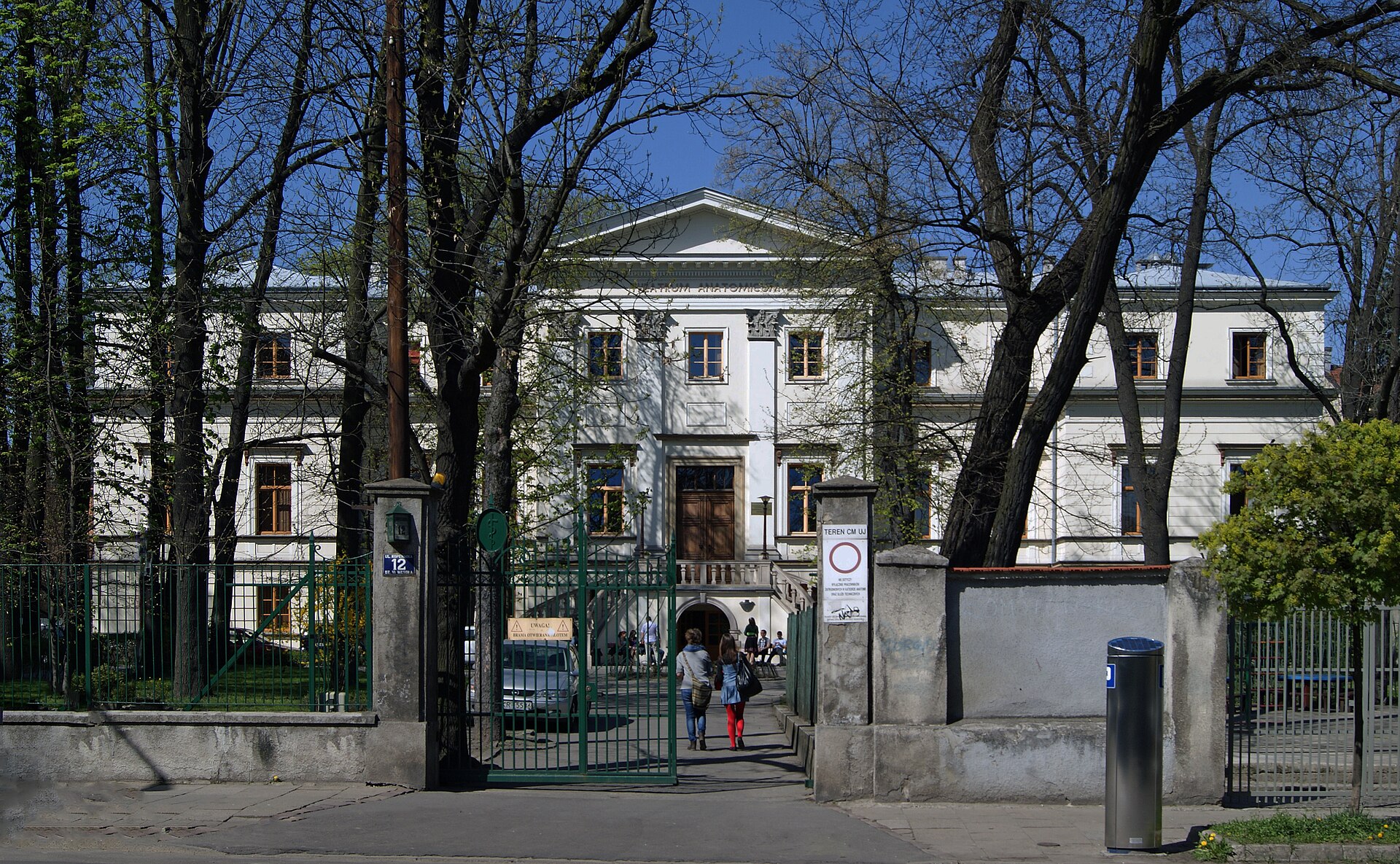
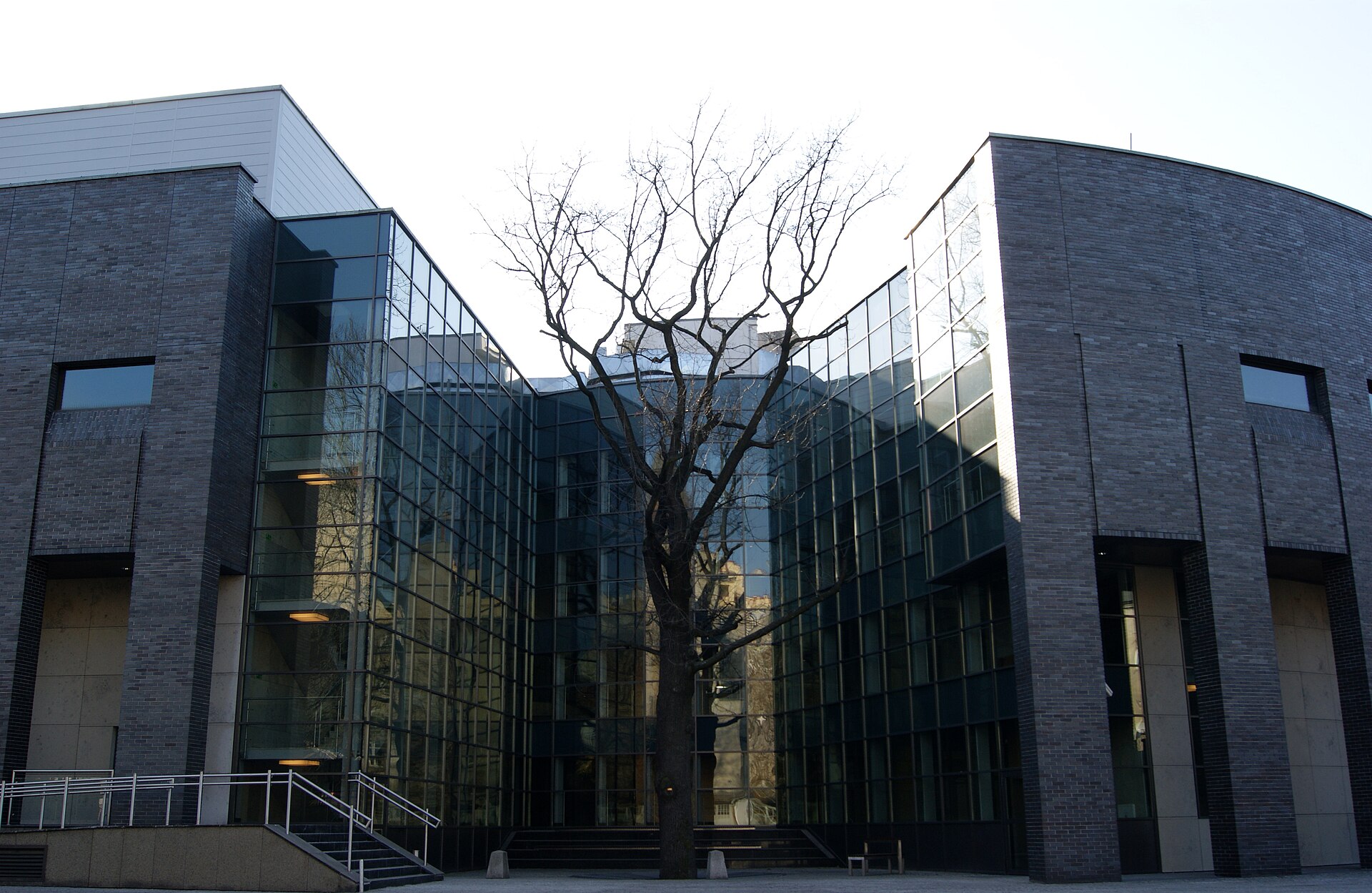
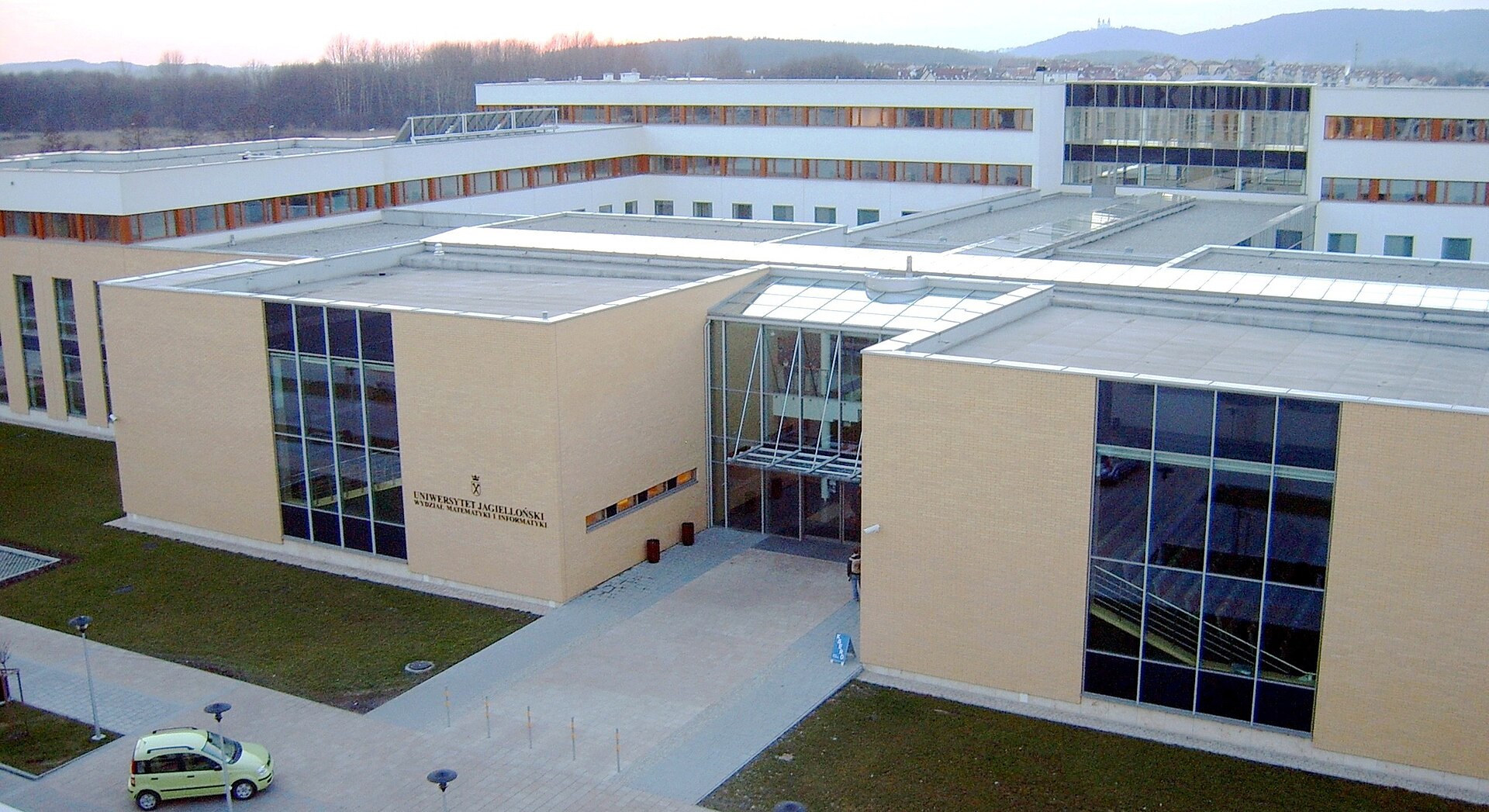
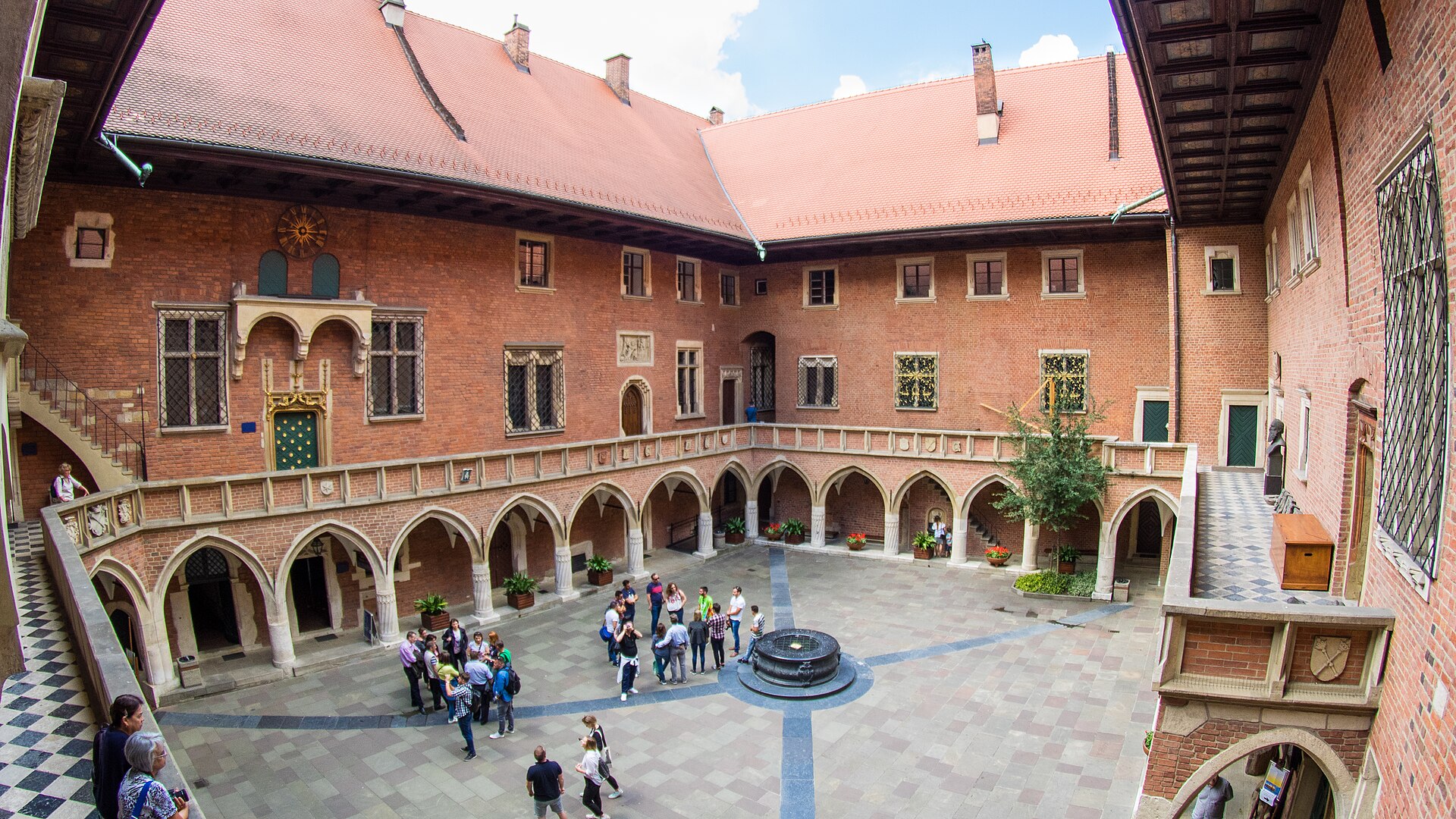
Jagiellonian University — campus in pictures
Real, freely-licensed photographs of the campus (via Wikimedia Commons).


Why Jagiellonian — Prestige, Affordability & Research
Jagiellonian University is not simply Poland's oldest institution — it is one of Europe's most continuously active seats of learning, combining a 660-year intellectual heritage with modern research infrastructure that attracts students from over 100 countries.
Jagiellonian Acceptance Rate & Competitive Profile
Stats
Profile Stats
Rea Vs Rd
Jagiellonian Admissions Requirements — Grades, Qualifications & Language
- Strong grades in subjects relevant to chosen programme
- IB, A-Level, or national baccalaureate all accepted
- Science marks in Biology and Chemistry critical for Medicine
- No SAT or ACT — university is test-blind
- IB: 33+ overall; HL Biology and Chemistry 6-7 for Medicine
- A-Levels: AAB or above in three relevant subjects
- National leaving certificates: strong marks in programme-relevant subjects
- AP scores accepted as supplementary evidence for US curriculum students
- IELTS Academic: minimum 6.0 overall
- TOEFL iBT: minimum 80
- Duolingo English Test: minimum 105
- Native English speakers and English-medium school graduates may be exempt
Jagiellonian Application Components — IRK Portal, Documents & Motivation Letter
Jagiellonian University uses its own direct IRK portal for international admissions. Below is every component required for a complete application — required and programme-specific — with strategic notes.
Jagiellonian Motivation Letter — Writing the Perfect Academic Statement
Tips
Prompts
What Jagiellonian Admissions Committees Are Looking For
Jagiellonian University uses a grades-driven, test-blind admissions model. Every eligible applicant is ranked by academic score in relevant subjects; places are allocated from the top of the ranking list down. Understanding precisely what the ranking formula weights for your target programme is the foundation of a strong application strategy.
Jagiellonian Cost & Financial Aid for International Students
Jagiellonian University is among the most affordable serious research universities open to international students anywhere in the world. Financial aid for international students is limited but real — primarily merit-based scholarships for students with Olympiad distinction or specific nationality profiles, supplemented by Poland's national NAWA scholarship programmes.
All cost figures are drawn from the university's official facts profile, expressed in USD for comparability. Actual costs in Polish Złoty (PLN) will fluctuate with exchange rates. The MD programme tuition may be higher — verify directly with Collegium Medicum.
Stats
Contribution Tiers
| Note | Range | Percent | Percent Value |
|---|---|---|---|
| University dormitory — most affordable option, apply early | Dormitory Room | ~$200–$300/month | 25 |
| Shared apartment in city centre or student areas | Shared Flat | ~$350–$500/month | 45 |
| Private studio or one-bedroom apartment | Private Flat | ~$550–$750/month | 65 |
| Food, transport, mobile, social — estimated monthly | Living Expenses | ~$300–$450/month | 40 |
| Estimated total annual cost including tuition | Total Annual | ~$11,300 | 100 |
Key Dates
Advantages
- Largest pool of available places for your programme
- Maximum time to prepare document apostille and translations
- Earlier decision — results known by June/July
- Some programmes fill entirely in Round 1 with no Round 2
- More time to arrange accommodation and visa before October
Disadvantages
- Application opens while you may still be mid-exams (IB/A-Level)
- Predicted or interim grades may be used if final results not yet available
- Document logistics (apostille, translation) must be started very early
- Some students receive Round 1 offers before confirming final grades
Jagiellonian Interview & Entrance Examination — Format & Preparation
Most Jagiellonian University programmes do not conduct formal interviews. Admission is based entirely on academic ranking — your grades in relevant subjects determine your position. However, the English-language MD programme at Collegium Medicum has in some cycles included an online entrance examination or interview. Always verify the current requirements for your specific programme in the IRK system.
Meta
Questions
Jagiellonian University Dormitories & Residential Life
Jagiellonian University operates six student dormitories (Dom Studencki) across Kraków, offering affordable on-campus accommodation to enrolled students. University residences are in high demand and allocated based on distance from home city and financial need — international students are encouraged to apply immediately upon receiving an admission offer through the akademiki.uj.edu.pl portal.
Houses
Lottery Steps
- Apply for dormitory accommodation as soon as your admission offer is issued — do not wait until September
- Applications submitted through the akademiki.uj.edu.pl portal; priority given to students furthest from home and those demonstrating financial need
- International students are given specific consideration — confirm your eligibility category when applying
- Dormitory rooms are single or shared; facilities vary by building
- If dormitory allocation is unavailable, private rooms and shared apartments in Kraków are plentiful and affordable — monthly rents for shared flats typically run $350–$500 USD
Jagiellonian University Faculties & Programmes
- {"label":"Flagship international programme","value":"English-language MD"}
- {"label":"Clinical training","value":"Kraków teaching hospitals"}
- {"label":"Additional programmes","value":"Pharmacy, Dentistry, Nursing"}
- {"label":"EU medical licence","value":"Graduates eligible across EU"}
- {"label":"Founded","value":"14th century"}
- {"label":"Language","value":"Polish (primarily)"}
- {"label":"EU law pathways","value":"Available"}
- {"label":"International programmes","value":"LLM in English"}
- {"label":"Research flagship","value":"SOLARIS Synchrotron"}
- {"label":"Key strength","value":"Astrophysics, particle physics"}
- {"label":"English-taught","value":"Some MSc programmes"}
- {"label":"Industry links","value":"Kraków tech sector"}
- {"label":"Research centre","value":"Małopolska Centre of Biotechnology"}
- {"label":"English-taught programmes","value":"Available at MSc level"}
- {"label":"Key disciplines","value":"Molecular biology, biotechnology"}
- {"label":"Research intensity","value":"High — EU grant funded"}
- {"label":"Key programme","value":"International Relations (English)"}
- {"label":"Language of instruction","value":"English and Polish options"}
- {"label":"EU focus","value":"Central European & EU politics"}
- {"label":"Career paths","value":"EU institutions, diplomacy, NGOs"}
- {"label":"Programme language","value":"Polish (primarily)"}
- {"label":"Selectivity","value":"High — strong applicant pool"}
- {"label":"Research strengths","value":"Clinical, cognitive, social"}
- {"label":"International access","value":"Via Polish language preparation"}
Research & Extracurricular Opportunities at Jagiellonian
Career Outcomes & Jagiellonian Graduate Network
Jagiellonian University graduates achieve an 86% employment rate with an average starting salary of approximately $22,000 USD annually — a figure reflecting strong purchasing power in Poland's growing economy and a competitive entry point for Central European careers. Medicine, Law, and Technology graduates have the strongest international placement.
Stats
Categories
Our Jagiellonian Admissions Track Record & Student Success
Faqs
Is Jagiellonian University a good choice for international students who do not speak Polish?+
Yes — provided you apply for an English-taught programme. JU offers a growing number of undergraduate and master's programmes in English, most notably the Collegium Medicum's MD programme and various Natural Sciences, Social Sciences, and Humanities degrees. If you intend to study in Polish, JU's School of Polish Language and Culture runs a preparatory year for international students.
Are SAT or ACT scores required for admission?+
No. Jagiellonian University is test-blind; SAT and ACT scores play no role in admissions. Decisions are based on your secondary school academic record and, for English-taught programmes, verified English proficiency.
What is the minimum IB score for competitive programmes?+
The university's facts profile indicates an IB band of 33 as an indicative benchmark. In practice, the MD programme at Collegium Medicum is highly competitive and typically requires strong science scores at Higher Level. Check the IRK system for the ranking cut-offs from the most recent cycle.
Do I need to apostille my school documents?+
Yes, in most cases. Documents issued outside Poland typically require an apostille and, if not in English or Polish, a certified translation. Start this process early — apostilles and translations can take four to six weeks and must be submitted at enrolment in September.
Can I apply before receiving my final school results?+
Yes. JU allows you to submit your application in the IRK system before your final certificate is issued, using predicted or interim grades. However, you must present the original final certificate at enrolment. Conditional places are common practice.
How competitive is the English-language MD programme?+
Extremely competitive. The MD programme at Collegium Medicum draws a large international applicant pool and places are limited. Strong Higher Level Biology and Chemistry scores in the IB (or equivalent) are essential, and some cycles include an entrance examination or interview. Apply in Round 1 and ensure all documents are ready well in advance.
Is there guaranteed on-campus accommodation for international students?+
There is no guaranteed dormitory place, but the university operates six student residences. International students are encouraged to apply for housing as soon as they receive an admission offer. Private rental options in Kraków are plentiful and relatively affordable.
What scholarships are available to international students at JU?+
The main merit-based options are the Stypendium UJ (for students with outstanding academic records — approximately 2,100 PLN/month), the Rector's Scholarship (for international Olympiad laureates), and NAWA government scholarships (monitor nawa.gov.pl for current calls). Most international students self-fund given JU's low absolute cost.
Book a Free Jagiellonian Admissions Strategy Session
In 60 minutes our Jagiellonian admissions specialists will evaluate your academic profile, identify your qualification strengths and gaps, guide your motivation letter strategy, advise on document logistics, and determine the best round and programme for your goals.
- No commitment required
- European admissions specialists with JU experience
- Personalised strategy — not generic advice
Jagiellonian Academic Requirements
Jagiellonian University Academic Requirements — The Honest Breakdown for International Students
What grades, qualifications, and academic profile do admitted students actually need? And what does a grades-driven, test-blind European admissions process mean for students from IB, A-Level, and other international curricula?
GPA & Academic Record
Jagiellonian and GPA — What the Academic Record Means
Jagiellonian University does not publish a minimum GPA in the 4.0 sense — it uses its own grading scale and accepts international qualifications on their native scale. The indicative minimum GPA equivalent from the facts profile is 3.0, but for competitive programmes, the realistic bar is significantly higher.
A 3.0 GPA is a baseline floor, not a competitive target for high-demand programmes. For the MD and Psychology programmes, applicants should realistically hold strong grades across science or relevant subjects — not just a passing record.
Academic Context
School System & Context — How JU Reads International Academic Records
Jagiellonian University evaluates academic performance within the framework of the student's own educational system. The admissions office is experienced at reading IB Diplomas, A-Levels, and major national baccalaureates from across Europe, the Middle East, Asia, and the Americas.
SAT Policy
SAT at Jagiellonian — Not Required, Not Accepted
Jagiellonian University is fully test-blind. SAT scores are not accepted, reviewed, or considered in any admission decision at any JU programme.
| Label | Score | Percent |
|---|---|---|
| SAT accepted | No | 0 |
| SAT considered | Never | 0 |
| Test policy | Test-Blind | 0 |
ACT Policy
ACT at Jagiellonian — Not Part of the Process
Like the SAT, the ACT is not required, not accepted, and not considered at Jagiellonian University. The university's test-blind policy applies to all standardised tests of this kind.
Metrics
Comparison Cards
Testing Policy
JU Test-Blind Policy — What This Means Strategically
Jagiellonian University's test-blind policy is absolute, not conditional. Unlike US universities that are 'test-optional' (where submitting strong scores can be advantageous), JU's test-blind approach means no standardised test score is viewed, considered, or included in any ranking formula regardless of how strong it is.
Submit Items
Withhold Items
Curricula
IB and A-Levels at Jagiellonian — Specific Benchmarks by Programme
- {"label":"Competitive range (overall)","value":"33+ points"}
- {"label":"HL requirements (Medicine)","value":"Biology HL 6–7, Chemistry HL 6–7"}
- {"label":"HL requirements (Sciences/Biotechnology)","value":"Relevant science HLs at 6–7"}
- {"label":"HL requirements (Social Sciences/IR)","value":"Broad academic profile; relevant HLs at 5–7"}
- {"label":"IB language of instruction","value":"Confirms English proficiency for exemption from separate IELTS"}
- {"label":"Competitive range","value":"AAB – A*A*A in relevant subjects"}
- {"label":"Medicine subjects","value":"Biology + Chemistry essential; Mathematics recommended"}
- {"label":"Sciences/Biotechnology","value":"Biology + Chemistry + Mathematics/Physics"}
- {"label":"Social Sciences/Law","value":"History + Language(s) + Social Science"}
- {"label":"Computer Science","value":"Mathematics + Physics/CS"}
AP Courses
AP Courses at Jagiellonian — What They Mean and What to Do
Advanced Placement (AP) exams are an American curriculum qualification. Jagiellonian University does not use AP scores in its admissions ranking formula. However, AP coursework completed by students in US-curriculum international schools is not irrelevant — it provides context for the rigor of a student's secondary school record.
Academic Rigour
Secondary School Rigour — How Course Challenge Shapes Your JU Profile
While JU does not formally weight 'rigour of curriculum' as a separate criterion the way US universities do, the admissions formula implicitly rewards students who have studied subjects at the highest available level — because those students tend to have higher absolute scores in the relevant subjects that the ranking formula uses.
The student who took HL Biology and HL Chemistry in the IB, and earned 7s in both, is more competitive for Medicine than a student with an identical total who avoided those subjects.
Subject Preparation
Subject Preparation — What Jagiellonian Expects by Programme
Jagiellonian University has no formal prerequisites published centrally — individual faculties specify their required and preferred subjects in the IRK system each cycle. However, the patterns below reflect consistent expectations across programmes based on historical admissions data and faculty guidance.
Language Proficiency
English Language Requirements for International JU Applicants
For all English-taught programmes at Jagiellonian University, English proficiency verification is a non-negotiable prerequisite. The minimum thresholds below apply across the university's English-medium offerings; some faculties set higher requirements.
Your IELTS or TOEFL score is a gating requirement — below the minimum, your application cannot proceed regardless of how strong your academic record is. Plan to sit your English test with enough time for retakes if needed, ideally with results available at least two months before your Round 1 application deadline.
By Programme
Academic Requirements by Programme — What Each Faculty Expects
JU admits students to specific programmes (not to the university broadly). The academic requirements below reflect consistent expectations based on the admissions process for each faculty. Verify the current cycle's specific ranking formula in the IRK system.
| Signals | Expectation | Concentration |
|---|---|---|
| HL Biology 6–7; HL Chemistry 6–7; entrance exam prep | IB HL Biology + Chemistry; A-Level Biology + Chemistry at AAB+ | Medicine (MD) |
| HL Biology 6–7; HL Chemistry 6–7 | IB HL Biology + Chemistry; A-Level Biology + Chemistry | Pharmacy |
| HL Maths + Physics; coding projects | IB HL Maths (AA preferred) + Physics; A-Level Maths + Physics/CS | Computer Science |
| HL Biology + Chemistry; research experience | IB HL Biology + Chemistry; A-Level Biology + Chemistry | Biotechnology |
| History + Languages; EU political awareness | Strong humanities profile; broad academic record | International Relations |
| History + Languages; legal interest demonstrated | Broad academic profile; Languages and History prominent | Law |
| Biology + Maths; demonstrated subject interest | IB HL Biology + Mathematics; A-Level Biology + Maths | Psychology |
| HL Chemistry + Mathematics; lab/research experience | IB HL Chemistry + Maths; A-Level Chemistry + Maths | Chemistry |
International Systems
Jagiellonian and International Education Systems — How Your Curriculum is Evaluated
Roadmap
Building an Academic Profile for Jagiellonian — What to Do at Each Stage
- Select IGCSE or equivalent subjects that leave the widest options for IB HL or A-Level choices relevant to your target JU programme.
- For Medicine or Biotechnology: prioritise Biology and Chemistry from the earliest opportunity.
- For Computer Science: ensure Mathematics is a central subject.
- For International Relations or Law: build strong Languages and Humanities foundations.
- Choose your IB Higher Level or A-Level subjects with your target JU programme's ranking formula in mind.
- For Medicine: HL Biology and HL Chemistry are essentially non-negotiable.
- Avoid subject changes after Year 11 begins — consistency matters.
- Begin researching JU's English-taught programmes at studia.uj.edu.pl to understand specific requirements.
- Register for IELTS or TOEFL if your schooling is not entirely in English. Aim for test results available by spring of Year 13.
- Research your specific target programme in the IRK system — understand the ranking formula and any entrance exam requirement.
- Begin a first draft of your motivation letter; research specific programme features, research centres, and faculty you can reference credibly.
- Note apostille and translation requirements for your secondary school documents — this process takes 4–6 weeks.
- Predicted or interim grades should be as strong as possible in relevant subjects — this is what the ranking formula uses before finals are available.
- Finalise your motivation letter (if required) in academic register — specific, formal, one to two pages.
- Register on irk.uj.edu.pl as soon as the Round 1 window opens (typically April); submit documents and pay the application fee.
- Initiate apostille and translation processes immediately — do not wait for a decision.
- Upon receiving final IB, A-Level, or national certificate results, initiate apostille and certified translation immediately.
- Submit enrolment documents by the faculty's September deadline — missing this forfeits your place.
- Apply for dormitory accommodation without delay through akademiki.uj.edu.pl.
- Contact the Welcome Centre (welcome@uj.edu.pl) with any queries — they are specifically set up to assist international students.
Common Pitfalls
Academic Mistakes That Cost Jagiellonian Applications — And How to Avoid Them
Real Outcomes
What Academic Profiles Tychr's JU-Admitted Students Had
The following profiles represent the academic backgrounds of international students Tychr has supported in gaining Jagiellonian University admission. They illustrate what works — and the specific academic choices that made each profile competitive.
Faqs
What IB score do I need for Jagiellonian University?+
An IB score of 33 is an indicative competitive benchmark from the university's facts profile. For the MD programme, HL Biology and Chemistry at 6–7 matter more than the overall total. Check the IRK ranking cut-offs from the previous cycle as a realistic guide.
Does JU accept SAT or ACT scores?+
Yes. JU is fully test-blind — SAT and ACT scores are not considered regardless of how high they are. The only standardised tests that matter are English proficiency certificates (IELTS/TOEFL/Duolingo) for English-taught programmes.
Does JU prefer a high overall IB score or strong subject grades?+
No. JU evaluates grades in the relevant subjects for each programme. A student with HL Biology 7 and HL Chemistry 7 but an overall IB of 36 is more competitive for Medicine than a student with an IB of 42 who did not take those subjects.
What academic preparation is most important for the English MD?+
Grades in Biology and Chemistry at the highest available level (IB HL or A-Level) are the primary academic signals. Mathematical competence is also valued. Some cycles include an entrance exam or interview — prepare for science content at IB HL standard.
Can I apply to JU before receiving my final IB or A-Level results?+
You may apply with predicted or interim grades in Round 1 — final results must be provided at enrolment. Most applicants apply before receiving IB or A-Level results and receive conditional places. Do not wait for final results before applying.
Cost & Financial Aid
Jagiellonian University May Cost Your Family Less Than Any Other Ranked European University — Here's the Full Picture.
Jagiellonian University is one of the most affordable research-quality universities open to international students in Europe. Here is exactly what JU costs, how the limited financial aid landscape works, and how to fund your education strategically.
Cost Transparency
What Jagiellonian Actually Costs — The Full Annual Figure
At approximately $11,300 USD per year, a four-year undergraduate degree at Jagiellonian University costs less than one year of tuition at a UK Russell Group university or US private university. The MD programme (six years) totals approximately $67,800 USD all-in — versus $200,000–$400,000+ for equivalent programmes in the US or UK. The strongest financial argument for JU is the low absolute cost, not deep financial aid.
Financial Aid Reality
Financial Aid at Jagiellonian — Honest Assessment for International Students
Unlike US need-blind institutions, JU does not operate a comprehensive need-based financial aid programme for most international (non-EU) students. Aid is primarily merit-based and targeted at students with exceptional academic distinction (Olympiad laureates) or specific nationality profiles. The Social Scholarship — JU's needs-based support — requires specific legal status in Poland that most newly arriving international students will not hold.
Institutional Context
Why Jagiellonian Is Affordable — The Structural Reason
Funding Walkthrough
How to Fund Your Jagiellonian Education — Step by Step
JU's financial aid is not automatic and does not work like a US university CSS Profile system. Here's the complete process for securing the best available funding.
- Use the annual figures from the facts profile: tuition ~$3,800 USD + living ~$7,500 USD
- Multiply by programme length: 3–4 years undergraduate; 6 years for Medicine
- Build a PLN/USD exchange rate buffer into your calculations
- Check nawa.gov.pl for current scholarship calls — deadlines vary and some open before the JU admission window
- Review eligibility for Banach, Łukasiewicz, and other NAWA programmes
- NAWA and JU admission applications can run simultaneously
- Stypendium UJ — for outstanding academic records; apply through stypendia.uj.edu.pl
- Rector's Scholarship — for international Olympiad laureates or national competition medallists
- Olympiad Fund — targeted at international science, mathematics, or linguistics Olympiad finalists
- Many governments offer study-abroad scholarships for students admitted to European universities
- Check your home Ministry of Education, national cultural foundations, and private scholarship databases
- Home-country government scholarships are often the most practical route for non-EU students
- University dormitories are significantly cheaper than private rental
- Apply through akademiki.uj.edu.pl immediately upon receiving an admission offer
- International students receive specific consideration — note your status in the application
International Student Aid
Financial Aid for International Students at JU — How It Actually Works
Financial aid at Jagiellonian University for international (non-EU) students is more limited than at US need-aware or need-blind institutions. Approximately 10% of institutional aid is directed to international students. This reflects a genuine structural difference: JU is a public Polish university funded by the state, not a private endowment-backed institution with discretionary aid to distribute.
Aid Landscape
What Financial Aid at JU Actually Looks Like — Who Gets What
JU Aid by Applicant Profile (Approximate)
Aid amounts are estimates based on published JU scholarship rates and NAWA programme data. Actual awards depend on competitive application and available places each year. PLN/USD conversion based on approximate current exchange rates.
For most international students without Olympiad distinction, JU financial aid is limited. The financial case for JU is its low absolute cost — not its aid generosity. At $11,300 USD per year, self-funding a JU education is feasible for many families who could not afford US or UK universities.
| Grant | Income | Contribution |
|---|---|---|
| ~2,100 PLN/month (~$500–550 USD) | Outstanding academic record (any income) | Full tuition + partial living coverage |
| Variable monthly stipend | International Olympiad laureates / national medallists | Rector's Scholarship — meaningful contribution to living costs |
| Variable — see nawa.gov.pl | Programme-dependent (NAWA scholarships) | Monthly stipend + potential tuition coverage |
| None (self-funded) | Standard international applicant (no Olympiad distinction) | ~$11,300 USD per year all-in |
Table Headers
Scholarship Landscape
JU Scholarships — What Exists and Who Qualifies
Jagiellonian University's internal financial support for international students is primarily merit-based, not needs-based. The following named scholarships are available to international students and require active application after enrolment.
External Funding
External Scholarships for JU Students — Additional Funding Sources
While JU's own financial aid for international students is limited, numerous external organisations — both Polish government programmes and home-country sources — offer funding to students studying at JU. These external scholarships can meaningfully reduce the cost of a JU education for qualifying students.
Loan Policy
Student Loans at JU — The Honest Picture
Poland and Jagiellonian University do not offer a student loan programme equivalent to the US federal loans system or UK Student Finance. There is no institutional loan facility available to international students at JU. Most international students who require financing must arrange it in their home country before arriving.
Student Employment
Working in Kraków During Studies — What to Expect
Poland's work regulations for international students have evolved in recent years. Non-EU students on a student residence permit (temporary stay) in Poland are generally permitted to work part-time without a separate work permit under current Polish immigration law — but this is subject to change. Confirm the current position with the JU Welcome Centre and the Polish consulate in your home country before planning to work.
- Research assistant positions in JU faculty labs (available to students with strong academic records)
- Library and administrative roles at JU (advertised through the JU HR portal)
- English-language tutoring and private language teaching (common among international students)
- Hospitality and service sector in Kraków's tourism industry (significant year-round demand)
- Remote work for home-country employers (subject to visa conditions)
- Campus jobs through the Erasmus+ student network and international office
Benchmarking
Jagiellonian vs Other International Universities — Cost Comparison
| Policy | School | No Loans | Typical Cost |
|---|---|---|---|
| Tuition ~$3,800/yr; no need-based aid for most internationals | Jagiellonian University (Poland) | N/A — no loan system | ~$11,300/yr all-in |
| Low tuition (state-subsidised); limited aid for non-EU | Charles University (Czech Republic) | N/A | ~$8,000–$15,000/yr |
| Very low tuition (German/EU-funded); no significant aid for non-EU | LMU Munich (Germany) | N/A | ~$15,000–$20,000/yr (higher living costs) |
| Free tuition for all (incl. non-EU in many programmes); high living costs | University of Helsinki (Finland) | N/A | ~$12,000–$18,000/yr (tuition-free + living) |
| Need-blind for internationals; no loans; generous aid | Harvard (USA) | Yes | $0–$87,000/yr (aid-dependent) |
| International tuition ~£28,000/yr; limited aid | UCL (UK) | No | ~£43,000/yr (~$55,000) |
| International tuition ~AUD $35,000/yr; limited aid | University of Melbourne (Australia) | No | ~AUD $52,000/yr (~$35,000 USD) |
True Cost Analysis
Jagiellonian vs Alternatives — What You Actually Pay Over Four Years
For a family that does not qualify for US need-blind aid and cannot access UK student finance, Jagiellonian University's ~$45,200 four-year total is among the most affordable pathways to a ranked European research degree. The comparison with mid-tier US universities at $160,000–$240,000 total is striking.
| Policy | School | Contribution | Four Year Cost |
|---|---|---|---|
| Public Polish university; no need-based aid for most non-EU | Jagiellonian University | ~$11,300/yr | ~$45,200 (4 yrs) |
| German public university; very low tuition; high living costs | LMU Munich | ~$15,000–$20,000/yr | ~$60,000–$80,000 |
| UK Russell Group; high international tuition | University of Edinburgh | ~$28,000–$38,000/yr | ~$112,000–$152,000 |
| Australian Group of Eight; high international tuition | University of Melbourne | ~$30,000–$38,000/yr | ~$120,000–$152,000 |
| US private; limited international aid; loans common | Mid-tier US private university | ~$40,000–$60,000/yr | ~$160,000–$240,000 |
| Need-blind; no loans; full grant for qualifying families | Harvard / Princeton / MIT | $0–$87,000/yr (income-dependent) | $0–$348,000 (aid-dependent) |
Aid Queries
Addressing Scholarship Queries and Financial Circumstances at JU
JU does not have a formal financial aid appeal process equivalent to US institutions, because JU does not award need-based institutional aid to most international students. However, if you believe your JU scholarship application has been assessed incorrectly, or if your financial circumstances have changed significantly after admission, there are steps you can take.
JU's scholarship system is competitive and merit-based. Appeals to scholarship decisions are generally only productive when there has been a factual error in the assessment. If you did not receive a scholarship because you did not meet the eligibility criteria, an appeal is unlikely to change the outcome.
How To Appeal
- Contact the JU Scholarships Office (stypendia.uj.edu.pl) directly with a written query explaining the specific concern
- Provide documentation supporting any factual correction — academic certificates, competition results, or other eligibility evidence
- For NAWA scholarships, contact the NAWA Poland office directly (nawa.gov.pl) — they manage their own appeals process
When To Appeal
- Your Olympiad certificate or competition result was not correctly registered in the scholarship application system
- Your GPA calculation contains an error — the scholarship requires a minimum GPA and the calculation appears incorrect
- Your financial circumstances have changed significantly after enrolment (job loss, family crisis) — contact the JU Social Affairs office to explore emergency support options
- A new NAWA scholarship round has opened for which you now qualify — apply directly, this is not an appeal but a fresh application
Timeline & Planning
Planning for Jagiellonian Costs — What to Do and When
Application Strategy
Jagiellonian University Applications — Everything You Need to Know About the Motivation Letter and Direct Admissions Process.
A complete guide to JU's application system — what the process requires, how the motivation letter differs from a US personal essay, and the specific strategies that produce competitive applications for Medicine, Law, Psychology, and other high-demand programmes.
Application System Overview
Jagiellonian Application Requirements — The Full Picture
Jagiellonian University uses direct admissions through the IRK portal (irk.uj.edu.pl). There is no Common App, UCAS, or third-party aggregator. The admissions model is grades-driven: applicants are ranked by academic score in relevant subjects and places allocated from the top of the ranking list down. For competitive programmes, a motivation letter is required as a separate gate.
Optional Items
Required Items
The Core Written Document
The Motivation Letter at JU — What It Needs to Accomplish
The JU motivation letter is the written core of a competitive application for high-demand programmes. Unlike the US Common App personal essay — which is a narrative self-portrait — the JU motivation letter is a formal academic document with a specific purpose: to confirm that you are a serious, well-prepared candidate who understands the programme and has clear academic and professional goals.
The central strategic challenge for JU applicants coming from US-facing admissions cultures is register: the tone, structure, and purpose of a JU motivation letter are fundamentally different from a Common App personal essay. Students who recognise this distinction early write far stronger applications than those who adapt an existing US essay.
Tired Of List
- Letters that begin with childhood memories or personal anecdotes ('I have wanted to be a doctor since I was seven...')
- Generic passion statements without evidence ('I am deeply passionate about medicine/law/science')
- US-style personal essay structure — narrative arc, emotional peak, reflective conclusion
- Letters that could have been sent to any medical school or any law faculty — lacking JU-specific content
- Sprawling letters over two pages that reflect poor judgment about academic conventions
Looking For List
- Clear, factual description of your academic record in relevant subjects
- Specific, researched explanation of why this programme and why JU — referencing actual programme features, research centres, or faculty
- Realistic, grounded professional goals that connect logically to the degree
- Formal academic register — clear sentences, logical structure, no emotional language
- Concision: one to two pages that say exactly the right things
Strategic Content
Choosing What to Emphasise — The Strategic Decisions That Shape Your Letter
The content decisions in a JU motivation letter are as important as the writing quality. The wrong content — personal narrative, generic passion, biographical storytelling — produces a weak letter regardless of how well it's written.
Criteria
Caution Topics
- Childhood inspiration stories — wrong register for a European academic document
- Overclaiming research experience you cannot substantiate in detail
- Vague references to 'Jagiellonian's excellent reputation' without specific content
- Professional goals that are grandiose or unrealistic (e.g., 'I intend to cure cancer')
Letter Structure
JU Motivation Letter Structure — The Four Sections That Work
The JU motivation letter for competitive programmes follows a consistent four-section structure that European academic committees understand and expect. Deviating from this structure — particularly by adopting US personal essay conventions — weakens the document. Here is each section with strategic guidance.
Content Calibration
What to Emphasise and What to Omit in a JU Motivation Letter
International students coming from US-facing application cultures frequently over-personalise their JU motivation letters. The guidance below helps calibrate what belongs and what does not.
Pitfalls
Common Motivation Letter Mistakes to Avoid
- Writing in a narrative, personal-essay style — JU evaluators are reading an academic document, not a college essay.
- Failing to mention the specific programme or university by name — a generic letter that could have been sent anywhere is immediately obvious and unfavourable.
- Listing every academic achievement without connecting them to the programme — achievements are evidence, not content; link each one to programme fit or professional goals.
- Exceeding two pages — concision is valued in European academic culture; a sprawling letter suggests poor judgment rather than depth.
- Translating a US Common App personal essay and resubmitting it — the structure, register, and content are entirely wrong for this context.
- Claiming research experience you cannot substantiate — if the programme includes an entrance exam or interview, the committee may probe anything you write; only mention experience you can discuss confidently.
- Ignoring the entrance examination component for Medicine — some cycles of the MD programme include a science exam; prepare for Biology and Chemistry content, not only the written statement.
- Not verifying whether a motivation letter is required at all — many JU programmes admit entirely on grades with no written statement; confirm before investing time in a letter that may not be needed.
Application FAQs
Application & Motivation Letter Frequently Asked Questions
Is a motivation letter required for all JU programmes?+
No. Many programmes — particularly in the Social Sciences, Humanities, and Natural Sciences — admit entirely on the basis of secondary school grades and do not require any written statement. Motivation letters are most commonly required for Medicine, Psychology, Law, and other high-demand programmes. Check the specific IRK listing for your target programme.
Should my motivation letter be in English or Polish?+
For English-taught programmes, submit your letter in English. For Polish-taught programmes, a Polish-language letter may be expected — confirm with the faculty. If the programme is Polish-medium and you are applying as a non-Polish speaker, clarify your language situation and your preparation plan clearly in the letter.
Is there a formal word limit for the motivation letter?+
JU does not specify a universal word limit, but one to two pages (approximately 400–700 words) is the standard European academic motivation letter length. Aim for the shorter end unless the faculty specifically asks for more.
Can I submit the same motivation letter to multiple programmes?+
Only if the programmes are very similar and you can ensure every reference is accurate for each one. More commonly, applicants write a core letter and adjust the programme-specific sections for each application. Submitting a letter that mentions the wrong programme name is a disqualifying error.
Is there an interview component for Medicine?+
Some cycles of the Collegium Medicum English MD programme include an entrance examination or online interview in addition to grades and documents. The requirement is published in the IRK system each recruitment cycle — check early and prepare accordingly for Biology and Chemistry content.
Do teacher recommendations play any role in JU admissions?+
No. Jagiellonian University does not require or request teacher recommendations as part of the standard international admissions process. This is standard across most Polish and European public university systems.
What language should I use if English is not my first language?+
Write in clear, formal English. If your IELTS or TOEFL score is above the minimum requirement, your language proficiency is already demonstrated. Focus on content quality over apologising for language. The committee is evaluating what you say, not performing a stylistic critique.
Can I apply to both Polish-taught and English-taught programmes at the same time?+
Yes — you can submit multiple applications through the IRK system. However, Polish-taught programmes require Polish proficiency that most international students will not have unless they have completed a preparatory language course. Confirm language requirements before applying to Polish-medium programmes.
Courses — schools, degrees & intake
21 degrees across 10 groupings.
Faculty of International and Political Studies · 8 degrees
European Studies
Global and Development Studies
International Relations and Area Studies
Una Europa Bachelor of European Studies (BAES)
International Relations
International Relations and Public Diplomacy
International Security and Development
Korean Studies
Faculty of Management and Social Communication · 3 degrees
Responsible Entrepreneurship and Management
Business and Finance Management
Public Policy and Management
Faculty of Mathematics and Computer Science · 1 degrees
Mathematics and Computer Science Advanced Track
Faculty of Philology · 1 degrees
East European Studies: Languages and Discourses
Faculty of Geography and Geology · 1 degrees
Earth Sciences in a Changing World
Faculty of Law and Administration · 2 degrees
Una Europa Joint Bachelor in Sustainability (BASUS)
Intellectual Property and New Technologies
Faculty of Biochemistry, Biophysics and Biotechnology · 1 degrees
Molecular Biotechnology
Faculty of Biology · 1 degrees
Environmental Protection and Management
Faculty of Pharmacy · 1 degrees
Drug Discovery and Development
Collegium Medicum — School of Medicine in English · 2 degrees
Medicine, Program in English
Dentistry, Program in English
Want your real chances at Jagiellonian University?
Create a free TYCHR account for your personalised admit-chance, a shortlist you can track, exact entry requirements, and essay + counselling help.