← All universities

Institut Teknologi Bandung

Bandung, Indonesia · Urban

ASEAN University Network (AUN)PublicTechnologicalResearchCoed
Acceptance
15.0%
QS World
#256
Tuition/yr
$4,200
Students
27,000
Founded
1920

INDONESIA'S PREMIER INSTITUTE OF TECHNOLOGY

Founded in 1920 in the cool highland city of Bandung, ITB is the institution that trained President Sukarno — and remains Indonesia's most competitive technical university. For international students seeking world-class STEM education at an exceptional value, ITB offers English-taught undergraduate programmes across engineering, sciences, business, and the arts, set on one of Southeast Asia's most storied campuses.

Institut Teknologi Bandung Admissions Guide for

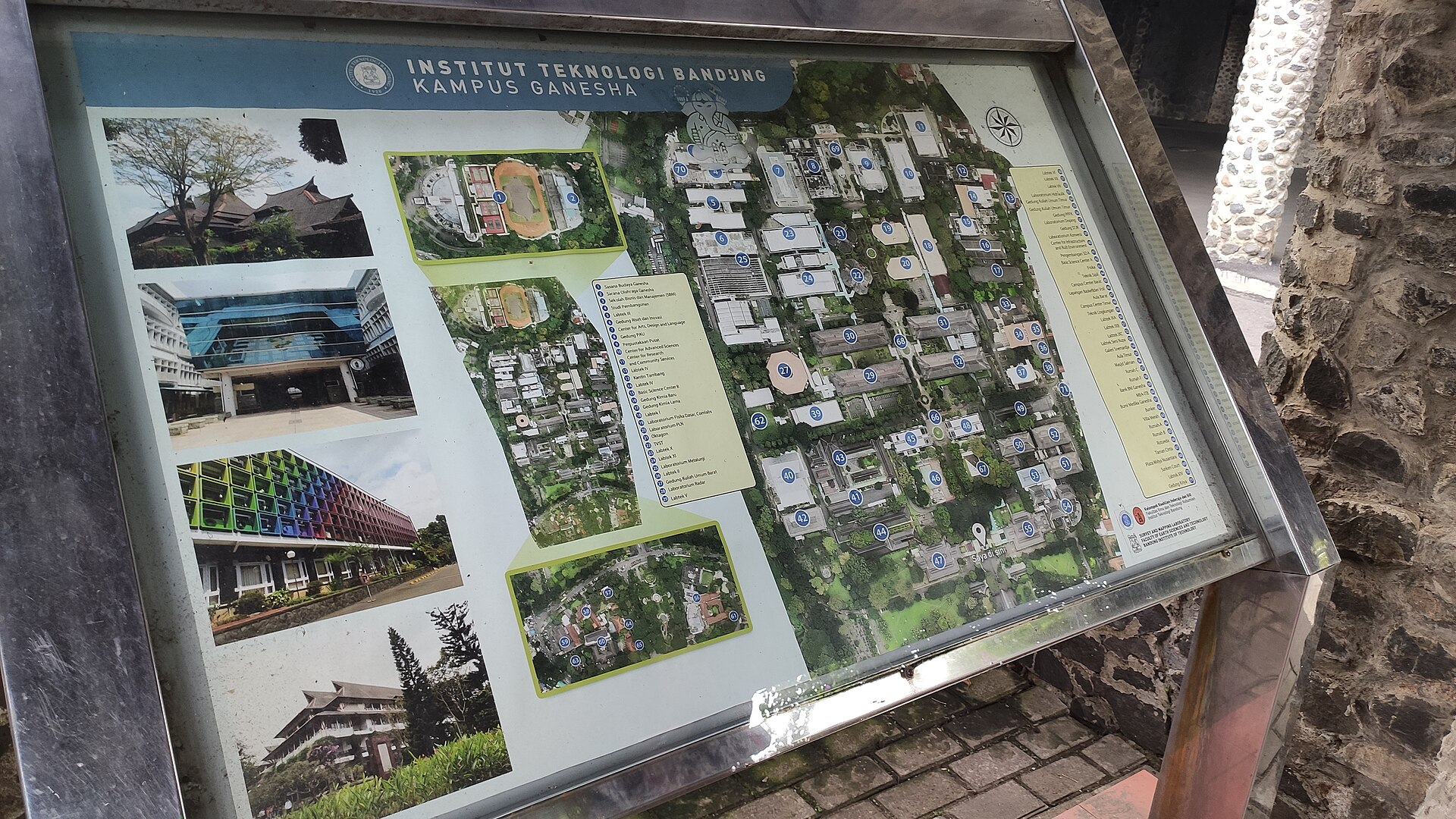
Campus

Institut Teknologi Bandung — campus in pictures

Real, freely-licensed photographs of the campus (via Wikimedia Commons).
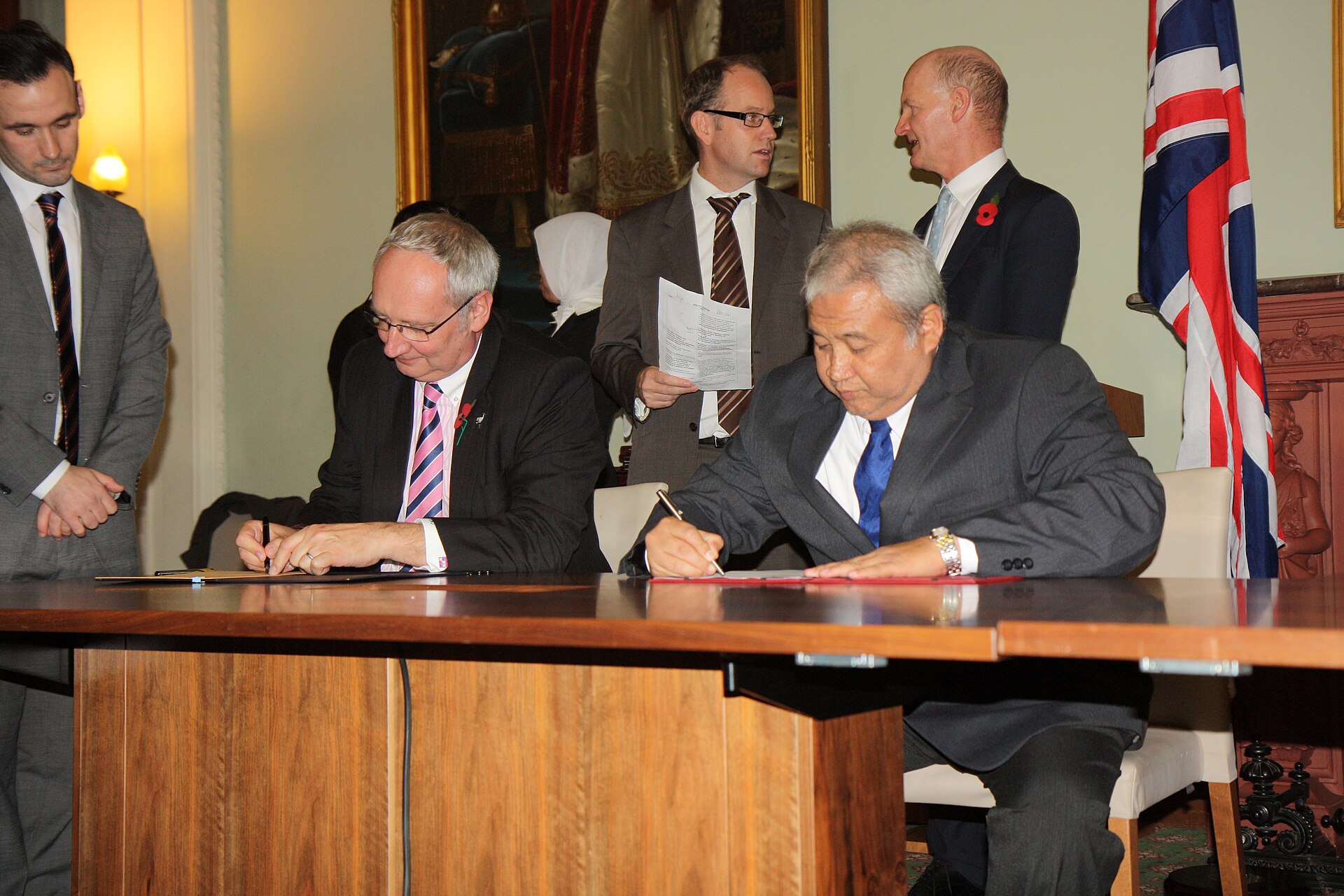
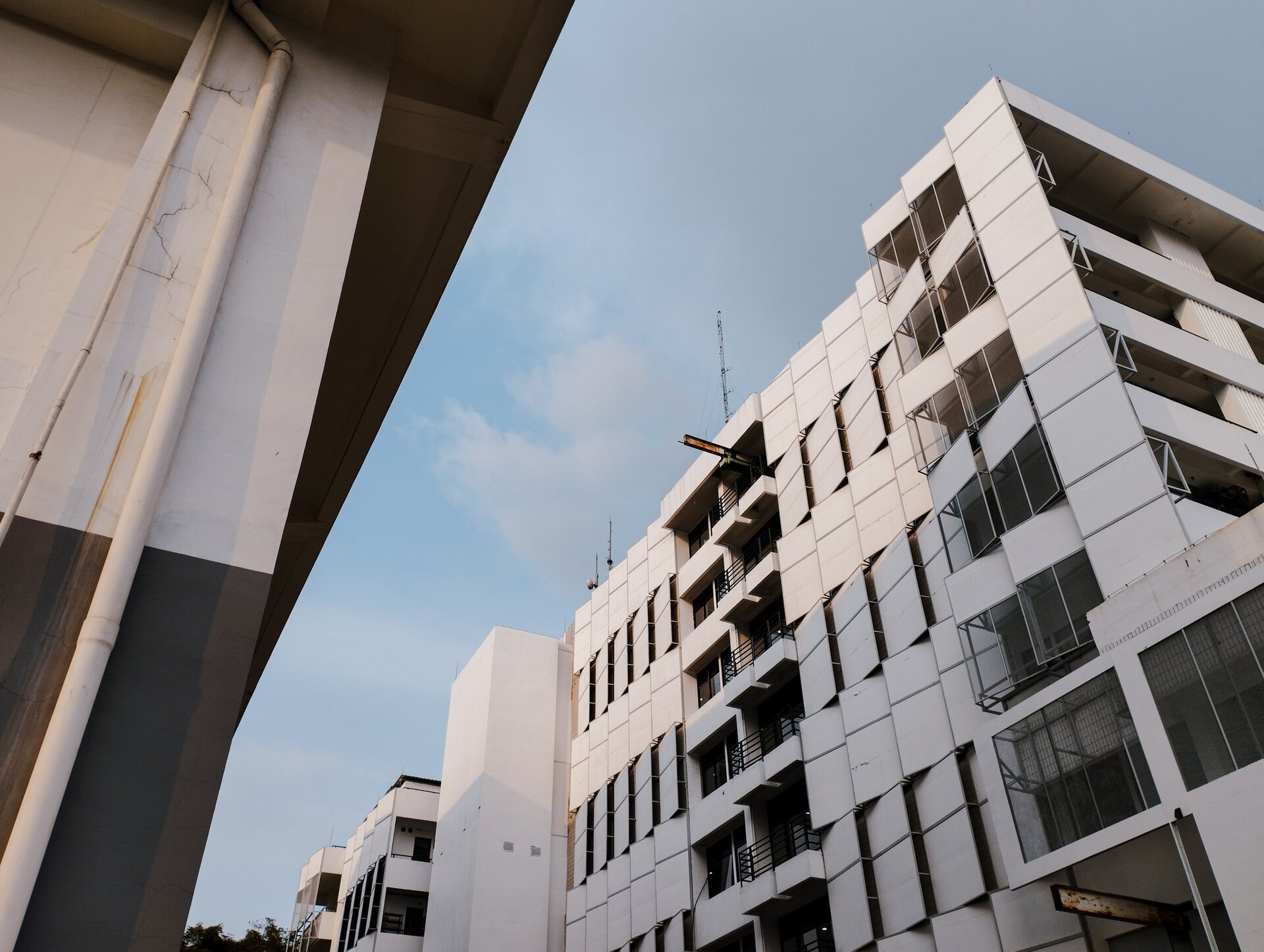
Cranfield University and Institut Teknologi Bandung (8147666605)
Cranfield University and Institut Teknologi Bandung (8147666605)Foreign and Commonwealth Office · OGL v1.0 · via Wikimedia Commons
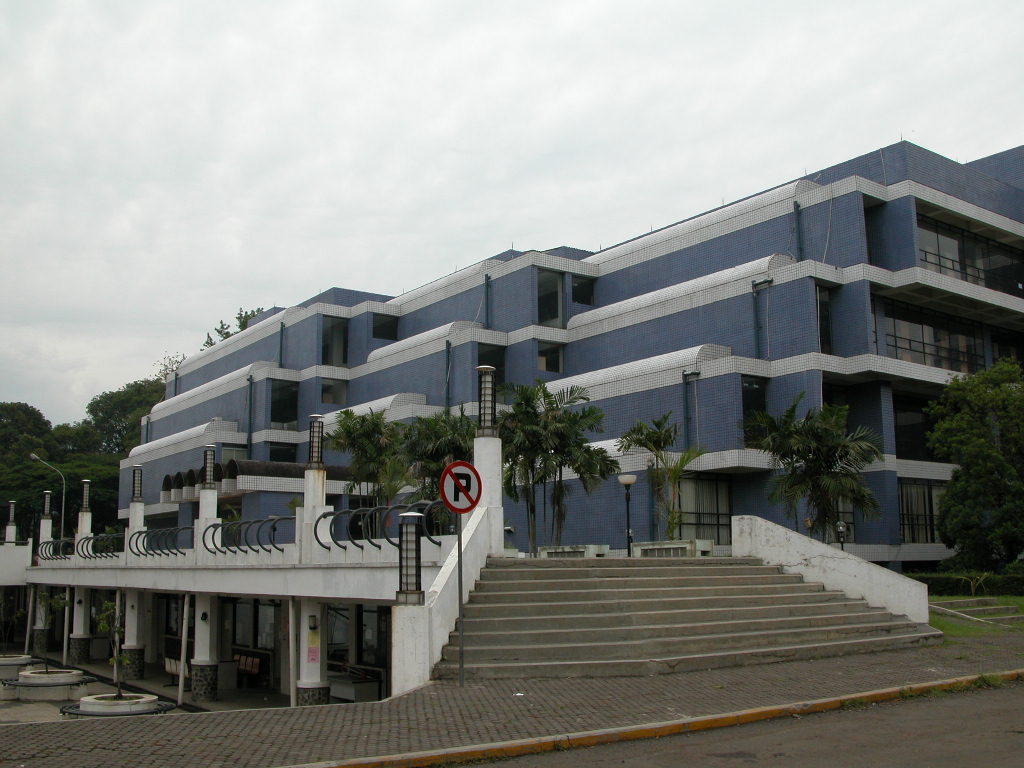
PAU Building of Institut Teknologi Bandung, located in between Perpustakaan Pusat ITB and the School of Business & Management (SBM) ITB
PAU Building of Institut Teknologi Bandung, located in between Perpustakaan Pusat ITB and the School of Business & Management (SBM) ITBsaffa · CC BY-SA 4.0 · via Wikimedia Commons
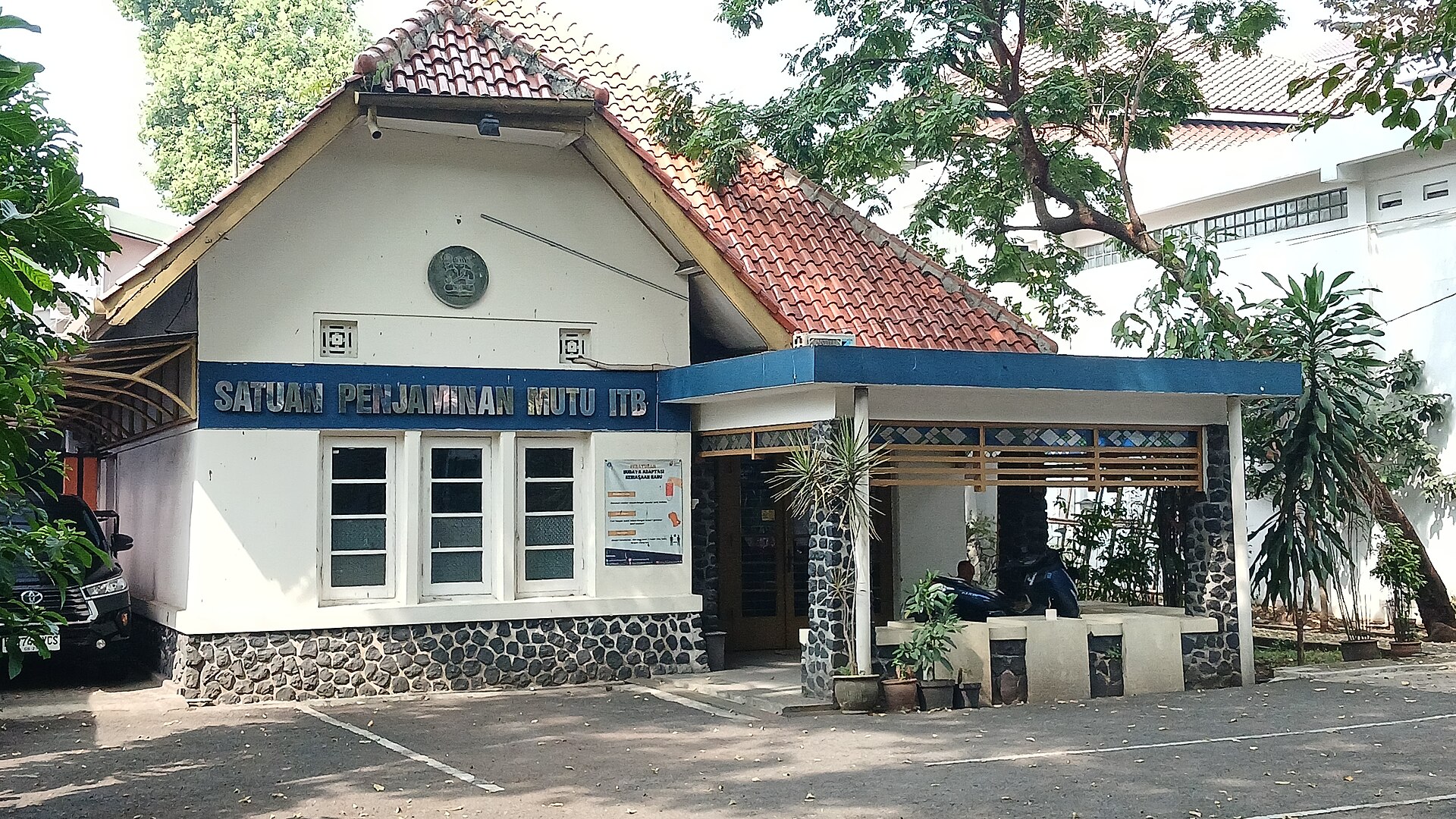
Gedung Satuan Penjamin Mutu Institut Teknologi Bandung (ITB)
Gedung Satuan Penjamin Mutu Institut Teknologi Bandung (ITB)Sonofbrahma · CC BY-SA 4.0 · via Wikimedia Commons
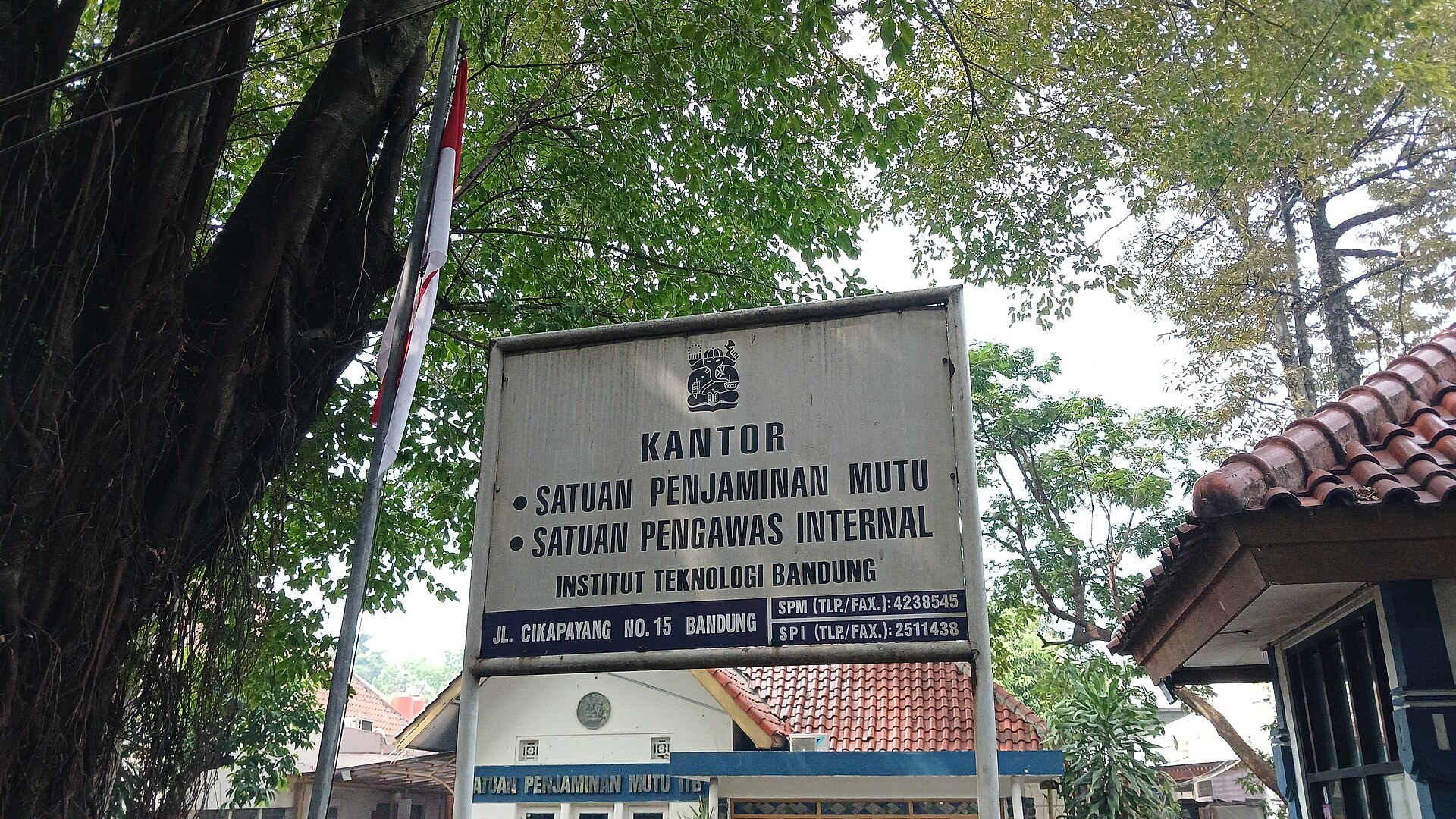
Plang Gedung Satuan Penjaminan Mutu Institut Teknologi Bandung (ITB)
Plang Gedung Satuan Penjaminan Mutu Institut Teknologi Bandung (ITB)Wisnu Dwiyon (Sonofbrahma) · CC BY-SA 4.0 · via Wikimedia Commons
Gedung id:perpustakaan pusat id:Institut Teknologi Bandung
Gedung id:perpustakaan pusat id:Institut Teknologi BandungThe original uploader was Wiendietry at Indonesian Wikipedia. · CC BY-SA 3.0 · via Wikimedia Commons
​萬隆理工學院,印尼,攝於2019-12-03
​萬隆理工學院,印尼,攝於2019-12-03Alankang · CC BY-SA 4.0 · via Wikimedia Commons

Why ITB — Southeast Asia's Engineering Powerhouse

ITB is not simply Indonesia's top-ranked technical university — it is the institution that has shaped the nation's scientists, engineers, and leaders for over a century. For international students, it offers an unusual combination: rigorous technical training, an internationally recognised degree, and one of the lowest cost-of-attendance figures among ranked Asian universities.

01National Prestige & Regional Standing
Ranked #256 globally (QS 2025) and #3 nationally, ITB is consistently recognised as one of Southeast Asia's elite technical institutions and a member of the ASEAN University Network (AUN). An ITB degree carries enormous weight across ASEAN, the Middle East, and global engineering employers.
02Exceptional Value
Annual tuition of approximately USD 4,200 — a fraction of equivalent programmes at Singapore, Australian, or UK universities — makes ITB one of the most cost-effective pathways to a globally recognised engineering or business degree in Asia.
03English-Taught International Programme
ITB's dedicated International Undergraduate Program delivers all academic activities in English, making it fully accessible to non-Indonesian speakers across engineering, informatics, business (SBM ITB), and design disciplines.
04Industry-Embedded Research
ITB's petroleum, mining, aerospace, and informatics programmes have deep ties to Indonesia's dominant industries — Pertamina, Bukit Asam, Garuda Indonesia, and the booming tech sector. Research collaboration begins early, giving students real-world exposure in one of the world's most resource-rich economies.
05Historic Bandung Campus
The Ganesha campus in central Bandung is one of Indonesia's architectural landmarks. Bandung's temperate highland climate (averaging 23°C year-round), vibrant food and creative scene, and lower cost of living compared to Jakarta make it an exceptionally comfortable student city.
06Strong Graduate Employment
With an 88% graduate employment rate, ITB alumni are sought by Indonesia's largest corporations, government agencies, and a growing wave of technology startups. SBM ITB graduates regularly enter top consulting firms and multinational companies across ASEAN.

ITB Acceptance Rate & Admitted Student Profile

Profile Stats

3.2+
Minimum GPA (4.0 scale)
31+
IB Diploma Benchmark
6.0
IELTS Minimum
80
TOEFL iBT Minimum
~1%
International Students
88%
Graduate Employment Rate

Stats

Highly selective
Applications (domestic + intl)
27,000
Student Population
#256
QS Global Rank
Overall acceptance rate across all programmes

Rea Vs Rd

Rea Label: Most Competitive Programmes
Rea Value: <5%
Rd Label: General International Track
Rd Value: ~15%

ITB Admissions Requirements — Academics, English & Profile

GPA & Academic Record
Value: 3.2+ / 4.0
A minimum cumulative GPA of 3.2 on a 4.0 scale (or equivalent) is the published benchmark for competitive consideration. For the most selective programmes — Informatics, Electrical Engineering, Petroleum Engineering — a significantly higher GPA is expected.
  • Consistent performance across Grades 10, 11, and 12
  • Strongest possible results in Mathematics and relevant sciences
  • Course rigour matters — HL or A-Level courses are valued
  • Upward grade trajectory is viewed positively
English Proficiency
Value: IELTS 6.0 / TOEFL 80
Non-native English speakers must submit official English proficiency test results. Since the International Undergraduate Program is entirely English-medium, demonstrated language ability is essential for both admission and academic success.
  • IELTS Academic minimum: 6.0 overall band
  • TOEFL iBT minimum: 80
  • No Duolingo minimum published — verify directly with ITB
  • Applicants from English-medium schools may be exempt
International Qualifications
Value: IB 31+ / A-Level BBB+
ITB accepts IB Diploma, A-Levels, and other recognised international secondary qualifications. An IB score of 31 is the published benchmark; competitive programmes expect substantially higher, with HL Mathematics as near-essential.
  • IB competitive benchmark: 31+ (35+ for top programmes)
  • A-Level: BBB to AAA depending on programme
  • HL Mathematics strongly recommended for all engineering tracks
  • Olympiad certificates and competition results viewed very favourably

ITB Application Components — Documents, Statement & Portfolio

International undergraduate applicants apply directly through ITB's official admissions portal at admission.itb.ac.id. ITB does not use Common App, UCAS, or any centralised regional agency. Below is every component of a complete ITB international application.

01RequiredAcademic Transcripts
Official secondary-school transcripts for Grades 10, 11, and 12 (or equivalent). Certified copies required. A minimum GPA of 3.2/4.0 or equivalent is the competitive floor.
02RequiredEnglish Proficiency Score
IELTS Academic (minimum 6.0) or TOEFL iBT (minimum 80). Submit the most recent official score report. Applicants from English-medium secondary schools should confirm exemption eligibility with ITB's international office.
03RequiredMotivation Letter / Personal Statement
A formal written statement explaining your academic background, reasons for choosing your specific ITB programme, and your professional goals. The primary piece of written communication you control — treat it with the seriousness of a university entrance essay.
04RequiredPassport & Identification Documents
A valid passport copy, passport-size photograph, and date-of-birth documentation. Ensure your passport is valid for the full duration of your intended study period.
05RequiredRecommendation Letters
References from teachers or school counsellors who can attest to your academic performance and analytical ability. Choose recommenders from Mathematics, Physics, Chemistry, or CS — subjects directly relevant to your intended programme.
06OptionalStandardised Test Scores
SAT, ACT, IB Diploma results, or A-Level certificates. Test policy is optional — submit if your scores strengthen your application. IB/A-Level results are well understood and often carry more interpretive weight than SAT/ACT alone.
07Programme-SpecificPortfolio (Architecture & Design)
Architecture, Industrial Design, and Fine Arts applicants must prepare a portfolio of creative work demonstrating design aptitude and visual problem-solving. Failing to prepare one is a disqualifying omission for these programmes.
https://admission.itb.ac.id/home/international/undergraduate

ITB Application Statement — Writing the Motivation Letter

Prompts

Why This Programme at ITB?
No standardised prompt published. Address: why you have chosen your specific programme (e.g. Informatics, Petroleum Engineering, SBM Business) and why ITB specifically — not just as a prestigious institution, but as the right environment for your academic and professional goals.
Academic Background and Preparation
Address your secondary-school achievements — grades, curriculum level, olympiad participation, research projects, or independent work — and how they have prepared you for ITB's technical rigour. Be concrete: competition rankings, research outcomes, and project results are more persuasive than general claims.
Future Goals and ITB Fit
Where do you want to be professionally in 5–10 years, and how does an ITB degree specifically advance that trajectory — whether in Indonesia's energy sector, ASEAN's technology industry, or beyond?

Tips

Write toward specificity, not prestige
ITB admissions readers see many letters that cite ITB's ranking. The ones that stand out name a specific faculty, research group, industry tie, or programme feature — and connect it to the applicant's concrete preparation.
Lead with your programme choice
State your intended programme in the first sentence. A letter that opens 'I wish to study at ITB' without specifying Informatics, Petroleum Engineering, or another programme signals lack of preparation.
Foreground technical evidence
ITB values quantitative depth. If you have olympiad medals, competitive programming rankings, or exceptional mathematics results, foreground them clearly — this is not the place for vague claims of curiosity.
Keep it formal and concise
The ITB motivation letter is a professional academic case, not a US Common App narrative. Aim for 500–800 words in formal academic prose. Every sentence must earn its place.
The most common ITB application mistake. Submitting a generic motivation letter that could be sent to any technical university — ITB readers immediately identify them.

What ITB Admissions Is Looking For

ITB's international programme seeks students with strong technical foundations, genuine intellectual curiosity, and a clear sense of purpose. Because Indonesia's domestic entrance is intensely competitive, the international track values clarity of intent — why engineering, why ITB, and why now.

01Mathematical Depth
Mathematics is the non-negotiable foundation for every ITB engineering and science programme. Exceptional performance in the highest available Mathematics stream — IB HL Mathematics AA, A-Level Further Mathematics, or equivalent — is the single clearest signal ITB looks for.
02Science Preparation
Depending on your programme — Physics for engineering tracks, Chemistry for chemical and petroleum engineering, Computer Science for informatics — strong performance in the relevant HL or A-Level science is essential. ITB's Year 1 curriculum assumes solid science foundations.
03Clarity of Academic Purpose
ITB is a specialised technical institute. Applicants who can articulate a specific programme interest and connect it to their prior academic and extracurricular trajectory are far stronger than those with generic STEM interest.
04Olympiad & Competition Achievement
Participation in mathematics, science, or technology olympiads — at national or international level — is viewed very favourably. ITB's domestic student body is heavily drawn from olympiad competitors. Research projects, robotics teams, or coding competitions all strengthen a profile.
05Academic Consistency
A sustained or upward trajectory across all years of secondary school. Dramatic grade dips in core science or mathematics subjects raise concerns — ITB values disciplined academic effort.
06English Communication Ability
Since the International Programme is taught entirely in English, the quality of your motivation letter is itself an implicit demonstration of English writing ability. Error-laden writing undermines your credibility alongside formal test scores.

ITB Financial Aid & Scholarships for International Students

ITB's institutional aid for international students is limited — approximately 10% of the overall student population receives some form of support, and most domestic scholarship programmes are restricted to Indonesian citizens. The practical aid strategy for internationals centres on external scholarships and bilateral government programmes.

Aid amounts require direct verification with ITB's international office. External scholarship availability varies by year, nationality, and programme.

Stats

~10%
of students receive some financial support
USD 4,200
Annual tuition (approx.)
USD 8,500
Total cost of attendance (annual)
USD 50
Application fee (one-time)

Contribution Tiers

RangePercentPercent ValueNote
ITB (Indonesia)USD 8,500/yr17Total cost of attendance, international programme
NUS/NTU (Singapore)USD 25,000–35,000/yr60For international students without MOE Tuition Grant
University of MelbourneUSD 30,000–45,000/yr75For international students
UCL / King's LondonUSD 28,000–40,000/yr70Annual international fee
Chulalongkorn (Thailand)USD 10,000–15,000/yr25International programme
The Value Argument — ITB Without Aid. Even without scholarship support, ITB is dramatically cheaper than comparable ranked universities in Singapore (USD 25,000–45,000/yr), Australia (USD 30,000–50,000/yr), or the UK (USD 25,000–40,000/yr). For many families, the absolute cost is manageable without significant debt — making ITB one of the genuinely exceptional value propositions in Asian higher education.
Cost Comparison: ITB vs. Regional Alternatives

Key Dates

Registration Opens (typically January–February)
Date: Q1
Document Submission Window
Date: Q1–Q2
Selection / Online Interview (some programmes)
Date: Q2
Results Announced
Date: Q2–Q3
Enrolment & KITAS Visa Process
Date: Pre-July

Advantages

  • More time to respond to document requests or interview invitations
  • Demonstrates genuine commitment and planning to admissions reviewers
  • Allows time to correct errors or supplement weak documents
  • Earlier offer enables earlier KITAS (student visa) processing — essential for non-ASEAN applicants
  • Scholarship deadlines often precede or align with the early application window

Disadvantages

  • Grade 12 predicted grades may not yet be finalized
  • Less time to prepare a polished motivation letter
  • English proficiency test results may still be pending
  • Some programmes release final IB/A-Level results after the submission window opens
Application Timing. Unlike US universities with formal Early Action or Regular Decision rounds, ITB's international undergraduate intake opens once per year, typically for a July/August start. The strategic question is not EA vs RD — it is whether you apply early in the intake window or closer to the deadline.
Tychr's ITB Application Timing Recommendation. Apply as early in the intake window as your documents allow. Do not wait for final IB or A-Level results if strong predicted grades and transcripts are available. ITB's international office accepts predicted/in-progress qualification documents, and the KITAS visa process is long enough that an early offer is genuinely useful.
ITB International Intake — Early vs Standard Application Strategy

ITB Interview — Format, Process & Preparation

Some ITB programmes include an online interview as part of the international undergraduate selection process. Interview requirements vary by faculty and intake year — confirm whether your intended programme conducts interviews on the current admissions portal before applying.

Meta

Online video interview (programme-dependent)
Format
Typically 20–45 minutes
Duration
Academic motivation, programme knowledge, communication ability
Evaluates
English (International Programme)
Language

Questions

Why did you choose this specific programme at ITB?
Tip: Be concrete — name an ITB research group, industry connection, or programme feature. 'Because ITB is top-ranked' is not a sufficient answer.
Walk us through your relevant academic preparation.
Tip: Highlight your strongest subjects, highest-level courses, and any olympiad or competition achievements. Connect them explicitly to the programme curriculum.
What do you plan to do with your degree from ITB?
Tip: Show awareness of Indonesia's and ASEAN's growth sectors. Career ambitions connected to petroleum, digital economy, infrastructure, or manufacturing feel authentic here.
What is a technical topic or problem that genuinely interests you?
Tip: Demonstrate intellectual depth beyond the curriculum. A specific problem you've investigated — even informally — is more impressive than a vague reference to interest in engineering.
How will you manage studying in Indonesia as an international student?
Tip: ITB values students who have thought practically about the experience — language, culture, logistics. Demonstrating awareness and preparation reassures the selection panel.

ITB Residential Life & Campus System

ITB does not operate a 'house' or 'college' system in the Oxford, Yale, or Rice University sense. Residential life is organised around campus dormitories and the surrounding private student housing market in Bandung. Here is how accommodation works at ITB.

Lottery Steps

  • First-year and scholarship students have priority access to on-campus dormitories (asrama) on the Ganesha and Jatinangor campuses
  • Upper-year students typically move into private boarding houses (kos-kosan) within walking distance of campus — an extensive and affordable rental market
  • The Ganesha campus (central Bandung) is the primary undergraduate hub; some engineering faculties are based at the Jatinangor campus, served by an inter-campus bus service
  • All campuses are within Bandung's network; monthly accommodation costs in private kos-kosan typically range from USD 50–150/month depending on facilities
  • International students should contact ITB's international office early to reserve dormitory space, as availability is limited

Houses

Ganesha Campus Dormitory
Tag: Ganesha
Main campus; engineering, sciences, business, arts
Jatinangor Campus Residences
Tag: Jatinangor
Some engineering and science faculties; inter-campus bus to Ganesha
Cirebon Campus
Tag: Cirebon
Newer campus; specific programmes — confirm with ITB
Jakarta Campus
Tag: Jakarta
Professional and executive education; limited undergraduate activity
Kos-Kosan (Private Boarding Houses)
Tag: Off-Campus
Dominant housing option for upper-year students; affordable, abundant near Ganesha

ITB Faculties, Schools & Undergraduate Programmes

STEI — School of Electrical Engineering & Informatics
Label: Informatics, Electrical, Telecommunications
Home to ITB's most competitive programmes: Informatics (Computer Science), Electrical Engineering, and Telecommunications Engineering. STEI graduates dominate Indonesia's technology and digital economy sectors.
  • {"label":"Key programmes","value":"Informatics, Electrical Eng., Telecoms"}
  • {"label":"Industry ties","value":"Gojek, Tokopedia, Telkom, Bank BCA"}
  • {"label":"Competition culture","value":"ICPC, National Olympiad in Informatics"}
  • {"label":"Selectivity","value":"Highest in ITB"}
FTMD — Faculty of Mechanical & Aerospace Engineering
Label: Mechanical, Aerospace, Materials Science
One of Southeast Asia's few aerospace engineering programmes, with strong ties to PT Dirgantara Indonesia (Indonesian Aerospace). Mechanical engineering feeds into manufacturing, energy, and automotive sectors across ASEAN.
  • {"label":"Key programmes","value":"Mechanical, Aerospace, Materials"}
  • {"label":"Industry ties","value":"PT Dirgantara, Pertamina, automotive"}
  • {"label":"Research focus","value":"Fluid mechanics, structural engineering"}
  • {"label":"Founded","value":"1920 (original engineering school)"}
FTTM — Faculty of Mining & Petroleum Engineering
Label: Mining, Petroleum, Geophysics, Metallurgy
ITB's globally recognised petroleum and mining engineering programmes — arguably the strongest in Southeast Asia. Deep ties to Pertamina, Freeport-McMoRan, and Chevron make this a pipeline to Indonesia's resource sector.
  • {"label":"Key programmes","value":"Petroleum, Mining, Geophysics, Metallurgy"}
  • {"label":"Top recruiters","value":"Pertamina, Chevron, Shell, Freeport"}
  • {"label":"Regional standing","value":"Leading petroleum engineering in SE Asia"}
  • {"label":"Graduate placement","value":"Energy majors, resource companies"}
SBM ITB — School of Business & Management
Label: Business, Management, Entrepreneurship
One of Indonesia's most respected business schools, offering an English-taught undergraduate business programme. SBM ITB graduates compete directly with graduates of regional universities for consulting and corporate roles across ASEAN.
  • {"label":"Programme language","value":"Fully English-taught"}
  • {"label":"Key outcome","value":"Consulting, banking, corporate strategy"}
  • {"label":"Top recruiters","value":"McKinsey, BCG, Unilever, BCA"}
  • {"label":"Distinctive feature","value":"Business school inside a tech institute"}
SAPPK — School of Architecture, Planning & Policy Development
Label: Architecture, Urban & Regional Planning
Architecture at ITB is among the most prestigious in Indonesia. Applicants must submit a portfolio of creative work alongside academic documents. Urban planning feeds into Indonesia's massive infrastructure development agenda.
  • {"label":"Key programmes","value":"Architecture, Urban Planning"}
  • {"label":"Portfolio required","value":"Yes — submit with application"}
  • {"label":"Design culture","value":"Strong studio-based learning"}
  • {"label":"Industry tie","value":"Indonesian Ministry of Public Works"}
FTSL — Faculty of Civil & Environmental Engineering
Label: Civil, Geodesy, Environmental Engineering
Civil and environmental engineering graduates are in high demand for Indonesia's infrastructure boom — roads, bridges, water treatment, and smart cities. Geodesy graduates find roles in mapping, remote sensing, and geospatial technology.
  • {"label":"Key programmes","value":"Civil, Environmental, Geodesy"}
  • {"label":"Industry demand","value":"Very high — infrastructure expansion"}
  • {"label":"Government ties","value":"Ministry of Public Works, BPPT"}
  • {"label":"Growth sector","value":"Green infrastructure, smart cities"}

Research & Extracurricular Opportunities at ITB

Laboratory & Faculty Research
Category: Undergraduate Research
ITB's research laboratories are embedded within faculties — petroleum engineering labs, AI and robotics labs, materials testing facilities. Undergraduate students can join lab research from Year 2, working alongside master's and doctoral students on funded projects.
National & International Olympiads
Category: Competition Culture
ITB students participate actively in ICPC (programming), physics olympiads, mathematics competitions, and engineering design contests. The culture of technical competition begins before admission and continues throughout undergraduate study.
KM ITB — Student Body & Clubs
Category: Student Organisations
KM ITB (Keluarga Mahasiswa ITB) coordinates over 100 student organisations spanning engineering clubs, arts, sports, social impact, and cultural groups. One of Indonesia's most active student unions — a meaningful part of life at ITB.
AUN & Bilateral Exchange Programmes
Category: International Exchange
As an ASEAN University Network member, ITB participates in student exchange programmes with AUN partner universities across Southeast Asia, as well as bilateral exchanges with universities in the Netherlands, Germany, Japan, South Korea, and Australia.
Scroll right to explore ITB's research programmes and student life opportunities.

Career Outcomes & ITB Alumni Network

ITB graduates are among the most sought-after in Indonesia and across ASEAN, with an 88% graduate employment rate within 12 months of graduation. The university's deep connections to Indonesia's energy, technology, and infrastructure sectors translate into strong direct-hire pipelines.

Stats

88%
Graduate employment rate (within 12 months)
~USD 8,000/yr
Avg starting salary (Indonesia-based roles)
#256
QS Global Rank
#3
National rank in Indonesia
Extensive
Alumni in government, industry, academia
Active
Postgraduate placement (Netherlands, Germany, Japan)

Categories

Energy & Resources
Pertamina, Chevron, Shell, TotalEnergies, Freeport-McMoRan, and major Indonesian mining and geothermal companies are top recruiters for petroleum, mining, geology, and chemical engineering graduates.
Technology & Digital
Gojek, Tokopedia, Traveloka, Bukalapak, Bank Central Asia, Telkom Indonesia, and regional technology employers actively recruit ITB informatics and electrical engineering graduates.
Consulting & Finance
SBM ITB graduates consistently enter top management consulting firms (McKinsey, BCG, Bain) and major Indonesian financial institutions, leveraging one of the strongest business school brands in Southeast Asia.

Our ITB Admissions Track Record & Student Success Stories

Aisha R.
Country: Malaysia
Program: ITB — Informatics (STEI)
Class Year: Class of 2025
Academic Profile: IB 38 · HL Mathematics AA: 7 · IELTS 7.0
Tychr helped me see that my motivation letter was far too general. Rewriting it around my specific interest in distributed systems — and the ITB research lab that works on that — made the difference. I received my offer within three weeks of submitting.
Tariq M.
Country: United Arab Emirates
Program: ITB — Petroleum Engineering (FTTM)
Class Year: Class of 2024
Academic Profile: A-Level AAB · TOEFL 95
The combination of ITB's petroleum programme and Bandung's cost of living was the value argument that convinced my family. Tychr helped me structure that argument in my statement and navigate the KITAS process after admission.
Selin K.
Country: Turkey
Program: ITB — SBM Business
Class Year: Class of 2026
Academic Profile: IB 35 · IELTS 6.5
I was applying to business schools across Asia and wasn't sure ITB was the right fit. Tychr's counsellors knew SBM ITB specifically — its English track, its industry connections, and why it punches above its ranking in consulting placement. That specificity in my letter was what got me in.

Faqs

Is the International Undergraduate Program fully taught in English?+

Yes. ITB's International Undergraduate Program delivers all academic activities in English. This programme is distinct from the standard domestic track, which is primarily taught in Indonesian (Bahasa Indonesia).

Do I need to speak Indonesian (Bahasa Indonesia)?+

For the International Undergraduate Program, English is the medium of instruction. However, learning basic Bahasa Indonesia is strongly recommended for daily life in Bandung, as it is the dominant language in the city, shops, and social settings.

Is the SAT/ACT required for international applicants?+

No. ITB's test policy is optional — you may submit standardised test scores (SAT, ACT) to strengthen your application, but they are not a mandatory requirement for the international track. IB Diploma and A-Level results are welcomed.

What is the minimum IB score expected?+

The published benchmark is IB 31. Competitive programmes such as Informatics and Electrical Engineering will expect scores above this, particularly with strong HL Mathematics. An IB score of 35+ with HL Mathematics AA is a strong profile for the most selective programmes.

Can I get a student visa to study in Indonesia?+

Yes. International students studying at ITB are eligible for a student stay permit (KITAS). ITB's international office assists admitted students with the visa process. You will need an admission acceptance letter, valid passport, and supporting documents.

Are there English-taught postgraduate programmes?+

Yes. Several of ITB's Master's and doctoral programmes are offered in English, particularly in engineering, business (SBM ITB), and sciences. Check the relevant faculty pages at itb.ac.id for current English-medium postgraduate offerings.

How does ITB compare to other Indonesian universities?+

ITB consistently ranks first or second in Indonesia alongside the University of Indonesia (UI), and is specifically dominant in engineering, technology, and design. Its QS global rank of #256 reflects strength across scientific disciplines.

Is financial aid available for international students?+

Limited institutional aid is available for international students — approximately 10% of students receive some form of support. External scholarships such as those from the Indonesian government (DIKTI/LPDP), bilateral government schemes, or private foundations (e.g. Djarum Foundation) may supplement institutional funding.

Book a Free ITB Admissions Strategy Session

In 60 minutes our ITB admissions specialists will evaluate your academic profile, identify your application strengths and gaps, develop your motivation letter strategy, and map the scholarship pathways available for your nationality and programme of choice.

  • No commitment required
  • ITB & Indonesian admissions specialists
  • Personalised strategy — not generic advice
Getting into ITB is not about being the best in the world — it is about being the clearest about why you belong in this specific programme.

ITB Academic Requirements

ITB Academic Requirements — The Honest Breakdown for International Students

What GPA, IB score, and academic profile do ITB's admitted international students actually need? And how does ITB evaluate IB Diploma, A-Level, and other international curricula for its English-taught programmes?

3.2
Minimum GPA
On a 4.0 scale or equivalent
31+
IB Benchmark
Higher for competitive programmes
6.0
IELTS Minimum
Academic band
80
TOEFL iBT Minimum
Internet-based test
~15%
Acceptance Rate
All programmes combined
#256
QS Global Rank
QS World Rankings 2025

GPA & Academic Record

ITB and GPA — What the Benchmark Means

ITB publishes a minimum GPA benchmark of 3.2 on a 4.0 scale (or equivalent from your curriculum) for international undergraduate applicants. In practice, competitive programmes expect significantly higher.

A 3.2 GPA is the entry threshold. What distinguishes admitted international students is the combination of strong grades in the most rigorous available curriculum — particularly in Mathematics and relevant sciences — supported by olympiad achievement or concrete technical projects.

3.2 / 4.0
Published minimum GPA for international applicants
3.7+
Recommended target for competitive programmes (Informatics, Electrical Eng.)
What this means for international students. The 3.2 GPA benchmark is a floor, not a target. For ITB's most selective programmes — Informatics, Electrical Engineering, Petroleum Engineering — you should treat 3.7+ as the competitive floor. Admissions evaluates your GPA relative to your curriculum's norms: a 3.5 from an IB school with high grade deflation reads differently from a 3.9 from a school with inflated grades.
Grade trajectory matters. A student with an improving trajectory — modest performance in Grade 10 followed by strong results in Grades 11 and 12 — is viewed positively by ITB's admissions team. The final two years of secondary school carry the most weight, as they reflect your readiness for university-level work.

Academic Context

Class Rank and School Context — How ITB Reads Academic Performance

ITB evaluates academic performance in the context of the school system and curriculum the student came from. An IB Diploma is not assessed identically to an Indonesian national curriculum — ITB's international admissions readers are experienced with multiple systems.

How ITB contextualises your academic record
Your transcript is read with reference to your school's curriculum, grading norms, and course offerings. A student at a school with no IB or A-Level access is evaluated differently from one with full IB Diploma access. However, for the international track, ITB specifically values recognised international qualifications — students without an IB, A-Level, or equivalent are at a disadvantage.
What this means practically
Take the most rigorous available Mathematics and science courses in your secondary curriculum. For IB students, HL Mathematics and relevant HL sciences are near-essential signals of technical readiness. For A-Level students, A or A* in Mathematics is the baseline expectation for engineering programmes.
For students at less well-known international schools. A strong recommendation letter from your Mathematics or Physics teacher — one who can contextualise your performance relative to the school's standards and certify your readiness for technical university work — is particularly important if your school is unfamiliar to ITB's admissions team. Include it and ensure it is specific about your analytical abilities.

Standardised Testing

SAT Scores at ITB — What You Actually Need

ITB does not publish SAT score bands for international admissions. The test policy is optional — SAT scores may be submitted to strengthen an application but are not required. No official SAT minimum or middle-50% range is available.

LabelScorePercent
SAT requirementNone published0
Recommended if submitting (Math section)700+70
Test policyOptional50
The SAT Math subscore for ITB. If you choose to submit the SAT, a strong Math section score (700+) directly supports the quantitative readiness ITB expects of engineering applicants. The Math subscore is the most relevant component; the Evidence-Based Reading & Writing section is less directly weighted for technical programme selection.
Submitting vs. withholding scores. For ITB, the decision to submit SAT scores is secondary to your IB/A-Level performance and GPA. If your SAT Math score is above 700 and your composite is 1200+, submission may add modest positive value. If your score is below that threshold, your IB/A-Level grades and motivation letter are more persuasive evidence.
Preparation. Most ITB international applicants are better served investing preparation time in their IB or A-Level coursework, olympiad competitions, and English proficiency tests rather than SAT preparation — ITB places more interpretive weight on curriculum qualifications.

Standardised Testing

ACT Scores at ITB — The Data and the Strategy

ITB does not publish ACT score bands. As with the SAT, ACT scores are optional and may be submitted to strengthen an application. No official ACT minimum is published.

Metrics

ACT requirement
Score: None published
Recommended if submitting
Score: 28+

Comparison Cards

Neither is preferred
ITB treats SAT and ACT equivalently — both are optional supplements. Neither test is weighted more heavily than IB or A-Level results.
IB/A-Level outweighs both
For ITB's international admissions readers, IB Diploma scores and A-Level grades carry far more interpretive weight than US standardised tests.
Submit only if it adds value
A strong ACT composite (28+) with a high Mathematics subscale is worth including. A mediocre score adds no value and slightly dilutes an otherwise strong application.
Test policy. ITB does not publish superscore policies. If submitting multiple sitting results, include your best overall performance. As standardised tests are optional, focus energy on your primary qualifications.
Tychr's recommendation. For ITB specifically, invest your preparation time in IB coursework, Mathematics olympiads, or English proficiency tests. Only pursue SAT/ACT preparation if you are applying to multiple universities where the tests carry more weight (US or Singapore universities, for example).

Testing Strategy

ITB Test-Optional Policy — The Strategic Decision Explained

ITB's admissions policy for international students is test-optional. You may submit SAT, ACT, or other standardised test scores if they strengthen your application, but they are not a mandatory requirement.

Submit Items

Your SAT Math is 700+ or ACT Mathematics subscale is 28+ — it adds positive evidence of quantitative readiness.
You are applying to multiple universities (US, Singapore) where standardised tests carry significant weight — the score is already earned.
Your secondary curriculum is less well-known to ITB — a standardised test provides an independent academic benchmark.

Withhold Items

Your SAT/ACT score is below competitive benchmarks for technical programmes — a weak score draws attention to a dimension of your profile that is weaker than the rest.
Your IB or A-Level results are strong — they carry more weight at ITB than standardised tests in any case.
Current policy. ITB accepts applications without standardised test scores and evaluates international applications holistically: academic transcripts, English proficiency test results (IELTS/TOEFL — these are required, not optional for non-native speakers), motivation letter, recommendation letters, and supporting documents such as olympiad certificates.
The misconception. 'Test-optional' for English proficiency tests does not apply — IELTS and TOEFL are required for non-native speakers and are not optional. Only SAT/ACT (academic tests) are optional. Ensure you sit an English proficiency test well before the application window opens.

Curricula

IB Diploma and A-Levels at ITB — Specific Benchmarks

IB Diploma
  • {"label":"Published benchmark","value":"31 points"}
  • {"label":"Competitive range (engineering)","value":"35–38+ with HL Mathematics"}
  • {"label":"HL expectations","value":"HL Mathematics (AA preferred) + relevant science HL"}
  • {"label":"SL Mathematics","value":"Significantly weakens engineering applications — HL strongly recommended"}
  • {"label":"Extended Essay","value":"Technical or scientific EE topic supports the engineering narrative"}
Note: An IB score of 31 is the floor, not the target. For Informatics, Electrical, or Petroleum Engineering, 35+ with HL Mathematics and a relevant science HL marks a genuinely strong profile. Architecture and Design applicants should also prepare a portfolio regardless of IB score.
A-Levels
  • {"label":"Competitive range","value":"BBB to AAA depending on programme"}
  • {"label":"Mathematics expectation","value":"A or A* in Mathematics for all engineering tracks"}
  • {"label":"Further Mathematics","value":"Very positively viewed — signal of quantitative ambition"}
  • {"label":"Science subjects","value":"Physics (engineering), Chemistry (chemical/petroleum), CS (informatics)"}
  • {"label":"Subject rigour","value":"Three A-Levels including Mathematics and at least one relevant science"}
Note: A-Level applicants should present certificates or predicted grades alongside a motivation letter. ITB's admissions team is familiar with the Cambridge and Edexcel A-Level systems. Predicted grades are accepted for applicants still completing their qualifications.

Advanced Placement

AP Courses at ITB — How They Are Treated

ITB does not have an explicit AP course or score policy for international admissions. For students at schools that offer AP courses alongside or instead of IB/A-Level, AP performance is considered supplementary evidence of academic rigour.

What ITB looks for in AP applicants
If submitting AP scores, include Calculus BC, Physics C (Mechanics or E&M), Chemistry, and/or Computer Science A — the subjects most directly relevant to ITB's engineering curriculum. Strong 5s in these subjects (particularly Calculus BC) provide a useful quantitative signal alongside GPA.
How many APs?
No specific number is expected. Three to five AP scores in rigorous technical subjects, with predominantly 4s and 5s, is a reasonable profile for an ITB international applicant from a US-curriculum school.
AP vs. IB for ITB
Both are well-understood by ITB's international admissions office. IB students should not artificially pursue AP — the IB Diploma is a more coherent and comparably weighted qualification for ITB's purposes.
Students at schools without AP or IB should not artificially pursue these qualifications. Your national curriculum results, if strong and from a recognised system, will be evaluated on their own merits.
ITB does not have a published AP credit transfer policy for international undergraduate applicants. Advanced placement into higher-level courses may be possible on arrival — confirm with the relevant faculty.

Academic Rigour

Rigour of Secondary School Record — ITB's Most Important Academic Signal

ITB's admissions process for international students places significant weight on the rigour of the secondary-school curriculum. This means: did you take the hardest available courses in Mathematics and the sciences relevant to your intended programme?

Taking the highest available Mathematics level — IB HL Mathematics AA or A-Level Further Mathematics — is the single most important academic signal for any ITB engineering programme.

What rigour means at ITB. Rigour at ITB is almost exclusively about technical course selection: the highest available Mathematics level, the most relevant science at the deepest available level, and ideally a track record of using that knowledge in competitions or independent projects.
The contextual element. Rigour is evaluated relative to what was available at your specific school. A student whose school offers only Standard Level Mathematics is evaluated differently from one with access to HL Mathematics AA. What matters is whether you pushed as far as your system allowed.
What ITB is looking for. A student who took IB HL Mathematics AA, HL Physics, and HL Chemistry simultaneously — and maintained strong grades — demonstrates exactly the academic ambition ITB rewards. Adding an olympiad record (mathematics, physics, informatics) or an independent technical project elevates the application further. Admissions officers are experienced readers of international transcripts and can distinguish grade-optimised subject choices from genuinely ambitious ones.

STEM Preparation

Mathematics and Science Preparation — What ITB Expects

ITB's undergraduate curriculum is designed for students who have built a strong technical foundation in secondary school. Year 1 across engineering faculties begins with calculus, physics, and chemistry — at a level that assumes solid prior knowledge in all three.

Mathematics
The single most important subject for any ITB engineering, science, informatics, or business programme. Take the highest available Mathematics level: IB HL Mathematics AA, A-Level Further Mathematics, or the equivalent in your national curriculum. Calculus, linear algebra, and probability appear immediately in Year 1 coursework across all engineering tracks.
Physics
Essential for Electrical, Mechanical, Aerospace, Civil, and Petroleum Engineering applicants. IB HL Physics or A-Level Physics is highly recommended. Mechanics, electromagnetism, and waves are foundational to ITB's first-year engineering curriculum across multiple faculties.
Chemistry
Critical for Chemical Engineering, Petroleum Engineering, Materials Science, and related programmes. IB HL Chemistry or A-Level Chemistry provides the thermodynamics, materials, and process engineering foundation for Year 1 coursework in these faculties.
Computer Science
For Informatics (Computer Science) applicants, prior programming experience in Python, Java, or C++ is highly advantageous. Competitive programming experience (ICPC, Codeforces, national informatics olympiad) is particularly valued. ITB's Informatics programme is among the most competitive in Southeast Asia.
English
Since the International Programme is taught entirely in English, strong academic English is essential — not just for the IELTS/TOEFL requirement, but for seminars, laboratory reports, and presentations from Day 1. Practice technical reading and formal academic writing well before arrival.

Language Proficiency

English Language Requirements for International ITB Applicants

Non-native English speakers must submit official English proficiency test results as part of the international undergraduate application. Unlike standardised academic tests (SAT/ACT), English proficiency tests are required, not optional.

Applicants from countries where English is the official medium of secondary instruction may be exempt from submitting language test scores — confirm exemption eligibility directly with ITB's international admissions office before assuming you are exempt.

Test: IELTS Academic
Score: 6.0 overall
Test: TOEFL iBT
Score: 80
Test: Duolingo English Test
Score: Not published
Practical guidance. Aim significantly above the published minima — a 6.0 IELTS or 80 TOEFL is an entry floor, not a competitive score. An IELTS of 6.5–7.0 or TOEFL of 90–100 better reflects the English ability required to succeed in an English-medium engineering programme. The quality of your motivation letter also functions as an implicit English writing assessment.
https://www.itb.ac.id/international-students

By Programme

Academic Requirements by Programme — What Different ITB Tracks Expect

ITB admits students to specific programmes, not to a general undergraduate college. Your academic profile should be coherent and specifically aligned with your intended faculty and programme.

ConcentrationExpectationSignals
Informatics (CS)HL Maths AA or Further Maths A*; programming experienceICPC; national informatics olympiad; coding projects
Electrical EngineeringHL Maths + HL Physics; strong quantitative profilePhysics olympiad; electronics projects; robotics
Petroleum EngineeringHL Maths + HL Chemistry or Physics; strong sciencesChemistry olympiad; science fair; industry interest
Mechanical / Aerospace EngineeringHL Maths + HL Physics; strong analytical profileEngineering competition; robotics; design projects
Chemical EngineeringHL Chemistry + HL Maths; strong laboratory scienceChemistry olympiad; science research project
Civil EngineeringHL Maths + Physics; spatial and analytical reasoningDesign competition; infrastructure interest; maths olympiad
Architecture / SAPPKStrong academic record + creative portfolioDesign portfolio; visual arts; spatial thinking
SBM BusinessStrong overall GPA; HL Maths recommended; English proficiencyEntrepreneurship; economics research; leadership record

International Systems

ITB and International Education Systems — How Your Curriculum Is Evaluated

IB Diploma
Well understood and valued by ITB's international admissions team. IB scores of 31+ (the published benchmark) are the entry point; competitive programmes expect 35–38+ with HL Mathematics and relevant science HLs. The EE topic in a technical discipline adds useful context. IB is the most commonly submitted international qualification by ITB international applicants.
A-Levels (Cambridge / Edexcel)
Equally well understood. A-Level results — predicted or final — are evaluated with reference to the subjects chosen and the grade profile. A or A* in Mathematics is essential for engineering; Further Mathematics is highly regarded. Three A-Levels including Mathematics plus a relevant science is the expected profile.
Indian Boards (CBSE / ISC)
Accepted and evaluated carefully. Indian applicants should present Grade 12 results with strong performance in Mathematics and Physics or Chemistry (depending on programme). JEE scores (Mains or Advanced), if available, are useful supplementary evidence of technical readiness. ITB is familiar with the Indian secondary system and its grading context.
ASEAN National Curricula
Malaysia (SPM/STPM), Philippines (SHS/UPCET), Thailand, Vietnam, and other ASEAN national secondary qualifications are accepted. Equivalent conversion to a 4.0 GPA scale is standard. Students from ASEAN systems should note that ITB's domestic student body is extremely strong — a top rank in your national system is expected.
Other International Systems
French Baccalauréat, German Abitur, South Korean CSAT, and other recognised national leaving qualifications are accepted. ITB's admissions office evaluates less familiar systems on a case-by-case basis. Submitting IB or A-Level results alongside a national qualification can help contextualise your academic level.

Roadmap

Building an Academic Profile for ITB — What to Do at Each Stage

Grade 9–10Lay the mathematical foundation
Year: Grade 9–10
  • Choose the highest available Mathematics stream from the outset — this decision shapes every subsequent academic year.
  • Begin coding in Python or C++ if aiming for Informatics. Explore engineering through school clubs, online platforms, or community projects.
  • Identify whether your school offers IB, A-Level, or another recognised international qualification — and commit to the most rigorous Mathematics level available.
  • Start developing basic English academic writing skills if English is not your primary language.
Grade 10–11Commit to sciences and competitions
Year: Grade 10–11
  • Lock in your subject choices: HL Mathematics plus the HL science most relevant to your intended ITB programme (Physics for engineering, Chemistry for chemical/petroleum, CS for informatics).
  • Enter school-level mathematics, physics, or informatics competitions to begin building an olympiad record.
  • Sit IELTS or TOEFL early — a strong early result removes language test uncertainty from Grade 12.
  • Research ITB's international programme structure and identify the specific faculty you want to apply to.
Grade 11–12Build the evidence and compete
Year: Grade 11–12
  • Pursue national-level mathematics, physics, chemistry, or informatics olympiads. Even participation at national level strengthens the profile.
  • Begin a research project or significant STEM extracurricular (robotics team, science fair, open-source contribution).
  • Draft an outline of your ITB motivation letter — clarity of purpose at this stage makes the final letter much stronger.
  • Maintain strong performance in HL Mathematics and relevant sciences through final examinations.
Grade 12Application year — apply early
Year: Grade 12
  • Register on admission.itb.ac.id as soon as the international intake opens (typically Q1 of the admission year).
  • Write a targeted motivation letter: specific programme, specific ITB connection, specific career vision.
  • Request recommendation letters from Mathematics and science teachers — give them at least 6 weeks.
  • Confirm your English proficiency test score is in hand and meets the IELTS 6.0 / TOEFL 80 minimum.

Common Pitfalls

Academic Mistakes That Cost ITB Applications — And How to Avoid Them

Choosing Standard Level Mathematics for an engineering application
SL Mathematics is not formally excluded, but submitting an engineering application without HL Mathematics — particularly for Informatics, Electrical, or Mechanical Engineering — significantly weakens your profile against the applicant pool.
Underestimating the English proficiency requirement
IELTS 6.0 and TOEFL 80 are minima, not competitive scores. Students who arrive with borderline language skills struggle in an English-medium technical programme. Invest in preparation early; resitting the test in Grade 12 during the application window adds unnecessary pressure.
Confusing the domestic and international tracks
Indonesia's domestic admission system (SNBP, SNBT) is taught in Bahasa Indonesia and uses national entrance exams. International applicants must use the dedicated international admissions portal. Applying through the wrong channel will result in your application being disqualified or ignored.
A generic motivation letter
ITB receives applications from across ASEAN and beyond. A letter that could be sent to any engineering university will not distinguish you. Be specific about your programme, your relevant preparation, and your vision for applying your ITB education in practice.
Ignoring portfolio requirements for design programmes
Architecture, Industrial Design, and Fine Arts require a portfolio of creative work. Submitting a written application alone for these programmes is an incomplete application.
No evidence of technical depth beyond grades
Grades demonstrate academic performance, not technical curiosity. Olympiad participation, coding projects, science fair research, or engineering club achievements demonstrate the intellectual initiative ITB looks for in international applicants.

Real Outcomes

What Academic Profiles Tychr's ITB-Admitted Students Had

The following profiles represent the academic backgrounds of students Tychr has helped gain admission to ITB's international programme. They illustrate the range of academic preparation that works — and what made each compelling.

Profile 1 — Informatics / STEI
Stats: IB 38 · HL Mathematics AA: 7 · HL Computer Science: 7 · IELTS 7.0
Competed in the National Olympiad in Informatics (2nd place). Developed an open-source scheduling tool used by 200+ students in his school. Motivation letter centred on AI applications in logistics — connecting ITB's STEI research groups to a concrete professional ambition.
Takeaway: The olympiad result and specific technical project elevated the application well above the academic threshold. The motivation letter demonstrated genuine knowledge of STEI's research environment.
Profile 2 — Petroleum Engineering / FTTM
Stats: A-Levels: Mathematics A*, Chemistry A, Physics B · TOEFL 95
Strong A-Level profile with clear STEM orientation. Motivation letter explicitly connected family background in the energy sector to ITB's petroleum programme and Pertamina's graduate recruitment pipeline. Included a recommendation from a Chemistry teacher who could speak to analytical rigour.
Takeaway: The A-Level profile was solid but not exceptional. The specific professional narrative — energy sector, Indonesia, Pertamina — made the application highly coherent and purpose-driven.
Profile 3 — SBM Business
Stats: IB 35 · HL Economics: 7 · HL Mathematics AA: 6 · IELTS 6.5
Founded a small social enterprise in Grade 11. Motivation letter focused on digital financial inclusion in ASEAN — connecting SBM ITB's English-taught business programme to a concrete entrepreneurial ambition. Well-structured letter demonstrating awareness of SBM's industry connections and English-medium curriculum.
Takeaway: SBM ITB selects for analytical and leadership potential beyond grades. The entrepreneurial track record and articulate ambition — not just the IB score — drove the offer.

Faqs

Is a 3.2 GPA enough for ITB?+

3.2/4.0 is the published minimum benchmark. For the most competitive programmes — Informatics, Electrical Engineering, Petroleum Engineering — treat 3.7+ as the realistic competitive floor. The 3.2 minimum screens out the weakest applications; admission requires substantially more.

What IB score do I need for ITB?+

The published benchmark is IB 31. For competitive engineering programmes, 35–38+ with HL Mathematics AA and a relevant science HL is the realistic target. Scores below 31 are below the competitive range for ITB's international track.

Does ITB prefer IB or A-Levels?+

No preference — both are well understood by ITB's admissions team. The quality of subject choices and the grade profile within each system matter more than the system itself.

Can I apply without standardised test scores?+

Yes — SAT and ACT are optional at ITB. However, English proficiency tests (IELTS or TOEFL) are required for non-native speakers. These are not the same as optional academic tests.

Does ITB accept predicted grades for IB or A-Level applicants?+

Yes. ITB accepts predicted or in-progress IB/A-Level grades for applicants who have not yet completed their qualifications. Final results are typically verified before enrolment.

Financial Aid & Cost

ITB May Be the Most Affordable Top-Ranked Technical University in Asia for Your Family.

Annual tuition of approximately USD 4,200 and a total cost of attendance of roughly USD 8,500 make ITB one of the most compelling value propositions in Asian higher education. Here is exactly what ITB costs, how the limited aid system works, and how to fund your degree.

~USD 4,200 Annual Tuition
International undergraduate programme
~USD 8,500 Total Cost
Tuition + Bandung living expenses combined

Cost Transparency

What ITB Actually Costs — The Full Annual Figure

All figures are approximate USD conversions of IDR-denominated fees. Actual costs depend on the exchange rate and programme. Verify current fees on admission.itb.ac.id.

At USD 8,500 per year all-in, ITB is 3–5x cheaper than comparable programmes at Singapore, Australian, or UK universities. Even without any scholarship, this is within reach for many families — making ITB one of the most financially accessible top-ranked technical universities in Asia.

Tuition (International Programme)
Cost: ~USD 4,200
On-campus dormitory (if available)
Cost: ~USD 600–900
Private kos-kosan (off-campus)
Cost: ~USD 600–1,800
Food & daily living (Bandung)
Cost: ~USD 1,200–1,800
Local transportation
Cost: ~USD 200–400
Books, supplies, personal
Cost: ~USD 300–500
Total Cost of Attendance (approx.)
Cost: ~USD 8,500
Published Total CoA. ~USD 8,500
With Bilateral Scholarship. Near-zero cost possible
ITB International Programme — Estimated Annual Costs
Annual estimate — tuition plus Bandung living costs.
For students who qualify for full bilateral government scholarships.
https://admission.itb.ac.id/home/international/undergraduate

Financial Aid Policy

ITB's Financial Aid for International Students — What Exists and How It Works

Approximately 10% of ITB's total student population receives some form of financial assistance. The majority of ITB's institutional scholarship programmes are restricted to Indonesian citizens (KIP-Kuliah, Bidikmisi, Djarum Foundation through domestic channels). International students should not assume institutional aid will cover significant costs — external scholarships are the primary funding pathway.

Why the Low Tuition Is the Aid Model. Unlike US universities with large endowments that fund direct grants, ITB's 'financial aid' model for international students is primarily structural: tuition is simply very low by regional standards. For most international families, the absolute cost — not the aid package — is the compelling financial argument.
What to Do After Receiving an Offer. Once admitted, contact ITB's international office immediately to ask about any institutional aid or fee waiver programmes available for your intake year and nationality. Simultaneously begin applying for external scholarships — most require an acceptance letter as a prerequisite.
ITB does not operate a need-blind admissions or full-need guarantee policy for international students. Aid decisions are separate from admission decisions, and international students are evaluated for aid through a separate process if institutional aid is available in their intake year.

Value Commitment

Why ITB Remains Affordable — The Public University Model

Government Subsidy Model
Subtitle: Public university — state-funded
As a public institution, ITB receives government funding that subsidises the cost of education. The international programme is priced to recover costs while remaining accessible — not to generate profit as private institutions might.
Indonesia's Development Mandate
Subtitle: Regional human capital mission
ITB's expansion into English-taught international programmes is part of Indonesia's broader ambition to attract international talent and contribute to ASEAN's human capital development. Keeping fees accessible serves this mandate.
Legal Entity State University — significant academic and financial autonomy. As a PTNBH (Perguruan Tinggi Negeri Badan Hukum) institution, ITB has greater financial and operational autonomy than standard Indonesian public universities. This status allows ITB to set its own fee structures, including the international programme tuition, while remaining substantially subsidised by the Indonesian government.
"ITB is committed to developing human resources for Indonesia and the world — our international programme extends that mission to students from every nation who can contribute to the region's development."

Aid Application Walkthrough

How to Apply for Financial Support at ITB — Step by Step

Unlike US universities with a standardised CSS Profile or FAFSA, ITB does not have a single published financial aid application process for international students. The following is the practical approach Tychr recommends.

01Secure Your ITB Admission Offer
Most external scholarships and ITB's own limited institutional aid require an admission acceptance letter before you can apply. Gaining admission is Step 1 in accessing any funding.
  • Apply early in the intake window
  • Request the formal acceptance letter in writing immediately after receiving your offer
02Contact ITB's International Office
Reach out to ITB's international relations office to ask specifically about institutional aid or tuition waiver programmes available to international students in your intake year.
  • Email: humas@itb.ac.id or the international admissions contact listed on the portal
  • Ask about any bilateral aid agreements with your home country
  • Ask whether any faculty-specific scholarships exist for your programme
03Research Home Country Scholarship Schemes
Contact your national ministry of education or scholarship authority to identify outbound study funding for accredited foreign universities. ITB's AUN membership and QS ranking make it eligible for most national schemes.
  • Check your national scholarship database for outbound study awards
  • Verify that ITB qualifies (QS #256 typically meets eligibility thresholds)
  • Apply promptly — national scheme deadlines vary
04Check the Indonesian Embassy
Contact the Indonesian embassy or consulate in your country to ask about bilateral scholarship programmes or DIKTI-funded opportunities for students from your nationality.
  • DIKTI bilateral scholarship eligibility depends on your country's agreement with Indonesia
  • Indonesian cultural scholarships (Darmasiswa) are separate and mainly cover language study
  • Some bilateral agreements cover engineering and technology programmes specifically
05Apply to Private Foundations
Explore the Djarum Foundation and other Indonesian private scholarship programmes. Some have international eligibility and deadlines independent of ITB's admission calendar.
  • Djarum Foundation: djarumbeasiswa.com — verify international eligibility
  • Apply early — private foundation deadlines are often before the ITB intake closes

International Aid Reality

Financial Aid for International Students at ITB — The Honest Picture

ITB's institutional financial aid landscape for international students is limited and largely indirect. Here is what international applicants actually face.

Institutional aid is restricted and limited
The vast majority of ITB's scholarship programmes — Bidikmisi, KIP-Kuliah, Djarum partnership — are restricted to Indonesian citizens. The ~10% of students who receive financial support is a figure dominated by domestic students. International applicants should not rely on institutional aid as a primary funding strategy.
The real 'aid' is low tuition
ITB's USD 4,200 tuition for international students is itself a form of subsidised access — the government subsidy that makes ITB's education possible at this price is functionally equivalent to partial aid. No external benchmark university offers comparable quality at this cost point in the region.
Bilateral agreements create targeted opportunities
Indonesia has bilateral education agreements with several countries, including some ASEAN nations, South Korea, Japan, and others. Students whose home countries have active agreements with Indonesia may be eligible for DIKTI-funded scholarships covering tuition and sometimes living costs. Contact the Indonesian embassy in your country to determine whether your nationality is covered.
External scholarships are the primary pathway
For most international ITB students, external scholarships — from home governments, private foundations, or regional bodies — are the most practical route to funding support above and beyond ITB's already low tuition.

Aid Calculations

What Financial Support Actually Looks Like for ITB International Students

Realistic Funding Scenarios for International Students

Figures are illustrative. No standardised income-band aid table exists for ITB international students — institutional aid is case-by-case and limited.

For self-funded international students, USD 8,500/year is the realistic all-in cost. For those with full home-government scholarships, the cost can approach zero. The external scholarship landscape is the key variable — invest time in researching your national schemes.

IncomeGrantContribution
Home govt. full scholarshipNational scholarship authorityNear USD 0
DIKTI bilateral scholarship (if eligible)Indonesian government (DIKTI)Near USD 0 to partial
Partial private foundation scholarshipDjarum / private foundationsUSD 2,000–5,000
No scholarship — self-fundedNone~USD 8,500/yr (tuition + living)
AUN exchange programmeExchange mobility fundingVaries — semester only
ITB tuition (~USD 4,200) + Bandung living (~USD 3,800–4,300) = total annual cost of ~USD 8,000–8,500. This is the baseline for all planning calculations.

Table Headers

Income: Student Situation
Grant: Likely Aid Source
Contribution: Estimated Out-of-Pocket (Annual)

Qualification Criteria

ITB Scholarships — What Exists and Who Qualifies

ITB's scholarship ecosystem is primarily designed for Indonesian citizens. For international students, the picture is different: a small number of institutional opportunities exist, and external scholarships are the main pathway.

Academic merit does not directly translate to institutional aid for internationals
Unlike US universities with merit scholarships, ITB does not operate an academic merit scholarship open to international undergraduate students as a standard programme. Exceptional academic achievement improves admission chances but does not automatically trigger funding.
Olympiad achievement may create special opportunities
International students with exceptional olympiad records (international Mathematics, Physics, or Informatics Olympiad medals) may attract the attention of specific faculties for special consideration. Contact the relevant faculty directly if this applies to your profile.
The Darmasiswa Programme
The Indonesian government's Darmasiswa scholarship is open to international students but covers Indonesian language and cultural studies, not full degree programmes at ITB. It is not a pathway to funding an engineering degree.
Faculty-specific awards
Individual ITB faculties occasionally have research assistantship or special award programmes that international students may access. Contact the relevant faculty (e.g. STEI for Informatics, FTTM for Petroleum Engineering) directly to enquire about opportunities in your intake year.

External Funding

External Scholarships — The Primary Funding Pathway for International ITB Students

For most international students at ITB, external scholarships — from home governments, regional bodies, or private foundations — are the most realistic route to significant financial support.

DIKTI Bilateral Scholarship
Indonesian government — eligibility depends on your home country's bilateral agreement with Indonesia. Contact the Indonesian embassy in your country.
LPDP (postgraduate only)
Indonesia's premier scholarship fund — primarily for Indonesian nationals and postgraduate study. Limited international applicability.
Djarum Foundation Scholarship
One of Indonesia's largest private scholarship programmes, primarily domestic but with occasional international eligibility. Verify at djarumbeasiswa.com.
Home Country Government Scholarships
Many governments offer outbound study scholarships for accredited foreign universities. ITB's QS #256 ranking typically qualifies for most national schemes in ASEAN, South Asia, Middle East, and Africa.
AUN Mobility Funding
ASEAN University Network member mobility programmes — typically covers semester exchanges, not full degrees. Relevant for students transferring or doing joint programmes.
Tychr's scholarship identification: As part of every full ITB admissions programme, Tychr identifies external scholarship opportunities relevant to the student's country of origin, intended programme, and financial situation.
Country-specific scholarships vary enormously. Students from Malaysia, Thailand, Philippines, Vietnam, India, and several Middle Eastern and African nations should check their national education ministry for outbound study funding at AUN and QS-ranked universities.
Stacking external scholarships with ITB's low tuition base cost is the most effective financial strategy — a partial scholarship covering even USD 2,000–3,000 per year meaningfully reduces the already modest total cost.

Loans & Debt

Loans at ITB — What You Need to Know

ITB does not operate a student loan programme for international students. Indonesia's national student loan and income-contingent repayment schemes are available only to Indonesian citizens. International students must fund their education through savings, family resources, or external scholarships.

No institutional loan programme for internationals
The KIP-Kuliah programme and Indonesia's other student support mechanisms are restricted to Indonesian citizens. International students have no access to ITB-administered loans.
Home country education loans
Many countries have national student loan programmes that cover overseas study at recognised universities. Check your home country's student finance authority — ITB's QS ranking typically qualifies it for most national loan programmes. Home country loans are often lower-interest and more flexible than commercial alternatives.
The low-cost alternative to loans
At USD 8,500/year all-in, the total four-year cost of an ITB degree (approximately USD 34,000) is substantially lower than a single year's tuition at many UK, Australian, or US universities. For many families, this means ITB can be funded directly — without loans — that would be essential at higher-cost alternatives.
Work-study opportunities in Bandung
Indonesia's student visa (KITAS) places restrictions on working for Indonesian employers. International students should clarify the current legal parameters of student work rights with ITB's international office and the Indonesian immigration authority before planning work income as part of their funding model.

Student Employment

Working While Studying at ITB — What to Expect

Indonesia's student visa (KITAS) restricts paid employment by international students. Unlike US universities where work-study programmes are built into the financial aid model, ITB does not operate an equivalent formal work-study programme for international students.

  • Research assistant positions in faculty labs (some carry stipends — confirm with faculty)
  • Tutoring other students in your subjects (informal, within campus rules)
  • Online freelance work for non-Indonesian clients (may be permissible under KITAS — verify)
International students on a KITAS student stay permit are generally not permitted to take paid employment in Indonesia. Research assistantships within ITB — paid through specific faculty research grants — may be available, but these are not guaranteed and should not be built into a financial plan. Clarify current KITAS employment restrictions with ITB's international office and the Indonesian Directorate General of Immigration before assuming any income from work is available.
For most international ITB students, employment income should not be relied upon as part of the funding model. The low cost of living in Bandung — estimated at USD 250–400/month — means the financial pressure is manageable at the baseline cost level without additional income.
Work during study at ITB is legally constrained, not a standard part of the financial model. Budget conservatively — plan for Bandung living costs of approximately USD 300–400/month and cover the full cost through savings, family support, or external scholarships before arriving.

Benchmarking

ITB vs. Regional Alternatives — Financial Aid and Cost Comparison

SchoolPolicyNo LoansTypical Cost
ITB (Indonesia)Limited institutional aid; low tuitionN/A~USD 8,500/yr all-in
NUS (Singapore)MOE Tuition Grant (service bond)N/A~USD 15,000–25,000/yr
University of MelbourneLimited international scholarshipsN/A~USD 30,000–45,000/yr
UCL (London)Limited scholarshipsN/A~USD 28,000–40,000/yr
Chulalongkorn (Thailand)Scholarship for ASEAN studentsN/A~USD 8,000–15,000/yr
IIT Bombay (India)India government scholarshipsN/A~USD 3,000–6,000/yr (intl. fee)
University of TokyoMEXT scholarship (competitive)N/A~USD 5,000–8,000/yr (w/o MEXT)
For families with significant financial constraints, ITB's absolute low cost — not its aid generosity — is the compelling argument. Even without any scholarship, USD 8,500/year is affordable for families that would find regional alternatives prohibitive.
Unlike US universities where Early Decision can lock in a student before comparing aid offers, ITB's intake process does not carry this risk — there is no binding early decision round.

Cost Analysis

ITB vs. Alternatives — What You Actually Pay

For a family without scholarship access, ITB at USD 8,500/year is the most affordable top-ranked technical university in Southeast Asia — delivering a degree with equivalent or greater ASEAN recognition than competitors at 3–5x the cost.

SchoolPolicyContributionFour Year Cost
ITB (Indonesia)Public, low tuition~USD 8,500/yr~USD 34,000
NUS (Singapore)MOE Grant (requires service bond)~USD 15,000–20,000/yr~USD 60,000–80,000
University of MelbourneFull international fee~USD 35,000–45,000/yr~USD 140,000–180,000
UCL (London)Full international fee~USD 30,000–40,000/yr~USD 120,000–160,000
Chulalongkorn (Thailand)International programme~USD 10,000–15,000/yr~USD 40,000–60,000
Illustrative Comparison: Family Without Scholarship Access

Aid Appeals

Appealing or Requesting Additional Aid at ITB — When and How

ITB does not have a formal financial aid appeals process equivalent to US universities. However, if your financial circumstances change after receiving an offer, or if you believe there are ITB institutional aid opportunities you have not yet explored, the following approach applies.

ITB's institutional aid for international students is genuinely limited. Appeals and direct requests are worth making, but should not be relied upon as the primary financial strategy. Secure external funding before or immediately after admission.

When To Appeal

  • Family financial circumstances change significantly after you have been admitted
  • You become aware of an ITB institutional scholarship or fee-waiver programme not communicated at the time of your offer
  • Your home country bilateral agreement with Indonesia has changed and may now cover your study
  • A faculty research project with stipend funding becomes available after admission

How To Appeal

  • Contact ITB's international office directly and in writing — email humas@itb.ac.id or the contact listed on the international admissions portal
  • Clearly state your programme, your intake year, and the specific circumstances of your financial situation
  • Provide supporting documentation — income statements, scholarship rejection letters, changed circumstances
ITB's international office operates under different institutional constraints than US financial aid offices. Response timelines vary; follow up professionally if you do not receive a reply within two weeks. The honest note: institutional aid flexibility for international students is limited, and appeal outcomes are less predictable than at US need-blind institutions. The primary strategy remains securing external scholarships before or alongside admission.

Timeline & Planning

Planning for ITB Costs — What to Do and When

Understand the financial landscape
Timeframe: Grade 10–11
Begin researching ITB's international programme cost (approximately USD 8,500/year all-in). Research your home country's outbound scholarship schemes and determine whether any cover study at QS-ranked Asian universities. Contact the Indonesian embassy in your country about bilateral scholarship programmes.
Apply for scholarships early
Timeframe: Grade 11–12
Many scholarship schemes require applications 12–18 months before enrolment. Begin assembling required documents: academic transcripts, recommendation letters, and a clear statement of your ITB programme intention. Deadlines for national government scholarship schemes are often in the calendar year before your intended enrolment.
Contact ITB's international office
Timeframe: Grade 12 — upon admission offer
Immediately after receiving your offer, email ITB's international relations office to enquire about any institutional aid or fee-waiver programmes available in your intake year. Simultaneously activate any pending external scholarship applications that required an acceptance letter.
Confirm funding and budget for Bandung
Timeframe: Pre-arrival
Finalise your funding model before travel. Budget for Bandung living at USD 300–400/month. Arrange the initial fund transfer for the semester's fees — ITB fees are denominated in IDR, and exchange rate movements affect the USD equivalent. Check the current IDR/USD rate and allow a buffer.
Renew and reapply for external funding
Timeframe: Ongoing (annual)
Most external scholarships require annual renewal. Maintain strong academic standing at ITB — most scholarship continuity conditions require a minimum GPA. Explore ITB-internal research opportunities (lab assistantships with stipends) as your academic standing and relationships with faculty develop.

Application & Written Statement

ITB Application Writing — Everything You Need to Know.

ITB does not use Common App, UCAS, or Coalition. International applicants apply directly to ITB and are typically required to submit a motivation letter. This guide explains what ITB expects in writing, how to approach the statement, and the specific strategies that make an application memorable.

Requirement Overview

ITB Application Requirements — The Full Picture

ITB's international undergraduate application is document-based and direct — applied through admission.itb.ac.id. There are no US-style supplemental essays with fixed prompts. The motivation letter is the central written piece, and supporting documents (transcripts, English scores, recommendation letters) round out the application.

Required Items

RequiredMotivation Letter
Word Count: 500–800 words (approximate)
A free-form professional academic statement covering your programme choice, academic preparation, and professional goals. The central written component of the ITB international application.
RequiredAcademic Transcripts
Word Count: N/A
Official secondary-school transcripts for Grades 10, 11, and 12 (or equivalent). Certified copies required.
RequiredEnglish Proficiency Score
Word Count: N/A
IELTS Academic (minimum 6.0) or TOEFL iBT (minimum 80) for non-native English speakers.
RequiredRecommendation Letters
Word Count: N/A
From teachers in subjects relevant to your intended programme.

Optional Items

OptionalStandardised Test Scores (SAT/ACT)
May be submitted if they strengthen the application. Not required.
Programme-SpecificPortfolio (Architecture / Design / Fine Arts)
Required for SAPPK Architecture, Industrial Design, and Fine Arts. Not optional for those programmes.
Strongly RecommendedOlympiad & Competition Certificates
Mathematics, physics, informatics, or science olympiad records. Highly valued by ITB's technical faculties.
https://admission.itb.ac.id/home/international/undergraduate

The Motivation Letter

The ITB Motivation Letter — What It Needs to Accomplish

The motivation letter is the most important piece of writing you control in the ITB international application. Unlike the US Common App personal statement — which can be personal, narrative, and literary — the ITB motivation letter is a professional academic case. Think: formal, specific, and evidence-based.

Unlike a Common App personal statement (which must work for every school on a list), your ITB motivation letter should be specific to ITB's programme, culture, and industry connections. The more concrete your knowledge of what ITB actually does — its research groups, its graduate employers, its place in Indonesia's engineering ecosystem — the stronger the letter.

Looking For List

  • A precise statement of your intended programme in the first paragraph
  • Concrete academic evidence: HL Mathematics grade, competition results, research experience
  • A clear connection between your background and ITB's specific programme strengths
  • A realistic and specific professional vision — connecting your degree to a career in Indonesia, ASEAN, or your home industry
  • Formal academic prose — professional, not literary; precise, not flowery

Tired Of List

  • Generic openings about 'dreaming of studying engineering since childhood'
  • Letters that could be sent to any technical university with only the name changed
  • Vague references to ITB's 'world-class education' without specific knowledge
  • Narrative personal essays in the US Common App style — that is not what ITB expects
  • Motivations that feel extrinsic — prestige, parents' wishes — rather than genuinely intellectual

Creative Strategy

Choosing Your Motivation Letter Focus — The Decision That Shapes Everything

The most effective ITB motivation letters share one trait: the applicant has a clear, genuine reason for choosing this specific programme at this specific institution — and that reason is visible on the page.

Criteria

Specificity over generality
Your motivation must be specific enough that the letter could not have been written by any other student. Not 'I want to study engineering' but 'I want to study Informatics at STEI because of its connections to Indonesia's digital economy and its research in machine learning for natural language processing in Bahasa Indonesia.'
Technical evidence over personal narrative
ITB's admissions readers are technical faculty. They respond to concrete evidence of preparation — competition results, research experience, specific course achievements — more than coming-of-age narrative. The strongest motivation letters show, not tell.
Authentic investment in the mission
ITB exists to serve Indonesia's and Southeast Asia's development needs. Applicants who connect their academic goals to those larger purposes — energy transition, digital infrastructure, advanced manufacturing — feel authentic in this context. Ambitions that feel purely personal or prestige-driven do not.

Caution Topics

  • Generic STEM passion statements with no specific technical content
  • Motivation rooted primarily in ITB's ranking or prestige
  • Career goals with no connection to Indonesia, ASEAN, or the industries ITB actually serves
  • Narratives that describe extracurricular activities without connecting them to technical preparation
Tychr's Motivation Letter Brainstorming Framework. Tychr guides ITB applicants through a structured 60-minute exploration of their technical interests, academic preparation, and professional goals before writing a single word. Most students find the right focus through this process — and it is usually not the topic they initially considered.

Motivation Letter Themes

ITB Motivation Letter — The Three Core Themes to Address

ITB does not publish fixed essay prompts with word counts. The motivation letter is free-form. Based on ITB's application guidance and Tychr's experience with successful ITB applicants, the following themes should be addressed in your statement.

Core Theme 1Why This Programme at ITB?
Official Text: No standardised prompt published. Address: why you have chosen your specific programme (e.g. Informatics, Petroleum Engineering, SBM Business) and why ITB specifically — its research strengths, industry connections, or programme features — rather than any other technical university.
Strategic Guide: Name something specific about your programme at ITB: a faculty research group, an industry partnership, a curriculum feature, or an ITB alumni in a role you aspire to. Generic statements about 'world-class education' are weak. Specific knowledge of what ITB does is strong.
Core Theme 2Your Academic Background and Preparation
Official Text: No standardised prompt published. Address: your secondary-school achievements — grades, curriculum level (IB/A-Level), olympiad participation, research projects, or independent technical work — and how they have prepared you for ITB's technical rigour.
Strategic Guide: Be concrete and evidence-based. An olympiad medal, a ranked competitive programming score, a specific research project outcome, or a high HL Mathematics grade are all more persuasive than general claims of curiosity. ITB's peer group is technically accomplished — match that tone.
Core Theme 3Your Professional Goals and How ITB Fits
Official Text: No standardised prompt published. Address: where you want to be professionally in 5–10 years, and how an ITB degree specifically advances that trajectory — whether in Indonesia's energy sector, ASEAN's digital economy, or your home country's engineering needs.
Strategic Guide: ITB's industry connections are strongest in petroleum, mining, informatics, and manufacturing. If your goals align with Indonesia's growth sectors — digital economy, energy transition, infrastructure — say so explicitly. Career ambitions connected to ASEAN feel authentic at ITB in a way that 'I want to work at a startup in Silicon Valley' does not.

Writing Craft

Writing the ITB Motivation Letter — Structure, Tone, and Craft

The ITB motivation letter is a formal academic document, not a literary personal essay. Structure it clearly and professionally: an opening paragraph that states your programme of choice and your core motivation; a body section covering academic preparation and relevant achievements; and a closing section articulating professional goals and your specific reasons for choosing ITB. Keep the tone formal but personal — write in the first person, use academic prose, and avoid colloquialisms. Aim for 500–800 words unless the current admissions portal specifies otherwise. Every sentence must earn its place: if a sentence could appear in any student's letter, cut it. Proofread meticulously. Grammar errors in a letter for an English-medium programme undermine your credibility. Have at least two independent readers review the letter before submission — ideally a teacher in your intended subject and a native English speaker.

Supporting Documents

Beyond the Motivation Letter — Supporting Components That Matter

Recommendation Letters — Choose Strategically
Request letters from teachers in subjects directly relevant to your intended programme — Mathematics, Physics, Chemistry, or Computer Science. Recommenders who can speak specifically to your analytical ability and problem-solving approach are far more useful than counsellors offering generic character endorsements. Brief your recommenders on your ITB motivation letter so their letters reinforce, not repeat, your self-presentation.
Portfolio (Architecture, Design, Fine Arts)
Architecture, Industrial Design, and Fine Arts applicants at ITB must submit a portfolio of creative work. Begin assembling it in Grade 11. The portfolio should demonstrate design aptitude, spatial thinking, and visual problem-solving — not just technical skill but the ability to generate and develop ideas. ITB's creative programmes are highly competitive; the portfolio carries enormous weight.
Olympiad and Competition Certificates
If you have participated in mathematics, physics, chemistry, informatics, or astronomy olympiads at any level above school, include the certificates. ITB's domestic student body is heavily drawn from national and international olympiad winners. Olympiad participation signals exactly the analytical preparation ITB values most in international applicants.
Research Papers or Significant Technical Projects
A published research paper, a significant open-source contribution, or a technical project with real users are concrete evidence of initiative beyond grades. Include them if available. A GitHub repository with substantive commits, a science fair research paper, or an engineering competition entry are all worth including.

Application Verification

Confirming Requirements Before You Apply — Critical Step

ITB's international admissions requirements can change between intake cycles. The information in this guide reflects publicly available guidance as of the authoring date, but the following must be verified directly on the official portal before you submit: • Current deadline for the international undergraduate intake • Exact motivation letter requirements (word count, format, topics to address) • Whether an online interview is required for your programme • Current IELTS/TOEFL minimums • Portfolio requirements for creative programmes • Number of recommendation letters required The official source is admission.itb.ac.id. When in doubt, contact ITB's international office directly at humas@itb.ac.id — ask your specific question explicitly and in writing so you have a record.

Requirements verified on the official portal supersede any information in this guide. Always apply from the primary source.

https://admission.itb.ac.id/home/international/undergraduate

Evaluation Criteria

How ITB Evaluates the Motivation Letter

ITB's international application reviewers are typically faculty members in the relevant programme, not professional admissions counsellors. They evaluate the motivation letter through a technical lens: does this applicant understand what they are applying for, and do they have the preparation to succeed? The evaluation dimensions are: (1) Clarity of programme choice — does the applicant know specifically what they want to study and why? (2) Evidence of technical preparation — grades, competition results, projects — not vague claims. (3) Quality of English writing — clarity, grammar, and formal register. (4) Authenticity of professional vision — does the applicant's stated goal feel genuinely connected to the programme and the industry ITB serves? Letters that read as generic, poorly structured, or grammatically weak are filtered early. Letters that demonstrate specific knowledge of the programme and credible academic preparation move forward.

What Works

What Makes an ITB Motivation Letter Stand Out

The letters that succeed at ITB share five characteristics: 1. They open with the programme name and a concrete reason for choosing it — not ITB's ranking, but something specific about the curriculum, faculty research, or industry connection. 2. They present technical evidence in the body — not 'I have always loved mathematics' but 'I placed 3rd nationally in the Mathematics Olympiad and completed an independent research project on optimisation algorithms.' 3. They articulate a professional vision connected to ASEAN or Indonesia — demonstrating awareness of the economy and industries ITB is embedded in. 4. They are written in confident, formal, error-free English — demonstrating the language ability required to study in this medium from Day 1. 5. They are concise and purposeful — every paragraph advances the core argument. Letters that wander into narrative tangents, childhood stories, or general philosophy of engineering lose the reader quickly.

Avoid These Mistakes

Common Application Errors — What Undermines an ITB Application

  • Submitting a generic motivation letter that could be sent to any technical university — ITB's reviewers identify these immediately and they rarely succeed.
  • Writing a US-style personal narrative essay — ITB expects a formal, academically focused statement, not a coming-of-age story.
  • Failing to name the specific programme in the opening paragraph — writing 'I want to study at ITB' without specifying Informatics, Petroleum Engineering, or another programme signals lack of preparation.
  • Not connecting secondary achievements to programme requirements — your HL Mathematics grade, olympiad results, and coding projects should be explicitly linked to the ITB curriculum you are applying to.
  • Grammar and spelling errors in a letter for an English-medium programme — these are not minor issues. A letter with persistent errors raises serious doubts about your readiness for English-medium technical study.
  • Exaggerating achievements — ITB's peer group is technically accomplished. Credible, accurately stated achievements are more persuasive than inflated claims.
  • Ignoring portfolio requirements for creative programmes — Architecture and Industrial Design require creative work; submitting only a motivation letter is incomplete.
  • Applying through the domestic track instead of the international portal — a disqualifying error that can cost an entire intake year.

The Writing Process

A Step-by-Step Process for Writing Your ITB Motivation Letter

1Research your programme thoroughly before writing
Spend 2–3 hours on the ITB faculty website for your intended programme. Understand its curriculum structure, research focus areas, key faculty, and graduate employment pathways. The more you know, the more specific your letter can be.
2Brainstorm your evidence
List every piece of concrete academic evidence you have: competition results (with rankings), coursework grades (HL levels), research projects (with outcomes), technical skills (languages, tools), and relevant work or volunteer experience.
3Draft in three clear sections
Opening (why this programme at ITB), Middle (your preparation and evidence), Closing (professional goals and ITB fit). Write a first draft without editing — get all the content down first.
4Cut ruthlessly
Review your draft and remove every sentence that could appear in any other student's letter. Remove adjectives that don't add information. Remove narrative tangents. Target 500–800 words.
5Get independent review
Ask a Mathematics or science teacher to review it for technical accuracy and evidence quality. Ask a native English speaker to review it for grammar and formal register. Incorporate feedback before final submission.

Tychr Support

How Tychr Helps ITB Applicants Write Winning Motivation Letters

Tychr's ITB coaches guide applicants through the complete motivation letter process — from programme research and brainstorming through drafting, editing, and final review. Unlike US admissions coaching that focuses on narrative and voice, ITB coaching focuses on evidence, specificity, and the technical narrative that ITB's faculty reviewers respond to. Each Tychr ITB coaching session covers: identifying your strongest technical evidence, connecting that evidence to ITB's specific programme strengths, structuring the letter for a technical audience, and polishing the English to professional academic standard. Coaches with direct knowledge of ITB's programmes — including SBM ITB, STEI, and FTTM — provide targeted guidance that generic admissions coaching cannot.

Example Approaches

Motivation Letter Approaches That Worked — ITB Admits

Approach 1 — STEI Informatics
Opened with a specific reference to ITB's research on NLP for Bahasa Indonesia at STEI. Body presented ICPC participation (regional qualifier) and an open-source project with 500+ GitHub stars. Closing connected informatics degree to building fintech infrastructure for Southeast Asia's unbanked population.
Takeaway: The STEI research reference showed genuine programme knowledge. The ICPC result and GitHub project provided concrete evidence. The fintech narrative connected to a real ASEAN need.
Approach 2 — FTTM Petroleum Engineering
Opened with explicit awareness of Indonesia's role as a major petrochemical producer and FTTM's industry partnerships with Pertamina and Chevron. Body highlighted A-Level Chemistry A* and a school research project on enhanced oil recovery. Closing described a goal to work in sustainable energy transition within the Indonesian oil and gas sector.
Takeaway: Industry knowledge and chemistry preparation were tightly connected. The 'sustainable transition within an energy company' vision felt realistic and showed awareness of where the sector is heading.
Approach 3 — SBM Business
Opened by naming SBM ITB's English-taught business programme specifically and its reputation for consulting placement in Indonesia. Body presented IB Economics HL: 7, Mathematics HL: 6, and a Grade 11 social enterprise. Closing described ambition to work in management consulting in ASEAN before founding a business in the student's home country.
Takeaway: SBM ITB's programme knowledge was specific. The entrepreneurial track record was concrete. The ASEAN consulting ambition felt authentic rather than generic.

International Student Guidance

Specific Advice for Non-Indonesian International Applicants

As an international applicant to ITB, you are operating in a context where the vast majority of students are Indonesian. Your international perspective is genuinely valued — but it requires thoughtful framing in your motivation letter. Address the Indonesia question directly: Why ITB specifically, and not a university in your home country or a regional hub like Singapore or Australia? The most effective international applications make a genuine case: ITB's specific programme strengths, the cost-quality value proposition, a specific ASEAN career ambition, or a research or industry connection unique to Indonesia. Vague references to Indonesia's 'growth potential' are weak — specific knowledge of Indonesian industry, technology, or engineering challenges is strong. Also address the language question practically: acknowledge that you will be studying in English in a country where daily life is in Bahasa Indonesia, and show that you have thought about how you will navigate that — language learning plans, cultural preparation, or prior connections to Indonesia or ASEAN. International students who demonstrate genuine commitment to the ITB experience — not just the degree — are significantly stronger applicants.

Faqs

Does ITB require a specific essay in the style of US universities?+

No. ITB does not use Common App, Coalition, or UCAS. The international undergraduate application is primarily document-based. A motivation letter is required, but it is a free-form professional academic statement — there are no published prompts with fixed word counts. Verify the exact current requirements on the admissions portal.

How long should my motivation letter be?+

Aim for 500–800 words unless the current portal specifies otherwise. Quality and specificity matter far more than length. A focused, well-structured 600-word letter substantially outperforms a rambling 1,200-word one.

Will there be an interview?+

Some ITB programmes include an online interview as part of the international selection process. Check the current admissions guidelines for your chosen programme — interview requirements vary by faculty and intake year.

Do I need to write my motivation letter in English?+

Yes. Since the International Programme is entirely English-medium, your motivation letter must be in English. It is also an implicit demonstration of your written English proficiency alongside your formal test scores.

Is there a specific format for the motivation letter?+

No rigid format is prescribed. A professional academic letter format (formal heading, clear paragraphs, formal closing) is appropriate. Write in coherent academic prose — not bullet points throughout. Structure: opening with programme and purpose, body with preparation and achievements, closing with goals and ITB fit.

Can I apply to more than one programme at ITB?+

Check the current admissions portal for guidance on multiple-programme applications. If multiple applications are permitted, tailor your motivation letter specifically to each programme. A single generic letter for all programmes is a weak strategy.

When should I contact ITB if I have questions about my application?+

Contact ITB's international office early — before the application window opens — at humas@itb.ac.id or through the contact information on the admissions portal. Admissions teams are more responsive before peak submission periods.

How important is the portfolio for Architecture or Design programmes?+

Extremely important — arguably the most important single component of the application for those programmes. Architecture, Industrial Design, and Fine Arts at ITB are highly competitive, and the portfolio carries the weight that grades alone cannot. Begin assembling it in Grade 11.

Courses — schools, degrees & intake

51 degrees across 12 groupings.

School of Electrical Engineering and Informatics (STEI) · 6 degrees

Electrical Engineering

BachelorsEntry IB 31 overall; Min GPA 3.2; IELTS 6.0 / TOEFL iBT 80 for international applicants

Electrical Power Engineering

BachelorsEntry IB 31 overall; Min GPA 3.2; IELTS 6.0 / TOEFL iBT 80 for international applicants

Informatics Engineering

BachelorsEntry IB 31 overall; Min GPA 3.2; IELTS 6.0 / TOEFL iBT 80 for international applicants

Information Systems and Technology

BachelorsEntry IB 31 overall; Min GPA 3.2; IELTS 6.0 / TOEFL iBT 80 for international applicants

Telecommunication Engineering

BachelorsEntry IB 31 overall; Min GPA 3.2; IELTS 6.0 / TOEFL iBT 80 for international applicants

Biomedical Engineering

BachelorsEntry IB 31 overall; Min GPA 3.2; IELTS 6.0 / TOEFL iBT 80 for international applicants

Faculty of Industrial Technology (FTI) · 6 degrees

Chemical Engineering

BachelorsEntry IB 31 overall; Min GPA 3.2; IELTS 6.0 / TOEFL iBT 80 for international applicants

Engineering Physics

BachelorsEntry IB 31 overall; Min GPA 3.2; IELTS 6.0 / TOEFL iBT 80 for international applicants

Industrial Engineering

BachelorsEntry IB 31 overall; Min GPA 3.2; IELTS 6.0 / TOEFL iBT 80 for international applicants

Engineering Management

BachelorsEntry IB 31 overall; Min GPA 3.2; IELTS 6.0 / TOEFL iBT 80 for international applicants

Food Engineering

BachelorsEntry IB 31 overall; Min GPA 3.2; IELTS 6.0 / TOEFL iBT 80 for international applicants

Bioenergy and Chemurgy Engineering

BachelorsEntry IB 31 overall; Min GPA 3.2; IELTS 6.0 / TOEFL iBT 80 for international applicants

Faculty of Mechanical and Aerospace Engineering (FTMD) · 3 degrees

Mechanical Engineering

BachelorsEntry IB 31 overall; Min GPA 3.2; IELTS 6.0 / TOEFL iBT 80 for international applicants

Aerospace Engineering

BachelorsEntry IB 31 overall; Min GPA 3.2; IELTS 6.0 / TOEFL iBT 80 for international applicants

Material Engineering

BachelorsEntry IB 31 overall; Min GPA 3.2; IELTS 6.0 / TOEFL iBT 80 for international applicants

Faculty of Civil and Environmental Engineering (FTSL) · 5 degrees

Civil Engineering

BachelorsEntry IB 31 overall; Min GPA 3.2; IELTS 6.0 / TOEFL iBT 80 for international applicants

Environmental Engineering

BachelorsEntry IB 31 overall; Min GPA 3.2; IELTS 6.0 / TOEFL iBT 80 for international applicants

Ocean Engineering

BachelorsEntry IB 31 overall; Min GPA 3.2; IELTS 6.0 / TOEFL iBT 80 for international applicants

Water Resources Engineering

BachelorsEntry IB 31 overall; Min GPA 3.2; IELTS 6.0 / TOEFL iBT 80 for international applicants

Environmental Infrastructure Engineering

BachelorsEntry IB 31 overall; Min GPA 3.2; IELTS 6.0 / TOEFL iBT 80 for international applicants

Faculty of Mining and Petroleum Engineering (FTTM) · 4 degrees

Mining Engineering

BachelorsEntry IB 31 overall; Min GPA 3.2; IELTS 6.0 / TOEFL iBT 80 for international applicants

Petroleum Engineering

BachelorsEntry IB 31 overall; Min GPA 3.2; IELTS 6.0 / TOEFL iBT 80 for international applicants

Geophysical Engineering

BachelorsEntry IB 31 overall; Min GPA 3.2; IELTS 6.0 / TOEFL iBT 80 for international applicants

Metallurgical Engineering

BachelorsEntry IB 31 overall; Min GPA 3.2; IELTS 6.0 / TOEFL iBT 80 for international applicants

Faculty of Earth Sciences and Technology (FITB) · 4 degrees

Geological Engineering

BachelorsEntry IB 31 overall; Min GPA 3.2; IELTS 6.0 / TOEFL iBT 80 for international applicants

Geodetic and Geomatic Engineering

BachelorsEntry IB 31 overall; Min GPA 3.2; IELTS 6.0 / TOEFL iBT 80 for international applicants

Meteorology

BachelorsEntry IB 31 overall; Min GPA 3.2; IELTS 6.0 / TOEFL iBT 80 for international applicants

Oceanography

BachelorsEntry IB 31 overall; Min GPA 3.2; IELTS 6.0 / TOEFL iBT 80 for international applicants

Faculty of Mathematics and Natural Sciences (FMIPA) · 5 degrees

Mathematics

BachelorsEntry IB 31 overall; Min GPA 3.2; IELTS 6.0 / TOEFL iBT 80 for international applicants

Physics

BachelorsEntry IB 31 overall; Min GPA 3.2; IELTS 6.0 / TOEFL iBT 80 for international applicants

Astronomy

BachelorsEntry IB 31 overall; Min GPA 3.2; IELTS 6.0 / TOEFL iBT 80 for international applicants

Chemistry

BachelorsEntry IB 31 overall; Min GPA 3.2; IELTS 6.0 / TOEFL iBT 80 for international applicants

Actuarial Science

BachelorsEntry IB 31 overall; Min GPA 3.2; IELTS 6.0 / TOEFL iBT 80 for international applicants

School of Life Sciences and Technology (SITH) · 7 degrees

Biology

BachelorsEntry IB 31 overall; Min GPA 3.2; IELTS 6.0 / TOEFL iBT 80 for international applicants

Microbiology

BachelorsEntry IB 31 overall; Min GPA 3.2; IELTS 6.0 / TOEFL iBT 80 for international applicants

Bioengineering

BachelorsEntry IB 31 overall; Min GPA 3.2; IELTS 6.0 / TOEFL iBT 80 for international applicants

Agricultural Engineering

BachelorsEntry IB 31 overall; Min GPA 3.2; IELTS 6.0 / TOEFL iBT 80 for international applicants

Forestry Engineering

BachelorsEntry IB 31 overall; Min GPA 3.2; IELTS 6.0 / TOEFL iBT 80 for international applicants

Postharvest Technology

BachelorsEntry IB 31 overall; Min GPA 3.2; IELTS 6.0 / TOEFL iBT 80 for international applicants

Biotechnology

BachelorsEntry IB 31 overall; Min GPA 3.2; IELTS 6.0 / TOEFL iBT 80 for international applicants

School of Pharmacy (SF) · 2 degrees

Pharmaceutical Sciences

BachelorsEntry IB 31 overall; Min GPA 3.2; IELTS 6.0 / TOEFL iBT 80 for international applicants

Clinical Pharmacy

BachelorsEntry IB 31 overall; Min GPA 3.2; IELTS 6.0 / TOEFL iBT 80 for international applicants

School of Architecture, Planning and Policy Development (SAPPK) · 2 degrees

Architecture

BachelorsEntry IB 31 overall; Min GPA 3.2; IELTS 6.0 / TOEFL iBT 80 for international applicants

Urban and Regional Planning

BachelorsEntry IB 31 overall; Min GPA 3.2; IELTS 6.0 / TOEFL iBT 80 for international applicants

Faculty of Fine Arts and Design (FSRD) · 5 degrees

Fine Art

BachelorsEntry IB 31 overall; Min GPA 3.2; IELTS 6.0 / TOEFL iBT 80 for international applicants

Craft Design

BachelorsEntry IB 31 overall; Min GPA 3.2; IELTS 6.0 / TOEFL iBT 80 for international applicants

Visual Communication Design

BachelorsEntry IB 31 overall; Min GPA 3.2; IELTS 6.0 / TOEFL iBT 80 for international applicants

Interior Design

BachelorsEntry IB 31 overall; Min GPA 3.2; IELTS 6.0 / TOEFL iBT 80 for international applicants

Product Design

BachelorsEntry IB 31 overall; Min GPA 3.2; IELTS 6.0 / TOEFL iBT 80 for international applicants

School of Business and Management (SBM) · 2 degrees

Management

BachelorsEntry IB 31 overall; Min GPA 3.2; IELTS 6.0 / TOEFL iBT 80 for international applicants

Entrepreneurship

BachelorsEntry IB 31 overall; Min GPA 3.2; IELTS 6.0 / TOEFL iBT 80 for international applicants

Want your real chances at Institut Teknologi Bandung?

Create a free TYCHR account for your personalised admit-chance, a shortlist you can track, exact entry requirements, and essay + counselling help.