Institut Polytechnique de Paris
Palaiseau, France · Suburban
Institut Polytechnique de Paris (IP Paris) is one of Europe's most formidable science and engineering institutions — a collegiate alliance of France's most elite grandes écoles, anchored by the legendary École Polytechnique (founded 1794). Ranked #38 globally by QS and #2 in France, it trains tomorrow's researchers, engineers, and tech entrepreneurs on one of the world's eight most powerful innovation clusters, the Paris-Saclay plateau.
Campus
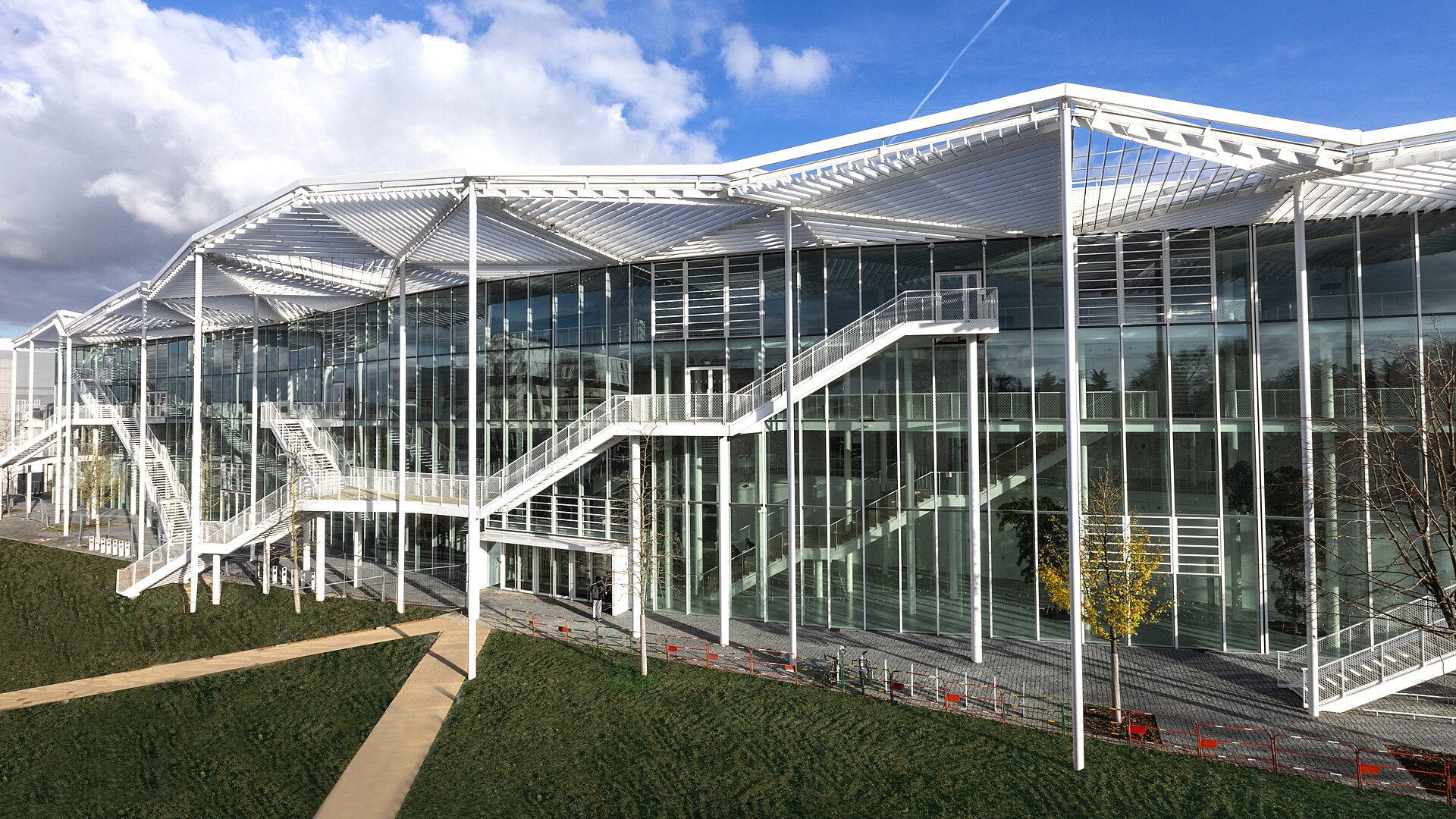
Institut Polytechnique de Paris — campus in pictures
Real, freely-licensed photographs of the campus (via Wikimedia Commons).





Why IP Paris — Elite Science, Grande École Prestige & Global Network
IP Paris is not a conventional university — it is a confederation of France's most selective engineering and science grandes écoles, designed to compete at the very top of global STEM education. For international students with a passion for rigorous mathematics, quantitative science, and applied research, IP Paris offers an extraordinary combination of French academic prestige and a vibrant Parisian ecosystem.
IP Paris Acceptance Rate & Admitted Student Profile
Stats
Profile Stats
Rea Vs Rd
IP Paris Admissions Requirements — Academics, English & STEM Preparation
- Strong academic record required across all courses
- IB HL Math AA strongly preferred over Math AI for engineering tracks
- A-Level Further Mathematics advantageous for most programmes
- Teacher references validate mathematical aptitude and intellectual character
- IELTS minimum 6.5 overall (each band ≥6.0)
- TOEFL iBT minimum 90
- Cambridge CAE/CPE Grade B or above (176+)
- Native speakers or those educated 2+ years in English may request exemption
- IB HL Mathematics AA (or A-Level Further Mathematics) required
- At least one advanced science (Physics, Chemistry, or CS) expected
- Olympiad results (IMO, IPhO, IOI) are a strong differentiator
- Competitive programming (USACO, IOI) valued for CS/data science tracks
IP Paris Application Components — Motivation Letter, Transcripts & Interview
IP Paris operates a direct online portal for applications. Below is every component of a complete IP Paris application — with strategic notes for each. Unlike US or UK applications, the process is document-based and direct, with no standardised essay platform.
IP Paris Written Application — The Motivation Letter Strategy
Tips
Prompts
What IP Paris Admissions Committees Are Looking For
IP Paris uses a holistic evaluation process for international applicants. Every file is read by an admissions committee assessing academic record, written application, and — for Bachelor applicants — interview performance. Understanding what the committee values is the foundation of a strong application.
IP Paris Financial Aid & Scholarships for International Students
IP Paris is substantially more affordable than equivalent-ranked US or UK universities. Financial support for international students is available through merit-based scholarships from the École Polytechnique Foundation, the French government's Eiffel Excellence programme, and bilateral Campus France awards. Aid does not typically cover full demonstrated need, but it meaningfully reduces costs for exceptional candidates.
Aid amounts and tuition figures are estimates based on the IP Paris facts profile and official sources. Individual packages depend on programme, financial circumstances, and available scholarship funding in any given year.
Stats
Contribution Tiers
| Note | Range | Percent | Percent Value |
|---|---|---|---|
| Full cost covered by French public tuition model + Eiffel scholarship if awarded | Exceptional merit candidates | 80% | 80 |
| Partial scholarship + campus employment | Foundation scholarship recipients | 60% | 60 |
| Full tuition at international rate (~$20,700/yr) | No scholarship — full-pay | 100% | 100 |
Key Dates
Advantages
- Earliest applicants reviewed first — better availability of interview slots
- Demonstrates clear first-choice commitment in motivation letter
- Maximum time to receive decision and plan funding / visa
- Round 1 scholarship consideration may be broader
- Earlier decision removes uncertainty for Grade 12 students
Disadvantages
- Application must be complete by September–October (very early)
- Less time to secure a strong IELTS/TOEFL score
- Fewer Grade 12 results available to strengthen academic profile
- If rejected, less time to pivot to alternative Round 2 plans
- Some Master's programmes only open in Session 2
IP Paris Interview — Format, Questions & Preparation
For the Bachelor programme at École Polytechnique, shortlisted candidates are invited to a remote interview of approximately 50 minutes, conducted in English by an admissions committee. Unlike many university interviews, this is a genuine intellectual assessment — not a courtesy conversation. Many academically strong candidates are rejected at interview because their scientific reasoning or motivation does not meet the committee's expectations.
Meta
Questions
IP Paris Campus, Residences & Student Life
IP Paris does not operate a collegiate 'house system' like Oxford, Yale, or Harvard. Instead, the 200-hectare campus on the Paris-Saclay plateau provides a self-contained community with on-campus residential options, sports facilities, dining, a museum, and a library. The campus is approximately 25 km south of Paris, accessible by the RER B rail line to central Paris in 35–45 minutes.
Houses
Lottery Steps
- On-campus housing is available for Bachelor students at École Polytechnique and for graduate students — apply early as spaces are limited
- CROUS (national university housing service) offers affordable rooms near campus — apply via the CROUS online portal
- Private student residences in Palaiseau offer furnished rooms and studios at moderate prices
- Shared apartments in Paris (Saint-Michel, Orsay, or Massy areas) are an option for those who prefer city life — budget more for commuting costs
- IP Paris's international student office provides dedicated support for housing search upon admission
IP Paris Member Schools & Programmes
- {"label":"Bachelor programme","value":"3-year int'l track"}
- {"label":"Engineering cycle (Ingénieur Polytechnicien)","value":"4 years"}
- {"label":"Master's programmes","value":"30+"}
- {"label":"QS rank (standalone)","value":"Top 60 globally"}
- {"label":"Focus","value":"Engineering systems"}
- {"label":"Flagship programme","value":"Diplôme d'ingénieur"}
- {"label":"Founded","value":"1741"}
- {"label":"Campus","value":"Palaiseau"}
- {"label":"Focus","value":"Statistics & Economics"}
- {"label":"Flagship programme","value":"Diplôme d'ingénieur"}
- {"label":"Notable for","value":"Actuarial, Data Science, Finance"}
- {"label":"Campus","value":"Palaiseau"}
- {"label":"Focus","value":"Digital & Telecom Engineering"}
- {"label":"Flagship programme","value":"Diplôme d'ingénieur"}
- {"label":"Founded","value":"1878"}
- {"label":"Campus","value":"Palaiseau"}
- {"label":"Focus","value":"IT & Networks"}
- {"label":"Founded","value":"1979"}
- {"label":"Campus","value":"Évry-Palaiseau"}
- {"label":"International track","value":"Available"}
- {"label":"Focus","value":"Infrastructure & Environment"}
- {"label":"Founded","value":"1747"}
- {"label":"Ranking","value":"World's oldest engineering school"}
- {"label":"Campus","value":"Champs-sur-Marne"}
Research & Extracurricular Life at IP Paris
Career Outcomes & IP Paris Alumni Network
IP Paris graduates are in high demand across European and global employers. The 90% employment rate, with an average starting salary of approximately $45,000 USD, reflects the market value of a grande école degree. Many graduates continue to doctoral research — IP Paris's research-track programmes produce a disproportionate share of France's academic faculty.
Stats
Categories
Our IP Paris Admissions Track Record & Student Outcomes
Faqs
Is IP Paris the same as École Polytechnique?+
IP Paris is the parent institution that unites École Polytechnique and five other grandes écoles (ENSTA Paris, École des Ponts, ENSAE Paris, Télécom Paris, Télécom SudParis). Your degree is awarded by your member school, but programmes span the combined resources of all schools. 'IP Paris' describes the alliance; 'l'X' is the common nickname for École Polytechnique itself.
Do I need to speak French to study at IP Paris?+
Not necessarily — many Master's programmes and the Bachelor of Science at École Polytechnique are taught entirely in English. However, living and studying in France is significantly easier with conversational French, and some social and extracurricular integration depends on it. French-taught programmes require demonstrated French proficiency.
What is the application fee?+
The application fee is listed as $0 in the IP Paris facts profile. However, verify the current fee structure for your specific programme on the official IP Paris or École Polytechnique admissions portal before applying, as fees may vary.
Can I apply with an IB Diploma?+
Yes. The IB Diploma is a well-recognised qualification for both Bachelor and Master entry. A competitive IB score is approximately 38 or above for admitted students, with strong performance in Higher Level Mathematics (Analysis & Approaches) being particularly important. IB Math Applications & Interpretation at HL is typically insufficient for engineering and physics programmes.
Is financial aid available to international students?+
Yes, but it is merit-based and not guaranteed. The École Polytechnique Foundation offers scholarships based on merit and financial need. The French government's Eiffel Excellence Scholarship is highly competitive and open to outstanding international Master's and PhD students. Financial support does not typically meet full demonstrated need — plan budgets conservatively.
How important is the interview for Bachelor admission?+
Extremely important. The Bachelor programme interview at École Polytechnique is a key decision point — shortlisted candidates participate in a ~50-minute remote interview in English. Strong academic records get you shortlisted; the interview is where intellectual motivation, scientific reasoning, and communication are tested. Many academically strong candidates are rejected at interview.
What fields does IP Paris specialise in?+
IP Paris spans mathematics, physics, computer science, data science, engineering, economics, energy systems, cybersecurity, and AI. It is fundamentally a STEM institution — it is not the right choice for students interested in humanities, arts, law, or medicine.
What is the difference between the Bachelor and the Ingénieur Polytechnicien cycle?+
The Bachelor of Science (BSc) at École Polytechnique is a 3-year English-taught programme specifically designed for international students, admitting via the international selection process described in this guide. The Ingénieur Polytechnicien is a 4-year French-language programme primarily reserved for students who pass France's highly competitive national preparatory class examinations (Classes Préparatoires). International students typically apply for the BSc or for Master's programmes.
Book a Free IP Paris Admissions Strategy Session
In 60 minutes our IP Paris admissions specialists will evaluate your academic profile — mathematics level, science preparation, competition results, and research experience — identify gaps, develop your motivation letter strategy, and prepare you for the interview. We have helped students from India, South Korea, Brazil, and across the world navigate the French grande école system.
- No commitment required
- French grande école admissions specialists
- Personalised motivation letter and interview strategy
IP Paris Admissions Requirements
IP Paris Academic Requirements — The Honest Breakdown for International Students
What academic profile, qualifications, and preparation do IP Paris admitted students actually have? And what does the grandes écoles selection process mean for students from IB, A-Level, AP, and other international curricula?
GPA & Academic Record
IP Paris and GPA — What the Data Shows
The honest picture: IP Paris does not publish a simple GPA cutoff. The minimum GPA from the facts file is 3.5 on a 4.0 scale — but this is a floor, not a competitive benchmark. In practice, admitted students at the Bachelor level have near-perfect academic records in science and mathematics.
A 3.5 GPA is the stated minimum, not the expected average of admitted students. In practice, successful applicants from IB, A-Level, and other rigorous curricula typically have records substantially above this floor — with particular strength in mathematics and science. The transcript quality matters as much as the overall number.
Academic Context
How IP Paris Reads Academic Performance from Different Systems
IP Paris does not use class rank as a formal admissions metric. Academic performance is evaluated in context — relative to the grading norms and curriculum rigour of the applicant's specific school and educational system.
SAT Context
SAT Scores at IP Paris — Context for International Applicants
IP Paris does not publish SAT bands — SAT scores are not a primary criterion and are not required. The institution evaluates academic excellence through transcripts, qualifications, and the application package.
| Label | Score | Percent |
|---|---|---|
| Published SAT requirement | None | 0 |
| SAT Math, if submitted voluntarily | 750+ recommended | 75 |
ACT Context
ACT Scores at IP Paris — What International Applicants Should Know
The ACT is not required and not commonly evaluated at IP Paris. The institution is not in the US admissions system. ACT scores are not a meaningful input to IP Paris's evaluation.
Metrics
Comparison Cards
Testing Policy
IP Paris Test Policy — What Is and Isn't Required
IP Paris operates a test-optional policy for standardised tests such as SAT and ACT. These tests are not primary criteria and are not required. The only test score that is required is an English proficiency test (IELTS or TOEFL) for programmes taught in English.
Submit Items
Withhold Items
International Qualifications
IB, A-Levels, and AP at IP Paris — Specific Benchmarks
- {"label":"Competitive IB score band","value":"38+ points (from facts file)"}
- {"label":"HL Mathematics","value":"Analysis & Approaches (AA) strongly preferred over Applications & Interpretation (AI)"}
- {"label":"Recommended subject combination","value":"HL Math AA + HL Physics or Chemistry + one further HL in a science or language"}
- {"label":"Extended Essay","value":"A or B grade in science or mathematics — useful supplementary signal"}
- {"label":"Competitive A-Level range","value":"AAA – A*A*A in relevant subjects"}
- {"label":"Mathematics","value":"A-Level Mathematics and ideally Further Mathematics for engineering and physics tracks"}
- {"label":"Sciences","value":"A-Level Physics, Chemistry, or Computer Science to complement mathematics"}
- {"label":"Subject choices","value":"Three sciences + mathematics combination reads strongly for IP Paris"}
- {"label":"Most relevant AP courses","value":"Calculus BC, Physics C (both modules), Chemistry, Statistics, Computer Science A"}
- {"label":"Target score","value":"4 or 5 in all science and mathematics APs"}
- {"label":"AP context","value":"IP Paris evaluates AP as part of the overall American curriculum profile — not as a standalone signal"}
Advanced Placement
AP Courses at IP Paris — What Counts and What to Take
For students in the US curriculum or international schools offering AP courses, Advanced Placement performance is a useful academic signal — but not a primary criterion at IP Paris, which evaluates academic excellence through the overall transcript and qualification profile.
Academic Rigour
Rigour of Secondary School Record — IP Paris's Most Important Academic Factor
IP Paris, like all grandes écoles, evaluates the rigour of your secondary school record as a primary academic factor. The question is not just what grades you achieved — it is what courses you chose and how demanding they were relative to what was available to you.
Taking the most rigorous mathematics and science courses available — then performing at the highest level in them.
Subject Preparation
Subject Preparation — What IP Paris Expects from International Students
IP Paris is fundamentally a mathematics and science institution. From the first week, students encounter fast-paced, proof-based, quantitative instruction. The subject preparation below reflects what admitted students consistently demonstrate before arrival.
Language Proficiency
English Language Requirements for International IP Paris Applicants
For English-taught programmes at IP Paris, demonstrated English proficiency is a firm requirement. The following minimums are published on the official admissions pages.
The IP Paris motivation letter and interview are both conducted in English. Your written proficiency is evident in the quality and precision of your letter — vague, imprecise language undermines your application even if your test score meets the minimum. Aim for IELTS 7.0+ or TOEFL 100+ to ensure your English is an asset rather than a distraction.
By Programme
Academic Profile by Programme — What Different Tracks Expect at IP Paris
IP Paris member schools offer distinct programmes — your application targets a specific school and programme. The academic profile should be coherent with the programme you are applying to. The rows below reflect typical expectations; verify specific requirements on the official programme page.
| Signals | Expectation | Concentration |
|---|---|---|
| IMO/IPhO participation; proof-based coursework; Putnam-style problems | HL Math AA (7) or A-Level Further Maths (A*) | Mathematics — École Polytechnique / MSc Pure Math |
| IOI / USACO Platinum; GitHub projects; competitive programming | HL Math AA + CS background | Computer Science / AI — École Polytechnique / Télécom Paris |
| Quantitative projects; Kaggle; stats coursework | HL Math AA + statistics exposure | Data Science / Statistics — ENSAE / MSc Data Science |
| Econometric projects; World Bank data; economics olympiad | HL Math AA + Economics HL | Economics / Financial Engineering — ENSAE |
| Physics olympiad; lab research; engineering design | HL Math AA + HL Physics (7) | Physics / Engineering — École Polytechnique / ENSTA |
| Network security CTF; cyber competitions; systems programming | HL Math + CS / programming depth | Cybersecurity — Télécom Paris / Télécom SudParis |
| Environmental projects; infrastructure design; energy analysis | HL Math + Physics/Chemistry | Civil / Environmental Engineering — École des Ponts |
International Education Systems
How IP Paris Evaluates International Qualifications
Academic Roadmap
Building an Academic Profile for IP Paris — What to Do at Each Stage
- Begin the most rigorous mathematics track available — this is the single most important early decision for an IP Paris application.
- Explore science olympiad preparation (mathematics, physics, chemistry) — these are multi-year investments.
- Begin basic programming in Python or C++ — essential for most IP Paris tracks.
- Select HL Mathematics AA (IB) or A-Level Further Mathematics — not the easier alternative.
- Add at least one rigorous science at the highest available level.
- Begin formal competition preparation: national olympiad preliminary rounds in mathematics, physics, or CS.
- Apply for summer research placements or internships at universities or national labs.
- Pursue a research experience, Tychr-facilitated or independent, in your target field.
- Compete in national and international olympiads — results carry substantial weight.
- Begin serious programming projects if targeting CS, AI, or data science tracks.
- Take IELTS or TOEFL by September — aim for IELTS 7.0+ or TOEFL 100+ to exceed the minimum.
- Spend three to four weeks on the motivation letter — this is the most important document in your application.
- Apply Round 1 (September–October) if your file is complete; Round 2 otherwise.
- Prepare for interview: practise explaining your scientific interests out loud and reasoning through novel quantitative problems.
Common Pitfalls
Academic Mistakes That Cost IP Paris Applications — And How to Avoid Them
Representative Outcomes
What Academic Profiles IP Paris-Admitted Students Have
The following profiles represent the types of academic backgrounds that succeed in IP Paris international admissions. They illustrate the range of preparation that works, and what made each application compelling beyond the grades.
Faqs
What IB score do I need for IP Paris?+
A competitive IB score for admitted students is approximately 38 or above, based on the facts file. More important than the overall score is the subject profile: HL Mathematics AA (7 or strong 6), and strong Higher Level scores in physics or other sciences. IB Math Applications & Interpretation at HL is typically insufficient for most IP Paris programmes.
Does IP Paris require SAT or ACT scores?+
No. IP Paris operates a test-optional policy for SAT and ACT. The only test score that is required is an English proficiency certificate (IELTS ≥6.5 or TOEFL iBT ≥90) for English-taught programmes. SAT/ACT scores may be submitted as supplementary context but are not primary criteria.
Is an IB score of 35–37 competitive for IP Paris?+
A score below 38 places you below the stated competitive band in the facts file. This does not make admission impossible — if your HL Mathematics and science scores are strong (7s and 6s), if you hold meaningful competition results, and if your motivation letter and interview are outstanding, your case can still be competitive. But apply with a realistic assessment of where you stand and prepare every other element of your application to compensate.
Does the Bachelor programme at École Polytechnique teach in English?+
Yes. The Bachelor of Science programme is an English-taught 3-year programme specifically designed for international students. The Ingénieur Polytechnicien cycle (the traditional French grande école programme) is largely French-medium and primarily for students who entered through the French Classes Préparatoires competitive examinations.
How important are mathematics competitions for admission?+
Very important as a differentiator. Many applicants have strong academic records — olympiad results (IMO, IPhO, IOI, or national equivalents) demonstrate the intellectual ambition and mathematical ability that IP Paris prizes above GPA alone. They are not strictly required, but their absence in a competitive pool is notable.
Cost & Financial Aid
IP Paris Costs Less Than You Think — Here's the Full Picture.
IP Paris offers world-class STEM education at a fraction of the cost of US or UK peer institutions. Here's exactly what IP Paris costs, how the French scholarship system works, and what you can do to fund your education.
Cost Transparency
What IP Paris Actually Costs — The Full Annual Figure
All figures are estimates from the IP Paris facts file and official sources. Actual costs depend on programme, housing choice, lifestyle, and exchange rate. Always verify current fees on ip-paris.fr.
At approximately $33,700 per year total cost of attendance, IP Paris is roughly one-third the price of a comparable US private university or top UK institution for international students. Even without scholarships, the absolute cost is substantially lower than most globally ranked peers at #38 QS.
Scholarship System
IP Paris Financial Aid — How It Works for International Students
IP Paris does not operate a US-style need-blind, full-need grant programme. Financial support for international students comes through: (1) the École Polytechnique Foundation scholarships (merit + need), (2) the French government's Eiffel Excellence Scholarship (highly competitive), and (3) bilateral Campus France awards (country-specific). These are merit-based programmes, not entitlements — and they do not typically meet full demonstrated financial need.
Structural Affordability
Why IP Paris Is Genuinely More Affordable Than Its Ranking Suggests
Financial Aid Walkthrough
Applying for IP Paris Financial Support — The Process Step by Step
IP Paris financial aid is not automatic — it requires proactive action across multiple scholarship routes, some of which must be initiated before or simultaneously with your university application.
- École Polytechnique Foundation scholarship (awarded at admission)
- Eiffel Excellence Scholarship (French Ministry — nominated by IP Paris)
- Campus France bilateral awards (administered by your home country's French embassy)
- Home government scholarships (vary by country)
- Visit the French embassy or Campus France website in your country
- Many bilateral scholarships have their own deadlines — often 12–18 months ahead of enrollment
- Applications are typically in your home country language or French
- The Foundation scholarship considers financial need as part of its evaluation
- Clearly indicate your financial situation and need for support in your application
- Documentation of family income may be requested
- The Eiffel scholarship is nominated by IP Paris on your behalf
- Once admitted, contact your admissions liaison and ask about Eiffel eligibility
- Eiffel is for Master's and PhD students — not Bachelor's level
- French student visas allow up to 964 hours/year of paid work (~20 hrs/week)
- Research assistant positions within IP Paris labs are available
- Campus roles in administration, tutoring, and events are accessible to enrolled students
- Scholarship notifications typically arrive with or shortly after your admission decision
- Review the terms and renewal conditions carefully
- Contact the Foundation or Eiffel office with questions before accepting
International Aid
IP Paris Financial Aid for International Students — How It Works
IP Paris is a French public grande école — its financial aid model for international students is fundamentally different from the US need-blind, full-need approach. Understanding the system prevents expensive misunderstandings.
Aid Estimates
IP Paris Financial Support — What Different Award Scenarios Look Like
IP Paris Aid Scenarios for International Students
Scholarship amounts and eligibility criteria vary by year and applicant profile. The figures above are illustrative estimates. Verify current award amounts on official IP Paris and Campus France websites.
No published average aid percentage exists for IP Paris international students. The most important financial planning assumption is full-pay ($33,700/yr) unless and until a specific scholarship is awarded. Apply proactively for all available routes — the Eiffel, Foundation, and bilateral awards together can meaningfully reduce costs for exceptional candidates.
| Grant | Income | Contribution |
|---|---|---|
| Eiffel Scholarship (if awarded) | Outstanding academic merit (Master's/PhD) | Significantly reduced — covers living costs + tuition waiver in some cases |
| Foundation Excellence Scholarship | Exceptional merit + demonstrated need | Partial tuition reduction (approx. €4,000–€10,000/yr equivalent) |
| Campus France bilateral award | Country-specific eligibility | Varies significantly by country and bilateral agreement |
| No institutional aid | Full-pay international rate | ~$20,700 tuition + ~$13,000 living = ~$33,700 total |
Table Headers
Merit Scholarships
IP Paris Scholarships — What Exists and Who Qualifies
Unlike Harvard and Princeton, IP Paris does not have a purely need-based grant system. Its scholarships are merit-based — academic excellence is the primary criterion, with financial need a secondary factor for some awards.
External Funding
External Scholarships — Additional Funding Routes for IP Paris Students
Beyond IP Paris's own awards and the French government's Eiffel programme, numerous external organisations offer scholarships to students admitted to top global STEM institutions — including IP Paris.
Loan Policy
Student Loans at IP Paris — What International Students Need to Know
IP Paris is a French public institution — it does not offer student loans. France's national student loan system (Prêt Étudiant Garanti) is available to French students; international students are generally not eligible for French state-backed loans. This is a fundamental difference from the US system.
Student Employment
Working While Studying at IP Paris — What to Expect
French student visas allow international students to work up to 964 hours per year — approximately 20 hours per week. This is a legally protected right and a meaningful income source for IP Paris students who wish to supplement scholarship funding.
- Research assistant positions in IP Paris joint laboratories (paid, academically relevant, and excellent for your CV)
- Teaching assistant (monitorat) roles in introductory mathematics or physics courses
- Campus administration and library roles
- Tech support and IT roles on campus
- Student association leadership roles (often unpaid but professionally valuable)
- Internships at Paris-Saclay companies and startups (especially during summer periods)
Benchmarking
IP Paris vs Global Peers — Financial Aid and Cost Comparison
| Policy | School | No Loans | Typical Cost |
|---|---|---|---|
| Public; merit-based scholarships | IP Paris (France) | N/A (no institutional loan) | ~$20,700–$33,700/yr (full pay); less with scholarships |
| Need-blind; full-need grants; no loans | Harvard (USA) | Yes | $0 for families under $85K/yr |
| Need-blind; full-need grants; no loans | MIT (USA) | Yes | $0 for families under $90K/yr |
| Public; EU tuition; some scholarships | ETH Zurich (Switzerland) | N/A | ~$12,000–$15,000/yr (EU); ~$14,000–$18,000 (non-EU) |
| Public; high international fees; scholarships | Imperial College London (UK) | No | ~$45,000–$55,000/yr (international) |
| Need-aware (international); merit scholarships | Caltech (USA) | Some loans in packages | ~$20,000–$60,000/yr (international; need-aware) |
Cost Analysis
IP Paris vs Alternatives — What You Actually Pay
For a family that does not qualify for US need-blind aid, IP Paris offers an elite global STEM education at roughly 40–60% of the cost of comparable US or UK private universities. This structural price advantage is the single most important financial fact about IP Paris for international families.
| Policy | School | Contribution | Four Year Cost |
|---|---|---|---|
| Public; merit scholarships available | IP Paris (France) | ~$20,700–$33,700 | ~$80,000–$135,000 |
| Need-blind; full need; no loans | Harvard (USA) — qualifying family | ~$0 | ~$0 |
| High international fees; limited aid | Imperial College London (UK) | ~$45,000–$55,000/yr | ~$135,000–$165,000 (3 yr) |
| Public; high international fees | TU Munich (Germany) — public rate | ~$2,000–$5,000/yr fees + living | ~$50,000–$60,000 |
| Need-aware; limited intl aid | Top US private (not need-blind) | ~$60,000–$90,000/yr | ~$240,000–$360,000 |
Scholarship Appeals
Appealing or Supplementing Your IP Paris Financial Support
IP Paris does not have a formal financial aid appeals process in the same way as US universities. However, if your scholarship award does not reflect your financial situation accurately — or if circumstances have changed since your application — there are steps you can take.
The honest note: IP Paris's scholarship programme is merit-based and competitive. Appeals based on financial need alone are unlikely to result in increased awards. The most effective approach is to proactively identify and apply for all external scholarship routes (Eiffel, Campus France, home government) simultaneously with your IP Paris application.
How To Appeal
- Contact the École Polytechnique Foundation scholarships office directly with documentation of your financial situation
- Ask your IP Paris admissions contact whether you can be nominated for the Eiffel Excellence Scholarship (Master's/PhD only)
- Apply for Campus France bilateral awards through your home country's French embassy — these have independent processes and deadlines
When To Appeal
- Your financial circumstances have changed significantly since your application was submitted
- You were admitted without scholarship consideration and have subsequently learned of available routes
- You hold a competing admission offer with a more generous scholarship from another institution (some consideration may be given)
Timeline & Planning
Planning for IP Paris Costs — What to Do and When
ESSAYS & APPLICATION
The IP Paris Written Application — Motivation Letter, Interviews & Application Strategy
IP Paris does not use the US Common App, UCAS, or any standardised essay platform. The primary written component of your application is a motivation letter — a 2–3 page document that explains your scientific interests, intellectual journey, motivation for your chosen programme, and fit with IP Paris specifically. For the Bachelor programme at École Polytechnique, you also participate in a personal interview. This is the French grande école system: rigorous, specific, and merit-focused.
Unlike US supplemental essays, which typically address multiple short prompts, the IP Paris motivation letter is your single most important written statement. It must be substantive, specific, and honest. Generic letters about 'passion for engineering' will not distinguish you. What succeeds is intellectual specificity: a letter grounded in your actual scientific journey, research experiences, and a clear reason why IP Paris — and which member school or programme — is the right place for your next step.
APPLICATION SYSTEM
How the IP Paris Application System Works
IP Paris operates a direct online portal (not Common App, UCAS, or Coalition). There is no standardised essay prompt to respond to — instead, you submit a motivation letter as part of your application package. The process is document-based, with shortlisted Bachelor applicants invited to an interview.
The IP Paris application is document-based and direct. The key written component is the motivation letter — a structured, scholarly document covering your academic background, research interests, motivation for IP Paris, and career direction.
Required Items
Optional Items
THE MOTIVATION LETTER
Writing Your IP Paris Motivation Letter
The motivation letter is equivalent in importance to the personal statement in UK admissions or the suite of essays in US admissions. It is your primary opportunity to make an intellectual case for your admission. For IP Paris, the letter should be 2–3 pages and cover four core areas.
MOTIVATION LETTER STRATEGY
The Motivation Letter — What It Needs to Accomplish
Unlike the US Common App personal statement — which can be about almost any aspect of your life — the IP Paris motivation letter is firmly anchored in your intellectual and academic journey. The tone is scholarly and forward-looking. The committee is asking: 'What kind of researcher or engineer is this student, and do they belong in our programme?'
The motivation letter must work for IP Paris specifically. The committee has read thousands of letters. What they remember is the letter that makes a specific, intellectually honest case — the student who named a specific research group, described a specific problem they want to tackle, and demonstrated they had actually read what IP Paris works on.
Looking For List
- A genuine, specific intellectual journey — grounded in your actual coursework, projects, and research
- Evidence of how your scientific mind works — not what you've achieved, but how you think and explore
- Authentic reasons for choosing IP Paris specifically — not the ranking, but the specific programme, lab, or research direction
- A coherent academic and professional trajectory — where you are going and why IP Paris is the right next step
Tired Of List
- Generic enthusiasm for 'science and technology' without specific intellectual content
- Letters that could be addressed to any top STEM institution — ETH, MIT, UCL — without changing a word
- Overlong letters that attempt to cover everything rather than a few things well
- Motivation borrowed from rankings, prestige, or vague career goals ('I want to work at Google')
STRATEGY BY LEVEL
Application Strategy by Level — Bachelor, Master's, and PhD
TOPIC GUIDANCE
How to Choose Your Motivation Letter Approach
Unlike US personal statement topics which can be drawn from life experiences, the IP Paris motivation letter should be anchored in your intellectual and academic journey. The tone is scholarly — not confessional.
- Ground the letter in a specific intellectual journey, not a general enthusiasm for science.
- Reference a specific research experience, competition, or independent project that deepened your interest in your chosen field.
- Name specific research areas, laboratories, or faculty at IP Paris you want to engage with — this signals you have done your homework.
- Avoid clichés about 'changing the world' or 'passion for engineering' without concrete intellectual content.
- Be honest about where you are in your academic development — IP Paris values intellectual humility alongside ambition.
- Write in clear, precise academic English — the letter itself demonstrates your language ability.
- Connect your extracurricular achievements to your intellectual profile, not as a separate list.
- Show a coherent trajectory — from your earliest relevant experience to your reasons for choosing IP Paris now.
COMMON MISTAKES
Motivation Letter and Application Pitfalls to Avoid
- Writing a generic letter: any letter that could apply equally to ETH Zurich, MIT, or UCL without changing a word is not specific enough for IP Paris.
- Failing to name specific programmes, research groups, or faculty — this signals you haven't researched the institution.
- Using a personal narrative style borrowed from US Common App — the IP Paris motivation letter is more formal and academic in register.
- Exceeding 3 pages — conciseness is valued; a letter that rambles loses the committee's attention.
- Describing your research interests in vague terms — say what specific problems interest you, not just which field.
- Treating the interview as a formality — many qualified applicants are rejected at interview. Prepare seriously for 50 minutes of genuine scientific discussion.
- Neglecting French language skills for French-taught programmes — stating you will learn French is not the same as demonstrating readiness for instruction in French.
- Ignoring the CV — in the IP Paris system, the CV is a substantive academic document, not an afterthought.
- Applying to the wrong programme — make sure you understand the difference between the Bachelor of Science (international, English-taught) and the Ingénieur Polytechnicien cycle (French-language, concours-based).
APPLICATION FAQS
Written Application & Strategy — Frequently Asked Questions
Does IP Paris use the Common App or UCAS?+
No. Applications go through the IP Paris online portal (ip-paris.fr) or MonMaster for certain profiles. There is no Common App, UCAS, or Coalition. Each programme may have its own specific sub-portal — verify the correct route for your programme on the official admissions page.
How long should my motivation letter be?+
The official guidance for the Bachelor programme specifies 2–3 pages. For Master's applications, length guidance varies by programme — check the specific programme admissions page, but 1.5–2 pages is typically appropriate for Master's. Never exceed the stated limit.
Should my motivation letter be in English or French?+
For English-taught programmes, write in English. For French-taught programmes, write in French. If applying to a bilingual programme, follow the official guidance for that programme. The letter language should match the language of instruction.
Is there a standardised essay prompt I need to respond to?+
No. IP Paris does not use a set prompt like US supplementals. Your motivation letter is a self-structured document covering your academic background, interests, research direction, and reasons for choosing IP Paris and your specific programme.
How important are the two academic references?+
Very important, particularly at the Master's level. Choose academic referees who know your research or advanced coursework capabilities first-hand. For Bachelor applicants, teachers who can speak to your mathematical ability and intellectual character are ideal. Give referees at least 4–6 weeks of notice.
What should I expect in the Bachelor programme interview?+
A 50-minute remote video interview in English with an admissions committee. Expect questions testing scientific reasoning (including novel quantitative problems), motivation for IP Paris specifically, research interests, and current engagement with science and technology. Prepare to think aloud — the committee wants to see how you reason, not just whether you know the answer.
Can I apply to multiple programmes at IP Paris?+
This depends on the programme structure. Some IP Paris portals allow multiple programme preferences in a single application; others require separate applications. Verify the process for your target programmes on the official admissions page before submitting.
How do I make my motivation letter specific to IP Paris?+
Spend time on ip-paris.fr and the websites of the specific member school you are applying to. Read the research group and laboratory pages. Identify 2–3 research groups or faculty whose work connects directly to your stated interests — and name them in your letter. Explain why the Paris-Saclay ecosystem is relevant to your direction. This specificity is what separates strong letters from weak ones.
Courses — schools, degrees & intake
40 degrees across 6 groupings.
École Polytechnique – Bachelor of Science · 3 degrees
Bachelor of Science – Mathematics and Physics
Bachelor of Science – Mathematics and Computer Science
Bachelor of Science – Mathematics and Economics
École Polytechnique – Ingénieur Polytechnicien Program · 16 degrees
Ingénieur Polytechnicien – Mathematics
Ingénieur Polytechnicien – Applied Mathematics
Ingénieur Polytechnicien – Physics
Ingénieur Polytechnicien – Computer Science
Ingénieur Polytechnicien – Artificial Intelligence
Ingénieur Polytechnicien – Electrical Engineering
Ingénieur Polytechnicien – Mechanics
Ingénieur Polytechnicien – Energy
Ingénieur Polytechnicien – Economics
Ingénieur Polytechnicien – Biology
Ingénieur Polytechnicien – Bioinformatics
Ingénieur Polytechnicien – Chemistry at Interfaces
Ingénieur Polytechnicien – Space Science and Challenges
Ingénieur Polytechnicien – Environmental Sciences
Ingénieur Polytechnicien – Technological Innovation
Ingénieur Polytechnicien – Public Affairs
ENSTA Paris · 6 degrees
Diplôme d'Ingénieur – Applied Mathematics
Diplôme d'Ingénieur – Mechanical Engineering
Diplôme d'Ingénieur – Information and Communication Technology
Diplôme d'Ingénieur – Defense and Security
Diplôme d'Ingénieur – Embedded Systems (Apprenticeship)
Diplôme d'Ingénieur – Mechanical Design (Apprenticeship)
ENSAE Paris · 7 degrees
Ingénieur ENSAE – Actuarial Science
Ingénieur ENSAE – Data Science and Business Decision
Ingénieur ENSAE – Data Science, Statistics and Learning
Ingénieur ENSAE – Economic Policies and Dynamics
Ingénieur ENSAE – Finance, Risks and Data
Ingénieur ENSAE – Social Data Science
Ingénieur ENSAE – Research Track
Télécom Paris · 4 degrees
Diplôme d'Ingénieur – Communications and Electronics
Diplôme d'Ingénieur – Computer Science and Networks
Diplôme d'Ingénieur – Image, Data and Signal
Diplôme d'Ingénieur – Economics and Social Sciences of Digital Tech
Télécom SudParis · 4 degrees
Diplôme d'Ingénieur – Computer Science and Networks
Diplôme d'Ingénieur – Data Science and Artificial Intelligence
Diplôme d'Ingénieur – Cybersecurity
Diplôme d'Ingénieur – Industry 4.0 and IoT
Want your real chances at Institut Polytechnique de Paris?
Create a free TYCHR account for your personalised admit-chance, a shortlist you can track, exact entry requirements, and essay + counselling help.