← All universities

Indian Institute of Technology Delhi

New Delhi, India · Urban

Indian Institutes of TechnologyPublicTechnicalResearch
Acceptance
0.5%
QS World
#150
Tuition/yr
$2,880
Students
11,000
Founded
1961

IIT Delhi is India's second-ranked institution and one of the world's most selective engineering universities — admitting fewer than one in two hundred candidates through the gruelling JEE Advanced examination. For the rare international or NRI student who earns a seat here, the rewards are extraordinary: a globally respected degree, world-class research infrastructure, and access to one of Asia's most powerful alumni networks, all at a fraction of the cost of comparable universities worldwide.

Campus

Indian Institute of Technology Delhi — campus in pictures

Real, freely-licensed photographs of the campus (via Wikimedia Commons).
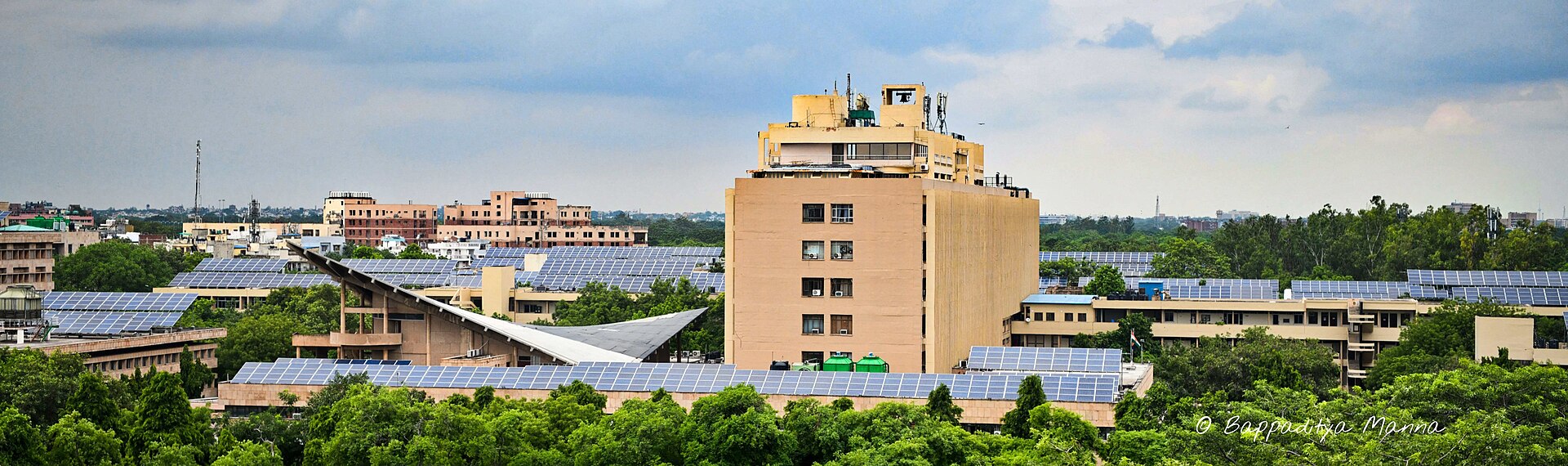
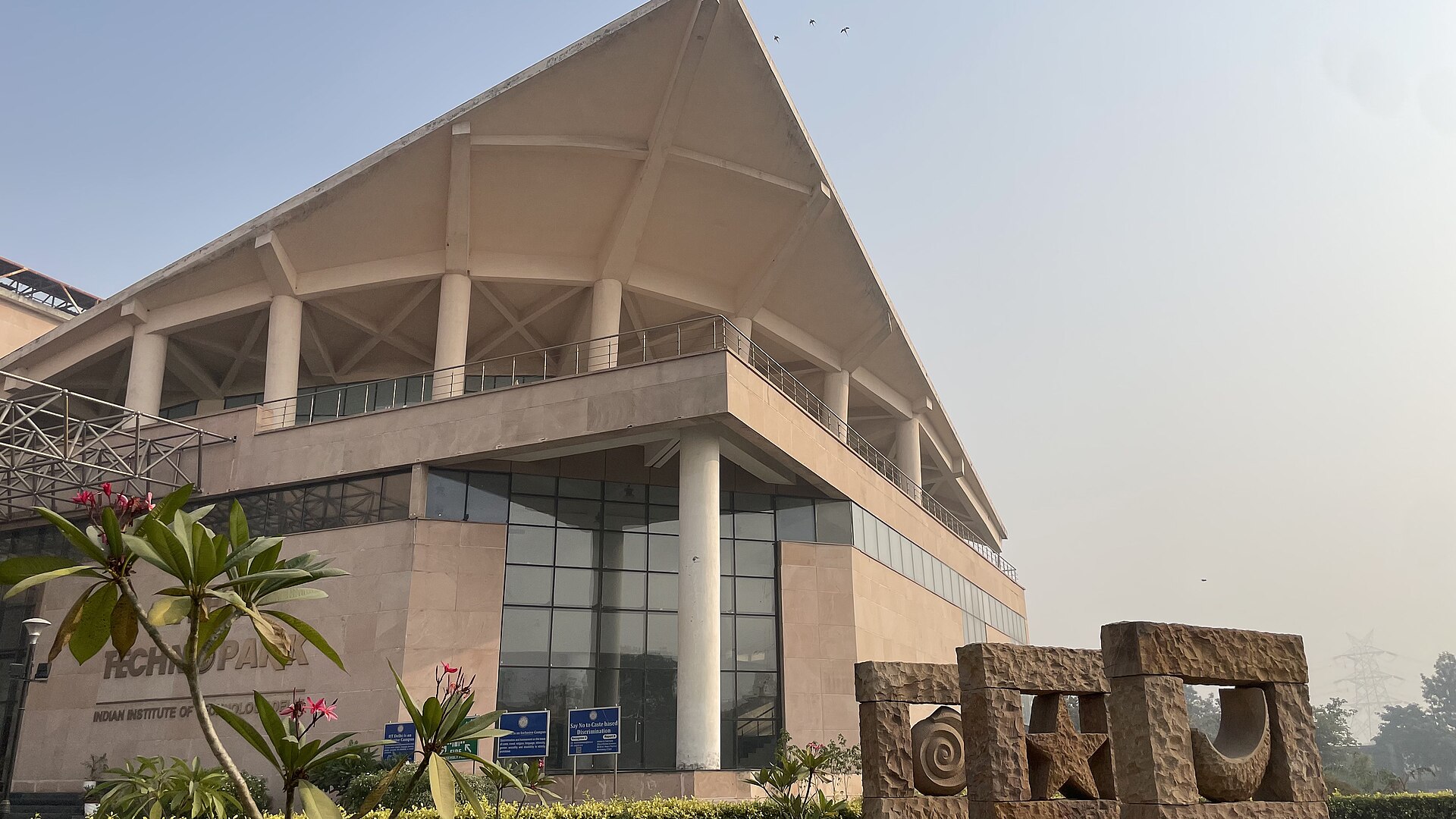
View of the main building from lecture hall complex
View of the main building from lecture hall complexIitduser · CC BY-SA 4.0 · via Wikimedia Commons
Central Library, IITD Academic visit 20 Nov 2025 06
Central Library, IITD Academic visit 20 Nov 2025 06Central Library, Indian Institute of Technology Delhi · CC BY-SA 4.0 · via Wikimedia Commons
Central Library, IITD Academic visit 20 Nov 2025 14
Central Library, IITD Academic visit 20 Nov 2025 14Central Library, Indian Institute of Technology Delhi · CC BY-SA 4.0 · via Wikimedia Commons
Central Library, IITD Academic visit 20 Nov 2025 15
Central Library, IITD Academic visit 20 Nov 2025 15Central Library, Indian Institute of Technology Delhi · CC BY-SA 4.0 · via Wikimedia Commons
Central Library, IITD Academic visit 20 Nov 2025 24
Central Library, IITD Academic visit 20 Nov 2025 24Central Library, Indian Institute of Technology Delhi · CC BY-SA 4.0 · via Wikimedia Commons
Central Library, IITD Academic visit 20 Nov 2025 31
Central Library, IITD Academic visit 20 Nov 2025 31Central Library, Indian Institute of Technology Delhi · CC BY-SA 4.0 · via Wikimedia Commons

Why IIT Delhi — Research, Alumni & Global Prestige

IIT Delhi is not merely India's premier engineering institution — it is one of the world's great technical universities, measured not just by rankings but by the calibre of problems its graduates solve and the scale of enterprises they build. For ambitious STEM students worldwide, it offers an extraordinary combination of academic rigour, research depth, and career outcomes at a cost that almost no comparable institution can match.

01Elite Global Standing
Ranked #150 globally by QS (2024) and #2 in India by NIRF — IIT Delhi is recognised by graduate schools and employers from MIT to McKinsey as one of Asia's finest engineering institutions.
02Research at National Scale
Sixteen departments, eleven specialised research centres, and six interdisciplinary schools. Undergraduates routinely co-publish and patent alongside faculty working on AI, clean energy, biomedical devices, and quantum systems.
03Unrivalled Alumni Network
IIT alumni collectively lead the C-suites of Amazon, Adobe, Flipkart, and Infosys, and have founded over 400 start-ups in India alone. In Silicon Valley, the IIT network rivals Ivy League connections in reach and density.
04Extraordinary Value
Annual tuition of approximately USD 2,880 for a top-150 QS-ranked degree. A complete four-year engineering degree at IIT Delhi costs less than a single year of tuition at MIT, Caltech, or Imperial College London.

IIT Delhi Acceptance Rate & Selectivity Profile

Stats

~1,000,000
JEE Main candidates annually
~160,000
JEE Advanced qualifiers
~880
IIT Delhi B.Tech seats

Profile Stats

Top 1,000
Typical JEE Advanced rank (domestic)
75%
Board minimum (PCM aggregate)
#150
QS World Rank
#2
National Rank (NIRF)
2%
International students
92%
Placement rate
Overall acceptance rate relative to JEE Main candidates

Rea Vs Rd

Rd Label: DASA Scheme (NRI/OCI/PIO)
Rd Value: SAT-based
Rea Label: JEE Advanced (Foreign National)
Rea Value: Exam-based

IIT Delhi Admissions Requirements — Board Exam, Entrance Test & Academic Excellence

Board Examination
Value: 75%+ in PCM
  • Physics, Chemistry, and Mathematics are compulsory subjects
  • Board minimum: 75% aggregate or top 20 percentile of qualifying board
  • IB, A-Level, AP, and most national boards accepted as qualifying exams
  • This is an eligibility gate — not a ranking criterion
All IIT Delhi pathways require a minimum of 75% aggregate marks (or equivalent) in Physics, Chemistry, and Mathematics in your qualifying secondary examination. This applies whether you hold a CBSE, IB, A-Level, AP, or other national board qualification.
Entrance Examination
Value: JEE Advanced / SAT
  • Foreign nationals: register directly for JEE Advanced (no JEE Main required)
  • NRI/OCI/PIO: SAT score used for DASA scheme ranking
  • SAT Mathematics section is the critical differentiator for DASA
  • JEE Advanced tests Physics, Chemistry, and Mathematics at extreme depth
The primary selection criterion for B.Tech is the JEE Advanced examination (for foreign nationals) or the SAT score (for NRI/OCI/PIO applicants under DASA). Both are the most competitive pathways in their respective categories.
Academic Profile
Value: Top 1% globally
  • IB: HL Mathematics, HL Physics, HL Chemistry strongly recommended
  • A-Level: Mathematics + Further Mathematics + Physics/Chemistry
  • AP: Calculus BC, Physics C, Chemistry as the closest JEE preparation
  • Olympiad and competition experience strengthens profile significantly
Successful candidates demonstrate exceptional command of Physics, Chemistry, and Mathematics at a depth beyond standard secondary curricula. For international applicants, IB HL or A-Level Further Mathematics represents the minimum appropriate preparation for JEE Advanced.

IIT Delhi Application — JEE Advanced, DASA & Document Requirements

IIT Delhi's undergraduate admission is entirely exam-based — there is no Common App, no personal statement, and no holistic review for B.Tech. The application consists of official examination results and supporting documents. For doctoral programmes, a Statement of Purpose is the primary written component.

01PRIMARYJEE Advanced (Foreign Nationals)
Citizens of countries other than India may register directly for JEE Advanced without sitting JEE Main. Registration opens at jeeadv.ac.in in April each year. Both Paper I and Paper II (each 3 hours, covering Physics, Chemistry, and Mathematics) must be attempted.
02NRI · OCI · PIODASA / CIWG Scheme
The Direct Admission of Students Abroad (DASA) scheme allows NRI, OCI, and PIO applicants to apply for B.Tech seats using SAT scores. Registration is at dasanit.org. CIWG provides an equivalent pathway for children of Indian workers in Gulf countries.
03REQUIREDQualifying Board Marks
Official mark sheets from your qualifying secondary examination (IB, A-Level, CBSE, ISC, or equivalent) showing Physics, Chemistry, and Mathematics. A minimum 75% aggregate in PCM subjects (or top 20 percentile) is required for eligibility.
04REQUIREDProof of Citizenship / Status
Valid passport, and — for DASA/CIWG — certified proof of NRI, OCI, or PIO status. Documents must be valid and attested as required by CSAB. Ensure names match exactly across all documents.
05REQUIREDEnglish Proficiency
IELTS Academic (minimum 6.5 overall) or TOEFL iBT (minimum 90) required for applicants whose secondary schooling was not in English. Book your test well in advance — results take several weeks.
06POSTGRADUATEGATE / JAM / PhD Direct (PG)
M.Tech admission is via GATE score; M.Sc via JAM. PhD applications are submitted directly to IIT Delhi's graduate admissions office and typically require a Statement of Purpose, academic transcripts, and references.
07OPTIONALResearch / Olympiad Portfolio
While not formally evaluated in B.Tech admissions, Olympiad medals, published research, or significant academic competition wins support your preparation narrative and are valuable for PhD applications and post-graduation opportunities.

IIT Delhi Application — No Essays for B.Tech, What Replaces Them

Tips

Your JEE score IS your essay
Unlike US universities, IIT Delhi's B.Tech admission has no personal statement. Every hour spent crafting application narratives is better spent on JEE problem sets. Six hours of examination is the complete selector.
For DASA applicants: the SAT Mathematics score is everything
DASA ranks applicants by SAT score. A weak Mathematics section cannot be compensated by any written component — invest your preparation time there, not in narrative documents.
PhD applicants: your SOP is genuinely important
A Statement of Purpose for doctoral admission should name specific faculty, cite recent papers from their group, and connect your prior research experience to the exact problem you want to work on. Generic SOPs are immediately recognisable.
Document accuracy matters more than narrative
The written work that matters most in IIT Delhi's application is the accuracy and completeness of your official documents — mark sheets, citizenship proof, and IELTS/TOEFL reports. Errors here can disqualify an otherwise strong application.

Prompts

B.Tech / M.Tech — No Essays
No personal statement is required for B.Tech or M.Tech admission. The JEE Advanced score and qualifying board results are the complete academic record.
PhD Statement of Purpose
PhD applicants submit a Statement of Purpose (SOP): a 500–1,000 word document describing your research background, interests, and the specific faculty member or problem area you wish to pursue at IIT Delhi.
DASA — SAT Score Only
DASA applicants submit their SAT scorecard as the primary merit document. No additional written statement is required.
JEE Advanced Registration Form
JEE Advanced foreign national registration requires completion of the online form with academic and personal details. No written statement beyond factual fields.
The most common mistake international applicants make. Spending hours crafting an application narrative that IIT Delhi never reads — when that time could have gone into JEE problem sets.
Application Strategy — What Actually Matters

What IIT Delhi Admissions Is Actually Looking For

Unlike US holistic admissions, IIT Delhi's selection process is almost entirely quantitative and examination-based. Understanding precisely what is evaluated — and what is not — is the foundation of an effective preparation strategy.

01Examination Excellence
JEE Advanced performance is the sole criterion for foreign national B.Tech admission. The examination tests deep conceptual understanding and problem-solving speed in Physics, Chemistry, and Mathematics — not rote recall.
02Mathematical Depth
The top scorers at IIT Delhi think mathematically at a level that goes well beyond any school curriculum. Calculus, algebra, and geometry problems at JEE require original thinking under time pressure — a fundamentally different skill from school examination performance.
03Scientific Rigour
Physics and Chemistry at JEE Advanced are tested from first principles. Students who understand why equations are true — not just how to apply them — systematically outperform those who have memorised approaches.
04Board Eligibility
75% aggregate in Physics, Chemistry, and Mathematics in your qualifying board is a non-negotiable threshold. A student who clears JEE Advanced but fails this eligibility check is not offered a seat.
05Consistency and Breadth
JEE Advanced has subject-wise cutoffs — candidates who score well overall but fail a subject minimum are disqualified. Consistent performance across all three subjects is essential, not just a single-subject strength.
06Application Accuracy
IIT Delhi's process is document-intensive and unforgiving of errors. The admissions office evaluates your document submission for completeness and authenticity — not your personality or extracurricular story.

IIT Delhi Financial Aid & Scholarships for International Students

IIT Delhi's financial proposition is unique globally: a top-150 QS-ranked engineering degree at a cost of approximately USD 4,800 per year total. The primary 'aid' at IIT Delhi is the low sticker price itself, funded by the Government of India's substantial subsidy of its Institutes of National Importance.

Cost figures are approximate annual estimates from published data. Actual fees vary by programme and are revised annually. Confirm current rates with IIT Delhi's admissions office and the DASA portal.

Stats

~USD 2,880
Annual tuition (international rate)
~USD 4,800
Total annual cost of attendance
~USD 19,200
4-year total cost
~10x less
Compared to MIT or Imperial for same degree

Contribution Tiers

NoteRangePercentPercent Value
Core engineering disciplines (CSE, EE, ME, ChE, CE)B.Tech (domestic rate)~USD 800–1,200/yr15
International student fee structureB.Tech (international/DASA rate)~USD 2,880/yr40
Including hostel, meals, books, personal expensesTotal Cost of Attendance~USD 4,800/yr65
Covers tuition + stipend; effectively free-with-incomePhD (with TA/RA)~USD 0 net5
ICCR scholarship recipients: tuition + accommodation + monthly stipendICCR ScholarshipFull coverage100
Why IIT Delhi Is Affordable — Government Subsidy, Not Endowment Aid. IIT Delhi's low tuition is structural — it reflects the Indian government's heavy subsidy of its national technical institutes, not an endowment-driven aid programme. For most international families, the cost is genuinely accessible without additional financial aid. ICCR government scholarships can reduce costs further for qualifying students from specific countries.
Total Cost by Programme (Approximate Annual)

Key Dates

JEE Main (domestic qualifying exam)
Date: January & April
JEE Advanced / DASA registration window
Date: April–May
JEE Advanced examination
Date: May
JEE Advanced results published
Date: June
JoSAA / CSAB counselling and seat allocation
Date: June–July
DASA / CIWG registration
Date: March–May (approx.)

Advantages

  • Direct JEE Advanced access — no JEE Main required for foreign nationals
  • Same examination as domestic top candidates — clear, objective comparison
  • Foreign national merit list is separate — directly comparable within your category
  • Highest-prestige pathway — a JEE Advanced rank is globally understood
  • Access to all IIT Delhi B.Tech programmes including CSE and EE

Disadvantages

  • JEE preparation requires 1–2 years of dedicated, structured study
  • International school curricula (IB/A-Level) must be supplemented with India-specific JEE drilling
  • The exam is six hours of high-intensity problem solving — significantly harder than any school exam
  • Score does not transfer — JEE rank is useful only for IIT/NIT admission, nowhere else
  • Missing the registration window (April–May) means waiting a full year
JEE Advanced vs DASA Scheme. IIT Delhi offers two distinct B.Tech entry routes for non-domestic students: the JEE Advanced foreign national track and the DASA scheme. Choosing correctly depends on your citizenship, educational background, and preparation capacity.
Tychr's Route Recommendation. Foreign nationals with strong PCM preparation and 1–2 years available for dedicated JEE study should attempt the JEE Advanced foreign national route — it gives access to any IIT and carries the most prestige. NRI/OCI/PIO students, especially those educated in international school systems, often find the DASA scheme more practical — but must invest heavily in maximising their SAT Mathematics score, as DASA competition is fierce for IIT Delhi seats specifically.
Key Dates (verify annually at jeeadv.ac.in and dasanit.org)
JEE Advanced Foreign National Route — Advantages
IIT Delhi Application Routes — JEE Advanced Foreign National vs DASA Scheme

IIT Delhi Interview — What Exists and What Doesn't

IIT Delhi's B.Tech and M.Tech admission processes contain no interviews — all selection is based on examination scores and document verification. For PhD and MBA applicants, a department-level interview or group discussion is part of the process. If you are applying for doctoral study, the interview is your primary opportunity to differentiate yourself in writing and in person.

Meta

No interview — exam score only
B.Tech Admission
No interview — GATE score based
M.Tech Admission
Interview typically required by individual departments
PhD Admission
GD/PI (Group Discussion + Personal Interview) after CAT
MBA (DMS Delhi)

Questions

What specific research problem do you want to work on, and why IIT Delhi specifically?
Tip: Be specific about the research problem, the faculty member's work, and why their approach matches yours. Generic research interest statements are immediately obvious.
Walk me through your prior research or project experience.
Tip: Describe what you actually contributed — not just the team's output. Supervisors want to see that you can work independently.
What do you know about our group's current work?
Tip: Show that you've read recent papers from the lab. Reference a specific finding and connect it to your proposed direction.
What is the gap in your preparation that you'll need to address in your first semester?
Tip: Have a concrete, honest answer. A weak area you've identified and are working on is far more impressive than a claimed strength that falls apart under follow-up.
Why DMS Delhi for your MBA, and not an IIM?
Tip: For MBA: Know DMS Delhi's academic areas, recent case competitions, and how it positions against IIM Ahmedabad or ISB.

IIT Delhi's Hostel System & Residential Life

All IIT Delhi undergraduate students are guaranteed on-campus hostel (hall of residence) accommodation. Unlike the lottery-based house system at US universities, IIT Delhi assigns hostel rooms based on availability and student preferences at the time of admission. Each hostel has its own mess (dining hall), common rooms, recreational facilities, and student body — creating a community within the broader campus.

Houses

Aravali Hostel
Tag: Men's
One of the older men's hostels; strong study culture
Himadri Hostel
Tag: Men's
Modern facilities, active sports scene
Jwalamukhi Hostel
Tag: Men's
Central location, vibrant common room culture
Karakoram Hostel
Tag: Men's
Large hostel; known for inter-hostel competition spirit
Kumaon Hostel
Tag: Men's
Popular for CSE students; strong technical culture
Nilgiri Hostel
Tag: Men's
Close to main academic block; convenient for late-night labs
Satpura Hostel
Tag: Men's
Active quiz and cultural club base
Shivalik Hostel
Tag: Men's
Known for strong inter-hostel sports teams
Udaigiri Hostel
Tag: Men's
Quieter hostel; popular with research students
Vindhyachal Hostel
Tag: Men's
One of the largest hostels on campus
Kailash Hostel
Tag: Women's
Primary women's residence; well-maintained facilities
Parvati Hostel
Tag: Women's
Additional women's hostel; known for close-knit community
International Student Housing
Tag: Mixed/International
Dedicated accommodation for international students within the hostel system

Lottery Steps

  • All admitted students (including international students) receive a hostel room guarantee
  • Room allocation is managed by the Dean of Students office at the time of admission
  • Each hostel has a Student Welfare Committee that manages internal governance and events
  • Hostel messes serve vegetarian, non-vegetarian, and special dietary options
  • Inter-hostel competitions (sports, cultural, technical) are a major part of student life
  • International students may be housed together or integrated into general hostels — confirm with the international office

IIT Delhi Departments & B.Tech Programmes

Computer Science & Engineering
Label: Most Competitive Programme
  • {"label":"Typical JEE rank for CSE seat","value":"Top 100"}
  • {"label":"Primary career outcomes","value":"Tech, AI/ML, Quant"}
  • {"label":"Top recruiters","value":"Google, Microsoft, Meta"}
  • {"label":"Research centres","value":"AI, Systems, Theory"}
IIT Delhi CSE is among India's most prestigious undergraduate programmes. The highest placement packages; the most competitive JEE rank requirement. Research groups in AI, machine learning, systems, and theory.
Electrical Engineering
Label: Core Strength Department
  • {"label":"Specialisations","value":"Comms, Power, Microelectronics"}
  • {"label":"Research focus","value":"Signal processing, VLSI"}
  • {"label":"Industry links","value":"Semiconductor, Defence, Space"}
  • {"label":"Typical JEE rank","value":"Top 300–500"}
Deep research tradition in communications, signal processing, VLSI design, and power electronics. Strong links to ISRO, DRDO, and semiconductor companies. Gateway to both industry and research careers.
Mathematics & Computing
Label: High Demand — Interdisciplinary
  • {"label":"Programme type","value":"B.Tech (interdisciplinary)"}
  • {"label":"Focus areas","value":"Quant finance, data science"}
  • {"label":"Typical JEE rank","value":"Top 150–250"}
  • {"label":"Graduate pathways","value":"MS/PhD in CS, finance"}
A hybrid programme combining rigorous mathematics with computer science applications. Increasingly sought by students targeting quantitative finance, data science, and algorithmic research.
Mechanical Engineering
Label: Core Engineering
  • {"label":"Research areas","value":"Thermal, manufacturing, robotics"}
  • {"label":"Industry links","value":"Tata, GE, automotive sector"}
  • {"label":"Typical JEE rank","value":"Top 500–1,000"}
  • {"label":"Research centre","value":"CAD/CAM, thermal systems"}
One of IIT Delhi's oldest and most established departments. Research in thermal sciences, manufacturing, robotics, and biomedical engineering. Strong core industry placements.
Chemical Engineering
Label: Research & Industry
  • {"label":"Research areas","value":"Process design, bioengineering"}
  • {"label":"Industry links","value":"Refining, pharma, materials"}
  • {"label":"Typical JEE rank","value":"Top 800–1,500"}
  • {"label":"Graduate pathway","value":"M.Tech, MS abroad, R&D"}
Strong research in polymer engineering, bioengineering, and process design. Industry connects to refining, pharmaceuticals, and specialty materials.
Engineering Physics
Label: Research-Oriented
  • {"label":"Programme type","value":"B.Tech (physics-based)"}
  • {"label":"Graduate pathway","value":"Physics PhD worldwide"}
  • {"label":"Research areas","value":"Quantum, photonics, materials"}
  • {"label":"Typical JEE rank","value":"Top 1,000–2,000"}
For students with a deep passion for fundamental science. Strong pathway to physics and materials science PhD programmes at IITs and globally. Research in quantum systems, photonics, and condensed matter.

Research & Extracurricular Opportunities at IIT Delhi

Undergraduate Research Projects (BTP)
Category: Bachelor's Thesis / Project
All IIT Delhi B.Tech students complete a Bachelor's Thesis Project (BTP) in their third and fourth years — a sustained research engagement with a faculty supervisor. Many students publish conference or journal papers as a direct result. Strong BTP performance is the strongest single predictor of admission to top global graduate programmes.
Team Anant & Student Satellite Programme
Category: Technical Clubs
IIT Delhi's student satellite programme has launched small satellites. Team Anant (aerial robotics) competes at national level. Electronics club, coding club, and robotics groups run active projects with real hardware, software, and student leadership.
Entrepreneurship Cell (E-Cell)
Category: Start-up Ecosystem
IIT Delhi's Entrepreneurship Cell organises the annual Entrepreneurship Summit — one of India's largest student-run entrepreneurship events. The IIT Delhi incubator (Foundation for Innovation and Technology Transfer — FITT) supports student and faculty start-ups with funding, mentorship, and industry connections.
Rendezvous & Tryst
Category: Annual Festivals
Rendezvous is IIT Delhi's annual cultural festival — one of India's largest — drawing performers, competitions, and participants from across the country. Tryst is the technical festival, featuring hackathons, robotics competitions, and talks by industry leaders. Both events are student-organised and entirely student-run.
Scroll right to explore IIT Delhi's research programmes and student life opportunities.

Career Outcomes & IIT Delhi Alumni Network

IIT Delhi's alumni network spans Silicon Valley, London's finance districts, and the C-suites of India's largest companies. The IIT brand is globally recognised in STEM hiring — an IIT degree opens doors in graduate school admissions, investment banking, and tech product roles in a way that few non-US or non-UK institutions can match.

Stats

92%
Placement rate within graduation year
~$18,000
Average starting salary (USD equivalent)
11,000+
Student population (UG + PG + PhD)
#150
QS World Rank
#2
NIRF India Rank
400+
Estimated alumni start-ups founded

Categories

Technology
Google, Microsoft, Meta, Apple, Amazon, and leading Indian tech firms (Flipkart, PhonePe, Meesho, Navi) recruit aggressively at IIT Delhi — CSE and EE placements consistently feature the highest packages.
Finance & Consulting
Goldman Sachs, Morgan Stanley, McKinsey, BCG, and Bain all recruit at IIT Delhi. Finance and consulting represent a growing fraction of top placements, particularly from CSE and Mathematics & Computing.
Core Industry & Government
ISRO, DRDO, and Tata Group recruit from core engineering departments. Public sector and defence research are significant exit paths, especially from Electrical, Mechanical, and Chemical Engineering.

Our IIT Delhi Admissions Track Record & Student Success Stories

Ananya S.
I was on the IB and had no idea JEE required a completely different approach. Tychr helped me understand the gap, gave me a structured 14-month preparation plan, and ran mock tests every two weeks. I cleared JEE Advanced with a rank that got me my first-choice branch — CSE at IIT Delhi.
Country: Singapore
Program: IIT Delhi — Computer Science & Engineering
Class Year: B.Tech 2024
Residential: Kumaon Hostel
Academic Profile: IB 42 · JEE Advanced Foreign National Rank 12
Rohan M.
As an NRI, I wasn't sure whether to go JEE or DASA. Tychr walked me through both options in detail, helped me see that my IB background made DASA more realistic, and then coached me to a 1560 SAT — which put me in the top percentile of DASA applicants for EE at IIT Delhi.
Country: UAE
Program: IIT Delhi — Electrical Engineering
Class Year: B.Tech 2025
Residential: Shivalik Hostel
Academic Profile: IB 40 · SAT 1560
Priya K.
The document verification process nearly cost me my seat — I had a minor name discrepancy between my OCI card and my IB transcript. My Tychr counsellor caught it two months before the deadline, which gave me enough time to get it corrected. I would have missed my seat without that catch.
Country: UK
Program: IIT Delhi — Mathematics & Computing
Class Year: B.Tech 2023
Residential: Parvati Hostel
Academic Profile: A-Levels A*A*A · SAT 1540

Faqs

I am a foreign national. Do I need to sit JEE Main first?+

No. Foreign nationals can register directly for JEE Advanced through the dedicated foreign national portal at jeeadv.ac.in, without first qualifying JEE Main. Registration opens in April each year.

I am an NRI / OCI / PIO. Should I use the JEE Advanced or DASA route?+

Both are available. DASA uses SAT scores and is often more accessible for students educated in international school systems (IB, A-Level, US curriculum). JEE Advanced gives access to the full IIT system and carries higher prestige, but requires 12–18 months of dedicated preparation beyond your school curriculum. Discuss both options with Tychr — the right answer depends on your timeline, preparation, and target branch.

What is the language of instruction at IIT Delhi?+

All B.Tech programmes are taught entirely in English. IELTS (minimum 6.5) or TOEFL (minimum 90 iBT) is required for applicants whose secondary education was not in English.

Does IIT Delhi offer scholarships to international students?+

The Indian Council for Cultural Relations (ICCR) offers government-funded scholarships covering tuition, accommodation, and a monthly stipend for eligible students from developing countries and countries with which India has bilateral agreements. Check iccr.gov.in and apply through the Indian embassy in your country — application windows typically open in January. IIT Delhi's own international scholarship endowment is limited.

How does the IB Diploma map to JEE eligibility?+

IB Diploma students are eligible for JEE if they have Physics, Chemistry, and Mathematics (HL or SL) and achieve an aggregate equivalent to 75% or above in those subjects. IB HL Mathematics and HL Physics provide the strongest JEE preparation among IB subjects. However, IB scores alone determine only your eligibility — your JEE Advanced score (or SAT for DASA) determines your rank.

What programmes are available beyond engineering?+

IIT Delhi offers B.Tech in eight engineering disciplines, M.Tech, M.Sc (via JAM), MBA through the Department of Management Studies (DMS), and PhD programmes across all departments. The School of Artificial Intelligence (ScAI) offers specialised programmes in AI and data science.

Is accommodation guaranteed for international students?+

Yes. All admitted students — including international students — are guaranteed on-campus hostel accommodation. IIT Delhi's thirteen hostels are included in the standard admission package. Monthly hostel costs are very modest compared to off-campus alternatives in New Delhi.

How competitive are CSE seats at IIT Delhi through DASA?+

Extremely competitive. DASA seats at IIT Delhi CSE are limited and attract the highest-scoring SAT applicants in the NRI/OCI/PIO category. A 1550+ SAT with a near-perfect Mathematics section is the realistic minimum to be competitive. Mathematics & Computing and Electrical Engineering are the next most competitive branches under DASA at IIT Delhi.

Book a Free IIT Delhi Admissions Strategy Session

In 60 minutes our IIT Delhi specialists will evaluate your current academic profile, determine whether JEE Advanced or DASA gives you the better pathway, design a preparation roadmap from your grade level to the examination date, and identify any eligibility risks to address early.

  • No commitment required
  • IIT JEE and DASA specialists with deep knowledge of international applicant pathways
  • Personalised strategy — JEE vs DASA, preparation timeline, branch selection
Getting into IIT Delhi is not about being a good student — it is about being specifically, relentlessly prepared for six hours of the world's hardest examination.

IIT Delhi Academic Requirements

IIT Delhi Academic Requirements — The Honest Breakdown for International Students

What does it take to get into IIT Delhi as a foreign national or NRI? This section explains the examination landscape, how international qualifications map to JEE eligibility, and the academic preparation required to compete at this level.

~0.5%
Effective Acceptance Rate
Relative to JEE Main candidates
75%
Board Minimum (PCM)
Or top 20 percentile
6.5
IELTS Minimum
For non-English-medium applicants
90 iBT
TOEFL Minimum
Alternative to IELTS
#150
QS World Rank
2024 ranking
10:1
Student : Faculty Ratio
Research mentorship access

Board Grades & Eligibility

Board Grades at IIT Delhi — What the 75% Threshold Really Means

IIT Delhi does not use GPA as a selection criterion in the US sense. The primary academic threshold is a minimum of 75% aggregate marks (or top 20 percentile of your qualifying board) in Physics, Chemistry, and Mathematics. This is an eligibility requirement, not a ranking criterion — above this threshold, your JEE Advanced score or SAT score (DASA) determines your rank.

The 75% threshold is a hard cutoff — failing it disqualifies a candidate regardless of JEE performance. However, above the threshold, the board grade plays no further role in ranking. Two candidates with 75% and 99% board grades are ranked equally by their JEE Advanced scores alone.

75%
Minimum PCM aggregate required for JEE eligibility
Top 20%
Alternative eligibility: top 20 percentile of qualifying board
What this means for international students. For IB Diploma students, the 75% equivalent is approximately 30+ points in relevant subjects. A-Level students should have grades of at least CCC or equivalent. AP students need equivalent subject coverage and aggregate. IIT Delhi's JEE verification office assesses international qualifications on a case-by-case basis — if in doubt, contact jeeadv.ac.in's foreign national helpdesk before applying.
Grade trajectory — not relevant to IIT Delhi B.Tech admission. Unlike US holistic admissions, grade trajectory is not evaluated. Your qualifying board result is binary: either you meet the 75% threshold or you don't. What matters is performance on examination day — whether you cleared the minimum last year or this year is irrelevant to your JEE ranking.

Academic Context

Academic Context — How IIT Delhi Evaluates Different Educational Backgrounds

IIT Delhi evaluates academic context differently from US universities. There is no holistic review process that considers your school's resources, your grade trajectory, or your personal circumstances. The examination is the equaliser — a student from a rural school and a student from an elite international school sit the same JEE Advanced paper and are ranked by the same score.

The examination as the great equaliser
JEE Advanced is deliberately designed to be curriculum-agnostic — it tests fundamental understanding of Physics, Chemistry, and Mathematics that can be demonstrated from any educational background. A student from a CBSE school in Bihar and a student from an IB school in Singapore compete on exactly the same terms. This is one of JEE's most radical features.
What this means for international school students
For eligibility purposes, IIT Delhi's JEE Advanced office accepts a wide range of international qualifications. The key requirement is that Physics, Chemistry, and Mathematics are demonstrably studied subjects, not just board-listed electives. If your board does not offer the three subjects individually (some international systems combine them), you may need to provide supplementary evidence — contact the JEE Advanced foreign national helpdesk.
The most important thing international students misunderstand. International students sometimes assume that their IB 44 or A-Level A*A* grades are directly evaluated for IIT Delhi admission — they are not. Those results only determine your eligibility to sit JEE Advanced or apply via DASA. The IIT Delhi seat is determined by examination performance alone.

SAT for DASA Applicants

SAT Scores for DASA — What You Actually Need

SAT scores are used exclusively for the DASA scheme (NRI/OCI/PIO applicants). Foreign nationals sitting JEE Advanced do not submit SAT scores. For DASA applicants, the SAT score is the primary ranking criterion — the higher your total (and especially Mathematics section), the higher your DASA rank.

LabelScorePercent
Competitive floor for IIT Delhi DASA (CSE)1550+95
Competitive floor for IIT Delhi DASA (EE, M&C)1520+88
Competitive floor for IIT Delhi DASA (other branches)1480+78
The SAT Mathematics section. The SAT Mathematics section is the most critical component for DASA applicants. A 780–800 Mathematics score signals quantitative capability directly relevant to engineering study. If your overall SAT is strong but your Mathematics section is weak, consider whether additional preparation is needed before applying — a low Math score on an otherwise strong application is difficult to explain in a purely score-ranked system.
Preparation strategy. Tychr's structured SAT preparation programme targets the Mathematics section specifically for aspiring IIT Delhi DASA applicants. The overlap between JEE preparation topics and SAT Mathematics is substantial — students who prepare for JEE-style problem solving often find SAT Mathematics significantly easier as a result.
Strategy for DASA applicants. DASA ranks all applicants within a category by SAT score. There is no holistic component — a higher score beats a lower score, full stop. For NRI/OCI/PIO students, every additional SAT point directly translates to a better rank. Take the SAT 2–3 times if possible, and submit only your best sitting.

ACT at IIT Delhi

ACT at IIT Delhi — Not Used; SAT Strategy Explained

The ACT is not used in IIT Delhi's admissions process. Neither the JEE Advanced foreign national track nor the DASA scheme accepts or requests ACT scores. If you have a strong ACT score, it does not advantage you in any IIT Delhi pathway. Invest your standardised testing preparation in either JEE Advanced problem sets (foreign national route) or SAT maximisation (DASA route).

Metrics

ACT accepted for JEE Advanced (foreign national)
Score: Not accepted
ACT accepted for DASA scheme
Score: Not accepted

Comparison Cards

JEE vs SAT/ACT
JEE Advanced tests Physics, Chemistry, and Mathematics at a depth that significantly exceeds SAT or ACT. For foreign nationals, JEE preparation is the correct focus — not SAT or ACT.
SAT for DASA applicants
For DASA applicants, SAT is the relevant test. Focus preparation on Mathematics 800 target and strong overall composite. The ACT is irrelevant to this pathway.
Dual application strategy
If you are considering both US universities and IIT Delhi, SAT preparation and JEE preparation overlap on Mathematics topics — but JEE requires significantly deeper and faster problem solving.
SAT multiple sittings policy for DASA. IIT Delhi's DASA scheme does not superscore across SAT sittings — the single best complete test date is typically used. Submit only your strongest sitting. Multiple sittings are worth attempting to find your peak performance, but do not expect the scoring advantages of US university superscore policies.
Tychr's recommendation. Foreign nationals should focus entirely on JEE Advanced preparation. NRI/OCI/PIO students targeting DASA should invest in SAT maximisation, particularly Mathematics. Neither group benefits from ACT preparation in the context of IIT Delhi admission.
JEE vs SAT vs ACT — Understanding the Landscape

Test Policy

IIT Delhi Testing Requirements — No Test-Optional Policy

IIT Delhi is not test-optional — the entrance examination is mandatory and central to the admissions process. There is no pathway to IIT Delhi B.Tech admission without either JEE Advanced performance (foreign national) or SAT scores (DASA). Understanding which test applies to your pathway, and why, is the foundation of your preparation strategy.

Submit Items

Foreign nationals: register for JEE Advanced foreign national track at jeeadv.ac.in in April. No exemption from the examination exists.
NRI/OCI/PIO: submit your best SAT score through the DASA portal. A 1520+ (with 780+ Mathematics) is the competitive minimum for top branches at IIT Delhi.
GATE (M.Tech): GATE score is mandatory for M.Tech admission. International students may be exempt for direct PhD admission — confirm with the graduate admissions office.

Withhold Items

There is no option to withhold test scores at IIT Delhi. Applications without the required examination result are incomplete and will not be processed.
ACT, GRE, GMAT, and other standardised tests are not accepted as substitutes for JEE Advanced or SAT in the DASA scheme.
Current policy. All B.Tech applicants must demonstrate examination performance. Foreign nationals must sit JEE Advanced; NRI/OCI/PIO applicants must submit SAT scores. There is no holistic alternative pathway, no interview substitute, and no essay-based exception. The examination requirement is absolute.
The most common misconception. International students sometimes assume that a strong academic profile (IB 44, A-Level A*A*A*) can substitute for JEE Advanced. It cannot. International qualifications are eligibility credentials only — the examination score determines admission rank. A perfect IB score with no JEE preparation will not earn an IIT Delhi seat.

International Curricula

IB and A-Level at IIT Delhi — Eligibility and Preparation Map

IB Diploma
Note: What IIT Delhi values in IB applicants: IB HL Mathematics (Analysis & Approaches) and HL Physics are the closest IB subjects to JEE content. Students who take HL Mathematics AA alongside HL Physics and HL Chemistry have the strongest preparation foundation for JEE Advanced. The Extended Essay in a science subject demonstrates independent thinking that aligns well with JEE problem-solving culture.
  • {"label":"Eligibility threshold","value":"75% equivalent in Physics, Chemistry, Mathematics"}
  • {"label":"Approximate IB equivalent","value":"30+ points in relevant HL/SL subjects"}
  • {"label":"Strongest preparation subjects","value":"HL Mathematics AA, HL Physics, HL Chemistry"}
  • {"label":"JEE content coverage","value":"IB HL covers approximately 60–70% of JEE syllabus"}
A-Levels
Note: A-Level Mathematics and Further Mathematics provide the strongest JEE preparation among A-Level offerings. A-Level Physics aligns well with JEE mechanics and electromagnetism. A-Level Chemistry covers most JEE organic and inorganic topics, though JEE requires faster retrieval and application. A-Level students targeting JEE typically need 6–12 months of supplementary India-specific preparation beyond their A-Level coursework.
  • {"label":"Eligibility threshold","value":"Equivalent of 75% in Physics, Chemistry, Mathematics"}
  • {"label":"Strongest preparation subjects","value":"Mathematics, Further Mathematics, Physics, Chemistry"}
  • {"label":"A-Level grade equivalence","value":"CCC minimum; A*A*A* preferred for competitive branches"}
  • {"label":"JEE content coverage","value":"A-Level Further Maths + Physics covers ~70–75% of JEE"}

AP Courses

AP Courses and IIT Delhi — What Counts and What Doesn't

AP courses are not formally evaluated in IIT Delhi's admissions process — they do not contribute to JEE ranking or DASA merit scoring. However, for international students following a US curriculum who are preparing for JEE Advanced, AP Calculus BC, AP Physics C (Mechanics and E&M), and AP Chemistry provide the closest AP-level coverage of JEE content.

Which AP courses align with JEE?
AP Calculus BC covers the calculus component of JEE Mathematics thoroughly. AP Physics C (Mechanics) covers JEE mechanics at an appropriate depth. AP Chemistry covers a substantial portion of JEE Physical and some Inorganic Chemistry.
AP scores and IIT Delhi admission
AP scores are not submitted for or evaluated in IIT Delhi's B.Tech admission process. A score of 5 on AP Physics C does not substitute for or supplement JEE Advanced performance. AP courses should be viewed as preparation tools, not application credentials at IIT Delhi.
AP and DASA applicants
For DASA applicants, AP courses do not affect the SAT score directly. However, strong AP Mathematics background correlates with strong SAT Mathematics performance.
IIT Delhi does not award credit exemptions for AP scores. All students begin the curriculum from the same starting point regardless of prior AP study.
International students at schools without AP should not artificially pursue AP courses for IIT Delhi admission purposes. JEE-specific preparation resources (DC Pandey for Physics, JD Lee for Chemistry, SL Loney for Mathematics) are more targeted and effective than AP courses for JEE preparation.

Academic Rigour

Academic Rigour for IIT Delhi — What It Really Means

JEE Advanced is designed to test exactly one thing: your ability to solve novel problems in Physics, Chemistry, and Mathematics under extreme time pressure. The secondary school curriculum you followed establishes your eligibility — but your JEE performance establishes your rank. The 'rigour of secondary school record' that matters at IIT Delhi is measured entirely by examination, not by course selection.

Taking the most challenging PCM preparation available and dedicating 1–2 years to JEE-level problem solving — not just excelling in your school curriculum.

The preparation context. A student who has completed IB HL Mathematics AA, HL Physics, and HL Chemistry has excellent eligibility credentials. But if they spend six months in JEE preparation and another student from a CBSE school spends two years, the CBSE student will almost always outperform them on examination day. Curriculum rigour matters at the preparation level; examination performance is what IIT Delhi measures.
What rigour means at IIT Delhi. For IIT Delhi, 'academic rigour' is not about your school transcript — it is about the rigour of your examination preparation. The best international candidates who successfully earn JEE ranks treat JEE preparation as a second curriculum, studied in parallel with their IB, A-Level, or AP programme.
What 'ready' looks like. A student who can solve JEE Advanced Paper II problems on mechanics and electromagnetism within the time limit, accurately, under exam conditions, demonstrates the academic rigour that IIT Delhi rewards. The paper itself will tell you whether you are ready — mock tests under timed conditions are the only reliable proxy.

Subject Depth

Mathematics, Physics, and Chemistry — What IIT Delhi Actually Expects

IIT Delhi expects mastery of Physics, Chemistry, and Mathematics at a level that significantly exceeds most international secondary curricula. The gap between 'good at these subjects in school' and 'competitive for IIT Delhi' is typically 12–18 months of structured additional preparation. The following outlines what depth is actually required in each subject.

Mathematics
JEE Mathematics tests calculus (differential, integral, and differential equations), algebra (complex numbers, matrices, determinants, permutation-combination), trigonometry, coordinate geometry (conics, 3D geometry), vectors, and probability at a depth that requires original problem-solving, not formula application. IB HL Mathematics AA or A-Level Further Mathematics provides the strongest school-level preparation. Olympiad experience (IOQM, AMC/AIME, BMAT equivalent) is the most reliable differentiator.
Physics
JEE Physics spans mechanics (rigid body dynamics, rotational motion), waves and sound, thermodynamics, electrostatics, current electricity, electromagnetism (moving charges, induction, alternating current), optics (wave and geometric), and modern physics (atoms, nuclei, photoelectric effect). Derivations must be understood from first principles — the examination tests whether you understand why equations are true, not just how to use them. IB HL Physics covers approximately 70% of JEE Physics content.
Chemistry
JEE Chemistry has three equally weighted sections. Physical Chemistry covers thermodynamics, chemical equilibrium, kinetics, electrochemistry, and solutions — all treated quantitatively. Organic Chemistry tests named reactions, mechanisms, stereochemistry, and functional group conversions — breadth and speed are both tested. Inorganic Chemistry covers periodic table trends, p-block, d-block, coordination compounds, and qualitative analysis — largely memory-intensive but significant. Most international students find Inorganic Chemistry the hardest gap to close.

Language Proficiency

English Language Requirements for International IIT Delhi Applicants

All IIT Delhi programmes are taught entirely in English. International applicants whose secondary education was not conducted in English must submit a standardised English proficiency test score. The minimum thresholds below are published by IIT Delhi and verified through IELTS and TOEFL score reports.

Students who have completed their entire secondary education in an English-medium school may be exempted from English proficiency test requirements. Confirm exemption eligibility directly with IIT Delhi's international admissions office before applying without a test score.

Test: IELTS Academic
Score: 6.5+
Test: TOEFL iBT
Score: 90+
Test: Duolingo
Score: Verify with admissions office
Practical English proficiency at IIT Delhi. English proficiency at IIT Delhi is tested through academic performance, not through the admissions process per se. Once admitted, students are expected to read English-language textbooks, write technical reports, and present research in English. Students whose English proficiency is at the minimum threshold may find the academic environment challenging — aim for IELTS 7.0+ or TOEFL 100+ for genuine academic comfort.

By Programme

Academic Requirements by B.Tech Programme — What Different Branches Expect

IIT Delhi admits students to specific B.Tech programmes — there is no general admission followed by concentration declaration. Branch selection happens at the time of JoSAA/CSAB counselling based on JEE rank or DASA score. The requirements and competition level differ materially by programme.

SignalsExpectationConcentration
Mathematics Olympiad; programming competitions; independent coding projectsHighest JEE rank / SAT score; strong PCM especially MathsComputer Science & Engineering
Physics Olympiad; mathematics competitions; interest in computationSecond-highest demand; top JEE/DASA scoreMathematics & Computing
Electronics interest; physics competitions; signal processing projectsStrong PCM; competitive JEE/DASA rankElectrical Engineering
Physics interest; research internships; strong mechanics backgroundSolid PCM; JEE/DASA rank mid-tierMechanical Engineering
Chemistry strength; process engineering interestPCM with chemistry emphasis; mid-to-lower JEE/DASA rangeChemical Engineering
Physics research interest; PhD trajectory; theoretical inclinationDeep physics and maths foundation; lower JEE competitionEngineering Physics
Materials science interest; chemistry and physics balanceBalanced PCM profileTextile Technology / Materials

International Systems

IIT Delhi and International Education Systems — How Your Qualification Is Evaluated

IB Diploma
IB Diploma holders with PCM subjects (HL or SL) are fully eligible for JEE Advanced and DASA. IB HL Mathematics AA is the strongest preparation; IB HL Physics and HL Chemistry both map well to JEE content. The IB Extended Essay in a science subject demonstrates independent research that carries weight in PhD applications later — but not in B.Tech admissions.
A-Levels (Cambridge, Edexcel, AQA)
A-Level students with Mathematics, Physics, and Chemistry are fully eligible. A-Level Further Mathematics and A-Level Physics provide the strongest JEE preparation among A-Level combinations. A-Level students must bridge the gap between A-Level and JEE content — particularly in Inorganic Chemistry (which A-Level covers incompletely) and in multi-step algebraic problem solving speed.
US High School / AP
US curriculum students with strong AP backgrounds (Calculus BC, Physics C, Chemistry) are eligible and have reasonable JEE preparation foundations. AP Computer Science does not map to JEE — Physics C Mechanics and E&M, and Chemistry are the critical AP courses. SAT is used for DASA eligibility; JEE Advanced for foreign national route.
Indian Boards (CBSE / ISC)
CBSE, ISC, and other Indian board students (outside India under NRI/OCI status) are eligible under DASA or domestic JEE routes depending on citizenship. These students typically have the strongest JEE content alignment — the Indian board curriculum covers the JEE syllabus more directly than any international system.
Other National Curricula
Most national secondary curricula that include Physics, Chemistry, and Mathematics as core subjects qualify students for JEE eligibility. The JEE Advanced foreign national help desk at jeeadv.ac.in can confirm your board's acceptance. If your board combines subjects in unusual ways, contact them directly before applying.

Preparation Roadmap

Building an Academic Profile for IIT Delhi — Grade 9 to Examination Day

Grade 9–10Build the scientific foundations
Year: Grade 9–10
  • Ensure enrolment in a curriculum with strong Physics, Chemistry, and Mathematics.
  • Begin exploring mathematics beyond the school curriculum — Olympiad preparation (IOQM, BMAT, AMC) builds the problem-solving instincts JEE rewards.
  • Identify whether you have the aptitude and sustained interest for JEE-level problem solving — this is not a decision to make lightly.
  • For DASA-track students: begin SAT Mathematics awareness (what the content is, how it compares to your school curriculum).
Grade 11Begin structured JEE preparation
Year: Grade 11
  • Start working through JEE Advanced problem sets in Physics, Chemistry, and Mathematics alongside your school curriculum.
  • Use India-specific preparation resources: DC Pandey (Physics), MS Chauhan (Organic Chemistry), JD Lee (Inorganic), SL Loney (Trigonometry/Coordinate Geometry).
  • For DASA applicants: begin SAT preparation with a target of 1550+ (Mathematics 800).
  • Attempt JEE Advanced papers from previous years under timed conditions to understand the examination style and difficulty level.
Grade 11–12Intensify and identify gaps
Year: Grade 11–12
  • Complete full-length JEE Advanced mock papers under timed, exam-condition settings every 2 weeks.
  • Identify subject-level and topic-level weaknesses systematically.
  • For DASA applicants: sit SAT 1–2 times and assess whether additional preparation is needed.
  • Maintain qualifying board aggregate above 75% in PCM — this is an eligibility gate, not a formality.
Grade 12Final preparation and registration
Year: Grade 12
  • Sit 30–40 full-length JEE Advanced mock papers before exam day.
  • Register for JEE Advanced (foreign nationals) at jeeadv.ac.in in April, or submit DASA application at dasanit.org.
  • Gather all required documents: qualifying exam mark sheets, passport, NRI/OCI proof (if applicable), IELTS/TOEFL scores.
  • Confirm English proficiency test results are available before the document verification deadline.

Common Pitfalls

Academic Mistakes That Cost International Students Their IIT Delhi Seat

Believing school performance predicts JEE success
Many strong IB/A-Level students believe their school curriculum alone prepares them for JEE. It does not. JEE Advanced tests Physics, Chemistry, and Mathematics at a depth and speed that requires dedicated, separate preparation beyond any school syllabus — typically 1–2 years for international school students.
Missing the 75% board eligibility minimum
A board aggregate below 75% in PCM disqualifies a candidate from JEE eligibility even with a high JEE rank. This is a non-negotiable threshold and has disqualified many otherwise-qualified international applicants. Ensure your qualifying board score is above the threshold before relying on your JEE preparation.
Missing the registration window
DASA and JEE Advanced registration windows open in April–May and close within weeks. Missing the window means waiting a full year. International students sometimes look at domestic JEE registration timelines and assume the same applies — the foreign national and DASA portals have separate, often earlier or differently scheduled, windows.
Using the wrong registration portal
The foreign national portal and the domestic JEE portal are completely separate. International students sometimes attempt to register on the domestic portal and are rejected. Always use jeeadv.ac.in and look explicitly for the foreign national registration link.
Leaving English proficiency tests too late
IELTS/TOEFL results take 2–4 weeks to process; booking slots may be limited in your location; sending scores to institutions takes additional time. Applying for your English proficiency test within weeks of the IIT Delhi document deadline is a preventable, costly mistake.

Real Outcomes

What Academic Profiles Tychr's IIT Delhi-Admitted Students Had

The following profiles represent academic backgrounds of international and NRI students Tychr has helped gain admission to IIT Delhi or comparable IIT system institutions. They illustrate the preparation depth and approach that works.

Profile 1 — Foreign National, IB Track
IB HL Mathematics AA (7), HL Physics (7), HL Chemistry (6). 14 months JEE preparation alongside IB. Completed 35 JEE Advanced full mock papers. Scored in foreign national merit list top 15.
Stats: IB 43 · JEE Advanced Foreign National Rank 15 · CSE IIT Delhi
Takeaway: The IB preparation provided the content foundation. The 14-month JEE drilling provided the speed and problem-solving pattern recognition needed to perform under exam conditions. Both were necessary.
Profile 2 — NRI, A-Level Track, DASA
A-Level Mathematics (A*), Further Mathematics (A*), Physics (A*), Chemistry (A). NRI/OCI status. SAT 1570 (Mathematics 800). Applied through DASA. Allocated EE at IIT Delhi.
Stats: A-Levels A*A*A*A · SAT 1570 · DASA → EE IIT Delhi
Takeaway: The A-Level Further Mathematics and Physics backgrounds were strong JEE preparation. The student added 8 months of targeted DASA SAT preparation to maximise their mathematics score. SAT 1570 was competitive enough for EE but not CSE under DASA at IIT Delhi.
Profile 3 — OCI, US Curriculum, DASA
US high school, AP Calculus BC (5), AP Physics C Mechanics (5), AP Chemistry (4). OCI status. SAT 1540 (Mathematics 790). DASA scheme. Allocated Mechanical Engineering at IIT Delhi.
Stats: AP 5s in Calc BC, Physics C · SAT 1540 · DASA → ME IIT Delhi
Takeaway: AP coursework covered most of the relevant content — the main gap was Organic Chemistry depth, which required supplementary preparation. SAT 1540 was competitive for ME through DASA.

Faqs

What is the realistic JEE Advanced foreign national rank needed for CSE at IIT Delhi?+

IIT Delhi CSE is the most competitive programme at any IIT. For foreign national applicants, the number of reserved seats is small and competition within the foreign national list is intense — particularly from candidates from neighbouring countries. A rank in the top 25–50 of the foreign national merit list is typically competitive for CSE. Ranks vary year-to-year; check the previous year's cutoffs at josaa.nic.in.

I have an IB score of 40 — is that enough for JEE eligibility?+

IB score 40 likely meets the 75% eligibility threshold in PCM subjects, but this depends on your specific subject scores. The eligibility calculation is based on your PCM subject aggregate, not your total IB diploma score. Confirm the exact conversion with jeeadv.ac.in's foreign national helpdesk.

Is there any advantage to having Olympiad medals for B.Tech admission?+

Olympiad medals (Physics, Chemistry, Mathematics Olympiad) do not directly affect B.Tech admission ranking — the JEE score or SAT score is the sole criterion. However, Olympiad preparation is extremely valuable as a training tool for JEE Advanced problem-solving and as a signal of mathematical aptitude on PhD applications later.

What is the difference between M.Tech and MS (Research) at IIT Delhi?+

M.Tech is a taught postgraduate programme admitted via GATE score with a defined curriculum. MS (Research) is a research-oriented degree admitted through a research proposal and supervisor match. For international students considering postgraduate study at IIT Delhi, MS (Research) or direct PhD admission are typically more accessible pathways than M.Tech, which is primarily GATE-based.

How does the JoSAA counselling process work for foreign national JEE rankers?+

After JEE Advanced results, foreign national rankers participate in JoSAA (Joint Seat Allocation Authority) counselling. You fill in your preferred IIT-programme combinations in rank order. Seats are allocated iteratively across multiple rounds. Foreign national seats are a separate category and allocated through the same platform but on a separate merit list.

Cost & Financial Aid

IIT Delhi May Be the Best Value Engineering Degree in the World — Here's the Full Picture.

IIT Delhi is a top-150 QS-ranked engineering university with annual tuition of approximately USD 2,880. A complete four-year degree costs less than a single year at MIT, Caltech, or Imperial College London. This guide explains the full cost, what financial support exists, and how to plan your funding.

~USD 2,880/yr
Approximate annual tuition for international students
~USD 4,800/yr
Total annual cost of attendance (all-in estimate)

Cost Transparency

What IIT Delhi Actually Costs — The Full Annual Figure

IIT Delhi's low cost reflects the Indian government's substantial subsidy of its Institutes of National Importance — not a large endowment or financial aid programme. International students pay a higher fee than domestic Indian students (whose tuition is INR 100,000–200,000 per year), but the international rate remains extraordinarily low by global standards.

Tuition fees (international/DASA rate, annual)
Cost: ~USD 2,880
Hostel accommodation (on-campus, per semester)
Cost: ~USD 300–600
Mess / meals (on-campus dining)
Cost: ~USD 600–900
Books and academic materials
Cost: ~USD 300–500
Personal expenses
Cost: ~USD 500–800
Total cost of attendance (estimate)
Cost: ~USD 4,800
PhD with TA/RA. Effectively Free
Annual Sticker Price (International). ~USD 4,800
IIT Delhi Estimated Cost of Attendance (Annual, International Students)
PhD students with Teaching/Research Assistantships receive tuition coverage plus a monthly stipend.
All-in annual estimate for international B.Tech students, including hostel and meals.

Financial Aid Reality

IIT Delhi's Financial Aid for International Students — What Exists and What Doesn't

Unlike US private universities, IIT Delhi does not operate a large need-based financial aid programme for international undergraduate students. The 'aid' is structural: the Indian government subsidises IIT Delhi heavily, keeping tuition extremely low. For most international families, the low sticker price is itself the financial solution — the absolute cost is lower than aid packages at most comparable universities.

The IIT Delhi Financial Model vs US Universities. At most top US universities, a family earning USD 75,000/year might pay USD 50,000–80,000 per year before financial aid. At IIT Delhi, the same family pays approximately USD 4,800 per year total — including accommodation and meals — without any financial aid application. The subsidy is embedded in the institution's budget, not administered case-by-case.
What Happens After Admission. After admission, international students pay the published international fee schedule (approximately USD 2,880 per year in tuition) plus hostel and mess charges. No separate financial aid application is required for domestic cost coverage. The ICCR scholarship programme (applied separately before admission) can cover fees, accommodation, and provide a monthly stipend for eligible students.
Why IIT Delhi Is Affordable Without an Aid Office
IIT Delhi receives substantial funding from the Government of India as an Institute of National Importance. This funding subsidises salaries, infrastructure, and — most importantly for students — tuition costs. The gap between the true cost of educating a student and the fee charged is bridged by public funds, not by student debt or endowment.

Institutional Model

Why IIT Delhi Can Charge So Little — The Public Funding Model

Government of India Subsidy
India's Institutes of Technology receive substantial annual allocations from the Union government budget as Institutes of National Importance under the Ministry of Education. This public funding allows IIT Delhi to maintain world-class research infrastructure and faculty salaries while charging students a fraction of the true cost. Unlike US private universities, IIT Delhi's financial model is not dependent on tuition revenue — which is why fees can remain this low regardless of market pressures.
Subtitle: Institutes of National Importance
Historical Consistency
IIT Delhi and the IIT system broadly have progressively upgraded facilities, faculty compensation, and research investment while maintaining student fees at accessible levels. The government's commitment to the IIT system as a national technology asset means this model is structurally embedded — not a temporary pricing strategy that might reverse.
Subtitle: Decades of subsidised excellence
Total estimated 4-year degree cost (international students). Based on the published cost of attendance of approximately USD 4,800 per year, a complete four-year B.Tech at IIT Delhi costs under USD 20,000 in total — including accommodation and meals. For comparison, a single year of tuition at MIT is approximately USD 60,000.
"IITs are Institutes of National Importance — their mission is to produce world-class engineers who contribute to India and to the global economy, regardless of financial background."
Government of India, Ministry of Education framework

Financial Aid Process

Applying for Financial Support at IIT Delhi — The Step-by-Step Process

Unlike US universities where financial aid is applied for alongside admission, financial support for international IIT Delhi students is primarily sourced through the Indian government's ICCR scholarship programme — a separate process applied through your country's Indian embassy.

01Check ICCR Scholarship Eligibility
  • Visit iccr.gov.in to review current scholarship schemes
  • Identify which scheme applies to your nationality (General Cultural Scholarship Scheme, SAARC Scholarship, or bilateral agreement schemes)
  • Note that ICCR scholarships are administered by Indian embassies — not by IIT Delhi directly
The primary financial support route for international B.Tech students at IIT Delhi is the Indian Council for Cultural Relations (ICCR) scholarship, applied before admission through the Indian embassy in your home country.
02Apply Through the Indian Embassy
Notes: Application windows typically open January–March for the following academic year. The exact timeline varies by country — check with your nearest Indian embassy.
  • Contact the Indian embassy or high commission in your country
  • Obtain the ICCR scholarship application form for the relevant scheme
  • Gather required documents: academic transcripts, passport copy, medical certificate, language proficiency proof
ICCR scholarships are applied for through the Indian embassy in your home country, not directly to IIT Delhi. The embassy forwards your application to ICCR.
03Research Home-Country Scholarships
Many countries offer national scholarships for citizens studying abroad at recognised elite institutions. IIT Delhi's QS #150 ranking makes it eligible under many national scholarship frameworks.
04Apply to IIT Delhi / JEE / DASA Separately
ICCR scholarship applications and JEE Advanced / DASA applications are completely separate processes. You must apply for both independently — being awarded an ICCR scholarship does not guarantee IIT Delhi admission, and IIT Delhi admission does not guarantee ICCR funding.
05Open an Indian Bank Account After Arrival
International students can open an NRO bank account in India for receiving ICCR stipends, paying hostel fees, and managing everyday expenses. IIT Delhi's campus bank branches facilitate this process for new international students.

Aid for Internationals

Financial Aid for International Students at IIT Delhi — The Honest Picture

IIT Delhi's financial picture for international students is almost the opposite of the US model. At Harvard, there is a complex needs assessment that reduces a high sticker price to an affordable net cost. At IIT Delhi, the sticker price is already extremely low — meaning most international families can access the education without any financial aid application at all.

No need-based aid application required
International students do not complete a CSS Profile or FAFSA equivalent for IIT Delhi. The cost is set at approximately USD 4,800 per year total, and all admitted students pay this rate. The low cost is universal, not means-tested.
ICCR scholarships: the primary route for additional support
Students from countries with bilateral education agreements with India may be eligible for ICCR scholarships that cover tuition, accommodation, and provide a monthly living stipend (approximately INR 15,000–20,000 per month, depending on the scheme). These are competitive government scholarships applied through the Indian embassy.
PhD students are typically fully supported
Doctoral students admitted to IIT Delhi with a Teaching Assistantship (TA) or Research Assistantship (RA) receive tuition fee waivers plus a monthly stipend of approximately INR 31,000–37,000 (under UGC/AICTE scales). This makes doctoral study at IIT Delhi effectively self-funding for qualified candidates.
DASA fees are higher than domestic rates
NRI/OCI/PIO students applying through DASA pay a fee structure that is higher than the domestic Indian student rate, but still well below comparable international engineering programmes. Check current DASA fee tables on dasanit.org annually — fees are revised each academic year.

Aid Estimates

Financial Support at IIT Delhi — Who Receives What

IIT Delhi Support by Pathway (Approximate)

Figures are approximate. ICCR stipend rates and DASA fees are revised annually. PhD stipend rates are set by UGC/AICTE scales and revised periodically. Confirm current rates with IIT Delhi's graduate admissions office and iccr.gov.in.

The most important financial planning insight for IIT Delhi is that the cost without aid (~USD 4,800/year) is lower than the aid-adjusted cost at most comparable-ranked universities globally. The ICCR scholarship is valuable but not necessary for most international families to access an IIT Delhi education.

GrantIncomeContribution
Tuition + accommodation + stipend (approx. INR 15,000–20,000/month)ICCR Scholarship recipientsNear zero
Tuition waiver + TA stipend (approx. INR 31,000–37,000/month)PhD students with TA/RAZero
None — pay full international rateB.Tech students without ICCR~USD 4,800/year
Variable — home-country scholarshipStudents with national scholarshipsVariable
At the published cost of attendance of approximately USD 4,800 per year, a complete four-year B.Tech at IIT Delhi costs approximately USD 19,200 in total. With an ICCR scholarship, the net student contribution approaches zero.

Table Headers

Grant: Support Available
Income: Student Category
Contribution: Typical Student Contribution

Merit vs Need Aid

Scholarships at IIT Delhi — What Exists and Who Qualifies

IIT Delhi does not operate a traditional merit scholarship programme for undergraduate international students in the way US private universities do. The institution's financial model — government subsidy keeping tuition extremely low — is the structural equivalent. Understanding the distinction helps set accurate expectations.

Why there is no merit scholarship
There is no IIT Delhi merit scholarship that reduces tuition for a student with a high JEE rank. All students who qualify for admission pay the same published fee schedule. The merit selection is embodied in the admission process itself — IIT Delhi admits only the top fraction of candidates, so all enrolled students are implicitly merit-selected.
ICCR: the closest equivalent to need-based aid
The ICCR scholarship programme is India's primary mechanism for supporting international students financially. It is awarded based on bilateral government agreements and applicant selection, not on JEE rank or SAT score. Being an exceptional academic performer does not increase your ICCR scholarship eligibility — it is a diplomatic and merit-need hybrid programme administered by the Ministry of External Affairs.
Departmental research stipends
Some departments and research groups at IIT Delhi offer project-based stipends for exceptional B.Tech students engaged in funded research. These are not formal scholarship programmes — they are arrangements between student and faculty supervisor based on research contribution. They are discovered and earned through academic performance and initiative during the degree, not awarded at admission.
PhD funding: the exception
For PhD applicants, teaching and research assistantships function as need-agnostic funding — all admitted PhD students in most departments receive TA/RA support covering tuition and providing a living stipend. This is the most generous form of institutional financial support IIT Delhi provides.

External Funding

External Scholarships for IIT Delhi International Students

While IIT Delhi's own scholarship endowment for international undergraduates is limited, multiple external organisations offer scholarships applicable to study at IIT Delhi — either as pre-admission awards or as programmes for enrolled students.

ICCR General Cultural Scholarship Scheme (GCSS)
Government of India — covers tuition, accommodation, and monthly stipend for eligible students from bilateral agreement countries. Applied through Indian embassies.
ICCR SAARC Scholarship Scheme
For students from SAARC member nations (Afghanistan, Bangladesh, Bhutan, Maldives, Nepal, Pakistan, Sri Lanka). Covers similar benefits to GCSS.
Home-Country Government Scholarships
Many countries (UAE, Singapore, Gulf states, East African nations, Southeast Asian countries) offer national scholarships for citizens studying at top global institutions. IIT Delhi's QS #150 ranking qualifies it under many national frameworks.
Inlaks Foundation (for Indian subcontinent students)
The Inlaks Shivdasani Foundation awards scholarships for study abroad but some schemes are relevant to returning IIT graduates for postgraduate study.
Tychr maintains awareness of major scholarship programmes relevant to international students applying to Indian institutions. As part of our IIT Delhi preparation programmes, we identify country-specific scholarship opportunities and advise relevant students on application timing and strategy.
ICCR scholarship stacking: If you receive an ICCR scholarship and also a home-country scholarship, confirm with ICCR whether home-country funding affects your ICCR stipend. Policies vary by scheme and bilateral agreement.
Country-specific government scholarships vary enormously in coverage, eligibility, and application process. Tychr advises students from UAE, Singapore, Gulf states, East Africa, and Southeast Asia on the most relevant programmes available in their home country for IIT Delhi study.

Loan Policy

Loans at IIT Delhi — Why They Are Rarely Needed

IIT Delhi does not have a formal institutional loan programme. Unlike US universities where student loans are a standard component of financial aid packages, IIT Delhi students who need additional funding beyond the low sticker price typically use home-country or Indian bank education loans. The absence of an institutional loan programme is largely irrelevant given the low cost of attendance.

Loans are rarely necessary at IIT Delhi
At approximately USD 4,800 per year, the total four-year cost of an IIT Delhi B.Tech is under USD 20,000. This is a sum that most middle-income families internationally can fund from savings or through small personal loans — without the structural debt burden associated with US or UK engineering degrees.
Indian bank education loans
Indian public sector banks (State Bank of India, Bank of Baroda, Punjab National Bank) offer education loans for international students studying at recognised institutions including IIT Delhi. These typically require a cosignatory, have lower interest rates than Western student loans, and cover tuition plus living expenses. Indian residents (NRI families) may also access NRI-specific loan products.
Home-country student loan eligibility
Some international students use home-country student loan schemes that recognise IIT Delhi as an eligible institution (given its QS #150 ranking). Eligibility depends on the home country's recognition criteria — check with your country's student finance authority.
PhD students: stipend as the loan substitute
PhD students at IIT Delhi with TA/RA support receive a monthly stipend (approximately INR 31,000–37,000) that, in the context of Delhi's cost of living, is sufficient to cover personal expenses without requiring a loan. PhD study at IIT Delhi can genuinely be debt-free.

Work & Earning Opportunities

On-Campus Work at IIT Delhi — Teaching Assistance, Research, and Internships

IIT Delhi does not have a formal work-study programme equivalent to US university on-campus employment. However, several categories of paid on-campus engagement exist for students at various stages of their degree.

  • Teaching Assistantship (TA) positions — primarily for PhD and M.Tech students; some advanced B.Tech students assist in undergraduate labs
  • Research Assistantship (RA) — funded positions within research projects, available to B.Tech students working on faculty research through BTPs and Semester Exchange Projects
  • Foundation for Innovation and Technology Transfer (FITT) — IIT Delhi's technology transfer body funds some student project positions
  • Summer internships — most IIT Delhi B.Tech students complete 1–2 internships during their degree; these are typically paid by the recruiting company, not by IIT Delhi
Formal on-campus paid positions for B.Tech students are limited — most funded engagement comes through supervised research projects with faculty groups. Students who demonstrate strong academic performance and interest in research are typically invited into research roles. Proactively approaching faculty members in your area of interest is the standard method.
The cost of living in New Delhi on the IIT Delhi campus is very low by international standards — approximately USD 300–500 per month for a student living in the hostel. Even without a formal on-campus work programme, the cost structure makes IIT Delhi financially manageable for most international families.
Internship income during B.Tech is significant — major tech companies pay INR 50,000–100,000+ per month for IIT Delhi internships, which, even at modest exchange rates, can contribute materially to annual living costs. Strong academic performance in Year 1–2 is the gateway to competitive internship placements.

Benchmarking

IIT Delhi vs Global Peers — Cost and Financial Aid Comparison

PolicySchoolNo LoansTypical Cost
Government-subsidised; low sticker priceIIT DelhiNo loans needed~USD 4,800/yr
Need-blind; full-need; no-loan grantsMIT (USA)Yes (grants only)USD 0 (qualifying families)
Need-blind; full-need; no-loan grantsHarvard (USA)Yes (grants only)USD 0 (qualifying families)
Limited international aid; loan-inclusiveImperial College London (UK)No~GBP 32,000–38,000/yr
Limited international aidETH Zurich (Switzerland)No~CHF 1,500/yr tuition + living
Very low tuition; living costs variableTU Munich (Germany)No~EUR 150/semester + living
Need-based aid for some; loan-inclusive for mostNUS SingaporeLoan common~SGD 16,000–32,000/yr
Unlike US need-aware schools where applying Early Decision carries financial risk (you commit before seeing other financial aid offers), IIT Delhi's seat allocation through JoSAA/CSAB is transparent and exam-rank-based. You see your options before committing.
For families prioritising cost, IIT Delhi and German/Swiss public universities offer the strongest value globally. IIT Delhi's advantage is its brand recognition for STEM employment internationally — particularly in technology, where the IIT name is universally known — at a cost comparable to European public universities.

True Cost Analysis

IIT Delhi vs Global Alternatives — What You Actually Pay Over Four Years

For most international middle-income families, IIT Delhi at USD 19,200 total is less expensive than any comparable-ranked engineering programme worldwide — including public universities in Germany and Switzerland when living costs are factored in. It is genuinely among the most cost-effective elite engineering degrees in the world.

PolicySchoolContributionFour Year Cost
Government-subsidised; low sticker; no aid neededIIT Delhi~USD 4,800/yr~USD 19,200
Need-blind; no-loan; full-need grantsMIT (family income USD 75k/yr)~USD 0–5,000/yr~USD 0–20,000
International student tuitionImperial College London~GBP 35,000/yr~GBP 140,000
International student rate; some aidNUS Singapore~SGD 20,000/yr~SGD 80,000
Minimal tuition; living costsTU Munich (Germany)~EUR 12,000–15,000/yr (living)~EUR 48,000–60,000
Four-Year Total Cost Comparison (Engineering Degree)

Cost & Fee Queries

Contacting IIT Delhi About Fees — What to Do If You Have a Cost Issue

IIT Delhi does not have a financial aid appeals process for B.Tech students in the US sense — fees are set administratively and are not means-tested. However, if you believe there has been an error in your fee categorisation (for example, you are incorrectly classified as a full-fee international student when you qualify for a different rate), you can contact the Dean of Students office directly.

IIT Delhi does not have a financial hardship fund or appeals process for reducing B.Tech fees based on family circumstances. The correct route for additional financial support is through ICCR (applied before admission through the Indian embassy) or through home-country government scholarships. Once enrolled, unexpected financial hardship should be raised with the Dean of Students office, which may be aware of emergency support options.

How To Appeal

  • Contact IIT Delhi's Dean of Students office with specific documentation of your query
  • For fee categorisation errors: submit your citizenship and admission category documents
  • For ICCR scholarship queries: contact ICCR directly at iccr.gov.in or the Indian embassy in your home country
  • For hostel fee queries: contact the hostel warden's office directly

When To Appeal

  • You believe you have been incorrectly categorised for fee purposes (e.g., classified as full international when you qualify for a different rate)
  • A fee payment has been incorrectly processed or double-charged
  • You have received an ICCR scholarship and need to coordinate fee payment with the scholarship disbursement
  • An emergency financial situation has arisen during your degree
IIT Delhi's administration responds to fee-related queries through the Dean of Students office and the Accounts section. For formal complaints, IIT Delhi has a Student Grievance Redressal process. Response timelines vary — follow up in person at the relevant office if you do not receive a response within two weeks.

Timeline & Planning

Planning for IIT Delhi Costs — What to Do and When

Understand the cost structure early
Timeframe: Grade 10–11
Research IIT Delhi's published fee schedules for international and DASA students. At approximately USD 4,800 per year total, begin planning whether this is within family reach without additional funding. If not, identify ICCR scholarship eligibility early — application windows are typically January–March in the year before you intend to start.
Apply for ICCR scholarship (if eligible)
Timeframe: Grade 12, January–March
If your country has a bilateral education agreement with India, contact the Indian embassy in your country and obtain the ICCR scholarship application for the relevant scheme. Gather academic transcripts, recommendation letters, medical certificate, and language proficiency proof. ICCR applications are competitive — strong academic records improve your chances.
Research home-country scholarships
Timeframe: Grade 11–12
Investigate whether your home country offers national scholarships for students studying abroad at recognised institutions. IIT Delhi's QS #150 ranking qualifies it under many national frameworks. Check your country's ministry of education, national scholarship boards, and embassy education programmes.
Apply for JEE / DASA and track seat allocation
Timeframe: Grade 12, April–July
JEE Advanced registration (April) and DASA registration (March–May) are your admission applications. After results, JoSAA/CSAB counselling (June–July) determines your seat. Accept the seat within the counselling deadline — missing deadlines forfeits your allocation.
Arrange fee payment and banking before arrival
Timeframe: Before enrolment
IIT Delhi fees are paid in Indian Rupees. Plan international money transfer logistics — fees are due by registration deadlines after seat acceptance. Open an NRO bank account in India soon after arrival to manage ongoing fee payments, ICCR stipends, and personal expenses efficiently.

Application Strategy

IIT Delhi Has No Application Essays — Here Is What Matters Instead

Unlike US universities that require personal statements and supplemental essays, IIT Delhi's undergraduate admission contains no essays, no personal statements, and no interviews. Admission is determined entirely by examination performance and document verification. This guide explains exactly what you DO need — and how to present it effectively.

The absence of essays is not a simplification — it is a compression of all selection criteria into one high-stakes day. The JEE Advanced examination is the essay, the interview, and the recommendation letter, all combined into six hours of mathematics, physics, and chemistry. Every minute of preparation time is best spent on examinations, not writing.

Application Overview

What IIT Delhi's Application Actually Requires

IIT Delhi's undergraduate admissions — for all pathways — are exam-first and document-second. Here is what you actually submit for each pathway, and what role each component plays.

B.TECH — FOREIGN NATIONALSJEE Advanced Registration (Foreign Nationals)
Register at jeeadv.ac.in during the April window. Provide nationality, passport details, and qualifying examination details. No essay or personal statement is submitted. After the exam, seat acceptance and document verification happen through JoSAA/CSAB.
B.TECH — NRI · OCI · PIODASA Online Application (NRI/OCI/PIO)
Register on the DASA portal (dasanit.org). Submit your SAT scorecard, qualifying examination mark sheet, proof of NRI/OCI/PIO status, and required supporting documents. No personal statement or essay. Merit rank is determined entirely by SAT score.
DOCTORAL APPLICANTSPhD Statement of Purpose
PhD applications typically require a Statement of Purpose (SOP) — 500–1,000 words describing your research background and interests, the specific faculty member or group you want to work with, and the research problem you propose to tackle. This is the most significant written component in any IIT Delhi admissions process.
ALL TRACKSDocument Verification Package
Qualifying exam mark sheets, valid passport, category certificates (NRI/OCI/PIO), IELTS/TOEFL score reports, and fee payment receipts are required across all tracks. Documents must be attested where required; name discrepancies between documents can delay or disqualify verification.

PhD Statement of Purpose

The One Written Statement That Matters: PhD Statement of Purpose

For B.Tech and M.Tech applicants, there are no written statements. For doctoral applicants, the Statement of Purpose is the primary differentiator — and how you write it can determine whether a faculty supervisor is willing to take you on.

DOCTORAL APPLICANTSPhD Statement of Purpose (Research Statement)
Official Text: A Statement of Purpose describing your research interests, prior research experience, and the specific problem or area you wish to pursue at IIT Delhi. Typically 500–1,000 words. Most departments ask you to reference a specific faculty member or research group.
Strategic Guide: Be specific about the research group, the faculty member, and the exact problem area you want to work on. Vague SOPs that could be sent to any university are immediately recognisable and are a liability, not an asset. Demonstrate that you have read recent papers by your target supervisor — cite a specific finding and explain how it connects to the direction you want to pursue. Describe your prior research experience concretely: what problem you worked on, what your specific contribution was, and what it taught you about how to do research. Connect that background directly to your proposed direction at IIT Delhi. Avoid generic statements about 'passion for research' — show it through specific, named examples. Contact your target faculty member by email before applying to gauge interest — many IIT Delhi faculty read SOPs primarily from students who have already been in contact.

B.Tech Applicants

No Personal Statement — So What Can You Control?

B.Tech applicants cannot differentiate themselves through writing. The examination score is the complete selector. But there are still decisions that matter — and a specific set of documents where precision pays off.

Ensure your qualifying examination mark sheet accurately reflects your performance in Physics, Chemistry, and Mathematics in the relevant subjects. If your school uses non-standard grading or a subject bundling that makes the 75% threshold calculation unclear, arrange for an official grade equivalency letter or attestation from your examination board — admissions officers at CSAB are strict about meeting the aggregate criterion, and ambiguous documentation creates delays. For DASA applicants, your SAT scorecard is the written submission that defines your rank. If you have sat the SAT multiple times, confirm which sitting score you are submitting — DASA typically uses your best complete sitting. There is no essay or supplement to recover from a weaker SAT score; the score is the application. Document preparation is where most DASA and foreign national applicants lose time. Begin gathering proof of NRI/OCI/PIO status, passport copies, attested mark sheets, and IELTS/TOEFL scores at least three months before the registration deadline. A document assembled at the last moment under pressure is more likely to contain errors — and a disqualifying document error is preventable.

Document Strategy

Making Every Document Count

Qualifying Exam Transcript
Your primary academic credential. Ensure it is official, accurately reflects your PCM scores, and is attested where required. If your school provides predictions or provisional marks, confirm whether they are accepted at registration time or only after final results — the DASA/JEE process requires final marks for eligibility verification.
Proof of Citizenship / NRI / OCI Status
DASA and CIWG applicants must provide certified proof of their NRI, OCI, or PIO status. Ensure documents are valid (not expiring within the degree period), correctly attested, and that your name matches exactly across all documents. Apostille or embassy attestation may be required — check the DASA document checklist on dasanit.org annually.
English Proficiency Scores
IELTS Academic (minimum 6.5) or TOEFL iBT (minimum 90). Submit official score reports sent directly from the testing body where the portal allows. Book your test early — IELTS and TOEFL results take 2–4 weeks to process, and score delivery can add additional time.
Passport and Photograph
Standard passport-format photographs and a valid, unexpired passport are required across all tracks. Ensure the name on all documents matches exactly — even a minor discrepancy (a middle name present on one document and absent on another) can require additional attestation and delay verification.

Choosing Your Programme

Choosing the Right B.Tech Programme at IIT Delhi

Within the JoSAA/DASA seat allocation process, you rank your preferred IIT–programme combinations in order of preference. Choosing correctly is consequential — branch selection significantly affects your career trajectory within IIT Delhi and beyond.

Computer Science and Engineering (CSE) is the most competitive programme at IIT Delhi by both JEE rank cutoff and placement outcomes. Mathematics & Computing and Electrical Engineering are the next most in-demand. If your JEE rank or DASA score places you on the borderline, think carefully about whether you prefer a top branch at a slightly lower-ranked IIT, or a less competitive branch at IIT Delhi specifically — both paths lead to excellent careers, but in different directions. Research the placement statistics, faculty research areas, and industry connections of each department before submitting your JoSAA preference list. CSE and EE place heavily into technology and finance; Mechanical Engineering and Chemical Engineering connect into core industry, manufacturing, and government. Engineering Physics is the strongest path to a research career and a physics PhD at a global institution.

HIGHEST DEMANDComputer Science & Engineering
Highest placement packages, highest JEE/DASA rank requirement. Google, Microsoft, Meta, and leading Indian tech companies recruit first from this department. If you can get this branch, the career outcomes data are compelling.
HIGH DEMANDMathematics & Computing
A hybrid programme combining rigorous mathematics with CS applications. Increasingly popular with quant finance and data science aspirants. Second or third most competitive at IIT Delhi depending on the year.
CORE STRENGTHElectrical Engineering
Strong research in communications, signal processing, and power electronics. Deep industry links to semiconductor, defence, and space research. A strong generalist engineering degree with excellent graduate school pathways.
RESEARCH PATHWAYEngineering Physics
For students with a deep interest in fundamental science. The strongest pathway from IIT Delhi to a global physics or materials science PhD programme. Requires a clear research orientation.

Common Mistakes

Application Pitfalls to Avoid

  • Confusing the domestic JEE Advanced and foreign national registration portals — register on the correct portal at jeeadv.ac.in and look explicitly for the foreign national registration section.
  • Missing the DASA registration window — it opens and closes in April–May; missing it means waiting 12 months and repeating the entire cycle.
  • Failing the 75% PCM aggregate criterion — many strong international candidates are declared ineligible at document verification because their qualifying board aggregate falls short of the threshold. Check this before investing years in JEE preparation.
  • Submitting incorrectly attested or certified documents — CSAB document verification is strict; a document rejected at verification can forfeit your offer even after a strong exam performance.
  • Choosing programme preferences without researching branch-specific outcomes — all IIT Delhi B.Tech programmes are excellent, but their career pathways, starting salaries, and graduate school links differ materially by department.
  • Spending preparation time on personal statements or application essays — there are none for B.Tech. Every hour spent on application writing is an hour not spent on JEE problem sets.
  • Neglecting IELTS/TOEFL until the last moment — book your test slot at least six weeks before the document submission deadline; results take 2–4 weeks.

Application FAQs

Your Application Questions Answered

Is there any personal statement or essay in the IIT Delhi B.Tech application?+

No. The B.Tech application — whether via JEE Advanced foreign national track or DASA — contains no personal statement, essay, or written narrative. Admission is entirely score-based.

Do I need recommendation letters for B.Tech or M.Tech?+

No recommendation letters are required for B.Tech or M.Tech admission. PhD applications may require academic references from prior supervisors or professors — confirm with the specific department.

Is there an interview as part of IIT Delhi B.Tech admissions?+

No interview is required for B.Tech admission through JEE Advanced or DASA. Some PhD programmes and the DMS MBA (through CAT/GMAT) may involve an interview or group discussion. B.Tech admission is entirely exam-score based.

How do I write a strong PhD Statement of Purpose for IIT Delhi?+

Be specific: name the faculty member, cite their recent papers, and connect your prior research background to the specific problem you want to work on at IIT Delhi. Contact the faculty member directly before applying — many IIT Delhi faculty give informal SOP feedback to prospective students who make contact early. Generic SOPs that could apply to any university are a significant liability.

If I am unsuccessful in one JEE cycle, when can I reapply?+

JEE Advanced allows candidates to attempt the examination a limited number of times (currently two attempts for domestic students; confirm the foreign national attempt limit in the current year's brochure at jeeadv.ac.in). DASA applications are annual with no formal attempt limit.

What happens at document verification after seat allocation?+

After seat allocation through JoSAA or CSAB, you must verify your documents — online or in person depending on the year's process. This includes mark sheets, ID proof, category certificates, and IELTS/TOEFL scores. Documents rejected at verification can forfeit your allocated seat. Prepare all documents weeks in advance.

Is there a gap-year penalty for applying a year after secondary school?+

JEE Advanced has age and attempts limits — confirm your eligibility in the current year's brochure. There is no inherent bias against gap-year applicants in the examination process itself; your JEE score on exam day is evaluated identically regardless of when you completed secondary school.

Do I need to contact a faculty member before applying for a PhD at IIT Delhi?+

It is strongly recommended. Many IIT Delhi faculty read PhD applications more carefully when they have already had email contact with the applicant. Identify 2–3 faculty members whose research aligns with your interests, read their recent publications, and send a concise, specific email of introduction before applying. Attach your SOP draft if requested.

Courses — schools, degrees & intake

19 degrees across 14 groupings.

Department of Applied Mechanics · 1 degrees

B.Tech. in Engineering and Computational Mechanics

BachelorsEntry JEE Advanced qualified; rank-based allocation via JoSAA (acceptance rate <0.5%)

Department of Biochemical Engineering and Biotechnology · 1 degrees

B.Tech. in Biochemical Engineering and Biotechnology

BachelorsEntry JEE Advanced qualified; rank-based allocation via JoSAA (acceptance rate <0.5%)

Department of Chemical Engineering · 2 degrees

B.Tech. in Chemical Engineering

BachelorsEntry JEE Advanced qualified; rank-based allocation via JoSAA (acceptance rate <0.5%)

B.Tech. and M.Tech. in Chemical Engineering

Dual Degree (B.Tech + M.Tech)Entry JEE Advanced qualified; rank-based allocation via JoSAA (acceptance rate <0.5%)

Department of Chemistry · 1 degrees

B.S. in Chemistry

BachelorsEntry JEE Advanced qualified; rank-based allocation via JoSAA (acceptance rate <0.5%)

Department of Civil and Environmental Engineering · 1 degrees

B.Tech. in Civil and Environmental Engineering

BachelorsEntry JEE Advanced qualified; rank-based allocation via JoSAA (acceptance rate <0.5%)

Department of Computer Science and Engineering · 2 degrees

B.Tech. in Computer Science and Engineering

BachelorsEntry JEE Advanced qualified; rank-based allocation via JoSAA — among the most competitive branches (top ~100–200 AIR General category historically)

B.Tech. and M.Tech. in Computer Science and Engineering

Dual Degree (B.Tech + M.Tech)Entry JEE Advanced qualified; rank-based allocation via JoSAA (acceptance rate <0.5%)

Department of Design · 1 degrees

B.Des. (Bachelor of Design)

BachelorsEntry UCEED (Undergraduate Common Entrance Exam for Design) qualified; seat allocation via JoSAA

Department of Electrical Engineering · 2 degrees

B.Tech. in Electrical Engineering

BachelorsEntry JEE Advanced qualified; rank-based allocation via JoSAA (acceptance rate <0.5%)

B.Tech. in Electrical Engineering (Power and Automation)

BachelorsEntry JEE Advanced qualified; rank-based allocation via JoSAA (acceptance rate <0.5%)

Department of Energy Science and Engineering · 1 degrees

B.Tech. in Energy Science and Engineering

BachelorsEntry JEE Advanced qualified; rank-based allocation via JoSAA (acceptance rate <0.5%)

Department of Materials Science and Engineering · 1 degrees

B.Tech. in Materials Science and Engineering

BachelorsEntry JEE Advanced qualified; rank-based allocation via JoSAA (acceptance rate <0.5%)

Department of Mathematics · 2 degrees

B.Tech. in Mathematics and Computing

BachelorsEntry JEE Advanced qualified; rank-based allocation via JoSAA — highly competitive (typically top 200–400 AIR General category historically)

B.Tech. and M.Tech. in Mathematics and Computing

Dual Degree (B.Tech + M.Tech)Entry JEE Advanced qualified; rank-based allocation via JoSAA (acceptance rate <0.5%)

Department of Mechanical Engineering · 2 degrees

B.Tech. in Mechanical Engineering

BachelorsEntry JEE Advanced qualified; rank-based allocation via JoSAA (acceptance rate <0.5%)

B.Tech. in Production and Industrial Engineering

BachelorsEntry JEE Advanced qualified; rank-based allocation via JoSAA (acceptance rate <0.5%)

Department of Physics · 1 degrees

B.Tech. in Engineering Physics

BachelorsEntry JEE Advanced qualified; rank-based allocation via JoSAA (acceptance rate <0.5%)

Department of Textile and Fibre Engineering · 1 degrees

B.Tech. in Textile Technology

BachelorsEntry JEE Advanced qualified; rank-based allocation via JoSAA (acceptance rate <0.5%)

Want your real chances at Indian Institute of Technology Delhi?

Create a free TYCHR account for your personalised admit-chance, a shortlist you can track, exact entry requirements, and essay + counselling help.