← All universities

Indian Institute of Science (IISc) Bangalore

Bengaluru, India · Urban

Institute of National ImportancePublicResearchTechnological
Acceptance
1.0%
QS World
#219
Tuition/yr
$500
Students
4,500
Founded
1909

Founded in 1909 on a grant from Jamsetji Tata, IISc Bangalore is India's foremost research institution and one of Asia's most celebrated science and technology universities. With a student-to-faculty ratio of 6:1, a lush 370-acre campus in the heart of Bengaluru's innovation district, and deep ties to India's most prestigious research ecosystem, IISc offers ambitious students from around the world a rare opportunity: genuine frontier-research access from the first year of their undergraduate degree.

Campus

Indian Institute of Science (IISc) Bangalore — campus in pictures

Real, freely-licensed photographs of the campus (via Wikimedia Commons).
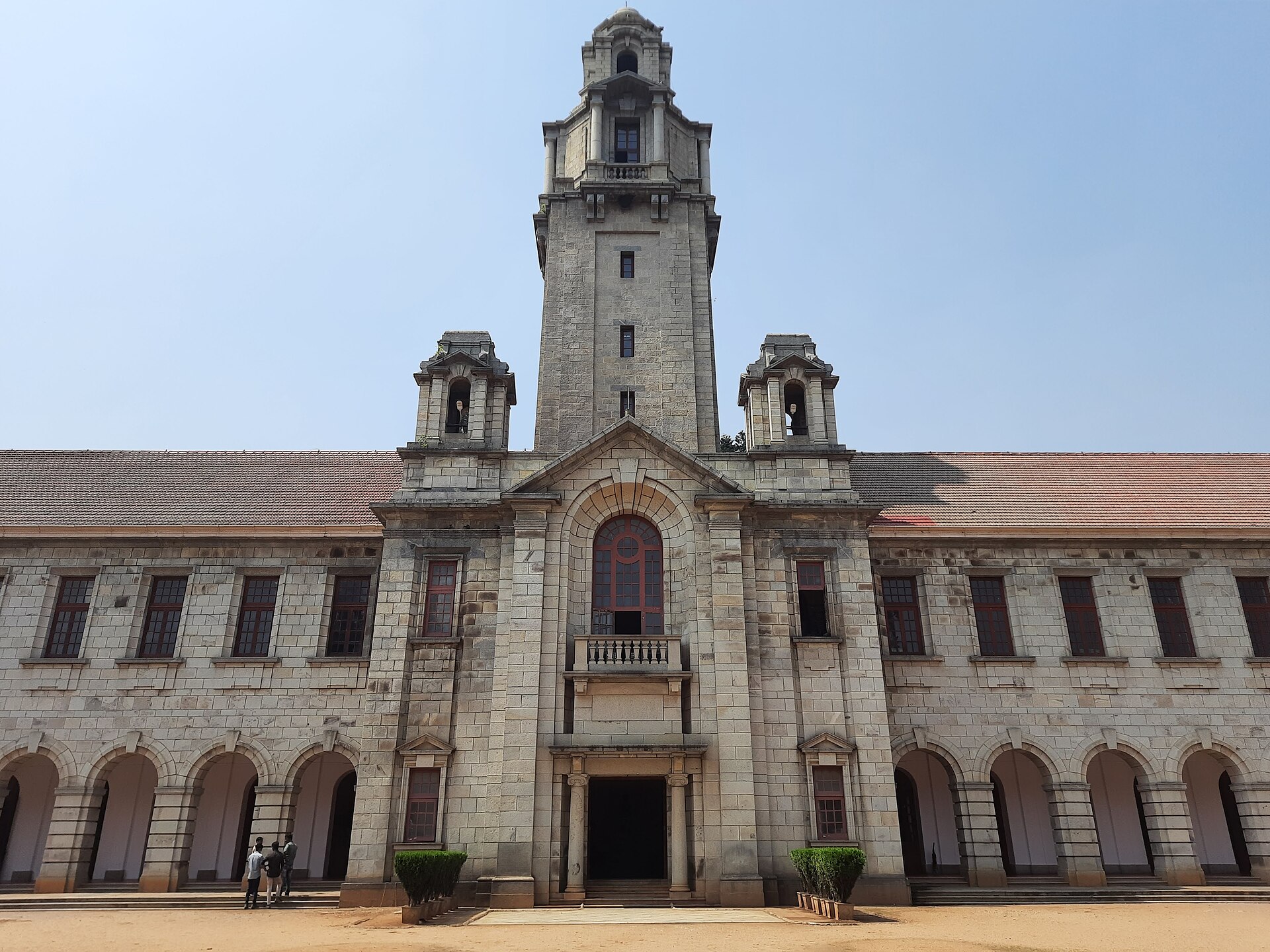
In front of the main building of Indian Institute of Science, bangalore
In front of the main building of Indian Institute of Science, bangaloreJolinlp · CC BY-SA 3.0 · via Wikimedia Commons
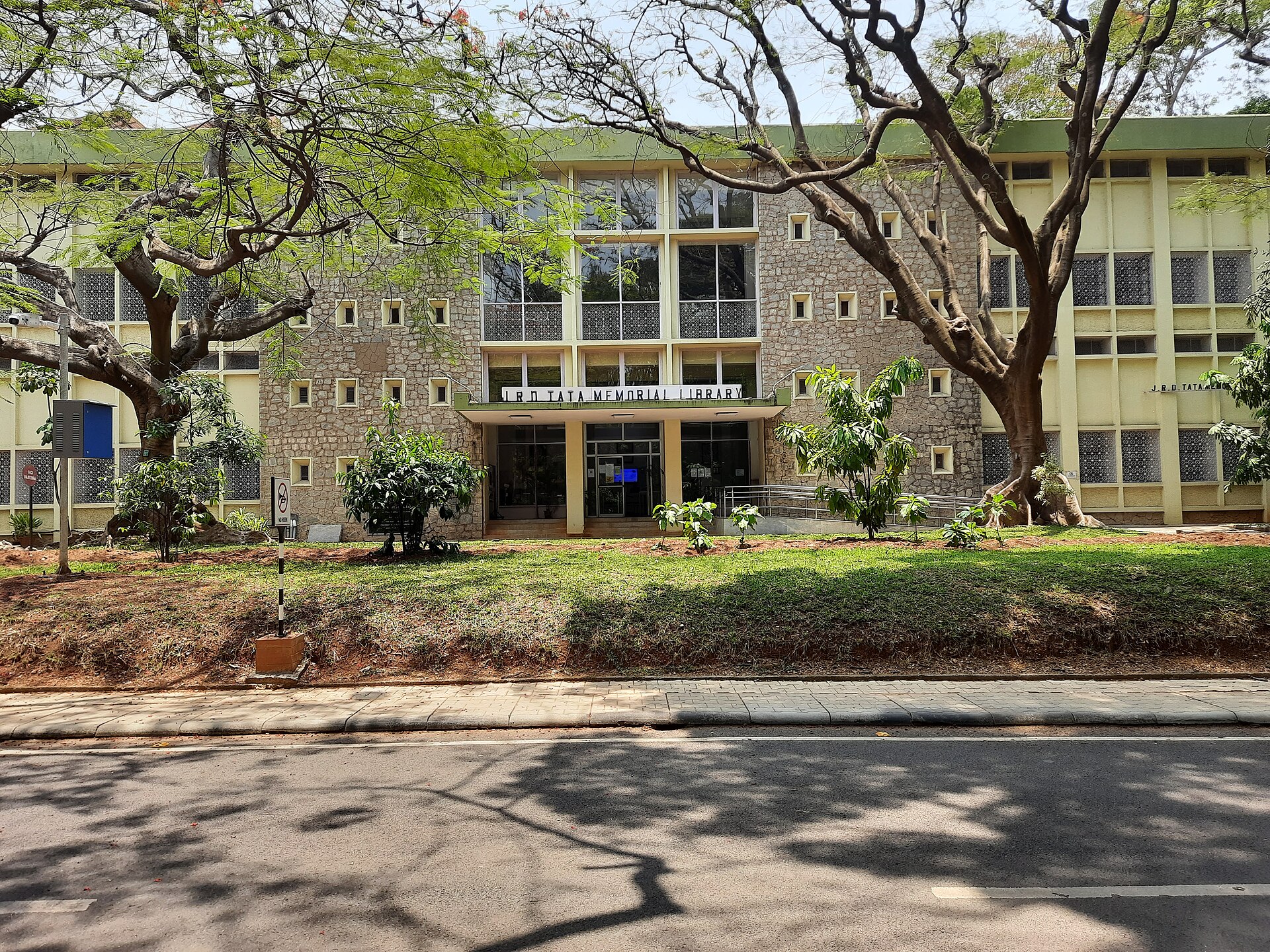
JRD Tata Memorial Library at IISC Bangalore
JRD Tata Memorial Library at IISC BangalorePravega · CC0 · via Wikimedia Commons
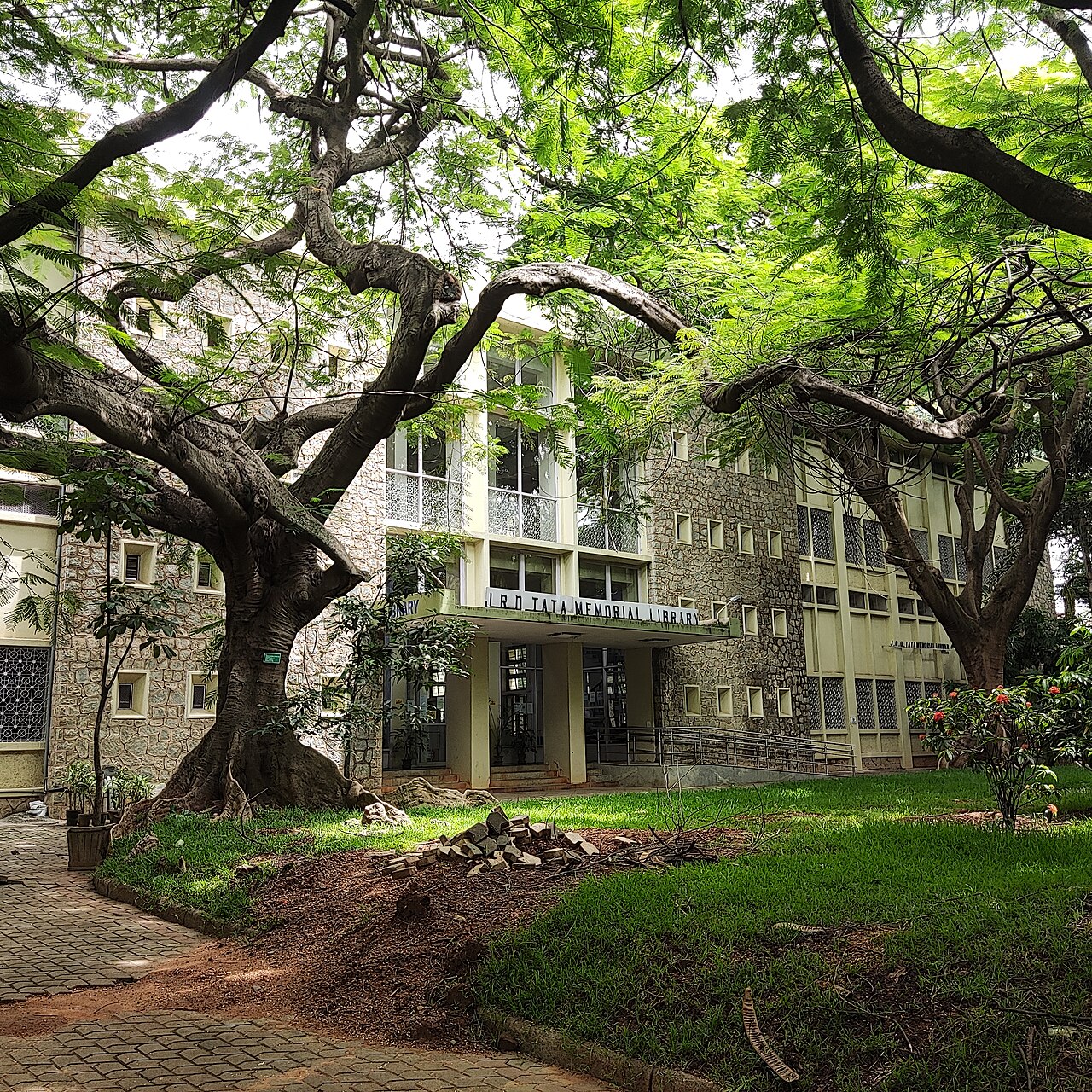
IISc library, Bangalore
IISc library, BangaloreShyamal · CC BY-SA 4.0 · via Wikimedia Commons
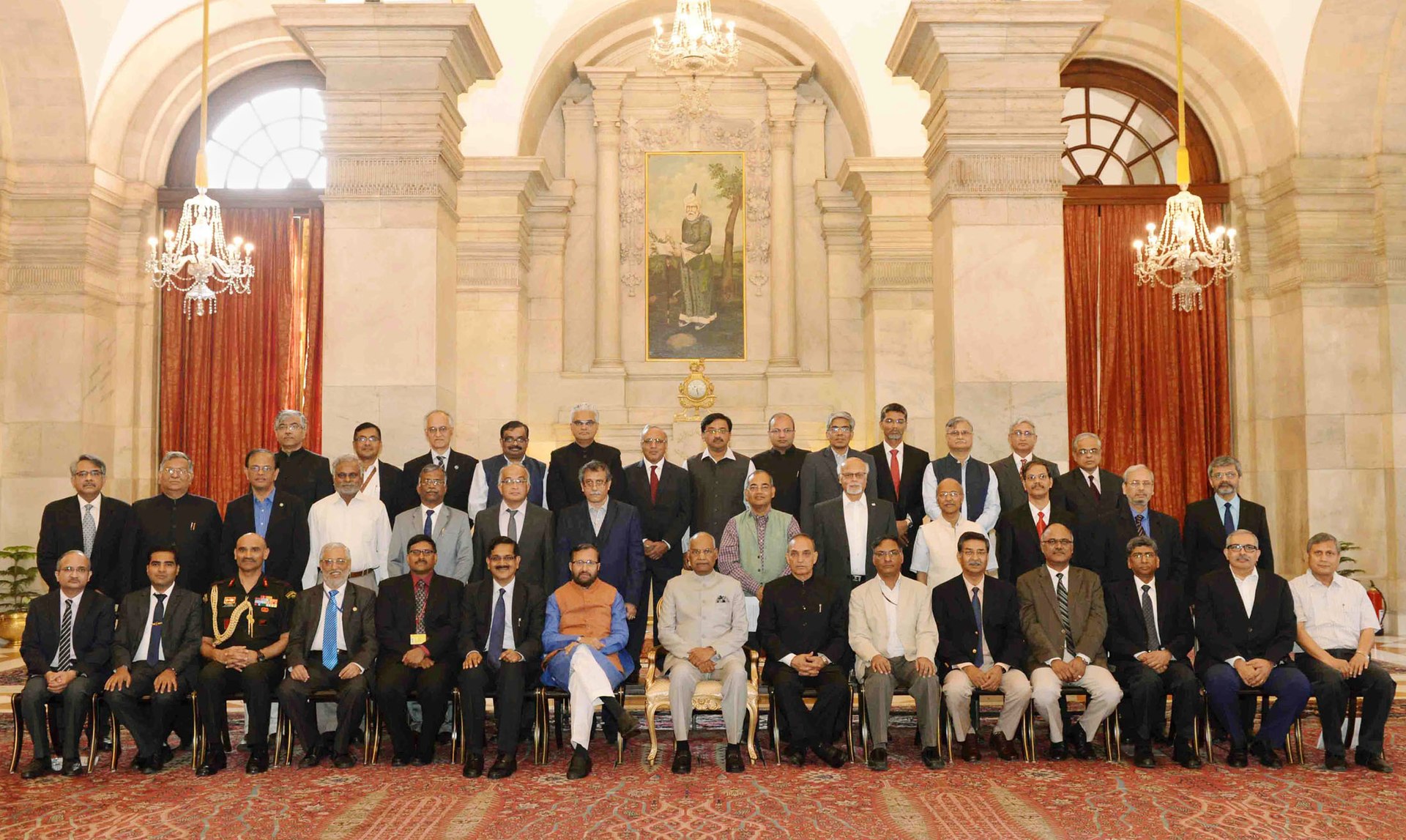
Ram Nath Kovind with the Directors of Indian Institutes of Technology (IITs), Indian Institute of Science Bangalore (IISC B) and Indian Inst
Ram Nath Kovind with the Directors of Indian Institutes of Technology (IITs), Indian Institute of Science Bangalore (IISC B) and Indian InstPresident's Secretariat · GODL-India · via Wikimedia Commons
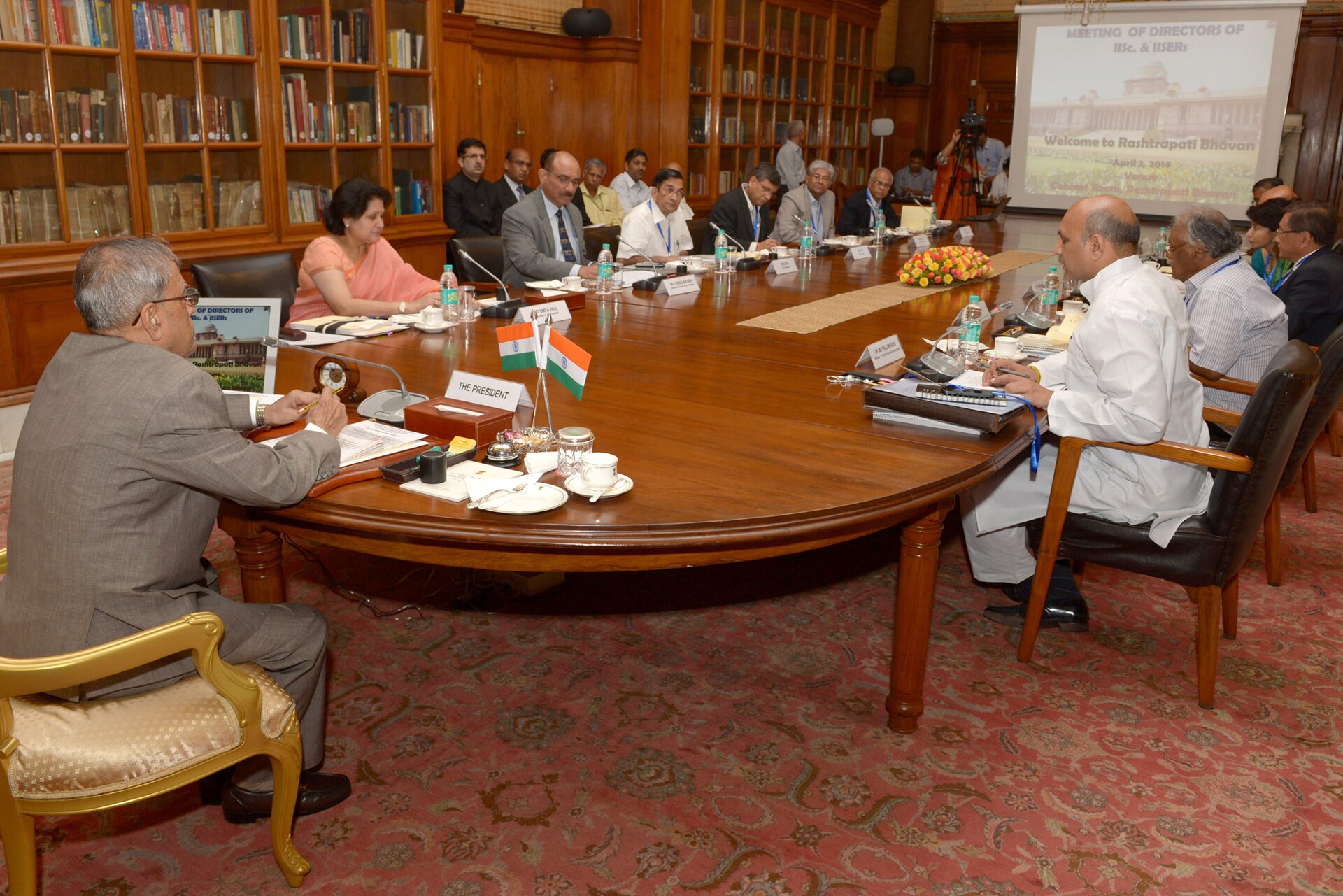
Pranab Mukherjee attending the meeting of Directors of Indian Institute of Science Education & Research (IISERs) & Indian Institute of Scien
Pranab Mukherjee attending the meeting of Directors of Indian Institute of Science Education & Research (IISERs) & Indian Institute of ScienPresident's Secretariat · GODL-India · via Wikimedia Commons
One of the oldest and most iconic building of IISC Bangalore
One of the oldest and most iconic building of IISC BangalorePravega · CC0 · via Wikimedia Commons

Why IISc — India's Research Powerhouse, World-Class Value

IISc is not a conventional university. It is a dedicated institute of science and engineering research — the oldest and most impactful in India — whose faculty include Fellows of every major global academy and whose alumni lead laboratories, companies, and ministries across the world. For a student serious about science, it is one of the most intellectually potent environments on earth.

01India's #1 University
Ranked #1 nationally (NIRF and QS India), #219 globally (QS 2025), and #275 by Times Higher Education — the only Indian university in the global top 250 for research impact. IISc's citations-per-faculty score ranks among the highest of any institution in Asia.
02Research from Year One
The BS (Research) programme places undergraduates in active research labs alongside PhD scholars and faculty from their first semester — an experience unmatched anywhere else in Indian higher education and rare globally.
03Elite 6:1 Student-Faculty Ratio
With just ~4,500 students and a 6:1 student-faculty ratio, IISc offers faculty access that is exceptional by any global standard. Professors who advise national science policy teach small seminars and know their students by name.
04Gateway to Bengaluru's Tech Hub
The campus sits adjacent to ISRO, NAL, NCBS, and a global innovation corridor hosting Infosys, Wipro, Bosch, and hundreds of deep-tech startups. Industry internship and placement access is unrivalled in Indian higher education.
05Ultra-Low Cost, World-Class Quality
Annual tuition is approximately $500, with total cost of attendance around $2,000 per year — making IISc one of the most exceptional value propositions in global higher education. A four-year world-class research degree for under $10,000 total.
06Alumni Shaping Global Science
IISc alumni lead departments at MIT, Stanford, Caltech, and IITs; direct ISRO and DRDO; and have founded deep-tech companies across India, the US, and Europe. Distinguished alumni include Fellows of every major global science academy.

IISc Acceptance Rate & Admitted Student Profile

Stats

~160
BS (Research) Intake
~1%
International Students
~4,500
Total Student Body

Profile Stats

42+
IB Score (Competitive Band)
1500
SAT Minimum (Int'l Track)
#1
National Rank (India)
6:1
Student:Faculty Ratio
~1%
International Students
~95%
Employment Rate
Overall acceptance rate across all programmes

Rea Vs Rd

Rd Label: SAT Route (International)
Rd Value: 1500+ minimum
Rea Label: JEE Advanced (India/Some Int'l)
Rea Value: Rank ~2203 threshold

IISc Admissions Requirements — Entrance Exams, Academic Qualifications & English

Entrance Examination
Value: SAT 1500+ / JEE Rank
  • SAT minimum 1500 for international BS (Research) track (2026 cycle)
  • JEE Advanced rank ~2203 threshold (domestic and some international)
  • IISER Aptitude Test (IAT) score 54+ as alternative route
  • Science Olympiad medals (IMO, IPhO, IChO) carry strong weight
IISc admissions are entrance-exam based — the primary criterion for all programmes. For international applicants, the SAT is the main accepted international standardised test for BS (Research). Targeting 1550+ with near-perfect Math (790–800) is advisable given overall programme selectivity.
Academic Qualifications
Value: IB 42+ / A*A*A
  • IB: 42+ overall, grade 7 in at least two HL science/mathematics subjects
  • A-Level: A*A*A minimum in relevant STEM subjects
  • IB HL Mathematics Analysis & Approaches strongly preferred for STEM
  • Strong CBSE/ISC marks (95%+ in science/mathematics) accepted for Indian-board applicants
IISc recognises the IB Diploma and A-Levels as qualifying international credentials. An IB score of 42+ with 7s in HL Mathematics and science subjects represents the competitive band for international applicants. Qualifications do not replace the entrance exam requirement — both are needed.
English Proficiency
Value: IELTS 6.0 / TOEFL 80
  • IELTS Academic: minimum overall band 6.0
  • TOEFL iBT: minimum score 80
  • Students who completed 12 years of English-medium schooling may qualify for a waiver
  • Confirm waiver eligibility with OIR: admission.oir@iisc.ac.in
All IISc programmes are taught in English. Students from non-English-medium backgrounds must demonstrate English proficiency. Strong IISc-bound applicants should aim above minimums: IELTS 7.0+ and TOEFL 100+ for a competitive profile.

IISc Application Components — OIR Portal, Exams & Documentation

IISc's admissions system is entrance-exam based — fundamentally different from US or UK application models. There are no extracurricular portfolios, letters of recommendation, or personal essays for standard admission. The application is streamlined, focused, and highly meritocratic.

01PRIMARYEntrance Examination Score
SAT (minimum 1500), JEE Advanced rank, or IISER Aptitude Test (IAT) score. This is the decisive admission criterion. No amount of supplementary documentation offsets a weak entrance exam result.
02REQUIREDOIR Online Application
International students apply through the Office of International Relations portal at oir.iisc.ac.in. Includes academic transcripts, test scores, English proficiency certificate, and contact details. Email: admission.oir@iisc.ac.in.
03REQUIREDAcademic Transcripts
Official secondary school transcripts showing all subjects and grades. Transcripts in non-English languages must be accompanied by certified English translations.
04IF REQUIREDEnglish Proficiency Certificate
IELTS (minimum 6.0) or TOEFL iBT (minimum 80) for students from non-English-medium schooling. Students who completed secondary education in English are typically exempt — confirm with OIR.
05POSTGRAD ONLYStatement of Purpose
Required for MTech (Research) and PhD applicants. A focused academic document — typically 500–1,000 words — describing research background, specific interests, and the IISc faculty with whom you wish to work.
06OPTIONALOlympiad Certificates & Research Evidence
IMO, IPhO, IChO, IBiO, or ISEF achievements. Not formally required but carry significant weight in the international applicant review. Document clearly with medal level, year, and rank.
07APPLICATION FEEApplication Fee (~$15)
A one-time non-refundable application fee of approximately $15 USD equivalent. One of the lowest application fees of any globally ranked research institution.

IISc Application Writing — Statement of Purpose & OIR Documentation

Tips

This is a research proposal, not a personal narrative
IISc SOP reviewers are research scientists. They want to know what you have done scientifically and what questions you want to pursue — not who you are as a person. Lead with your research interest, not your childhood.
Name specific faculty
IISc has over 500 faculty across six divisions. Name one to three whose published work directly intersects with your interests. Show you have read their recent papers. This demonstrates genuine commitment to IISc specifically.
Describe real work
The most persuasive statements describe something you have already done: a lab project, an Olympiad training insight, a course investigation. Even secondary-school-level work, described precisely and analytically, is more credible than general enthusiasm.
Olympiad achievement is your most powerful signal
An IMO, IPhO, IChO, or IBiO medal is among the most credible signals of scientific potential that IISc faculty recognise. If you have one, it should appear early and prominently in every written component of your application.

Prompts

Research Programme SOP (MTech Research / PhD)
No standardised prompt is published. Applicants are asked to submit a Statement of Purpose describing their academic background, research experience, specific research interests, and the IISc faculty or groups they wish to work with. Typically 500–1,000 words. Confirm requirements with OIR or the relevant department.
International Applicant Motivation Statement (OIR Track)
The OIR application for the BS (Research) international track may request a brief motivation statement or study plan. No standardised prompt text is publicly available — confirm with admission.oir@iisc.ac.in whether a written component is required for the current cycle.
Olympiad & Competition Achievement Documentation
Document your olympiad, its year, your result (medal level and rank), and briefly what you learned from the preparation. This is not an essay — it is factual evidence of scientific aptitude. Present it clearly and early.
The most common IISc application writing mistake. Writing a US-style personal narrative instead of a precise, research-focused academic statement.
Writing Strategy — What IISc Faculty Want to Read

What IISc Admissions Is Looking For

IISc selects students who are among the most scientifically capable young people in the world. The institution does not operate a holistic admissions model in the Western sense — exam performance is the primary pathway. For international applicants on the OIR track, scientific achievement and research orientation carry the highest weight.

01Elite Entrance Exam Performance
A top-tier score in JEE Advanced, SAT, or IAT is the primary criterion. IISc does not operate a holistic review model — exam performance is the dominant signal. Admitted students typically outperform 98–99% of national test-takers.
02Genuine Scientific Depth
IISc admits students who are serious about science — not students seeking credentials. Deep command of mathematics, physics, chemistry, or biology relative to international standards is expected. Surface-level interest is transparent to faculty reviewers.
03Olympiad and Competition Achievement
International science olympiad medals (IMO, IPhO, IChO, IBiO) and national competition recognition carry outsized weight in the international applicant review. These signal the kind of elite scientific aptitude that IISc faculty are looking for in undergraduates.
04Research Orientation
IISc is not the place for students who want a degree — it is for those who want to understand and advance scientific knowledge. Lab experience, published work, science fair projects (especially ISEF), or serious independent investigation demonstrate genuine research orientation.
05Academic Rigour in Science Subjects
IISc expects deep preparation in the sciences relevant to the intended major. IB HL Mathematics, IB HL Physics, IB HL Chemistry, A-Level sciences — all at the highest grades. Breadth is appreciated but cannot substitute for depth in the core subject.
06Context of Excellence
For international applicants reviewed by OIR, context matters: a student from a country with limited science infrastructure who has still achieved olympiad-level performance demonstrates something exceptional. IISc OIR staff are experienced at evaluating international academic contexts.

IISc Cost & Financial Support for International Students

IISc does not operate a needs-blind or needs-aware financial aid programme for international undergraduate students in the manner of US or UK universities. The primary mechanism of financial support is the extraordinarily low base cost — approximately $2,000 per year total — combined with government scholarship programmes and research fellowships for postgraduate students.

All figures are approximate USD equivalents based on current INR rates. Actual fees are charged in Indian Rupees and are subject to change. Confirm exact fee structures with the OIR or IISc admissions office at the time of application.

Stats

~$500
Annual tuition (approximate USD equivalent)
~$2,000
Total annual cost of attendance
~$15
Application fee
Full
PhD/MTech fellowship coverage

Contribution Tiers

NoteRangePercentPercent Value
Tuition + accommodation + livingBS (Research) / BTech — All~$2,000/yr total10
Fellowship typically covers all costsMTech (Research) / PhDSelf-funded via fellowship5
ICCR covers tuition + stipend for eligible nationalitiesICCR Scholarship RecipientsFully funded100
Why the Low Cost Changes Everything. As a public Institute of National Importance fully funded by the Government of India, IISc charges tuition that is a fraction of what comparable institutions in the US, UK, or Europe cost. PhD and MTech (Research) students additionally receive monthly fellowships through national research funding agencies — effectively making advanced research at IISc self-funding.

Key Dates

Contact OIR — confirm international timeline
Date: Sept–Oct
OIR Application Window Opens
Date: Jan–Mar
Application Deadline (verify with OIR)
Date: ~June
Decisions Issued
Date: July
Intake Begins (single annual intake)
Date: August

Advantages

  • SAT route: internationally available, taken at any Prometric or College Board centre
  • JEE Advanced route: most competitive and well-understood by IISc faculty
  • IAT route: covers Physics, Chemistry, Biology and Mathematics — accessible for broad STEM students
  • Olympiad route: strongest differentiator for international applicants — medal-holders receive strong preference
  • Single intake (August) simplifies planning — one application cycle per year

Disadvantages

  • Single annual intake — missing the deadline means a full-year wait
  • SAT minimum (1500) is a floor, not a target — competitive candidates need 1550+
  • JEE Advanced is conducted in India and requires prior JEE Main qualification
  • IAT is conducted at specific test centres in India and limited international locations
  • No rolling admissions or multiple intake windows
Exam Routes to IISc. IISc runs a single annual intake in August. International applicants choose from four qualifying exam routes — SAT, JEE Advanced, IAT, or Olympiad-based consideration. Understanding which route best suits your background is the first strategic decision.
Tychr's IISc Application Strategy. Contact the IISc OIR (admission.oir@iisc.ac.in) in September or October of the year before your intended entry — more than six months before the deadline. Confirm which qualifying exam route applies to your nationality and programme. Prepare SAT with a target of 1550+, not just the published minimum of 1500. If you have an Olympiad medal, lead with it.
IISc Application Timing, Exam Routes & Strategy

IISc Interviews — Format, Who Is Interviewed & Preparation

IISc does not interview undergraduate (BS Research and BTech) applicants as part of the standard admissions process — selection is based on entrance exam performance. For postgraduate research programmes (MTech Research and PhD), a technical interview conducted by departmental faculty is a standard component of the selection process. The interview is a substantive academic assessment, not a conversational character evaluation.

Meta

No interview — exam-rank based selection
Undergraduate (BS Research / BTech)
Interview required — typically conducted by departmental faculty
MTech Research / PhD
Technical/research discussion — not a personal conversation
Format
Significant for research programmes; decisive alongside GATE/exam score
Weight

Questions

What research area are you most interested in, and why?
Tip: This is the core of the research interview. Have a genuine, specific answer — name the area, the open problem, and why it interests you.
Walk me through [technical concept from your stated research interest].
Tip: Expect to be asked to derive, solve, or reason through a problem in your field in real time. Review fundamentals of your intended major rigorously.
Which IISc faculty members' work would you most like to engage with, and why?
Tip: Name specific IISc faculty and explain what specifically in their work interests you. Vague answers are visible.
Tell me about a research project or investigation you have done.
Tip: Describe real work — lab projects, Olympiad training, published work, or independent investigations. Specificity is credibility.
How would you approach [open research question in your field]?
Tip: IISc faculty value intellectual honesty. Answering 'I don't know, but here is how I would think about it' is more impressive than a confident wrong answer.

IISc Residential Life — Hostels, Campus & Student Community

IISc's 370-acre campus in Bengaluru is a self-contained residential and research environment. Unlike most universities, students live, research, eat, and recreate entirely within the campus — a lush garden campus dense with trees, peacocks, deer, and over 200 bird species. All enrolled students receive guaranteed on-campus accommodation.

Houses

Undergraduate Hostels (UG)
Tag: Undergraduate
Dedicated hostel blocks for BS (Research) and BTech students. Single or double occupancy rooms, common rooms, and study spaces. All undergraduates are guaranteed on-campus accommodation.
Postgraduate Hostels (PG)
Tag: Postgraduate
Separate hostel facilities for MTech, MSc, and PhD students. Single-room allocation is standard for research scholars. Proximity to labs ensures late-night research sessions are practical.
International Student Housing
Tag: International
The OIR coordinates housing for international students. Dedicated blocks or integrated hostel placement depending on availability. Contact OIR well in advance of arrival to confirm arrangements.
Hoysala Guest House
Tag: Guest
On-campus guest house for visiting researchers, parents, and guests. Booking through the administrative office. Useful for families visiting during admissions or orientation.
Mess Facilities
Tag: Dining
Multiple on-campus dining halls (messes) serving subsidised meals for all students. The cost of meals is incorporated into the low annual living cost estimate. North Indian, South Indian, and international meal options available.
Gymkhana Sports Complex
Tag: Recreation
Courts, a gymnasium, swimming pool, athletics tracks, badminton, football, and cricket facilities. Managed by the Gymkhana. Active sports culture despite the research-intensive environment.

Lottery Steps

  • All students are guaranteed on-campus hostel accommodation — no off-campus housing needed or expected
  • Undergraduate and postgraduate students are housed in separate, dedicated hostel blocks
  • International students are supported through the OIR from arrival through to campus integration
  • Hostel allocation is arranged before arrival — contact OIR in advance to confirm room assignment
  • On-campus mess (dining) provides heavily subsidised meals included in the $2,000 annual COA estimate

IISc Academic Divisions & Undergraduate Programmes

Biological Sciences Division
Label: BS (Research): Biology Major
  • {"label":"Key departments","value":"MBU, MRDG, CiBS, BSSE"}
  • {"label":"Flagship undergraduate entry","value":"BS (Research) — Biology"}
  • {"label":"Research focus","value":"Molecular biology, biophysics, genomics, systems biology"}
  • {"label":"Interdisciplinary requirement","value":"Strong Chemistry + Mathematics expected"}
Home to the Molecular Biophysics Unit (MBU), one of India's foremost structural biology labs. BS Biology students work alongside PhD researchers on genomics, cell biology, bioinformatics, and structural biochemistry from Year 1.
Chemical Sciences Division
Label: BS (Research): Chemistry Major
  • {"label":"Key departments","value":"Inorganic & Physical Chemistry, Organic Chemistry, Materials Research Centre"}
  • {"label":"Flagship undergraduate entry","value":"BS (Research) — Chemistry"}
  • {"label":"Research focus","value":"Materials science, catalysis, spectroscopy, nanoscience"}
  • {"label":"Strong track","value":"IChO medal-holders frequently admitted"}
One of India's strongest chemistry research environments, with active groups in materials chemistry, nanoscience, and chemical biology. IChO participation is a recognised differentiator for international applicants to this division.
Electrical, Electronics & Computer Sciences Division
Label: BS (Research): Mathematics & Computing / EECS
  • {"label":"Key departments","value":"CSA, ECE, CDS"}
  • {"label":"Undergraduate programmes","value":"BS Mathematics & Computing; BTech Electrical Engineering"}
  • {"label":"Research focus","value":"Machine learning, algorithms, communications, VLSI"}
  • {"label":"Industry ties","value":"Google, Qualcomm, Intel, TI recruit directly"}
IISc's CS and electrical engineering departments are among the strongest in Asia. The Computer Science and Automation (CSA) department has a particularly strong theory and systems research tradition. IOI participants and competitive programmers frequently compete for these tracks.
Physical & Mathematical Sciences Division
Label: BS (Research): Physics / Mathematics
  • {"label":"Key departments","value":"Physics, Mathematics, CTS, Joint Astronomy Programme"}
  • {"label":"Flagship undergraduate entry","value":"BS (Research) — Physics; BS — Mathematics"}
  • {"label":"Research focus","value":"Condensed matter, string theory, number theory, astronomy"}
  • {"label":"Competition track","value":"IMO and IPhO medal-holders strongly represented"}
The Physics and Mathematics departments at IISc produce researchers who go on to top global PhD programmes. IMO and IPhO participants are among the most competitive candidates for these majors, which have a strong tradition of fundamental research excellence.
Mechanical Sciences Division
Label: BS (Research): Materials / Earth Sciences; BTech Mechanical
  • {"label":"Key departments","value":"Mechanical Engineering, Aerospace, Materials Engineering, Civil Engineering"}
  • {"label":"Undergraduate programmes","value":"BS Materials; BS Earth & Environmental Science; BTech ME/AE"}
  • {"label":"Research focus","value":"Aerospace, structural mechanics, advanced materials, geosciences"}
  • {"label":"Industry ties","value":"ISRO, HAL, Boeing, Airbus, DRDO"}
Home to one of India's strongest aerospace engineering research groups and the only undergraduate Earth & Environmental Science programme in India's top research institutions. Strong industry ties with ISRO and HAL provide research and internship pathways.
Interdisciplinary Research Division
Label: Cross-divisional Research Programmes
  • {"label":"Key centres","value":"NCBS, InStem, CiE, RBCCPS"}
  • {"label":"Character","value":"Cross-divisional; PhD and MTech primarily"}
  • {"label":"Research focus","value":"Brain & Cognitive Sciences, Energy, Biosystems, Climate"}
  • {"label":"Undergraduate access","value":"Via elective courses and BS thesis projects"}
Interdisciplinary research at IISc crosses traditional boundaries — particularly in neuroscience, energy systems, climate science, and biosystems. Undergraduate students access this division primarily through elective coursework and final-year thesis projects.

Research & Extracurricular Opportunities at IISc

BS (Research) Lab Immersion
Category: Undergraduate Research
From Year 1, BS (Research) students are embedded in active research labs. By Year 2–3, most students are contributing to faculty-led projects alongside PhD scholars. By Year 4, a significant original research project forms the thesis — required for the degree.
Pravega — Science & Technology Festival
Category: Student-Run Annual Event
Pravega is IISc's annual science and technology festival, run entirely by students — one of India's largest science fests, attracting participants from across the country. Events span robotics, mathematics, biology, astronomy, and interdisciplinary competitions.
Society for Innovation and Development (SID)
Category: Technology Transfer & Startups
SID is IISc's industry interface and technology transfer centre. Students can engage with startup mentorship, prototyping infrastructure, and industry collaboration programmes. IISc alumni have founded over 200 startups with deep-tech roots.
Student Clubs & Cultural Life
Category: 30+ Active Clubs
IISc hosts clubs in music, drama, photography, astronomy, robotics, chess, cycling, and more. Utsav (cultural festival), Gymkhana sports events, and the Students' Council give students leadership and community opportunities alongside their research commitments.
Scroll right to explore IISc's research programmes and student life.

Career Outcomes & IISc Alumni Network

IISc graduates enjoy near-universal employment and postgraduate placement. With an employment rate of approximately 95% and average starting salary of around $22,000 (USD equivalent), IISc alumni consistently outperform peers from other Indian institutions. The most common pathways for BS (Research) graduates are PhD programmes at top global universities and senior research or engineering roles at leading technology and aerospace firms.

Stats

~95%
Employed or in graduate school within 6 months
~$22,000
Average starting salary (USD equivalent)
#1
National university rank (NIRF & QS India)
#219
QS World Ranking
#275
Times Higher Education ranking
100+
Institutes/companies recruiting from IISc

Categories

Science, Engineering & Deep Tech
ISRO, DRDO, Boeing, Airbus, Rolls-Royce, HAL, Qualcomm, Intel — IISc graduates are the first choice for India's top aerospace, defence, and semiconductor employers. Many IISc alumni lead key national space and defence programmes.
Global PhD & Research
MIT, Stanford, Caltech, ETH Zurich, Cambridge, NUS — IISc BS (Research) graduates are among the most competitive PhD applicants in the world. Top global universities actively recruit from IISc undergraduate cohorts.
Consulting, Finance & Management
McKinsey, BCG, Bain, Goldman Sachs — IISc's quantitative rigour attracts top consulting and finance firms. IIMB, IIMA, and ISB actively recruit IISc graduates for management programmes, recognising the depth of analytical training.

Our IISc Admissions Track Record & Student Success Stories

Anika S.
I had an IB score of 43 and a SAT of 1560 but didn't know how to navigate the OIR process. Tychr walked me through the international track step by step — from the OIR portal to how to frame my Olympiad results in my motivation statement. I was accepted to the BS (Research) Physics programme.
Country: Singapore
Program: IISc — BS (Research) Physics
Class Year: Class of 2028
Residential: UG Hostel, Main Campus
Academic Profile: IB 43 · SAT 1560 · IPhO National Team
Kofi A.
As an African student, I wasn't sure IISc would be a realistic option. Tychr helped me identify the OIR track, prepare my SAT, and write a compelling research motivation statement connecting my interest in computational biology to specific IISc faculty. The ICCR scholarship covered all my costs.
Country: Ghana
Program: IISc — BS (Research) Biology
Class Year: Class of 2027
Residential: UG Hostel, Main Campus
Academic Profile: IB 41 · SAT 1540 · ICCR Scholarship
Yuna P.
The research statement was the piece I struggled with most. I kept writing like it was a US personal essay. My Tychr counsellor helped me understand the difference — IISc faculty want to see what you have already done scientifically and what question you want to pursue. That reframing was everything.
Country: South Korea
Program: IISc — MTech (Research) Computer Science
Class Year: Class of 2026
Residential: PG Hostel, Main Campus
Academic Profile: IB 44 · SAT 1570 · IOI Bronze

Faqs

Can international students apply to IISc?+

Yes. International students (including NRIs, OCI cardholders, and foreign nationals) apply through the Office of International Relations (OIR) via a dedicated international admissions track. Contact admission.oir@iisc.ac.in early — ideally in September or October of the year before your intended entry — to confirm timelines and eligibility.

What entrance exams does IISc accept for international students?+

For the BS (Research) international track, IISc has accepted SAT (minimum 1500), JEE Advanced, and the IISER Aptitude Test (IAT). Requirements are reviewed annually — confirm with the OIR for the current cycle. Science Olympiad medals (IMO, IPhO, IChO, IBiO) carry strong weight and may open additional consideration pathways.

Is IISc's tuition really as low as $500/year?+

Yes. As a public Institute of National Importance fully funded by the Government of India, IISc charges tuition at a tiny fraction of what comparable institutions cost globally. Annual tuition is approximately $500 USD equivalent, and total cost of attendance including accommodation and meals is approximately $2,000 per year. Confirm current fee schedules with the OIR as fees are charged in INR and may change.

What is the BS (Research) programme?+

The BS (Research) is IISc's flagship four-year undergraduate research degree. Unlike conventional undergraduate engineering programmes, it is explicitly research-oriented — students work in active research labs from their first semester and complete a significant original research project in their final year. Available majors include Physics, Mathematics, Chemistry, Biology, Materials Science, Earth Science, and several engineering disciplines.

Are IB scores directly accepted for admission?+

IISc does not use IB scores as a standalone primary admission criterion in the way Western universities do. An IB score of 42+ is the competitive benchmark for international applicants, but you will typically also need a qualifying entrance exam score (SAT 1500+, JEE Advanced rank, or IAT) for formal eligibility. Confirm with OIR how your specific qualification combination is assessed.

Is all instruction at IISc in English?+

Yes — all IISc programmes at all levels are taught entirely in English. There is no language barrier for students who are proficient in English. IISc is one of India's most thoroughly English-fluent academic environments.

Are there scholarships for international students?+

IISc does not publish a comprehensive international scholarship programme for undergraduates. However, the Indian Council for Cultural Relations (ICCR) offers government scholarships to students from select countries covering tuition, accommodation, and a monthly stipend. PhD and MTech (Research) students receive research fellowships through national agencies. Contact OIR and your nearest Indian Embassy for current eligibility.

What is the medium of instruction and is there a language test required?+

All programmes are taught in English. Students from non-English-medium schooling backgrounds must provide IELTS (minimum 6.0 overall) or TOEFL iBT (minimum 80). Students who completed secondary education in English typically qualify for a waiver — confirm with OIR.

Book a Free IISc Admissions Strategy Session

In 60 minutes our IISc admissions specialists will evaluate your academic profile and entrance exam scores, identify your optimal application route (SAT, JEE, IAT, or Olympiad), guide your OIR application and documentation, and advise on ICCR scholarship eligibility and financial planning.

  • No commitment required
  • IISc and India admissions specialists
  • Personalised exam route and application strategy
Getting into IISc is not about assembling the perfect portfolio — it is about being genuinely exceptional at science and knowing how to navigate India's admissions system as an international student.

IISc Admissions Requirements

IISc Academic Requirements — The Honest Breakdown for International Students

IISc is not a holistic admissions institution. Entry is earned through entrance examination performance. What does that mean for students from IB, A-Level, and other international curricula — and how do you build the academic profile that qualifies?

42+
IB Competitive Score
Out of 45
1500
SAT Minimum (Int'l Track)
Target 1550+
~1%
Acceptance Rate
All programmes combined
6:1
Student:Faculty Ratio
All divisions
#1
National Rank
NIRF + QS India
#219
QS World Rank
2025 rankings

Academic Marks & Examination Performance

IISc and Academic Marks — What the Data Actually Shows

IISc does not use GPA as a primary admissions criterion. Selection for all programmes is based on entrance examination performance — JEE Advanced rank, SAT score, or IAT score — not on school-reported grades or grade point averages. This is India's national system, and IISc follows it rigorously.

Strong school grades signal consistency but do not substitute for top entrance exam performance. An IISc-bound international student's strategic priority is excellence in the SAT, JEE, or IAT — not grade optimisation.

Exam-Based
IISc does not publish or use a GPA threshold — entrance exam rank is the primary criterion
IB 42+
International applicants with IB 42+ are within the competitive academic band
What this means for international students. For international students, IISc OIR evaluates academic background in the context of the student's education system. An IB student is evaluated on their IB results and predicted scores; an A-Level student on AS and predicted A-Level grades. These contextualise the entrance exam result but do not replace it as the primary admission signal.
Academic marks as context, not criterion. IISc reviews academic transcripts as context for the entrance exam score. A student who shows consistent excellence in science and mathematics subjects through their secondary schooling — even if the grading system differs from India's — is presenting a coherent and compelling academic picture when combined with a strong exam result.

Academic Context

How IISc Reads Academic Performance — Context and Curriculum

IISc does not rank students against each other by class standing or GPA in the way US universities do. What matters is the entrance exam result, evaluated in the context of the student's educational background and access to preparation resources.

How IISc evaluates international academic backgrounds
The OIR at IISc has experience evaluating international qualifications from IB schools, A-Level institutions, national boards across Asia and Africa, and independent candidates. Academic background is assessed to confirm subject rigour and preparation level — particularly in mathematics and the sciences — not to rank students on a common scale.
What this means practically for your course selection
Taking the most rigorous science and mathematics courses available in your educational system is the clearest signal IISc reviewers look for in the academic record. A student who has pursued HL Mathematics, HL Physics, and HL Chemistry in IB, or Further Mathematics and two sciences at A-Level, has demonstrated the academic seriousness that IISc expects.
For students from less-familiar international education systems. Students from educational systems that are less well-known to IISc — particularly those from parts of Africa, Central Asia, or Latin America — should contact the OIR early and ask explicitly how their specific qualifications are evaluated. Providing clear, certified transcripts with an explanation of the grading system accelerates the process.

SAT for International Applicants

SAT Scores for IISc — What You Actually Need

For international applicants to the BS (Research) programme, SAT is the primary accepted international standardised test. The documented minimum for the 2026 cycle is 1500. However, given IISc's overall selectivity (~1% acceptance rate), the minimum is a floor — not a target.

LabelScorePercent
Documented minimum (2026 cycle)150070
Recommended competitive target1550+85
SAT Math target (STEM programmes)790–80097
SAT Math — the critical subscore. For all STEM programmes at IISc — Physics, Mathematics, Engineering, Chemistry, Computer Science — near-perfect SAT Math (790–800) is effectively a prerequisite. IISc's academic programme assumes command of high school mathematics from Day 1; the SAT Math score is the clearest signal of this.
Preparation. Tychr's structured SAT preparation programme averages 150+ point improvement over 8–12 weeks. International students targeting IISc should aim for a composite of 1550+ with particular focus on Math section mastery — the 800 SAT Math score is achievable with systematic preparation.
SAT at IISc is test-required, not test-optional. The SAT is not test-optional at IISc — it is the primary qualifying examination for international applicants. A score of 1500 meets the published minimum; a score of 1550+ significantly strengthens the application. Unlike US universities, there is no holistic offset for a weak SAT — if the score is below the threshold, the application typically does not proceed.

ACT & Alternative Exam Strategy

ACT at IISc — What International Applicants Need to Know

IISc does not officially accept the ACT as a qualifying examination for the BS (Research) international track. The SAT is the primary international standardised test accepted. For applicants who have taken the ACT but not the SAT, this section outlines what to do.

Metrics

ACT — accepted by IISc
Score: Not confirmed
SAT — primary international route
Score: 1500+ required

Comparison Cards

SAT — the right choice for IISc
SAT is the confirmed accepted international standardised test for the IISc BS (Research) international track. Prioritise SAT if you are targeting IISc.
ACT — confirm with OIR
If you have only taken the ACT, contact the OIR (admission.oir@iisc.ac.in) to ask whether ACT scores are accepted in the current cycle. Requirements are reviewed annually.
JEE / IAT / Olympiad as alternatives
JEE Advanced, IISER Aptitude Test, and Science Olympiad medals are alternatives to SAT for applicants who have access to these routes. Evaluate which qualifying exam best suits your preparation.
Superscore policy. Unlike Harvard or MIT, IISc does not offer a superscore pathway — the entrance exam is evaluated as a single qualifying result. Students should ensure they have their best complete SAT sitting score ready for submission.
Tychr's recommendation. If you are planning to apply to IISc and have not yet taken a standardised exam, take the SAT — not the ACT. The SAT is the confirmed international route and targeting 1550+ with near-perfect Math gives you a strong application foundation.

Testing Strategy

IISc Test Policy — Entrance Exams Are Required, Not Optional

IISc's test policy is 'required' — there is no test-optional pathway. This is fundamentally different from the test-optional trend at US universities. At IISc, entrance examination performance is the primary, decisive admission criterion for all programmes. This is non-negotiable.

Submit Items

Your SAT score is above 1500 — this meets the published minimum. Target 1550+ to be genuinely competitive.
You have a JEE Advanced rank — this is the most directly understood credential for IISc faculty and strongly confirms qualification.
You have an IAT score of 54+ — this is accepted as an alternative qualifying examination and covers the full science breadth.

Withhold Items

Your SAT is below 1500 — you do not meet the published minimum. Do not apply on SAT; consider JEE Advanced, IAT, or additional SAT preparation.
You have only taken the ACT — confirm with OIR whether this is accepted before applying.
Current policy. IISc requires a qualifying entrance exam score for all standard admissions. For the BS (Research) international track: SAT (minimum 1500), JEE Advanced, or IISER Aptitude Test. For research programmes (MTech Research, PhD): GATE score plus departmental interview. There is no test-optional pathway and no holistic alternative to meeting the exam requirement.
The key misconception for international students. Some international students assume that a very high IB score or exceptional school grades can offset a weaker entrance exam result at IISc. This is incorrect. IISc does not operate a holistic review model — the entrance exam is the gate. Without meeting the exam threshold, the application does not typically proceed regardless of other academic achievements.

International Curricula

IB and A-Levels at IISc — Specific Benchmarks and Expectations

IB Diploma
Note: IISc evaluates IB applicants primarily on their entrance exam score, with IB results providing academic context. An IB score of 42+ with grade 7 in at least two HL science or mathematics subjects is the competitive band. Students who achieve IB 43–45 with 7s in HL Mathematics Analysis and Approaches, HL Physics, and HL Chemistry alongside SAT 1550+ are highly competitive for the international track.
  • {"label":"Competitive range","value":"42–45 points"}
  • {"label":"HL expectations","value":"7 in at least two HL sciences/mathematics; 6,7,7 or 7,7,7 at HL is the target"}
  • {"label":"Subject rigour","value":"HL Mathematics Analysis & Approaches, HL Physics or Chemistry depending on intended major"}
  • {"label":"Extended Essay","value":"A or B in a science subject — useful context for research orientation"}
A-Levels
Note: A-Level students should target A*A*A in relevant STEM subjects. IISc OIR is familiar with A-Level results and uses them as academic context alongside the qualifying entrance exam score. Strong A-Level predicted grades from a reputable school, combined with SAT 1550+, constitute a competitive international profile.
  • {"label":"Competitive range","value":"A*A*A in relevant STEM subjects"}
  • {"label":"Subject rigour","value":"Mathematics + Further Mathematics for STEM tracks; two science A-Levels for science programmes"}
  • {"label":"AS results","value":"Reviewed alongside predicted A-Level grades — strong AS performance supports the academic picture"}

AP Courses & Science Olympiads

AP Courses and Science Olympiads at IISc — What Counts and What Matters Most

IISc does not use AP courses or scores as an admissions criterion in the same way as US universities. For international students at AP-curriculum schools, AP results are relevant only as context for the overall academic profile — the qualifying entrance exam (SAT, JEE, or IAT) remains the primary criterion.

What AP results signal for IISc
AP Calculus BC 5, AP Physics C: Mechanics 5, AP Chemistry 5, AP Biology 5, AP Computer Science A 5. These validate mathematical and scientific preparation and provide useful context — but do not replace the SAT or other qualifying exam for IISc admissions.
Olympiad > AP at IISc
Science Olympiad medals (IMO, IPhO, IChO, IBiO, ISEF) carry far more weight in the IISc international review than AP scores. If you have both, feature your Olympiad achievement first.
Strategic focus for AP-school students
Students from AP-curriculum schools who have not taken JEE or IAT should focus on maximising their SAT score (1550+ target, 800 Math) as this is the primary international qualifying route.
Unlike US universities, IISc does not award AP credit. Coursework begins at the level appropriate for each programme regardless of prior AP exposure. The academic pace at IISc is fast — AP-level preparation in mathematics and sciences is useful background, not a shortcut.
International students from IB, A-Level, or other non-AP curricula should not pursue AP artificially for IISc's benefit. Your own curriculum's strongest performance — IB HL 7s or A-Level A*s — is the appropriate preparation signal.

Academic Rigour

Academic Rigour at IISc — What the Most Competitive Candidates Have Done

IISc expects students to have pursued the most demanding science and mathematics curriculum available to them. While IISc does not formally evaluate 'course rigour' in the explicit way that US universities do, the academic preparation reflected in the entrance exam result — and the coursework that produced it — is directly visible to faculty reviewers.

Taking the most demanding available science and mathematics courses in your educational system — and excelling in them — is the academic foundation IISc expects.

The contextual element. Rigour is evaluated in context. A student from a school in a country with limited advanced science provision who has still achieved IPhO-level preparation is demonstrating something exceptional. A student from a school with full IB provision who has chosen HL Visual Arts over HL Physics may raise questions about scientific seriousness in a research-intensive admissions context.
What rigour means for IISc. At IISc, academic rigour means genuine depth in mathematics and sciences — not breadth across many subjects. The student who took HL Mathematics Analysis, HL Physics, and HL Chemistry simultaneously and earned 7s across all three is presenting the kind of academic profile that IISc's faculty recognise.
What IISc is really looking for. Science Olympiad preparation is the clearest expression of academic rigour that IISc's admission reviewers understand. A student who has trained at the national level for an international Olympiad has engaged with mathematics or science at a depth that is immediately recognisable — and immediately impressive — to the researchers who teach at IISc.

Subject Preparation

Subject Preparation IISc Expects — Mathematics, Sciences & Engineering

All IISc programmes — regardless of division — require strong command of high-school mathematics and sciences. The undergraduate curriculum moves quickly and assumes students arrive prepared. The following subject-level expectations apply across the relevant majors.

Mathematics
Calculus, linear algebra, probability, and proof-based reasoning are assumed from the outset of all IISc programmes. HL Mathematics Analysis and Approaches (IB) or A-Level Mathematics + Further Mathematics is the expected preparation standard. SAT Math 790–800 or near-equivalent. IMO training is the gold standard for mathematical preparation.
Physics
Mechanics, electromagnetism, thermodynamics, and modern physics to IB HL or A-Level standard — with 7/A* grades. IPhO training or national-level physics competition success is the strongest differentiator for Physics, Engineering Physics, and ECE programmes.
Chemistry
IB HL Chemistry or A-Level Chemistry at high grades (7/A*) is expected for Chemistry and Materials Science majors. IChO participation is a particularly strong signal. IISc's chemistry research extends from nanoscience to molecular medicine.
Biology
For BS Biology, IB HL Biology or A-Level Biology at high grades is required alongside strong Chemistry and Mathematics — IISc biology is interdisciplinary. IBiO participation or ISEF biology projects are the strongest differentiators.
Computer Science
Algorithmic thinking and programming proficiency are expected for Mathematics & Computing and CS programmes. IOI participation or ICPC regional competition experience is valued. A solid foundation in proof-based mathematics is as important as coding ability.

English Language Requirements

English Language Requirements for International IISc Applicants

IISc is a fully English-medium institution. All teaching, seminars, research papers, lab discussions, and assessments are conducted in English. Students from non-English-medium secondary schooling must demonstrate English proficiency before admission.

The practical English benchmark at IISc is higher than the published minimums suggest. Research seminars, lab discussions with visiting international collaborators, and reading of English-language scientific literature require genuine academic English fluency. Students should aim well above the minimum thresholds.

Test: IELTS Academic
Score: 6.0 overall
Test: TOEFL iBT
Score: 80
Test: Waiver
Score: 12 years English-medium education (confirm with OIR)
Practical guidance — aim above the minimum. Strong IISc-bound applicants should target IELTS 7.0+ and TOEFL 100+ — well above the published minimums. The academic English demands of IISc's research environment are high, and arriving with genuine fluency accelerates research engagement significantly.

By Programme

Academic Requirements by Major — What Each IISc Programme Expects

IISc admits students to a specific programme and major — unlike Harvard, students are not admitted to a general college and choose concentration later. The academic profile should be strongly aligned with the intended major.

SignalsExpectationConcentration
IMO qualification or national medal; proof-writing abilityIB HL Maths AA (7) / A-Level Further Maths A*Mathematics
IOI participation; ICPC experience; strong algorithmic courseworkIB HL Maths AA (7) + CS backgroundMathematics & Computing / CS
IPhO national team; mechanics/EM at competition levelIB HL Physics (7) + HL Maths (7) / A-Level Further Maths + Physics A*Physics / Engineering Physics
IChO participation; research in synthetic or materials chemistryIB HL Chemistry (7) + HL Maths (7) / A-Level Chemistry + Maths A*Chemistry / Materials Science
IBiO participation; ISEF biology project; bioinformatics or biochemistry workIB HL Biology (7) + HL Chemistry (7) / A-Level Biology + Chemistry A*Biology / Biochemistry
Circuits/electronics projects; robotics competition; signal processing interestIB HL Maths AA + HL Physics / A-Level Further Maths + Physics A*Electrical Engineering (EECS)
Aerospace or structural engineering projects; ISRO internship interestIB HL Maths + HL Physics / A-Level Maths + Physics A*Mechanical / Aerospace Engineering
Earth science fieldwork; climate modelling interest; environmental projectsIB HL Geography + Sciences or HL Biology/ChemistryEarth & Environmental Science

International Education Systems

How IISc Evaluates International Curricula — From IB to A-Levels to National Boards

IB Diploma
Well understood and valued. IISc OIR evaluates IB results carefully, knowing the difference between IB students who challenged themselves with demanding HL combinations and those who selected easier options. The Extended Essay in a science subject is noted as evidence of research orientation.
A-Levels (Cambridge, Edexcel, OCR)
Accepted and well-evaluated. A-Level results — predicted and achieved — are assessed alongside the qualifying entrance exam score. Strong predicted grades in Mathematics and sciences from reputable A-Level institutions are well-understood by IISc OIR.
Indian Boards (CBSE / ISC)
India's national board systems (CBSE and ISC) are directly understood by IISc — many domestic students and some NRI/OCI international applicants have CBSE or ISC backgrounds. Scores of 95%+ in science/mathematics subjects are expected for competitive domestic-track applicants.
US Curriculum (AP / SAT)
US-curriculum students applying through SAT are evaluated on their SAT score as the primary criterion. AP results in sciences and mathematics are noted as academic context. Students should focus on maximising SAT Math and overall score.
Asian National Systems (Singapore, Japan, Korea, China)
Students from Asian national systems (Singapore-Cambridge, Japanese, Korean, Chinese) are evaluated on their national qualification results alongside the SAT or other qualifying exam. IISc OIR is experienced in reading a wide range of Asian academic credentials.

Year-by-Year Roadmap

Building an Academic Profile for IISc — What to Do at Each Stage

Grade 9–10Foundations and early Olympiad entry
Year: Grade 9–10
  • Take the most rigorous science and mathematics courses available in your system.
  • Begin entering national-level science and mathematics Olympiad programmes — even early participation builds the preparation pathway.
  • For IB students: plan HL course selection for Grade 11 onwards; prioritise Mathematics Analysis & Approaches and two sciences.
  • For A-Level students: plan for Further Mathematics and two science A-Levels.
Grade 10–11Deepen scientific preparation and Olympiad pursuit
Year: Grade 10–11
  • Advance through national Olympiad rounds — regional, national, international selection is a multi-year process.
  • Begin SAT preparation with target of 1550+, prioritising Math section mastery.
  • Explore research summer programmes at IISc, TIFR, NCBS, or international equivalents.
  • Secure strong IB Predicted Grades (42+) or A-Level projected grades (A*A*A).
Grade 11–12SAT, entrance exam preparation, and OIR contact
Year: Grade 11–12
  • Take the SAT — aim for 1550+ with near-perfect Math (790–800).
  • Explore IISER Aptitude Test (IAT) as an alternative or supplementary route.
  • Contact IISc OIR (admission.oir@iisc.ac.in) in September–October to confirm international application timeline and requirements.
  • If targeting PhD/research, begin identifying specific IISc faculty whose work aligns with your interests.
Grade 12 / Application YearApplication, documentation, and submission
Year: Grade 12 / Application Year
  • Submit OIR application with transcripts, exam scores, English proficiency certificate, and any Olympiad documentation.
  • Apply for ICCR scholarship through nearest Indian Embassy if your country is eligible.
  • For research programmes: write a specific, faculty-referenced Statement of Purpose.
  • Ensure Olympiad achievement is prominently documented — this is your most powerful differentiator.

Common Pitfalls

Academic Mistakes That Cost IISc Applications — And How to Avoid Them

Targeting the minimum SAT score
The published SAT minimum of 1500 is the floor, not the target, for a ~1% acceptance rate institution. Competitive international applicants should aim for 1550+ with near-perfect Math. Applying with a 1500 SAT leaves no margin in an extraordinarily selective pool.
Assuming holistic factors offset exam scores
IISc is primarily an exam-based admissions system. A compelling SOP, strong IB results, and impressive extracurriculars cannot compensate for a below-threshold entrance exam score. Exam performance first — everything else second.
Failing to emphasise Olympiad achievement
Science Olympiad medals are the single highest-impact differentiator for international applicants and are routinely underemphasised by students whose counsellors are more familiar with US-style applications. If you have an Olympiad achievement, feature it prominently.
Starting the application process too late
IISc has one August intake per year. Missing the OIR application window means waiting a full year. Start the OIR enquiry process in September–October — not January — of the year of intended entry.
Choosing easier IB HL subjects for grade protection
For IB students, choosing easier HL subjects to protect predicted grade averages weakens the academic profile for IISc. HL Mathematics: Analysis and Approaches, HL Physics, and HL Chemistry taken simultaneously — with strong grades — is the profile that IISc faculty recognise as serious preparation.

Real Outcomes

What Academic Profiles Tychr's IISc-Admitted Students Had

The following profiles represent the academic backgrounds of international students Tychr has helped navigate the IISc application process. They illustrate the range of preparation that succeeds — and what made each application compelling.

Profile 1 — Physics / Engineering Physics
IB HL Maths AA (7), HL Physics (7), HL Chemistry (6). IPhO national team participant. Summer research at a national physics lab. SAT 1560 with 800 Math.
Stats: IB 43 · SAT 1560 · IPhO National
Takeaway: The IPhO participation was the decisive differentiator — it confirmed the kind of elite physics preparation that IISc's admissions team immediately recognises. The SAT provided the qualifying threshold.
Profile 2 — Chemistry / Materials Science
A-Level A*A*A in Mathematics, Further Mathematics, and Chemistry. IChO national selection round. Independent chemistry research project with school supervisor. TOEFL 105.
Stats: A-Levels A*A*A · SAT 1540 · IChO Selection
Takeaway: The A-Level profile was coherent and strong. IChO national selection — even without a medal — demonstrated engagement with chemistry at a level significantly beyond curriculum. OIR specifically noted the Olympiad participation in feedback.
Profile 3 — Mathematics & Computing / CS
IB HL Maths AA (7), HL Computer Science (7), HL Physics (6). IOI national team. Multiple competitive programming achievements. SAT 1570 with 800 Math.
Stats: IB 43 · SAT 1570 · IOI National
Takeaway: The IOI national team participation — combined with a near-perfect SAT Math score and strong IB HL profile — made this one of the most competitive international CS applications the OIR received that cycle.

Faqs

What GPA do I need for IISc?+

GPA is not used as a primary criterion at IISc. Entrance exam performance (SAT, JEE Advanced, or IAT) is the decisive factor. Your school grades provide academic context but do not replace the exam requirement.

What SAT score do I need for IISc?+

The published minimum for the 2026 cycle was 1500. Competitive applicants should target 1550+ with near-perfect Math. Confirm the current minimum with OIR each cycle.

What IB score do I need for IISc?+

IB 42+ is the competitive band cited for international applicants. Aim for 7s in at least two HL science or mathematics subjects. IB results do not replace the entrance exam requirement — both are typically needed.

How important are Science Olympiad results for IISc admissions?+

Science Olympiad medals (IMO, IPhO, IChO, IBiO) carry outsized weight in the IISc international review. A medal from an international Olympiad is arguably the single most powerful academic signal an international applicant to IISc can present.

Does IISc accept the ACT?+

SAT is the confirmed international standardised test accepted for the BS (Research) international track. Whether the ACT is accepted should be confirmed with OIR (admission.oir@iisc.ac.in) for the current cycle.

Cost & Financial Aid

IISc May Be the Most Affordable World-Class Research University on Earth. Here's the Full Picture.

As a public Institute of National Importance fully funded by the Government of India, IISc charges tuition at a tiny fraction of global competitors. Here is exactly what IISc costs, what financial support exists, and how to plan your funding.

~$500/yr Tuition
Public institute — government funded
~$2,000/yr Total Cost
Including accommodation and living

Cost Transparency

What IISc Actually Costs — The Full Annual Figure

IISc's extraordinarily low cost is not a gimmick or a developing-world compromise — it reflects the genuine public-funding model of India's Institute of National Importance system. The Government of India invests substantially in IISc so that the price of a world-class research education need not deter exceptional scientific talent, regardless of income.

Tuition & Academic Fees
Cost: ~$500
On-Campus Hostel (Accommodation)
Cost: Included in COA
Meals, Personal Expenses & Living
Cost: ~$1,500
Books, Supplies & Lab Materials (est.)
Cost: ~$200–500
Application Fee (one-time)
Cost: ~$15
Total Annual Cost of Attendance (est.)
Cost: ~$2,000
Four-Year Total (est.). ~$8,000
Annual Sticker Price. ~$2,000
IISc Estimated Annual Cost of Attendance (All figures approximate USD equivalent)
A complete four-year research degree at IISc costs less than one semester at many US universities.
What a student without scholarship support pays annually for all costs.

Financial Support

Financial Aid at IISc — The Honest Picture for International Students

The primary financial advantage of IISc is structural: the base cost is so low that the financial aid question is fundamentally different from the one faced at US or UK universities. At $2,000/year total, even without scholarship support, IISc is affordable across a far wider family income range than any comparable research institution.

Why IISc's Financial Model Differs from Western Universities. At US research universities, international students pay $50,000–$80,000 per year and must compete for limited international financial aid. At IISc, international students pay approximately $2,000 per year — with the government of India covering the balance through public funding. The financial equation is simply different.
What Happens After Admission. Once admitted, international undergraduate students pay the standard published fees (approximately $2,000/year). PhD and MTech (Research) students receive research fellowships through national agencies (CSIR, DST, DBT) or their research group, which typically cover all fees and provide a monthly living stipend — effectively making advanced research at IISc self-funding.
Government Funded — Structurally Affordable
IISc does not operate a needs-blind or needs-aware aid programme for international undergraduate students in the manner of US or UK universities. The affordability is structural — built into the public institution model — rather than means-tested on a student-by-student basis. Additional scholarship support through ICCR or bilateral programmes can reduce the cost further for eligible students.

Institutional Commitment

Why IISc Can Do This — Government Funding and the Public Mission

Government of India Funding
IISc receives substantial annual grants from the Department of Science and Technology, Ministry of Education, and other central government agencies. This public funding underwrites the low tuition structure and enables IISc to maintain world-class research infrastructure at a cost that domestic and international students cannot access anywhere else in India's higher-education landscape.
Subtitle: Institute of National Importance
Historical Commitment to Access
Since its founding in 1909 with a grant from Jamsetji Tata, IISc has had a sustained institutional commitment to making elite science education accessible. The low-fee structure has been maintained across more than a century of operation and is a foundational feature of IISc's public mission — not a temporary policy.
Subtitle: 115+ Years of Low-Fee Excellence
India's #1 University. IISc is ranked #219 globally (QS 2025) and #1 nationally (NIRF and QS India) — the highest-ranked Indian university, maintained on one of the lowest fee structures of any globally ranked institution.
"The object of the Institute shall be the promotion of advanced learning and performance of research in Science, Engineering, Technology and other related areas."

Funding Walkthrough

How to Pursue Financial Support for IISc — Step by Step

IISc's base cost is already very low. The funding question for international students is primarily: can you access the ICCR scholarship or home-country support to reduce even further an already affordable total cost?

01Contact IISc OIR Early
  • Email admission.oir@iisc.ac.in in September–October
  • Ask specifically about scholarship eligibility for your nationality
  • Request the current international fee schedule
The first step in funding your IISc education is contacting the Office of International Relations (OIR) well in advance — more than six months before the application deadline.
02Determine ICCR Scholarship Eligibility
  • Check whether your country is eligible for ICCR scholarships (iccr.gov.in)
  • Contact your nearest Indian Embassy or High Commission
  • Request the current list of eligible countries and scholarship terms
The Indian Council for Cultural Relations (ICCR) offers scholarships to students from select countries covering tuition, accommodation, and a monthly stipend — the most comprehensive funding available to international undergraduates at IISc.
03Apply for ICCR Scholarship
  • Apply through the ICCR online portal (a2ascholarships.iccr.gov.in)
  • Deadlines typically fall November–January for August intake
  • Nomination through your country's education ministry or direct application — varies by country
If eligible, submit the ICCR scholarship application through the official portal or via your home country's nomination process. Deadlines fall well before the IISc application deadline.
04Check Home-Country Government Scholarships
  • Contact your government's higher-education funding agency
  • Ask whether outbound scholarships exist for study at globally ranked institutions in India
  • Some bilateral education agreements provide supplementary funding
Many countries offer outbound scholarships for citizens studying at internationally ranked universities. IISc's #219 global ranking typically qualifies it for such programmes.
05Budget and Submit Application
  • Budget approximately $2,000–$2,500/year all-in if no scholarship is secured
  • Add initial relocation costs (~$200–500) and return flights (~$300–1,000/trip)
  • Confirm health insurance coverage for international students with OIR
Even without scholarship support, the total cost is manageable for most families. Create a realistic multi-year budget before accepting an offer.

International Students Specifically

Financial Aid for International IISc Students — The Complete Picture

International students at IISc navigate a funding landscape that is different from — and in many ways simpler than — the financial aid process at Western universities. Here is what specifically applies to international students.

Base cost is the primary advantage
At approximately $2,000/year total, IISc's cost is already dramatically lower than comparable institutions. Most international families can access this without any scholarship — which is the single most significant financial fact about IISc for international applicants.
ICCR scholarship — the main formal funding route
The Indian Council for Cultural Relations offers government-to-government scholarships to students from select countries. Where available, these cover tuition, hostel accommodation, and a monthly stipend — making IISc genuinely free for eligible students. Check with your nearest Indian Embassy.
Research fellowships for PhD and MTech students
PhD and MTech (Research) students receive research fellowships through national agencies (CSIR JRF, DST, DBT, SERB) or via their specific research group's project funding. These fellowships typically cover all fees plus a monthly stipend — effectively making advanced research at IISc self-funding for qualified students.
International fee structure — confirm with OIR
In some cases, there may be a slightly different fee structure for international students compared to domestic Indian students. Confirm the current international fee schedule with the OIR at admission.oir@iisc.ac.in before finalising your budget.

Cost by Programme Level

What IISc Actually Costs — By Programme and Funding Scenario

Estimated Annual Cost by Programme and Funding Status

All figures are approximate USD equivalents based on current INR rates. Fees are set in Indian Rupees and subject to periodic revision. Confirm exact costs with OIR at the time of application.

Even without any scholarship or financial aid, IISc's total annual cost of approximately $2,000 is dramatically below any comparable global research institution. For PhD and MTech Research students, fellowships typically make the net cost zero.

GrantIncomeContribution
No formal grant; low base costBS (Research) / BTech — No Scholarship~$2,000/yr all-in
ICCR: tuition + hostel + stipendBS (Research) / BTech — ICCR Scholar~$0 (stipend may cover personal expenses)
Fellowship covers all fees + stipendMTech (Research) / PhD — With Fellowship~$0 (net cost effectively zero)
Fees charged; no fellowship automaticallyMTech (Research) / PhD — Without Fellowship~$2,000/yr (confirm with OIR)

Table Headers

Grant: Available Support
Income: Programme & Funding Scenario
Contribution: Estimated Annual Student Cost

Scholarship Landscape

IISc Scholarships — What Exists, Who Qualifies, and the Honest Picture

IISc does not operate a formal merit scholarship programme for international undergraduate students in the manner of US or UK universities. The primary financial mechanism is the structurally low base cost. However, several funding mechanisms exist at the margins.

No formal need-based aid for international undergraduates
IISc does not publish need-based aid calculations or awards for international undergraduates. The institution's philosophy is that the low base cost (approximately $2,000/year) itself provides broad access — formal means-testing is not applied.
ICCR — the closest to merit+need funding
ICCR scholarships — the primary formal funding route for international undergraduates at IISc — are awarded on a combination of academic merit and country eligibility, not financial need alone. Strong academic profiles improve scholarship competitiveness.
Research fellowships for postgraduate students
For PhD and MTech (Research) students, research fellowships (CSIR JRF, DST) are merit-based and highly competitive nationally. International students are generally not eligible for domestic fellowship competitions — funding comes through research group budgets or bilateral agreements.
Post-admission academic recognition
A small number of awards and prizes recognise academic excellence among enrolled IISc students — these are post-admission recognitions, not pre-admission scholarships. They are not applicable at the application stage.

External Funding

External Scholarships for International Students at IISc

While IISc itself does not publish a comprehensive international scholarship programme, several external organisations provide funding that covers study at IISc for qualifying students.

ICCR Scholarships
Primary formal scholarship for international students at Indian institutions including IISc. Covers tuition, hostel, and monthly stipend. Eligibility by country. Apply via iccr.gov.in or nearest Indian Embassy.
Government of India Bilateral Scholarships
India has bilateral science cooperation agreements with several countries (ASEAN, Africa, Central Asia, Latin America). These may include funded positions at IISc — contact OIR for current bilateral programmes relevant to your nationality.
Home-Country Outbound Scholarships
Many governments award scholarships to citizens studying at top-ranked international institutions. IISc's #219 QS global ranking typically qualifies it. Research your home country's outbound scholarship programmes.
Commonwealth Scholarships (select countries)
Commonwealth scholarship programmes in some countries fund study in India as an eligible destination. Check with your national Commonwealth scholarship body.
Tychr's scholarship guidance: As part of every full IISc admissions programme, Tychr identifies external scholarship opportunities relevant to the student's country of origin, intended programme, and ICCR eligibility. This guidance is provided alongside application coaching.
Scholarship stacking: If an external scholarship is awarded, it may or may not offset any ICCR scholarship received — confirm the stacking policy with OIR. In some cases, multiple funding sources can be held simultaneously; in others, receiving one requires declining another.
Country-specific government scholarships: Tychr maintains awareness of major country-specific scholarship programmes that fund study at IISc. Students from Africa, Southeast Asia, the Middle East, and Latin America are particularly encouraged to explore both ICCR and home-country outbound funding in parallel.

Debt & Loan Policy

IISc and Student Debt — Why the Question Is Different Here

IISc does not have a loan programme in the manner of US student loans. The fee structure is so low that institutional debt financing is not a relevant model for IISc study. PhD and MTech (Research) students receive fellowships that cover all costs — no borrowing required.

Why loans are largely irrelevant at IISc
With total annual costs of approximately $2,000, the financial burden of an IISc undergraduate degree is comparable to a modest living cost in most developed countries — not a tuition debt. The concept of student loan financing is largely inapplicable at these cost levels.
Fellowship model for research students
PhD and MTech (Research) students receive research fellowships through national agencies or research group funding. These fellowships — typically INR 31,000–35,000/month as of recent years (approximately $370–420/month) — cover all IISc fees and provide a living stipend. Postgraduate research at IISc is structurally debt-free for fellowship holders.
If financing is needed
In principle, international students can access education loans from their home-country banks if desired. Given the low total cost (~$8,000 for a four-year degree), even loan-financed study at IISc involves minimal debt compared to any comparable global alternative.
Practical financial planning priority
The primary financial planning consideration for international students at IISc is not tuition financing but rather: initial relocation costs, return flights, and any personal expenditure above the heavily subsidised on-campus norm. These are manageable one-time or annual costs, not multi-year debt obligations.

Campus Employment

Campus Work Opportunities at IISc — What to Expect

IISc does not have a formal work-study programme in the US sense. Indian student visa regulations generally do not permit international students to take paid employment outside the campus. Within the campus, research assistant and teaching assistant opportunities exist for postgraduate students and, in some cases, advanced undergraduates.

  • Research Assistant (RA) positions in faculty labs — typically available to MTech and PhD students, occasionally to senior BS (Research) students
  • Teaching Assistant (TA) roles in departments — postgraduate students may TA undergraduate courses for additional experience (some carry modest stipends)
  • Society for Innovation and Development (SID) — project and prototyping support for commercialisation-stage research
  • Student festival organising committees (Pravega, Utsav) — leadership roles with event management responsibilities
  • Gymkhana student clubs — sports, cultural, and academic clubs may have paid coordination roles for senior students
Campus work opportunities at IISc are informal and lab/department-driven rather than centralised through a work-study office. Research Assistant positions arise through faculty contact and departmental allocation, not a central job board. The most reliable path to on-campus income as a postgraduate student is through a funded fellowship position.
For undergraduate students at IISc, the primary financial reality is that the total cost is already so low (~$2,000/year) that supplementary income is not a financial necessity for most families. The value of any on-campus research or teaching assistant role is primarily professional development and research network building — not income replacement.
Campus work is not a component of IISc's financial aid package (there is no work-study requirement as at US universities). Any on-campus roles are pursued voluntarily by students who want additional research experience or teaching exposure. International students should confirm work permit terms on their Indian student visa before accepting any remunerated role.

Benchmarking

IISc vs. Global Alternatives — Cost Comparison

PolicySchoolNo LoansTypical Cost
Public, ~$500 tuition, ~$2,000 total COAIISc BangaloreN/A — cost too low to require~$2,000/yr
Need-blind, full-need, no loansHarvard UniversityYes$0 (families under $85K)
Need-blind, full-need, no loansMITYes$0–$25,000 (income-based)
Need-aware for internationals, limited aidImperial College LondonNo~$45,000–$55,000/yr
Merit-based scholarships; no blanket aidNational University of SingaporeNo (bond required)~$15,000–$25,000/yr
Public; limited international aidETH ZurichNo~$1,500/yr tuition + ~$24,000 living
Limited international merit scholarshipsTop US State University (out-of-state)No~$45,000–$65,000/yr
Unlike need-aware universities where applying early locks in a financial package that may not be competitive, IISc's single annual intake means all admitted students face the same low published fee structure. There is no financial-aid negotiation required.
For students whose primary constraint is cost, IISc at ~$2,000/year is essentially without peer globally among research universities ranked in the QS Top 250. The financial case for IISc is overwhelming — the question is whether the academic and career pathway aligns with the student's goals.

Cost Reality

IISc vs. Global Alternatives — The Real Four-Year Cost

For families without access to Harvard/MIT-level financial aid, IISc at ~$8,000 total four-year cost is the most dramatic value proposition in global higher education. The quality gap with the most expensive alternatives has narrowed dramatically as IISc's research output and global rankings have risen.

PolicySchoolContributionFour Year Cost
Public, government-funded, ~$2,000 total/yrIISc Bangalore~$2,000~$8,000
Need-blind, no loans, full grantHarvard / MIT (qualifying family)$0–$5,000$0–$20,000
High international fees, limited aidUK Russell Group (London)~$45,000–$55,000/yr~$180,000–$220,000
High international fees, limited aidUS Top Private Research University (no aid)~$75,000–$90,000/yr~$300,000–$360,000
High out-of-state feesUS Top State University (out-of-state, no aid)~$50,000–$65,000/yr~$200,000–$260,000
Total Cost Comparison: Four-Year Undergraduate Degree

Cost Adjustments

Requesting Fee Waivers and Additional Funding at IISc — When and How

IISc does not have a formal financial aid appeals process in the manner of US universities. However, there are several mechanisms through which international students can seek cost reductions, fee waivers, or additional funding after receiving an offer.

The honest note: at approximately $2,000/year, IISc's fees are already so low that formal appeals for reduction are rarely necessary. The more useful strategy is to proactively identify scholarship routes (ICCR, bilateral programmes) before the application — not after.

How To Appeal

  • Contact OIR (admission.oir@iisc.ac.in) to ask about fee waiver or deferment options for your specific situation
  • Provide documentation of changed financial circumstances if relevant
  • Ask specifically about emergency financial support mechanisms for enrolled international students

When To Appeal

  • Family financial circumstances have changed significantly after receiving the offer
  • You have been awarded an ICCR or bilateral scholarship and need to clarify how it interacts with institutional fees
  • You have received a funded fellowship offer and need to confirm that it covers all institutional costs
  • You are experiencing unexpected financial hardship after arrival and need institutional support
OIR response: OIR at IISc handles international student financial enquiries on a case-by-case basis. Contact the office directly and professionally, explain your situation clearly, and ask what options exist. Given the already-low cost base, most financial concerns can be addressed through proactive communication rather than formal appeals.

Timeline & Planning

Planning for IISc Costs — What to Do and When

Research ICCR scholarship eligibility
Timeframe: Grade 10–11
Begin researching whether your country is eligible for ICCR scholarships (iccr.gov.in). Understand the application process and deadlines — ICCR applications typically open November–January for August entry, well before the IISc application itself. This is the most valuable scholarship to identify early.
Contact IISc OIR and clarify costs
Timeframe: Grade 11–12 (September–October)
Email admission.oir@iisc.ac.in to confirm: (a) the current international fee schedule, (b) ICCR eligibility for your nationality, (c) any bilateral scholarship programmes available to you, and (d) whether your intended programme (BS Research, BTech, MTech, PhD) has specific funding attached. Gather this information before committing to the application.
Apply for ICCR and home-country scholarships
Timeframe: Grade 12 (November–January)
Submit ICCR scholarship application through a2ascholarships.iccr.gov.in or via your Indian Embassy's nomination process. Simultaneously apply for any home-country outbound scholarships for study in India. ICCR deadlines fall before IISc's OIR application deadline — apply for both in parallel.
Receive offer and confirm funding
Timeframe: Grade 12 (July)
IISc offers are issued in July for August intake. Confirm the exact fee amount payable for your programme and funding status. If ICCR scholarship has been awarded, confirm with OIR how it is processed against IISc fees. If no scholarship, budget approximately $2,000–$2,500 for the first year including initial setup costs.
Annual fee renewal and fellowship review
Timeframe: Ongoing — each academic year
IISc fees are reviewed and published annually. For research students, fellowship amounts and eligibility may also be reviewed annually. Confirm continuation of any scholarship or fellowship with the relevant agency and OIR at the start of each academic year.

APPLICATION & STATEMENT

The IISc Application — An Exam-Based System, Not an Essay System

Unlike US or UK university applications, IISc Bangalore does not require a Common Application personal statement, supplemental essays, or a portfolio of extracurricular achievements. Admission to IISc is determined primarily by performance in entrance examinations — JEE Advanced, SAT, or the IISER Aptitude Test for undergraduates; GATE for postgraduates. This is India's national system, and IISc follows it.

That said, for research programmes (MTech Research, PhD) and for the international admissions track managed by the OIR, a Statement of Purpose may be required. This is not the same as a US personal essay — it is a focused academic document describing your research interests and why IISc is the right place to pursue them. For international undergraduate applicants, a brief motivation statement may also be requested. This guide explains how to write both well.

OVERVIEW

What IISc Actually Requires in Writing

IISc's application requirements differ substantially by programme and applicant category. Here is an honest overview of what written components exist:

NO ESSAY REQUIREDBS (Research) — Domestic Indian Applicants
Domestic admissions are entirely entrance-exam based (JEE Advanced or IAT). There is no personal statement, no essay, and no extracurricular portfolio. Selection is purely based on rank.
MOTIVATION STATEMENT — CONFIRM WITH OIRBS (Research) — International Applicants (OIR Track)
International applicants apply via the OIR. While no formal essay prompt is published, the OIR application may ask for a brief statement of purpose or motivation statement. Confirm with admission.oir@iisc.ac.in whether a written component is required for the current cycle and what specific questions it addresses.
NO ESSAY REQUIREDBTech — All Applicants
The BTech programme is admitted through JoSAA (Joint Seat Allocation Authority) for domestic students, which is entirely exam-rank based. International BTech applicants should confirm the route with OIR — no essay is required at the application stage.
NO ESSAY (GATE-BASED)MTech / MSc (Postgraduate Course)
Postgraduate course programmes are admitted through GATE scores. Some programmes conduct a technical interview. No written essay is required at the application stage.
STATEMENT OF PURPOSE REQUIREDMTech (Research) and PhD
Research programmes require a Statement of Purpose (SOP). This is an academic document — typically 500–1,000 words — describing your research background, specific interests, and the faculty or research groups at IISc with whom you wish to work.

STATEMENT OF PURPOSE

Writing the IISc Statement of Purpose — Guidance and Strategy

For international applicants via the OIR track, and for all research programme applicants, a Statement of Purpose (SOP) or motivation statement is the primary written component. There is no published standardised prompt — the SOP is a self-directed academic document. Below is strategic guidance on what to write and how:

REQUIRED FOR RESEARCH PROGRAMMESResearch Programme Statement of Purpose (MTech Research / PhD)
Official Text: No standardised prompt is published. Applicants are asked to submit a Statement of Purpose describing their academic background, research experience, specific research interests, and the faculty or groups at IISc they wish to work with. Length is typically 500–1,000 words. Confirm exact requirements with the relevant department or the OIR.
Strategic Guide: Your SOP for IISc should be structured as an academic research proposal, not a US personal essay. Open with your specific research question or area of interest — not your childhood story. Describe what you have already done: lab work, projects, publications, Olympiad training, or course research. Name specific IISc faculty whose work aligns with yours, and explain concretely why their research group is the right place for your next step. Close with a clear statement of your goals. Keep it factual, precise, and free of generic statements about 'passion for science'.
Source: https://www.iisc.ac.in/admissions/
LIKELY REQUIRED — VERIFY WITH OIRInternational Applicant Motivation Statement (OIR Track — BS Research)
Official Text: The OIR application for international students may request a brief motivation statement or study plan. No standardised prompt text is publicly available. Contact admission.oir@iisc.ac.in to confirm whether a written component is required for the current admissions cycle and what specific questions it addresses.
Strategic Guide: If a motivation statement is requested, keep it concise and academic. Explain: (1) why you are pursuing science or engineering at this level; (2) what draws you specifically to IISc and not to a university in your home country or in the US or UK; (3) what research or academic experience you bring; (4) what you plan to do after your degree. Avoid overly emotional framing — IISc faculty value intellectual clarity and self-awareness over inspirational storytelling.
Source: https://oir.iisc.ac.in/
STRONGLY RECOMMENDED FOR ALL TRACKSOlympiad and Academic Achievement Documentation
Official Text: IISc and OIR applications typically include fields for listing academic achievements and awards. Science Olympiad medals and national competition results should be clearly documented here, not buried or omitted.
Strategic Guide: For each Olympiad or competition, state: the name, the year, your result (medal level, rank, or score), and one sentence on what the preparation involved. Be factual and specific. This documentation is often more influential than the SOP itself for international applicants — it is the clearest signal of elite scientific aptitude.
Source: https://oir.iisc.ac.in/

STATEMENT STRATEGY

IISc vs. Western University Applications — What Is Different and Why

If you are applying to IISc alongside Western universities (US Common App, UK UCAS), it is essential to understand that the writing expected by IISc is fundamentally different from — and largely incompatible with — the personal essay format of those applications.

Your US Common App personal statement (focusing on personal growth, identity, and life experience) is irrelevant to IISc. Your UK UCAS personal statement (focusing on academic enthusiasm and subject motivation) is closer — but still significantly more personal than what IISc's SOP format expects. For IISc, adopt the register of a scientific research document: be specific, technical where relevant, and focused on what you have done and what you plan to do. Your childhood, your cultural background, and your personal values are not the point.

This difference is not a limitation of the Indian admissions system — it is a feature of a meritocratic, research-oriented selection process. IISc's SOP reviewers are active research scientists who want to assess your scientific mind and research potential, not admissions officers trained to evaluate personal narratives. Write for scientists, not admissions readers.

APPLICATION STRATEGY

How to Strengthen Your IISc Application — Beyond the Entrance Exam

Since there are no supplemental essays in the US sense, the following components are how international applicants differentiate themselves in the IISc review. These are ranked roughly in order of impact:

HIGHEST WEIGHTEntrance Exam Performance
Your SAT (1550+ target), JEE Advanced rank, or IAT score is the primary admission signal. No amount of SOP quality, Olympiad achievement, or research experience can offset a below-threshold entrance exam result. Exam performance first.
STRONG DIFFERENTIATORScience Olympiad Medals and National Achievement
IMO, IPhO, IChO, IBiO, IOI, and similar medals are among the most credible signals of scientific potential that IISc faculty recognise. If you have them, ensure they are prominently and clearly documented — early, specifically, and with result details.
VALUED — ESPECIALLY FOR RESEARCH PROGRAMMESResearch Experience and Scientific Projects
Lab internships, science fair projects (especially ISEF), published papers, independent research under a faculty mentor, or work with a national research laboratory in your home country all demonstrate genuine scientific engagement beyond exam performance.
HIGH VALUE FOR PhD / MTech RESEARCHFaculty Contact Before Applying (Research Programmes)
For research programmes, emailing a specific IISc faculty member whose work interests you — before submitting a formal application — can open doors. Send a professional, specific email describing your background and what specifically in their research you want to pursue. IISc faculty often have significant input into graduate admissions in their research groups.

TOPIC AND FOCUS SELECTION

Choosing What to Write About in Your IISc Statement

For the IISc SOP or motivation statement, topic selection is about intellectual and research focus, not personal narrative. The key question is not 'what story best represents me?' but 'what research question genuinely drives me, and how does IISc's faculty and infrastructure help me pursue it?'

Be Specific About Your Research Interests
Vague statements like 'I am interested in Computer Science' are not useful for an IISc SOP. Identify a specific area: 'I am interested in the theoretical foundations of approximation algorithms for NP-hard combinatorial optimisation problems.' The more specific, the more credible — and the more clearly you can connect to specific IISc faculty.
Connect Explicitly to Specific IISc Faculty
IISc has over 500 faculty across six academic divisions. Read the research pages of three to five faculty members whose work intersects with yours. Name them in your statement. Reference specific recent papers by name. This signals genuine commitment to IISc specifically — not just India's best university generically.
Document Real Work You Have Done
The most persuasive SOPs describe concrete prior work: a specific experimental project, its methodology, what was found, and what questions it raised. Secondary-school-level research, precisely and analytically described, is more compelling than aspirational language about future ambitions.
Connect Olympiad Training to Research Orientation
If you have trained seriously for science Olympiads, the training itself represents research engagement. The problems you worked on, the mathematical techniques you developed, the conceptual leaps you made during preparation — these are evidence of the kind of deep scientific thinking that IISc values. Describe them concretely.

COMMON MISTAKES

Application Writing Pitfalls to Avoid

  • Writing a US-style personal narrative — IISc's SOP evaluators are research scientists, not admissions readers. Life-narrative writing and personal-growth framing are counterproductive in an academic research statement.
  • Writing a generic SOP that could apply to any university — failing to name specific IISc faculty or research groups makes your application look like a form letter. IISc reviewers can tell immediately.
  • Underinvesting in exam preparation in favour of statement craft — at IISc, exam performance is decisive. The motivation statement matters at the margins; the SAT or JEE rank is the gate.
  • Contacting the wrong office — undergraduate international applications go through OIR (admission.oir@iisc.ac.in), not the general admissions office. Routing your inquiry correctly saves time and gets better answers.
  • Applying for the wrong programme — be clear whether you want BS (Research), BTech, or a postgraduate programme. Each has a fundamentally different admissions process and different written requirements.
  • Mentioning you want to 'experience Indian culture' or 'see Bangalore' as a primary motivation — while cultural curiosity is valid, SOP reviewers expect scientific and research motivation to be primary. Personal tourism is not the IISc pitch.
  • Missing the application window — IISc has one intake per year (August). Missing the OIR deadline means waiting a full year. Begin OIR contact in September–October, not January.
  • Not mentioning Olympiad achievements — these are among the most powerful signals an international applicant to IISc can present, and they are routinely omitted by students whose advisors are more familiar with Western application formats.

APPLICATION FAQS

Application and Statement FAQs

Does IISc require a personal statement for the BS (Research) international track?+

This is not definitively confirmed in publicly available information. The OIR portal may request a brief motivation statement or study plan. Contact admission.oir@iisc.ac.in directly to confirm whether a written component is required for the current admissions cycle and what specific questions it addresses.

How long should the Statement of Purpose be for a research programme?+

Typically 500–1,000 words for MTech (Research) and PhD applications, though exact requirements vary by department. Check the departmental admissions page and confirm with the relevant departmental coordinator or OIR.

Can I reuse my US Common App or UK UCAS personal statement for IISc?+

No. US personal statements are personal narratives — inappropriate as SOPs for IISc research programmes. UK UCAS personal statements are more academic but still too subjective in register. Write a fresh, research-focused SOP or motivation statement for IISc. The audience, format, and purpose are fundamentally different.

Should I email faculty before applying?+

For research programmes (MTech Research, PhD), yes — contacting faculty in your area of interest before submitting a formal application is standard practice and often increases your chances of admission. Send a specific, professional email referencing their actual research. For undergraduate programmes (BS Research, BTech), it is not necessary or expected.

Are recommendation letters required?+

The IISc OIR application may request academic recommendation letters, particularly for research programmes. Confirm current requirements directly with OIR. For undergraduate applications, recommendations are generally not required but a strong academic reference alongside Olympiad documentation can only add value.

Is there an interview as part of IISc admissions?+

For undergraduate programmes (BS Research, BTech), interviews are not a standard part of the admissions process — exam rank is the primary selection mechanism. For research programmes (MTech Research, PhD), technical interviews conducted by departmental faculty are standard. Confirm with OIR and the relevant department whether an interview is part of your specific programme's process.

What should I emphasise if I have strong Olympiad results?+

Mention them clearly, early, and specifically in every written component of your application. State the olympiad name, year, result (medal level/rank), and briefly what the preparation involved. Olympiad participation at the international level is one of the most credible signals an international applicant to IISc can present — never bury it.

How different is the IISc SOP from a research proposal?+

For research programmes, it is closer to a research proposal than a US personal statement. You are making an academic case for why your background, your interests, and a specific IISc research group are the right combination. It should be factual, specific, technically informed, and free of inspirational generic language. Think of it as a brief, early-stage research plan rather than a statement of aspiration.

Courses — schools, degrees & intake

9 degrees across 4 groupings.

Division of Physical & Mathematical Sciences — BS Research · 3 degrees

BS (Research) in Physics

BachelorsEntry JEE Advanced (Top ~300 rank for IISc typically); IB 42+ for foreign nationals; IELTS 6.0 / TOEFL iBT 80Deadline 2026-06-07

BS (Research) in Chemistry

BachelorsEntry JEE Advanced (Top ~300 rank for IISc typically); IB 42+ for foreign nationals; IELTS 6.0 / TOEFL iBT 80Deadline 2026-06-07

BS (Research) in Mathematics

BachelorsEntry JEE Advanced (Top ~300 rank for IISc typically); IB 42+ for foreign nationals; IELTS 6.0 / TOEFL iBT 80Deadline 2026-06-07

Division of Biological Sciences — BS Research · 1 degrees

BS (Research) in Biology

BachelorsEntry JEE Advanced (Top ~300 rank for IISc typically); IB 42+ for foreign nationals; IELTS 6.0 / TOEFL iBT 80Deadline 2026-06-07

Division of Earth & Climate Science — BS Research · 1 degrees

BS (Research) in Earth and Environmental Science

BachelorsEntry JEE Advanced (Top ~300 rank for IISc typically); IB 42+ for foreign nationals; IELTS 6.0 / TOEFL iBT 80Deadline 2026-06-07

Faculty of Engineering — BTech Programmes · 4 degrees

BTech in Mathematics and Computing

BachelorsEntry JEE Advanced rank (JoSAA counselling); IB 42+ for foreign nationals/OCI; IELTS 6.0 / TOEFL iBT 80

BTech in Aerospace Engineering

BachelorsEntry JEE Advanced rank (JoSAA counselling); IB 42+ for foreign nationals/OCI; IELTS 6.0 / TOEFL iBT 80

BTech in Mechanics and Computing

BachelorsEntry JEE Advanced rank (JoSAA counselling); IB 42+ for foreign nationals/OCI; IELTS 6.0 / TOEFL iBT 80

BTech in Materials Science and Engineering

BachelorsEntry JEE Advanced rank (JoSAA counselling); IB 42+ for foreign nationals/OCI; IELTS 6.0 / TOEFL iBT 80

Want your real chances at Indian Institute of Science (IISc) Bangalore?

Create a free TYCHR account for your personalised admit-chance, a shortlist you can track, exact entry requirements, and essay + counselling help.