Huazhong University of Science and Technology
Wuhan, China (Mainland) · Urban
HUST is one of China's premier research universities — ranked 8th nationally and in the top 150 globally by Times Higher Education. Set on a vast, forested campus in Wuhan, it offers world-class strength in mechanical engineering, optoelectronics, computer science, and clinical medicine at a fraction of the cost of comparable Western universities.
Campus
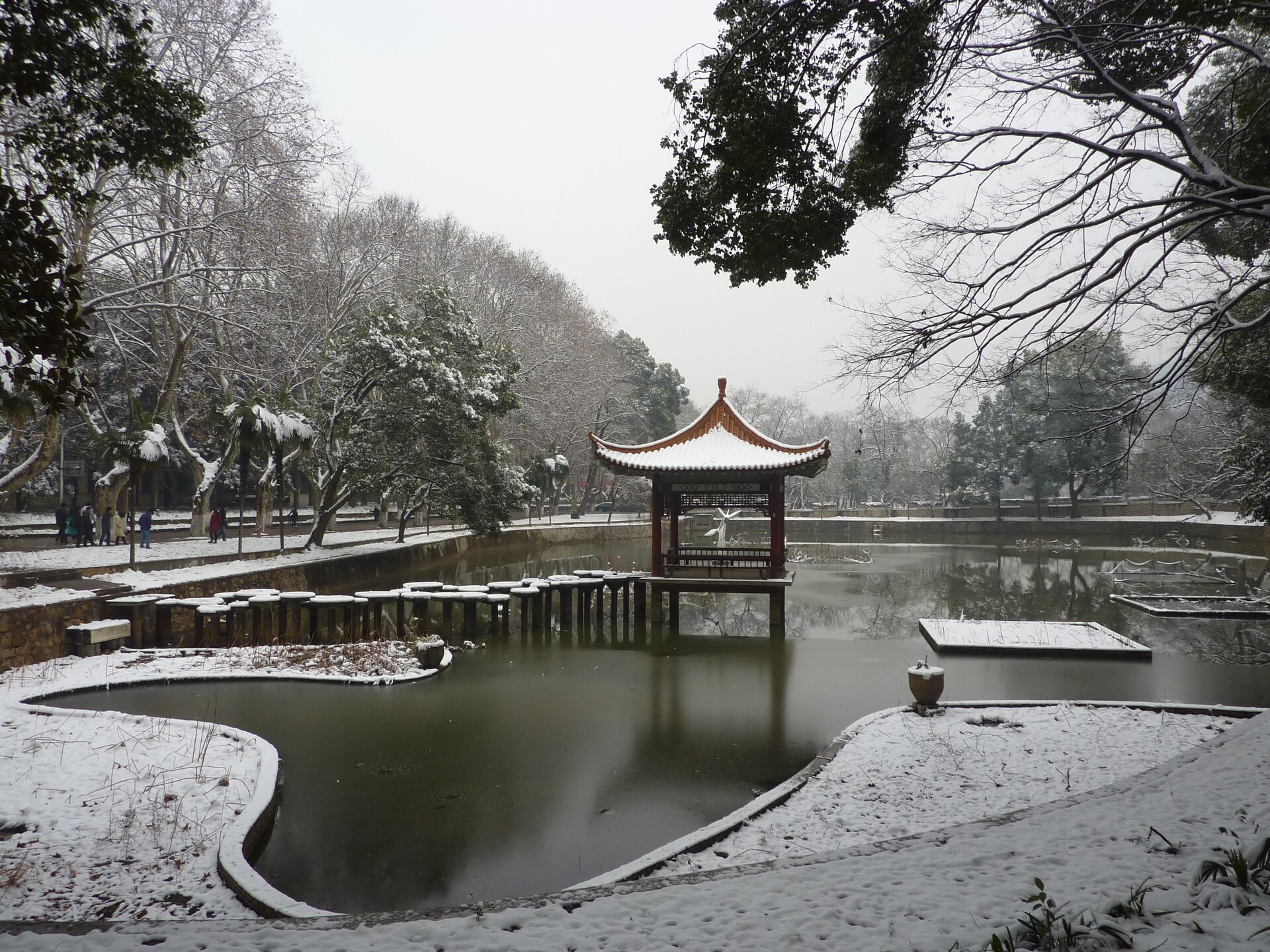
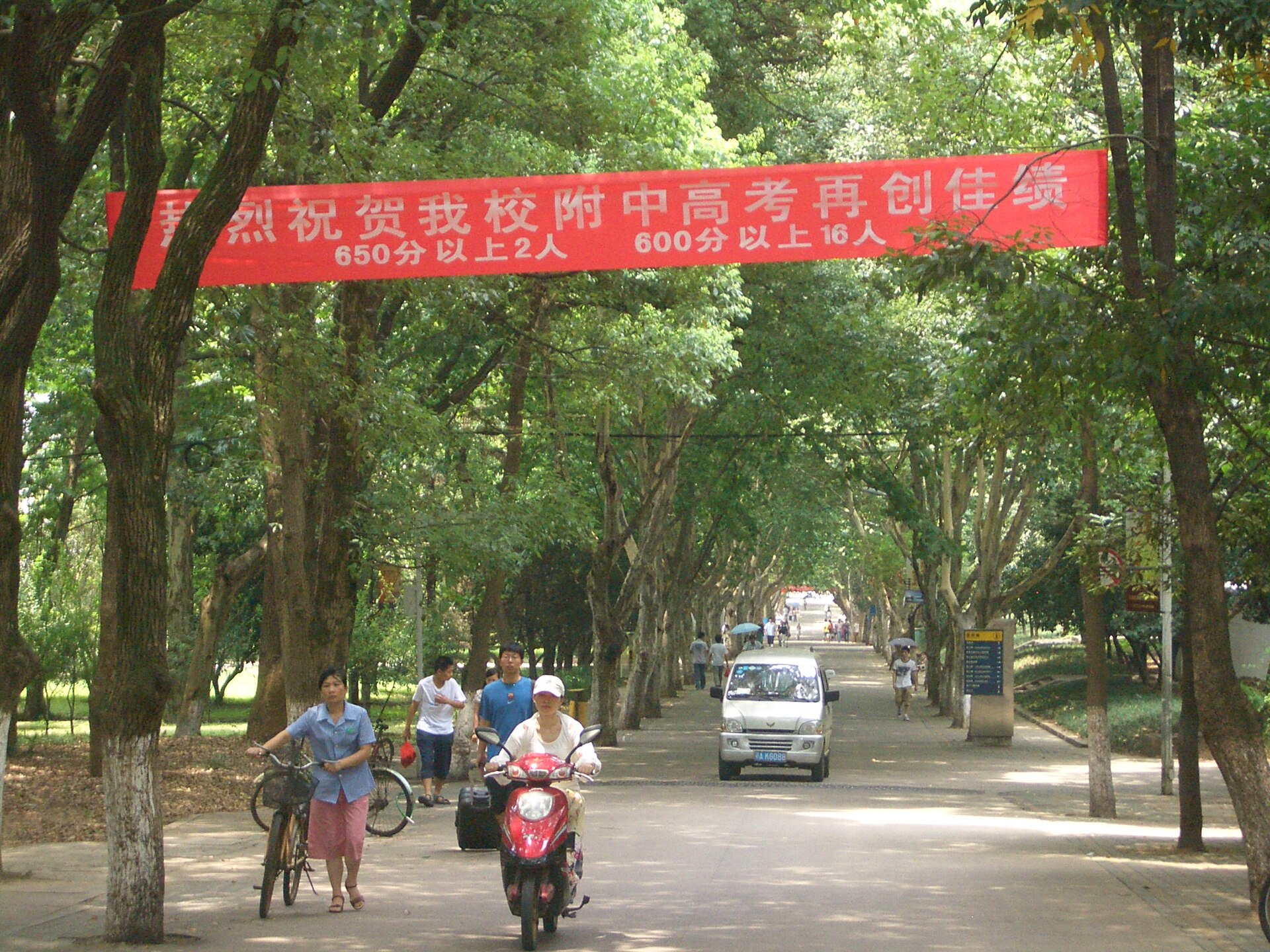
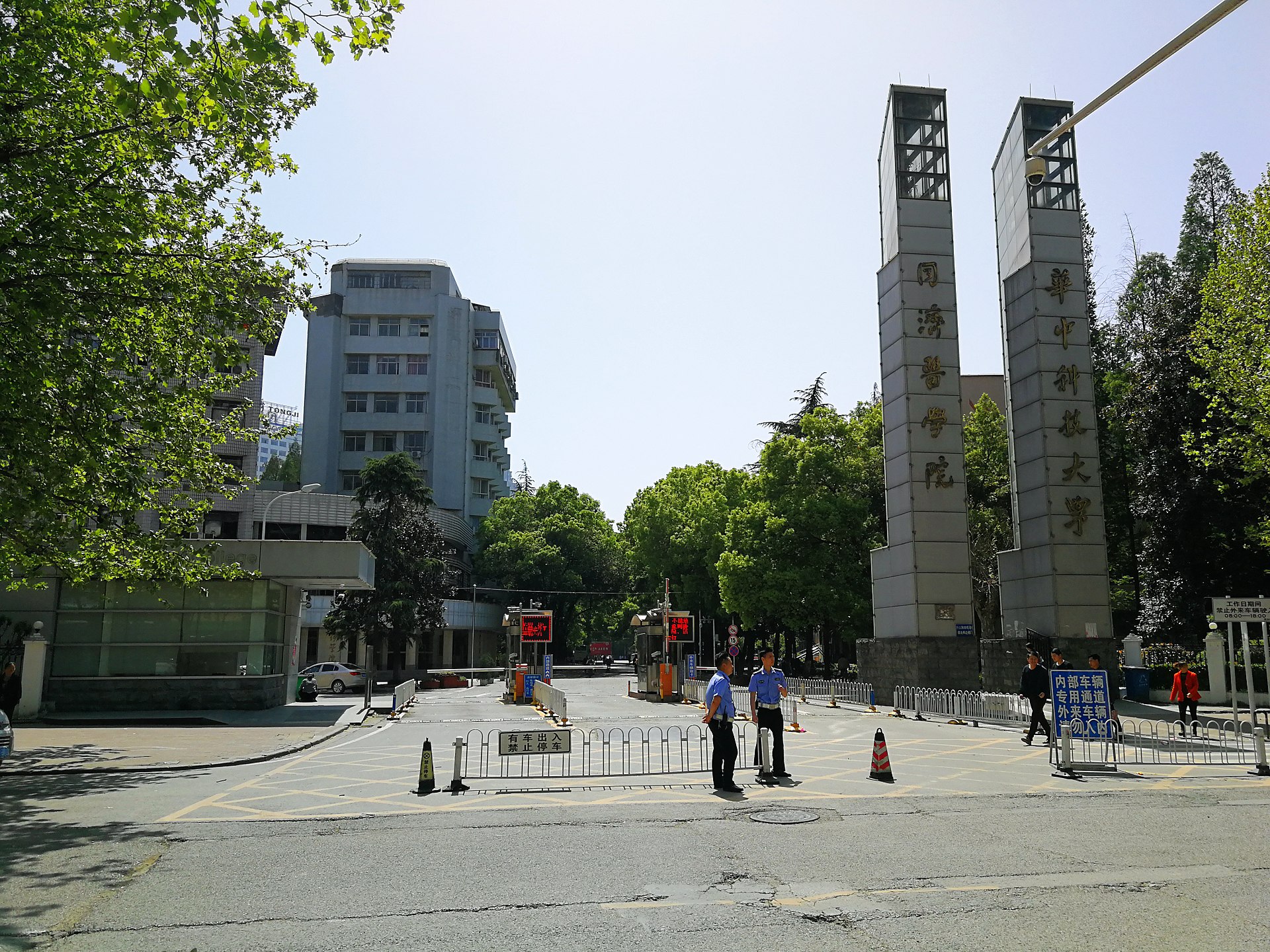
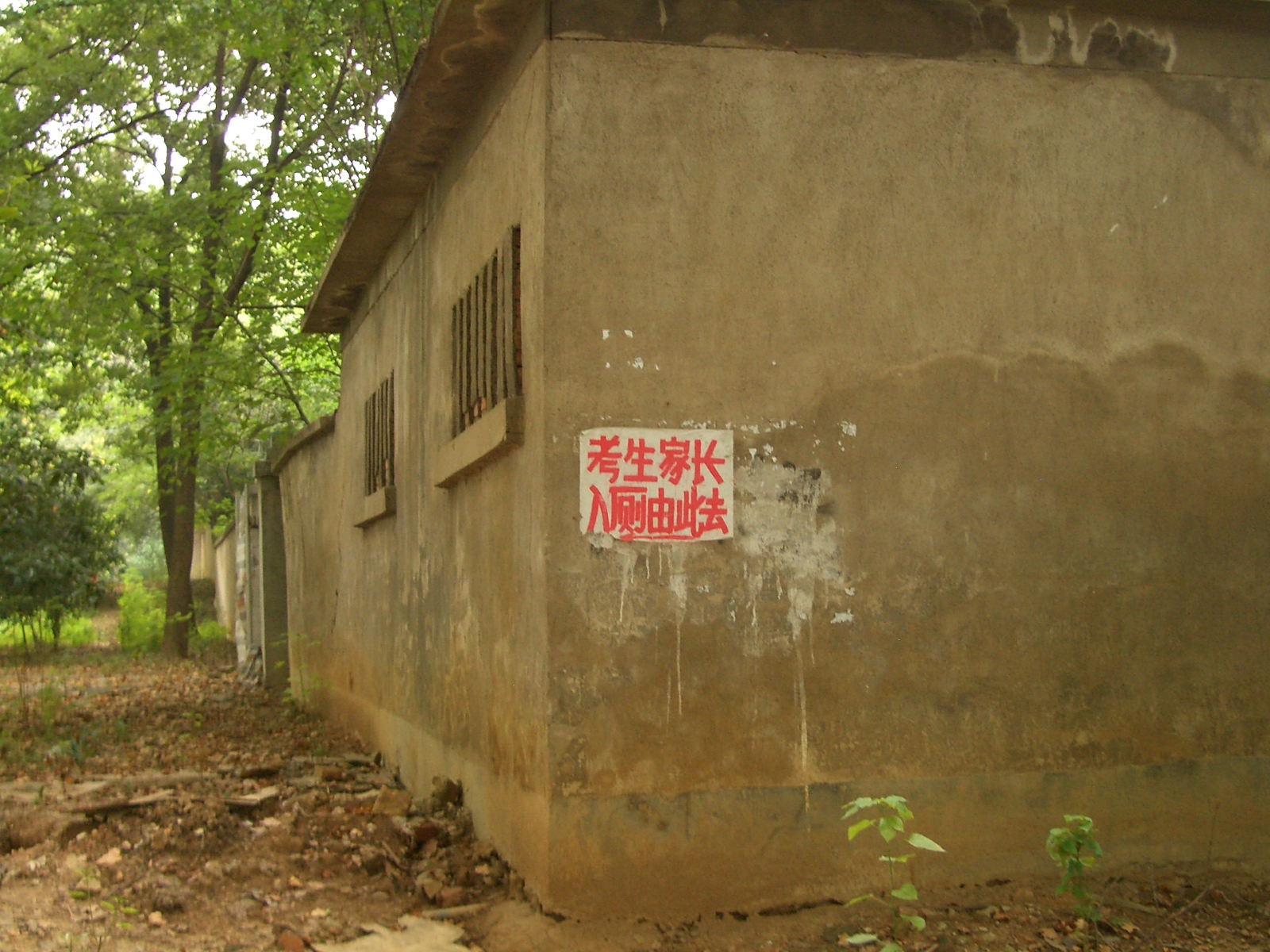
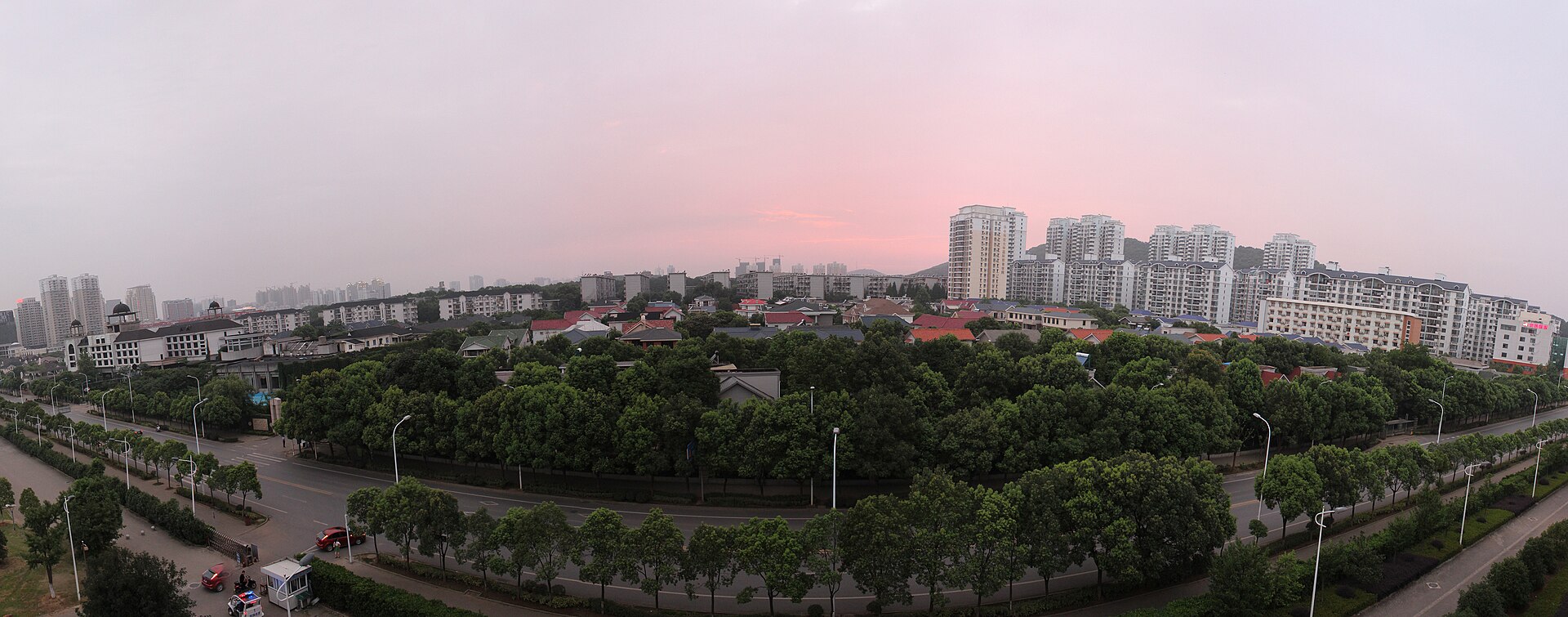
Huazhong University of Science and Technology — campus in pictures
Real, freely-licensed photographs of the campus (via Wikimedia Commons).

Why HUST — Research Depth, Affordability & Wuhan's Tech Ecosystem
HUST combines rigorous academic standards, affordable tuition, and a research ecosystem that competes globally. For international students targeting engineering, medicine, or technology fields, HUST offers a calibre of education and opportunity rarely found at this price point anywhere in the world.
HUST Acceptance Rate & International Applicant Profile
Stats
Profile Stats
Rea Vs Rd
HUST Admissions Requirements — Qualifications, Language & Academic Profile
- Transcripts from all secondary or prior university study required
- Competitive programmes expect stronger academic profiles
- IB, A-Level, CBSE, and other boards accepted
- Strong STEM performance especially valued for engineering / medicine
- IELTS 6.0 overall (internet-based TOEFL 80) for English-medium programmes
- HSK proficiency required for Chinese-medium tracks
- Native English speakers may qualify for exemption
- No SAT/ACT required — test-optional in practice
- IB Diploma: 33+ overall; higher for competitive programmes
- A-Levels: AAB or higher; A*AA expected for top programmes
- CBSE / national boards: equivalent strong performance
- Olympiad and research experience strengthen scholarship applications
HUST Application Components — Online Portal, Study Plan & Documents
HUST uses a direct online application system — not Common App, UCAS, or any third-party platform. All materials are submitted through the HUST International Student Office portal. Below is every required and recommended component, with strategic notes.
HUST Application — Writing the Study Plan
Tips
Prompts
What HUST Admissions Reviewers Are Looking For
HUST's international admissions review assesses the whole application profile. The academic record carries the most weight, but the Study Plan, language certificates, and supporting materials all contribute to a holistic picture of who you are and what you will bring to the university.
HUST Financial Aid & Scholarships for International Students
HUST offers scholarship funding for approximately 30% of its international students, primarily through government-sponsored and university merit programmes. Multiple scholarships can cover full or partial costs, and the base tuition — approximately $4,000 USD per year — is exceptionally affordable by global standards even without scholarship support.
All figures are USD equivalents and approximate. Exchange rates fluctuate; confirm current RMB-denominated figures with the HUST International Student Office before planning.
Stats
Contribution Tiers
| Note | Range | Percent | Percent Value |
|---|---|---|---|
| Full CSC scholarship: tuition + accommodation + living stipend + insurance | Full CSC Award | ~0% | 0 |
| Partial HUST CUP scholarship: tuition covered, living costs self-funded | HUST CUP Award | ~40% | 40 |
| No scholarship: full tuition + living costs | Self-Funded | ~100% | 100 |
Key Dates
Advantages
- Earlier decision — useful for visa processing and travel planning
- CSC is the most generous scholarship available (full ride)
- Nomination through home country embassy confirms eligibility early
- Allows time to prepare X visa, physical examination, and travel
- Demonstrates commitment and strong academic intent to HUST
Disadvantages
- CSC deadline (Feb–Mar) is 4–6 weeks before the general deadline
- Requires a formal nomination from your home country's education authority or Chinese embassy
- CSC eligibility depends on your nationality and country's bilateral agreement with China
- Must be organised months in advance — not suitable for last-minute applicants
HUST Interview — When It Happens & How to Prepare
HUST does not require interviews for all international undergraduate applicants. Interviews are most common for competitive programmes (Clinical Medicine at Tongji Medical College, key engineering programmes), scholarship shortlists (CSC, CUP), and graduate programme applicants. Where required, interviews are typically conducted via video call and focus on academic preparation, programme motivation, and language ability — not personal narrative in the US admissions sense.
Meta
Questions
HUST Campus & Residential Life
HUST does not have a US-style house or residential college system. Instead, international students live in dedicated International Student Dormitory buildings on campus, separate from the general student residential areas but integrated into the campus community. The dormitories are modern, well-equipped, and managed by the International Student Office.
Houses
Lottery Steps
- All new international students are assigned to an international student dormitory building upon arrival
- Room type (single, double) depends on availability and is confirmed with the offer letter
- On-campus accommodation is strongly recommended for first-year students — the campus is vast and off-campus commuting is less convenient
- Accommodation fees are included in the university's cost-of-attendance estimates
- Graduate and research students may apply for postgraduate residences, which offer a quieter study environment
- The HUST International Student Office provides orientation support and ongoing assistance for residential matters
HUST Schools & Programmes for International Students
- {"label":"National ranking in mechanical engineering","value":"Top 3"}
- {"label":"Key programmes","value":"Mechanical Engineering, Industrial Design"}
- {"label":"National research labs","value":"Multiple"}
- {"label":"Language of instruction","value":"English-medium track available"}
- {"label":"Founded","value":"1907"}
- {"label":"Flagship programme","value":"Clinical Medicine (MBBS)"}
- {"label":"Teaching hospitals","value":"Multiple major hospitals in Wuhan"}
- {"label":"International track","value":"English-medium MBBS for internationals"}
- {"label":"Key programmes","value":"CS, Artificial Intelligence, Big Data"}
- {"label":"National ranking","value":"Top tier"}
- {"label":"Industry links","value":"Wuhan Optics Valley tech cluster"}
- {"label":"Language track","value":"English-medium available"}
- {"label":"National lab","value":"National Laboratory for Optoelectronics"}
- {"label":"Key programme","value":"Optoelectronic Engineering"}
- {"label":"Industry connection","value":"Wuhan photonics cluster"}
- {"label":"Unique strength","value":"One of very few globally"}
- {"label":"Key programmes","value":"Biomedical Engineering, Bioinformatics"}
- {"label":"Research strength","value":"Biomedical imaging, genetics"}
- {"label":"Industry links","value":"Wuhan biotech ecosystem"}
- {"label":"Collaboration","value":"Tongji Medical College research links"}
- {"label":"Key programmes","value":"Architecture, Urban Planning, Design"}
- {"label":"National ranking","value":"Recognised nationally"}
- {"label":"Studio culture","value":"Active design culture on campus"}
- {"label":"Language","value":"Some English-medium options"}
Research & Extracurricular Opportunities at HUST
Career Outcomes & HUST Alumni Network
HUST graduates enter an employment landscape dominated by China's engineering, technology, and healthcare sectors. The 94% employment rate reflects strong demand for HUST's science and engineering graduates from both Chinese industry and international employers. International students who build Chinese language proficiency during their degree often find additional career opportunities within China's fast-growing economy.
Stats
Categories
Tychr Student Success — HUST & Top Chinese University Placements
Faqs
Can I study at HUST entirely in English?+
Yes, HUST offers English-medium international programmes in engineering and sciences, and the Tongji Medical College MBBS programme is available in English for international students. Always verify the specific language of instruction for your programme on the HUST portal before applying.
Is an IB diploma accepted for admission?+
Yes. HUST accepts the IB Diploma. A competitive score for engineering and science programmes is typically 33 or above; stronger programmes expect higher. HL performance in Mathematics, Physics, Chemistry, or Biology is especially relevant.
Do I need to take the Chinese Gaokao?+
No. International students are admitted through a separate process managed by the International Student Office. The Gaokao is for Chinese nationals only.
What is the Chinese Government Scholarship (CSC) and how do I apply?+
The CSC is China's flagship scholarship for international students, offering full-ride funding (tuition, accommodation, insurance, and monthly stipend). You apply through the CSC's online system and are typically nominated by your home country's education authority or Chinese embassy. HUST is a designated CSC host institution. The deadline is typically February–March — well before the general application window.
How does HUST compare to other Chinese universities internationally?+
HUST is ranked 8th among all Chinese universities nationally, 260th by QS, and 150th by Times Higher Education. In specific fields — mechanical engineering, optoelectronics, biomedical engineering — it ranks in the top three to five in China. Its Tongji Medical College is one of the oldest and most respected medical schools in the country.
What is Wuhan like for international students?+
Wuhan is a major modern city of 12 million with excellent infrastructure, hospitals, and transport links (including high-speed rail to Beijing, Shanghai, and Guangzhou). The cost of living is significantly lower than Beijing or Shanghai. HUST's self-contained campus means most daily needs are met on-campus, easing adjustment for new international students.
Can I work part-time while studying at HUST?+
Chinese regulations on student work are restrictive. International students on a study (X) visa generally require specific authorisation to take paid employment. Confirm current rules with the HUST International Student Office before making any plans.
What happens if my application is rejected — can I appeal?+
HUST does not have a formal published appeals process for general international admissions. If your application is unsuccessful, you may contact the International Student Office to understand why and whether reapplication in the following cycle is appropriate. For scholarship rejections, some programmes have an internal review channel — ask the admissions office directly.
Book a Free HUST Admissions Strategy Session
In 60 minutes our China admissions specialists will evaluate your academic profile, identify the right HUST programme and scholarship track for your background, map out your Study Plan strategy, and determine whether you are CSC-eligible — so you don't miss the most important deadline.
- No commitment required
- China admissions specialists familiar with HUST's programmes
- Personalised strategy — Study Plan, scholarship timing, and language requirements
HUST Academic Requirements
HUST Academic Requirements — The Honest Breakdown for International Students
What GPA, language scores, and subject preparation do HUST's admitted international students actually need? And how does HUST evaluate qualifications from IB, A-Level, CBSE, and other international systems?
GPA & Academic Record
HUST and GPA — What the Requirements Actually Mean
HUST's published minimum GPA for international applicants is 3.0 on a 4.0 scale. In practice, the most competitive applicants — especially for clinical medicine, computer science, and optoelectronic engineering — present significantly stronger academic records.
A GPA of 3.0 is the floor, not the ceiling. For the most in-demand programmes — particularly clinical medicine at Tongji Medical College — reviewers are evaluating relative performance across hundreds of international applicants. A strong STEM-subject GPA combined with a compelling Study Plan is the competitive profile.
Academic Context
How HUST Reads Academic Records — The Contextual Approach
HUST evaluates each international applicant's academic record in the context of their specific educational system, school environment, and country of origin. There is no single GPA minimum applied universally across all qualifications and all programmes.
SAT at HUST
SAT Scores at HUST — What You Actually Need
HUST does not require SAT scores for international undergraduate admission. The SAT is treated as an optional supplementary document.
| Label | Score | Percent |
|---|---|---|
| Required? | No | 0 |
| Accepted if submitted? | Yes | 50 |
| Impact on admissions decision? | Minimal | 20 |
ACT at HUST
ACT Scores at HUST — Not Required, Not Expected
Like the SAT, the ACT is not required and not commonly submitted by international applicants to HUST. HUST's admissions process does not weigh standardised US tests significantly.
Metrics
Comparison Cards
Test Policy
HUST Test-Optional Policy — What It Actually Means
HUST operates a de facto test-optional policy for international standardised tests (SAT/ACT). These tests are neither required nor heavily weighted in the admissions process. The university evaluates academic preparation primarily through secondary school qualifications.
Submit Items
Withhold Items
Qualifications
IB, A-Levels & Other Qualifications at HUST — Specific Benchmarks
- {"label":"Competitive range","value":"33+ overall; 36–38 for top programmes"}
- {"label":"HL expectations","value":"6–7 in subjects relevant to chosen programme"}
- {"label":"Mathematics","value":"HL Mathematics (Analysis & Approaches) strongly recommended for STEM programmes"}
- {"label":"Extended Essay","value":"A or B in a relevant STEM subject is a positive signal for research programmes"}
- {"label":"Competitive range","value":"AAB or higher; A*AA for top programmes"}
- {"label":"Subject rigour","value":"Mathematics + Physics for engineering; Chemistry + Biology for medicine"}
- {"label":"AS results","value":"Reviewed alongside predicted grades if available"}
- {"label":"Competitive range","value":"85%+ overall; 90%+ in core STEM subjects"}
- {"label":"For engineering","value":"Strong PCM (Physics, Chemistry, Mathematics) scores"}
- {"label":"For medicine","value":"Strong PCB (Physics, Chemistry, Biology) scores"}
Advanced Placement
AP Courses at HUST — What Role They Play
AP examinations are not a standard part of HUST's international admissions process, but students from AP-based curricula (US, international schools) may submit AP results as supplementary academic evidence.
Academic Rigour
Rigour of Secondary School Record — Why Course Selection Matters at HUST
HUST, like most elite research universities, evaluates not just what grades you achieved but how challenging the courses you took were. For international students, this means demonstrating that you pursued the most rigorous available preparation in the subjects relevant to your chosen programme.
Taking HL Mathematics, HL Physics, and HL Chemistry in the IB Diploma signals scientific seriousness in a way that a high score in easier combinations does not.
Subject Preparation
What HUST Expects — Subject-Specific Academic Preparation
HUST's academic demands vary by school and programme. Below is the subject preparation that matters most for HUST's key international programme areas. These represent expected preparation, not formal prerequisites — but arriving without them makes the first year significantly harder.
Language Requirements
English Language Requirements for International HUST Applicants
English language requirements at HUST apply specifically to English-medium programme applicants. Chinese-medium programmes require HSK (Chinese proficiency) instead. It is essential to confirm which language track your specific programme operates on before applying.
Meeting the minimum threshold (IELTS 6.0 / TOEFL 80) is necessary but not sufficient for academic success at HUST. English-medium lectures, written examinations, and lab reports all require comfortable working proficiency. Tychr recommends aiming for IELTS 6.5–7.0 or TOEFL 90+ before applying, giving you a margin above the minimum and a better foundation for success on arrival.
By Programme
Academic Requirements by Programme — What Different HUST Schools Expect
HUST admits international students to specific programmes (not to a broad undeclared entry). The academic profile expectations below reflect what competitive applicants to each programme area typically present. Exact thresholds vary by year and programme competitiveness.
| Signals | Expectation | Concentration |
|---|---|---|
| IB HL Maths + HL Physics; A* in Maths/Physics A-Level | HL Maths + HL Physics; AAB+ A-Level | Mechanical Engineering |
| Programming experience; IB/A-Level CS; competition results | HL Maths; evidence of CS background | Computer Science / AI |
| Physics Olympiad; IB HL Maths + HL Physics with strong scores | HL Maths + HL Physics (7s); top national board scores | Optoelectronic Engineering |
| Biology and chemistry top grades; research or hospital experience | HL Chem + HL Bio (IB) or A-Level Chemistry + Biology (A/A*) | Clinical Medicine (MBBS, Tongji) |
| HL Chemistry + HL Biology; research project or science fair | Strong chemistry and biology foundation | Biomedical Engineering |
| HL Maths + HL Chemistry; strong sciences overall | Top STEM grades in relevant subjects | Materials Science |
| Portfolio or design experience; strong technical drawing or art background | Strong design portfolio; mathematics foundation | Architecture / Urban Planning |
International Systems
How HUST Evaluates Different International Educational Systems
Year-by-Year Roadmap
Building Your Academic Profile for HUST — What to Do at Each Stage
- Choose mathematics and science subjects at the highest available level in your curriculum.
- If your school offers IB, begin planning for HL choices in Mathematics and at least one science.
- If your school offers A-Levels, plan subject combinations with STEM in mind.
- Begin exploring STEM competitions or science fairs appropriate to your level.
- Lock in rigorous course choices — IB HL or A-Level subject combinations that align with your target HUST programme.
- Enter national or international STEM competitions (Mathematics Olympiad, Physics Olympiad, Programming competitions) — these strengthen scholarship applications.
- Begin working on basic Chinese language if you are considering a Chinese-medium programme at HUST.
- Research HUST's specific programmes, schools, and scholarship options to align your profile.
- Register for IELTS or TOEFL at least 6–12 months before your application deadline.
- Aim for IELTS 6.5–7.0 or TOEFL 90+ — comfortable margins above the minimum threshold.
- Allow time for a re-sit if your first attempt does not meet the minimum.
- If targeting a Chinese-medium programme, begin formal HSK preparation.
- Confirm your target HUST school, programme, and language track.
- Identify your scholarship eligibility (CSC, Bilateral, MOFCOM, Silk Road).
- Contact your home country's education authority about CSC nomination — this process can take months.
- Read the current HUST International Student Application Guide at iso.hust.edu.cn.
- The CSC application window typically opens in February with a March deadline.
- Complete the CSC online system profile and confirm your home country nomination.
- Prepare all required documents: transcripts, passport, language certificates, study plan, recommendation letters, physical examination record.
- Apply to HUST directly through the portal simultaneously with (or immediately after) the CSC application.
- Complete the HUST portal application at iso.hust.edu.cn.
- Upload all certified documents; confirm the scholarship type you are applying for.
- Allow 4–8 weeks for an admissions decision.
- On receiving your admission letter, apply immediately for your Chinese student (X) visa.
Common Pitfalls
Academic Mistakes That Cost HUST Applications — And How to Avoid Them
Student Profiles
What Academic Profiles HUST-Admitted International Students Have
The following profiles represent the types of academic backgrounds Tychr has helped international students present for successful HUST applications and China university placements. They illustrate the range of preparation that succeeds and what made each application compelling.
Faqs
What GPA do I need to get into HUST?+
The minimum is 3.0/4.0, but this is the floor, not the competitive expectation. For top programmes such as clinical medicine, CS, and optoelectronic engineering, competitive applicants typically present 3.5+ GPAs with strong subject-specific performance. The GPA minimum means 'do not apply if below 3.0' — not 'apply confidently if you are at 3.0'.
What IB score do I need for HUST?+
IB 33 is HUST's published competitive benchmark university-wide. For the most selective programmes — clinical medicine at Tongji, optoelectronics, CS — the effective competitive range is 36–38 or above. Strong HL scores in relevant subjects matter as much as the overall total.
Can I apply to HUST without SAT or ACT scores?+
Yes. HUST's international admissions process is test-optional for SAT/ACT. These tests are not required and will not significantly affect your admissions outcome. The English language certificate (IELTS/TOEFL) is the language test that DOES matter.
Does HUST accept my qualification system?+
HUST accepts the IB Diploma, A-Levels, AP, CBSE, ISC, Baccalauréat, Abitur, NCEA, and most recognised national pre-university qualifications. If your qualification is less common, contact the HUST International Student Office to confirm it is accepted before applying.
Can I study at HUST without knowing Chinese?+
Yes, provided you meet the IELTS 6.0 / TOEFL 80 threshold and apply to an English-medium programme. Many HUST engineering and science programmes have English-medium international tracks. Always verify the specific language of instruction for your target programme.
Cost & Funding
HUST May Cost Significantly Less Than You Think — Here's the Full Picture.
HUST offers world-class research education at a fraction of the cost of comparable universities in the US, UK, or Australia. Multiple scholarship programmes — including full-ride government scholarships — are available to international applicants.
Cost Transparency
What HUST Actually Costs — The Full Annual Figure
HUST's cost of attendance is approximately $9,800 USD per year — less than a single semester's tuition at many private universities in the US or UK. Over four years, the total cost of a HUST undergraduate degree is approximately $39,200 USD without any scholarship, and potentially $0 with the Chinese Government Scholarship full ride.
Scholarship Funding
Financial Aid for International Students at HUST — How It Works
The main scholarship programmes available to HUST international students — the Chinese Government Scholarship (CSC), the HUST CUP award, Bilateral Programme scholarships, MOFCOM scholarships, and the Silk Road Programme — are available to students from a wide range of countries. Eligibility is primarily determined by nationality, academic merit, and the bilateral education agreements between China and your home country.
Affordability Context
Why HUST is Genuinely Affordable — Even Without a Scholarship
How to Apply for Funding
Applying for HUST Scholarships — The Process Step by Step
HUST scholarship funding is not automatic — it requires a separate, well-timed application process. Here is the complete step-by-step guide.
- Confirm CSC eligibility based on your nationality and China's bilateral agreements
- Check HUST CUP award eligibility (open to most international applicants)
- Confirm Bilateral Programme and MOFCOM eligibility through your home country's education authority
- Find the CSC contact or Chinese embassy in your country
- Request information on the CSC nomination process for your country
- Confirm the national deadline — often February
- Academic transcripts and certificates
- Study Plan (tailored to highlight research potential and post-graduation contribution to your home country)
- Two strong recommendation letters
- Language certificates (IELTS/TOEFL)
- Relevant competition certificates, research documentation
- Complete the CSC online system profile at campuschina.org
- Select HUST as your preferred institution
- Confirm your nomination is submitted by your home authority before the national deadline
- Complete the HUST portal application at iso.hust.edu.cn
- Select the appropriate scholarship type in the form
- Upload all required certified documents
- Monitor your email for HUST admissions decisions (May–June) and CSC decisions (June–July)
- Accept your offer by the stated deadline
- Apply for your X visa using your HUST admission letter
- Complete the physical examination and submit the record to HUST
International Student Funding
Financial Aid for International Students at HUST — The Full Picture
Financial aid at HUST works differently from Western universities. There is no CSS Profile, no demonstrated-need assessment, and no need-blind admissions process. Instead, HUST offers structured scholarship programmes for which international students apply separately from their admissions application. Understanding these programmes and their timelines is essential to accessing funding.
Aid Estimates
What HUST Financial Aid Actually Looks Like — By Scholarship Type
Indicative Aid by Funding Scenario
All figures are USD equivalents and approximate. The CSC monthly stipend amount is set by the Chinese government and updated periodically — check campuschina.org for current stipend rates. HUST CUP award levels vary; confirm with the HUST International Student Office.
The CSC full-ride scholarship is the most valuable funding opportunity available to HUST international students. HUST's own CUP scholarship is the next best option and is available to most applicants. Even without any scholarship, the total annual cost of approximately $9,800 USD is a fraction of comparable Western universities.
| Grant | Scenario | Contribution |
|---|---|---|
| Tuition + accommodation + stipend + insurance | Full CSC Scholarship | ~$0 |
| Full or partial tuition | HUST CUP Award | ~$0–$4,000 (tuition covered or partial) |
| Country-specific — varies | Bilateral / MOFCOM / Silk Road | Varies; check with home authority |
| $0 | No Scholarship (Self-Funded) | ~$9,800 / year |
Table Headers
Merit vs Need
Merit and Need at HUST — How Scholarships Are Awarded
HUST's scholarship system is merit-based and nationality-based, not need-based in the Western sense. Academic performance and programme fit are the primary selection criteria for HUST-administered scholarships. The CSC and government-administered programmes additionally consider national development goals and bilateral agreements.
External Funding
External Scholarships — Additional Funding Sources for HUST Students
In addition to HUST's own scholarship programmes and the CSC, international students may be eligible for external scholarship programmes from their home governments, private foundations, or international development organisations. Identifying and applying to these can supplement or fully replace HUST-administered funding.
Loan Policy
Loans at HUST — What International Students Need to Know
HUST's scholarship system is entirely grant-based — there are no institutional loan programmes at HUST for international students. This is structurally different from Western universities where student loans are a standard part of the funding landscape. International students who need to fund their studies without a scholarship do so through personal or family resources, not institutional lending.
Working While Studying
Work Opportunities for International Students at HUST
Chinese regulations on paid employment for international students are more restrictive than in Western countries. International students on an X (study) visa are generally not permitted to take paid employment outside the university without specific governmental authorisation. This is an important practical constraint to understand before planning finances.
- Teaching assistant or language exchange partner roles (where officially arranged through HUST)
- On-campus research assistant positions in faculty labs (may include stipends for graduate students)
- Student association roles and campus-organised international student activities
- Paid internships in Wuhan (may require separate work permit — confirm legality before accepting)
Global Comparison
HUST vs Global Alternatives — What International Students Actually Pay
| Policy | School | No Loans | Typical Cost |
|---|---|---|---|
| Merit/nationality-based grants (CSC full ride available) | HUST, China | N/A (no institutional loans) | ~$0–$9,800/year |
| Need-blind, full-need, no loans (US) | Harvard University | Yes (grants only) | ~$0 (< $85K family income) |
| Tuition fee loans available (UK) | UK Russell Group (London) | No (loans common) | ~£30,000–£45,000/year |
| Need-aware, limited international aid | Top Australian University | No (HELP loans for citizens only) | ~AUD $35,000–$50,000/year |
| Limited need-based aid for internationals | Top Canadian University | Partial (some awards) | ~CAD $35,000–$50,000/year |
| Low tuition (EU), higher for non-EU | European Public University (Netherlands) | N/A | ~EUR $12,000–$20,000/year (non-EU) |
True Cost Analysis
HUST vs Global Alternatives — What You Actually Pay Over Four Years
For an international student without scholarship support, HUST's total four-year cost of approximately $39,200 USD is less than a single year of tuition at many top US or Australian universities. With the CSC full-ride scholarship, the cost is literally zero — making HUST one of the best-value research university educations available to international students worldwide.
| Policy | School | Contribution | Four Year Cost |
|---|---|---|---|
| Merit/nationality grant (CSC full ride) | HUST (with CSC) | ~$0 | ~$0 |
| Self-funded (no scholarship) | HUST (self-funded) | ~$9,800/year | ~$39,200 |
| Need-blind, full-need, no loans | Harvard University | ~$0 (< $85K income) | ~$0 |
| UK home/EU tuition with loan | UK Russell Group | ~£30,000+/year | ~£120,000+ |
| International student fees | Top Australian University | ~AUD $40,000/year | ~AUD $160,000 |
| International student fees | Top US State University (out-of-state) | ~$35,000–$50,000/year | ~$140,000–$200,000 |
Funding Challenges
What to Do If Your Scholarship Application is Unsuccessful
HUST does not have a formal scholarship appeal process equivalent to US university financial aid offices. However, there are practical steps you can take if your initial scholarship application is unsuccessful or if your circumstances change.
HUST's scholarship system is competitive and merit-based. If you are not awarded a scholarship in your application year, the most constructive paths are: reapply in the following cycle with a stronger academic record, explore bilateral or external scholarships, or self-fund using HUST's low tuition as the basis for a manageable financial plan.
How To Appeal
- Contact the HUST International Student Office directly to ask about the reason for an unsuccessful scholarship application
- Ask whether you can be considered for a HUST CUP award after arrival, based on first-year academic performance
- Enquire about in-programme scholarships or awards for currently enrolled students who achieve outstanding results
When To Appeal
- Your circumstances have changed materially since you submitted your application
- You believe your application materials contained an error or omission
- You have received a new academic achievement (competition result, examination result) since applying that significantly strengthens your profile
- You were admitted to HUST but not awarded the HUST CUP — the office may have a limited number of deferred awards for high-performing admitted students
Timeline & Planning
Planning for HUST Costs — What to Do and When
APPLICATION & STUDY PLAN
Applying to HUST The Study Plan & Application Statement
HUST does not use the US Common App, UCAS, or a multi-essay supplement system. The core written piece in the application is the Study Plan — a focused statement of purpose that directly replaces the Western personal essay in Chinese university admissions.
For international students, the written component of a HUST application is the Study Plan (sometimes called a Personal Statement or Motivation Letter in the international context). This is a practical, purpose-driven document — not a narrative memoir. Chinese university admissions panels value clarity of purpose, demonstrated academic preparation, and specific knowledge of the institution and programme over personal storytelling. Understanding this distinction is the first step to a compelling HUST application.
WHAT YOU SUBMIT
Application Written Components
HUST's international application typically requires one primary written piece: the Study Plan. Some scholarship applications may request additional statements.
Unlike US or UK university applications, there are no scored supplemental essays or timed writing tasks in HUST's process. The Study Plan is typically a free-form document of 800–1,500 words that you prepare yourself. For scholarship applications (CSC, CUP), the same Study Plan is submitted — or a slightly expanded version — as part of the scholarship review. Some graduate programmes may additionally request a research proposal.
THE STUDY PLAN
What Your Study Plan Should Cover
HUST does not publish prescribed essay prompts with word-for-word questions the way US universities do. Instead, the Study Plan is a free-form document structured around a standard set of themes. The guidance below reflects the expected content — frame your writing around these themes.
WRITING STRATEGY
How to Write a Strong HUST Study Plan
The Study Plan is functional, not literary. Think of it as a professional document — part cover letter, part research proposal, part personal statement.
Western students accustomed to writing US personal essays often make the mistake of writing a HUST Study Plan in a narrative, story-driven style. While a brief personal hook can work, Chinese university panels primarily want to see: (1) that you understand what HUST is and what it is strong in, (2) that your academic background genuinely prepares you for your chosen programme, and (3) that you have a coherent vision for what you will do during and after your degree. Keep language professional and direct. Avoid flowery writing or excessively philosophical openings. Aim for 800–1,200 words, clearly structured in four or five paragraphs or sections. Use headings if you prefer — Chinese academic documents often do.
ADDITIONAL MATERIALS
Supporting Your Application Beyond the Study Plan
Beyond the Study Plan, other elements of your application file can strengthen your candidacy significantly.
CHOOSING YOUR ANGLE
Finding the Right Focus for Your Study Plan
The most common Study Plan mistake is generic writing. These strategies will help you write something specific and memorable.
COMMON MISTAKES
Study Plan Pitfalls to Avoid
- Writing in a narrative memoir style ('When I was seven years old…') — this is a professional statement, not a US personal essay.
- Being vague about why HUST specifically — generic praise ('HUST is a world-class university') is a red flag.
- Ignoring the post-graduation section — Chinese universities, especially for scholarship applicants, want to see a development plan.
- Exceeding 1,500 words without adding substantive new information — trim ruthlessly.
- Submitting a Study Plan in poor English — have a native English speaker or professional editor review it before submission.
- Contradicting information elsewhere in your application — if your transcript shows a 3.2 GPA, do not write that you have 'an exceptional academic record' without evidence.
- Not mentioning specific HUST strengths — shows a lack of preparation and is easily spotted by reviewers.
- Applying to the wrong language track (Chinese-medium vs English-medium) and writing a Study Plan that does not reflect your language situation.
- Forgetting to tailor the Study Plan for scholarship applications — the CSC committee is a different audience from the HUST admissions reviewer.
- Using a Study Plan originally written for another university without thorough revision — reviewers can tell.
APPLICATION FAQs
Application & Study Plan FAQs
Does HUST require a personal essay like US universities?+
No. HUST uses a Study Plan rather than a personal narrative essay. The Study Plan is a structured, professional document explaining your academic background, reasons for choosing HUST and your programme, your study goals, and your post-graduation plans.
How long should my Study Plan be?+
Aim for 800–1,200 words. Some applicants write up to 1,500 words for graduate or scholarship applications. Do not pad with filler — every paragraph should serve a purpose.
Should I write my Study Plan in English or Chinese?+
For English-medium programme applicants, English is appropriate and expected. If you are applying to a Chinese-medium programme and have strong HSK proficiency, Chinese may be welcomed. When in doubt, write in English and attach a note indicating you can provide a Chinese version if required.
Can I use the same Study Plan for the CSC scholarship and for HUST's own scholarship?+
Broadly yes, though you may want to add a paragraph for the scholarship statement specifically about the contribution your study will make to your home country (which CSC committees value). The core content overlaps significantly.
Is an interview part of the HUST international admissions process?+
Interviews are not universal but may be required for highly competitive programmes, some graduate placements, or scholarship shortlisting. If required, you may be asked to conduct the interview via video call. Prepare to discuss your academic background, research interests, and study plan in detail.
What happens if my Study Plan is weak — will a strong GPA save me?+
For general admission to less competitive programmes, a strong GPA is the primary factor and a mediocre Study Plan may still result in an offer. However, for competitive programmes (clinical medicine, CS, optoelectronics) and for any scholarship, the Study Plan is a meaningful differentiator. Invest proper time in it.
Can I apply to multiple programmes at HUST?+
The HUST application portal typically allows you to indicate a first and second choice programme. Tailor your Study Plan primarily to your first-choice programme while ensuring your academic profile is credible for the second choice as well.
How should I address the CSC 'contribution to home country' requirement?+
Be genuine and specific. The CSC scholarship is partly designed to support the development of skilled graduates in partner countries. A credible post-HUST plan that references a specific career or research path in your home country — not a vague commitment to 'help my country' — is what CSC panels respond to. If you plan to return and work in engineering, medicine, technology, or research, describe that concretely.
Courses — schools, degrees & intake
92 degrees across 28 groupings.
Tongji Medical College · 9 degrees
Clinical Medicine (MBBS) — 6-year
Clinical Medicine — 5-year
Anesthesiology
Medical Imaging
Preventive Medicine
Stomatology
Pharmacy
Nursing
Forensic Medicine
School of Mechanical Science and Engineering · 4 degrees
Mechanical Design Manufacturing and Automation
Measurement Control Technology and Instruments
Robotics Engineering
Industrial Engineering
School of Computer Science and Technology · 4 degrees
Computer Science and Technology
Data Science and Big Data Technology
Internet of Things Engineering
Intelligent Science and Technology
School of Artificial Intelligence and Automation · 3 degrees
Artificial Intelligence
Automation
Intelligent Medical Engineering
School of Optical and Electronic Information · 1 degrees
Optoelectronic Information Science and Engineering
School of Electronic Information and Communications · 3 degrees
Telecommunication Engineering
Electronic Information Engineering
Communication Engineering
School of Electrical and Electronic Engineering · 1 degrees
Electrical Engineering and Automation
School of Integrated Circuits · 3 degrees
Integrated Circuit Design and Integrated Systems
Microelectronics Science and Engineering
Electronic Science and Technology
School of Software Engineering · 2 degrees
Software Engineering
Digital Media Technology
School of Cyber Science and Engineering · 3 degrees
Information Security
Cybersecurity
Cryptography Science and Technology
School of Materials Science and Engineering · 4 degrees
Materials Science and Engineering
Materials Forming and Control Engineering
Functional Materials
Electronic Packaging Technology
School of Energy and Power Engineering · 4 degrees
Energy and Power Engineering
New Energy Science and Engineering
Nuclear Engineering and Technology
Energy Storage Science and Engineering
School of Civil and Hydraulic Engineering · 4 degrees
Civil Engineering
Intelligent Construction
Water Conservancy and Hydroelectric Power
Engineering Management
School of Aerospace Engineering · 2 degrees
Aircraft Design and Engineering
Engineering Mechanics
School of Naval Architecture and Ocean Engineering · 2 degrees
Naval Architecture and Ocean Engineering
Marine Engineering
School of Environmental Science and Engineering · 2 degrees
Environmental Engineering
Water Supply and Drainage Science and Engineering
School of Life Science and Technology · 4 degrees
Biological Science
Biotechnology
Biomedical Engineering
Bioinformatics
School of Chemistry and Chemical Engineering · 3 degrees
Chemical Engineering and Technology
Applied Chemistry
Chemistry
School of Mathematics and Statistics · 3 degrees
Mathematics and Applied Mathematics
Information and Computing Science
Statistics
School of Physics · 2 degrees
Physics
Applied Physics
School of Economics · 5 degrees
International Economics and Business
Economics
Finance
Financial Engineering
Digital Economy
School of Management · 6 degrees
Business Administration
Accounting
Marketing
Information Management and Information Systems
Supply Chain Management
Big Data Management and Application
School of Architecture and Urban Planning · 3 degrees
Architecture
Urban-Rural Planning
Landscape Architecture
School of Humanities and Social Sciences · 4 degrees
Chinese Language and Literature
Philosophy
Law
Sociology
School of Foreign Languages · 4 degrees
English
German
French
Japanese
School of Journalism and Information Communication · 2 degrees
Journalism
Advertising
School of Public Administration · 2 degrees
Administrative Management
Political Science and Administration
School of Design · 3 degrees
Product Design
Environmental Design
Digital Media Art
Want your real chances at Huazhong University of Science and Technology?
Create a free TYCHR account for your personalised admit-chance, a shortlist you can track, exact entry requirements, and essay + counselling help.