← All universities

Hong Kong Baptist University

Kowloon Tong, Hong Kong SAR · Urban

PublicCoedReligiously affiliatedResearch
Acceptance
35.0%
QS World
#245
Tuition/yr
$21,200
Students
12,000
Founded
1956

HONG KONG BAPTIST UNIVERSITY

HKBU Admissions Guide for International Students

Hong Kong Baptist University is Hong Kong's liberal-arts-leaning public university — a place where journalism, film, Chinese medicine and the creative arts stand alongside business and science in a tight-knit campus community. Founded in 1956 in the heart of Kowloon, HKBU draws students who want the energy of one of Asia's most dynamic cities without disappearing into a mega-university. If you want serious academic depth, standout creative and professional programmes, and a globally connected campus that still feels human in scale, HKBU deserves a serious look.

Campus

Hong Kong Baptist University — campus in pictures

Real, freely-licensed photographs of the campus (via Wikimedia Commons).
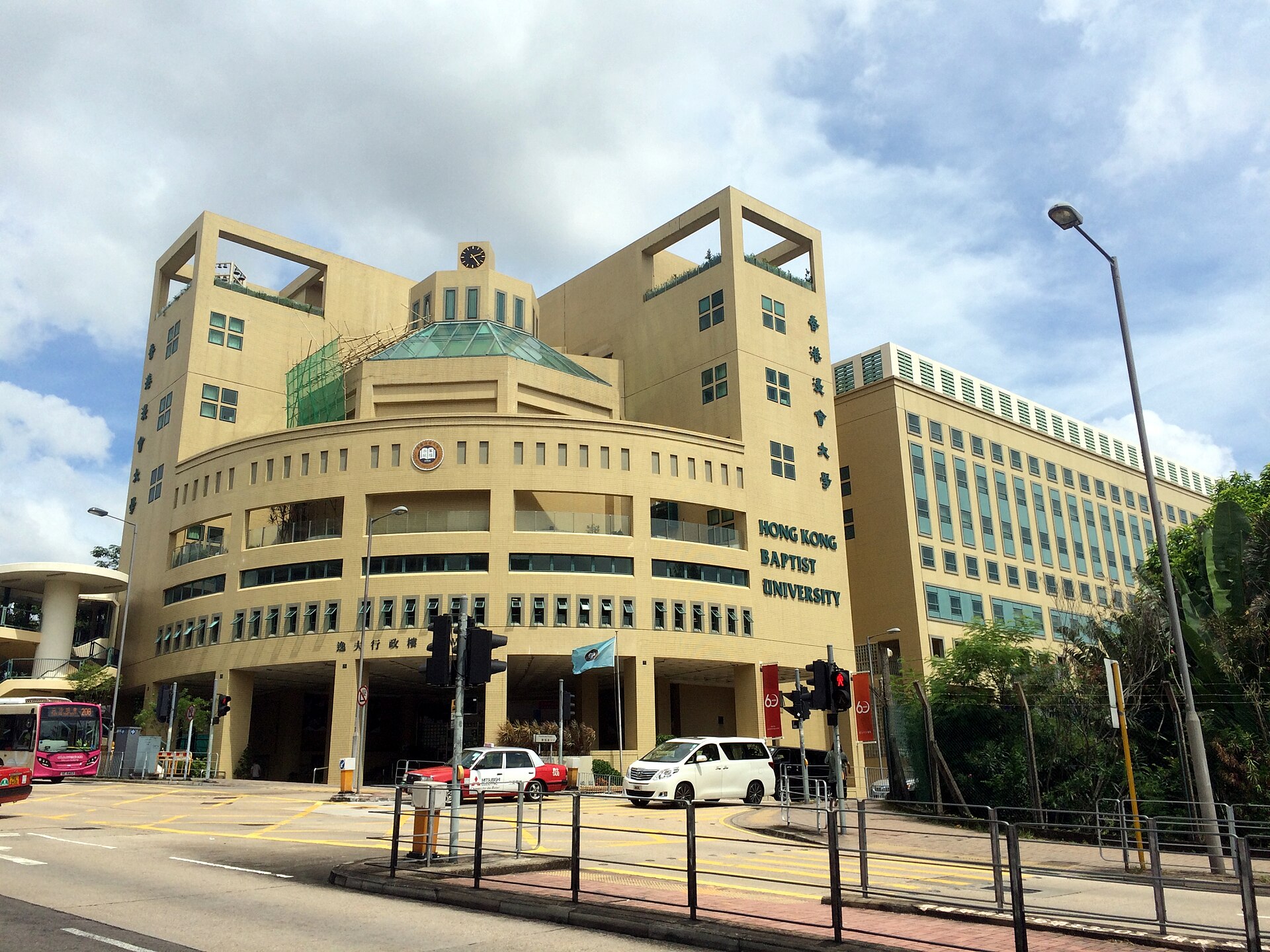
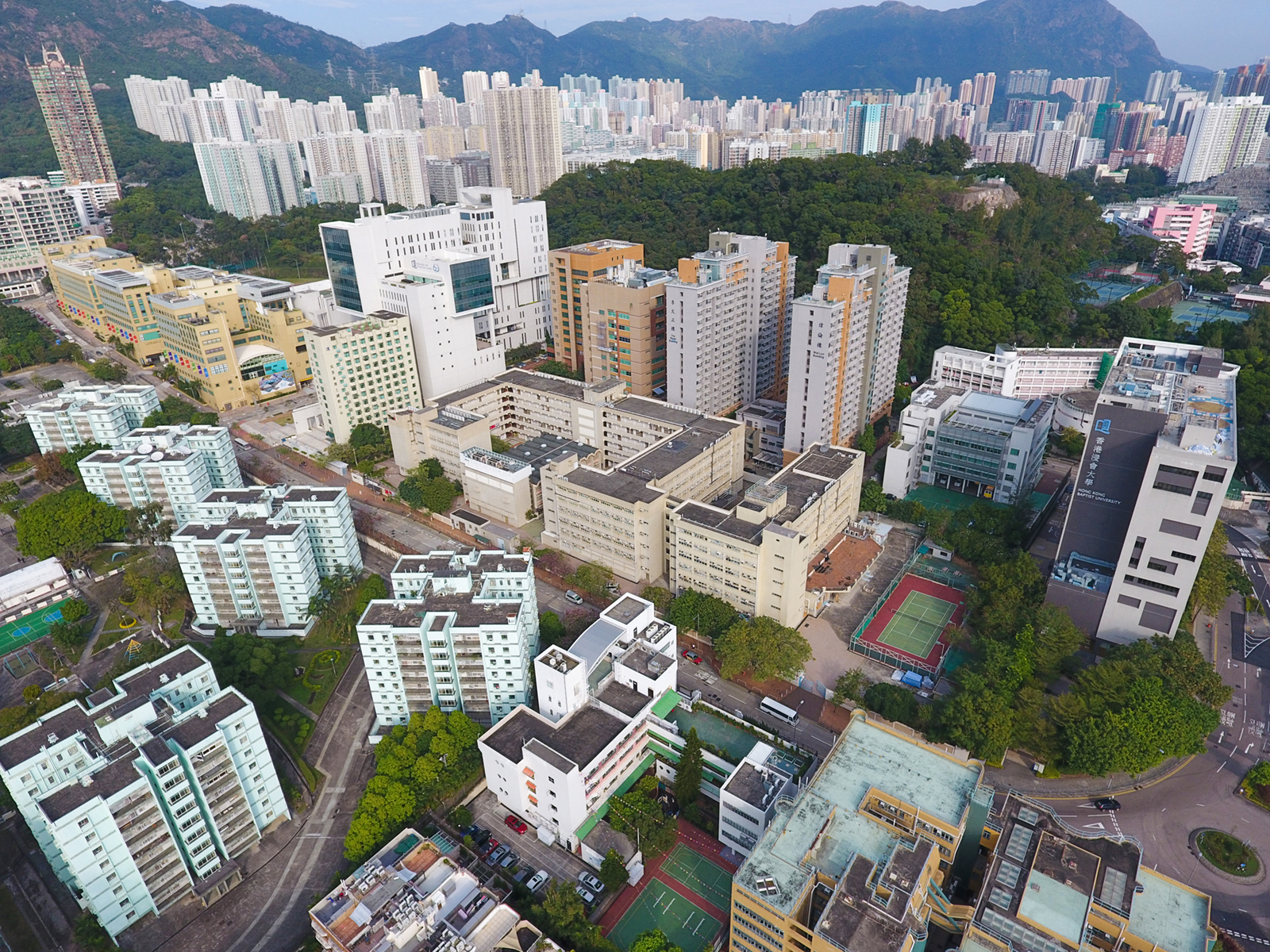
HKBU The Shaw Campus
HKBU The Shaw CampusWpcpey · CC BY-SA 4.0 · via Wikimedia Commons
HKBU Baptist University Road Campus Overview
HKBU Baptist University Road Campus OverviewWpcpey · CC BY-SA 4.0 · via Wikimedia Commons
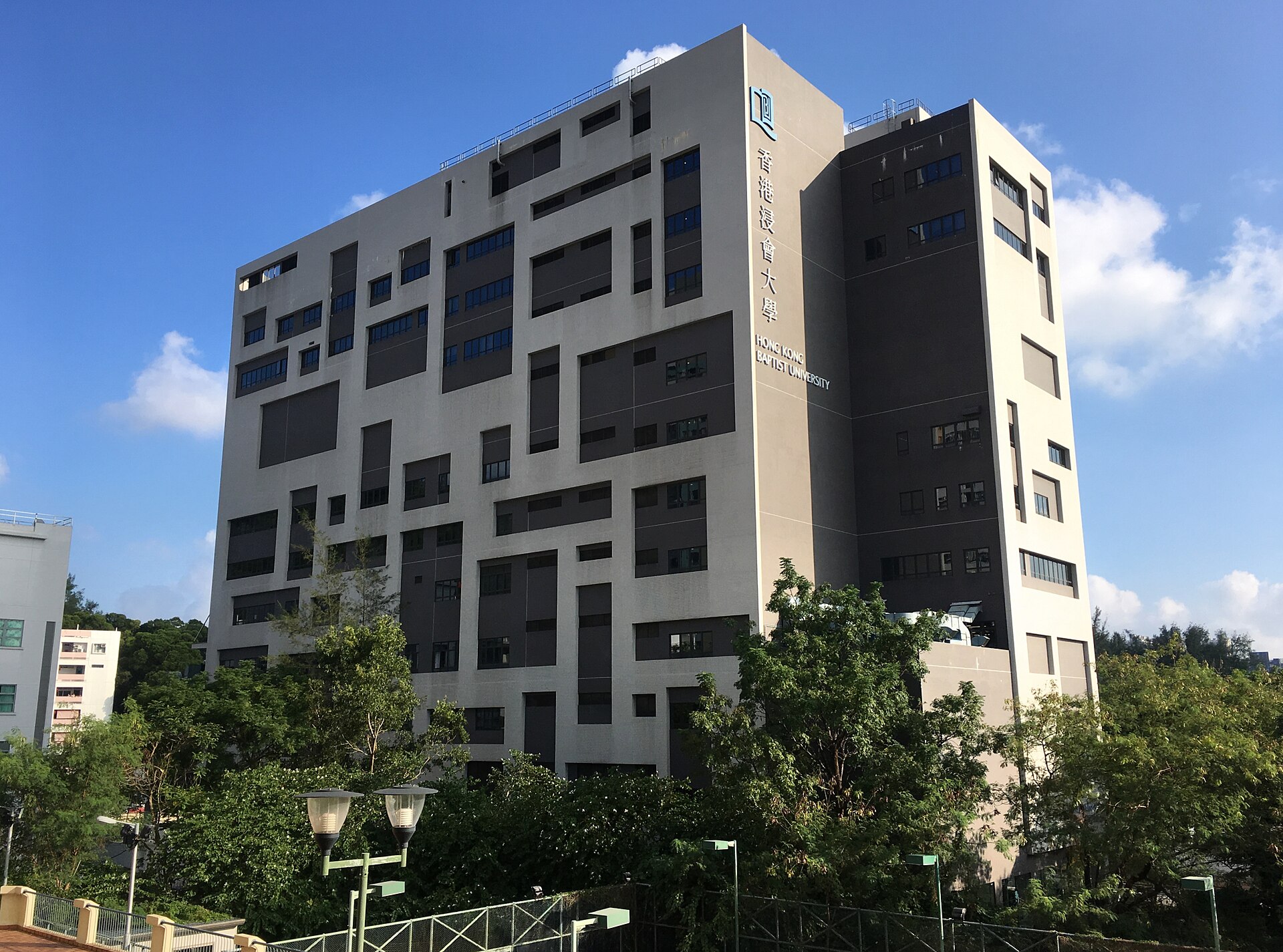
Communication and Visual Arts Building
Communication and Visual Arts BuildingWpcpey · CC BY-SA 4.0 · via Wikimedia Commons
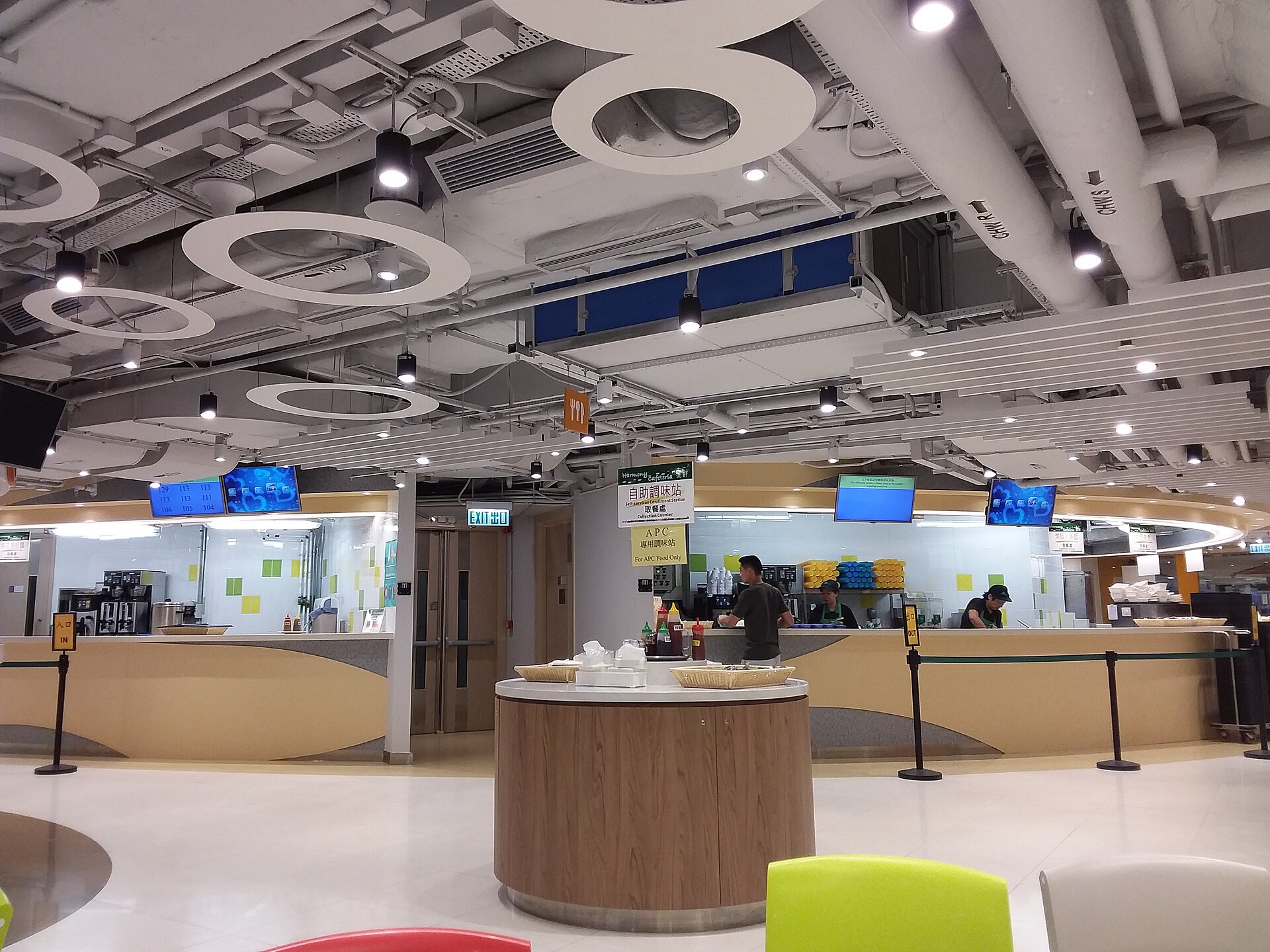
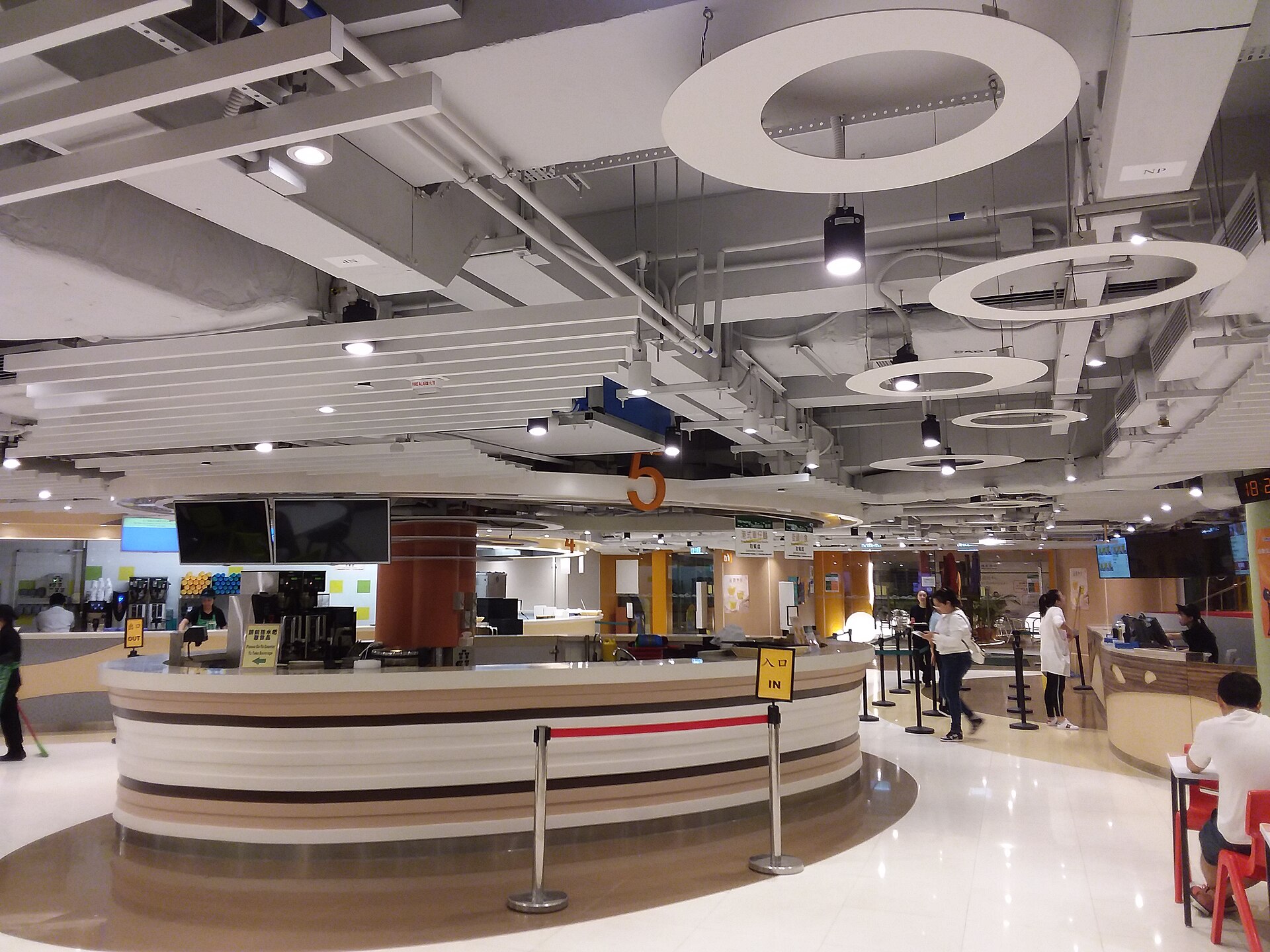
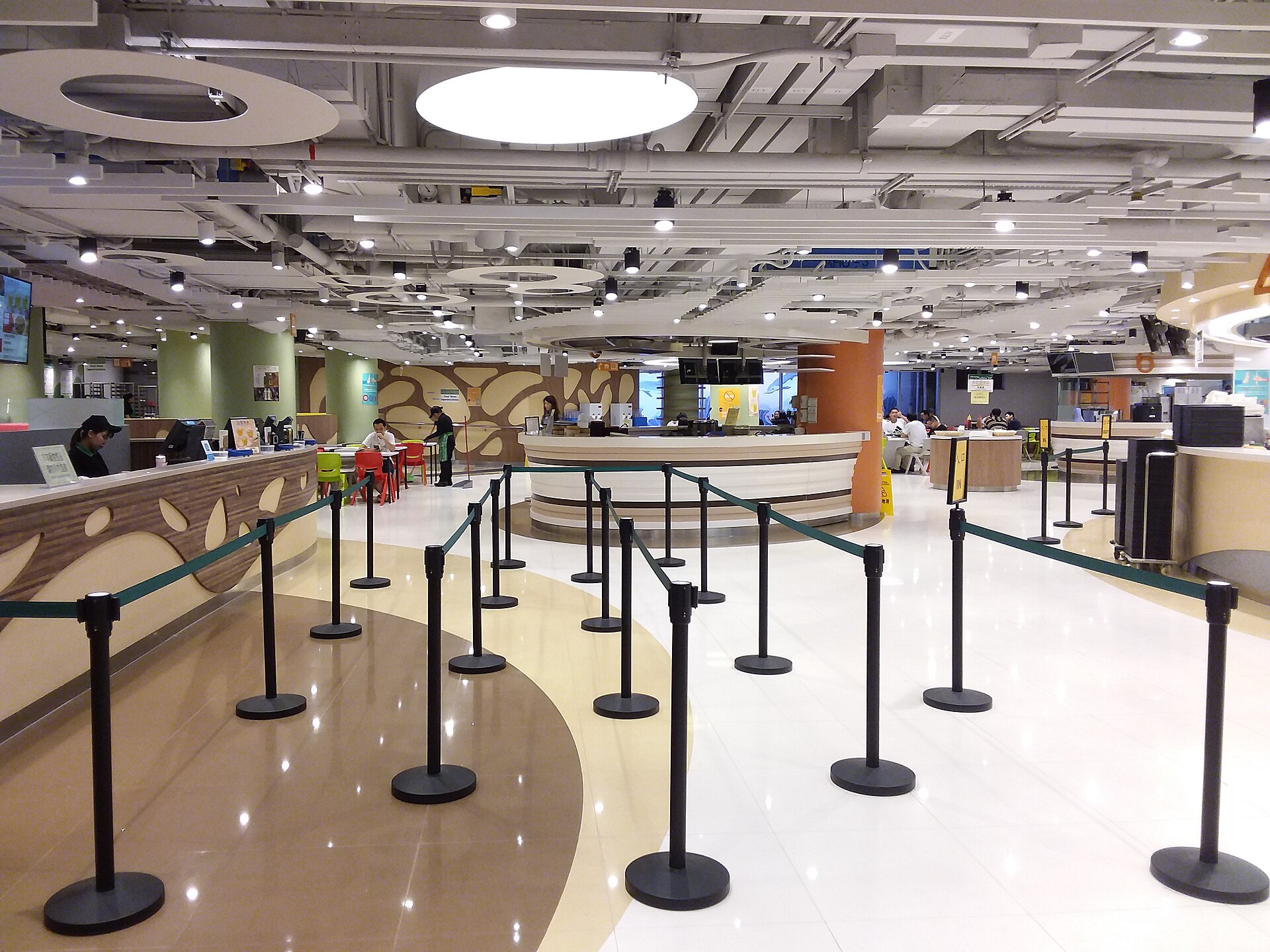
HK 九龍塘 Kln Tong 晚餐 night diner HKBU 香港浸會大學 Hong Kong Baptist University Waterloo Road campus restaurant canteen food court October 2018
HK 九龍塘 Kln Tong 晚餐 night diner HKBU 香港浸會大學 Hong Kong Baptist University Waterloo Road campus restaurant canteen food court October 2018Tamoimdroma · CC BY-SA 4.0 · via Wikimedia Commons

Why HKBU — Asia's Creative and Liberal Arts Powerhouse

HKBU occupies a distinctive niche in Hong Kong's competitive higher-education landscape. While other city universities pursue mass-research output, HKBU has built its reputation on transformative programmes in journalism, film, Chinese medicine and the arts — fields where it is regularly ranked among the best in Asia.

01Asia-Leading Journalism & Communication
HKBU's School of Communication is consistently ranked among the top journalism schools in Asia. Its journalism and communication studies programmes have produced leaders across broadcasting, digital media and public affairs throughout the Asia-Pacific region.
02Renowned Academy of Film
The Academy of Film within the School of Creative Arts is recognised as one of Asia's premier film schools. Students gain hands-on production experience in one of the world's most cinematically active cities, with direct industry linkages across Hong Kong's renowned film sector.
03Hong Kong's Leading Chinese Medicine School
HKBU's School of Chinese Medicine is the city's most established training ground for practitioners of traditional Chinese medicine. Its integrated Western-Chinese medicine curriculum and teaching clinics give graduates a credential respected across Asia and beyond.
04Liberal Arts Breadth in a Specialised City
Where Hong Kong's other major universities trend toward research-intensive STEM, HKBU's cross-disciplinary liberal arts tradition means students in Business or Science regularly engage with humanities, ethics and creative practice — producing graduates who can communicate as well as compute.
05Smaller Campus, Stronger Community
With approximately 12,000 students and a 14:1 student-to-faculty ratio, HKBU offers a genuine community feel rarely found at other Hong Kong universities. Professors are accessible, class sizes encourage debate, and the campus in Kowloon Tong fosters lasting peer networks.
06Gateway to Greater China and Asia
A Hong Kong degree gives you the unique advantage of holding a qualification respected globally while being embedded in one of Asia's true financial and cultural crossroads. HKBU's 350+ university partnerships worldwide and its location on the doorstep of mainland China create unrivalled internship and career opportunities across Asia.

HKBU Acceptance Rate & Admitted Student Profile

Stats

#245
QS World Rank
#275
THE World Rank
#6
HK National Rank

Profile Stats

32+
IB Diploma Benchmark
3.0
Minimum GPA (4.0 scale)
~20%
International Students
Optional
Test Policy
6.0
IELTS Minimum
~30%
Receive Financial Aid
International (Non-JUPAS) applicant acceptance rate
Admitted International Student — Typical Profile

HKBU Admissions Requirements — Academic Results, English & Profile

Academic Qualifications
Value: 32+ IB / AAB+ A-Level
HKBU evaluates a wide range of international qualifications. The competitive benchmark for IB Diploma is 32+ total with relevant subject choices. A-Level applicants should target AAB–AAA in three subjects. Subject alignment with your chosen programme is as important as overall scores.
  • IB Diploma: 32+ total is the competitive band; 35+ for scholarship consideration
  • A-Levels: AAB–AAA in three relevant subjects
  • Strong science subjects essential for Chinese Medicine; English/humanities for Communication
  • School transcripts and predicted grades reviewed holistically
English Proficiency
Value: IELTS 6.0 / TOEFL 79
English proficiency is mandatory for all non-exempt international applicants. IELTS 6.0 overall is the minimum; competitive applicants typically present IELTS 6.5–7.0 or TOEFL 88–95. Students whose entire secondary schooling was in English may qualify for exemption.
  • IELTS Academic: 6.0 overall minimum (6.5–7.0 recommended)
  • TOEFL iBT: 79 minimum
  • Exemption possible if all prior schooling was in English — confirm with admissions
  • English ability also assessed through quality of personal statement
GPA & Holistic Profile
Value: 3.0+ GPA
A minimum GPA of 3.0 on a 4.0 scale applies where GPA is the relevant metric. For US-curriculum applicants, a strong cumulative GPA (3.5+ to compete well) alongside AP results is expected. Co-curricular achievements and the personal statement carry real weight for specialist programmes.
  • Minimum GPA 3.0 / 4.0 where applicable
  • Personal statement is a key differentiator for competitive programmes
  • Portfolio required for Film and Visual Arts applicants
  • Music audition required for Academy of Music

HKBU Application Components — Direct Portal, Personal Statement & Supporting Documents

International students apply to HKBU through the Non-JUPAS (International Qualifications) pathway via the university's own online admissions portal. There is no Common App, no UCAS, no Coalition App — this is a direct application to the university. Below is every component of a complete HKBU international application.

01RequiredOnline Application Form
Completed through HKBU's admissions portal. You will declare programme choices in priority order, personal details and qualifications. The portal opens each autumn for September entry.
02RequiredAcademic Transcripts & Predicted Grades
Official school transcripts covering all years of secondary education, including predicted or actual grades from IB, A-Level, SAT or equivalent international qualifications.
03RequiredPersonal Statement
A written statement explaining your motivation for your chosen programme, relevant experiences and future goals. Aim for 500–800 words. This is your primary opportunity to speak directly to the admissions team.
04RequiredEnglish Proficiency Score
IELTS 6.0 or TOEFL 79 minimum, unless your prior secondary education was conducted entirely in English. Competitive applicants present IELTS 6.5–7.0.
05RequiredSchool Reference
A reference from your school principal or subject teacher attesting to your academic ability and personal character. A good reference from someone who knows you well carries meaningful weight, especially for specialist programme applicants.
06RequiredApplication Fee
A non-refundable application processing fee of approximately USD 60 equivalent in HKD is required at submission. Confirm the current amount on the official admissions portal.
07Programme-SpecificCreative Portfolio / Audition
Required for Academy of Film (creative portfolio), Academy of Visual Arts (portfolio), and Academy of Music (audition). Check the relevant school's admissions page for current format requirements.
https://admissions.hkbu.edu.hk/en/undergraduate/non-jupas/international-qualifications

HKBU Personal Statement — Writing for Hong Kong's Top Liberal Arts University

HKBU does not use US-style supplemental essays or the Common App. The key written component is your personal statement — a focused document that explains why you are applying to HKBU's specific programme, what you bring academically and personally, and where you want to go. Getting this right matters, especially for competitive programmes like Journalism, Film and Chinese Medicine.

Prompts

Core Theme 1 — Academic Motivation
Why this programme at HKBU? Be specific — connect your academic choices (IB/A-Level subjects, extended essay, personal project) to your target discipline and explain why HKBU's approach to that discipline is the right fit for you.
Core Theme 2 — Relevant Experience
What have you actually done that connects to this programme? For Journalism: bylines, reporting, media work. For Film: short films, screenwriting. For Chinese Medicine: science results, healthcare volunteering. Choose depth over a list.
Core Theme 3 — Future Direction & Why HKBU
Where is this education taking you? Show you have chosen HKBU deliberately — reference HKBU's specific strengths (School of Communication's regional connections; Academy of Film's industry links; Hong Kong as Asia's media and business hub). Explain what Hong Kong can uniquely offer you.

Tips

Write toward HKBU specifically
Admissions readers at HKBU's specialist schools read hundreds of statements saying 'I am passionate about journalism / film / Chinese medicine.' Specificity separates you — name the journalist you followed, the film that changed your perspective, the clinical encounter that convinced you Chinese medicine deserved serious study.
Connect school subjects to the programme
If you took IB Higher Level English and wrote your extended essay on media framing, say so explicitly in a Communication application. Show that your academic choices were intentional preparation, not coincidence.
Acknowledge Hong Kong's unique context
HKBU sits in one of the world's most dynamic cities. Showing that you understand — and are excited by — the specific context of studying in Hong Kong signals genuine interest and preparation that generic applicants miss.
Avoid the clichés
Avoid opening with a quote, a dictionary definition, or 'From a young age...' HKBU admissions readers respond to authenticity, purpose and specificity — not formulaic structure.
The most common HKBU personal statement mistake. Writing a generic statement that could apply to any university — and failing to explain why HKBU's specific programme, in Hong Kong, is the right choice for you.

What HKBU Admissions Officers Are Looking For

HKBU's holistic review for international applicants evaluates academic results alongside co-curricular depth, personal statement quality and programme alignment. For specialist schools — Communication, Film, Chinese Medicine — the non-academic factors carry decisive weight between equally qualified candidates.

01Academic Rigour in Relevant Subjects
Strong grades in subjects that align with your target programme. HKBU values quality in the right subjects over breadth. A Communication applicant needs excellent English; a Chinese Medicine applicant needs strong sciences — not just a high overall score.
02Purposeful Programme Choice
HKBU's specialist schools look for applicants who can articulate why their specific programme is the right fit — not just why they want to study in Hong Kong. Generic statements about 'Asia's global hub' without specific programme engagement fall flat.
03Relevant Co-curricular Depth
Depth over breadth. HKBU values students who have done something meaningful in their target field — not just collected activities. A journalism applicant who has run a school newspaper or published articles stands out over one who has listed twenty clubs.
04Language Ability
English proficiency (IELTS 6.0+ minimum) is mandatory. For many programmes, exposure to Cantonese or Mandarin is advantageous, particularly for students planning to engage with Greater China through studies or internships. It is not a formal requirement but signals genuine contextual preparation.
05Creative Portfolio or Audition Quality
For Film, Visual Arts and Music, the portfolio or audition is as important as academic grades. Admissions readers in these schools are practitioners who evaluate creative work with professional eyes. Start curating your portfolio in Grade 11, not the week before the deadline.
06Awareness of the City and Region
HKBU evaluates everything in context. Students who demonstrate genuine awareness of Hong Kong's unique position — as Asia's media hub, Greater China's doorstep, and an East-West convergence point — show a readiness to engage fully with the environment HKBU inhabits.

HKBU Financial Aid & Scholarships for International Students

HKBU's financial support for non-local students is primarily scholarship-based. The university operates a tiered merit scholarship programme for outstanding international applicants, including full-tuition awards for the highest achievers. Approximately 30% of students receive some form of financial aid. Unlike US universities with comprehensive need-based aid, HKBU's international student support is merit-driven — the stronger your academic profile, the more substantial the award.

Aid figures are based on HKBU's published non-local scholarship structure. Individual awards are determined by the admissions team and subject to annual review. Confirm current amounts on the official admissions portal.

~30%
of students receive some financial aid
~USD 21,200
Non-local tuition per year
IB 37+ / AAA
Full scholarship covers tuition + HKD 52,500 living subsidy
~USD 35,000
Annual cost of attendance (tuition + living)
Scholarship-First Model — What This Means. HKBU's international student support is merit-based, not need-based. The full scholarship (tuition waiver plus HKD 52,500 living subsidy) can dramatically reduce the annual cost for outstanding applicants — but mid-degree scholarship opportunities are limited if you do not receive an entry award. Build a realistic four-year financial plan before you apply.
https://admissions.hkbu.edu.hk/fees-and-scholarships.html

Key Dates

Applications Open (year prior to entry)
Date: Oct–Nov
Typical Main Application Deadline
Date: Mar–Apr
Offers Made Throughout the Cycle
Date: Rolling
Confirm Acceptance / Pay Deposit
Date: May–Jun

Advantages

  • Stronger scholarship consideration — limited awards, earlier applicants have priority
  • More time to provide additional documents if requested
  • Earlier confirmation means earlier preparation for Hong Kong arrival
  • Rolling decisions mean you hear back sooner
  • Early applicants demonstrate genuine commitment and preparation

Disadvantages

  • No formal Early Decision advantage — there is no binding commitment round
  • Strong IB predicted grades must be ready at application time
  • Portfolio for Film/Visual Arts or Music audition schedule must align with the deadline
  • Financial plan must be set before confirmation — limited ability to compare multiple HK offers mid-cycle
  • Deadlines move year to year — always verify on admissions.hkbu.edu.hk
HKBU Application Rounds. HKBU does not use Early Decision, Early Action or a multi-round system like US universities. International students apply directly through a single main intake window for September entry. Offers are made on a rolling basis — applying early matters for both admissions and scholarship consideration.
Tychr's Application Timing Recommendation. Apply as early as possible once the portal opens — typically October to November of the year before September entry. Earlier applications receive both stronger scholarship consideration and faster decisions. There is no strategic advantage in waiting until close to the main deadline.
Direct Application — Rolling Offers & Scholarship Window
Advantages of Applying Early in the Cycle
Considerations When Planning Your Application
https://admissions.hkbu.edu.hk/en/undergraduate/non-jupas/international-qualifications

HKBU Interviews, Auditions & Assessment — What to Expect

Most HKBU undergraduate programmes for international students do not conduct formal admissions interviews. The exception is creative and performing-arts programmes, where auditions or portfolio reviews are an integral part of the admissions process. Understanding which programmes assess you in person — and how — is essential for competitive applicants.

Meta

No interview required — admissions based on academic results, personal statement and references
Standard Programmes
Creative portfolio review; format and submission requirements published by each Academy
Film & Visual Arts
Audition required; repertoire and scheduling details published by the Academy of Music
Music
Some competitive programmes may request supplementary information or an online interview — confirm with your target school
Selective Programmes

Questions

Why did you choose this programme at HKBU specifically?
Tip: Reference HKBU's specific strengths — School of Communication's regional reach, Academy of Film's industry connections, Chinese Medicine's integrated curriculum. Not rankings or generic statements about Hong Kong.
What experience do you have in this field?
Tip: Be specific and honest. One real project, article or clinical experience is worth more than a list of claimed interests. Show rather than tell.
What do you plan to do after graduation?
Tip: You don't need a perfect five-year plan. Show you have thought seriously about how HKBU's specific education connects to a realistic professional direction — in Asia, not just in the abstract.
How will you contribute to the HKBU community?
Tip: HKBU values students who give as well as gain. Reference student organisations, community service, creative projects or cross-cultural exchange that fits the campus culture.
What challenges do you anticipate in studying in Hong Kong?
Tip: Demonstrates realistic preparation. Language, cultural adjustment, cost of living, navigating a Chinese-inflected academic environment — showing you have thought about this signals maturity.

HKBU Campus Life & Residential Halls

HKBU does not operate a house or college system like Harvard or Oxford. Instead, the university provides residential hall places for students on and near the Kowloon Tong campus, alongside a growing off-campus student accommodation network. Residential life at HKBU is genuine community living — compact, diverse and deeply connected to the city.

Houses

Student Residential Halls
Tag: On-Campus
HKBU's on-campus halls provide a live-in community in Kowloon Tong. International students are prioritised for hall placement in their first year. Hall life includes academic support, student-led events and pastoral care.
Off-Campus Student Housing
Tag: Near-Campus
HKBU supports students in finding off-campus accommodation in Kowloon Tong and neighbouring areas. The university maintains a housing resource database and advisory service.
Partner Residence Halls
Tag: Exchange
HKBU's 350+ exchange partnerships worldwide mean many HKBU students spend a semester in partner institutions' residences. Inbound exchange students are similarly hosted in HKBU accommodation.

Lottery Steps

  • First-year international students are given priority access to on-campus hall applications
  • Hall allocation is managed through the Student Affairs Office — apply early, places are limited
  • Hall contracts are typically annual and renewable subject to availability
  • Off-campus housing support available through HKBU's dedicated housing advisory resources
  • Kowloon Tong neighbourhood offers a range of private student housing within walking distance of campus

HKBU's Schools, Faculties & Academic Programmes

School of Communication
Label: Journalism, Communication Studies, Interactive Media
  • {"label":"Flagship programme","value":"Journalism"}
  • {"label":"Regional standing","value":"Top journalism school in Asia"}
  • {"label":"Key disciplines","value":"Journalism, PR, Advertising, Digital Media"}
  • {"label":"Language of instruction","value":"English"}
HKBU's best-known school globally. Graduates populate newsrooms, PR agencies and digital platforms across Asia. Strong industry links in Hong Kong's media sector.
School of Creative Arts
Label: Film, Visual Arts, Music
  • {"label":"Flagship programme","value":"Academy of Film"}
  • {"label":"Regional standing","value":"Premier film school in Asia"}
  • {"label":"Key academies","value":"Film, Visual Arts, Music"}
  • {"label":"Entry requirement","value":"Portfolio / Audition"}
Three academies: Film, Visual Arts, and Music. Hands-on production focus in Hong Kong's active creative industry. Film graduates enter production houses across the region and internationally.
School of Business
Label: Business Administration, Accountancy, Economics
  • {"label":"Flagship programme","value":"BBA"}
  • {"label":"Key disciplines","value":"Accounting, Finance, Marketing, Management"}
  • {"label":"Industry links","value":"Greater Bay Area and Hong Kong financial sector"}
  • {"label":"Language of instruction","value":"English"}
HKBU Business graduates enter professional services, banking, consulting and entrepreneurship across Hong Kong and the Greater Bay Area. AACSB accreditation.
School of Chinese Medicine
Label: Chinese Medicine — Integrated Bachelor's Degree
  • {"label":"Flagship programme","value":"Bachelor of Chinese Medicine"}
  • {"label":"Regional standing","value":"Most established in Hong Kong"}
  • {"label":"Duration","value":"5 years"}
  • {"label":"Science prerequisite","value":"Biology + Chemistry strongly recommended"}
Hong Kong's leading Chinese Medicine school. Integrates Western biomedical science with classical Chinese medicine. Teaching clinics and clinical placement embedded in the curriculum.
Faculty of Arts
Label: Humanities, Languages, Social Sciences
  • {"label":"Key programmes","value":"Translation, History, Philosophy, Religion"}
  • {"label":"Language focus","value":"Chinese-English bilingual tradition"}
  • {"label":"Distinctive strength","value":"Translation and cross-cultural studies"}
  • {"label":"Liberal arts context","value":"HKBU's founding humanistic tradition"}
Rooted in HKBU's Baptist founding mission and liberal arts tradition. Strong in translation, philosophy, religion and cultural studies. A distinctive humanities offering in a science-heavy HK university landscape.
Faculty of Science
Label: Biology, Chemistry, Computer Science, Data Science, Mathematics
  • {"label":"Key programmes","value":"Biology, Data Science, CS, Mathematics"}
  • {"label":"Research centre","value":"HKBU Institute of Computational & Theoretical Studies"}
  • {"label":"Industry links","value":"Life sciences, technology sector"}
  • {"label":"Mathematics","value":"Foundational for Data Science and CS tracks"}
Growing science faculty with particular strengths in life sciences, computational mathematics and data science. Research links to mainland China's science sector.

Research & Extracurricular Opportunities at HKBU

Undergraduate Research Opportunities
Category: Research Experience
HKBU's Office of Research and Knowledge Transfer Services supports undergraduate research participation. Students can join faculty research projects and apply for undergraduate research attachment opportunities — valuable for students targeting graduate school or competitive careers in research-driven fields.
Student Exchange Programme
Category: 350+ Partner Universities
HKBU's extensive exchange network covers 350+ universities across Asia, Europe, North America and beyond. Students can spend one or two semesters at partner institutions — a genuine global education embedded within a Hong Kong degree.
Journalism & Media Labs
Category: School of Communication
The School of Communication operates broadcast, digital and print media facilities that students use from Year 1. The annual journalism projects, documentary productions and media competitions give students a professional portfolio before graduation.
Student Organisations & Campus Life
Category: 100+ Active Groups
Student organisations span journalism clubs, film societies, Chinese medicine interest groups, performing arts ensembles, debate teams, cultural associations and religious groups — reflecting HKBU's founding heritage and its diverse international student body.
Scroll right to explore HKBU's research programmes and student life opportunities.

Career Outcomes & HKBU Alumni Network

HKBU's graduate employment rate stands at 92%, with an average starting salary of approximately USD 32,000 — competitive for Hong Kong's cost-of-living reality and well-positioned for careers across the region. HKBU graduates in Journalism and Communication move into roles across Asia's major broadcasters, digital platforms and PR firms. Film graduates enter production houses in Hong Kong, Mainland China and internationally. Chinese Medicine graduates are in demand across Hong Kong's growing integrative health sector. Business and Accounting graduates find ready employment at Hong Kong's major professional-services firms and across the Greater Bay Area.

Stats

92%
Employed or in postgraduate study within 6 months
~USD 32,000
Average starting salary
350+
University partners worldwide
#6
HK National University Ranking

Categories

Media & Communications
TVB, RTHK, South China Morning Post, digital platforms, PR firms and agencies — HKBU's Communication graduates are the most in-demand from HK's media sector, and its alumni are spread across Asian newsrooms.
Business & Finance
The Big Four, HSBC, Standard Chartered, local banks and consulting firms recruit HKBU Business and Accounting graduates directly. The Greater Bay Area expansion creates growing demand for bilingual business graduates.
Creative Industries
Hong Kong's film industry, Greater China streaming platforms, advertising agencies, music labels and arts institutions draw directly from HKBU's Creative Arts academies. The proximity to mainland China's rapidly growing creative economy is a real advantage.

Tychr's Track Record with Hong Kong University Admissions

Priya S.
I wanted to study journalism but was unsure between a UK university and HKBU. Tychr helped me understand that HKBU's School of Communication — with its actual newsroom facilities and Asia-Pacific media connections — was the stronger choice for what I wanted to do. My personal statement went through three drafts before it felt genuinely mine. I received my offer in February and was shortlisted for the non-local scholarship.
Country: India
Program: HKBU — School of Communication (Journalism)
Class Year: Class of 2028
Academic Profile: IB 38 · IELTS 7.0
Marcus T.
Applying to HKBU's Academy of Film felt different from anything else I had applied to — the portfolio was the make-or-break element, not just grades. Tychr's counsellors had worked with film-school applications before and gave me practical feedback on which pieces to include. I was admitted with a partial scholarship.
Country: Malaysia
Program: HKBU — Academy of Film
Class Year: Class of 2027
Academic Profile: A-Levels AAB · Film Portfolio
Chen W.
HKBU's Chinese Medicine programme is genuinely competitive — especially for international applicants who need both strong sciences and a compelling personal connection to the field. Tychr helped me articulate what drew me to integrated medicine rather than just saying 'I am interested in traditional Chinese medicine', which every applicant says. I got in with a full-tuition scholarship.
Country: Singapore
Program: HKBU — School of Chinese Medicine
Class Year: Class of 2026
Academic Profile: IB 40 · A1 Biology & Chemistry

Frequently Asked Questions

Is HKBU the right choice if I want a career in journalism or media?+

HKBU's School of Communication is one of Asia's most respected journalism schools, and its graduates are well represented across Hong Kong's, mainland China's and Southeast Asia's media industries. If media is your goal and you want to work in Asia, HKBU should be near the top of your shortlist.

Do I need to speak Cantonese or Mandarin to study at HKBU?+

Most international-track programmes are taught in English. However, some courses and many internship or community-engagement opportunities will involve Cantonese or Mandarin. A basic working knowledge of either helps you get more out of Hong Kong — though it is not typically a formal admissions requirement.

Is Hong Kong Baptist University a government-funded university?+

Yes. HKBU is one of Hong Kong's eight University Grants Committee (UGC)-funded universities, making it a recognised public institution with government backing and formal degree accreditation — not a private or semi-private institution.

Can international students work part-time while studying?+

International students on a student visa in Hong Kong are generally permitted to work under specific conditions during term and full-time during vacations. Confirm current Immigration Department rules with HKBU's international student office before counting on part-time income for living costs.

What is HKBU's Chinese Medicine programme like — is it suitable for non-Chinese students?+

HKBU's School of Chinese Medicine accepts international students. Some modules involve Chinese-language elements due to the nature of classical texts, and proficiency in Chinese is increasingly expected as students advance. Prospective students should confirm current language requirements directly with the school before applying.

How does HKBU compare to HKU and CUHK?+

HKU and CUHK are larger research universities ranked higher globally. HKBU is smaller, more community-oriented and distinctively strong in creative arts, communication and Chinese medicine — areas where it punches above its overall ranking. If you want flagship prestige, HKU or CUHK may suit you better; if you want depth in HKBU's specialist disciplines and a tighter-knit campus experience, HKBU is the stronger choice.

Is it safe to study in Hong Kong?+

Hong Kong consistently ranks among Asia's safest cities for personal safety. Check your home country's travel advisories for current guidance on the broader environment, and review HKBU's own orientation materials for international students.

What career support does HKBU offer international graduates?+

HKBU's Career Centre offers internship matching, career fairs, alumni mentoring and employer recruitment events. Hong Kong's role as Asia's business hub means on-campus recruitment from regional and international firms is real — particularly in finance, professional services, media and technology.

Book a Free HKBU Admissions Strategy Session

In 60 minutes our HKBU admissions specialists will evaluate your academic profile and qualification system, identify your application strengths and gaps for your target HKBU school, develop your personal statement strategy, and advise on scholarship eligibility and portfolio requirements where relevant.

  • No commitment required
  • Specialists with Hong Kong university knowledge
  • Personalised strategy — not generic advice
Gaining a place at HKBU's most competitive programmes — Journalism, Film, Chinese Medicine — is not just about grades. It is about crafting an application that makes your purpose unmistakable.

HKBU Academic Requirements

HKBU Academic Requirements — The Honest Breakdown for International Students

What IB score, A-Level results, GPA and academic profile do HKBU's admitted international students actually have? And what does HKBU's holistic review mean for students from IB, A-Level, AP and other international curricula?

32+
IB Benchmark
Competitive entry band
3.0
Minimum GPA
On 4.0 scale
Optional
Test Policy
SAT/ACT not required
6.0
IELTS Minimum
Overall band
79
TOEFL Minimum
iBT
~35%
Acceptance Rate
International applicants

GPA & Academic Results

HKBU and GPA — What the Data Shows

HKBU publishes a minimum GPA of 3.0 on a 4.0 scale for international (Non-JUPAS) applicants where GPA is the relevant metric. In practice, competitive applicants for popular programmes present GPAs of 3.5–4.0 alongside strong IB or A-Level results. The minimum is a floor — not a target.

For Chinese Medicine, Journalism and Film — HKBU's most competitive programmes — strong results in relevant subjects carry more weight than a uniformly high overall profile. A Communication applicant with exceptional English results and evidence of genuine media work may outcompete a higher-GPA applicant with no relevant background.

3.0 / 4.0
Published minimum GPA for international applicants
3.5–4.0
Competitive applicant profile (typical)
What this means for international students. For most international students, GPA is a secondary metric — HKBU's primary academic yardstick is your school-leaving qualification result (IB total, A-Level grades, or equivalent). GPA matters most for US-curriculum applicants without an IB diploma or A-Levels. If you are presenting IB or A-Level results, focus on those benchmarks — the 3.0 GPA minimum rarely applies as the binding constraint.
Grade trajectory matters. HKBU evaluates academic performance holistically. A student showing clear upward momentum — improving significantly from Year 10 to Year 12 — reads better than one whose grades have plateaued or declined. An early weakness followed by sustained excellence is context, not a disqualifier, provided the trajectory is genuine and evidenced.

Academic Context

How HKBU Reads Academic Performance — School and System Context

HKBU's international admissions team is experienced with academic systems from across Asia, Africa, Europe, North America and beyond. Every application is read with reference to the student's specific school, qualification system and the opportunities available to them.

School-specific evaluation
HKBU evaluates grades relative to the school's known grading norms and course offerings. A student at a selective international school with rigorous IB provision is evaluated in that context — not against a flat global benchmark. School transcripts and counsellor/school references provide this context.
What this means practically
Taking the most rigorous courses available at your specific school in subjects relevant to your target HKBU programme is more important than maximising your overall grade by choosing easier options. HKBU values demonstrated subject-specific depth, not just a high overall score.
For students at less well-known international schools. HKBU receives applications from students across more than 80 countries. If your school is not well-known to the admissions team, a strong teacher reference or school counsellor letter that provides academic context — explaining the school's grading standards, course offerings and the student's performance relative to peers — can make a significant difference. TYCHR coaches students from non-standard school backgrounds on how to present their academic record effectively.

Standardised Testing — SAT

SAT Scores at HKBU — What You Actually Need

HKBU does not publish SAT score bands for international applicants. The university operates a test-optional policy — SAT scores are supplementary evidence, not a primary admissions criterion. Unlike US universities where middle-50% SAT ranges are publicly reported, HKBU's admissions decision rests on your school-leaving qualification.

LabelScorePercent
Required minimumNone published0
Supportive range (supplementary)1300+65
Strong supplementary signal1400+80
Submitting vs. withholding scores. For HKBU applicants, the SAT strategy is straightforward: if your SAT score is genuinely strong (1300+ or above) and represents an accurate picture of your academic ability, submit it as supplementary evidence. If your SAT is weak relative to your IB or A-Level performance, go test-optional — a weak SAT that contradicts a strong academic record creates confusion, not strength.
Subject scores and relevance. HKBU's Business, Science and Data Science programmes will view a strong SAT Math sub-score favourably. Communication and Arts applicants should not over-invest in SAT preparation — your writing portfolio, creative work and English proficiency test (IELTS/TOEFL) carry more weight.
Preparation advice. If you are a US-curriculum applicant without IB or A-Level results, the SAT takes on greater importance as academic evidence. Aim for 1300+ and complement it with strong AP results (4–5 in relevant subjects) and a GPA of 3.5+ for a competitive HKBU application.

Standardised Testing — ACT

ACT Scores at HKBU — The Data and the Strategy

HKBU accepts ACT scores but does not publish required ranges. The ACT is equally optional alongside the SAT. For the small proportion of international applicants who sit the ACT, the same strategic guidance applies: submit if your score genuinely strengthens your profile; withhold if it contradicts stronger IB or A-Level results.

Metrics

Required minimum
Score: None published
Supportive supplementary score
Score: 27+

Comparison Cards

Both accepted equally
HKBU makes no distinction between SAT and ACT submissions. Neither is required, and neither is preferred. The choice, if you sit either, should be based on which test reflects your abilities more accurately.
Primary qualification always dominates
Unlike US universities where SAT/ACT scores are central admissions criteria, at HKBU your IB total, A-Level grades, or equivalent qualification is the primary academic evidence. Standardised tests are genuinely supplementary here.
When tests matter most
US high-school diploma applicants without IB or A-Level results rely more heavily on SAT/ACT scores alongside GPA and AP results. For these applicants, both tests serve as the primary academic quantification and should be taken seriously.
Superscore policy. HKBU does not publish a superscore policy for SAT or ACT submissions. For test-optional HK universities, submit your best single sitting result if submitting at all.
Tychr's recommendation. Most international applicants with strong IB or A-Level results gain nothing from submitting a moderate SAT or ACT score to HKBU. If you hold IB 32+ or A-Level AAB+, go test-optional unless your standardised test score is genuinely impressive (SAT 1350+ / ACT 30+). Prioritise your primary qualification over test preparation for this application.

Testing Strategy

HKBU Test-Optional Policy — The Strategic Decision Explained

HKBU operates a test-optional policy for international undergraduate applicants. You are not required to submit SAT or ACT scores. The admissions team primarily evaluates your school-leaving qualification results and predicted grades.

Submit Items

Your SAT is 1300+ and genuinely reflects strong academic ability — submit as supporting evidence.
You are a US-curriculum applicant without IB or A-Level results — your SAT/ACT score takes on primary weight alongside your GPA and AP results.
Your scores are consistent with or stronger than what your school-leaving grades suggest — submit to reinforce the picture.

Withhold Items

Your SAT or ACT score is significantly below what your IB or A-Level results suggest — submitting creates a contradiction, not a strength.
You are presenting IB 36+ or A-Level AAA — your primary qualification already speaks clearly; a moderate test score adds noise.
Current policy. HKBU accepts applications without standardised test scores. The primary academic evaluation is based on IB Diploma results, A-Level grades, or the equivalent school-leaving qualification from your home country. SAT/ACT scores, where submitted, are treated as supplementary evidence.
The misconception. At HKBU, unlike US universities, 'test-optional' genuinely means the test plays a minor role. Students who choose not to submit are not disadvantaged, because the primary qualification (IB/A-Level) already provides comprehensive academic evidence. This is different from test-optional at Harvard, where the absence of scores shifts more weight onto other academic factors.

Curricula

A-Levels, IB Diploma and Other Qualifications at HKBU — Specific Benchmarks

IB Diploma
  • {"label":"Competitive range","value":"32+ total"}
  • {"label":"Scholarship reference band","value":"35+ (half award); 37+ (full award + living subsidy)"}
  • {"label":"Subject rigour","value":"HL subjects aligned with your target school — sciences for Medicine; English/humanities for Communication; Maths for Business/Data Science"}
  • {"label":"Extended Essay","value":"Reviewed as evidence of research capability and intellectual depth"}
Note: IB subject alignment with your chosen programme matters as much as the total score. A score of 34 with 7s in relevant HL subjects is more compelling for a Chinese Medicine application than a score of 36 with HL Visual Arts, HL Psychology, and HL English only.
A-Levels
  • {"label":"Competitive range","value":"AAB–AAA in three subjects"}
  • {"label":"Scholarship reference band","value":"AAB (half award); AAA (full award)"}
  • {"label":"Subject rigour","value":"Sciences for Medicine and Science Faculty; Mathematics for Business; English for Communication"}
  • {"label":"AS results","value":"Reviewed as part of academic trajectory; strong AS performance supports predicted A-Level grades"}
Note: HKBU is well-versed in A-Level qualification conventions. Predicted grades submitted at application are reviewed alongside GCSE/IGCSE results. Achieving or exceeding predicted grades is expected — a significant shortfall is noted.
US High School Diploma + AP
  • {"label":"GPA","value":"3.5+ recommended (minimum 3.0)"}
  • {"label":"AP Scores","value":"4–5 in subjects relevant to your intended programme"}
  • {"label":"SAT","value":"1300+ recommended as supplementary evidence"}
  • {"label":"Evaluation","value":"Assessed holistically; AP rigour and subject choices matter"}
Note: US-curriculum applicants present a composite picture: GPA + AP scores + SAT (optional) + school reference. HKBU is experienced evaluating US diplomas; strong AP results in relevant subjects (5s in Chemistry and Biology for Medicine, 5 in English Language for Communication) carry significant weight.
Other International Qualifications
  • {"label":"Australian VCE/ATAR","value":"Assessed case-by-case; typically strong ATAR (85+) for competitive programmes"}
  • {"label":"Indian CBSE/ISC","value":"High percentage scores (90%+ in relevant subjects); contact admissions with your specific qualification"}
  • {"label":"Canadian Provincial","value":"Accepted; strong percentage grades in relevant subjects expected"}
  • {"label":"Other","value":"Contact HKBU admissions with your specific qualification for a direct assessment"}
Note: HKBU reviews all internationally recognised secondary qualifications. When in doubt, contact the international admissions office directly with your specific qualification — they are experienced in assessing a wide range of systems.

Advanced Placement

AP Courses at HKBU — What Counts and How They Are Read

For students in the US curriculum or at international schools that offer AP courses, Advanced Placement performance provides an additional layer of academic evidence. At HKBU, AP results are supplementary — they strengthen a profile built around IB or A-Level results, or serve as primary academic evidence for US-diploma applicants.

What HKBU is looking for
AP scores of 4–5 in subjects relevant to your target programme. For Science Faculty and Chinese Medicine: AP Biology, AP Chemistry, AP Physics. For Business: AP Calculus, AP Economics. For Communication: AP English Literature or AP Language and Composition. For Computer Science / Data Science: AP Calculus BC, AP Computer Science A.
How many APs?
HKBU does not publish an expected AP count. For US-diploma applicants, three to five AP courses with scores of 4–5 in programme-relevant subjects is typically sufficient to demonstrate academic rigour. More matters less than choosing the right subjects and performing strongly.
AP vs. IB/A-Level
At HKBU, AP results are almost always secondary to IB Diploma or A-Level results. An IB applicant with strong HL grades does not need to supplement with AP. AP matters most when it is the primary evidence of academic rigour — i.e., for US high-school diploma applicants.
HKBU does not publish a formal AP credit transfer policy for undergraduate admission. AP scores used at HKBU serve primarily as evidence of academic ability, not for course credit exemptions as at many US universities. Confirm credit arrangements with your target school if this matters to your programme planning.
International students at schools that offer IB or A-Level should focus on those qualifications rather than seeking AP courses. AP is most valuable for US-curriculum students who may not have an alternative internationally recognised school-leaving qualification.

Academic Rigour

Rigour of Secondary School Record — HKBU's Key Academic Factor

Like most selective universities, HKBU evaluates not just what grades you achieved but what courses you took to earn them. Subject alignment with your intended programme — taking the most relevant and challenging courses available to you — is a central part of the admissions assessment.

Taking the most challenging relevant courses available at your specific school, in subjects that directly connect to your intended programme at HKBU.

What rigour means at HKBU. This does not mean taking the hardest courses in every subject simultaneously. It means demonstrating that your academic preparation genuinely points toward your chosen school at HKBU. A student applying to Chinese Medicine who has taken the easiest available science options has a less compelling case than one who took IB HL Biology and HL Chemistry — even if the overall IB score is the same.
The contextual element. HKBU evaluates course choices relative to what was available at the student's specific school. A student at a school that offers only three AP courses is evaluated differently from one at a school with thirty options. Rigour is always relative to opportunity — what matters is whether the student challenged themselves within what was possible.
What HKBU is looking for. A Communication applicant who chose Higher Level English and pursued journalism activities alongside strong humanities subjects; a Science applicant who took HL Mathematics alongside two HL sciences; a Business applicant who paired HL Mathematics with Economics and a second analytical subject. The pattern of choices should tell a coherent story about academic preparation and genuine interest.

Programme-Specific Preparation

Subject Preparation by Programme — What HKBU Expects

HKBU's schools differ significantly in what academic background they prioritise. Choosing your IB Higher Level or A-Level subjects strategically based on your target HKBU school is one of the most important early decisions you make.

School of Communication / Journalism
English language and literature at a high level. Strong written English is paramount. Breadth of current-affairs awareness and writing experience matters as much as individual subject grades. For Communication Studies: social sciences and humanities. History, Geography and Languages at Higher Level strengthen the profile.
School of Creative Arts (Film, Music, Visual Arts)
For Film and Visual Arts: a creative portfolio is expected alongside academic results. Academic subjects demonstrate general intellectual ability, but your creative work carries decisive weight. For Music: audition requirements apply and dominate the assessment. Academic rigour matters, but creative preparation is the priority.
School of Chinese Medicine
Biology and Chemistry are strongly recommended at the highest available level (IB HL or A-Level). The programme is demanding scientifically and students without a solid natural science foundation at secondary level will find it challenging. Physics is beneficial but not required. A strong science profile is non-negotiable.
School of Business / Accountancy
Mathematics at HL or A-Level is important — Maths AA for IB applicants; Mathematics or Further Mathematics for A-Level students. Economics and Business Studies are beneficial but not required. Quantitative ability and analytical thinking are assessed alongside grades.
Faculty of Science (Biology, Chemistry, Data Science, Computer Science, Mathematics)
Mathematics and at least two of Biology, Chemistry, Physics at the highest available level. Data Science and Computer Science benefit from strong Mathematics and logical reasoning. Students without strong Maths at the secondary level will find quantitative programmes challenging at HKBU's degree level.

Language Proficiency

English Language Requirements for International HKBU Applicants

English proficiency is required for admission to HKBU. The minimum requirements below apply unless your secondary schooling was entirely conducted in English — in which case you may qualify for an exemption. Contact the admissions office to confirm exemption eligibility.

At HKBU, as at all English-medium universities, the personal statement is itself a demonstration of English ability. An applicant whose personal statement is fluent, precise and compelling is already demonstrating English proficiency. A poor personal statement signals the opposite — even if the IELTS score is adequate.

Test: IELTS Academic
Score: 6.0
Test: TOEFL iBT
Score: 79
Test: Duolingo English Test
Score: Not published — confirm with admissions
Practical guidance. IELTS 6.0 is the admissions minimum, but HKBU's academic English is demanding — especially in Communication, Business and Law. Aim for IELTS 6.5–7.0 or TOEFL 88–95 to study comfortably and participate fully in seminars, presentations and written assessments. For Communication and Journalism applicants especially, strong English writing is a core competency — not merely a threshold to clear.
https://admissions.hkbu.edu.hk/en/undergraduate/non-jupas/international-qualifications

By Programme

Academic Requirements by Programme — What Different Schools Expect

HKBU students are admitted to specific schools and programmes, not to HKBU broadly. Subject alignment with your chosen school matters throughout the admissions process.

ConcentrationExpectationSignals
Journalism (Communication)Strong HL English or A-Level English; humanities backgroundPublished writing; media portfolio; current-affairs engagement
Film (Academy of Film)Academic results + creative portfolioShort films; screenwriting; film-literate perspective
Music (Academy of Music)Academic results + auditionPerformance experience; repertoire preparation
Chinese MedicineHL Biology + Chemistry (IB) or Biology + Chemistry A-LevelHealthcare volunteering; personal connection to Chinese medicine
Business / AccountancyHL Maths AA or A-Level MathematicsEconomics results; analytical projects; internship or entrepreneurship
Data Science / Computer ScienceHL Maths + CS backgroundCoding projects; Mathematics competitions; AP CS (for US applicants)
Translation (Faculty of Arts)Strong bilingual profile; English + Chinese language resultsTranslation work; language competitions; cultural engagement
Biology / Life SciencesHL Biology + Chemistry or equivalentResearch experience; science competition; lab work

International Systems

HKBU and International Education Systems — How Your Curriculum Is Evaluated

IB Diploma
Well understood and valued. HKBU's international admissions team is experienced IB readers. The EE, TOK and Internal Assessments are taken seriously as indicators of research capability and intellectual engagement. The spread of HL choices is reviewed relative to the target programme.
A-Levels (Cambridge and Edexcel)
Equally well understood. A-Levels are a primary qualification for applicants from the UK, Hong Kong, South and Southeast Asia. Three A-Level subjects at AAB–AAA is the competitive band. Predicted grades are reviewed alongside GCSE/IGCSE results for academic trajectory.
US Diploma + AP
Accepted and well understood. GPA + AP results + SAT (optional) provides the primary academic picture. AP scores of 4–5 in relevant subjects are strong evidence. US-curriculum applicants without AP results should ensure their GPA and school reference provide sufficient academic context.
Indian Boards (CBSE / ISC)
Accepted and evaluated carefully. Strong percentage scores (90%+) in relevant subjects for competitive programmes. HKBU has experience with CBSE and ISC systems; a school reference from a teacher in the relevant subjects helps contextualise performance.
Australian VCE / ATAR
Accepted on a case-by-case basis. A strong ATAR score (85+ is a general guideline) in subjects relevant to the target programme is expected. Contact HKBU admissions to confirm how your specific ATAR results will be assessed against entry requirements.

Roadmap

Building an Academic Profile for HKBU — What to Do at Each Stage

Grades 9–10Build Your Foundation
Year: Grades 9–10
  • Choose subjects aligned with your target HKBU school. If IB-bound, ensure your SL/HL choices make sense for Communication, Business, Science or Medicine.
  • Start developing your English writing skills — HKBU's emphasis on communication means strong writers have an edge across virtually every programme.
  • For future Film or Visual Arts applicants: begin creating work now. Your portfolio needs years, not months.
Grade 11Go Deep in Your Discipline
Year: Grade 11
  • Take on leadership in activities relevant to your intended field — write for your school newspaper (Journalism), enter short-film competitions (Film), volunteer in healthcare settings (Chinese Medicine), or join business case competitions (Business).
  • The personal statement needs something real to talk about — build that reality in Grade 11.
  • Begin research into HKBU's specific programme requirements, scholarship benchmarks and application timeline.
Grade 12Achieve and Articulate
Year: Grade 12
  • Aim for strong predicted IB or A-Level results in the competitive band (32+ IB; AAB+ A-Level). If pursuing an SAT to supplement, aim above 1300.
  • Draft your personal statement early — it matters here, especially for specialist schools.
  • Request a strong teacher or school reference from someone who knows your academic work in your target subject area.
  • Sit your IELTS or TOEFL before the application deadline. Aim for IELTS 6.5–7.0 or TOEFL 88–95.
Application Window (Oct–Apr)Apply Early and With Purpose
Year: Application Window (Oct–Apr)
  • Apply as early as possible after the portal opens — scholarship consideration favours earlier applicants.
  • For Film, Visual Arts and Music applicants: submit your portfolio or prepare for your audition with the same intensity as your academic preparation.
  • Confirm your programme preferences in the application — HKBU typically allows you to list choices in priority order.

Common Pitfalls

Academic Mistakes That Cost HKBU Applications — And How to Avoid Them

Applying to Chinese Medicine without strong sciences
HKBU's Chinese Medicine programme requires rigorous scientific preparation. Students who apply without HL Biology and Chemistry (or A-Level equivalents) are at a structural disadvantage in the admissions process and will struggle with the programme's biomedical content if admitted.
Submitting SAT/ACT scores that undercut your school-leaving record
At HKBU, a weak SAT that contradicts strong IB or A-Level results creates more doubt than confidence. If in doubt, go test-optional. HKBU's admissions decision rests on your primary qualification — an inconsistent test score is noise, not signal.
Failing to sit an English proficiency test when required
If your school is not English-medium, IELTS or TOEFL scores are mandatory. Failing to include them makes your application incomplete. Apply for IELTS or TOEFL early — test dates book up, and results take 3–4 weeks to arrive.
Waiting until Grade 12 to discover you need a portfolio
Film, Visual Arts and Music applicants need months — ideally years — of creative work to curate a portfolio or prepare an audition. Discovering this requirement the month before the deadline produces weak creative submissions that disadvantage otherwise strong applications.
Treating the personal statement as an afterthought
For competitive HKBU programmes — Communication, Film, Chinese Medicine — the personal statement is where admission decisions are made between academically similar candidates. Students who draft it in a weekend and do not seek feedback are giving up a significant advantage.

Real Outcomes

Academic Profiles of HKBU-Admitted Students Tychr Has Worked With

The following profiles represent the academic backgrounds of students Tychr has helped gain HKBU admission. They illustrate the range of preparation that works — and what made each compelling for their specific programme.

Profile 1 — Journalism (School of Communication)
Stats: IB 38 · IELTS 7.0 · School newspaper editor
HL English A (7), HL History (6), HL Psychology (6). Extended Essay on media framing of environmental issues. Led school newspaper; three published articles in regional student media competition.
Takeaway: The academic profile was strong; what made this application compelling was the coherence between academic subject choices, the Extended Essay topic and three years of actual journalism activity.
Profile 2 — Chinese Medicine
Stats: IB 40 · HL Biology 7, HL Chemistry 6 · Healthcare volunteer
HL Biology (7), HL Chemistry (6), HL Maths AI (5). Three semesters of volunteering at a Chinese medicine teaching clinic. Personal statement connected Western biology training to a genuine respect for integrated medicine.
Takeaway: The strong science subjects were necessary; the clinical volunteering and coherent personal statement made the application stand out in a pool of scientifically qualified candidates.
Profile 3 — Academy of Film
Stats: A-Levels AAB · Film portfolio including 3 short films
A-Level Film Studies (A), English Literature (A), Art & Design (B). Three self-produced short films entered in regional film competitions. Personal statement discussed the intersection of Hong Kong cinema and Southeast Asian identity.
Takeaway: At the Academy of Film, the portfolio carries decisive weight. The academic profile was good but not exceptional — the creative work was the differentiator.

Faqs

Do I need to take the SAT or ACT to apply to HKBU?+

No. HKBU operates a test-optional policy for international applicants. Your IB Diploma, A-Level or other recognised international qualification is the primary academic evidence.

What is the minimum IB score to be considered?+

HKBU has not published a hard minimum for all programmes, but the competitive benchmark is approximately 32 total for international-track applicants. Scholarship candidates present IB 35–37+.

Can students with an American high-school diploma apply?+

Yes. A US diploma with strong SAT scores and AP results is accepted as an international qualification. Aim for a strong cumulative GPA (3.5+ minimum) and supporting AP scores of 4–5 in subjects relevant to your target programme.

Are there subject prerequisites for Chinese Medicine?+

Biology and Chemistry are strongly recommended. Students entering without strong science backgrounds typically struggle with the programme's biomedical content. Confirm specific prerequisites with the School of Chinese Medicine before applying.

Is IELTS 6.0 sufficient to study comfortably in English at HKBU?+

6.0 is the admissions minimum, but HKBU's academic English is demanding — especially in Communication and Business. Aim for IELTS 6.5–7.0 to study comfortably and participate fully in lectures, discussions and written assessments.

How important are A-Level or IB predicted grades in the HKBU application?+

Very important. HKBU typically receives applications before final results are available. Predicted grades from your school are reviewed as the primary academic evidence at the application stage. Strong predicted grades, confirmed by strong mock results or AS-Level performance, are the backbone of a competitive application.

Financial Aid & Scholarships

The Real Cost of HKBU — Here Is the Full Picture for International Students.

Non-local students pay full tuition at HKBU — approximately USD 21,200 per year. Total cost of attendance including living expenses runs to approximately USD 35,000 annually. HKBU's scholarship programme can dramatically reduce this for outstanding applicants, including full-tuition awards. Here is what you need to know about costs, scholarships and financial planning.

Merit-Based Awards
Scholarships for outstanding non-local students, up to full tuition + living subsidy
~30% Receive Aid
Approximately 30% of students receive some form of financial support

Cost Transparency

What HKBU Actually Costs — The Full Annual Figure

HKBU's scholarship programme is merit-driven, not need-driven. The same tuition rate applies to all non-local students. Unlike US universities with endowment-funded need-based aid, HKBU's relief comes through academic excellence awards. High achievers can reduce the four-year cost significantly; without a scholarship, the full cost is real.

Tuition (Non-local)
Cost: ~USD 21,200
Living Costs (Housing, Food, Transport)
Cost: ~USD 13,000
Personal and Miscellaneous Expenses
Cost: Included in living estimate
Application Fee (one-time)
Cost: ~USD 60
Total Cost of Attendance
Cost: ~USD 35,000
Annual Sticker Price. ~USD 35,000
With Full Scholarship. Tuition covered + living subsidy
HKBU Annual Cost of Attendance — Non-Local Students (Approximate)
Outstanding non-local students (IB 37+ / A-Level AAA) may receive full tuition coverage plus HKD 52,500 living subsidy.
https://admissions.hkbu.edu.hk/fees-and-scholarships.html

Financial Aid Policy

HKBU Financial Aid for Non-Local Students — How It Works

All international (non-local) undergraduate applicants are automatically considered for HKBU's non-local merit scholarships as part of the admissions review. There is no separate scholarship application form for the main university awards. Belt and Road Scholarship applicants from eligible countries should confirm the specific application procedure.

What Happens After Admission. Outstanding applicants are identified during the admissions process for scholarship consideration. The main merit scholarships (Full, Tuition-Waiver, Half) are awarded based on academic results — no separate application is typically required. Faculty-level scholarships and limited bursaries may require separate applications. Confirm current procedures on the admissions portal.
Why HKBU's Model Differs from US Universities. At Harvard, Princeton or MIT, financial aid is need-based — families with lower incomes receive larger grants regardless of academic excellence. At HKBU, aid flows to the highest achievers regardless of income. A student from a wealthy family with IB 40 may receive a full scholarship, while a student from a low-income family with IB 33 receives no institutional aid. Build your financial plan accordingly.
HKBU's primary financial support for international (non-local) undergraduate students is merit-based scholarships. There is no comprehensive need-based aid programme for international students equivalent to US need-blind models. Approximately 30% of students receive some form of financial aid — the majority through merit scholarships awarded at the point of admission.
https://admissions.hkbu.edu.hk/fees-and-scholarships.html

Institutional Commitment

HKBU's Commitment to Attracting Outstanding International Talent

Tiered Scholarship Architecture
Subtitle: Full, Half and Tuition-Waiver Awards
HKBU's scholarship structure is tiered — full scholarship, tuition-waiver scholarship (tuition only, no living subsidy), and half scholarship (50% of the relevant award). This creates meaningful relief at multiple academic achievement levels, not just for the very top applicants.
Belt and Road Scholarship
Subtitle: Targeted Regional Access Programme
A dedicated scholarship for students from Belt and Road Initiative countries broadens access to HKBU's programmes for students from across Asia, the Middle East, Africa and Eastern Europe — regions where the university is actively growing its international student community.
Full Scholarship Reference Benchmark for Non-Local Students. HKBU's full scholarship for non-local students — covering 100% of tuition (approximately HKD 190,000 per year) plus a living subsidy of HKD 52,500 — is one of the most substantial merit awards available in Hong Kong. It is designed to attract the most talented international students who might otherwise choose universities in the UK, Australia or North America.
HKBU is committed to enriching its campus with outstanding international students who will contribute to Hong Kong's position as Asia's intellectual and creative hub.

Scholarship Application Walkthrough

How to Pursue HKBU Scholarships — Step by Step

HKBU's main merit scholarships are awarded through the admissions process. There is no separate scholarship application for the primary university awards — the admissions team identifies outstanding candidates from the same applicant pool. Here is the process.

01Apply Early with Your Best Academic Profile
Apply as early as possible in the cycle — typically October to November of the year before September entry.
  • Ensure your predicted or final IB/A-Level grades are clearly communicated and verified by your school
  • Include all academic awards, competition results and relevant achievements
  • Submit your strongest reference from a teacher in your key subject area
02Confirm Scholarship Consideration
Main merit scholarships are automatically considered through the admissions review. No separate application is typically required.
  • Check the current admissions portal for any scholarship-specific requirements that may apply to your intake year
  • Belt and Road Scholarship applicants should confirm whether a separate application or supporting documents are needed
03Check Faculty-Specific Awards
Individual schools (Communication, Business, Creative Arts) may have their own scholarship funds with separate applications.
  • Contact your target school's admissions or academic office to ask directly about faculty-level scholarships
  • Faculty awards may have different eligibility criteria, amounts and deadlines from the main university scholarships
04Explore External Scholarships
Research Hong Kong-based foundations, your home country's government scholarships, and international scholarship bodies.
  • British Council, Aga Khan Foundation, Chevening (for postgraduate) and country-specific government awards
  • Check whether external scholarships stack with HKBU awards or reduce the HKBU grant — confirm with the Scholarships and Financial Aid Unit
05Contact the Scholarships and Financial Aid Unit
For bursary availability, emergency financial support or queries about your specific scholarship status.
  • HKBU's Scholarships and Financial Aid Unit is the authoritative source for current bursary availability for non-local students
  • Confirm renewal criteria for multi-year scholarship awards with your award letter

International Student Aid

HKBU Financial Aid for International Students — How It Actually Works

HKBU's financial support for international students operates on a fundamentally different model from US need-blind universities. Understanding this clearly helps you plan realistically.

Scholarships are merit-based, not income-based
HKBU awards scholarships based on academic excellence — not family income or financial need. A student from a low-income family with moderate IB results receives less institutional support than a student from a wealthy family with exceptional IB results. This is the opposite of US need-based aid.
Limited bursaries for demonstrated need
HKBU does maintain limited bursary funds for non-local students with demonstrated financial need. These are separate from the merit scholarship programme and require direct application to the Scholarships and Financial Aid Unit. Availability and amounts vary year to year.
Scholarship renewal conditions
HKBU merit scholarships are typically renewable annually subject to maintaining satisfactory academic performance. The specific renewal criteria are stated in the award letter — confirm these before accepting a scholarship offer.
Currency and payment
HKBU tuition is billed in Hong Kong Dollars (HKD). The approximate USD equivalents throughout this guide use an exchange rate of approximately 7.8 HKD/USD. Actual costs depend on exchange rates at the time of payment — factor currency risk into your four-year financial plan.

Scholarship Tiers

What HKBU Scholarships Actually Look Like — Award Tiers

HKBU Non-Local Scholarship Structure (Approximate Academic Benchmarks)

These figures represent approximate reference benchmarks based on HKBU's published scholarship criteria and are not guaranteed award thresholds. Actual awards depend on the full admissions review and annual scholarship availability. Verify current scholarship amounts and conditions with the HKBU admissions office.

The financial difference between IB 35 and IB 37 is significant at HKBU — the full scholarship with living subsidy versus tuition-only coverage represents approximately HKD 52,500 (USD 6,700) per year difference. Scholarship benchmarks are reference ranges, not guaranteed thresholds — confirm with the admissions office.

IncomeGrantContribution
IB 37+ / A-Level AAAFull tuition (HKD 190,000) + Living subsidy (HKD 52,500)Living costs above subsidy only
IB 35–36 / A-Level AAB–AAAFull tuition only (HKD 190,000); no living subsidyFull living costs (~USD 13,000)
IB 33–34 / A-Level ABB–AABHalf scholarship (50% of full award value)Approx. 50% of tuition + full living costs
IB 32 / Below scholarship thresholdFaculty-level awards or bursary (if eligible)Full tuition + full living costs without an award
HKBU's scholarship is calculated as a fixed tuition offset, not as a percentage of family income. Unlike US need-based aid, the award amount does not scale with financial need — it is fixed at the scholarship tier level based on academic achievement.

Table Headers

Income: Academic Profile
Grant: Typical Award
Contribution: Remaining Student/Family Contribution

Scholarship Programmes

HKBU Scholarships — What Exists and Who Qualifies

HKBU offers a structured scholarship programme for outstanding non-local (international) undergraduate students. These awards are merit-based and are applied against the non-local tuition fee. Understanding the structure helps you position your application strategically.

HKBU Full Scholarship (Non-local)
100% tuition coverage (approximately HKD 190,000 per year) plus a living subsidy of HKD 52,500. Awarded to the most outstanding non-local applicants. Reference benchmarks include IB 37+ or GCE A-Level AAA. Highly competitive — limited awards.
HKBU Tuition-Waiver Scholarship (Non-local)
100% tuition coverage without the additional living subsidy. For excellent non-local students meeting the academic excellence threshold below the full scholarship level. IB 35+ or GCE AAB–AAA is typically the reference band.
HKBU Half Scholarship (Non-local)
50% of the relevant scholarship value. For strong non-local applicants who fall between the floor for admission and the higher scholarship thresholds. Provides meaningful tuition relief while requiring students to fund the remaining half of tuition and full living costs.
Belt and Road Scholarship
Available to students from Belt and Road Initiative countries. Covers tuition fees. Designed to broaden access to HKBU for students from across Asia, the Middle East, Africa and Eastern Europe. Confirm the application procedure on the admissions portal.
https://admissions.hkbu.edu.hk/fees-and-scholarships.html

External Funding

External Scholarships for Students Studying at HKBU

While HKBU's own scholarship programme is merit-based, numerous external organisations award scholarships that can supplement the cost of studying in Hong Kong. These range from government scholarships in students' home countries to international foundations with Hong Kong-eligible programmes.

Home Country Government Scholarships
Many governments fund scholarships for citizens studying at internationally recognised universities. Research your home Ministry of Education's scholarship programmes — some cover tuition, some cover living expenses, some both.
Aga Khan Foundation International Scholarship
Supports outstanding students from developing countries studying at universities in specific regions. Check eligibility and whether Hong Kong is included in the current programme scope.
British Council Scholarships (UK-linked)
For applicants with UK educational connections; various scholarship programmes for study in Hong Kong and internationally. Check current availability for Hong Kong study.
Faculty and Departmental External Awards
HKBU's schools and faculties may have relationships with industry partners who fund scholarships for students in specific disciplines — particularly Communication, Business and Chinese Medicine. Ask your target school's administrative office directly.
The Hong Kong PhD Fellowship Scheme applies at postgraduate level. At undergraduate level, HKBU's own scholarships are the primary institutional route. Research your home country's specific overseas study scholarship landscape early — these often have deadlines that precede the HKBU application cycle.
Tychr maintains awareness of external scholarship programmes relevant to HKBU applicants by home country and intended field. As part of our Hong Kong university admissions support, we identify applicable external scholarships alongside coaching on the HKBU application itself.

Loans and Debt

Loans and Financial Planning for HKBU International Students

HKBU does not provide loan funding to international (non-local) undergraduate students as part of a financial aid package. The Hong Kong government's student loan schemes are primarily available to local Hong Kong permanent residents. International students planning for the cost of HKBU should budget on a full self-funding or scholarship basis.

No institutional loan programmes for non-local undergraduates
Unlike some US universities that include government loan expectations in aid packages, HKBU does not offer or arrange loans for international undergraduate students. Financial planning must account for full out-of-pocket costs beyond any scholarship award.
Private education loans
Some students take private bank loans in their home country to fund overseas university study. Terms, interest rates and repayment conditions vary significantly by country and bank. This is a personal financial decision, not an HKBU-arranged facility.
Part-time work during study
International students in Hong Kong may be permitted to work part-time during term under student visa conditions. This can supplement living expenses but should not be counted on to fund tuition. Confirm current Immigration Department rules with HKBU's international student office.
The four-year financial commitment
The full four-year non-scholarship cost of HKBU is approximately USD 140,000 (tuition + living). With a full scholarship, the four-year cost drops to approximately USD 52,000 in living expenses (with the scholarship covering tuition and contributing HKD 52,500/year in living subsidy). Budget clearly before committing.

Work and Employment

Part-Time Work Options for HKBU International Students

Hong Kong offers genuine part-time work opportunities for international students, and HKBU's location in one of Asia's most active business cities means student employment options are real — particularly in media, hospitality, tutoring and retail.

  • Research assistant positions in faculty labs (popular with Science and Chinese Medicine students; provides both income and research experience)
  • Teaching assistant and academic support roles (available for strong students in their discipline)
  • Campus jobs in student services, administration and the library
  • Internships with stipends in Hong Kong's media, finance and technology sectors
  • Part-time tutoring and language instruction (bilingual students in particular demand)
International students on a valid student visa in Hong Kong may work up to a limited number of hours during term time and full-time during official vacations under current Immigration Department rules. The specific conditions vary — confirm with HKBU's International Student Office before committing to employment.
Part-time work in Hong Kong can meaningfully supplement living expenses — a realistic 15–20 hours per week during term could cover a meaningful portion of monthly living costs. However, HKBU's academically demanding programmes (particularly Chinese Medicine, and to a lesser extent Journalism) leave limited time for significant part-time work in the first two years.
Part-time work is entirely optional and not expected as part of any HKBU financial aid arrangement. For students who choose to work, HKBU's Career Centre and international student office can provide guidance on suitable opportunities.

Benchmarking

HKBU vs. Other Hong Kong Universities — Cost and Aid Comparison

SchoolPolicyNo LoansTypical Cost
HKBUMerit scholarships; limited bursariesNo institutional loans for non-local undergrads~USD 35,000/yr (without scholarship)
HKU (University of Hong Kong)Merit and need-based awards availableNo institutional loans~USD 36,000–40,000/yr (similar range)
CUHK (Chinese University of HK)Merit scholarships for non-local studentsNo institutional loans~USD 33,000–38,000/yr
HKUST (HK University of Science & Technology)Merit scholarships; research awardsNo institutional loans~USD 35,000–40,000/yr
NUS (Singapore)MOE Tuition Grant (service bond) + meritStudy loans available to non-localsLower tuition; service bond required
All Hong Kong universities charge similar non-local tuition rates and offer merit-based rather than need-based aid. HKBU's scholarship programme is competitive with its Hong Kong peers. For families with significant financial need but strong academic profiles, Singapore's MOE Tuition Grant (with service bond) can offer a lower net cost than any HK university. For students committed to HK, compare the specific scholarship terms at HKBU, HKU and CUHK before confirming your choice.
There is no binding Early Decision mechanism at HKBU or other HK universities. You can accept an HKBU offer while still considering alternatives — check your specific offer conditions and confirmation deposit policy.

Cost Analysis

HKBU vs. Alternatives — What You Actually Pay

Without a scholarship, HKBU costs approximately the same as a UK Russell Group or Australian Group of Eight university for international students. The HKBU full scholarship makes it dramatically cheaper than any of these alternatives — making academic excellence the single most important financial lever for HKBU applicants.

SchoolPolicyContributionFour Year Cost
HKBU (with full scholarship)Merit-based; IB 37+ benchmarkLiving costs only (~USD 13,000/yr)~USD 52,000 (living only, 4 years)
HKBU (without scholarship)Full non-local tuition~USD 35,000/yr~USD 140,000
UK Russell Group (non-London)International tuition; no needs-blind~GBP 22,000–28,000/yr~USD 110,000–140,000 (3 years)
Australian Group of EightInternational student fees~AUD 38,000–50,000/yr~USD 100,000–140,000
NUS Singapore (with MOE Grant)Tuition grant; 3-year service bond~SGD 12,000–18,000/yr after grant~USD 35,000–55,000 (4 years)
Illustrative Comparison: International Student Without a Scholarship

Scholarship Appeals

Appealing an HKBU Financial Aid or Scholarship Decision — When and How

HKBU's scholarship awards are based on the academic profile presented at the time of application. If your final examination results are significantly stronger than predicted grades submitted with your application — or if you believe your scholarship assessment did not reflect your full profile — it is worth contacting the admissions office.

HKBU's scholarship programme is competitive and appeals are not guaranteed to succeed. The most successful case for reconsideration is when final results are materially better than predicted grades — this is a factual change that directly affects scholarship eligibility. Appeals based solely on financial need are more likely to be directed toward the limited bursary programme.

When To Appeal

  • Your final IB or A-Level results are significantly stronger than predicted grades — new results should be communicated to the admissions office immediately upon release
  • You received a scholarship offer but believe a higher tier may be warranted given updated results
  • You received no scholarship award but subsequently achieved results at the scholarship benchmark levels
  • Your financial circumstances have changed significantly since you applied and limited bursary support may be relevant

How To Appeal

  • Contact HKBU's Scholarships and Financial Aid Unit directly with documentary evidence
  • Submit final academic results as soon as they are available — do not wait
  • Provide a clear, factual explanation of the basis for your appeal
  • For financial bursary appeals: provide documentation of changed financial circumstances
HKBU's response: Contact the international admissions or scholarships office directly for guidance on the current appeal process. Response times and procedures may vary by intake year.

Timeline & Planning

Planning for HKBU Costs — What to Do and When

Understand the financial landscape
Timeframe: Grade 10–11
Begin researching HKBU's non-local tuition rates and scholarship benchmarks. Use the approximate scholarship thresholds (IB 37+ for full award; IB 35+ for tuition-waiver) to set an academic target. Research your home country's overseas study scholarship programmes — many have deadlines before the HKBU application cycle.
Apply early with a complete academic profile
Timeframe: Grade 12 (October–November)
Submit your application as early as possible. Ensure predicted grades are clearly stated and verified by your school. Include all relevant academic awards, competition results and co-curricular achievements that support your scholarship case.
Await your scholarship determination
Timeframe: Grade 12 (December–April)
HKBU makes scholarship decisions alongside or shortly after admissions offers for rolling applications. Review your offer letter carefully — it should state the scholarship award level and renewal conditions. Contact the admissions office if your offer does not include scholarship information and you believe you qualify.
Submit final results immediately
Timeframe: Results Day (IB: July; A-Levels: August)
If your final IB or A-Level results are equal to or better than your predicted grades, submit them to HKBU's admissions office immediately. If results exceed predictions and cross a scholarship threshold, contact the office to request a scholarship review.
Maintain scholarship renewal conditions
Timeframe: Ongoing (annual)
HKBU merit scholarships are typically renewed annually based on maintaining satisfactory academic performance. The renewal criteria are stated in your award letter. Review and comply with these conditions each academic year — scholarship loss mid-degree significantly affects financial planning.

PERSONAL STATEMENT & APPLICATION

The Application Essay at Hong Kong Baptist University

HKBU is a Hong Kong university admitting international students through a direct-application, qualifications-first process. There are no US-style supplemental essays or Common App personal statements. The key written component is your personal statement — a focused document that explains why you are applying to HKBU's specific programme, what you bring academically and personally, and where you want to go. Getting this right matters, especially for competitive programmes like Journalism, Film and Chinese Medicine.

How the Application Works

International students apply directly through HKBU's online admissions portal (Non-JUPAS / International Qualifications pathway). The written components are: a personal statement and, for some programmes, additional creative or audition material. There is no Common App, no UCAS, no Coalition App — this is a direct application to the university.

REQUIREDPersonal Statement
A written statement submitted as part of the online application. Focused on your academic motivations, relevant experiences and future direction. Length and format: confirm on the official admissions portal for your application cycle. A target of 500–800 words is appropriate based on comparable HK university applications.
PROGRAMME-SPECIFICCreative Portfolio (Film, Visual Arts)
The Academy of Film and the Academy of Visual Arts require a creative portfolio demonstrating your work. Format and submission guidance is published by each school — check the programme-specific admissions page. Start building your portfolio in Grade 11 at the latest.
PROGRAMME-SPECIFICAudition (Music)
The Academy of Music requires an audition. Audition requirements, repertoire guidance and scheduling are published by the Academy of Music on the HKBU admissions site. The audition is the primary assessment for Music applicants.
REQUIREDSchool Reference
A reference from your school or teacher supporting your academic ability and personal character. A reference from a teacher in your key subject area — who knows your academic work in the discipline you are applying to — carries more weight than a generic reference.
https://admissions.hkbu.edu.hk/en/undergraduate/non-jupas/international-qualifications

The Personal Statement — What HKBU Expects

HKBU does not publish a fixed set of essay prompts in the way US universities do. The personal statement is an open-format document where you make the case for your admission. A strong personal statement covers three things: academic motivation, relevant experience, and future direction. Confirm any specific format requirements on the official admissions portal for your cycle.

HKBU does not publish a fixed prompt. The personal statement is open-format. The guidance below is based on best practice for HKBU's application context. Confirm specific format requirements on the official admissions portal for your intake year.

CORE THEMEWhy This Programme? (Academic Motivation)
Official Text: No fixed prompt published. Describe your academic motivation and preparation for your chosen programme at HKBU.
Strategic Guide: This is the engine of your HKBU personal statement. Be specific — not 'I am interested in journalism' but 'I want to investigate environmental reporting in the Greater Bay Area because...' HKBU's specialist schools (Communication, Film, Chinese Medicine) look for students who have thought seriously about their field. Connect your IB/A-Level subject choices, extended essay or personal project to the discipline you are pursuing. Reference HKBU's specific approach — the School of Communication's Asia-Pacific media links, the integrated medicine curriculum, the Academy of Film's industry connections.
CORE THEMERelevant Experience and Evidence
Official Text: No fixed prompt published. Demonstrate experience or preparation relevant to your programme choice.
Strategic Guide: This is where activities, projects and achievements earn their place — but only if they are relevant. For Journalism: bylines, blog writing, school newspaper editing, media competitions. For Film: short films, screenwriting, crew experience. For Chinese Medicine: volunteering in healthcare, a personal connection to the discipline, strong science results. For Business: entrepreneurship, economics competitions, internships. Choose depth over breadth — three real experiences described specifically beat a list of ten.
CORE THEMEFuture Goals and Why Hong Kong / HKBU
Official Text: No fixed prompt published. Explain your career direction and why HKBU in Hong Kong is the right next step.
Strategic Guide: HKBU wants to know that you have chosen it deliberately. Explain what draws you to HKBU's approach — the School of Communication's regional connections, the Academy of Film's industry ties, Hong Kong as Asia's media and business hub. Articulate a realistic post-graduation direction without over-committing to a rigid plan. Show you have thought about what Hong Kong — not just any university — can uniquely offer you. Students who can name specific faculty research areas, HKBU-affiliated industries or regional career pathways demonstrate genuine preparation.
https://admissions.hkbu.edu.hk/en/undergraduate/non-jupas/international-qualifications

Writing the HKBU Personal Statement

Unlike a US Common App essay (650 words, one prompt from a list), an HKBU personal statement is typically longer and more structured — think 500–800 words covering your academic motivation, experience and future direction in connected paragraphs. It is closer in spirit to a UK university personal statement than a US Common App essay.

Write in formal but readable English. Avoid creative fiction or indirect narrative openings — HKBU admissions teams, particularly for quantitative programmes like Business and Science, value clear, direct communication. For Communication and Creative Arts programmes, a slightly more distinctive voice is appropriate, but substance always comes first. Do not waste words on biographical background that is not directly relevant to your programme choice. Every sentence should be earning its place.

If you are also applying to UCAS (UK universities), your UCAS personal statement is a different document for a different system — do not simply resubmit it to HKBU. Tailor your HKBU statement specifically to the university, the programme and the Hong Kong context. The UCAS personal statement has a different structure (why the subject broadly) from the HKBU personal statement (why this programme at HKBU specifically).

Programme-Specific Application Strategy

School of Communication (Journalism, Communication Studies, Interactive Media)
The personal statement carries significant weight. Show evidence of media engagement — writing, reporting, digital content creation, or active engagement with Hong Kong and Asia-Pacific media. Reference specific outlets, stories or issues that connect to your programme choice. Strong written English is a baseline expectation; the quality of your personal statement is itself a signal of communication ability.
Academy of Film
Your portfolio of creative work is as important as your academic grades. Include student films, screenplays, or production work demonstrating craft and intentionality. In the personal statement, discuss films or filmmakers that have shaped your thinking — demonstrate a film-literate perspective, not just enthusiasm for watching films.
School of Chinese Medicine
Explain both your scientific preparation (chemistry, biology at high level) and your personal connection to Chinese medicine as a discipline. HKBU's programme integrates Western and Chinese medicine — show you understand and respect both traditions. Clinical or volunteering experience in healthcare settings strengthens the application. A personal connection to the discipline (whether cultural, familial or professional) reads authentically.
School of Business / Accountancy
Focus on analytical thinking, leadership and a clear professional direction. Internships, entrepreneurship, economics competitions or business-case experience are valuable. Demonstrate that you have chosen HKBU's Business School specifically — reference its AACSB accreditation, Greater Bay Area focus or specific programme strengths.
Academy of Music
The audition dominates the assessment. Prepare your audition piece meticulously and well in advance. In the personal statement, communicate your musical journey, performance experience and why you want to study music formally at university level in Hong Kong specifically.

Choosing What to Write About in Your HKBU Personal Statement

The HKBU personal statement is not a life story — it is a focused argument for why you belong in your chosen programme. Choose topics and experiences that do three things: demonstrate academic preparation, show relevant real-world engagement, and explain your specific choice of HKBU in Hong Kong.

Go Specific, Not Generic
Admissions readers at HKBU's specialist schools read hundreds of statements saying 'I am passionate about journalism / film / Chinese medicine.' Specificity separates you: name the journalist you followed, the film that changed your perspective, the patient encounter in a clinic that convinced you Chinese medicine deserved deeper study. The difference between a generic and a distinctive personal statement is almost always specificity.
Connect School Subjects to the Programme
If you took IB Higher Level English and wrote your extended essay on media framing of environmental issues, say so explicitly in a Communication application. If your A-Level biology coursework covered pharmacology and you connected it to traditional medicine — use it. Show that your academic choices were intentional preparation, not coincidence.
Acknowledge Hong Kong's Context
HKBU sits in one of the world's most dynamic cities. Showing that you understand — and are genuinely excited by — the specific context of studying in Hong Kong (Asia's media hub, Greater China's doorstep, East-West convergence point) signals genuine interest and preparation. Students who treat Hong Kong as a generic 'international city' miss an opportunity to demonstrate real engagement.
Avoid the Clichés
Avoid opening with a quote, a dictionary definition, a description of childhood dreams, or the phrase 'From a young age...' HKBU admissions readers respond to authenticity, purpose and specificity. The best HKBU personal statements read like a thoughtful professional explaining their direction to a knowledgeable audience — not a student trying to impress an examiner.

Common Personal Statement Mistakes

  • Writing a generic personal statement that could apply to any university — HKBU needs to appear somewhere in your motivation, not just as a placeholder.
  • Recycling your UCAS personal statement unchanged — HKBU's format, context and emphasis are different from UK applications, and UCAS word limits create a different document.
  • Listing every activity and achievement without connecting them to the programme — selectivity and relevance show maturity and purpose.
  • Overstating knowledge of Chinese medicine or Hong Kong media without any supporting experience — admissions readers at specialist schools spot hollow enthusiasm immediately.
  • Poor English mechanics — for Communication and Business applicants especially, grammar, vocabulary and clarity are part of the assessment.
  • Ignoring the portfolio requirement for Film or Visual Arts until the last minute — these take months to curate properly and cannot be rushed.
  • Failing to explain why HKBU specifically — not why Hong Kong in general, not why journalism in general, but why HKBU's School of Communication or Academy of Film is the right environment for you.
  • Submitting the same personal statement to multiple Hong Kong universities without customisation — admissions readers can identify generic statements, and the detail specific to HKBU signals genuine intent.

Essay and Application FAQs

Does HKBU use Common App or UCAS?+

Neither. International students apply directly through HKBU's own online admissions portal under the Non-JUPAS / International Qualifications pathway. There is no Common App, UCAS, or Coalition App for HKBU.

How long should the HKBU personal statement be?+

HKBU does not publish a fixed word limit for the personal statement in the way UK universities do with UCAS (4,000 characters). Aim for 500–800 words — long enough to make a substantive case, short enough to stay focused and precise. Confirm any format requirement on the official admissions portal for your application cycle.

Is the personal statement the most important part of the application?+

For most HKBU programmes, academic results (IB, A-Level or equivalent) are the primary criterion. The personal statement becomes more decisive for competitive specialist programmes (Journalism, Film, Chinese Medicine) where multiple qualified applicants compete for limited places and the difference in grades between them is small.

Do I need a portfolio to apply to Film at HKBU?+

Yes. The Academy of Film requires a creative portfolio. Check the Academy of Film's admissions page for current portfolio requirements, format and submission deadline. This is non-negotiable — applying to the Academy of Film without a portfolio is applying without meeting the programme requirements.

Can I apply to multiple programmes at HKBU in one application?+

Yes. The application portal allows you to list programme preferences in priority order. Check the current application structure on admissions.hkbu.edu.hk for the maximum number of choices permitted in your cycle.

Will HKBU interview me as part of the admissions process?+

Interviews are not standard for most HKBU undergraduate programmes. Specialist programmes — particularly Music (audition) and some creative arts — require in-person or remote assessment. A small number of other programmes may request supplementary information or an online conversation. Confirm with your target school whether any assessment beyond the written application is part of their process.

Should I write my personal statement in English or can I write in Chinese?+

English personal statements are expected for English-medium programmes. For programmes with significant Chinese-language components, check with the admissions office — but default to English unless explicitly directed otherwise. Writing in Chinese without being asked signals potential concerns about English proficiency.

How do I make my personal statement stand out for HKBU's Communication programmes?+

Specificity, evidence and genuine engagement with Hong Kong's media environment. Name journalists, publications, media organisations or stories relevant to your programme interest. Show bylines, projects or media competition results. The quality of the personal statement itself — its precision, voice and structure — is already being assessed as a communication skill sample.

Courses — schools, degrees & intake

49 degrees across 7 groupings.

Faculty of Arts and Social Sciences · 14 degrees

Bachelor of Arts (Hons) in Chinese Language and Literature

BachelorsEntry IB 32

Bachelor of Arts (Hons) in Creative and Professional Writing

BachelorsEntry IB 32

Bachelor of Arts (Hons) in English Language and Literature

BachelorsEntry IB 32

Bachelor of Arts (Hons) in Humanities

BachelorsEntry IB 32

Bachelor of Arts (Hons) in Translation

BachelorsEntry IB 32

Bachelor of Arts (Hons) in Religion, Philosophy and Ethics

BachelorsEntry IB 32

Bachelor of Arts (Hons) / Bachelor of Social Sciences (Hons) in European Studies (French/German Stream)

BachelorsEntry IB 32

Bachelor of Arts (Hons) / Bachelor of Social Sciences (Hons) in Geography

BachelorsEntry IB 32

Bachelor of Arts (Hons) / Bachelor of Social Sciences (Hons) in Global and China Studies

BachelorsEntry IB 32

Bachelor of Arts (Hons) / Bachelor of Social Sciences (Hons) in Government and International Studies

BachelorsEntry IB 32

Bachelor of Arts (Hons) / Bachelor of Social Sciences (Hons) in History

BachelorsEntry IB 32

Bachelor of Arts (Hons) / Bachelor of Social Sciences (Hons) in Sociology

BachelorsEntry IB 32

Bachelor of Arts (Hons) in Physical Education and Recreation Management

BachelorsEntry IB 32

Bachelor of Social Work (Hons)

BachelorsEntry IB 32

School of Business · 9 degrees

Bachelor of Business Administration (Hons) – Accounting Concentration

BachelorsEntry IB 32

Bachelor of Business Administration (Hons) – Economics and Data Analytics Concentration

BachelorsEntry IB 32

Bachelor of Business Administration (Hons) – Finance Concentration

BachelorsEntry IB 32

Bachelor of Business Administration (Hons) – Human Resources Management Concentration

BachelorsEntry IB 32

Bachelor of Business Administration (Hons) – Information Systems and Business Intelligence Concentration

BachelorsEntry IB 32

Bachelor of Business Administration (Hons) – Marketing Concentration

BachelorsEntry IB 32

Bachelor of Business Administration (Hons) – Strategic Retail Management and Innovation Concentration

BachelorsEntry IB 32

Bachelor of Business Administration (Hons) – Wealth and Asset Management Concentration

BachelorsEntry IB 32

Bachelor of Science (Hons) in Business Computing and Data Analytics

BachelorsEntry IB 32

School of Chinese Medicine · 2 degrees

Bachelor of Chinese Medicine and Bachelor of Science (Hons) in Biomedical Science

BachelorsEntry IB 32

Bachelor of Pharmacy (Hons) in Chinese Medicine

BachelorsEntry IB 32

School of Communication · 2 degrees

Bachelor of Communication (Hons) in Journalism and Digital Media / Public Relations and Advertising

BachelorsEntry IB 32

Bachelor of Communication (Hons) in Game Design and Animation

BachelorsEntry IB 32

School of Creative Arts · 4 degrees

Bachelor of Arts (Hons) / Bachelor of Music (Hons) in Music / Creative Industries

BachelorsEntry IB 32

Bachelor of Arts (Hons) in Film and Television

BachelorsEntry IB 32

Bachelor of Fine Arts (Hons) in Acting for Global Screen

BachelorsEntry IB 32

Bachelor of Arts (Hons) in Visual Arts

BachelorsEntry IB 32

Faculty of Science and Technology · 13 degrees

Bachelor of Science (Hons) in Applied Biology (Biotechnology Stream)

BachelorsEntry IB 32

Bachelor of Science (Hons) in Applied Biology (Environmental Science Stream)

BachelorsEntry IB 32

Bachelor of Science (Hons) in Applied Biology and Ecology and Conservation

BachelorsEntry IB 32

Bachelor of Science (Hons) in Biochemical and Testing Sciences (Biomedical Chemistry Stream)

BachelorsEntry IB 32

Bachelor of Science (Hons) in Biochemical and Testing Sciences (Testing and Certification Stream)

BachelorsEntry IB 32

Bachelor of Science (Hons) in Bioresource and Agricultural Science

BachelorsEntry IB 32

Bachelor of Science (Hons) in Computer Science (Artificial Intelligence Stream)

BachelorsEntry IB 32

Bachelor of Science (Hons) in Computer Science (Computing and Software Technologies Stream)

BachelorsEntry IB 32

Bachelor of Science (Hons) in Computer Science (Data and Media Communication Stream)

BachelorsEntry IB 32

Bachelor of Science (Hons) in Computer Science (Information Systems and Analytics Stream)

BachelorsEntry IB 32

Bachelor of Science (Hons) in Green Energy and Smart Technology

BachelorsEntry IB 32

Bachelor of Science (Hons) in Mathematics and Statistics (Applied Statistics Stream)

BachelorsEntry IB 32

Bachelor of Science (Hons) in Mathematics and Statistics (Data Science Stream)

BachelorsEntry IB 32

Transdisciplinary and Individualised Pathway Programmes · 5 degrees

Bachelor of Arts and Science (Hons) in Arts and Technology

BachelorsEntry IB 32

Bachelor of Arts (Hons) in Business Administration (Global Entertainment)

BachelorsEntry IB 32

Bachelor of Social Sciences (Hons) / Bachelor of Science (Hons) in Innovation in Health and Social Well-Being

BachelorsEntry IB 32

Bachelor of Arts, Science and Technology (Hons) in Individualised Major

BachelorsEntry IB 32

Bachelor of Arts and Science (Hons) in Digital Futures and Humanities

BachelorsEntry IB 32

Want your real chances at Hong Kong Baptist University?

Create a free TYCHR account for your personalised admit-chance, a shortlist you can track, exact entry requirements, and essay + counselling help.