Hokkaido University
Sapporo, Japan · Urban
One of Japan's seven former Imperial Universities, Hokkaido University has shaped science, agriculture, and global scholarship for nearly 150 years. Founded in 1876 on a vast green campus in Sapporo, it offers international students two fully English-taught undergraduate programmes and world-class research infrastructure at a cost fraction of Western universities.
Campus
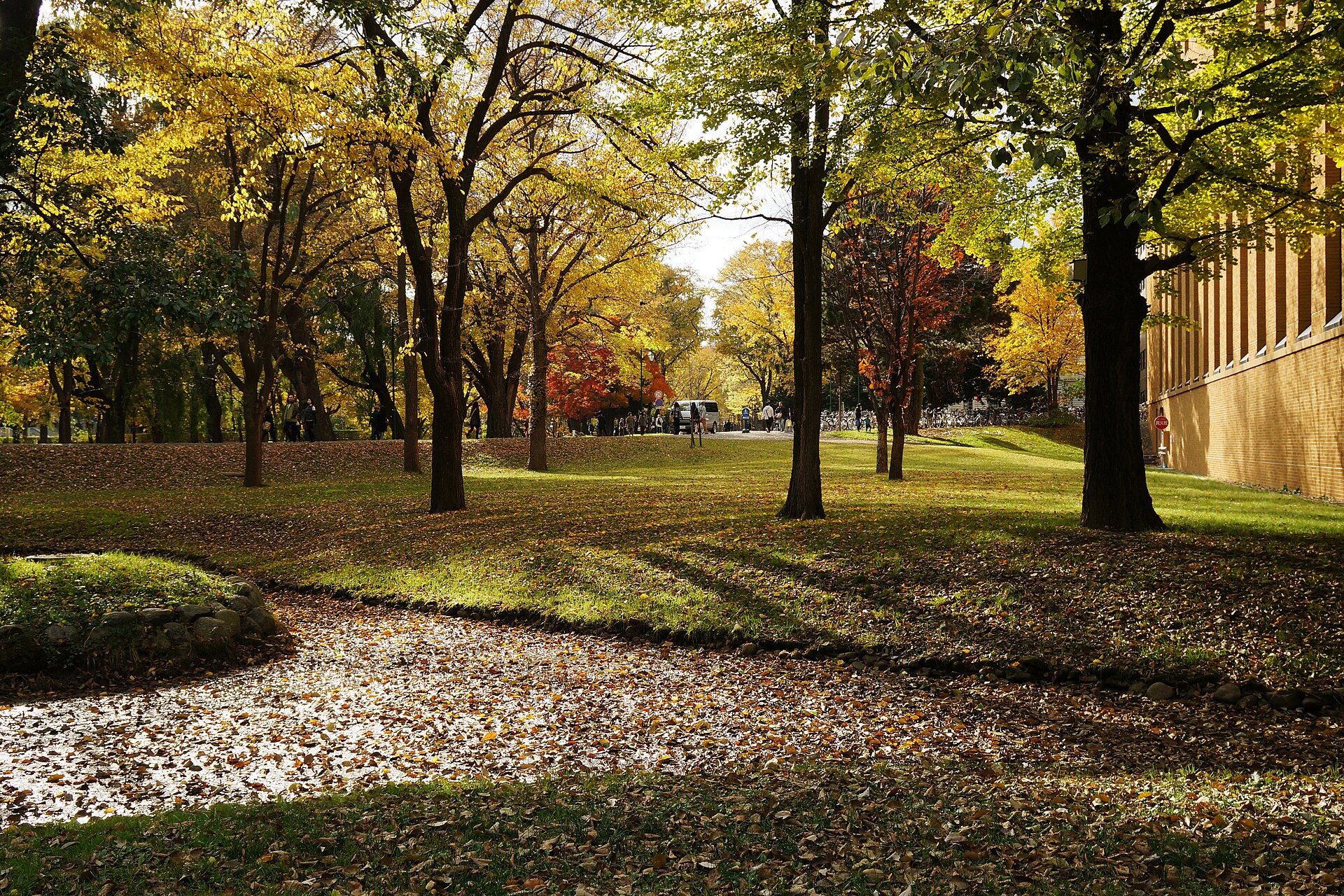
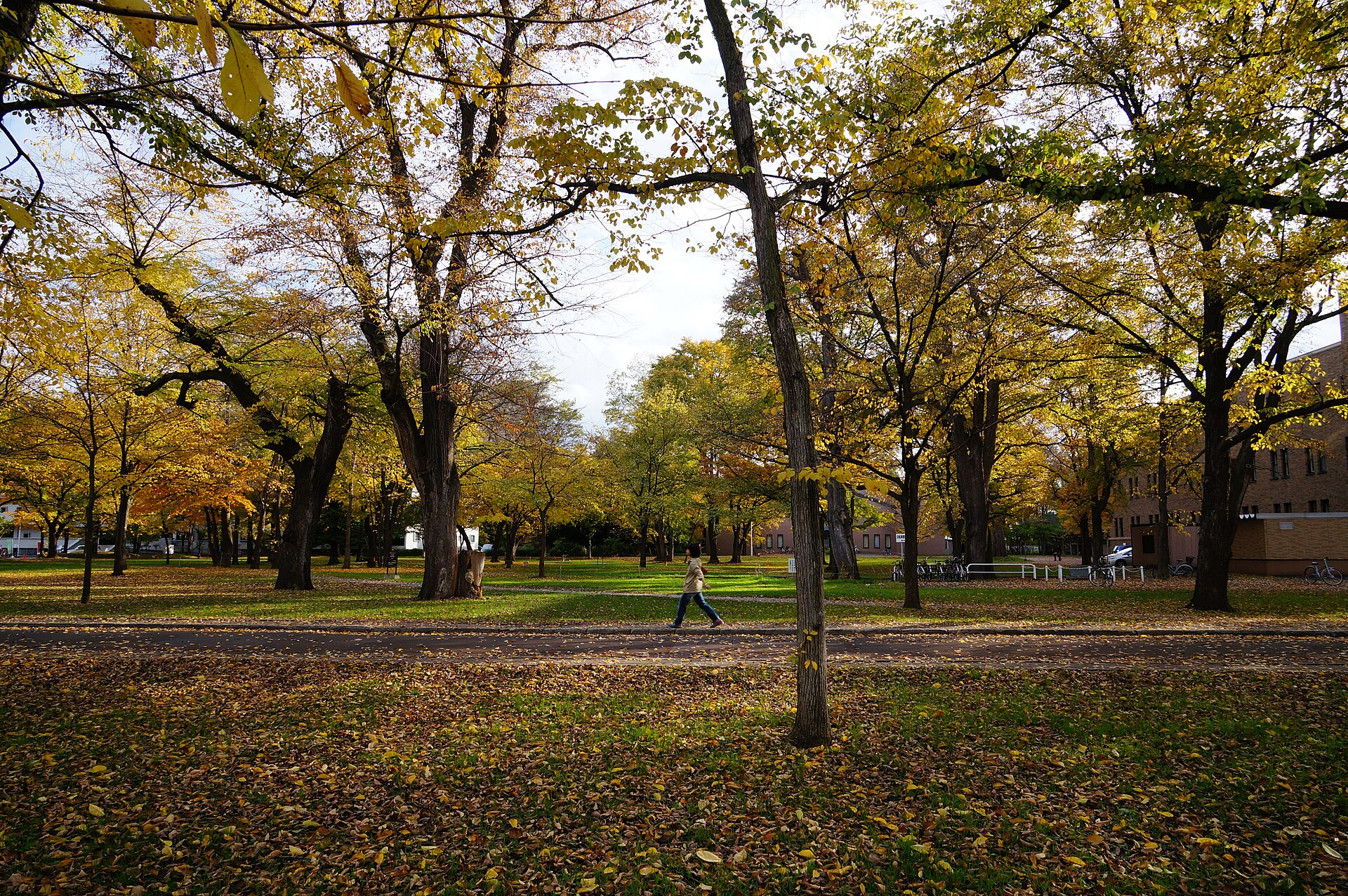
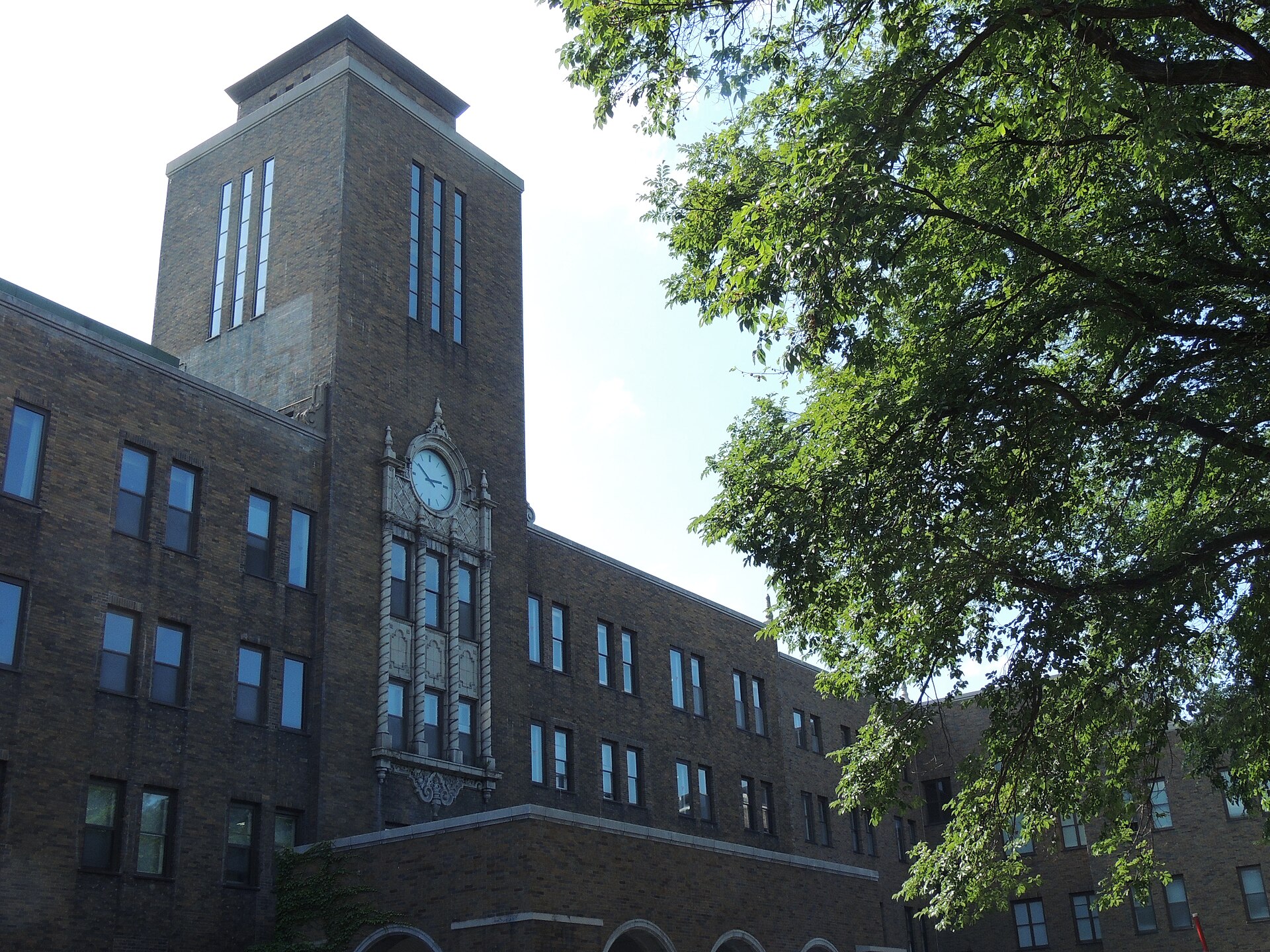
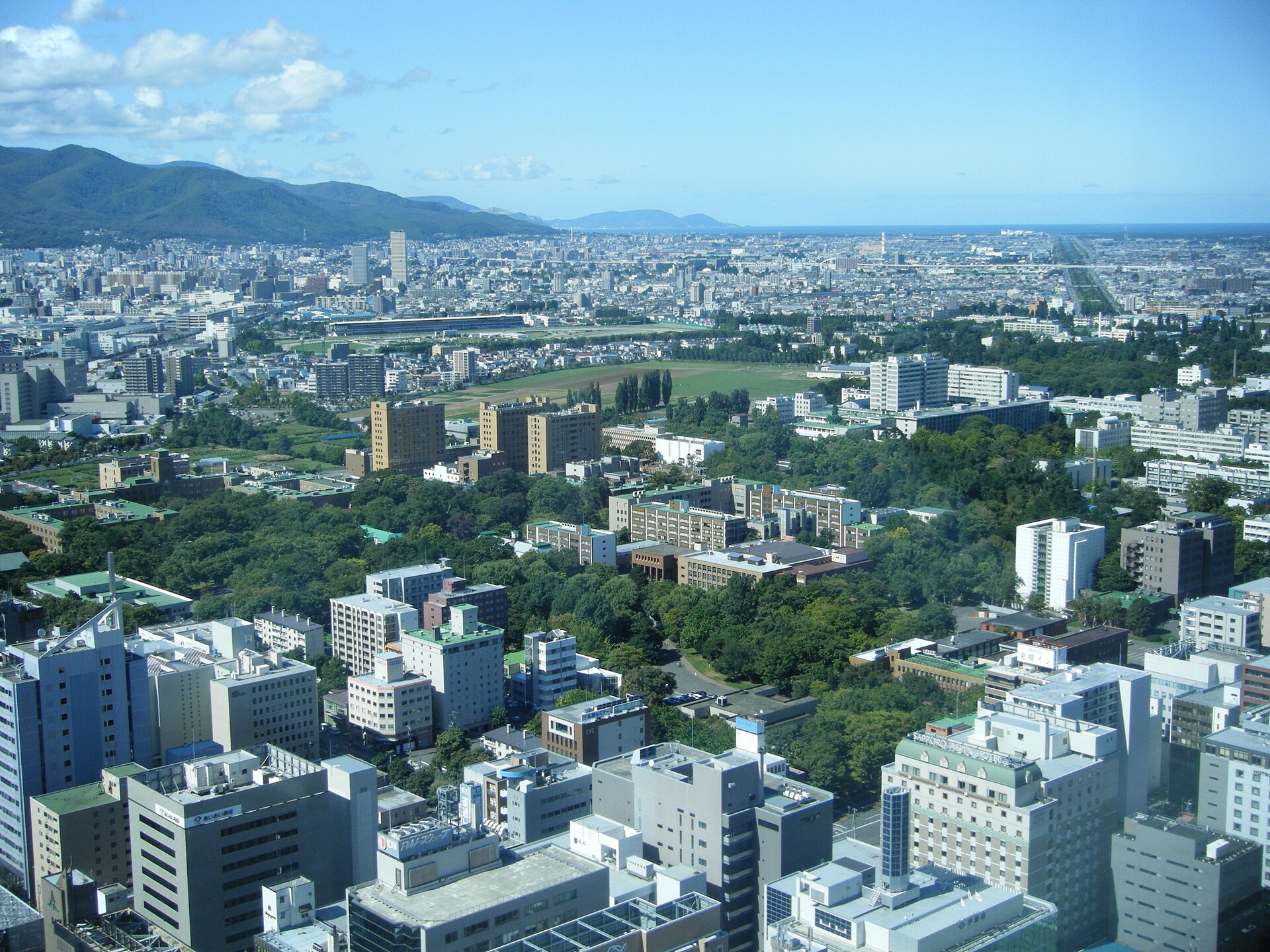
Hokkaido University — campus in pictures
Real, freely-licensed photographs of the campus (via Wikimedia Commons).
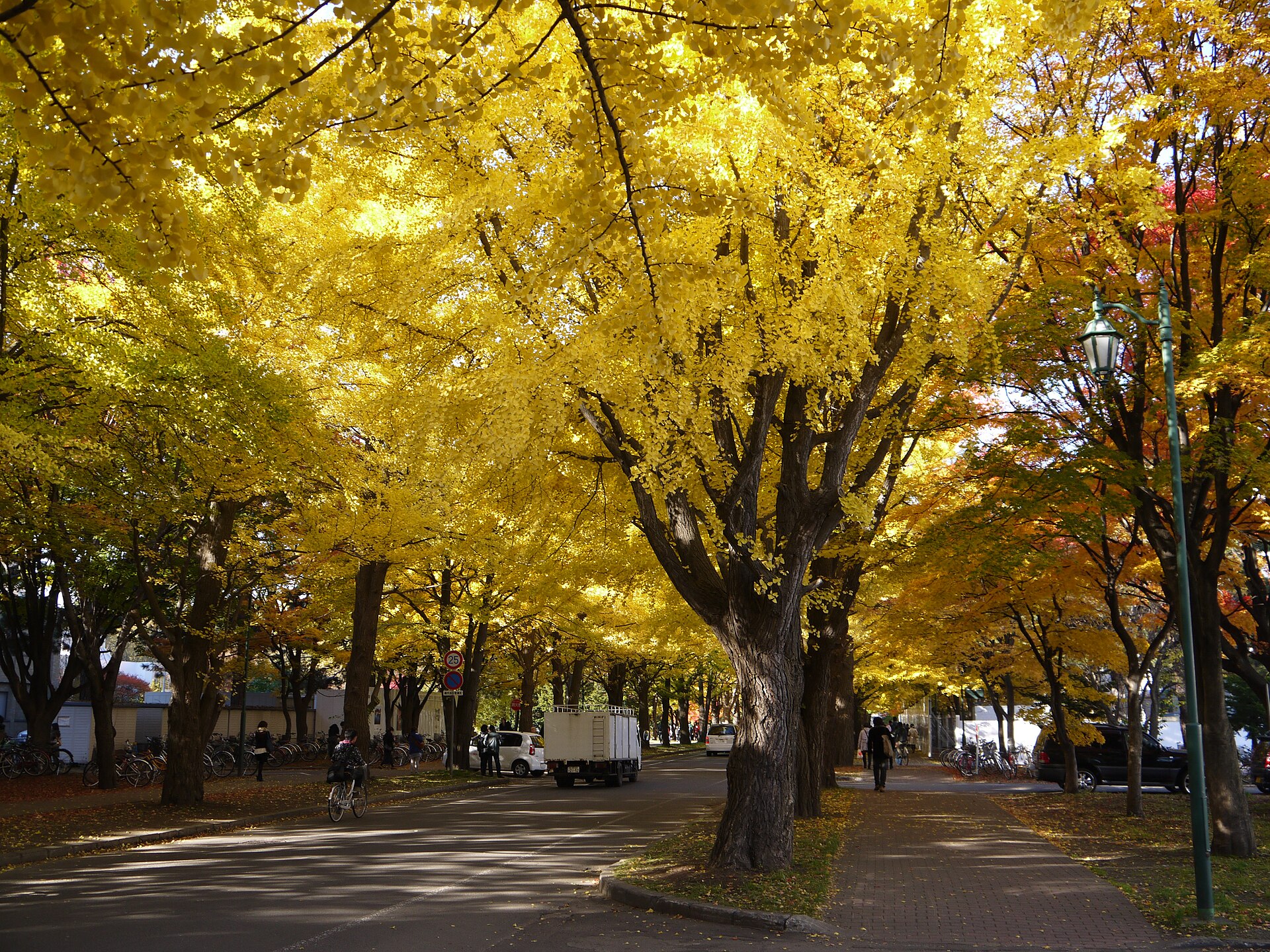
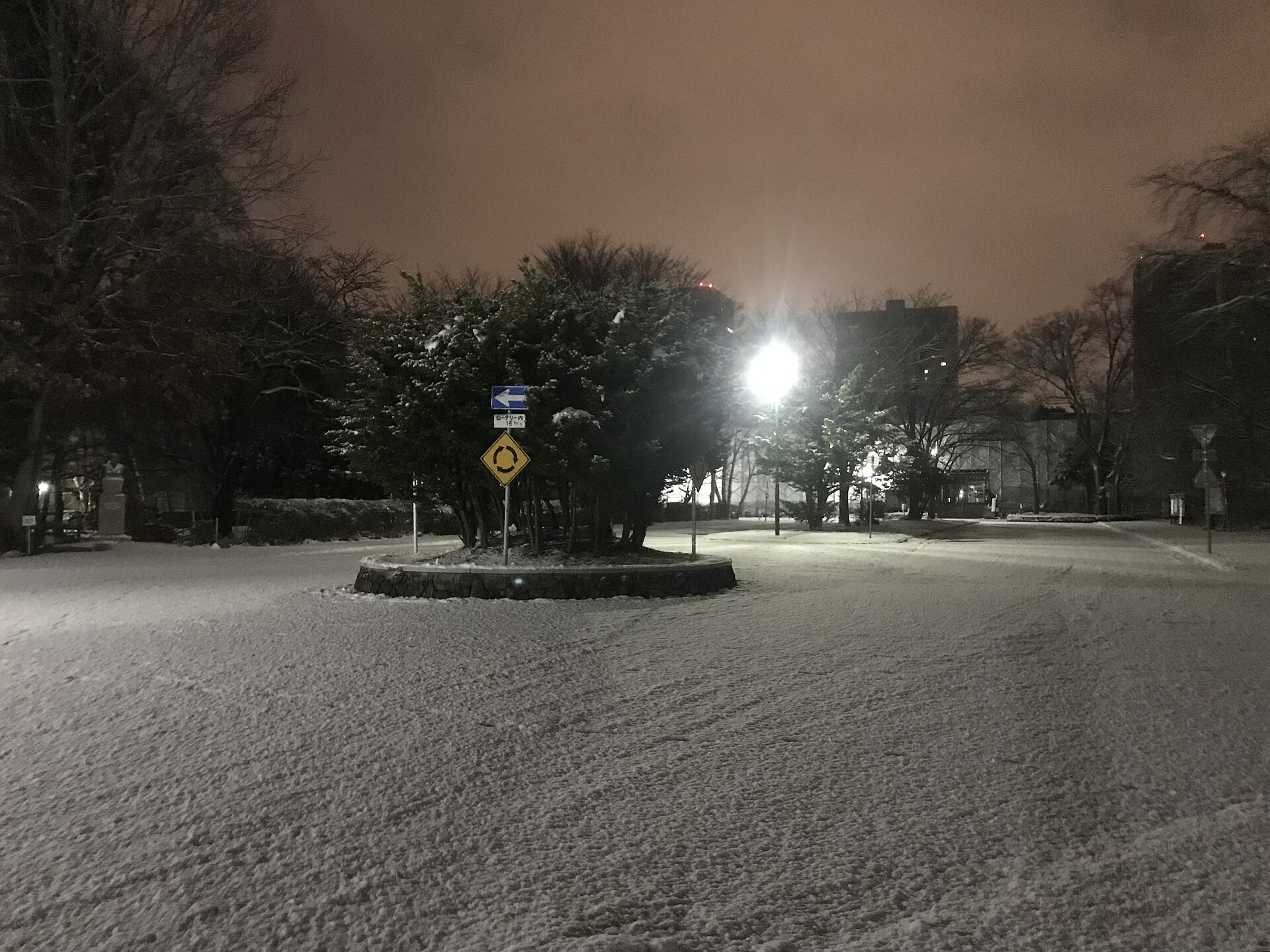
Why Hokkaido — Imperial Prestige, Research & Sapporo Living
Hokkaido University sits at an uncommon intersection: the prestige and research depth of Japan's Imperial University network, fully English-taught pathways for international undergraduates, and an annual cost of attendance lower than the tuition alone at most Western universities. For students serious about science, Japan, or both — Hokkaido is one of the most compelling destinations in Asia.
Hokkaido Admissions Profile & Indicative Academic Profile
Stats
Profile Stats
Rea Vs Rd
Hokkaido Admissions Requirements — Grades, English Proficiency & Motivation Letter
- IB 33+ is an indicative benchmark for ISP applicants
- A-Level BBB or above in relevant subjects is a reasonable floor
- Strong HL scores in sciences (for ISP) or humanities (for MJSP) expected
- Grade trajectory and course rigour are evaluated holistically
- IELTS Academic minimum 6.5 overall band score
- TOEFL iBT minimum 80 total score
- Scores must typically be less than two years old at application
- Students educated entirely in English may qualify for exemption — confirm with admissions
- Written motivation letter explaining academic background and programme fit
- Specific reference to Hokkaido's research infrastructure is expected
- For ISP: demonstrate science depth; for MJSP: demonstrate Japan engagement
- Some programmes require a separate written examination and/or interview
Hokkaido Application Components — Direct Apply, Documents & Statement
Hokkaido University uses a direct application system — there is no Common App, UCAS, or other shared platform. Applications are submitted to Hokkaido directly for the English-taught undergraduate programmes (ISP and MJSP). Below are all components of a complete Hokkaido application.
Hokkaido Application Statement — Writing the Perfect Motivation Letter
Tips
Prompts
What Hokkaido Admissions Committees Are Looking For
Hokkaido University's English-taught programmes are small and selective. Every application is read carefully by the admissions committee. Understanding the six dimensions they evaluate — and making sure your application speaks to each — is the foundation of a competitive strategy.
Hokkaido Financial Aid & Scholarships for International Students
Hokkaido University is one of the most financially accessible leading research universities for international students in the world. As a Japanese national university, tuition is set by the government at approximately USD 3,306 per year. The primary scholarship vehicle — the MEXT Japanese Government Scholarship — covers tuition and provides a monthly living stipend, making fully-funded study at Hokkaido a genuine reality for competitive applicants.
Cost figures are approximate USD conversions from JPY at representative exchange rates. Exchange rate movements affect actual costs. MEXT stipend amounts are those published by MEXT as of the most recent available year.
Stats
Contribution Tiers
| Note | Range | Percent | Percent Value |
|---|---|---|---|
| Full tuition waiver + ~$9,600 annual stipend | MEXT Scholarship (full) | 100% | 100 |
| Tuition covered; additional living support from private foundations | Private Foundation Grants | 40% | 40 |
| ~$3,306 tuition + ~$6,200 living = ~$9,500 total | Self-Funded | 0% | 0 |
Key Dates
Advantages
- Japan's April academic year is fixed — there is no early or late intake to choose between
- MEXT Embassy Route: apply earlier (spring) for highest-value scholarship
- MEXT University Recommendation Route: apply via Hokkaido directly (limited places)
- Starting preparation in September of the year before entry is the right timeline
- Thorough early preparation for the written examination improves admission outcomes significantly
Disadvantages
- No October/September intake exists for ISP or MJSP — April is the only entry point
- MEXT deadlines fall months before the university deadline — missing MEXT is a separate loss
- Document translation and certification can take time — start gathering materials early
- The window between results (Feb–Mar) and enrolment (April) is short — have visa and housing ready
- Once the April cycle closes, there is no second chance until the following year
Hokkaido Interview — Format, Questions & Preparation
Not all Hokkaido English-taught programmes include an interview — it depends on the programme and the year. Where an interview is included, it is conducted online in English by academic faculty, typically as the final selection stage after document screening and (for ISP) a written examination. The interview assesses your genuine intellectual motivation, your understanding of what the programme offers, and your seriousness about studying and living in Japan.
Meta
Questions
Hokkaido Residential Life — Housing & Campus Community
Hokkaido University does not operate a house or college system like Oxford, Yale, or Harvard's residential houses. Instead, international students are assigned to on-campus dormitories — with priority given to newly arriving international students — where they share living spaces with Japanese and international peers. This integration is one of the most effective routes to Japanese language acquisition and cultural immersion.
Houses
Lottery Steps
- Apply for on-campus dormitory housing as part of your enrolment process — spaces are limited and allocated on a first-come, priority basis
- Newly arriving international students receive priority for the International House and similar facilities
- On-campus dormitory costs are significantly lower than private apartments — budget approximately JPY 30,000–40,000/month
- If on-campus housing is unavailable, the university's International Office assists with private apartment introductions
- Set up your housing before April — the window between results and enrolment (Feb–April) is short
Hokkaido University's English-Taught Programmes & Faculties
- {"label":"Language of instruction","value":"English"}
- {"label":"Programme structure","value":"Interdisciplinary sciences → specialisation"}
- {"label":"Intake","value":"April only"}
- {"label":"Selection","value":"Document screening + exam + interview"}
- {"label":"Language of instruction","value":"English"}
- {"label":"Programme structure","value":"Humanities + social sciences + Japan studies"}
- {"label":"Intake","value":"April only"}
- {"label":"Japanese language","value":"Embedded curriculum component"}
- {"label":"English tracks","value":"Available in many research groups"}
- {"label":"Programmes","value":"MSc, PhD"}
- {"label":"Research strength","value":"Chemistry, Physics, Earth Science"}
- {"label":"Nobel connection","value":"Chemistry (Suzuki, 2010)"}
- {"label":"Founded","value":"1876 (Sapporo Agricultural College)"}
- {"label":"Research standing","value":"Top 3 in Japan"}
- {"label":"Veterinary hospital","value":"On-campus teaching hospital"}
- {"label":"Note","value":"Primarily Japanese-medium at undergraduate level"}
- {"label":"Research institutes","value":"WPI-ICReDD, Institute for Catalysis"}
- {"label":"Industry partners","value":"Shionogi, Toyota, Mitsubishi"}
- {"label":"Note","value":"Primarily Japanese-medium at undergraduate level"}
- {"label":"ISP pathway","value":"ISP graduates can enter engineering graduate programmes"}
- {"label":"Location","value":"Hakodate (Fisheries); Sapporo (Environmental)"}
- {"label":"Distinctive programmes","value":"Marine biology, aquatic resource science"}
- {"label":"Field stations","value":"Multiple marine/field research stations"}
- {"label":"Note","value":"Primarily Japanese-medium at undergraduate level"}
Research & Extracurricular Opportunities at Hokkaido
Career Outcomes & Hokkaido Alumni Network
A Hokkaido degree carries significant weight in Japan's graduate hiring market and in Japan-facing international roles. The 92% employment rate reflects both the strength of Japan's graduate labour market and Hokkaido's reputation as one of the top-7 national universities. For international graduates, Hokkaido's name opens doors in Japanese industry (particularly agriculture, food, pharma, and materials) and provides a distinctive research credential internationally.
Stats
Categories
Our Hokkaido University Admissions Track Record & Student Success Stories
Faqs
Do I need to speak Japanese to study at Hokkaido University?+
For the ISP and MJSP English-taught programmes, Japanese language proficiency is not required for admission. However, daily campus life and the wider Sapporo environment are primarily in Japanese. The university strongly encourages all international students to study Japanese during their degree. Japanese language classes are available on campus.
How does the April intake work for international applicants?+
Japan's academic year begins in April. Applications for the following April entry are typically due in December–January. There is no September or October intake for ISP or MJSP. Begin your preparation in September of the year before your intended April start.
Is the ISP only for science students?+
Yes. The Integrated Science Program (ISP) is designed for students interested in natural and applied sciences, with an interdisciplinary curriculum across physics, chemistry, biology, and mathematics. The MJSP (Modern Japanese Studies Program) is the humanities/social sciences English-taught option.
Can I continue to graduate study after ISP or MJSP?+
Absolutely. ISP and MJSP graduates are well-positioned to continue at Hokkaido's own graduate schools — many of which have English-taught research programmes — or to apply to other Japanese and international graduate programmes. Hokkaido's national ranking (#7 in Japan) makes it a strong academic launchpad.
Is it expensive to live in Sapporo as a student?+
Sapporo is considerably more affordable than Tokyo or Osaka. The total estimated cost of attendance, including living expenses, is approximately USD 9,500 per year — making Hokkaido one of the most affordable options among Japan's leading research universities.
Are there scholarships available for international undergraduates?+
Yes. The MEXT (Japanese Government) scholarship is the main route — it covers tuition entirely and provides a monthly living stipend. The embassy recommendation route applications typically open in April–May of the year before your intended entry. Hokkaido also has tuition waivers for enrolled students facing financial hardship.
What is Hokkaido's strongest academic area?+
Historically, agriculture, veterinary medicine, fisheries, and environmental science are Hokkaido's most distinctive globally. It also has world-leading research in low-temperature science, chemistry (Nobel laureate Akira Suzuki, 2010), catalysis, and infectious disease/zoonosis control.
Does Hokkaido accept IB students?+
Yes. IB Diploma students are accepted and well-regarded. An indicative benchmark of 33 points is a reasonable target, though this is not a published official cutoff. Strong Higher Level scores in relevant subjects (sciences for ISP; humanities for MJSP) carry substantial weight.
Book a Free Hokkaido University Admissions Strategy Session
In 60 minutes our Japan admissions specialists will evaluate your academic profile, identify your application strengths and gaps, develop your motivation letter strategy, and map out your MEXT scholarship timeline alongside your university application.
- No commitment required
- Japan admissions specialists with insider knowledge
- Personalised strategy — not generic advice
Hokkaido Admissions Requirements
Hokkaido University Academic Requirements — The Honest Breakdown for International Students
What academic profile does Hokkaido's English-taught undergraduate admission actually require? How are IB, A-Level, and other international qualifications evaluated? And what does a competitive application look like?
Grades & Academic Record
Hokkaido and Grades — What the Academic Expectation Actually Is
Hokkaido University does not publish a minimum GPA for its international English-taught programmes (ISP and MJSP). The selection is holistic — academic transcripts are read alongside the motivation letter, recommendation letters, English proficiency scores, and in some cases a written examination. That said, strong academic performance in relevant subjects is expected.
A strong academic record is a baseline, not a differentiator. At Hokkaido's English-taught programmes — which are small and competitive — the motivation letter and research orientation are what separate candidates with similar academic profiles.
Academic Context
Class Rank and School Context — How Hokkaido Reads Your Academic Record
Hokkaido University's English-taught programmes do not require class rank. Admissions committees evaluate academic performance in the context of the specific educational system and school the applicant comes from.
Standardised Testing
SAT at Hokkaido — Not Required for International English-Taught Programmes
SAT scores are not required for Hokkaido University's English-taught undergraduate programmes (ISP and MJSP). The admissions process for these programmes is focused on academic transcripts, English proficiency scores (IELTS/TOEFL), the motivation letter, and in some cases a written examination set by the programme.
| Label | Score | Percent |
|---|---|---|
| SAT required for ISP/MJSP | No | 0 |
| IELTS minimum (English proficiency) | 6.5 | 65 |
| TOEFL iBT minimum | 80 | 80 |
Standardised Testing
ACT at Hokkaido — Not Required; EJU for Japanese-Language Tracks
ACT scores are not required for Hokkaido University's English-taught undergraduate programmes. The admissions process for ISP and MJSP does not include ACT or SAT as selection criteria.
Metrics
Comparison Cards
Testing Strategy
Hokkaido Testing Policy — What 'Test-Optional' Means in the Japanese Context
Hokkaido University's international English-taught programmes are effectively test-optional with respect to US-style standardised tests (SAT/ACT). The selection process relies on academic transcripts, English proficiency scores, and programme-specific selection procedures rather than SAT/ACT performance.
Submit Items
Withhold Items
International Qualifications
IB and A-Levels at Hokkaido — Benchmarks and How They Are Read
- {"label":"Indicative range","value":"33+ points overall"}
- {"label":"HL expectations (ISP)","value":"Strong HL scores in sciences and/or mathematics"}
- {"label":"HL expectations (MJSP)","value":"Strong HL scores in humanities, history, or languages"}
- {"label":"Extended Essay","value":"Useful supporting evidence of research motivation; reference it in your motivation letter"}
- {"label":"Indicative range","value":"BBB or above in relevant subjects"}
- {"label":"For ISP","value":"Sciences (Physics, Chemistry, Biology) and/or Mathematics at A-Level preferred"}
- {"label":"For MJSP","value":"Humanities, history, languages at A-Level"}
- {"label":"Predicted grades","value":"Should reflect genuine performance trajectory — not aspirationally inflated"}
AP Courses
AP Courses at Hokkaido — What They Contribute to Your Application
AP courses are offered primarily at US curriculum schools. Hokkaido University does not require or specifically evaluate AP scores for ISP or MJSP admission. However, students from AP programmes are evaluated on their overall academic record, including AP course selection and results.
Academic Rigour
Rigour of Secondary School Record — How Hokkaido Evaluates It
Like all strong research universities, Hokkaido evaluates not just what grades you achieved, but what courses you chose to take. A student who selected the most challenging curriculum available at their school — particularly in the subjects relevant to their chosen programme — is evaluated more positively than one who achieved the same grades in easier courses.
Take the most challenging courses available to you in the subjects most relevant to your chosen programme at Hokkaido.
Subject Preparation
Mathematics, Science, and Subject Preparation — What Hokkaido Expects
For ISP applicants, strong preparation in mathematics and the natural sciences is the primary academic expectation. For MJSP applicants, analytical writing in English and genuine engagement with humanities topics are the equivalents. Both programmes expect academic English proficiency at university level from the first semester.
Language Proficiency
English Language Requirements for International Hokkaido Applicants
English proficiency is the primary language requirement for Hokkaido's English-taught programmes. IELTS Academic or TOEFL iBT scores must be submitted — these are not optional, except for students who have completed their full secondary education in English at an English-medium school.
Exceeding the minimums matters. An IELTS 6.5 makes you eligible; an IELTS 7.5 makes you competitive. The motivation letter is itself an English writing assessment — a student whose letter is well-written in fluent, sophisticated English signals language ability more convincingly than a minimum test score.
By Programme
Academic Profile by Programme — What ISP and MJSP Students Look Like
Hokkaido University has two English-taught undergraduate programmes for international students — ISP (sciences) and MJSP (humanities). All ISP students follow the same interdisciplinary curriculum initially; specialisation comes later. All MJSP students follow a common Japan-focused curriculum. The academic signals below refer to the type of academic profile that fits each programme's environment.
| Signals | Expectation | Concentration |
|---|---|---|
| Science Olympiad participation; science fair; extended essay in sciences | HL Maths + 2 sciences or equivalent | ISP — Life Sciences track |
| Chemistry competition; lab experience; HL Chemistry 7 | HL Chemistry + HL Maths | ISP — Chemistry & Catalysis track |
| Environmental club; ecology projects; geography HL | HL Biology + Environmental Science background | ISP — Environmental Science track |
| Physics competition; engineering projects; HL Physics 7 | HL Maths + HL Physics | ISP — Physics & Engineering Sciences track |
| Japanese language study; history HL; social science research | Strong humanities profile; any Japan language exposure | MJSP — Japanese Culture & Society |
| MUN; policy essays; international studies interest | Humanities profile; English language strength | MJSP — Japan & East Asia Studies |
International Education Systems
How Hokkaido Evaluates International Education Systems
Application Roadmap
Building Your Academic Profile for Hokkaido — What to Do at Each Stage
- Keep options open across sciences and humanities — ISP vs MJSP decision can wait until Grade 11.
- Begin Japanese language engagement if any interest in Japan — language courses, cultural engagement, or self-study.
- Identify your academic strengths and explore them beyond the curriculum: independent reading, science clubs, research projects.
- Decide: ISP (sciences) or MJSP (humanities/area studies).
- For IB students: select HL subjects aligned with your programme — sciences + maths for ISP; humanities + languages for MJSP.
- Begin SAT preparation only if you are on a US curriculum; otherwise focus preparation on IELTS/TOEFL.
- Sit IELTS or TOEFL early — aiming above the minimum (IELTS 7.0+, TOEFL 95+) gives time to re-sit if needed.
- Research MEXT scholarship timelines — embassy route applications open in spring of the year before your intended April entry.
- Begin drafting your motivation letter (see Essays tab).
- Gather transcripts, teacher recommendations, and English proficiency score reports.
- Confirm current deadlines and requirements on Hokkaido's official admissions page — do not rely on previous years' information.
- Research the ISP written examination content and begin subject-level preparation.
- Submit all required documents before the stated deadline.
- Pay the application fee (approximately USD 120).
- Prepare for the written examination and/or interview if your programme requires them.
- Coordinate the university application with any MEXT scholarship application you have in progress.
Common Pitfalls
Academic Mistakes That Cost Hokkaido Applications — And How to Avoid Them
Illustrative Profiles
What Academic Profiles Hokkaido-Admitted Students Have
The following profiles represent the academic backgrounds of students Tychr has helped gain admission to Hokkaido University's English-taught programmes or comparable outcomes at Japanese national universities. They illustrate the range of academic preparation that works.
Faqs
What IB score do I need for Hokkaido University?+
The indicative benchmark is IB 33 or above, but this is not a published official cutoff. What matters alongside the total score is the profile: HL subject choices and grades in the subjects relevant to your programme (sciences for ISP; humanities for MJSP).
Is a strong academic qualification enough for Hokkaido admission?+
No — academic qualification alone is not sufficient. Hokkaido's selection is holistic: transcripts + English proficiency + motivation letter + (for ISP) written examination and/or interview. A strong academic record with a weak motivation letter frequently results in rejection.
Do I need SAT or ACT for Hokkaido?+
No. SAT and ACT are not required or formally evaluated for ISP or MJSP. The relevant standardised test is IELTS or TOEFL for English proficiency. For ISP, the programme's own written examination (where it applies) is the direct academic test.
Can I take out a student loan to study at Hokkaido?+
No. JASSO domestic student loans are not available to international students. Funding for international undergraduates is primarily scholarship-based (MEXT is the main route) or self-funded. There is no loan instrument for international undergraduates at Hokkaido.
Does Hokkaido accept qualifications from my country?+
Yes. IB, A-Level, AP, CBSE, ISC, and national high school diplomas from most countries are all accepted and evaluated by Hokkaido's admissions committee. The committee is experienced at reading international qualifications.
Cost & Financial Aid
Hokkaido University May Cost Less Than You Think — Here's the Full Picture.
As a Japanese national university, Hokkaido charges a government-set tuition of approximately USD 3,306 per year — accessible to international students at a fraction of Western university costs. With MEXT scholarship support, study can be fully funded. Here is the complete cost picture.
Cost Transparency
What Hokkaido Actually Costs — The Full Annual Figure
Japan's national university tuition is set by the government at a flat rate — approximately JPY 535,800 per year (USD 3,306 at representative exchange rates). This is the same for all Japanese national universities. Hokkaido's total cost of attendance of USD 9,500/year is lower than tuition alone at most international universities in the UK, US, or Australia.
Scholarship Access
MEXT Scholarship — The Primary Financial Aid Route for International Students
MEXT (Ministry of Education, Culture, Sports, Science and Technology) scholarships are available to students from most countries that have bilateral educational agreements with Japan. The embassy recommendation route is open to students from approximately 160 countries. Hokkaido University also operates a university recommendation route with a separate, smaller allocation.
Japan's Education System
Why Hokkaido Is This Affordable — Japan's Public University System
Scholarship Application Walkthrough
Applying for MEXT Scholarship — The Process Step by Step
MEXT scholarships are not automatic — they require a separate competitive application through either the Japanese Embassy or Hokkaido University's recommendation route. Here is the complete process.
- Embassy Recommendation Route: apply through your country's Japanese Embassy
- University Recommendation Route: apply directly through Hokkaido University
- Both routes have different timelines and allocations — check which applies to your country
- Embassy applications typically open in April–May of the year before your intended April entry
- Required documents typically include: academic transcripts, language proficiency score, medical examination, application form
- Application requirements and timelines vary by country — always verify directly with the embassy
- University application window: October–January
- Application deadline: December–January
- MEXT university recommendation selection runs on a parallel track through Hokkaido's international office
- Embassy MEXT results typically precede or coincide with university admission results
- University admission results: February–March
- MEXT scholarship activation is confirmed after university acceptance
- Confirm acceptance of both the university place and the MEXT scholarship
- Arrange travel, visa, and housing before the April enrolment date
- MEXT stipend payments begin after enrolment
Aid for International Students
Financial Aid for International Students — How It Works at Hokkaido
International students at Hokkaido University access financial support primarily through scholarship routes (MEXT being the main vehicle) rather than university-funded need-based grants. Understanding how this differs from the US aid model is important for realistic financial planning.
Aid Scenarios
What Financial Support Actually Looks Like — Hokkaido Aid Scenarios
Hokkaido Financial Support by Funding Scenario
MEXT stipend amounts are those published by MEXT as of the most recent available data. Exchange rates fluctuate and affect USD equivalent values. Verify current amounts with MEXT or the Japanese Embassy in your country.
The MEXT scholarship is the most comprehensive funding package — full tuition plus a living stipend. Self-funded study at Hokkaido costs approximately USD 9,500/year, which is low relative to comparable universities in English-speaking countries. Private foundation grants provide meaningful supplementary income for enrolled students.
| Grant | Income | Contribution |
|---|---|---|
| Full tuition + ~$800/month stipend | MEXT Scholarship recipient | $0 |
| Partial — varies by foundation | Private foundation grant recipient | ~$3,306 tuition + supplemented living costs |
| Enrolled hardship waiver (partial or full tuition) | Enrolled student, financial hardship case | Reduced or $0 tuition; living costs self-funded |
| None | Self-funded student | ~$3,306 tuition + ~$6,200 living = ~$9,500 total |
Table Headers
Qualification Criteria
Hokkaido Scholarships — What Exists and Who Qualifies
Hokkaido University itself does not award large merit scholarships at the undergraduate level in the manner of some Western universities. The MEXT scholarship — Japan's government-funded international scholarship — is both merit-based (highly competitive academic selection) and need-adjacent (designed to make study in Japan accessible regardless of family wealth). It is the primary funding opportunity for international undergraduates.
External Funding
External Scholarships — Additional Funding for Hokkaido Students
In addition to MEXT and Hokkaido's own support mechanisms, numerous external scholarship organisations fund international students at Japanese national universities — including Hokkaido. These range from Japanese private foundations to bilateral government programmes and international organisations.
Loans & Self-Funding
Loan Policy at Hokkaido — What International Students Need to Know
International undergraduate students at Hokkaido University are NOT eligible for JASSO (Japan Student Services Organisation) domestic student loans. Japanese student loan programmes are restricted to domestic students. International students must fund study through scholarships, family resources, or permitted part-time work — not through Japanese loan instruments.
Part-Time Work
Part-Time Work in Japan — What International Students at Hokkaido Should Know
Student visa holders in Japan are permitted to engage in part-time work (arubaito) for up to 28 hours per week. This is a widely used source of supplementary income for international students at Hokkaido. However, unlike US work-study programmes, this is not institutionally structured — students find their own part-time positions.
- Convenience store and retail positions (common in Sapporo; basic Japanese required)
- Restaurant and food service work
- English tutoring and language exchange (accessible for English-proficient international students)
- Research assistant positions in faculty labs (especially for ISP students in later years)
- University campus part-time jobs (cafeteria, library support, international office assistance)
- Snow festival and tourism industry work (seasonal; Sapporo's major events create demand)
Benchmarking
Hokkaido vs. Other Options — Financial Aid and Cost Comparison
| Policy | School | No Loans | Typical Cost |
|---|---|---|---|
| Government MEXT scholarship available | Hokkaido University | Yes (MEXT is grant, not loan) | ~$0 (MEXT) or ~$9,500 (self-funded) |
| Government scholarship programmes available | University of Tokyo | Yes | ~$0 (MEXT) or ~$10,000 (self-funded) |
| Government scholarship programmes available | Kyoto University | Yes | ~$0 (MEXT) or ~$9,500 (self-funded) |
| Need-blind, full-need institutional grants | Harvard University | Yes | $0 (qualifying families) |
| Need-aware; partial institutional grants | UK Russell Group (international fees) | No | ~$30,000–$45,000/year |
| International tuition; limited scholarships | Australian Go8 (international fees) | No | ~$25,000–$40,000/year |
| International tuition; some merit scholarships | Canadian U15 (international fees) | No | ~$20,000–$35,000/year |
Cost Analysis
Hokkaido vs. Alternatives — What You Actually Pay Over Four Years
Self-funding Hokkaido over four years costs approximately USD 38,000 — lower than a single year of tuition at most UK or Australian international-fee institutions. With MEXT scholarship, the total four-year cost is approximately zero. In terms of value for a top-200, nationally #7-ranked research university, Hokkaido represents an exceptional proposition.
| Policy | School | Contribution | Four Year Cost |
|---|---|---|---|
| MEXT scholarship; ~$3,306 tuition (govt-set) | Hokkaido (MEXT recipient) | ~$0 | ~$0 |
| Self-funded; ~$3,306 tuition; Sapporo living | Hokkaido (self-funded) | ~$9,500/year | ~$38,000 |
| Need-blind, full-need institutional grants | Harvard (qualifying income family) | ~$0 | ~$0 |
| International tuition; limited grants | UK Russell Group | ~$30,000–$45,000/year | ~$120,000–$180,000 |
| International tuition; merit scholarships | Australian Go8 | ~$25,000–$40,000/year | ~$100,000–$160,000 |
| International tuition; limited aid | Canadian U15 | ~$20,000–$35,000/year | ~$80,000–$140,000 |
Financial Support Appeals
Seeking Additional Financial Support — Tuition Waiver and Hardship Process
Hokkaido University does not operate a Harvard-style financial aid appeals process — there is no need-based grant determination to appeal. However, enrolled students who face unexpected financial hardship can apply for tuition waiver support through the university's financial hardship mechanism.
The honest reality: financial support at Hokkaido is primarily scholarship-based (won before or around arrival) or need-triggered (available after enrolment if financial hardship is documented). There is no ongoing need-based grant automatically adjusted each year based on family income, as at Harvard.
How To Appeal
- Contact Hokkaido University's international student support office and request information on the tuition waiver application
- Submit a written application explaining the specific financial circumstances with supporting documentation
- Applications are reviewed twice yearly — February (first semester) and August (second semester)
When To Appeal
- Family financial circumstances have changed since enrolment (job loss, illness, family crisis)
- Expected scholarship funding did not materialise or was reduced after enrolment
- The initial financial plan is no longer feasible due to changed circumstances
Timeline & Planning
Planning for Hokkaido Costs — What to Do and When
Application Strategy
Hokkaido University Application Statement — Everything You Need to Write It Well.
Hokkaido University does not use Common App, UCAS, or supplemental essays. The central written component is a Motivation Letter — shorter than a US personal statement, but just as consequential. This guide covers what to write, how to write it, and the mistakes that sink otherwise competitive applications.
Requirement Overview
Hokkaido Application Requirements — The Full Written Picture
Hokkaido University uses a direct application system. There is no shared platform (no Common App, no UCAS). The written components of the application are: a Motivation Letter (sometimes called a Statement of Purpose or Study Plan), and optionally a section on Japanese language ability. For ISP applicants, a written examination and online interview may also follow document screening.
Optional Items
Required Items
The Core Document
The Hokkaido Motivation Letter — What It Needs to Accomplish
In the US system, the Common App personal statement is one component among many. At Hokkaido, the Motivation Letter is the primary written assessment and the document that most distinguishes competitive from unsuccessful applications. Small programmes with small admissions committees read every letter carefully.
The Motivation Letter must work both as an academic document (demonstrating your research orientation and subject depth) and as a personal document (demonstrating why you — specifically — are drawn to Hokkaido and Japan). The challenge is achieving both without sacrificing specificity for breadth. Most candidates fail by being too general.
Tired Of List
- Generic statements that describe love for science or Japan without naming anything specific
- Motivation letters that read as translated from another language rather than written natively in English
- Letters that describe the applicant's biography rather than making an argument for why Hokkaido is the right place for their academic goals
- Letters that confuse ISP (science programme) with MJSP (humanities programme) in their description of programme content
Looking For List
- Specific reference to Hokkaido research groups, institutes, or professors whose work connects to the applicant's interests
- A clear academic narrative: what I know, what I want to investigate, why Hokkaido enables this specifically
- Authentic Japan engagement — genuine cultural interest, language study, or specific knowledge about Japan's research environment
- Evidence of intellectual initiative beyond the curriculum: Extended Essay, science project, competition, independent reading
Strategic Choice
Choosing Your Approach — What Makes a Motivation Letter Work
The Motivation Letter is not just a document — it is a strategy. The approach you choose (academic depth vs. personal narrative vs. future orientation) determines how the admissions committee reads your entire application.
Criteria
Caution Topics
- Letters focused primarily on Japan's popular culture (anime, manga) without academic grounding
- Vague statements about 'experiencing Japanese culture' as the primary motivation
- Overlong biographical accounts that reach the programme motivation only in the final paragraph
- Letters written to impress rather than to accurately represent the applicant's actual academic interests
Application Components
Hokkaido Application Components — What to Write and Prepare
The Hokkaido application for English-taught programmes has a clearly defined set of written and evaluated components. Unlike US universities with many optional essays, Hokkaido's application is focused — but each component is taken seriously. Here is each one with strategic guidance.
Writing Process
How to Write the Hokkaido Motivation Letter — A Step-by-Step Process
How Hokkaido Reads Your Letter
What Hokkaido's Admissions Committee Is Looking for in Your Motivation Letter
What Works
What Makes a Hokkaido Motivation Letter Stand Out
- Naming a specific Hokkaido research group or institute and explaining the connection to the applicant's own academic interest — demonstrating homework done, not just enthusiasm expressed
- Describing a concrete academic experience (Extended Essay result, science fair project, academic competition) that links to the programme's content
- Showing authentic Japan engagement that goes beyond popular culture to a specific academic or cultural interest that connects to the MJSP or ISP curriculum
- A clear, credible three-part structure: academic background → why Hokkaido specifically → what comes next
- Writing that sounds like the actual applicant — not a translated document or a formulaic structure copied from an online template
Pitfalls to Avoid
Common Motivation Letter Mistakes — And How to Avoid Them
For International Students
Writing the Hokkaido Application Statement as an International Student
International students applying to Hokkaido face a specific challenge: the application system, timeline, and written requirements are very different from anything in the US, UK, or Australian admissions ecosystems they may have studied in. Understanding Japan's document-based admissions culture is the first step.
Faqs
Does Hokkaido use the Common App or UCAS?+
No. Hokkaido University uses its own direct application system. There is no Common App, UCAS, or other shared platform. Download the current application guidelines each year from the official admissions page.
How long should my motivation letter be?+
Typically 500–800 words for the main motivation statement, but check the current application guidelines for your specific programme — some years there are explicit word or page limits. When in doubt, be concise and specific rather than lengthy and vague.
Do I need to write about Japan specifically, even for ISP (a science programme)?+
Yes — at least to some degree. Both ISP and MJSP are in Japan. Admissions committees expect to see some acknowledgement of why Hokkaido University in Japan is the right environment for your academic goals, not just that you want to study science or humanities in general.
What language should the motivation letter be in?+
In English, for the English-taught programmes (ISP and MJSP). Some forms may ask for a supplementary section in Japanese — confirm on the current application guidelines. Never submit a motivation letter in a language other than what is specified.
How do I prepare for the Hokkaido interview?+
Some programmes include an online interview. Prepare by re-reading your motivation letter, researching specific Hokkaido research groups, and thinking through your academic trajectory. Be ready to discuss your academic choices, most intellectually engaging experiences, and why Hokkaido is your next step.
How important are recommendation letters at Hokkaido?+
Recommendation letters are part of the document screening process. A letter from a teacher who knows you well and can speak to your intellectual potential and suitability for a research-intensive university environment carries significant weight. Provide your recommenders with context about the programme and your specific motivation — generic letters add little value.
Can I apply to both ISP and MJSP?+
Check the current application guidelines — it is typically possible to indicate a first and second programme preference. However, submitting entirely separate applications for both typically requires separate fees and full document sets. Confirm the current policy directly with admissions before attempting this.
How do I prepare for the ISP written examination?+
The Hokkaido ISP written examination (where it applies) typically tests advanced secondary-level content in sciences and/or mathematics. Review HL-equivalent content in the subjects relevant to your ISP interest area. Past exam papers are not always published — contact the admissions office to ask what resources are available.
Courses — schools, degrees & intake
52 degrees across 14 groupings.
English-Taught Undergraduate Programs · 6 degrees
Integrated Science Program (ISP) — Physics Track
Integrated Science Program (ISP) — Chemistry Track
Integrated Science Program (ISP) — Biology Track
Integrated Science Program (ISP) — Mathematics Track
Modern Japanese Studies Program (MJSP) — History and Culture Major
Modern Japanese Studies Program (MJSP) — Society and Political Economy Major
Faculty of Humanities and Human Sciences · 11 degrees
Bachelor of Arts — Philosophy and Religious Studies
Bachelor of Arts — History
Bachelor of Arts — Cultural Diversity Studies
Bachelor of Arts — Cultural Representations
Bachelor of Arts — Linguistics
Bachelor of Arts — Slavic-Eurasian Studies
Bachelor of Arts — Ainu and Indigenous Studies
Bachelor of Arts — Psychology
Bachelor of Arts — Behavioral Science
Bachelor of Arts — Sociology
Bachelor of Arts — Regional Science
Faculty of Education · 1 degrees
Bachelor of Education
Faculty of Law · 1 degrees
Bachelor of Laws (LLB)
Faculty of Economics and Business · 2 degrees
Bachelor of Economics
Bachelor of Business Administration
Faculty of Science · 6 degrees
Bachelor of Science — Mathematics
Bachelor of Science — Physics
Bachelor of Science — Chemistry
Bachelor of Science — Biological Sciences (Biology)
Bachelor of Science — Biological Sciences (Macromolecular Functions)
Bachelor of Science — Earth and Planetary Sciences
School of Engineering · 4 degrees
Bachelor of Engineering — Applied Science and Engineering
Bachelor of Engineering — Information and Electronics Engineering
Bachelor of Engineering — Mechanical and Intelligent Engineering
Bachelor of Engineering — Environmental and Civil Engineering
Faculty of Medicine · 1 degrees
Doctor of Medicine (MD)
School of Health Sciences (Faculty of Medicine) · 5 degrees
Bachelor of Health Sciences — Nursing
Bachelor of Health Sciences — Radiological Technology Science
Bachelor of Health Sciences — Medical Technology
Bachelor of Health Sciences — Physical Therapy
Bachelor of Health Sciences — Occupational Therapy
Faculty of Dental Medicine · 1 degrees
Doctor of Dental Surgery (DDS)
Faculty of Pharmaceutical Sciences · 2 degrees
Bachelor of Pharmaceutical Sciences
Doctor of Pharmacy (6-year Pharmacy Programme)
Faculty of Veterinary Medicine · 1 degrees
Doctor of Veterinary Medicine (DVM)
School of Fisheries Sciences · 4 degrees
Bachelor of Fisheries Sciences — Marine Biology
Bachelor of Fisheries Sciences — Applied Marine Science
Bachelor of Fisheries Sciences — Aquaculture Life Science
Bachelor of Fisheries Sciences — Marine Bioresources Chemistry
School of Agriculture · 7 degrees
Bachelor of Agriculture — Agrobiology and Bioresources
Bachelor of Agriculture — Applied Bioscience
Bachelor of Agriculture — Bioscience and Chemistry
Bachelor of Agriculture — Forest Science
Bachelor of Agriculture — Animal Science
Bachelor of Agriculture — Bioresource and Environmental Engineering
Bachelor of Agriculture — Agricultural Economics
Want your real chances at Hokkaido University?
Create a free TYCHR account for your personalised admit-chance, a shortlist you can track, exact entry requirements, and essay + counselling help.