← All universities

Hebrew University of Jerusalem

Jerusalem, Israel · Urban

PublicCoedResearch
Acceptance
45.0%
QS World
#165
Tuition/yr
$15,000
Students
23,500
Founded
1918

Navigating admission to Israel's oldest and most decorated research university requires understanding a system that differs fundamentally from US and UK applications — but rewards the same qualities that elite universities everywhere value.

Hebrew University of Jerusalem Admissions Guide for

Campus

Hebrew University of Jerusalem — campus in pictures

Real, freely-licensed photographs of the campus (via Wikimedia Commons).

from Gut-Mossinson collection, Younes & Soraya Nazarian Library digital collections, University of Haifa
from Gut-Mossinson collection, Younes & Soraya Nazarian Library digital collections, University of HaifaGut Mossinson · CC BY 4.0 · via Wikimedia Commons
Hebrew University Cornerstone laying in 1918
Hebrew University Cornerstone laying in 1918Strajmaster & Werner · Public domain · via Wikimedia Commons
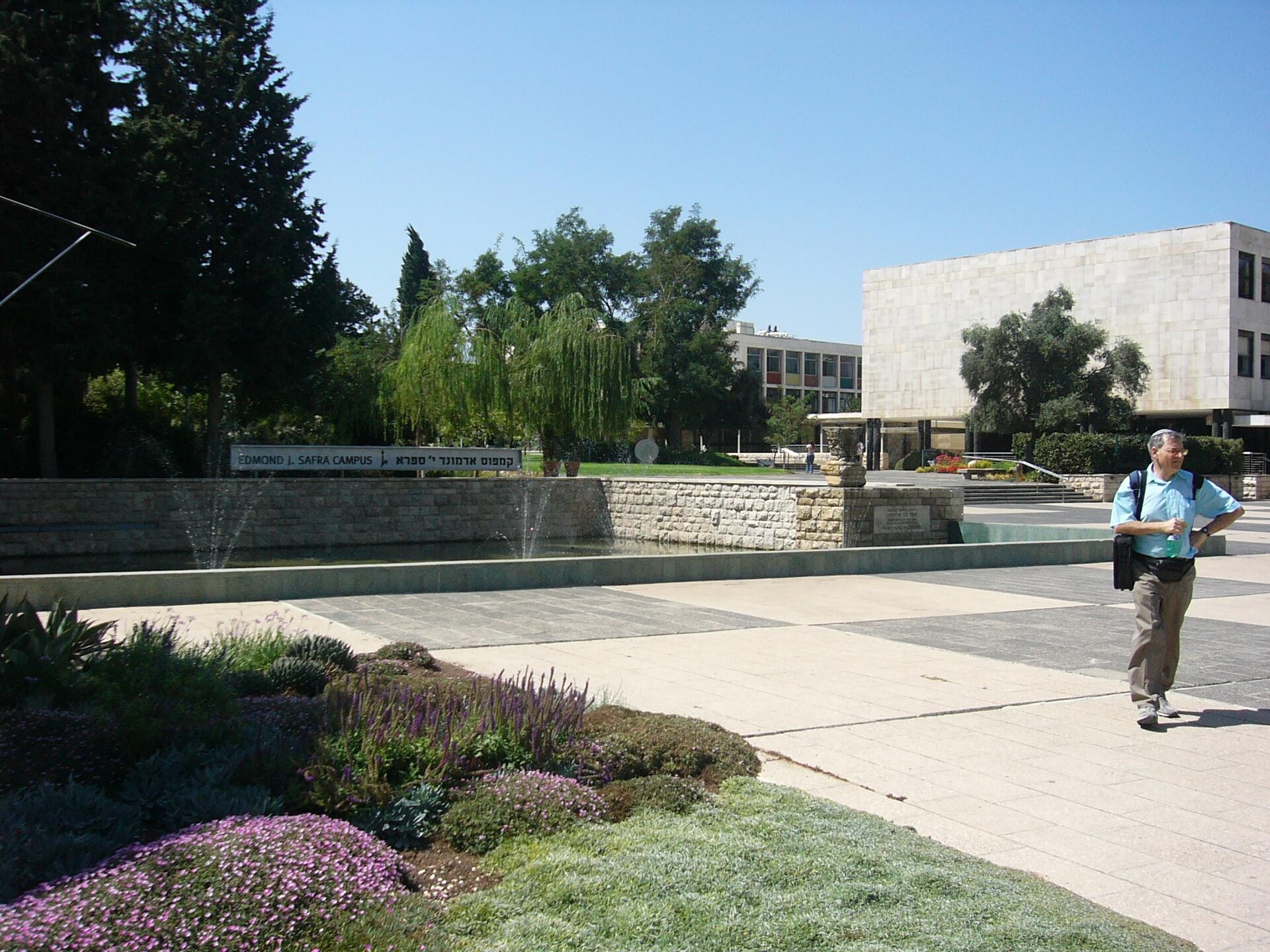
Givat-Ram Campus, entrance piazza
Givat-Ram Campus, entrance piazzaFootballkickit at English Wikipedia · CC BY 3.0 · via Wikimedia Commons
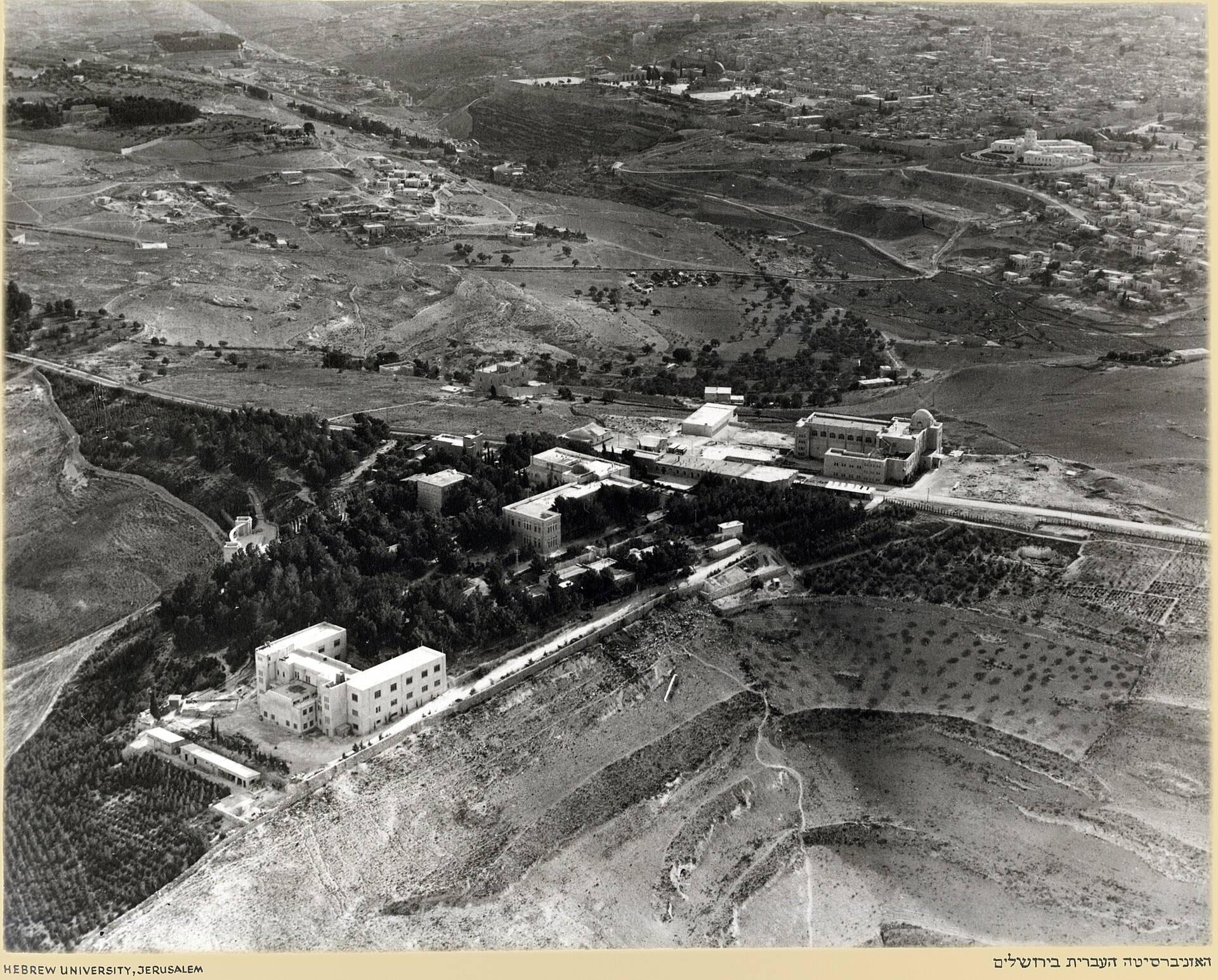
Z. Kluger. Erez Israel from the air - 1937-38
Z. Kluger. Erez Israel from the air - 1937-38Zoltan Kluger · Public domain · via Wikimedia Commons
Hebrew University on Mt. Scopus, Jerusalem, Israel
Hebrew University on Mt. Scopus, Jerusalem, IsraelGrauesel · CC BY-SA 3.0 · via Wikimedia Commons
Signs at the main entrance to the Givat Ram campus of the Hebrew University of Jerusalem
Signs at the main entrance to the Givat Ram campus of the Hebrew University of JerusalemKorenn · CC BY-SA 4.0 · via Wikimedia Commons

Why Hebrew University — Nobel Pedigree, Jerusalem & Global Research

Hebrew University is not merely Israel's top university — it is an institution founded by Einstein, Freud, and Weizmann before the State of Israel existed, and it has spent a century building one of the most distinctive research cultures in the world. For international students, it offers elite academic quality at a fraction of US or UK costs, in one of the most intellectually and historically stimulating cities on earth.

01Israel's #1 University
Ranked #1 nationally in every major index and #90 globally by Times Higher Education. Eight Nobel Prize laureates are affiliated with HUJI — among the most per-capita of any institution in the world.
02Research Depth Across Disciplines
HUJI operates over 100 research centres and institutes. Undergraduates regularly join faculty research projects from Year 2. The Hadassah Hospital affiliation makes it a leading clinical research training ground for life sciences.
03Global Alumni in Israel's Start-Up Ecosystem
Israel's per-capita density of tech startups and venture capital is among the highest globally. HUJI alumni are embedded at every level — founders, engineers, investors — and the network is actively accessible to students.
04Jerusalem — An Unrivalled Setting
The Mount Scopus campus overlooks the Old City, the Judean Desert, and the Dead Sea. Nowhere else do archaeology, international relations, law, and history students have direct proximity to the civilisations they study.

HUJI Acceptance Rate & International Applicant Profile

Stats

~45%
Overall acceptance rate
#1
National Rank
23,500
Total Students

Profile Stats

32
Minimum IB Score
3.2
Minimum GPA (4.0 scale)
89
TOEFL Minimum
6.5
IELTS Minimum
10%
International Students
#90
THE Global Rank
Overall acceptance rate — programme rates vary significantly

Rea Vs Rd

Rd Label: Rolling / Main Intake
Rd Value: ~45% overall
Rea Label: Competitive Programmes (CS, Law, Medicine)
Rea Value: Significantly lower

HUJI Admissions Requirements — Academic Record, English Proficiency & Qualifications

Academic Record
Value: 3.2+ GPA
  • Minimum 3.2 on a 4.0 scale (university-wide floor)
  • Competitive programmes expect 3.7+ effectively
  • Grade trajectory across all years is reviewed
  • Relevant subject performance weighted by programme
HUJI is primarily grade-based. Admissions are not holistic in the US sense — your academic record in relevant subjects is the dominant criterion. The overall 45% acceptance rate hides much lower rates for competitive tracks in CS, Medicine, Law, and Psychology.
English Proficiency
Value: TOEFL 89 / IELTS 6.5
  • TOEFL 89+ iBT required; 95+ for full Exemption level
  • IELTS 6.5+ required; 7.0+ for Exemption
  • SAT EBRW 670+ also qualifies for Exemption
  • English-medium school graduates may be exempt
All English-taught programmes require demonstrated English proficiency. Exemption level (TOEFL 95+ / IELTS 7.0+) is required for full access to English-medium study without remedial language support. This is a minimum, not a target — aim for Exemption.
Qualifications
Value: IB 32+
  • IB minimum: 32 points overall
  • Competitive programmes expect 36+ in practice
  • A Levels: BBB minimum; competitive programmes want ABB–AAA
  • National school-leaving certificates assessed on equivalence
HUJI accepts IB Diploma, A Levels, French Baccalaureate, German Abitur, and most national school-leaving certificates. The IB is well-understood and valued. SAT and ACT scores can substitute for the Israeli Psychometric Entrance Test for some programmes.

HUJI Application Components — Direct Portal, Documents & Requirements

HUJI uses a direct online application through the Overseas Applicants Unit — no Common App, no UCAS. Below are all application components, required and optional, with notes for international students.

01RequiredOnline Application Form
Submitted via the HUJI Overseas Applicants Unit portal. You select up to three programme preferences (single or dual-major). The $100 application fee is paid at submission.
02RequiredAcademic Transcripts & Qualifications
Certified copies of all secondary school transcripts and leaving certificates (IB Diploma, A Levels, national school-leaving certificates). Grade predictions are acceptable for students still in study.
03RequiredEnglish Proficiency Proof
Official TOEFL, IELTS Academic, or SAT EBRW score report sent directly from the testing organisation. Applicants who completed all secondary study at a recognised English-medium institution may qualify for exemption.
04RequiredProof of Identity
Valid passport or national identity document. Israeli citizenship or residency status must be declared, as it affects the applicable tuition track.
05ConditionalProgramme-Specific Requirements
Medicine, specific science tracks, and competitive humanities streams may require prerequisite subject grades, entrance interviews, or portfolio submissions. Always verify with the individual faculty page.
06OptionalMotivation Letter or CV
Not required for most undergraduate programmes. Some competitive specialisations (Amirim Honours, graduate entry, scholarship applications) request a motivation letter. If asked, treat it as a serious academic document.
07OptionalSAT / ACT Scores
Not universally required. If submitted, SAT EBRW scores can satisfy English proficiency requirements and SAT/ACT scores may substitute for the Israeli Psychometric Entrance Test in some programmes.

HUJI Application Statements — Writing for a Direct-Apply Research University

Tips

Lead with a specific academic interest, not a general aspiration
HUJI does not want a personal narrative about who you are as a person. Where a statement is required, it wants to understand your academic motivation. Begin with the specific question or problem that draws you to your field.
Name specific HUJI faculty, research groups, or programme features
A motivation letter that praises 'HUJI's excellent reputation' is immediately recognisable as generic. Name the specific aspect of HUJI's programme, research cluster, or faculty that draws you here rather than anywhere else.
Connect past to future with academic logic
Show a coherent thread: what in your academic background prepared you for this programme, and where you intend to take this education. HUJI values intellectual purpose over personal narrative.
Write in the correct register — academic, not personal
HUJI's motivation letter is closer to a professional research statement than a US personal essay. It should be concise (400–600 words), formally written in English, and focused on your academic intentions.

Prompts

Motivation Letter (Programme-Specific)
No universal personal essay is required for most HUJI undergraduate programmes. For competitive or specialist programmes that request a motivation letter, the implicit prompt is: why this programme, why HUJI, and what do you intend to do with this degree?
Scholarship Personal Statement
Scholarship applications — including Friends of HUJI office awards — typically require a personal statement or motivation letter describing your academic achievements, financial situation (if need-based), and how a HUJI education fits your goals.
Amirim Honours / Specialist Tracks
Some competitive tracks (Amirim Honours Programme) may request additional academic writing samples or a CV demonstrating research experience and academic achievement.
The most common HUJI application statement mistake. Writing a personal narrative essay as if applying to a US liberal arts college — HUJI wants academic purpose, not life story.
Writing Strategy — What Works at a Direct-Apply Research University

What HUJI Admissions Officers Are Looking For

HUJI's evaluation is primarily academic — unlike US holistic admissions, there is no systematic weighting of extracurriculars, personal essays, or demonstrated interest. Understanding what actually drives the decision is the foundation of a strong HUJI application strategy.

01Strong Academic Grades
HUJI's admissions are primarily academic-record based. High grades in relevant subjects — particularly in the subjects most closely connected to your intended programme — are the dominant criterion.
02Relevant Subject Background
Programme-specific prerequisites matter significantly. CS and Engineering applicants need demonstrated mathematical strength. Life Sciences applicants need strong biology and chemistry grades. Law applicants need strong humanities performance.
03Demonstrated English Proficiency
For English-taught programmes, reaching Exemption level (TOEFL 95+ / IELTS 7.0+) by the start of second year is essential. Arriving with Exemption level already achieved demonstrates readiness and avoids adding a remedial burden to your first year.
04Academic Consistency
HUJI reviews your full secondary school record, not just final results. Consistent high performance across Years 9–12 in relevant subjects is more persuasive than a sudden spike in the final year.
05Clear Programme Match
Because you declare your programme at application stage (not after matriculation), HUJI looks for alignment between your academic background and your chosen programme. A history student with no mathematics applying to Computer Science creates a mismatch that hurts the application.
06Intellectual Purpose
While HUJI does not require a personal essay, it values students who have a clear academic reason for their programme choice. Where statements or interviews are requested, articulacy about your intellectual interests and how HUJI serves them is a real advantage.

HUJI Financial Aid & Scholarships for International Students

Hebrew University awards scholarships to a significant share of its student body. With an average aid percentage of 25% and annual tuition of $15,000, qualified international students can bring their net tuition cost below $12,000 per year — making HUJI one of the most affordable globally-ranked research universities for international applicants.

Aid amounts are estimates based on published figures. Individual packages are determined by HUJI's Financial Aid Unit on a case-by-case basis. Verify current rates and availability with the university before making financial plans.

Stats

25%
Average aid percentage
$15,000
Annual tuition (international track)
$27,000
Total cost of attendance
$100
Application fee

Contribution Tiers

NoteRangePercentPercent Value
Academic Excellence Award — full or half tuition scholarshipTop entry qualifications0–50% of tuition50
Friends of HUJI + partial university grant typicalStrong academic record~25% reduction75
Need-based partial grant available via Financial Aid UnitDemonstrated financial needVaries by need85
Dean's / Rector's Award during studyTop GPA in Years 1–3Annual reduction90
No scholarship applied — full international track tuitionNo aid appliedFull $15,000100
Scholarships as Grants — What's Available. HUJI does not have a universal no-loan policy, but many scholarships offered through the Friends of the Hebrew University network and the university's own Financial Aid Unit are outright grants — money you do not repay. The combination of lower tuition and available grants can make HUJI meaningfully more affordable than comparable institutions in the US or UK.
http://info-overseas.huji.ac.il/financial-information

Key Dates

Early International Programme Applications Open
Date: December 15
Main Intake Applications Open
Date: February 1
Language Test Submission Deadline
Date: May 20
Academic Year Begins
Date: October

Advantages

  • Popular programmes (CS, Psychology, Law) fill rapidly once open
  • Applying in the first week of opening maximises your odds
  • Earlier application leaves more time to resolve conditional requirements
  • Some scholarship nominations are tied to early application status
  • Gives time to resit English proficiency tests if the first score is below Exemption level

Disadvantages

  • No binding commitment or penalty for applying early at HUJI
  • Applying early requires all documents to be ready at portal opening
  • Predicted grades may not be final — check what HUJI accepts as provisional
  • You cannot defer your English proficiency submission indefinitely (May 20 deadline)
  • If applying before final results, track conditional acceptance requirements carefully
Rolling Admissions vs Early Strategy. Unlike US early-decision or UK UCAS round systems, HUJI uses rolling admissions — places fill as they are filled. There is no penalty for applying on day one, and significant risk in waiting.
Tychr's Timing Recommendation. Apply to HUJI on the first day the portal opens for your programme. There is no strategic advantage in waiting, and competitive programmes close before their nominal deadline. Have all documents — transcripts, language test scores, and identity documents — ready before the portal opens. Prepare your TOEFL or IELTS in Grade 11 so you arrive at Grade 12 with a confirmed score in hand.
HUJI Rolling Admissions — Apply Early or Risk Missing Your Programme

HUJI Interviews — What to Expect

HUJI does not conduct interviews for most undergraduate applicants. Admission is primarily based on academic qualifications and language proficiency. However, a small number of competitive or specialist programmes — and the Medicine track for international students — may include an interview component. If you are called to interview, treat it as a serious academic conversation rather than a personality assessment: HUJI interviewers want to verify that your academic interests are genuine and that you are prepared for the rigour of the programme.

Meta

No interview required for most programmes
Standard undergraduate admissions
Some programmes may request an interview — verify per faculty
Competitive specialisations
International MD track may include an interview component
Medicine track
Your academic record, language scores, and (where applicable) motivation letter
What replaces the interview

Questions

Why did you choose this programme at Hebrew University specifically?
Tip: Be specific — name the research group, the faculty, or the aspect of the programme that distinguishes it from alternatives. Generic answers signal low research.
What academic problem or question are you most interested in exploring?
Tip: Choose a genuinely relevant academic topic. Demonstrate that your intellectual interests are consistent with your programme application, not incidental to it.
Tell me about a time you found an academic topic genuinely difficult.
Tip: Be honest. Describe a specific course, project, or piece of reading that challenged you academically and what you did with that challenge.
Where do you intend to go after completing this degree?
Tip: Have a clear, considered answer. HUJI values students with intellectual purpose — connect your degree to a specific post-graduate direction, whether academic or professional.
What aspects of studying in Jerusalem interest or concern you?
Tip: Demonstrate that you have researched Jerusalem and Israeli academic culture. Show that you have thought practically about living and studying in this environment.

HUJI Campuses & Residential Life

Hebrew University operates across two main Jerusalem campuses — Mount Scopus and the Edmond J. Safra campus at Givat Ram — plus the Faculty of Agriculture in Rehovot. On-campus dormitories operate on both main campuses, and international students are given priority in Year 1. Unlike US residential college systems, HUJI housing is primarily a practical arrangement rather than an academic community structure — but the campus environments themselves are extraordinary.

Houses

Mount Scopus Student Village
Tag: Mount Scopus
Main humanities and social sciences campus dormitories; panoramic Old City views
Beit Maiersdorf
Tag: Mount Scopus
International student residence with priority placement for overseas students
Beit Belgia
Tag: Mount Scopus
Established student residence with community facilities
Givat Ram (Edmond J. Safra) Dormitories
Tag: Givat Ram
Sciences campus housing adjacent to the Israel Museum and Knesset
Agriculture Faculty Campus Housing
Tag: Rehovot
Student housing at the Faculty of Agriculture, Food and Environment (45 min from Jerusalem)
Private Apartments — Jerusalem
Tag: Off-Campus
The Baka, German Colony, Katamon, and Talpiot neighbourhoods are popular with HUJI students; 20–40 min from campus

Lottery Steps

  • Year 1: International students given priority access to on-campus dormitories — apply for housing simultaneously with your degree application
  • Year 2+: On-campus housing continues to be available on application, subject to availability; many students transition to private apartments in nearby Jerusalem neighbourhoods
  • Mount Scopus: Humanities, Law, Social Sciences, Business Administration students; dramatic hilltop setting with Old City views
  • Givat Ram (Edmond J. Safra): Sciences, Computer Science, Mathematics students; adjacent to National Library of Israel and Israel Museum
  • Rehovot: Agriculture and Food Science students; separate campus approximately 45 minutes from central Jerusalem

HUJI Faculties & Schools

Faculty of Humanities
Label: Mount Scopus Campus
  • {"label":"Departments","value":"20+"}
  • {"label":"Key disciplines","value":"History, Philosophy, Archaeology, Linguistics, Jewish Studies"}
  • {"label":"Language of instruction","value":"Hebrew & English"}
  • {"label":"Research strengths","value":"Ancient Near East, Bible studies, comparative religion"}
One of the strongest humanities faculties in the Middle East, with particular global recognition in archaeology, biblical studies, Jewish history, and philosophy.
Faculty of Social Sciences
Label: Mount Scopus Campus
  • {"label":"Key programmes","value":"Economics, Political Science, Psychology, International Relations, Sociology"}
  • {"label":"English-taught option","value":"International Relations & Political Science"}
  • {"label":"Research centres","value":"Harry S. Truman Institute, Leonard Davis Institute"}
  • {"label":"Selectivity","value":"High for Psychology and Law-adjacent tracks"}
Strong across Economics, Political Science, and Psychology. The Truman Institute for international peace studies is globally known. Psychology is among the most competitive programmes at HUJI.
Faculty of Science
Label: Givat Ram (Edmond J. Safra) Campus
  • {"label":"Key departments","value":"Mathematics, Physics, Chemistry, Computer Science, Earth Sciences, Life Sciences"}
  • {"label":"Nobel connections","value":"Multiple Nobel laureates in Chemistry and related sciences"}
  • {"label":"Research culture","value":"Undergraduates join labs from Year 2"}
  • {"label":"Industry links","value":"Google Israel, Intel, Mobileye, Check Point"}
HUJI's science faculty is the core of its Nobel-winning research tradition. Computer Science is particularly strong and closely linked to Israel's booming tech industry. Mathematics and Chemistry have international reputations dating to the founding era.
Faculty of Law
Label: Mount Scopus Campus
  • {"label":"Degree","value":"LLB (Israeli law), LLM (international)"}
  • {"label":"International track","value":"Available in English at LLM level"}
  • {"label":"Research strengths","value":"International law, human rights, constitutional law"}
  • {"label":"Selectivity","value":"Among the most competitive at HUJI"}
One of Israel's leading law faculties with strong international law and human rights programmes. The LLB is taught primarily in Hebrew; graduate programmes offer English-language tracks.
Faculty of Medicine (Hadassah)
Label: Ein Kerem / Hadassah Hospital
  • {"label":"Degree","value":"MD (primary Hebrew track)"}
  • {"label":"Hospital affiliation","value":"Hadassah Medical Center, Ein Kerem"}
  • {"label":"Research strengths","value":"Neuroscience, oncology, genetics"}
  • {"label":"International access","value":"Verify current international student eligibility directly"}
The Hadassah School of Medicine is consistently ranked as one of the Middle East's leading medical schools. Admission is highly competitive and primarily conducted in Hebrew. International applicants should verify current eligibility for English-track programmes directly with the faculty.
Robert H. Smith Faculty of Agriculture, Food and Environment
Label: Rehovot Campus
  • {"label":"English-taught track","value":"International Agriculture programme (full English)"}
  • {"label":"Research focus","value":"Food security, sustainable agriculture, plant science"}
  • {"label":"Global recognition","value":"Top 20 globally in agricultural sciences"}
  • {"label":"Location","value":"Rehovot, ~45 min from Jerusalem"}
Internationally recognised in food security, drip irrigation technology, and desert agriculture — technologies invented or developed at HUJI. The International Agriculture programme is one of HUJI's signature fully English-taught undergraduate degrees.
School of Business Administration
Label: Mount Scopus Campus
  • {"label":"Degree","value":"BA in Business Administration"}
  • {"label":"Language option","value":"Hebrew track (English track: check current availability)"}
  • {"label":"Industry links","value":"Israeli banking, fintech, startup ecosystem"}
  • {"label":"Graduate pathway","value":"MBA at Ono Academic College or partner schools"}
HUJI's Business Administration programme prepares students for Israel's dynamic business ecosystem — one of the world's densest clusters of tech startups and multinational R&D centres. Finance and entrepreneurship are key focal areas.

Research & Extracurricular Opportunities at Hebrew University

Faculty Research Participation
Category: Undergraduate Research
HUJI undergraduates in the sciences regularly join faculty research labs from Year 2 — sometimes earlier for students with strong first-year performance. The proximity to Hadassah Hospital makes clinical research accessible to Life Sciences and Medicine-track students from an early stage.
Amirim Interdisciplinary Honours Programme
Category: Excellence Track
HUJI's flagship undergraduate excellence track for students with outstanding academic profiles. Amirim students pursue an interdisciplinary curriculum spanning humanities, sciences, and social sciences, with a dedicated seminar programme and direct faculty mentorship. Admission is competitive and requires separate application.
Student Societies & Cultural Life
Category: 200+ Active Groups
Over 200 student clubs and societies operating across HUJI — academic, cultural, sporting, religious, and political. The International Students Community coordinates orientation, social programming, and support specifically for overseas students. Jerusalem itself adds an unrivalled cultural dimension: the Old City, Israeli Museum, Mahane Yehuda market, and Arab Quarter are all within reach.
Rothberg International School
Category: International Programmes
HUJI's dedicated gateway for international students — offering intensive Hebrew language courses, English-taught one-semester or one-year exchange programmes, and transition support for new international undergraduate students. Most first-year international students begin with Rothberg orientation.
Scroll right to explore HUJI's research programmes and student life opportunities.

Career Outcomes & HUJI Alumni Network

Hebrew University graduates enter an Israeli economy that punches far above its weight internationally — particularly in technology, biomedical science, and international law. A HUJI degree carries strong recognition in North America, Europe, and across the Middle East, and the university's alumni network is actively maintained through Friends of the Hebrew University offices in dozens of countries.

Stats

88%
Graduate employment rate within relevant professional field
$45,000
Average starting salary (USD equivalent)
#165
QS World University Rank
#90
THE World University Rank
8
Nobel Prize laureates affiliated with HUJI
#1
Israel national rank

Categories

Technology
Google Israel, Amazon, Mobileye, Check Point, WalkMe, and hundreds of Israeli startups — HUJI Computer Science and Mathematics graduates are embedded throughout Israel's tech ecosystem, one of the highest-density venture-backed startup environments in the world.
Life Sciences & Pharma
Teva Pharmaceutical, BioLineRx, CytRx, and the world's leading academic medical research institutions — HUJI Life Sciences and Medicine graduates have built Israel's global pharmaceutical and biomedical research reputation.
Law & International Organisations
Israeli law firms, the International Court of Justice, UNICEF, UNRWA, WHO, and global NGOs — HUJI Law and International Relations graduates populate international legal institutions at disproportionately high rates given Israel's size.

Our HUJI Admissions Track Record & Student Success Stories

Ananya S.
I was applying from an Indian IB school and wasn't sure how my profile would translate into HUJI's system. Tychr helped me understand that my IB 39 was above the competitive threshold for Life Sciences, and coached me on reaching TOEFL Exemption level before submitting. I got into the Biology programme and joined a research lab in Year 2.
Country: India
Program: HUJI — Life Sciences
Class Year: Class of 2026
Residential: Mount Scopus Dormitory
Academic Profile: IB 39 · TOEFL 100
David K.
The rolling admissions system caught me off guard — I assumed I had until the 'deadline' and nearly missed the Computer Science intake. Tychr pushed me to apply on day one of the portal opening and had all my documents ready in advance. My programme was closed two weeks later.
Country: South Africa
Program: HUJI — Computer Science
Class Year: Class of 2025
Residential: Givat Ram Campus Housing
Academic Profile: A Levels — A*AA · SAT 1420
Emma L.
Studying International Relations in Jerusalem is genuinely unlike anywhere else. Tychr helped me write the motivation letter for a Friends of HUJI scholarship and I received a partial award that significantly reduced my tuition. The scholarship application was more demanding than the degree application itself.
Country: France
Program: HUJI — International Relations
Class Year: Class of 2027
Residential: Beit Maiersdorf International Residence
Academic Profile: French Baccalaureate 17/20 · IELTS 7.5

Faqs

Do I need to know Hebrew to study at Hebrew University?+

Not for English-taught programmes. HUJI offers degree programmes fully taught in English — particularly in Life Sciences, Computer Science, International Agriculture, and International Relations — and international students can complete their entire degree without Hebrew. However, some mixed-language tracks require Hebrew competency by Year 2. Check your specific programme requirements.

Is HUJI's admissions process similar to the US Common App?+

No. HUJI uses a direct online application through its Overseas Applicants Unit portal. There is no Common App, Coalition, or UCAS involvement. You apply directly to HUJI and receive your decision from the university. There is no personal essay requirement for most undergraduate programmes — admissions are primarily grade-based.

Can I study medicine at HUJI as an international student?+

The Hadassah School of Medicine is one of the world's leading medical schools, but the Hebrew-language MD programme has very limited international student access. Certain graduate-level medical programmes may offer English-language tracks. Verify current international student eligibility directly with the Faculty of Medicine before applying.

What standardised tests does HUJI accept?+

HUJI's test policy is optional for SAT/ACT, which are not universally required. Your IB Diploma, A Levels, or national school-leaving certificate is the primary admissions document. However, SAT EBRW scores can serve as English proficiency evidence, and SAT/ACT scores may substitute for the Israeli Psychometric Entrance Test in some programmes. Submit SAT scores if you have them — they can only help.

When should I apply to maximise my chances?+

Apply on the first day the portal opens. HUJI uses rolling admissions — places fill as they are claimed. Competitive programmes like Computer Science, Psychology, and Law close their international intake well before nominal deadlines. Have all documents (transcripts, language scores, identity documents) ready before the portal opens.

What is Jerusalem like for daily student life?+

Jerusalem is safe, walkable, and relatively affordable by Western European or North American standards. The university area has student cafes, restaurants, and services. Public transport connects to central Jerusalem and Tel Aviv. Jewish High Holidays in September/October compress the autumn semester — check the HUJI academic calendar when planning travel.

Are there scholarships specifically for international students?+

Yes. HUJI's Financial Aid Unit administers Academic Excellence Awards covering full or half tuition for qualifying first-year students. Friends of the Hebrew University offices in many countries also offer merit and need-based scholarships specifically for international applicants. Apply to every scholarship you are eligible for — competition for external Friends of HUJI awards is often less intense than for domestic Israeli awards.

Is HUJI the right choice if I want to go on to graduate study abroad?+

Yes. HUJI's research reputation is well-recognised by graduate admissions offices in North America, the UK, and Europe. Students who participate in faculty research projects and co-author publications during their undergraduate years are particularly well-positioned for competitive international PhD programmes. HUJI's ranking (#90 THE, #165 QS) provides strong recognition signals to admissions committees worldwide.

Book a Free Hebrew University Admissions Strategy Session

In 60 minutes our admissions specialists will evaluate your academic profile against HUJI's programme-specific requirements, identify your English proficiency gaps, develop your scholarship application strategy, and determine whether you are applying early enough to secure a place in your target programme.

  • No commitment required
  • HUJI and Israel admissions specialists
  • Personalised strategy — not generic advice
A HUJI application is won or lost before the portal opens — not after.

HUJI Academic Requirements

Hebrew University Academic Requirements — The Honest Breakdown for International Students

What GPA, qualifications, and academic profile do HUJI's competitive programmes require? And what does a grade-primary Israeli admissions system mean for students from IB, A Level, and other international curricula?

32
Minimum IB Score
Competitive programmes expect 36+
3.2
Minimum GPA
On a 4.0 scale
89
TOEFL Minimum
95+ for full Exemption level
6.5
IELTS Minimum
7.0+ for Exemption level
~45%
Acceptance Rate
Lower for CS, Law, Medicine, Psychology
#90
THE World Rank
Israel's #1 university

GPA & Academic Record

GPA at HUJI — What the Numbers Show

Hebrew University's official minimum GPA is 3.2 on a 4.0 scale — a stated floor, not a competitive target. In practice, strong applicants to HUJI's most popular programmes (Computer Science, Psychology, Life Sciences, Law) have significantly higher academic profiles.

A 3.2 GPA satisfies HUJI's minimum but will not make you competitive for high-demand programmes. If your target is Computer Science, Law, or Psychology, aim for the top of your class in relevant subjects — not just the minimum.

3.2
University-wide minimum GPA
3.7+
Effective competitive floor for CS, Law, Psychology
What this means for international students. International students from systems without a formal GPA (IB, A Levels, French Baccalaureate) have their grades converted to an equivalent scale by the Overseas Applicants Unit. HUJI has experience evaluating most major international systems — but the conversion is mechanical, not contextual. A 38 IB Diploma does not become a 4.0 GPA; it is placed in a band and compared accordingly.
Grade trajectory matters. HUJI reviews your full secondary school record, not only your final year. An upward grade trajectory — improving from moderate to strong performance — is seen positively. A declining trajectory in the final year raises questions about readiness for university-level rigour and should be addressed proactively in any accompanying statement.

Academic Context

How HUJI Reads Academic Performance Across International Systems

HUJI evaluates academic qualifications in context — but it is important to understand that this context is primarily structural (what qualification system you used) rather than holistic (whether you had personal challenges). The admissions process is primarily bureaucratic-academic, not narrative-holistic.

How HUJI contextualises your qualification
The Overseas Applicants Unit has published conversion tables for most major international qualification systems. Your IB points, A Level grades, or national scores are mapped to an Israeli equivalent matriculation score. This conversion determines your academic band, which is then compared to the programme's entry requirements. Unlike US admissions, there is no committee narrative review of your personal circumstances alongside your grades.
What this means practically
The practical implication is straightforward: choose the most demanding subjects available in your school system, and perform as strongly as possible in them. There is no mechanism by which a 'difficult school context' significantly adjusts the academic expectation for competitive programmes. What matters is your actual grade output in the subjects relevant to your application.
For students from less common qualification systems. If you are applying from a lesser-known school system, proactively check the Overseas Applicants Unit's listed accepted qualifications and conversion equivalences before applying. Some systems require additional documentation of equivalence — particularly for national school-leaving certificates from countries less frequently represented in HUJI's applicant pool.

SAT at HUJI

SAT Scores at HUJI — A Dual Function

SAT scores are not universally required at HUJI — but they serve two distinct functions that make submission strategically valuable for many international applicants.

LabelScorePercent
SAT EBRW for English Exemption670+85
SAT EBRW for Upper Advanced600–66970
SAT EBRW for Lower Advanced500–59955
The SAT Math score at HUJI. For STEM-focused applicants, a strong SAT Math score (700+) reinforces your mathematical preparation and is a useful signal alongside your IB Mathematics or A Level Mathematics grades. It does not substitute for strong school mathematics grades but complements them.
Strategic preparation. If you are targeting HUJI and are a US-curriculum student, prepare for the SAT primarily as a means of resolving your English proficiency requirement simultaneously with demonstrating academic capability. Aim for EBRW 670+ to reach Exemption level and remove the language requirement from your application.
When to submit SAT scores to HUJI. Submit SAT scores if: (1) your EBRW score is 600 or above, giving you at least Upper Advanced English proficiency; (2) your composite score is 1250 or above, adding a positive academic signal; (3) you are applying to a programme where HUJI accepts the SAT as a Psychometric Entrance Test substitute. If your SAT scores are below these thresholds, a dedicated TOEFL or IELTS submission is a cleaner path to English proficiency evidence.
http://info-overseas.huji.ac.il/english-requirements

ACT at HUJI

ACT Scores at HUJI — When and How They Matter

ACT scores are accepted at HUJI as an international academic credential and may substitute for the Israeli Psychometric Entrance Test in some programmes, similarly to the SAT.

Metrics

Accepted as academic credential
Score: Any
Competitive signal
Score: 30+

Comparison Cards

SAT or ACT — equal standing
Either the SAT or ACT is accepted. Choose the one on which you have performed better. There is no preference between them at HUJI.
The SAT EBRW advantage
The SAT EBRW subscore directly resolves the English proficiency requirement. The ACT does not have a directly mapped English proficiency equivalence at HUJI — submit TOEFL or IELTS separately if using the ACT.
When not to submit
Neither the SAT nor ACT is required for most HUJI programmes. Submit them if they strengthen your profile; do not submit a score below 1150 (SAT) or 24 (ACT) as the benefit is minimal.
How HUJI uses ACT scores. HUJI does not use superscore policies — the ACT is evaluated as a single credential among several, not as a scored benchmark in the way it is at US universities. Its primary function at HUJI is as supplementary evidence of academic capability, not as a gating criterion.
Tychr's recommendation. If you have strong SAT scores (especially EBRW 670+), submit them to HUJI — they serve double duty as academic credentials and English proficiency evidence. If your strength is the ACT, submit it alongside a separate TOEFL or IELTS score to cover the language proficiency requirement independently.

Testing Strategy

HUJI Test-Optional Policy — The Strategic Reality

HUJI's official test policy is 'optional' — SAT and ACT scores are not universally required for undergraduate admission. However, understanding what 'optional' means at HUJI, and when not submitting hurts you, is crucial for international applicants.

Submit Items

Your SAT EBRW score is 600+ — it can resolve your English proficiency requirement at Upper Advanced or Exemption level, simplifying your application.
Your ACT composite is 28+ — it adds a positive academic credential to your application.
You are applying to a programme that accepts SAT/ACT as a substitute for the Israeli Psychometric Entrance Test.

Withhold Items

Your SAT EBRW score is below 500 — it adds no English proficiency value and risks drawing attention to a weak dimension of your academic profile.
Your composite SAT score is below 1100 — submit TOEFL or IELTS separately and do not include the SAT at all.
What 'optional' means at HUJI. International students apply primarily on the basis of their secondary school leaving certificates (IB, A Levels, national equivalents). SAT/ACT scores are supplementary — they can strengthen your application and resolve your English proficiency requirement, but their absence is not penalising in the way it might be at a US university that explicitly values standardised test data.
The misconception about test-optional admissions at HUJI. Some students believe that because HUJI is test-optional, test scores are irrelevant. In reality, submitting strong SAT/ACT scores provides positive academic signals and can resolve the English proficiency requirement simultaneously — a material advantage in a direct-apply, document-heavy process. 'Optional' means non-required, not non-beneficial.

International Qualifications

IB Diploma and A Levels at HUJI — Specific Benchmarks

IB Diploma
Note: What HUJI values in IB applicants: strong Higher Level grades in subjects relevant to your intended programme. An IB student applying to Computer Science with HL Mathematics AA (6 or 7) and strong science subjects presents a coherent academic profile. The Extended Essay can serve as supplementary evidence of research interest but is not scored separately in HUJI's process.
  • {"label":"Minimum total","value":"32 points overall"}
  • {"label":"Competitive threshold","value":"36+ for high-demand programmes in practice"}
  • {"label":"HL expectations","value":"6s and 7s in subjects relevant to intended programme"}
  • {"label":"English proficiency","value":"IB English at HL may qualify for proficiency exemption — verify with admissions"}
A Levels
Note: A Level predicted grades and final results are both accepted. HUJI has experience evaluating Cambridge, Edexcel, and OCR qualifications. Three A Levels with grades of B or above in relevant subjects typically satisfy entry requirements for most programmes; competitive programmes may require A or A* in core subjects. AS results, where available, contribute to the academic picture.
  • {"label":"Minimum expectation","value":"BBB in relevant subjects"}
  • {"label":"Competitive programmes","value":"ABB to AAA depending on programme"}
  • {"label":"Subject relevance","value":"Core subjects in your intended field most important"}
  • {"label":"GCSE/IGCSE","value":"Reviewed where available as part of overall academic picture"}

Advanced Placement

AP Courses at HUJI — What They Count For

AP courses are not a primary admissions credential at HUJI in the way they are at US universities. HUJI applicants are evaluated on their school-leaving qualifications, not on AP performance as a standalone signal. However, AP courses serve a useful supplementary function for US-curriculum applicants.

AP for US-curriculum applicants
For US high school students applying with a standard US transcript (no IB, no A Levels), strong AP performance (5s in relevant subjects) reinforces academic rigour. A US transcript without AP courses, or with low AP scores, is a weaker application than one with evidence of advanced coursework.
Credit transfer
HUJI does not typically offer AP course credit in the way US universities do. AP performance is evaluated as an academic signal, not as a credit-transfer mechanism.
IB students: skip the APs
IB students at international schools should not take AP courses as additional credentials — it is unnecessary and may detract from IB performance. AP is appropriate for students in US-curriculum schools.
HUJI does not have a published AP credit transfer policy comparable to US universities. International students should verify any credit claims directly with the relevant faculty before assuming AP performance translates to exemptions.
Students in IB, A Level, French Baccalaureate, or other non-US systems should focus on their primary qualification system rather than adding AP courses. HUJI evaluates your qualification within its own system — you do not gain an advantage by mixing systems unless you are genuinely in a US-curriculum school.

Academic Rigour

Secondary School Rigour at HUJI — What It Actually Means

HUJI's admission is primarily grade-based, but the rigour of your secondary school record matters in a specific sense: the subjects you studied and the level at which you studied them must be appropriate for your intended programme. This is a prerequisite check, not a holistic quality assessment.

Studying the right subjects at the highest level available to you — then performing strongly in those subjects.

The programme-subject alignment element. HUJI does not reward students for taking unnecessary subjects at advanced level. What it rewards is students who have taken the subjects most relevant to their intended programme at the highest level their school system offers, and performed strongly in them. A Computer Science applicant with IB Mathematics: Analysis and Approaches HL is in a far stronger position than one with Mathematics: Applications and Interpretation SL, regardless of similar final grades.
What rigour means at a direct-apply university. Programme-subject alignment is the specific form that 'rigour' takes at HUJI. Before selecting your IB subjects or A Levels, map them against the prerequisites for your target HUJI programme. Correct subject choice at IB selection stage can determine your eligibility for your target programme three years later.
What HUJI is looking for. An applicant to HUJI's Life Sciences programme with IB HL Biology (6), HL Chemistry (6), and HL Mathematics (5) presents an appropriate and rigorous academic profile. The same applicant with HL Biology (7), HL Geography (6), and HL Psychology (6) — while also achieving strong grades — presents a subject mismatch. Both might have similar total IB points; only the first has the subject profile HUJI expects.

Programme-Specific Preparation

Mathematics and Science Preparation — What HUJI Programmes Expect

Because HUJI applicants declare their programme at application stage, subject-specific preparation is more important than at US universities where students enter undeclared. The following are the key academic signals for HUJI's most competitive programmes.

Computer Science
IB Mathematics: Analysis and Approaches HL (6 or 7), or A Level Mathematics (B or above). Further Mathematics at A Level or HL Maths AA (7) strongly preferred for the most competitive CS track. Programming experience — even informal — is an advantage in Year 1 of the CS programme.
Life Sciences & Pre-Medical
IB Biology HL and Chemistry HL (6s or 7s), or A Level Biology and Chemistry (B or above). The Hadassah Medical School affiliation means Life Sciences students can participate in genuine clinical and laboratory research from early in their programme — but only if their foundation science grades demonstrate genuine readiness.
Economics
IB Economics HL or Mathematics HL, or A Level Economics and Mathematics. Quantitative reasoning is central to HUJI's Economics programme. Students with stronger mathematics backgrounds are better positioned for the econometrics components that dominate the curriculum from Year 2.

Language Proficiency

English Language Requirements for International HUJI Applicants

English proficiency requirements at HUJI are structured in tiers. The required tier depends on whether you are entering an English-taught programme and when you need to reach full proficiency. Arriving with Exemption level already satisfied is strongly preferable to arriving with a lower level and needing to achieve Exemption during your degree.

The HUJI English proficiency requirement is not a formality. Students who arrive below Exemption level face mandatory English language study alongside their degree curriculum — an added burden in already demanding first-year programmes. Arrive with Exemption level achieved and remove this complication entirely.

Test: TOEFL iBT
Score: 95+ (Exemption) / 89+ (minimum)
Test: IELTS Academic
Score: 7.0+ (Exemption) / 6.5+ (minimum)
Test: SAT EBRW
Score: 670+ (Exemption) / 600+ (Upper Advanced)
Practical guidance for international applicants. Aim for TOEFL 95+ or IELTS 7.0+ before applying. These thresholds unlock Exemption status, which means you can study entirely in English without any mandatory remedial language requirement. Students arriving at Upper Advanced (TOEFL 80–94 / IELTS 6.0–6.5) must achieve Exemption by the start of second year — a achievable but unnecessary pressure in an already demanding transition year.
http://info-overseas.huji.ac.il/english-requirements

By Programme

Academic Requirements by HUJI Programme — Effective Competitive Benchmarks

HUJI requires programme declaration at application stage. The following summarises effective competitive expectations by discipline — based on the stated minimums and the realistic intake profile for each programme.

SignalsExpectationConcentration
HL Maths AA or A Level Maths; programming experienceIB 36+ with HL Maths 6–7; or A Level AAB with A in MathsComputer Science
HL Biology + Chemistry 6+; clinical interestIB 38+ with science HLs; or A Level AAA sciencesLife Sciences / Pre-Medical
HL Mathematics + Economics; quantitative projectsIB 35+ with HL Maths; or A Level ABB with Maths AEconomics
Strong humanities profile; IELTS 7.0+IB 34+ with relevant HLs; or A Level ABB humanitiesLaw (LLB — Hebrew track)
Strong English; social sciences breadthIB 33+ with relevant HLs; or A Level BBCInternational Relations
Biology; statistics awareness; strong gradesIB 36+ with HL Biology; very competitive in practicePsychology
HL Agriculture/Biology; environmental interestIB 32+ with relevant HLs (International Agriculture track open)Agriculture & Food Science (Rehovot)
Humanities breadth; foreign languages a plusIB 32+ with humanities HLs; A Level BBC humanitiesHumanities (History, Philosophy, Archaeology)

International Systems

HUJI and International Education Systems — How Your Curriculum Is Evaluated

IB Diploma
Well understood and well regarded. HUJI's Overseas Applicants Unit has clear conversion tables for IB scores. IB English at HL may qualify for English proficiency exemption. The total IB score is the primary metric; HL grades in relevant subjects are the secondary filter. The EE is not scored in HUJI's process but can be mentioned in a motivation letter to show research interest.
A Levels (Cambridge, Edexcel, OCR)
Accepted and evaluated on a conversion basis. Cambridge, Edexcel, and OCR A Levels are all recognised. Three A Levels with strong grades in relevant subjects are the expected profile. AS results contribute where available.
French Baccalaureate
Accepted with documentary equivalence verification. The Overseas Applicants Unit assesses the French Baccalaureate on its conversion scale. A French Baccalaureate grade of 16/20 in relevant sections is generally equivalent to a competitive IB/A Level profile.
German Abitur
Accepted with conversion. The German Abitur is a recognised qualification. German school-leavers with Abitur scores in the 1.0–1.5 range (top decile) are competitive for HUJI's demanding programmes.
Indian Boards (CBSE / ISC)
Evaluated case-by-case with full documentation. Indian school-leavers with CBSE or ISC results of 90%+ in relevant subjects, accompanied by JEE scores where applicable, are assessed alongside their secondary record. Tychr recommends supplementing Indian board results with a TOEFL Exemption-level score and, where possible, SAT results.
US High School Diploma
Accepted with verification. American students with a standard high school diploma (no IB, no A Levels) should submit SAT or ACT scores to provide the standardised academic benchmark that HUJI needs to compare their profile against international applicants.

Year-by-Year Roadmap

Building an Academic Profile for HUJI — What to Do at Each Stage

Grade 9–10Lay the subject and language foundation
Year: Grade 9–10
  • Select MYP or IGCSE subjects that leave the widest possible options for IB HL or A Level choices.
  • Prioritise mathematics and the natural sciences if STEM programmes interest you; languages and humanities if law, international relations, or social sciences are your target.
  • Begin English language development seriously if it is not your first language — TOEFL 95+ or IELTS 7.0+ is the target, and reaching it takes sustained preparation.
  • Research HUJI's faculty and programme offerings to identify your likely programme target before choosing IB or A Level subjects.
Grade 11Choose your IB / A Level subjects strategically
Year: Grade 11
  • Select Higher Level IB subjects (or A Level subjects) that directly match your intended HUJI programme's prerequisites.
  • For science programmes: commit to HL Biology, Chemistry, or Physics as required.
  • For social sciences: commit to HL Mathematics (Analysis and Approaches) for Economics, or strong humanities HLs for Law and International Relations.
  • Take TOEFL or IELTS in Grade 11 — aim for Exemption level (TOEFL 95+ / IELTS 7.0+). A confirmed Exemption score before you apply removes a significant administrative complication.
Grade 12Apply early and have all documents ready
Year: Grade 12
  • Applications for popular HUJI programmes open in December (early tracks) or February (main intake). Apply on day one for competitive programmes.
  • Assemble all required documents before the portal opens: certified transcripts, language test official score reports, passport copy, and any programme-specific requirements.
  • Apply for scholarships simultaneously — Friends of HUJI offices in many countries have scholarship cycles that open alongside or before the degree application window.
  • If your TOEFL or IELTS is not yet at Exemption level, resit as early in Grade 12 as possible — results must be submitted by May 20 for the October intake.
Post-AcceptancePrepare for the transition to Israeli academic culture
Year: Post-Acceptance
  • Begin studying basic Hebrew if you have time — it is not required for English-taught programmes, but basic conversational Hebrew significantly enriches your Jerusalem experience.
  • Apply for HUJI dormitory housing simultaneously with your acceptance confirmation — international students have priority in Year 1, but spaces are limited.
  • Review the academic calendar for Jewish holiday periods, which compress the autumn teaching schedule. Plan travel and coursework submission accordingly.
  • Contact the Rothberg International School orientation team to register for pre-semester international student orientation.

Common Pitfalls

Academic Mistakes That Hurt HUJI Applications — And How to Avoid Them

Assuming the overall 45% rate applies to your programme
The overall 45% acceptance rate does not apply to Computer Science, Law, Medicine, or Psychology. These programmes fill their international intake rapidly and have significantly higher de facto academic requirements. Research your target programme's effective entry threshold — not HUJI's overall rate.
Submitting your application before your TOEFL or IELTS score is confirmed
HUJI's English proficiency requirement has a hard deadline (May 20 for language test submissions for the October intake). Missing this deadline means your application cannot be processed — you are not deferred, you are removed from consideration for that cycle.
Choosing IB or A Level subjects that don't match your intended programme
HUJI applicants declare their programme at application. If your IB or A Level subject choices don't include the prerequisites for your intended programme (e.g., applying to CS without HL Mathematics), your application will be rejected or you will be placed in a lower track regardless of your overall grade profile.
Planning to switch programmes after arrival
Switching departments after acceptance requires the receiving department's approval and available places. It is rarely straightforward and often not possible. Apply to the correct programme from the start.
Relying on last year's requirements without verification
HUJI's faculties set their own prerequisites and sometimes update requirements between cycles. The Overseas Applicants Unit website is a general guide — always verify programme-specific requirements on the individual faculty admissions page or by contacting the faculty directly.
Underestimating the Israeli academic calendar
Jewish High Holidays in September/October create a compressed autumn teaching schedule. Students who arrive unprepared for this find their first semester unexpectedly intense. Review the HUJI academic calendar in advance and plan coursework accordingly.

Illustrative Profiles

What Successful HUJI International Applicants Look Like

The following profiles illustrate the range of academic backgrounds that succeed at HUJI. They are not guaranteed outcomes — they illustrate what competitive applicants from different systems look like, and where the strategic leverage lies.

Profile 1 — Life Sciences (IB Diploma)
IB HL Mathematics: Analysis and Approaches (7), HL Biology (6), HL Chemistry (6). TOEFL 101 (Exemption). Applied on February 1, the first day the portal opened. Accepted to Life Sciences within three weeks.
Stats: IB 38 · TOEFL 101
Takeaway: The subject profile was perfectly matched to the programme prerequisites. Early application secured the place before the programme filled. TOEFL Exemption removed the language uncertainty entirely.
Profile 2 — Computer Science (A Levels)
A Levels: Mathematics A*, Physics A, Computer Science A. SAT 1380 (EBRW 680 — Exemption level). Applied via the International Agriculture and Sciences track for Computer Science. Accepted to the CS programme.
Stats: A Levels A*AA · SAT 1380
Takeaway: The SAT EBRW 680 resolved the English proficiency requirement simultaneously. A Level Mathematics A* was the core credential — the CS programme prioritises mathematical preparation over programming experience at entry.
Profile 3 — Economics (French Baccalaureate)
French Baccalaureate 17.2/20 with strong performance in Sciences Economiques et Sociales. IELTS 7.5 (Exemption). Friends of HUJI France scholarship application submitted before degree application confirmed. Received partial tuition scholarship alongside degree acceptance.
Stats: French Baccalaureate 17.2/20 · IELTS 7.5
Takeaway: The Friends of HUJI scholarship application was submitted proactively and in parallel with the degree application. The scholarship award came alongside the acceptance — possible only because the student had researched the scholarship timeline and prepared both applications simultaneously.

Faqs

What IB score do I need for HUJI?+

Typically 32–38+ depending on programme. A 32 satisfies the minimum for general admission. Competitive programmes in CS, Life Sciences, Law, and Psychology have higher de facto thresholds — plan for 36+ if targeting these.

Can I apply to HUJI without SAT or ACT scores?+

No — SAT and ACT are not universally required. Your secondary school leaving certificate (IB, A Levels, or equivalent) is the primary admissions document. However, submitting SAT scores is strategically advantageous if your EBRW score is 600+ because it can simultaneously resolve your English proficiency requirement.

What does 'rolling admissions' mean in practice at HUJI?+

Programmes remain open until their intake quota is filled. For popular programmes like CS, Psychology, and Law, this can be within weeks of the portal opening. The nominal deadline is the latest you can apply — not the safest time to apply. Apply as early as possible.

TOEFL or IELTS — which does HUJI prefer?+

Both TOEFL and IELTS are accepted. If you have a strong SAT EBRW score (670+), submit the SAT instead — it covers both the academic credential and English proficiency in a single document. Take the test you are likely to score highest on for the language requirement.

Can I change my programme after being accepted?+

Switching is possible but not guaranteed. You need departmental approval and available places in the receiving programme. It is significantly easier to apply to the correct programme from the start. HUJI's programme-declaration-at-application system is designed to be stable.

Cost & Financial Aid

HUJI Costs Significantly Less Than Comparable Research Universities — Here's the Full Picture.

Hebrew University's international tuition is approximately $15,000 annually, with total cost of attendance around $27,000. Scholarships can reduce this meaningfully. This guide breaks down every cost, every funding source, and what you actually pay.

$15,000 Annual Tuition
International undergraduate track — a fraction of US or UK equivalent
25% Average Aid
Scholarship coverage available to qualifying international students

Cost Transparency

What HUJI Actually Costs — The Full Annual Figure

HUJI's tuition for international students ($15,000) is roughly one-third to one-quarter of tuition at a comparable US private research university. The total cost of attendance ($27,000–$29,000 including living costs) is competitive with mid-tier public universities in the US and far below London or Sydney costs for equivalent academic quality.

Tuition (international undergraduate track)
Cost: $15,000
On-campus housing (dormitory — if applicable)
Cost: Included in CoA
Living costs (food, transport, personal expenses)
Cost: $12,000
Books and academic materials (estimate)
Cost: ~$1,000
Health insurance (mandatory — verify current rate)
Cost: ~$800
Application fee (one-time, non-refundable)
Cost: $100
Estimated total first-year cost
Cost: ~$28,900
With Academic Excellence Award. Up to $0 Tuition
International Tuition. $15,000/year
HUJI Cost of Attendance — Annual Estimates (International Students)
Full tuition scholarships are available for qualifying first-year students with outstanding entry qualifications.
Annual tuition rate for international undergraduate students.
http://info-overseas.huji.ac.il/financial-information

Financial Aid Policy

HUJI Financial Aid for International Students — What Is Actually Available

International students are eligible for HUJI's scholarship programmes — both the university's own merit and need-based awards, and the external awards administered through Friends of the Hebrew University offices worldwide. The average aid percentage is 25% of tuition, meaning active applicants can reduce their annual tuition cost meaningfully.

HUJI vs. US and UK Universities — The Real Cost Comparison. HUJI is not need-blind for international students and does not guarantee to meet 100% of financial need. However, its combination of lower base tuition ($15,000 vs $60,000+ at US Ivies), available merit scholarships (Academic Excellence Award), and Friends of HUJI external awards makes it meaningfully more accessible than comparable institutions in the US or UK for many international families.
What Happens After Admission. Once admitted, students may apply to the Financial Aid Unit for need-based support and to their local Friends of HUJI office for external scholarships. Scholarship applications are separate from degree applications — you must actively apply, they are not automatic.
International Students Are Eligible for All Major Award Categories
HUJI's financial aid for international undergraduates includes merit-based scholarships (Academic Excellence Award, Dean's Award), need-based support (Financial Aid Unit grants), and external awards administered through the global Friends of the Hebrew University network.
http://info-overseas.huji.ac.il/financial-information

Why This Is Achievable

Why HUJI's Costs Are Meaningfully Lower — And Reducible Further

Public University Mission
HUJI is Israel's national flagship research university, publicly funded and constitutionally committed to providing high-quality education at accessible costs. International students pay a separate tuition track, but even this international rate ($15,000) reflects the public institution's mandate to be accessible to a global community of students.
Subtitle: State-Supported Research University
Global Philanthropic Network
The Friends of the Hebrew University network — with offices in the US, UK, France, Germany, and dozens of other countries — exists specifically to fund international students at HUJI. These offices raise dedicated scholarship funding and award it to students who apply actively and early.
Subtitle: Friends of HUJI Offices Worldwide
Average scholarship reduction. The average aid percentage for students who actively apply for scholarships is approximately 25% of tuition — a meaningful reduction on a $15,000 annual base. Students who apply early, apply to multiple scholarship sources, and maintain strong academic performance can achieve significantly higher reductions.
"Hebrew University awards millions of dollars worth of scholarships to thousands of students every year."
Hebrew University of Jerusalem, Official Statement

Scholarship Application Walkthrough

Applying for HUJI Financial Aid — Step by Step

HUJI financial aid is not automatic — it requires a proactive application strategy. Here is the complete process for international students.

01Find Your Local Friends of HUJI Office
  • Search 'Friends of the Hebrew University' + your country
  • Contact them before you apply to the degree programme
  • Some scholarship cycles open before or alongside the degree application
The Friends of the Hebrew University network administers dedicated scholarships for international students. These are often the most accessible and most significant source of external funding.
02Apply Early to the HUJI Degree Programme
  • Apply on the first day the portal opens for your programme
  • Being an admitted student is a prerequisite for most formal scholarship applications
  • Early application also positions you for Academic Excellence Awards
Many scholarship nominations require confirmed admission status. Apply to the degree programme as early as possible so that your admissions status does not delay your scholarship application.
03Search the HUJI Scholarship Portal
  • Visit en.huji.ac.il/scholarship_opportunities
  • Filter by 'International Students'
  • Apply to every scholarship for which you qualify
HUJI's scholarship portal lists all current open awards. Competition for external scholarships awarded through the Friends of HUJI network is often less intense than for domestic Israeli awards.
04Contact the HUJI Financial Aid Unit
  • Email: intldigital@savion.huji.ac.il
  • Enquire about current open need-based support cycles
  • Submit financial documentation if requested
After receiving your acceptance letter, contact the Financial Aid Unit directly to enquire about need-based support and any open scholarship cycles for your intake year.
05Maintain Your GPA for In-Study Awards
  • Dean's Award and Rector's Award are merit-based, awarded in Year 2+
  • A strong Year 1 GPA is the primary eligibility criterion
  • These awards provide ongoing annual tuition reduction
Financial aid at HUJI is not only for entry — strong academic performance during your degree opens access to Dean's and Rector's Awards that reduce tuition in Years 2 and 3.

International Students Specifically

HUJI Financial Aid for International Students — The Full Picture

International students often do not realise that HUJI's scholarship ecosystem includes dedicated external awards from the global Friends of the Hebrew University network — sometimes the most valuable source of funding available. Here is how the full financial aid picture works for non-Israeli applicants.

University-Administered Merit Awards
The Academic Excellence Award (full or half tuition) and the Dean's/Rector's Award (Years 2+) are directly administered by HUJI's Financial Aid Unit. International students are eligible on the same academic merit basis as domestic students. Apply simultaneously with or immediately after your degree application.
Friends of HUJI External Awards
Friends of the Hebrew University offices in the US, UK, France, Germany, Canada, Australia, and other countries administer scholarships specifically for international students studying at HUJI. These offices have their own application processes, timelines, and selection criteria — contact them early, ideally before you apply for your degree.
Need-Based Grants
The Financial Aid Unit administers socioeconomic-based support for students who demonstrate financial hardship. International students may apply with appropriate financial documentation. The pool is smaller than for domestic students, but meaningful grants are available for students with genuine demonstrated need.
How Aid Is Denominated
HUJI scholarship awards are denominated in Israeli New Shekels (ILS) or sometimes US Dollars, depending on the award source. Exchange rate fluctuations can affect the real-world value of your scholarship — plan your budget with some FX buffer for multi-year awards.

Aid Scenarios

What HUJI Aid Actually Looks Like — Illustrative Scenarios

HUJI Aid by Scholarship Category (Approximate)

Figures are approximate and based on HUJI's published scholarship descriptions. Individual awards depend on annual availability, qualification criteria, and the number of competing applicants. Do not plan your budget around aid that has not been confirmed.

Students who apply actively and early for HUJI scholarships — particularly the Academic Excellence Award and Friends of HUJI office awards — can meaningfully reduce their annual tuition cost. The 25% average applies to all scholarship recipients; the range extends from full tuition awards to partial grants.

GrantIncomeContribution
Full tuition ($15,000)Outstanding entry qualifications (Academic Excellence Award)$0 tuition
Half tuition (~$7,500)Strong entry qualifications, partial Academic Excellence Award~$7,500 tuition
~25% of tuition (~$3,750)Average aid recipient (all scholarship types)~$11,250 tuition
Friends of HUJI award (varies)Strong merit or demonstrated need — external awardVaries by award
No awardNo application made or not eligibleFull $15,000 tuition
25% of $15,000 annual tuition = $3,750 per year = approximately $11,250 over a three-year BA. This is the average for scholarship recipients. Some students receive full tuition awards; others receive nothing. Apply actively and treat any award as a reduction, not a guarantee.

Table Headers

Grant: Typical Grant
Income: Award Scenario
Contribution: Typical Tuition Contribution

Scholarship Categories

HUJI Scholarships — Merit and Need-Based Opportunities for International Students

HUJI offers both merit-based and need-based scholarships to international students. Unlike Harvard, which awards only need-based grants, HUJI's most prominent scholarships are merit-based — awarded on the strength of your entry qualifications, not solely your family income.

Academic Excellence Award — Merit-Based Entry Scholarship
The Academic Excellence Award is HUJI's flagship entry scholarship for new students with outstanding academic qualifications. It can cover full or half tuition. Applications are submitted through the Financial Aid Unit at the time of or immediately after degree application. High IB scores, strong A Level results, or equivalent outstanding qualifications are the primary criteria.
Dean's Award / Rector's Award — In-Study Merit Recognition
The Dean's Award and Rector's Award are in-study merit awards given at faculty level to students who maintain distinguished academic performance in Year 1 or beyond. These awards are not applied for directly — they are nominated by faculty based on academic standing. Maintaining a strong GPA from the start of your degree is the primary qualification criterion.
Need-Based Support — Financial Aid Unit
The Financial Aid Unit administers need-based support for students who can demonstrate financial hardship. International students may apply with appropriate financial documentation. Awards are based on a combination of family financial circumstances and academic standing.
Friends of HUJI External Awards — Merit + Need Combined
Friends of the Hebrew University offices in the US, UK, France, Germany, and other countries operate independent scholarship programmes that combine merit and need criteria. These are often the most accessible significant awards for international students and should be a primary part of any funding strategy.

External Funding

External Scholarships for HUJI International Students

Beyond HUJI's own scholarship programmes, international students can access significant external funding from a variety of sources — government scholarships, Friends of HUJI office awards, and international academic foundations. These external awards stack differently than internal aid and should be part of any funding strategy.

Friends of the Hebrew University (USA)
American Friends of the Hebrew University — dedicated scholarships for US citizens or residents studying at HUJI. Contact: afhu.org
Friends of the Hebrew University (UK)
UK Friends of HUJI — merit and need-based awards for UK applicants. Contact the UK Friends office directly for current cycle details.
Government Scholarships (Country-Specific)
Many governments offer scholarships for citizens studying at internationally ranked universities in Israel. Research your home country's overseas study scholarship landscape — availability varies significantly by country.
Rothberg International School Scholarships
Specific awards for students entering through the Rothberg International School pathway — check with Rothberg's International Admissions Office for current availability.
Tychr's scholarship guidance: As part of every HUJI admissions programme, Tychr helps students identify scholarship opportunities specific to their country of origin, academic background, and intended programme — including Friends of HUJI office awards in their home country, government scholarships supporting overseas study at Israeli universities, and international academic foundation awards.
Scholarship stacking: External scholarships awarded to HUJI students may interact with HUJI's own awards depending on the award terms. Check with the Financial Aid Unit whether receiving an external award affects your eligibility for or the value of a HUJI internal award before planning your funding strategy around stacking multiple sources.
Country-specific government scholarships for Israeli university study: Some governments with strong bilateral ties to Israel — including Germany (DAAD awards sometimes applicable), France (Campus France bilateral programmes), and various Commonwealth countries — offer support for study in Israel. Research your home country's foreign study scholarship programmes and explicitly check whether Israeli universities are eligible institutions.
https://en.huji.ac.il/scholarship_opportunities

Loans and Grants

Loans and Grants at HUJI — What You Need to Know

HUJI does not have a no-loan policy equivalent to Harvard's. However, unlike the US system, Israeli university education does not typically involve the structured loan instruments common in US or UK higher education for international students. The relevant question for HUJI international students is not loan vs. grant, but funded vs. unfunded tuition.

Grants, not loans — what HUJI offers
HUJI scholarships are grants — they reduce your tuition cost and are not repaid. The Academic Excellence Award, Dean's Award, Friends of HUJI awards, and need-based Financial Aid Unit grants are all non-repayable grants when awarded.
Loans for international students in Israel
International students on Israeli student visas may in some cases be eligible to take student loans from Israeli banks or their home country's loan programmes. The terms, eligibility, and amounts vary significantly. Do not assume loan availability without verifying with your bank and the Israeli Interior Ministry's student visa regulations.
The affordability context
At $15,000 annual tuition and $27,000 total annual cost of attendance, HUJI's base cost is significantly lower than US or UK alternatives. Even without scholarship coverage, the total investment over three years (~$80,000–$90,000 including living costs) is roughly comparable to one year of tuition plus fees at a top US private university.
Work as a supplement to funding
Students who cannot secure scholarship funding and cannot cover tuition from family resources should investigate part-time work entitlements under their Israeli student visa before committing to HUJI. Israeli law generally permits student visa holders to work limited hours. Confirm your specific entitlement with the Israeli Interior Ministry.

Student Employment

Working While Studying at HUJI — What to Expect

Unlike US universities with formal work-study programmes built into financial aid packages, HUJI does not have a structured campus work-study system for international students. However, on-campus and local employment is available and accessible for international students with valid work entitlement under their Israeli student visa.

  • Research assistant positions in faculty labs — particularly available for science students from Year 2 with strong academic records
  • Teaching assistant roles for students performing in the top decile of their cohort
  • Administrative and student services roles across both campuses
  • Tutoring and peer support roles through the university's academic support services
  • Student-facing roles in the Rothberg International School orientation and buddy programmes
International students in Israel must confirm their work entitlement under their specific student visa category. Most student visa holders are permitted to work a limited number of hours per week. Verify your entitlement with the Israeli Population and Immigration Authority before taking employment. HUJI's Student Affairs office can advise on the process.
Jerusalem's relatively affordable cost of living means part-time work can meaningfully offset living costs without requiring excessive hours. Research assistant roles in faculty labs offer both income and a genuine academic benefit — participation in ongoing research that strengthens your academic profile for graduate school applications.
Unlike Harvard, where a work component is built into the aid package, work at HUJI is entirely voluntary and independent of scholarship awards. Students who work do so by choice, within the limits of their visa, to supplement their funding — not because their aid package requires it.

Cost Benchmarking

HUJI vs. Global Alternatives — Cost of Attendance Comparison

PolicySchoolTuitionTotal Co A
Merit + need-based grants; 25% average aidHebrew University of Jerusalem$15,000/yr~$27,000/yr
Need-blind, full-need, no loansHarvard University (USA)~$59,000/yr~$87,000/yr
Home/EU: ~£9,535; International: ~£25,000–£35,000University College London (UK)~£30,000/yr (intl)~£40,000/yr (intl)
Need-aware; partial grants for internationalsUniversity of Toronto (Canada)~CAD 45,000/yr (intl)~CAD 60,000/yr (intl)
CSAS/government funded; limited international grantsUniversity of Melbourne (Australia)~AUD 42,000/yr (intl)~AUD 55,000/yr (intl)
Public university; merit grants availableTel Aviv University (Israel)~$13,000/yr (intl)~$25,000/yr
For cost-sensitive applicants comparing multiple universities, applying to HUJI early does not carry the same risk as US Early Decision — HUJI's rolling admissions places no binding commitment on applicants. You can apply early to HUJI and also apply to other universities simultaneously, comparing offers before committing.
For international students seeking world-class research university education at significantly lower cost than US or UK alternatives, HUJI provides one of the most compelling cost-to-quality ratios available. A $15,000 tuition at a #90 THE-ranked institution, reduced to $11,250 with an average scholarship, is substantially more affordable than most comparable global options.

True Cost Analysis

HUJI vs. Alternatives — What You Actually Pay Over Your Degree

A HUJI degree at full international tuition ($15,000/year) costs roughly the same over three years as a single year of tuition at a top US private research university. With a 25% scholarship, the three-year total drops to approximately $70,000 inclusive of living costs — comparable to tuition alone at many US universities, without the loan burden.

PolicySchoolContributionFour Year Cost
Merit + need grants; 25% avg aid; rolling admissionsHUJI (with scholarship)~$11,250/yr tuition~$70,000 total (3-yr BA)
Merit + need grants; 25% avg aid; no scholarshipHUJI (no scholarship)$15,000/yr tuition~$81,000 total (3-yr BA)
Need-blind, full-need, no loansHarvard (family under $85k income)$0/yr$0 over 4 years
Limited international aidUCL London (international student)~£30,000/yr~£120,000 over 3 years
Limited international aidTop US State University (out-of-state)~$35,000/yr~$140,000 over 4 years
MEXT or similar scholarshipUniversity of Tokyo (Japan, no scholarship)~$5,000/yr~$20,000 over 4 years
Comparison: International Student, 3–4 Year Undergraduate Degree

Scholarship Appeals

Appealing a HUJI Scholarship Decision — When and How

HUJI's scholarship decisions are made by the Financial Aid Unit and individual scholarship bodies. If your initial scholarship determination does not reflect your financial circumstances or academic profile, there is a process for requesting reconsideration.

Scholarship appeals at HUJI are most likely to succeed when they are based on a genuine change in circumstances (family income change, unexpected hardship) or a documentation error in the original application. Appeals based purely on disagreement with the award amount, without new information, are less likely to change the outcome.

How To Appeal

  • Contact the HUJI Financial Aid Unit at intldigital@savion.huji.ac.il with a written appeal
  • Clearly explain the specific circumstance that you believe warrants reconsideration
  • Provide supporting documentation — updated financial statements, evidence of changed circumstances, or documentation of an error in the original assessment
  • For external Friends of HUJI scholarships, contact the relevant Friends office directly — appeals processes vary by office

When To Appeal

  • Family financial circumstances have changed significantly since you submitted your scholarship application
  • Your initial scholarship application contained a documentation error or missing information
  • Your academic results (IB final scores, A Level results) came in higher than predicted and you believe this qualifies you for the Academic Excellence Award you did not initially receive
  • You have received a significantly better scholarship offer from a comparable institution (less directly applicable at HUJI than at US need-based institutions, but worth raising)
HUJI's Financial Aid Unit reviews appeals on a case-by-case basis. Response timelines vary — contact the unit directly for the expected timeframe for your intake year. Having all documentation submitted at once, rather than piecemeal, is the fastest path to a decision.

Timeline and Planning

Planning for HUJI Costs — What to Do and When

Research HUJI costs and scholarship landscape
Timeframe: Grade 10–11
Use HUJI's published cost figures (international tuition $15,000/yr, total CoA ~$27,000/yr) to build a realistic family budget. Identify your country's Friends of HUJI office and research their scholarship calendar — some awards require application before or alongside the degree application.
Prepare your scholarship applications
Timeframe: Grade 12, December–January
Gather all required financial documentation and academic records. Prepare your scholarship personal statement (where required by Friends of HUJI offices). Submit scholarship applications to external offices as their deadlines dictate — many pre-date the February main admissions opening.
Apply to the HUJI degree programme early
Timeframe: Grade 12, February (or December for early tracks)
Submit your degree application on the first day the portal opens. Admission status is often a prerequisite for formal scholarship applications — early admission maximises the time available for parallel scholarship applications.
Receive admission and scholarship notifications
Timeframe: Grade 12, March–May
Admission decisions for early applicants typically come within weeks of application. Scholarship notifications from HUJI's internal awards may come alongside or after the admission decision. External Friends of HUJI awards operate on their own timelines.
Confirm place and financial plan
Timeframe: Grade 12, May–July
Once all scholarship notifications have been received, confirm your place and finalise your financial plan. If your funding picture has gaps, contact the Financial Aid Unit proactively to enquire about any remaining open award cycles before the October intake.

Faqs

Is HUJI need-blind for international students?+

No. HUJI does not claim need-blind admissions for international students. Financial aid availability does not formally affect your admissions decision, but the pool of need-based grants for international students is limited. Apply separately for all financial support after (or alongside) your admissions application.

Can I work part-time while studying in Israel?+

International students on Israeli student visas may be permitted to work part-time, subject to their specific visa conditions. Israeli law generally allows student visa holders to work limited hours. Confirm your specific entitlement with the Israeli Population and Immigration Authority before relying on work income in your financial plan.

Is the $100 application fee refundable?+

No. The application fee is non-refundable. The acceptance deposit paid after conditional or unconditional acceptance is refundable if cancelled within 14 days of payment or before August 15 for the October intake — verify current refund policy with the Overseas Applicants Unit.

How does the 25% average aid figure translate to real money?+

25% of $15,000 annual tuition = $3,750 per year. Over a three-year BA, that is approximately $11,250 in scholarship funding. This is an average across all scholarship recipients — some students receive full tuition awards, others receive nothing. Apply actively; do not assume you will receive the average.

Are tuition costs the same for all programmes?+

Tuition rates for the international track are broadly similar across HUJI's faculties, but may vary for specific specialised programmes. Medicine, certain graduate tracks, and intensive English-taught international programmes may have different fee structures. Always verify the specific tuition for your programme with the Overseas Applicants Unit.

Can I reduce my cost of living by living off-campus?+

Yes. Private apartments in Jerusalem neighbourhoods close to campus (Baka, German Colony, Katamon) can be found at $400–$700/month for a shared room. Off-campus living can be cheaper than on-campus dormitories depending on the housing arrangement. However, for Year 1, on-campus dormitories provide a more structured transition — particularly for students new to Jerusalem — and are recommended before transitioning to private accommodation.

Application Strategy

HUJI Application Statements — Everything You Need to Know About Writing for a Direct-Apply Research University Writing for a Grade-Primary, Direct-Apply System

Hebrew University does not use Common App, UCAS, or any third-party application system. For most undergraduate programmes, there is no mandatory personal essay — admissions are primarily academic-record based. This guide explains what replaces the essay, when written statements are required, and how to write them when they are.

The absence of a mandatory personal statement does not mean written presentation is irrelevant at HUJI. Scholarship applications, competitive programme motivation letters, and optional academic CV submissions are all opportunities where your ability to articulate academic purpose, specific to HUJI and your chosen programme, can materially influence funding and placement outcomes.

Application System

The HUJI Application System Explained

HUJI uses a direct online portal managed by the Overseas Applicants Unit at registration.huji.ac.il. International undergraduate applicants submit academic documents, language proficiency proof, and identity documents. The application is assessed by the relevant department's admissions committee.

Unlike US university applications, there is no standard personal statement field in the main HUJI undergraduate application form. For most programmes, the decision is made on: your grades and qualifications, your language proficiency scores, and any programme-specific requirements such as interviews or additional documents. Some graduate programmes and competitive undergraduate specialisations request a motivation letter — this is where written articulation of academic purpose becomes important.

NO ESSAY REQUIREDFor Most Undergraduate Programmes
Application consists of academic records, identity documents, and language proficiency proof. Apply directly through the Overseas Applicants Unit portal. No personal statement field exists for most undergraduate programmes.
MOTIVATION LETTERFor Competitive / Specialist Programmes
Some programmes — particularly at graduate level, or in competitive undergraduate tracks like Amirim Honours — may request a motivation letter, CV, or short statement of intent. This is programme-specific; check the individual faculty requirements.
PERSONAL STATEMENTFor Scholarships
Scholarship applications — including Friends of HUJI office awards — typically require a personal statement or motivation letter, even if the degree application itself does not. Write these carefully: they determine significant funding.
http://info-overseas.huji.ac.il/application-process

Motivation Letter / Personal Statement

When a Statement Is Required — Official Prompts and How to Approach Them

Where HUJI or a scholarship application asks for a motivation letter or personal statement, the framing differs significantly from a US Common App essay. HUJI does not ask you to 'tell your story' in a personal narrative. It wants to understand your academic motivation and intellectual purpose: why this programme, why HUJI, and what you intend to do with this education.

PROGRAMME-SPECIFIC — VERIFYMotivation Letter — Academic Purpose
Official Text: No universal verbatim prompt exists for HUJI undergraduate applications. Where a motivation letter is requested, the department typically asks you to explain your academic interest in the programme and your relevant background. Confirm the specific requirement with the department or the Overseas Applicants Unit before submitting.
Strategic Guide: Lead with the specific academic problem or question that draws you to this field — not a general enthusiasm statement. Explain what in your academic background (specific courses, projects, or research experiences) has prepared you. Connect your interest to specific aspects of HUJI's programme, faculty, or research groups. Close with a one-paragraph account of where you intend to go after HUJI. Keep to 400–600 words unless otherwise specified. Write in English for English-taught programmes.
SCHOLARSHIP-SPECIFICScholarship Statement — Friends of HUJI and External Awards
Official Text: Scholarship bodies typically ask for a personal statement describing your academic achievements, financial need (where applicable), and how a HUJI education fits your goals. Specific prompts vary by office and award — contact your country's Friends of HUJI office directly for current scholarship cycle prompts.
Strategic Guide: For need-based scholarship statements, be honest and specific about your financial situation. For merit awards, lead with your most significant academic achievement and connect it directly to your programme choice. Show that you have researched HUJI specifically — name the programme, the faculty, the research group, or the specific aspect of HUJI that makes it the right institution for your goals. Generic statements that could apply to any university are easy to identify and rarely win awards.
COMPETITIVE TRACKAmirim Honours Programme Application
Official Text: The Amirim Interdisciplinary Excellence Programme has its own admissions process, which may include an academic writing sample, statement of intellectual interests, or interview. Verify current requirements directly with the Amirim programme office.
Strategic Guide: Amirim applicants should frame their statement around genuine interdisciplinary intellectual curiosity — the capacity to engage seriously across humanities, sciences, and social sciences simultaneously. Specific past examples of cross-disciplinary thinking (an essay, a project, a research question that bridged two fields) are far more persuasive than general claims about being broadly curious.

Writing Strategy

Writing a Strong HUJI Motivation Letter

If your chosen programme or scholarship requires a motivation letter, the following principles apply. HUJI's academic culture values intellectual rigour, clarity, and genuine curiosity. These are the qualities to demonstrate on the page.

Begin with a specific moment of intellectual engagement — a paper you read, a problem you encountered in a course, a research question you returned to repeatedly. This anchors the letter in the real rather than the aspirational. Then explain the academic choices that brought you to this point, and be explicit about why HUJI — name a specific professor whose work excites you, a specific HUJI research centre you hope to engage with, or a specific aspect of the programme that is not available elsewhere. A letter that names specific people and programmes at HUJI is far more persuasive than one that praises 'the university's excellent reputation.' Close with a one-paragraph account of where you intend to go after HUJI: postgraduate study, a career in a particular field, a specific kind of contribution you want to make.

Length: aim for 400–600 words unless the programme specifies otherwise. Write in English for English-taught programmes. Proofread carefully — grammatical errors in a motivation letter signal low care, which is the opposite of what you want to convey to a research university. Have a native English speaker review your letter before submission.

Document Strategy

Supporting Documents That Strengthen Your HUJI Application

Even where no formal essay is required, you influence the impression your application makes through the quality and organisation of your supporting documents. Each document is an opportunity to demonstrate competence, care, and academic seriousness.

Academic Transcripts
Submit certified, official transcripts — not self-accessed portal screenshots or photocopies. If your transcripts are not in English or Hebrew, include a certified translation from a recognised translation service. The Overseas Applicants Unit specifies acceptable formats on its documents page.
English Proficiency Certificate
Your official TOEFL or IELTS score report must be sent directly from the testing organisation to HUJI — self-reported scores are not accepted as final proof. Allow at least 2–3 weeks for official ETS/British Council score delivery before the May 20 language test deadline.
Letters of Academic Reference
Some HUJI programmes at graduate level, and competitive scholarship applications, request academic references. Choose referees who know your academic work in detail — ideally teachers in the subjects most relevant to your programme. A specific letter from your IB Extended Essay supervisor or lead subject teacher carries more weight than a general letter from a school principal.
CV or Résumé
Some scholarship applications and the Amirim programme request a CV. For an undergraduate applicant, this should be one page — focus on academic achievements (competitions, awards, high-ranking grades), relevant extracurricular activities (research projects, science olympiads, debate, writing), and any work or community involvement in your field of interest.

What to Write About

Choosing What to Say in Your HUJI Statement

HUJI's admissions culture is academic, not narrative. The question your statement needs to answer is not 'who are you as a person?' but 'why are you ready for this programme, and why specifically at HUJI?'

Lead with a Specific Academic Interest
Not 'I have always been interested in biology' — but 'I became interested in the molecular mechanisms of neurodegeneration after reading a specific paper, and this question is what draws me to HUJI's Life Sciences programme specifically.' Specificity signals genuine engagement, not performed enthusiasm.
Name HUJI's Specific Strengths in Your Field
HUJI's Computer Science faculty has strong ties to Israeli tech (Google Israel, Check Point, Intel Israel); its Life Sciences faculty collaborates with Hadassah Hospital; its Agriculture faculty in Rehovot is internationally recognised in food security research; its Law faculty has a global reputation in international human rights law. Demonstrating that you know what makes HUJI's programme specifically right for your goals is among the most powerful signals in any statement.
Connect Past to Future with a Coherent Thread
Show a thread from your academic past through your programme choice to your intended career or postgraduate direction. This thread does not need to be without detours — but it should be coherent. 'I studied X because of Y, which is why I am applying to this programme, and where I intend to go afterwards' is the structure that reads as purposeful rather than opportunistic.
Avoid Generic Prestige Language
Do not write that you are applying because HUJI is 'one of the world's top universities' or has 'an excellent reputation.' The admissions committee knows this — it reveals nothing about you. Write about what specifically draws you to this programme, at this university, in this city, with this research culture.

Common Mistakes

Application Statement Mistakes That Hurt HUJI Applicants

  • Treating HUJI like a US application and writing a personal narrative essay when a motivation letter is requested — the framing and register are completely different, and an AO who wanted a narrative statement would say so explicitly.
  • Submitting a generic letter that does not mention HUJI, Jerusalem, or the specific programme by name — the most immediately disqualifying signal in any academic motivation letter.
  • Not checking whether your chosen programme actually requires a motivation letter — submitting one when not requested may not be penalising, but failing to submit one when it is requested is.
  • Submitting scholarship applications after the Friends of HUJI office deadline — these offices have fixed annual cycles, often preceding the general admissions deadline by weeks.
  • Writing in an informal register — this is a research university, and the writing register of your statement should match. Contractions, colloquialisms, and casual phrasing undermine the academic impression you are trying to create.
  • Overclaiming research experience you do not have — HUJI faculty will probe this in any interview, and honesty about what you have done versus what you want to learn is a far stronger position.
  • Not proofreading for grammatical errors — a statement with multiple grammatical errors in English signals lack of care, which is precisely the quality a research university does not want in a student.
  • Failing to follow formatting and length instructions — if a programme asks for a 500-word statement and you submit 1,200 words, you demonstrate an inability to follow instructions, which is itself a negative signal.

Application FAQs

Frequently Asked Questions — HUJI Application

Do I need to write a personal statement to apply to HUJI?+

For most undergraduate programmes, no — HUJI's direct application is grade-based and does not include a standard personal statement field. Some competitive programmes and all meaningful scholarship applications do require a motivation letter or personal statement. Check your specific programme and scholarship requirements before assuming either way.

What is the difference between a HUJI motivation letter and a US Common App essay?+

A Common App essay is a personal narrative — it can be about almost any life experience and is designed to reveal character and voice. A HUJI motivation letter is an academic statement — it focuses on your intellectual interests, academic background, and specific reasons for choosing this programme and university. The register is more formal, the content is more academic, and the length is shorter (400–600 words rather than 650 words of personal story).

Can I apply to multiple programmes at HUJI?+

Yes — you may select up to three programme preferences (single or dual-major combinations) in your online application. You are admitted to your highest available preference based on your qualifications and its entry requirements. Consider your choices carefully; changing programmes after acceptance requires departmental approval and is not guaranteed.

Is there an interview as part of undergraduate admissions?+

Interviews are not a standard component of HUJI undergraduate admissions for most programmes. Some competitive or specialised programmes — and the Medicine track for international students — may request one. Check your specific programme's requirements.

How do I show I am serious about HUJI in my application?+

Apply early (demonstrates decisiveness — HUJI's rolling admissions rewards early action); have all documents ready at application time (demonstrates organisation); apply for scholarships proactively (demonstrates initiative); and, where a statement is required, name specific HUJI faculty, research groups, or programme features you have researched (demonstrates genuine engagement). These signals matter even in a grades-primary system.

What language should I write my motivation letter in?+

Write in English for any English-taught programme. If applying to a Hebrew-language track, write in Hebrew. When in doubt, contact the department or the Overseas Applicants Unit to confirm the expected language before submitting.

What happens if I am conditionally accepted?+

Conditional acceptance means your place is held subject to outstanding requirements — typically final grade results, English proficiency certification, or completion of your current qualification. Conditions must be met before you can register. Conditional acceptances have a validity period; check your acceptance letter for the specific deadline.

Do scholarship applications require a different statement from the degree motivation letter?+

Yes — scholarship statements and programme motivation letters serve different purposes and should be written separately. A degree motivation letter focuses on academic purpose and programme fit. A scholarship statement must additionally address why you merit the financial support (for merit awards) or demonstrate your financial need (for need-based awards), and connect your goals to the scholarship body's mission. Recycle the core content about your academic interests but tailor the framing to each application.

Courses — schools, degrees & intake

64 degrees across 9 groupings.

Faculty of Humanities · 21 degrees

English

BachelorsEntry 32Deadline 2026-03-15

Archaeology and Ancient Near East

BachelorsEntry 32

Linguistics

BachelorsEntry 32

History

BachelorsEntry 32

History of the Jewish People and Contemporary Jewry

BachelorsEntry 32

Hebrew Language and Jewish Languages

BachelorsEntry 32

Philosophy

BachelorsEntry 32

Asian Studies

BachelorsEntry 32

Islamic and Middle East Studies

BachelorsEntry 32

Iberian and Latin American Studies

BachelorsEntry 32

Classical Studies

BachelorsEntry 32

Russian and Slavic Studies

BachelorsEntry 32

Comparative Religion

BachelorsEntry 32

Jewish Studies

BachelorsEntry 32

Jewish Thought

BachelorsEntry 32

Musicology

BachelorsEntry 32

History of Art

BachelorsEntry 32

Theatre Studies

BachelorsEntry 32

General and Comparative Literature

BachelorsEntry 32

Cognitive Science

BachelorsEntry 32

Amirim Honors Program (Humanities)

BachelorsEntry 32

Faculty of Social Sciences · 10 degrees

Economics

BachelorsEntry 32

Political Science

BachelorsEntry 32

International Relations

BachelorsEntry 32

Sociology and Anthropology

BachelorsEntry 32

Geography, Environment and Geoinformatics

BachelorsEntry 32

Psychology

BachelorsEntry 32

Statistics and Data Science

BachelorsEntry 32

Communication and Journalism

BachelorsEntry 32

Technology, Society and Networks

BachelorsEntry 32

Philosophy, Economics and Political Science

BachelorsEntry 32

Faculty of Natural Sciences · 9 degrees

Mathematics

BachelorsEntry 32

Physics

BachelorsEntry 32

Chemistry

BachelorsEntry 32

Life Sciences

BachelorsEntry 32

Earth Sciences

BachelorsEntry 32

Computer Sciences

BachelorsEntry 32

Chemistry and Life Sciences

BachelorsEntry 32

Computer Science and Computational Biology

BachelorsEntry 32

Amirim Honors Program (Natural Sciences)

BachelorsEntry 32

School of Engineering and Computer Science · 3 degrees

Electrical and Computer Engineering

BachelorsEntry 32

Electrical Engineering and Applied Physics

BachelorsEntry 32

Artificial Intelligence

BachelorsEntry 32

Faculty of Agriculture, Food and Environment · 8 degrees

Plant Sciences in Agriculture

BachelorsEntry 32

Animal Sciences

BachelorsEntry 32

Soil and Water Sciences

BachelorsEntry 32

Environmental Economics and Management

BachelorsEntry 32

Biochemistry and Food Sciences

BachelorsEntry 32

Nutrition Sciences

BachelorsEntry 32

Landscape Architecture

BachelorsEntry 32

Agroinformatics (Digital Agriculture)

BachelorsEntry 32

Faculty of Medicine · 5 degrees

Medicine (MD)

BachelorsEntry 32

Nursing

BachelorsEntry 32

Biomedical Sciences

BachelorsEntry 32

Pharmacy

BachelorsEntry 32

Occupational Therapy

BachelorsEntry 32

Faculty of Law · 4 degrees

Law (LL.B.)

BachelorsEntry 32

Law with Additional Field of Study

BachelorsEntry 32

Law, Economics and Philosophy

BachelorsEntry 32

Criminology

BachelorsEntry 32

School of Business Administration · 2 degrees

Business Administration

BachelorsEntry 32

Accounting

BachelorsEntry 32

School of Social Work · 2 degrees

Social Work

BachelorsEntry 32

Social Welfare Studies

BachelorsEntry 32

Want your real chances at Hebrew University of Jerusalem?

Create a free TYCHR account for your personalised admit-chance, a shortlist you can track, exact entry requirements, and essay + counselling help.