Gwangju Institute of Science and Technology (GIST)
Gwangju, South Korea · Suburban
GIST is one of Asia's most research-intensive science and technology institutes — a small, globally ranked university of just 4,000 students where undergraduates work alongside world-class faculty from Day 1. Its English-taught undergraduate programme and near-universal scholarship support make it one of the most accessible elite STEM institutions in the world.
Campus
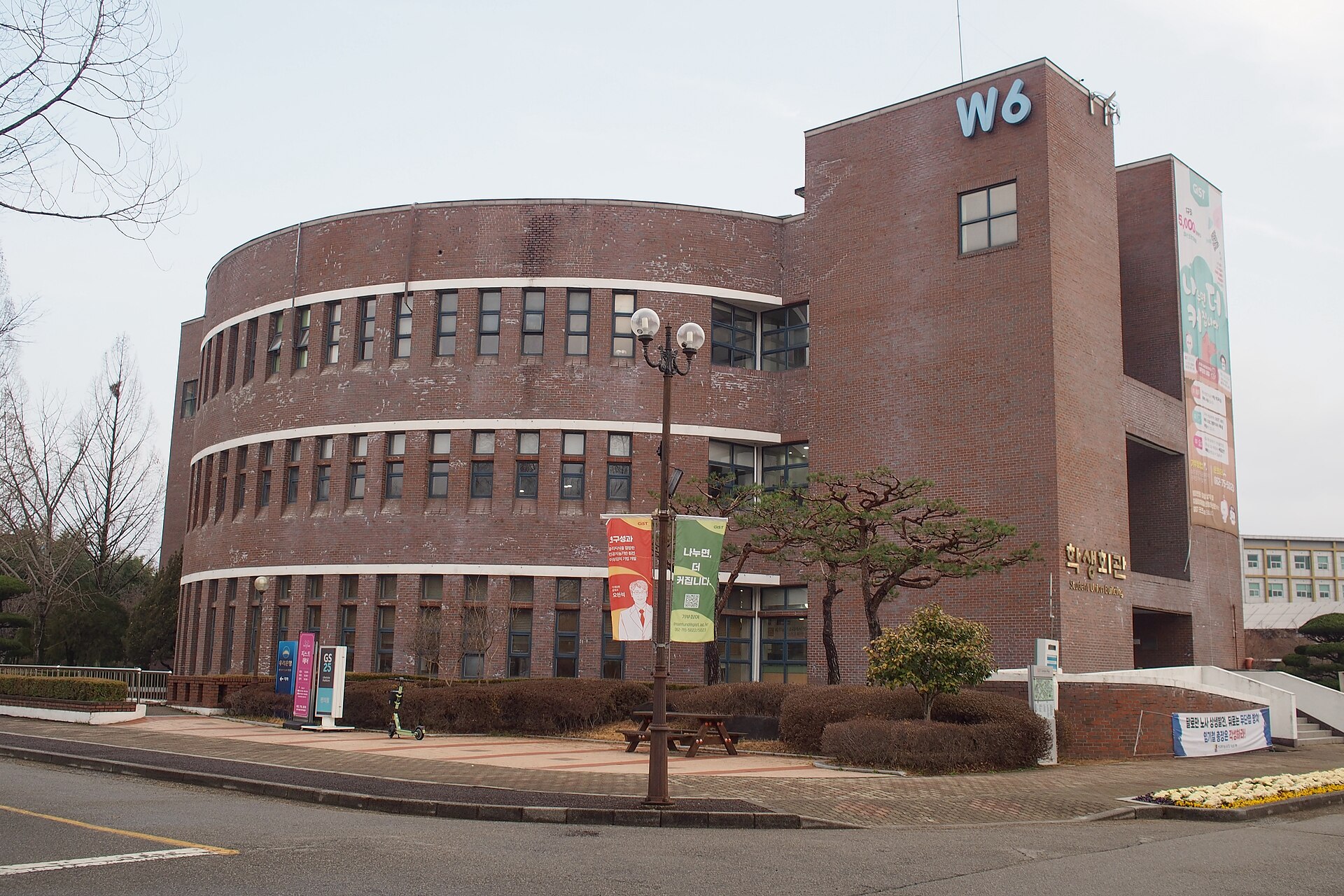
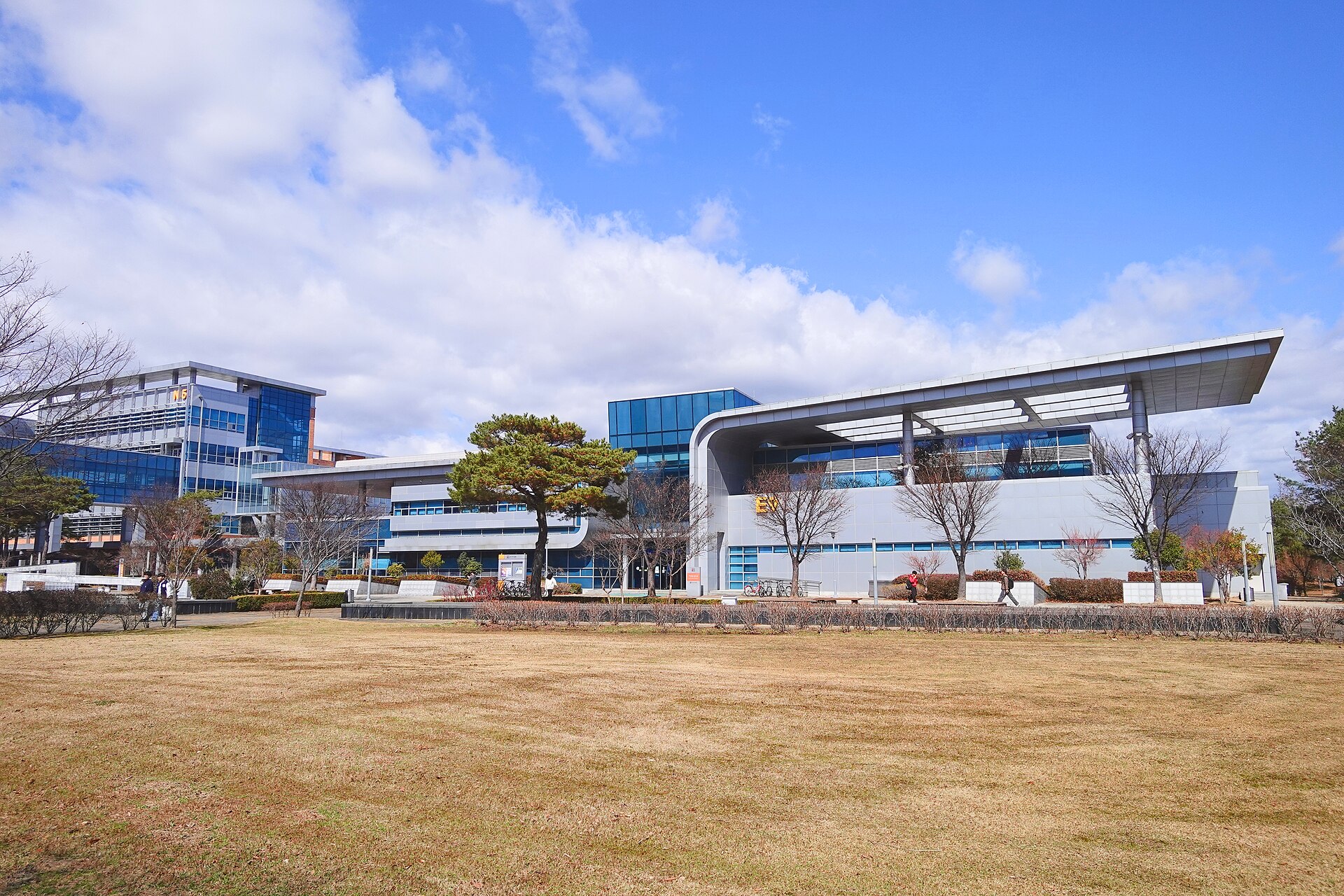
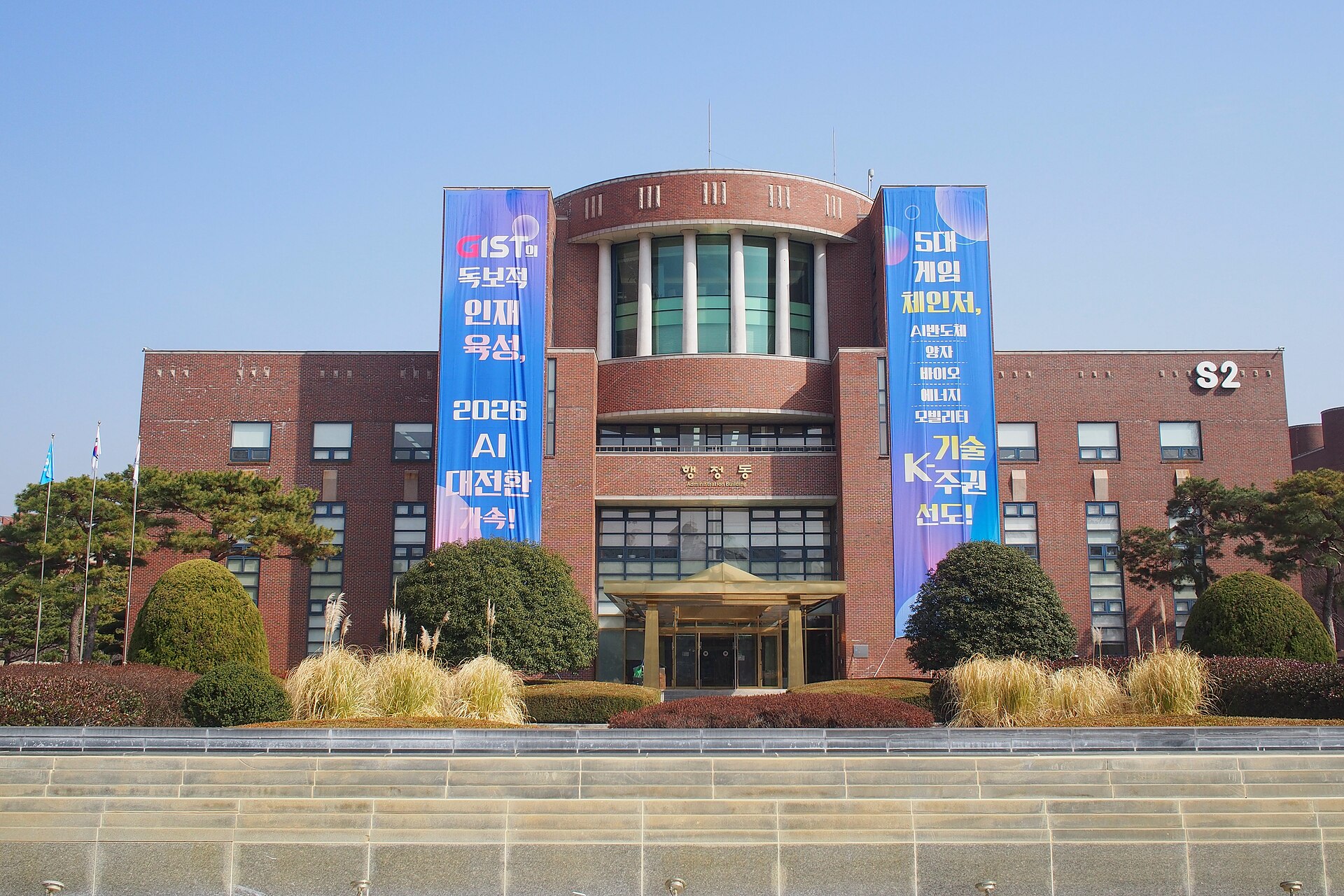
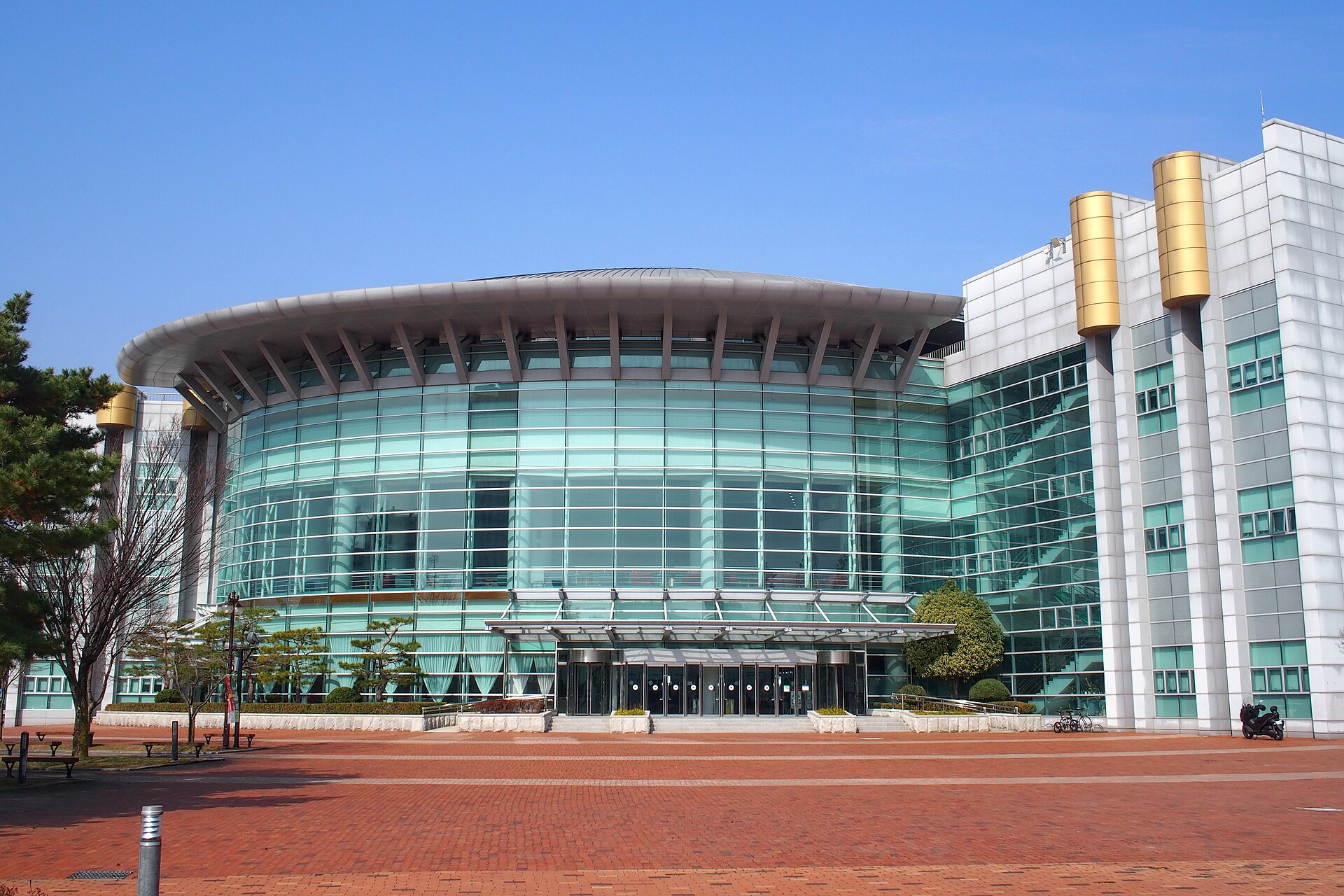
Gwangju Institute of Science and Technology (GIST) — campus in pictures
Real, freely-licensed photographs of the campus (via Wikimedia Commons).


Why GIST — Research Intensity, English Instruction & Scholarship Value
GIST offers a rare combination: elite research output, small-institute intimacy, English-taught instruction, and a cost structure that makes world-class STEM education genuinely accessible to international students.
GIST Acceptance Rate & Admitted Student Profile
Stats
Profile Stats
Rea Vs Rd
GIST Admissions Requirements — Academic Record, English Proficiency & Research Orientation
- Competitive admits typically well above 3.3 floor
- Consistent performance across all years of secondary school
- Advanced STEM courses at the highest available level
- IB Diploma: 35+ points with strong HL mathematics and science
- IELTS Academic: 6.0 overall minimum
- TOEFL iBT: 80 total minimum
- SAT/ACT optional — strong scores in math/science can strengthen the application
- Students from English-medium secondary schools may be exempt — verify on portal
- Science olympiad participation signals mathematical maturity
- Independent projects or lab experience demonstrate initiative
- Specific research interest stated in personal statement
- Evidence of going beyond the standard curriculum in your field
GIST Application Components — Direct Portal, Personal Statement & Documents
GIST international undergraduates apply directly through GIST's own portal — there is no multi-university application platform. The core of a competitive application is the personal statement, strong STEM transcripts, and recommendation letters from academic supervisors who know your scientific thinking.
The GIST Personal Statement — Writing a Motivation Letter That Works
Tips
Prompts
What GIST Admissions Officers Are Looking For
GIST's international undergraduate admissions process evaluates academic potential, research orientation, English capability, and genuine motivation for this specific institution. With a 25% acceptance rate among an already self-selected applicant pool, the differentiators are the personal statement, research experience, and the coherence of the academic profile.
GIST Financial Aid & Scholarships for International Students
GIST is one of the most affordable globally ranked research universities in the world for international students. Government-subsidised tuition of approximately USD 5,000 per year, combined with substantial institutional scholarship support and the externally available Global Korea Scholarship, makes a GIST education financially accessible to serious international STEM students.
Cost and aid figures are from the TYCHR facts database and reflect approximate USD equivalents. Fees are set in KRW and exchange rates fluctuate. Verify exact figures on the official GIST portal.
Stats
Contribution Tiers
| Note | Range | Percent | Percent Value |
|---|---|---|---|
| Full funding — Global Korea Scholarship (GKS) eligible students | GKS Recipients | ~100% | 100 |
| Tuition waiver or near-full coverage — top institutional scholarship | Top GIST Admits | ~90% | 90 |
| Partial tuition support — typical institutional merit award | Standard GIST Award | ~50% | 50 |
| Tuition only; full living costs apply | No Scholarship | ~42% | 42 |
Key Dates
Advantages
- Single, clear intake — no strategic EA/RD decisions to make
- Korean academic year starts in March — plan travel and visa accordingly
- Scholarship consideration is part of the admissions review — no separate application
- Early preparation of personal statement allows meaningful revision
- GKS external scholarship has its own earlier deadline — apply simultaneously
Disadvantages
- Only one intake per year — missing the deadline means waiting 12 months
- No rolling admissions — all materials must be complete before the stated deadline
- GKS scholarship requires a separate NIIED application with a potentially earlier deadline
- Visa processing for Korea takes time — factor into post-offer planning
- Exchange rate fluctuations affect the KRW-denominated costs in USD terms
GIST Interview — Format, Questions & Preparation
GIST may conduct interviews as part of its international undergraduate admissions process, though this varies by cycle. When conducted, interviews are typically academic in nature — faculty or senior staff assess scientific reasoning, English communication, and genuine motivation. Unlike Harvard's alumni interview model, GIST interviews are conducted by faculty who evaluate research readiness directly. Always verify whether interviews are scheduled for your cycle in the official admissions guide.
Meta
Questions
GIST Residential Life — Campus Living in Gwangju
GIST provides on-campus dormitory accommodation for international undergraduate students, making the transition to Korea practical and well-supported. There is no Harvard-style residential house lottery — GIST operates a straightforward dormitory system with international student support built in.
Houses
Lottery Steps
- International undergraduate students are provided dormitory accommodation as part of the admissions support package
- Dormitories are located on the GIST campus in Gwangju — no off-campus housing navigation required on arrival
- The GIST International Student Office provides orientation, visa guidance, and practical support for new international arrivals
- Campus amenities include laboratories, dining facilities, sports and recreation spaces, and a library — most daily needs are met on-campus
- Gwangju city is accessible from campus and offers affordable living, excellent Korean cuisine, and strong transport links including KTX high-speed rail to Seoul
GIST Colleges & Academic Programmes
- {"label":"Core field","value":"AI Convergence"}
- {"label":"Programme language","value":"English"}
- {"label":"Research integration","value":"From Year 1"}
- {"label":"Industry connections","value":"Samsung, LG, SK, global tech"}
- {"label":"Core fields","value":"Physics, Chemistry"}
- {"label":"Research rank","value":"Top 2% globally (per-faculty citations)"}
- {"label":"Programme language","value":"English"}
- {"label":"Signature programme","value":"Photonics & Quantum"}
- {"label":"Core fields","value":"Materials Science, Mechanical, Environmental Engineering"}
- {"label":"Programme language","value":"English"}
- {"label":"Key strength","value":"Advanced materials & clean energy"}
- {"label":"Industry links","value":"Korean manufacturing & energy sector"}
- {"label":"Core fields","value":"Life Sciences, Biomedical Engineering"}
- {"label":"Programme language","value":"English"}
- {"label":"Signature research","value":"Brain science & biomedical imaging"}
- {"label":"Graduate pathway","value":"GIST Medical School (planned)"}
- {"label":"Foundation years","value":"Years 1–2"}
- {"label":"Curriculum model","value":"Caltech-inspired integrated science"}
- {"label":"Programme language","value":"Fully English"}
- {"label":"Specialisation","value":"Selected in Year 3"}
Research & Extracurricular Opportunities at GIST
Career Outcomes & GIST Alumni Network
GIST graduates enter South Korea's most competitive technology and research institutions, and a growing proportion continue to global graduate programmes in the US, Europe, and Japan. The research skills developed at GIST — real lab experience, publication-quality work, and cross-disciplinary scientific thinking — are directly transferable to the world's top doctoral programmes.
Stats
Categories
GIST Admissions — Student Profiles & Outcomes
Faqs
Do I need to know Korean to study at GIST?+
No. GIST College's undergraduate programme is fully taught in English. You need English proficiency (IELTS 6.0 or TOEFL iBT 80), but Korean language proficiency is not required for admission or academic study. That said, learning basic Korean will meaningfully enrich your daily life in Gwangju.
What is the tuition for international students at GIST?+
Tuition is approximately USD 5,000 per year — one of the lowest among globally ranked research universities. The total estimated cost of attendance is approximately USD 12,000 annually, inclusive of living costs in Gwangju. Verify exact KRW figures on the official portal.
Will I receive a scholarship as an international student?+
Most international undergraduates at GIST receive scholarship support. The average aid covers approximately 50% of costs, but individual awards vary — some students receive full tuition coverage. Scholarship consideration is typically part of the admissions review, not a separate process.
What is the Global Korea Scholarship (GKS) and how do I apply?+
The GKS (Global Korea Scholarship, administered by NIIED) provides full funding for international undergraduates at Korean universities — covering tuition, a monthly living allowance, Korean language training, and round-trip airfare. It is highly competitive and requires a separate application to NIIED or through your home country's Korean embassy. Check niied.go.kr for current deadlines.
How does GIST's acceptance rate compare to Western universities?+
GIST's ~25% acceptance rate for international undergraduates is more accessible than highly selective Western STEM institutions, but it is not an open-admission programme. The pool self-selects to students with strong STEM academic records. The threshold is meeting a genuine academic bar, not surviving an arbitrary prestige filter.
What majors can I study at GIST College?+
GIST undergraduates complete a broad integrated science foundation in Years 1–2 before specialising in one of GIST's five colleges: AI Convergence, Natural Sciences (Physics, Chemistry), Engineering (Materials, Mechanical, Environmental), Life Sciences and Medical Engineering, or the Electrical Engineering and Computer Science track. Core fields include Physics, Chemistry, Life Sciences, EECS, Materials Science, Mechanical Engineering, Environmental Engineering, and AI Convergence.
Is GIST's undergraduate degree recognised internationally?+
Yes. GIST's QS #290 and THE #325 global rankings reflect internationally recognised research productivity. GIST graduates have been admitted to PhD programmes at leading institutions in the US, Europe, and Japan, and the degree is well-regarded in South Korea's technology industry and research sector.
What is Gwangju like for international students?+
Gwangju is South Korea's sixth-largest city — relaxed, affordable, and culturally rich. It is home to the internationally significant Gwangju Biennale art festival and has excellent Korean food culture. Seoul is under two hours away by KTX. GIST's campus is self-contained, with dormitories, labs, dining, and sports facilities covering most daily needs.
Book a Free GIST Admissions Strategy Session
In 60 minutes, our GIST admissions specialists will evaluate your academic profile, review your research background, develop your personal statement strategy, and map out your GKS and GIST scholarship applications simultaneously.
- No commitment required
- GIST and South Korean university specialists
- Personalised strategy — personal statement, scholarships, timeline
GIST Academic Requirements
GIST Academic Requirements — The Honest Breakdown for International Students
What GPA, IB score, and academic profile do GIST's admitted students actually have? And what does GIST's research-first admissions process mean for applicants from IB, A-Level, AP, and other international curricula?
GPA & Academic Record
GIST and GPA — What the Data Shows
The honest picture: GIST publishes a minimum GPA floor of 3.3/4.0 for international undergraduates. In practice, competitive admitted students are typically meaningfully above this floor, with consistent strong performance in advanced mathematics and sciences across the full secondary school record.
A 3.3 GPA is the floor, not the target. Students who compete successfully for GIST demonstrate high performance in the most rigorous STEM courses available to them. The combination of strong grades in challenging mathematics and science coursework is the core academic signal.
Academic Context
How GIST Reads International Academic Records
GIST does not operate a class-rank system for international undergraduate admissions. Academic performance is evaluated in the context of the student's specific educational system and what courses were available to them.
SAT — Optional
SAT Scores at GIST — Optional, But Strategically Useful
GIST does not publish SAT middle-50% ranges for its international undergraduate pool. SAT submission is optional.
| Label | Score | Percent |
|---|---|---|
| Minimum published requirement | None (optional) | 0 |
| Most useful subsection if submitting | SAT Math (high score) | 80 |
| Indicative competitive threshold (if submitting) | 1400+ (Math 700+) | 70 |
ACT — Optional
ACT Scores at GIST — The Strategy
GIST does not publish ACT data for its international undergraduate pool. The ACT is optional.
Metrics
Comparison Cards
Testing Strategy
GIST Test-Optional Policy — The Strategic Decision Explained
GIST's test policy for international undergraduates is test-optional: SAT and ACT scores are not required. The primary academic evidence is the high school transcript, English proficiency test (IELTS/TOEFL), and the personal statement.
Submit Items
Withhold Items
IB / A-Level
IB Diploma and A-Levels at GIST — Specific Benchmarks
- {"label":"Competitive benchmark","value":"35+ total points"}
- {"label":"HL expectations","value":"6–7 in Mathematics (AA or AI) and at least one science HL"}
- {"label":"Subject rigour","value":"HL Mathematics strongly recommended; HL Physics, Chemistry, or Biology for the intended programme"}
- {"label":"Extended Essay","value":"A or B in a STEM subject adds research credibility"}
- {"label":"Competitive range","value":"AAB to AAA or above in relevant STEM subjects"}
- {"label":"Subject rigour","value":"A-Level Mathematics (and Further Mathematics where possible) plus at least one science for engineering/science programmes"}
- {"label":"Additional evidence","value":"Strong GCSE/IGCSE results support the A-Level profile"}
Advanced Placement
AP Courses at GIST — What Counts and What to Take
For students in the US curriculum or at international schools offering AP courses, Advanced Placement performance provides a useful additional academic signal for GIST — though it is not required.
Academic Rigour
Rigour of Secondary School Record — GIST's Most Important Academic Signal
GIST evaluates academic rigour as a core admissions criterion. The curriculum you studied — and whether you took the most challenging courses available to you — matters as much as the grade itself.
Taking the most advanced mathematics and science courses available at your specific school, consistently, across all years of secondary education.
Subject Preparation
Mathematics and Science Preparation — What GIST Expects
GIST's first-year curriculum begins at a high level and covers mathematics, physics, chemistry, biology, and computer science in an integrated programme. Strong preparation in the following subjects pays off most immediately.
Language Proficiency
English Language Requirements for International GIST Applicants
GIST requires formal English proficiency documentation from applicants whose secondary schooling was not conducted primarily in English. Since all GIST College undergraduate instruction is in English, this is a practical necessity, not a formality.
GIST's personal statement is itself a demonstration of English academic writing ability. A student who cannot write clearly in English will find this reflected in the quality of their motivation letter — which GIST reviewers read carefully as both a content document and an English proficiency signal.
By Programme
Academic Requirements by Programme — What Different GIST Tracks Expect
GIST undergraduates study an integrated foundation in Years 1–2 before selecting a specialisation. The academic profile should be coherent with the student's stated interest, but all GIST applicants need strong mathematics regardless of intended programme.
| Signals | Expectation | Concentration |
|---|---|---|
| AMC/AIME; proof-level problem solving; olympiad participation | IB Math AA HL 7 / A-Level Further Maths A* | Physics / Natural Sciences |
| Competitive programming; original software projects; USACO/IOI | IB Math AA/AI HL + CS background / AP Calculus BC 5 | AI Convergence / EECS |
| Chemistry olympiad; lab research; IB Chemistry HL 7 | IB Chem HL + Math HL / A-Level Chemistry A* | Materials Science / Environmental Engineering |
| Biology olympiad; biomedical research interest; IB Biology HL | IB Biology HL + Chemistry HL / A-Level Biology + Chemistry | Life Sciences / Biomedical Engineering |
| Engineering competition; physics + maths combination; design projects | IB Maths HL + Physics HL / A-Level Maths + Physics | Mechanical Engineering |
International Education Systems
GIST and International Qualifications — How Your Curriculum Is Evaluated
Year-by-Year Roadmap
Building a GIST-Ready Academic Profile — What to Do at Each Stage
- Select the most rigorous mathematics and science courses available at your school.
- Begin olympiad preparation in mathematics, physics, or chemistry if available — even participation without medals demonstrates the right orientation.
- Join science clubs, robotics teams, or coding groups to build practical problem-solving skills.
- Begin reading popular science and engineering publications to develop scientific literacy and language.
- Look for science fair opportunities, university outreach programmes, or online research platforms (Polygence, Lumiere, similar).
- Complete IB subject selection or A-Level subject choices with GIST's requirements in mind — mathematics and at least one science at HL/A-Level.
- Sit IELTS or TOEFL in Grade 11 — aim for IELTS 6.5+ or TOEFL 90+. Scores valid for two years.
- Identify GIST faculty whose research interests align with your own — this research informs a specific personal statement later.
- Pursue a meaningful research or project experience in your intended field — this is the most important differentiator in the GIST personal statement.
- Begin investigating the Global Korea Scholarship (GKS) — its application typically opens in February/March and requires separate preparation.
- Draft your personal statement in September of Grade 12, allowing at least 3 months for revision before the deadline.
- GIST portal typically opens November–December. Create your account early and complete all sections.
- Request recommendation letters from STEM teachers in September–October at the latest.
- Submit both the GIST application and GKS application simultaneously if eligible.
- Verify all document requirements — certified translations, original transcripts, English proficiency certificates — before the deadline.
Common Pitfalls
Academic Mistakes That Cost GIST Applications — And How to Avoid Them
Real Outcomes
What Academic Profiles GIST-Admitted Students Had
The following profiles represent the academic backgrounds of students Tychr has helped gain GIST admission or equivalent Korean STEM university outcomes. They illustrate the range of academic preparation that is competitive, and what makes each application compelling.
Faqs
Is a 3.3 GPA the real competitive floor, or is that just the minimum?+
3.3/4.0 is the published minimum, not the competitive target. Students who are admitted typically have significantly higher GPAs, with strong performance in advanced mathematics and science courses. The 3.3 floor filters out clearly uncompetitive applicants; the actual competitive range among serious candidates is higher.
What IB score do I need for GIST?+
The indicative benchmark for competitive applicants is 35+ total points with strong Higher Level scores in mathematics and at least one science. An IB of 38+ with HL Math and Physics 6–7 is a solidly competitive profile. Below 33 in total is generally below the competitive range.
Should I take the SAT or ACT for a GIST application?+
Neither is required. Focus your preparation energy on IELTS/TOEFL first — English proficiency is a published requirement with a hard minimum. If you already have strong SAT Math or ACT scores, submit them. If not, the preparation time is better spent on your personal statement and securing your English proficiency documentation.
Does GIST prefer IB or A-Level or AP students?+
GIST does not express a preference. All three systems are well-recognised, and competitive profiles exist across all three. The key for each: IB 35+ with HL Math and science; A-Levels with A/A* in Maths and at least one science; AP with 4–5s in relevant STEM subjects.
Can I apply to GIST without any research experience?+
Yes, but research experience or demonstrable scientific curiosity — through olympiad participation, independent projects, or science fair work — meaningfully strengthens an application. At a research institute with a 25% acceptance rate, the personal statement's research orientation is a key differentiator.
Cost & Financial Aid
GIST May Be the Most Affordable Globally Ranked STEM Degree in the World
GIST's government-subsidised tuition, institutional scholarship support, and the externally available Global Korea Scholarship make it genuinely accessible to international students who qualify. Here is the full picture of what GIST costs, how aid works, and how to maximise your funding.
Cost Transparency
What GIST Actually Costs — The Full Annual Figure
GIST's tuition is government-subsidised as a Korean public research institute. This is not a developing-world institution — it is a globally ranked research university ranked #290 by QS. The tuition figure reflects South Korea's national investment in STEM education, not a compromise in quality. The research infrastructure, faculty calibre, and career outcomes are comparable to institutions costing five to ten times more in the United States or United Kingdom.
Financial Aid Policy
GIST Scholarship and Aid for International Students — How It Works
GIST's scholarship support for international undergraduates is merit-based and typically awarded as part of the admissions offer — not through a separate US-style need-based financial aid process. Most admitted international students receive some scholarship support. Individual awards vary from partial tuition reduction to full tuition coverage.
Institutional Funding
Why GIST Can Offer This — Korean Government Investment and the GIST Mission
Aid Application Walkthrough
Applying for GIST Financial Support — Step by Step
GIST's scholarship process differs from US-style financial aid. Here is how to maximise your funding from both GIST institutional sources and the Global Korea Scholarship.
- Visit gist.ac.kr/iuadm and create your application account
- Complete all academic information sections — scholarship consideration is integrated into admissions review
- Visit niied.go.kr for the GKS (Global Korea Scholarship) programme
- Check application deadlines — GKS applications often open in February–March, overlapping with GIST's cycle
- Contact your home country's Korean embassy for country-level GKS quota information
- Your admission offer will specify any institutional scholarship awarded
- Review scholarship terms — coverage percentage, duration, and renewal conditions
- Ask about any additional living stipend programmes for international students
- Inquire about need-based supplementary support if applicable
- On-campus dormitory accommodation eliminates the need to navigate a private rental market
- Gwangju cost of living is significantly below Seoul — estimate USD 500–600/month for living expenses
- Plan for health insurance, transport, and one-time setup costs on arrival
International Student Funding
GIST Financial Aid for International Students — How It Works in Practice
GIST actively supports international undergraduate recruitment through scholarship provision. Here is how the funding landscape works specifically for non-Korean students.
Aid Scenarios
What GIST Financial Support Actually Looks Like — Funding Scenarios
Indicative Funding Levels for International Undergraduates (Annual)
Aid figures are indicative based on the TYCHR facts database and publicly available GKS programme information. Actual scholarship awards are determined by GIST admissions and NIIED separately. Verify current scholarship terms on the official GIST portal and niied.go.kr.
Even without any scholarship, GIST's total cost of attendance (~USD 12,000/yr) is a fraction of comparable globally ranked institutions in the US, UK, or Australia. With a full GKS scholarship, net cost approaches zero.
| Grant | Income | Contribution |
|---|---|---|
| Tuition + Living Allowance + Airfare | GKS Scholarship (NIIED) | ~$0 net |
| Full tuition waiver (~$5,000/yr) | Top GIST Institutional Scholarship | ~$7,000/yr (living only) |
| Partial tuition reduction (~$2,500/yr) | Standard GIST Merit Award (~50%) | ~$9,500/yr |
| No institutional scholarship | No Scholarship | ~$12,000/yr |
Table Headers
Scholarship Criteria
GIST Scholarships — What Exists and Who Qualifies
GIST's institutional scholarships are merit-based — awarded on academic achievement and research potential assessed during admissions review. The Global Korea Scholarship (GKS) blends merit and financial considerations in its selection process.
External Funding
External Scholarships for GIST International Students
Beyond GIST's own institutional scholarships, several external scholarships provide significant additional funding for international students at GIST.
Grant vs. Loan
GIST Aid Is Grants, Not Loans — What This Means
GIST does not operate a student loan programme for international undergraduates in the way that US or UK universities do. Aid is in the form of scholarships (grants) — no repayment required. There is no institutional loan to 'opt into' as part of a financial aid package.
Student Employment
Working While Studying at GIST — Research Assistantships and On-Campus Opportunities
GIST does not operate a formal work-study programme in the US sense. However, research assistant positions and on-campus employment opportunities provide supplementary income for some students.
- Undergraduate research assistant positions in faculty laboratories (available to students who join active research groups — provides both income and real research experience)
- Teaching assistant roles for first-year courses (typically available to more senior undergraduates)
- Library and administrative roles on campus
- International Student Office peer support and orientation roles
Global Value Benchmarking
GIST vs. Global Alternatives — Financial Aid Comparison
| Policy | School | No Loans | Typical Cost |
|---|---|---|---|
| Merit-based institutional scholarship | GIST (South Korea) | Yes — grants only | ~$6,000–12,000/yr |
| Full funding (GKS): tuition + living + airfare | GIST + GKS | Yes — grants only | ~$0–1,000/yr |
| Need-blind, full-need, no loans | Harvard / MIT / Princeton (US) | Yes — grants only | $0–15,000/yr (need-based) |
| Need-aware, partial aid | Other top US universities | No — includes loans | $30,000–60,000/yr |
| International student fees, limited aid | UK Russell Group | No | $35,000–55,000/yr |
| International fees, scholarship competition | Australian Group of Eight | No | $30,000–45,000/yr |
| Merit scholarship, low tuition | Other Korean IST (KAIST, POSTECH) | Yes — grants only | ~$6,000–12,000/yr |
Net Cost Analysis
GIST vs. Alternatives — What You Actually Pay Over Four Years
For a family that cannot fund $50,000–80,000 per year at a US or UK institution, GIST with institutional scholarship delivers world-class research education at a fraction of the cost. With GKS, the four-year total cost can approach zero — making GIST genuinely comparable in total cost to some of the most generous US need-blind programmes, for qualified international students.
| Policy | School | Contribution | Four Year Cost |
|---|---|---|---|
| Grants only, ~50% avg aid | GIST (institutional scholarship only) | ~$6,000/yr | ~$24,000 |
| Full grant — GKS: tuition + living + airfare | GIST + Global Korea Scholarship | ~$0 | ~$0 |
| Need-blind, full-need, no loans | Harvard / MIT (US, qualifying family) | ~$0–10,000/yr | ~$0–40,000 |
| Need-aware, partial aid | Other Ivy League (US, international) | ~$30,000–60,000/yr | ~$120,000–240,000 |
| International fees, limited scholarship | UK Top 10 University | ~$35,000–55,000/yr | ~$140,000–220,000 |
| Merit scholarship, low tuition | KAIST (South Korea) | ~$5,000–12,000/yr | ~$20,000–48,000 |
Scholarship Review
Appealing or Seeking Additional Financial Support at GIST
GIST's initial scholarship offer is made as part of the admissions decision. If the offer does not reflect your financial situation or if your circumstances change after admission, there are pathways to seek additional support.
GIST's scholarship offer process differs from US-style financial aid appeals. The primary pathway to increased funding is the Global Korea Scholarship (GKS), which is a separate, competitive process — not an appeal of GIST's institutional award. Be realistic about what institutional scholarship adjustments are possible and direct energy appropriately.
How To Appeal
- Contact the GIST International Student Office directly with a written explanation of your financial circumstances
- Ask specifically about any need-based supplementary support programmes available to admitted international students
- Provide documentation of financial circumstances if requested
- Simultaneously pursue the GKS application through NIIED if you have not already done so — this is the highest-value parallel action
When To Appeal
- Your family's financial circumstances have changed significantly since you submitted your application
- The initial scholarship offer is insufficient to make attendance feasible without external support
- You received a substantially stronger scholarship offer from a comparable institution (relevant for comparative leverage discussions)
- You believe the initial offer did not fully account for your academic profile
Timeline & Planning
Planning for GIST Costs and Funding — What to Do and When
Application & Personal Statement
The GIST Personal Statement — Writing a Motivation Letter That Gets You In
GIST does not use the US Common App, UCAS, or any multi-university portal. International undergraduates apply directly through GIST's own system. The heart of this application is a personal statement or motivation letter — your primary opportunity to show GIST that you are the kind of researcher-in-training they are looking for.
Unlike US supplemental essays with tight word limits and multiple creative prompts, the GIST application statement is an integrated, academically-framed document. Think of it as a scientific motivation letter: clear, specific, intellectually honest, and grounded in evidence of your curiosity and capability. GIST reviewers are scientists and engineers — they value precision and substance over narrative flourish.
How GIST Reviews Applications
The Application in South Korea's Research University Context
South Korean research institutes like GIST evaluate international students through a direct admissions process that includes academic transcripts, English proficiency scores, recommendation letters, and a personal statement or motivation essay. GIST does not use a US-style multi-essay supplement or UCAS-style personal statement system.
The personal statement you submit to GIST should explain your academic background and its relevance to the GIST curriculum, your specific research interests and why GIST's programmes align with them, and your long-term academic or professional goals. Unlike a Western personal essay that might explore a personal narrative arc, the GIST statement is most effective when it reads like the introduction section of a well-reasoned research proposal — structured, specific, and evidence-based.
Always verify the exact document requirements and any specific prompts or questions for the current application cycle on the GIST International Undergraduate Admissions portal (gist.ac.kr/iuadm). Requirements may vary year to year.
Application Prompts
GIST Application Statement — What You Are Asked to Write
GIST does not publish standardised essay prompts in the style of the Common App. The personal statement format — whether an open motivation letter or structured questions — is specified in the annual admissions guide published on the portal. Below are the typical content areas you should address, based on the standard structure of the GIST international undergraduate application.
The Core Document
Writing Your GIST Motivation Letter — Structure and Strategy
The personal statement is your primary chance to distinguish yourself beyond grades and test scores. Among applicants who all meet the academic floor, the statement and recommendation letters are the primary differentiators.
Supporting Documents
Recommendation Letters — Choosing and Briefing the Right Advocates
Recommendation letters are a critical component of the GIST international application. At a research institute, letters from teachers who can speak to your scientific thinking and intellectual independence carry the most weight.
What to Write About
Choosing Your Personal Statement Focus — What Works
The most effective GIST personal statements share one quality: they are specific. Generic statements about passion for science read identically across hundreds of applications. These choices of focus tend to produce strong statements.
What Not to Do
Common Personal Statement Mistakes for GIST
- Writing a narrative personal essay in the style of US Common App essays — GIST reviewers are scientists who value clarity, structure, and intellectual substance over storytelling arcs.
- Failing to mention GIST specifically — a statement that could be sent to any science university without changing a word reads as low effort to GIST's admissions committee.
- Using vague language about passion for science without grounding it in specific evidence — 'I have always loved science' is not a differentiator among hundreds of applicants who all love science.
- Describing academic achievements without connecting them to research orientation — list your results and scores, but explain what they made you curious about, not just that you achieved them.
- Leaving the statement to the last moment — a strong GIST statement requires research into the university's faculty, laboratories, and research culture; this takes time that must be built into your timeline.
- Overloading the statement with too many interests — focus is more persuasive than breadth. Pick two or three connected threads in science and develop them seriously.
- Writing with grammatical errors or unclear English — since all GIST instruction is in English, your personal statement is itself a demonstration of English academic communication ability. Errors raise doubts about your readiness for English-medium scientific study.
- Copying language from the GIST website back at GIST — reviewers recognise their own institutional language; describe GIST's appeal in your own words and through your own specific experience with the institution's research.
FAQ
Application Statement FAQs — GIST
Does GIST use the Common App or a similar multi-university platform?+
No. GIST international undergraduates apply directly through GIST's own online admissions portal at gist.ac.kr/iuadm. There is no Common App, UCAS, or Korean central university application portal for this track.
Is there a word or page limit for the GIST personal statement?+
Word limits and any specific prompts for the personal statement are specified in the admissions guide for each cycle. Download the current admissions guide from the GIST International Undergraduate Admissions portal for the exact requirements for your application year. Do not assume a previous year's format applies.
Should I write my statement in English or Korean?+
Write in English. GIST College is an English-taught programme, and your personal statement should demonstrate your academic English proficiency. A statement in Korean would not serve the application well for an English-medium programme.
Are there specific essay prompts, or is it an open-topic statement?+
The specific format — whether GIST asks for an open motivation letter or provides structured questions — varies by cycle and is published in the annual admissions guide. Verify the current format before writing. The typical content areas are: academic background, scientific interests, reasons for choosing GIST, intended programme, and long-term goals.
How much does the personal statement weigh in the GIST decision?+
GIST does not publish a formal weighting of application components. At a research institute of this calibre, where most serious applicants meet the academic floor, the personal statement and recommendation letters are the primary differentiators. They can move a borderline application into the admitted pool or distinguish an otherwise similar applicant.
Can I mention specific GIST professors in my statement?+
Yes, and it is strongly advisable to do so if you have a genuine connection to a faculty member's research. Name the professor, describe their research accurately (based on published papers or the GIST lab website), and explain specifically why it connects to your background and interests. Generic name-dropping without specificity is visible to reviewers and does not help.
Is there an interview as part of the GIST application process?+
GIST may conduct interviews for international applicants as part of its selection process, but this varies by cycle. The official admissions guide for the current year will specify whether interviews are scheduled and in what format. If an interview is offered, treat it as an opportunity to demonstrate scientific curiosity and research orientation in conversation — the same qualities your personal statement conveys in writing.
I am reapplying after a previous rejection. What should I change?+
You are not required to disclose a previous application. If you reapply, focus on genuine growth — stronger academic results, new research experience, or a meaningfully different and more specific personal statement. A statement that shows clear development since the previous application cycle is more compelling than a revision of the same document. Identify what was weaker in the previous application and address it directly.
Courses — schools, degrees & intake
15 degrees across 5 groupings.
College of Engineering · 4 degrees
Electrical Engineering and Computer Science
Mechanical and Robotics Engineering
Materials Science and Engineering
Earth Sciences and Environmental Engineering
College of Life Sciences and Medical Engineering · 2 degrees
Biomedical Science and Engineering
Life Science
College of Natural Sciences · 3 degrees
Physics and Photon Science
Chemistry
Mathematical Sciences
College of Artificial Intelligence · 1 degrees
AI Convergence
School of Humanities and Social Sciences · 5 degrees
Literature and History
Public Policy
Economy and Business
Social Science
Cognitive Science
Want your real chances at Gwangju Institute of Science and Technology (GIST)?
Create a free TYCHR account for your personalised admit-chance, a shortlist you can track, exact entry requirements, and essay + counselling help.