← All universities

Goethe University Frankfurt

Frankfurt am Main, Germany · Urban

German U15PublicResearchCoed
Acceptance
35.0%
QS World
#309
Tuition/yr
$800
Students
42,000
Founded
1914

GERMANY · FRANKFURT AM MAIN

Goethe University Frankfurt Admissions Guide for International Students

Born from citizen initiative in 1914, Goethe University Frankfurt is one of Germany's most distinctive public research universities — the intellectual home of the Frankfurt School of critical theory, a powerhouse in finance and economics, and one of Germany's few campus universities with a genuinely beautiful urban setting. Sitting at the heart of Europe's financial capital, it offers international students rare access to both rigorous German academic culture and the world's fifth-largest financial centre.

With 42,000 students, a national rank of 15th in Germany, a QS World ranking of 309, and THE World ranking of 186, Goethe University punches well above its size in research intensity and graduate outcomes. For ambitious international students, it combines near-zero tuition with strong industry links, a cosmopolitan city, and a 16% international student community.

Campus

Goethe University Frankfurt — campus in pictures

Real, freely-licensed photographs of the campus (via Wikimedia Commons).
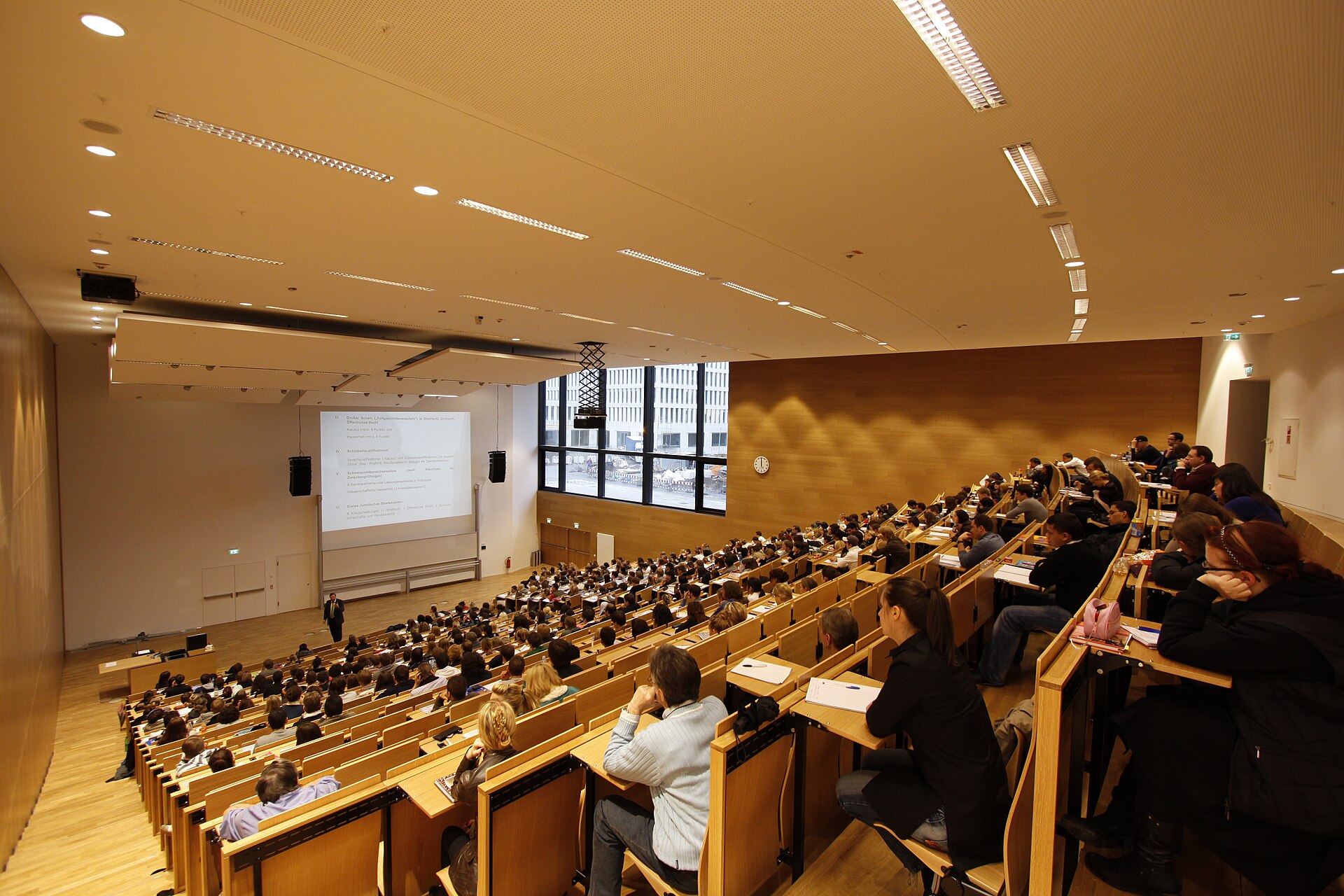
Hörsaal im Hörsaalgebäude des Campus Westend der Goethe-Universität Frankfurt
Hörsaal im Hörsaalgebäude des Campus Westend der Goethe-Universität FrankfurtGoethe-uni · CC BY 3.0 · via Wikimedia Commons
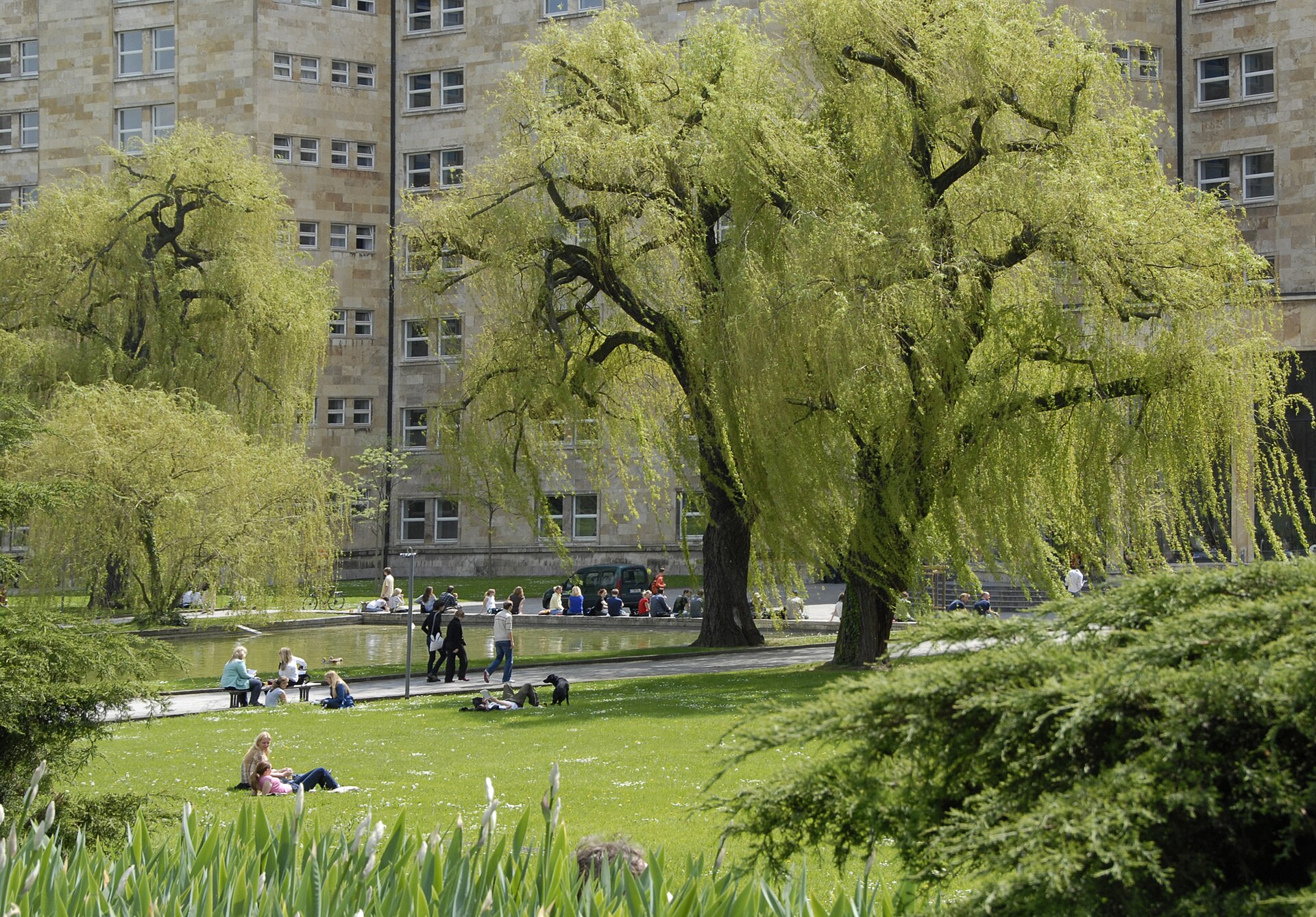
Campus Westend der Goethe-Universität, Park vor dem IG-Hochhaus
Campus Westend der Goethe-Universität, Park vor dem IG-HochhausGoethe-uni · CC BY 3.0 · via Wikimedia Commons
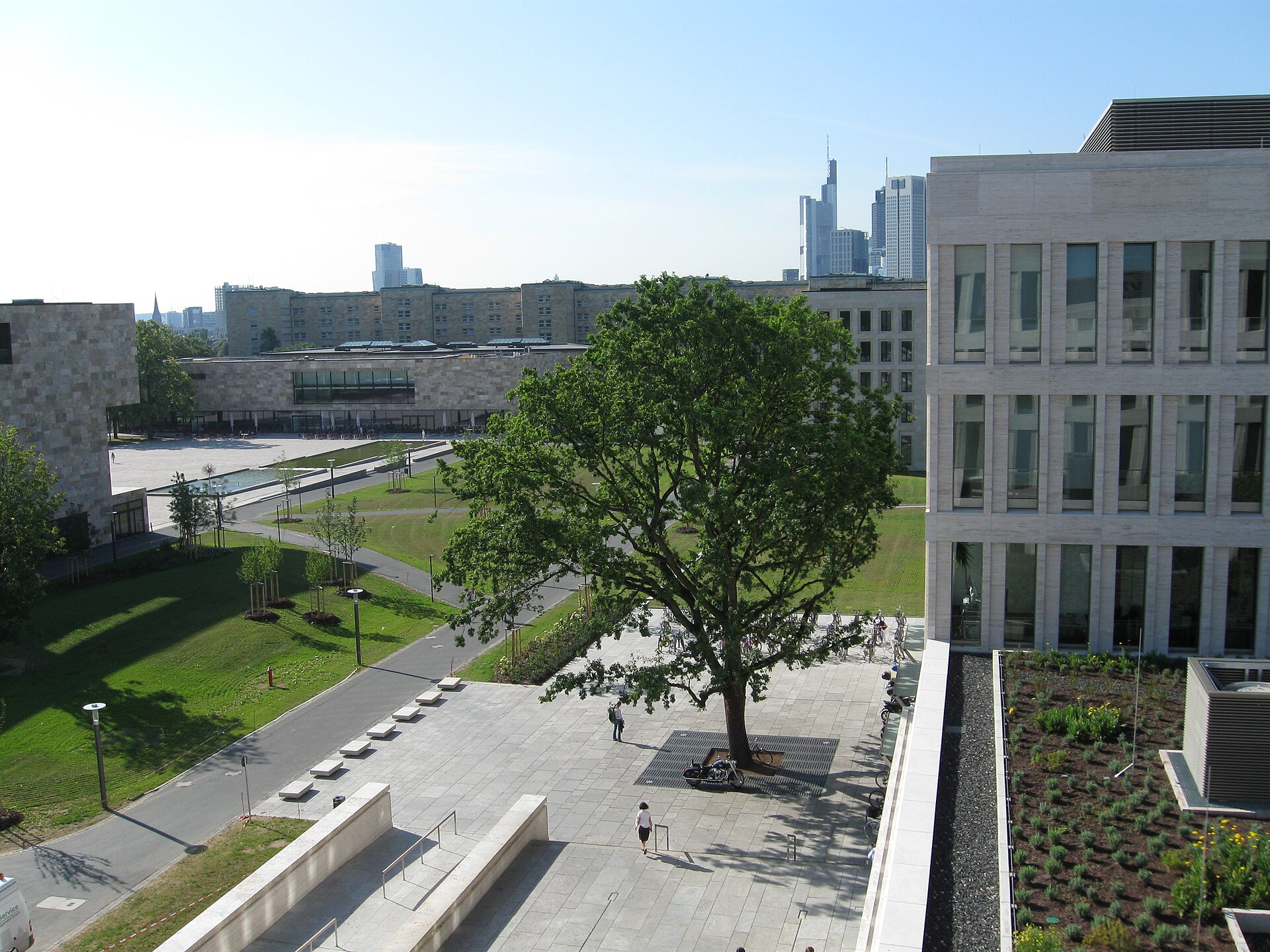
New Campus Westend, Frankfurt, Germany, Goethe-University
New Campus Westend, Frankfurt, Germany, Goethe-UniversityShadowcat45 · CC BY-SA 3.0 · via Wikimedia Commons
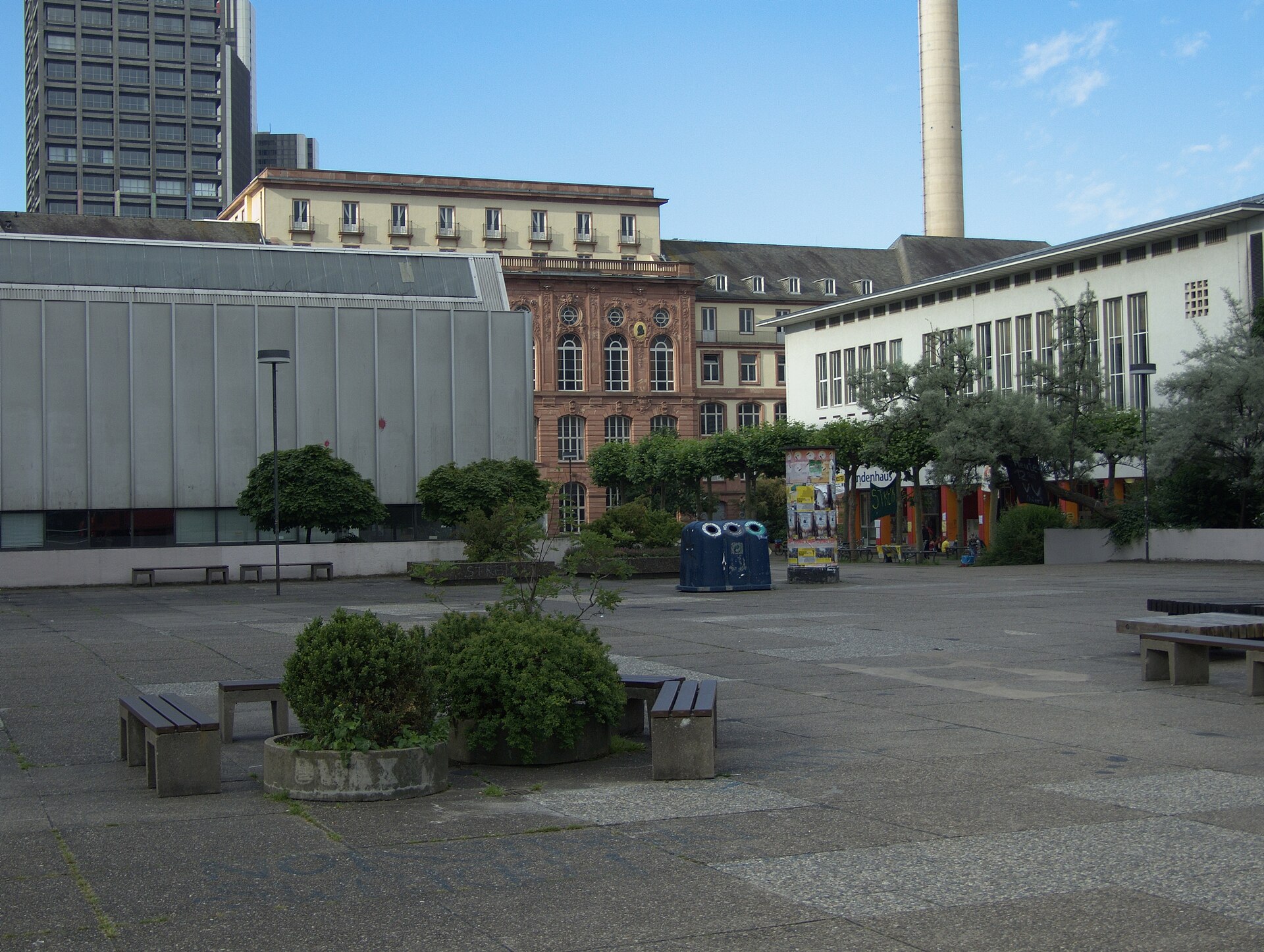
Campus Bockenheim 1
Campus Bockenheim 1Jeanschmid · CC BY-SA 3.0 · via Wikimedia Commons
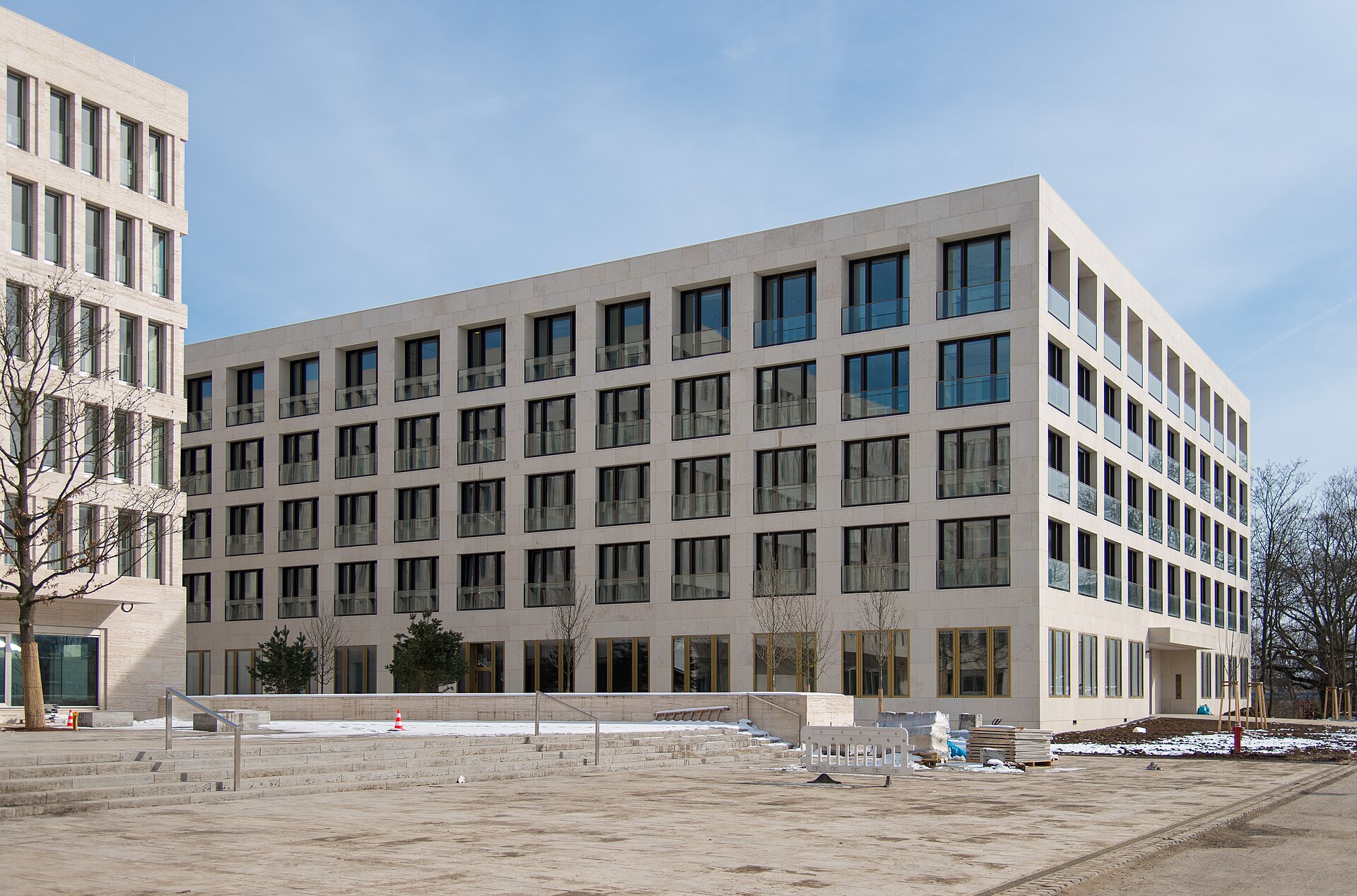
Frankfurt am Main, Goethe-Universität. Education/teaching department and university administration.
Frankfurt am Main, Goethe-Universität. Education/teaching department and university administration.Epizentrum · CC BY 3.0 · via Wikimedia Commons
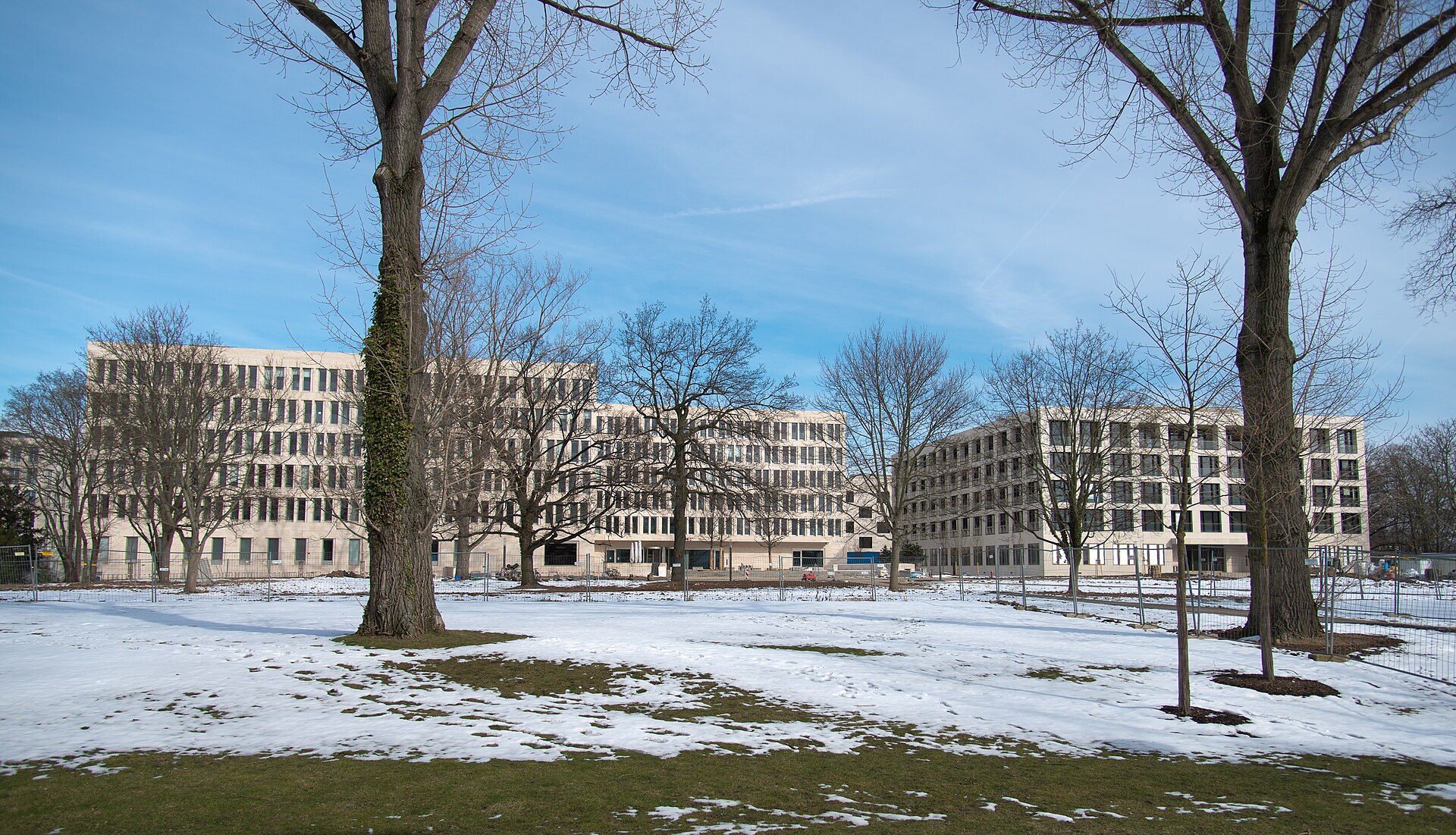
Frankfurt am Main, Goethe-Universität. New building of the university administration (March 2013).
Frankfurt am Main, Goethe-Universität. New building of the university administration (March 2013).Epizentrum · CC BY 3.0 · via Wikimedia Commons

Why Goethe University — Research, Location, Value & Alumni

Goethe University is not simply another European public university. Its history, location, and academic DNA make it an unusually compelling choice for internationally mobile students who want substance alongside accessibility.

01Birthplace of the Frankfurt School
The intellectual origin of one of the 20th century's most influential traditions in critical theory. Philosophers including Adorno, Horkheimer, and Habermas shaped their ideas here — a tradition of interdisciplinary, socially engaged scholarship that runs through every faculty today.
02Germany's Financial Capital — On Your Doorstep
Frankfurt hosts the European Central Bank, Deutsche Bank, Goldman Sachs's EU headquarters, and hundreds of global financial institutions. No other European university sits closer to this concentration of finance and law — internships, networking, and graduate employment are structurally embedded in Goethe's location.
03German U15 Research Excellence
As a member of the German U15 — the consortium of Germany's 15 leading research-intensive universities — Goethe receives substantial third-party research funding and participates in major excellence-cluster initiatives. Research in finance, physics, neuroscience, and medicine is internationally recognised.
04Exceptional Value — Near-Zero Tuition
International students pay only a semester contribution of approximately €400 per semester. With total annual costs of attendance around $15,300, Goethe offers a globally competitive education at a fraction of the cost of UK or US equivalents.

Goethe University Acceptance Rate & Admissions Profile

Goethe University's overall acceptance rate of approximately 35% masks significant variation by programme. Highly restricted programmes (NC — Numerus Clausus) in medicine, dentistry, pharmacy, and law are far more competitive. Open-admission programmes accept all sufficiently qualified applicants. Understanding which programmes are NC versus zulassungsfrei (open) is essential for international applicants.

Stats

42,000
Total Students
16%
International Students
15
National Rank (Germany)

Profile Stats

33+
IB Diploma Benchmark
309
QS World Ranking
186
THE World Ranking
17:1
Student:Faculty Ratio
91%
Employment Rate
16%
International Students
Overall acceptance rate across all programmes

Rea Vs Rd

Rea Label: Medicine / Dentistry / Pharmacy
Rea Value: Very competitive — national NC
Rd Label: Open-Admission Programmes
Rd Value: All qualified applicants accepted

Goethe University Admissions Requirements — Grades, Language & Credentials

Academic Grade Average
Value: IB 33+ / ABB+
Admission is determined primarily by your grade average in the German 1–4 scale (1.0 = best). For IB students, 33 points is a competitive benchmark; medicine and pharmacy require significantly higher. A-Level students should target ABB or above, AAA for competitive programmes.
  • IB 33+ for restricted programmes; higher for medicine/pharmacy
  • A-Level ABB as a general benchmark; AAA for competitive entry
  • Credential evaluation by uni-assist converts your qualification to the German scale
  • NC values (grade thresholds) shift each semester — apply to a range of programmes
Language Proficiency
Value: DSH-2 / IELTS 6.5
For German-taught programmes (the majority): DSH-2 or equivalent (TestDaF TDN 4, Goethe-Zertifikat C1). For English-taught master's programmes: IELTS 6.5 or TOEFL iBT 90. The language requirement is non-negotiable — begin preparation early.
  • DSH-2 required for all German-taught bachelor's and most master's programmes
  • DSH-3 required for medicine and dentistry
  • IELTS 6.5 / TOEFL iBT 90 minimum for English-taught master's
  • German study should begin at least 12–18 months before application for non-speakers
Credential Evaluation
Value: uni-assist / Hochschulstart
Most international undergraduate applicants must submit documents through uni-assist for credential evaluation. Medicine, dentistry, and pharmacy applicants apply through hochschulstart.de, the national allocation system. Evaluation confirms your qualification's equivalency to the German Abitur.
  • Submit uni-assist application 6+ weeks before the university deadline
  • Application fee applies per programme (~$80 total for first application)
  • Studienkolleg may be required if your qualification is not directly equivalent
  • EU students and those with German Abitur equivalent apply directly

Goethe University Application Components — Documents, Language & Portal

Unlike US or UK universities, Goethe University's admission process is document-based. There are no standardised entrance exams, no essay supplements for undergraduate programmes, and — for most programmes — no interviews. Admission is determined by verifiable academic records and language proficiency.

01RequiredAcademic Transcripts & Certificates
Official transcripts and leaving certificate from all previous institutions, with certified translations into German or English. For undergraduate: your IB diploma, A-Levels, or national equivalent. For master's: bachelor's degree certificate and full transcripts.
02RequiredLanguage Proficiency Certificate
DSH-2 or equivalent for German-taught programmes; IELTS 6.5 / TOEFL iBT 90 for English-taught master's. Ensure your certificate is current — most test scores are valid for two years only.
03For Most International UndergradsUni-Assist Pre-Screening
Most international applicants with non-German qualifications must submit through uni-assist before Goethe processes the application. Uni-assist evaluates equivalency and pre-screens documents. Allow 6+ weeks for processing.
04Master's ProgrammesMotivation Letter (Motivationsschreiben)
English-taught and selective master's programmes typically require a 1–2 page motivation letter explaining your academic background, research interests, and reasons for choosing this programme. It is the primary qualitative element in German applications.
05Master's ProgrammesCV / Academic Résumé (Lebenslauf)
A structured academic CV is required for most master's applications. Use the German Lebenslauf format — chronological, with a photo — highlighting relevant coursework, research, internships, and language skills.
06Enrolment RequirementProof of Health Insurance
All students in Germany must prove statutory health insurance before enrolment. Non-EU students must arrange German GKV coverage (TK, AOK, Barmer) before arrival. EU students may use the European Health Insurance Card initially.
07For Non-EU StudentsStudent Visa (Visum zu Studienzwecken)
Non-EU students need a German national student visa before arriving. Apply at your home country's German embassy once you have your admission letter. Processing typically takes 6–12 weeks — begin immediately after receiving your Zulassungsbescheid.

Goethe University Application Statement — The Motivation Letter for German Universities

Prompts

Academic Background & Fit
Describe your academic background and how it relates to the programme you are applying for. Make explicit connections between your prior studies and the programme's content.
Why This Programme at Goethe?
Explain your reasons for choosing this specific programme at Goethe University Frankfurt. Reference the university's specific strengths, faculty, or research focus relevant to your goals.
Career Goals & Research Intent
Describe your professional or research goals and how this programme serves them. Be concrete and forward-looking — German academics value clarity of purpose.

Tips

This is a professional document, not a personal essay
The German motivation letter is structured and analytical — not a narrative about your personal growth. Open with your academic background, connect it to the programme, and state your goals. One to two pages is the expected length.
Be specific about Goethe
Name specific elements of the programme, faculty research areas, or university strengths that are relevant to your application. A generic letter that could apply to any German university is a red flag for German academic evaluators.
Write in the language of the programme
English for English-taught programmes, German for German-taught ones. A German motivation letter with grammatical errors directly undermines your claimed DSH-2 proficiency. Have it proofread by a native speaker.
Undergraduate applicants: no essays required
For bachelor's programmes, admission is grade-based only — there is no essay or personal statement. Focus your energy on achieving the strongest possible grades in your IB, A-Level, or equivalent qualification.
The most common Goethe application mistake. Writing a US-style personal statement for a German motivation letter — narrative, emotional, and story-driven — when German academic readers expect a professional, structured argument for your academic fit.

What Goethe University Looks For in International Applicants

German public universities evaluate applicants primarily on objective, verifiable academic credentials rather than holistic factors. For international students, the core assessment is: do your academic qualifications meet the programme's grade threshold, and is your language proficiency sufficient? For selective master's programmes, additional qualitative factors apply.

01Academic Grade Average
For restricted programmes (NC), admission is determined almost entirely by your grade average converted to the German 1–4 scale. The NC value shifts each semester — understanding this variability and targeting a realistic range of programmes is the key strategic discipline.
02Credential Equivalency
Your foreign qualification must be demonstrably equivalent to the German Abitur. This is assessed by uni-assist using standardised conversion tables. Qualifications from most major IB, A-Level, and national baccalaureate systems are recognised — confirm yours early.
03Language Proficiency
The language requirement is non-negotiable and is often the primary barrier for international applicants. For German-taught programmes, DSH-2 is the minimum; DSH-3 for medicine. For English-taught programmes, IELTS 6.5 / TOEFL iBT 90.
04Subject Alignment (Master's)
Master's programme admissions additionally assess whether your bachelor's degree aligns with the programme's subject matter. An economics master's expects a quantitative undergraduate background. Subject prerequisites are listed per programme — check them carefully.
05Motivation Letter Quality (Master's)
For English-taught and selective master's programmes, the motivation letter serves as an indicator of academic seriousness, clarity of purpose, and genuine fit. It is one of the few qualitative elements in an otherwise grade-centric German admissions process.
06Context of Your Education System
German university evaluators are experienced with major international curricula (IB, A-Level, French Baccalauréat, Gaokao, Indian boards). Grades are assessed relative to the scale and rigour of your qualification — a top IB result is correctly contextualised as such.

Goethe University Financial Aid & Scholarships for International Students

Goethe University does not operate a US-style need-based institutional aid system. Instead, Germany's support model for international students works through two mechanisms: (1) the elimination of tuition fees themselves — the implicit subsidy from the German state is enormous — and (2) a robust external scholarship ecosystem through the DAAD, Deutschlandstipendium, and political foundations.

Scholarship amounts and availability change annually. Verify current figures at daad.de and on Goethe University's scholarship pages before applying.

Stats

~$800
Annual tuition (semester contribution only)
~$15,300
Total annual cost of attendance
~10%
Students receiving external scholarship support
€300/mo
Deutschlandstipendium monthly award

Contribution Tiers

RangePercentPercent ValueNote
Goethe University (Germany)~$15,30017Fees only ~$800; remaining is living costs
UK Russell Group (international)~$45,000+51Tuition alone £20,000–£35,000/year
US Public Flagship (out-of-state)~$50,000+57Tuition + room/board for international students
Australian Group of 8~$40,000+45International tuition A$35,000–55,000/year
Germany's Model: No Tuition, Not No Support. The German state's decision to eliminate tuition fees for all students — regardless of nationality — is the most significant financial benefit available to international students at Goethe. An international student who receives no scholarship still pays only ~$800/year in fees. External scholarships from DAAD and political foundations provide additional stipend support for high-achieving applicants.

Key Dates

Application Portal Opens (Goethe-Campus)
Date: June 1
Application Deadline — University
Date: ~July 15
Uni-Assist Earliest Submission Date
Date: ~June 1
Uni-Assist Recommended Submission Deadline
Date: ~6 weeks prior
Semester Begins
Date: October

Advantages

  • Primary intake — the vast majority of programmes offer winter-only entry
  • Largest cohort of international students, best orientation and integration support
  • Widest range of available programmes across all 16 faculties
  • More time for visa processing after June application
  • Studierendenwerk dormitory applications are processed for winter intake

Disadvantages

  • Significantly fewer programmes available — many faculties only admit in winter
  • Shorter window between application opening (December) and start (April)
  • Visa timelines are tighter — non-EU students should be cautious
  • Orientation and international student support is less comprehensive than winter
  • Not recommended as the primary target for most international applicants
Winter Semester vs Summer Semester. Germany does not use Early Action, Early Decision, or Regular Decision rounds. Instead, Goethe University offers two semester intakes: Winter Semester (October start, the primary intake) and Summer Semester (April start, limited availability). Choosing the right entry point significantly affects your options.
Tychr's Semester Strategy Recommendation. Target the winter semester as your primary application round. Begin preparation in January–March of the application year: take language tests, assemble documents, and prepare your uni-assist submission package well before June. For medicine/dentistry/pharmacy, apply via hochschulstart.de by July 15 — a separate national system with its own deadlines.
Goethe University Application Timing — Semester Entry Strategy
Key Dates — Winter Semester (Primary Intake)

Interviews at Goethe University — Format & What to Expect

Interviews are not a standard component of admission to the vast majority of Goethe University programmes. The German public university admissions model is document-based — decisions are made on academic records, language certificates, and (for master's programmes) the motivation letter. There is no alumni interview network comparable to US universities.

Meta

No interview — grade-based decision only
Standard Undergraduate Entry
No interview — document-based evaluation
Most Master's Programmes
May include interview or portfolio review — confirm with faculty
Select Research / Portfolio Programmes
Hochschulstart allocation — no individual university interview
Medicine (exceptional pathway)

Questions

Why this specific programme at Goethe?
Tip: If you are invited to a rare interview, be prepared to name specific faculty research areas, modules, or institutional strengths — not generic statements about the university's reputation.
How does your undergraduate background prepare you for this master's programme?
Tip: Connect specific modules, projects, or research from your prior degree to the programme's content. German academic evaluators value intellectual precision over narrative flourish.
What are your research or professional goals after graduation?
Tip: Be concrete. If applying to an economics programme in Frankfurt, a clear goal such as working in financial regulation at the ECB is far more compelling than a generic aspiration.

Residential Life at Goethe University Frankfurt

Goethe University does not have a residential college system comparable to Harvard or Oxbridge. Student housing is managed by the Studierendenwerk Frankfurt — the student services organisation — which operates dormitories (Wohnheime) across the city. Most students, including internationals, live in private shared flats (WGs — Wohngemeinschaften) in Frankfurt's residential neighbourhoods.

Houses

University Dormitories (Wohnheime)
Tag: Studierendenwerk
Subsidised rooms managed by Studierendenwerk Frankfurt — the most affordable option; demand significantly exceeds supply
Private Shared Flats (WG)
Tag: Westend/Bockenheim
Most common housing arrangement; rooms €600–900/month; WG-Gesucht.de is the primary search platform
Private Student Halls
Tag: Student Residences
Private accommodation providers (e.g. The Fizz Frankfurt, International Student Hotel) offer furnished rooms at higher cost with more services
Buddy Programme Housing Support
Tag: International Students
The Global Office's buddy system pairs incoming internationals with experienced students who can assist with housing search

Lottery Steps

  • Apply to Studierendenwerk Frankfurt for a dormitory place immediately after receiving your admission offer — waitlists are long
  • Register on WG-Gesucht.de and Immobilienscout24 for private shared flat listings in Westend, Bockenheim, and Sachsenhausen
  • Contact Goethe's Global Office for a buddy who can assist with the local housing market
  • Budget €600–900/month minimum for rent in Frankfurt's competitive housing market
  • Arrange short-term accommodation (international student hostels) for the first weeks if housing is not confirmed before arrival
  • Register your address (Anmeldung) at the local Bürgeramt within 14 days of arrival — required for all German bureaucratic steps

Goethe University Faculties & Study Programmes

Faculty of Economics & Business
Label: Finance, Management, Economics
One of Goethe's flagship faculties, anchored by the House of Finance research centre. Strong industry links with Frankfurt's banking and consultancy sector. Programmes in Economics, Finance, Management, and Accounting.
  • {"label":"Research Centre","value":"House of Finance"}
  • {"label":"Key Partners","value":"ECB, Deutsche Bank, BCG"}
  • {"label":"Programme Language","value":"German (UG) + English (some MSc)"}
  • {"label":"Programme Types","value":"BSc, MSc, PhD"}
Faculty of Law
Label: German State Examination Pathway
Teaches the German legal tradition and prepares students for the First and Second State Examinations (Staatsexamen). Frankfurt's density of international law firms creates strong graduate demand.
  • {"label":"Qualification","value":"Erstes Staatsexamen"}
  • {"label":"Duration","value":"Typically 9–10 semesters"}
  • {"label":"Programme Language","value":"German (required: DSH-2)"}
  • {"label":"Frankfurt Advantage","value":"Freshfields, Linklaters, White & Case"}
Faculty of Medicine
Label: Universitätsklinikum Frankfurt
Highly competitive, nationally allocated via Hochschulstart. Goethe's University Hospital is a major tertiary care and research institution. Requires DSH-3 German proficiency.
  • {"label":"Entry Route","value":"Hochschulstart national allocation"}
  • {"label":"Language Requirement","value":"DSH-3 (highest level)"}
  • {"label":"Duration","value":"6 years + practical year"}
  • {"label":"Teaching Hospital","value":"Universitätsklinikum Frankfurt"}
Faculty of Natural Sciences (Riedberg)
Label: Physics, Chemistry, Biochemistry, Mathematics
Goethe's Riedberg campus houses well-funded natural science and mathematics faculties, with multiple BMBF-funded research clusters and EMBL partnerships. Strong in physics, biochemistry, and pharmacy.
  • {"label":"Campus","value":"Riedberg — purpose-built science campus"}
  • {"label":"Research Clusters","value":"Multiple DFG Sonderforschungsbereiche"}
  • {"label":"International Partners","value":"EMBL, Max Planck Society"}
  • {"label":"Programme Language","value":"Primarily German"}
Faculty of Humanities (Westend)
Label: Philosophy, History, Literature, Cultural Studies
Shaped by the Frankfurt School tradition of critical theory, this faculty excels in philosophy, sociology, cultural studies, and history. Home to the Institute for Social Research (Institut für Sozialforschung).
  • {"label":"Campus","value":"Westend — IG Farben Building"}
  • {"label":"Intellectual Heritage","value":"Frankfurt School of Critical Theory"}
  • {"label":"Research Institute","value":"Institut für Sozialforschung (IfS)"}
  • {"label":"Programme Language","value":"Primarily German"}
Faculty of Social Sciences
Label: Political Science, Sociology, Psychology
Strong social science tradition with active engagement in Frankfurt's political and civil-society landscape. Psychology is among the most NC-restricted programmes at Goethe.
  • {"label":"Competitive Programme","value":"Psychology (high NC restriction)"}
  • {"label":"Frankfurt Advantage","value":"ECB, EU institutions proximity for political science"}
  • {"label":"Research Tradition","value":"Frankfurt School social theory"}
  • {"label":"Programme Language","value":"German (UG); some English master's"}

Research & Extracurricular Opportunities at Goethe University

Goethe Graduate Academy (GRADE)
Category: Undergraduate Research
GRADE supports doctoral researchers and advanced master's students with structured training, research workshops, and interdisciplinary networks. High-achieving undergraduates can engage through research assistantships (HiWi positions) attached to faculty research projects.
House of Finance
Category: Finance Research
Goethe's flagship research centre in finance, law, and management. Brings together academics and practitioners from the ECB, Deutsche Bank, and global financial institutions. Students in economics and finance can attend lectures, workshops, and practitioner-led events from Year 1.
EMBL & Excellence Cluster Partnerships
Category: Life Sciences Research
Goethe's natural science faculties participate in major collaborative research programmes with the European Molecular Biology Laboratory (EMBL) and within the Rhine-Main Universities alliance (with TU Darmstadt and JGU Mainz). Undergraduates can seek HiWi positions in participating labs.
Student Clubs & AStA
Category: 400+ Student Groups
The AStA (General Student Committee) organises events, social initiatives, and student advocacy. Finance societies, Model UN chapters, cultural associations, sports teams, and debate clubs are active. The international student community is particularly well-connected through the Global Office's orientation network.
Scroll right to explore Goethe's research programmes and student life opportunities.

Career Outcomes & Goethe University Alumni Network

A 91% employment rate and an average starting salary of approximately $58,000 reflect the strength of both Goethe's academic programmes and Frankfurt's exceptional absorptive capacity as Europe's financial hub. Outcomes vary significantly by faculty — economics, finance, law, and medicine graduates typically earn well above the university average.

Stats

91%
Graduate employment rate
$58,000
Average starting salary (USD equivalent)
Strong
Living alumni network
Top 3
City employer: ECB, Deutsche Bank, Freshfields

Categories

Finance & Banking
Frankfurt's position as the EU's primary financial centre gives Goethe graduates unmatched access. Deutsche Bank, DZ Bank, Commerzbank, Goldman Sachs EU HQ, J.P. Morgan, and the European Central Bank all actively recruit Goethe students and alumni.
Law & Consulting
Frankfurt's density of international law firms (Freshfields, Linklaters, White & Case) and consulting firms (McKinsey, BCG, Bain, Deloitte) creates strong graduate demand from Goethe's law and economics faculties.
Medicine & Life Sciences
Medical graduates enter specialist training (Facharztausbildung). Life sciences graduates increasingly enter Frankfurt's biotech cluster — Sanofi, Merck, and Boehringer Ingelheim are major regional employers.

Student Success Stories — Goethe University Frankfurt via Tychr

Priya S.
Country: India
Program: MSc Finance — Goethe University Frankfurt
Class Year: Enrolled 2024
Academic Profile: IB 36 · Bachelor's in Economics (Mumbai)
Tychr helped me understand that a German motivation letter is completely different from the US personal statement I had been writing. The switch to a structured, professional format — specific about the House of Finance and my quantitative coursework — made a measurable difference. I received my admission offer within six weeks.
Ahmed K.
Country: United Arab Emirates
Program: BSc Economics — Goethe University Frankfurt
Class Year: Enrolled 2023
Academic Profile: IB 34 · A-Level equivalent
The German application process felt completely foreign at first — uni-assist, DSH-2, NC programmes. Tychr helped me map the timeline backwards from the July deadline and start my German language preparation early enough. I was DSH-2 certified by May and submitted through uni-assist with two weeks to spare.
Lin Y.
Country: Singapore
Program: MSc Philosophy — Goethe University Frankfurt
Class Year: Enrolled 2024
Academic Profile: A-Levels AAB · BA Philosophy (Singapore)
I was drawn to Goethe specifically because of the Frankfurt School tradition. Tychr helped me connect my research interests in critical theory directly to Goethe's Institut für Sozialforschung in my motivation letter. That specificity was, I think, what distinguished my application.

Faqs

Is Goethe University's tuition really free for international students?+

German public universities do not charge tuition fees in the conventional sense. International students pay only the semester contribution (Semesterbeitrag) — approximately €400 per semester — which covers administrative fees and a public transport semester ticket. This amounts to roughly €800 per academic year (~$800). The absence of tuition makes Goethe extraordinarily affordable compared to equivalent-ranked UK or US institutions.

Do I need to speak German to study at Goethe University?+

It depends entirely on your target programme. The majority of bachelor's programmes and many master's programmes are taught in German and require DSH-2 or equivalent proficiency. However, Goethe offers a number of English-taught master's programmes. If you do not yet speak German, focus your search on English-medium programmes — but also consider beginning German study, as it dramatically broadens your options and quality of life in Frankfurt.

What is uni-assist and do I need to use it?+

Uni-assist is a centralised pre-screening service used by many German universities to evaluate foreign qualifications. Most international applicants with non-German or non-EU secondary qualifications applying to undergraduate programmes at Goethe must submit their documents through uni-assist before the university will process the application. Always check whether your specific programme requires uni-assist.

What IB score do I need for Goethe University?+

The IB score band is approximately 33 points as a competitive benchmark. For open-admission (zulassungsfrei) programmes, any passing IB diploma may suffice if you meet language prerequisites. For restricted programmes (NC), the required score varies each semester — it can be higher than 33 in high-demand fields such as psychology or political science. Medicine and pharmacy are among the most competitive programmes nationally.

Can I apply for programmes starting in the summer semester?+

Yes, but the summer semester (April start) intake is significantly more limited than winter. Many programmes only offer winter-semester entry. For international students requiring a German student visa, the winter semester is strongly recommended. Check specific programme intake dates before applying.

How does the student visa process work?+

Non-EU international students must apply for a German national visa (Visum zu Studienzwecken) at the German embassy or consulate in their home country. You need an admission letter (Zulassungsbescheid) from Goethe University. Visa processing typically takes 6–12 weeks — apply as soon as you receive your admission offer. Upon arrival, register your address (Anmeldung) and convert your entry visa into a residence permit at the Ausländerbehörde.

Is Frankfurt an expensive city to live in?+

Frankfurt is among Germany's pricier cities, primarily due to housing costs. Rent for a room in a shared flat (WG) typically ranges from €600–900/month. The total annual cost of living is approximately $14,000 — which, combined with near-zero tuition fees, still makes studying in Frankfurt substantially more affordable than comparable cities in the UK, Australia, or North America.

What support is available for international students after arrival?+

Goethe's Global Office runs a comprehensive Welcome Programme including orientation events, a buddy system pairing you with an experienced student, German language courses at the International Study Centre (ISZ), and ongoing social activities. Housing advisory services and a dedicated counselling service for international students are also available.

Book a Free Goethe University Admissions Strategy Session

In 60 minutes our German university admissions specialists will evaluate your academic profile, map your language preparation timeline, identify the right programmes (NC vs open-admission), and build a document preparation strategy tailored to your background.

  • No commitment required
  • Germany-specialist advisors with Goethe-specific knowledge
  • Personalised programme selection strategy — NC vs open-admission
Getting into Goethe University is not about writing the best essay — it is about preparing the right documents, at the right time, for the right programmes.

Academic Expectations

Goethe University Academic Requirements — The Honest Breakdown for International Students

What grade average, language proficiency, and academic profile do admitted students at Goethe University actually need? And what does Germany's grade-based admission system mean for students from IB, A-Level, and other international curricula?

33
IB Diploma Benchmark
Competitive minimum for NC programmes
Test-Blind
Test Policy
SAT / ACT not accepted
DSH-2
Language: German programmes
Or TestDaF TDN 4 equivalent
IELTS 6.5
Language: English programmes
Or TOEFL iBT 90
~35%
Acceptance Rate
Varies widely by programme
91%
Employment Rate
Graduate employment

Grade Average

Grade Average at Goethe University — What the German System Actually Measures

German universities do not use a GPA system. Instead, academic performance is expressed as a Notendurchschnitt (grade average) on the German 1.0–4.0 scale — where 1.0 is the best possible grade and 4.0 is the minimum passing grade. For international students, your IB score, A-Level grades, or national equivalent is converted to this scale by uni-assist.

For open-admission (zulassungsfrei) programmes, any IB diploma above the minimum equivalency threshold may qualify — but language proficiency is still an absolute requirement. For the most competitive NC programmes such as medicine and psychology, only the top percentile of applicants — nationally — secure places.

1.0–2.5
German grade for competitive NC admission
~2.0
Approximate IB 33 conversion
1.0–1.3
Approximate IB 39–45 conversion
What this means for IB and A-Level students. If you hold an IB Diploma, uni-assist converts your total point score to the German 1–4 scale using standardised tables maintained by the Kultusministerkonferenz (KMK). An IB score of 33 converts to approximately a 2.0, while 39+ converts to approximately 1.0–1.3. A-Level grades are similarly converted. Your individual subject grades also matter — HL results in subjects relevant to your intended programme signal subject-matter readiness.
NC values shift every semester. The admission grade threshold (NC value) is not published in advance — it is determined retrospectively each semester based on the applicant pool. A grade average that secured admission in winter 2023 may not suffice in winter 2025 if applications increased. This uncertainty means international applicants should apply to a mix of NC-restricted and open-admission programmes to manage risk.

German Admissions Context

How Germany's NC System Works — What Every International Applicant Must Know

Germany's higher education admissions system is fundamentally different from the US, UK, or Australian models. Understanding its logic is the foundation of a successful application strategy.

Two types of programmes: NC-restricted and open-admission
Some programmes at Goethe are 'zulassungsbeschränkt' (admission-restricted), meaning only applicants above a certain grade threshold are admitted. These are high-demand programmes where applications significantly exceed available places. Other programmes are 'zulassungsfrei' (open-admission), meaning all applicants who meet the basic qualification requirements are admitted. Identifying which your target programme is shapes your entire strategy.
How your foreign qualification is evaluated
International qualifications are assessed for equivalency to the German Abitur. This is done by uni-assist for most programmes, using KMK-approved conversion tables. Some qualifications are directly equivalent (IB Diploma, most national baccalaureates); others require completion of a Studienkolleg (preparatory college) before regular study. Confirm your qualification's status before building your timeline — a one-year Studienkolleg requirement significantly changes your entry timeline.
For students from less common qualification backgrounds. Students holding qualifications that are less commonly seen in Germany — Indian Central Board, UAE secondary certificates, South American bachilleratos — should contact uni-assist directly to confirm the equivalency status of their specific qualification. Starting this confirmation process 12–18 months before intended entry is strongly recommended.

SAT — Not Applicable

SAT Scores at Goethe University — Not Part of the Admissions Process

The German university admissions system does not use the SAT. Goethe University is fully test-blind with respect to American standardised tests — the SAT is neither required nor accepted as part of any application, undergraduate or postgraduate.

LabelScorePercent
SAT requiredNo0
SAT consideredNo0
Primary academic criterionGrade average (IB/A-Level/national equiv.)100
What to focus on instead of SAT preparation. Time and effort invested in SAT preparation yields zero admission benefit at Goethe University. Direct that energy instead into: achieving the strongest possible final grades in your IB, A-Level, or equivalent qualification; German language study (if targeting German-taught programmes); or subject-specific preparation (mathematics, sciences, or languages depending on your field).
If you are applying to both US and German universities. Students simultaneously applying to US and German universities should manage their preparation carefully. SAT/ACT preparation is irrelevant to German applications. German-specific preparation — language certificates, uni-assist document assembly, and credential evaluation — has its own timeline that should not be crowded out by US test preparation.
The German alternative to standardised testing. Germany assesses academic readiness through your school-leaving qualification and the rigour of your chosen subjects. If you are in the IB Diploma, the rigour and level of your HL subjects is the closest equivalent to what the SAT signal attempts to convey.

ACT — Not Applicable

ACT Scores at Goethe University — Not Relevant to German Admissions

Like the SAT, the ACT is not part of the German higher education admissions process. Goethe University does not request, review, or consider ACT scores in any admission decision.

Metrics

ACT required
Score: No
Primary qualification assessed
Score: IB / A-Level / National Abitur-equivalent

Comparison Cards

IB Diploma Total
Your IB total score (out of 45) is converted to the German grade scale. HL subject grades signal subject-matter depth.
A-Level Grades
Individual A-Level grades are converted to the German scale. The combination of subjects and their difficulty level is assessed.
Language Certificate
DSH-2 (German) or IELTS 6.5/TOEFL iBT 90 (English) is the language-proficiency equivalent of a language component in a standardised test.
No test preparation needed for Germany. Students planning to study in Germany do not need to invest in test preparation services for the SAT or ACT. The investment that generates the highest return for German university applications is language preparation — particularly German language study for programmes taught in German.
Tychr's recommendation for students choosing between US and German universities. If Germany is your primary target, do not sacrifice grade performance or language preparation for test preparation. If you are applying to both, confirm your US test schedule does not interfere with German language certification sittings — both IELTS/TOEFL and German proficiency tests have their own scheduling constraints.
What replaces standardised tests in Germany?

Test Policy

Goethe University Test Policy — Test-Blind by Design

Goethe University is fully test-blind. This is not a policy exception or a COVID-era accommodation — it is the permanent, structural reality of Germany's university admissions system. No standardised test (SAT, ACT, GRE, GMAT) plays any role in undergraduate or most postgraduate admissions.

Submit Items

Official transcripts and school-leaving certificate — your primary academic credential
Language proficiency certificate (DSH-2 for German; IELTS/TOEFL for English-taught programmes)
Uni-assist credential evaluation confirmation (for most international applicants)
Motivation letter and CV for master's programme applications

Withhold Items

SAT or ACT scores — not accepted and not considered in any Goethe admissions decision
GRE or GMAT — not required for most Goethe master's programmes (confirm per programme)
AP exam scores — not a standard part of the German evaluation process
What test-blind means in the German context. The German Abitur and its international equivalents (IB, A-Level, etc.) serve as the comprehensive school-leaving qualification that replaces the need for additional standardised testing. Germany's philosophy is that six to eight years of graded academic performance in recognised qualifications provides a more reliable measure of academic readiness than a single examination day.
The common misconception for international applicants. Many students applying from the US or UK assume that Germany's 'no standardised tests' means 'low standards'. The opposite is true: German grade-based entry means your entire school record matters, every semester, across all subjects. A single high test score cannot compensate for a weak transcript in the German system.
What you DO need to submit (in place of test scores)

IB & A-Levels

IB and A-Level Qualifications at Goethe — Benchmarks and Conversion

IB Diploma
  • {"label":"Competitive benchmark","value":"33+ points"}
  • {"label":"Medicine / pharmacy / psychology","value":"35+ strongly advisable"}
  • {"label":"Approximate German grade (33 pts)","value":"~2.0 on 1–4 scale"}
  • {"label":"Approximate German grade (39–45 pts)","value":"1.0–1.3 on 1–4 scale"}
Note: HL subject grades in relevant disciplines are also assessed by programme admissions officers. For economics, HL Mathematics and Economics are expected. For natural sciences, HL sciences and mathematics are expected. The EE grade and topic provide supplementary context about intellectual interests at master's level.
A-Levels
  • {"label":"Competitive benchmark (most programmes)","value":"ABB or above"}
  • {"label":"For most competitive NC programmes","value":"AAA or A*AA"}
  • {"label":"AS results","value":"Reviewed alongside A-Level grades where available"}
  • {"label":"Subject relevance","value":"Core to programme fit assessment"}
Note: A-Level grades are converted to the German 1–4 scale via KMK standardised tables. Students should prioritise subjects directly relevant to their intended degree programme — not subjects chosen for ease. Three strong subjects in a coherent field are the target profile.

AP Courses

AP Courses at Goethe University — How They Are Considered

The German university admissions system does not formally incorporate AP (Advanced Placement) exam scores as part of the evaluation process. AP is primarily a US-curriculum qualification and has no standardised conversion table in Germany equivalent to the one used for the IB Diploma or A-Levels.

What this means for US-curriculum students
If you are completing a US-curriculum education and sitting AP exams, your high school transcript and grade average — not your AP scores — will be the primary academic credential evaluated. Uni-assist will assess whether your US high school diploma (with a strong GPA and rigorous course selection) meets the Abitur equivalency threshold.
When AP scores may help
While not formally part of the German evaluation, a student can mention strong AP scores in a master's motivation letter as evidence of subject-matter depth — particularly in mathematics or sciences. This is supplementary context, not a formal admission criterion.
For students with IB + AP
Students who have completed both IB and AP coursework should lead with their IB Diploma results for German applications — the IB has an established conversion table for Germany, while AP does not.
German universities do not award course credit for AP exam scores in the way that many US universities do. Credit exemptions in Germany are handled on a case-by-case basis through individual faculty assessment of prior coursework — not through AP score submission.
International students at non-AP schools should not artificially pursue AP exams for a German application. The IB Diploma or your national system's leaving certificate is entirely appropriate and well-understood by German admissions evaluators.

Academic Rigour

Rigour of Your Secondary Record — Germany's Most Important Academic Factor

While Germany does not publish explicit 'rigour of curriculum' criteria in the same way as US universities, the subject choices and difficulty level of your secondary qualification are assessed both formally (via uni-assist's conversion tables) and informally (by faculty admissions committees for master's programmes).

Choosing the most challenging available subjects in fields relevant to your intended degree — and excelling in them — is the highest-yield academic investment for German university admission.

What rigour means in the German context. For IB students: choosing HL Mathematics (Analysis & Approaches), HL sciences for STEM, or HL languages for humanities and law — not the minimum required to complete the diploma. For A-Level students: selecting three subjects in a coherent, demanding field rather than choosing for grade optimisation. German academic evaluators read your subject profile as evidence of intellectual commitment.
Rigour is evaluated relative to your context. Uni-assist and faculty evaluators understand that not all schools offer the same range of subjects. A student at a school that offers only limited HL options is not disadvantaged relative to one at a school with every HL available — as long as the student has chosen the most rigorous available options.
What Goethe's faculty admissions officers look for. For master's programme admissions (which involve more human judgment than undergraduate entry), faculty look for evidence that your undergraduate experience matched your stated academic interests. A student applying to an economics master's whose bachelor's transcript shows strong quantitative coursework — even if the degree title was 'Business' — will be assessed more favourably than one with a marketing-heavy record.

Subject Preparation

Subject Preparation by Faculty — What Goethe Expects on Day One

German universities expect students to arrive with solid foundational preparation in their field. The transition from secondary to university-level study at Goethe involves a significant step up in analytical rigour and academic independence. Here is what each major faculty expects.

Economics & Finance
Strong mathematical preparation is essential — calculus, linear algebra, and statistics at HL IB or A-Level Mathematics are expected. The House of Finance and economics faculty assume quantitative literacy from day one. Students from non-calculus backgrounds will struggle with microeconomics and econometrics immediately.
Law
German law is taught in German and presupposes strong written German proficiency and a systematic, analytical approach to texts. Secondary preparation in history, politics, and German language (DSH-2) is important. Expect intensive reading loads and a case-study method fundamentally different from common-law traditions.
Medicine & Pharmacy
Medicine requires DSH-3 German proficiency and is nationally allocated via hochschulstart.de. Strong preparation in biology and chemistry at the highest secondary level is expected. Pre-admission preparation should include IB HL Biology and Chemistry (or A-Level equivalents) with the strongest possible grades.
Natural Sciences & Physics
Goethe's Riedberg campus houses strong physics, chemistry, mathematics, and biochemistry faculties. Quantitative preparation — HL Maths and Sciences at IB, or equivalent A-Levels — is the baseline. The university participates in multiple DFG-funded research clusters providing undergraduate access to cutting-edge laboratory facilities.
Humanities & Social Sciences
Philosophy, political science, sociology, and cultural studies are taught almost entirely in German at undergraduate level. Strong analytical writing skills, wide reading, and genuine intellectual curiosity are expected. Seminars involve active, critical engagement with primary texts — not passive note-taking.
Computer Science
Mathematics preparation (discrete mathematics and calculus) and programming fundamentals are assumed. The computer science faculty has a focus on theoretical foundations and AI. Some English-medium courses exist at master's level, but the undergraduate programme is primarily German-taught.

Language Requirements

Language Requirements for International Applicants to Goethe University

Language proficiency is the most important and most commonly underestimated requirement for international students applying to Goethe University. Two separate language tracks exist depending on your target programme.

German language proficiency is non-negotiable for German-taught programmes — which include most bachelor's degrees at Goethe and many master's programmes. DSH-2 is typically reached after 18–24 months of intensive study from zero. Starting German as a complete beginner at the beginning of Year 12 and targeting DSH-2 by the summer application deadline is possible but demanding. Planning should begin earlier.

Test: IELTS Academic
Score: 6.5+
Test: TOEFL iBT
Score: 90+
Test: German DSH-2
Score: Required (most bachelor's + master's)
Test: German DSH-3
Score: Required (medicine + dentistry)
Test: TestDaF
Score: TDN 4 (equivalent to DSH-2)
Test: Duolingo English Test
Score: Not universally accepted — confirm per faculty
Practical guidance for English-taught programmes. For English-taught master's programmes, IELTS 6.5 or TOEFL iBT 90 is the established minimum. Native English speakers and graduates of English-medium universities may be exempt from submitting test scores — confirm with the specific faculty. Even for English-taught programmes in Frankfurt, basic German language skills will improve your quality of life significantly — the city's administrative and social infrastructure operates largely in German.
https://www.uni-frankfurt.de/de/studium/bewerbung-einschreibung/internationale-studierende/sprachkenntnisse

By Faculty

Academic Requirements by Faculty — What Each Programme Expects

German universities do not use the US concept of 'intended major' in admissions — you apply to a specific programme and are admitted to that programme. Requirements below reflect the expectations for each major faculty, based on the programme's publicly stated prerequisites.

ConcentrationExpectationSignals
Economics (BSc)HL Mathematics (IB) / A-Level MathsQuantitative coursework; calculus preparation
Finance / MSc programmesQuantitative bachelor's degree; HL MathsEconometrics; statistics; relevant thesis
Law (Staatsexamen)DSH-2 minimum; strong secondary gradesHistory; German language; analytical writing
MedicineDSH-3; national hochschulstart allocationTop-tier IB/A-Level in Biology and Chemistry
Pharmacy / BiochemistryIB HL Chemistry and Biology (7/6s) or A*A in sciencesStrong science foundation; DSH-2
Physics / MathematicsHL Maths and Physics at IB; or A-Level equivalentsMathematical competition experience; strong quantitative record
PsychologyHigh NC grade average; highly restrictedTop-tier grades nationally; DSH-2
Philosophy / HumanitiesDSH-2; strong humanities backgroundExtended Essay A; analytical writing; language ability
Computer ScienceHL Maths; programming backgroundCoding projects; mathematical preparation

International Education Systems

How Different International Curricula Are Evaluated at Goethe University

IB Diploma
Well-understood and fully recognised. The IB Diploma has an established KMK-approved conversion table in Germany. An IB total of 33 converts to approximately a 2.0 on the German 1–4 scale. Subject choice and HL grades are noted in the conversion. The IB is one of the smoothest pathways to German university admission for international students.
A-Levels (Cambridge / Edexcel)
Fully recognised with an established conversion. Three A-Level grades are assessed as a combined profile. Subject combination and grade level matter — A*AA in Mathematics, Physics, and Chemistry converts strongly for science programmes. Students completing only two A-Levels may face challenges demonstrating full Abitur equivalency.
French Baccalauréat
Directly recognised as equivalent to the Abitur for most purposes. Grade conversion is standardised. French Baccalauréat students are well-positioned for German university admission.
Indian Boards (CBSE / ISC)
Evaluated by uni-assist for equivalency. Most CBSE and ISC graduates do not qualify for direct entry into German bachelor's programmes without completing a Studienkolleg (preparatory year). Confirm your eligibility for direct entry vs. Studienkolleg pathway early.
US High School Diploma
Not automatically equivalent to the Abitur for direct university entry. Most US high school graduates require a Studienkolleg or must demonstrate additional qualifications (e.g. SAT scores of a certain level, or AP course completion) to access direct university entry. Confirm your pathway with uni-assist.
Singaporean A-Levels / GCE
Recognised and well-understood in Germany. Singaporean A-Level graduates are generally eligible for direct entry. Subject and grade conversion follows established tables.

Year-by-Year Roadmap

Building Your Academic Profile for Goethe University — What to Do at Each Stage

Year 9–10Lay the Foundation
Year: Year 9–10
  • Select rigorous subjects at your school, particularly mathematics and sciences (for STEM targets) or languages and social sciences (for humanities)
  • Decide whether your target is a German-taught or English-taught programme — this decision shapes your language preparation timeline
  • If targeting German-taught programmes, begin German language study at A1/A2 level to build a head start
  • Identify whether your qualification will be directly equivalent to the Abitur or require a Studienkolleg pathway
Year 11The Critical Subject Selection Year
Year: Year 11
  • Choose IB HL or A-Level subjects that directly align with your intended faculty at Goethe
  • For economics: HL Mathematics and Economics. For sciences: HL Biology, Chemistry, Physics. For humanities: HL History, Language A or B
  • Select subjects you can genuinely excel in — German universities care about your final grade, not the prestige of your choices
  • Reach B1 German language level by end of Year 11 if targeting German-taught programmes
Year 12Language Certification and Grade Maintenance
Year: Year 12
  • If targeting German-taught programmes: pursue intensive German study aiming for B2–C1 by end of Year 12
  • Register for DSH examination sittings (offered through Goethe-Institut worldwide, or at German universities) — aim for DSH-2 before July of Year 13
  • If targeting English-taught programmes: register for IELTS or TOEFL — IB students typically achieve 6.5 without extensive preparation
  • Research specific programme requirements at Goethe via Goethe-Campus and faculty admissions pages
Year 13Application Year — Documents and Submission
Year: Year 13
  • Your IB or A-Level final results are central to admission — maintain academic performance through the final semester
  • Prepare all application documents: transcripts, certificates, language proof, motivation letter (master's), CV, uni-assist submission
  • Submit uni-assist application in May–June (at least 6 weeks before the ~July 15 university deadline)
  • Apply for Studierendenwerk dormitory place as soon as your admission offer arrives
  • Begin German student visa application immediately after receiving Zulassungsbescheid — allow 6–12 weeks for processing

Common Pitfalls

Academic and Application Mistakes That Cost International Applicants Their Place at Goethe

Starting German language preparation too late
DSH-2 requires reaching C1 level in German — typically 18–24 months from zero. Students who begin German in Year 13 cannot realistically achieve DSH-2 before the application deadline. This is the single most common reason international applicants fail to access German-taught programmes.
Not confirming whether your programme is German-taught or English-taught
Applying to a German-taught programme without DSH-2 results in automatic disqualification. Some students spend months preparing for Goethe only to discover their target programme has no English-medium equivalent. Confirm language of instruction on the faculty website before beginning any preparation.
Missing the uni-assist processing window
Uni-assist requires approximately 6 weeks to process applications. Students who submit only one week before the university deadline are effectively too late. Plan your uni-assist submission for at least 6 weeks before the university's own deadline.
Assuming medicine follows the same process as other programmes
Medicine, dentistry, and pharmacy are nationally allocated through hochschulstart.de — a completely separate system from Goethe's direct application portal. Applying only through Goethe-Campus will not place your application in the medicine allocation system.
Choosing grade-optimised IB subjects rather than field-relevant ones
An IB student who takes HL Visual Arts, HL Music, and HL Psychology to protect their total score, then applies to an economics programme, presents an incoherent subject profile. German faculty evaluators — especially for master's programmes — look for subject alignment, not just grade averages.

Real Outcomes

Academic Profiles of Students Tychr Has Helped Gain Goethe University Admission

The following profiles illustrate the range of academic preparation that successfully secured admission to Goethe University programmes. They highlight what made each application competitive and what Tychr contributed.

Profile 1 — Economics Master's
Stats: IB 36 · BSc Economics (Mumbai) · IELTS 7.0
Applied to English-taught MSc programme in Finance. Strong quantitative IB profile (HL Maths 6, HL Economics 7). Motivation letter specifically referenced the House of Finance research agenda and ECB proximity. Admitted within 5 weeks of submission.
Takeaway: Subject alignment between IB choices, undergraduate degree, and master's programme was the strongest factor. Specificity in the motivation letter — naming particular faculty research — distinguished the application.
Profile 2 — Philosophy Bachelor's
Stats: A-Levels ABB · DSH-2 · German B1→C1 in 14 months
UK student targeting the German-taught bachelor's in Philosophy. Began German at B1 level in Year 12 and reached DSH-2 within 14 months of intensive study (Goethe-Institut online + in-person summer intensive). Applied to the open-admission programme and was accepted without NC restriction.
Takeaway: For open-admission programmes, language certification is the primary barrier — and with sufficient advance planning, entirely surmountable. The academic record was sufficient; the language preparation was the critical investment.
Profile 3 — Natural Sciences Master's
Stats: IB 38 · BSc Biochemistry (Singapore) · TOEFL 102
Singaporean student applying to English-taught master's in Biosciences. Strong HL Biology (7) and Chemistry (7). Connected research interest to Goethe's EMBL partnership in the motivation letter. Received DAAD scholarship for the degree duration.
Takeaway: Researching and applying for DAAD funding simultaneously with the university application — not as an afterthought — meant the student arrived with financial support confirmed. Tychr coordinated the DAAD application timeline alongside the Goethe application.

Faqs

Is an IB score of 33 sufficient for admission to Goethe University?+

For open-admission programmes, IB 33 (combined with DSH-2 German or IELTS 6.5 for English-taught programmes) may be sufficient if your credential is assessed as equivalent to the Abitur. For NC-restricted programmes, the threshold varies each semester — 33 may or may not be sufficient depending on the applicant pool. For medicine, psychology, and pharmacy, significantly higher scores are required. Apply to a range of programmes to manage this uncertainty.

Can I improve my admission chances by submitting additional academic certificates?+

In the German system, your primary qualification (IB, A-Level, or national equivalent) is the core document. Additional certificates — language qualifications, DAAD test results, AP scores — are supplementary and do not formally improve your calculated grade average. What improves admission prospects is a stronger primary qualification grade, not additional certificates. For master's applications, additional research or professional experience described in your motivation letter can strengthen qualitative assessment.

Do A-Level students need three or four A-Levels for German university admission?+

Three A-Level subjects is the standard for UK A-Level students applying to German universities. Four A-Levels provides a more competitive grade profile and stronger equivalency to the Abitur, but three subjects with strong results (ABB or above) is typically sufficient. Confirm the specific requirements of your target programme with uni-assist.

What is a Studienkolleg and who needs to complete one?+

A Studienkolleg is a one-year preparatory college for international students whose qualifications are not directly equivalent to the German Abitur. Completion and passing the Feststellungsprüfung (assessment exam) at the end grants access to German university study. Students holding US high school diplomas, many Indian board certificates, and some other national qualifications may be directed to a Studienkolleg. Confirm whether this applies to your qualification early — it adds one year to your timeline.

Is it harder to get into Goethe's economics programme than its physics programme?+

Yes, in general. NC values in economics and management tend to be lower (closer to 1.0, requiring better grades) than in many natural science programmes, which sometimes have open admission or less restrictive NC thresholds. However, this varies by semester. Check the most recent published NC values for your specific programme on the Goethe website.

Cost & Financial Aid

Goethe University May Cost Far Less Than You Think — Here's the Full Picture.

Germany's public university model eliminates tuition fees for all students — domestic and international alike. Total annual costs of approximately $15,300 make Goethe one of the most affordable globally competitive universities in the world. Here is exactly what Goethe costs, how the scholarship system works, and what you need to do to access it.

~$800/year Fees
Semester contribution — not tuition
No Institutional Loans
No student loan system tied to German public university education

Cost Transparency

What Goethe University Actually Costs — The Full Annual Figure

Frankfurt is one of Germany's more expensive cities for housing. Budget conservatively — €700–800/month minimum for a single room in a shared flat near campus. Studierendenwerk dormitory rooms are substantially cheaper but waitlists are long.

The German state's decision to eliminate university tuition fees is the largest financial benefit available to international students at Goethe — an implicit annual subsidy worth €20,000–30,000 compared to UK or US equivalents. The ~$800 semester contribution is not tuition; it is an administrative and services fee that every student pays regardless of nationality.

Semester Contribution (Semesterbeitrag)
Cost: ~$800
Accommodation (shared flat, WG)
Cost: $7,200–$10,800
Food (Mensa + groceries)
Cost: $3,600–$5,400
Health Insurance (statutory GKV)
Cost: $900–$1,200
Books & Study Materials
Cost: $300–$600
Personal & Miscellaneous
Cost: $1,200–$2,400
Application Fee (uni-assist, one-time)
Cost: ~$80
Total Cost of Attendance (mid-range estimate)
Cost: ~$15,300
Estimated Annual Cost. ~$15,300
Annual Tuition Fees. ~$800
Goethe University Annual Cost Estimate for International Students
Mid-range annual estimate including all living costs
Semester contribution only — not tuition in the conventional sense

Financial Support

Financial Aid for International Students at Goethe — How the German Model Works

Germany's financial support model for international students differs fundamentally from the US or UK models. There is no institutional need-based grant system at Goethe. Instead, financial support comes through: (1) the elimination of tuition fees as the primary state subsidy; (2) external scholarships from the DAAD and German political foundations; and (3) the student's own employment (HiWi positions and legal part-time work under the student visa).

Why the absence of tuition matters so much. At a UK Russell Group university, international students pay £20,000–35,000/year in tuition alone — before accommodation or living costs. At a US public flagship, international students pay $25,000–40,000/year in tuition. At Goethe, the equivalent fee is ~$800/year. Even without any scholarship, this structural difference makes Goethe radically more affordable over a three to five year degree.
What to do about financial support after admission. Apply to the DAAD scholarship database immediately after receiving your admission offer. Apply for the Deutschlandstipendium through Goethe University's scholarship portal. Research German political foundation scholarships that match your academic profile and values. Apply for Studierendenwerk dormitory housing to minimise accommodation costs.
External Scholarships and the Value of Fee-Free Education
Approximately 10% of Goethe students receive some form of external scholarship support. This figure is a university-wide average — rates are higher among high-achieving doctoral and postgraduate students. For undergraduate international students, the primary financial benefit is simply the near-elimination of tuition fees.

Germany's Educational Mission

Why Germany Provides Fee-Free University Education — The Commitment Behind the Model

Historical Commitment to Public Education
Subtitle: Bildungsrepublik Deutschland
Germany's federal and state governments fund public universities through general taxation, treating higher education as a public good. The decision to eliminate undergraduate tuition fees (which were briefly reintroduced in some Bundesländer in the mid-2000s before being abolished again) reflects a sustained political consensus across the political spectrum.
State Funding Model
Subtitle: No Endowment Required
Unlike Harvard's endowment-funded aid model, German public university accessibility is funded through public taxation — meaning it does not depend on individual institutional wealth. Goethe University receives state funding from the Hessian government as well as federal research funding, making its fee-free model structurally secure regardless of individual application volume.
German State Higher Education Investment. Germany's 16 Bundesländer collectively invest approximately €30 billion annually in higher education, making the fee-free public university model financially sustainable.
"Access to higher education should not depend on financial means." — German federal higher education policy principle
Hochschulrahmengesetz (German Higher Education Framework Act)

Scholarship Application Guide

Applying for Scholarships at Goethe University — Step by Step

There is no single centralised scholarship application for Goethe University. Financial support requires identifying and applying to multiple external scholarship bodies, each with their own process and timeline.

01Research DAAD Scholarship Programmes
Visit daad.de and use the scholarship database to identify programmes by nationality, field, and degree level. DAAD scholarship deadlines are often in October–November for the following academic year.
  • Filter by your country, intended degree level, and field of study
  • Note application deadlines — many DAAD programmes close 12 months before the degree start
  • Prepare: academic transcripts, CV, motivation letter (DAAD has its own), two academic references
  • Some DAAD programmes require a language certificate (German or English depending on programme)
02Apply for Deutschlandstipendium via Goethe
The Deutschlandstipendium application is submitted through Goethe University's own scholarship portal, usually in the spring semester. Awards €300/month for at least two semesters.
  • Application typically opens spring semester each year
  • Required materials: transcripts, brief motivation letter, CV
  • Award is co-funded 50% by federal government, 50% by private sponsors
  • Available to domestic and international students; competitive based on academic excellence
03Apply to a German Political Foundation
Review the six German political foundations' websites. Identify the one whose values most closely align with your academic and civic engagement profile.
  • Friedrich Ebert Stiftung (social-democratic values)
  • Konrad Adenauer Stiftung (conservative Christian-democratic values)
  • Heinrich Böll Stiftung (green, feminist, ecological values)
  • Friedrich Naumann Stiftung (liberal, free-market values)
  • Hanns Seidel Stiftung (Bavarian Christian-social values)
  • Rosa Luxemburg Stiftung (left-wing, social justice values)
04Check Your Home Country's Outbound Scholarships
Many governments offer scholarships specifically for citizens studying abroad in Germany. Check your home country's Ministry of Education or national scholarship authority.
  • India: ICCR, UGC, some state government programmes
  • UAE: Ministry of Education international scholarship programmes
  • Sub-Saharan Africa: DAAD In-Country/In-Region Scholarships
  • Southeast Asia: various bilateral education agreements with Germany
05Apply for Studierendenwerk Housing Immediately After Admission
Student dormitory housing is the most cost-effective option and dramatically reduces total annual cost. Apply immediately after receiving your admission offer.
  • Apply via the Studierendenwerk Frankfurt website
  • Waitlists are long — early application is essential
  • If unavailable, use WG-Gesucht.de and Immobilienscout24 for private WG listings
  • Budget €600–900/month for private accommodation

International Student Aid

Financial Aid for International Students at Goethe — The Full Picture

International students at Goethe University are not eligible for BAföG — Germany's domestic student financial support programme, which is restricted to German citizens and EU nationals meeting certain conditions. This means the financial support ecosystem for international students operates entirely through external channels.

The largest source of support: no tuition fees
The single largest financial benefit for international students is what they do not pay — conventional tuition fees. The German state's implicit subsidy is worth €20,000–30,000 per year compared to UK or US equivalent institutions. This benefit requires no application and is available to all admitted students.
DAAD scholarships — the primary external source
The DAAD (German Academic Exchange Service) is the world's largest higher education scholarship organisation and the primary funding source for international students in Germany. DAAD scholarships cover monthly stipends, travel allowances, health insurance top-up, and study-related costs. Multiple programmes exist by nationality, field, and degree level — research at daad.de.
Deutschlandstipendium — university-administered
Goethe University administers the Deutschlandstipendium programme, awarding €300/month for at least two semesters based on academic excellence and social engagement. This is available to both domestic and international students and is the primary institutionally-administered scholarship at Goethe.
Part-time work — legally permitted
Non-EU students on a German student visa are permitted to work up to 120 full days or 240 half-days per year without additional permits. Frankfurt's employment density — in finance, services, and at the university itself (HiWi positions) — means part-time work opportunities are plentiful and often professionally valuable.

Scholarship Amounts

What German Scholarships for International Students Actually Look Like

Indicative Annual Support Levels for Goethe University Students

Scholarship amounts are indicative and change annually. Verify current figures on daad.de, stipendiumplus.de, and Goethe University's official scholarship pages before applying.

For students who secure a DAAD scholarship or a political foundation award, total net annual cost can fall below $5,000 — making Goethe one of the most affordable research universities in the world for international students. Even without a scholarship, the ~$15,300 total annual cost is substantially lower than any equivalent-ranked UK or US institution.

IncomeGrantContribution
No scholarship€0 additional support~$15,300 total annual cost (tuition ~$800 + living)
Deutschlandstipendium€3,600/year (€300/month × 12)Reduces net annual cost to ~$11,700
DAAD Master's Scholarship (approximate)~€12,000–15,000/year (stipend + allowances)Covers most or all living costs depending on specifics
Political Foundation ScholarshipVaries — typically covers living costs for full degreeMay cover accommodation, health insurance top-up, books, and a monthly stipend
HiWi position (student research assistant)€10–15/hour, typically 10–15 hours/week€400–900/month in income; provides professional experience alongside financial support

Table Headers

Income: Funding Source
Grant: Approximate Annual Support
Contribution: Impact on Net Cost

Scholarship Types

Merit vs. Need — How German Scholarships Work

German scholarships for international students are primarily merit-based — awarded based on academic excellence and, for some programmes, civic or social engagement. There is no equivalent to US-style need-based institutional aid at German public universities. The 'need' aspect of German support is addressed structurally through fee elimination rather than through means-tested grants.

Merit-based: DAAD and Deutschlandstipendium
The DAAD and Deutschlandstipendium both award scholarships primarily based on academic merit — strong grades, research potential, and (for DAAD) the quality of the study/research proposal. Financial need is a secondary consideration for some DAAD programmes but is not the primary criterion.
Values-aligned: Political Foundation scholarships
German political foundation scholarships add a values-alignment dimension: they expect applicants to demonstrate genuine engagement with the foundation's intellectual and political traditions. Academic excellence is necessary but not sufficient — civic engagement, social commitment, and alignment with the foundation's mission also matter.
What 'no merit scholarships from the university' means
Unlike US universities that use merit scholarships as a recruitment tool, Goethe University itself does not offer merit scholarships to international undergraduate students beyond the Deutschlandstipendium. The university's contribution to affordability is the fee-free structure itself.
Named awards for enrolled students
Various faculty-level prizes and departmental awards exist at Goethe for outstanding academic performance — but these are post-admission recognitions for enrolled students, not pre-admission scholarship competitions.

External Scholarships

Key External Scholarships for International Students at Goethe University

The following scholarships are real, sourced, and accessible to international students studying at Goethe University Frankfurt.

DAAD Scholarships (German Academic Exchange Service)
Germany's largest scholarship provider. Multiple programmes for master's, doctoral, and short-term research students by country and field. Check daad.de/en/study-and-research-in-germany/scholarships/ for the full database.
Deutschlandstipendium
€300/month for at least two semesters. Co-funded by federal government and private sponsors. Applied through Goethe University's own portal. Available to domestic and international students.
Friedrich Ebert Stiftung
Full degree support for students with social-democratic values and civic engagement. Covers living costs + stipend. Apply directly to the foundation.
Heinrich Böll Stiftung
Scholarship programme for students with green, feminist, or ecological values. Strong support network and networking programme. International students eligible.
Konrad Adenauer Stiftung
Full scholarship for students aligned with Christian-democratic or conservative liberal values. Strong alumni network in politics, business, and civil society.
Tychr's scholarship advisory: As part of every Goethe-targeted advising programme, Tychr maps available scholarship opportunities to each student's profile — nationality, field, degree level, and values alignment — and coordinates application timelines to ensure DAAD and foundation deadlines are not missed alongside the university application.
Scholarship stacking: It is possible to hold multiple scholarships simultaneously at German universities in some cases. Check with Goethe's scholarship office and each scholarship body for their specific stacking policies.
Country-of-origin scholarships: Many governments offer outbound scholarships for citizens studying at specific European universities. Indian students can check ICCR; Singaporean students can check MOE and A*STAR; many African governments have bilateral education agreements with Germany through the DAAD In-Country scholarship network.
https://www.daad.de/en/study-and-research-in-germany/scholarships/daad-scholarships/

Loans & Debt

Loans and Debt at German Universities — Goethe University's Position

Goethe University itself does not provide or arrange student loans. Germany's higher education funding model is not loan-based — the elimination of tuition fees removes the primary driver of student loan borrowing in the US and UK. Students do not graduate from Goethe with institutional debt from tuition.

No tuition loan required
Because Goethe charges approximately $800 per year in fees (not tuition), there is no tuition loan required or offered. A student completing a three-year bachelor's at Goethe accrues approximately $2,400 in total fees over their degree — not the $60,000–120,000 in tuition debt common for US or UK graduates.
BAföG — Germany's domestic student loan/grant system
BAföG (Bundesausbildungsförderungsgesetz) is Germany's domestic student support system combining grants and interest-free loans. It is primarily available to German citizens and EU nationals with permanent residency. Most non-EU international students are not eligible for BAföG. Check your eligibility status with Goethe's social advisory service.
Living cost management — the practical challenge
The financial challenge at Goethe for international students is not tuition debt but rather funding living costs in a relatively expensive German city. The primary tools are scholarships (DAAD, Deutschlandstipendium), part-time employment (HiWi positions, permitted under the student visa), and family support. Strategic housing choices — dormitory over private flat — are the single largest lever on annual costs.
Private loan options
Private student loans are available from some German banks and international lenders for living costs. However, given the low total annual cost of attendance (~$15,300), many students find scholarships, part-time work, and family support sufficient without borrowing. If a loan is needed, German banks require a German bank account and residency — set these up early.

Part-Time Work

Working While Studying at Goethe University — HiWi Positions and Student Employment

Non-EU students on a German student visa are legally permitted to work up to 120 full days or 240 half-days per year without additional work permits. Frankfurt's economic density provides plentiful part-time work opportunities. On-campus HiWi (Hilfswissenschaftler) positions are the most academically valuable form of student employment.

  • HiWi (research assistant) in faculty laboratories and research projects
  • Teaching assistant roles (Tutoren) for first and second-year students
  • Library and archive work at the Goethe University Library system
  • Administrative roles in faculty offices and the Global Office
  • Financial sector internships (many Frankfurt banks offer student internships during the semester)
  • Service industry work (hospitality, retail) in Frankfurt city centre
HiWi (research assistant) positions at Goethe pay €10–15/hour and typically involve 10–15 hours per week. They provide both income and direct experience in a faculty's research environment — CV-building as well as financially useful. Faculty advertise HiWi openings through department noticeboards, the campus job portal, and direct outreach.
At €12/hour for 10 hours/week, a HiWi position generates approximately €480/month — roughly half the cost of Frankfurt accommodation. For many students this provides a meaningful supplement to scholarship income or family support. The professional value in a finance or research context is an additional benefit beyond the financial.
Part-time work is not required or expected. Many students are fully funded through scholarships and family support. The 120-day annual limit means full-time work during semester breaks is also possible — many international students work in internships during July–September and December–February, building professional experience simultaneously.

Cost Comparison

Goethe University vs. Comparable Universities — What You Actually Pay

SchoolPolicyNo LoansTypical Cost
Goethe University FrankfurtNo tuition; semester contribution onlyNo institutional loans needed~$15,300/year total
TU Munich (Germany)No tuition; semester contributionNo institutional loans needed~$14,000–16,000/year total
University of Amsterdam (Netherlands)Non-EU tuition ~€9,000–12,000/yearNo institutional loans~$25,000–30,000/year total
King's College London (UK)International tuition ~£22,000–28,000/yearStudent Loans Company for UK students only~$45,000–55,000/year total
University of Toronto (Canada)International tuition ~CAD 38,000–55,000/yearLimited international aid~$40,000–55,000/year total
University of Melbourne (Australia)International tuition ~AUD 35,000–45,000/yearNo international institutional loans~$35,000–45,000/year total
For students comparing Goethe against UK, US, Australian, or Dutch equivalents, the cost differential is substantial and structural — not dependent on scholarship awards. Even without any external scholarship, Goethe's total annual cost of ~$15,300 is typically 50–75% cheaper than comparable-ranked institutions in other English-speaking or Dutch-speaking countries.
Unlike US universities, Goethe does not have binding Early Decision rounds. Applications can be submitted in parallel to multiple German and international universities without financial penalty or commitment.

Real Cost Analysis

The True Cost of Goethe University vs. Global Alternatives

A student who graduates from Goethe University with a DAAD scholarship may spend less than $20,000 on their entire degree — while a graduate from a UK or US equivalent may carry $150,000–200,000 in education costs. The sticker price of $15,300/year is already radically lower; with scholarship support it becomes one of the best-value degree investments available globally.

SchoolPolicyContributionFour Year Cost
Goethe University FrankfurtNo tuition; full scholarship possible via DAAD~$15,300/year~$61,200 (no scholarship)
Goethe + DAAD ScholarshipNo tuition + living stipend~$2,000–5,000/year net~$8,000–20,000 total
UK Russell Group (London, international)£22,000–28,000 tuition + £15,000 living~£37,000–43,000/year~$190,000–220,000 total
US Public Flagship (out-of-state)$25,000–40,000 tuition + living~$45,000–65,000/year~$180,000–260,000 total
Australian Group of 8AUD 35,000–45,000 tuition + living~$40,000–55,000/year~$160,000–220,000 total
Illustrative Comparison: International Student, Four-Year Degree

Financial Hardship

Financial Hardship Support at Goethe — Options When Circumstances Change

Unlike Harvard's formal financial aid appeal process, Goethe University does not have an institutional financial aid office that sets or reviews individual student contribution levels. However, several support mechanisms exist for students in financial difficulty.

Germany's public university model does not promise financial support beyond the structural benefit of fee-free tuition. If your financial circumstances make even the ~$15,300 annual cost untenable, the priority actions are: (1) secure an external scholarship before arriving; (2) apply for Studierendenwerk dormitory housing to minimise accommodation costs; and (3) use the permitted work allowance under your student visa.

When To Appeal

  • Your financial circumstances have changed significantly after starting your degree (family income loss, medical emergency, family crisis)
  • You have a documented disability or health condition increasing your living costs
  • You are facing unexpected hardship that makes continuing your studies difficult

How To Appeal

  • Contact the Studierendenwerk Frankfurt's Social Advisory Service (Sozialberatung) for emergency assistance
  • Apply to the Goethe University Emergency Fund (Nothilfefonds) — a limited discretionary fund for students in acute financial difficulty
  • Consult the AStA (General Student Committee) social advisory service for additional emergency support options
  • Contact your home country's DAAD regional office to explore whether additional support is available under existing scholarship terms
The Studierendenwerk's Social Advisory Service operates confidentially and can advise on all available support options. Emergency funds are limited — early contact before acute crisis improves outcomes. For scholarship holders, contact your scholarship body directly for hardship provisions under your specific award.

Financial Planning Timeline

Planning Your Goethe University Finances — What to Do and When

Research and Prepare Scholarship Applications
Timeframe: 18–24 months before entry
DAAD scholarship deadlines are often 12 months before the degree start. Begin researching the DAAD scholarship database at daad.de and political foundation programmes. Identify which scholarship you will apply to and what materials are required. German language preparation (if needed) should also begin at this stage.
Submit DAAD and Foundation Scholarship Applications
Timeframe: 12 months before entry
Most DAAD scholarship programmes and political foundation awards have deadlines 10–14 months before the intended start. Submit all materials early. At the same time, register on WG-Gesucht.de to begin monitoring Frankfurt's housing market and understand realistic accommodation costs.
Apply for Studierendenwerk Dormitory Housing
Timeframe: After receiving admission offer
Apply for a dormitory place immediately after receiving your Zulassungsbescheid. Waitlists are long — early application maximises your chances. Simultaneously apply for Deutschlandstipendium if the application window is open.
Open a German Bank Account and Arrange Health Insurance
Timeframe: Before arrival
Set up a German bank account (N26, Deutsche Bank, or Postbank can be opened online in advance for some nationalities). Arrange German statutory health insurance (GKV) — required for university enrolment. TK (Techniker Krankenkasse) is widely used by international students and has English-language support.
Register Address and Manage Annual Costs
Timeframe: After arrival (ongoing)
Register your address at the local Bürgeramt within 14 days (Anmeldung). This unlocks access to student discounts, banking, and mobile phone contracts. Monitor your annual costs against the ~$15,300 benchmark and adjust as housing and living costs shift. Renew scholarship applications each academic year as required by your specific award.

Application & Statement Strategy

Applying to Goethe University Frankfurt — No US-Style Essays, But Your Motivation Letter Matters

Germany does not operate a US-style application essay system. There is no Common App, no 650-word personal statement, and no short-answer supplements. Admission to Goethe University is determined primarily by academic grades and language proficiency. However, for English-taught master's programmes and many selective programmes, a motivation letter (Motivationsschreiben) is required — and for these, the quality of your writing meaningfully influences the outcome.

This tab is your guide to the Goethe application process — what documents to prepare, how to write a compelling motivation letter for programmes that require one, and how to avoid the common mistakes that derail international applicants. Think of this not as an 'essay guide' in the US sense, but as a strategic guide to presenting your candidacy compellingly within Germany's document-based admissions culture.

Application Overview

The German Application System — Honestly Explained

Goethe University uses a direct application system via its Goethe-Campus online portal, with international undergraduate applicants also typically routed through uni-assist for credential evaluation. There is no centralised German university application portal equivalent to UCAS or Common App.

GRADE-BASEDUndergraduate Applications
For bachelor's programmes (including law, economics, and sciences), admission is determined almost entirely by your grade average and whether your qualification is recognised as equivalent to the German Abitur. There is no personal statement or essay. The most demanding requirement is language — DSH-2 German proficiency for German-taught programmes.
MOTIVATION LETTER OFTEN REQUIREDMaster's Programme Applications
English-taught and many German-taught master's programmes at Goethe require a motivation letter (Motivationsschreiben) of typically 1–2 pages. This is the primary qualitative element in the German application. Alongside your letter, you submit transcripts, a CV, and language certificates.
GOETHE-CAMPUSApplication Portal — Goethe-Campus
Applications are submitted through campus.uni-frankfurt.de. The portal opens for winter semester applications approximately June 1, with a deadline of approximately July 15. International applicants with non-German qualifications should also submit through uni-assist ahead of the university deadline, as uni-assist requires approximately 6 weeks to process documents.
https://www.uni-frankfurt.de/de/studium/bewerbung-einschreibung/internationale-studierende/zugang

The Motivation Letter

The Motivation Letter (Motivationsschreiben) — What It Covers

The motivation letter is the one genuinely qualitative element in Goethe's master's programme applications. It is not equivalent to a US personal statement — it is a professional academic document that concisely argues why you are a strong candidate for this specific programme. There are no standardised prompts; you write to address the programme's requirements.

CORE REQUIREMENT — ~1–2 PAGESWhy This Programme at Goethe University?
Official Text: Programmes requiring a motivation letter typically ask you to address: your academic background and its relevance to the programme; your research interests or professional goals and how this programme serves them; your reasons for choosing Goethe University and Frankfurt specifically; and any relevant research, work, or extracurricular experience.
Strategic Guide: Be specific to Goethe and to the faculty's actual strengths. Do not write a generic statement you could send to any university. If applying to an economics programme, reference the House of Finance or a specific research cluster. If applying to a social science programme, reference the Frankfurt School tradition — only if genuinely relevant. Specificity signals that you have researched the programme and have genuine reasons for choosing it.
Source: https://www.uni-frankfurt.de/de/studium/bewerbung-einschreibung/internationale-studierende/zugang
ADDRESSED IN LETTERAcademic Background & Subject Alignment
Official Text: German master's programmes assess whether your prior qualification aligns with the subject area. The motivation letter is your opportunity to make explicit subject-matter connections that may not be obvious from your transcript alone — particularly if your undergraduate degree had a different title or was from a system unfamiliar to German evaluators.
Strategic Guide: Translate your academic experience into terms a German academic reader will recognise. If you studied 'Management with Finance' at a UK university, clarify which modules you took and how they map onto the prerequisites for an economics or finance master's. If you completed a research project, dissertation, or thesis, describe it briefly and connect it to the programme's focus. German academics value intellectual precision — avoid vague aspirational language.
ADDRESSED IN LETTERCareer Goals & Programme Fit
Official Text: Many programmes ask how your career or research goals connect to the degree you are applying for. This helps the admissions committee assess whether you have a realistic and considered reason for pursuing graduate study.
Strategic Guide: Be honest and specific. If you want to work in financial regulation at the ECB, say so and explain why Goethe's economics or law faculty — in Frankfurt, adjacent to the ECB — is the logical preparation. If you want to pursue a PhD in critical theory, connect your research interests to Goethe's philosophy and social theory faculty traditions. Generic statements about 'broadening horizons' are not appropriate for a German motivation letter.

Writing Your Motivation Letter

How to Write a Strong Motivation Letter for Goethe University

The German motivation letter (Motivationsschreiben) is shorter and more structured than a US personal essay. Aim for 1–2 pages (approximately 400–700 words). It should read like a professional document — not a story about yourself, but a structured argument for why you are a good fit for this programme.

The standard structure most German academics expect is: (1) who you are academically and professionally; (2) what specific aspects of this programme interest you and why; (3) how your prior experience prepares you for it; (4) what you intend to do after the programme. This is not the place for creative writing, childhood anecdotes, or reflections on personal growth. It is a document of intellectual and professional intent.

Write in the language of the programme — English for English-taught programmes, German for German-taught ones. Have your letter proofread by a native speaker of the target language. For German-language letters, grammatical errors are taken seriously and reflect on your claimed language proficiency. For English letters, clarity and precision of expression signal academic competence.

Application Materials

Your Full Application Package — What to Prepare for a Master's at Goethe

For master's programme applications at Goethe University, your package typically includes the following materials. Prepare each one carefully — incomplete or poor-quality documents are a common reason for rejection.

Certified Transcripts
Official transcripts from all previous universities, with certified German or English translations if not originally in those languages. Many German universities accept notarised copies rather than originals — confirm the requirement with the specific faculty. Transcripts must show all module results and the final grade average.
Bachelor's Degree Certificate
The certificate confirming award of your bachelor's degree. If you are still completing your degree, a current enrolment certificate and updated transcript are typically accepted provisionally. Submit the final certificate upon enrolment.
Language Proficiency Certificate
For English-taught programmes: IELTS Academic (6.5+) or TOEFL iBT (90+) official score report. For German-taught programmes: DSH-2 or equivalent German language certificate. Ensure scores are recent — most language test scores are valid for two years.
Motivation Letter (Motivationsschreiben)
One to two pages addressing: academic background, reasons for choosing this programme at Goethe, and professional or research goals. Tailor it specifically to the programme and faculty. Keep it professional, precise, and focused — avoid personal narratives more appropriate for US-style essays.
Academic CV / Lebenslauf
A structured chronological CV in standard German Lebenslauf format. Include education, relevant work or research experience, language skills, and publications or conference presentations. Add a photo (standard in German CVs). Keep it to 1–2 pages.
Letters of Recommendation (if required)
Not all Goethe master's programmes require letters of recommendation. Where required, academic referees who know your work directly are preferred over generic character references. Two references is the standard request. Always check the specific programme's admissions requirements.

Motivation Letter Strategy

Choosing What to Emphasise in Your Motivation Letter

For German universities, the motivation letter is not about telling your story — it is about demonstrating subject-matter fit. The most effective letters are specific, structured, and evidence-based.

Lead with Academic Substance
Open by identifying your academic background and the specific intellectual or professional questions that motivate you to pursue this programme. Name specific modules, projects, or research you have engaged with. German academics respect intellectual precision — a letter that engages seriously with the subject matter of the programme will stand out.
Be Specific About Goethe University Frankfurt
Mention specific features of Goethe that are relevant to your goals — the House of Finance for economics students, the Frankfurt School tradition for humanities students, EMBL partnerships for life sciences, particular research clusters, faculty members whose work interests you, or the Frankfurt location for finance and law careers. Generic statements weaken your letter significantly.
Connect Past to Future Clearly
The strongest motivation letters draw a clear line: here is what I have studied → here is what that has prepared me for → here is specifically what this programme offers that enables my next step. The narrative should be logical and forward-looking rather than retrospective.
Keep It Proportionate and Professional
A German motivation letter is not a US personal statement — 400–600 words is often sufficient. Do not pad it with generic praise for the university or lengthy biographical narrative. German academic culture values concision and substance over rhetorical flourish.

Pitfalls to Avoid

Common Application Mistakes at Goethe University

  • Using a US-style personal essay format (narrative, emotional, story-driven) for a German motivation letter — it reads poorly to German academic evaluators
  • Writing a generic letter not specific to Goethe University or the target programme
  • Applying to German-taught programmes without verifiable German language certification at the required level
  • Missing the uni-assist processing window by submitting documents only a week before the university deadline
  • Submitting uncertified or un-translated transcripts — always confirm document authentication requirements
  • Failing to check whether your specific programme is German-taught or English-taught before writing your language statement
  • Leaving health insurance arrangement until after arrival — enrolment at Goethe requires proof of statutory health insurance coverage
  • Not having your motivation letter proofread for language errors in the language of the programme
  • Overlooking the visa timeline — beginning the visa process late after receiving an admission offer is the most common reason for missing the semester start
  • Applying for medicine, dentistry, or pharmacy without understanding the national allocation system (Hochschulstart) — these require a separate application process entirely

Application FAQs

Application & Motivation Letter — Frequently Asked Questions

Do I need to write essays to apply to Goethe University?+

Not for undergraduate programmes, which are assessed purely on academic grades and language proficiency. For master's programmes — especially English-taught ones — a motivation letter (Motivationsschreiben) of 1–2 pages is typically required. This is not an essay in the US sense; it is a structured professional document explaining your academic background, interest in the programme, and goals.

How long should my motivation letter be?+

Typically 1–2 pages (approximately 400–700 words). Always check the specific programme's requirements — some faculties specify a maximum length. German academic culture values concision; do not pad with unnecessary content to fill a page.

Should I write my motivation letter in German or English?+

Write in the language of instruction of your target programme. For English-taught master's programmes, write in English. For German-taught programmes, write in German — and at a level that reflects your claimed language proficiency. A German letter with significant grammatical errors undermines your stated DSH-2 qualification.

What is the difference between a German motivation letter and a US personal statement?+

A US personal statement is typically narrative, personal, and story-driven — designed to reveal character and context behind grades. A German motivation letter is professional, analytical, and forward-looking — it argues your academic fit for a specific programme. Avoid childhood anecdotes, emotional narrative, or reflective writing that would suit the US format but feels out of place in the German academic context.

Do Goethe University programmes require letters of recommendation?+

Requirements vary by programme. Many Goethe master's programmes do not require letters of recommendation. Where they are required, academic referees who know your work directly are strongly preferred. Always check the specific programme's admissions requirements before assuming references are needed.

Can I apply to multiple programmes at Goethe simultaneously?+

In principle, yes. However, if using uni-assist, each application requires a separate processing fee. Applying to both NC-restricted and open-admission programmes is a sensible strategy to manage the uncertainty of restricted-programme grade thresholds.

What happens if I do not meet the language requirement at the time of application?+

For German-taught programmes, you may be conditionally admitted on the expectation that you achieve DSH-2 before the semester begins. Some applicants attend a Studienkolleg (preparatory college) to develop language proficiency. For English-taught programmes, IELTS or TOEFL scores typically need to be submitted by the application deadline — confirm whether conditional admission is possible with the specific faculty.

Is there an interview stage for Goethe University admissions?+

Interviews are not a standard part of admission to most Goethe programmes. A small number of research-intensive or portfolio-based programmes may invite shortlisted candidates to an interview or portfolio review — confirm this with the specific faculty. For the vast majority of programmes, the decision is made entirely on documentary evidence.

Courses — schools, degrees & intake

46 degrees across 14 groupings.

Faculty of Economics and Business Administration (FB02) · 2 degrees

Economics and Business Administration

BachelorsEntry IB Diploma ≥33 points; NC applies — competitive score depends on demandDeadline 2026-07-15

Business Education

BachelorsEntry IB Diploma ≥33 points; NC applies — competitive score depends on demandDeadline 2026-07-15

Faculty of Social Sciences (FB03) · 2 degrees

Political Science

BachelorsEntry IB Diploma ≥33 points; NC may apply depending on yearDeadline 2026-07-15

Sociology

BachelorsEntry IB Diploma accepted; admission status varies by yearDeadline 2026-07-15

Faculty of Educational Sciences (FB04) · 1 degrees

Educational Science

BachelorsEntry IB Diploma accepted; unrestricted admissionDeadline 2026-07-15

Faculty of Psychology and Sports Sciences (FB05) · 2 degrees

Psychology

BachelorsEntry IB Diploma ≥33 points; highly competitive NC appliesDeadline 2026-07-15

Sports Science

BachelorsEntry IB Diploma accepted; NC may apply; practical aptitude test requiredDeadline 2026-07-15

Faculty of Catholic Theology (FB07) · 1 degrees

Catholic Theology

BachelorsEntry IB Diploma accepted; unrestricted admissionDeadline 2026-07-15

Faculty of Philosophy and History (FB08) · 2 degrees

Philosophy

BachelorsEntry IB Diploma accepted; unrestricted admissionDeadline 2026-07-15

History

BachelorsEntry IB Diploma accepted; unrestricted admissionDeadline 2026-07-15

Faculty of Linguistics and Cultural Sciences (FB09) · 12 degrees

African Languages, Media and Communication

BachelorsEntry IB Diploma accepted; unrestricted admissionDeadline 2026-07-15

Archaeological Sciences

BachelorsEntry IB Diploma accepted; unrestricted admissionDeadline 2026-07-15

Chinese Studies

BachelorsEntry IB Diploma accepted; unrestricted admissionDeadline 2026-07-15

Cultural Anthropology and European Ethnology

BachelorsEntry IB Diploma accepted; unrestricted admissionDeadline 2026-07-15

History of Art

BachelorsEntry IB Diploma accepted; unrestricted admissionDeadline 2026-07-15

Islamic Studies

BachelorsEntry IB Diploma accepted; unrestricted admissionDeadline 2026-07-15

Japanese Studies

BachelorsEntry IB Diploma accepted; unrestricted admissionDeadline 2026-07-15

Jewish Studies

BachelorsEntry IB Diploma accepted; unrestricted admissionDeadline 2026-07-15

Musicology

BachelorsEntry IB Diploma accepted; unrestricted admissionDeadline 2026-07-15

Southeast Asian Studies

BachelorsEntry IB Diploma accepted; unrestricted admissionDeadline 2026-07-15

Study of Religions

BachelorsEntry IB Diploma accepted; unrestricted admissionDeadline 2026-07-15

Theatre, Film and Media Studies

BachelorsEntry IB Diploma accepted; unrestricted admission; aptitude test requiredDeadline 2026-07-15

Faculty of Modern Languages (FB10) · 10 degrees

American Studies

BachelorsEntry IB Diploma accepted; unrestricted admission; aptitude test requiredDeadline 2026-07-15

Empirical Linguistics

BachelorsEntry IB Diploma accepted; unrestricted admissionDeadline 2026-07-15

English Studies

BachelorsEntry IB Diploma accepted; unrestricted admissionDeadline 2026-07-15

General and Comparative Literature

BachelorsEntry IB Diploma accepted; unrestricted admissionDeadline 2026-07-15

German Studies

BachelorsEntry IB Diploma accepted; unrestricted admissionDeadline 2026-07-15

Greek Philology

BachelorsEntry IB Diploma accepted; unrestricted admissionDeadline 2026-07-15

Latin Philology

BachelorsEntry IB Diploma accepted; unrestricted admissionDeadline 2026-07-15

Linguistics

BachelorsEntry IB Diploma accepted; unrestricted admissionDeadline 2026-07-15

Romance Studies

BachelorsEntry IB Diploma accepted; unrestricted admissionDeadline 2026-07-15

Scandinavian Studies

BachelorsEntry IB Diploma accepted; unrestricted admissionDeadline 2026-07-15

Faculty of Geosciences and Geography (FB11) · 3 degrees

Geography

BachelorsEntry IB Diploma accepted; unrestricted admissionDeadline 2026-07-15

Geosciences

BachelorsEntry IB Diploma accepted; unrestricted admissionDeadline 2026-07-15

Meteorology

BachelorsEntry IB Diploma accepted; unrestricted admissionDeadline 2026-07-15

Faculty of Computer Science and Mathematics (FB12) · 3 degrees

Computer Science

BachelorsEntry IB Diploma accepted; unrestricted admissionDeadline 2026-07-15

Mathematics

BachelorsEntry IB Diploma accepted; unrestricted admissionDeadline 2026-07-15

Bioinformatics

BachelorsEntry IB Diploma ≥33 points; NC applies — joint program, competitiveDeadline 2026-07-15

Faculty of Physics (FB13) · 3 degrees

Physics

BachelorsEntry IB Diploma accepted; unrestricted admissionDeadline 2026-07-15

Biophysics

BachelorsEntry IB Diploma accepted; unrestricted admissionDeadline 2026-07-15

Medical Technology

BachelorsEntry IB Diploma ≥33 points; NC appliesDeadline 2026-07-15

Faculty of Biochemistry, Chemistry and Pharmacy (FB14) · 3 degrees

Biochemistry

BachelorsEntry IB Diploma ≥33 points; NC applies — competitive score requiredDeadline 2026-07-15

Chemistry

BachelorsEntry IB Diploma accepted; unrestricted admissionDeadline 2026-07-15

Life and Natural Sciences

BachelorsEntry IB Diploma accepted; unrestricted admissionDeadline 2026-07-15

Faculty of Biosciences (FB15) · 1 degrees

Biological Sciences

BachelorsEntry IB Diploma ≥33 points; NC applies — competitiveDeadline 2026-07-15

Faculty of Medicine (FB16) · 1 degrees

Midwifery Science

BachelorsEntry IB Diploma ≥33 points; NC applies; practical placement requiredDeadline 2026-07-15

Want your real chances at Goethe University Frankfurt?

Create a free TYCHR account for your personalised admit-chance, a shortlist you can track, exact entry requirements, and essay + counselling help.