← All universities

Ghent University

Ghent, Belgium · Urban

Coimbra GroupPublicResearch
Acceptance
50.0%
QS World
#150
Tuition/yr
$8,070
Students
49,000
Founded
1817

Founded in 1817, Ghent University is Belgium's second-largest and one of its most prestigious research universities, ranked #82 globally by Times Higher Education. Set in the medieval city of Ghent — one of Europe's most liveable and culturally rich student cities — UGent combines rigorous research-led education with an internationally open campus and genuinely affordable tuition. For international students it is primarily a master-level destination: almost all bachelor programmes are taught in Dutch, but over 330 programmes are offered in English.

Campus

Ghent University — campus in pictures

Real, freely-licensed photographs of the campus (via Wikimedia Commons).

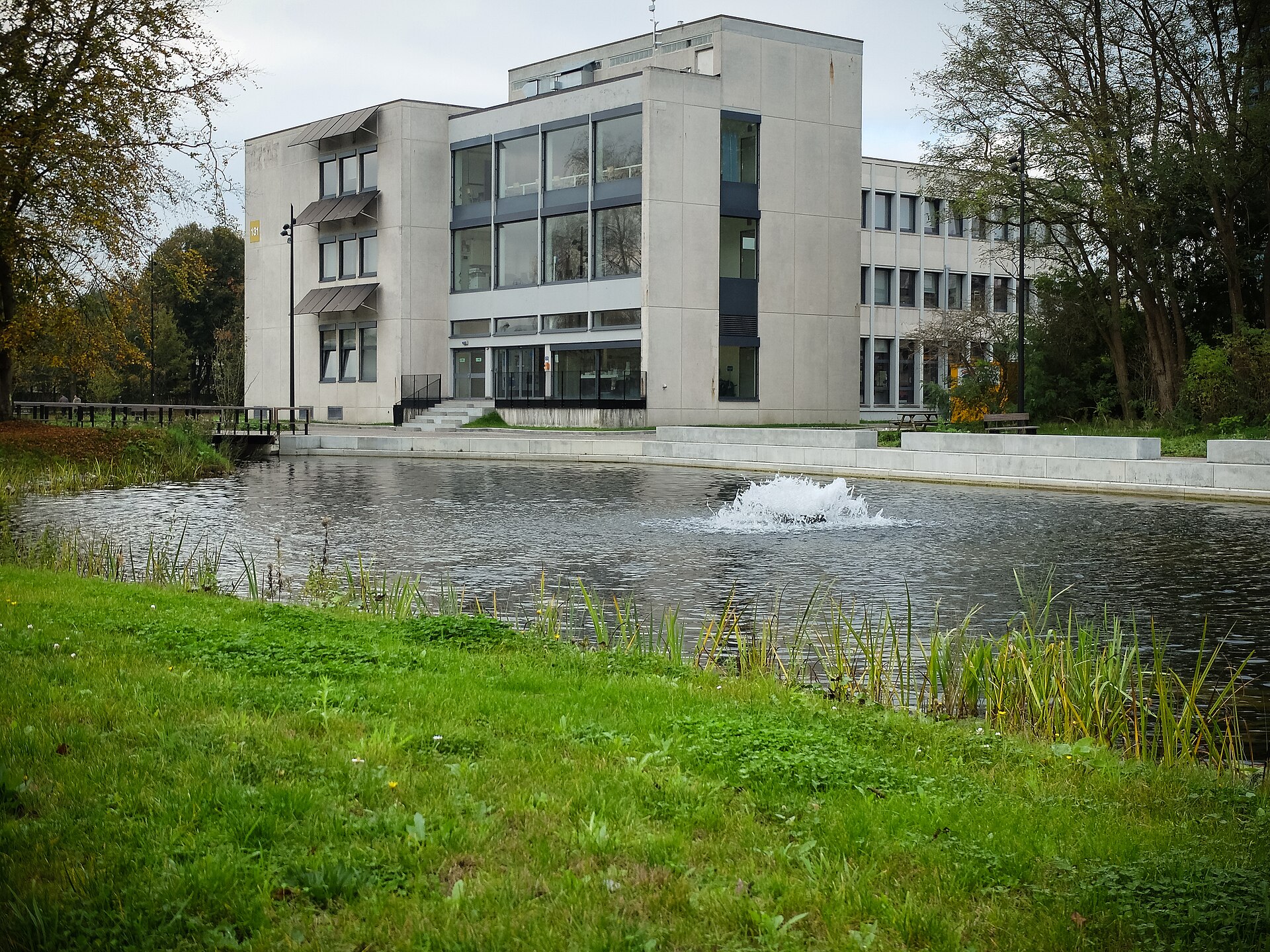
Facade of Ghent University campus Ledeganck in Ghent (B).
Facade of Ghent University campus Ledeganck in Ghent (B).rvanhegelsom · CC BY-SA 4.0 · via Wikimedia Commons
Ghent University site St-Pietersnieuwstraat in Ghent (B).
Ghent University site St-Pietersnieuwstraat in Ghent (B).rvanhegelsom · CC BY-SA 4.0 · via Wikimedia Commons
The Volta building on Zwijnaarde science park, housing the EnSy research group of Ghent University
The Volta building on Zwijnaarde science park, housing the EnSy research group of Ghent UniversityEpyon01P · CC0 · via Wikimedia Commons
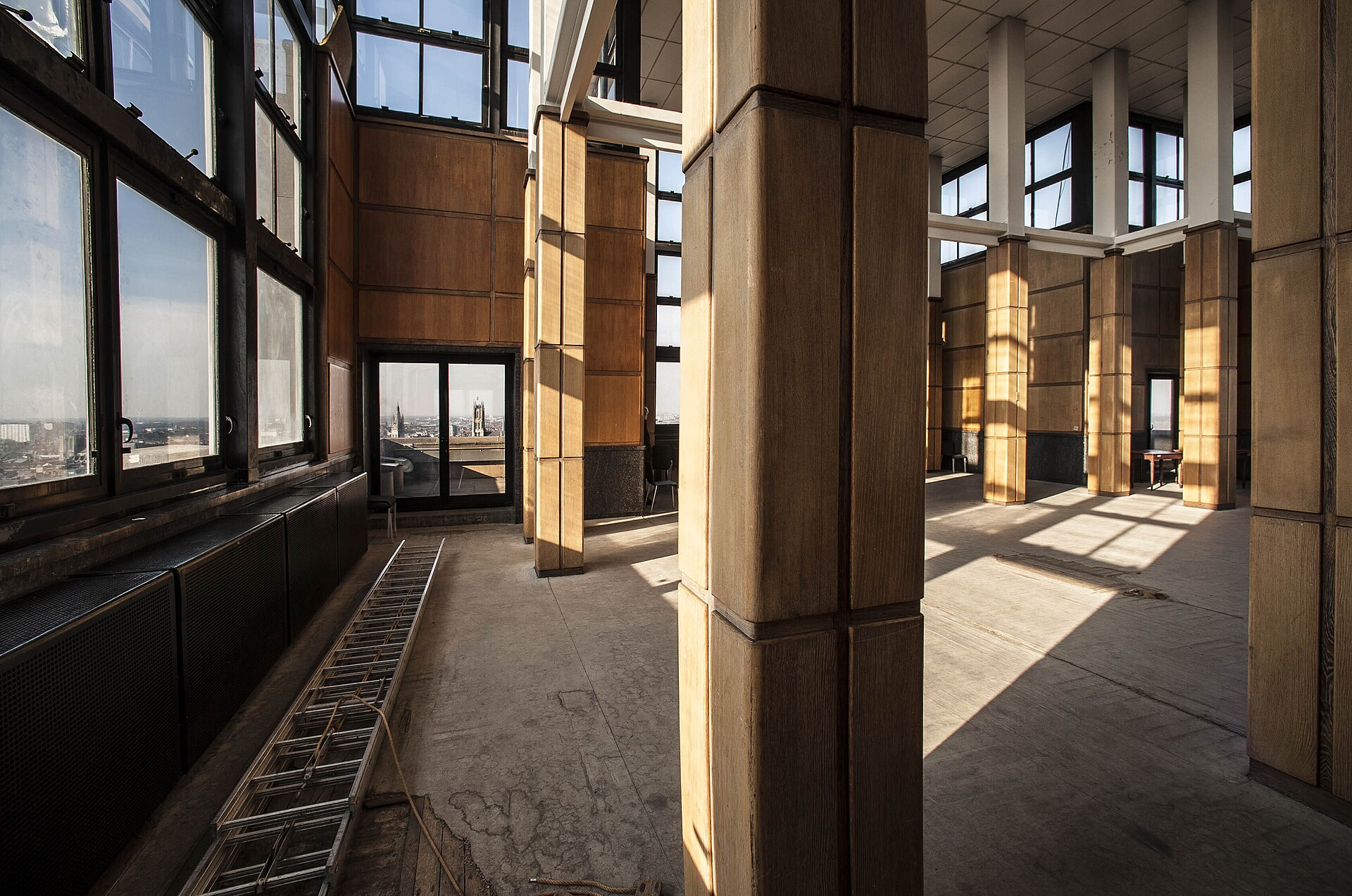
Boekentoren UGent - de belvedère boven de 24-ste verdieping.
Boekentoren UGent - de belvedère boven de 24-ste verdieping.Michiel Hendryckx · CC BY-SA 3.0 · via Wikimedia Commons
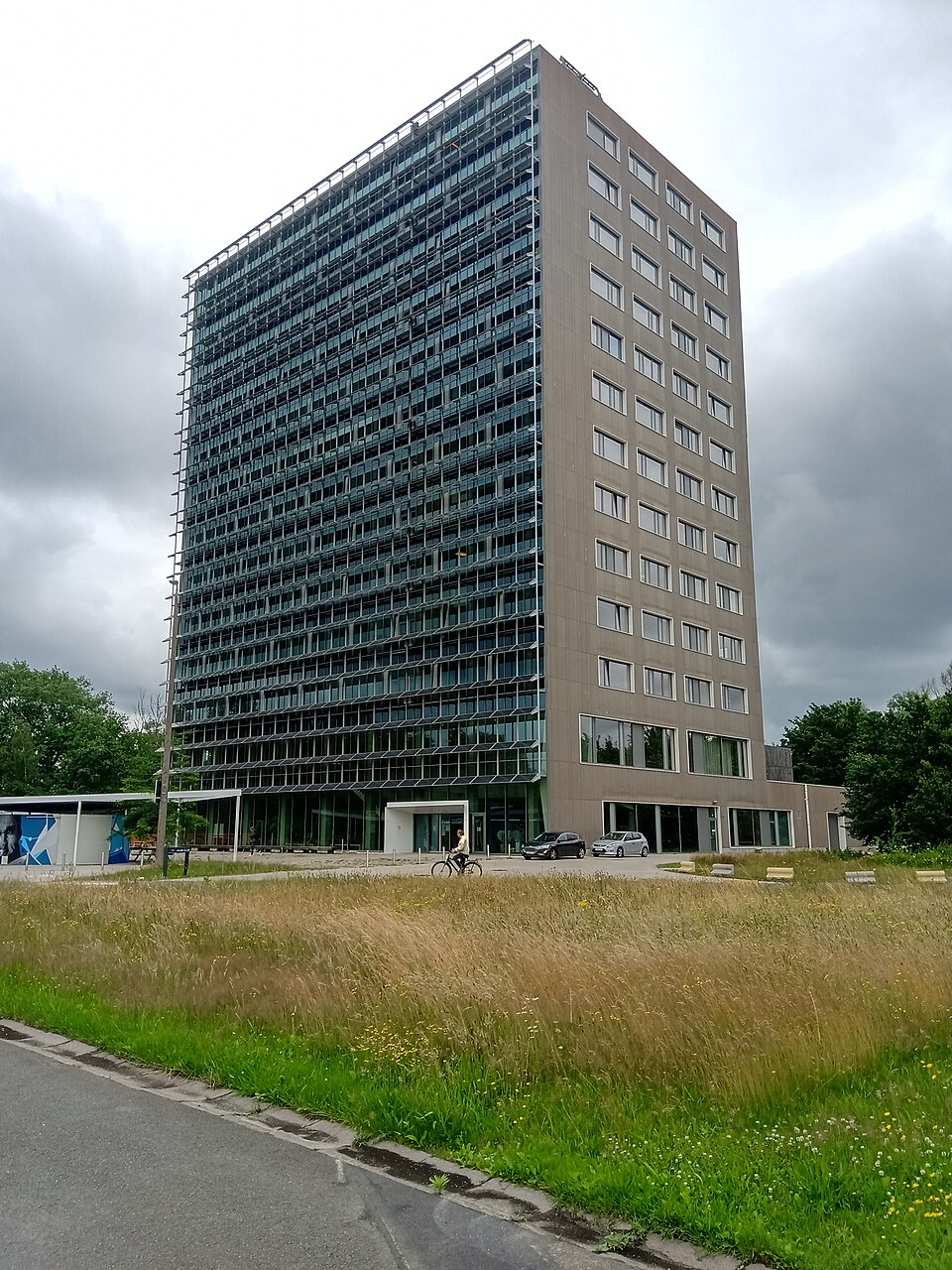
IGent-toren op het Technologiepark te Zwijnaarde.
IGent-toren op het Technologiepark te Zwijnaarde.Daniuu · CC BY-SA 4.0 · via Wikimedia Commons
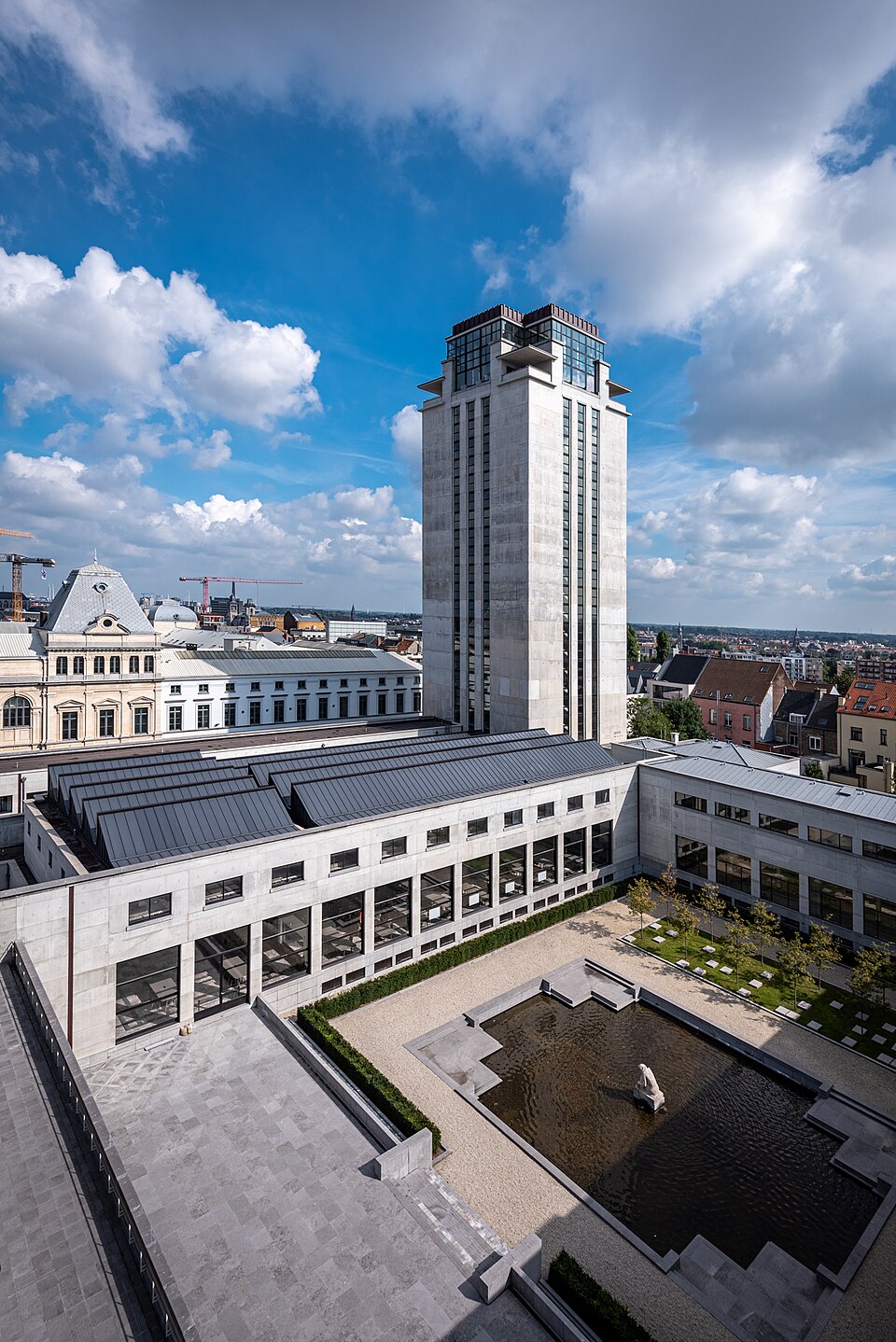
2021 Boekentoren   University Library of Ghent
2021 Boekentoren University Library of GhentGeert Roels · CC BY-SA 4.0 · via Wikimedia Commons

Why Ghent University — Research Depth, Affordable Tuition & a World-Class Student City

Ghent University is not simply academically distinguished — it offers a rare combination of world-class research reputation, affordable European tuition, and a vibrant medieval city that draws ambitious international students from over 140 countries.

01Top-100 Global Research University
Ranked #82 globally by Times Higher Education and #150 by QS, UGent is Belgium's second-ranked institution and a member of the prestigious Coimbra Group of leading European research universities. Its Faculty of Bioscience Engineering is consistently cited among the world's best.
02Strengths in Life Sciences & Engineering
UGent is internationally recognised for Bioscience Engineering, Veterinary Medicine, Biotechnology, Biomedical Sciences, Food Science, and Computer Science Engineering — fields where it operates world-class research facilities and has deep links to Belgium's biotech sector.
03Affordable Belgian Public Tuition
As a Belgian public university, tuition fees for non-EU international students are far lower than UK or US equivalents. An estimated total cost of attendance of $19,400 per year places UGent among the best value top-100 universities in the world.
04Ghent — Europe's Premier Student City
Ghent is a compact, bikeable medieval city where nearly 80,000 of its 270,000 residents are students. Brussels is 30 minutes by train, Bruges 25 minutes, Paris 2 hours. The student energy of the Overpoort district and the medieval grandeur of the Graslei make it one of Europe's most enjoyable places to study.
05European Gateway & Industry Access
Belgium sits at the heart of the EU — Brussels, the de facto EU capital, is 30 minutes away. UGent graduates benefit from proximity to EU institutions, multinational pharma, food, chemicals, and tech companies, and a dense cluster of biotech spin-offs anchored at the iGent technology park.
06330+ English-Taught Programmes
For international master students, UGent offers more than 330 English-taught programmes spanning engineering, sciences, social sciences, economics, arts, and medicine — one of the largest English-taught portfolios of any continental European university.

Ghent University Acceptance Rate & Entry Profile

Stats

~49,000 enrolled
Applications (university-wide)
12%
International Students
#82
THE World Rank

Profile Stats

32+
IB Diploma Typical Band
3.0
Minimum GPA Equivalent
6.5
IELTS Minimum
87
TOEFL iBT Minimum
12%
International Students
49,000
Student Population
University-wide acceptance rate; competitive programmes are substantially higher threshold
Entry Benchmarks for International Students

Rea Vs Rd

Rea Label: EU/EEA Applicants
Rea Value: Standard EU fee + broad access
Rd Label: Non-EU International
Rd Value: Individual credential assessment required

Ghent University Admissions Requirements — Credentials, Language & Qualification Check

Academic Diploma & Equivalence
Value: 3.0+ GPA
Admission is credential-based: your foreign diploma must be assessed as equivalent to the relevant Belgian qualification. For master programmes, a relevant bachelor degree at the appropriate academic level is required. Strong grades in core discipline subjects are central to the assessment.
  • Bachelor diploma for master entry; secondary diploma for bachelor entry (Dutch-taught)
  • Minimum GPA equivalent to 3.0 on 4.0 scale
  • Strong subject-relevant grades matter more than overall average
  • Credential equivalence assessed by the Registrar's Qualification Check
English Language Proficiency
Value: IELTS 6.5 / TOEFL 87
For English-taught programmes, official proof of English proficiency is required unless your entire previous education was conducted in English. Some competitive programmes set higher thresholds — always check the specific programme page.
  • IELTS Academic: minimum 6.5 overall
  • TOEFL iBT: minimum 87 overall
  • Cambridge C1 Advanced accepted by most programmes
  • Exemptions possible if all prior education was in English
IB / A-Level / International Qualifications
Value: IB 32+
The IB Diploma is assessed against the Belgian secondary school diploma. A score of 32 or above is a typical minimum benchmark, with competitive STEM programmes expecting higher scores in relevant Higher Level subjects.
  • IB: 32+ overall; competitive STEM programmes expect higher HL scores
  • A-Levels: relevant subjects at appropriate grades
  • French Baccalauréat, German Abitur, CBSE Class XII: individually assessed
  • US High School Diploma + strong AP results accepted

Ghent University Application Components — Direct Portal, Motivation Letter & Documents

Ghent University uses a direct online application portal — there is no Common App, UCAS, or centralised Belgian system. The process is document-intensive: the university verifies whether your foreign qualification is equivalent to the Belgian diploma required for your chosen programme.

01RequiredOnline Application Form
Submitted through UGent's own application portal at ugent.be. The portal opens several months before each academic year's intake. Create an account and complete all fields carefully before uploading documents.
02RequiredAcademic Transcripts & Diploma
Official transcripts and your highest academic diploma, properly legalised and authenticated (apostille or embassy legalisation). Certified translations required if documents are not in English, Dutch, French, or German.
03RequiredEnglish Proficiency Test
Official IELTS Academic (min 6.5) or TOEFL iBT (min 87) report for English-taught programmes. Scores must typically be no more than two years old. Some programmes set higher thresholds.
04RequiredMotivation Letter
A structured motivation letter (letter of intent/statement of purpose) is required for most master programmes. This is your central narrative document — address why this programme, your academic preparation, relevant experience, and career goals.
05RequiredCV / Résumé
A current academic and professional CV outlining educational background, research experience, publications (if any), relevant work experience, and technical or language skills.
06Programme-specificReferences / Recommendation Letters
Some programmes require one or two academic or professional references. Check the specific programme's requirements — not all mandate these, but strong academic references significantly strengthen competitive applications.
07Programme-specificAdditional Requirements
Medicine, Veterinary Medicine, and some Engineering tracks have additional entrance requirements, portfolio submissions, or pre-assessment procedures. Always consult the individual programme's admissions page.
https://www.ugent.be/prospect/en/administration/application

The Motivation Letter at Ghent University — Your Single Most Important Document

Prompts

Why This Programme?
Why do you want to study this specific programme at Ghent University? What about the curriculum, the research focus, or the faculty's work aligns with your academic and professional goals? Be specific to UGent — mention particular modules, research groups, or faculty members.
Why Are You Academically Prepared?
What in your academic background has prepared you for this programme? Which courses, research projects, or academic achievements are most relevant? Make explicit connections — do not assume the committee will draw them from your transcript.
Relevant Experience
What professional, research, or significant extracurricular experience have you gained that makes you a strong candidate? For master programmes, research experience, lab work, or internships in the relevant field are strong credentials.
Career Goals
What do you intend to do with this degree? How does a master from Ghent University serve your longer-term professional or academic ambitions? Be specific and realistic about career trajectories.

Tips

Write for this programme specifically
The motivation letter must be tailored to the specific UGent programme — not to the university generally. Generic letters that could be sent anywhere are immediately apparent to faculty readers who assess applications regularly.
Professional tone, not personal essay
This is not a Common App personal statement. The tone is formal and academically engaged — not confessional or emotionally self-indulgent. Think of it as a document a professor would want to read from a prospective graduate student.
Name faculty and research groups
Mentioning specific faculty members whose research you have read, or research centres like VIB, imec, or the Faculty's own groups, demonstrates genuine preparation and intellectual seriousness.
Connect your background to programme requirements
Explicitly map your coursework, thesis, or projects to the programme's content. Do not leave the admissions committee to make connections you should be drawing yourself.
The most common Ghent motivation letter mistake. Writing a generic statement about the university's ranking and Belgium's beauty instead of a specific argument for why this programme at this university is the right next step for someone with your exact background.

What Ghent University Admissions Officers Are Looking For

Unlike US universities, Ghent University does not use a holistic review process evaluating extracurriculars, community service, or personal narrative for admission decisions. The primary question is: does your foreign academic credential demonstrate the same level of preparation as a Belgian student with direct access to this programme? Academic performance is the decisive factor. That said, for competitive programmes, the motivation letter and relevant experience become differentiating factors between equally qualified candidates.

01Equivalent Academic Preparation
Your prior degree must be assessed as equivalent to the Belgian qualification normally required. For master programmes, a relevant bachelor degree at the appropriate academic level is the non-negotiable baseline.
02Strong Grades in Relevant Subjects
Competitive programmes look closely at performance in subject-relevant courses. A strong record in core discipline subjects — mathematics and sciences for STEM, analytical writing for humanities — matters more than general GPA.
03Demonstrated English Proficiency
A clear IELTS or TOEFL score meeting or exceeding the minimum threshold. For highly competitive programmes, students at the bottom of the acceptable band face disadvantage compared to those significantly above it.
04Specific, Informed Motivation
Through the motivation letter, the faculty wants to see that you have a specific, informed reason for choosing this programme at UGent — whether that is a particular research group, specialisation, industry connection, or career pathway.
05Research or Professional Experience
For master programmes, relevant research experience, internships, or academic projects significantly strengthen an application, particularly for research-intensive programmes in Bioscience Engineering, Biotechnology, and Computer Science.
06Financial Means (non-EEA)
Non-EEA students must demonstrate sufficient financial resources to cover tuition and living expenses throughout their study period. This is assessed during both the visa application process and university enrolment.

Financial Aid & Scholarships at Ghent University for International Students

Ghent University does not operate a large need-based financial aid system for international students equivalent to what US universities provide. However, the relatively low tuition fee level means the net cost burden is already substantially lower than at UK, US, or Australian alternatives. The primary opportunities are the Flemish government's Master Mind Scholarships, Erasmus Mundus joint-programme scholarships, and VLIRUOS development cooperation awards.

Aid amounts and scholarship values should be verified on the official Flemish scholarship portals and UGent's fees page, as they change annually. All USD figures are estimates based on the university's facts data.

Stats

Limited
of students receiving institutional need-based aid
~$8,070
Annual tuition (non-EU international)
~$19,400
Total estimated cost of attendance
$90
Application fee

Contribution Tiers

RangePercentPercent ValueNote
Academically outstanding international master studentsMaster Mind60Flemish government merit scholarships; competitive; partial tuition offset
Students in Erasmus Mundus joint programmesFull EU100Full tuition + living allowance; programme-specific, competitive
Students from eligible developing countriesVLIRUOS/ICP70VLIRUOS development cooperation; contact directly for current eligible countries
All non-EU international studentsHome govt45Research your home country's scholarships for study in Belgium/EU
All studentsLow tuition80Structural advantage: ~$8,070/yr tuition vs $25,000-$55,000 at comparable anglophone unis
Low Tuition — The Built-In Advantage. Unlike most top universities in English-speaking countries, Ghent University's public Belgian fee structure keeps tuition at a fraction of the cost. At approximately $8,070 per year for non-EU students, UGent's tuition is lower than almost any comparable research university in the UK, US, or Australia. This structural affordability is UGent's most significant financial advantage for international students.
Scholarship Landscape by Student Category
https://www.ugent.be/prospect/en/administration/fees-funding/funding-studies.htm

Key Dates

Application portal opens for most programmes
Date: Nov–Dec
Recommended early application deadline (verify per programme)
Date: 1 March
Standard deadline for most programmes (verify per programme)
Date: 1 June
Processing time after complete file received
Date: ~3 months
Academic year begins
Date: Late Sept

Advantages

  • More processing time — essential if visa required (non-EEA students need visa after admission)
  • Earlier housing search — Ghent student accommodation fills up
  • Faculty may have more capacity early in the window for competitive programmes
  • Errors and missing documents can be corrected without missing the deadline
  • Demonstrates genuine commitment and preparation

Disadvantages

  • Incomplete files at the deadline are not processed
  • Non-EEA students risk not receiving a decision in time to obtain a visa
  • Housing options narrow significantly as the year progresses
  • Some programmes may reach capacity in rolling admissions
  • Less time to correct document authentication issues
Application Rounds at Ghent University. Ghent University does not use a US-style Early Action, Early Decision, or Restrictive Early Action system. Applications are made directly through UGent's own portal, and admission decisions follow a standard processing timeline of approximately three months after a complete file is received. The strategic equivalent of 'applying early' at UGent is submitting a complete, polished application as early in the window as possible.
Tychr's Application Timing Recommendation. Apply as early as possible — ideally targeting the March window for September intake. Non-EEA students in particular should treat the early window as their de facto deadline, given that the Belgian student visa process adds additional time after receiving the admission letter. There is no strategic advantage to waiting.

Interviews at Ghent University — Format & What to Expect

Most master programmes at Ghent University do not include a formal interview as part of the standard international admissions process. Admission decisions are based primarily on your submitted documents — transcript, motivation letter, CV, and references. However, some programmes do conduct interviews, and knowing which do and how to prepare matters.

Meta

Document-based; no interview for most programmes
Standard process
Arts, Health Sciences, some research-track masters
Programmes that may interview
Video call or in-person; typically 20–40 minutes
Format (where conducted)
Academic motivation, research interests, English proficiency
Evaluates

Questions

Why did you choose this specific master programme at Ghent University?
Tip: Be specific. Name the curriculum structure, research groups, or faculty whose work attracted you. Generic answers about rankings signal poor preparation.
Describe your most relevant research or academic project.
Tip: Walk through your methodology, findings, and what you learned. Faculty interviewers are interested in how you think about disciplinary problems, not just what you did.
What are your career goals after completing this programme?
Tip: Connect the programme's graduate outcomes to your specific ambitions. Show you understand what UGent graduates typically do in your field.
How does your undergraduate background prepare you for the demands of this programme?
Tip: Map your coursework explicitly to the programme's content. Do not assume the interviewer has read your transcript in detail.
Do you have specific research interests you would like to pursue during the programme?
Tip: If the programme has a research component or thesis, having a genuine intellectual question you want to investigate — one you can connect to UGent faculty work — is highly impressive.

Residential Life at Ghent University

Ghent University does not have a Harvard-style 'house' residential system. There are no college houses, sorting ceremonies, or residential academic communities as at Oxford or Yale. UGent manages several student residences through its social services arm (Studentenvoorzieningen UGent), but spaces are limited and demand is high. Most international master students find private accommodation in Ghent's well-served rental market.

Houses

UGent Student Residences
Tag: University-managed
Limited spaces in university-managed residences, priority often given to first-year and exchange students. Apply early through the Studentenvoorzieningen portal.
Private Studio / Shared Apartment
Tag: Most common
The majority of international students rent privately. The Overpoort, Sint-Pietersnieuwstraat, and surrounding neighbourhoods are the student heartland.
Kot (Belgian Student Room)
Tag: Traditional option
The Belgian term for a student room in a shared house. Kots are the traditional student accommodation model in Ghent — cheap, central, and social.
Short-Term Welcome Housing
Tag: On arrival
Some international students use temporary welcome accommodation on arrival before securing permanent housing. Contact the International Relations Office for current options.

Lottery Steps

  • Apply for university residence early — spaces are released months in advance and fill quickly
  • Join UGent's international student Facebook groups and housing forums as soon as you are admitted
  • Budget €500–€800/month for a private studio or shared apartment in the student districts
  • Ghent is flat and cycle-friendly — being 15–20 minutes from campus by bike is entirely normal
  • The International Relations Office (IRO) maintains housing resources for incoming international students

Ghent University Faculties & Programmes

Faculty of Bioscience Engineering
Label: UGent's Global Flagship
Consistently among the world's top faculties in its field. Bioscience Engineering, Food Technology, Environmental Technology, and Land Use Management. Deep research ties to VIB and Ghent's biotech sector.
  • {"label":"Global profile","value":"Top-rated"}
  • {"label":"Key research links","value":"VIB, ILVO"}
  • {"label":"English master programmes","value":"Multiple"}
  • {"label":"Industry connections","value":"Biotech cluster"}
Faculty of Engineering & Architecture
Label: Computer Science, Civil, Chemical & Mechanical
Home to Computer Science Engineering, Electrical Engineering, Civil Engineering, Chemical Engineering, and Architecture. Strong ties to imec (world-leading nanoelectronics research centre).
  • {"label":"Key partner","value":"imec"}
  • {"label":"Flagship programme","value":"CS Engineering"}
  • {"label":"Research focus","value":"Nano, ICT, energy"}
  • {"label":"Industry links","value":"Belgian tech sector"}
Faculty of Medicine & Health Sciences
Label: Medical & Health Sciences
Medicine, Dentistry, Biomedical Sciences, Pharmaceutical Sciences, and Rehabilitation Sciences. Medical admission has specific Belgian regulatory requirements; non-EU students should verify current access rules.
  • {"label":"Medical programme","value":"MD (Belgian)"}
  • {"label":"Key note","value":"Numerus clausus applies"}
  • {"label":"English options","value":"Some master tracks"}
  • {"label":"Hospital partner","value":"UZ Gent"}
Faculty of Economics & Business Administration
Label: Economics, Business, Accountancy
Economics, Business Economics, Business Engineering, Commercial Engineering, and Accountancy. Business Engineering is a mathematically intensive programme combining engineering and management.
  • {"label":"Flagship","value":"Business Engineering"}
  • {"label":"Quantitative emphasis","value":"High"}
  • {"label":"Language of bachelor","value":"Dutch"}
  • {"label":"English masters","value":"Multiple"}
Faculty of Sciences
Label: Pure Sciences, Mathematics, Physics, Chemistry
Mathematics, Physics, Chemistry, Biology, Geography, and Geology. The faculty feeds into PhD programmes and research careers across UGent's STEM cluster.
  • {"label":"Research intensity","value":"Very high"}
  • {"label":"English masters","value":"Several"}
  • {"label":"PhD pipeline","value":"Strong"}
  • {"label":"Key partner","value":"VIB, IMEC"}
Faculty of Law & Criminology
Label: Law, Criminology, Social Work
Belgian law is primarily Dutch-language; international master tracks in areas like European law and international law are available in English. Excellent proximity to EU legal institutions in Brussels.
  • {"label":"Belgian law language","value":"Dutch"}
  • {"label":"International track","value":"English masters available"}
  • {"label":"Proximity","value":"30 min to Brussels"}
  • {"label":"EU law focus","value":"Strong"}

Research & Extracurricular Opportunities at Ghent University

VIB — Research Institute for Life Sciences
Category: World-Class Research
The VIB (Vlaams Instituut voor Biotechnologie) is one of Europe's leading life sciences research institutes, headquartered in Ghent and closely tied to UGent. Master students in Bioscience Engineering, Biochemistry, and related programmes have opportunities to work in VIB research groups. PhD positions at VIB-UGent are among the most sought-after in European life sciences.
imec — Nanoelectronics & ICT Research
Category: Technology Research
imec is the world's leading independent research centre in nanoelectronics, closely affiliated with UGent's Faculty of Engineering. Computer Science Engineering and Electrical Engineering students can pursue thesis work and research internships within imec's global research programme — an extraordinary gateway to semiconductor and ICT careers.
UGent Doctoral Schools
Category: Research Training
Ghent University's Doctoral Schools structure provides comprehensive training for PhD candidates across all disciplines. For master students interested in continuing to research careers, proximity to UGent's doctoral environment — and to faculty actively seeking PhD students — is a significant advantage.
Student Associations & International Community
Category: 200+ Student Groups
UGent has over 200 student associations (studentenverenigingen), including faculty-specific associations, international student organisations, sports clubs, debating societies, and cultural groups. The Internationaal Studentencomité (ISC) organises events and orientations specifically for international students. The ESN (Erasmus Student Network) chapter is active and welcoming.
Scroll right to explore UGent's research programmes and student life.

Career Outcomes & Ghent University Graduate Network

Ghent University graduates are highly sought after by Belgian and international employers, particularly in life sciences, food technology, engineering, and business. Belgium's dense cluster of multinational companies — major pharma, biotech, chemicals, and agri-food players — provides a rich recruitment environment close to campus.

Stats

85%
Graduates employed within 12 months
$42,000
Average starting salary (estimated USD)
12%
International students
140+
Countries represented

Categories

Life Sciences & Pharma
UGent's biotech and life sciences graduates are strongly positioned for roles at UCB, Janssen (J&J), Bayer, and the numerous biotech startups in the Ghent iGent Technology Park. The Faculty of Bioscience Engineering has deep formal partnerships with industry.
EU Institutions & Policy
The proximity to Brussels means graduates in law, economics, social sciences, and political science regularly enter roles at EU institutions (European Commission, Parliament, Council), international NGOs, and diplomatic missions.
Technology & Engineering
Computer Science Engineering and Engineering graduates find strong demand from Belgium's tech sector, European R&D centres of multinationals, and the growing startup ecosystem anchored in the imec/VIB research cluster at the iGent park.

Tychr Student Outcomes — Ghent University & European Research Universities

Priya S.
Tychr helped me realise my motivation letter was completely generic — I mentioned the ranking and nothing else. After three revisions, I had a letter that discussed a specific VIB research group's work on plant systems biology. The Faculty told me at orientation that my letter stood out for its specificity. I'm now doing my thesis in that exact lab.
Country: India
Program: Ghent University — MSc Bioscience Engineering
Class Year: Class of 2025
Academic Profile: BTech Agricultural Engineering · IELTS 7.5
Lars M.
I didn't realise the credential check could take so long. Tychr guided me through getting my documents apostilled in Germany and made sure I submitted everything complete on the first try. I got my admission letter in under three months.
Country: Germany
Program: Ghent University — MSc Computer Science Engineering
Class Year: Class of 2024
Academic Profile: BSc Informatik · German Abitur
Amara K.
As a student from Nigeria, I was worried about the credential equivalence assessment. Tychr walked me through exactly what UGent needed — legalisation through the Belgian embassy, certified translations, and the specific competency mapping the Faculty of Sciences expected. The process worked perfectly.
Country: Nigeria
Program: Ghent University — MSc Biochemistry & Biotechnology
Class Year: Class of 2026
Academic Profile: BSc Biochemistry · TOEFL 98

Faqs

Can international students do a bachelor's degree at Ghent University in English?+

Almost all bachelor programmes at Ghent University are taught in Dutch. The vast majority of English-taught programmes are at master level (330+ options). If you are looking for an undergraduate degree taught in English, explore other Belgian universities or consider a Dutch language preparation programme first.

Is the 50% acceptance rate relevant to international master applicants?+

The university-wide acceptance rate includes Belgian and EU students across all programmes. For international students, the key question is whether your foreign qualification is assessed as equivalent to the Belgian diploma required for your chosen programme. Competitive programmes such as Bioscience Engineering, Veterinary Medicine, and Computer Science Engineering have higher effective thresholds in practice.

How long does the application process take?+

After submitting a complete application (all required documents included), the Registrar's Office and Faculty typically need approximately three months to reach a decision. It is strongly advised to apply early and ensure all documents are complete at submission — incomplete files are not processed.

Do I need to speak Dutch to study at Ghent University?+

For English-taught master programmes, Dutch is not required for study. However, learning basic Dutch is very helpful for daily life in Ghent, which is a Flemish (Dutch-speaking) city. UGent offers Dutch language courses for international students.

What English proficiency scores are required?+

The university minimum for English-taught programmes is IELTS 6.5 or TOEFL iBT 87 overall. Individual programmes may require higher scores. Students whose entire prior education was in English may be eligible for an exemption — verify this with the specific programme's admissions team.

Is there financial aid available to international non-EU students?+

Ghent University does not offer broad need-based financial aid to international students. The primary scholarships are the Master Mind Scholarships (Flemish government merit-based), Erasmus Mundus joint master scholarships, and VLIRUOS/ICP scholarships for students from eligible developing countries.

Do I need a visa to study in Belgium?+

Non-EEA students require a Belgian long-stay student visa (Type D). The process involves obtaining your admission letter from UGent, applying at the Belgian embassy in your home country, and registering with the local municipality (commune) upon arrival. Start the visa process immediately after receiving your admission letter.

What is Ghent like for international students?+

Ghent is consistently ranked among Europe's most liveable and enjoyable student cities. It is compact, bicycle-friendly, safe, and vibrant, with a large student community. English is widely spoken. Brussels, Bruges, and Antwerp are easily accessible by train, making Ghent an ideal base for exploring Belgium and wider Europe.

Book a Free Ghent University Admissions Strategy Session

In 60 minutes our European university admissions specialists will evaluate your academic profile, assess your credential equivalence, identify the right UGent programmes for your background, and develop your motivation letter strategy — the document that differentiates your application.

  • No commitment required
  • European university specialists with UGent-specific knowledge
  • Credential equivalence assessment guidance
  • Personalised motivation letter strategy
A Ghent application without a specific motivation letter is an application that reads like every other one — and most get rejected.

Academic Requirements

Ghent University Academic Requirements — The Honest Breakdown for International Students

What academic preparation do Ghent University's admitted students actually need? How does UGent evaluate IB, A-Levels, AP, and other international qualifications? And what does 'credential equivalence' actually mean in practice?

32+
IB Diploma Typical Band
Typical minimum for entry
3.0
Minimum GPA Equivalent
On 4.0 scale
6.5
IELTS Minimum
English-taught programmes
87
TOEFL iBT Minimum
English-taught programmes
#82
THE World Rank
Times Higher Education
~50%
University-wide Acceptance
Varies by programme

GPA & Academic Record

Ghent University and GPA — What the Equivalence Assessment Actually Evaluates

Ghent University does not use GPA as a direct entry criterion in the US sense. Instead, it conducts a Qualification Check: your foreign academic record is assessed for equivalence to the relevant Belgian diploma. A minimum equivalent GPA of 3.0 on a 4.0 scale is a benchmark, but this is a floor, not a target — competitive programmes expect meaningfully stronger records.

For master applicants specifically: your undergraduate transcript is the central document. Make sure your CV and motivation letter highlight your strongest and most relevant academic results — do not leave the Faculty to discover them.

3.0
Minimum GPA equivalent on 4.0 scale
3.5+
Competitive programmes expect
What this means for international students. The equivalence assessment is conducted by UGent's Registrar's Office in collaboration with the relevant Faculty. They evaluate not just your overall grade but the content and level of your curriculum — whether your programme covered subjects equivalent to what a Belgian student in the same field would have studied. A 3.8 GPA in an unrelated field is less compelling than a 3.3 GPA in the directly relevant discipline.
Subject relevance matters more than overall average. For competitive programmes in Bioscience Engineering, Computer Science Engineering, and related STEM fields, your grades in the most relevant core subjects (mathematics, sciences, programming) are weighted heavily. A strong overall average with weak performance in core discipline subjects raises concerns; strong performance in core subjects with a lower overall average may be acceptable.

Credential Assessment

The Qualification Check — How Ghent University Reads Your Foreign Diploma

The most distinctive feature of the Belgian university admissions process is the Qualification Check: every non-Belgian diploma must be individually assessed for equivalence before an admissions decision is made. Understanding this process is essential for international applicants.

What the Qualification Check assesses
The Qualification Check evaluates two things: (1) the level of your qualification — is it equivalent to the Belgian secondary school diploma (for bachelor entry) or Belgian bachelor degree (for master entry)? And (2) the content — does your curriculum cover the prerequisite subject areas for your chosen programme? Both must be satisfactory for an offer to be made.
What this means practically
You cannot rely on your university's name recognition or your country's general educational reputation. Every application is assessed individually. Documents must be complete, properly legalised, and submitted in a recognised language (English, Dutch, French, or German) or with certified translation. Incomplete or improperly authenticated files are not processed.
For students at less well-known institutions. Students from universities or school systems that are less familiar to Belgian assessors may need to provide additional context documentation — a university prospectus, grade scale explanation, or accreditation evidence. Tychr can help prepare this supplementary context before submission, significantly reducing the risk of delays or unfavourable equivalence assessments.

SAT at Ghent University

SAT Scores at Ghent University — Not Required, Not Used

Ghent University does not require or use SAT scores as part of its admissions process. Belgium's university admissions system is credential-based, not standardised-test-based. Admission is determined by your academic diploma and transcript, not by a single test score.

LabelScorePercent
SAT requiredNo0
SAT used in assessmentNo0
English language test (IELTS/TOEFL)Yes100
What counts instead of SAT. Your academic transcript, with grades in subject-relevant courses, is the primary quantitative academic signal. For STEM programmes, the level and grades achieved in mathematics, sciences, and technical subjects in your degree or secondary school are the relevant benchmarks — not a standardised test score.
If you have a strong SAT score. You may mention a strong SAT score (1400+) in your motivation letter as supplementary evidence of academic ability, but it will carry no formal weight in UGent's assessment. Focus your application energy on your transcript, motivation letter, and supporting documents.
Preparation focus. Rather than preparing for the SAT, international students targeting Ghent University should invest their preparation time in: (1) obtaining the strongest possible grades in their current programme, (2) achieving an IELTS or TOEFL score above the minimum, and (3) developing a specific, research-informed motivation letter.

ACT at Ghent University

ACT Scores at Ghent University — Not Part of the Process

Like the SAT, the ACT is not used in Ghent University's admissions process. Belgium's university admissions framework has no equivalent to US standardised testing for domestic or international students.

Metrics

ACT required
Score: No
Belgian equivalent
Score: None

Comparison Cards

SAT / ACT (US)
Widely used in US university admissions as a standardised academic measure. Not applicable to Belgian university admissions.
IELTS / TOEFL (Belgium)
The only standardised tests that formally count at UGent for English-taught programme applicants — English language proficiency only.
Academic Diploma (Belgium)
Your prior diploma and academic transcript are the primary qualification evidence. This is the Belgian equivalent of the SAT — far more comprehensive.
No superscore policy. UGent has no superscore or test-retake policy, because tests are not part of the process. What UGent does review is multiple years of academic performance on your transcript — which provides a far richer picture of academic capability than any single test day score.
Tychr's recommendation. Do not invest preparation time in SAT or ACT if your primary target is Ghent University or other Belgian/continental European universities. Direct that effort toward your academic transcript, English proficiency test, and motivation letter.

Test Policy

Ghent University's Test Policy — Credential-Based, Not Test-Based

Ghent University does not have a 'test-optional' policy in the US sense, because it never required SAT or ACT tests in the first place. Admissions at Belgian public universities is based entirely on academic diplomas and credentials, not standardised aptitude tests.

Submit Items

IELTS Academic (minimum 6.5 overall) — submit if you have it and are applying to an English-taught programme
TOEFL iBT (minimum 87 overall) — equivalent alternative to IELTS
Cambridge C1 Advanced or C2 Proficiency — accepted by most programmes
Evidence of prior English-medium education — if your entire previous education was in English, request an exemption from the admissions office

Withhold Items

SAT or ACT scores — these are not relevant to UGent's admissions process
National entrance exam results from your home country — unless the programme page specifically requests them
The actual test policy. The only standardised tests UGent formally requires are English language proficiency tests (IELTS or TOEFL) for English-taught programmes. These are not optional — they are required proof of language readiness. All other academic evidence comes from your official transcripts and diploma.
The misconception about European universities. Many students coming from test-heavy admissions cultures assume all universities require standardised tests. Ghent University, like most continental European universities, evaluates academic preparation through the content and quality of your educational record — a richer and more nuanced assessment than a single test score.

Qualifications

IB, A-Levels & International Qualifications at Ghent University

IB Diploma
  • {"label":"Typical minimum band","value":"32 points overall"}
  • {"label":"Competitive STEM programmes","value":"Higher HL scores in relevant subjects expected"}
  • {"label":"HL Mathematics","value":"Strongly recommended for Engineering, CS, Economics"}
  • {"label":"Extended Essay","value":"Noted as evidence of research capability"}
Note: The IB Diploma is well-recognised and straightforwardly assessed at UGent. A score of 32 is a minimum benchmark for bachelor entry equivalence; competitive master programmes typically expect undergraduate-level preparation in addition to secondary results. For STEM programmes at master level, HL performance in relevant sciences and mathematics is the key indicator.
A-Levels (UK/Cambridge)
  • {"label":"Accepted for","value":"Secondary qualification evidence; bachelor entry (Dutch-taught) and master applications"}
  • {"label":"Relevant subjects","value":"Mathematics, Sciences, relevant humanities for programme alignment"}
  • {"label":"GCSE / IGCSE context","value":"Reviewed as supporting evidence of academic breadth"}
Note: A-Levels are accepted and well-understood at UGent. For bachelor entry (Dutch-taught programmes), the combination and grades of A-Level subjects are assessed for equivalence to the Belgian secondary school diploma. For master entry, A-Levels are part of your secondary education record; your undergraduate transcript becomes the primary document.
Other International Qualifications
  • {"label":"French Baccalauréat","value":"Individually assessed; generally well-received"}
  • {"label":"German Abitur","value":"Individually assessed; generally well-received"}
  • {"label":"Indian CBSE/ISC (Class XII)","value":"Assessed individually; strong marks in relevant subjects required"}
  • {"label":"US High School + AP results","value":"Assessed individually; strong AP results in relevant subjects supportive"}
Note: Any foreign diploma not from an EU country requires individual assessment. The Registrar's Qualification Check process handles this, but it takes time and requires complete, properly authenticated documents. Apply early to allow time for this process.

AP Courses & Ghent University

AP Courses at Ghent University — How They Are Treated

Advanced Placement (AP) exams are a US curriculum qualification not formally embedded in the Belgian admissions process. However, for students from US-curriculum international schools, AP results can provide useful supplementary evidence of academic preparation.

What Ghent looks for in AP applicants
Strong AP scores in subjects directly relevant to your chosen programme — AP Biology, AP Chemistry, AP Calculus BC, AP Computer Science Principles — signal genuine discipline preparation. Scores of 4 or 5 in relevant subjects are the most useful to mention.
How to present AP results
Include AP exam scores in your CV or application as supplementary academic evidence. They will not substitute for your diploma or undergraduate transcript, but they can reinforce your subject-area preparation in the motivation letter.
No AP credit transfer
Unlike US universities, Ghent University does not award course credit for AP exams. You will study the full programme curriculum regardless of prior AP achievement.
UGent does not award course credit for AP scores. The value of AP for UGent applications is entirely as supplementary evidence of academic preparation in a specific subject — not as a credit-earning or curriculum-shortening mechanism.
Students from school systems that do not offer AP should not artificially pursue AP exams for a UGent application. Your national qualification (IB, A-Levels, national board) is the appropriate and primary document. AP is relevant only for students already in a US-curriculum school environment.

Academic Rigour

Academic Rigour at Ghent University — What the Equivalence Assessment Rewards

While Ghent University does not use the phrase 'rigour of secondary school record' in the way Harvard does, the underlying concept is central to the Qualification Check: did you pursue the most relevant and demanding academic preparation available in your educational system?

Taking the most challenging and relevant courses available in your system, in the subjects most central to your intended programme.

What rigour means in the Belgian context. The equivalence assessment rewards genuine academic depth in relevant subjects. For a student applying to Bioscience Engineering, three years of biology and chemistry at the highest available level matters more than a broad general education. For Computer Science Engineering, mathematical preparation at the advanced level is the key signal.
The contextual element. Like Harvard's approach, UGent assesses rigour relative to what was available. A student who took the most advanced mathematics available at their school, even if that wasn't IB HL Maths AA, demonstrates the same underlying commitment as one who had access to the IB system. Context from your school or university transcript helps the assessors understand what was available to you.
What UGent's faculty assessors are looking for. A student who demonstrates genuine academic ambition in their chosen field — not just high grades in easy subjects — reads as a better candidate than one who has optimised for the highest possible GPA without depth. This is particularly true for competitive programmes where the faculty conducts a substantive content assessment of your prior studies.

Programme Preparation

Subject Preparation — What Ghent University's Top Programmes Expect

Ghent University's competitive programmes have specific academic preparation expectations. Understanding these before you apply — and before you choose your secondary or undergraduate courses — is essential.

Bioscience Engineering & Life Sciences
Strong preparation in biology, chemistry, and mathematics at the highest level of your qualification. IB: HL Biology, HL Chemistry, and HL Mathematics. A-Level: Biology, Chemistry, and Mathematics. University-level mathematics and statistics feature from year one.
Computer Science Engineering
Programming experience (Python, Java, or C++) before arrival is expected. Mathematics at the advanced level is crucial — HL Maths AA (IB) or Further Mathematics (A-Level). Master applicants should have data structures and algorithms coverage in their undergraduate record.
Economics & Business Engineering
Strong quantitative and analytical skills. IB Mathematics, Economics at HL. Business Engineering is mathematically intensive — the quantitative demands are closer to Engineering than to a traditional Business degree.
Medicine & Health Sciences
Highly competitive with specific Belgian regulatory requirements. Non-EU applicants must verify current access rules for the MD programme. For related health science master programmes, strong biology and chemistry preparation at undergraduate level is essential.

Language Requirements

English Language Requirements for International Ghent University Applicants

For English-taught programmes, official proof of English proficiency is a hard requirement — not a formality. Scores must meet the minimum and must be from a recent test (typically within two years of application).

The motivation letter itself functions as an extended English writing sample. Grammatical errors, awkward constructions, or stylistic weakness in a language-gated application are particularly damaging. Have your letter proofread by a native English speaker or a Tychr advisor before submission.

Test: IELTS Academic
Score: 6.5+
Test: TOEFL iBT
Score: 87+
Test: Cambridge C1 Advanced
Score: C1 grade
Practical guidance. Aim for IELTS 7.0 or TOEFL 95+ rather than the minimum. Being at the minimum threshold puts you at a disadvantage relative to candidates who comfortably exceed it, particularly for competitive programmes where the faculty conducts a holistic review of qualified applicants. A strong English proficiency score also validates your motivation letter's language quality.

By Faculty / Programme

Academic Requirements by Programme — What Different Paths Expect

Requirements listed are indicative. Always verify on the specific programme's official admissions page, as requirements vary by faculty and are updated annually.

ConcentrationExpectationSignals
MSc Bioscience EngineeringHL Biology + HL Chemistry + HL Mathematics (IB) or equivalentResearch experience in life sciences; thesis on relevant topic
MSc Computer Science EngineeringCS background + HL/advanced MathematicsProgramming portfolio; algorithms coursework; technical projects
MSc Biotechnology / BiochemistryHL Biology + HL Chemistry; undergraduate biochemistry coverageLab experience; research projects; relevant thesis work
MSc Business EngineeringQuantitative undergraduate background; HL MathematicsStrong analytical transcript; economics or engineering base
MSc EconomicsEconomics + Mathematics undergraduate preparationQuantitative research; econometrics coursework
MSc PsychologyPsychology or social sciences undergraduate degreeResearch methods experience; statistics coursework
MSc Food Science & TechnologyLife sciences or food science undergraduate backgroundChemistry and biology preparation; food industry experience

International Curricula

How Ghent University Evaluates Different International Education Systems

IB Diploma
Well understood and straightforwardly assessed. A score of 32+ is a minimum benchmark for secondary-level equivalence. For STEM programmes, HL performance in relevant sciences and mathematics is the key signal. The Extended Essay is noted as supplementary evidence of research capability.
A-Levels (Cambridge and Edexcel)
Accepted and well-understood at UGent. Subject selection and grades are assessed for relevance and level. Three A-Levels at strong grades in relevant subjects provide clear evidence of focused academic preparation.
French Baccalauréat
Generally well-received as a secondary qualification. The Mention Très Bien (highest distinction) is a positive indicator. Subject specialisation (filière scientifique for STEM) matters for programme relevance.
German Abitur
Well-regarded and generally assessed favourably. Strong Abitur grades with a STEM focus (Leistungskurse in Mathematics and Sciences) provide clear preparation evidence for engineering and sciences programmes.
Indian Boards (CBSE / ISC Class XII)
Individually assessed. Strong percentile scores in relevant subjects (Mathematics, Physics, Chemistry, Biology, Computer Science) from recognised boards are accepted. An undergraduate transcript from a recognised Indian university is the primary document for master applications.
US High School Diploma + AP
Individually assessed. The diploma itself may not be considered equivalent to the Belgian secondary diploma without supplementation. Strong AP scores (4–5) in relevant subjects strengthen the equivalence case. A bachelor's degree from a US-accredited university is fully acceptable for master entry.

Roadmap

Building Your Academic Profile for Ghent University — What to Do at Each Stage

Years 10–11Choose subjects with your UGent programme in mind
Year: Years 10–11
  • Identify which UGent master programmes interest you and trace their prerequisite subject areas back to secondary school
  • For STEM programmes: prioritise mathematics and laboratory sciences at the highest available level
  • For social sciences or economics: build analytical and writing depth in relevant subjects
  • Begin exploring UGent's programme catalogue and research groups
Year 12Maximise academic performance in relevant subjects
Year: Year 12
  • Final year grades are the primary academic evidence — performance in core discipline subjects is critical
  • Take your English proficiency test (IELTS or TOEFL) — results from this year are valid for two years from the application date
  • Aim for IELTS 7.0+ or TOEFL 95+ rather than the minimum threshold
  • Begin researching specific UGent programmes, faculty, and research groups
Undergraduate Years (for master applicants)Build disciplinary depth in your bachelor degree
Year: Undergraduate Years (for master applicants)
  • Excel in your major's core courses — the content and level of your undergraduate curriculum is the central document
  • Seek research project, thesis, or internship experience in your field
  • Develop relationships with academic supervisors who can write substantive reference letters
  • If possible, pursue a bachelor thesis relevant to your intended UGent research area
Application YearResearch your programme and apply early
Year: Application Year
  • Read the specific programme's curriculum, faculty research, and admission requirements on the official UGent page
  • Identify two or three faculty members whose research aligns with your interests — read their recent papers
  • Draft and revise your motivation letter until it is programme-specific and genuinely compelling
  • Gather all documents: transcripts, diploma, legalisation, certified translations, references
  • Submit a complete application well before the deadline — target March for September intake
Post-AdmissionVisa, housing, and preparation
Year: Post-Admission
  • Non-EEA students: begin the Belgian student visa process immediately after receiving the admission letter
  • Start your housing search as soon as admitted — Ghent accommodation fills quickly
  • Register for UGent's welcome programme for international students
  • Consider UGent's Dutch language introductory courses for daily life preparation

Common Pitfalls

Academic Mistakes That Cost Ghent University Applications — And How to Avoid Them

Applying to a Dutch-taught programme without Dutch proficiency
Almost all bachelor programmes at UGent are taught in Dutch. Checking the language of instruction on every programme page is essential before applying. This mistake is made repeatedly by international students who assume all programmes are in English.
Submitting an incomplete application
Missing documents mean your file is not processed. UGent's Registrar's Office will not begin assessment until your file is complete. Arrive at the deadline with everything — authenticated transcripts, certified translations, language test report, motivation letter, CV, and references where required.
Applying too close to the deadline
With a three-month processing time, applying in May for a September intake risks not receiving a decision in time to obtain your visa and arrange housing. Non-EEA students especially should treat March as their practical deadline.
Underestimating the credential equivalence process
A well-known university name from your home country does not guarantee a favourable equivalence assessment. Your curriculum content and academic level are individually evaluated. Provide as much context documentation as possible to facilitate a thorough assessment.
Writing a generic motivation letter
A motivation letter that mentions UGent's ranking and Belgium's beauty, without discussing the specific programme's curriculum, faculty research, or your precise academic interests, is immediately identifiable as generic. It signals poor preparation and loses competitive advantage.
Submitting unlegalised or unauthenticated documents
All foreign academic credentials must be properly authenticated before submission: apostille (for Hague Convention countries) or embassy legalisation. Documents in non-accepted languages must have certified translations. Incorrectly legalised documents cause delays or rejection of the file.

Real Outcomes

What Academic Profiles Tychr's Ghent-Admitted Students Had

The following profiles represent the academic backgrounds of students Tychr has helped gain admission to Ghent University or comparable Belgian and European research universities. They illustrate the range of preparation that works — and what made each application compelling.

Profile 1 — STEM Focus (Bioscience Engineering)
Stats: BTech Agricultural Engineering · IELTS 7.5 · GPA 3.7
IB secondary background: HL Biology (7), HL Chemistry (6), HL Mathematics AA (6). Undergraduate BTech with strong grades in microbiology, biochemistry, and plant science. Thesis on soil microbiome applications.
Takeaway: The undergraduate thesis on a topic directly aligned with UGent's Faculty of Bioscience Engineering research groups was the differentiating factor. The motivation letter named specific VIB research and a faculty member whose paper the applicant had read.
Profile 2 — Engineering (Computer Science)
Stats: BSc Computer Science · TOEFL 98 · GPA 3.5
A-Level background: Mathematics (A*), Further Mathematics (A*), Computer Science (A). Undergraduate degree with strong algorithms, data structures, and machine learning modules. Personal programming projects on GitHub.
Takeaway: The technical depth of the undergraduate programme was clearly relevant to UGent's CS Engineering curriculum. The motivation letter specifically discussed imec's research on hardware-software integration and connected it to the applicant's undergraduate machine learning work.
Profile 3 — Social Sciences (Economics)
Stats: BA Economics · IELTS 7.0 · GPA 3.4
French Baccalauréat (Mention Très Bien, filière ES). Undergraduate BA Economics with econometrics, development economics, and environmental economics modules. Undergraduate dissertation on Belgian energy transition policy.
Takeaway: The undergraduate dissertation topic connected directly to UGent's energy and environmental economics research programme. The application succeeded despite a GPA that was not exceptional — because the academic content alignment was very strong and the motivation letter made that case compellingly.

Faqs

What IB score do I need for Ghent University?+

A total IB score of 32 or above is the typical minimum benchmark for secondary-level equivalence assessment. However, competitive master programmes care more about your undergraduate transcript than your secondary results. For competitive STEM programmes, strong HL scores in Mathematics and relevant Sciences matter most.

Does Ghent University require standardised tests like the SAT or ACT?+

No. Ghent University does not use SAT or ACT scores. Admission is based on your academic diploma and transcript, assessed through the Qualification Check. The only standardised test formally required is an English proficiency test (IELTS or TOEFL) for English-taught programmes.

How competitive is the application for Bioscience Engineering at UGent?+

Bioscience Engineering is one of UGent's most internationally recognised and sought-after programmes. The effective threshold for international applicants is significantly higher than the university-wide acceptance rate suggests. Strong undergraduate grades in relevant sciences, research experience, and a specific and compelling motivation letter are all important.

Can I apply to multiple UGent programmes simultaneously?+

Yes, you can apply to multiple programmes, but each requires a separate, tailored application with a programme-specific motivation letter. Submitting the same letter to multiple programmes is immediately apparent and significantly weakens each application.

Does Ghent University value research experience for master applications?+

Strongly, yes — particularly for research-intensive programmes in Bioscience Engineering, Biotechnology, Computer Science, and related fields. A bachelor thesis, internship, lab placement, or published work in the relevant field is a meaningful differentiator between candidates with equivalent academic records.

Cost & Affordability

Ghent University May Cost Far Less Than You Think — Here's the Full Picture.

As a Belgian public university, Ghent University's tuition fees are regulated by the Flemish government and set at a fraction of comparable UK, US, or Australian research universities. Combined with Ghent's moderate cost of living, the total investment is genuinely competitive — and the quality of education compares favourably with institutions charging three times as much.

Regulated Public Tuition
Set by the Flemish government, not by market rates
No Institutional Loans
UGent does not issue student loans; fee burden is already low

Cost Transparency

What Ghent University Actually Costs — The Full Annual Figure

Belgium's regulated public tuition means the fee is set by government policy, not by market forces or institutional prestige pricing. Ghent University's ~$8,070 non-EU tuition is approximately one-third to one-fifth of what comparable universities in the UK, US, or Australia charge.

Tuition (non-EU international)
Cost: ~$8,070
Accommodation (Ghent, shared or studio)
Cost: ~$6,000–$8,000
Food & daily living
Cost: ~$3,000–$4,000
Health insurance (student rate)
Cost: ~$300–$600
Books, materials, software
Cost: ~$500–$800
Transport (rail pass + local)
Cost: ~$400–$600
Total estimated annual cost
Cost: ~$19,400
Full annual cost of attendance. ~$19,400
Relative to UK/US/AU alternatives. 50–75% less
Estimated Annual Cost of Attendance (International Non-EU Student)
Estimated total for tuition + living in Ghent
Comparable institutions in English-speaking countries cost substantially more

Aid Policy

Ghent University Financial Aid Policy — What Exists for International Students

While broad need-based aid is not available, specific scholarship programmes exist for qualifying students: the Flemish government's Master Mind Scholarships (merit-based for outstanding international master students), Erasmus Mundus joint master scholarships (full funding for specific joint programmes), VLIRUOS/ICP scholarships (development cooperation, eligible developing countries), and various home-country government programmes.

Why This Is Different From US Aid. At Harvard or Princeton, a student from a family earning $75,000/year might receive $80,000+ in institutional grants covering nearly all costs. At Ghent University, the equivalent 'aid' is structural: the $8,070 tuition is already 85% lower than what a US university would charge before aid. The net result for many families is not dramatically different — UGent is genuinely affordable — but through a different mechanism.
What Happens After Admission. After receiving an admission letter, non-EEA students must demonstrate financial means to the Belgian immigration authorities as part of the visa process. There is no separate financial aid application at UGent for international students — you either qualify for named scholarships (apply separately) or plan to self-fund at the regulated tuition rate.
Ghent University does not operate a large institutional need-based financial aid fund for international students equivalent to US universities' grant programmes. The financial model is different: tuition is kept low by government regulation, which is the primary affordability mechanism.
https://www.ugent.be/prospect/en/administration/fees-funding/funding-studies.htm

Value Proposition

Why Ghent University Is One of the Best-Value Top-100 Universities in the World

Government-Regulated Tuition
Subtitle: Affordable by Design
Belgian public university tuition fees are regulated by the Flemish government — they are not set by the market or by institutional prestige. This regulatory framework is the reason UGent can be affordable at a global top-100 level of research quality.
Moderate Cost of Living
Subtitle: Ghent vs Major European Capitals
Ghent is significantly less expensive than Brussels, London, Paris, or Amsterdam for student accommodation and daily living. The estimated $12,000 annual cost of living is achievable in a shared apartment or student studio, without sacrificing quality of life in a genuinely vibrant city.
Times Higher Education World Ranking. Ghent University's THE ranking of #82 places it firmly among the world's leading research universities. Very few institutions ranked in the global top 100 offer tuition fees as low as UGent's regulated Belgian public rate.
"A high-quality education should not require high-income families. Belgium's public university model ensures academic excellence is accessible to qualified students regardless of financial background."
Principle of Belgian Higher Education Funding

Scholarship Application Process

How to Apply for Financial Support at Ghent University — Step by Step

Financial support for international students at UGent comes through separate scholarship applications — not through a single centralised aid application process. Here is how to navigate it.

01Check Erasmus Mundus participation first
If your target programme participates in an Erasmus Mundus consortium, the EU scholarship is your highest-value opportunity and typically has the earliest application deadline.
  • Visit the EACEA Erasmus Mundus catalogue at eacea.ec.europa.eu
  • Find your specific programme and note the consortium's scholarship deadline
  • Scholarships from Erasmus Mundus cover full tuition and provide a living allowance
  • Applications run through the programme consortium, not through UGent directly
02Apply for Master Mind Scholarships
Funded by the Flemish Ministry of Education, these are merit-based partial scholarships for outstanding international master students.
  • Apply through the Study in Flanders portal: studyinflanders.be
  • Check current eligibility criteria, award amounts, and deadlines on the official portal
  • These are competitive merit awards — a strong academic record is the primary criterion
  • Applications are typically submitted during or shortly before the UGent application period
03Explore VLIRUOS/ICP if from an eligible country
For students from eligible developing countries, VLIRUOS development cooperation scholarships provide meaningful financial support.
  • Contact VLIRUOS directly at vliruos.be to check current eligible countries
  • Scholarships are tied to specific programmes and partnerships
  • Applications have their own timeline, separate from the UGent application
04Research your home country's scholarship programmes
Many national governments offer competitive scholarships for citizens studying in Belgium or the EU. These are often the most substantial funding sources.
  • Gulf/GCC government scholarships for study in Europe
  • MEXT (Japan), DAAD equivalents, and regional award programmes
  • Bilateral agreements between your country and Belgium may provide additional opportunities
05Submit your UGent application with complete documents
The university application itself is separate from scholarship applications. Both processes must be completed.
  • Apply through ugent.be with all required documents
  • Ensure your application is complete — missing documents are not processed
  • Target March for September intake, especially if pursuing scholarships with earlier deadlines

International Students

Financial Aid for International Students at Ghent University — The Honest Picture

International students at Ghent University do not have access to the kind of broad institutional need-based grant aid that top US universities provide. What they do have access to is a top-100 university at a tuition cost of approximately $8,070 per year — a structural affordability that most US, UK, and Australian universities simply cannot match.

What is available: Named scholarships
Master Mind Scholarships (Flemish government merit awards), Erasmus Mundus joint programme scholarships (full coverage in specific programmes), and VLIRUOS/ICP development cooperation awards (eligible developing countries). These are competitive and targeted — not broadly available to all international students.
What is not available: Broad need-based aid
There is no CSS Profile-style financial aid application that assesses family income and provides institutional grants to cover the gap between your resources and the cost of attendance. Financial planning should assume full payment of tuition and living costs unless you have secured a named scholarship.
The structural advantage
The low tuition rate is itself the primary financial support mechanism for international students at Belgian public universities. A student paying $8,070 in tuition for a top-100 programme is already receiving, in effect, a significant financial advantage relative to English-speaking alternatives.
For students from developing countries
VLIRUOS/ICP scholarships specifically target students from eligible developing countries. These provide more meaningful financial support than the broad scholarship landscape and are worth investigating early in the application process for eligible students.

Financial Aid Overview

What Financial Support Actually Looks Like at Ghent University

Scholarship Landscape by Student Category

Award amounts for named scholarships change annually. Always verify current values on official scholarship portals. UGent does not publish average aid percentages for international students.

For most international non-EU students, self-funding at the regulated tuition rate (~$8,070/year) plus living costs is the expected financial model. The affordability comes from the low regulated tuition — not from institutional grants. Named scholarships are available but competitive.

IncomeGrantContribution
All outstanding international master studentsMaster Mind Scholarship (partial tuition)Remainder of tuition + full living costs
Erasmus Mundus programme participantsFull tuition + living allowance (EU-funded)Minimal or nil for scholarship holders
Students from eligible developing countriesVLIRUOS/ICP scholarship (amount varies)Varies by award; contact VLIRUOS
All other international non-EU studentsNone (self-funded)~$19,400/year (tuition + living)
EU/EEA studentsLower EU tuition rate appliesEU tuition rate + living costs
An international non-EU student self-funding at UGent spends approximately $19,400/year all-in — covering tuition, accommodation, food, transport, and personal expenses. Over a standard two-year master programme, total costs are approximately $38,800.

Table Headers

Income: Student Category
Grant: Available Support
Contribution: Expected Contribution

Scholarship Structure

Merit and Need-Based Opportunities at Ghent University

Ghent University's scholarship landscape is merit-based rather than need-based at the institutional level. The university does not assess family financial need and award institutional grants accordingly. Named scholarships reward academic excellence and, in some cases, target students from developing countries.

Merit: Master Mind Scholarships
Funded by the Flemish government and awarded based on academic excellence to outstanding international master students. These are the primary merit-based opportunity for international students at UGent. Competition is significant.
Programme-based: Erasmus Mundus
For students enrolled in specific Erasmus Mundus joint master programmes, EU scholarships provide comprehensive coverage — full tuition and a monthly living allowance. This is programme-dependent, not universally available.
Development-oriented: VLIRUOS/ICP
VLIRUOS scholarships target students from eligible developing countries and align with Belgium's development cooperation priorities. These are closer to need-and-origin-based than pure merit awards.
No institutional need-based grants
Unlike Harvard's $62,000 average grant, UGent has no institutional programme that assesses family income and covers the gap between costs and means. The low regulated tuition is the mechanism of affordability, not grants.

External Funding

External Scholarships — Additional Funding Sources for Ghent University Students

Beyond UGent-administered programmes, numerous external organisations award scholarships to students at Belgian universities. These vary significantly by country of origin and field of study.

Gulf/GCC Government Scholarships
Several Gulf and GCC country governments fund citizens to study at leading European universities. Amounts and eligibility vary; contact your national scholarship authority.
Belgian Development Cooperation (ARES)
Belgian university consortium scholarships for students from developing countries, similar to VLIRUOS. Visit ares-ac.be for current programmes.
European Union Scholarship Programmes
Beyond Erasmus Mundus, various EU sectoral scholarship programmes exist for specific fields (energy, environment, agriculture, digital). Check the EU scholarship portal.
Home Country Government Scholarships
Research your home country's government scholarship programmes for EU/Belgian study. Many countries (e.g., Japan MEXT, various African national scholarship boards) fund overseas study at specific institutions.
Stacking scholarships: If you hold an external scholarship and are also eligible for a Master Mind or VLIRUOS award, verify with UGent and the external awarding body whether the awards can be combined. Policies vary.
Tychr scholarship guidance: As part of every admissions programme for European universities, Tychr identifies external scholarship opportunities relevant to the student's country of origin, intended field, and academic profile.
Home-country government programmes are often the most substantial and accessible funding source for international students at European universities. Start researching these as early as possible — many have deadlines preceding the university application.

Loans & Debt

Loans at Ghent University — What You Need to Know

Ghent University, as a Belgian public institution, does not issue student loans. There is no institutional loan programme. International students are expected to fund their studies through personal or family resources, external scholarships, or home-country financing arrangements.

No institutional loans from UGent
The university does not lend money to students. Funding your studies at UGent is your responsibility — secured through savings, family support, external scholarships, or home-country loan programmes.
Belgian government student loans
Belgian government student financing is generally available only to Belgian nationals and long-term EU residents — not to non-EU international students on short-stay student visas. Verify current eligibility rules with the Belgian social security system (DIBISS).
Home-country financing
Some students finance European study through home-country education loans (e.g., Indian bank education loans, GCC finance programmes). These are arranged independently of UGent and can be combined with scholarship awards.
The low-tuition advantage
At approximately $8,070/year in tuition, the financing burden is already far lower than at comparable anglophone universities. Many families can manage UGent's cost without recourse to loans — which is a meaningful quality-of-life advantage after graduation.

Student Employment

Working While Studying at Ghent University — What Non-EU Students Need to Know

Non-EU international students in Belgium may work part-time during their studies, subject to Belgian immigration and employment regulations. This can provide a meaningful supplement to living expenses, though it should not be relied upon as the primary funding source.

  • Research assistant positions in faculty labs (competitive; provides income and research experience)
  • Teaching assistant roles (typically for PhD students or advanced master students)
  • Student tutoring and academic support services
  • Catering and hospitality (Ghent's vibrant restaurant and cafe scene employs students)
  • Administrative and support roles at UGent offices
  • Internships in Ghent's tech, biotech, and business sectors
Non-EU students in Belgium are permitted to work up to 20 hours per week during the academic year without a separate work permit, provided they hold a valid student residence permit. During academic vacations, full-time work may be permitted. Consult the Belgian immigration authority (DVZ) or UGent's International Relations Office for current regulations, as these can change.
Part-time work at Belgian minimum wage rates can contribute meaningfully to living costs — covering food, transport, and personal expenses for students who find regular employment. However, it should supplement rather than replace financial planning. Academic demands at UGent are significant; limiting working hours to 10–15 hours per week is generally advisable.
Working is optional, not required. Students who find employment supplement their budget and gain Belgian work experience, which can be valuable for post-graduation opportunities in the European job market. EU/EEA students have no working restrictions and may take full-time employment during vacation periods without limitation.

Benchmarking

Ghent University vs. Comparable Universities — Cost Comparison

SchoolPolicyNo LoansTypical Cost
Ghent University (Belgium)Belgian public; regulated feeN/A (no loans)~$19,400/yr all-in
KU Leuven (Belgium)Belgian public; regulated feeN/A~$20,000–$22,000/yr
UCL (UK)UK market rateStudent loan available (UK only)~$38,000–$45,000/yr
University of Amsterdam (Netherlands)NL public; non-EU higher feeN/A~$22,000–$28,000/yr
University of Melbourne (Australia)Australian public; intl market rateN/A (intl students)~$35,000–$45,000/yr
University of Toronto (Canada)Canadian public; intl differentialN/A (intl students)~$40,000–$50,000/yr
US State University (out-of-state)US public; out-of-state rateLimited intl aid~$35,000–$50,000/yr
For students prioritising value among top-100 global research universities, Ghent University's Belgian public fee structure is one of the most favourable available. The combination of top-100 research quality and regulated low tuition is difficult to match in any anglophone system.
Unlike US Early Decision scenarios where committing early before comparing financial aid offers carries risk, Ghent University's direct application has no binding early commitment. Students can compare multiple European offers before enrolling.

Cost Analysis

The True Cost of Ghent University vs. Alternatives — What You Actually Pay

For an international student self-funding a master's degree, Ghent University at ~$38,800 total (two years) compares favourably with comparable programmes at UK, Australian, or US public universities that typically cost $70,000–$100,000 for the same duration — at similar or lower global research rankings.

SchoolPolicyContributionFour Year Cost
Ghent University (MSc, 2 years)Belgian public~$19,400/yr~$38,800 total
KU Leuven (MSc, 2 years)Belgian public~$21,000/yr~$42,000 total
University of Amsterdam (MSc, 2 years)NL public~$25,000/yr~$50,000 total
UCL London (MSc, 1 year)UK market rate~$42,000/yr~$42,000 total (1 year)
University of Melbourne (MSc, 2 years)Australian market rate~$40,000/yr~$80,000 total
US public university (MSc, 2 years)Out-of-state + living~$45,000/yr~$90,000 total
Total estimated cost comparison for a 2-year international master programme

Scholarships & Queries

Appealing a Scholarship Decision or Requesting Additional Support

Ghent University does not have a formal 'appeal' process for financial aid in the US sense, because there is no institutional need-based aid determination to appeal. However, there are practical steps if your situation changes or if you believe you may be eligible for additional support.

Honest note: Unlike at Harvard, where appeals of financial aid packages are a normal part of the process, the Belgian public university model does not offer this pathway. The best financial preparation for a UGent application is proactive scholarship research before applying — not post-admission appeals.

When To Appeal

  • You received a scholarship amount you believe was calculated incorrectly
  • Your financial circumstances changed significantly after applying for a named scholarship
  • You believe you meet eligibility criteria for a scholarship you were not considered for
  • You have been admitted but need guidance on which external funding sources are still available

How To Appeal

  • Contact UGent's Student Services or the International Relations Office with your specific query
  • For Master Mind Scholarships, contact Study in Flanders through the official portal
  • For Erasmus Mundus awards, contact the programme consortium coordinator
  • Gather documentation supporting your circumstances before making any contact
UGent's International Relations Office and Student Services are generally helpful in directing students to appropriate resources. For named scholarships administered externally (Master Mind, VLIRUOS), query responses come from those organisations directly.

Timeline & Planning

Planning for Ghent University Costs — What to Do and When

Establish your financial baseline
Timeframe: 12–18 months before intended start
Calculate whether you can self-fund at approximately $19,400/year (tuition + living). If yes, you have the financial capacity for UGent without scholarships. If not, begin researching which scholarships you may qualify for — Erasmus Mundus, Master Mind, VLIRUOS, home-country programmes.
Apply for Erasmus Mundus scholarships (if applicable)
Timeframe: 9–12 months before intended start
Erasmus Mundus application deadlines for consortium scholarships often fall 9–12 months before the programme start. If your target programme participates in an Erasmus Mundus consortium, this deadline may precede the UGent application deadline.
Submit UGent application + Master Mind Scholarship application
Timeframe: 6–9 months before intended start
Apply for UGent admission through the portal (targeting March for September intake). Simultaneously apply for the Master Mind Scholarship through Study in Flanders. Have all documents authenticated and translated before submission.
Receive admission decision and plan visa + housing
Timeframe: 3–6 months before intended start
After receiving your admission letter, begin the Belgian student visa process immediately (non-EEA). Secure housing — start early as Ghent student accommodation fills quickly. Set up your Belgian bank account and health insurance arrangements.
Explore part-time work and Belgian student benefits
Timeframe: Ongoing during studies
Once enrolled, investigate part-time work options (up to 20 hours/week for non-EU students), Belgian student railway pass discounts, and UGent's student services. Register with a Belgian health insurance fund for subsidised coverage.

Application & Motivation Letter

Your Motivation Letter for Ghent University

Ghent University is not a US-style institution where you write a Common App personal statement and a suite of supplemental essays. The Belgian university application uses a direct portal, and the primary narrative document is a Motivation Letter (also called a Letter of Intent or Statement of Purpose). This is not a personal essay in the US sense — it is a professional, academically focused document that demonstrates you are the right candidate for this specific programme at this specific university. How you write it matters enormously for competitive master programmes.

The Application System

How Ghent University Applications Work — No Essays, One Letter

The Belgian university system does not use Common App, UCAS, or any centralised application platform. International students apply directly through Ghent University's own online portal. There are no 'supplemental essays' in the US sense. The application consists of:

The Motivation Letter is the only piece of extended writing in the application. For highly competitive programmes, it can be the differentiating factor between two candidates with equivalent academic records. Take it seriously.

  • Online application form submitted through the UGent portal
  • Academic documents (transcripts, diploma, credential authentication)
  • English proficiency test results (IELTS/TOEFL)
  • A Motivation Letter — your central narrative document
  • CV / Résumé
  • References (required by some programmes, optional for others)
  • Programme-specific additional documents where required
https://www.ugent.be/prospect/en/administration/application

The Motivation Letter

What Ghent University Expects in Your Motivation Letter

Ghent University does not publish a single fixed prompt for the motivation letter — each programme may specify what it wants to know. However, across all master programmes, a strong motivation letter addresses the following core questions. Treat each as a section you must cover, even if order and emphasis vary.

CORE QUESTIONWhy This Programme?
Official Text: Why do you want to study this specific programme at Ghent University? What about the curriculum, the research focus, or the faculty's work aligns with your academic and professional goals?
Strategic Guide: Be specific to UGent's programme — mention particular modules, research clusters, faculty members whose work you have read, or unique specialisations. Generic 'Belgium is a beautiful country' or 'Ghent University is highly ranked' statements waste space and signal a lack of research. Show you understand what this programme offers that others do not.
Source: https://www.ugent.be/prospect/en/administration/application
CORE QUESTIONWhy Are You Academically Prepared?
Official Text: What in your academic background has prepared you for this programme? Which courses, research projects, or academic achievements are most relevant?
Strategic Guide: Map your coursework and academic performance to the programme's requirements. If you took relevant advanced courses, wrote a thesis on a related topic, or published or presented research, this is the place to mention it. Do not assume the admissions committee will draw connections from your transcript — make them explicit.
Source: https://www.ugent.be/prospect/en/administration/application
RECOMMENDEDWhy Are You Professionally or Experientially Ready?
Official Text: What relevant professional, research, or extracurricular experience have you gained that makes you a strong candidate for this programme?
Strategic Guide: For master programmes, research experience, internships, laboratory work, fieldwork, or even significant leadership in a relevant area can strengthen your case. Quantify outcomes where possible. Avoid listing activities without connecting them to why they matter for this programme.
Source: https://www.ugent.be/prospect/en/administration/application
IMPORTANTWhat Are Your Career Goals?
Official Text: What do you intend to do with this degree? How does a master from Ghent University serve your longer-term professional or academic ambitions?
Strategic Guide: Be specific and realistic. Vague statements like 'I want to make a difference in the world' are counterproductive. Tell the programme why their graduates end up in roles or institutions you are aiming for — and why this programme is the logical step to get there. Mentioning specific career paths, sectors, or research trajectories that align with UGent's graduate outcomes is persuasive.
Source: https://www.ugent.be/prospect/en/administration/application

Letter Strategy

Writing Your UGent Motivation Letter — Strategy Guide

The Ghent University motivation letter is a professional document, not a creative personal essay. The tone should be formal but engaged — not dry and bureaucratic, but not confessional or emotionally self-indulgent either. Think of it as a document a professor would want to read from a prospective graduate student.

A strong motivation letter for UGent is typically 1–2 pages in length (500–1,000 words). It is structured, not stream-of-consciousness. It begins by establishing your academic background and ends by articulating your career direction. The middle sections make a clear argument: this programme, at this university, is the right next step for someone with your background and goals. It is never the same letter sent to multiple programmes — each must be tailored to its faculty and curriculum.

Write the letter in the language of the programme: English for English-taught programmes. Have it proofread by a native English speaker or a Tychr advisor. Grammatical or stylistic errors in a language-gated application are particularly damaging — the letter simultaneously serves as your argument and as your English proficiency demonstration.

Supporting Documents

Supporting Documents — Strategy by Component

Academic CV
Lead with education, then research experience, publications, work experience, and language skills. Avoid listing hobbies or generic soft skills. For STEM programmes, include technical skills (programming languages, lab techniques, software). One to two pages is appropriate for most applicants.
Reference Letters
Where required, academic references from professors or supervisors who can speak to your specific academic ability are far more valuable than character references. The ideal referee has supervised your research, taught you in an advanced course, or managed your professional work. Brief them on the programme and your motivation letter so their letter reinforces your narrative.
Official Transcripts
Transcripts must be official, signed, and sealed (or in authenticated digital form). If your transcripts are not in English, Dutch, French, or German, certified translations must be provided. Include grade scales or explanatory notes if your grading system is not self-evident to a Belgian reader.
Diploma / Degree Certificate
For applicants who have completed their bachelor degree, the original diploma (plus certified translation if applicable) is required. For applicants still completing their degree, a provisional enrolment certificate or letter from your institution confirming expected graduation date is needed.

Research Before You Write

How to Research and Frame Your Application

The most common reason a strong candidate produces a weak motivation letter for a European research university is writing generically about the university rather than specifically about the programme. Do this research before you write a single word:

  • Read the programme's full curriculum on the UGent study guide — know which modules you are most interested in and why
  • Identify two or three faculty members whose research aligns with your interests — read at least one of their recent papers
  • Understand what the programme's graduates typically do — LinkedIn searches for UGent alumni in your target field are useful
  • Know what makes UGent's version of this programme distinctive from similar programmes at other Belgian or European universities
  • Identify research centres, spin-offs, or industry partners the programme works with — VIB, imec, and related institutes often partner with UGent's STEM programmes
  • Review whether the programme has a thesis, capstone project, or research internship component — if so, articulate what you would want to work on
  • Check whether the Faculty specifies what they want the motivation letter to address — some programmes post explicit guidance on their admissions page

Common Mistakes

Motivation Letter Pitfalls to Avoid

  • Writing a personal life story instead of a focused academic and professional narrative
  • Using generic praise ('highly ranked', 'world-class facilities') without specific evidence you have researched the programme
  • Failing to connect your academic background to the specific requirements of the programme
  • Stating vague career goals ('I want to help people' or 'contribute to society') without a concrete professional direction
  • Exceeding two pages — brevity and clarity are virtues; admissions committees read many letters
  • Submitting the same letter to multiple programmes without tailoring it — admissions staff recognise generic letters immediately
  • Writing in the wrong language — English-taught programmes require an English letter
  • Ignoring any specific prompt or questions the programme's application form poses
  • Underselling research or thesis experience — if you have it, it is your strongest credential at master level
  • Applying without visiting the programme page first — admission requirements and language of instruction vary enormously across UGent's 11 faculties

Application FAQs

Application & Motivation Letter — FAQs

Is there a formal essay prompt, or do I write a free-form motivation letter?+

Ghent University does not have a single standardised essay prompt. Each programme may specify what they want the motivation letter to address. In the absence of specific instructions, cover the four core questions: why this programme, why you are academically prepared, what relevant experience you have, and what your career goals are.

How long should the motivation letter be?+

Aim for 500 to 1,000 words — roughly one to two A4 pages. Some programmes specify a word limit; always comply with that limit. Quality and specificity matter far more than length.

Should I mention specific professors at Ghent University in my letter?+

Yes — if it is genuine and relevant. Mentioning a faculty member whose research you have read and that you would want to work with demonstrates real preparation. Do not name-drop superficially; make the connection specific and substantive.

Can I use the same motivation letter for multiple UGent programmes?+

No. Each programme is assessed by its own faculty with specific criteria. A letter tailored to Bioscience Engineering will not work for Computer Science Engineering or Psychology. Each application needs a programme-specific letter.

Do I need reference letters for all UGent master programmes?+

No — this varies by programme. Some require one or two academic references; others do not ask for them. Check the specific programme's admission requirements carefully before submitting.

What language should my motivation letter be in?+

For English-taught programmes, the letter must be in English. This serves the dual purpose of demonstrating your English proficiency and addressing the committee in their working language.

Is an interview part of the Ghent University admission process?+

Most master programmes at Ghent University do not include a formal interview as part of the standard international admissions process. Some programmes in the arts, health sciences, and research-track masters may request one. The programme page is the authoritative source.

How do I get my documents properly authenticated for the UGent application?+

For countries that are signatories to the Hague Convention, an apostille from your country's competent authority is required. For non-Hague Convention countries, legalisation through the Belgian embassy in your country is needed. Documents must then be accompanied by certified translations if not in English, Dutch, French, or German. Start this process early — authentication can take weeks.

Courses — schools, degrees & intake

52 degrees across 11 groupings.

Faculty of Arts and Philosophy · 10 degrees

Bachelor of Arts in African Languages and Cultures

BachelorsEntry IB 32; Dutch-language programme; secondary certificate equivalence assessed

Bachelor of Arts in Applied Language Studies

BachelorsEntry IB 32; Dutch-language programme; secondary certificate equivalence assessed

Bachelor of Arts in Archaeology

BachelorsEntry IB 32; Dutch-language programme; secondary certificate equivalence assessed

Bachelor of Arts in Art History, Musicology and Theatre Studies

BachelorsEntry IB 32; Dutch-language programme; secondary certificate equivalence assessed

Bachelor of Arts in East European Languages and Cultures

BachelorsEntry IB 32; Dutch-language programme; secondary certificate equivalence assessed

Bachelor of Arts in History

BachelorsEntry IB 32; Dutch-language programme; secondary certificate equivalence assessed

Bachelor of Arts in Linguistics and Literature

BachelorsEntry IB 32; Dutch-language programme; secondary certificate equivalence assessed

Bachelor of Arts in Moral Sciences

BachelorsEntry IB 32; Dutch-language programme; secondary certificate equivalence assessed

Bachelor of Arts in Oriental Languages and Cultures

BachelorsEntry IB 32; Dutch-language programme; secondary certificate equivalence assessed

Bachelor of Arts in Philosophy

BachelorsEntry IB 32; Dutch-language programme; secondary certificate equivalence assessed

Faculty of Law and Criminology · 2 degrees

Bachelor of Laws

BachelorsEntry IB 32; Dutch-language programme; secondary certificate equivalence assessed

Bachelor of Science in Criminological Sciences

BachelorsEntry IB 32; Dutch-language programme; secondary certificate equivalence assessed

Faculty of Sciences · 8 degrees

Bachelor of Science in Mathematics

BachelorsEntry IB 32; Dutch-language programme; secondary certificate equivalence assessed

Bachelor of Science in Physics and Astronomy

BachelorsEntry IB 32; Dutch-language programme; secondary certificate equivalence assessed

Bachelor of Science in Computer Science

BachelorsEntry IB 32; Dutch-language programme; secondary certificate equivalence assessed

Bachelor of Science in Chemistry

BachelorsEntry IB 32; Dutch-language programme; secondary certificate equivalence assessed

Bachelor of Science in Biochemistry and Biotechnology

BachelorsEntry IB 32; Dutch-language programme; secondary certificate equivalence assessed

Bachelor of Science in Biology

BachelorsEntry IB 32; Dutch-language programme; secondary certificate equivalence assessed

Bachelor of Science in Geology

BachelorsEntry IB 32; Dutch-language programme; secondary certificate equivalence assessed

Bachelor of Science in Geography and Geomatics

BachelorsEntry IB 32; Dutch-language programme; secondary certificate equivalence assessed

Faculty of Medicine and Health Sciences · 3 degrees

Bachelor of Science in Medicine

BachelorsEntry IB 32; competitive entrance exam (physics, mathematics, chemistry, biology, cognitive abilities) required; Dutch-language programme

Bachelor of Science in Dentistry

BachelorsEntry IB 32; Dutch-language programme; secondary certificate equivalence assessed

Bachelor of Science in Rehabilitation Sciences and Physiotherapy

BachelorsEntry IB 32; Dutch-language programme; secondary certificate equivalence assessed

Faculty of Engineering and Architecture · 15 degrees

Bachelor of Science in Engineering: Architecture

BachelorsEntry IB 32; Dutch-language programme; secondary certificate equivalence assessed

Bachelor of Science in Engineering: Biomedical Engineering

BachelorsEntry IB 32; Dutch-language programme; secondary certificate equivalence assessed

Bachelor of Science in Engineering: Civil Engineering

BachelorsEntry IB 32; Dutch-language programme; secondary certificate equivalence assessed

Bachelor of Science in Engineering: Chemical Engineering and Materials Science

BachelorsEntry IB 32; Dutch-language programme; secondary certificate equivalence assessed

Bachelor of Science in Engineering: Computer Science Engineering

BachelorsEntry IB 32; Dutch-language programme; secondary certificate equivalence assessed

Bachelor of Science in Engineering: Electrical Engineering

BachelorsEntry IB 32; Dutch-language programme; secondary certificate equivalence assessed

Bachelor of Science in Engineering: Electromechanical Engineering

BachelorsEntry IB 32; Dutch-language programme; secondary certificate equivalence assessed

Bachelor of Science in Engineering: Engineering Physics

BachelorsEntry IB 32; Dutch-language programme; secondary certificate equivalence assessed

Bachelor of Science in Engineering Technology: Chemical Engineering Technology

BachelorsEntry IB 32; Dutch-language programme; secondary certificate equivalence assessed

Bachelor of Science in Engineering Technology: Civil Engineering Technology

BachelorsEntry IB 32; Dutch-language programme; secondary certificate equivalence assessed

Bachelor of Science in Engineering Technology: Electromechanical Engineering Technology

BachelorsEntry IB 32; Dutch-language programme; secondary certificate equivalence assessed

Bachelor of Science in Engineering Technology: Electronics and ICT Engineering Technology

BachelorsEntry IB 32; Dutch-language programme; secondary certificate equivalence assessed

Bachelor of Science in Engineering Technology: Information Engineering Technology

BachelorsEntry IB 32; Dutch-language programme; secondary certificate equivalence assessed

Bachelor of Science in Engineering Technology: Machine and Production Automation (Campus Kortrijk)

BachelorsEntry IB 32; Dutch-language programme; secondary certificate equivalence assessed

Bachelor of Science in Engineering Technology: Industrial Design Engineering Technology (Campus Kortrijk)

BachelorsEntry IB 32; Dutch-language programme; secondary certificate equivalence assessed

Faculty of Economics and Business Administration · 2 degrees

Bachelor of Science in Economics

BachelorsEntry IB 32; Dutch-language programme; secondary certificate equivalence assessed; recommended 5-6 hours maths/week in prior education

Bachelor of Science in Business Administration

BachelorsEntry IB 32; Dutch-language programme; secondary certificate equivalence assessed; recommended 3-4 hours maths/week in prior education

Faculty of Veterinary Medicine · 1 degrees

Bachelor of Veterinary Medicine

BachelorsEntry IB 32; Dutch-language programme; secondary certificate equivalence assessed

Faculty of Psychology and Educational Sciences · 2 degrees

Bachelor of Science in Psychology

BachelorsEntry IB 32; Dutch-language programme; secondary certificate equivalence assessed

Bachelor of Science in Educational Sciences

BachelorsEntry IB 32; Dutch-language programme; secondary certificate equivalence assessed

Faculty of Bioscience Engineering · 4 degrees

Bachelor of Science in Bioscience Engineering

BachelorsEntry IB 32; Dutch-language programme; mandatory benchmark test; recommended secondary education with at least 6 hours/week of mathematics

Bachelor of Science in Environmental Technology (Global Campus Korea)

BachelorsEntry IB 32; English-language programme at Ghent University Global Campus, Incheon, South Korea

Bachelor of Science in Food Technology (Global Campus Korea)

BachelorsEntry IB 32; English-language programme at Ghent University Global Campus, Incheon, South Korea

Bachelor of Science in Molecular Biotechnology (Global Campus Korea)

BachelorsEntry IB 32; English-language programme at Ghent University Global Campus, Incheon, South Korea

Faculty of Pharmaceutical Sciences · 1 degrees

Bachelor of Science in Pharmaceutical Sciences

BachelorsEntry IB 32; Dutch-language programme; mandatory admission test from 2022-23 onwards; strong aptitude for chemistry and biology required

Faculty of Political and Social Sciences · 4 degrees

Bachelor of Science in Communication Science

BachelorsEntry IB 32; Dutch-language programme; secondary certificate equivalence assessed

Bachelor of Science in Political Science

BachelorsEntry IB 32; Dutch-language programme; secondary certificate equivalence assessed

Bachelor of Science in Sociology

BachelorsEntry IB 32; Dutch-language programme; secondary certificate equivalence assessed

Bachelor of Science in Social Sciences

BachelorsEntry IB 32; English-language programme (joint with Vrije Universiteit Brussel); IELTS 6.5 / TOEFL 87

Want your real chances at Ghent University?

Create a free TYCHR account for your personalised admit-chance, a shortlist you can track, exact entry requirements, and essay + counselling help.