Georgia Institute of Technology
Atlanta, United States · Urban
TYCHR ADMISSIONS GUIDE
Georgia Institute of Technology — Guide for International Students
Georgia Tech is not a consolation prize for students who missed the Ivy League — it is the deliberate choice of students who want the world's best return on a technical education at a fraction of the cost. As one of America's premier public research universities, ranked #33 nationally and #90 globally by QS, Georgia Tech pairs elite engineering and computing programmes with Atlanta's unmatched industry ecosystem, a nationally renowned co-op programme, and a 92% employment rate within six months of graduation.
This guide is written for international students navigating Georgia Tech admissions. Tech accepts the Common App, requires standardised tests, and uses a holistic review process in which your declared major matters more than it does at most selective universities. Understanding the EA I / EA II / RD timeline, what 'institutional fit' means to Georgia Tech's admissions office, and how to write the supplemental essay around your specific programme will separate you from a field of highly credentialled applicants.
Campus
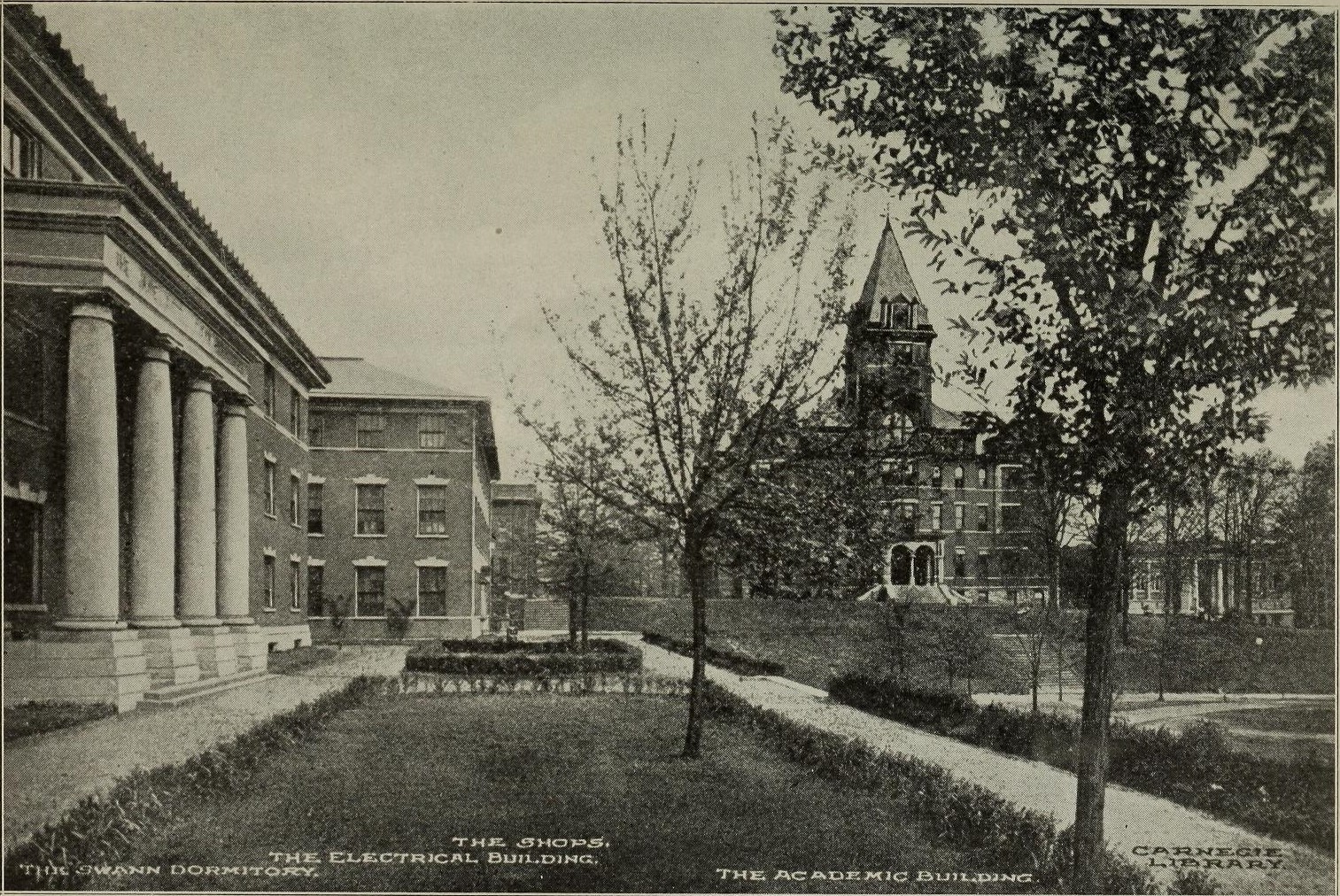
Georgia Institute of Technology — campus in pictures
Real, freely-licensed photographs of the campus (via Wikimedia Commons).





WHY GEORGIA TECH
Why Georgia Tech — Top Public Tech, World-Class Value & Atlanta Advantage
Georgia Tech is the top public university in the American Southeast and one of the most influential technical institutions in the world. For an international student who wants rigorous engineering or computing education, unrivalled career access, and a degree recognised across six continents, Georgia Tech delivers more per dollar than almost any comparably ranked institution.
SELECTIVITY
Georgia Tech Acceptance Rate — What the Numbers Mean for International Applicants
Georgia Tech's overall acceptance rate of 12.7% marks it as highly selective — but that number conceals a crucial nuance: the rate for out-of-state and international applicants is substantially lower than for Georgia residents, since Georgia Tech is a public university with a mandate to serve in-state students. International applicants should treat Georgia Tech as a competitive target in the same tier as top-25 private universities. Computer Science applicants in particular face acceptance rates that are significantly lower than the institutional overall — CS at Tech is one of the most competitive undergraduate programmes in the United States.
Major selection matters at Georgia Tech in a way it does not at most US universities. Admissions officers evaluate whether your application coherently supports your stated major. Applying to CS with a strong math and programming profile is different from applying to CS with a vague interest in 'technology'. Choose your major deliberately.
AT A GLANCE
Georgia Tech Quick Facts
APPLICATION COMPONENTS
Georgia Tech Application — What a Complete Application Looks Like
Georgia Tech uses the Common Application exclusively. Every component of your application is reviewed holistically — but major selection and its alignment with your academic record receive particular attention. Below is every required and optional element.
WHAT GEORGIA TECH SEEKS
What Georgia Tech Admissions Officers Are Looking For
Georgia Tech's admission process is holistic, but with a distinctive emphasis on institutional fit and major alignment that sets it apart from most highly selective US universities. Understanding what 'holistic' actually means in the Georgia Tech context is essential for international applicants.
DEADLINES
Georgia Tech Application Deadlines — EA I, EA II & Regular Decision
Georgia Tech offers three application rounds. Early Action rounds are non-binding. Note: EA I is primarily for Georgia state residents; EA II is the standard early option for out-of-state and international applicants. To be considered for merit-based scholarships, you must apply through an Early Action plan.
All deadlines are 11:59 p.m. in the applicant's time zone. Students admitted under any round may be offered Summer or Fall term enrollment — summer enrollment is common for international admits.
| Round | Eligibility | Application Deadline | Document Deadline | Test Score Deadline | Decision |
|---|---|---|---|---|---|
| Early Action I | Georgia residents | 15 Oct | 30 Oct | 16 Nov | Early December |
| Early Action II | All students (incl. international) | 2 Nov | 16 Nov | 8 Dec | Late January |
| Regular Decision | All students | 6 Jan | 22 Jan | 22 Jan | Mid-March |
LIFE AT GEORGIA TECH
Student Life — Atlanta, Innovation Districts & the Yellow Jacket Community
Georgia Tech's campus is one of the most vividly urban in the United States, embedded in Midtown Atlanta with immediate walking access to one of America's most dynamic city centres. The experience of being a Georgia Tech student is inseparable from the experience of being in Atlanta.
On campus, first-year students are housed in residence halls as part of Georgia Tech's First-Year Wellness Experience, a structured transition programme focused on academic and personal growth. Living Learning Communities (LLCs) allow students to live alongside peers who share their academic interests — from Women in Engineering to Computing, Global Leadership, and Grand Challenges. Over 500 student organisations span cultural, academic, service, and recreational interests. Georgia Tech competes in NCAA Division I athletics as the Yellow Jackets, and the Georgia-Georgia Tech football rivalry (Clean, Old-Fashioned Hate) is one of the most storied in college sports.
Midtown Atlanta puts Georgia Tech students within blocks of major cultural institutions — the High Museum of Art, The Fox Theatre, Piedmont Park — and within walking distance or a 10-minute ride of Ponce City Market, Beltline trail access, and dozens of neighbourhoods. The city's international diversity and the presence of so many Fortune 500 headquarters make Atlanta uniquely well-suited for students who intend to work at the intersection of technology and business.
CAREER OUTCOMES
Georgia Tech Career Outcomes — Employment, Salary & Industry Reach
Georgia Tech's career outcomes are among the most compelling of any university in the United States, public or private. The combination of a world-class technical education, the co-op programme, and Atlanta's industry ecosystem creates a pipeline that major employers compete to access.
Top employers recruiting Georgia Tech graduates span aerospace (Lockheed Martin, Boeing, Northrop Grumman, NASA), technology (Google, Microsoft, Apple, Amazon, Meta, IBM), consulting (Accenture, Deloitte, McKinsey), finance, and the full spectrum of Atlanta's Fortune 500 ecosystem including Delta Air Lines, The Coca-Cola Company, and NCR. The Georgia Tech College of Computing produces graduates who are among the most sought-after in the global technology industry. CS and Computer Engineering graduates frequently receive multiple competing offers, including from international technology companies — making Georgia Tech a viable launch point for careers across North America, Europe, and Asia-Pacific.
For international students, the co-op programme is particularly significant — completing three or more work terms provides CPT authorisation that builds your US work experience before you graduate, strengthening your case for OPT and eventual H-1B sponsorship if you intend to work in the United States after graduation.
FREQUENTLY ASKED QUESTIONS
Georgia Tech Admissions — Frequently Asked Questions
Is Computer Science at Georgia Tech as competitive as the overall acceptance rate suggests?+
Yes — and more so. The overall Georgia Tech acceptance rate of 12.7% includes Georgia residents admitted under a more favourable in-state framework. For out-of-state and international applicants to CS specifically, the effective acceptance rate is significantly lower. A strong CS application requires demonstrated technical ability: competitive programming, original projects, strong mathematics background (ideally HL Maths for IB students), and coherent essays explaining why the Georgia Tech CS programme specifically matches your goals. Applying to a less competitive major and attempting to switch into CS after admission is generally not a viable strategy — CS at Tech is capacity-constrained.
What is Georgia Tech's test policy? Can I apply without SAT/ACT scores?+
No. Georgia Tech explicitly is not test-optional — all first-year applicants must submit results from at least one SAT and/or ACT sitting. Georgia Tech superscores both tests, so submitting multiple sittings is advantageous. ACT writing and SAT optional essay are not required. IB and A-Level scores can be self-reported as supplementary materials but do not replace the SAT/ACT requirement.
Is Georgia Tech a good choice for an international student seeking US work experience?+
Exceptional. Georgia Tech's co-op programme (minimum three work terms, each 14 weeks) authorises Curricular Practical Training (CPT) for international students in F-1 status, which builds your US work experience before graduation. Combined with the 24-month STEM OPT extension available to CS and engineering graduates, Georgia Tech graduates have among the longest periods of US work authorisation available to international students at a US university.
Does Georgia Tech offer financial aid to international students?+
Very limited. International students are not eligible for US federal or state financial aid. The HOPE and Zell Miller scholarships are Georgia resident programmes. Institutional scholarships from Georgia Tech's own funds are infrequently awarded to international students. If affordability is a primary concern, consider that Georgia Tech's tuition, while significant, represents strong value relative to comparable private universities. Merit-based institutional scholarships, where available, require applying through an Early Action round — but international students should plan for full self-funding.
Should I apply EA II or Regular Decision as an international student?+
Early Action II strongly — for two reasons. First, EA II applicants who are admitted may be considered for any merit-based scholarships that Georgia Tech offers. Second, EA II gives you a decision in late January rather than mid-March, allowing more time to compare offers and plan your move. EA rounds are non-binding, so you lose nothing by applying early.
How important is my choice of major on the Georgia Tech application?+
Very important. Unlike most highly selective US universities that admit students broadly and let them choose a major later, Georgia Tech's holistic review gives real weight to your stated major and how well your application supports it. Your coursework, activities, recommenders, and essays should all cohere around a genuine interest in your chosen programme. If you are undecided between CS and Electrical Engineering, for example, research both programmes and apply to the one that most closely matches your demonstrated interests.
What English proficiency test does Georgia Tech accept, and what are the minimums?+
Georgia Tech follows University System of Georgia requirements. The minimum scores are: TOEFL iBT 90, IELTS 7.5, or Duolingo English Test 120. The Duolingo test may be submitted as supplementary but does not alone satisfy the USG requirement. Students whose entire secondary education was conducted in English at an English-medium school may be exempt — contact the admissions office to confirm eligibility.
What is Georgia Tech's co-op programme, and does it add time to my degree?+
Georgia Tech's co-op programme alternates full-time academic semesters with full-time paid professional work rotations. The minimum is three work terms of at least 14 weeks each. Because co-op rotations replace academic semesters, most participants extend their degree by 1–2 semesters — graduating in 5 rather than 4 years. Students who complete the programme receive a co-op designation on their diploma. Many international students consider this tradeoff highly favourable given the professional experience and earnings it provides.
GEORGIA TECH ACADEMIC REQUIREMENTS
Georgia Tech Academics — What International Students Need to Know
Georgia Tech's academic culture is intense, practical, and rewarding. The core curriculum is technically rigorous across all colleges, and CS and engineering programmes in particular have demanding coursework sequences with high dropout rates even among admitted students. Understanding what Georgia Tech expects academically — and how to demonstrate that preparation as an international applicant — is the foundation of a competitive application.
This section covers the academic profile of admitted students, Georgia Tech's test requirement, how IB, A-Level, and other international curricula are evaluated, and the subject preparation Georgia Tech expects for its most competitive programmes.
ACADEMIC PROFILE
Georgia Tech Admitted Student Profile — What Admitted Students Actually Look Like
Georgia Tech does not publish a minimum GPA; it calculates GPA from transcripts directly using a 100-point weighted scale where available. The minimum GPA threshold noted in the facts is 3.5 on a 4.0 scale — in practice, competitive admitted students, especially for CS and engineering, present significantly higher profiles. Georgia Tech's holistic review means grades alone are insufficient; the rigor of your curriculum and its coherence with your intended major matter as much as the GPA figure itself.
TEST POLICY
Georgia Tech Is NOT Test-Optional SAT/ACT Required for All Applicants
Unlike many US universities that adopted test-optional or test-flexible policies during and after COVID-19, Georgia Tech explicitly requires standardised test scores from all first-year applicants. This is a firm requirement, not a recommendation. You must submit scores from at least one SAT or ACT sitting to be considered for admission. Scores may be self-reported through the Common App or Georgia Tech's portal after submission; official scores are required from enrolled students before orientation.
Georgia Tech superscores both the SAT (highest section scores across sittings) and the ACT (highest section scores in English, Math, and Reading across sittings — Science and Writing not used). Submitting multiple sittings is therefore advantageous if your scores improve across different sections. There is no penalty for submitting many test dates.
STANDARDISED TESTS
SAT & ACT at Georgia Tech — Bands, Strategy & Superscore
Georgia Tech's SAT middle 50% band of 1400–1550 and ACT middle 50% band of 32–35 reflect a class where the strongest test performers are concentrated in math-heavy programmes. For engineering and CS applicants, a strong Math section score is particularly meaningful.
INTERNATIONAL CURRICULA
IB, A-Level & Other International Curricula at Georgia Tech
Georgia Tech has experience reviewing transcripts from virtually every secondary education system worldwide. International students are evaluated within the context of their school's curriculum — you are not at a disadvantage for attending a non-US school.
SUBJECT PREPARATION
Subject-Level Preparation — What Georgia Tech Expects by Major
Georgia Tech does not publish formal subject prerequisites for admission. In practice, your academic record should demonstrate engagement with the subjects most relevant to your intended major.
ENGLISH PROFICIENCY
English Language Requirements for International Students
Georgia Tech follows University System of Georgia (USG) mandated English proficiency requirements. Meeting the minimum is a requirement for admission, not a goal — aim to exceed these thresholds. Note that the Duolingo English Test and unscripted video interviews (InitialView, Vericant) may be submitted as supplementary materials but do not satisfy the USG requirement alone.
Students whose entire secondary education was conducted at an English-medium institution may be exempt from the language proficiency requirement. Contact Georgia Tech admissions directly to confirm eligibility before relying on this exemption.
| Test | Minimum | Notes |
|---|---|---|
| TOEFL iBT | 90 | Primary accepted test; satisfies USG requirement |
| IELTS Academic | 7.5 | Satisfies USG requirement |
| Duolingo English Test | 120 | Supplementary only; does NOT satisfy USG requirement alone |
PROFILE BUILDING
Building a Competitive Georgia Tech Profile — Year-by-Year Roadmap
COMMON MISTAKES
Academic Mistakes That Hurt Georgia Tech Applications
- Choosing IB Mathematics: Applications & Interpretation instead of Analysis & Approaches for a CS or engineering application — Georgia Tech and the world's top technical programmes strongly prefer AA at HL
- Applying to CS without demonstrated programming experience or mathematical competition involvement — the profile is too generic to compete at Georgia Tech's admission level for international CS applicants
- Submitting SAT/ACT scores below 1350/31 — these fall significantly below the admitted middle band and actively hurt rather than help the academic case
- Failing to disclose all secondary schools attended — Georgia Tech requires transcripts from every school; omissions create problems at the document verification stage
- Selecting a major of convenience rather than genuine interest — Georgia Tech's admissions officers are experienced at identifying misalignment between stated major and supporting evidence
- Ignoring the English proficiency requirement — assuming you are exempt without confirmation from the admissions office is a risk that can delay or void an admission offer
- Requesting teacher recommendations from instructors who barely know you, rather than those who have witnessed your intellectual engagement and growth
COST & FINANCIAL AID
Georgia Tech Cost for International Students — Honest Numbers, Honest Aid Picture
Georgia Tech is a public university, and the financial aid picture for international students reflects that reality honestly: institutional grant aid is very limited, and the federal/state programmes available to US citizens and permanent residents are not available to you. That said, Georgia Tech's tuition, relative to comparably ranked private universities, represents a meaningfully lower sticker price. Plan for full self-funding unless you are among the rare international students who receive an institutional merit award.
This section presents Georgia Tech's cost of attendance for international students using sourced, official figures from Georgia Tech's Office of Scholarships & Financial Aid for the 2025–26 academic year, along with an honest account of the financial aid landscape for international applicants.
COST OF ATTENDANCE
Georgia Tech Cost of Attendance (2025–26) — International Students
The following figures are sourced from Georgia Tech's Office of Scholarships & Financial Aid for international (out-of-country) undergraduate students for the 2025–26 academic year (two semesters). All amounts are in US dollars.
| Component | On Campus | Off Campus | Notes |
|---|---|---|---|
| Tuition | $34,572 | $34,572 | International student rate |
| Mandatory Fees | $1,696 | $1,696 | Annual |
| Books & Materials | $800 | $800 | Estimate |
| Housing | $7,864 | $11,744 | On-campus residence halls vs. off-campus market |
| Food Service | $6,132 | $6,132 | Meal plan estimate |
| Personal Expenses | $2,800 | $2,800 | Estimate |
| Transportation | $950 | $950 | Estimate |
| TOTAL | $54,814 | $58,694 | Annual standard COA, 2025–26 |
FINANCIAL AID
Financial Aid for International Students at Georgia Tech — The Honest Picture
Georgia Tech's financial aid landscape for international undergraduate students is significantly more limited than for domestic students. Understanding this clearly before applying is essential for family financial planning.
International students are ineligible for US federal financial aid (Pell Grants, subsidised loans, work-study) and for Georgia state programmes including the HOPE and Zell Miller scholarships — both of which require Georgia state residency. Institutional scholarships administered by Georgia Tech's own Office of Scholarships & Financial Aid are, in Georgia Tech's own words, 'often not awarded to international students.' Emergency Tuition Loans are available on a first-come basis for unexpected hardship, and payment plan arrangements are available through the Bursar — but neither represents meaningful grant aid.
Georgia Tech is need-aware for international applicants — your financial situation may be considered as part of the admissions process. International applicants should plan for full tuition and cost of living self-funding. Students who receive a merit-based institutional scholarship (rare) will have learned of it at the time of their admission offer; there is no separate aid application process for international undergraduates beyond submitting on time through an EA round.
SCHOLARSHIPS
Scholarship Opportunities for Georgia Tech International Students
While institutional need-based aid is very limited for international students, two categories of opportunity are worth understanding.
AFFORDABILITY CONTEXT
Georgia Tech Versus Comparable Private Universities — A Value Perspective
Georgia Tech's out-of-country cost of attendance of approximately $54,814 per year is substantially lower than comparably ranked private universities. MIT, Stanford, Carnegie Mellon, and Cornell all have listed costs of attendance exceeding $80,000 per year for international students. For a student who pays full fees at all four universities, Georgia Tech costs roughly $25,000–$30,000 less per year — a difference of $100,000–$120,000 over four years for a comparable or in some disciplines superior technical education.
For families who cannot access need-based aid (which is the reality for most international students regardless of university), this cost differential is real and significant. A Georgia Tech CS graduate entering the technology industry with $75,000 average starting salary and $100,000 less in family cost carries a meaningfully different financial position than a peer from a private institution with a similar starting salary.
Georgia Tech's co-op programme also generates income during the degree. Students who complete three or more co-op work terms earn meaningful compensation during their undergraduate years — partially offsetting tuition and living costs. The effective net cost for a co-op participant is lower than the sticker price suggests, at the cost of extending the degree by 1–2 semesters.
FUNDING STRATEGY
Steps to Manage Funding as an International Student at Georgia Tech
COST FAQs
Cost & Aid — Frequently Asked Questions
Is Georgia Tech need-blind for international students?+
No. Georgia Tech is need-aware for international undergraduate applicants, meaning that your financial situation may be considered as part of the admissions process. This differs from need-blind policies at some elite private universities where financial need has no bearing on admissions decisions.
Can I work on campus as an F-1 student at Georgia Tech?+
Yes. F-1 students may work on campus up to 20 hours per week during the academic term and up to 40 hours per week during official school breaks. On-campus employment includes dining services, library positions, research assistant roles, and teaching assistant positions in later years. This does not satisfy the I-20 financial documentation requirement — on-campus earnings are supplementary, not a primary funding source.
What is the I-20 financial documentation threshold?+
To issue your I-20, Georgia Tech's International Student Office requires proof of financial ability to cover at least the first year's cost of attendance. Acceptable documentation typically includes bank statements, sponsor letters, and scholarship award letters. Specific current requirements should be confirmed with Georgia Tech's Office of International Education at the time of your admission.
Does completing the co-op programme increase my net cost?+
Co-op work terms generate earnings (hourly compensation varies by employer and discipline) that partially offset the additional cost of the extended degree. Many participants find their co-op earnings cover a significant portion of additional tuition and living costs — making the effective net cost of the 5-year co-op track comparable to or lower than a 4-year non-co-op track when earnings are factored in.
GEORGIA TECH ESSAYS
Writing the Georgia Tech Supplemental Essay — Institutional Fit Is Everything
Georgia Tech's essay section is compact compared to many elite universities — there is one supplemental essay, in addition to the Common App personal statement. But compact does not mean easy. The supplemental essay asks you to demonstrate genuine knowledge of Georgia Tech's programmes, culture, and community — and this is precisely where generic essays fail. Georgia Tech's admissions officers read thousands of applications from highly qualified STEM students. The essay is your best opportunity to show you understand what makes Georgia Tech specifically the right place for you.
This section covers Georgia Tech's essay requirements, strategic guidance for the supplemental essay, how to approach the Common App personal statement as a Georgia Tech applicant, and the most common essay mistakes that strong technical applicants make.
ESSAY OVERVIEW
Georgia Tech Essay Requirements — Overview
Georgia Tech accepts the Common App. The essay component of a Georgia Tech application consists of two pieces: the Common App personal essay (650 words, one from seven prompts) and one Georgia Tech-specific supplemental essay focused on institutional fit and community contribution.
The Common App personal essay is shared across every university you apply to through the Common App. The Georgia Tech supplemental essay is the university-specific piece — the one where you must demonstrate knowledge of Georgia Tech specifically. Admissions officers will immediately identify a supplemental essay that was recycled from another university or written generically. Specificity — naming programmes, courses, research centres, faculty work, student organisations, or co-op employers that genuinely interest you — is the single strongest signal of authentic fit.
Note on essay prompts: Georgia Tech's supplemental essay prompt language for the current application cycle should be verified on admission.gatech.edu before your application deadline. The themes of institutional fit, major/career alignment, and community contribution are consistent across cycles — but the specific prompt language and word limit may vary. The guidance in this section is based on well-established institutional themes, confirmed through Georgia Tech's official admissions communications.
ESSAY PROMPTS
Georgia Tech Essay Prompts — Strategy for Each
PERSONAL ESSAY STRATEGY
Your Common App Personal Essay as a Georgia Tech Applicant
The Common App personal essay is your single 650-word opportunity to speak as a full human being across all the universities you are applying to. For Georgia Tech, where the admissions committee is reading technically excellent profiles, the personal essay creates context and character beyond grades and test scores.
Georgia Tech admissions officers are not looking for an essay about the joy of STEM. They have read thousands of those. What they want is a window into who you are as a person — your values, your curiosity, your relationships, your failures, your perspective. The most effective personal essays for technical university applications are often the ones that appear least technical on the surface: an essay about a family relationship that reveals intellectual values, an essay about an artistic pursuit that illuminates how you think, an essay about an ethical dilemma that shows character under pressure. The subject matters less than the quality of your thinking and the honesty of your voice.
One structural note: because the Georgia Tech supplemental essay handles the 'why Georgia Tech' and 'why my major' content specifically, your Common App personal essay does not need to carry that weight. You have room to write about something genuinely personal that the supplemental essay cannot accommodate. Use it.
SUPPLEMENTAL STRATEGY
How to Write a Supplemental Essay That Works at Georgia Tech
The Georgia Tech supplemental essay, in approximately 300 words, must accomplish more per word than almost any essay you will write. Each sentence must earn its place.
TOPIC SELECTION
Choosing What to Write About — Common App & Supplemental
The most frequent mistake Georgia Tech applicants make in topic selection is choosing what they think Georgia Tech wants to read rather than what is genuinely true about themselves.
For the personal essay: the strongest topics are concrete and specific, not generic and inspirational. A moment of failure that revealed something true about how you think. A specific problem you became obsessed with and why. A relationship that shaped your values. A creative or technical project that didn't work but taught you more than the ones that did. The best Georgia Tech personal essays are indistinguishable in format from the best personal essays at any highly selective university — human, specific, honest, and self-aware.
For the supplemental essay: the best topic is the authentic intersection of your genuine interests and Georgia Tech's genuine strengths. If you cannot identify specific Georgia Tech resources that genuinely excite you after real research — beyond rankings — you may not yet know enough about Georgia Tech to write a strong supplemental essay. The research itself is a prerequisite. Visit campus (virtually or in person), read faculty research pages, explore the VIP programme, look at the co-op employer list. Write the essay after you know something.
ESSAY MISTAKES
Georgia Tech Essay Mistakes That Hurt Competitive Applications
- Writing a supplemental essay that could be submitted, unchanged, to MIT, Carnegie Mellon, or Purdue — Georgia Tech's admissions team will recognise a generic essay immediately
- Starting the supplemental essay with Georgia Tech's acceptance rate, rankings, or 'I have always loved engineering' — these openings waste the limited word count and signal a lack of genuine engagement
- Recycling the Common App personal essay for the supplemental — these serve different functions; submitting the same piece for both is an error
- Using the personal essay to tell an activities list story rather than a genuinely personal narrative — your activities are already listed in the Common App; the essay should reveal what the activities cannot
- Over-polishing to the point where the essay sounds like no human being actually wrote it — Georgia Tech values authenticity; a voice that sounds like marketing copy reads as inauthentic
- Failing to proofread for grammar and technical errors — a supplemental essay with grammatical errors from a CS applicant creates an unfavourable impression
- Writing about a challenge and then describing it as fully resolved with a lesson learned — the most honest and compelling essays sit with the complexity rather than tying it up neatly
- Underselling the supplemental essay because 'it's only 300 words' — shorter essays demand more care per word, not less; 300 words is enough to win or lose Georgia Tech's institutional fit consideration
ESSAY FAQs
Georgia Tech Essays — Frequently Asked Questions
How many essays does Georgia Tech require?+
Georgia Tech requires two essays: the Common App personal essay (650 words, one of seven prompts) and one Georgia Tech-specific supplemental essay (approximately 300 words, focused on institutional fit and community contribution). Verify the current supplemental prompt text and word limit on admission.gatech.edu at the time of application.
Can I write about the same topic for both the Common App essay and the Georgia Tech supplemental?+
No. The two essays serve fundamentally different functions. The Common App personal essay is a personal narrative — who you are as a human being. The Georgia Tech supplemental is an institutional fit argument — why Georgia Tech specifically, what you will contribute, and how your goals align with the programme. Overlapping or recycling content wastes both essays.
Should I name drop professors or research centres in my supplemental essay?+
Yes — if the references are genuine. Name-dropping a faculty member or research centre that you actually know about (because you read their papers, watched their talks, or have a genuine reason to seek their work) is a strong positive signal. Name-dropping a faculty member you found in a five-minute Google search, and whose research you clearly have not engaged with, reads as transparent and counterproductive. The test: could you speak for three minutes about why this faculty member's work matters? If yes, mention it. If no, don't.
Is the 'why major' or 'why Georgia Tech' framing better for the supplemental?+
Both simultaneously — and this is the challenge. The strongest supplemental essays weave together your genuine interest in the field, the specific programme features at Georgia Tech that serve that interest, and the community/city context that makes Georgia Tech uniquely valuable for your goals. A 'why major' essay that ignores Georgia Tech's specific resources misses the point. A 'why Georgia Tech' essay that is disconnected from your genuine field of interest feels performative.
Can I write about wanting to use the co-op programme in my supplemental essay?+
Yes, and this can be highly effective — particularly if you can connect the co-op to a specific company, industry, or type of professional experience that genuinely matters to your career goals. An essay that says 'I want to co-op at a biomedical device company in Atlanta's Midtown corridor, which is why Georgia Tech's combination of Biomedical Engineering and Tech Square access is uniquely compelling' is specific and memorable. An essay that says 'I want to co-op because it gives professional experience' is generic and adds nothing.
Courses — schools, degrees & intake
41 degrees across 6 groupings.
College of Engineering · 11 degrees
Aerospace Engineering
Biomedical Engineering
Chemical and Biomolecular Engineering
Civil Engineering
Computer Engineering
Electrical Engineering
Environmental Engineering
Industrial Engineering
Materials Science and Engineering
Mechanical Engineering
Nuclear and Radiological Engineering
College of Computing · 2 degrees
Computer Science
Computational Media
College of Sciences · 13 degrees
Applied Physics
Astrophysics
Atmospheric and Oceanic Sciences
Biochemistry
Biology
Chemistry
Environmental Science
Mathematics
Mathematics and Computing
Neuroscience
Physics
Psychology
Solid Earth and Planetary Sciences
College of Design · 4 degrees
Architecture
Industrial Design
Music Technology
Arts, Entertainment, and Creative Technologies
Ivan Allen College of Liberal Arts · 10 degrees
Applied Languages and Intercultural Studies
Economics
Economics and International Affairs
Global Economics and Modern Languages
History, Technology, and Society
International Affairs
International Affairs and Modern Languages
Literature, Media, and Communication
Public Policy
Urban Planning and Spatial Analytics
Scheller College of Business · 1 degrees
Business Administration
Want your real chances at Georgia Institute of Technology?
Create a free TYCHR account for your personalised admit-chance, a shortlist you can track, exact entry requirements, and essay + counselling help.