Fudan University
Shanghai, China (Mainland) · Urban
Founded in 1905, Fudan University stands as one of China's most prestigious research universities — a member of the elite C9 League and ranked #30 globally by QS. Situated in the heart of Shanghai, Asia's financial and cultural capital, Fudan offers international students access to world-class academics, a distinctly cosmopolitan city, and a gateway to China's rapidly growing economy.
Campus
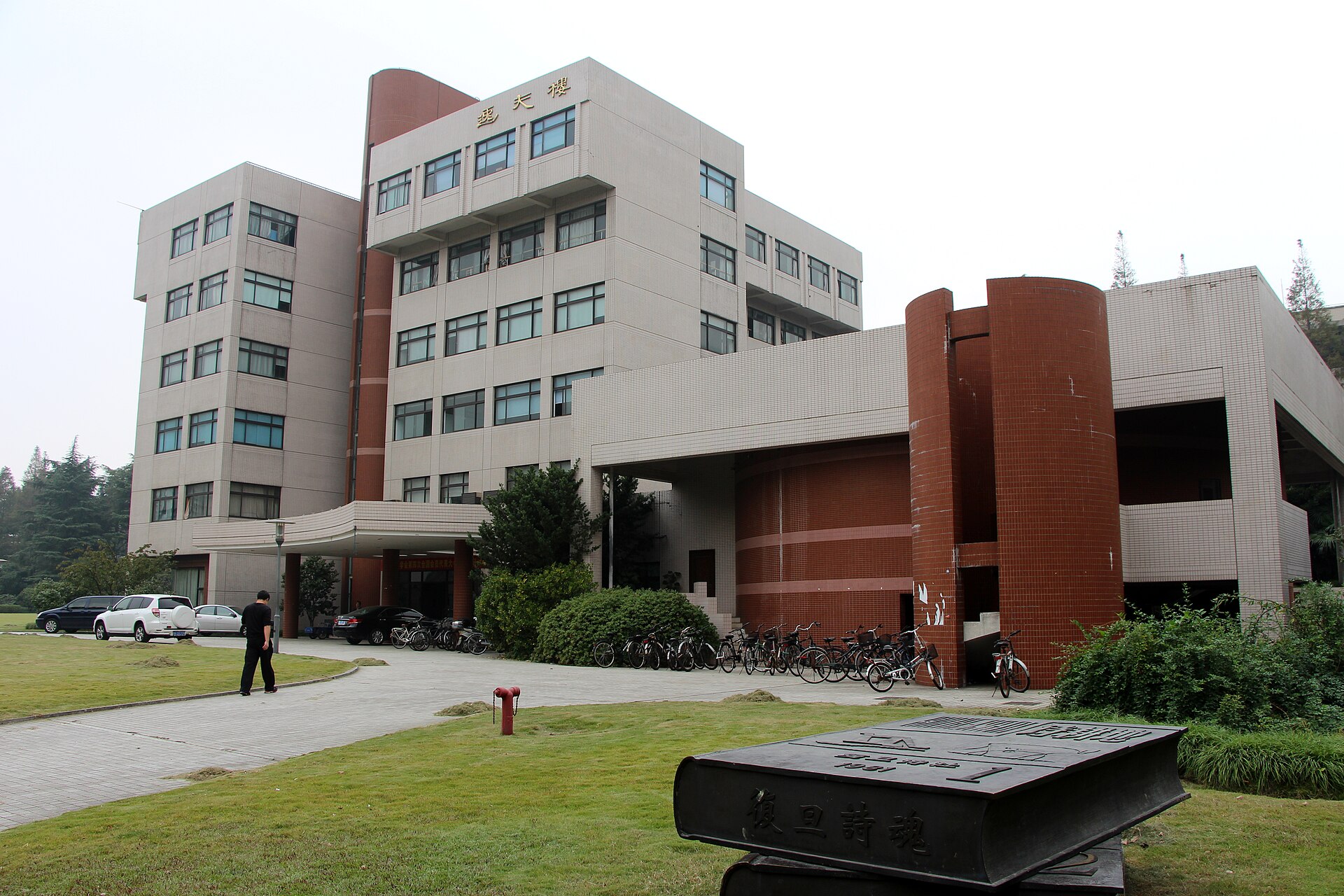
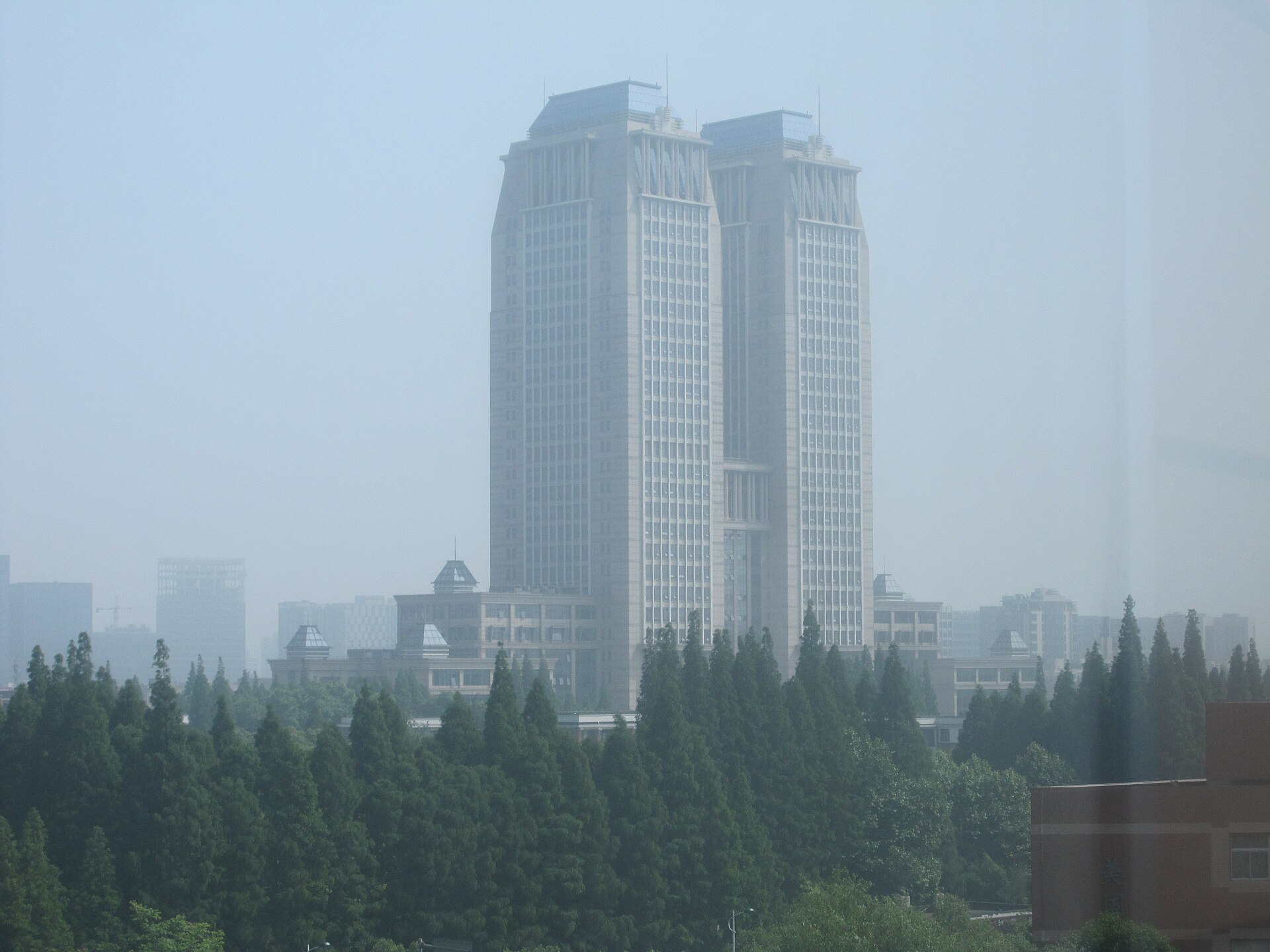
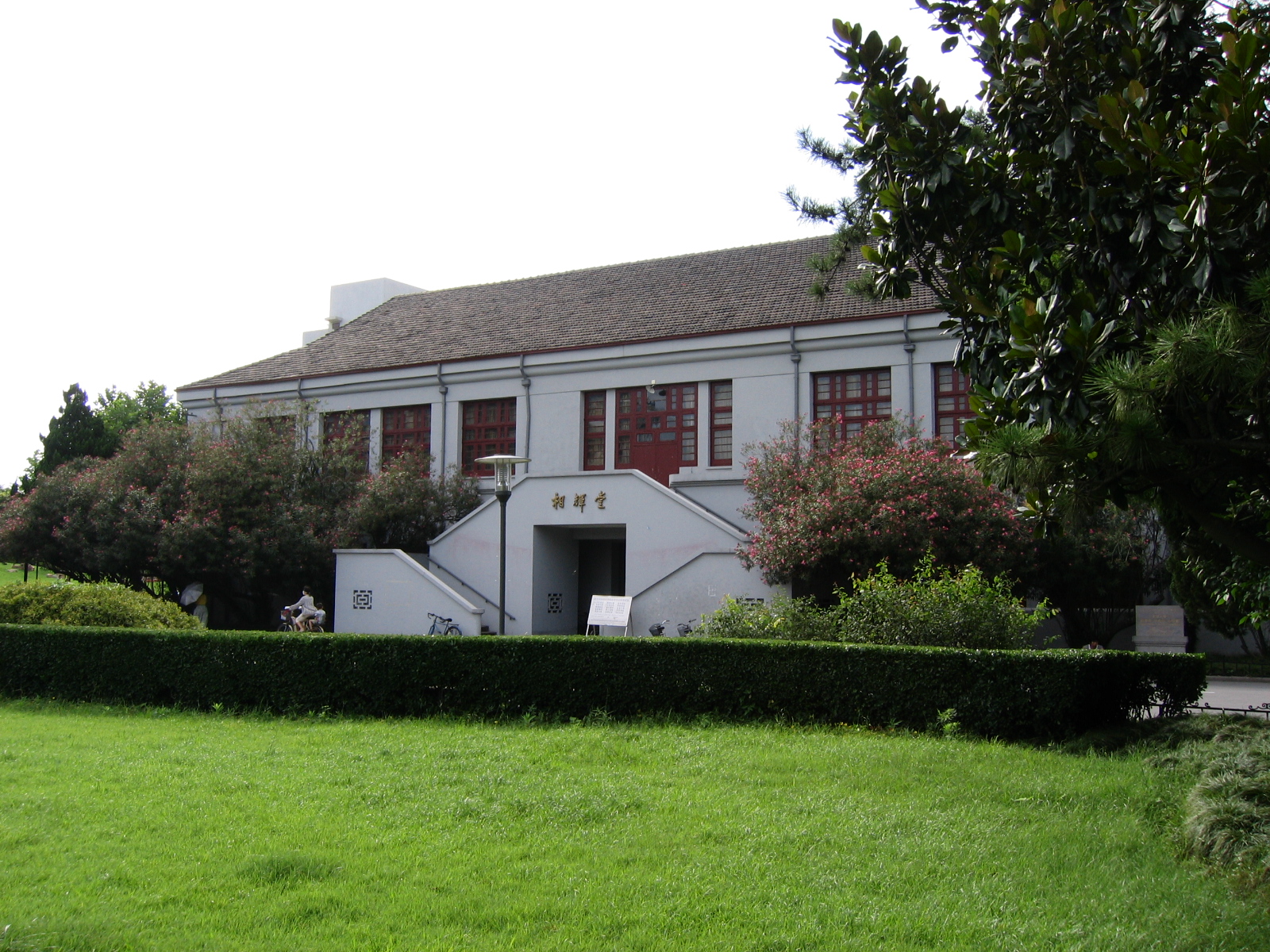
Fudan University — campus in pictures
Real, freely-licensed photographs of the campus (via Wikimedia Commons).



Why Fudan — Global Prestige, Location & Research
Fudan is not simply a top Chinese university — it is one of the great research universities of Asia. Its C9 League membership, Shanghai address, and century-long tradition of international academic exchange make it a compelling destination for students seeking a globally recognised degree with direct access to China's economy and culture.
Fudan Acceptance Rate & International Applicant Profile
Stats
Profile Stats
Rea Vs Rd
Fudan Admissions Requirements — Grades, English Proficiency & Entrance Exam
- Minimum GPA of 3.4 on a 4.0 scale (or national equivalent)
- IB Diploma: 38+ points is competitive; 7s in relevant Higher Level subjects
- A-Levels: AAA in three subjects relevant to intended programme
- Grades in final two years of secondary school are weighted most heavily
- Course rigour relative to your school's offerings is considered
- IELTS Academic minimum 6.0 (competitive programmes expect 6.5–7.0)
- TOEFL iBT minimum 85
- Duolingo English Test minimum 110
- SAT/ACT are not required — test policy is optional
- Native English speakers may be exempt — verify with the ISO
- Faculty-administered entrance examination is the primary academic gatekeeping tool
- Format varies by programme: subject knowledge, essays, comprehension
- Science programmes test mathematics and disciplinary knowledge
- Humanities programmes may include analytical writing
- Some programmes conduct faculty interviews in addition to the written exam
Fudan Application Components — Direct Portal, Personal Statement & Entrance Exam
Fudan University uses a direct application system administered by the International Student Office (ISO). The process does not use any third-party platform. Below are every required component — with strategic notes for international applicants.
Fudan's Written Application — Personal Statement & Entrance Examination
Tips
Prompts
What Fudan Admissions Committees Look For
Fudan's evaluation of international applicants differs meaningfully from holistic US admissions. Understanding what Fudan's faculty committees actually weigh — and why — is the foundation of a well-targeted application.
Fudan Scholarships & Financial Aid for International Students
Fudan University is among the most affordable elite universities in the world for international students. Even without scholarship support, annual tuition is approximately USD 8,400 — a fraction of comparable US or UK universities. The Chinese Government Scholarship (CSC) can cover this entirely, plus accommodation and a monthly living stipend.
Scholarship amounts and eligibility criteria change annually. Verify current details at iso.fudan.edu.cn and csc.edu.cn before applying.
Stats
Contribution Tiers
| Note | Range | Percent | Percent Value |
|---|---|---|---|
| Full CSC: tuition + accommodation + stipend (~¥2,500/month undergrad) | Chinese Government Scholarship (Full) | 100% | 100 |
| Tuition reduction or partial coverage; some cover accommodation | Shanghai Government Scholarship | 50–100% | 75 |
| Tuition reduction; amounts and eligibility vary by year | Fudan Merit Scholarship | 25–100% | 60 |
| Available to students from Belt & Road eligible countries | Belt and Road / Silk Road CSC | 100% | 100 |
| Full self-funding; tuition + living costs required | Self-Funded (No Scholarship) | 0% | 0 |
Key Dates
Advantages
- Full tuition coverage — no self-funding required
- On-campus accommodation provided at no cost
- Monthly living stipend (approx. ¥2,500 for undergraduates)
- Medical insurance included in the scholarship package
- Belt and Road Scholarship offers additional country-specific advantages
Disadvantages
- Earlier deadline (March–April) requires earlier preparation
- Requires simultaneous submission on both CSC portal and Fudan ISO portal
- Competition for CSC is significantly more intense than regular admission
- Nationality restrictions apply to some CSC scholarship categories
- Missing the CSC deadline means self-funding for the entire degree
Fudan Entrance Examination — Format, Content & Preparation
Unlike US universities that use alumni interviews as a character assessment, Fudan's faculty entrance examination is an academic test of subject knowledge and analytical ability. It is administered after your documents are reviewed and shortlisted — invitation to the examination means you are a competitive candidate. Preparation is the determining factor at this stage.
Meta
Questions
Fudan's Campuses & Residential Life
Fudan operates across four campuses in Shanghai. Unlike universities with a residential college system, international students are housed in dedicated international student dormitories on the campus most relevant to their programme. The Handan Campus International Dormitory is the central hub for most undergraduate international students.
Houses
Lottery Steps
- Upon acceptance, apply for on-campus accommodation through the ISO portal
- International students are assigned rooms in dedicated international dormitories — not general student housing
- Single and double rooms are available; single rooms are more expensive but limited
- All rooms include air conditioning, private bathroom, internet access, and basic furniture
- Campus shuttle buses run between all four campuses — free for students with a valid Fudan ID
- Off-campus housing in Yangpu District is available but more expensive than on-campus rates
Fudan's Schools, Colleges & International Programmes
- {"label":"English-taught undergrad programme","value":"International Politics"}
- {"label":"Programme language","value":"English"}
- {"label":"China ranking in International Relations","value":"Top 1"}
- {"label":"Key research focus","value":"East Asian security, global governance, diplomacy"}
- {"label":"Programme name","value":"UIPE"}
- {"label":"Programme language","value":"English"}
- {"label":"Core requirement","value":"Strong mathematics background"}
- {"label":"Graduate outcomes","value":"Finance, consulting, graduate school"}
- {"label":"Programme","value":"MBBS (Medicine)"}
- {"label":"Duration","value":"6 years"}
- {"label":"Affiliated hospitals","value":"Huashan, Zhongshan, Eye & ENT"}
- {"label":"Recognition","value":"WHO-listed; recognized in many countries"}
- {"label":"China ranking","value":"#1 in Journalism"}
- {"label":"Founded","value":"1929"}
- {"label":"International access","value":"Some English-language components"}
- {"label":"Graduate employers","value":"Xinhua, CGTN, major global media"}
- {"label":"Programme language","value":"Primarily Mandarin"}
- {"label":"Campus","value":"Zhangjiang"}
- {"label":"Key strength","value":"AI, data science, systems"}
- {"label":"Foundation requirement","value":"Strong mathematics essential"}
- {"label":"Purpose","value":"Interdisciplinary first-year foundation"}
- {"label":"Model","value":"Inspired by US liberal arts education"}
- {"label":"Specialisation","value":"Chosen after first year"}
- {"label":"Language","value":"Primarily Mandarin"}
Research & Extracurricular Opportunities at Fudan
Career Outcomes & Fudan Alumni Network
Fudan's alumni network is one of the most influential in China — graduates span government, state-owned enterprises, private multinationals, the Shanghai start-up ecosystem, and international organisations. For international students who build Chinese language skills and professional networks during their time at Fudan, the career outcomes extend across both domestic Chinese and international job markets.
Stats
Categories
Our Fudan Admissions Track Record & Student Success Stories
Faqs
Do I need to speak Mandarin to study at Fudan University?+
Not necessarily for English-taught programmes. Fudan offers a limited but significant number of English-taught undergraduate tracks, including International Politics (SIRPA), UIPE Economics, and MBBS Medicine. However, studying in Mandarin opens far more programme options. Many international students arrive with no Mandarin and use Fudan's language foundation year or intensive courses to develop proficiency. Even for English-taught programmes, basic Mandarin makes daily life and networking significantly easier.
What is the C9 League?+
The C9 League is China's consortium of nine elite research universities, established in 1998 with substantial government investment to develop world-class research institutions. It is roughly analogous to the US Ivy League or UK Russell Group. Fudan is one of the nine, alongside Peking University, Tsinghua University, Zhejiang University, Shanghai Jiao Tong University, and others. C9 membership signals the highest tier of Chinese higher education.
Is the Chinese Government Scholarship (CSC) available to all nationalities?+
The CSC is available to students from most countries worldwide, with some variation in scholarship categories by nationality. The standard CSC and the Belt and Road (Silk Road) CSC are the two main tracks — the latter specifically targets students from countries participating in China's Belt and Road Initiative (primarily South and Southeast Asia, Central Asia, Eastern Europe, the Middle East, and Africa). Check the current eligibility list at csc.edu.cn before applying.
Can I apply to Fudan if I am currently in Year 12 / Grade 12?+
Yes. Fudan accepts applications from students in their final year of secondary school on a conditional basis, with the offer contingent on achieving the required grades in your final results. You must have completed or be in the process of completing a recognised secondary qualification (IB Diploma, A-Levels, national high school diploma). Ensure your predicted grades meet the programme's competitive benchmarks.
How does Fudan compare to Peking University and Tsinghua for international students?+
All three are C9 League members in the world's top 30–35 universities. Tsinghua excels in engineering and technology; Peking University in sciences and humanities broadly; Fudan is particularly strong in humanities, economics, journalism, medicine, and social sciences, and benefits from its Shanghai location for business and finance exposure. For international students, all three offer world-class education — the right choice depends on programme and career goals. Fudan's English-taught undergraduate offering is among the more developed of the three.
Is the application fee refundable?+
No. The application fee (800 RMB for degree programmes, approximately USD 120) is non-refundable regardless of admission outcome.
Does Fudan require SAT or ACT scores?+
No. Fudan's test policy is optional for SAT and ACT — these are not required and their absence will not disadvantage your application. The entrance examination administered by the faculty serves as the primary academic assessment. English proficiency tests (IELTS, TOEFL, or Duolingo) are separately required for non-native speakers and are not optional.
What are the most competitive English-taught programmes for international applicants?+
The most sought-after English-taught undergraduate programmes are: International Politics (SIRPA), UIPE Economics, and MBBS Medicine. All three are selective even within Fudan's overall international intake. MBBS is particularly competitive given its professional-degree status and clinical training access at Fudan's prestigious affiliated hospitals.
Book a Free Fudan University Admissions Strategy Session
In 60 minutes our Fudan admissions specialists will evaluate your academic profile, identify your application strengths and gaps, develop your personal statement and entrance exam strategy, and determine whether the CSC Scholarship track gives you the best chance of fully funded admission.
- No commitment required
- Fudan and China admissions specialists
- Personalised strategy including CSC scholarship guidance
- Personal statement review and entrance exam preparation planning
Fudan Academic Requirements
Fudan University Academic Requirements: The Honest Breakdown for International Students
What grades, qualifications, and academic profile do Fudan's admitted international students actually present? How does Fudan evaluate IB, A-Level, AP, and other international curricula — and what role does the entrance examination play?
GPA & Academic Standing
Fudan and GPA: What the Benchmarks Show
Fudan publishes a minimum GPA of 3.4 on a 4.0 scale for international student admission. In practice, competitive applicants for English-taught programmes present academic profiles significantly stronger than this floor. The minimum is the threshold for an application to be considered — it is not a target.
A GPA of 3.4 is the floor for consideration, not a distinguishing feature. Students who apply with exactly the minimum threshold are competing against applicants with significantly stronger records. For competitive English-taught programmes (SIRPA, UIPE, MBBS), aim well above the stated minimum.
Academic Context
How Fudan Reads International Academic Performance in Context
Fudan does not require class rank, and many international school systems do not provide it. The ISO and faculty committees are equipped to evaluate academic performance across widely different secondary school systems — from IB schools in Singapore to national high schools in Brazil or the Gulf.
SAT at Fudan
SAT Scores at Fudan: Not Required, Sometimes Useful
Fudan SAT Policy: Not Required
| Label | Score | Percent |
|---|---|---|
| Required? | No | 0 |
| Recommended if strong (SAT 1400+)? | Yes | 60 |
| Faculty entrance exam replaces SAT? | Yes — in function | 100 |
ACT at Fudan
ACT Scores at Fudan: The Role of US Standardised Tests
Fudan ACT Policy: Not Required
Metrics
Comparison Cards
Test Policy
Fudan Test-Optional Policy: What It Means for International Applicants
Fudan's test policy for SAT and ACT is optional — these tests are not required for international student admission and their absence will not disadvantage your application. The faculty entrance examination is the primary academic assessment tool for all international applicants.
Submit Items
Withhold Items
International Qualifications
IB and A-Level Requirements at Fudan: Specific Benchmarks by Programme
- {"label":"Competitive range","value":"38+ points (programme-dependent; most competitive programmes expect 40+)"}
- {"label":"HL expectations","value":"6–7 at Higher Level in subjects relevant to intended programme; 7s in core relevant subjects strengthen the application"}
- {"label":"Subject alignment","value":"HL subjects must align with intended programme: Maths for UIPE; Bio + Chem for MBBS; History/Economics for SIRPA"}
- {"label":"Extended Essay","value":"A or B grade; reviewed as supplementary evidence of research capability"}
- {"label":"Competitive range","value":"AAA in three relevant subjects"}
- {"label":"Subject relevance","value":"Biology + Chemistry for MBBS; Mathematics + Economics for UIPE; History/Politics + English for SIRPA"}
- {"label":"Predicted grades","value":"Accepted at application; conditional offer adjusted on final results"}
AP Courses at Fudan
AP Courses for Fudan Applicants: What Counts and What to Submit
Fudan does not require AP scores, and they are not formally part of the evaluation process for applicants from AP-based curricula (typically students from US international schools or US high schools). However, AP performance can serve as useful supporting evidence of academic preparation for US-curriculum applicants.
Academic Rigour
Rigour of Secondary School Record: What Fudan's Faculty Committees Look For
Fudan's evaluation of international applicants places significant weight on whether the student's secondary school record reflects genuine academic ambition — not just high marks in accessible courses. The faculty entrance examination independently tests academic capability, which means the transcript is evaluated partly as a predictor of how the student will perform on that examination.
Taking the most challenging courses available at your specific school, in the subjects most relevant to your intended programme at Fudan.
Programme-Specific Preparation
Subject Preparation for Fudan: What Each Programme Expects
Fudan's programme-specific academic expectations are among the most important and least understood aspects of the application for international students. Unlike US universities where you can declare your major after arrival, Fudan admits students directly to a programme — and the faculty committee for that programme evaluates whether your academic profile is appropriate for its specific curriculum.
English Language Requirements
English Language Requirements for Fudan University International Applicants
Fudan publishes explicit English proficiency minimums for its English-taught programmes. These are requirements — not optional guidelines — and must be satisfied by all applicants whose primary language of instruction was not English. Unlike Harvard, which treats English proficiency as an inference from essay quality, Fudan requires a formal test result.
Meeting the minimum IELTS 6.0 or TOEFL 85 is necessary but insufficient for competitive applications to Fudan's most selective English-taught programmes. For SIRPA and UIPE, faculty committees effectively expect candidates who can operate confidently in a seminar and produce academic writing — which a borderline test score does not guarantee. Aim for IELTS 6.5–7.0 or TOEFL 95+ to position yourself competitively beyond the threshold.
By Programme
Academic Requirements by Fudan Programme: What Different Tracks Expect
Fudan admits students directly to a programme — there is no general college admission followed by major declaration. The following table summarises the academic profile expected for Fudan's major English-taught international programmes.
| Signals | Expectation | Concentration |
|---|---|---|
| Current affairs knowledge; analytical essays; MUN or debate experience | HL History / Economics / Geography (IB) or A-Level History + Politics | International Politics (SIRPA) |
| Quantitative projects; economics research; data analysis experience | HL Mathematics AA (IB) or A-Level Mathematics; Economics background | Economics (UIPE) |
| Healthcare or clinical experience; science competition performance; research | HL Biology + HL Chemistry (IB) or A-Level Biology + Chemistry at AAA | MBBS Medicine |
| Writing portfolio; media experience; published work | Strong English and Humanities; Mandarin proficiency essential for core programme | Journalism (primarily Mandarin-taught) |
| Programming projects; mathematics competitions; CS coursework | HL Mathematics (IB) or A-Level Mathematics; Mandarin proficiency for most tracks | Computer Science (primarily Mandarin-taught) |
International Systems
Fudan and International Education Systems: How Your Curriculum Is Evaluated
Roadmap
Building an Academic Profile for Fudan: What to Do at Each Stage
- Identify your target programme (UIPE, SIRPA, MBBS, or other) and ensure your subject choices in IGCSE/MYP are positioned to support HL or A-Level selections aligned with that programme.
- Begin or continue Mandarin study — even beginner Mandarin signals cultural commitment and opens doors during and after university.
- Build reading habits in your intended academic field: economics, international affairs, biology, or journalism as relevant.
- IB students: choose Higher Level subjects that align directly with your target Fudan programme. Do not sacrifice HL rigor for grade protection.
- A-Level students: finalise three subjects relevant to your intended programme at Fudan.
- Pursue one or two meaningful extracurricular commitments that demonstrate initiative in your intended field.
- Initiate contact with Fudan's ISO to understand application requirements for your target programme and intake year.
- Take IELTS Academic or TOEFL iBT no later than autumn of Grade 12. Aim for IELTS 6.5–7.0 or TOEFL 95+ to position yourself above the competitive threshold.
- Research CSC Scholarship eligibility and requirements — deadlines often fall in October through March, several months before regular admission.
- Begin drafting your personal statement with specifics about the Fudan programme, relevant faculty, and your post-graduation goals.
- If applying for CSC Scholarship: submit through the CSC portal (csc.edu.cn) AND the Fudan ISO portal simultaneously. Enter your CSC application number in the ISO application.
- Secure two strong recommendation letters from teachers in relevant subjects — original signed copies on institutional letterhead.
- Gather and certify all academic documents (transcripts, diploma/predicted grades, financial proof if not applying for full scholarship).
- If the CSC deadline has passed, submit through the regular ISO portal before the May deadline.
- Prepare for the faculty entrance examination — review core concepts in your intended discipline. Past examination questions, if available from the specific school, are the most valuable preparation resource.
- Track application status through the ISO portal and respond promptly to any requests for additional documents.
Common Pitfalls
Academic Mistakes That Cost Fudan Applications — and How to Avoid Them
Illustrative Profiles
What Competitive International Applicants to Fudan Look Like
The following profiles represent the types of academic backgrounds international students successfully present when admitted to Fudan's key English-taught programmes. They illustrate what a competitive profile looks like — and what made each application credible to the faculty evaluation committee.
Faqs
Is a 3.4 GPA sufficient for Fudan admission?+
A GPA of 3.4 is the stated floor for consideration — not a distinguishing competitive profile. For Fudan's most competitive English-taught programmes (SIRPA, UIPE, MBBS), expect that the majority of successful applicants present GPA equivalents of 3.7 or above, with strong IB or A-Level scores and a credible subject alignment.
What IB score do I need for Fudan?+
An IB score of 38 is the publicised competitive benchmark. For the most selective programmes — UIPE Economics and SIRPA International Politics — candidates with 40+ are more typical in competitive years. A score below 36 would generally be below the threshold for English-taught undergraduate programmes.
Is the faculty entrance examination just a formality?+
No — it is the primary academic gatekeeping mechanism for undergraduate admission. Your transcript and personal statement get you shortlisted; the entrance examination determines whether you are admitted. Treat exam preparation as the most important academic task in your application timeline.
What is the entrance examination format for my programme?+
Format and content vary by school and programme. Sciences and quantitative programmes (UIPE, Computer Science, MBBS) typically include written tests of subject knowledge and problem-solving. Humanities and social sciences programmes (SIRPA, Journalism) may include analytical essay writing and comprehension. Contact the specific school's academic office or the ISO for programme-specific guidance on past examination formats.
Can I apply with A-Levels and be competitive?+
Yes, with caveats. A-Level students are assessed on their final results (or predicted grades at application). The subject combination and grades in those subjects are evaluated against the requirements of the intended programme. Three A-Levels at AAA in relevant subjects constitute a competitive academic profile.
Cost & Financial Aid
Fudan University Costs Less Than You Think — and Can Cost Nothing at All
Fudan University's annual tuition of approximately USD 8,400 is a fraction of comparable US, UK, or Australian university costs. With the Chinese Government Scholarship, Fudan can be entirely free. Here is exactly what Fudan costs, how the scholarship system works, and what you need to do to access funding.
Cost Transparency
What Fudan Actually Costs: The Full Annual Figure
Even at full self-funded costs, Fudan's total cost of attendance of approximately USD 14,000 per year is dramatically lower than peer-ranked universities in the United States (where tuition alone often exceeds USD 55,000), the United Kingdom (where annual costs often exceed GBP 30,000 for international students), or Australia. And with the Chinese Government Scholarship, this entire cost can be covered.
Scholarship System
How Fudan's Scholarship System Works: No Needs-Based Grants, Only Merit Awards
This is a critical distinction for international students accustomed to the US financial aid model: Fudan does not operate a needs-based grant programme. There is no FAFSA, no CSS Profile, no income-based formula that determines institutional support. Financial support for international undergraduates at Fudan comes almost entirely through named scholarships — primarily government-funded and merit-based.
Government Commitment
Why the CSC Scholarship Is Reliable: Government Commitment and Scale
Scholarship Application Walkthrough
Applying for Fudan Scholarships: The Process Step by Step
Scholarship funding at Fudan is not automatic — it requires a separate, time-sensitive application through the CSC portal and the Fudan ISO portal simultaneously. Here is the complete step-by-step process.
- Check csc.edu.cn for current CSC scholarship categories and nationality eligibility
- Check iso.fudan.edu.cn for the Shanghai Government Scholarship and Fudan institutional award details
- Determine if you qualify for the Belt and Road (Silk Road) CSC track based on your country
- Academic transcripts (past three years)
- English proficiency test results (IELTS/TOEFL/Duolingo)
- Two recommendation letters on official letterhead
- Personal statement / study plan
- Passport copy
- Physical examination certificate (usually required before entry)
Funding for International Students
Fudan Financial Aid for International Students: How It Works in Practice
International students are the primary beneficiaries of Fudan's scholarship programmes — the CSC, Shanghai Government Scholarship, and Fudan institutional awards are all specifically designed for non-Chinese students. Here is how the system works in practice for international applicants.
Scholarship Coverage Estimates
What Fudan Scholarship Support Actually Looks Like
Scholarship Coverage by Award Type (Estimates — Verify Annually)
All figures are approximate. CSC stipend amounts, scholarship coverage, and Fudan tuition rates are updated annually. Verify current details at iso.fudan.edu.cn and csc.edu.cn.
For CSC scholarship recipients, Fudan is effectively free — tuition, accommodation, and a living stipend are all covered. For self-funded students, the annual cost of approximately USD 14,000 is among the lowest for a top-30 globally ranked university. The financial difference between receiving and not receiving the CSC is approximately USD 14,000 per year — making scholarship pursuit the single highest-value action in the Fudan application process.
| Grant | Income | Contribution |
|---|---|---|
| Full tuition + on-campus accommodation | CSC Full Scholarship (Type A) | Monthly stipend (approx. ¥2,500/month undergrad) |
| Tuition reduction or full tuition only | Shanghai Government Scholarship | Living costs self-funded (accommodation varies) |
| Partial tuition reduction (varies annually) | Fudan Merit Scholarship | Remaining tuition + all living costs self-funded |
| No scholarship | Self-Funded | Full tuition (~$8,400/year) + living costs (~$8,000/year) |
Table Headers
Merit-Based Structure
Fudan Scholarships: Who Qualifies and How Awards Are Determined
Fudan does not award needs-based institutional grants. All scholarship support is merit-based or government-funded — awarded based on academic quality, application strength, and in some cases nationality or field of study. Understanding this distinction is essential for financial planning.
External Funding
External Scholarships for Students Studying at Fudan
In addition to the CSC, Shanghai Government Scholarship, and Fudan's own awards, international students may be eligible for external government or institutional scholarships from their home country or from organisations that fund study in China specifically.
No Loan Programme
Fudan and Student Loans: The Honest Picture
Fudan University does not offer student loans to international students — and unlike US universities, there is no institutional loan programme built into the financial support framework. This means there is no government student loan to access, no university-administered deferred tuition arrangement, and no standard 'loans-plus-grants' financial aid package.
Work While Studying
Working While Studying at Fudan: What Is and Is Not Permitted
Chinese immigration law significantly restricts paid work by international students on student visas. Unlike US work-study programmes, there is no institutionally organised employment scheme for international students at Fudan that provides regular income.
- On-campus research assistant positions (available in some departments — unpaid or with nominal stipend)
- Teaching assistant roles in the Department of Foreign Languages (for native English speakers)
- Internship programmes coordinated through the ISO or academic departments (some are paid)
- On-campus social and cultural event assistance (occasional, not regular income)
Benchmarking
Fudan vs. Other Top Asian and Global Universities: Cost & Aid Comparison
| Policy | School | No Loans | Typical Cost |
|---|---|---|---|
| Scholarship-based (CSC + institutional) | Fudan University | No loans; grants only | ~$0 (CSC) or ~$14,000/year (self-funded) |
| Scholarship-based (similar CSC-eligible) | Peking University | No loans; grants only | ~$0 (CSC) or ~$13,000/year (self-funded) |
| Scholarship-based (similar CSC-eligible) | Tsinghua University | No loans; grants only | ~$0 (CSC) or ~$13,000/year (self-funded) |
| MOE Tuition Grant + bond required | NUS / NTU (Singapore) | Subsidised tuition; bond required | ~$10,000–$15,000/year after grant |
| Need-blind, full-need (select schools); need-aware (most) | US Ivy League (avg) | Need-based grants; loans common at non-Ivy | $0–$30,000+/year depending on school and income |
| Limited international aid; high tuition | UK Russell Group (London) | Rare grants; student loans available only to UK students | ~GBP 25,000–$38,000/year |
Cost Comparison
Fudan vs. Global Alternatives: What You Actually Pay Over Four Years
For a self-funded student, Fudan's total four-year cost of approximately USD 56,000 is below the annual tuition-only cost at most top US universities. With the CSC scholarship, Fudan is effectively free — making it one of the most financially accessible top-30 globally ranked universities in the world.
| Policy | School | Contribution | Four Year Cost |
|---|---|---|---|
| CSC Full Scholarship | Fudan University | ~$0/year | ~$0 |
| Self-Funded | Fudan University | ~$14,000/year | ~$56,000 |
| Need-blind, full-need, no loans | Harvard / Princeton / MIT | ~$0/year (income <$85K) | ~$0 (qualifying families) |
| High international tuition, limited aid | UCL / King's (UK) | ~GBP 28,000–35,000/year | ~GBP 112,000–140,000 |
| High international tuition, limited aid | U.S. non-need-blind Ivy (intl students) | ~$70,000–$85,000/year | ~$280,000–$340,000 |
| MOE Tuition Grant + service bond | NUS (Singapore) | ~$10,000–$15,000/year | ~$40,000–$60,000 |
Scholarship Reconsideration
Can You Appeal a Fudan Scholarship Decision? What to Know
Fudan's scholarship decisions are made by the CSC (for government scholarships) and by Fudan's ISO or faculty (for institutional awards). Unlike US universities where financial aid appeals are a routine and often productive process, formal scholarship appeals at Fudan and through the CSC are less common — but reconsideration mechanisms do exist.
The honest note: CSC scholarship decisions are administrative rather than negotiated. The most productive approach is to ensure your initial application is as strong as possible — rather than relying on a reconsideration route that is less established than US financial aid appeals. If you were not awarded the CSC, the most common response is to self-fund for the current year while reapplying for scholarship in Year 2 as a continuing student.
How To Appeal
- Contact the Fudan ISO directly to ask whether institutional scholarship reconsideration is possible for your intake cycle
- For CSC scholarship: contact the China Scholarship Council to enquire whether your application can be reviewed or held for a later intake
- If your financial circumstances have materially changed since application, document this clearly and submit to the ISO with a written request
When To Appeal
- Your application contained an error or omission that affected the evaluation
- Your financial situation has materially changed after submission
- You have received a significantly stronger scholarship offer from a comparable Chinese university and wish to enquire about matching
- You achieved higher final grades than your predicted results indicated at the time of application
Timeline & Planning
Planning for Fudan Costs: What to Do and When
APPLICATION & STATEMENT
Fudan's Written Application: Personal Statement, Study Plan & Entrance Examination
A complete guide to Fudan's written application requirements — what the personal statement asks for, how faculty committees evaluate it, what the entrance examination tests, and the specific strategies that produce applications admissions committees remember.
APPLICATION SYSTEM
How Fudan's Written Application Works
The Personal Statement for undergraduate programmes is typically 800 words in English (or Mandarin if you are applying to a Mandarin-taught programme). It is submitted as a PDF through the ISO portal. Unlike US application essays with rotating prompts, Fudan's personal statement has a defined purpose and scope: motivation for your field, academic background, extracurricular involvement, and study plan at Fudan. The statement is evaluated by the faculty committee for your intended programme — subject-matter experts, not generalist admissions officers.
International students apply through Fudan's International Student Office portal (istudent.fudan.edu.cn). The written components consist of: (1) a Personal Statement / Study Plan; (2) two recommendation letters; and, for some programmes, (3) additional written work submitted to the faculty. There is no Common App, UCAS, Coalition App, or centralised platform — the process is direct and university-administered.
Fudan does not publish rotating annual essay prompts. The personal statement is open-format with a defined purpose. The guidance below reflects official ISO application materials and publicly available information on Fudan's admissions process.
WHAT TO WRITE
Personal Statement: What Fudan Expects — The Core Elements
The personal statement for Fudan undergraduate applications is an open-format essay of approximately 800 words. Based on official application guidance, it should address the following elements. There is no fixed prompt structure — these are the content areas the faculty evaluation committee expects to see addressed.
WRITING YOUR STATEMENT
How to Write a Compelling Fudan Personal Statement
Structure your 800 words clearly. A recommended approach: open with a specific intellectual moment or experience that defines your motivation (2–3 sentences, concrete and vivid, not generic); develop your academic preparation and relevant achievements (200–250 words); describe your extracurricular involvement in a way that reveals genuine character and initiative (150 words); articulate your study plan at Fudan with specific references to the programme, faculty, or research activity (200 words); close with a brief statement of why you are academically and personally ready for the challenge of studying at Fudan in Shanghai (100 words).
The Fudan personal statement is evaluated by the faculty admissions committee of your intended programme — not by a centralised generalist admissions office. The people reading your statement are subject-matter experts: a professor of international economics, a clinical medicine faculty member, a scholar of international relations. They will assess whether your stated interest and preparation are specific, credible, and aligned with their programme's requirements — not whether you tick boxes on a holistic character rubric.
If you have any Mandarin language ability — even beginner level — mention it explicitly in your statement. Even conversational Mandarin at a beginner level signals cultural commitment and academic intention that the faculty committee genuinely notices and values. It communicates that you have chosen China deliberately, not by default.
RECOMMENDATION LETTERS
How to Approach Fudan Recommendation Letters
Two recommendation letters are required — original, signed letters on institutional letterhead from teachers or academic supervisors who know your academic work well. These are submitted as physical or scanned originals through the ISO portal. Electronic submission through a third-party platform (as in US Common App applications) is not the standard Fudan process — check current ISO guidance for submission format.
TOPIC SELECTION
Choosing What to Write About in Your Fudan Personal Statement
Avoid the temptation to write about 'discovering China' unless you have a substantive, genuine connection — language study, time spent in China, research focused on Chinese or Asian affairs, family ties, or serious academic engagement with Chinese history or culture. Fudan's faculty committees read many statements from students claiming enthusiasm for Chinese culture; they can immediately distinguish genuine, specific engagement from performative appreciation. If your motivation is primarily for the academic discipline itself — economics, medicine, international relations — focus on that discipline honestly, and let your choice of Fudan speak to the location decision.
The most effective personal statements for Fudan are built around a clear, credible intellectual identity in the specific field you are applying to. Before you write a single word, ask yourself: what is the one thing that most defines my academic motivation and readiness for this specific programme at Fudan? Your answer should be specific — a research question you have been investigating, a book or body of ideas that reframed how you see a problem in your field, a project you built or led, a clinical or community experience that crystallised your interest in medicine or public policy.
- Write about what you actually know and have genuinely engaged with — fabricated 'passion' for a field you have not seriously studied is immediately detectable by a faculty reviewer who teaches it.
- If you have conducted any independent research, written beyond the syllabus, or worked in a relevant professional context, this is the strongest content you can include.
- If you have a genuine connection to China (language, travel, research, cultural background, family), include it — but make it specific and real, not rhetorical.
- Make your study plan at Fudan specific — name a course, a professor, a research centre, or a methodological approach you want to study. This signals that you have done serious research and distinguishes your application from those written at arm's length.
COMMON PITFALLS
Common Mistakes in Fudan Applications: What to Avoid
- Writing a personal statement that is interchangeable with any other university — Fudan's faculty reviewers notice immediately when an applicant has not researched the specific programme. The absence of programme-specific detail signals a low-effort, low-motivation application.
- Being vague about your study plan — 'I hope to learn and grow at Fudan' is not a study plan. Name courses, research areas, specific faculty, or methodological approaches relevant to your intended programme. Show that you have read the programme catalogue and understand what you are committing to.
- Exceeding the 800-word limit — this is a constraint that tests editorial discipline. Overlong statements signal that the applicant cannot prioritise or edit. Fudan's faculty are academics; they value concision alongside depth.
- Submitting a statement that reads as AI-generated or heavily edited by a professional service — faculty reviewers at a top research university are experienced academics with strong editorial sensitivity. A voice that does not match the writing quality in your recommendation letters or the level of your entrance exam performance raises immediate doubts about the statement's authenticity.
- Neglecting entrance examination preparation — the personal statement is a door-opener; the faculty entrance exam is the lock. Many applicants devote almost all their preparation to the written statement and arrive at the examination underprepared. Allocate preparation time proportional to each component's actual weight in the evaluation.
- Submitting borderline English proficiency test scores without addressing them — an IELTS of exactly 6.0 for a programme where the committee expects 6.5–7.0 is a yellow flag. If your score is at the floor, address it in your personal statement by demonstrating the quality of your analytical English writing throughout the document itself.
- Missing the CSC scholarship deadline by applying only through the regular route — the financial difference between a CSC scholarship and self-funding is approximately USD 14,000 per year. The scholarship application requires an earlier, parallel submission that many applicants discover too late.
APPLICATION FAQs
Frequently Asked Questions: Fudan Application and Personal Statement
Does Fudan use the Common App or any centralised application platform?+
No. Fudan uses its own International Student Office portal at istudent.fudan.edu.cn. You apply directly to Fudan, upload all documents through the portal, and pay the application fee online. There is no Common App, UCAS, or third-party intermediary. CSC scholarship applicants must additionally submit through csc.edu.cn and link their CSC application number in the Fudan ISO portal.
Are there specific essay prompts for Fudan?+
No. Fudan does not publish rotating, specific essay prompts the way US universities do through Common App supplements. The personal statement is open-format with a defined purpose: motivation for your field, academic background, extracurricular involvement, and study plan at Fudan. The guidance in this section describes the core elements the faculty evaluation committee expects you to address — but there is no annually rotating list of questions.
Can I submit my personal statement in Mandarin?+
For Mandarin-taught programmes, submitting in Mandarin is expected and appropriate. For English-taught programmes (SIRPA International Politics, UIPE Economics, MBBS Medicine), your statement should be in English — both as a practical requirement and as implicit evidence of your English writing ability. If you are applying to an English-taught programme but have Mandarin ability, note this within your English statement — it is a genuine differentiator.
How important is the personal statement relative to the entrance examination?+
The personal statement and recommendation letters determine whether your application is shortlisted to the entrance examination stage. The entrance examination is the primary academic gating mechanism. An excellent personal statement from a candidate who performs poorly on the entrance exam will rarely result in admission. The correct priority is: adequate personal statement + strong entrance examination performance, not excellent personal statement + underprepared for the exam.
What happens after I submit my application?+
After submission, the ISO reviews your documents for completeness. If complete, your application is forwarded to the relevant faculty for academic evaluation, which includes scheduling the entrance examination. You will be notified by email of the exam date and format. Decisions are typically communicated in June–July for September intake. Scholarship decisions follow a parallel timeline through the CSC or ISO.
Can I apply to multiple programmes at Fudan?+
Fudan's application system typically allows applicants to indicate a preferred programme and a second choice. Check the current portal for the exact options in your intake year. Applying to more than one programme requires meeting the eligibility and entrance exam requirements for each — you cannot apply to both UIPE Economics and MBBS Medicine on the same academic profile if the subject requirements differ significantly.
What if my secondary school does not issue English-language transcripts?+
You must provide a certified English translation of all academic documents. Translations must be done by a certified translator and notarised. Budget two to three weeks for this process — certified translation takes time and should never be left until the application deadline approaches. Include both the original document and the certified translation in your application upload.
How should I address the entrance examination in my personal statement?+
You do not need to reference the entrance examination explicitly in your personal statement. The statement should focus on the four core elements: motivation, academic background, extracurricular involvement, and study plan. Your entrance examination preparation happens independently. What the statement should signal is that you have the subject-matter foundation that will allow you to perform well on a rigorous academic assessment — through specific evidence of academic engagement in the relevant field.
Courses — schools, degrees & intake
68 degrees across 29 groupings.
Shanghai Medical College · 2 degrees
Clinical Medicine
Bachelor of Medicine and Bachelor of Surgery (MBBS)
School of Basic Medical Sciences · 1 degrees
Basic Medicine
School of Nursing · 1 degrees
Nursing
School of Pharmacy · 1 degrees
Pharmacy
School of Public Health · 2 degrees
Preventive Medicine
Healthcare Management
School of Economics · 3 degrees
Economics
International Economics and Trade
Undergraduate International Program in Economics (UIPE)
School of Management (FDSM) · 3 degrees
Business Administration
Information Management and Information Systems
Accounting
International School of Finance · 1 degrees
Global Bachelor of Fintech (GBF)
School of Law · 1 degrees
Law (LLB)
School of Journalism · 4 degrees
Journalism
Broadcasting and Television Journalism
Advertising
Communication Studies
School of International Relations and Public Affairs (SIRPA) · 5 degrees
International Politics
International Relations (Diplomacy)
Public Administration
Political Science and Administration
International Organizations and Global Governance (IOGG)
School of Philosophy · 4 degrees
Philosophy
Religious Studies
Chinese Philosophy
Philosophy of Science and Logic
School of Mathematical Sciences · 2 degrees
Mathematics and Applied Mathematics
Statistics
School of Computer Science (Software School) · 5 degrees
Computer Science and Technology
Software Engineering
Information Security
Secrecy Administration
Secrecy Protection Technology
School of Data Science (Institute for Big Data) · 1 degrees
Data Science and Big Data Technology
School of Life Sciences · 3 degrees
Biological Sciences
Biological Technology
Ecology
School of Social Development and Public Policy · 3 degrees
Sociology
Social Work
Psychology
College of Foreign Languages and Literatures · 8 degrees
English Language and Literature
French Language and Literature
German Language and Literature
Russian Language and Literature
Korean Language and Literature
Spanish Language and Literature
Translation and Interpretation
English Teaching
Department of Chinese Language and Literature · 1 degrees
Chinese Language and Literature
Department of History · 1 degrees
History
Department of Cultural Heritage and Museology · 1 degrees
Cultural Heritage and Museology
Department of Chemistry · 3 degrees
Chemistry
Applied Chemistry
Energy Chemistry
Department of Materials Science · 3 degrees
Materials Physics
Materials Chemistry
Electronic Science and Technology
Department of Atmospheric and Oceanic Sciences · 1 degrees
Atmospheric Sciences
Department of Environmental Science and Engineering · 2 degrees
Environmental Science
Environmental Engineering
Department of Macromolecular Science · 1 degrees
Polymer Materials and Engineering
Department of Physics · 2 degrees
Physics
Applied Physics
Department of Aeronautics and Astronautics · 1 degrees
Aeronautics and Astronautics Engineering
School of International Cultural Exchange (ICES) · 2 degrees
Chinese Language (Chinese Language and Culture)
Chinese Language (Business Chinese)
Want your real chances at Fudan University?
Create a free TYCHR account for your personalised admit-chance, a shortlist you can track, exact entry requirements, and essay + counselling help.