FAU Erlangen-Nürnberg
Erlangen, Germany · Urban
Founded in 1743 and consistently ranked Germany's most innovative university, Friedrich-Alexander-Universität Erlangen-Nürnberg (FAU) sits at the intersection of world-class engineering, medical science, and one of Europe's most dynamic tech ecosystems. Near-zero tuition, globally respected research credentials, and 50+ English-taught programmes.
Campus
FAU Erlangen-Nürnberg — campus in pictures
Real, freely-licensed photographs of the campus (via Wikimedia Commons).





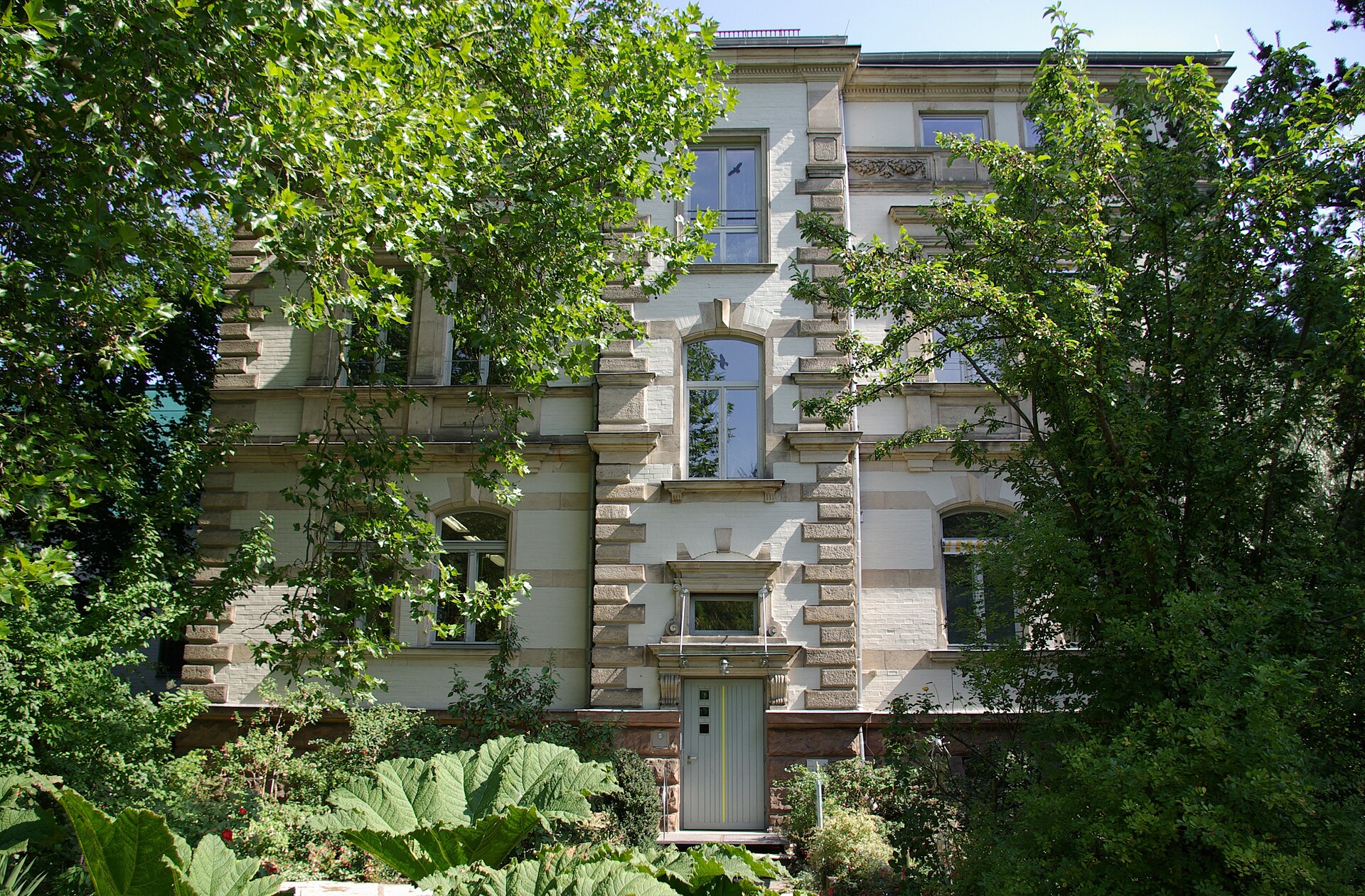
Why FAU Erlangen-Nürnberg — Innovation, Near-Zero Tuition & Industry Pipeline
FAU is not merely one of Germany's oldest universities — it is consistently Germany's most innovative institution, fusing deep academic tradition with one of Europe's densest technology and healthcare industry clusters. For ambitious international students, it offers a rare combination: near-zero tuition, research intensity, and a direct pipeline into German industry.
FAU Admission Profile & Admissions Statistics
Stats
Profile Stats
Rea Vs Rd
FAU Admissions Requirements — Qualifications, Language & Programme Fit
- IB minimum benchmark is 32 points university-wide
- Competitive programmes (engineering, medicine, AI) require meaningfully higher
- Higher Level subjects in relevant fields are assessed carefully
- Grade conversion to German Abitur standard (1.0–4.0 scale)
- IELTS Academic minimum 6.5 for English-taught programmes
- TOEFL iBT minimum 88 for English-taught programmes
- TestDaF level 4 or DSH-2 for German-taught programmes
- German A1 proficiency required by end of first year for English-programme students
- Prerequisites in relevant subjects must be met
- A-Levels, national matriculation exams, or equivalent are accepted
- Some qualifications require uni-assist assessment
- Master's applicants need a 'good' (gut) bachelor's result or better
FAU Application Components — campo Portal, Motivation Letter & Documents
FAU uses its own online application portal — campo (campo.fau.de) — for all applications. There is no Common App, UCAS, or Studielink. Below is every component of a complete FAU application, with strategic notes for each.
FAU Application Statement — Writing the Perfect Motivation Letter
Tips
Prompts
What FAU Admissions Evaluators Are Looking For
Unlike US or UK universities, FAU admissions are primarily academic and documentary. Your qualifications, grade profile, and fit between your background and your chosen programme are the dominant factors. However, the motivation letter and CV matter — particularly for selective master's programmes where academic profiles are close.
FAU Cost & Funding for International Students
FAU represents one of the most cost-effective research-university options in the world. Scholarships are available primarily through DAAD (Germany's main scholarship body) and the Deutschlandstipendium programme. Given near-zero tuition, the German system directs support through external scholarships rather than institutional grants.
Cost figures are estimates from the university's facts file and official sources. Individual costs vary by lifestyle, accommodation type, and personal circumstances.
Stats
Contribution Tiers
| Note | Range | Percent | Percent Value |
|---|---|---|---|
| No programme tuition charged at German public universities | Programme Tuition | €0 | 0 |
| Includes regional public transport pass (Semesterticket) | Semester Administrative Contribution | ~$300/yr | 2 |
| Erlangen-Nuremberg area; varies by accommodation type | Living Costs (accommodation, food, transport) | ~$12,000/yr | 94 |
| One-time fee; verify on campo portal | Application Fee | ~$80 | 1 |
Key Dates
Advantages
- Most programmes offer Winter Semester entry — widest choice of degrees
- Larger incoming cohort — more orientation events and networking
- October start aligns with most international school graduation timelines
- More scholarship programmes open for Winter Semester entrants
- Summer language course before October start possible
Disadvantages
- Summer Semester (April) entry available only for a subset of programmes
- Summer entry gives less preparation time for visa and housing
- Some programmes only admit in Winter Semester
- German-taught programme availability may be more limited in Summer
- Less international student community support infrastructure in Summer intake
FAU Admissions Interviews — What to Expect
Most FAU bachelor's and master's programmes do not include formal interviews in the standard admissions process. Selection is based on documented qualifications, language proficiency, and the motivation letter. Some specialised or joint-degree programmes with limited places may conduct selection interviews — check your specific programme's admissions procedure on the FAU website or campo portal to confirm whether an interview applies to you.
Meta
Questions
FAU Student Residential Life
FAU does not have a residential college or 'house' system in the Harvard, Yale, or Oxford sense. Housing is managed independently — either through the Studentenwerk Erlangen-Nürnberg's dormitories or through the private rental market. For most international students, finding housing is one of the first practical tasks after receiving an admission offer.
Houses
Lottery Steps
- Apply to the Studentenwerk dormitory waiting list as early as possible after acceptance — demand significantly exceeds supply
- Erlangen is a compact, cycling-friendly city — private room rentals are widely available at student-friendly prices
- The FAU Welcome Centre provides housing guidance and temporary accommodation contacts for arriving international students
- WGs (Wohngemeinschaften — shared flats) are the most common and socially active housing option for FAU students
- Monthly rents in Studentenwerk dormitories start from approximately €250–350; private WG rooms typically €400–600
- Nuremberg and Fürth campus students have good S-Bahn and U-Bahn connections to Erlangen
FAU Faculties & Key Programmes
- {"label":"Flagship programmes","value":"Electrical Engineering, Mechanical Engineering, Medical Engineering"}
- {"label":"Language of instruction","value":"German & English (many English-taught MSc)"}
- {"label":"Industry partner","value":"Siemens, Schaeffler, Bosch"}
- {"label":"Distinctive programme","value":"Medical Engineering (Medizintechnik)"}
- {"label":"Flagship programmes","value":"Physics, Chemistry, Mathematics, Materials Science"}
- {"label":"Research strength","value":"Materials science, quantum physics, chemical processes"}
- {"label":"Programmes with no NC","value":"Several — check campo for current status"}
- {"label":"Language of instruction","value":"Primarily German; some English-taught masters"}
- {"label":"Clinical training base","value":"University Hospital Erlangen (Universitätsklinikum)"}
- {"label":"International quota","value":"Regulated by German law — verify annually"}
- {"label":"Programme language","value":"German (DSH-2 or TestDaF required)"}
- {"label":"Admission","value":"Highly competitive; Numerus Clausus applies"}
- {"label":"English-taught option","value":"International Business Studies (BSc & MSc)"}
- {"label":"Law programmes","value":"German-taught only (DSH-2 required)"}
- {"label":"Industry link","value":"Nuremberg region — major logistics, retail, finance hub"}
- {"label":"Additional qualification","value":"Some master's programmes may request GMAT"}
- {"label":"English-taught option","value":"MA Human Rights (English), MA North American Studies"}
- {"label":"Other programmes","value":"History, Linguistics, Philosophy (primarily German)"}
- {"label":"Language note","value":"Most bachelor's in this faculty require German proficiency"}
- {"label":"Research strength","value":"Medieval studies, Islamic studies, theology"}
Research & Extracurricular Opportunities at FAU
Career Outcomes & FAU Graduate Pathways
FAU graduates benefit from one of Germany's strongest industry pipelines. With Siemens Healthineers headquartered in Erlangen and the broader Nuremberg Metropolitan Region hosting major global employers, FAU has built direct-hire relationships that translate into strong employment outcomes for graduates in engineering, sciences, and business.
Stats
Categories
Our FAU Admissions Track Record & Student Success Stories
Faqs
Do I need to speak German to study at FAU?+
Not if you enrol in one of FAU's 50+ English-taught programmes. For English-taught degrees, you do not need to prove German proficiency at the time of application or enrolment. However, you will be required to reach A1 level in German by the end of your first academic year. German-taught programmes require TestDaF level 4 or DSH-2 certification before admission.
Is FAU free for international students?+
Effectively yes. Unlike universities in the US, UK, or Australia, FAU charges no programme tuition fees. You pay only a modest semester administrative contribution (Semesterbeitrag) — approximately €150 per semester — which includes public transportation in the region and student services. The facts file records the annual fee equivalent at approximately $300 USD.
What is the IB score requirement for FAU?+
The minimum IB benchmark recorded in the facts file is 32 points. However, competitive programmes — particularly engineering, medicine, and AI — effectively require scores well above this minimum. Check the specific programme page for any programme-specific score expectations, and note that Higher Level subject choices in relevant fields matter as much as total points.
Does FAU use the Common App or UCAS?+
Neither. FAU operates its own application portal called campo (campo.fau.de). All applications — for bachelor's, master's, and doctoral programmes — are submitted directly through this portal. There is no third-party common application system.
Can I start in both the winter and summer semester?+
Most programmes admit students for the Winter Semester (October start). A smaller number also offer Summer Semester (April) entry. Check the campo portal and the specific programme page to confirm which intakes are available for your chosen degree.
What is the acceptance rate at FAU?+
Overall, approximately 40% of applicants are admitted — but this average conceals wide variation. Some programmes operate with no admissions restrictions (kein Numerus Clausus), while others — particularly medicine, psychology, and law — are significantly more competitive. Research the NC (Zulassungszahl) for your specific programme.
Are there scholarships available for international students?+
FAU does not offer university-wide scholarships covering the full cost of study. However, DAAD (German Academic Exchange Service) funds numerous programmes for international students, and FAU participates in the Deutschlandstipendium (€300/month stipend). Given near-zero tuition, many students find that living costs are the primary financial challenge, and part-time work rights during study provide additional support.
What visa do I need as a non-EU student?+
Non-EU/EEA applicants require a German student visa (Visum zu Studienzwecken) before entry. After arrival, a residence permit (Aufenthaltserlaubnis) must be obtained from the local Foreigners Authority (Ausländerbehörde). You must demonstrate sufficient funds — typically via a blocked account (Sperrkonto) holding the required annual maintenance amount. FAU's International Office provides guidance and connects new students with support resources.
Book a Free FAU Admissions Strategy Session
In 60 minutes our Germany admissions specialists will evaluate your academic profile against FAU's specific programme requirements, identify your qualification equivalence pathway, guide your motivation letter strategy, and map your application timeline on the campo portal.
- No commitment required
- Germany and Europe admissions specialists
- Personalised strategy — campo navigation, motivation letter, uni-assist, visa
FAU Academic Requirements
FAU Academic Requirements: The Honest Breakdown for International Students
What qualifications, grade profile, and academic preparation does FAU expect from international students? And how does Germany's direct-application system evaluate IB, A-Level, and other international credentials?
IB Score & Grade Profile
FAU and Academic Grades — What the Requirements Actually Mean
FAU evaluates international qualifications through a conversion to the German Abitur grade scale (1.0 = best, 4.0 = minimum pass). The IB minimum benchmark is 32 points university-wide, but competitive programmes require meaningfully higher results. There is no US-style GPA system in German admissions.
An IB score of 32 is the minimum entrance floor, not a competitive target for selective programmes. Engineering, medicine, AI, and psychology programmes effectively operate with much higher admitted profiles. Research the Numerus Clausus (NC) value for your specific programme in recent semesters — FAU's own admissions statistics provide this data.
Academic Context
Qualification Equivalence — How FAU Reads International Academic Records
Germany's admissions system evaluates qualifications through a formal equivalence process rather than holistic file review. FAU applies standardised conversion formulas to international qualifications, mapping them to the German Abitur scale. Understanding how your specific qualification converts is essential planning information before you apply.
Standardised Testing at FAU
SAT at FAU — Not Used; What Matters Instead
FAU Erlangen-Nürnberg does not accept SAT scores in any admissions process. Germany is fully test-blind with respect to SAT and ACT. This section explains what replaces standardised testing in FAU's evaluation framework.
| Label | Score | Percent |
|---|---|---|
| SAT accepted | No | 0 |
| ACT accepted | No | 0 |
| GRE/GMAT (selected master's only) | Verify on programme page | 50 |
Standardised Testing
ACT Scores at FAU — Why They Don't Apply and What Does
ACT scores are not used by FAU or any German university in their admissions process. The German academic admission system uses school qualification grades and formally assessed equivalence rather than standardised testing.
Metrics
Comparison Cards
Testing Policy
FAU Test-Blind Policy — What It Means for International Applicants
FAU Erlangen-Nürnberg is test-blind: SAT and ACT play no role in any FAU admissions decision. This is the standard German university position, not an exception. Understanding what this means for how your application is evaluated is essential.
Submit Items
Withhold Items
International Qualifications
IB and A-Level at FAU — Specific Benchmarks and Evaluation
- {"label":"Minimum benchmark","value":"32 points (university-wide)"}
- {"label":"HL expectations for STEM","value":"Mathematics: Analysis & Approaches HL; relevant science HL"}
- {"label":"Subject rigour","value":"HL subjects in fields relevant to your target programme are assessed carefully"}
- {"label":"Extended Essay","value":"Not formally assessed in German admissions; mention in motivation letter"}
- {"label":"General entrance qualification","value":"Three A-Levels at A–C grade or better"}
- {"label":"Subject rigour","value":"A-Level Mathematics and relevant sciences for STEM programmes"}
- {"label":"AS results","value":"Reviewed alongside final A-Level grades"}
AP Courses
AP Courses at FAU — What Counts and How US-Curriculum Students Are Assessed
Advanced Placement (AP) courses and scores are not part of FAU's admissions evaluation. Germany's universities use the school-leaving qualification as a whole, not individual subject-level examinations like AP. However, for students in American or international AP-based curricula, this section explains how AP schools' qualifications are assessed.
Academic Rigour
Academic Rigour at FAU — What Equivalent Challenge Looks Like
In German university admissions, the concept equivalent to Harvard's 'rigour of secondary school record' is the quality and difficulty level of your school-leaving qualification and the extent to which your subject choices align with your target programme's requirements. FAU evaluates this through the formal grade conversion process and through programme prerequisites.
Choosing the most demanding subjects in your relevant field, and performing strongly in them, is the single most important academic decision for a FAU applicant.
Faculty-Level Preparation
Subject Preparation by Faculty — What FAU Expects
Different FAU faculties have specific academic preparation expectations. Because admissions at FAU are programme-specific, it is essential to calibrate your subject choices to your target faculty's requirements. The following covers the five FAU faculties.
Language Requirements
Language Proficiency Requirements for International FAU Applicants
FAU requires formal proof of language proficiency matched to the language of instruction of your chosen programme. Unlike US universities where the essay itself demonstrates English ability, German universities require a standardised test certificate as a formal gate.
English proficiency tests at FAU are administrative requirements — you cannot substitute them with strong essay writing or other signals. IELTS 6.5 or TOEFL iBT 88 must be demonstrated through an officially submitted certificate. Plan to take the test well before your application deadline.
By Programme
Academic Requirements by FAU Programme — What Different Paths Expect
FAU admissions are programme-specific. The table below summarises the typical academic preparation expected for key programmes. Check the specific programme's requirements page on campo or the FAU website for current, authoritative requirements.
| Signals | Expectation | Concentration |
|---|---|---|
| HL Maths AA / Further Maths A-Level; personal projects; competition results | Mathematics HL 6–7 or A-Level A* | Artificial Intelligence (BSc) |
| HL Physics and Maths; engineering design experience | HL Maths + HL Physics or A-Level equivalent | Electrical Engineering (BSc) |
| HL Biology + Chemistry; clinical exposure; strong science profile | HL Biology 6–7 + HL Chemistry 6–7 | Medicine (Staatsexamen) |
| HL Maths + HL Physics or HL Biology; industry curiosity | HL Maths + relevant science HL | Medical Engineering (BSc/MSc) |
| HL Maths + Economics; quantitative projects; internship experience | HL Mathematics; Economics or Business at HL | International Business Studies (BSc) |
| HL Chemistry or Physics; materials science interest; lab experience | HL Science(s) + HL Mathematics | Materials Science (BSc/MSc) |
| HL Maths + HL Chemistry; research or industry experience | HL Chemistry + HL Mathematics | Chemical Engineering (MSc) |
| Strong humanities essay; language ability; research interest | Strong language arts and social sciences profile | Human Rights (MA, English-taught) |
International Systems
FAU and International Education Systems — How Your Qualification Is Evaluated
Roadmap
Building an Academic Profile for FAU — What to Do at Each Stage
- Identify your target FAU faculty early and prioritise relevant subjects.
- For STEM, cement mathematics and science fundamentals at the highest available level.
- Explore relevant extracurriculars — robotics, olympiads, science fairs — to deepen subject engagement.
- If German language study is available at your school, consider starting at A1–A2 level.
- If following the IB, select Higher Level subjects that directly align with your target programme's prerequisites.
- Engineering applicants: Maths AA HL + Physics HL are the minimum expected combination.
- Medical applicants: Biology HL + Chemistry HL.
- Business applicants: Maths HL + Economics HL.
- Aim for your Extended Essay to be in a relevant subject — mention it in your motivation letter.
- A summer research internship, science fair project, or industry work experience in Germany or abroad significantly enriches your motivation letter and CV.
- FAU values demonstrated curiosity beyond the classroom, particularly at master's level.
- Begin German language study if targeting an English-taught programme — A1 is required by the end of your first year anyway.
- Secure strong predicted grades — your school's predicted results form the basis of your application pending final results.
- Take IELTS or TOEFL well before your application deadline.
- Prepare your motivation letter and CV 2–3 months before the campo application window opens.
- Verify your qualification's equivalence through uni-assist or FAU's International Office before the window opens.
Common Pitfalls
Academic Mistakes That Cost FAU Applications — And How to Avoid Them
Real Outcomes
Academic Profiles of Tychr-Assisted FAU Admits
The following profiles represent the academic backgrounds of international students Tychr has helped gain admission to FAU Erlangen-Nürnberg. They illustrate the range of academic preparation that succeeds, and what made each application compelling to FAU programme evaluators.
Faqs
What IB score do I need for FAU?+
The IB minimum benchmark is 32 points. However, this is the university-wide floor, not the competitive target for selective programmes. Engineering, medicine, and AI programmes at FAU effectively admit students with higher profiles. Check the programme's recent NC values on FAU's admissions statistics for realistic expectations.
Does FAU accept SAT or ACT scores?+
FAU is test-blind with respect to SAT and ACT — these scores play no role in any FAU programme. Your school-leaving qualification grade and language proficiency certificate are the relevant credentials.
What IELTS or TOEFL score do I need?+
IELTS Academic 6.5 or TOEFL iBT 88 is required for English-taught programmes at FAU. This is a formal requirement, not a guideline. Native speakers and graduates of full English-medium degree programmes may be exempt — verify with the programme coordinator.
Do I need uni-assist to apply to FAU?+
Some FAU applicants — particularly those whose qualifications are outside the major recognised frameworks — must have their credentials formally assessed through uni-assist before campo will process their application. Check the Anabin database and contact FAU's International Office early to determine if this applies to you.
Do English-programme students need to learn any German?+
Yes. For English-taught programmes, students must achieve German A1 level by the end of their first academic year. This is a formal enrolment condition, not a suggestion. FAU's Language Centre offers German courses at all levels, including intensive pre-semester courses for incoming international students.
Cost & Funding
FAU May Be the Most Affordable Top Research University in the World — Here's the Full Picture.
FAU charges no programme tuition fees even for non-EU international students. The main financial consideration is living costs in the Erlangen–Nuremberg area — moderate by European standards. Here is exactly what FAU costs, what support is available, and how to fund your degree.
Cost Transparency
What FAU Actually Costs — The Full Annual Figure
Germany's public university system is funded by the state to ensure access regardless of personal wealth. This public investment transfers directly to students in the form of near-zero programme fees. FAU, ranked #193 by Times Higher Education and Germany's most innovative university, charges essentially the same as a German regional polytechnic — because the fee structure is set by Bavarian state law, not by market pricing.
Aid Policy
FAU Funding Policy — How Germany Supports International Students
Germany's public university model means that state funding already underwrites near-zero tuition for all students — this is, in effect, a universal tuition grant. International students benefit from this model on the same basis as German students. Additional scholarship support is channelled primarily through DAAD and the Deutschlandstipendium programme.
Structural Affordability
Why Germany Can Do This — The Public University Funding Model
Funding Strategy
Applying for FAU Funding — The Process Step by Step
FAU does not administer a university-wide need-based financial aid programme. Instead, funding is pursued through DAAD, German political foundations, the Deutschlandstipendium, and — where eligible — embassy and home-country government scholarships.
- Go to daad.de and filter by your country of origin, degree level, and field of study
- Many DAAD programmes have application deadlines 8–12 months before the programme start — plan accordingly
- Friedrich Ebert Stiftung — social democratic orientation
- Konrad Adenauer Stiftung — Christian democratic orientation
- Heinrich Böll Stiftung — green/environmental orientation
- Hanns Seidel Stiftung — Bavarian conservative orientation, active near FAU
International Aid Model
Financial Support for International Students at FAU — How It Works
Germany's approach to international student support is structurally different from US and UK models. Rather than institutional need-based grants, support is provided through: (1) near-zero programme tuition for all students, (2) government scholarship bodies (primarily DAAD), (3) the Deutschlandstipendium, and (4) part-time work rights during study.
Funding Estimates
What FAU Funding Actually Looks Like — A Practical Summary
Annual Support Overview for FAU International Students
Scholarship amounts are indicative. Individual awards depend on eligibility, competition, and programme specifics. Verify current scholarship availability and amounts on DAAD and individual foundation websites.
The zero tuition universal benefit is worth $20,000–$40,000+ per year in real savings compared to UK or US alternatives. Scholarship support is available but competitive and requires early planning. Part-time work provides reliable supplementary income within the legal 120-day limit.
| Grant | Income | Contribution |
|---|---|---|
| €0 tuition (universal) | All income levels | Only living costs (~$12,000/yr) |
| €300/month (Deutschlandstipendium, competitive) | Strong academic record required | Net living cost reduction of ~$3,600/yr |
| Varies widely (DAAD programmes) | Programme-specific eligibility | Some DAAD programmes cover full living costs |
| ~$10,000–$15,000 (political foundation scholarships) | Based on merit + orientation | Can significantly offset living costs |
Table Headers
Merit & Need Criteria
Scholarships at FAU — What Exists and Who Qualifies
FAU does not offer university-controlled merit scholarships in the way that US universities do. The near-zero tuition model means the 'scholarship' is effectively already built into the fee structure. Additional merit-based support is channelled through the Deutschlandstipendium and DAAD.
External Funding
External Scholarships for FAU International Students
While FAU itself provides no institutional merit grants, a wide range of external scholarships are available to international students at FAU — from German government and foundation sources to home-country government scholarship programmes specifically funding study in Germany.
Loan Policy
Student Loans at FAU — What's Available and Why the Question Is Different Here
FAU does not offer student loans, and the German state does not extend loan programmes to international students in the same way as domestic students. However, because programme tuition is zero, the loan burden typically associated with higher education is absent from FAU's cost structure.
Student Employment
Part-Time Work at FAU — Rights, Opportunities, and Practical Reality
International students enrolled at FAU are legally permitted to work up to 120 full days or 240 half-days per year in Germany. This is not a formal work-study programme in the US sense — it is a general work permit condition attached to the student visa.
- HiWi (Hilfswissenschaftler — student research assistant) positions in FAU faculty labs — the most professionally valuable and commonly available option for academic students
- Administrative and support roles within FAU departments
- Tutoring and teaching assistant roles for undergraduate courses
- Siemens Healthineers, Siemens AG, and Schaeffler student worker and intern programmes
- Retail, hospitality, and service sector employment in Erlangen-Nuremberg city area
- Student-run startups and the Erlangen-Nuremberg innovation ecosystem
Benchmarking
FAU vs. International Alternatives — Cost Comparison
| Policy | School | No Loans | Typical Cost |
|---|---|---|---|
| Zero programme tuition for all students | FAU Erlangen-Nürnberg (Germany) | N/A — no tuition to finance | ~$12,800/yr (living only) |
| Zero programme tuition for all students | TU Munich (Germany) | N/A | ~$13,000–$15,000/yr (living, Munich is more expensive) |
| Zero programme tuition for all students | Heidelberg University (Germany) | N/A | ~$12,000–$14,000/yr |
| Need-blind, full-need, no loans | Harvard University (US) | Yes (for qualifying families) | $0 (families under $85K income) |
| International fee-differential | University College London (UK) | No | ~$28,000–$38,000/yr tuition alone |
| International fee-differential | University of Melbourne (Australia) | No | ~$24,000–$35,000/yr tuition alone |
Cost Analysis
FAU vs. Alternatives — What You Actually Pay Over a Full Degree
For the vast majority of international students, FAU is significantly less expensive over a full degree than any comparable UK, Australian, or US research university. The zero tuition model means that even without scholarships, a four-year FAU degree costs approximately the equivalent of one academic year at a UK Russell Group institution.
| Policy | School | Contribution | Four Year Cost |
|---|---|---|---|
| Zero tuition; living costs financed from savings/work/scholarships | FAU Erlangen-Nürnberg | ~$12,800/yr | ~$38,400–51,200 (3–4 years total) |
| Zero tuition; slightly higher living costs (Munich is expensive) | TU Munich | ~$14,000/yr | ~$42,000–56,000 |
| Need-blind, full-need — zero for qualifying income families | Harvard University | ~$0 (family income < $85K) | ~$0 (qualifying families) |
| International fee-differential; limited aid | UK Russell Group (average international fee) | ~$28,000–$38,000/yr tuition + living | ~$112,000–$152,000 |
| High tuition; limited aid for internationals | US Private University (non-need-blind) | ~$55,000–$85,000/yr | ~$220,000–$340,000 |
Support Appeals
Seeking Additional Financial Support at FAU — What to Do When You Need Help
FAU does not administer a financial aid programme with formal appeal processes in the way that US universities do. However, there are formal channels for seeking additional support if your financial circumstances change after enrolment.
Unlike at US universities, there is no single financial aid officer to appeal to at FAU. Support is accessed through multiple channels — Studentenwerk Erlangen-Nürnberg (for hardship assistance), DAAD (for scholarship top-ups or new programmes), and FAU's Social Services and Counselling Centre (Sozialberatung).
How To Appeal
- Contact Studentenwerk Erlangen-Nürnberg's Social Services department for hardship assistance and emergency support
- Contact FAU's International Student Advisory Office (Beratung für internationale Studierende) for guidance on available support programmes
- Search DAAD's database for in-study scholarships and research grants available to enrolled students
- Check whether your programme qualifies for a HiWi position — these provide income alongside academic experience
When To Appeal
- Your financial circumstances have changed significantly after arrival (family income disruption, medical emergency)
- Your initial budget assumptions were insufficient for actual Erlangen living costs
- You have successfully completed your first year and now qualify for the Deutschlandstipendium application
Timeline & Planning
Planning for FAU Costs — What to Do and When
Application & Motivation
FAU Application Writing — Everything You Need to Know to Write It Well.
FAU Erlangen-Nürnberg does not use the Common App, UCAS, or a multi-essay application system. Germany's university admissions process is direct, grades-first, and centres on one key written document: the Motivationsschreiben (motivation letter). This is an honest guide to that document — what it is, what it must achieve, and how to write one that actually gets read.
How It Works
Germany's Application System — What FAU Actually Asks For
Germany does not have a unified national application platform equivalent to UCAS or Common App. FAU uses its own portal — campo (campo.fau.de). Applications are made directly. The written component is significantly simpler than US or UK systems — but that simplicity raises the stakes on the motivation letter itself.
Optional Items
Required Items
The Main Written Document
The FAU Motivation Letter — What to Write and How to Write It
FAU has no set essay prompts. The Motivationsschreiben is programme-specific and gives you control over the narrative — but that freedom is also the greatest risk. Here is what the document must contain.
The Dominant Written Document
The Motivation Letter at FAU — How It Compares to UCAS and Common App
Students familiar with UCAS personal statements or Common App essays will find the FAU motivation letter a different document. Understanding those differences is key to writing a strong letter.
The motivation letter must work for FAU specifically — unlike the Common App personal statement, which goes to multiple schools, the FAU motivation letter is submitted to one programme at one university. This means it can and must be fully tailored. Programme coordinators at selective FAU programmes read these letters knowing their own curriculum, their own research groups, and their own faculty's priorities. Generic letters are immediately obvious.
Tired Of List
- 'Since I was a child, I have always been passionate about...' — this opener is known to every German university evaluator and adds nothing
- Generic praise of FAU that could apply to any research university ('prestigious institution with strong research')
- Extensive personal narrative that does not connect to the programme — German academic culture values subject focus over personal storytelling
- Three-page letters — German academic conventions value concision; 1–2 pages is the expected maximum
Looking For List
- Specific references to FAU's programme content, research clusters, or faculty work
- A clear, coherent line from academic background to current application to future goals
- Evidence of genuine subject-level engagement — specific courses, projects, or research questions
- Honest acknowledgement of any academic gaps or unusual circumstances, with brief context
Supporting Documents
Beyond the Letter — Supporting Your FAU Application
While the motivation letter is the primary written document, the overall quality of your application package determines admission. Supporting documents can significantly strengthen or weaken your case.
How to Approach It
Choosing What to Write About in Your FAU Motivation Letter
The motivation letter's power lies in its specificity. Because FAU has no set essay prompts, you control the narrative — but that freedom is also the greatest risk. Here is how to think through your letter's content.
Common Mistakes
FAU Application & Motivation Letter Pitfalls
- Writing a generic motivation letter that could be sent to any German university — programme coordinators read hundreds and immediately notice.
- Exceeding the recommended length (typically 1–2 pages). German academic culture values concision — a three-page letter signals poor editing, not thoroughness.
- Starting with 'Since I was a child, I have always been passionate about...' — this cliché opener is known to evaluators across German universities.
- Failing to address programme-specific requirements or curriculum points — show that you have read the programme's content in detail.
- Submitting uncertified or unverified document translations — this is a formal disqualification criterion, not an administrative preference.
- Missing the campo portal opening date — programmes fill on a first-come basis in some cases; prepare all documents before the window opens.
- Applying to a German-taught programme without verified German proficiency (TestDaF/DSH) or to an English-taught programme without IELTS/TOEFL above the minimum.
- Not researching whether your qualification needs uni-assist evaluation — discovering this requirement after missing the deadline is a common and preventable error.
- Using the same motivation letter unchanged for multiple programmes — tailoring is not optional for competitive programmes.
Application FAQs
Frequently Asked Application Questions
Does FAU require a personal statement or essays like UCAS or Common App?+
No. FAU uses its own direct application portal (campo.fau.de) and does not use UCAS or Common App. Most competitive programmes require a motivation letter (Motivationsschreiben) — programme-specific and typically 1–2 pages. Some less competitive programmes with no admissions restrictions may not require any written statement at all.
Is the motivation letter mandatory for all FAU programmes?+
Not for all programmes. Bachelor's programmes without admissions restrictions (kein NC) typically do not require a motivation letter — admission is largely automatic for qualifying applicants. Competitive bachelor's programmes and most master's programmes do require one. Check the specific programme's requirements on the campo portal or FAU website.
How long should the motivation letter be?+
Typically 1–2 pages (approximately 500–800 words). German academic conventions favour concise, well-structured prose over expansive personal narrative. If the specific programme provides a word or page limit, follow it exactly.
Should I write my motivation letter in German or English?+
For English-taught programmes, write your motivation letter in English. For German-taught programmes, write it in German (or confirm the language with the programme coordinator). The language of the letter should match the language of instruction.
Can I use the same motivation letter for multiple FAU programmes?+
Technically you can submit separate applications to multiple programmes, but using the same letter is counterproductive. A strong motivation letter is programme-specific — tailored to the exact curriculum, research focus, and faculty of the programme you are applying to. Generic letters are immediately apparent to experienced evaluators.
Does FAU conduct interviews for undergraduate or master's programmes?+
Most FAU programmes do not include formal interviews in the standard admissions process. Some highly selective or specialised programmes may conduct selection interviews — particularly for joint degree programmes or those with limited places. Check the specific programme's admissions procedure to confirm.
What application system does FAU use?+
FAU uses its own online portal called campo (campo.fau.de). All applications — undergraduate, master's, and doctoral — are submitted through this portal. There is no Common App, UCAS, or Studielink involvement.
Is there guidance on navigating the campo application portal?+
Yes. FAU's International Office provides guidance in English on navigating the campo portal and the application process for international students. A video tutorial is referenced on FAU's international student application page. Tychr's Germany admissions specialists can also walk you through the campo process step by step.
Courses — schools, degrees & intake
73 degrees across 5 groupings.
Faculty of Humanities, Social Sciences, and Theology · 29 degrees
Archaeological Sciences
Art History
Book Studies
Chinese Studies
Computational Linguistics
Cultural History of Christianity
Digital Humanities and Social Sciences
Education
English and American Studies
French Studies
Geography: Cultural Geography
German Studies
Greek Philology
Hispanic Studies
History
Indo-European and Indo-Iranian Studies
Islamic Religious Studies
Italian Studies
Japanese Studies
Latin Philology
Medieval Latin and Neo-Latin
Oriental Studies
Philosophy
Political Science
Psychology
Scandinavian Studies
Sociology
Studies in Literature and Books
Theater and Media Studies
Faculty of Business, Economics and Law · 7 degrees
Business and Economics
Business Studies
International Business Studies (IBS)
International Economic Studies (IES)
Mathematical Economics
Public Law
Socioeconomics
Faculty of Medicine · 3 degrees
Logopaedics
Midwifery Science
Molecular Medicine
Faculty of Sciences · 11 degrees
Biology
Chemistry
Data Science
Geography: Physical Geography
Geosciences
GeoSustainability
Integrated Life Sciences: Biology, Biomathematics and Biophysics
Mathematics
Molecular Science
Nanotechnology
Physics
Faculty of Engineering · 23 degrees
AI – Materials Technology
Artificial Intelligence
Autonomy Technologies
Berufspädagogik Technik
Biotechnology
Chemical and Biological Engineering
Chemical Engineering – Sustainable Chemical Technologies
Clean Energy Processes
Computational Engineering
Computer Science / IT Security
Electrical Engineering – Electronics – Information Technology
Electromobility-ACES
Energy Technology
Engineering Mathematics
Industrial Engineering
Informatik (Computer Science)
Information and Communication Technology (IuK)
Information Systems
International Production Engineering and Management (IP)
Materials Science and Materials Engineering
Mechanical Engineering
Mechatronics
Medical Engineering
Want your real chances at FAU Erlangen-Nürnberg?
Create a free TYCHR account for your personalised admit-chance, a shortlist you can track, exact entry requirements, and essay + counselling help.