← All universities

Erasmus University Rotterdam

Rotterdam, Netherlands · Urban

PublicResearch
Acceptance
40.0%
QS World
#180
Tuition/yr
$15,400
Students
37,000
Founded
1913

Erasmus University Rotterdam is one of Europe's most internationally focused research universities, home to the globally acclaimed Rotterdam School of Management (RSM) and the Erasmus School of Economics (ESE). Founded in 1913 and named after the humanist Desiderius Erasmus of Rotterdam, EUR has built a century-long reputation in economics, business, medicine, and law — fields where its graduates shape policy, industry, and research worldwide.

Erasmus University Rotterdam Admissions Guide for

Campus

Erasmus University Rotterdam — campus in pictures

Real, freely-licensed photographs of the campus (via Wikimedia Commons).

RSM Erasmus University Campus spring
RSM Erasmus University Campus springRSM erasmus · CC BY-SA 2.0 · via Wikimedia Commons
RSM Eramus University Campus summer
RSM Eramus University Campus summerRSM erasmus · CC BY-SA 2.0 · via Wikimedia Commons
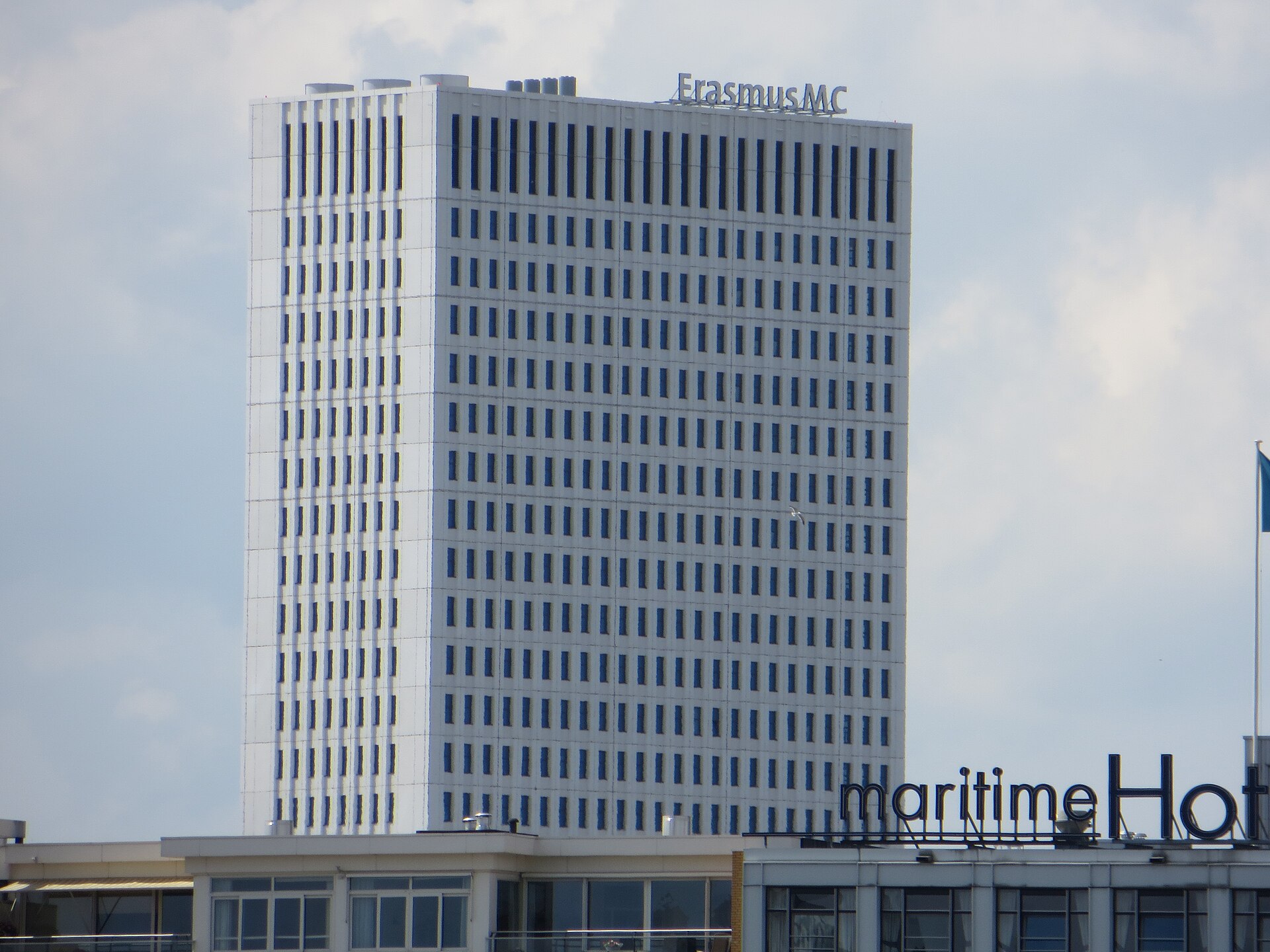
De nieuwbouw van het erasmus MC in Rotterdam.
De nieuwbouw van het erasmus MC in Rotterdam.Racingfreak · CC BY-SA 3.0 · via Wikimedia Commons
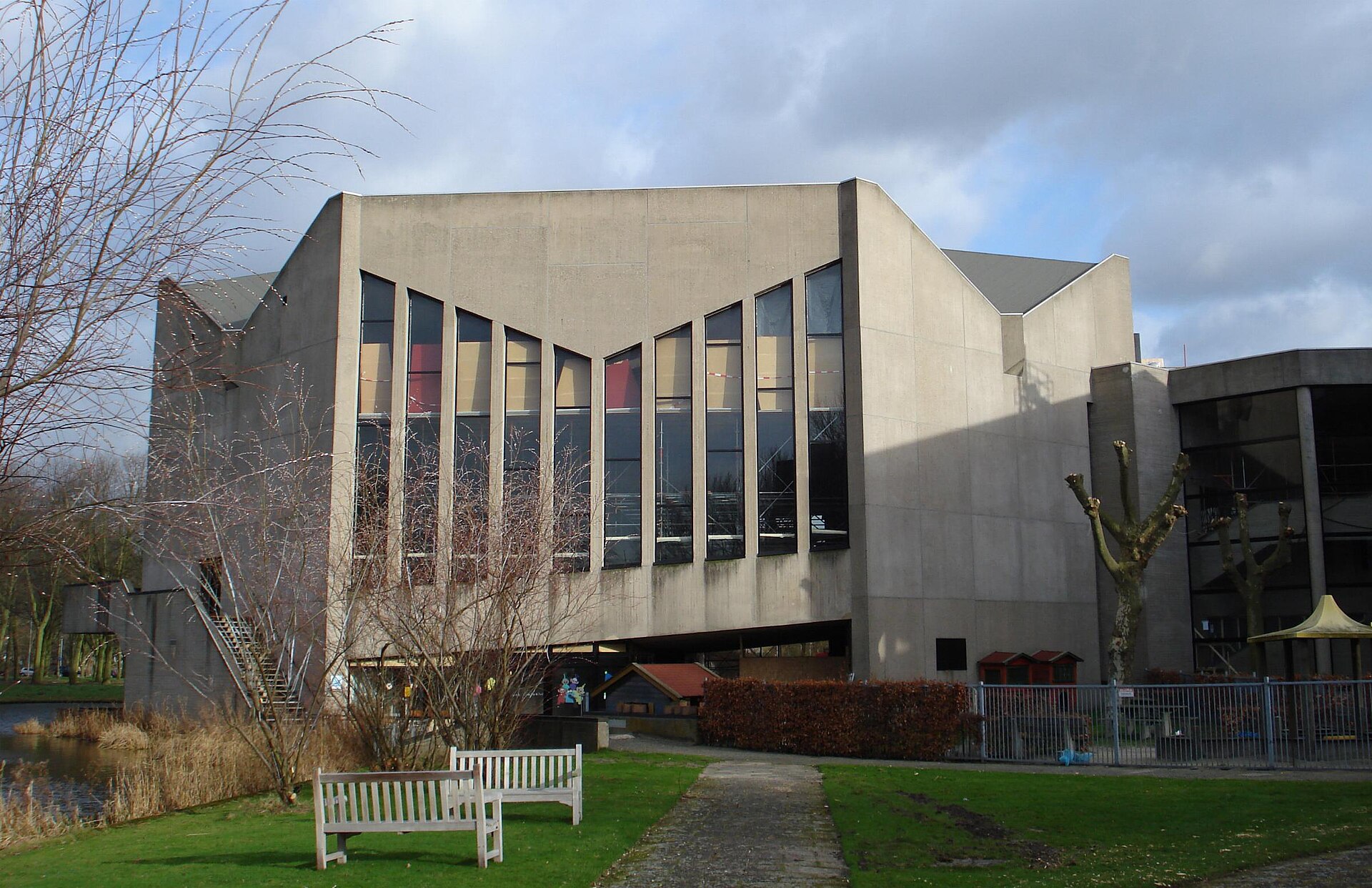
Rotterdam. Erasmus universiteit: Aula. Gemeentemonument. Architecten: Cornelis Elffers en A. van der Heyden.
Rotterdam. Erasmus universiteit: Aula. Gemeentemonument. Architecten: Cornelis Elffers en A. van der Heyden.Wikifrits · Public domain · via Wikimedia Commons
Rotterdam. Erasmus universiteit: Bibliotheek. Gemeentemonument. Architect: Cornelis Elffers
Rotterdam. Erasmus universiteit: Bibliotheek. Gemeentemonument. Architect: Cornelis ElffersWikifrits · Public domain · via Wikimedia Commons
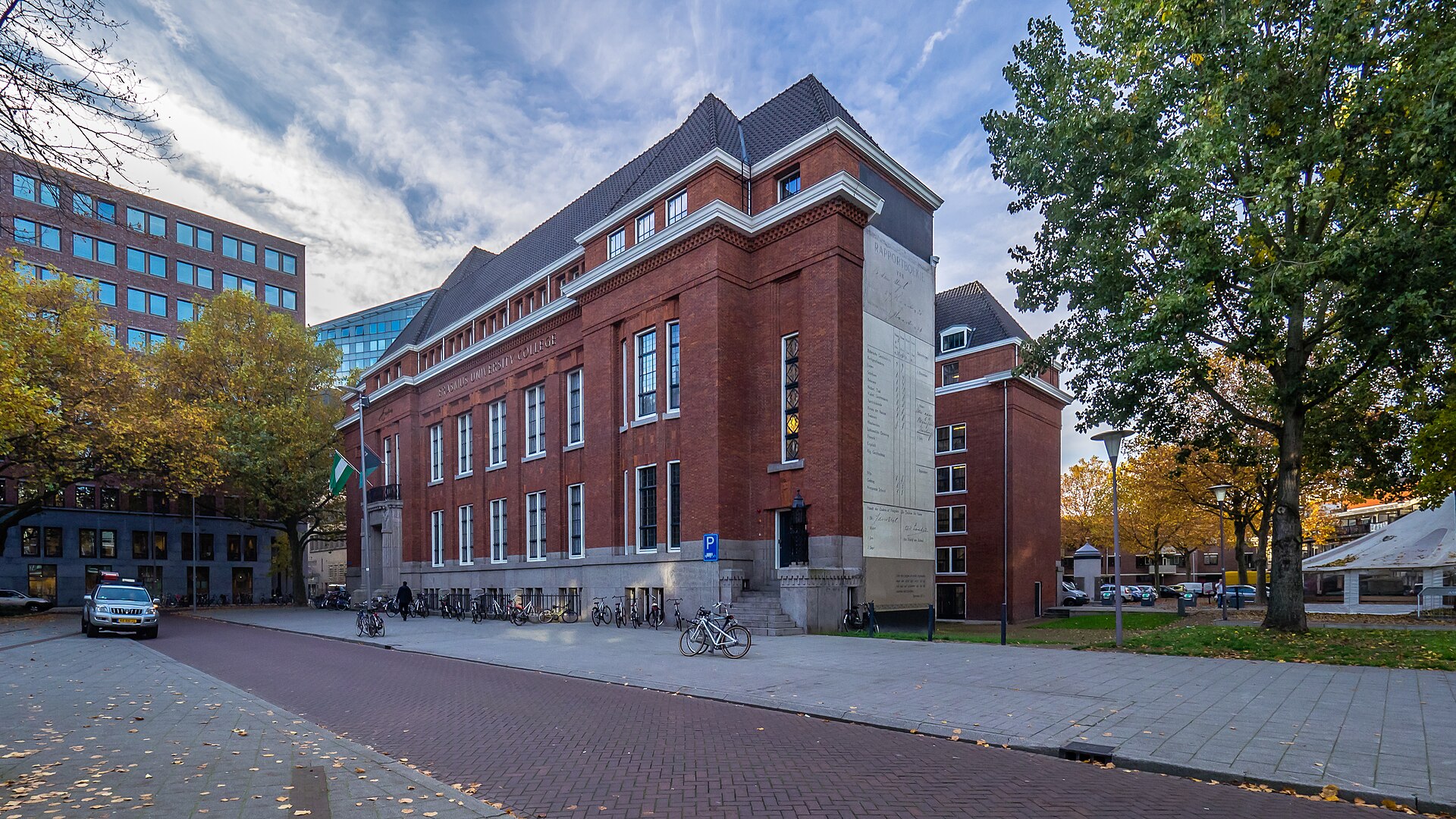
Erasmus University College   City of Rotterdam (22643637241)
Erasmus University College City of Rotterdam (22643637241)Frans Berkelaar · CC BY-SA 2.0 · via Wikimedia Commons

Why Erasmus — Economics, Medicine & a World-Class City

Erasmus University Rotterdam is not merely a regional European university — it is an institution that has consistently produced leaders in economics, business, medicine, and policy for over a century. For ambitious international students seeking rigorous quantitative training, a genuinely global campus, and direct pathways into European and global careers, EUR offers something rare: world-class academic quality at a cost the world's best universities cannot match.

01European Leader in Economics & Business
RSM and ESE are among the most respected business and economics schools in continental Europe. RSM holds the rare triple accreditation (AACSB, EQUIS, AMBA), and EUR ranks in the global top 100 in the Times Higher Education World University Rankings — exceptional for a university of its size and age.
02Erasmus MC — Research Medicine at Scale
Erasmus MC is one of the largest and most research-intensive university medical centres in Europe. Medical students benefit from direct clinical exposure from early years and access to research groups that consistently attract major European and ERC funding.
03Rotterdam: Europe's Business Capital
Rotterdam hosts the Port of Rotterdam — the busiest port in Europe — and the European headquarters of multinationals including Shell, Unilever, and ING. The city is a hub for architecture, design, and sustainability innovation, giving EUR students internship and network access that few urban campuses can match.
04Truly International Community
30% of EUR's 37,000 students are international, coming from over 130 countries. English-taught bachelor programmes — IBEB, IBA, Liberal Arts & Sciences, and LLB — create genuinely multicultural classrooms where global perspectives are the default, not the exception.
05Strong Employment Outcomes
Over 85% of EUR graduates are employed within months of graduation. Economics and business graduates routinely enter top consulting firms, major banks, and global corporations. An Erasmus degree carries serious weight with European and international employers.
06Affordable Quality by Global Standards
Annual tuition for non-EEA students is approximately $15,400 — far below comparable programmes at UK or US universities of equivalent ranking. Rotterdam's cost of living is also lower than Amsterdam, London, or Zurich, making EUR genuinely cost-competitive for the quality and outcomes it delivers.

EUR Admissions & Typical Admitted Profile

Stats

37,000
Total Students
30%
International Students
#180
QS World Ranking

Profile Stats

34
IB Minimum (competitive programmes)
3.0
Minimum GPA Equivalent
30%
International Students
No
SAT / ACT Required
Typical Academic Profile — EUR English-Taught Bachelor Programmes
Overall university-wide acceptance rate; competitive English-taught programmes are considerably more selective

Rea Vs Rd

Rd Label: OLAF Deadline
Rd Value: 31 Jan
Rea Label: Studielink Deadline
Rea Value: 15 Jan

EUR Admissions Requirements — Grades, Mathematics & Language Proficiency

Academic Grades
Value: 3.0+ GPA / IB 34+
  • IB minimum of 34 for competitive English-taught programmes
  • Higher scores (37+) significantly improve selection ranking
  • Grade average accounts for up to 75% of numerus fixus ranking
  • Upward grade trajectories are noted positively
EUR's selection is grade-driven. For numerus fixus programmes like IBA and IBEB, your grade average — converted to the Dutch selection-points scale — is the primary factor. A minimum GPA equivalent of 3.0 applies, but the competitive pool typically sits significantly higher.
Mathematics
Value: Strong Maths Required
  • IB Mathematics HL (Analysis & Approaches preferred for economics/econometrics)
  • A-Level Mathematics expected for IBEB and ESE programmes
  • Some programmes include a mandatory online mathematics test
  • Maths grade contributes directly to selection points for STEM-heavy programmes
EUR's economics, business, and econometrics programmes are quantitatively demanding. Strong mathematics at a higher level is not optional — it is a core admissions criterion and a prerequisite for academic success in these programmes.
English Proficiency
Value: IELTS 6.5 / TOEFL 90
  • IELTS Academic: 6.5 overall minimum
  • TOEFL iBT: 90 total minimum
  • Duolingo: 120 minimum
  • IB students educated in English may be exempt — confirm with programme
All English-taught EUR programmes require demonstrated English proficiency for students whose secondary education was not in English. The IELTS, TOEFL, and Duolingo minimums are firm requirements — not guidelines — and results must be submitted by the relevant deadline.

EUR Application Components — Studielink, OLAF & Supporting Documents

EUR uses a two-stage application process entirely distinct from US (Common App) or UK (UCAS) systems. Below is every component of a complete EUR application — required and programme-specific — with strategic notes for each.

01RequiredStudielink Registration
All applicants to Dutch universities must register via Studielink (studielink.nl) by 15 January. This is the mandatory first step — without it, you cannot submit a programme application for that year.
02RequiredOLAF Online Application Form
After Studielink, each programme has its own online application form (OLAF) where you upload documents and answer motivation questions. OLAF deadline is typically 31 January — two weeks after Studielink.
03RequiredAcademic Records & Transcripts
Official transcripts, grade lists, and diploma copies from your secondary school. Certified translations into English or Dutch are required where applicable. For IB students, predicted grades and final results are both required.
04Required for selective programmesMotivation Responses (OLAF)
For numerus fixus programmes like IBA and IBEB, OLAF includes three short motivation questions that account for 25% of the IBA selection ranking. These are focused, concise written responses — not a personal statement — evaluated for specificity and programme fit.
05Required if applicableEnglish Language Test
IELTS 6.5+, TOEFL iBT 90+, or Duolingo 120+ for applicants not educated in English. Results must be available by 15 March if required.
06Required for business/economicsMathematics Assessment
Depending on your diploma type, EUR may require proof of mathematics proficiency through your diploma grades or completion of an online mathematics test by 15 March.
07Required before enrolmentFinal Certified Documents
After receiving your admission offer, final certified copies of your diploma and transcripts must be submitted by 1 August before enrolment can be confirmed.

EUR Motivation Questions — Writing Focused, High-Scoring OLAF Responses

Tips

These are not essays — they are focused professional responses
EUR's OLAF motivation questions are not an invitation for a personal narrative. They are concise, evidence-based answers to three specific questions: why this programme, what prepares you, and where you are going. Treat them like a structured argument, not a story.
Specificity is the entire game
Admissions readers at numerus fixus programmes read hundreds of responses where applicants say they are 'passionate about business' or 'interested in economics'. The responses that score well are the ones that reference something specific — a track in the curriculum, an aspect of RSM's industry connections, a named economic problem that interests you.
25% of your IBA ranking rides on three responses
In a competitive field where grade profiles cluster, the motivation component is the deciding margin. A student who scores 90/100 on grades but 60/100 on motivation can lose to one with 85/100 grades and 95/100 motivation. Take these responses as seriously as any academic preparation.
Do not repurpose a US or UK statement
Common App personal statements and UCAS personal statements are written for entirely different purposes and audiences. Repurposing one for OLAF will produce a response that reads as generic, narrative-heavy, and misaligned with what EUR actually wants to see.

Prompts

OLAF Question 1 — Why This Programme?
Explain why you have chosen to apply to this specific programme. What is it about the programme that interests you? (Verify exact wording on official OLAF form for your cycle)
OLAF Question 2 — Why You?
Describe how your academic background and personal experience have prepared you for the programme you are applying to. (Verify exact wording on official OLAF form)
OLAF Question 3 — Your Future Goals
What are your ambitions and career goals, and how will studying at EUR help you achieve them? (Verify exact wording on official OLAF form)
The most common EUR motivation mistake. Writing what you think EUR wants to read — generic enthusiasm about 'business' and 'economics' — instead of writing what specifically connects you to this programme, this faculty, and this career direction.

What EUR Admissions Is Looking For

EUR evaluates bachelor applicants through a structured selection process where academic grades dominate and motivation responses add nuance. Understanding what each element of the selection assesses — and preparing accordingly — is the foundation of a strong EUR application strategy.

01Academic Excellence
For numerus fixus programmes, your grade average is the primary selection criterion — accounting for up to 75% of the ranking for IBA. EUR expects strong performance across your full secondary diploma, with particular weight on mathematics for economics and business programmes.
02Quantitative Preparation
EUR's economics, business, and medical programmes are analytically demanding from day one. The admissions process actively evaluates whether you have the mathematical foundation to succeed — through grade evidence, diploma subject choice, and sometimes a dedicated mathematics assessment.
03Clear Programme Fit
The OLAF motivation component evaluates how deliberately and specifically you have chosen this programme. 'I am interested in business' is not a competitive answer. EUR looks for applicants who understand what makes IBEB different from IBA, or what EUR College offers that a conventional economics programme does not.
04English Proficiency
All English-taught programmes require demonstrated English ability. The language quality of your OLAF responses is itself an implicit assessment — admissions teams notice unclear or error-filled writing, even when scores are technically sufficient.
05International Perspective
EUR's English-taught programmes are explicitly designed for an international cohort. Students who have lived, studied, or engaged meaningfully with diverse global contexts bring genuine value to the cohort — and this is recognised in the selection process.
06Credible Career Direction
Your motivation responses must connect your programme choice to a credible and specific future direction. EUR is not looking for certainty — a 17-year-old cannot know their career precisely — but it is looking for intentionality: why this degree, at this university, towards what kind of goal.

EUR Financial Aid & Scholarships for International Students

EUR's financial aid landscape for international students is fundamentally different from US or UK universities. There is no needs-analysis process, no CSS Profile equivalent, and no institutional policy of meeting demonstrated need. What exists is a limited set of merit and government scholarships — and a genuinely affordable tuition rate by global standards.

EUR does not operate a need-based financial aid programme for international students. All scholarship figures are estimates; verify current offerings on EUR's official scholarship portal before applying.

Stats

~€14,000
Annual tuition — non-EEA students
~€2,695
Annual tuition — EEA students
~$29,000
Total cost of attendance (est.)
16 hrs/wk
Part-time work allowance (non-EEA)

Contribution Tiers

NoteRangePercentPercent Value
Dutch statutory fee; DUO student finance may be availableEEA Students~€2,695/yr20
Institutional fee; no need-based aid; scholarships competitiveNon-EEA Students~€14,000/yr100
Comparable for similar-ranking UK universitiesUK Peer (e.g. Warwick, Durham)~£22,000/yr160
Top US business schools (comparable ranking)US Peer (e.g. UVA Darden, Georgetown)>$55,000/yr400
The EUR Financial Aid Reality. EUR is a Dutch public university. Unlike US universities, it does not award need-based grants that meet demonstrated financial need. Scholarships that exist are limited, primarily merit-based, and in many cases restricted to specific nationalities or master's-level students. International students planning to study at EUR should approach financial planning as self-funding, supplemented by scholarships where eligible.

Key Dates

Studielink Registration Deadline
Date: 15 January
OLAF Application Deadline
Date: 31 January
Maths / English Test Results Due (if required)
Date: 15 March
Selection Outcomes Communicated
Date: 15 April
Final Certified Documents Due
Date: 1 August
Academic Year Begins
Date: September

Advantages

  • All EUR bachelor applications follow a single, fixed timeline — there is no early or regular decision distinction
  • The January deadline gives you the full autumn semester to strengthen your application and refine motivation responses
  • Applying to multiple EUR programmes is possible through Studielink, each with its own OLAF form
  • Applying early within the Studielink window (well before January 15) ensures no technical issues near the deadline
  • Students who receive admission by April have several months to sort housing, visa, and financial planning

Disadvantages

  • There is no early application option — all applicants compete in the same selection pool
  • Missing the 15 January Studielink deadline means you cannot apply at all that year — no exceptions
  • Selection outcomes are not known until April, after many other countries' university decisions
  • Numerus fixus selection is purely points-based — no appeal on holistic grounds once the ranking is set
  • Housing in Rotterdam is competitive; late admission (April) means starting the housing search late
EUR Application Timeline. Unlike US universities with multiple application rounds, EUR operates a single annual admissions cycle. All eligible applicants compete in the same pool. The strategy is not about timing your application — it is about maximising your grade profile and motivation responses before the January deadline.
Tychr's EUR Application Strategy Recommendation. Submit your Studielink registration as early as possible — well before 15 January — and give yourself maximum time to prepare your OLAF motivation responses. Since there is no second application round, your one submission must be your best. For numerus fixus programmes, start preparing motivation responses in October so you have time to refine them with feedback before the deadline.
Applying to EUR — What Works in Your Favour
Netherlands Application System — One Deadline, Points-Based Selection

EUR Admissions — No Traditional Interview, But Your Words Still Matter

EUR bachelor admissions does not include a formal interview for most programmes. Selection is entirely based on your grade profile and OLAF motivation responses. However, your written motivation responses function as the closest equivalent to an interview — they reveal how you think, how clearly you can argue, and how specifically you have engaged with the programme you are applying to. Treat them accordingly.

Meta

No formal interview required for most bachelor programmes
Format
Points-based ranking: grades + motivation responses (OLAF)
Selection Method
Erasmus University College may include additional selection steps
EUR College Exception
The written equivalent — three OLAF questions evaluated for specificity and fit
Motivation Responses

Questions

Why IBA at RSM specifically — not just any business degree?
Tip: Reference something specific about the curriculum, a track, RSM's industry connections, or a named aspect of EUR's approach. 'EUR is highly ranked' is not a programme-specific answer.
What in your background prepares you for this programme's demands?
Tip: Connect evidence to your claim. If you say you are quantitatively prepared, cite your maths grade or a specific analytical project. Evidence beats assertion.
Where are you going with this degree — and why does this specific programme help you get there?
Tip: Be realistic and specific. Connect your career direction to something real — an industry, a problem, a role — and explain why RSM or EUR positions you better than alternatives.
For EUR College: why do you want an interdisciplinary education?
Tip: EUR College applicants: reflect on what question cannot be answered by a single academic discipline. Show intellectual curiosity beyond standard academic boundaries.
What specific aspect of EUR makes it your best option for this field?
Tip: Show you have researched EUR specifically — not just read the brochure. Mention a professor, research centre, company partner, or student initiative that makes EUR relevant to your goals.

EUR Campus Life & Student Housing

Unlike Oxford/Cambridge or US universities with residential college systems, EUR does not assign students to residential houses or colleges. Students live in private accommodation in Rotterdam or on limited partner housing arranged through EUR's International Office. The main academic campus is Woudestein, with the medical programme based at the Hoboken / Erasmus MC campus.

Houses

Woudestein Campus
Tag: Main Campus
EUR's main academic campus, home to RSM, ESE, Law, and Social Sciences
Hoboken / Erasmus MC
Tag: Medical
Medical campus and Erasmus Medical Centre — one of Europe's largest teaching hospitals
Erasmus University College (The Hague)
Tag: EUR College
Liberal Arts & Sciences campus in The Hague — small, international, residential

Lottery Steps

  • EUR does not guarantee housing to all students — housing must be arranged independently
  • EUR's International Office provides guidance and connects students with partner accommodation providers
  • Platforms like Kamernet, SSH&, and ROOM NL are common for private room rentals
  • Start housing search immediately after receiving your admission offer in April
  • Erasmus University College (EUR College) in The Hague offers residential community housing for its students
  • Rotterdam's housing market is competitive — delays significantly increase the risk of arriving without accommodation
  • International students should budget ~€700-900/month for shared accommodation in Rotterdam

EUR Faculties & Schools

Rotterdam School of Management (RSM)
Label: International Business Administration (IBA) & More
  • {"label":"Triple accreditation","value":"AACSB, EQUIS, AMBA"}
  • {"label":"IBA language of instruction","value":"English"}
  • {"label":"Key programme","value":"IBA (BSc)"}
  • {"label":"Selection type","value":"Numerus fixus"}
RSM is one of Europe's leading business schools — triple accredited and internationally recognised. The IBA bachelor programme is fully English-taught and among the most internationally diverse bachelor programmes in the Netherlands. RSM also offers a wide range of master's programmes in business, finance, and management.
Erasmus School of Economics (ESE)
Label: IBEB, Economics & Econometrics
  • {"label":"Key bachelor programme","value":"IBEB (International Bachelor Economics & Business Economics)"}
  • {"label":"Language of instruction","value":"English (IBEB)"}
  • {"label":"Academic emphasis","value":"Quantitative economics, econometrics"}
  • {"label":"Selection type","value":"Numerus fixus"}
ESE houses one of the most quantitatively rigorous economics bachelor programmes in continental Europe. IBEB emphasises economic theory, econometrics, and mathematical modelling. Graduates pursue careers in finance, consulting, policy, and academia.
Erasmus MC
Label: Medicine & Health Sciences
  • {"label":"Programme type","value":"Medicine (Bachelor + Master)"}
  • {"label":"Language","value":"Dutch (confirm international pathway directly)"}
  • {"label":"Selection","value":"Decentralised selection"}
  • {"label":"Status","value":"One of Europe's largest teaching hospitals"}
Erasmus MC is among the most research-intensive university medical centres in Europe. The medicine programme is primarily Dutch-taught for the standard track. International students should verify the specific international pathway directly with Erasmus MC admissions.
Erasmus School of Law
Label: LLB — English-Taught Law
  • {"label":"Bachelor programme","value":"LLB International and European Law"}
  • {"label":"Language","value":"English"}
  • {"label":"Focus areas","value":"International law, European law, commercial law"}
  • {"label":"Duration","value":"3 years"}
EUR's law faculty offers an English-taught LLB in International and European Law, designed for international students seeking a rigorous legal education with a European and global orientation.
Erasmus University College (EUR College)
Label: Liberal Arts & Sciences — The Hague
  • {"label":"Campus location","value":"The Hague (city of international justice)"}
  • {"label":"Programme","value":"Liberal Arts & Sciences (BSc/BA)"}
  • {"label":"Language","value":"English"}
  • {"label":"Character","value":"Small, residential, interdisciplinary"}
EUR College is EUR's honours programme in Liberal Arts & Sciences, located in The Hague. Small cohort sizes, an interdisciplinary curriculum, and a residential community make it the most academically distinctive and personally immersive bachelor experience at EUR.
Erasmus School of Social & Behavioural Sciences
Label: Psychology, Sociology & Public Administration
  • {"label":"Key bachelor programme","value":"Psychology (primarily Dutch)"}
  • {"label":"Public Administration","value":"Available; verify language"}
  • {"label":"Note for internationals","value":"Most bachelor programmes in Dutch; master's often in English"}
  • {"label":"Research strength","value":"Health psychology, public governance"}
The social and behavioural sciences faculty is strong in psychology, public policy, and governance. International students should note that most bachelor programmes here are Dutch-taught; the faculty's master's programmes are more accessible in English.

Research & Extracurricular Opportunities at EUR

Erasmus Research Institute of Management (ERIM)
Category: Research
ERIM is one of the leading research institutes in management and business in Europe. Undergraduate students at RSM can engage with ERIM through thesis supervision, research assistant roles, and academic events, gaining exposure to cutting-edge management research from their bachelor years.
Tinbergen Institute
Category: Economics Research
The Tinbergen Institute — a joint graduate school of EUR, VU Amsterdam, and the University of Amsterdam — is one of the top economics and econometrics research institutes in Europe. Named after Jan Tinbergen (Nobel laureate), it offers undergraduate students research exposure through lectures, events, and master's preparation.
RSM & EUR Student Associations
Category: Student Life
EUR hosts dozens of active student associations across business, economics, medicine, law, and culture. RSM's dedicated association network runs international case competitions, company visits, and networking events that directly connect students to European industry. Eurekaweek — EUR's opening week — is one of the best-organised introduction weeks in the Netherlands.
Industry Access & Internships
Category: Career Development
Rotterdam's unique industrial geography — the largest port in Europe, headquarters of multinationals, a thriving start-up scene — gives EUR students internship and industry access that few campuses worldwide can match. RSM formally integrates company projects, guest lectures, and consulting case work into the curriculum from Year 1.
Scroll right to explore EUR's research centres and student life opportunities.

Career Outcomes & EUR Alumni Network

EUR graduates are in high demand across European and international employers. The university's position at the intersection of European finance, business, and healthcare creates direct pathways from degree to career. RSM reports that over 90% of IBA graduates secure employment within six months of graduation.

Stats

85%
Employment rate within months of graduation
$45,000
Average starting salary (USD equivalent)
30%
International students in student body
#180
QS World University Ranking
Top 100
Times Higher Education ranking
#6
National rank (Netherlands)

Categories

Consulting & Finance
McKinsey, BCG, Bain, ING, ABN AMRO, Deloitte — EUR graduates disproportionately populate top European consulting and banking roles. Rotterdam's financial sector provides direct pathways from degree to employer.
Multinationals
Shell, Unilever, AkzoNobel, Heineken, DSM — Dutch multinationals based in and around Rotterdam actively recruit EUR graduates. European corporate headquarters provide an immediate international career platform.
Policy & International Institutions
European Commission, UN agencies, Dutch ministries, World Bank — EUR's economics and law programmes feed into European policy and international institutions, particularly for students who pursue relevant master's programmes.

Our EUR Admissions Track Record & Student Success Stories

Priya S.
My IBA motivation responses were generic on the first draft — I basically said I loved business and wanted to work internationally. Tychr helped me reframe each response around something specific: my background in a family trading business, my interest in ESG supply chains, and how RSM's Year 3 international tracks directly addressed my goals. The improvement was dramatic.
Country: India
Program: Erasmus RSM — International Business Administration
Class Year: Class of 2027
Residential: Rotterdam
Academic Profile: IB 39 · Maths HL 7
Marcus L.
I applied to IBEB because I was genuinely interested in econometrics, but I had no idea what I was getting into quantitatively. Tychr flagged this early and helped me strengthen my maths preparation and reframe my motivation response to show I understood what the programme actually demanded. I got in — and felt genuinely ready on day one.
Country: Nigeria
Program: Erasmus ESE — International Bachelor Economics & Business Economics
Class Year: Class of 2026
Residential: Rotterdam
Academic Profile: A-Levels AAB · Maths A
Aigerim T.
EUR College was my dream — small cohort, interdisciplinary, The Hague campus. But I wrote my first motivation letter like a UCAS personal statement. Tychr helped me understand what EUR College actually values: genuine intellectual curiosity, a specific question you cannot answer in a single discipline, and evidence of self-directed learning. I rewrote it entirely and got offered a place.
Country: Kazakhstan
Program: Erasmus University College — Liberal Arts & Sciences
Class Year: Class of 2025
Residential: The Hague
Academic Profile: IB 42 · English A HL 7

Faqs

Is Erasmus University Rotterdam taught in English?+

Several EUR bachelor programmes are fully English-taught: International Business Administration (IBA at RSM), International Bachelor Economics & Business Economics (IBEB at ESE), Liberal Arts & Sciences (EUR College), and the LLB in International and European Law. Other bachelor programmes — including Medicine and most social science bachelor programmes — are taught in Dutch. Always confirm the language of instruction on the specific programme page before applying.

What does numerus fixus mean, and which EUR programmes use it?+

A numerus fixus programme has a fixed number of places per year. All eligible applicants are ranked — primarily by grade averages and motivation responses — and offers are made in order until the cohort is full. Meeting minimum requirements does not guarantee admission; your ranking relative to all other applicants in that cycle determines your outcome. IBA and IBEB are both numerus fixus programmes.

Does EUR use the Common App or UCAS?+

No. EUR uses the Dutch Studielink system and its own OLAF online application form. There is no Common App, Coalition App, or UCAS equivalent. The application process is entirely separate from US or UK university applications — which is useful if you are applying to EUR alongside universities in other countries, as EUR's process is independent.

Is EUR need-blind? Does it offer financial aid to international students?+

EUR is a Dutch public university and does not operate a US-style need-based financial aid programme for international students. Scholarships exist but are limited in number and primarily merit-based or nationality-specific. International students are expected to self-fund, supplemented by scholarships where eligible. The Dutch government's DUO student finance is available to EEA students who meet residency requirements; non-EEA students are generally not eligible.

How does my IB score translate for EUR admissions?+

The IB Diploma is well recognised. A minimum total of 34 points is the expected threshold for competitive English-taught programmes. However, the admitted cohort for IBA and IBEB in competitive years typically has IB scores in the 36–40 range or above, since selection is relative to the applicant pool. Higher Level mathematics is expected or required for economics and business programmes.

What is housing like at EUR? Does EUR guarantee accommodation?+

EUR does not guarantee housing to all students. After receiving your offer in April, begin your housing search immediately. EUR's International Office provides guidance and connects students to partner accommodation providers, but most international students rent privately through Kamernet, SSH&, or ROOM NL. Rotterdam's market is competitive — starting late significantly increases your risk of arriving without accommodation.

Can international students work part-time while studying at EUR?+

Non-EEA students holding a Dutch study visa may typically work up to 16 hours per week during the academic year. This can meaningfully supplement living costs. Always confirm your specific visa conditions with the IND (Dutch immigration authority), as rules can change and individual circumstances vary.

What is the difference between IBEB and IBA at EUR?+

IBEB (International Bachelor Economics & Business Economics) at ESE is heavily quantitative, focusing on economic theory, econometrics, and microeconomic analysis — it is one of the most mathematically rigorous economics bachelor programmes in Europe. IBA (International Business Administration) at RSM is broader, covering strategy, marketing, operations, and management alongside quantitative elements. IBEB suits students with strong mathematics interests and a desire for deep economic theory; IBA suits those drawn to broader business management with an international focus.

Book a Free EUR Admissions Strategy Session

In 60 minutes our EUR admissions specialists will evaluate your academic profile, identify your strengths and gaps in the numerus fixus ranking, develop your OLAF motivation response strategy, and create a timeline from now to your January application deadline.

  • No commitment required
  • EUR and Netherlands specialists
  • Personalised OLAF motivation strategy — not generic advice
Getting into EUR is not about meeting the minimum — it is about ranking above the competition on the factors you can control.

EUR Admissions Requirements

EUR Academic Requirements, The Honest Breakdown for International Students

What grades, diploma type, and subject preparation do EUR's admitted students actually have? And what does the Dutch numerus fixus selection system mean for students from IB, A-Level, and other international curricula?

34
IB Minimum (competitive programmes)
Higher scores improve ranking
3.0
Minimum GPA Equivalent
US scale; varies by diploma
6.5
IELTS Minimum
English-taught programmes
90
TOEFL iBT Minimum
English-taught programmes
No
SAT / ACT Required
Not part of Dutch admissions
40%
Overall Acceptance Rate
Competitive programmes more selective

GPA & Grade Performance

EUR and Academic Grades — What the Selection Data Shows

EUR does not publish a universal minimum GPA across all programmes. What it does publish — for numerus fixus bachelor programmes like IBA and IBEB — is that grade averages account for 75% of the selection ranking for IBA. The minimum GPA equivalent (3.0 on the US scale) is a threshold, not a target: the competitive admitted cohort sits significantly higher.

A grade at the minimum threshold is not a competitive grade for numerus fixus programmes. In competitive years, the admitted cohort for IBA and IBEB typically has IB scores of 36–40 or national equivalents, because selection is relative — your grade is worth more if it ranks higher than other applicants in the pool.

3.0
Minimum GPA equivalent for English-taught bachelor programmes
34
IB minimum (competitive English-taught programmes)
What this means for international students. EUR evaluates international students' grades using a diploma-specific conversion system. Each qualification type — IB, A-Level, Dutch VWO, German Abitur, French Baccalauréat, Indian CBSE, US High School + AP — has its own grade conversion table. This means that what constitutes a 'strong' grade profile depends on your specific diploma and how EUR's conversion system weights it.
Grade trajectory and predicted grades. EUR's selection is primarily based on final or predicted grade averages. A student with an upward trajectory who has improved significantly from Year 10 to Year 12 will benefit from a higher recent average even if earlier performance was weaker. Predicted grades from teachers carry real weight in the January application, when many students do not yet have their final results.

Academic Context

How EUR Reads Academic Performance — The Diploma-Specific Selection System

EUR's admissions system is diploma-specific rather than holistic. Every qualification type is evaluated on its own terms, with conversion tables that map your grades to a Dutch selection-points scale. Understanding how your specific qualification is evaluated is essential preparation.

How EUR contextualises your qualifications
EUR maintains a comprehensive international qualification database that maps each diploma type to equivalent Dutch grade points. The conversion is not uniform — a 7 in one diploma system may not convert to the same selection points as a 7 in another. Your competitive standing depends on how your specific diploma's grades convert relative to other applicants in the same programme cohort.
The special weight of mathematics
Mathematics grade performance receives specific weight in selection point calculations for economics and business programmes. Even within the same diploma type, an excellent Mathematics grade can meaningfully increase your selection ranking. This is one of the most actionable levers for prospective IBEB and IBEB applicants: maximising your mathematics grade directly improves your admissions position.
For students with less common international qualifications. If your qualification type is not common at EUR, contact the admissions office directly and early to confirm how your diploma will be evaluated. EUR's admissions team is experienced with international qualifications and can advise on equivalency before you invest time in the application. Tychr also maintains updated knowledge of diploma conversion tables for major international qualifications.

Standardised Testing

SAT at EUR — Not Required, Not Relevant for Bachelor Admissions

EUR does not require or use SAT scores for bachelor programme admissions. The Dutch university admissions system is qualification-based — your secondary school diploma and grade performance are the primary academic evidence.

LabelScorePercent
SAT required for EUR bachelor admissionsNo0
ACT required for EUR bachelor admissionsNo0
GMAT may be required for RSM master's programmes600-700+ competitive range65
What to focus on instead of SAT. For STEM-focused international students who have taken the SAT, the score is not a relevant document for EUR bachelor admissions and should not be submitted. Focus your preparation energy on maximising your diploma grades and mathematics performance, which directly affect your selection ranking.
Planning ahead for master's admissions. If you are planning to pursue a master's programme at RSM after your bachelor degree — either at EUR or elsewhere — begin familiarising yourself with the GMAT or GRE early. Competitive RSM master's applicants typically score 600–700+ on the GMAT, though requirements vary by programme.
EUR admissions strategy — what actually matters. EUR's admissions system is fundamentally diploma-based. Whether you have a strong SAT score is irrelevant to the bachelor selection. The relevant strategy is: maximise your IB/A-Level/equivalent grades, especially in mathematics; prepare strong OLAF motivation responses; ensure your English test scores meet the minimum threshold.

Standardised Testing

ACT at EUR — Not Required; What EUR Tests Instead

ACT scores are not used or required in EUR bachelor admissions. The Dutch university system does not incorporate standardised aptitude tests of the US type into its selection process.

Metrics

ACT required
Score: No
Dutch equivalent: no aptitude test
Score: N/A

Comparison Cards

What EUR rewards
EUR's selection rewards consistent high performance across your secondary diploma, especially in mathematics for quantitative programmes.
EUR vs US admissions
US-style aptitude tests (SAT/ACT) measure general verbal and mathematical reasoning. EUR's selection is based on your specific academic results in a diploma programme — more aligned with subject performance than general aptitude.
EUR Mathematics Test
If required for your diploma type, EUR's mathematics proficiency test assesses specific mathematical skills relevant to the programme. It is not a general aptitude test; it is a focused competency check.
EUR's mathematics assessment. EUR does not use ACT or SAT superscore policies because these tests are not part of the Dutch admissions process. The closest equivalent to a standardised assessment at EUR is the mathematics proficiency test required for some diploma types — a focused, programme-specific evaluation rather than a general aptitude test.
Tychr's recommendation for US-curriculum applicants. If you are an international student coming from a US or AP curriculum, focus your energy on your GPA and AP results — these translate into EUR's selection point system. A very high GPA with strong AP Mathematics and Economics results is competitive for IBEB and IBA, even without SAT/ACT scores playing any role.

Testing Strategy

EUR and Standardised Tests — Understanding the Dutch System

EUR has no test-optional policy in the US sense because it has no standardised test requirement to begin with. Bachelor admissions is entirely diploma-grade-based. The only testing requirements are: English language proficiency (IELTS/TOEFL/Duolingo where applicable) and the mathematics proficiency assessment for certain diploma types.

Submit Items

English proficiency test (IELTS/TOEFL/Duolingo) if your secondary education was not in English
Mathematics proof or online mathematics test if required by your specific diploma type

Withhold Items

SAT or ACT scores — not required, not evaluated, and submitting them adds no value
Any aptitude test not listed in EUR's specific admissions requirements for your diploma type
EUR's test policy. EUR bachelor admissions is based entirely on your secondary school diploma grades and, for numerus fixus programmes, your OLAF motivation responses. There are no aptitude or standardised tests in the admissions process. This is different from almost all US universities and many UK universities.
The key misconception for international applicants. Many international students applying from US or UK educational contexts assume university admissions everywhere involves standardised tests. EUR is a prominent exception. The Dutch system is grades-first, diploma-first. Understanding this distinction early allows you to focus your preparation energy correctly.

Curricula

IB and A-Levels at EUR — Specific Benchmarks and Selection Weight

IB Diploma
Note: What EUR values in IB applicants: the subject selection matters significantly for quantitative programmes — IB Mathematics Analysis & Approaches HL is strongly preferred over Applications & Interpretation HL for IBEB and economics tracks. The Extended Essay subject and grade provide supplementary evidence of research capability.
  • {"label":"Minimum total (competitive programmes)","value":"34 points"}
  • {"label":"Competitive range (IBA / IBEB)","value":"36–40+ in competitive years"}
  • {"label":"Mathematics requirement","value":"HL Mathematics (Analysis & Approaches preferred for economics/business)"}
  • {"label":"English requirement","value":"English A or English B at HL may satisfy the English language test requirement"}
A-Levels (UK/International)
Note: A-Level applicants: grade requirements vary by programme and are converted to EUR's selection-points scale. Three A-Levels is the standard. Mathematics at A-Level is expected for IBEB and econometrics; it is helpful but not strictly required for IBA. Strong AS-Level results support the predicted A-Level grade case.
  • {"label":"Standard expectation","value":"Three A-Levels; grades converted to Dutch selection points"}
  • {"label":"Mathematics","value":"Required or strongly expected for economics/econometrics programmes"}
  • {"label":"Competitive grades","value":"AAB or above for business/economics programmes; check programme-specific tables"}

US Curriculum Applicants

AP Courses and GPA at EUR — What US-Curriculum Students Need to Know

US High School applicants to EUR are evaluated on their GPA and AP course performance. EUR's admissions system does not recognise the US High School diploma alone as meeting entry requirements without AP results — a high GPA combined with strong AP Mathematics and relevant subject performance is the minimum expectation.

What EUR looks for in US-curriculum applicants
EUR values AP results for US-curriculum students as evidence of academic rigour. AP Mathematics (Calculus BC preferred), AP Economics, and AP Statistics are the most relevant for business and economics programmes. Strong AP scores (4–5) in relevant subjects translate positively into EUR's selection-points system.
GPA and AP combination
A minimum GPA equivalent of 3.0 applies, but competitive applicants for IBA and IBEB typically have a GPA of 3.5–4.0 with multiple AP 5s in relevant subjects. GPA inflation is accounted for in EUR's conversion system.
English test exemption
US students educated at a school that taught primarily in English may be exempt from the English language test requirement. Confirm this directly with the specific programme admissions team.
EUR does not award credits for AP scores in the same way US universities do. AP results contribute to your admissions selection points but do not exempt you from EUR course requirements after enrolment.
IB and A-Level students should not artificially pursue AP courses — their own diploma systems are evaluated directly and are well understood by EUR's admissions team. AP is only relevant for students whose primary secondary curriculum is the US system.

Academic Rigour

Rigour of Secondary School Record — What EUR's Selection System Rewards

EUR's admissions system evaluates the rigour of your secondary school record in the context of your specific diploma type. EUR's programme pages specify which diploma types are accepted and what grade thresholds apply, but within each diploma type, the rigour of your subject choices is assessed.

Taking the most challenging subjects available at your specific school, in the areas most relevant to your programme, and achieving high grades — not just meeting the minimum.

The rigour signal in EUR's Dutch selection system. A student who takes IB Mathematics Analysis & Approaches HL alongside Economics HL and Business Management HL demonstrates academic ambition and programme-relevant preparation that an IB student who avoids higher-level mathematics does not. EUR's conversion tables reward not just the grade but the subject level — Higher Level results typically convert to more selection points than Standard Level results.
What rigour means for EUR applicants. For EUR's quantitative programmes particularly, choosing rigorous mathematics subjects is both an admissions strategy and a practical preparation for the programme's demands. Students who arrive in IBEB without a strong Higher Level mathematics foundation face a very steep learning curve.
What EUR is actually looking for. EUR wants to see that you chose the hardest relevant path available to you — not the easiest path to a high grade average. A student with IB Mathematics HL at 7 and Economics HL at 6 demonstrates more relevant preparation for IBEB than one with IB Mathematics SL at 7 and a non-quantitative HL profile, even if the total IB score is similar.

Subject Preparation

Subject Preparation by Faculty — What EUR Expects You to Arrive With

EUR does not have formal subject prerequisites for all bachelor programmes, but the de facto expectations are clear from the conversion tables and from what the programmes themselves demand on day one. Arriving underprepared in mathematics for IBEB or ESE is one of the most common reasons international students struggle in their first year.

Mathematics (for ESE and RSM)
IB Mathematics Analysis & Approaches HL, A-Level Mathematics, or equivalent at the highest available level. For IBEB specifically, strong proof-based mathematical reasoning is expected from the start of the programme. Econometrics requires linear algebra and calculus foundations that are meaningfully above what many high school curricula provide.
Sciences (for Erasmus MC — Medicine)
Biology and Chemistry at Higher Level (IB) or A-Level are expected for medicine. Erasmus MC's selection for Medicine is via decentralised selection and is extremely competitive. International students should confirm the specific admission pathway directly with Erasmus MC, as the process differs significantly from other EUR faculties.
Analytical & Humanities (for Law LLB)
No specific subject prerequisites, but analytical reading and legal reasoning ability are assessed through the OLAF process. History, social sciences, and English language at higher levels provide the best preparation for the LLB programme's rigorous textual and argumentative demands.
Interdisciplinary Breadth (for EUR College)
EUR College's Liberal Arts & Sciences programme values breadth alongside depth. A strong overall grade average across sciences, humanities, and social sciences — combined with intellectual curiosity and evidence of self-directed learning — is the target profile. EUR College is holistically selective in a way that other EUR programmes are not.

Language Proficiency

English Language Requirements for International EUR Applicants

All English-taught EUR programmes require demonstrated English proficiency for applicants whose secondary education was not conducted entirely in English. The minimum standards below apply to EUR's English-taught bachelor programmes; individual programmes may have higher requirements.

Your OLAF motivation responses are also an implicit English language assessment. EUR admissions readers will notice unclear prose, grammatical errors, or responses that read as machine-translated. Even if your formal IELTS or TOEFL score meets the minimum, poorly written motivation responses undermine your application. Write in English you are confident in.

Test: IELTS Academic
Score: 6.5 overall
Test: TOEFL iBT
Score: 90 total
Test: Duolingo English Test
Score: 120
English test exemptions. Students who attended an English-medium secondary school — including IB schools that taught in English, UK-curriculum international schools, or US-curriculum schools — are typically exempt from the English language test requirement. Confirm your exemption eligibility directly with the specific programme admissions team before the application deadline.

By Programme

Academic Requirements by EUR Programme — What Different Paths Expect

EUR bachelor admissions is programme-specific. Each programme has its own grade thresholds, subject requirements, and conversion tables. The following reflects the typical academic profile expected by each major programme.

SignalsExpectationConcentration
IB Maths AA HL 7; strong economics backgroundIB 36+ or equivalent; Maths HL requiredIBEB (ESE)
Strong overall grade average; international profile; maths proficiencyIB 36+ or equivalent; Maths HL preferredIBA (RSM)
Biology HL, Chemistry HL; strong sciences across diplomaIB 36+ or equivalent; sciences HL essentialMedicine (Erasmus MC)
English HL; analytical humanities; social science backgroundIB 34+ or equivalent; strong language & writingLaw LLB
Broad excellent grades across disciplines; intellectual curiosity demonstratedIB 36+ across diverse HLs; holistic selectionLiberal Arts & Sciences (EUR College)
Strong social science / psychology background; Dutch language an assetIB 34+ equivalent; Dutch required for most bachelor tracksPsychology / Sociology (ESSB)

International Systems

EUR and International Education Systems — How Your Curriculum Is Evaluated

IB Diploma
EUR is very familiar with the IB Diploma and applies a specific grade conversion. Higher Level results convert at a higher rate than Standard Level. Mathematics AA HL is well understood and valued for quantitative programmes. The Extended Essay and TOK are not formally part of the EUR conversion for numerus fixus selection but demonstrate academic capability in supplementary ways.
A-Levels (Cambridge / Edexcel)
A-Levels are accepted and converted using EUR's qualification database. Three A-Levels is the standard expectation. Grade conversion is specific — check EUR's A-Level conversion table for your specific subjects. Additional AS-Level results may be reviewed alongside predicted A-Level grades.
US High School + AP Courses
US High School diplomas require AP results to meet EUR's entry requirements. GPA is evaluated against EUR's conversion scale. Strong AP results in relevant subjects (Calculus BC, Statistics, Economics) are the most useful supporting evidence.
Indian Boards (CBSE / ISC)
CBSE and ISC results are accepted and evaluated using EUR's India-specific conversion tables. Strong performance in Class 12 board examinations in relevant subjects is the primary evidence evaluated. Supplementary academic achievements (JEE performance, Olympiad results) are not formally part of the EUR selection system.
European National Qualifications (Abitur, Bac, VWO)
EUR maintains conversion tables for many European national qualifications — German Abitur, French Baccalauréat, Dutch VWO, and others. These are among the most straightforward conversions for EUR admissions officers who are deeply familiar with the European education landscape.

Roadmap

Building an Academic Profile for EUR — What to Do at Each Stage

Years 9–10Build mathematical foundations
Year: Years 9–10
  • EUR's most competitive programmes are quantitatively demanding — secure strong maths foundations now.
  • Take the most rigorous mathematics track available to you.
  • Explore economics and business through extracurricular reading, student investment clubs, or relevant competitions.
Year 11Select IB HL or A-Level subjects strategically
Year: Year 11
  • For economics and business: choose IB Mathematics Analysis & Approaches HL alongside Economics or Business Management HL.
  • For medicine: prioritise Biology and Chemistry at HL.
  • For EUR College: choose a diverse, challenging set of HLs across sciences and humanities.
  • Do not select easier subjects to protect your grade average at the cost of relevant preparation.
Year 12 (September–October)Research programmes and attend Open Days
Year: Year 12 (September–October)
  • EUR runs Bachelor Open Days — attend virtually or in person.
  • Understand the numerus fixus selection process for your target programme.
  • Confirm the specific grade conversion for your diploma type.
  • Begin researching the OLAF motivation questions and drafting initial responses.
Year 12 (October–December)Prepare and refine motivation responses
Year: Year 12 (October–December)
  • The OLAF motivation responses account for 25% of the IBA selection ranking.
  • Draft responses to all three questions by October — give yourself time to refine with feedback.
  • Avoid generic responses — research RSM/EUR specifically and reference concrete programme elements.
  • Tychr can review your OLAF responses and provide targeted feedback before the January deadline.
Year 12 (January)Submit Studielink and OLAF by the deadline
Year: Year 12 (January)
  • Register on Studielink by 15 January — missing this deadline means you cannot apply that year.
  • Submit your OLAF application with all documents by 31 January.
  • If your diploma requires a maths or English test, ensure results will arrive by 15 March.
April–AugustAwait decision and arrange housing
Year: April–August
  • Selection outcomes communicated by 15 April.
  • Begin housing search immediately upon receiving your offer.
  • Submit final certified documents by 1 August before enrolment is confirmed.
  • September: Eurekaweek introduction programme and academic year begins.

Common Pitfalls

Academic Mistakes That Cost EUR Applications — And How to Avoid Them

Choosing SL Mathematics to protect your IB total
EUR's conversion tables give more points for Higher Level results than Standard Level, even for the same grade. A student who avoids HL Mathematics to protect their grade average may end up with a lower selection-point total than one who takes HL Mathematics and scores slightly lower.
Missing the Studielink registration deadline
The 15 January Studielink deadline is absolute. There is no late registration, no exception, and no way to apply to a Dutch bachelor programme after this date in that year. Plan your application calendar around this date as the defining constraint.
Treating the minimum IB score as the target
An IB score of 34 is the minimum threshold — not a competitive grade for IBA or IBEB. In competitive years, the cohort admitted to these programmes sits significantly above the minimum. Treating the minimum as the target produces applications that rank near the bottom of the admitted pool.
Not confirming the language of instruction
Not all EUR programmes are in English. Enrolling in a Dutch-taught programme without Dutch language skills is a serious academic and personal risk. Always confirm the language of instruction on the specific programme page — do not assume.
Ignoring diploma-specific requirements
Diploma-specific grade thresholds, subject requirements, and conversion tables vary significantly. An Austrian Matura student, an Indian CBSE student, and an IB student face different requirements and grade conversions. Not reading the requirements for your specific diploma is a preparation failure.

Real Outcomes

Academic Profiles of Tychr's EUR-Admitted Students

The following profiles reflect the academic backgrounds of students Tychr has helped gain EUR admission. They illustrate the range of profiles that succeed and what made each application competitive.

Profile 1 — IBA at RSM
IB HL Mathematics AA (7), HL Economics (7), HL Business Management (6). Strong motivation responses referencing RSM's Year 3 international elective tracks and specific interest in ESG investing.
Stats: IB 39 · Maths HL 7
Takeaway: The academic profile was strong but not exceptional — the differentiation came from motivation responses that demonstrated specific, credible knowledge of the RSM programme.
Profile 2 — IBEB at ESE
A-Levels: Mathematics (A*), Further Mathematics (A), Economics (A). UK international school, English instruction — IELTS exemption applied. Applied to IBEB.
Stats: A-Levels A*AA · Further Maths
Takeaway: Further Mathematics at A-Level was a significant differentiating signal for IBEB — it demonstrated quantitative ambition above and beyond the standard A-Level mathematics.
Profile 3 — EUR College
IB HL Biology (7), HL Chemistry (6), HL History (6). Broad profile targeting EUR College. Strong interdisciplinary curiosity demonstrated through independent research project on urban health policy.
Stats: IB 40 · Diverse HL profile
Takeaway: EUR College's holistic approach meant that the intellectual curiosity demonstrated through the independent project and the quality of the written motivation letter mattered more than for numerus fixus programmes.

Faqs

What IB score do I actually need to be competitive at EUR?+

In competitive years, the admitted cohort for IBA and IBEB sits in the range of IB 36–40 or above, since selection is relative to the applicant pool. An IB 34 meets the minimum but does not guarantee admission — you will compete against applicants with higher scores.

Does EUR consider SAT or ACT scores?+

EUR does not use SAT or ACT scores for bachelor admissions. These tests are not relevant to the Dutch university selection system.

Do predicted grades matter for EUR admissions?+

Predicted grades matter significantly at EUR because the January application deadline falls before IB exams. EUR's admissions and selection system uses your predicted grades as the primary academic evidence for the initial ranking. If your final results come in higher, this may improve your position, but predicted grades are the basis for the April decision.

Does EUR prefer IB Mathematics Analysis & Approaches over Applications & Interpretation?+

IB Mathematics Analysis & Approaches HL is strongly preferred over Applications & Interpretation HL for economics and econometrics programmes. The analysis-and-approaches version is more aligned with the mathematical rigour of IBEB and ESE's undergraduate curriculum.

Can I apply to both IBA and IBEB at EUR?+

Yes — each programme requires its own OLAF application with programme-specific motivation responses. You cannot submit the same responses to both; the programmes have different emphases and the motivation questions should be tailored accordingly. Be realistic about whether both programmes genuinely fit your profile and goals.

Cost & Financial Aid

EUR May Cost Less Than You Expect — Here's the Full Picture.

EUR is a Dutch public university with tuition far below UK or US equivalents of comparable ranking. Here is exactly what EUR costs, how the Dutch fee system works, and what financial support is realistically available for international students.

~€14,000/year (non-EEA)
Competitive tuition vs UK/US peers
~€2,695/year (EEA)
Dutch statutory fee for EEA passport holders

Cost Transparency

What EUR Actually Costs — The Full Annual Figure

EUR's annual cost for non-EEA international students — approximately $29,000 total — compares favourably with UK universities of similar ranking (£30,000–£40,000+ all-in) and very favourably with US universities of equivalent calibre ($70,000–$90,000+). Rotterdam is also meaningfully cheaper to live in than Amsterdam, London, or Zurich.

Tuition (non-EEA institutional rate)
Cost: ~$15,400 / ~€14,000
Tuition (EEA statutory fee — for comparison)
Cost: ~€2,695
Housing (private rental, Rotterdam)
Cost: ~$8,500
Food and groceries
Cost: ~$3,000
Transport (OV-chipkaart / student discount)
Cost: ~$1,000
Books and study materials
Cost: ~$800
Health insurance (required in Netherlands)
Cost: ~$700
Application fee (per programme)
Cost: ~$108 / ~€100
Total (tuition + living, non-EEA estimate)
Cost: ~$29,000
EEA Students. ~€2,695/yr
Non-EEA List Price. ~€14,000/yr
EUR Cost of Attendance 2024–25 (Approximate Annual Estimates — Non-EEA Student)
EEA passport holders pay the Dutch statutory tuition rate, dramatically lower than the non-EEA institutional rate.
The institutional tuition rate for non-EEA students — still far below comparable UK or US programmes.

Financial Aid Reality

EUR's Financial Aid Policy for International Students — The Honest Picture

EUR does not operate a US-style need-blind, full-need, no-loan financial aid programme. Non-EEA international students are expected to demonstrate they have sufficient funds to cover their studies — typically through financial documentation in the visa process. There is no institutional programme that awards grants based on demonstrated financial need.

EUR vs US Universities — The Aid Difference. At US need-blind universities like Harvard or Princeton, financial aid is awarded by the institution to meet 100% of demonstrated need. At EUR, no equivalent institutional mechanism exists. Scholarships that do exist are merit-based, nationally targeted, and limited in number. This is not a failure of EUR — it reflects the Dutch higher education funding model, where public tuition is already subsidised well below market rate.
After Admission — What Financial Support Is Available. After admission, financial planning is the student's responsibility. EUR's International Office provides guidance on cost of living, available scholarships, and the Dutch student visa financial requirements. EEA students may be eligible for DUO (Dutch government) student finance; non-EEA students are generally not.
Dutch Public University Financial Aid Model
EUR's admissions decisions are based purely on academic selection criteria — grade ranking and motivation responses. Financial need is not a factor in whether you are admitted. However, EUR does not provide institutional financial aid to compensate for inability to pay the non-EEA tuition rate.

Dutch System Context

Why EUR Is Affordable — The Dutch University Funding Context

Dutch Public Funding Model
The Dutch government subsidises university education heavily. EEA students pay only the statutory fee of approximately €2,695/year — a fraction of the true cost — because the Dutch government funds the remainder. Non-EEA students pay the institutional rate of approximately €14,000/year, which is still well below comparable programmes internationally. This public funding model is what makes EUR affordable relative to UK or US peers.
Subtitle: Government-subsidised education
EUR's Affordability Commitment
EUR has maintained a consistent commitment to access and quality in its English-taught programmes, actively investing in scholarship programmes, international partnerships, and student support services. While institutional need-based aid does not exist, EUR's overall cost structure is designed to be competitive on a global scale.
Subtitle: Competitive cost, European quality
Annual Non-EEA Tuition vs US Peers. EUR's non-EEA tuition of approximately €14,000/year is approximately 4–5 times cheaper than US business school programmes of comparable global standing. This cost advantage is structural — it reflects the Dutch government's investment in higher education — and is sustainable over a 3-year bachelor programme.
"Rotterdam is a city that was rebuilt from nothing. Its people understand that excellence is earned, not inherited — and so does its university."

Funding Walkthrough

Applying for Financial Support at EUR — The Process Step by Step

Financial support at EUR requires proactive research and early action. Unlike US universities where financial aid is tied to the admissions process, EUR's scholarships are applied for separately — often before your EUR application is even submitted.

01Research EUR's Official Scholarship Portal
  • Visit EUR's website and navigate to the scholarship section
  • Filter by nationality, study level, and field of study
  • Note application deadlines — many are earlier than the January Studielink deadline
EUR maintains a scholarship database on its website. This is your starting point for all EUR and faculty-level scholarship opportunities.
02Explore the Nuffic Scholarship Database
  • Visit nuffic.nl/en/subjects/scholarships
  • Filter for Netherlands-based scholarships matching your nationality and programme type
  • Note that many government and bilateral scholarships are for master's level — confirm bachelor-level eligibility
Nuffic is the Dutch organisation for internationalisation in education. Its scholarship database is the most comprehensive listing for study in the Netherlands.
03Apply for Government and Bilateral Scholarships
Notes: Many national government scholarships have deadlines 12–18 months before the academic year. Apply early.
  • Identify scholarships available to citizens of your home country for study in the Netherlands
  • Common examples: StuNed (Indonesia), OKP (eligible developing countries), bilateral agreements
  • Contact your Ministry of Education or national student finance authority for national options
Government and bilateral scholarships often offer the most substantial support — covering tuition, living costs, or both for eligible students.
04Check RSM Faculty Scholarships Specifically
  • Visit rsm.nl and search for bachelor and master scholarship opportunities
  • RSM offers faculty-level scholarships separately from university-level programmes
  • Note any scholarship that specifically targets your nationality or academic background
RSM has its own scholarship offerings beyond university-level awards, particularly for master's programmes and non-EEA students of excellence.
05Budget Carefully for the Full 3-Year Cost
  • Build a complete three-year budget: tuition, housing, food, transport, insurance, materials
  • Dutch student visa applications require proof of sufficient funds
  • Account for annual tuition increases (typically small but possible)
EUR expects international students to demonstrate they can cover their own costs. A complete financial plan is both a visa requirement and essential for your own planning.

Non-EEA Students

Financial Aid for Non-EEA International Students at EUR — What Exists

Non-EEA international students at EUR face a clear financial reality: there is no institutional need-based grant programme. Here is what does exist and how to navigate it.

No institutional need-based grants
EUR does not award grants based on demonstrated financial need to international students. This is different from US universities with endowment-funded financial aid programmes. The Dutch public university model expects students to fund their own education, supplemented by scholarships where available.
EEA students and DUO
EEA passport holders studying in the Netherlands may be eligible for DUO (Dutch government student finance), which provides study loans and in some cases supplementary grants. Eligibility depends on residency, nationality, and other conditions — verify with DUO (duo.nl) before planning your finances around this.
Limited merit scholarships
EUR and its faculties offer a small number of merit-based scholarships, primarily for master's students and specific nationalities. Bachelor-level scholarships are rare. Competition is high and places are very limited.
Government and bilateral scholarships
National governments and bilateral agreements between the Netherlands and specific countries fund scholarships for Dutch study. Indonesia (StuNed), and eligible OKP countries are examples. These are often the most substantial available support for qualifying students.

Financial Aid Overview

EUR Financial Support at a Glance — What Different Students Can Access

EUR Financial Support by Student Type

Figures are estimates. EEA eligibility for DUO depends on specific residency and nationality conditions. Scholarship amounts and availability change annually.

The honest picture: most non-EEA international students at EUR self-fund their education, supplemented by whatever external scholarships they can secure. EUR's relatively affordable tuition compared to US or UK peers makes this more feasible than it might otherwise be — but it requires careful planning and proactive scholarship research.

GrantIncomeContribution
DUO loan + possible grant (EEA only)EEA students~€2,695/yr tuition; DUO loan available
Government / bilateral scholarship (if eligible)Non-EEA students with scholarshipVaries; some cover full tuition + living
Self-funded; limited merit scholarship possibleNon-EEA students without scholarship~€14,000/yr tuition + ~€14,000/yr living
A non-EEA student self-funding EUR faces a 3-year total cost of approximately $87,000 (tuition) + $42,000 (living) = ~$129,000. This compares favourably with 3-year costs at comparable UK universities (~£90,000-120,000 all-in) and very favourably with 4-year US costs at comparable-ranking schools ($280,000-360,000).

Table Headers

Grant: Available Support
Income: Student Type
Contribution: Expected Annual Contribution

Scholarships

EUR Scholarships — What Exists and Who Qualifies

EUR's financial support landscape is primarily merit-based for the limited scholarships that exist. There is no needs-analysis financial aid system. The following summarises what is available.

RSM Non-EEA Scholarship of Excellence
RSM offers a limited Non-EEA Scholarship of Excellence for master's students with exceptional academic records. Bachelor-level students should check RSM's scholarship pages directly for any current bachelor-level offerings.
Erasmus Trustfonds Scholarship
The Erasmus Trustfonds provides scholarships to students from EEA countries for certain EUR programmes. Merit-based; limited availability. Check the EUR scholarship database for current open calls and eligibility requirements.
NN Future Matters Scholarship
The NN Future Matters Scholarship, offered in partnership with EUR, supports students committed to a sustainable future. Verify current availability and eligibility on EUR's scholarship portal as offerings can change annually.
Industry Partnership Opportunities
EUR partners with external organisations and companies through faculty-specific programmes that may offer internship stipends, project grants, or partial scholarships. RSM's industry connections are particularly active in this area. Research through RSM's student services and career development office.

External Funding

External Scholarships for EUR Students — Where to Look

While EUR itself offers limited institutional scholarships, numerous external organisations fund study at EUR. These external sources are often the most significant financial support available to international students, particularly those from specific countries or with specific career commitments.

StuNed (Studeren in Nederland)
Dutch government scholarship for Indonesian students; covers tuition, living, travel; master's level primarily; administered by Nuffic
Orange Knowledge Programme (OKP)
Dutch government scholarship for professionals from eligible developing countries; master's and short courses; not typically for bachelor programmes
Nuffic Country-Specific Scholarships
Nuffic maintains the most comprehensive database of scholarships for study in the Netherlands; filter by nationality and programme type at nuffic.nl/en/subjects/scholarships
Home Government Scholarships
India (ICCR), China (CSC), Nigeria (various), Brazil (various) — check your national Ministry of Education for government-funded Dutch study opportunities
Tychr's scholarship guidance: As part of every full admissions programme for EUR, Tychr identifies external scholarship opportunities relevant to the student's country of origin, intended field, and study level. We maintain awareness of the most important government, bilateral, and foundation scholarships for Dutch study.
Stacking scholarships: Unlike some US universities, EUR does not automatically reduce institutional grants when external scholarships are received (because EUR has no institutional grants to reduce). External scholarships received alongside Dutch government support (DUO) may have their own stacking rules — confirm with each scholarship's terms.
Country-specific government scholarships represent the most common route to substantial external funding for EUR students. Start research 18–24 months before your intended start date. Many government scholarship deadlines fall well before the EUR application deadline of January.

Loans & Finance

EUR and Student Loans — Understanding the Dutch Model

EUR is a Dutch public university — it does not operate an institutional loan programme for students. Unlike US universities that include loan expectations in financial aid packages, EUR's model is: self-fund, secure external scholarships, or access government finance (for EEA students via DUO).

Non-EEA students — no institutional loans
Non-EEA students are not eligible for DUO (Dutch government student finance). They must self-fund through personal savings, family support, or external scholarships. There is no institutional loan programme at EUR.
EEA students — DUO student finance
EEA students may access DUO student loans — a Dutch government programme providing low-interest study loans and, in some cases, grants. Eligibility depends on residency conditions and nationality. Check duo.nl for current eligibility criteria before planning finances around this.
Commercial student loans in the Netherlands
Some Dutch banks offer student loans to international students studying in the Netherlands. These are commercial loans with interest rates higher than DUO. They are an option of last resort, not a recommended primary funding strategy.
Part-time work as a supplement
Non-EEA students with a Dutch study visa may typically work up to 16 hours per week during the academic year. At Rotterdam's wage rates, this can contribute meaningfully to living costs — typically €600–900/month at 16 hours. This is not a substitute for tuition funding but can reduce living cost pressure.

Part-Time Work

Part-Time Work in Rotterdam — What EUR International Students Can Do

EUR does not have a formal work-study programme tied to financial aid, unlike US universities. However, non-EEA students with a Dutch study visa may work up to 16 hours per week during the academic year under Dutch immigration rules.

  • Teaching assistant or research assistant roles within EUR faculties
  • Student ambassador roles through EUR's International Office
  • Internship placements at Rotterdam-based companies (often paid; common in RSM's curriculum)
  • Part-time work in Rotterdam's service, hospitality, or retail sectors
  • Freelance or consulting work in student's professional area (subject to visa conditions)
Under Dutch immigration rules, non-EEA students holding a Dutch study visa (MVV/residence permit) may work up to 16 hours per week during the academic term, or full-time in June, July, and August. The employer must notify the UWV (Dutch employment authority). Always confirm current visa conditions with the IND before taking employment.
At Rotterdam's typical part-time wage rates (approximately €10–13/hour), 16 hours per week generates approximately €640–800/month — enough to cover most or all living costs. This is a meaningful financial contribution for students who plan around it, though it cannot substitute for tuition funding.
Part-time work is entirely optional and not a formal component of any EUR financial aid package. Students should balance work hours carefully against academic demands — EUR's quantitative programmes, especially IBEB, have high academic intensity from the first semester.

Benchmarking

EUR vs Global Peers — Financial Aid and Cost Comparison

PolicySchoolNo LoansTypical Cost
Self-fund; limited merit scholarshipsEUR (non-EEA)No institutional loans~€14,000/yr tuition
DUO student finance availableEUR (EEA)DUO low-interest loan~€2,695/yr tuition
Need-blind, full-need, no loansHarvard / Princeton / MIT (US)Yes — grants only$0 for qualifying families
Need-aware for internationals; partial grantsLSE / UCL (UK)Partial; varies~£22,000/yr tuition
Need-aware; limited international aidWarwick / Durham (UK)Loans common~£22,000/yr tuition
Need-aware for internationalsMelbourne / ANU (Australia)Very limited for internationals~AUD 40,000/yr
Unlike US Early Decision schools, EUR has no binding early commitment. There is no strategic risk of locking in to EUR before seeing aid offers elsewhere — EUR's application timeline is fixed for all applicants.
For students not qualifying for US need-based financial aid (or who are not applying to US universities), EUR offers genuinely competitive tuition rates. For students who do qualify for US need-based aid, the comparison depends on the actual aid offer — a full-grant US university education can be cheaper than EUR's self-funded cost.

Cost Analysis

EUR vs Global Alternatives — What You Actually Pay Over 3 Years

For a family that does not qualify for need-based financial aid at US universities, EUR's 3-year total cost of approximately €84,000 is substantially lower than 4-year costs at comparable UK or US universities. EUR is not a compromise — it is a genuinely cost-competitive choice for a world-class education.

PolicySchoolContributionFour Year Cost
Non-EEA institutional tuition; self-fund livingEUR (non-EEA, no scholarship)~€14,000/yr tuition~€42,000 tuition (3 years) + ~€42,000 living = ~€84,000
EEA statutory fee; DUO loan optionEUR (EEA student)~€2,695/yr tuition~€8,085 tuition (3 years) + living
Need-blind, full-need, no loansHarvard / MIT (qualifying family)$0 (family income under $85K)$0 (grant-funded)
International tuition (non-EU); no need-based aidLSE (UK, non-EU)~£22,000/yr tuition~£66,000 tuition (3 yrs) + living
International rate; limited aidUS state university (out-of-state)~$35,000–$45,000/yr total~$140,000–$180,000 (4 yrs)
3-Year Total Cost Comparison — Non-EEA International Students

Financial Recourse

What to Do If Your Financial Situation Changes — Options at EUR

EUR does not have a formal financial aid appeal process in the US sense — because there is no initial financial aid award from EUR to appeal. However, there are steps you can take if your financial situation changes or if you believe you have been incorrectly assessed for scholarship eligibility.

The honest note: EUR's institutional financial support for non-EEA students is limited. If unexpected financial hardship arises during your studies, the most effective routes are: (1) contact EUR's Student Counsellors for emergency support guidance, (2) explore additional external scholarships, (3) assess part-time work options within visa conditions.

How To Appeal

  • Contact EUR's International Office for guidance on available support options
  • Contact EUR's Student Counsellors — they can advise on emergency financial support available through the university's student welfare systems
  • Check whether any new scholarship rounds have opened since your application
  • Review DUO eligibility again if your circumstances change (primarily relevant for EEA students)

When To Appeal

  • Your financial circumstances have changed significantly since your application (family income change, unexpected costs)
  • You believe you were incorrectly assessed as ineligible for a scholarship you applied for
  • A significant unexpected expense arises during your studies that threatens your ability to continue
EUR's Student Counsellors and International Office are the primary points of contact for financial support queries. Response times vary; contact early if you anticipate financial difficulties rather than waiting until a crisis point.

Timeline & Planning

Planning for EUR Costs — What to Do and When

Research the full cost early
Timeframe: Year 10–11
Research EUR's current non-EEA tuition rate and Rotterdam cost of living. Build a realistic 3-year budget before you apply. The total cost for a non-EEA student self-funding EUR is approximately €84,000 over three years — knowing this early allows proper financial planning.
Start external scholarship research 18–24 months early
Timeframe: Year 11
Most substantial external scholarships — government, bilateral, and foundation — have deadlines 12–18 months before the academic year. Begin researching via the Nuffic database and your national government scholarship programmes in Year 11, not Year 12.
Apply to EUR scholarships alongside your application
Timeframe: Year 12, December–January
Check EUR's scholarship portal in December and identify any scholarships with deadlines around the time of your university application. Some scholarship applications are independent of the Studielink process and can be submitted separately.
Confirm visa financial requirements
Timeframe: After April admission offer
Once admitted, the Dutch student visa process requires documentation of sufficient funds. EUR's International Office will advise on the specific requirements. Ensure your financial documentation is prepared before the visa application deadline.
Annual budget review
Timeframe: Each academic year
Review your budget each year, accounting for any tuition increases and changes in living costs. If your financial situation changes significantly, contact EUR's Student Counsellors early for guidance on available support options.

Netherlands Application System

EUR Application Writing — Motivation Over Personal Essays

EUR does not use the Common App, UCAS, or any supplemental essay system. The Dutch university application process — via Studielink and the programme's online OLAF form — is fundamentally different from US or UK admissions. There is no 650-word personal essay about who you are. Instead, competitive programmes like IBA use a structured motivation component: three focused questions in OLAF that together account for 25% of your selection ranking.

This guide explains the EUR/OLAF motivation component — the written part of the application where international students have genuine agency over their outcome. Your grades are fixed once you apply. Your motivation responses are the one place you can actively influence your position in the selection ranking.

What You're Writing

The EUR/OLAF Application Structure

For numerus fixus programmes like IBA at RSM, the application beyond Studielink involves completing the OLAF online form. The motivation component asks three short questions in English — evaluated for clarity, specificity, and genuine programme fit.

25% of IBA RankingThree Short Motivation Questions
OLAF asks you to respond in writing to three questions about your interest in the programme, your preparation, and your future goals. These form 25% of the IBA selection ranking. Responses should be concise, specific, and evidence-based.
ContextGrades Are the Primary Factor
For IBA, grades account for 75% of the selection ranking. This does not make the motivation component irrelevant — 25% can be decisive in a competitive field — but it means no amount of brilliant writing can overcome a significantly below-average grade profile.
Different from US/UKNot a Traditional Personal Statement
EUR's application does not require a narrative personal statement of the UCAS or Common App type. The OLAF questions are focused, concise, and programme-specific — a different genre entirely.
EUR CollegeEUR College: More Holistic Selection
EUR College's Liberal Arts & Sciences programme uses a more holistic selection than pure numerus fixus grade-ranking. The motivation component carries greater weight, and intellectual curiosity and fit are evaluated more broadly.
https://www.rsm.nl/bachelor/international-business-administration/admissions/

Motivation Questions

The IBA OLAF Motivation Questions

The three OLAF motivation questions for IBA are answered within the online application form. Current prompts should be verified on the official RSM/EUR admissions page as they may be updated each cycle. The questions below reflect the type and focus of questions used in recent cycles.

Question 1Why This Programme?
Official Text: Explain why you have chosen to apply to the International Business Administration programme at RSM. What is it about this specific programme that interests you? (Verify exact wording on official OLAF form for your cycle)
Strategic Guide: This question rewards specificity. Reference something concrete about IBA — the international orientation, a specific year-3 track, RSM's industry connections in Rotterdam, or a particular aspect of the curriculum. Avoid generic statements like 'I have always been interested in business.' Admissions readers have seen thousands of those. Research the programme before you write — mention something that shows you know it.
Source: https://www.rsm.nl/bachelor/international-business-administration/admissions/
Question 2Why You?
Official Text: Describe how your academic background and personal experience have prepared you for the IBA programme at RSM. (Verify exact wording on official OLAF form)
Strategic Guide: Connect your preparation specifically to the demands of IBA: its international focus, quantitative elements, and collaborative learning environment. If you have relevant academic achievement (strong mathematics, economics project, international school experience), name it concretely. If you have relevant personal experience, connect it directly to what IBA requires. Every claim should be supported by evidence.
Source: https://www.rsm.nl/bachelor/international-business-administration/admissions/
Question 3Your Future Goals
Official Text: What are your ambitions and career goals, and how will studying at RSM help you achieve them? (Verify exact wording on official OLAF form)
Strategic Guide: Be realistic and specific. A student who says they want to work in sustainable finance, explains why they are interested in ESG investing in European markets, and connects this to RSM's specific strengths reads as genuinely purposeful. You do not need certainty — you need credibility. Show that your choice of RSM is intentional, not arbitrary.
Source: https://www.rsm.nl/bachelor/international-business-administration/admissions/

Strategy

Writing for EUR vs Writing for US/UK Universities

If you are applying to both EUR and US or UK universities, you are navigating two entirely different writing contexts. Understanding the difference prevents the critical mistake of repurposing one for the other.

For US universities (Common App), the personal statement is about who you are as a person — your narrative, values, and growth. For UK universities (UCAS), the personal statement explains your academic passion and preparation for a specific subject. For EUR (OLAF), the motivation questions are entirely programme-and-career focused: why this programme, what prepares you for it, and where you are going. The EUR motivation is not a vehicle for your personal story — it is a focused professional and academic case.

Keep your EUR motivation responses short, specific, and structured. Unlike a 650-word personal essay, OLAF questions typically have tighter character or word limits. Make every sentence count. Eliminate anything that does not directly answer the question asked.

Programme-Specific Advice

OLAF Strategy by EUR Programme

Numerus FixusIBA (RSM)
IBA's three OLAF motivation questions directly affect 25% of your ranking. The questions focus on programme fit, personal preparation, and career goals. Specificity about RSM — its triple accreditation, international orientation, industry-integrated learning — signals that you have done your research. Generic responses score poorly in a competitive field.
Numerus FixusIBEB (Erasmus School of Economics)
IBEB is among the most quantitative undergraduate economics programmes in Europe. The motivation component (where it exists in OLAF) should emphasise your mathematical preparation and genuine interest in economic theory. Reference econometrics, economic modelling, or specific economic questions that interest you — not just 'economics is important'.
SelectiveLiberal Arts & Sciences (EUR College)
EUR College's selection is more holistic. The motivation component carries real weight. Articulate WHY you want an interdisciplinary education — what question or problem are you trying to understand that cannot be answered by a single discipline? EUR College is looking for intellectually curious, self-directed learners who can demonstrate that curiosity on the page.
English-TaughtLaw (LLB)
The LLB programme may involve a motivation letter. Emphasise analytical skills, international perspective, and genuine interest in law's role in society. EUR's Law faculty is strong in international and European law — if these areas interest you, name them specifically and explain why.

What Works

What Makes a Strong EUR Motivation Response

EUR admissions readers evaluate the OLAF motivation component on how specifically and credibly you connect your background to the programme and your future goals. The following principles apply across all EUR programmes.

Be Specific About the Programme
Reference something concrete about EUR or your specific programme — not 'EUR is highly ranked' but 'IBA's international tracks and focus on sustainable development within the Year 3 curriculum align directly with my interest in supply chain sustainability.' Research the programme before you write.
Connect Evidence to Claims
If you claim quantitative preparation, cite your mathematics grade. If you claim international experience, describe it briefly. If you claim professional interest, give a real example — a project, an internship, a book that shaped your thinking. Evidence beats assertion every time.
Demonstrate Self-Awareness
The best motivation responses show you understand what the programme will demand of you — not just what it will give you. Acknowledging that IBEB is mathematically intensive and explaining why you are ready for that challenge is more compelling than simply saying you love economics.
Write Tight, Clear Prose
OLAF has character or word limits. There is no room for padding, vague generalities, or tangential stories. Write a complete draft, then cut 20% — the tighter version is almost always stronger. Every sentence must earn its place.

What to Avoid

Common Application Mistakes at EUR

  • Using a US Common App personal essay or UCAS personal statement as your EUR motivation response — the format, tone, and purpose are entirely different.
  • Writing generic motivation responses: 'I have always been interested in business and want to contribute to society' — forgettable and low-scoring.
  • Not researching the specific programme — if your response could apply to any business school in the world, it is not strong enough for a numerus fixus process.
  • Missing the Studielink deadline of 15 January — there is absolutely no way to apply to a Dutch bachelor programme after this deadline in that admission cycle.
  • Ignoring diploma-specific grade and subject requirements — the OLAF checklist varies significantly by diploma type; read the requirements for your specific qualification carefully.
  • Assuming the motivation component is less important because it is 'only 25%' — in a competitive field of applicants with similar grades, 25% is often the decisive margin.
  • Not proofreading for language quality — your OLAF responses are also an implicit English proficiency test; grammatical errors or unclear writing undermine your entire case.
  • Waiting until January to start your motivation responses — strong responses require drafting, feedback, and revision; start in October to have time to refine them properly.

Application FAQs

Application & Motivation FAQs

Does EUR require a personal statement like UCAS?+

No. EUR does not use UCAS and does not require a traditional personal statement. The application goes through Studielink and the programme's OLAF form. For numerus fixus programmes, OLAF includes three short motivation questions that function as the written component — but these are focused, concise responses, not a narrative personal statement.

Can I use the same motivation responses for IBEB and IBA?+

No — and you should not try. IBEB (ESE) and IBA (RSM) are distinct programmes in different faculties with different emphases. A motivation response tailored to IBEB's quantitative economics focus will read as wrong for IBA's broader management and strategy orientation, and vice versa. Write entirely separate responses for each programme.

How long should my OLAF motivation responses be?+

OLAF question fields have character or word limits set by EUR. Respect these strictly — going over the limit may result in truncation. Within whatever limit applies, be as specific and evidence-based as possible. Do not aim for the minimum — fill the space with substance, not padding.

Is there an interview as part of EUR bachelor admissions?+

Most EUR English-taught bachelor programmes do not include interviews as a standard admissions step. Selection is based on grades and OLAF responses. EUR College may include additional selection steps — confirm directly with the programme. This is a significant difference from Oxbridge or many US university processes.

When are OLAF motivation responses evaluated?+

OLAF motivation responses are submitted by 31 January along with your other application documents. They are evaluated as part of the selection process that runs February through April, with decisions communicated by 15 April.

What language should the OLAF motivation responses be in?+

In English for all English-taught programmes. The quality of your written English is itself part of the implicit assessment — admissions readers will notice unclear or error-filled writing even if your formal IELTS/TOEFL scores meet the minimum.

If I am rejected, can I reapply the following year?+

Yes. Numerus fixus rejections are common even for strong applicants in competitive years. Reapplying with a stronger grade profile or more refined motivation responses is possible. Use the intervening period to strengthen your academic results and significantly revise your written responses based on what you have learned about the selection process.

Should I write different motivation responses if I am applying while still in school vs as a gap-year student?+

Yes, the framing should be adjusted. Current Year 12 students should write with predicted grades as the basis. Gap-year students should reference their achieved final grades and explain how the intervening time has strengthened their preparation and clarity of purpose. Admissions readers appreciate candidates who demonstrate growth and self-awareness.

Courses — schools, degrees & intake

28 degrees across 8 groupings.

Erasmus School of Economics (ESE) · 10 degrees

International Bachelor Economics and Business Economics (IBEB)

BachelorsEntry IB 34 overall; English A HL min 4 or A SL min 5 or B HL min 5; Math Analysis & Approaches HL min 4 or AA SL min 5 or Applications & Interpretation HL min 5Deadline 2026-01-15

International Bachelor Econometrics and Operations Research (IBEOR)

BachelorsEntry IB 30 (excl. TOK/EE/CAS bonuses) overall; Math Analysis & Approaches HL min 5 required; English A HL 4 or A SL 5 or B HL 5Deadline 2026-04-01

Economie en Bedrijfseconomie

BachelorsEntry IB 34 overall; Dutch-language program primarily for Dutch/Belgian VWO graduatesDeadline 2026-05-01

Econometrie en Operationele Research

BachelorsEntry IB 34 overall; strong mathematics required (Math AA HL/SL)Deadline 2026-05-01

Fiscale Economie (Tax Economics)

BachelorsEntry IB 34 overall; Dutch-language programDeadline 2026-05-01

Economie & Samenleving (Economics & Society)

BachelorsEntry IB 34 overall; Dutch-language programDeadline 2026-05-01

Double Bachelor BSc² in Econometrics and Economics

BachelorsEntry IB 34+ overall; Math AA HL required; English proficiency requiredDeadline 2026-01-15

Double Bachelor in Econometrics and Philosophy of Econometrics

BachelorsEntry IB 34+ overall; Math AA HL required; English proficiency requiredDeadline 2026-01-15

Double Bachelor in Economics and Philosophy of Economics

BachelorsEntry IB 34+ overall; English proficiency requiredDeadline 2026-01-15

Dubbelstudie Economie en Recht (Double Economics and Law)

BachelorsEntry IB 34 overall; Dutch-language programDeadline 2026-05-01

Rotterdam School of Management (RSM) · 1 degrees

Bachelor International Business Administration (IBA)

BachelorsEntry IB 34 overall; English proficiency required (IELTS 6.5 / TOEFL 90 minimum)Deadline 2026-01-15

Erasmus School of Philosophy (ESP) · 2 degrees

Bachelor in Philosophy of a Specific Discipline

BachelorsEntry IB 34 overall; English proficiency: IELTS 6.5 / TOEFL 90Deadline 2026-04-01

Filosofie (Philosophy)

BachelorsEntry IB 34 overall; Dutch-language programDeadline 2026-05-01

Erasmus School of History, Culture and Communication (ESHCC) · 3 degrees

International Bachelor Arts and Culture Studies

BachelorsEntry IB 34 overall; English proficiency: IELTS 6.5 / TOEFL 90Deadline 2026-04-01

International Bachelor Communication and Media

BachelorsEntry IB 34 overall; English proficiency: IELTS 7.0 / TOEFL 94 (higher than general EUR minimum)Deadline 2026-04-01

International Bachelor History

BachelorsEntry IB 34 overall; English proficiency: IELTS 6.5 / TOEFL 90Deadline 2026-04-01

Erasmus School of Social and Behavioural Sciences (ESSB) · 6 degrees

International Bachelor in Psychology

BachelorsEntry IB 34 overall; English A HL or SL min 4, or B HL min 4; English proficiency: IELTS 7.0 / TOEFL 95Deadline 2026-01-15

Management of International Social Challenges (MISC)

BachelorsEntry IB 34 overall; English proficiency: IELTS 6.5 / TOEFL 90Deadline 2026-04-01

Psychologie (Psychology)

BachelorsEntry IB 34 overall; Dutch-language programDeadline 2026-01-15

Pedagogische Wetenschappen (Pedagogical Sciences)

BachelorsEntry IB 34 overall; Dutch-language programDeadline 2026-05-01

Sociologie (Sociology)

BachelorsEntry IB 34 overall; Dutch-language programDeadline 2026-05-01

Bestuurskunde (Public Administration)

BachelorsEntry IB 34 overall; Dutch-language programDeadline 2026-05-01

Erasmus MC (Faculty of Medicine) · 3 degrees

Geneeskunde (Medicine)

BachelorsEntry IB 34 overall; Dutch-language program; numerus fixus with selectionDeadline 2026-01-15

Nanobiology

BachelorsEntry IB 34 overall; Math and Sciences required; English proficiency: IELTS 6.5 / TOEFL 90Deadline 2026-04-01

Klinische Technologie (Clinical Technology)

BachelorsEntry IB 34 overall; Dutch-language program; Math and Sciences requiredDeadline 2026-05-01

Erasmus School of Health Policy & Management (ESHPM) · 1 degrees

Gezondheidswetenschappen, Beleid & Management Gezondheidszorg (BMG)

BachelorsEntry IB 34 overall; Dutch-language programDeadline 2026-05-01

Erasmus University College (EUC) · 2 degrees

Liberal Arts and Sciences

BachelorsEntry IB 34 overall; English proficiency: IELTS 6.5 / TOEFL 90; motivation letter requiredDeadline 2026-01-15

Dual Degree in Arts and Sciences

BachelorsEntry IB 34 overall; English proficiency required; highly competitive selectionDeadline 2026-01-15

Want your real chances at Erasmus University Rotterdam?

Create a free TYCHR account for your personalised admit-chance, a shortlist you can track, exact entry requirements, and essay + counselling help.