Eindhoven University of Technology
Eindhoven, Netherlands · Urban
Eindhoven University of Technology (TU/e) is the Netherlands' specialist technical university and the beating heart of Europe's most patent-dense innovation region. Surrounded by ASML, Philips, and hundreds of high-tech startups, TU/e offers international students a direct pipeline into the global technology industry — through hands-on Challenge-Based Learning and one of the most industry-connected campuses on the continent.
Campus
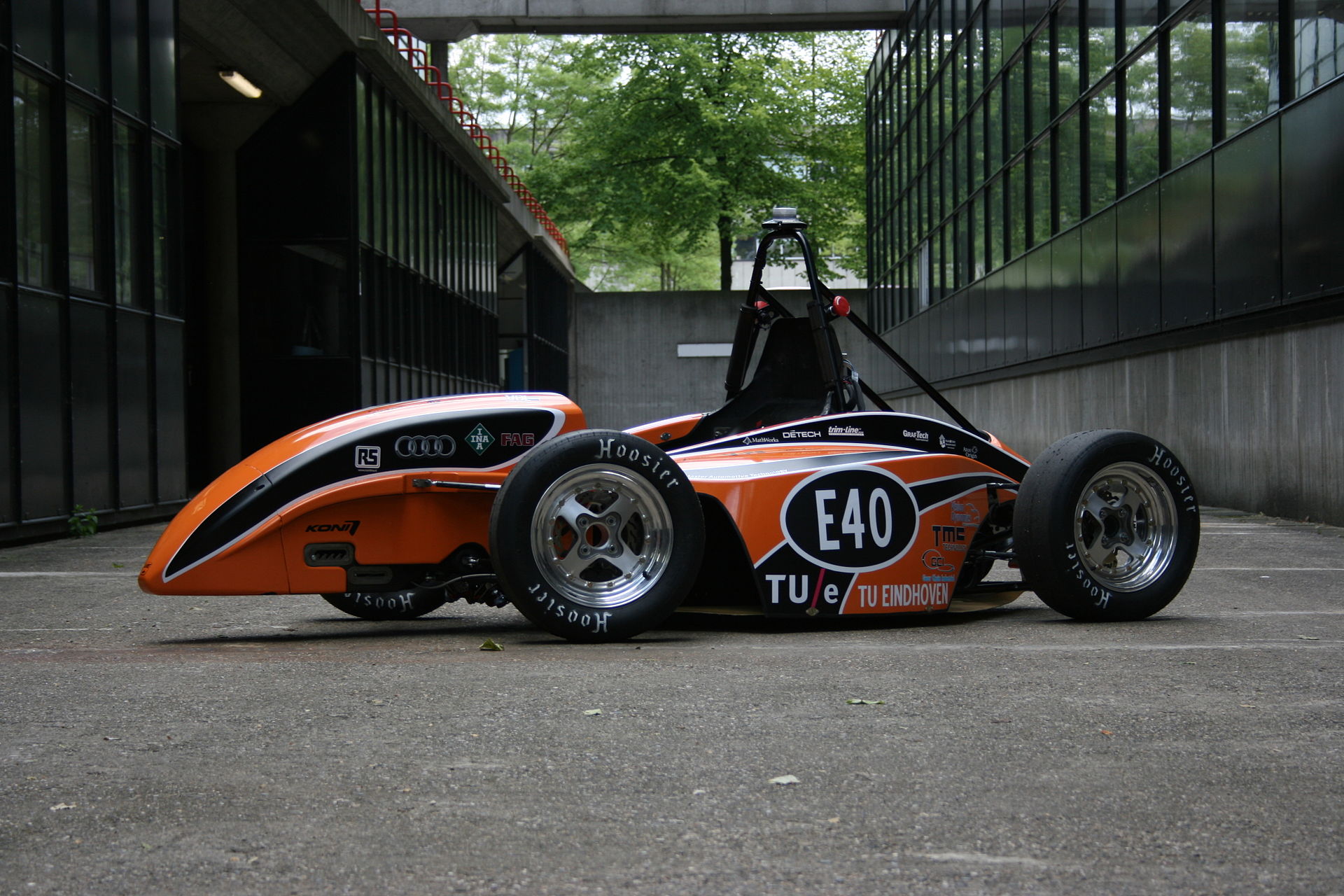
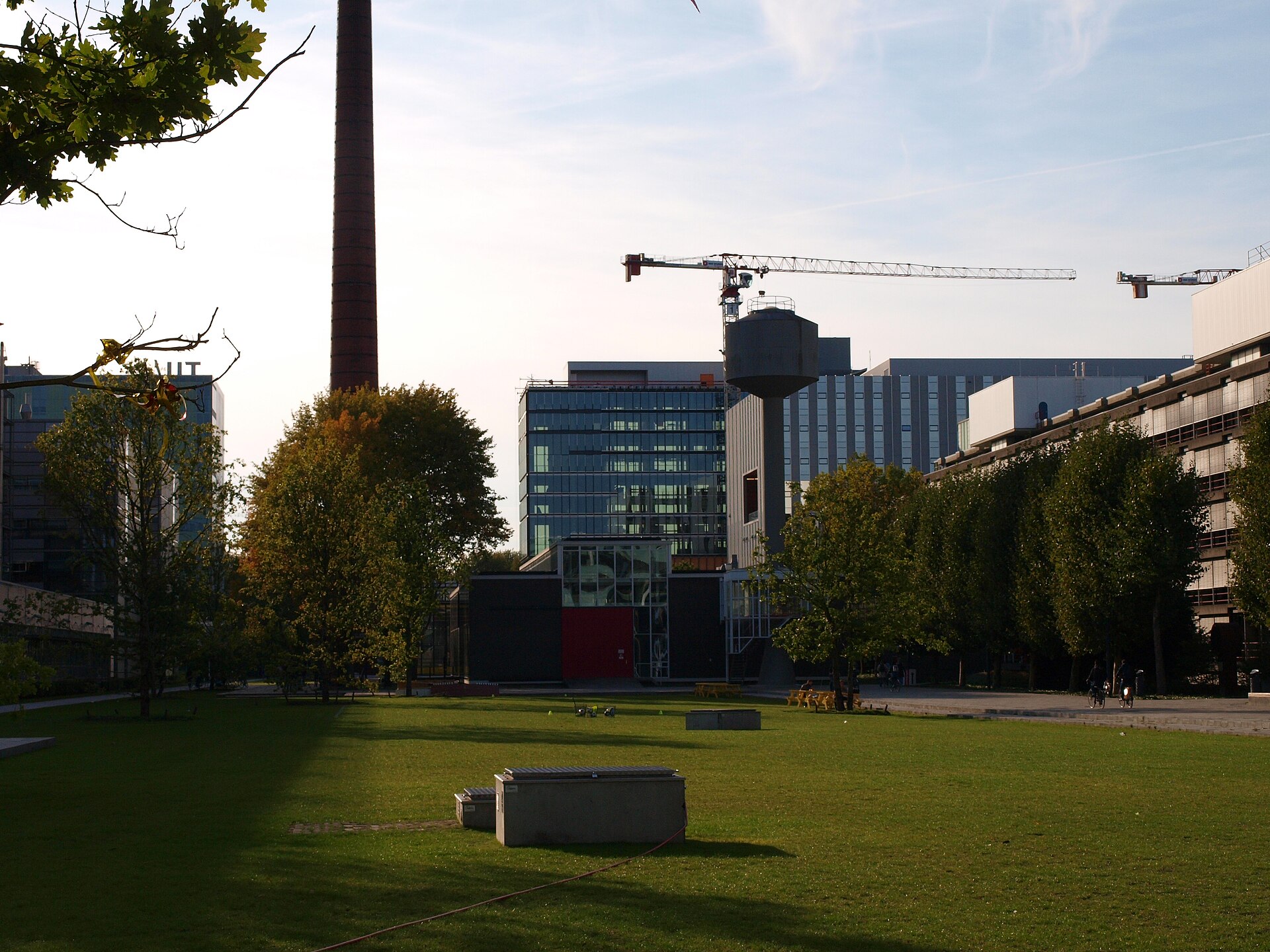
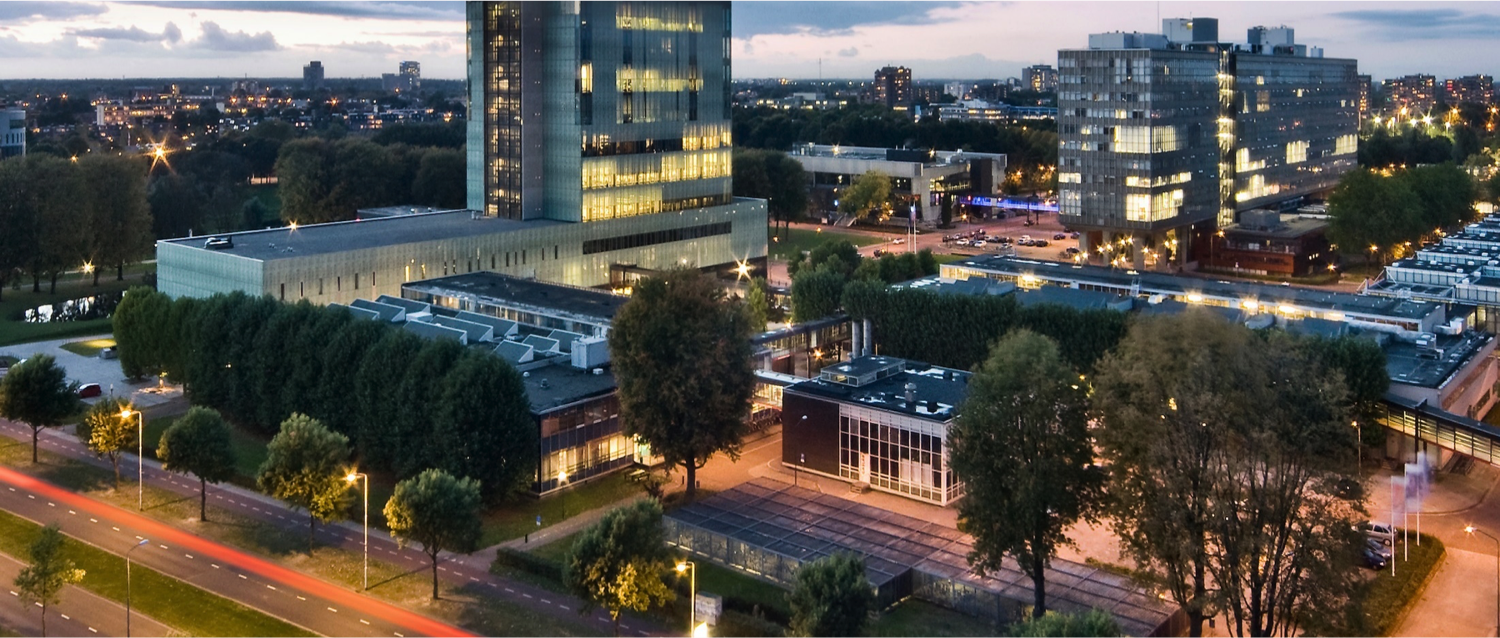
Eindhoven University of Technology — campus in pictures
Real, freely-licensed photographs of the campus (via Wikimedia Commons).


Why TU/e — Brainport, Innovation & Real-World Impact
TU/e is not a generalist research university. It is a focused, highly collaborative technical university where every student engages with real industry problems from day one. Ranked #130 globally by QS and #7 in the Netherlands, it is the most industry-connected technical university in the Benelux region.
TU/e Acceptance Rate & Academic Profile
Stats
Profile Stats
Rea Vs Rd
TU/e Admissions Requirements — Grades, English & Subject Prerequisites
- IB HL Mathematics AA strongly expected for engineering programmes
- A-Levels: AAB–AAA in relevant subjects
- Subject relevance matters as much as overall grades
- Mathematics and physics are non-negotiable for most programmes
- IELTS Academic: 6.5 overall minimum
- TOEFL iBT: 90 minimum
- Duolingo English Test: 120 minimum
- Native speakers and English-medium graduates may be exempt
- Engineering programmes: advanced maths + physics required
- Data Science / CS: strong computing and mathematics background
- Applied Physics: HL Physics + HL Maths AA (IB) or equivalent
- Industrial Design: portfolio of design or creative project work
TU/e Application Components — Studielink, Motivation Letter & Documents
TU/e uses Studielink (bachelor's) and a dedicated portal (master's) — not Common App or UCAS. Every component below is part of a complete TU/e application with strategic notes on each.
TU/e Motivation Letter — Writing the Perfect Application
Tips
Prompts
What TU/e Admissions Committees Are Looking For
TU/e uses an academic and motivational evaluation process. Every application is assessed on programme fit, academic preparation, and the quality of the written motivation. Understanding what each reviewer is looking for is the foundation of a strong application strategy.
TU/e Financial Aid & Scholarships for International Students
TU/e's financial aid landscape for international students is primarily scholarship-based. The institutional TU/e Excellence Scholarship, the Dutch government's Holland Scholarship, and corporate awards from partners like ASML are the primary funding routes for non-EU applicants. EU/EEA students additionally have access to DUO student finance.
Tuition figures are annual estimates converted from EUR. Exchange rates fluctuate — verify current EUR amounts on the official TU/e finance page before planning your budget.
Stats
Contribution Tiers
| Note | Range | Percent | Percent Value |
|---|---|---|---|
| Eligible for DUO student finance (grants, loans, travel card) | EU/EEA students | Low tuition | 90 |
| TU/e Excellence Scholarship + Holland Scholarship + external awards | Non-EU students (merit) | Scholarship-based | 40 |
| Full institutional tuition — plan for self-funding | Non-EU (no scholarship) | Self-funded | 10 |
Key Dates
Advantages
- Non-EU students should apply as early as possible — visa processing (MVV) takes several months
- The TU/e Excellence Scholarship deadline is 1 February — applying early signals commitment
- Early applications allow TU/e to request missing documents with sufficient time
- Competitive MSc programmes (Data Science, AI, EE) may close earlier than general deadlines
- A conditional offer received early gives you time to arrange housing, which is competitive in Eindhoven
Disadvantages
- No early-decision advantage in the US sense — TU/e does not offer a binding early route
- Waiting for final grades (if still in Year 13) means applying with predicted grades only
- Popular programmes may fill before the general deadline — early application reduces this risk
- Scholarship competition is high regardless of when you apply within the window
- Late applications for numerus fixus programmes are simply rejected — there is no waitlist
TU/e Admissions Process — Interviews & Selection Assessments
Unlike Oxford, Cambridge, or many US universities, TU/e does not conduct alumni or admissions interviews for the majority of applicants. The written application — your motivation letter, transcripts, and CV — carries the full evaluative weight. The exception is Industrial Design, which may include a portfolio review or selection procedure.
Meta
Questions
Campus Life & Housing at TU/e
TU/e does not have a residential college system like Oxford or Harvard. Students live independently in Eindhoven's private market or SSHXL-managed student housing. The campus is urban and close to the city centre — most students cycle or take public transport.
Houses
Lottery Steps
- International students should apply for housing through TU/e's international services office as early as possible — ideally when you receive your conditional offer
- SSHXL (student housing provider) has limited on-campus and near-campus units — register early at sshxl.nl
- Eindhoven is significantly more affordable than Amsterdam, The Hague, or Utrecht — expect €400–€700/month for a student room
- The TU/e campus has extensive facilities: maker spaces, sports centre, libraries, project rooms, and cafés
- International students receive dedicated onboarding support including Orientation Week — a structured introduction to campus life, Dutch culture, and academic systems
TU/e Departments & Programmes
- {"label":"Programme type","value":"BSc + MSc"}
- {"label":"Key tracks (MSc)","value":"Semiconductor Technology, Signal Processing, High-Tech Systems, Power Electronics"}
- {"label":"Industry partner","value":"ASML, NXP, Philips"}
- {"label":"QS subject ranking","value":"Top 100 globally"}
- {"label":"BSc options","value":"Computer Science and Engineering"}
- {"label":"MSc options","value":"Data Science and AI, Computer Science and Engineering"}
- {"label":"Key skills","value":"Algorithms, ML, software systems, data engineering"}
- {"label":"Admission competition","value":"High — apply early"}
- {"label":"Programme type","value":"BSc + MSc"}
- {"label":"Key tracks (MSc)","value":"Automotive, Manufacturing Systems, Control Systems, Solid Mechanics"}
- {"label":"Industry partner","value":"DAF Trucks, ASML, Siemens"}
- {"label":"Focus","value":"Applied systems engineering"}
- {"label":"Programme type","value":"BSc + MSc"}
- {"label":"MSc tracks","value":"6 specialisations including Plasma Physics, Photonics, Nano"}
- {"label":"Academic entry bar","value":"Highest at TU/e"}
- {"label":"Research intensity","value":"Very high — many graduates pursue PhD"}
- {"label":"Programme type","value":"BSc + MSc"}
- {"label":"Unique requirement","value":"Portfolio submission"}
- {"label":"Philosophy","value":"Design for human-technology interaction"}
- {"label":"Distinct from","value":"Art school or pure engineering — a hybrid discipline"}
- {"label":"BME partners","value":"Catharina Hospital, Philips Healthcare"}
- {"label":"ChE focus","value":"Process technology, materials, sustainability"}
- {"label":"Combined entry","value":"Maths + Chemistry essential for ChE; Maths + Biology/Physics for BME"}
- {"label":"Programme type","value":"BSc + MSc"}
Research & Extracurricular Opportunities at TU/e
Career Outcomes & TU/e Alumni Network
TU/e graduates enter some of the most technically demanding and best-compensated roles in European industry. The Brainport ecosystem is not merely a marketing phrase — it is a dense, active network of recruiters, research partners, and alumni who actively support TU/e students transitioning into careers.
Stats
Categories
Our TU/e Admissions Track Record & Student Success Stories
Faqs
Are all programmes at TU/e taught in English?+
All master's programmes are taught entirely in English. Bachelor's programmes are predominantly in English, though some foundational courses may have Dutch components. Confirm the language of instruction for your specific programme on the TU/e Education Guide.
Do I need to speak Dutch to study at TU/e?+
No. English is sufficient for all master's studies and for most bachelor's tracks. However, learning basic Dutch will significantly improve your day-to-day life in Eindhoven and make you more competitive in the Dutch job market after graduation.
Is TU/e a good fit if I want to work in semiconductors or deep-tech?+
Exceptionally so. TU/e is arguably the best-positioned university in Europe for students targeting the semiconductor and high-tech hardware industries, given its location adjacent to ASML and its programmes in Electrical Engineering, Applied Physics, and Mechanical Engineering.
What is the binding study recommendation (BSA)?+
At the end of the first bachelor's year, students who have not earned at least 45 ECTS credits receive a negative BSA and cannot continue in the programme (or re-enroll for three years). This is a Dutch system standard — treat your first year seriously.
Is there a tuition difference between EU and non-EU students?+
Yes. EU/EEA students pay a statutory fee set by the Dutch government, which is much lower than the non-EU institutional rate. Non-EU students pay approximately $20,090 per year (USD equivalent). Verify current EUR amounts on the TU/e finance page.
What is Studielink?+
Studielink is the Netherlands' central online enrolment platform for all Dutch higher-education institutions. All bachelor's applicants register via Studielink. Master's applicants use TU/e's own application portal.
How important is my motivation letter for TU/e admission?+
Very important — especially for master's programmes, where it is often the only written piece you submit. The motivation letter is where you demonstrate programme fit, academic preparation, and genuine interest in TU/e's specific research and industry environment.
Can I transfer into TU/e from another university?+
TU/e does not have a formal lateral transfer route analogous to US transfer admission. International students with previous university study typically apply for a master's programme once they have completed a relevant bachelor's degree, or in some cases for a pre-master's bridging track.
Book a Free TU/e Admissions Strategy Session
In 60 minutes our TU/e admissions specialists will evaluate your academic profile, identify your programme fit, develop your motivation letter strategy, and map out the scholarship and visa timeline for a September start.
- No commitment required
- Netherlands admissions specialists with TU/e knowledge
- Personalised motivation letter strategy — not generic advice
TU/e Academic Requirements
TU/e Academic Requirements — The Honest Breakdown for International Students
What GPA, qualifications, and academic profile does TU/e expect? And what does TU/e's evaluation process mean for students from IB, A-Level, and other international curricula?
GPA & Academic Standing
TU/e and GPA — What the Requirements Actually Mean
TU/e publishes a minimum GPA of 3.2 on the US scale (or international equivalent) for most programmes. In practice, for competitive master's programmes — particularly Data Science, AI, and Electrical Engineering — admitted students are significantly above this floor.
Meeting the minimum GPA is necessary but not sufficient for the most competitive programmes. The relevance of your coursework to the programme — specifically your mathematics and physics preparation — matters as much as the overall grade average.
Academic Context
Class Rank and School Context — How TU/e Reads International Academic Records
TU/e evaluates every application in the context of the student's educational system. The admissions office is experienced at reading IB, A-Level, German Abitur, French Baccalaureate, Indian CBSE, and dozens of other national qualifications through the Nuffic equivalency framework.
SAT — Not Required
SAT Scores at TU/e — Not Part of the Process
TU/e does not require or evaluate SAT scores. The SAT is a US-specific college admissions test with no role in the Dutch university admissions system. If you have taken the SAT, including it will not strengthen your TU/e application.
| Label | Score | Percent |
|---|---|---|
| SAT required by TU/e | No | 0 |
| SAT considered in evaluation | No | 0 |
ACT — Not Required
ACT Scores at TU/e — Understanding the Dutch System Difference
TU/e does not require or consider ACT scores. Like the SAT, the ACT is specific to US university admissions and has no role in the Dutch higher-education entry process.
Metrics
Comparison Cards
Test Policy
TU/e Test Policy — What 'Optional' Actually Means Here
TU/e's test policy is 'optional' specifically for US-style standardised tests (SAT, ACT, GRE) — because these tests are simply not part of the Dutch admissions system, not because TU/e has made a policy choice analogous to US universities' test-optional policies. The relevant mandatory test is the English language proficiency exam.
Submit Items
Withhold Items
International Qualifications
A-Levels and IB at TU/e — Specific Benchmarks and Subject Requirements
- {"label":"Minimum overall points","value":"32"}
- {"label":"HL Mathematics expected","value":"Analysis & Approaches (not AI) for engineering/physics/CS"}
- {"label":"HL Science","value":"Physics (EE, Applied Physics, ME), Chemistry (ChE, BME)"}
- {"label":"Extended Essay","value":"Can be mentioned in motivation letter as evidence of research capability"}
- {"label":"Typical competitive range","value":"AAB to AAA in relevant subjects"}
- {"label":"Essential subjects (Engineering)","value":"Mathematics + Physics"}
- {"label":"Essential subjects (ChE/BME)","value":"Mathematics + Chemistry + Biology/Physics"}
- {"label":"Further Mathematics","value":"Strongly recommended for Applied Physics applicants"}
Advanced Placement
AP Courses at TU/e — What Counts and How to Use Them
TU/e does not formally evaluate AP scores as a primary admission criterion — the Dutch system uses national leaving qualifications. However, for students from the US curriculum or international schools offering AP courses, strong AP scores in relevant subjects can be referenced as supplementary evidence in the motivation letter.
Academic Rigour
Rigour of Secondary School Record — TU/e's Core Academic Filter
TU/e assesses the rigour of your secondary school record, but in a different way from US universities. The critical dimension is not class rank or the number of advanced courses taken — it is whether you studied mathematics and physics at the highest available level in your system and performed well in them.
Taking HL Mathematics AA and HL Physics (IB), or A-Level Further Mathematics and Physics, and performing strongly in them — is the single most important signal for TU/e engineering admissions.
Programme Preparation
Mathematics and Science Preparation — What TU/e Expects by Programme
TU/e is a technical university with specialised programmes. Academic preparation must match the specific programme — there is no general 'TU/e profile'. The following outlines what each major programme area expects from applicants' secondary or undergraduate education.
Language Requirements
English Language Requirements for International TU/e Applicants
TU/e requires proof of English proficiency for all non-exempt applicants. Since all master's and most bachelor's programmes are taught in English, this is a genuine gate requirement — not a formality.
The English language proficiency requirement is a binary gate, not a ranking factor. Meeting the minimum (IELTS 6.5, TOEFL 90, Duolingo 120) allows your application to proceed. Students who perform only at the minimum may struggle in an all-English technical environment where lectures, group projects, and assessments are conducted at pace. Aim above the minimum.
By Programme
Academic Requirements by Programme — What Different Paths Expect
TU/e admits students to specific programmes — not to a general university intake. Every programme has its own entry requirements. The table below summarises the key academic signals for each major programme area.
| Signals | Expectation | Concentration |
|---|---|---|
| HL Maths AA (IB) or A-Level Further Maths; Physics Olympiad participation | IB HL Maths AA + HL Physics / A-Level Maths + Physics | Electrical Engineering |
| HL Maths AA; programming portfolio; algorithmic competition (competitive programming) | HL Maths AA + computing background | Computer Science & Engineering |
| HL Maths AA; statistics/data projects; ML/AI coursework | Strong maths + programming background (MSc) | Data Science and AI |
| HL Maths AA + HL Physics + HL Chemistry; physics olympiad; research interest | Highest maths + physics at secondary level | Applied Physics |
| HL Maths + HL Physics; engineering design projects; robotics/mechanics competition | HL Maths + HL Physics | Mechanical Engineering |
| Design portfolio; interdisciplinary project work; creative-technical balance | Portfolio + maths (lower bar than other TU/e programmes) | Industrial Design |
| HL Chemistry + Maths + Biology/Physics; BSc in chemistry/engineering for MSc | Chemistry + Mathematics as core subjects | Chemical Engineering / BME |
International Systems
TU/e and International Education Systems — How Your Curriculum Is Evaluated
Roadmap
Building an Academic Profile for TU/e — What to Do at Each Stage
- Commit to the highest available mathematics and physics tracks in your secondary system.
- If choosing IB, plan from the start to take HL Mathematics Analysis & Approaches and at least one HL science.
- Explore engineering and science through maker projects, robotics clubs, or school science competitions.
- Participate in a national or international olympiad (Physics, Mathematics, Chemistry).
- Join or start a school engineering project — robotics, solar, automation.
- Begin researching Dutch universities and the Nuffic equivalency for your qualification.
- If taking IB: confirm HL Maths AA and HL Physics/Chemistry selections are finalised.
- Your final-year grades in mathematics and physics are the most critical documents in your application.
- Sit your IELTS or TOEFL by November or December of your final year — allow time for results to arrive before the deadline.
- Begin researching TU/e programme tracks specifically: which MSc track, which research groups, which student teams.
- Start your motivation letter 3–4 months before the deadline — a strong motivation letter requires multiple drafts.
- Non-EU students should apply as early as the portal opens. Visa (MVV) processing takes 3–4 months after a conditional offer.
- Submit the TU/e Excellence Scholarship application by 1 February if eligible.
Common Pitfalls
Academic Mistakes That Cost TU/e Applications — And How to Avoid Them
Real Outcomes
What Academic Profiles TU/e-Admitted Students Had
The following profiles represent the academic backgrounds of students Tychr has helped gain TU/e admission. They illustrate the range of academic preparation that succeeds — and what made each application compelling beyond grades.
Faqs
What is the minimum IB score for TU/e?+
The stated minimum is 32 IB points. For competitive master's programmes and popular bachelor's tracks, applicants should aim significantly above this floor. Subject composition matters as much as total points — HL Maths AA is expected for engineering and physics programmes.
Does TU/e require SAT or ACT scores?+
No. SAT and ACT are not required, not accepted, and not evaluated at TU/e. The Dutch admissions system uses national leaving qualifications (IB, A-Levels, Abitur, national baccalaureate) and English language tests (IELTS/TOEFL/Duolingo).
Is IB Mathematics Applications & Interpretation accepted for TU/e engineering programmes?+
No — or at best, it is a significant weakness. TU/e engineering, physics, and data science programmes expect HL Mathematics Analysis & Approaches. Students who have taken Maths AI instead of AA should discuss this with TU/e's admissions office and may need a pre-master's bridging track.
What A-Level grades do I need for TU/e?+
Typically AAB to AAA in directly relevant subjects (Mathematics, Physics for engineering; Chemistry for chemical engineering). The specific grade requirements vary by programme — check the programme-specific admissions page.
Does TU/e evaluate predicted grades?+
Yes — particularly for applicants who are still completing their secondary education. TU/e may issue conditional offers based on predicted grades, with the condition that you achieve the required results before enrolment is confirmed.
Cost & Scholarships
TU/e May Cost Less Than You Expect — Here's the Full Picture.
The Netherlands offers strong value in European technical education. TU/e's non-EU tuition is substantially lower than UK or Australian equivalents of comparable ranking — and the Brainport job market gives graduates a realistic path to recouping that investment quickly.
Cost Transparency
What TU/e Actually Costs — The Full Annual Figure
Eindhoven is one of the Netherlands' most affordable cities for students. Compared to Amsterdam, Utrecht, or The Hague, housing costs are significantly lower — a meaningful factor when living costs are the largest variable in a Dutch student budget. EU/EEA students pay a statutory tuition fee set annually by the Dutch government, which is substantially lower than the non-EU institutional rate.
Aid Landscape
TU/e Financial Aid Policy — What Is and Is Not Available to International Students
TU/e does not operate a Harvard-style need-blind, full-need endowment-funded aid programme for international students. There is no general need-based grant that automatically reduces tuition for non-EU applicants. The primary funding routes for non-EU students are institutional merit scholarships, the Dutch government's Holland Scholarship, and corporate partner awards.
Institutional Context
Why TU/e Is More Affordable Than Its Ranking Suggests
Scholarship Application Process
Applying for TU/e Financial Aid — The Process Step by Step
TU/e scholarships are not automatic. Each requires a separate application. The process below covers the primary routes for non-EU students.
- Review TU/e's scholarship page
- Check Holland Scholarship eligibility (non-EEA students)
- Review ASML Technology Scholarship requirements
- Deadline: 1 February for September entry
- Eligible programmes: Applied Physics, Electrical Engineering, Mechanical Engineering, Mathematics & Computer Science
- Submit through TU/e's scholarship portal alongside your admission application
- Available to non-EEA students
- Applied through TU/e — not directly through the Dutch government
- Check the current award amount on the Nuffic website
- CONACYT (Mexico), COLFUTURO (Colombia)
- IAEA Marie Skłodowska-Curie Fellowship (female students in nuclear-related fields)
- ASML Technology Scholarship (check eligibility and deadlines)
- Your home government's scholarship programme for study in the Netherlands
- TU/e fees are denominated in EUR
- Build a 10–15% currency buffer if your home currency is volatile against the EUR
- Open a Dutch bank account (ING Student or ABN AMRO Student) as early as possible after arrival
International Students — Aid Reality
TU/e Financial Aid for International Students — How It Works
Financial aid for international students at TU/e is primarily merit-based rather than need-based. Non-EU students should plan their budgets around the full institutional tuition rate and Eindhoven living costs, then pursue scholarships as a reduction on that baseline.
Scholarship Overview
TU/e Scholarship Amounts — What's Available and for Whom
Available Scholarships and Typical Awards
Award amounts are subject to change annually. Verify current figures at www.tue.nl/en/education/become-a-tue-student/scholarships-and-grants and www.nuffic.nl before financial planning.
No published income-band aid tables exist for TU/e — unlike Harvard, TU/e does not operate a universal need-based formula. Scholarship amounts are not publicly specified in full detail. Always check the official TU/e scholarships page and the Nuffic website for current award amounts and eligibility.
| Grant | Income | Contribution |
|---|---|---|
| Not confirmed — check official page | TU/e Excellence Scholarship (merit) | Non-EU MSc students in eligible programmes |
| One-time grant (check Nuffic for amount) | Holland Scholarship | Non-EEA bachelor's and master's students |
| Not publicly specified — corporate award | ASML Technology Scholarship | Outstanding MSc students in EE, ME, Applied Physics |
| Varies by programme and country | Country-specific (CONACYT, COLFUTURO, IAEA) | Country-eligible students |
| Varies by income and residency | DUO Student Finance | EU/EEA students with Netherlands residency |
Table Headers
Merit vs. Need
TU/e Scholarships — Merit-Based, Not Need-Based
TU/e's institutional scholarship programme is merit-based, not need-based. Unlike Harvard's endowment-driven need-blind model, TU/e awards its primary institutional scholarship — the Excellence Scholarship — based on academic achievement and programme fit, not financial circumstances.
External Funding
External Scholarships for TU/e Students
Beyond TU/e's institutional scholarships, several external funding bodies support international students at TU/e. These are worth researching in parallel with your TU/e application.
Loans and Work Rights
Student Loans and Work Rights at TU/e — What Non-EU Students Need to Know
TU/e does not issue student loans. The Dutch DUO student finance scheme provides loans to eligible students, but non-EU students are generally not eligible unless they hold a specific residency status. Non-EU international students who do not receive a scholarship must self-fund or seek external loans from their home country.
Working While Studying
Working Alongside Study at TU/e — Rights, Limits, and Opportunities
Unlike US universities with formal work-study programmes integrated into financial aid packages, TU/e does not have a structured on-campus employment scheme. Non-EU students who want to work during their studies must find employment independently — but Dutch labour law grants meaningful work rights to student visa holders.
- Student assistant (TA or research assistant) positions in TU/e departments — advertised through TU/e's internal jobs board
- Research assistant roles in TU/e labs — often arranged informally through supervisor relationships
- Student team positions (Solar Team Eindhoven, Team FAST) — unpaid but exceptional CV value
- Part-time work in Eindhoven's service and retail sector — independent of TU/e but legally permitted
- Internships with Brainport companies (ASML, NXP, Philips) — often embedded in master's programmes
European Benchmarking
TU/e vs. Peer European Technical Universities — Financial Aid Comparison
| Policy | School | No Loans | Typical Cost |
|---|---|---|---|
| Merit scholarships + Holland Scholarship + DUO (EU) | TU/e (Eindhoven) | DUO for EU/EEA | ~$20,090/yr (non-EU) |
| Merit scholarships + DUO + EIT scholarships | TU Delft | DUO for EU/EEA | ~$20,000/yr (non-EU) |
| Merit scholarships + KTH Excellence | KTH Royal Institute of Technology (Sweden) | Swedish CSN loans (Swedish citizens) | ~€18,000–22,000/yr (non-EU) |
| DAAD grants + Germany state scholarships | TU Munich | BAföG for German/EU students | ~€1,500–3,000/yr (low tuition) |
| Imperial Bursaries + UK Student Finance (domestic) | Imperial College London | UK Student Finance (domestic) | ~£37,900/yr (international) |
| ETH Excellence Scholarship + Swiss loans | ETH Zurich | Swiss loans (Swiss citizens) | ~CHF 1,500/yr (low tuition) |
True Cost Analysis
TU/e vs. Alternatives — What You Actually Pay Over the Programme
TU/e offers a QS top-150 technical education at approximately one-quarter the cost of Imperial College London and at roughly half the typical cost of a comparable programme in Australia. For students focused on semiconductor, deep-tech, and engineering careers, the Eindhoven location also provides unrivalled industry access that no ranking table captures.
| Policy | School | Contribution | Four Year Cost |
|---|---|---|---|
| Non-EU institutional rate | TU/e (Eindhoven) | ~$20,090/yr | ~$80,360 (BSc) / ~$40,180 (2yr MSc) |
| Non-EU international rate | TU Delft | ~$20,000/yr | ~$80,000 (BSc) / ~$40,000 (2yr MSc) |
| International student rate | Imperial College London | ~£37,900/yr | ~£151,600 (4yr MEng) |
| Low tuition + high living cost | ETH Zurich | ~CHF 1,500/yr + high living | ~CHF 100,000+ total |
| Low tuition, German-language | TU Munich | ~€1,500–3,000/yr | ~€6,000–12,000 (tuition only) |
| International rate | University of Melbourne (Engineering) | ~AUD 48,000/yr | ~AUD 192,000 |
Scholarship Appeals
Appealing a TU/e Scholarship Decision — When and How
TU/e scholarship decisions are made by the scholarship committee based on the submitted application. If you believe your scholarship application was assessed incorrectly, or if your circumstances have changed between application and enrolment, the following steps apply.
TU/e's scholarship pool is limited. Appeals are most likely to succeed when they are based on a documented error in the assessment process or a significant change in circumstances (such as a major change in family financial situation or an error in document processing). Appeals based on general disagreement with the committee's judgement are rarely successful.
How To Appeal
- Contact TU/e's scholarship administration team directly — find the contact on the official scholarships page
- Submit a written appeal with a clear explanation of the grounds (error in processing, change in circumstances, documentation gap)
- Provide supporting documentation for any changed circumstance
- Allow 3–4 weeks for the committee to review and respond
When To Appeal
- Your application contained a document error that misrepresented your academic profile
- Your circumstances have changed significantly since the scholarship application (e.g., family income change, medical expense)
- You believe the assessment did not correctly evaluate your eligibility against the stated criteria
- You have received a significantly more favourable scholarship offer from a comparable institution that TU/e should be aware of
Timeline & Planning
Planning Your TU/e Budget and Scholarships — What to Do and When
Application Writing Strategy
TU/e Application Writing — Everything You Need to Know to Write It Well.
A complete guide to TU/e's written application requirements, what the motivation letter needs to accomplish, how the admissions committee evaluates written work, and the specific strategies that turn a qualified application into a compelling one.
Application System Overview
How TU/e Applications Work — The Full Picture
TU/e does not use the US Common Application, UCAS, or any similar centralised system beyond Studielink for bachelor's enrolment. The written component is the motivation letter — a free-form document of approximately 500–800 words that is the primary way the admissions committee gets to know you as an applicant beyond your grades.
Optional Items
Required Items
The Motivation Letter
The Motivation Letter at TU/e — What It Needs to Accomplish
TU/e's application relies more heavily on the motivation letter than most applicants realise. Where a UCAS personal statement is a general document submitted to multiple universities, TU/e expects a motivation letter that is specific to this programme at this university. A letter that could have been sent to any technical university is a red flag to Dutch admissions readers.
The motivation letter must be specific to TU/e and to the specific programme — not to 'technical universities in the Netherlands' or 'engineering in Europe'. The admissions committee reads hundreds of letters; the ones that stand out name specific TU/e curriculum tracks, faculty research groups, student teams, or industry partners and explain their relevance to the applicant's goals.
Tired Of List
- Generic statements about 'passion for technology' without any specific connection to TU/e
- Letters that simply restate what is already in the transcript or CV
- Future goals described as 'making the world a better place through innovation'
- Name-dropping ASML, Philips, or Brainport without explaining specific relevance to the chosen programme
Looking For List
- A specific academic or professional experience that connects to the programme's content
- Evidence that the applicant has researched TU/e's curriculum tracks, research groups, or student teams
- A coherent narrative connecting past preparation, current application, and future direction
- Concrete future goals anchored in the real Eindhoven/Brainport employment context
Topic Strategy
Choosing Your Motivation Letter Focus — The Decision That Shapes Everything
The motivation letter's opening and central focus are the most important creative decisions in your TU/e application. A generic focus, well-written, is less effective than a specific and genuinely motivated focus, imperfectly written.
Criteria
Caution Topics
- Opening with a famous quote or a general statement about 'the importance of technology in our world'
- Describing generic work experience that has no clear connection to the target programme
- Any topic where the primary goal is to impress rather than to demonstrate genuine programme fit
- A motivation that applies equally to five different universities — admissions readers identify these immediately
Supporting Documents Strategy
TU/e Application Components — What to Write and How to Approach Each
Beyond the motivation letter, these supporting documents complete your TU/e application. Each one should reinforce the central narrative: that you are academically prepared, genuinely motivated, and specifically suited to this programme at TU/e.
Writing Process
How to Write Your TU/e Motivation Letter — A Practical Approach
Additional Considerations
Portfolio, Programme Selection, and Pre-Master's Bridging
Programme Choice
Choosing the Right TU/e Programme — Why It Matters More Than You Think
Because TU/e assesses programme fit rigorously, applying to the wrong programme — even one adjacent in the catalogue — can result in rejection despite strong academic credentials. The admissions committee assesses whether your background directly prepares you for the programme's Year 1 content. A Mechanical Engineering bachelor's graduate applying for the MSc in Electrical Engineering without relevant coursework in electronics will be rejected regardless of overall GPA.
Evaluation Criteria
How TU/e Evaluates Your Motivation Letter
TU/e's admissions committee evaluates the motivation letter against three primary criteria: academic fit (does your background prepare you for the programme's demands?), motivation specificity (do you demonstrate genuine knowledge of this programme at TU/e?), and future direction (are your goals coherent, realistic, and connected to what TU/e enables?).
What Works
What Makes a TU/e Motivation Letter Stand Out
Avoid These Mistakes
TU/e Motivation Letter Pitfalls — The Most Common Failures
- Writing a generic letter that could apply to any European technical university — Dutch admissions readers are experienced at identifying copy-paste applications.
- Failing to mention your specific programme track — applying for 'Master of Electrical Engineering' without referencing which of the five tracks you intend to follow signals lack of preparation.
- Repeating your CV verbatim — the motivation letter should add narrative and context, not restate your academic record.
- Being vague about why TU/e specifically — avoid 'world-class research' and 'excellent faculty' without naming specific groups, labs, or programmes.
- Opening with a famous quote or dictionary definition — Dutch academic culture values directness and intellectual substance.
- Submitting a letter that exceeds two pages without strong reason — get to the point within 500–800 words.
- Missing the application deadline by treating it as flexible — for popular programmes, late submissions may not be considered regardless of academic strength.
- Misspelling or misusing the university's name — TU/e uses the slash-e format officially. 'TUE' or 'TU Eindhoven' are informal; 'TU/e' or 'Eindhoven University of Technology' are formal.
- Writing your motivation letter in Dutch when the programme is taught in English — this does not give an advantage and may create an unfavourable impression.
Writing Timeline
TU/e Motivation Letter Writing Process — Start to Submit
Tychr's Role
How Tychr Coaches TU/e Motivation Letters
The Netherlands application system is fundamentally different from the US and UK systems that most international students are familiar with. Tychr's TU/e specialists provide structured support through the motivation letter process — from initial brainstorming to final submission.
Illustrative Approaches
What Effective TU/e Motivation Letters Look Like
The following are illustrative approaches — not templates. Every motivation letter must be specific to the individual applicant's background and goals.
| Programme | Approach | Why_it_works |
|---|---|---|
| MSc Electrical Engineering — Semiconductor Technology Track | Opens with a specific experience: troubleshooting a power electronics failure in a university lab project that led the applicant to research EUV lithography and its reliance on precision power management. Connects this to TU/e's Electrical Energy Systems research group. Names the Semiconductor Technology track explicitly. Closes with a specific goal: contributing to ASML's EUV system design team. | Specific opening, specific TU/e reference, specific career goal. The committee can immediately see why this applicant, at this university, in this track, makes sense. |
| MSc Data Science and AI | Opens with a data pipeline failure in an undergraduate research project that caused a 48-hour delay — and the diagnostic process that followed. Connects the experience to an interest in robust machine learning infrastructure. References TU/e's Data Mining and Machine Learning group and the Applied AI MSc track. States a goal of joining a Brainport AI startup within 3 years of graduation. | Problem-anchored opening that reveals both technical capability and intellectual curiosity. Future goal is specific and plausibly Eindhoven-connected. |
International Applicant Advice
TU/e Application Writing — Advice Specifically for International Students
International students often bring strong academic profiles to TU/e applications but struggle with the motivation letter precisely because the Netherlands system is so different from what they are used to. The following are the most important things to understand.
Faqs
Does TU/e require a Common App personal statement or UCAS personal statement?+
No. TU/e does not use Common App or UCAS. The primary written component is the motivation letter submitted directly through Studielink (bachelor's) or TU/e's master's application portal.
How long should my motivation letter be?+
Typically 500–800 words — approximately one to two pages. Some programmes specify a word limit; check the programme-specific requirements. Quality of argument beats length every time.
Should my motivation letter be in English or Dutch?+
Since most TU/e programmes are taught in English, write your motivation letter in English unless a programme explicitly requires Dutch.
Are there interviews in the TU/e admissions process?+
Most programmes do not require an interview. Industrial Design is an exception and may include a portfolio review or selection assessment. Check your specific programme's admission procedure.
Can I apply to multiple TU/e programmes simultaneously?+
Via Studielink you can register at multiple Dutch universities simultaneously. For TU/e master's programmes, you may apply to more than one, but each application requires its own tailored motivation letter.
What happens after I submit my application?+
TU/e will review your documents and issue either a conditional admission offer (contingent on final grades or English test score), an unconditional offer (if all documents are complete), or a rejection. Conditional offers typically require you to submit final grade evidence once available.
Is there a portfolio requirement for TU/e programmes?+
Only for Industrial Design programmes (bachelor's and master's). All other programmes do not require a portfolio.
Does TU/e read the motivation letter carefully or is it a formality?+
The motivation letter is not a formality — particularly at master's level. For popular or competitive programmes, it is often the primary differentiator between applicants with similar academic profiles. Invest in it accordingly.
Courses — schools, degrees & intake
15 degrees across 9 groupings.
Department of Mathematics and Computer Science (M&CS) · 3 degrees
Applied Mathematics
Computer Science and Engineering
Data Science
Department of Applied Physics and Science Education (APSE) · 1 degrees
Applied Physics
Department of the Built Environment (BE) · 1 degrees
Architecture, Urbanism and Building Sciences
Department of Mechanical Engineering (ME) · 2 degrees
Mechanical Engineering
Automotive Technology
Department of Biomedical Engineering (BME) · 2 degrees
Biomedical Engineering
Medical Sciences and Technology
Department of Chemical Engineering and Chemistry (CE&C) · 1 degrees
Chemical Engineering and Chemistry
Department of Electrical Engineering (EE) · 1 degrees
Electrical Engineering
Department of Industrial Design (ID) · 1 degrees
Industrial Design
Department of Industrial Engineering and Innovation Sciences (IE&IS) · 3 degrees
Industrial Engineering
Sustainable Innovation
Psychology & Technology
Want your real chances at Eindhoven University of Technology?
Create a free TYCHR account for your personalised admit-chance, a shortlist you can track, exact entry requirements, and essay + counselling help.