Durham University
Durham, United Kingdom · Suburban
RUSSELL GROUP · UNESCO WORLD HERITAGE CAMPUS
Durham University Admissions Guide for International Students
Founded in 1832 as England's third-oldest university, Durham blends centuries of collegiate tradition with world-class research in a compact, strikingly beautiful city. Its castle and cathedral are a UNESCO World Heritage Site — and for ambitious international students, Durham offers Russell Group prestige, a genuine community through its college system, and standout strength in law, economics, physics, and the humanities.
Durham is not for everyone — and that is exactly its appeal. If you want the intimacy of a college community, a city that is essentially a living campus, and a degree respected by employers and graduate schools worldwide, Durham deserves serious consideration. This guide covers everything you need to know: admissions requirements, the UCAS process, costs, scholarships, and how to write a compelling personal statement.
Campus
Durham University — campus in pictures
Real, freely-licensed photographs of the campus (via Wikimedia Commons).
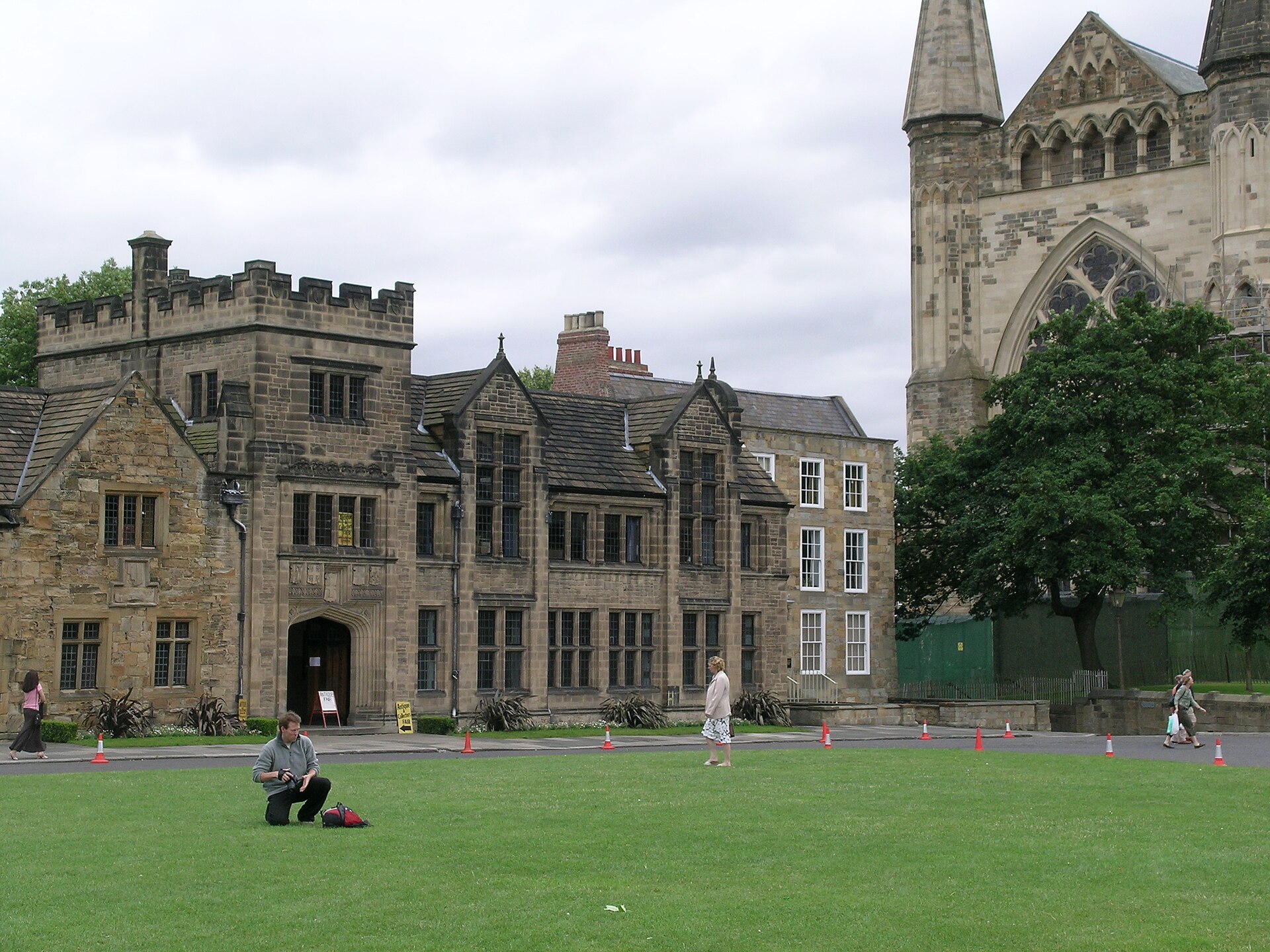



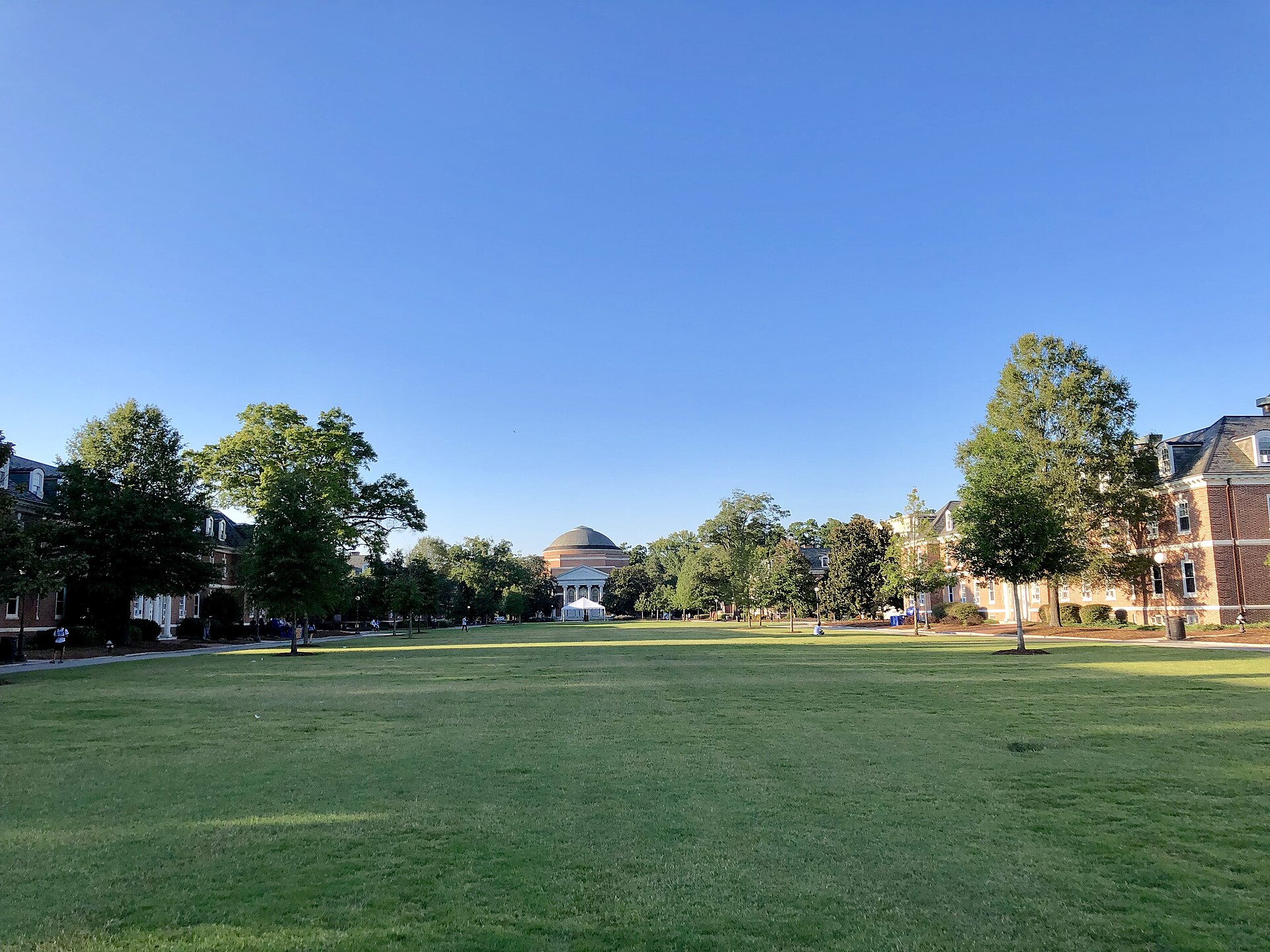
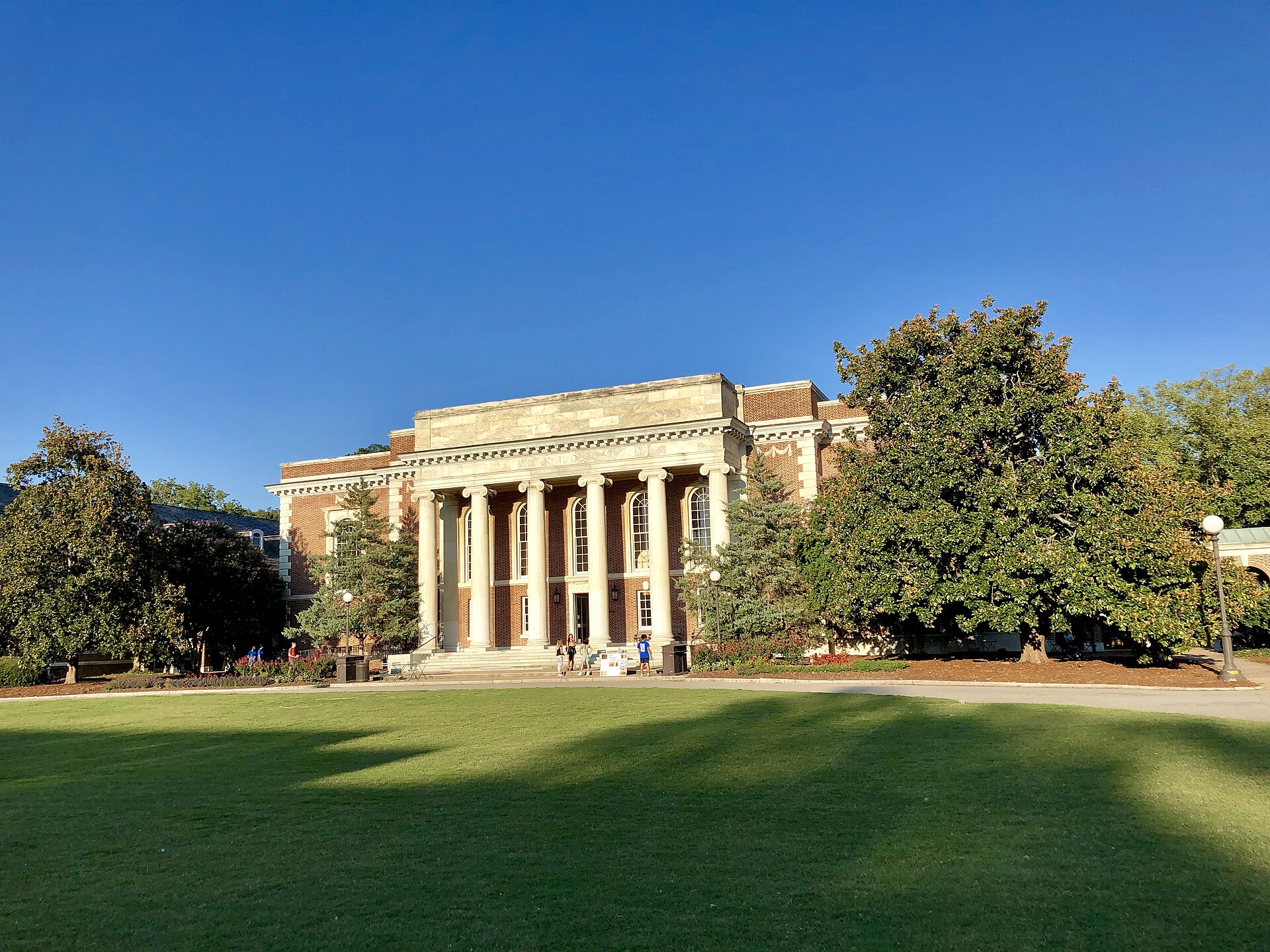
Why Durham — Collegiate Prestige, Research Depth & Distinctive Character
Durham sits inside the Russell Group — the UK's association of 24 research-intensive universities — and consistently places in the top ten nationally and top 100 globally. What distinguishes it from other research universities is its collegiate system, historic UNESCO-listed setting, and a student culture that balances academic seriousness with exceptional extracurricular life.
Durham Acceptance Rate & Entry Profile
Durham's 42% headline acceptance rate is highly misleading for international students targeting competitive programmes. Law, Economics, PPE, and Physics are significantly more selective than the headline rate suggests. Entry is offer-based: Durham makes conditional offers tied to specific A-Level grades or IB scores, and the key question for internationals is whether you can meet — and ideally exceed — those grade conditions.
Stats
Profile Stats
Durham Admissions Requirements — Grades, Tests & Qualifications
- Overall points band: 35–38 depending on programme
- HL Mathematics (Analysis & Approaches) required for quantitative subjects
- Specific HL grade floors often stipulated per course
- EE and TOK contribute to total points — strong grades strengthen the application
- Typical competitive offer: A*AA to AAA depending on programme
- Facilitating subjects (Mathematics, Sciences, History, Languages) broaden options
- Further Mathematics valued for quantitative programmes
- GCSE/IGCSE profile reviewed as supporting evidence
- Indian CBSE/ISC: typically 80–90% in Class 12 for competitive programmes
- AP courses accepted as supplementary evidence of rigour
- Canadian OSSD and Australian HSC accepted with grade equivalencies
- Contact Durham's international admissions team to confirm your qualification
Durham Application Components — UCAS, Personal Statement & Tests
Durham receives applications through UCAS — the UK's central admissions service. Unlike US universities, there is no Durham-specific application platform. Your UCAS application is submitted once and shared across all five of your university choices. Below is every component of a complete Durham application.
The UCAS Personal Statement — Your Only Written Submission
Durham does not have supplemental essays, short-answer questions, or the Common App. Your written submission is the UCAS personal statement — one document applied to all five UCAS choices simultaneously. From the 2026 entry cycle, UCAS restructured this into three specific questions.
Prompts
Tips
What Durham Admissions Tutors Are Looking For
Durham is primarily an academically selective institution. Unlike US liberal arts colleges that weight extracurricular profiles heavily, Durham — like all UCAS universities — places academic achievement and subject passion at the centre of its decisions. Admissions tutors in each department read personal statements asking one question: does this student have the intellectual curiosity and preparation to thrive in this subject here?
Durham Scholarships & Financial Support for International Students
Durham is not a need-blind institution for international students and does not operate a comprehensive needs-based financial aid programme equivalent to US universities such as Harvard or Princeton. International students are expected to self-fund the majority of their costs. That said, Durham does offer competitive merit-based scholarships and participates in several external funding schemes.
Scholarship amounts and availability change cycle to cycle. Always verify current amounts and deadlines on Durham's official scholarships pages.
Stats
Contribution Tiers
| Range | Percent | Percent Value | Note |
|---|---|---|---|
| Inspiring Excellence Scholarship | Up to £10,000/yr | 25 | Merit-based, partial tuition offset |
| Chevening Scholarship | Full costs | 100 | UK government — for eligible nationalities |
| Commonwealth Scholarship | Full costs | 100 | For Commonwealth citizens in eligible fields |
| Home government scholarships | Varies | 50 | Country-specific bilateral agreements |
| Part-time work (Student Route visa) | Up to 20hrs/wk | 15 | Living cost supplement during term time |
Key Dates
Advantages
- More time to craft and refine the UCAS personal statement across three questions
- LNAT preparation complete well before the January deadline
- Predicted grades requested from school with adequate notice
- Time to research Durham's specific programme requirements per course
- Scholarship application ready to submit alongside UCAS
Disadvantages
- Applying before predicted grades are finalised with teachers
- Missing the LNAT deadline for Law — a disqualifying error
- Submitting the personal statement without adequate revision time
- Not verifying English language requirement exemption until late in the cycle
- Missing the Durham scholarship application deadline after the UCAS submission
Durham Interviews — Who Gets One & What to Expect
Unlike Oxford and Cambridge (which interview almost all shortlisted candidates) and US universities (where alumni interviews are widespread), Durham does not conduct interviews for most undergraduate programmes. The vast majority of Durham admissions decisions are made on the basis of the UCAS application alone — predicted grades, personal statement, and reference.
Meta
Questions
Durham's College System & Residential Life
All undergraduates at Durham belong to one of its colleges — small residential and social communities that give the university its distinctive character. The college system is Durham's most significant difference from most other UK universities, and a major reason students choose it over larger, less intimate institutions.
Lottery Steps
- After receiving a conditional offer, Durham invites you to submit college preferences
- You rank colleges in order of preference — typically three to five choices
- Durham attempts to allocate your first or second preference; allocation is not guaranteed
- All first-year students are guaranteed accommodation within a college
- Your college becomes your residential, social, and pastoral home for the duration of your degree
Houses
Durham Faculties & Undergraduate Programmes
- {"label":"Notable strengths","value":"History, Theology, English"}
- {"label":"Research intensity","value":"REF-ranked nationally"}
- {"label":"Key admissions test","value":"None required"}
- {"label":"A-Level typical offer","value":"AAA"}
- {"label":"Law admissions test","value":"LNAT required"}
- {"label":"Economics IB typical","value":"37–38 pts"}
- {"label":"Dual accreditation","value":"Law School"}
- {"label":"National law school ranking","value":"Top 10"}
- {"label":"Accreditation","value":"AACSB + AMBA + EQUIS"}
- {"label":"Number of accredited schools globally","value":"< 100"}
- {"label":"Industry links","value":"Finance, consulting"}
- {"label":"IB typical offer","value":"36–38 pts"}
- {"label":"Physics research intensity","value":"N8 Research Partnership"}
- {"label":"Key requirement","value":"HL Maths + relevant science"}
- {"label":"IB typical offer Physics","value":"37–38 pts"}
- {"label":"Research access","value":"From Year 1"}
- {"label":"Flagship programme","value":"MEng (4 years)"}
- {"label":"Key requirement","value":"Mathematics + Physics"}
- {"label":"Accreditation","value":"IMechE, IET, IChemE"}
- {"label":"IB typical offer","value":"37–38 pts"}
- {"label":"Medicine entry test","value":"UCAT required"}
- {"label":"Interview","value":"Multiple Mini Interview (MMI)"}
- {"label":"Programme length","value":"5 years"}
- {"label":"Campus","value":"Stockton-on-Tees (Queen's)"}
Research & Extracurricular Opportunities at Durham
Career Outcomes & Durham Alumni Network
Durham graduates enter a wide range of professions, with particular strength in professional services, finance, law, and the civil service. The Russell Group brand is well-recognised by UK graduate employers. Durham's location in the north of England does not diminish career prospects — the vast majority of Durham graduates seek roles nationally, and the London graduate employer pipeline is strong.
Stats
Categories
Our Durham Admissions Track Record & Student Success Stories
FREQUENTLY ASKED QUESTIONS
Durham Admissions FAQs
Do I apply directly to Durham or through UCAS?+
All undergraduate applications to Durham are submitted through UCAS (ucas.com). Durham's UCAS institution code is D86. You include Durham as one of your five UCAS choices — there is no separate Durham application form.
Can I apply to Durham if I am an IB student?+
Yes. Durham explicitly accepts the IB Diploma and makes conditional offers in IB points. The typical IB offer for competitive programmes is around 37–38 points overall, often with specific Higher Level subject requirements. Check your course's individual entry requirements on the Durham website.
Is the LNAT required for all Durham applicants?+
No — the LNAT (Law National Aptitude Test) is required specifically for Law programme applicants. No other mainstream Durham undergraduate programme currently requires an admissions test. Always verify requirements for your specific course.
Does Durham conduct interviews for international applicants?+
Most Durham courses do not interview applicants. The admissions decision is based on the UCAS application — predicted grades, personal statement, and reference. Some specialist or health-related courses may conduct interviews; check your specific programme's requirements.
Is accommodation guaranteed for international students?+
All first-year undergraduates at Durham, including international students, are guaranteed an offer of university accommodation within a college. You submit college preferences after receiving a place offer. The college system means your accommodation is also your social community.
What is the college system and do I get to choose my college?+
After receiving an offer to study at Durham, you are invited to submit college preferences (typically three choices). Durham allocates you to a college — your first or second choice in most cases. The college system provides guaranteed accommodation, a social community, sports teams, and pastoral support throughout your degree.
Are there scholarships available for international students?+
Yes. Durham offers the Inspiring Excellence Scholarship for international undergraduate students, worth up to £10,000 per year towards tuition fees. Applications are submitted separately after applying via UCAS. Chevening Scholarships (UK government) can also be held at Durham for eligible nationalities.
How does a three-year UK degree compare to a four-year US degree in cost?+
A UK undergraduate degree is typically three years (not four), which meaningfully reduces the total degree cost even at higher annual tuition. At approximately $41,580 per year for three years, the total tuition cost is lower than many comparable US private universities over four years.
Book a Free Durham Admissions Strategy Session
In 60 minutes our Durham admissions specialists will evaluate your academic profile against Durham's programme-specific requirements, develop your UCAS personal statement strategy across all three questions, prepare you for the LNAT if you are applying for Law, and map your scholarship options. No commitment required.
- No commitment required
- Durham specialists with UK admissions expertise
- Personalised strategy — not generic advice
- LNAT preparation guidance included for Law applicants
Durham Academic Requirements
Durham Academic Requirements — The Honest Breakdown for International Students
What IB score, A-Level grades, and academic profile do Durham's admitted students actually have? And what does Durham's grade-led admissions process mean for students from IB, A-Level, AP, and other international curricula?
GPA & Class Rank
Durham and GPA — What the Data Shows
Durham does not formally assess a US GPA in its admissions process. For international students from systems that use GPA, the benchmark is a minimum GPA equivalent of approximately 3.5 — but this is a floor, not a target. Competitive programmes expect performance in the top 10–15% of your class or cohort.
For competitive Durham programmes (Law, Economics, Physics), grades significantly above the minimum offer are the norm among successful applicants. Meeting the minimum offer is necessary but not sufficient where there are more qualified applicants than places.
Academic Context
How Durham Reads Your Academic Record in Context
Durham does not apply a single global standard. Its admissions tutors are trained to evaluate academic performance within the context of the specific school, educational system, and country each applicant comes from.
SAT at Durham
SAT Scores at Durham — The UK Perspective
Durham University does not require or formally consider SAT scores in its admissions process. The SAT is not part of the UK university admissions framework, and Durham makes its decisions based on national qualifications (IB, A-Levels, national boards) rather than US standardised tests.
| Label | Score | Percent |
|---|---|---|
| Required? | No | 0 |
| Formally considered? | No | 0 |
| Can be submitted? | As context only | 10 |
ACT at Durham
ACT Scores at Durham — Not Part of the UK System
Durham does not use the ACT in its admissions process. Like the SAT, the ACT is a US standardised test not incorporated into the UK university admissions framework.
Metrics
Comparison Cards
Testing Policy
Durham's Test Policy — SAT/ACT Optional, LNAT Mandatory for Law
Durham's test policy distinguishes between US standardised tests (SAT/ACT — optional, not formally weighted) and UK programme-specific admissions tests (LNAT — mandatory for Law). Understanding the difference is critical for international applicants.
Submit Items
Withhold Items
Curricula
A-Levels and IB at Durham — Specific Benchmarks
- {"label":"Competitive range","value":"35–38 points (programme-dependent)"}
- {"label":"HL expectations","value":"Specific HL requirements per course; e.g. HL Maths for Economics/Physics"}
- {"label":"Subject rigour","value":"HL Mathematics (Analysis & Approaches) preferred for quantitative programmes; HL sciences for science degrees"}
- {"label":"Extended Essay","value":"Contributes to total points; EE in target subject is strategically strong"}
- {"label":"Competitive range","value":"A*AA to AAA depending on programme"}
- {"label":"Subject rigour","value":"Mathematics + Further Mathematics for quantitative subjects; three sciences or two sciences + Mathematics for physical sciences"}
- {"label":"Predicted grades","value":"Durham understands A-Level predicted grade conventions — teachers predict likely performance; strong GCSE/IGCSE results support predicted grade credibility"}
- {"label":"AS-Level results","value":"Reviewed alongside predicted A-Level grades where available"}
AP Courses
AP Courses at Durham — What Counts and How They Are Evaluated
For students studying in the US curriculum with AP courses, Durham accepts AP scores as supplementary academic evidence — but they do not substitute for the requirement to hold a qualifying primary qualification. Durham expects a full A-Level or IB Diploma profile; AP courses alone are generally not considered equivalent to UK qualifications.
Academic Rigour
Secondary School Rigour — Durham's Core Academic Filter
Durham's admissions process weights academic rigour — the combination of grades and the difficulty of courses taken — as a primary filter. A student with 37 IB points from a maximally challenging subject combination is more competitive than one with 39 points achieved through subject-optimised choices.
Taking the most challenging, relevant courses available at your specific school in the subjects most relevant to your intended university discipline.
Subject Preparation
Subject-Level Preparation — What Durham Expects
Durham's departments expect students to arrive with strong subject-specific preparation, not just high overall grades. The following guidance covers Durham's most competitive programmes and what subject-level preparation they expect.
Language Proficiency
English Language Requirements for International Durham Applicants
All international students whose first language is not English must demonstrate English proficiency. Durham accepts IELTS Academic, TOEFL iBT, Duolingo English Test, and PTE Academic, among others.
The UCAS personal statement is itself a demonstration of English writing ability. Durham's admissions tutors read it with subject expertise. A student who writes analytically, fluently, and with intellectual precision in their personal statement demonstrates English proficiency through the writing itself — the formal test confirms it for visa purposes.
By Programme
Academic Requirements by Programme — What Different Paths Expect
Durham makes conditional offers at the programme level. Subject prerequisites and grade conditions vary by course. Always verify requirements on your specific course page at durham.ac.uk.
| Concentration | Expectation | Signals |
|---|---|---|
| Law | A*AA / IB 37–38 + LNAT | LNAT score; personal statement legal reasoning |
| Economics | A*AA / IB 37–38 + HL Maths AA | Quantitative thinking in statement; HL Maths grade |
| Physics | A*AA / IB 37–38 + HL Maths + HL Physics | Research engagement; physics olympiad; EE in Physics |
| Mathematics | A*A*A / IB 38 + HL Maths AA (7) | Competition mathematics; proof-level thinking |
| Engineering | A*AA / IB 37 + HL Maths + HL Physics | Technical projects; design or science competition |
| Business & Management | AAA / IB 36–37 | Analytical thinking; evidence of commercial awareness |
| History | AAA / IB 36–37 | Primary source engagement; academic reading in statement |
| Theology & Religion | AAA / IB 36 | Philosophical engagement; academic reading breadth |
| Geography | AAA / IB 36–37 | Fieldwork experience; human and physical synthesis |
| Computer Science | A*AA / IB 37 + HL Maths | Programming projects; algorithmic thinking evidence |
International Systems
How Durham Reads Your Curriculum — International Education Systems
Roadmap
Building an Academic Profile for Durham — What to Do at Each Stage
- Select IGCSE or equivalent subjects that preserve the widest options for IB or A-Level.
- Prioritise Mathematics and sciences alongside a humanities subject if you are considering Economics, Law, or social sciences.
- Identify academic interests and explore them beyond the curriculum — independent reading, online lecture series, academic podcasts.
- Begin identifying Durham's target programmes and their specific subject prerequisites.
- IB subject and HL level selection — choose HLs that are both intellectually right and strategically appropriate for your intended Durham programme.
- A-Level subject combination finalised — ensure at least one Mathematics/science HL or A-Level if targeting quantitative Durham programmes.
- Begin reading beyond the syllabus in your intended subject: academic books, journal articles, public lecture series online.
- Perform strongly in IGCSE or equivalent — these results inform your predicted grade trajectory.
- Pursue independent academic projects: Extended Essay (IB), EPQ (A-Level), supervised research with a teacher, or summer school programmes.
- Read at undergraduate entry level in your chosen field — this feeds directly into UCAS personal statement Question 1.
- If targeting Law, begin LNAT preparation and take a diagnostic test in Year 12 to establish your baseline.
- Attend public lectures, engage with academic podcasts or journals, and take notes — these experiences become personal statement material.
- Draft UCAS personal statement across all three questions from September — allow multiple revision rounds.
- Finalise predicted grades with teachers by October. Discuss the predicted grade conversation with your Tychr counsellor — predicted grades drive conditional offers.
- Submit UCAS by the equal consideration deadline (typically late January).
- If applying for Law: sit the LNAT before mid-January. Register at lnat.ac.uk in October.
- Apply for the Durham Inspiring Excellence Scholarship immediately after UCAS submission.
- Receive conditional offer from Durham — note the exact grade conditions.
- Sit IB examinations (May/June) or A-Level examinations (May/June).
- A-Level results day (August): if you meet your conditions, Durham will confirm your place. If you miss narrowly, contact Durham's admissions team immediately.
- Use UCAS Clearing or Adjustment if you did not meet conditions or want to explore alternatives.
Common Pitfalls
Academic Mistakes That Cost Durham Applications — And How to Avoid Them
Real Outcomes
What Academic Profiles Tychr's Durham-Admitted Students Had
The following profiles represent the academic backgrounds of students Tychr has helped gain places at Durham. They illustrate the range of academic preparation that works — and what made each application compelling.
Faqs
Is the IB enough for Durham, or do I need additional qualifications?+
The IB Diploma is a standard, well-regarded qualification at Durham. You do not need additional qualifications beyond the IB. Ensure you meet any specific HL subject requirements for your programme — these are the key constraints, not the qualification type.
What IB score do I need for Durham Economics?+
Durham Economics typically requires around 37–38 IB points, with HL Mathematics (Analysis & Approaches) specified as a requirement. The exact condition appears on your conditional offer letter. Achieving the condition is mandatory — borderline exceptions are rare for Economics.
Can I apply to Durham without an English language test if I studied in an English-medium school?+
Possibly. Durham has an exemption list for students from countries where English is the official language of instruction. Check the Durham International Office's exemption list carefully — it is country and qualification specific. If your school is not on the list, you will need IELTS 6.5 or equivalent.
What happens if I narrowly miss my Durham offer on results day?+
Contact Durham's admissions team immediately on results day. Durham does consider borderline cases — especially where one grade was missed by a narrow margin and the overall profile remains strong. Do not wait. Use the direct admissions contact number on the Durham website, not the UCAS portal alone.
Does taking a gap year affect my Durham application?+
No. Durham is gap-year friendly. You may apply for deferred entry (one year ahead) or apply in your gap year itself. Briefly noting gap year plans in the personal statement is helpful but not required.
Fees & Funding
Durham University Costs for International Students — The Full Picture
Durham charges international undergraduate tuition at the higher end of UK universities. But the total cost of attendance — including living costs in a mid-sized northern city — is substantially lower than equivalent programmes in London or at comparable US private universities. And a Durham degree takes three years, not four.
Cost Transparency
What Durham Actually Costs — The Full Annual Figure
Tuition fees are set by Durham and may change annually. All figures are approximate USD equivalents. Verify exact tuition for your specific programme on Durham's undergraduate fees pages before applying.
UK undergraduate programmes complete in three years (not four), meaningfully reducing total degree cost. A Durham degree in three years at approximately $60,000 per year totals around $180,000 — less than many comparable US private universities over four years, even before scholarships are considered.
| Component | Cost | Note |
|---|---|---|
| Tuition (international undergraduate) | ~$41,580 | Varies by programme; approximate USD equivalent |
| Cost of living (Durham city) | ~$13,000 | Accommodation, food, transport, personal |
| Books and course materials | ~$800–1,200 | Varies significantly by subject |
| UCAS application fee | ~$30 | One-time; shared across up to 5 university choices |
| Total estimated cost of attendance | ~$60,000 | Annual inclusive estimate |
Financial Aid Reality
Durham's Financial Aid Policy — What International Students Need to Know
Durham is not a need-blind institution and does not operate a comprehensive need-based financial aid programme for international undergraduates. Unlike Harvard, Princeton, or MIT — which cover demonstrated financial need fully through institutional grants — Durham expects international students to self-fund the majority of tuition and living costs. The university's support is primarily merit-based through the Inspiring Excellence Scholarship programme.
Institutional Context
Durham's Commitment to International Access
Financial Aid Walkthrough
Applying for Durham Scholarship & Financial Support — Step by Step
Durham's scholarship process runs in parallel with — but separately from — the UCAS application. Scholarship support is not automatic. Here is the complete process.
- Include Durham (code D86) as one of your five UCAS choices
- Submit by the late January equal consideration deadline for scholarship eligibility
- Ensure your personal statement and predicted grades are complete
- Access the scholarship portal via the Durham scholarships page
- Complete the separate scholarship application form
- Deadline for first-round consideration is typically late January
- Awards are announced on a rolling basis — apply early for best consideration
- Chevening: chevening.org — for eligible nationalities, typically postgraduate but check undergraduate schemes
- Commonwealth Scholarship Commission: cscuk.fcdo.gov.uk
- Your home country's government scholarship fund — research independently
- Durham's international office can advise on known bilateral agreements
- Hold sufficient funds in a regulated bank account (approximately £40,000–£55,000 for the first year)
- Funds must be held for at least 28 consecutive days before your CAS is issued
- Bank statements must be dated within a specific window — follow UK Visas & Immigration guidance
- Payment instalment options may be available — enquire with Durham Finance
- Financial hardship fund available for enrolled students facing unexpected difficulties
- Contact early — do not wait until the problem is acute
Aid for Internationals
Financial Support for International Students at Durham
The financial support landscape for international undergraduates at Durham consists of three tiers: Durham's own merit scholarships, UK government and Commonwealth schemes, and home-country government scholarships.
Financial Aid Calculations
What Durham Financial Support Actually Looks Like
Durham Merit Support — Indicative Scenarios
Durham does not publish income-based aid tables. The following scenarios are illustrative only. Actual scholarship awards are competitive and merit-based, not formula-based.
For most international undergraduate students at Durham who do not receive an external government scholarship, the self-funded cost is approximately $60,000 per year. The Inspiring Excellence Scholarship partially offsets this but does not cover the majority of costs.
| Income | Grant | Contribution |
|---|---|---|
| Any — merit-based | Up to £10,000/yr (Inspiring Excellence) | Remaining tuition + living costs |
| Any — external scholarship | Full costs (Chevening/Commonwealth) | ~£0 for eligible recipients |
| Any — no scholarship | £0 institutional support | Full ~$60,000/year |
Table Headers
Scholarship Criteria
Durham Scholarships — What Exists and Who Qualifies
Durham does not award need-based grants to international undergraduates. All institutional scholarships for international students are merit-based, assessed on academic achievement and potential.
External Funding
External Scholarships — Additional Funding for Durham Students
Beyond Durham's own institutional scholarships, a range of external organisations and government schemes provide funding that Durham students are eligible to hold. These are typically applied for independently and in parallel with the UCAS and Durham scholarship application.
Loans & Debt
Student Loans at Durham — The UK System Explained
The UK student loan system (Tuition Fee Loan and Maintenance Loan) is available to UK domestic students but not to international students. International undergraduates at Durham are expected to self-fund tuition and living costs without access to UK government loans.
Part-Time Work
Working While Studying at Durham — What to Expect
International students on a UK Student Route visa are permitted to work up to 20 hours per week during term time and full-time during vacations. This can help supplement living costs but should not be factored into primary tuition funding — you must demonstrate full tuition funding independently for your visa.
- Library and administrative roles within the university
- Hospitality and catering in college dining halls and university events
- Retail and service sector jobs in Durham city centre
- Private tutoring (IB and A-Level students in Durham and surrounding area)
- Student Union roles (communications, events, welfare)
- Research assistant positions in some departments (Year 2 onwards)
Benchmarking
Durham vs. Other UK & Global Universities — Financial Aid Comparison
| School | Policy | No Loans | Typical Cost |
|---|---|---|---|
| Durham (Russell Group, UK) | Merit scholarships only | No institutional loans | ~$41,580–60,000/yr |
| UCL (Russell Group, UK, London) | Merit scholarships only | No institutional loans | ~$35,000–50,000/yr tuition + higher London living |
| Edinburgh (Russell Group, UK) | Merit scholarships | No institutional loans | ~$28,000–38,000/yr tuition |
| Harvard (US, Ivy League) | Need-blind, full-need grants | No loans — grants only | ~$0 for families under $85K |
| Oxbridge (UK) | Bursaries + merit awards | No institutional loans | ~$35,000–50,000/yr tuition |
| NUS (Singapore) | Tuition Grant + Service Bond | Service bond (3 years in SG) | ~$15,000–20,000/yr with bond |
Cost Analysis
The True Cost of a Durham Degree — What You Actually Pay
A three-year Durham degree without scholarship support costs approximately $180,000 in total — less than many comparable four-year US private universities and significantly less than equivalent London universities. With the Inspiring Excellence Scholarship, the total cost falls to approximately $144,000 over three years. Durham city's lower cost of living is a real financial advantage over London-based alternatives.
| School | Policy | Contribution | Four Year Cost |
|---|---|---|---|
| Durham (3 years, no scholarship) | Full tuition + living | ~$60,000/yr | ~$180,000 total |
| Durham (3 years, Inspiring Excellence £10K/yr) | Partial tuition offset | ~$48,000/yr | ~$144,000 total |
| Durham (3 years, Chevening/Commonwealth) | Full costs covered | ~$0/yr | ~$0 total |
| Harvard (4 years, family income ~$100K/yr) | Need-based grant | ~$5,000–10,000/yr | ~$20,000–40,000 total |
| UK London Russell Group (3 years, no scholarship) | Full tuition + London living | ~$65,000–80,000/yr | ~$195,000–240,000 total |
Scholarship Appeals
Appealing a Durham Scholarship Decision — When and How
Durham's scholarship awards are based on competitive merit assessment. If you were not awarded the Inspiring Excellence Scholarship or believe there are grounds for review, a limited appeals process exists.
Durham's scholarship assessment is competitive — most appeals on the grounds of 'I deserve the scholarship' are not successful. Appeals are most likely to be considered where there was a factual error in the assessment, missing documentation was not considered, or exceptional personal circumstances were not reflected in the application.
When To Appeal
- Your scholarship application contained a factual error or omission
- Exceptional personal circumstances were not reflected in the original application
- You have received a significantly higher scholarship from a peer institution (relevant as context, not a guarantee of matching)
- New information has come to light since the original assessment
How To Appeal
- Contact Durham's Scholarships team directly via the email address on your scholarship decision letter
- Submit a written appeal clearly stating the grounds and providing supporting documentation
- Allow 2–4 weeks for the appeal to be reviewed — scholarship decisions are resource-intensive to reassess
Timeline & Planning
Planning for Durham Costs — What to Do and When
UK / UCAS Application
The UCAS Personal Statement for Durham
Durham does not have supplemental essays, short-answer questions, or the Common App. Your written submission is the UCAS personal statement — one document applied to all five UCAS choices simultaneously. From the 2026 entry cycle, UCAS restructured this into three specific questions. Understanding these questions, and how Durham's admissions tutors read them, is essential.
The single most important thing to grasp about UK admissions writing: Durham's admissions tutors are subject specialists. They read your personal statement asking one question — does this person have the intellectual depth and genuine passion to thrive in this specific academic discipline at degree level? Activities, awards, and leadership roles matter far less than demonstrating that you already think like a scholar in your chosen field.
The 2026 UCAS Format
The New UCAS Personal Statement — Three Questions
From September 2025 onwards (for 2026 entry), UCAS changed from a single open personal statement to a structured three-question format. The total limit is 4,000 characters (including spaces), with a minimum of 350 characters required per question.
Because you submit one personal statement across all five UCAS choices, your statement must be written for your chosen subject — not a broad interests document. If you are applying to multiple universities for Economics, everything you write should be Economics-focused. Durham's admissions tutors for Economics will read your statement with Economics expertise. A statement that pivots between multiple subjects or is written too generically reads as lack of commitment.
The Three Questions
The 2026 UCAS Personal Statement Questions
The following are the three UCAS personal statement questions for applications submitted from September 2025 (for 2026/27 entry). These questions apply to all UK university applications including Durham.
The UK Personal Statement
The UCAS Personal Statement at Durham — What It Needs to Accomplish
Durham's application relies more heavily on the UCAS personal statement than almost any other single element. Unlike some UK universities that use extended admissions questionnaires, academic tests across all programmes, or portfolio submissions, Durham's written evaluation centres on this one document for most courses.
The strategic challenge of the UCAS personal statement is that it must serve all five university choices simultaneously. You cannot tailor it to Durham specifically (and should not name Durham in it), but you should write it with Durham's admissions tutors in mind: subject specialists who have read hundreds of statements from applicants to the same degree. Your statement needs to stand out for its intellectual specificity, not its breadth of achievement.
The UCAS personal statement is not the Common App. There are no supplemental short-answer questions, no activities section, no Harvard supplement. Everything you want Durham to know about your intellectual preparation for the subject must be in these 4,000 characters across three questions.
Looking For List
- A genuine, specific intellectual engagement with the subject — named texts, named concepts, named problems you found fascinating
- Evidence that you have read beyond the IB or A-Level syllabus in your chosen field
- A coherent academic narrative across all three questions — your subject passion, your preparation, your relevant experiences
- Authentic voice — the statement should sound unmistakably like a person, not a template
Tired Of List
- Statements that open with a quote, a life story, or 'from a young age I have always been passionate about...'
- Lists of extracurricular achievements disconnected from intellectual preparation for the subject
- Generic 'I want to make a difference' framing that could apply to any subject or any student
- Statements that describe the career the student wants without demonstrating engagement with the academic discipline itself
Subject-Specific Strategy
How to Approach the Personal Statement by Discipline at Durham
Durham's departments read personal statements through a subject-specialist lens. Here is how to calibrate your statement for Durham's most competitive courses.
What to Write About
Choosing What to Write About in Your UCAS Personal Statement
The best UCAS personal statements for Durham share a common quality: they feel like the beginning of a genuine academic conversation. The student is not performing enthusiasm — they are demonstrating it through the specificity and intelligence of what they choose to discuss.
Mistakes to Avoid
Common Personal Statement Pitfalls for Durham
- Writing a statement that would suit any university — one that lists achievements without demonstrating genuine intellectual engagement with the subject
- Opening Question 1 with personal biography, a quote, or a generic 'from a young age' sentence — go straight to the academic substance
- Overloading Question 3 with extracurricular achievements that are not connected to academic preparation for the subject
- Mentioning Durham by name in the personal statement — because you submit one statement to all five UCAS choices, name-dropping a specific university harms applications to the others
- Describing the career you want without demonstrating genuine intellectual engagement with the academic discipline
- For Law applicants: writing primarily about work experience and neglecting legal reasoning, analysis of cases, or engagement with jurisprudential questions
- Exceeding the 4,000 character limit or falling below 350 characters on any individual question — UCAS will reject submissions that do not meet these parameters
- Submitting a statement that was not proofread — grammatical errors and unclear writing signal lack of care at a university where written communication is central to most degrees
- Missing the UCAS deadline and losing equal consideration at Durham — late applications may still be considered but face higher competition for remaining places
- Failing to register for the LNAT before mid-January if applying to Law — this is a disqualifying error with no remedy after the deadline
Personal Statement FAQs
UCAS Personal Statement FAQs for Durham
Does Durham have its own supplemental essay in addition to UCAS?+
No. Durham does not require any supplemental writing beyond the standard UCAS personal statement. Your UCAS statement (three questions from 2026 onwards) is your only written submission.
Can I tailor my personal statement to Durham specifically?+
Because the same personal statement goes to all five UCAS choices simultaneously, you should not mention Durham by name in the statement. Write a statement that demonstrates deep subject passion — relevant to your subject at degree level anywhere — rather than one targeted to a specific institution.
How much of the personal statement should focus on academic content versus activities?+
The 2026 three-question format explicitly separates academic engagement (Questions 1 and 2) from activities (Question 3). Durham admissions tutors typically weight Questions 1 and 2 more heavily than Question 3. Aim for the majority of your characters to address intellectual content and academic preparation.
How does Durham read the UCAS statement alongside my predicted grades?+
Durham makes conditional offers based primarily on predicted grades. The personal statement is read as a secondary filter and contextualisation tool — it can lift a borderline application, but it rarely overrides a significant grade shortfall. The most important function of the statement is to demonstrate readiness for degree-level study in your subject.
What is the character limit for the new UCAS personal statement?+
4,000 characters in total (including spaces), with a minimum of 350 characters required per question. There is no separate word count — the limit is characters. Write tightly and precisely — every character should earn its place.
Should I mention my IB predicted grades in the personal statement?+
No. Your predicted grades are communicated separately via the UCAS academic section, which your school completes. The personal statement is for qualitative content — your intellectual interests, academic preparation, and relevant experiences. Do not repeat quantitative information the form already captures.
Is there a separate Durham writing component for the Inspiring Excellence Scholarship?+
The Durham Inspiring Excellence Undergraduate Scholarship application is submitted separately from UCAS — it is not part of your personal statement. If you apply for the scholarship, you will complete a distinct application through Durham's scholarship portal. The UCAS statement does not substitute for the scholarship application.
Can my personal statement help me if my predicted grades are below Durham's typical offer?+
Marginally — in borderline cases, a genuinely outstanding personal statement can be the deciding factor. But it cannot substitute for predicted grades significantly below the standard offer. Durham is grade-led. The personal statement contextualises and humanises your academic profile; it does not override it.
Courses — schools, degrees & intake
87 degrees across 6 groupings.
Faculty of Arts and Humanities · 22 degrees
Ancient History
Ancient History and Archaeology
Ancient, Medieval and Modern History
Classical Civilisation
Classics
English Literature
English Literature and History
English Literature and Philosophy
History
Liberal Arts
Modern Languages and Cultures (with Year Abroad)
Chinese Studies (with Year Abroad)
Japanese Studies (with Year Abroad)
Modern European Languages and History (with Year Abroad)
Music
Philosophy
Philosophy and Politics
Philosophy and Psychology
Philosophy, Politics and Economics
Philosophy and Theology
Theology and Religion
Religion, Society and Culture
Durham University Business School · 9 degrees
Accounting
Accounting and Finance
Business and Management
Economics
Economics and Mathematics
Economics and Politics
Economics with Management
Finance
Marketing and Management
Faculty of Science · 28 degrees
Biochemistry
Biological Sciences
Biosciences (Integrated Masters)
Biology and Chemistry
Chemistry
Chemistry (Industrial Route)
Chemistry and Mathematics
Chemistry and Physics
Climate Science
Computer Science
Computer Science and Mathematics
Earth Sciences
Environmental Geosciences
Geology
Geophysics
Geoscience
Mathematics
Mathematics and Philosophy
Mathematics and Physics
Mathematics and Statistics
Natural Sciences
Physics
Physics and Astronomy
Theoretical Physics
Philosophy and Physics
Psychology
Psychological and Behavioural Science
Psychology and Anthropology
Faculty of Social Sciences and Health · 18 degrees
Anthropology
Anthropology and Archaeology
Anthropology and Sociology
Archaeology
Archaeology and Ancient Civilisations
Historical Archaeology
Combined Honours in Social Sciences
Criminology
Education Studies
Primary Education
Geography
Health and Human Sciences
International Relations
Politics
Politics and International Relations
Sociology
Sport and Exercise Sciences
Sport, Exercise and Physical Activity
Department of Engineering · 8 degrees
Engineering (Aeronautical)
Engineering (Bioengineering)
Engineering (Civil)
Engineering (Electrical)
Engineering (Electronic)
Engineering (Mechanical)
Engineering (Renewable Energy)
General Engineering
Durham Law School · 2 degrees
Law (LLB)
Law (Senior Status)
Want your real chances at Durham University?
Create a free TYCHR account for your personalised admit-chance, a shortlist you can track, exact entry requirements, and essay + counselling help.