← All universities

Delft University of Technology

Delft, Netherlands · Urban

IDEA LeaguePublicTechnicalResearch
Acceptance
50.0%
QS World
#49
Tuition/yr
$18,700
Students
27,000
Founded
1842

ADMISSIONS GUIDE

Delft University of Technology Admissions Guide for International Students

TU Delft is the largest and oldest technical university in the Netherlands — ranked #49 globally by QS and #1 in the country. Founded in 1842, it is one of Europe's defining engineering institutions, producing the innovators behind Dutch high-tech industry, world-leading aerospace programmes, and global infrastructure. With 27,000 students across eight faculties and a 30% international student body, TU Delft offers a genuinely global environment in the intimate, historic city of Delft. For international students targeting engineering, technology, or design at the very top level — without the stratospheric costs of UK or US counterparts — TU Delft is one of the most compelling options in the world. This guide explains the Dutch admissions system honestly: how Studielink works, which bachelor programmes are taught in English, what numerus fixus means for your application, and how to build the strongest possible case for selection.

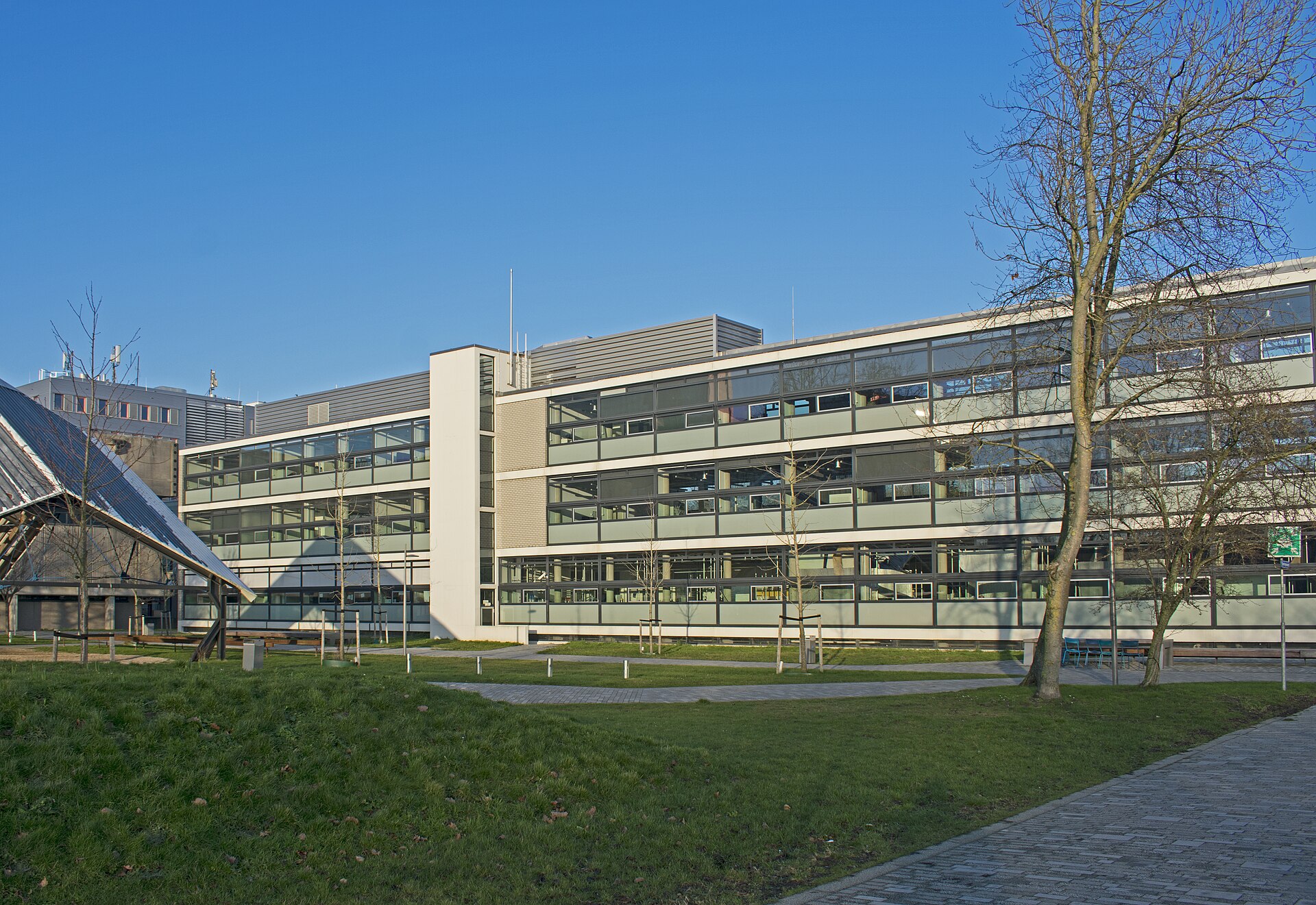
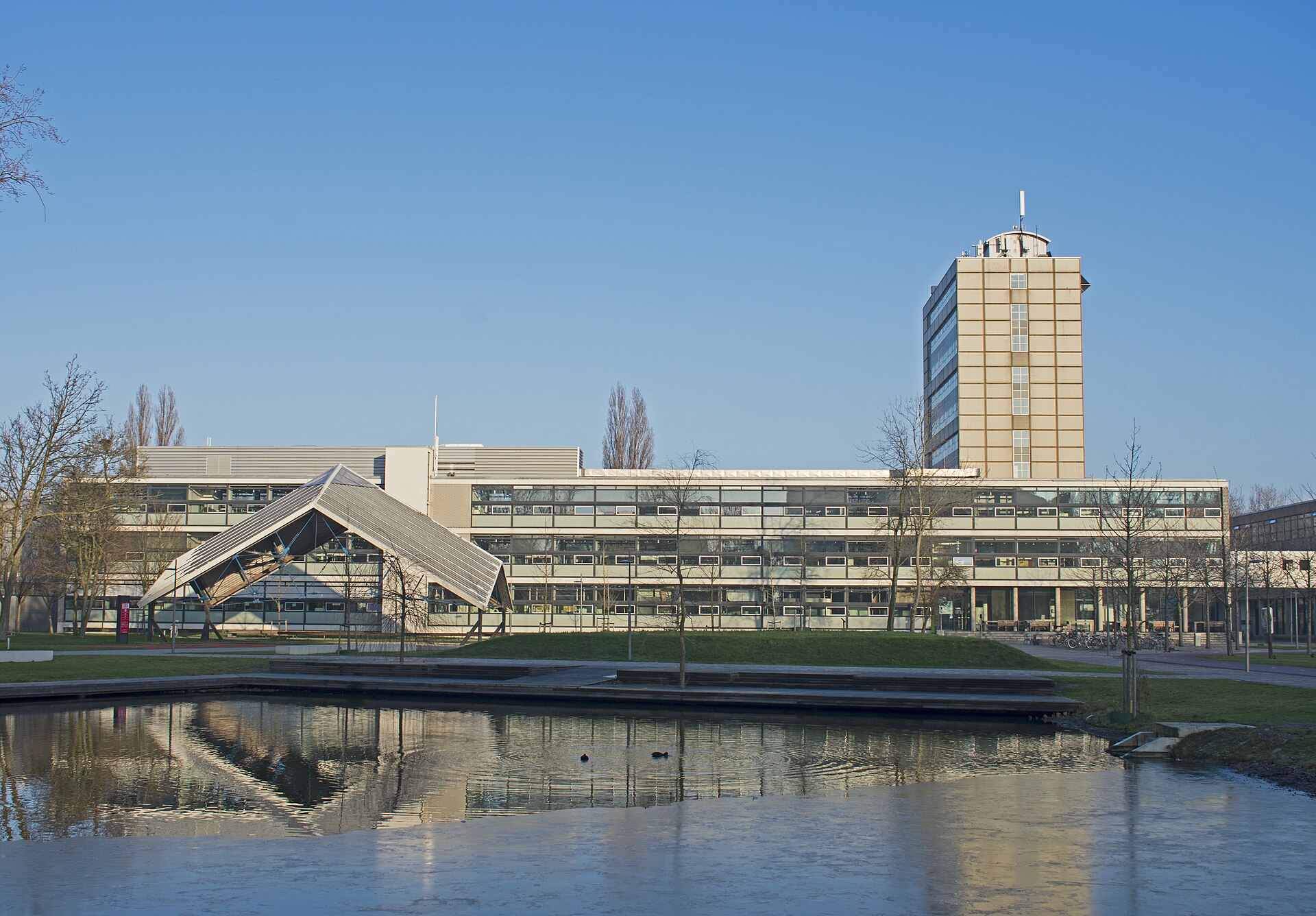
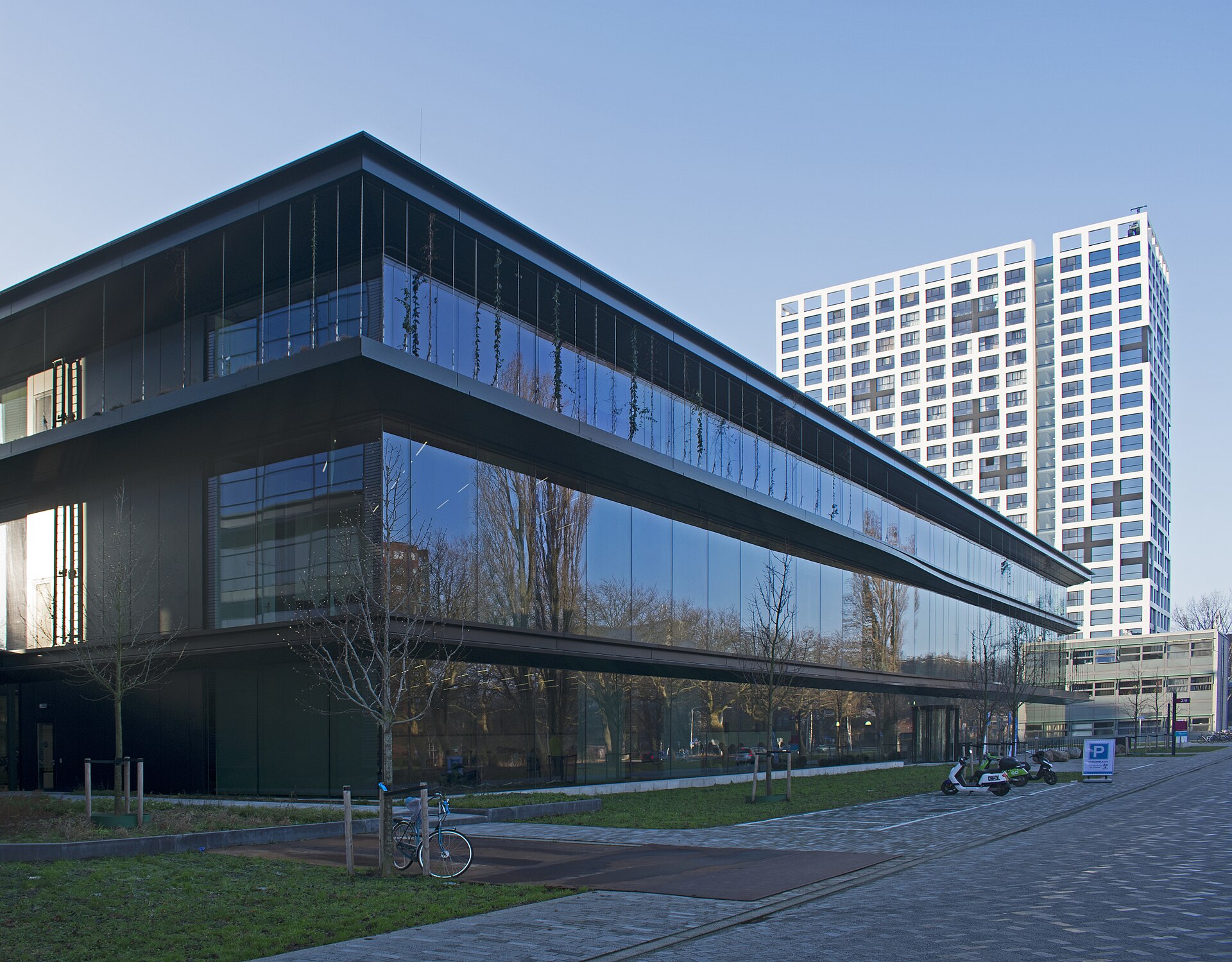
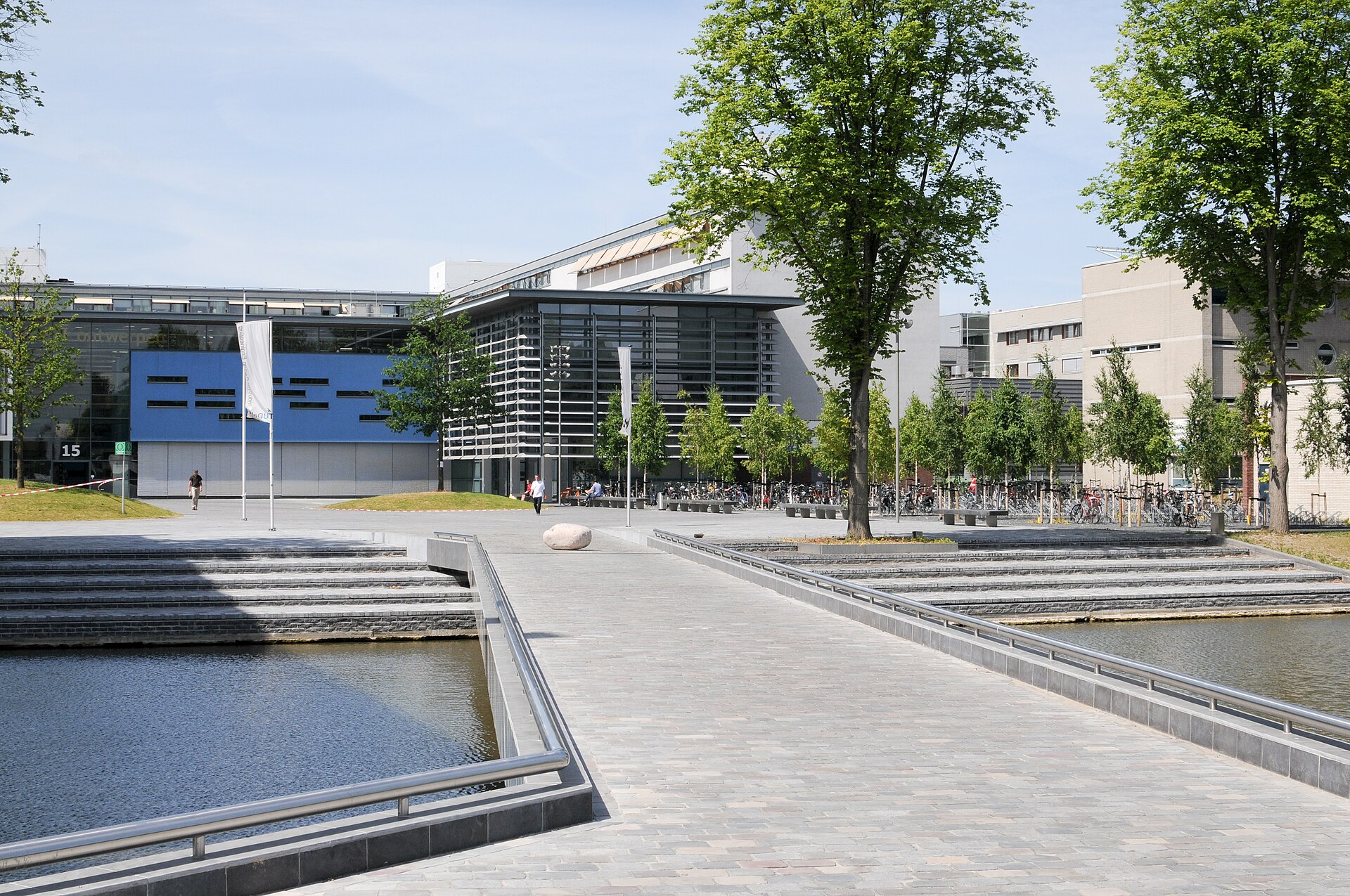
Campus

Delft University of Technology — campus in pictures

Real, freely-licensed photographs of the campus (via Wikimedia Commons).
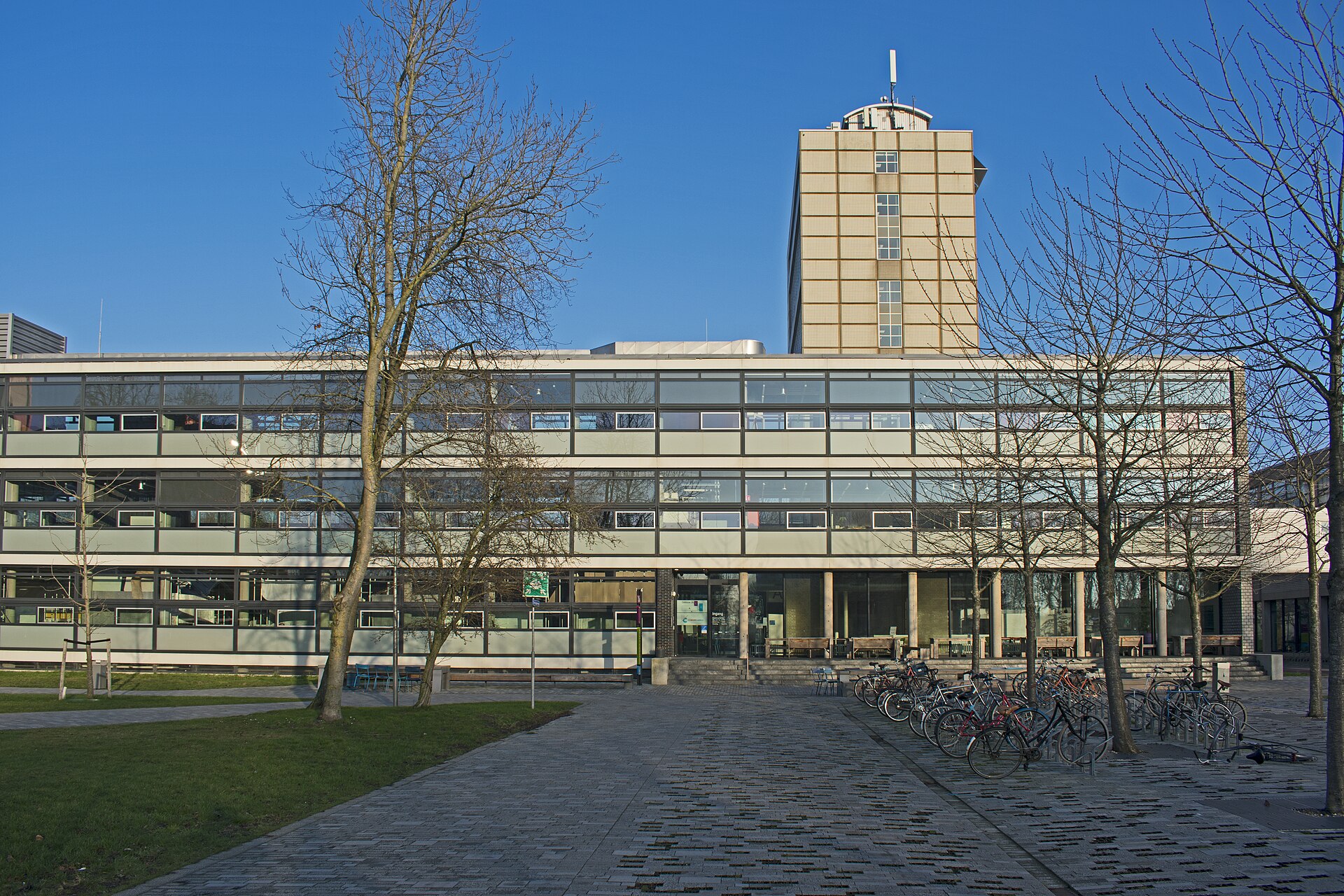
Bouwcampus, Delft University of Technology
Bouwcampus, Delft University of TechnologyYmblanter · CC BY-SA 4.0 · via Wikimedia Commons
Bouwcampus, Delft University of Technology
Bouwcampus, Delft University of TechnologyYmblanter · CC BY-SA 4.0 · via Wikimedia Commons
Bouwcampus, Delft University of Technology, Delft, South Holland, the Netherlands
Bouwcampus, Delft University of Technology, Delft, South Holland, the NetherlandsYmblanter · CC BY-SA 4.0 · via Wikimedia Commons
Campus (39818306)
Campus (39818306)Frits De Jong · CC0 · via Wikimedia Commons
Echo building, Delft University of Technology, Delft, South Holland, the Netherlands
Echo building, Delft University of Technology, Delft, South Holland, the NetherlandsYmblanter · CC BY-SA 4.0 · via Wikimedia Commons
Industrial Design Department Delft University of Technology
Industrial Design Department Delft University of TechnologyPrzemyslaw Pawelczak · CC BY 3.0 · via Wikimedia Commons

WHY TU DELFT

Why TU Delft — Europe's Engineering Powerhouse

TU Delft is not simply a top-ranked university — it is the institution that has driven Dutch technical innovation for nearly two centuries. From Fokker aircraft to the Delta Works flood defences to ASML's semiconductor lithography revolution, TU Delft alumni and research have shaped the physical world. For students serious about engineering, few universities outside the elite US tier offer a comparable combination of research depth, employability, IDEA League prestige, and cost-effectiveness.

01Top-50 Global, #1 in the Netherlands
TU Delft ranks #49 in QS World University Rankings and #48 by Times Higher Education — the top technical university in the Netherlands and consistently among the top ten in Europe for engineering and technology, including Aerospace, Civil, and Architecture.
02The IDEA League
TU Delft is a founding member of the IDEA League — an alliance of five leading European technical universities including ETH Zurich, RWTH Aachen, Politecnico di Milano, and Chalmers University. This network enables joint degrees, research exchanges, and a pan-European alumni community.
03World-Class Aerospace and Architecture
TU Delft's Faculty of Aerospace Engineering is among the most respected in the world, with partnerships with Airbus, Boeing, and ESA. The Faculty of Architecture and the Built Environment is Europe's largest architecture school, consistently ranked in the global top five.
04Dutch High-Tech Innovation Ecosystem
The Netherlands is home to ASML, Philips, Shell, ING, and hundreds of deep-tech startups — many with direct roots at TU Delft. Students sit at the centre of one of Europe's most innovation-dense economies, with strong English-language professional culture.
05Exceptional Value vs. Peer Institutions
Non-EU tuition at TU Delft is a fraction of what equivalent-ranked universities in the UK or US charge. The Netherlands also offers a one-year Orientation Year (Zoekjaar) visa for non-EU graduates, facilitating post-study employment in one of Europe's strongest engineering markets.
06Dream Teams and Student Innovation
TU Delft's famous student Dream Teams — including Nuon Solar Team (multi-time World Solar Challenge champions), Team FAST (world record human-powered hydrofoil), and Delft Hyperloop — are student-run engineering projects that attract global attention and serve as differentiated portfolio entries.

TU Delft Acceptance Rate & Admitted Student Profile

TU Delft's overall 50% acceptance rate masks important nuance. The four English-taught bachelor programmes — Aerospace Engineering, Computer Science and Engineering, Nanobiology, and Earth, Climate and Technology — all operate under numerus fixus (fixed seat allocation). Aerospace Engineering historically receives several thousand applications for approximately 440 places. For master's programmes, admission is largely a threshold process: meet the stated academic prerequisites and you are a strong candidate — but those thresholds are demanding.

Stats

~27,000
Applications (University-wide)
~50%
Overall Acceptance Rate
27,000
Student Body

Profile Stats

36 points
IB Benchmark
3.5
Min GPA Equivalent
30%
International Students
6.5
IELTS Minimum
#49
QS Rank
15:1
Student:Faculty Ratio
University-wide; English BSc numerus fixus tracks are far more selective

Rea Vs Rd

Rd Label: Open Enrolment BSc
Rd Value: ~High
Rea Label: Numerus Fixus English BSc
Rea Value: <20%

TU Delft Admissions Requirements — Mathematics, Subjects & Academic Profile

Academic Performance
Value: 36+ IB / 3.5 GPA
TU Delft expects strong academic performance with particular emphasis on mathematics and sciences. The typical admitted IB profile is 36 points; minimum GPA equivalent is 3.5. Your grades in the specific prerequisite subjects matter more than total points.
  • IB: 36+ total, Higher Level Maths required universally
  • A-Level: AAA or above in relevant subjects
  • CBSE/ISC: High marks in Mathematics and Physics
  • All-A record in prerequisite subjects is expected
Mathematics (Universal Prerequisite)
Value: HL Maths Required
Advanced mathematics is a hard prerequisite for every TU Delft bachelor programme without exception. For IB: Mathematics Analysis and Approaches HL is broadly preferred. For A-Level: Mathematics (and ideally Further Mathematics) at grade A or above. No waiver is possible.
  • IB Maths: Analysis and Approaches HL preferred
  • A-Level: Mathematics A-grade minimum
  • CBSE: Class 12 Mathematics at top grade
  • AP Calculus BC score 4 or 5 supports US-curriculum applicants
Science Prerequisites (Programme-Specific)
Value: Physics / Chemistry
Physics HL or A-Level is required for most engineering programmes — Aerospace, Civil, Mechanical, Applied Physics, and Marine Technology. Chemistry is required for Nanobiology, Life Science and Technology, and Molecular Science. Computer Science and Engineering is a notable exception where Physics is not formally required.
  • Aerospace, Mechanical, Civil: Physics HL required
  • Nanobiology: Chemistry and Physics both required
  • CSE: No Physics requirement; programming experience advantageous
  • Applied Physics: Physics and Maths both at HL/A-Level
https://www.tudelft.nl/en/education/programmes/bachelors

TU Delft Application Components — Studielink, Motivation Letter & Documents

TU Delft uses the Dutch national Studielink platform for all bachelor applications, and its own online portal for master applications. There is no Common App, no UCAS, and no personal statement in the traditional sense. The application is document-based, structured, and technically focused.

01REQUIREDStudielink Registration
All bachelor applicants register through Studielink (studielink.nl) — the national Dutch platform. For numerus fixus programmes, the 15 January deadline is absolute with no extensions.
02REQUIREDDiploma and Official Transcripts
Your most recent school diploma or predicted grades plus official transcripts in English, Dutch, or German. Certified translations required for all other languages. Predicted grades accepted at the 15 January deadline; finals required by summer.
03REQUIREDEnglish Language Certificate
IELTS Academic (minimum 6.5) or TOEFL iBT (minimum 90) for all English-taught programmes. Cambridge C1 Advanced and C2 Proficiency are also accepted. Waivers apply if prior education was conducted entirely in English.
04NUMERUS FIXUSMotivation Letter
For all four English-taught numerus fixus bachelor programmes, a motivation letter is the central qualitative selection component. It must be specific to TU Delft and the programme — not a generic statement of engineering ambition.
05PROGRAMME-SPECIFICCV or Portfolio
Architecture and Industrial Design require a portfolio submission. Computer Science and Engineering requires a CV. Check your specific programme's published selection regulation for the current cycle's exact requirements.
06MSC AND SCHOLARSHIPSReference Letters
Master's scholarship applications (Van Effen Excellence Scholarship, QuTech Scholarships) require two academic reference letters from professors or supervisors familiar with your research capability.
07PROGRAMME-SPECIFICDigital Questionnaire or Skills Assessment
Some numerus fixus programmes include a digital matching questionnaire or lightweight assessment after the 15 January deadline. The Computer Science and Engineering selection procedure has historically included a problem-solving orientation questionnaire.
https://www.tudelft.nl/en/education/programmes/bachelors

TU Delft Motivation Letter — Writing for the Numerus Fixus Selection

TU Delft does not use personal essays in the Common App or UCAS sense. The primary written component for numerus fixus bachelor programmes is the motivation letter — a focused, specific, technically grounded document that is the central qualitative differentiator in a pool where most candidates meet the academic prerequisites.

Prompts

Motivation Letter (Numerus Fixus BSc)
Why this specific programme, why TU Delft, and what drives your interest in this technical field. Length and format are programme-specific — always check the official programme page for the current cycle's requirements.
Digital Questionnaire (CSE and select programmes)
A programme-specific online assessment evaluating problem-solving orientation, learning style, and programme fit. Not a conventional exam — authenticity and genuine self-reflection perform better than strategically calibrated answers.
MSc Motivation Statement or Research Proposal
MSc applicants submit a motivation letter or brief research proposal. Requirements vary by programme — some request a specific research direction; others accept a broader academic motivation statement.

Tips

Name specific TU Delft research groups and Dream Teams
Generic engineering motivation is identifiable and disadvantaged. Referencing TU Delft's Aerospace Structures and Materials group, QuTech's quantum computing programme, or a specific faculty publication demonstrates genuine research and differentiates your application.
Map your academic preparation to the curriculum
Explain directly how your HL subjects or A-Level choices prepared you for the first-year curriculum. This is more convincing than a narrative about childhood inspiration.
State grounded, specific goals
Vague aspiration ('I want to make a difference') reads as filler. State what you want to do after graduating and why TU Delft's specific environment is the right place to get there.
Understand the propedeuse — the first-year filter
TU Delft selects for students who can complete its notoriously intensive first year. Your letter should demonstrate mathematical preparedness, not just enthusiasm.
The most common TU Delft motivation letter mistake. Writing a letter that could apply to any engineering university — containing no specific references to TU Delft's research, programmes, culture, or environment.

What TU Delft Admissions Committees Are Looking For

TU Delft's admissions process is academically rigorous and technically focused. Unlike US universities that weigh extracurriculars, leadership narratives, and holistic personal essays as equal components of review, TU Delft assesses a tighter profile centred on academic qualifications and demonstrated technical motivation. Understanding what each selection component actually measures is the foundation of a strong application strategy.

01Advanced Mathematics — The Non-Negotiable
Higher Level Mathematics (IB) or strong A-Level Mathematics is required for every programme. This is assessed before any qualitative consideration — missing the mathematics prerequisite is an automatic disqualifier regardless of other strengths.
02Physics or Science Foundation
Physics at advanced level is required for most engineering programmes. The specific science prerequisites vary by faculty — TU Delft enforces these strictly and applicants must verify their programme's requirements before applying.
03Specific and Substantiated Technical Drive
Selection committees identify generic engineering motivation immediately. TU Delft wants applicants who understand what the programme specifically entails — its curriculum, research focus, and graduate trajectory. Knowledge of TU Delft's research groups and faculty consistently strengthens applications.
04Academic Consistency Across Subjects
TU Delft expects sustained performance — not a single high-grade year with significant dips elsewhere. The propedeuse (first-year foundation year) has a meaningful attrition rate, and TU Delft selects for students who can complete it.
05Programme Fit and Commitment
Selection committees can identify applicants using a programme as a fallback. Demonstrating genuine commitment to this specific discipline — through prior academic choices, personal projects, or competition experience — significantly strengthens the numerus fixus selection outcome.
06Context of Academic Background
TU Delft evaluates international qualifications through a credential mapping framework. A student from a school system with limited advanced mathematics options is assessed in context — but the prerequisite itself cannot be waived.

TU Delft Financial Aid & Scholarships for International Students

TU Delft does not operate a need-blind admissions process or offer broad need-based financial aid packages comparable to US universities with large endowments. For non-EU international students, the primary financial support options are competitive scholarships — not institutional grants tied to admission need. However, TU Delft's tuition fees for non-EU students are substantially lower than comparable institutions in the UK or US, making it one of the most cost-competitive elite universities in the world.

Scholarship amounts and deadlines are confirmed annually. Always verify on TU Delft's official scholarships page before applying.

$18,700
Non-EU Annual Tuition (USD equivalent)
$32,000
Estimated Total Cost of Attendance
Full Tuition + Stipend
Van Effen Excellence Scholarship
€5,000
Holland Scholarship (one-time)
No Need-Blind Policy — What This Means. Unlike Harvard or Princeton, TU Delft does not have a need-blind policy or no-loan framework for international students. Financial planning should conservatively assume full non-EU tuition unless a named competitive scholarship is confirmed. The university's significantly lower fee structure compared to US and UK peers is itself a form of access — non-EU students at TU Delft pay roughly one-third of what they would at a comparable UK engineering institution.
https://www.tudelft.nl/en/education/study-programme-orientation/practical-matters/scholarships

Key Dates

Studielink Deadline — Numerus Fixus BSc (Hard)
Date: 15 January
Programme Selection Procedure Runs
Date: January–April
BSc Numerus Fixus Decisions Issued
Date: April–May
Van Effen & QuTech Scholarship Deadline (MSc)
Date: ~1 December
MSc Deadline — Non-EU/EEA Applicants
Date: ~1 April
MSc Deadline — EU/EEA Applicants
Date: ~1 May

Advantages

  • Earlier application allows more time for visa (IND/MVV) processing
  • 15 January deadline is the only viable window for English BSc programmes
  • Scholarship deadlines (December) align with early MSc applications
  • Demonstrating commitment to TU Delft as first choice strengthens motivation letter
  • Applying early gives time to gather strong reference letters for scholarships

Disadvantages

  • 15 January deadline is strict — missing it means waiting a full year
  • Predicted grades accepted but conditional offers may be rescinded if finals fall short
  • Non-EU visa processing takes 4–6 weeks after admission — plan accordingly
  • Only one intake per year for most bachelor programmes (September)
  • Scholarship deadlines are simultaneous with programme applications — requires coordinated preparation
Application Rounds at TU Delft. TU Delft has a single annual intake (September) for most bachelor programmes. There is no Early Action or Regular Decision equivalent in the US sense — but the 15 January Studielink deadline for numerus fixus programmes creates a similar strategic urgency. Missing it means a full-year delay.
Tychr's TU Delft Application Timing Recommendation. Treat the 15 January deadline as your non-negotiable anchor date. Begin Studielink registration in October, start your motivation letter drafts immediately, and submit by early January at the latest — not on the deadline. For master's programmes, target the December scholarship deadline simultaneously with your programme application if you are a competitive Van Effen or QuTech candidate.
Studielink vs. MSc Direct Application — TU Delft Application Strategy

TU Delft Interview — Format, Digital Assessment & Preparation

TU Delft does not conduct traditional interviews for bachelor or master's programme admission. This is a fundamental structural difference from US, UK Oxbridge, and some other European admissions processes. The primary qualitative evaluation is the motivation letter and, for some programmes, a digital matching questionnaire sent after the 15 January deadline.

Meta

Not conducted at TU Delft
Traditional Interview
Some BSc programmes (e.g. CSE) include a questionnaire
Digital Assessment
Problem-solving orientation, programme fit, learning style
Evaluates
One component alongside academic record and motivation letter
Weighted

Questions

Digital questionnaire — problem-solving orientation (CSE)
Tip: Authenticity outperforms strategic calibration. These assessments probe genuine learning style and intellectual approach — there is no 'correct' profile to perform.
Why this specific programme at TU Delft?
Tip: Addressed through the motivation letter rather than a verbal interview. Specificity to TU Delft research groups and curriculum is what differentiates strong applications.
What technical problem genuinely engages you?
Tip: Selection committees look for candidates who can articulate a specific intellectual passion — not generic enthusiasm for 'engineering' or 'technology'.
How has your prior academic preparation equipped you for this programme?
Tip: Map your HL subjects or A-Level choices to TU Delft's first-year curriculum. Demonstrate awareness of the propedeuse's mathematical intensity.
What do you intend to do with this degree?
Tip: Grounded, specific career or research ambition is valued over vague aspirations. Connecting your goals to the Dutch or European engineering ecosystem is a meaningful signal.

TU Delft Campus, Housing & Student Life

TU Delft does not operate a residential college system in the Harvard Houses or Oxford colleges sense. Housing is managed through DUWO — the main student housing corporation for the Delft/Haaglanden region — and availability is competitive. The university's campus is integrated into the historic city of Delft, a compact canal town 45 minutes by train from Amsterdam and 12 minutes from Rotterdam.

Houses

DUWO Student Housing
Tag: On-Campus
Shared rooms and studios near campus; €400–€700/month; register early as availability is limited
Rotterdam Housing
Tag: Nearby City
Better room availability; 12-min train commute to TU Delft; often cheaper per m² than Delft
The Hague Housing
Tag: Nearby City
15-min train; larger city with strong international professional community
X TU Delft (Sports & Culture)
Tag: Campus Facility
University sports centre with 50+ sports and student fitness facilities
TU Delft Library
Tag: Campus Facility
Iconic grass-roofed building; one of the most recognised library buildings in Europe
VSV Leonardo da Vinci
Tag: Student Association
Aerospace Engineering faculty association — social and educational events for AE students
Christiaan Huygens
Tag: Student Association
Computer Science and Engineering study association; career events, symposia
Nuon Solar Team
Tag: Dream Team
Multi-time World Solar Challenge champions; real engineering, not a club
Delft Hyperloop
Tag: Dream Team
European Hyperloop Competition team; vacuum-tube transport engineering

Lottery Steps

  • Register with DUWO immediately upon receiving your admission offer — housing is allocated on a first-come basis
  • Explore Rotterdam and The Hague as alternative bases; 12–15 min train commute is standard for many students
  • Budget €400–€700/month for shared student housing; private market rooms can exceed €800–€1,000
  • Begin housing search in March–April after admission; do not wait until June
  • TU Delft's International Office coordinates housing guidance — contact them directly upon admission
Finding Housing at TU Delft — What You Need to Know

TU Delft Faculties & Bachelor Programmes

Faculty of Aerospace Engineering
Label: English BSc — Numerus Fixus
One of the world's leading aerospace faculties, with research partnerships with Airbus, Boeing, NASA, and ESA. Bachelor in Aerospace Engineering — numerus fixus, approximately 440 places annually.
  • {"label":"Programme language","value":"English"}
  • {"label":"Programme duration","value":"3 years BSc + 2 years MSc"}
  • {"label":"Numerus fixus","value":"Yes — ~440 places"}
  • {"label":"Key prerequisite","value":"Maths HL + Physics HL"}
Faculty of Electrical Engineering, Mathematics and Computer Science
Label: English BSc — Numerus Fixus
Home to Computer Science and Engineering — TU Delft's most oversubscribed English-taught programme. 590 total places (2026/27) across English and bilingual tracks. Also houses Applied Mathematics and Electrical Engineering.
  • {"label":"Programme language","value":"English / Dutch-English"}
  • {"label":"English track places","value":"345 (2026/27)"}
  • {"label":"Numerus fixus","value":"Yes"}
  • {"label":"Key prerequisite","value":"Maths HL (Physics not required)"}
Faculty of Applied Sciences
Label: English BSc — Nanobiology (Joint with Erasmus MC)
Home to Nanobiology (joint with Erasmus University Medical Centre), Life Science and Technology, Applied Physics, and Molecular Science and Technology. Nanobiology is one of the most specialised and selective BSc programmes in the Netherlands.
  • {"label":"Programme language","value":"English (Nanobiology)"}
  • {"label":"Numerus fixus","value":"Yes (Nanobiology)"}
  • {"label":"Key prerequisites","value":"Maths + Chemistry + Biology/Physics HL"}
  • {"label":"Joint institution","value":"Erasmus University Rotterdam (Nanobiology)"}
Faculty of Civil Engineering and Geosciences
Label: English BSc — Earth, Climate and Technology
Earth, Climate and Technology is the fourth English-taught numerus fixus bachelor, combining earth sciences, climate systems, hydrology, and sustainable resource management. Civil Engineering and Applied Earth Sciences are taught in Dutch.
  • {"label":"Programme language","value":"English (ECT)"}
  • {"label":"Numerus fixus","value":"Yes (ECT)"}
  • {"label":"Key prerequisite","value":"Maths HL + Physics or Chemistry"}
  • {"label":"Focus","value":"Geosciences, climate, sustainability engineering"}
Faculty of Architecture and the Built Environment
Label: Dutch-Taught BSc (Portfolio Required)
Europe's largest architecture school, consistently ranked in the global top five for Architecture and Built Environment. Bachelor in Architecture is Dutch-taught; the MSc Architecture, Urbanism and Building Sciences is taught in English.
  • {"label":"BSc language","value":"Dutch (portfolio required)"}
  • {"label":"MSc language","value":"English"}
  • {"label":"Global rank (Architecture)","value":"Top 5 (QS)"}
  • {"label":"Portfolio","value":"Required for BSc application"}
Faculty of Industrial Design Engineering
Label: Dutch-Taught BSc / English MSc
Bachelor programmes in Industrial Design Engineering and Industrial Design are taught in Dutch. Three English-taught MSc programmes: Design for Interaction, Integrated Product Design, and Strategic Product Design.
  • {"label":"BSc language","value":"Dutch"}
  • {"label":"MSc language","value":"English"}
  • {"label":"Programmes","value":"3 English MSc tracks"}
  • {"label":"Note","value":"Portfolio required for BSc; BSc not accessible to non-Dutch speakers"}

Research & Extracurricular Opportunities at TU Delft

Dream Teams — Student-Built Engineering Projects
Category: Student Innovation
TU Delft's Dream Teams are student-run engineering projects competing internationally. Nuon Solar Team has won the World Solar Challenge multiple times; Team FAST holds world records for the fastest human-powered hydrofoil boat; Delft Hyperloop competes in global competitions. These are real engineering programmes — graduates who participated frequently cite them as the defining experience of their degree.
IDEA League Research Exchange
Category: International Research
As a founding IDEA League member, TU Delft students can access research exchanges and collaborative projects with ETH Zurich, RWTH Aachen, Politecnico di Milano, and Chalmers University. IDEA League PhD programmes and joint seminars are accessible from the bachelor level for high-performing students.
TU Delft QuTech — Quantum Technology
Category: Cutting-Edge Research
QuTech is a collaboration between TU Delft and TNO — the Netherlands' national research organisation — focused on quantum computing and quantum internet. Students in the MSc Quantum Science and Technology programme work directly within QuTech's world-leading research environment, one of the few genuine quantum research ecosystems at university scale globally.
Study Associations and Student Culture
Category: Student Life
Each of TU Delft's eight faculties has one or more study associations organising educational activities, study materials, company visits, and social events. The broader student union (DSU) runs over 100 clubs covering sports, culture, music, and debate. Social life in Delft is genuinely student-centred — the university is the dominant cultural institution of the city.
Scroll right to explore TU Delft's research programmes and student life opportunities.

Career Outcomes & TU Delft Alumni Network

TU Delft graduates are consistently among the most sought-after engineers in Europe. The Dutch high-tech industrial landscape — dominated by ASML, Philips, Shell, Airbus Helicopters, NXP Semiconductors, and a dense tier of deep-tech SMEs — has long-standing recruitment relationships with TU Delft. The Netherlands also operates one of Europe's most internationally open labour markets, with a large English-language professional sector and a one-year post-study Orientation Year (Zoekjaar) visa for non-EU graduates.

Stats

90%
Employment rate within 12 months of graduation
$44,000
Average starting salary (USD equivalent)
#49
QS Global Rank
#1
National rank — Netherlands
5
IDEA League network institutions
1 year Zoekjaar
Post-study visa (non-EU graduates)

Categories

High-Tech Industry
ASML, Philips, NXP Semiconductors, Boeing Netherlands, Airbus Helicopters, Shell — TU Delft graduates disproportionately populate the most competitive engineering roles in the Netherlands and the global high-tech sector.
Infrastructure and Civil Engineering
Rijkswaterstaat (Dutch infrastructure authority), Royal HaskoningDHV, Arcadis, Boskalis — TU Delft's Civil Engineering faculty has shaped European infrastructure for generations. The Delta Works project that protects the Netherlands from flooding is, in large part, a TU Delft alumni achievement.
Deep-Tech Startups and Entrepreneurship
TU Delft has one of the strongest startup ecosystems of any European university, with YES!Delft as the university's startup incubator and accelerator. YES!Delft has supported over 200 startups; several have achieved unicorn status or significant international acquisition.

Our TU Delft Admissions Track Record & Student Success Stories

Aryan K.
Tychr helped me understand that TU Delft's selection isn't about collecting accolades — it's about demonstrating that I genuinely understood what Aerospace Engineering at Delft entails. My motivation letter went through five drafts. The final version referenced specific TU Delft research on composite materials that I had read about through the Aerospace faculty's publication list. I received my offer in April.
Country: India
Program: TU Delft — Aerospace Engineering BSc
Class Year: Class of 2026
Academic Profile: IB 39 · HL Maths AA 7 · HL Physics 7
Lena W.
As an A-Level student applying to a Dutch university, I had no idea what to expect. Tychr mapped my A-Level subjects against TU Delft's prerequisite framework and confirmed I was eligible — that alone saved weeks of uncertainty. The Studielink process was more straightforward than I'd feared, but the motivation letter was genuinely challenging to get right.
Country: Germany
Program: TU Delft — Computer Science and Engineering BSc
Class Year: Class of 2025
Academic Profile: Abitur 1.0 · A-Level Maths A*
Kenji M.
I applied for the Van Effen Excellence Scholarship alongside my MSc application. Tychr helped me understand that the scholarship requires submitting everything simultaneously — not after admission. The two-reference-letter requirement was the hardest part logistically. Tychr's timeline management meant nothing was left to the last minute.
Country: Japan
Program: TU Delft — MSc Systems and Control
Class Year: Class of 2025
Academic Profile: GPA 3.9 · BSc Mechanical Engineering (Tokyo)

FAQS

Frequently Asked Questions

Are TU Delft bachelor programmes taught in English?+

Only four of TU Delft's 17 bachelor programmes are taught entirely in English: Aerospace Engineering, Computer Science and Engineering, Nanobiology, and Earth, Climate and Technology. The other 13 programmes are taught in Dutch and require Dutch language certification. All master's programmes are taught in English, with the exception of Technical Medicine and the Teacher Training Programme, which are taught in Dutch.

What is numerus fixus and does it apply to me?+

Numerus fixus means a programme has a fixed number of available places per intake. At TU Delft, all four English-taught bachelor programmes operate under numerus fixus — meaning even highly qualified candidates compete for limited seats through a selection procedure. The 15 January Studielink deadline is mandatory for all four programmes.

Do I need to speak Dutch to study at TU Delft?+

Not for English-taught programmes. All instruction, assessments, and course materials for the four English BSc programmes and all English MSc programmes are in English. Daily life in Delft is more comfortable with basic Dutch, and TU Delft offers free Dutch language courses to all enrolled students. However, for the 13 Dutch-taught BSc programmes, certified Dutch proficiency is required.

What IB score do I need for TU Delft?+

The typical admitted profile is 36 IB points. Individual programme requirements vary: Higher Level Mathematics is required universally, and most engineering programmes also require Higher Level Physics. Total points alone are less important than achieving the right combination of HL subjects.

Is TU Delft affordable for non-EU international students?+

Relative to equivalent-ranked universities in the UK and US, yes. Non-EU tuition at TU Delft is estimated at $18,700 per year, with total cost of attendance around $32,000 — significantly less than attending a comparable institution in London or the US.

What visa do I need as a non-EU student?+

Most non-EU students require an MVV (Machtiging tot Voorlopig Verblijf) and a student residence permit issued by the IND. TU Delft acts as IND sponsor. Begin your visa application immediately upon receiving your offer — processing takes several weeks.

Does TU Delft offer scholarships for international students?+

Yes, primarily at master's level. The Justus and Louise van Effen Excellence Scholarship covers full tuition and a monthly stipend for outstanding non-EEA MSc applicants. The Holland Scholarship provides a €5,000 one-time award. Specialised scholarships exist for Quantum Technology (QuTech) and Microelectronics tracks.

Can I apply to multiple TU Delft bachelor programmes?+

Through Studielink you can apply to multiple programmes, but each numerus fixus application counts separately and requires programme-specific motivation materials. Apply only to programmes you are genuinely committed to — selection committees assess sincerity of motivation.

Book a Free TU Delft Admissions Strategy Session

In 60 minutes our TU Delft admissions specialists will evaluate your academic profile against programme prerequisites, identify your strongest application positioning, develop your motivation letter strategy, and map out your complete Studielink application timeline — including scholarship deadlines.

  • No commitment required
  • TU Delft specialists with Netherlands admissions knowledge
  • Personalised motivation letter strategy — not generic advice
At TU Delft, the motivation letter is where qualified candidates win or lose the selection. Getting it right is not optional.

Academic Requirements

TU Delft Academic Requirements — The Honest Breakdown for International Students

What grades, subjects, and academic profile do TU Delft's admitted students actually have? And what does TU Delft's selection process mean for students from IB, A-Level, and other international curricula?

36
IB Benchmark
Typical admitted profile (points)
3.5
Minimum GPA Equivalent
Minimum for most programmes
6.5
IELTS Minimum
Academic band score
90
TOEFL Minimum
iBT score
#49
QS Global Rank
Top technical university in Netherlands
~50%
Acceptance Rate
Overall; English BSc tracks far lower

GPA & Academic Record

TU Delft and GPA — What the Data Shows

TU Delft does not use a US-style GPA metric. Academic performance is assessed through the grades from your own educational system — IB points, A-Level grades, national percentile scores, or European university transcripts. The minimum GPA equivalent published in TU Delft's facts is 3.5 on a 4.0 scale, but in practice the typical admitted student for numerus fixus English-taught programmes presents a profile significantly above this floor.

A 3.5 GPA is a floor, not a target. For numerus fixus programmes, the practical admitted range sits considerably higher. Mathematical performance within your overall grade profile is the most important single indicator TU Delft evaluates.

3.5
Minimum GPA equivalent (stated floor)
36
IB typical admitted benchmark
What this means for international students. International students from systems without formal GPA are evaluated against their system's norms and TU Delft's published prerequisite requirements. IB students are primarily assessed on total points and HL subject grades. A-Level students are assessed on predicted and achieved grades in relevant subjects. CBSE/ISC students are assessed on Class 12 marks in Mathematics, Physics, and other relevant subjects.
Consistency matters more than spikes. TU Delft's first-year propedeuse is an intensive filter — students who arrive with inconsistent preparation in mathematics and physics struggle regardless of strong performance in other subjects. A consistent record of strong performance in technical subjects is the profile TU Delft's selection process is designed to identify.

Academic Context

Class Rank and School Context — How TU Delft Reads Academic Performance

TU Delft evaluates international qualifications through a credential mapping framework that accounts for different national educational systems. The university is experienced at assessing IB, A-Level, German Abitur, Indian CBSE/ISC, and many other national qualifications.

Prerequisite subjects are non-negotiable
Unlike US or UK holistic admissions, TU Delft's academic evaluation is primarily prerequisite-based. If you have not completed the required subjects at the required level, your application will not progress regardless of other strengths. Check your target programme's specific prerequisites on TU Delft's official page before applying.
School context is considered but not compensatory
TU Delft's credential framework accounts for different national systems, but it cannot waive subject prerequisites. A student from a school that did not offer Higher Level Mathematics cannot substitute another subject — the prerequisite must be met through the official curriculum or, in some cases, through an alternative qualification assessed case by case.
For students at less well-known international schools. TU Delft's International Office reviews credentials from unfamiliar systems individually. If your school system is not explicitly covered on TU Delft's admissions pages, contact the admissions office directly with your credential details before the application deadline. Tychr's counsellors have experience navigating credential equivalence assessments for students from non-standard backgrounds.

Standardised Testing

SAT Scores at TU Delft — What You Actually Need

TU Delft does not require SAT scores and does not formally evaluate them. There are no published SAT bands for TU Delft admissions — the facts file confirms no SAT data (bands are null). The university's admissions framework is built around your secondary school diploma and subject grades, not standardised test scores.

For US-curriculum students. For US-curriculum students who have taken SAT, the score is not part of TU Delft's evaluation. AP scores for Mathematics or Physics may be considered as supporting evidence of academic preparation, but the official evaluation is based on your diploma and transcript, not test scores.
What to focus on instead of SAT. Direct your preparation time toward your IB or A-Level performance — particularly in Mathematics and Physics. These grades carry full weight in TU Delft's assessment. SAT preparation at the expense of IB or A-Level performance is counterproductive for TU Delft applicants.
English proficiency is the only mandatory test. The only standardised test that is a hard requirement for English-taught programmes is an English language proficiency certificate: IELTS Academic (6.5 minimum) or TOEFL iBT (90 minimum). This is distinct from academic testing — plan for it separately.

Standardised Testing

ACT Scores at TU Delft — Not Part of the Assessment Framework

TU Delft does not use ACT scores in its admissions evaluation. No ACT bands are published and none are factored into the selection process. This section is included to clarify the position for students who have taken the ACT and are wondering whether to submit scores.

IB Diploma
Total points (benchmark: 36) and Higher Level subject grades in prerequisite subjects are TU Delft's primary academic metric for IB students.
A-Level Results
Predicted and achieved grades in relevant A-Level subjects. AAA or above for competitive numerus fixus programmes is typical.
National Qualification Systems
German Abitur, Indian CBSE/ISC, French Baccalauréat, and other national systems are evaluated through TU Delft's credential mapping framework.
Conclusion. If you have ACT or SAT scores, they will not be evaluated by TU Delft and there is no benefit to submitting them. Your preparation time is better invested in maximising your IB or A-Level performance in prerequisite subjects.
Tychr's recommendation. Do not invest significant preparation time in SAT or ACT for TU Delft specifically. If you are applying to both TU Delft and US universities simultaneously, maintain test preparation for the US applications — but understand it carries zero weight at TU Delft.

Testing Strategy

TU Delft Test Policy — The Strategic Decision Explained

TU Delft's 'optional' test policy means SAT/ACT are not required — but it also means they carry no meaningful weight. This is fundamentally different from US universities where 'test-optional' means scores are considered positively if submitted.

Submit Items

Your prior secondary or higher education was not conducted entirely in English — IELTS or TOEFL is required.
Your passport is from a non-English-speaking country and your school is not on TU Delft's exemption list.
You are applying to any English-taught programme — all four numerus fixus BSc tracks and all English MSc programmes.

Withhold Items

Your entire secondary education was conducted in English at a recognised international school.
You have previously studied at an English-medium university for at least one year.
Exemption is assessed case by case by TU Delft's admissions office — do not assume; confirm in writing.
Current policy. TU Delft does not require standardised tests (SAT/ACT) for admission. The only mandatory test is an English language proficiency certificate (IELTS 6.5 or TOEFL 90) for English-taught programmes. Applicants from fully English-medium prior education may qualify for a waiver.
The key distinction from US 'test-optional'. At Harvard or MIT, 'test-optional' means SAT/ACT scores are a positive signal when submitted — they can help. At TU Delft, SAT/ACT scores are simply not part of the evaluation framework. They are neither helpful nor harmful. The only test that matters is English proficiency.
When English proficiency testing is required
When you may qualify for an English proficiency waiver

IB and A-Level

IB and A-Level at TU Delft — Specific Benchmarks

IB Diploma
  • {"label":"Typical admitted benchmark","value":"36 points"}
  • {"label":"Mathematics requirement","value":"Higher Level — Analysis and Approaches preferred; Applications and Interpretation HL accepted for some programmes"}
  • {"label":"Physics requirement","value":"Higher Level for Aerospace, Civil, Mechanical, Applied Physics; check programme page for others"}
  • {"label":"Chemistry requirement","value":"Higher Level required for Nanobiology, Life Science and Technology, Molecular Science"}
  • {"label":"Extended Essay","value":"Not formally evaluated but technical EE in a relevant subject demonstrates academic depth"}
Note: What TU Delft values in IB applicants: the combination of HL subject choices that demonstrates genuine preparation for the first-year engineering curriculum. A student with HL Maths AA, HL Physics, and HL Chemistry has covered the core prerequisites for most programmes. Total points matter, but subject combination matters more.
A-Level
  • {"label":"Typical grade expectation (competitive programmes)","value":"AAA minimum"}
  • {"label":"Mathematics","value":"Required at A-Level grade A or above; Further Mathematics strongly advantageous for STEM-intensive programmes"}
  • {"label":"Physics","value":"Required for most engineering programmes at grade A or above"}
  • {"label":"Chemistry","value":"Required for Nanobiology and Life Science tracks"}
  • {"label":"Predicted grades","value":"Accepted for 15 January deadline; offers are conditional on achieved results"}
Note: A-Level students are well understood by TU Delft. Strong predictions in relevant subjects supported by strong GCSE/IGCSE results make a credible academic profile. Further Mathematics at A-Level is a meaningful differentiator for Aerospace, Applied Mathematics, and Physics-intensive programmes.

Advanced Placement

AP Courses at TU Delft — What Counts and What to Take

For students in the US curriculum or at schools that offer AP courses, Advanced Placement results provide one of the most useful signals of preparedness for TU Delft's rigorous first-year curriculum. However, AP scores do not formally replace subject prerequisites in TU Delft's credential mapping framework — they are evaluated alongside the full US high school transcript.

What TU Delft looks for in AP applicants
AP Calculus BC (5), AP Physics C Mechanics (5), and AP Physics C Electricity and Magnetism (5) most directly demonstrate readiness for TU Delft's engineering programmes. AP Chemistry (5) supports applications to Nanobiology and Life Science tracks. The combination of subjects and grades, not the raw count, is what matters.
AP as prerequisite evidence
If you took AP courses equivalent to TU Delft's subject prerequisites — Calculus, Physics, Chemistry — strong scores (4 or 5) serve as evidence of prerequisite coverage. Contact TU Delft's admissions office to confirm how your specific AP profile satisfies the stated requirements.
How many APs are typical?
TU Delft does not publish an expected AP count. For most engineering programmes, demonstrating strong performance in 2–3 highly relevant AP subjects (Mathematics, Physics, Chemistry) is more valuable than a large count of peripheral AP courses.
Students at international schools that offer IB or A-Level should not artificially pursue AP — IB or A-Level performance is the appropriate credential for their context. AP is evaluated in the context of the US educational system and is most relevant for students attending American schools.
TU Delft does not generally award course exemptions based on AP scores in the same way that US universities offer AP credit. The educational structure is different — you enrol in TU Delft's full three-year curriculum regardless of prior preparation.

Academic Rigour

Rigour of Secondary School Record — TU Delft's Central Academic Criterion

The prerequisite framework at TU Delft is, in effect, a rigour requirement: you must have taken advanced-level Mathematics and the relevant science subjects at the highest available level in your curriculum. This is non-negotiable and distinguishes TU Delft's admissions from more holistic processes.

Taking Mathematics and the required sciences at the highest available level in your curriculum — and performing strongly in them. There is no substitute.

Contextual evaluation. Rigour is assessed relative to what was available in your educational context. A student from a school system where HL Mathematics is the only available option is not penalised for not having Further Mathematics. However, a student who chose SL Mathematics at an IB school that offered HL is evaluated as having made a less rigorous choice — and this will disadvantage their application to programmes requiring HL Mathematics.
What rigour means at TU Delft. This means choosing the highest available level of Mathematics and the required science subjects, not the level that optimises your grade. A student with a 6 in HL Mathematics demonstrates both stronger preparation and stronger academic character than a student with a 7 in SL Mathematics — for TU Delft's purposes.
What TU Delft selection committees are looking for. A student who took IB HL Maths AA, HL Physics, and HL Chemistry simultaneously, or A-Level Mathematics, Further Mathematics, and Physics, demonstrates the academic preparation that TU Delft's intensive propedeuse demands. Selection committees are experienced readers of international transcripts and can distinguish grade-optimised course selections from genuinely ambitious ones.

Subject Requirements

Mathematics and Science Preparation — What TU Delft Expects

TU Delft's prerequisite requirements are published per programme. The patterns below reflect what is commonly required across each faculty area — always verify on the official programme page before applying, as requirements can vary.

Mathematics
Advanced mathematics at the highest available level is required for every TU Delft bachelor programme without exception. For IB: Mathematics Analysis and Approaches HL is broadly preferred; Applications and Interpretation HL is accepted for some but not all programmes — check carefully. For A-Level: Mathematics A-grade minimum; Further Mathematics strongly advantageous.
Physics
Physics at advanced level is required for Aerospace Engineering, Mechanical Engineering, Civil Engineering, Electrical Engineering, Applied Physics, Marine Technology, and Sustainable Energy Technology. IB Physics HL or A-Level Physics at a strong grade. Computer Science and Engineering and Applied Mathematics are notable exceptions.
Chemistry / Biology
Nanobiology requires both Chemistry and Biology at advanced level alongside Mathematics. Life Science and Technology and Molecular Science and Technology require advanced Chemistry. These are among the most subject-specific programmes at TU Delft — missing a prerequisite is an automatic disqualifier regardless of other qualifications.
Computer Science and Programming
For Computer Science and Engineering, prior programming experience is a meaningful advantage in the competitive selection procedure — though not a formal subject requirement. Candidates who can demonstrate coding ability through coursework, olympiad participation, or personal projects present notably stronger motivation dossiers.

Language Proficiency

English Language Requirements for International TU Delft Applicants

All four English-taught bachelor programmes and virtually all TU Delft master's programmes require a formal English proficiency certificate unless you completed prior secondary or tertiary education entirely in English. The Duolingo English Test is not confirmed as an accepted option — plan for IELTS or TOEFL.

The IELTS 6.5 / TOEFL 90 threshold is a minimum, not a target. For programmes where your written motivation letter is a key selection criterion, the quality of your English expression in that letter is itself an informal language assessment. Students who struggle with English writing will find this reflected in their motivation letter quality — and that matters in selection.

Test: IELTS Academic
Score: 6.5 overall
Test: TOEFL iBT
Score: 90
Test: Cambridge C1 Advanced
Score: Grade B or above
Test: Cambridge C2 Proficiency
Score: Grade C or above
Test: Duolingo English Test
Score: Not confirmed as accepted
Practical guidance for preparation. Take IELTS or TOEFL by October of your application year to allow time for a retest if needed. The 15 January Studielink deadline requires a completed English proficiency certificate. Waiting until January is not advisable — test slots fill up and results take time to arrive.

By Programme

Academic Requirements by Programme — What Different Paths Expect

TU Delft students are admitted directly into a specific faculty and programme — there is no 'undecided' track or broad engineering admission. The prerequisites below are per programme type. Always verify on the official programme page.

ConcentrationExpectationSignals
Aerospace EngineeringHL Maths AA or AI + HL PhysicsTechnical passion for flight, structures, or propulsion; strong physics intuition
Computer Science and EngineeringHL Maths (any); Physics not requiredProgramming experience; problem-solving; competitive coding advantageous
NanobiologyHL Maths + HL Chemistry + HL Biology or PhysicsGenuine interest in life science and nanotechnology; strong multi-science record
Earth, Climate and TechnologyHL Maths + HL Physics or ChemistryEnvironmental science interest; geoscience or climate systems focus
Applied Physics (Dutch BSc / English MSc)HL Maths + HL PhysicsQuantitative physics background; research orientation
Architecture (Dutch BSc / English MSc)HL Maths; portfolio requiredCreative/technical hybrid; strong design portfolio for BSc; Dutch language for BSc
MSc Programmes (all disciplines)Relevant BSc with strong GPA (typically top 30% of class)Subject alignment with MSc curriculum; GPA above programme threshold

International Systems

TU Delft and International Education Systems — How Your Curriculum Is Evaluated

IB Diploma
Well understood and valued. TU Delft has clear published guidance on which IB subjects satisfy which programme prerequisites. The IB is the most commonly used qualification among international applicants to TU Delft's English-taught programmes. Total points and HL subject combination are both evaluated.
A-Levels (Cambridge and Edexcel)
Equally well understood. A-Level qualifications are evaluated through a prerequisite matching framework. Strong predicted grades in relevant subjects, supported by strong GCSE/IGCSE results, make a credible academic profile. Further Mathematics at A-Level is viewed positively for STEM-intensive programmes.
Indian Boards (CBSE / ISC)
Accepted and evaluated carefully. TU Delft assesses CBSE/ISC qualifications against its prerequisite framework, primarily looking at Class 12 marks in Mathematics, Physics, Chemistry, and Computer Science. High percentage scores in relevant subjects are required. Contact TU Delft's admissions office to confirm your qualification's coverage of specific prerequisites.
German Abitur / French Baccalauréat
Both are well understood by TU Delft — the Netherlands operates within the European higher education system and has established equivalence frameworks for all major EU national qualifications. Abitur and Baccalauréat holders with strong performance in Mathematics and sciences are competitive applicants.
US High School Diploma + AP
Evaluated based on the high school transcript and AP results. Strong AP scores in Calculus BC, Physics C, and Chemistry provide the prerequisite evidence TU Delft needs. Applicants from US-curriculum schools may need to contact TU Delft's admissions office to confirm how their specific credential satisfies programme prerequisites.

Roadmap

Building an Academic Profile for TU Delft — What to Do at Each Stage

Year 10 (Grade 9–10)Identify your target programme and its prerequisites
Year: Year 10 (Grade 9–10)
  • Research TU Delft's English-taught bachelor programmes and verify their subject prerequisites.
  • Choose Grade 11 subjects with TU Delft's requirements explicitly in mind — do not discover missing prerequisites in Grade 12.
  • Begin building genuine technical interest in your chosen field through reading, online courses, or STEM competitions.
  • Start investigating whether your school's curriculum covers TU Delft's prerequisites at the required level.
Year 11 (Grade 10–11)Commit to the right subjects at the highest available level
Year: Year 11 (Grade 10–11)
  • Ensure you are taking Mathematics at the highest available level: IB HL Maths AA, A-Level Mathematics + Further Mathematics where possible.
  • Take Physics HL (or A-Level Physics) if your target programme requires it.
  • Begin English proficiency preparation (IELTS or TOEFL) if English is not your first language.
  • Explore TU Delft Dream Teams, faculty research areas, and IDEA League programmes to build specific knowledge for your motivation letter.
Year 12 (Grade 11–12)Build the evidence and begin motivation letter research
Year: Year 12 (Grade 11–12)
  • Maintain strong academic performance in all prerequisite subjects.
  • Engage with STEM competitions, personal projects, or coding activity if targeting CSE.
  • Take your English proficiency test (IELTS/TOEFL) — ideally by October to allow time for a retest.
  • Begin researching TU Delft's research groups, faculty publications, and Dream Teams for your motivation letter.
Year 13 (Grade 12)Application year — complete by early January
Year: Year 13 (Grade 12)
  • Register on Studielink from October onwards; submit well before 15 January.
  • Draft motivation letter through multiple revisions — start in October, finalise by December.
  • Upload all documents to TU Delft's application portal: transcript, English certificate, passport, motivation letter, CV.
  • Engage with any digital questionnaire or assessment sent by TU Delft in January–February.

Common Pitfalls

Academic Mistakes That Cost TU Delft Applications — And How to Avoid Them

Choosing SL Mathematics when HL was available
TU Delft's selection committees are experienced at reading international transcripts. A student who chose SL Mathematics at an IB school that offered HL is evaluated as having made a less rigorous choice — and this disadvantages every engineering programme application.
Applying without verifying specific subject prerequisites
TU Delft enforces prerequisite requirements strictly. A student who applies to Aerospace Engineering without HL Physics, or to Nanobiology without HL Chemistry, will be rejected regardless of other strengths. Check the official programme page before applying.
Underestimating the propedeuse
Many international students arrive believing their IB or A-Level preparation is sufficient. The first-year curriculum is intensive, fast-paced, and uncompromising. Over-preparing in mathematics and physics before arrival is never wasted.
Spending preparation time on SAT/ACT for TU Delft
SAT and ACT carry zero weight in TU Delft's evaluation. Preparation time invested in SAT at the expense of IB or A-Level performance in prerequisite subjects is directly counterproductive.
Missing the 15 January Studielink deadline
The deadline is absolute and enforced without exception. Missing it by one day means waiting a full year for the next intake. Set your calendar, prepare documentation early, and submit no later than 7–10 January.

Real Outcomes

What Academic Profiles Tychr's TU Delft-Admitted Students Had

The following profiles represent the academic backgrounds of students Tychr has helped gain TU Delft admission. They illustrate the range of academic preparation that works — and what made each application compelling.

Profile 1 — Aerospace Engineering (India)
Stats: IB 38 · HL Maths AA 7 · HL Physics 7 · HL Chemistry 6
Strong IB profile with subject combination perfectly aligned to Aerospace prerequisites. Motivation letter referenced TU Delft's Aerospace Structures and Materials research group and the Nuon Solar Team's composite wing design.
Takeaway: The IB score was not exceptional by global standards — but the subject combination was exactly right and the motivation letter was highly specific. Programme fit was clear from the application.
Profile 2 — Computer Science and Engineering (Germany)
Stats: Abitur 1.0 · Programming (Python, C++) · 3 personal projects
German Abitur student with strong Mathematics and Computer Science results. No formal CS prerequisite but demonstrated coding experience through personal projects submitted in the motivation letter. Passed the digital questionnaire assessment.
Takeaway: TU Delft's CSE selection is one of the more holistic numerus fixus procedures — demonstrated programming ability through actual projects meaningfully supplemented the academic record.
Profile 3 — MSc Systems and Control (Japan)
Stats: BSc GPA 3.9 · Tokyo University of Science · Van Effen Scholarship Recipient
Applied simultaneously to MSc programme and Van Effen Excellence Scholarship. Two strong academic reference letters from thesis supervisor and a faculty member. Research experience in control systems from bachelor's thesis.
Takeaway: The scholarship required early MSc application and outstanding academic record. Coordinating the timeline — references submitted six weeks early, scholarship documents complete by December — was critical.

Faqs

Is a 36 IB score enough for TU Delft?+

36 is the typical admitted benchmark, but subject combination matters more than total points for numerus fixus programmes. A 36 with HL Maths AA and HL Physics is more competitive than a 38 with SL Mathematics and weak sciences for Aerospace Engineering.

Does TU Delft prefer IB or A-Level?+

TU Delft has no preference between IB and A-Level — both are well understood and valued. The assessment is based on whether your qualification covers the programme's prerequisite subjects at the required level.

Can I apply to TU Delft with predicted grades?+

Yes. Predicted grades from your school counsellor or teacher are accepted for the 15 January deadline and are standard for most IB and A-Level applicants. Offers made on predicted grades are conditional — your final results must meet the programme's requirements.

Do I need to take Dutch language courses to study at TU Delft in English?+

Dutch is not required for English-taught programmes. However, TU Delft offers free Dutch language courses to all enrolled students, and basic Dutch significantly improves daily life in Delft. For the 13 Dutch-taught BSc programmes, certified Dutch proficiency is mandatory.

What happens if I fail the propedeuse?+

Students who do not pass the propedeuse within two academic years typically cannot continue in their programme. This is a known structural feature of Dutch higher education. TU Delft provides academic support services, but the best mitigation is thorough mathematical preparation before arrival.

Cost and Financial Aid

TU Delft May Cost Less Than You Think — Here's the Full Picture.

TU Delft is one of the most cost-competitive elite universities in the world for non-EU international students. At a fraction of the cost of equivalent-ranked institutions in the UK or US — in a country with a strong quality of life, English-friendly culture, and excellent post-graduation employment prospects — TU Delft offers a financial case that is difficult to match.

$18,700 Non-EU Tuition
Annual tuition for non-EU/EEA students — roughly one-third the cost of comparable UK engineering programmes
EU/EEA Statutory Rate
EU/EEA students pay the Dutch government-set rate — dramatically lower than the institutional rate

Cost Transparency

What TU Delft Actually Costs — The Full Annual Figure

TU Delft costs non-EU students roughly one-third of what Imperial College London or ETH Zurich charges — at comparable or superior rankings in many engineering disciplines. For EU students, TU Delft's statutory rate makes it arguably the best value elite engineering education on the continent.

Tuition — Non-EU/EEA Students
Cost: ~$18,700
Housing (Delft/Rotterdam area)
Cost: ~$6,000–$8,400
Food and Daily Expenses
Cost: ~$2,400–$3,600
Health Insurance
Cost: ~$960–$1,800
Transport (bicycle + OV-chipkaart)
Cost: ~$600–$1,200
Books, Supplies and Miscellaneous
Cost: ~$1,000–$2,000
Total Estimated Cost of Attendance
Cost: ~$32,000
Non-EU Annual Tuition. $18,700
For EU/EEA Students. ~€2,694/year
TU Delft Estimated Annual Cost of Attendance
Institutional rate for non-EU/EEA students (annual, USD equivalent).
Dutch statutory tuition rate set by government — one of the most extraordinary value propositions in European elite engineering education.
https://www.tudelft.nl/en/education/study-programme-orientation/practical-matters/tuition-fee-finances

Aid for Internationals

TU Delft Financial Aid Policy — What International Students Need to Know

EU/EEA students may be eligible for Dutch government education grants through DUO (Dienst Uitvoering Onderwijs). Non-EU students are generally not eligible for DUO grants but may access bilateral scholarship agreements, home-government programmes, or TU Delft's own competitive scholarships.

Why This Matters: TU Delft vs. US Universities. At Harvard or MIT, a family earning $75,000/year may pay nothing. At TU Delft, there is no equivalent need-based grant programme for non-EU students. However, TU Delft's tuition is already dramatically lower than these institutions — a non-EU student at TU Delft pays less out-of-pocket than a domestic student at most US state universities, even without any financial aid.
What Happens After Admission. Non-EU admitted students who were not awarded a scholarship must fund their degree through personal or family resources, home-government scholarships, or external funding programmes. Financial planning should begin well before application — confirmed scholarship status should be known before committing to attend.
TU Delft does not operate a need-blind admissions process or offer comprehensive need-based financial aid packages comparable to US universities with large endowments. Admission decisions are made independently of financial circumstances, but financial support for non-EU students is scholarship-based and competitive rather than need-assessed.
EU/EEA Students Have Different Financial Access

Institutional Context

Why TU Delft Offers Exceptional Value — The Dutch Public University Model

Dutch Government Subsidisation
Subtitle: Structural Cost Advantage
The Netherlands subsidises higher education through a public university model. EU students pay the government-set statutory tuition — approximately €2,694/year. Non-EU students pay a controlled institutional rate that, while higher, remains well below UK and US equivalents for a comparable-ranked institution.
One-Year Orientation Year (Zoekjaar) Visa
Subtitle: Post-Graduation Work Access
Non-EU graduates of Dutch universities can apply for a one-year Orientation Year visa to seek employment in the Netherlands after graduation. This accelerates time-to-income and reduces the effective cost of the degree by facilitating faster entry into the Dutch engineering labour market — where TU Delft graduates are among the most sought-after candidates.
QS Global Rank — Top 50 at Dramatically Lower Cost than US/UK Peers. TU Delft's fee structure reflects the Dutch public university model — a government-set statutory rate for EU students and a controlled institutional rate for non-EU students. The Dutch government heavily subsidises higher education, making elite technical education accessible at costs that would be implausible in the US or UK private university sector.
"A leading international university on the scale of the world's best, at a cost that enables talented students from all backgrounds to attend."
TU Delft's approach to accessible excellence

Funding Walkthrough

Applying for TU Delft Financial Support — The Process Step by Step

TU Delft's scholarship applications must be submitted simultaneously with or immediately following your MSc programme application. There is no separate financial aid application for bachelor students equivalent to the CSS Profile.

01Apply for Your MSc Programme First
All TU Delft scholarship applications require an active MSc programme application. Submit your MSc application as early as possible — the MSc portal opening triggers your scholarship eligibility period.
  • Open the TU Delft online application portal
  • Select your MSc programme and complete all academic documentation
  • Note the programme application deadline — scholarship deadlines are simultaneous or earlier
02Check the 1 December Scholarship Deadline
The Van Effen Excellence Scholarship, QuTech Scholarships, and Microelectronics Faculty Scholarship all close on or around 1 December. Mark this date immediately.
  • Van Effen Excellence Scholarship: 1 December deadline
  • QuTech Scholarship: 1 December deadline
  • Microelectronics Faculty Scholarship: 1 December deadline
  • Holland Scholarship: typically spring (after admission offer received)
03Prepare Two Academic Reference Letters
All TU Delft scholarship applications require two academic reference letters from professors or supervisors familiar with your research capability. Contact referees at least six weeks before the deadline.
  • Referees must be professors or research supervisors — not general character references
  • Provide referees with your CV, research highlights, and scholarship criteria
  • Set a firm internal deadline of six weeks before the scholarship deadline
04Research Country-Specific Bilateral Scholarships
Students from China, India, Indonesia, Vietnam, Brazil, and other countries with Dutch bilateral education agreements should research Nuffic's scholarship portal (studyinholland.nl) for country-specific programmes.
  • Nuffic administers bilateral and country-specific scholarship programmes
  • Orange Tulip Scholarship available for students from select countries
  • These can be applied for in parallel with TU Delft institutional scholarships
05Apply for the Holland Scholarship
The Holland Scholarship (€5,000 one-time award) is open to both BSc and MSc non-EU/EEA applicants to Dutch universities. Applications typically open in spring after admission.
  • Available to both BSc and MSc non-EU/EEA students
  • Applications submitted after receiving your admission offer
  • Does not cover full tuition but provides a meaningful contribution

International Aid Specifics

TU Delft Financial Aid for International Students — How It Works

International students at TU Delft have access to a different funding landscape than domestic Dutch or EU students. Understanding what is available — and what is not — is essential for financial planning.

Non-EU students are not eligible for DUO grants
The Dutch government's DUO student finance programme (which provides grants and subsidised loans to eligible students) is generally restricted to EU/EEA citizens and certain categories of non-EU residents with long-term Dutch residence status. Non-EU international students arriving for a degree programme are typically not eligible.
Institutional scholarships are competitive and primarily for MSc
TU Delft's institutional scholarships — Van Effen, QuTech, Microelectronics Faculty — are highly competitive and primarily target outstanding MSc applicants. Bachelor-level institutional scholarships are very limited. The vast majority of non-EU BSc students fund their degree through personal resources or home-government scholarships.
The Holland Scholarship covers both BSc and MSc
The Holland Scholarship (€5,000 one-time) is the most accessible scholarship for incoming bachelor students. It is funded jointly by the Dutch Ministry of Education and participating institutions. While it does not cover full tuition, it is the most broadly accessible financial support for non-EU BSc applicants.
Country-of-origin scholarships are often the largest source of support
For students from countries with Dutch bilateral education agreements — China, India, Indonesia, Brazil, Vietnam, and others — home-government or bilateral scholarships may provide the most significant financial support. These range from partial stipends to full funding depending on the specific programme.

Scholarship Overview

TU Delft Scholarships — What Is Available and Who Qualifies

TU Delft Scholarship Overview (Non-EU Students)

Scholarship amounts and eligibility criteria are confirmed annually. Always verify on TU Delft's official scholarships page before applying.

For outstanding MSc applicants, TU Delft's Van Effen and QuTech scholarships represent genuinely full funding. For BSc applicants, the Holland Scholarship is the most accessible institutional support — but most non-EU BSc students fund their degree themselves or through home-government programmes.

IncomeGrantContribution
Van Effen Excellence ScholarshipFull tuition + living stipendOutstanding non-EEA MSc applicants; top academic record
QuTech ScholarshipFull tuition + monthly living contributionTop 20th percentile GPA; MSc Quantum Technology; up to 6 per year
Microelectronics Faculty ScholarshipFull tuition + living expensesTop 20th percentile GPA; MSc Electrical Engineering; up to 2 per year
Holland Scholarship€5,000 one-timeNon-EU/EEA BSc and MSc applicants; broad eligibility
Orange Tulip ScholarshipVaries by countryStudents from select countries with Dutch bilateral agreements
No scholarship / full self-funding~$18,700 tuition + $13,300 livingMost non-EU BSc students; personal/family funding
No average financial aid percentage for international students at TU Delft is published. Financial planning should conservatively assume full non-EU tuition ($18,700) unless a named scholarship is confirmed.

Table Headers

Income: Scholarship
Grant: Award Value
Contribution: Eligibility

Scholarship Criteria

TU Delft Scholarships — What Exists and Who Qualifies

TU Delft's institutional scholarships are merit-based — awarded for outstanding academic excellence, not financial need. This is the inverse of Harvard's model, where all aid is need-based. A TU Delft scholarship goes to the academically strongest applicants, regardless of family income.

What 'merit-based' means at TU Delft
TU Delft's institutional scholarships (Van Effen, QuTech, Microelectronics) are awarded to the academically strongest MSc applicants in their respective cohorts. A student with a 3.5 GPA receives no institutional financial support. A student in the top 20th percentile of their cohort (80th percentile rank) from a recognised university may qualify for full funding.
No need-based aid framework
TU Delft does not assess family financial need in its scholarship decisions. A student from a low-income family with a 3.5 GPA has the same financial support options as a student from a wealthy family with a 3.5 GPA. The merit requirement is non-negotiable.
The Holland Scholarship — accessible but partial
The Holland Scholarship (€5,000 one-time) has broader eligibility criteria and is accessible to BSc and MSc applicants alike. It does not require outstanding academic distinction beyond meeting admission requirements. It provides partial cost coverage — meaningful but not sufficient as the sole funding source.
Country-specific bilateral awards
For students from countries with Dutch bilateral education agreements, home-government or Nuffic-administered scholarships may provide more significant financial support than TU Delft's own institutional awards. Research what your specific country's Dutch scholarship landscape offers before assuming full self-funding is the only option.

External Funding

External Scholarships — Additional Funding for TU Delft Students

Beyond TU Delft's institutional scholarships, a range of external organisations award scholarships to students attending Dutch universities. These can supplement or, in some cases, replace institutional funding.

Nuffic / Orange Tulip Scholarship
Country-specific; available for students from China, India, Indonesia, Brazil, Vietnam, and other countries with Dutch bilateral agreements. Amounts and eligibility vary by country.
Erasmus+ Mobility Grants
EU students may be eligible for Erasmus+ grants for study periods at TU Delft from their home institution. Not applicable to full-degree study as a primary award.
Home-Government Scholarships (India: ICCR; China: CSC; etc.)
Many governments offer scholarships for citizens attending recognised European universities. Check your home government's education ministry for current Dutch-study scholarships.
Technical University Alumni Networks
Several Dutch industry partners — including ASML, Philips, and Shell — offer company-sponsored scholarships for engineering students at TU Delft. These are programme and nationality-specific and advertised through TU Delft's careers office.
Tychr's scholarship guidance: As part of every full admissions programme, Tychr identifies external scholarship opportunities relevant to the student's country of origin, intended programme, and academic profile. This guidance is provided alongside application strategy coaching.
Stacking scholarships: Multiple scholarship sources can sometimes be combined. TU Delft institutional scholarships and external awards are sometimes stackable — verify with TU Delft's scholarship office for the current academic year's policy on award combination.
Country-specific government scholarships are often the most significant source of external support for non-EU TU Delft students. Research your home country's scholarship landscape — particularly bilateral Dutch-education agreements administered through Nuffic.

Student Finance

Student Loans at TU Delft — The Dutch Student Finance Context

TU Delft does not have a 'no-loan policy' in the Harvard sense — the university itself does not provide institutional loans. However, the Dutch student finance system (DUO) provides subsidised loans to eligible students, and non-EU international students have access to different loan options than domestic or EU students.

DUO loans for EU/EEA students
EU/EEA students registered in the Netherlands may be eligible for DUO student loans — government-subsidised at low interest rates. Eligibility criteria include age, prior study, and work requirements. EU students should check DUO's website (duo.nl) for current eligibility requirements upon arrival.
Non-EU students — limited loan access
Non-EU international students are generally not eligible for DUO loans. Private international student loans from banks in your home country may be an option — eligibility and terms vary significantly by country and lender. TU Delft's International Office can point you toward resources for exploring loan options.
No institutional debt from TU Delft
TU Delft does not provide institutional loans. Scholarships are grants — they do not need to be repaid. The absence of institutional loans means students who are not scholarship recipients must fund their degree through savings, family resources, or external loan arrangements from their home country.
Planning without loans
The most reliable financial plan for non-EU students at TU Delft is to have confirmed funding in place — from personal savings, family resources, home-government scholarships, or confirmed TU Delft scholarships — before arriving. Do not plan to borrow your way through a degree without a confirmed lender and terms.

Student Employment

Working While Studying at TU Delft — What to Expect

Non-EU students in the Netherlands with a valid student residence permit may work a limited number of hours per week under Dutch immigration rules. This is an important source of supplementary income for many international students — but it is capped and regulated.

  • Research assistant positions within TU Delft faculty labs (requires confirmed arrangement with a supervisor; not automatically available)
  • Student assistant roles in the university administration, library, and IT services
  • On-campus catering, events, and venue operations
  • Teaching assistant roles in second or third year (after demonstrating strong academic performance in the relevant subject)
  • External part-time work in Delft, Rotterdam, or The Hague — the Netherlands has a large English-language service and tech sector
Non-EU students holding a Dutch student residence permit are permitted to work up to 16 hours per week during the academic year, and full-time during official university holidays. This is regulated by the IND and must be reported accurately. Working more than the permitted hours without the right visa category risks your student status.
At Dutch minimum wage (approximately €14–€16/hour depending on age bracket), 16 hours per week generates approximately €900–€1,000 per month — meaningful supplementary income that can cover food and transport. It does not replace tuition funding but significantly reduces living cost pressure.
Student work is not required by TU Delft and is not part of any aid package. It is an optional source of supplementary income subject to immigration rules. EU students face no hours cap in most cases and have more flexible employment access.

Cost Benchmarking

TU Delft vs. Peer Institutions — True Annual Cost for Non-EU Students

SchoolPolicyNo LoansTypical Cost
TU Delft (Netherlands)No need-blind; merit scholarships for MScN/A~$32,000/year total
Imperial College London (UK)No need-blind for internationalsN/A~$55,000–$65,000/year total
ETH Zurich (Switzerland)Low statutory tuition; minimal aidN/A~$35,000–$45,000/year total
TU Munich (Germany)Very low statutory tuition; minimal aidN/A~$18,000–$25,000/year total
MIT (USA)Need-blind; full need met; no loansYes$0–$10,000 (if family qualifies)
Top US State University (out-of-state)Limited international aidN/A~$50,000–$65,000/year total
For students considering UK or US alternatives: the full cost of attendance at Imperial College London, ETH Zurich, or a US Top-30 engineering school for non-EU students can exceed $60,000–$80,000 per year including living costs — often two to three times TU Delft's equivalent figure.
For non-EU students without access to need-based aid at US institutions, TU Delft's combination of global top-50 ranking and $32,000 total annual cost makes it one of the strongest value propositions in elite engineering education worldwide.

Real Cost Analysis

TU Delft vs. Alternatives — What You Actually Pay

For a non-EU student without scholarship access to US financial aid, TU Delft at ~$32,000/year total cost is significantly cheaper than attending MIT, Imperial College London, or most US Top-50 universities at full non-EU sticker price. The ranking difference in engineering is marginal — TU Delft is globally top-50 and top-5 in several engineering disciplines.

SchoolPolicyContributionFour Year Cost
TU DelftMerit-based scholarships for MSc; limited BSc aid~$32,000/year~$96,000 (3-year BSc)
Imperial College LondonNo need-blind; merit-based partial bursaries~$55,000–$65,000/year~$165,000–$195,000
ETH ZurichLow statutory tuition; high living costs~$35,000–$45,000/year~$105,000–$135,000
MIT (no aid qualification)Need-blind but only helps qualifying families~$85,000+/year~$340,000+
TU Delft (EU/EEA student)Statutory rate; DUO loans available~€2,694/year tuition + living~€25,000–€30,000 (3-year BSc)
Illustrative Comparison: Non-EU Student, No Scholarship

Scholarship Appeals

Appealing a TU Delft Scholarship Decision — When and How

TU Delft scholarship decisions are based on competitive academic ranking within the applicant pool — they are not need-based assessments subject to the same kind of appeals that apply at need-based institutions. However, if you believe your scholarship application was assessed on incorrect information, or if your circumstances have changed significantly, the following applies.

The honest note: TU Delft's scholarship committees make decisions based on transparent academic criteria. Appeals are most appropriate when there was a factual error in your application or a significant change in your academic record (e.g., a final-year GPA improvement) — not disagreement with a correctly applied competitive ranking.

When To Appeal

  • Your scholarship application contained a factual error or was assessed on incomplete information
  • Your academic record has changed significantly since the application was submitted (e.g., final bachelor's GPA higher than predicted)
  • You have received new information about your eligibility from an authoritative source that differs from your initial assessment
  • A significant change in personal or financial circumstances has occurred that was not reflected in your original application

How To Appeal

  • Contact TU Delft's scholarship office directly in writing, referencing your application reference number
  • Provide specific documentation supporting the grounds for appeal
  • Submit your appeal promptly — scholarship decisions are finalised on a rolling basis and late appeals may not be considered for the current intake
TU Delft's response: Scholarship appeals are reviewed by the relevant scholarship committee. For purely competitive merit rankings, appeals are rarely successful unless based on a factual error. The most constructive response to a scholarship rejection for MSc applicants who do not yet hold a bachelor's degree is to maximise final GPA and reapply the following year.

Financial Planning Timeline

Planning for TU Delft Costs — What to Do and When

Research your scholarship options
Timeframe: Grade 11 / 2 years before entry
Identify which scholarships you may be eligible for — Van Effen (if targeting MSc), Holland Scholarship (BSc and MSc), country-specific bilateral scholarships. Understand their academic requirements and plan to build the profile needed to be competitive. Contact your home government's education authority to identify country-specific Dutch study scholarships.
MSc applicants: prepare scholarship materials simultaneously
Timeframe: Grade 12 / October–December
Begin your MSc application and scholarship application simultaneously in October. Request academic reference letters in October (six weeks before the December 1 scholarship deadline). Confirm with your referees what the scholarship committee needs from them — not general character references, but specific academic assessments.
BSc applicants: submit Studielink and apply for Holland Scholarship
Timeframe: Grade 12 / 15 January
Submit your Studielink application by 15 January. After receiving your admission offer (April–May), apply for the Holland Scholarship — typically the most accessible financial support for incoming BSc students. Applications open in spring and require a confirmed admission offer.
Confirm your funding plan before accepting
Timeframe: After admission offer (April–May)
Before accepting your admission offer, have a confirmed funding plan in place: your own funds, family resources, confirmed scholarship award, or confirmed external loan. Withdrawing from a numerus fixus place after acceptance affects the place for other candidates — do not accept without financial certainty.
Annual budget review
Timeframe: Ongoing / Annual
Tuition fees at TU Delft are reviewed annually. Non-EU tuition rates have been increasing in recent years — budget for potential increases in Years 2 and 3 of your degree rather than assuming the Year 1 rate will hold throughout. Monitor TU Delft's official tuition page each spring for confirmed rates.

APPLICATION AND MOTIVATION

The TU Delft Application — No Traditional Essays, But Motivation Is Everything.

A complete guide to TU Delft's application requirements, what the Studielink process actually asks for, how selection committees evaluate written motivation, and the specific strategies that produce motivation letters selection committees remember.

Application System

TU Delft Application Requirements — The Full Picture

TU Delft does not use personal essays in the Common App, UCAS, or Coalition App sense. The application process is Dutch: structured, document-based, and processed through Studielink — the Netherlands' national higher education application platform. However, for numerus fixus programmes, the motivation letter is the central qualitative assessment in the selection procedure.

BACHELOR ENTRY POINTStudielink — The National Platform
All bachelor applicants begin on Studielink (studielink.nl). You select TU Delft and your chosen programme, and Studielink transfers your registration. This is the legally binding point of application — missing the 15 January deadline disqualifies you from that intake.
BACHELOR AND MASTERTU Delft Online Application Portal
After Studielink registration (BSc), or directly (MSc), TU Delft's own online portal is where you upload transcripts, English certificates, motivation materials, CV, and programme-specific documents.
NUMERUS FIXUSMotivation Letter — The Key Written Component
For all four English-taught BSc programmes and most MSc applications, a motivation letter is required. This is not a personal statement about your life story — it is a specific, technical document addressing why this programme at TU Delft.
IMPORTANTNo Common App, No UCAS
TU Delft does not participate in Common App, Coalition App, UCAS, or any third-party aggregator. Every application is made directly via Studielink (BSc) or TU Delft's own portal (MSc). Structure your approach as a Dutch university application, not a US or UK one.
https://www.tudelft.nl/en/education/programmes/bachelors

What You Write

What TU Delft Actually Asks You to Write

TU Delft does not publish a permanent set of named essay prompts. Writing requirements are programme-specific and updated each cycle. The primary writing task for numerus fixus applicants is the motivation letter. Always verify the precise requirements on your programme's official page for the current admission cycle.

REQUIRED FOR SELECTIONMotivation Letter — Numerus Fixus BSc Programmes
Official Text: Applicants to TU Delft's four English-taught numerus fixus bachelor programmes submit a motivation letter as part of the selection procedure. The letter addresses: why this specific programme, why TU Delft, and what drives your interest in this technical field. Programme-specific guidance and any word or page limits are issued on the official programme 'From application to enrolment' page.
Strategic Guide: The motivation letter is not a personal statement. TU Delft is not asking for your growth journey, your family backstory, or your personality. They are asking: do you genuinely understand what this programme entails, do you want it for real and specific reasons, and are you prepared to complete it? Write with precision. Name specific TU Delft research groups, Dream Teams, or faculty research areas. Explain how your IB or A-Level subjects prepared you for the first-year curriculum specifically. Avoid superlatives and generic opening lines — start instead with the specific engineering problem or concept that made you choose this path.
Source: https://www.tudelft.nl/en/education/programmes/bachelors
PROGRAMME-SPECIFICDigital Questionnaire and Matching Assessment
Official Text: Some TU Delft numerus fixus programmes include a digital questionnaire or online matching assessment as part of the selection procedure, sent to applicants after the 15 January deadline. The Computer Science and Engineering selection procedure has included a matching questionnaire assessing problem-solving orientation, learning style, and programme fit. Exact formats, weighting, and content vary by programme and academic year.
Strategic Guide: These assessments are not conventional standardised tests and are not something you can prepare for through subject cramming. They typically probe how you approach learning and problem-solving, or test lightweight subject-knowledge orientation. Authenticity and honest self-reflection perform better than strategically calibrated answers.
Source: https://filelist.tudelft.nl/TUDelft/Onderwijs/Opleidingen/Bachelor/Computer%20science%20engineering/selectieprocedure/Regulation%20CSE%20M_S%202026-2027.pdf
MSC PROGRAMMESMaster's Motivation Statement or Research Proposal
Official Text: MSc applicants to TU Delft are typically required to submit a motivation letter or, for some research-intensive programmes, a brief research proposal alongside academic transcripts. Requirements vary by programme — some ask for a specific description of intended thesis research direction; others accept a broader academic motivation statement.
Strategic Guide: For MSc applications, map your bachelor's coursework to the MSc curriculum. Identify specific research groups or thesis supervisors whose work interests you, and explain why TU Delft's specific infrastructure — lab capabilities, IDEA League connections, industry partnerships — is the right environment for your goals. Avoid statements that focus exclusively on career ambitions without grounding them in the academic content of the programme.

The Primary Written Document

The Motivation Letter at TU Delft — What It Needs to Accomplish

The motivation letter is the closest equivalent to a personal statement or Common App essay in TU Delft's application — but it operates very differently. Where a Common App personal essay explores who you are as a person, a TU Delft motivation letter must answer a narrower, harder question: why this programme, at this university, now, and why you are prepared for it.

Unlike the Common App personal statement, which must work for multiple universities simultaneously, the TU Delft motivation letter must be specific to TU Delft. A letter that could be submitted to ETH Zurich, Imperial College, or TU Munich without modification is a letter that will not succeed at TU Delft.

Looking For List

  • Specific knowledge of TU Delft's programme content and first-year curriculum
  • Named research groups, Dream Teams, or faculty projects that connect to your genuine interests
  • A direct mapping between your academic preparation (HL subjects, A-Levels) and the programme's prerequisites
  • Grounded, concrete career or research goals — not vague aspiration
  • Evidence that you understand what the propedeuse demands and are prepared for it

Tired Of List

  • Generic engineering motivation that could apply to any university or any programme
  • Opening lines about childhood dreams of flying or building things
  • Superlatives about TU Delft's global ranking without specific knowledge of its research or culture
  • Personal stories about overcoming challenges that have no direct connection to the engineering field
  • Letters that do not demonstrate awareness of what the first year of the programme involves

Programme-Specific Strategies

Motivation Letter Strategy by Programme — What Works for Each TU Delft Track

MOST COMPETITIVEAerospace Engineering
Reference TU Delft's specific aerospace research clusters: Aerospace Structures and Materials, Flow Physics and Technology, Control and Simulation. Show knowledge of the propedeuse's mathematical intensity. Mention Dream Teams (Nuon Solar, Spaceteam) if genuinely relevant to your interests — but only if you can speak to them specifically. Generic 'passion for flight' language is identifiable and counterproductive.
DIGITAL QUESTIONNAIREComputer Science and Engineering
For CSE, the digital questionnaire is a second evaluation component alongside the motivation letter. In the motivation letter, demonstrate genuine programming engagement — name specific languages, projects, or problem-solving experiences. In the digital questionnaire, respond authentically to problem-solving and learning style prompts. The two documents should be consistent and mutually reinforcing.
DUAL-INSTITUTION JOINT DEGREENanobiology
Nanobiology is a joint programme between TU Delft and Erasmus University Medical Centre — the only such programme in the world combining nanotechnology with biomedical science. Your motivation letter must address both dimensions: why nanotechnology AND why biomedical science, and why the TU Delft/Erasmus combination is specifically what you want. Applicants who cannot clearly articulate the dual nature of the programme are at a disadvantage.
INTERDISCIPLINARYEarth, Climate and Technology
ECT combines geosciences, climate systems, hydrology, and sustainability engineering. Motivation letters should reflect genuine engagement with environmental systems thinking — not generic 'sustainability' enthusiasm, but specific interest in the scientific and engineering challenges of climate, water, or earth systems. Reference TU Delft's climate research groups or specific faculty work where possible.
RESEARCH FOCUSMSc Programmes
For MSc applications, map your bachelor's transcript to the MSc curriculum directly. Identify a research group or thesis supervisor whose work intersects with your bachelor's thesis or research experience. The MSc motivation statement is a professional academic document — it should read as if written by someone who has completed a bachelor's degree and understands what advanced research looks like.

How to Approach Your Motivation Letter

Choosing Your Motivation Letter Focus — The Decision That Shapes Everything

The central creative decision in a TU Delft application is choosing the specific angle of your motivation letter. There are thousands of engineering students with strong IB Mathematics and Physics grades. The motivation letter is where selection committees distinguish among them.

Criteria

Specificity to TU Delft
The topic or focus of your letter should be grounded in something specific at TU Delft — a research group, a Dream Team, a unique programme feature, or a faculty member's published work. The more specific, the more credible the motivation.
Connection to a Real Technical Problem
The strongest motivation letters describe a specific engineering or scientific problem that genuinely engages the applicant — and explain precisely why TU Delft's programme is the right place to work on it. This is harder to fake and more convincing than generic enthusiasm.
Academic Coherence
Your motivation letter should feel coherent with your academic profile. If you claim to be passionate about computational fluid dynamics but your HL Physics grade is your weakest subject, this incoherence is visible to experienced readers.

Caution Topics

  • Opening with rankings or prestige ('TU Delft is ranked #49 in the world')
  • Generic statements about wanting to 'contribute to a better future'
  • Descriptions of the field that could have been copied from Wikipedia
  • Any claim about TU Delft that you cannot substantiate with specific knowledge
The Tychr Motivation Letter Framework. Tychr's TU Delft counsellors begin with a structured research session exploring the specific faculty, research groups, and programme features that genuinely connect to the student's academic interests and career direction. The right motivation letter focus often emerges from this session — not from the student's initial assumption about what to write.

Common Pitfalls

Common Application Mistakes at TU Delft

  • Missing the 15 January Studielink deadline: The deadline is absolute and enforced without exception. Missing it by one day means a full-year wait. Submit at least one week early.
  • Writing a motivation letter that could apply to any engineering university: The most common reason qualified applicants are not selected. If your letter contains no specific references to TU Delft, it reads as disqualifying.
  • Applying to Dutch-taught programmes without Dutch language certification: Thirteen of TU Delft's 17 bachelor programmes are taught in Dutch. Applying without NT2 niveau 2 or equivalent Dutch certification results in rejection regardless of other qualifications.
  • Confusing TU Delft's process with US or UK admissions: There is no Common App, no UCAS personal statement, no demonstrated interest metric, and no extracurricular rubric at TU Delft. Structure your approach correctly.
  • Waiting for final IB results before applying: TU Delft accepts predicted grades for the 15 January deadline. Waiting for July results means missing the numerus fixus application window entirely.
  • Submitting incomplete documents to TU Delft's portal: Incomplete applications are not assessed. Ensure all required materials are fully uploaded before the portal submission deadline.
  • Failing to read the programme's published selection regulation (Reglement Selectie): This document describes exact criteria, weightings, and procedures. It is publicly available on the programme page and not reading it before applying is an avoidable oversight.

Application FAQs

Application and Motivation — Frequently Asked Questions

Is there a personal essay at TU Delft like the Common App?+

No. TU Delft does not use the Common App, UCAS, or any equivalent platform with a universal personal essay prompt. The primary writing component for numerus fixus bachelor programmes is a programme-specific motivation letter. For MSc programmes, a statement of purpose or research interest statement is typically required.

How long should my TU Delft motivation letter be?+

Requirements are specified on each programme's official application page and vary by programme and academic year. One to two pages is a widely cited guideline for bachelor motivation letters. Always follow the specific instructions on your programme's current page — do not exceed the stated length.

Can I apply with predicted IB grades?+

Yes. Predicted grades from your school counsellor or teacher are accepted for the 15 January deadline and are standard for most IB applicants. Offers made on predicted grades are conditional — your final IB results must meet the programme's requirements.

Does TU Delft interview applicants?+

Most bachelor programmes do not conduct traditional interviews. Some programmes include a digital questionnaire or lightweight online skills assessment as part of the numerus fixus selection. Master's programmes do not typically interview. Check your specific programme's published selection procedure for the current cycle's exact process.

What happens if I miss the 15 January Studielink deadline?+

You cannot apply to any numerus fixus English-taught programme for the September intake of that academic year. The deadline is strictly enforced with no extensions or appeals. You must wait for the following intake cycle.

How long after applying do I hear back from TU Delft?+

For BSc numerus fixus programmes, the selection process typically runs from January to April, with admission decisions issued in April or May. MSc timelines vary by programme. Monitor your application portal and registered email regularly throughout the selection period.

Can I appeal a rejection from TU Delft?+

TU Delft has a formal objection (bezwaar) procedure for admission decisions, but successful appeals are uncommon. Selection regulations are published with detailed weighting criteria. If rejected, the most constructive path is to review available feedback, strengthen any weak areas, and reapply for the following intake.

Should I apply to multiple TU Delft programmes simultaneously?+

You can apply to multiple programmes via Studielink, but each numerus fixus application requires separate, programme-specific motivation materials. A letter that reads as generic or interchangeable across programmes is disadvantaged. Apply only to programmes you are genuinely committed to, and write a distinct motivation letter for each.

Courses — schools, degrees & intake

16 degrees across 8 groupings.

Faculty of Aerospace Engineering · 1 degrees

Aerospace Engineering

BachelorsEntry IB DP required: Math Analysis & Approaches HL + Physics HLDeadline 2027-01-15

Faculty of Architecture and the Built Environment · 1 degrees

Architecture, Urbanism and Building Sciences

BachelorsEntry IB DP required: Math Analysis & Approaches HL + Physics HL; Dutch A Language requiredDeadline 2027-01-15

Faculty of Civil Engineering and Geosciences · 2 degrees

Civil Engineering

BachelorsEntry IB DP required: Math Analysis & Approaches HL + Physics HL; Dutch A Language requiredDeadline 2027-04-01

Earth, Climate and Technology

BachelorsEntry IB DP required: Math Analysis & Approaches HL + Physics + Chemistry SLDeadline 2027-04-01

Faculty of Electrical Engineering, Mathematics and Computer Science · 3 degrees

Electrical Engineering

BachelorsEntry IB DP required: Math Analysis & Approaches HL + Physics HL; Dutch A Language requiredDeadline 2027-04-01

Applied Mathematics

BachelorsEntry IB DP required: Math Analysis & Approaches HL; Dutch A Language requiredDeadline 2027-04-01

Computer Science and Engineering

BachelorsEntry IB DP required: Math Analysis & Approaches HLDeadline 2027-01-15

Faculty of Industrial Design Engineering · 1 degrees

Industrial Design Engineering

BachelorsEntry IB DP required: Math Analysis & Approaches HL + Physics HL; Dutch A Language requiredDeadline 2027-04-01

Faculty of Mechanical, Maritime and Materials Engineering · 3 degrees

Mechanical Engineering

BachelorsEntry IB DP required: Math Analysis & Approaches HL + Physics HL; Dutch A Language requiredDeadline 2027-04-01

Marine Technology

BachelorsEntry IB DP required: Math Analysis & Approaches HL + Physics HL; Dutch A Language requiredDeadline 2027-04-01

Clinical Technology

BachelorsEntry IB DP required: Math Analysis & Approaches HL + Physics HL + Biology or Chemistry; Dutch A Language requiredDeadline 2027-01-15

Faculty of Technology, Policy and Management · 1 degrees

Systems Engineering, Policy Analysis and Management

BachelorsEntry IB DP required: Math Analysis & Approaches HL + Physics SL or HL; Dutch A Language requiredDeadline 2027-04-01

Faculty of Applied Sciences · 4 degrees

Applied Physics

BachelorsEntry IB DP required: Math Analysis & Approaches HL + Physics HL; Dutch A Language requiredDeadline 2027-04-01

Life Science and Technology

BachelorsEntry IB DP required: Math Analysis & Approaches HL + Physics HL + Biology and/or Chemistry; Dutch A Language requiredDeadline 2027-04-01

Molecular Science and Technology

BachelorsEntry IB DP required: Math Analysis & Approaches HL + Physics HL + Chemistry; Dutch A Language requiredDeadline 2027-04-01

Nanobiology

BachelorsEntry IB DP required: Math Analysis & Approaches HL + Physics HL + Biology HL + Chemistry SLDeadline 2027-01-15

Want your real chances at Delft University of Technology?

Create a free TYCHR account for your personalised admit-chance, a shortlist you can track, exact entry requirements, and essay + counselling help.