← All universities

Deakin University

Melbourne, Australia · Suburban

Australian Technology NetworkPublicResearchCoed
Acceptance
60.0%
QS World
#198
Tuition/yr
$25,100
Students
61,000
Founded
1974

Deakin University is one of Australia's most dynamic public universities — practical, industry-connected, and consistently rated among the nation's best for student satisfaction and graduate employment. With world-leading programmes in Sport Science, Nursing, Cyber Security and Business, Deakin is the smart choice for international students who want real outcomes, not just a prestigious postcode.

Campus

Deakin University — campus in pictures

Real, freely-licensed photographs of the campus (via Wikimedia Commons).
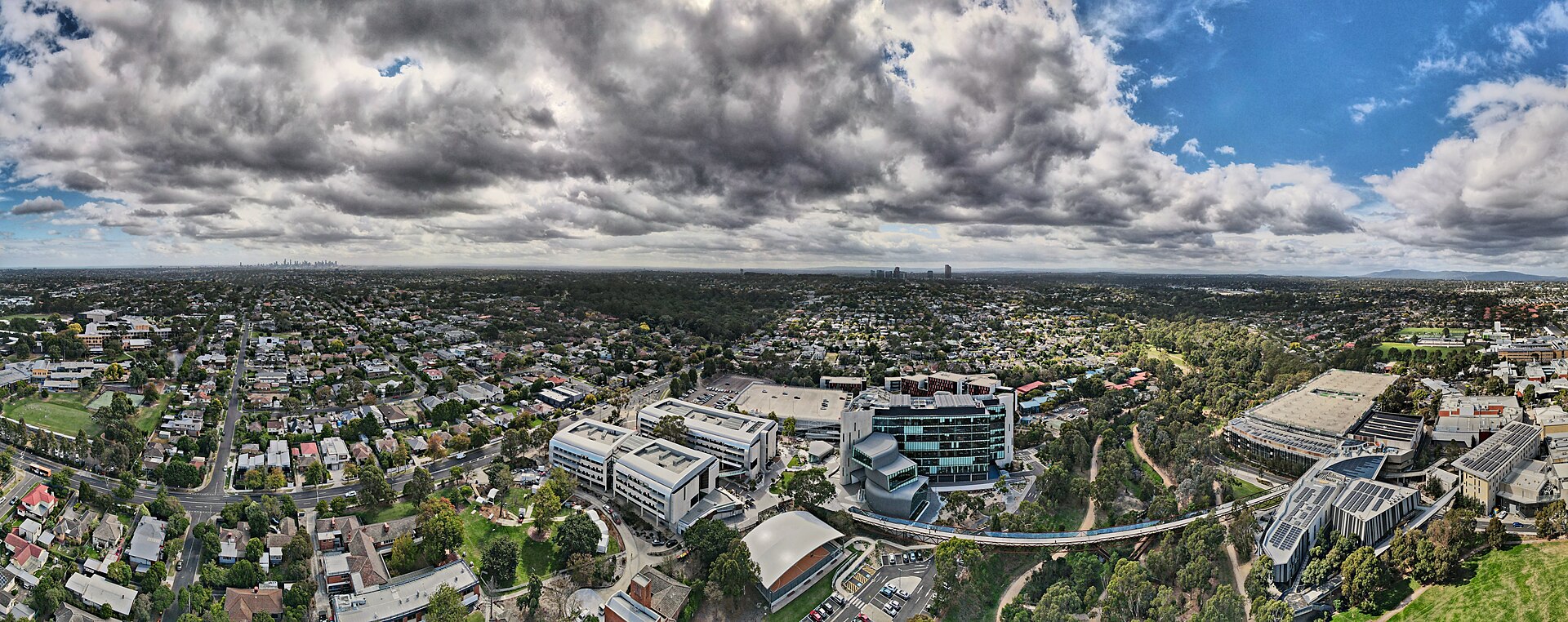
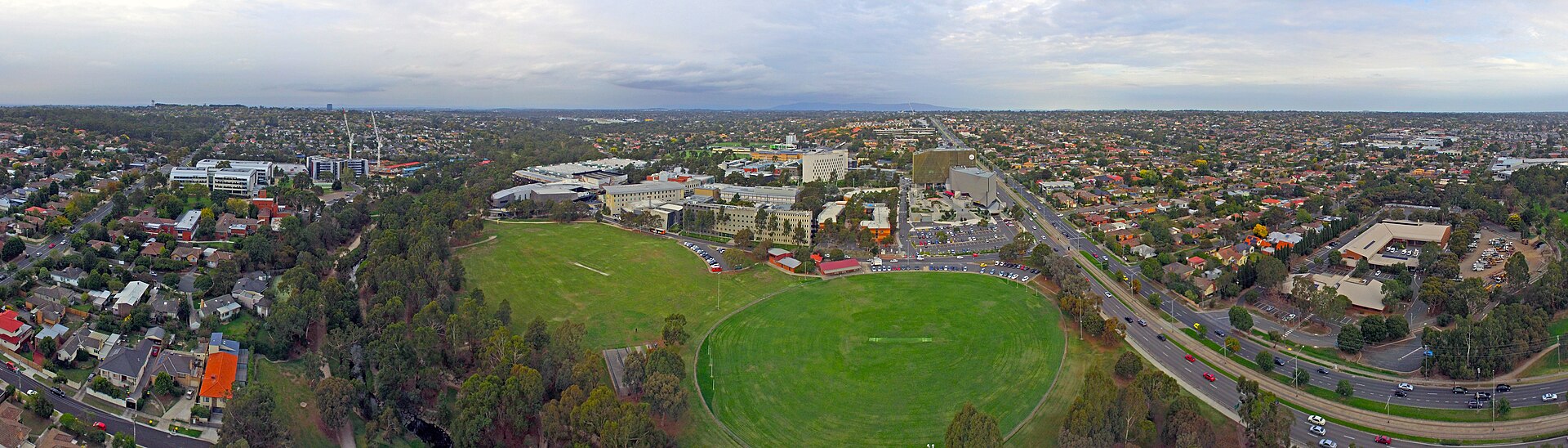
Deakin College panorama. Shot in March 2022.
Deakin College panorama. Shot in March 2022.Bob Tan · CC BY-SA 4.0 · via Wikimedia Commons
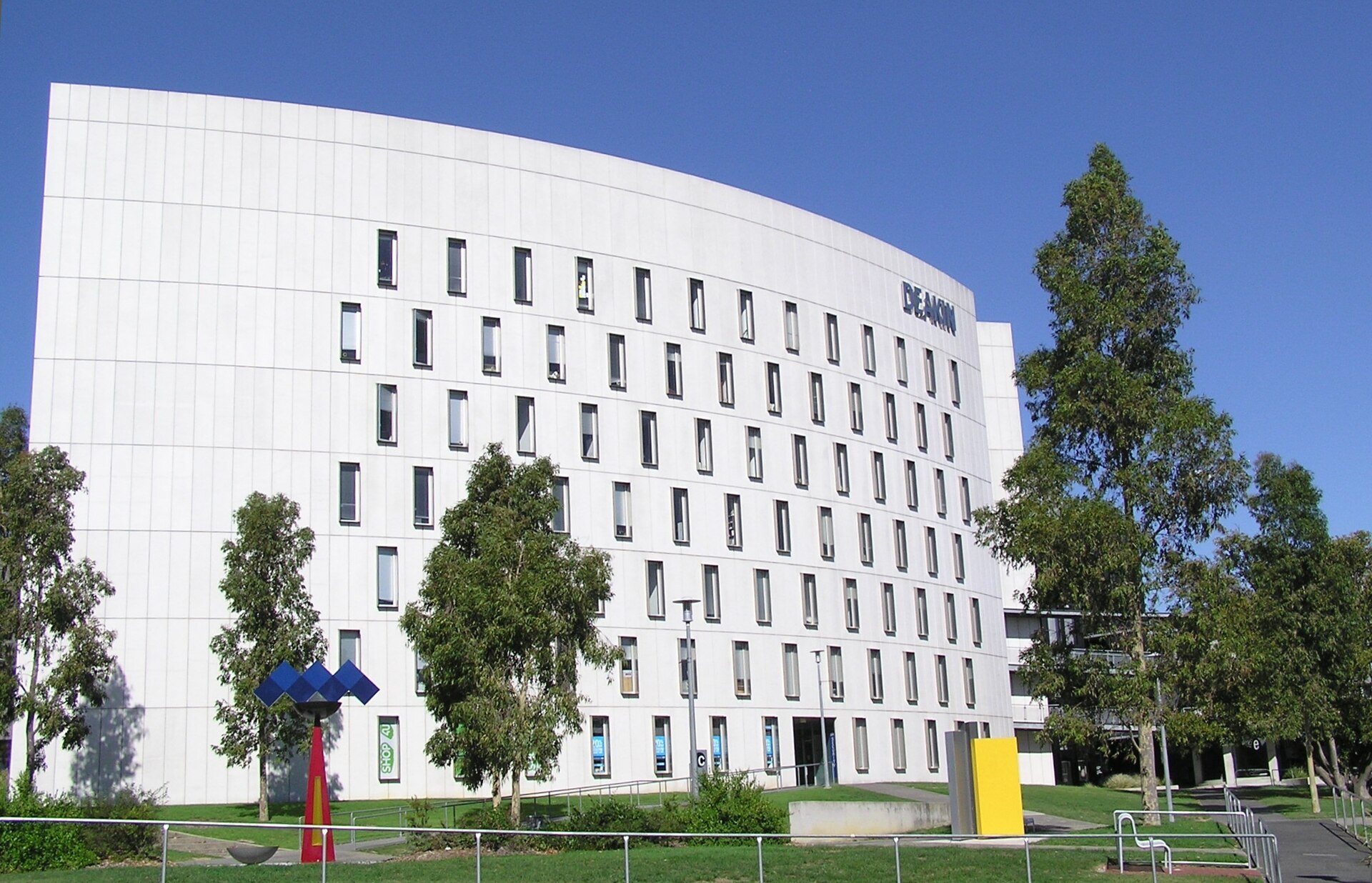
Aerial photo of Deakin University's Building C
Aerial photo of Deakin University's Building CBob T · CC BY-SA 4.0 · via Wikimedia Commons
Deakin University Burwood Campus
Deakin University Burwood CampusDonaldytong · Public domain · via Wikimedia Commons
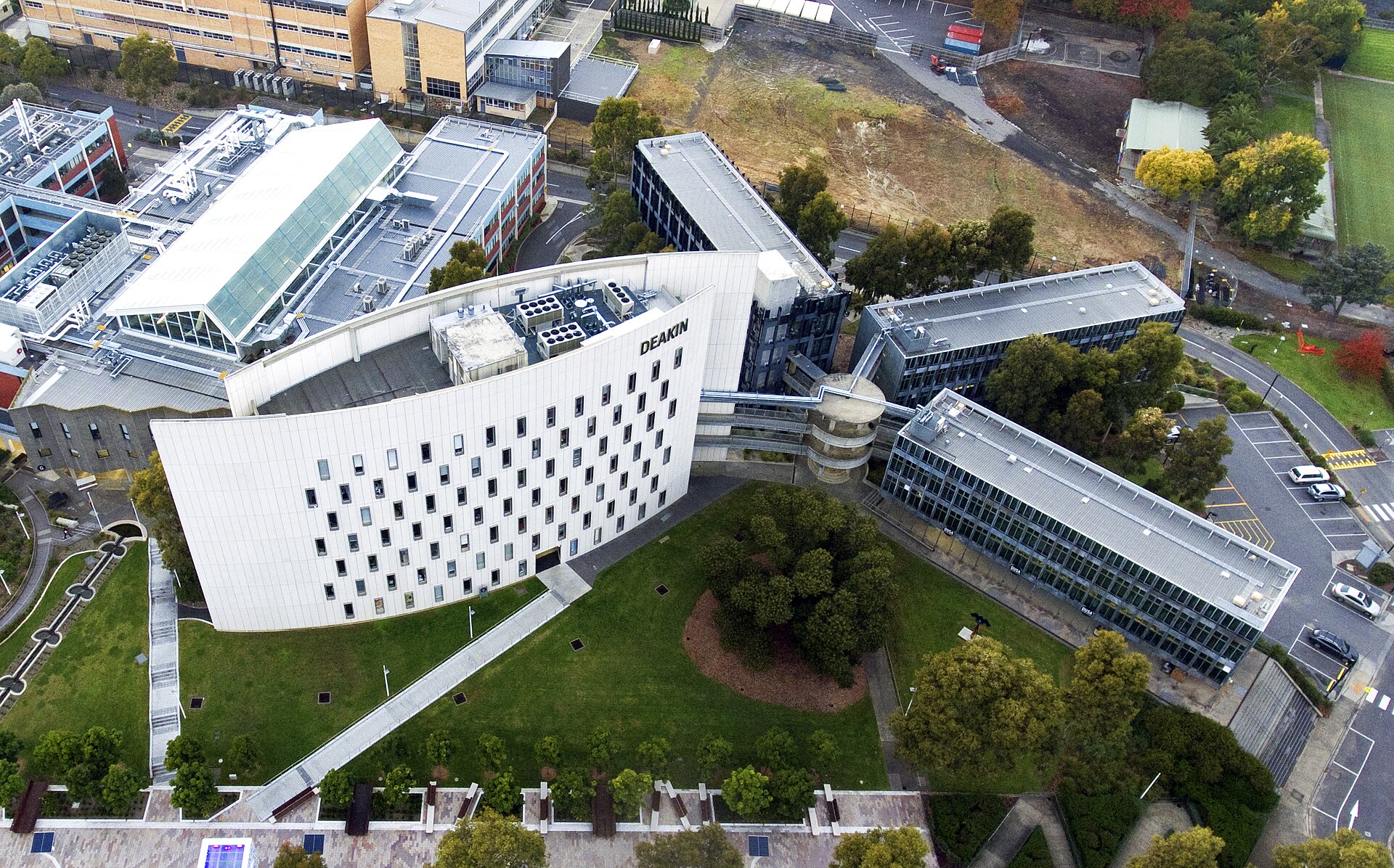
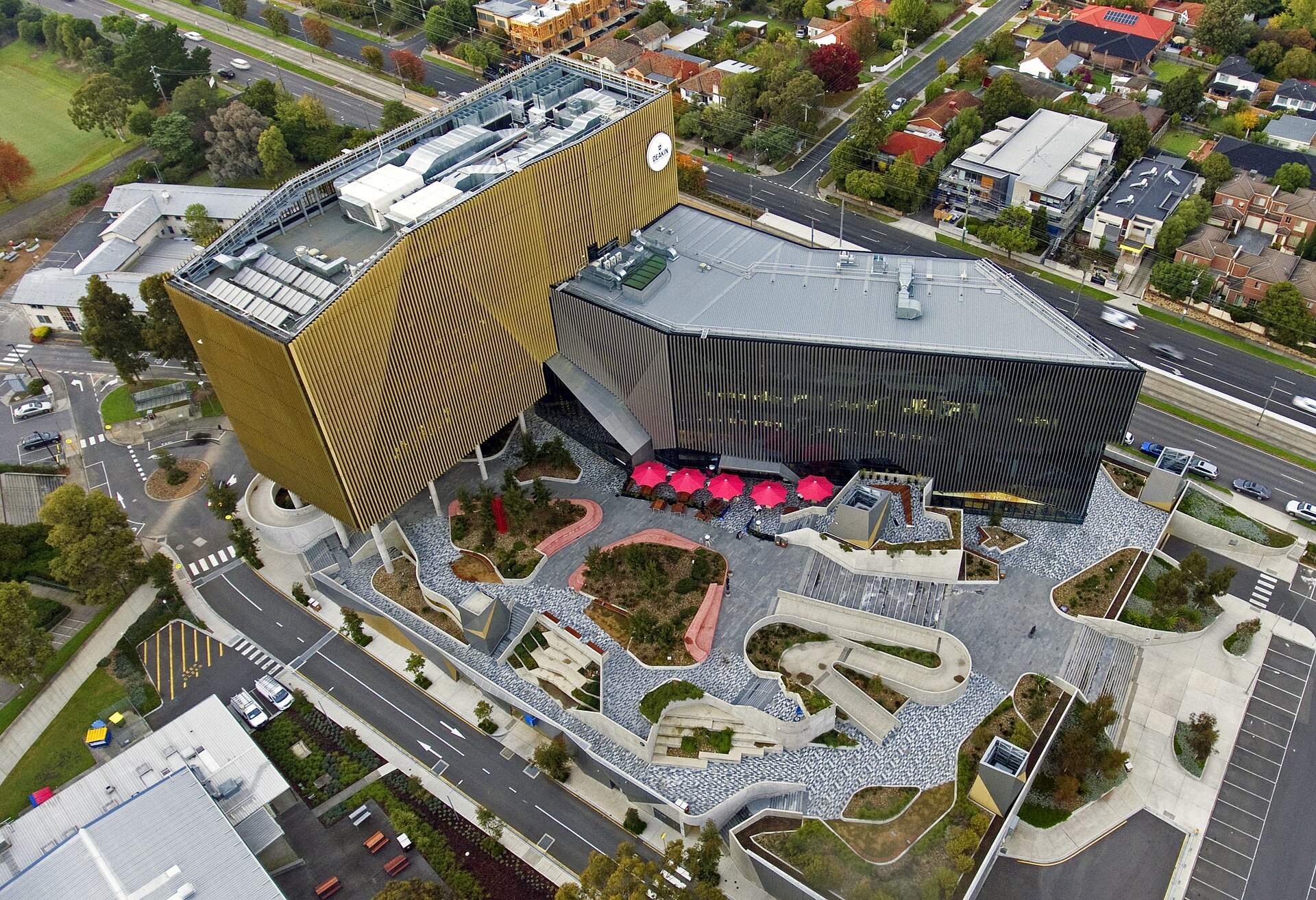
Deakin University's Building BC from the air
Deakin University's Building BC from the airBob T · CC BY-SA 4.0 · via Wikimedia Commons
View of Geelong across Corio Bay from Moorpanyal Park, 2010
View of Geelong across Corio Bay from Moorpanyal Park, 2010Marcus Wong · CC BY-SA 3.0 · via Wikimedia Commons
Deakin University Burwood Campus from the Sky
Deakin University Burwood Campus from the Skywanderingchina · CC BY-SA 3.0 · via Wikimedia Commons

Why Deakin — Satisfaction, Outcomes & Digital Leadership

Deakin offers international students an uncommon combination: a research-active university with top student satisfaction ratings, a genuinely flexible study model, and an industry pipeline connecting directly into Australia's healthcare, technology, and business sectors.

01Top Student Satisfaction
Deakin consistently ranks among Australia's highest-rated universities for student satisfaction. The university's personalised support model — including dedicated International Student Advisers and the STAR transition programme — ensures international students feel supported from day one.
02World-Top Sport Science
Deakin's sport science and exercise science programmes rank among the world's best, underpinned by the Institute for Physical Activity and Nutrition (IPAN) and elite partnerships with the AFL, Cricket Australia, and Netball Australia.
03Doubly-Accredited Business School
The Deakin Business School holds both AACSB and EQUIS accreditation — a distinction shared by fewer than 1% of business schools worldwide. Commerce, Finance, Accounting, and MBA graduates are recruited by the Big Four firms and major multinationals.
04Pioneer in Digital Learning
Deakin's Cloud Campus allows students to study fully online without sacrificing quality. Many programmes blend on-campus and cloud delivery, giving international students unparalleled flexibility across time zones and life circumstances.
05Melbourne & Geelong Campuses
The flagship Burwood campus sits 45 minutes by tram from Melbourne's CBD — one of the world's most liveable cities. The Geelong Waterfront campus offers a relaxed coastal environment at lower living cost.
06Strong Graduate Employment
88% of Deakin graduates are in employment within four months of graduation. The university's deep industry partnerships — in health, technology, and business — translate directly into graduate hiring and placement opportunities.

Deakin Acceptance Rate & International Entry Profile

Stats

61,000+
Student Population
25%
International Students
#198
QS World Rank

Profile Stats

28+
IB Diploma Minimum
3.0
Minimum GPA (4.0 scale)
6.5
IELTS Minimum
25%
International Student Proportion
88%
Employment within 4 months
#16
National Ranking
Overall acceptance rate — all programmes combined; competitive courses are harder

Rea Vs Rd

Rd Label: Trimester 2 (July)
Rd Value: Rolling
Rea Label: Trimester 1 (Feb)
Rea Value: Rolling

Deakin Admissions Requirements — Qualifications, English & Prerequisites

Academic Qualification
Value: IB 28+ / GPA 3.0+
  • IB minimum 28 total for general entry
  • Higher scores required for Nursing, Law, Engineering
  • A-Level: typically three passes at C or above (higher for competitive courses)
  • CBSE, HKDSE, Gaokao and most national qualifications accepted
Entry is qualification-based. Deakin publishes programme-specific minimum entry requirements. The general IB minimum is 28, but Nursing, Commerce (some specialisations), and Engineering will require meaningfully higher scores.
English Proficiency
Value: IELTS 6.5 / TOEFL 79
  • IELTS Academic: minimum 6.5 overall (no band below 6.0)
  • TOEFL iBT: minimum 79
  • Duolingo English Test: minimum 110
  • Health and Education programmes may require 7.0 IELTS overall
A mandatory English proficiency test (IELTS, TOEFL, PTE, or Duolingo) is required unless your prior study was conducted in English. This is a genuine threshold — students at the minimum often struggle in clinical or coursework-heavy environments.
Prerequisites by Discipline
Value: Subject Prerequisites
  • Engineering: Mathematics and Physics required
  • Nursing / Health: Biology required; Chemistry often required
  • Commerce: Mathematics strongly recommended
  • Architecture: Portfolio of creative work required
Many Deakin programmes have subject-specific prerequisites. Engineering, Nursing, and Architecture applicants must ensure their Year 12 (or IB HL) subject choices satisfy these requirements before applying.

Deakin Application Components — Direct Online Application

Deakin accepts international students through its own direct application portal — not via Common App or UCAS. The process is transparent, rolling, and straightforward. Below is every component of a complete Deakin application.

01RequiredOnline Application via Deakin International
Apply directly through the Deakin International application portal at deakin.edu.au. No Common App, no UCAS — Deakin uses its own direct-entry system for international students.
02RequiredAcademic Transcripts
Certified copies of your Year 11 and Year 12 results (or predicted/final IB scores). IB students may receive a conditional offer based on predicted scores, with final scores converting it to unconditional.
03RequiredEnglish Proficiency Test Result
IELTS Academic, TOEFL iBT, PTE Academic, Duolingo English Test, or Cambridge C1/C2. Submit official results via the respective testing authority.
04RequiredPassport Copy
A valid passport or national identity document. Required for CRICOS enrolment and subsequent Student Visa (Subclass 500) application.
05ConditionalPortfolio (Architecture & Design Programmes)
Students applying to Architecture, Visual Communication Design, and related creative programmes must submit a portfolio of prior creative work. Specifications are published on the relevant course page.
06ConditionalPersonal Statement (Scholarship Applications Only)
A personal statement is not required for standard undergraduate entry, but is typically requested for Deakin's merit scholarship applications. If applying for a scholarship, prepare a focused 400–600 word statement.
07OptionalApplication Fee
A non-refundable application processing fee of approximately USD 55 is payable at the time of online submission.

Deakin Essays & Written Submissions — What's Actually Required

Tips

For standard entry — there is no essay
Unlike the US or UK, Australian universities assess undergraduate international applicants almost entirely on academic merit. If you meet Deakin's qualification and English requirements, you receive an offer. No personal statement required.
Scholarship statements: be direct and specific
Deakin scholarship panels read applications from strong international students worldwide. The clearest, most specific statements win — not the most emotionally written. State your academic record, your programme, your career direction, and why Deakin specifically.
Portfolio quality over quantity
For Architecture or Design applicants, your portfolio matters enormously. Show range and depth — a few strong pieces with brief annotations explaining your thinking will always outperform a large volume of mediocre work.
Health programme supplementaries: show real motivation
Some competitive health programmes include supplementary written assessments. Panels want to see evidence of genuine healthcare exposure and a clear understanding of what the profession involves — not abstract statements about wanting to help people.

Prompts

Standard Undergraduate Entry
No personal essay is required for standard undergraduate international admission to Deakin. Entry is determined by your academic qualification and English proficiency results.
Scholarship Personal Statement (Merit Awards)
Scholarship applications may ask: describe your academic achievements, career goals, and reasons for choosing your programme and Deakin. Specific prompts vary by scholarship and intake — confirm on the official Deakin scholarships page.
Portfolio (Architecture & Design)
Architecture, Visual Communication Design, and selected creative programmes require a portfolio of prior creative work demonstrating range, skill, and creative thinking.
The most common Deakin application mistake (for scholarship applicants). Writing a US-style personal narrative when Deakin's scholarship panel is looking for a clear, professional statement of academic achievement, career direction, and programme rationale.
Writing Strategy — What Works for Australian University Applications

What Deakin's Admissions Process Is Actually Looking For

Deakin's admissions process is transparent and primarily qualification-based. Unlike holistic US-style admissions, the review centres on documented academic performance and English proficiency. Understanding each criterion precisely is the foundation of a successful Deakin application.

01Academic Qualification
Your secondary school results — IB Diploma score, A-Level grades, CBSE percentage, or national equivalent — are the primary criterion. Deakin publishes minimum entry requirements per programme; meeting or exceeding them is what drives an offer.
02English Proficiency
An official English test result at or above the programme minimum is mandatory. In clinical, teaching, and law programmes, English fluency is not just an admission criterion — it is a professional safety requirement.
03Subject Prerequisite Alignment
Deakin checks that your Year 12 (or IB/A-Level) subjects include the required prerequisites for your chosen programme. Engineering needs Maths and Physics; Nursing needs Biology. A strong overall grade without the right subjects will not secure an offer.
04Academic Potential (Competitive Programmes)
For Nursing, Law, and some Engineering programmes where demand exceeds places, Deakin may rank eligible applicants by academic performance. In these programmes, exceeding the minimum meaningfully improves your outcome.
05Portfolio Quality (Creative Programmes)
Architecture and Design admissions assess your creative portfolio as a primary factor. Quality, range, and intentionality of your creative work matter more than volume.
06Scholarship Merit (Award Applications)
For scholarship applications, overall academic excellence — measured against Deakin's benchmark — combined with a clear, specific personal statement can differentiate you from a strong applicant pool.

Deakin Financial Aid & Scholarships for International Students

Deakin offers merit-based scholarships providing approximately 10% of tuition in scholarship support on average. Full government-funded scholarships are available to eligible students from developing countries through Australia Awards. Deakin does not offer need-blind admissions or comprehensive no-loan pledges comparable to a small set of elite US universities — plan finances conservatively.

Aid amounts are estimates. Scholarship availability, value, and eligibility criteria change each intake. Confirm current offerings on the official Deakin scholarships page at deakin.edu.au/study/fees-and-scholarships/scholarships

Stats

~10%
Average aid for scholarship recipients
~$25,100
Annual international tuition
48 hrs
Work rights per fortnight during semester
Most UG
Programmes eligible for Australia Awards

Contribution Tiers

NoteRangePercentPercent Value
Deakin's primary scholarship; partial tuition waiver for high academic performersDeakin International ScholarshipMerit-based40
Larger tuition contribution for the strongest-performing intake applicantsVice-Chancellor's International ScholarshipCompetitive70
Full government scholarship for eligible developing-country studentsAustralia AwardsFull cover100
Scholarship bonuses available through Deakin College pathway entryPathway ScholarshipsPartial25
Australian Student Visa Work Rights — A Financial Buffer. Australia does not offer government-backed student loans to international students. Deakin's own scholarships are merit-based partial tuition fee waivers. However, Australian Student Visa work rights (48 hours/fortnight during semester, unlimited during holidays) provide a meaningful offset for living costs — a genuine advantage over many other countries' visa conditions.

Key Dates

Trimester 1 Application Window
Date: Nov–Jan
Trimester 1 Commencement
Date: Late Feb
Trimester 2 Application Window
Date: Apr–Jun
Trimester 2 Commencement
Date: Late Jul

Advantages

  • Earliest scholarship consideration — scholarship pools fill per intake
  • More time to arrange Australian Student Visa (Subclass 500)
  • Trimester 1 (February) offers full programme and campus availability
  • Greater course-choice flexibility in the main February intake
  • Conditional offers issued quickly on predicted/incomplete results

Disadvantages

  • Application must be ready before final IB/A-Level results are published
  • Conditional offers require conversion to unconditional once results arrive
  • Some programmes have limited places in Trimester 2
  • Trimester 3 availability is highly restricted — check per programme
  • Visa processing time must be factored into your planning timeline
Trimester 1 vs Trimester 2. Deakin accepts international students in two main intakes per year. Trimester 1 (February) is the main intake with full programme availability and the strongest scholarship access. Trimester 2 (July) is the secondary intake — most programmes available but some restrictions apply.
Tychr's Intake Recommendation. Apply for Trimester 1 if your results will be available and you are ready to start in February. Apply 6–9 months before your intended start to maximise scholarship access. If your IB final results come in July, Trimester 2 may be the practical choice — confirm availability for your specific programme.
Deakin Trimester Intakes — Choosing the Right Start Date

Deakin Interviews — Who Needs One and Who Doesn't

Deakin does not conduct interviews for standard undergraduate admission. Your academic results and English test scores determine the outcome. The exception is a small number of competitive health programmes (some Occupational Therapy and Paramedicine intakes) that may include a Multi-Mini Interview (MMI) or structured supplementary assessment. The Doctor of Medicine is a postgraduate programme with entirely separate selection requirements including GAMSAT.

Meta

No interview for standard undergraduate admission
Format
Some health/OT/Paramedicine programmes may include MMI or structured assessment
Exception
Postgraduate pathway; GAMSAT + interview required — separate process
Doctor of Medicine
Academic results and English scores drive the admission decision
Weighted

Questions

Why this health profession specifically? (Health programme supplementaries)
Tip: Prepare to discuss your motivation for the health profession — not vague ('I want to help people') but specific: what clinical or volunteer exposure you have had and what it showed you.
Why Deakin for this programme? (Scholarship panels)
Tip: Reference a specific Deakin feature — the IPAN institute, a research clinic, an industry partnership. Generic 'great reputation' answers are weak.
What do you intend to do after graduating? (Scholarship panels)
Tip: Show a clear post-graduation trajectory — specific role, sector, or country. Vague career ambitions weaken scholarship statements and interview responses equally.

Deakin's Campuses & Residential Life

Deakin does not operate a residential 'houses' or 'colleges' system in the Oxbridge or Harvard sense. Instead, the university has four physical campuses and a Cloud Campus, each with its own residential options and community character. On-campus accommodation at Melbourne Burwood and Geelong Waurn Ponds is available but limited — apply early alongside your course application.

Houses

Burwood Campus Residences
Tag: Melbourne
Largest campus; on-campus apartments and studios available; full amenities
Waurn Ponds Residences
Tag: Geelong
On-campus college at the engineering/health campus; quieter environment
Waterfront Campus
Tag: Geelong
City-centre campus; primarily Commerce, Law and nursing; private student housing nearby
Warrnambool Campus
Tag: Regional
Coastal regional campus; limited on-campus housing; strong community feel
Cloud Campus
Tag: Online
Fully online — no physical residential component; study from anywhere

Lottery Steps

  • Apply for accommodation at the same time as your course — do not wait for your offer
  • Burwood (Melbourne) has the most on-campus options but highest demand — priority to first-year international students where possible
  • Waurn Ponds (Geelong) is the residential campus for Engineering, Architecture, and Health Sciences
  • Waterfront (Geelong) and Warrnambool have limited on-campus options; private student accommodation is available nearby
  • Deakin maintains partnerships with off-campus private student accommodation providers (UniLodge, Scape, etc.) near all campuses

Deakin's Faculties & Signature Programmes

Faculty of Business & Law
Label: Deakin Business School (AACSB + EQUIS)
  • {"label":"Accreditation distinction","value":"AACSB + EQUIS"}
  • {"label":"Key programmes","value":"Commerce, Accounting, Finance, MBA"}
  • {"label":"Industry links","value":"Big Four, major banks, multinationals"}
  • {"label":"Law programme","value":"LLB + Juris Doctor"}
One of only a small number of business schools globally holding both AACSB and EQUIS accreditation. Strong graduate employability in accounting, finance, and management.
Faculty of Health
Label: Nursing, Allied Health & Medicine
  • {"label":"Flagship programme","value":"Bachelor of Nursing"}
  • {"label":"Postgraduate medical entry","value":"Doctor of Medicine (GAMSAT)"}
  • {"label":"Allied health","value":"OT, Physiotherapy, Nutrition, Paramedicine"}
  • {"label":"English requirement","value":"IELTS 7.0 (Nursing)"}
Deakin's largest faculty. Nursing, allied health, and nutrition programmes embed clinical placements across Victoria's major health networks, producing work-ready graduates.
Faculty of Science, Engineering & Built Environment
Label: Engineering, IT, Architecture & Science
  • {"label":"Key programmes","value":"Engineering, IT, Cyber Security, Architecture"}
  • {"label":"Research institute","value":"CCSRI (Cyber Security)"}
  • {"label":"Sport Science ranking","value":"World top tier"}
  • {"label":"Prerequisites","value":"Maths + Physics (Engineering)"}
Home to Deakin's world-leading sport science and exercise science programmes and the Centre for Cyber Security Research and Innovation. Engineering programmes are CRICOS-registered and industry-connected.
Faculty of Arts & Education
Label: Education, Arts, Communication & Design
  • {"label":"Key programmes","value":"Teaching, Psychology, Communication, Design"}
  • {"label":"English requirement","value":"IELTS 7.0 (Teaching)"}
  • {"label":"Portfolio","value":"Required for Design & Architecture"}
  • {"label":"Psychology pathway","value":"Undergraduate to Postgrad (APAC accredited)"}
Education and Teaching degrees require high English proficiency (IELTS 7.0+) as a professional requirement. Psychology programmes follow the APAC-accredited pathway to provisional registration.

Research & Extracurricular Opportunities at Deakin

Institute for Physical Activity & Nutrition (IPAN)
Category: Flagship Research Institute
IPAN positions Deakin among the world's leading sport and nutrition science research environments. Undergraduate students in exercise science can access research projects from early in their degree through supervised research units and honours pathways.
Centre for Cyber Security Research & Innovation (CCSRI)
Category: Industry Research
CCSRI connects students directly to government and enterprise cyber security projects. IT and Cyber Security students can access industry-linked research, competitions, and project work not available at most comparable universities.
DeakinTALENT & Industry Placements
Category: Career Development
DeakinTALENT provides dedicated careers support, including work-integrated learning (WIL) units embedded into undergraduate programmes across all faculties. Internship-linked units give students verifiable industry experience before graduation.
Clubs, Societies & Student Life
Category: 80+ Active Groups
Deakin Students Association manages over 80 clubs — cultural societies (Indian Students Association, Chinese Cultural Club, African Society), academic clubs, entrepreneurship groups, sporting collectives, and international student networks across all campuses.
Scroll right to explore Deakin's research institutes and student life opportunities.

Career Outcomes & Industry Links at Deakin

Deakin's graduate employment rate of 88% within four months reflects strong industry pipelines, particularly in health, cyber security, business, and sport science. The university's practical, placement-embedded curriculum model is specifically designed to produce employment-ready graduates.

Stats

88%
Employed within 4 months of graduation
$43K USD
Average starting salary
#198
QS World Ranking
#16
National Ranking
25%
International students on campus
Top 1%
Dual business school accreditation (AACSB + EQUIS)

Categories

Healthcare & Nursing
Deakin Nursing and allied health graduates are in high demand across Victoria's public and private health networks. Clinical placement hours embedded in the curriculum mean graduates are work-ready on day one.
Technology & Cyber Security
CCSRI-linked Cyber Security graduates enter roles at the Australian Signals Directorate, Telstra, Deloitte, and major financial institutions. IT graduates are recruited by technology firms across the Asia-Pacific.
Business & Finance
The Deakin Business School's AACSB + EQUIS accreditation attracts major employers including the Big Four accounting firms, major Australian banks, and multinational corporations across the Asia-Pacific region.

Our Deakin Admissions Track Record & Student Success Stories

Aisha M.
I was worried my CBSE percentage wouldn't be competitive for Nursing. Tychr helped me understand that Deakin's entry assessment looks at subject performance specifically, not just an aggregate. Focusing on my Biology and Chemistry results, and getting my IELTS to 7.0, made all the difference.
Country: Nigeria
Program: Deakin — Bachelor of Nursing (Pre-Registration)
Class Year: Trimester 1, 2025
Residential: Waurn Ponds Campus
Academic Profile: IELTS 7.0 · Biology A
Raj K.
The scholarship personal statement was something I had never written before — we don't do that in India. Tychr walked me through the genre completely. The key insight was: lead with results, not a story. I received the Deakin International Scholarship.
Country: India
Program: Deakin — Bachelor of Commerce (Finance)
Class Year: Trimester 1, 2025
Residential: Melbourne Burwood
Academic Profile: CBSE 94% · IELTS 7.0
Li Wei
I applied with my IB predicted score of 32 and a strong Biology HL result. Tychr confirmed this was sufficient for conditional entry into Health Sciences, and helped me convert the conditional offer after my final results. The process was much simpler than applying to the UK.
Country: China
Program: Deakin — Bachelor of Health Sciences
Class Year: Trimester 2, 2025
Residential: Melbourne Burwood
Academic Profile: IB 35 · IELTS 6.5

Faqs

Do I need to write a personal essay to be admitted to Deakin?+

No. For standard undergraduate entry, Deakin does not require a personal essay or statement. Admission is based on your academic transcripts and English proficiency results. A personal statement may be required for scholarship applications only.

What IB score do I need for Deakin?+

A minimum IB Diploma score of 28 is required for general entry. Competitive programmes such as Nursing, Law, and some Commerce specialisations require higher scores. Always check the specific course page for current minimum requirements.

Can I study at Deakin fully online?+

Many Deakin programmes are available fully online through the Cloud Campus. International students studying online from outside Australia should confirm visa and course eligibility rules with the Australian Department of Home Affairs.

Does Deakin offer scholarships for international students?+

Yes. Deakin offers merit-based scholarships for international students, typically providing partial tuition fee waivers. Australia Awards — government-funded full scholarships — are available to eligible students from developing countries. Apply early as scholarship places are limited per intake.

What part-time work rights do I have as a Deakin international student?+

Australian Student Visa (Subclass 500) holders can work up to 48 hours per fortnight during study periods and unlimited hours during university holidays. This is a significant benefit that helps offset living costs in Australia.

How does Deakin compare to other Australian universities?+

Deakin ranks #198 globally (QS) and #16 nationally. It sits within the Australian Technology Network — a group of practice-focused, industry-connected universities. It is particularly strong in Sport Science, Nursing, and Cyber Security. Students who prioritise student experience, flexible delivery, and career outcomes consistently rate Deakin among Australia's best.

Which Deakin campus should I choose?+

Melbourne Burwood is the largest campus with the most course options, social life, and city access. Geelong Waterfront suits Commerce, Law, and Nursing students who want a coastal city experience. Waurn Ponds suits Engineering, Architecture, and Health Sciences. Choose based on your programme availability and lifestyle preference.

Is an Australian student visa difficult to obtain?+

Deakin is a registered CRICOS provider (code 00113B), which is required for international student enrolment. Once you receive your Confirmation of Enrolment (CoE), you apply for a Student Visa (Subclass 500) through the Australian Department of Home Affairs. Demonstrating financial capacity to meet living costs is a key visa requirement.

Book a Free Deakin Admissions Strategy Session

In 60 minutes, our Deakin admissions specialists will evaluate your academic profile, confirm your English proficiency strategy, identify scholarship opportunities for your intake, and build a step-by-step plan to your February or July start.

  • No commitment required
  • Australian university admissions specialists
  • Personalised scholarship strategy — not generic advice
Getting into the right Australian university is about knowing what each programme actually looks for — and making sure your academic and English results meet the mark.

Deakin Academic Entry Requirements

Deakin University Academic Requirements — The Honest Breakdown for International Students

What qualifications, grades, and English proficiency do admitted Deakin students actually have? And what does Deakin's qualification-based admissions process mean for IB, A-Level, CBSE, and other international curriculum students?

28
IB Diploma Minimum
General entry benchmark
3.0
Minimum GPA
On a 4.0 scale where applicable
6.5
IELTS Minimum
General; health/education: 7.0
79
TOEFL Minimum
iBT total score
~60%
Acceptance Rate
All programmes; competitive courses are harder
#198
QS World Rank
QS World University Rankings

GPA & Academic Results

Deakin and GPA — What the Entry Benchmarks Mean

Deakin publishes minimum entry requirements per programme — the minimum GPA benchmark on a 4.0 scale is 3.0 for general entry. However, this figure reflects the floor, not the average. For competitive programmes like Nursing, Engineering, and Commerce specialisations, the effective entry level is higher.

A 3.0 GPA is the floor, not the target. For competitive programmes, aim comfortably above the minimum. A strong performance in the prerequisite subjects is more important than a high average in unrelated subjects.

3.0
Minimum GPA for general entry (4.0 scale)
88%
Graduate employment rate within 4 months
What GPA means in the Australian admissions context. Deakin does not use a GPA system for Australian domestic students — domestic entry uses the ATAR (Australian Tertiary Admission Rank). International students are assessed against published equivalency tables for their specific curriculum: IB Diploma, A-Levels, CBSE, HKDSE, and so on. The 3.0 GPA figure applies specifically where a US-curriculum applicant's GPA is being used as the qualification.
Final year results carry the most weight. Deakin places more weight on your final year results than on an aggregate GPA across multiple years. For IB students, your predicted and final score are the key metrics. A strong upward trajectory in your final year — particularly in prerequisite subjects — is read positively.

Academic Context

International Qualifications at Deakin — How Your Curriculum Is Read

Deakin's admissions office is experienced at evaluating qualifications from over 180 countries. The university publishes explicit conversion tables for the most common international qualifications, making the process transparent rather than opaque.

How Deakin contextualises international qualifications
Deakin uses an equivalency framework to convert international secondary qualifications to Australian equivalents. For IB students, each total score range maps to an approximate Australian Tertiary Admission Rank (ATAR) equivalent. For A-Level students, grade combinations map to ATAR equivalents. For CBSE and HKDSE students, published percentage/grade equivalencies apply. This means the assessment is systematic and repeatable, not subjective.
Prerequisites override overall scores
Prerequisite subject requirements apply regardless of overall score. A student with IB 35 who lacks HL Biology cannot enter Nursing, regardless of their total points. Ensure your subject choices satisfy the prerequisites for your target programme before you apply — you cannot substitute subjects after the fact.
For students from less commonly assessed curricula. If your national curriculum is not listed on Deakin's equivalency table, or if you have a non-standard qualification, contact Deakin International directly before applying. The international admissions team handles assessment of unusual or rare qualifications on a case-by-case basis.

SAT at Deakin

SAT Scores at Deakin — Not Required or Used

Deakin does not use SAT scores for undergraduate admission — entry is based on your secondary school qualification.

LabelScorePercent
SAT used for admission?No0
SAT as English proxy?No0
SAT Math and Deakin's maths prerequisites. Strong SAT Math scores do not substitute for course-specific mathematics prerequisites. If you have taken the SAT and have strong math scores, these do not automatically satisfy Deakin's Engineering or Commerce mathematics prerequisite — your IB or A-Level Mathematics result is what counts.
Preparation focus for US-curriculum students. Students from US curricula applying to Deakin should focus preparation on achieving the strongest possible AP or high school diploma results in relevant subjects, and on meeting the English proficiency requirement through IELTS, TOEFL, PTE, or Duolingo.
US curriculum students applying to Deakin. If you are a US-curriculum student applying to Deakin, your high school GPA (targeting 3.0+ on a 4.0 scale for general entry) and relevant AP or SAT subject results may inform Deakin's assessment, but they are not the primary mechanism. Your counsellor should contact Deakin International to confirm exactly how your specific transcript is assessed.

ACT at Deakin

ACT Scores at Deakin — Not Applicable

Deakin does not use ACT scores in its admissions process.

Metrics

ACT used for admission?
Score: No
Alternative credential required
Score: Secondary qualification + English test

Comparison Cards

Australian admissions vs. US admissions
Deakin evaluates your secondary qualification (IB, A-Levels, national curriculum) and English proficiency test results. SAT and ACT are not part of this framework.
The standardised element at Deakin
For all international students, the English proficiency test (IELTS/TOEFL/PTE/Duolingo) is the standardised component of the Deakin application — not the SAT or ACT.
What to focus on instead
Students from IB programmes should focus on IB total score and HL subject prerequisites. Students from A-Level programmes should focus on relevant subject grades. US curriculum students should confirm their specific GPA/AP assessment pathway with Deakin International.
How Deakin assesses standardised performance. Deakin's qualification equivalency framework assesses your secondary school results in your national system. Whether you have sat the ACT or not has no bearing on this assessment.
Tychr's recommendation for Deakin applicants. Do not waste preparation time on SAT or ACT for a Deakin application. Invest that time in achieving the best possible result in your national curriculum and scoring comfortably above the IELTS/TOEFL minimum for your target programme.

Testing Policy

Deakin's Admissions Testing Policy — What You Must Submit and What You Don't

Deakin does not have a 'test-optional' policy in the US sense. The university does not use SAT or ACT for admission at all — your secondary school qualification IS the test. English proficiency tests (IELTS, TOEFL, PTE, Duolingo) are mandatory, not optional, for most international students.

Submit Items

Submit your IELTS, TOEFL, PTE, or Duolingo result — this is mandatory, not optional, for most international applicants.
Submit your official secondary school transcript or predicted results — this is the primary admission criterion.
If applying to Architecture or Design, submit your portfolio — this is required, not optional.

Withhold Items

SAT and ACT scores are not required and do not strengthen a Deakin application — do not spend time preparing for these tests specifically for Deakin.
A personal statement is NOT required for standard undergraduate entry — do not submit one unless specifically invited to (e.g. scholarship applications).
Current policy. Deakin requires: (1) evidence of your secondary school qualification at or above the published minimum for your chosen programme; (2) an English proficiency test result at or above the programme minimum. There are no additional admissions tests for most programmes. Medicine (Doctor of Medicine, a postgraduate programme) requires GAMSAT.
The most common misconception about Australian university admissions. Many students familiar with the US admissions system apply to Australian universities expecting a holistic review. Deakin's process is qualification-based and transparent. If you meet the published requirements, you receive an offer. The selection is not a competition for limited 'spots' in the US sense — it is a qualification threshold.

International Qualifications

IB Diploma and A-Levels at Deakin — Specific Entry Benchmarks

IB Diploma
Note: Deakin accepts IB Diploma students and issues conditional offers based on predicted scores. HL subject alignment to course prerequisites matters more than maximising the total score — a student with IB 30 and HL Biology meets Nursing prerequisites; a student with IB 35 without HL Biology does not.
  • {"label":"General entry minimum","value":"28 total points"}
  • {"label":"Competitive programmes (Nursing, Engineering, Law)","value":"Higher than 28 — check per programme"}
  • {"label":"HL subject alignment","value":"Critical — ensure HL subjects cover programme prerequisites"}
  • {"label":"Predicted grades","value":"Accepted for conditional offers; final scores convert to unconditional"}
A-Levels
Note: Deakin converts A-Level grades to ATAR equivalents using published tables. Typically three A-Levels at grade C or above satisfy general entry, with higher grades required for competitive programmes. As for IB, the subjects taken matter as much as the grades achieved.
  • {"label":"General entry","value":"Three A-Levels at C or above (minimum)"}
  • {"label":"Competitive programmes","value":"Higher grades required — check per programme"}
  • {"label":"Subject prerequisites","value":"Must be satisfied by specific A-Level subjects, not overall grade"}
  • {"label":"AS-Level","value":"Supplements A-Level profile but does not substitute"}

Advanced Placement

AP Courses at Deakin — Relevance for International Applicants

Deakin does not use AP courses or scores in its standard admissions assessment for international applicants from outside the US curriculum. For US high school students applying to Deakin, AP performance may be considered as part of the overall transcript assessment.

AP courses for US curriculum applicants
If you are a US curriculum student, Deakin's International Admissions team assesses your high school GPA and AP course profile. Strong AP scores in relevant subjects (e.g. AP Biology for Nursing; AP Calculus for Engineering) can strengthen your subject prerequisite case. Contact Deakin International directly to confirm how your specific transcript is assessed.
AP is not relevant for IB or A-Level students
Students from IB or A-Level programmes should not pursue AP courses to strengthen a Deakin application — your IB or A-Level results are the primary credential and are fully understood by Deakin's admissions office.
Advanced standing and credit
Deakin awards advanced standing (credit) for prior study at an appropriate level. Students who have completed relevant AP courses with strong scores, or who have completed relevant VCE/HSC units in Australia, may apply for credit towards their Deakin degree — reducing the time and cost of their programme.
Deakin's credit transfer system can reduce your degree duration if you have completed relevant prior study at an appropriate level. Apply for credit recognition through Deakin's Credit for Prior Learning (CPL) process.
For IB and A-Level students, Deakin's admissions is based on your IB/A-Level profile — not on AP performance. Do not sit AP exams to supplement a Deakin application if you are in an IB or A-Level programme.

Secondary School Record

Your Secondary School Record — What Deakin Is Looking For

Deakin assesses secondary school record in the context of what was available to the applicant and against published equivalency benchmarks. The key is whether your Year 12 subject choices satisfy the prerequisites for your target programme.

Taking the prerequisite subjects for your target programme is more important than maximising your overall score in unrelated subjects.

Threshold-based, not ranking-based. Unlike highly selective universities where the rigour of your secondary school record is evaluated in comparison to other applicants, Deakin's process is threshold-based: do your results meet or exceed the published minimum for your programme? Within that framework, higher results improve your competitiveness for scholarships and for programmes where demand exceeds places.
What rigour means in the Australian context. For Deakin, 'academic rigour' means ensuring you have studied the subjects required for your chosen programme at the appropriate level. This is not about course difficulty in the abstract — it is about prerequisite alignment.
What Deakin is looking for specifically. An IB student applying to Engineering who took HL Mathematics (Analysis and Approaches) and HL Physics has satisfied the prerequisite requirements regardless of their total IB score. An A-Level student with Mathematics and Physics at grade C or above meets the minimum. These are the signals Deakin's admissions process is designed to find.

Discipline Preparation

Subject Preparation — What Deakin Expects by Discipline

Deakin has specific subject-level expectations by discipline. For most programmes, these are published explicitly as prerequisite requirements on each course's official page. The following are the key subject expectations by discipline area.

Mathematics
HL Mathematics (IB) or Mathematics A-Level is required for Engineering programmes. For some Engineering streams, Physics is also a prerequisite. Commerce programmes strongly recommend Mathematics, and quantitative Finance streams may specify it. Deakin's IT and Cyber Security programmes do not have a hard mathematics prerequisite but benefit from a solid mathematical foundation.
Life Sciences (Biology/Chemistry)
HL Biology is required for Nursing, Nutrition, and many Allied Health programmes. Chemistry is often required or strongly recommended for Nursing and Nutrition. For Sport and Exercise Science, Biology is the core prerequisite subject.
English (for Education programmes)
For Teaching (Education) programmes, IELTS 7.0 overall (with no band below 7.0) is a professional requirement in addition to the academic qualification. This is stricter than the standard 6.5 minimum and reflects the professional requirement for registered teachers in Australia.

Language Proficiency

English Language Requirements for International Deakin Applicants

English proficiency is a mandatory, non-negotiable requirement for all international students at Deakin. The minimum scores below are sourced from the university's facts data. Programme-specific requirements vary — always confirm on the specific course page.

The 6.5 IELTS minimum is a floor, not a comfortable operating level. Students who arrive at the threshold often struggle in essay-intensive, clinical, or group-work-heavy programmes. Aim for 7.0 or above for any coursework-heavy or professionally regulated programme. Students who miss the English minimum can access the Deakin English Language Institute (DELI) pathway before commencing their degree.

Test: IELTS Academic
Score: 6.5 overall
Test: TOEFL iBT
Score: 79 total
Test: Duolingo English Test
Score: 110
Test: PTE Academic
Score: 58 overall
Test: Nursing / Teaching / Law
Score: Typically 7.0 IELTS — check per programme
Practical guidance on which English test to take. IELTS Academic is the most widely accepted test in Australia and the one Deakin's admissions process is most familiar with. TOEFL and PTE are equally valid, but if you have not taken one yet, IELTS is the lowest-risk option for an Australian university application. Duolingo is accepted but verify for your specific programme — some health and education programmes may not accept it.

By Programme

Academic Requirements by Programme — Deakin Entry Benchmarks

Deakin's entry requirements vary meaningfully by programme. The table below is a general guide — always confirm current minimums on the official Deakin course page for your specific programme and intake.

SignalsExpectationConcentration
HL Biology, HL Chemistry; clinical experience volunteer hoursIB 28+ with HL Biology; IELTS 6.5Nursing (Pre-Registration)
HL Maths + HL Physics; maths competition resultsIB 28+ with HL Maths + Physics; IELTS 6.5Engineering
HL Maths; strong economics/finance interestIB 28+; Maths recommended; IELTS 6.5Commerce / Business
HL Maths; programming experience or logical aptitudeIB 28+; Maths recommended; IELTS 6.5IT / Cyber Security
HL Biology + sport background; elite sport experienceIB 28+ with Biology; IELTS 6.5Sport & Exercise Science
Creative portfolio; design experience; artistic backgroundIB 28+; strong portfolio; IELTS 6.5Architecture / Design
Volunteer/community work; strong humanities profileIB 28+; IELTS 7.0 (no band below 7.0)Teaching / Education
Strong academic record in humanities; analytical writing abilityIB 28+; IELTS 7.0; competitive programmes higherLaw (LLB)
HL Biology; psychology or health science backgroundIB 28+ with Biology; IELTS 6.5Psychology

International Systems

Deakin and International Education Systems — How Your Curriculum Is Evaluated

IB Diploma
Deakin is experienced with IB Diploma applicants. The minimum total score of 28 is well understood; HL subject selection is carefully evaluated for prerequisite alignment. Predicted grades are accepted for conditional offers and converted on receipt of final results in July.
A-Levels (Cambridge/Edexcel)
A-Levels are assessed against Deakin's ATAR equivalency table. Three A-Levels at the appropriate grade range satisfy general entry; higher grades are required for competitive programmes. AS-Level results may supplement but do not substitute for full A-Levels.
Indian Boards (CBSE / ISC)
CBSE and ISC results are assessed against Deakin's India equivalency framework. A strong percentage in relevant subjects (Biology, Chemistry, Mathematics, Physics) is evaluated against the course-specific minimum. Indian students are one of Deakin's largest international student groups and the admissions team is well-experienced with CBSE assessment.
Chinese Gaokao
Gaokao results are accepted and assessed against Deakin's published China equivalency table. Strong results combined with meeting the English proficiency requirement are typically sufficient for general entry. Chinese students make up a significant proportion of Deakin's international community and the admissions process is well-established for this qualification.
Other Asian National Qualifications
HKDSE, Korean CSAT, and other East Asian national qualifications are assessed using published equivalency tables. Where in doubt, Deakin International can assess the qualification directly — contact them before applying.

Roadmap

Building Your Academic Profile for Deakin — What to Do at Each Stage

Year 9–10Identify your target programme and its prerequisites
Year: Year 9–10
  • Research Deakin's course-specific entry requirements now — so you choose the right Year 11–12 subjects.
  • If targeting Nursing, Biology is non-negotiable from Year 11 onward.
  • If targeting Engineering, Mathematics and Physics must be included in your senior subject choices.
  • Begin English language development early if English is not your primary language of instruction.
Year 11Choose subjects strategically
Year: Year 11
  • Select Year 11/IB/A-Level subjects that satisfy Deakin's prerequisites for your target programme.
  • IB students: confirm HL subject choices align with programme requirements before the HL/SL split is locked in.
  • Sit an IELTS practice test to establish your baseline English level and identify preparation needs.
  • Explore Deakin scholarship criteria — applying with strong Year 12 predicted scores is the key lever.
Year 12 First HalfApply early — rolling admissions rewards it
Year: Year 12 First Half
  • Submit your Deakin application with predicted/interim results as early as possible.
  • Conditional offers for Trimester 1 (February) typically require application by November–January.
  • Early applications receive earlier scholarship consideration — scholarship pools fill per intake.
  • Begin IELTS/TOEFL preparation in parallel with final exam preparation.
Year 12 — Final ResultsConvert conditional offer and arrange your visa
Year: Year 12 — Final Results
  • Submit final IB/A-Level or national results to Deakin to convert your conditional offer to unconditional.
  • Receive Confirmation of Enrolment (CoE) — the document required for your Student Visa (Subclass 500) application.
  • Apply for your Australian Student Visa through the Department of Home Affairs after receiving your CoE.
  • Arrange accommodation and arrange Overseas Student Health Cover (OSHC) before departure.

Common Pitfalls

Academic Mistakes That Cost Deakin Applications — And How to Avoid Them

Missing prerequisite subjects
Deakin's engineering programmes require Mathematics and Physics at Year 12 level. Nursing requires Biology. A strong total IB score without these subjects results in rejection for the specific programme — not substitution with another subject.
Using the university minimum instead of the programme minimum for English
Applying to Deakin with an IELTS of 6.5 for a Nursing or Teaching programme when the course minimum is 7.0 (or higher) is a common and avoidable mistake. Always check the programme-specific English requirement, not just the general university minimum.
Applying too late for scholarship consideration
Deakin is rolling admissions — but scholarship pools are allocated per intake. Students who apply close to the intake deadline often find that scholarship consideration for their intake has already concluded.
Assuming general entry benchmark applies to competitive programmes
Some students assume their IB 28 total score is sufficient for Nursing, Law, or Engineering without checking the programme-specific minimum. These competitive programmes often require higher scores than the general entry minimum.
Missing the Deakin College pathway option
Students who narrowly miss direct entry requirements sometimes wait and reapply, when a Deakin College pathway programme with a guaranteed progression offer would have gotten them into Year 1 of their target degree faster.

Real Outcomes

What Academic Profiles Tychr's Deakin-Admitted Students Had

The following profiles represent the academic backgrounds of students Tychr has helped gain Deakin admission or equivalent Australian university outcomes. They illustrate the range of preparation that works — and what made each application successful.

Profile 1 — Nursing (Burwood Campus)
HL Biology (6), HL Chemistry (5), HL English (5). Applied in Trimester 1. IELTS 7.0 overall with all bands at 7.0+. Conditional offer issued on predicted scores; converted in July.
Stats: IB 31 · IELTS 7.0
Takeaway: The programme minimum was IB 28 with HL Biology. The student met both criteria and the high IELTS score (7.0 across all bands) satisfied Nursing's language requirement.
Profile 2 — Engineering (Waurn Ponds)
A-Level Mathematics (A), Physics (B), Computer Science (B). Applied through Deakin International for Engineering. IELTS 6.5 overall. Conditional offer, converted to unconditional on A-Level results.
Stats: A-Levels ABB · IELTS 6.5
Takeaway: A-Level Mathematics and Physics satisfied the prerequisite requirements for Electrical Engineering. The overall grade profile met Deakin's ATAR equivalency threshold for the programme.
Profile 3 — Health Sciences + Scholarship (Burwood)
CBSE 89% aggregate. Biology and Chemistry scored strongly. IELTS 6.5. Applied for Health Sciences as a pathway to postgraduate medicine. Received the Deakin International Scholarship.
Stats: CBSE 89% · IELTS 6.5
Takeaway: The Deakin International Scholarship was awarded at admission based on strong CBSE performance above the merit threshold. Early application in Round 1 was key — scholarship pools had already begun filling by the time later applicants applied.

Faqs

What IB score do I need for Deakin?+

A minimum IB score of 28 is required for general entry. Higher scores are needed for competitive programmes like Nursing, Engineering, and Law. Always verify the current minimum for your specific course on the Deakin website.

What IELTS score does Deakin require?+

You need an IELTS Academic score of at least 6.5 overall for most programmes. Nursing, Teaching, and Law programmes typically require 7.0 overall. Always check the programme-specific English requirement on the course page.

Does Deakin require SAT or ACT scores?+

No. Deakin does not use SAT or ACT scores. Entry is based on your secondary school qualification and English proficiency test.

Can I apply to Deakin with IB predicted scores?+

Deakin accepts conditional offers based on predicted IB scores, with the unconditional offer issued when your final results are received in July. This means you can apply during Year 12 before your final exams.

Is a personal statement required for Deakin admission?+

No. For standard undergraduate entry, no personal essay is required. A personal statement may be needed for scholarship applications only.

Cost & Financial Aid

Deakin May Be More Affordable Than You Think — Here's the Full Picture.

Deakin is among the more cost-effective quality options for international study in Australia. With annual tuition of approximately USD 25,100 and a total cost of attendance around USD 41,100, it compares favourably with equivalent universities in the UK and US — before scholarships.

Partial Merit Scholarships
Available to high-achieving international applicants
Australia Awards
Full government scholarships for eligible developing-country students

Cost Transparency

What Deakin Actually Costs — The Full Annual Estimate

Deakin's tuition and cost-of-attendance figures are meaningfully lower than many UK Russell Group universities or comparable US institutions. Living costs vary by campus — Melbourne Burwood is more expensive than Geelong or Warrnambool. Students with Australian Student Visa work rights (48 hours/fortnight during semester) can meaningfully offset living costs through part-time employment.

International Tuition (varies by programme)
Cost: ~$25,100
Living Costs (accommodation, food, transport)
Cost: ~$16,000
Student Services and Amenities Fee (SSAF)
Cost: Varies
Books and materials (estimate)
Cost: ~$500–$1,000
Application fee (one-time, non-refundable)
Cost: ~$55
Estimated Total Annual Cost
Cost: ~$41,100
Australia Awards recipients. $0 Tuition + Living Allowance
Estimated Total Annual Cost. ~$41,100 USD
Deakin Annual Cost of Attendance — International Students (Approximate USD)
Australia Awards cover tuition, living, and travel for eligible developing-country students.
Full cost before scholarships — costs expressed in USD; Deakin bills in AUD.

Admissions & Aid Policy

Deakin Financial Aid for International Students — What Exists and What Doesn't

Unlike some elite US universities, Deakin does not operate a need-blind admissions policy or a no-loan guarantee. Australia does not have a government-funded loan scheme for international students (HECS-HELP is available to domestic students only). International students must fund their studies through personal means, scholarships, or commercial education loans from their home country.

Merit vs. Need — What Deakin Actually Provides. Deakin's financial support for international students is primarily through merit-based scholarships — partial tuition fee waivers for high-achieving applicants. This is fundamentally different from the US need-based aid model. The approximately 10% average aid figure from the facts file reflects a typical merit scholarship value, not a comprehensive aid package.
What Happens After Admission. Once admitted, Deakin's International team notifies scholarship-eligible students. Some scholarships are automatically assessed from the admission pool; others require a separate scholarship application submitted at or after your course application. Confirm the current process for your intake and programme.
What Australian Universities Don't Offer (and What They Do)
Deakin scholarships are merit-based: they are awarded based on academic achievement relative to the applicant pool, not on financial need. They provide a partial reduction in tuition for one or more years of study. They do not cover living costs.

Institutional Context

Why Deakin Offers What It Does — The Australian University Funding Context

Where Deakin's Scholarship Funding Comes From
Deakin's scholarship funding comes from university operating revenues and, in some cases, philanthropic endowments. The scale is smaller than US Ivy League financial aid programmes, reflecting Australia's different higher education funding model (where domestic students receive government HECS-HELP loans and international students pay full fees).
Subtitle: University Revenue + Philanthropy
Deakin's Scholarship Expansion
Deakin has expanded its international scholarship offering over time, adding programme-specific and partner-country awards alongside its flagship Deakin International Scholarship. The trajectory has been toward broader access for high-achieving international students, supported by Australia's national interest in attracting high-quality international students.
Subtitle: Growing International Access
International Students. International students represent 25% of Deakin's 61,000-strong student population, making the university's financial and support infrastructure for international students genuinely well-developed.
"We are committed to providing a genuinely inclusive, supportive and career-ready education for students from around the world."
Deakin University International Student Commitment

Scholarship Application Walkthrough

Applying for Deakin Financial Support — The Process Step by Step

Deakin's scholarship process is integrated with the admissions application — but specific steps vary by scholarship type. Here is the complete process.

01Apply to your Deakin course
  • Submit your course application through Deakin International (deakin.edu.au/study/international-students)
  • Apply as early as possible — 6–9 months before your intended start date
Deakin's scholarship consideration typically begins from the course application. You do not need a separate prior registration for most scholarships.
02Check scholarship-specific requirements
  • Some Deakin scholarships are automatically assessed from the admissions pool
  • Others require a separate scholarship application form and personal statement
  • Check the Deakin scholarships portal for your specific intake's requirements
Scholarship requirements vary — some are automatic, others require an additional application.
03Check Australia Awards eligibility
Notes: Australia Awards are administered by the Australian Government, not Deakin. Timelines are typically 12–18 months before the intended study start — check your country's Australia Awards portal for current deadlines.
  • Visit the Australia Awards website and confirm your country's eligibility
  • Australia Awards applications are submitted through the applicant's home country — separate from the Deakin application
  • Deadlines are typically 12–18 months before the intended study start
Australia Awards (full government scholarships) are a separate application process with their own timeline.
04Receive scholarship notification
Scholarship notifications are typically included with or shortly after the course offer. Some competitive scholarships may be notified later in the intake cycle.
05Accept offer and arrange visa
Accept your course offer and confirm your scholarship (if awarded). Receive your Confirmation of Enrolment (CoE) and apply for your Australian Student Visa (Subclass 500).
Student reviewing scholarship information

Financial Support for Internationals

Financial Aid for International Students at Deakin — The Complete Picture

Understanding what financial support actually exists for international students at Deakin — and what does not — is essential for accurate financial planning.

Merit scholarships — the main option
Deakin's merit-based scholarships provide a partial tuition fee waiver for high-achieving international applicants. The average aid for scholarship recipients is approximately 10% of tuition (facts file). This is a meaningful reduction but not a comprehensive package.
Australia Awards — the full scholarship option
The Australian Government's Australia Awards programme provides full scholarships (tuition + living allowance + airfare + OSHC) to eligible students from developing countries. These are competitive, government-administered awards — not Deakin scholarships. Check the Australia Awards website for your country's eligibility and deadlines.
Deakin student hardship fund
Enrolled Deakin international students experiencing unexpected financial difficulty can apply to the university's student hardship fund. This is emergency assistance, not a scholarship — it is a short-term support mechanism, not a source of ongoing study funding.
Australian work rights — the living cost offset
Australian Student Visa (Subclass 500) holders can work up to 48 hours per fortnight during semester and unlimited hours during university holidays. This right — unique to Australia compared to many other student visa regimes — allows international students to meaningfully offset their living costs through part-time employment in Melbourne's strong labour market.

Aid Overview

What Deakin Financial Support Looks Like — By Scholarship Type

Deakin Financial Support Summary

Aid amounts are qualitative — specific scholarship values are not independently verifiable and change each intake. Confirm current scholarship amounts on the official Deakin scholarships page.

For most international students, Deakin's own scholarships provide a partial tuition reduction. Australia Awards provide full support to eligible developing-country students. Part-time work rights are the key mechanism for offsetting living costs.

GrantIncomeContribution
Deakin International Scholarship (partial tuition waiver)High academic achieversTuition minus scholarship; living costs self-funded
Vice-Chancellor's International Scholarship (larger waiver)Exceptional academic achieversReduced tuition; living costs self-funded
Australia Awards (full tuition + living + airfare + OSHC)Eligible developing-country studentsMinimal/zero direct cost during study
No scholarshipAll international students~$41,100 USD per year total estimated cost
Deakin scholarships are merit-assessed, not income-assessed. The average scholarship represents approximately 10% of tuition (facts file). This equates to approximately USD 2,500 per year on a USD 25,100 tuition base.

Table Headers

Grant: Type of Support
Income: Who Qualifies
Contribution: Expected Student Contribution

Scholarship Qualification

Deakin Scholarships — Who Qualifies and What Exists

Deakin's scholarships are merit-based, not need-based. There is no income-tested aid programme for international students at Deakin equivalent to the US FAFSA/CSS Profile system. Scholarship allocation is driven by academic performance relative to the applicant pool for each intake.

What determines scholarship eligibility
A student with a strong academic record (well above the IB 28 minimum, or equivalent) who applies early has the best chance of a Deakin merit scholarship. Academic achievement is the primary criterion — not financial circumstances.
Need-based support — what does not exist at Deakin
Deakin does not have a comprehensive need-based financial aid programme for international students. Students who cannot meet tuition costs without full scholarship support should prioritise exploring Australia Awards (if eligible), home-country government scholarships, or commercial education loans.
Country-specific and partner scholarships
Some Deakin scholarships are restricted to students from specific countries or regions. Deakin International maintains regional representatives who can advise on any country-specific awards not prominently listed on the main scholarships portal.
Pathway scholarships
Students entering through Deakin College (the affiliated pathway provider) may be eligible for pathway-specific scholarships and progression bonuses upon entering Year 1 of their Deakin degree. This can reduce the overall cost of a pathway + degree route.

External Funding

External Scholarships — Additional Funding Sources for Deakin Students

In addition to Deakin's own scholarships, international students can pursue external scholarships that can be used to fund study at Deakin.

Australia Awards
Full government scholarships for eligible students from developing countries — the most comprehensive funding option for Deakin study
Endeavour Postgraduate Scholarships (check current status)
Australian Government postgraduate scholarships — confirm availability with the Department of Education
Home-country government scholarships
India: ICCR; Nigeria: various; Malaysia: JPA/MARA; Indonesia: LPDP; check your home country's scholarship landscape
Deakin Alumni Regional Scholarships
Some Deakin alumni associations run additional regional scholarships — check with Deakin International for your region
Tychr's scholarship database: As part of every full admissions programme, Tychr identifies external scholarship opportunities relevant to the student's country of origin, intended field, and academic profile. Australian-specific and Deakin-compatible scholarships are included in this guidance.
Stacking scholarships: If you receive an external scholarship alongside a Deakin scholarship, confirm with Deakin's fees team whether the external scholarship affects your Deakin scholarship entitlement. Some scholarships are compatible; others may reduce the Deakin award.
Country-specific government scholarships: Many governments offer scholarships for citizens to study at Australian universities. These vary by country and intake. Tychr maintains awareness of major country-specific programmes relevant to Deakin applicants.

Loan Policy

Loans at Deakin — What International Students Need to Know

International students at Deakin are not eligible for Australian government student loans (HECS-HELP). This is a fundamental difference from the domestic student funding model. International students must fund tuition from personal resources, scholarships, or commercial loans from their home country.

HECS-HELP: not available to international students
HECS-HELP is Australia's income-contingent student loan scheme, available to eligible domestic (Australian citizen, NZ citizen, or certain permanent residents) students. International students are categorically excluded from this scheme.
Commercial loans — home-country options
Some students fund part of their tuition through commercial education loans from their home country's banking system. These carry standard commercial interest rates and repayment obligations — budget conservatively and factor loan repayment into your post-graduation financial plan.
Trimester payment schedule — a practical advantage
Deakin's tuition payment schedule is per-trimester (not annual lump sum), which eases the cash-flow burden. Confirm the current payment schedule and any instalment options with Deakin's Student Finance team before you enrol.
Work rights as a de facto cost offset
Australian Student Visa work rights (48 hours/fortnight during semester) effectively provide a partial loan replacement for living costs — students who work during semester can offset AUD 10,000–15,000 annually in living costs, depending on their location, employment, and hours.

Student Work Rights

Working While Studying at Deakin — Australian Student Visa Work Rights

Australian Student Visa (Subclass 500) holders studying at Deakin are permitted to work up to 48 hours per fortnight during semester and unlimited hours during university holiday periods. This right is a significant financial benefit unique to Australia compared to many other study-destination countries.

  • Hospitality, food service, and retail (Melbourne has strong demand in these sectors)
  • Tutoring and academic support (particularly in STEM, Nursing, and Business)
  • Administrative and campus roles (Deakin employs students in various campus functions)
  • Healthcare support roles (for Nursing/Allied Health students with relevant placements)
  • Research assistant positions (primarily for postgraduate and honours students)
There is no formal 'work-study programme' at Deakin in the Harvard sense. Work rights come from the Australian Student Visa itself. International students find part-time work through Deakin's job board, Melbourne's general employment market, and campus employment opportunities. DeakinTALENT can assist with employment strategy.
Working 15–20 hours per week at Australian minimum wage (approximately AUD 24/hour as of 2026) can generate AUD 18,000–25,000 annually, covering a significant portion of Melbourne living costs. This is a meaningful financial buffer — plan your schedule to allow for it.
Work is not a required component of Deakin financial support — there is no mandatory work expectation in scholarship conditions. However, for most international students without full scholarship support, part-time work is a practical necessity for meeting living costs in Melbourne.

Benchmarking

Deakin vs. Alternatives — Financial Aid Comparison

PolicySchoolNo LoansTypical Cost
Merit scholarships; Australia Awards availableDeakin UniversityNo student loans for internationals~$41,100 USD/year before aid
Merit + some need scholarshipsUniversity of Melbourne (Go8)No student loans for internationals~$44,000–$50,000 USD/year before aid
Need-blind; no-loan grantsHarvard (US)Yes — all grants$0 for families under $85K/year
Limited merit scholarshipsUniversity of Edinburgh (UK)No government loans for internationals~$32,000–$38,000 USD/year before aid
Merit + need scholarshipsUniversity of Toronto (Canada)Limited loans for internationals~$35,000–$45,000 USD/year before aid
Deakin does not have binding Early Decision. All offers are non-binding until you formally accept — you can compare offers from multiple Australian universities before deciding.
For international students without access to need-based aid, Deakin's lower tuition base (approximately USD 25,100 vs USD 44,000+ at top Australian Go8 universities) makes it a genuinely cost-effective choice. The merit scholarship percentage (averaging approximately 10%) further reduces the net cost for high-achieving applicants.

Cost Analysis

Deakin vs. Alternatives — What You Actually Pay

Deakin's three-year degree model (standard in Australia) at approximately USD 123,300 total before scholarship is meaningfully less expensive than comparable four-year US degrees or some UK programmes, even without accounting for scholarship reductions or student work income.

PolicySchoolContributionFour Year Cost
Merit scholarship (~10% tuition reduction); Australia Awards availableDeakin University~$25,100 tuition + ~$16,000 living = ~$41,100/year~$123,300 (3-yr degree) before scholarship
Higher base tuition; some scholarshipsUniversity of Melbourne (Go8)~$44,000+ tuition + ~$18,000 living~$180,000+ (3-yr degree)
UK Russell Group; 3-year degreesUK Russell Group (e.g. Manchester)~$30,000–$38,000 tuition + ~$16,000 living~$138,000–$162,000 (3-yr degree)
Need-blind, no-loan grants for qualifying familiesHarvard / MIT / Princeton$0 for families under $85K/year$0 (qualifying low-income families)
Illustrative Three-Year Cost Comparison: International Students

Financial Aid Appeals

Seeking Additional Financial Support at Deakin — When and How

Deakin does not have a formal financial aid appeal process equivalent to Harvard's CSS Profile appeal. However, if your scholarship was not awarded or if your financial circumstances have changed significantly, there are avenues to pursue.

Deakin's scholarship pool is allocated per intake. If you missed the first round of scholarship consideration, the most effective approach is to apply earlier for the next intake's scholarship round — not to appeal an allocation decision.

How To Appeal

  • Contact Deakin International directly to enquire about additional scholarship availability in your intake
  • Ask specifically about any regional, partner, or programme-specific awards that may not be prominently listed online
  • If your circumstances have changed materially since admission, contact the Deakin Student Centre about the student hardship fund

When To Appeal

  • You applied late in the intake cycle and scholarship funds were already allocated — consider applying earlier for the next intake
  • Your financial circumstances have changed significantly since your offer was made
  • You have received a scholarship or financial support offer from another institution and wish to discuss your Deakin scholarship status
  • You are an Australia Awards applicant who has received a conditional government scholarship notification
Deakin's response: The Deakin International team and Student Financial Services are responsive to scholarship enquiries, but additional awards are subject to availability. Document your enquiry in writing (email) and be specific about your circumstances.

Timeline & Planning

Planning for Deakin Costs — What to Do and When

Estimate total cost before applying
Timeframe: Year 11–12
Use Deakin's published tuition fee schedule (available at deakin.edu.au/study/fees-and-scholarships) and the cost-of-living estimates for your chosen campus to build a realistic annual budget. Calculate total three-year cost and identify the funding gap you need to close.
Check Australia Awards eligibility immediately
Timeframe: Year 11–12
Australia Awards applications open 12–18 months before the intended study start. Check the Australia Awards website for your country now — if eligible, begin the Australia Awards application well before your Deakin course application.
Apply to Deakin as early as possible
Timeframe: Year 12 — 6–9 months before intended start
Early course applications receive earliest scholarship consideration. For Trimester 1 (February) starts, apply by September–October of the prior year for maximum scholarship access.
Arrange OSHC and financial evidence for visa
Timeframe: After accepting your offer
Arrange Overseas Student Health Cover (OSHC) through Deakin's nominated provider. Prepare financial evidence (bank statements, scholarship letter, loan approval) for your Student Visa (Subclass 500) application — you must demonstrate capacity to meet living costs.
Plan your part-time work strategy from arrival
Timeframe: Before departure
Research Melbourne's part-time employment market before you arrive. Budget conservatively assuming no part-time income, then treat Australian work rights as a financial buffer. Melbourne has strong demand in hospitality, retail, and student-adjacent services.

Application & Written Submissions

Applying to Deakin — A Grades-First Australian System

Deakin University, like all Australian universities, uses a qualification-based admissions system. There is no mandatory personal essay for standard undergraduate entry — what matters is your academic transcript, English proficiency evidence, and course-specific requirements. This tab explains when a statement matters, how to write one for scholarships, and what to include if you need one.

Australian Admissions System

No Essays for Standard Entry — Here's What You Do Instead

Australian universities evaluate international applicants almost entirely on academic merit. Deakin publishes minimum entry requirements per programme; if you meet them and your English proficiency is sufficient, you receive an offer. There is no holistic review of your character, extracurriculars, or a personal essay for the vast majority of programmes.

The exceptions are: (1) scholarship applications, which typically invite a personal statement or statement of purpose; (2) portfolio-based programmes in Architecture, Visual Communication Design, and related creative disciplines; and (3) Medicine (the Doctor of Medicine is a postgraduate pathway with entirely separate selection requirements including GAMSAT and interviews). For all standard undergraduate programmes, your energy is best invested in your academic results, not essay writing.

Required Items

RequiredAcademic Transcript
Word Count: N/A
Your Year 12 results, IB predicted/final scores, A-Level grades, or national equivalent. This is the primary admission criterion.
RequiredEnglish Proficiency Test Result
Word Count: N/A
IELTS, TOEFL, PTE, or Duolingo at or above the programme minimum. Mandatory for most international applicants.

Optional Items

Scholarships OnlyPersonal Statement
Required for scholarship applications. Not required for standard admission. 400–600 words recommended unless the specific scholarship specifies otherwise.
Architecture/Design OnlyCreative Portfolio
Required for Architecture, Visual Communication Design, and related creative programmes. Not relevant for other programmes.
https://www.deakin.edu.au/study/how-to-apply

When a Written Submission Is Required

Situations Requiring a Personal Statement or Written Submission

Deakin does not require an essay for standard undergraduate entry. The following situations call for a written submission. Always refer to the official application portal for exact requirements at the time of your application.

SCHOLARSHIPS ONLYScholarship Personal Statement
Official Text: Deakin scholarship applications may ask applicants to describe their academic achievements, career goals, and reasons for choosing their programme and Deakin. The exact prompt varies by scholarship and intake — refer to the specific scholarship's application page for the current question(s).
Strategic Guide: Keep your scholarship statement focused and specific. Open with your strongest academic credentials. Explain why Deakin specifically — reference actual programme features (IPAN for sport science, CCSRI for cyber security, the AACSB+EQUIS accreditation for Business). Describe a specific post-graduation direction. Aim for 400–600 words unless a specific limit is given. A professional, direct tone beats an emotional narrative for Australian scholarship panels.
Source: https://www.deakin.edu.au/study/fees-and-scholarships/scholarships
PORTFOLIO PROGRAMMESPortfolio Submission (Architecture, Design, Visual Arts)
Official Text: Programmes in Architecture, Visual Communication Design, and related creative disciplines require a portfolio of prior creative work. The portfolio brief specifies the number of works, format, and types of evidence expected. Check the specific course page for the current portfolio requirements.
Strategic Guide: Your portfolio should demonstrate range (different media or approaches), depth (a few pieces showing genuine skill and thinking), and intention (brief annotations explaining your creative process). Quality matters more than quantity. Follow the specified format exactly — portfolios that do not meet the brief are disadvantaged before a single piece is reviewed.
Source: https://www.deakin.edu.au/courses/find-a-course
HEALTH PROGRAMMESSupplementary Application (Competitive Health Programmes)
Official Text: Some Deakin health programmes (for example, certain Occupational Therapy or Paramedicine intakes) may include supplementary selection processes for competitive intakes. Refer to the specific course page for current selection procedures.
Strategic Guide: For health programme supplementary applications, be specific and honest about your motivation for the profession. Panels value evidence of relevant experience (volunteering, shadowing, healthcare exposure) and a clear understanding of what the role involves day-to-day — not abstract statements about wanting to help people.
Source: https://www.deakin.edu.au/courses/health

The Scholarship Statement

Writing a Strong Scholarship Personal Statement for Deakin

A well-crafted personal statement for a Deakin scholarship application can make the difference between receiving a tuition fee waiver and paying full fees. Here is how to approach it.

Unlike the US personal essay, which is an introspective narrative, a Deakin scholarship statement is a professional case for why you deserve the award. The genre is closer to a cover letter than a college essay.

The most important thing to understand is that a scholarship statement for an Australian university is a professional document, not a personal narrative in the US Common App mould. Open directly with your academic record and chosen programme. Then explain why Deakin specifically, what you intend to do after graduating, and how the scholarship enables your goals. Three clear, evidenced paragraphs beat a sprawling story every time.

Australian scholarship panels are focused on academic merit and professional potential. Your statement should feel like the first paragraph of a professional application, not the opening of a memoir.

Looking For List

  • A specific academic record (IB score, subject grades, IELTS) stated clearly at the outset
  • A clear career direction connected logically to the chosen programme
  • A specific reason for choosing Deakin — not generic Australia enthusiasm
  • An honest, brief explanation of why the scholarship matters to your goals

Tired Of List

  • Vague career goals ('I want to make a difference')
  • Generic statements about studying in Australia without Deakin-specific reasons
  • Long personal backstories that take up most of the word count before getting to the point
  • Over-reliance on extracurriculars while underplaying the academic record

Statement Strategy

Building Your Statement — What to Include

Your Academic Record (Lead With It)
Open with your strongest academic credentials: IB predicted/final score, relevant HL subjects, IELTS score, any awards or notable results. Scholarship committees want assurance that you will succeed academically — lead with that evidence, not with a story.
Your Programme Choice and Why Deakin
Be specific about why this programme at Deakin. Reference actual features: for example, IPAN (sport science), CCSRI (cyber security), the AACSB+EQUIS dual accreditation (business), the clinical placement model (nursing). Generic 'I want to study in Australia' statements read as unfocused.
Career Goals — Specific, Not Aspirational
Describe what you intend to do after graduation with enough specificity to be credible. 'I plan to return to Indonesia to work in public health system management' is stronger than 'I hope to help people in my country'. Connect your Deakin programme directly to your post-graduation path.
Why the Scholarship Matters
For merit scholarships, explain how the scholarship enables your studies — focus on study rather than financial hardship unless the scholarship is equity-focused. For need-informed awards, address the financial context briefly and honestly.

What to Focus On

Choosing What to Emphasise in Your Deakin Application

Because Deakin's scholarship panel reads applications from strong international students worldwide, the clearest, most specific applications stand out — not the most emotionally written ones.

Prioritise: one or two academic achievements that are specific and verifiable; one clear career direction that logically connects to your programme; and one specific Deakin feature that makes it the right place for your goals. If you can't name a specific Deakin programme feature, research further before writing.

  • Pick a career direction you can describe concretely — a specific sector, role, or country — not one that sounds impressive but is vague
  • Reference one specific Deakin programme feature: an institute, a placement model, an accreditation, or a research centre — not just the ranking
  • Show academic momentum: your IB subject choices, HL results, or IELTS score as evidence of ability to succeed in your target programme
  • If you have relevant experience (internship, research, volunteer work), include one strong example with a specific outcome or learning
  • Match the tone to the scholarship: professional and concise for merit scholarships; more personal and contextual for equity-focused awards

Common Mistakes

What Weakens a Deakin Scholarship Statement (and a Standard Application)

  • Writing a US-style personal essay narrative when the prompt asks for a professional purpose statement — know the genre before you write
  • Vague career goals ('I want to make a difference', 'I want to help my community') without a specific pathway or role
  • Explaining that you chose Deakin because 'Australia is a great country to study in' without referencing any specific programme features
  • Exceeding the word count — scholarship committees often stop reading at the limit, and doing so signals poor editing judgment
  • Applying for scholarships after the main intake application window — scholarship pools allocate per intake and early applicants get first consideration
  • Submitting without proofreading — a statement with grammar or spelling errors signals less academic care than the programme requires
  • For standard entry: spending significant time on a personal statement when one is not required — invest that time in your academic preparation and English proficiency instead
  • Ignoring prerequisite subjects for your target programme until it's too late to change your Year 12 subject choices

Application & Statement FAQs

Application & Written Submission FAQs

Do I need to write a personal statement to be admitted to Deakin?+

No. For standard undergraduate programmes, Deakin does not require a personal statement or essay. Admission is based on your academic transcripts and English proficiency results.

When is a personal statement required at Deakin?+

A personal statement may be required for: (1) scholarship applications; (2) portfolio-based creative programmes; (3) certain competitive health programmes with supplementary selection steps. For everything else, it is not required.

How long should a Deakin scholarship personal statement be?+

Follow the word or character limit specified for the specific scholarship. If no limit is given, aim for 400–600 words. Be concise and direct — longer does not mean stronger for Australian scholarship panels.

Can I apply to multiple Deakin scholarships?+

Yes. You can typically apply to more than one scholarship if you meet the eligibility criteria. Read each scholarship's terms carefully, as some may be mutually exclusive.

Is there an interview for undergraduate admission at Deakin?+

No, for most standard undergraduate programmes. Certain health programmes (some Occupational Therapy or Paramedicine intakes) may include Multi-Mini Interviews (MMI) or structured assessments. The Doctor of Medicine (postgraduate) involves GAMSAT and interviews — that is a separate, postgraduate process.

Does the quality of my personal statement affect my admission outcome?+

For standard undergraduate entry, no — admission is determined by your academic results and English scores. Your statement becomes a differentiating factor only for scholarship applications or programmes with a supplementary selection component.

How is applying to Deakin different from applying via UCAS (UK)?+

The UCAS personal statement (now a three-question format) is a mandatory part of every UK university application. At Deakin, there is no mandatory equivalent for standard entry. Australian universities are considerably more grades-focused at the undergraduate stage — the systems are fundamentally different.

What tone should a Deakin scholarship statement take?+

Professional and direct. Think cover letter, not memoir. Open with your academic credentials, state your programme and career direction clearly, explain why Deakin specifically, and explain why the scholarship matters. Three focused paragraphs are more effective than a long personal narrative.

Courses — schools, degrees & intake

39 degrees across 4 groupings.

Faculty of Arts and Education · 9 degrees

Bachelor of Arts

BachelorsEntry IB 28 minimum; major options include Philosophy, History, Politics, Sociology, Criminology, Creative Writing, Literary Studies

Bachelor of Communication (Journalism)

BachelorsEntry IB 28 minimum

Bachelor of Communication (Public Relations)

BachelorsEntry IB 28 minimum

Bachelor of Communication (Digital Media Production)

BachelorsEntry IB 28 minimum

Bachelor of Education (Primary)

BachelorsEntry IB 28 minimum; Literacy and Numeracy Test for Initial Teacher Education (LANTITE) required before graduation

Bachelor of Education (Secondary)

BachelorsEntry IB 28 minimum; prerequisite subject knowledge in teaching area required

Bachelor of Education (Early Childhood)

BachelorsEntry IB 28 minimum

Bachelor of Creative Arts (Writing)

BachelorsEntry IB 28 minimum

Bachelor of Arts / Bachelor of Laws

BachelorsEntry IB 30+ recommended; competitive entry

Faculty of Business and Law · 4 degrees

Bachelor of Commerce

BachelorsEntry IB 28 minimum

Bachelor of Laws

BachelorsEntry IB 30+ recommended; competitive entry; English IB HL or equivalent required

Bachelor of Commerce / Bachelor of Laws

BachelorsEntry IB 30+ recommended; competitive entry

Bachelor of International Business

BachelorsEntry IB 28 minimum

Faculty of Health · 11 degrees

Bachelor of Nursing

BachelorsEntry IB 28 minimum; satisfactory national police check and Working with Children Check required; IELTS 7.0 overall (no band below 7.0) for international students

Bachelor of Midwifery

BachelorsEntry IB 28 minimum; police check and Working with Children Check required; IELTS 7.0 (no band below 7.0)

Bachelor of Nursing / Bachelor of Midwifery

BachelorsEntry IB 28 minimum; IELTS 7.0 (no band below 7.0); police check and WWCC required

Bachelor of Exercise and Sport Science

BachelorsEntry IB 28 minimum; recommended: IB Biology or equivalent

Bachelor of Nutrition Science

BachelorsEntry IB 28 minimum; recommended: IB Biology and Chemistry

Bachelor of Dietetics

BachelorsEntry IB 28 minimum; recommended: IB Biology and Chemistry HL

Bachelor of Psychology

BachelorsEntry IB 28 minimum

Bachelor of Social Work

BachelorsEntry IB 28 minimum; police check and WWCC required

Bachelor of Health Sciences

BachelorsEntry IB 28 minimum

Bachelor of Public Health

BachelorsEntry IB 28 minimum

Bachelor of Paramedicine

BachelorsEntry IB 28 minimum; police check, WWCC, and driver's licence required; IELTS 7.0 (no band below 7.0)

Faculty of Science, Engineering and Built Environment · 15 degrees

Bachelor of Science

BachelorsEntry IB 28 minimum; recommended: IB Sciences or Mathematics

Bachelor of Engineering (Honours) (Mechanical)

BachelorsEntry IB 28 minimum; IB Mathematics and Physics required

Bachelor of Engineering (Honours) (Civil)

BachelorsEntry IB 28 minimum; IB Mathematics and Physics required

Bachelor of Engineering (Honours) (Electrical and Electronics)

BachelorsEntry IB 28 minimum; IB Mathematics and Physics required

Bachelor of Engineering (Honours) (Chemical)

BachelorsEntry IB 28 minimum; IB Mathematics and Chemistry required

Bachelor of Engineering (Honours) (Software)

BachelorsEntry IB 28 minimum; IB Mathematics required

Bachelor of Engineering (Honours) (Environmental)

BachelorsEntry IB 28 minimum; IB Mathematics and Science required

Bachelor of Information Technology

BachelorsEntry IB 28 minimum

Bachelor of Cyber Security

BachelorsEntry IB 28 minimum

Bachelor of Computer Science

BachelorsEntry IB 28 minimum; IB Mathematics recommended

Bachelor of Architecture

BachelorsEntry IB 28 minimum; portfolio submission may be required

Bachelor of Construction Management

BachelorsEntry IB 28 minimum

Bachelor of Property and Real Estate

BachelorsEntry IB 28 minimum

Bachelor of Environmental Science

BachelorsEntry IB 28 minimum; IB Science recommended

Bachelor of Biotechnology

BachelorsEntry IB 28 minimum; IB Biology and Chemistry required

Want your real chances at Deakin University?

Create a free TYCHR account for your personalised admit-chance, a shortlist you can track, exact entry requirements, and essay + counselling help.