Dalhousie University
Halifax, Canada · Urban
Founded in 1818 on the shores of the Atlantic, Dalhousie University is Canada's leading maritime research institution — a U15 member bringing together world-class ocean science, medicine, law, and engineering in Halifax, Nova Scotia. For international students seeking a rigorous Canadian education with genuine warmth, affordable costs relative to Toronto or Vancouver, and standout marine and health sciences programmes, Dal is a compelling destination.
Campus
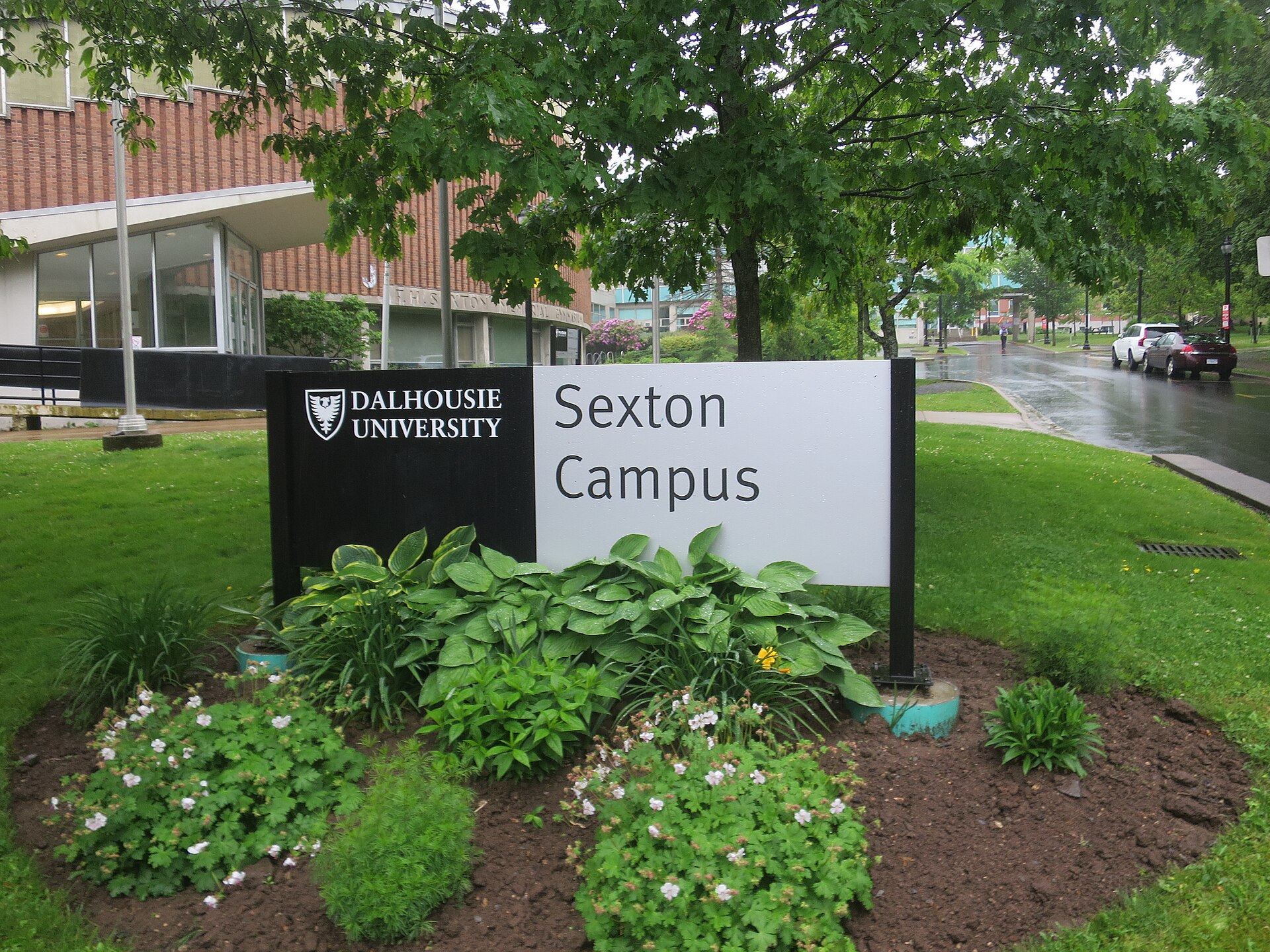
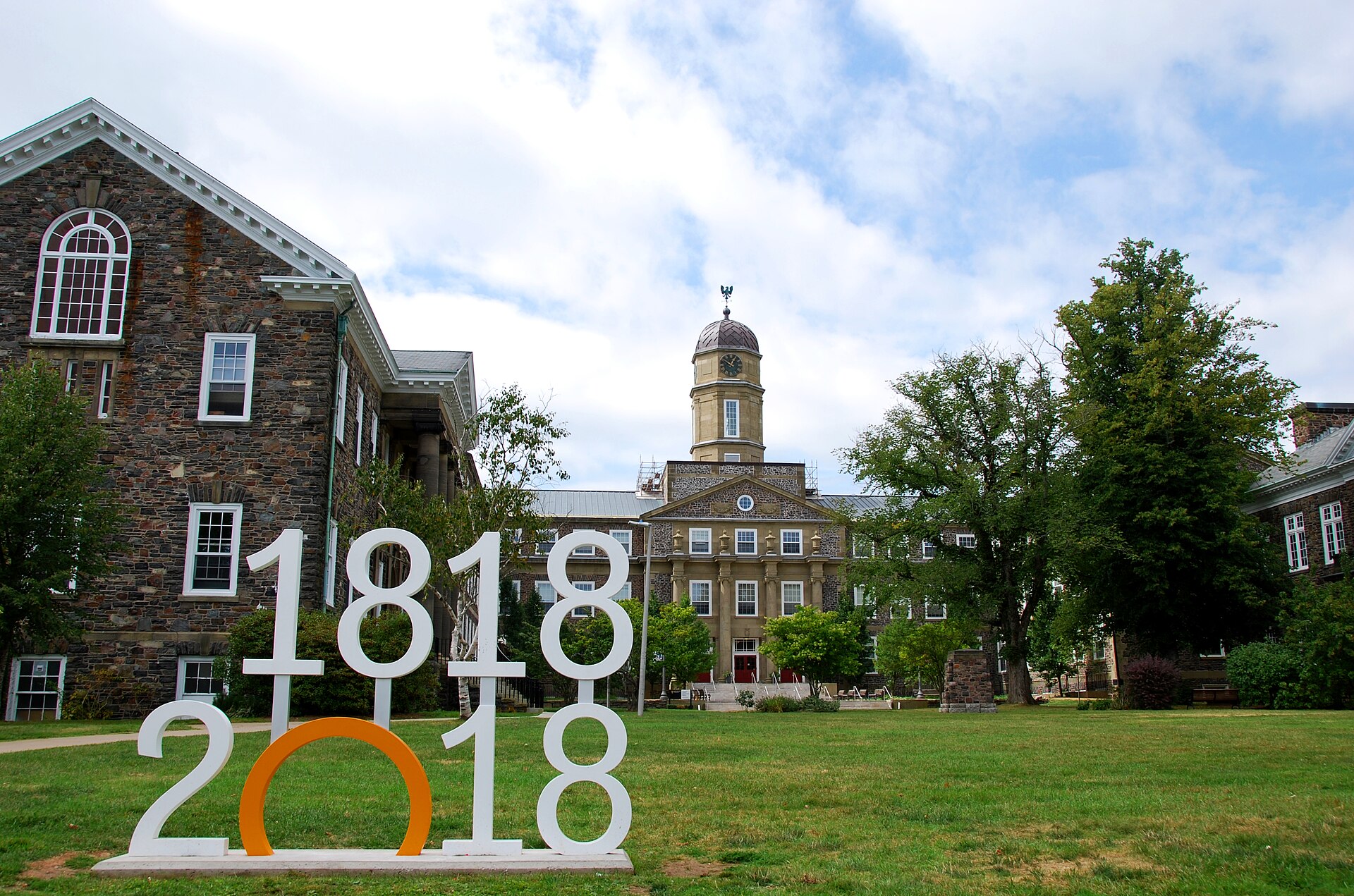
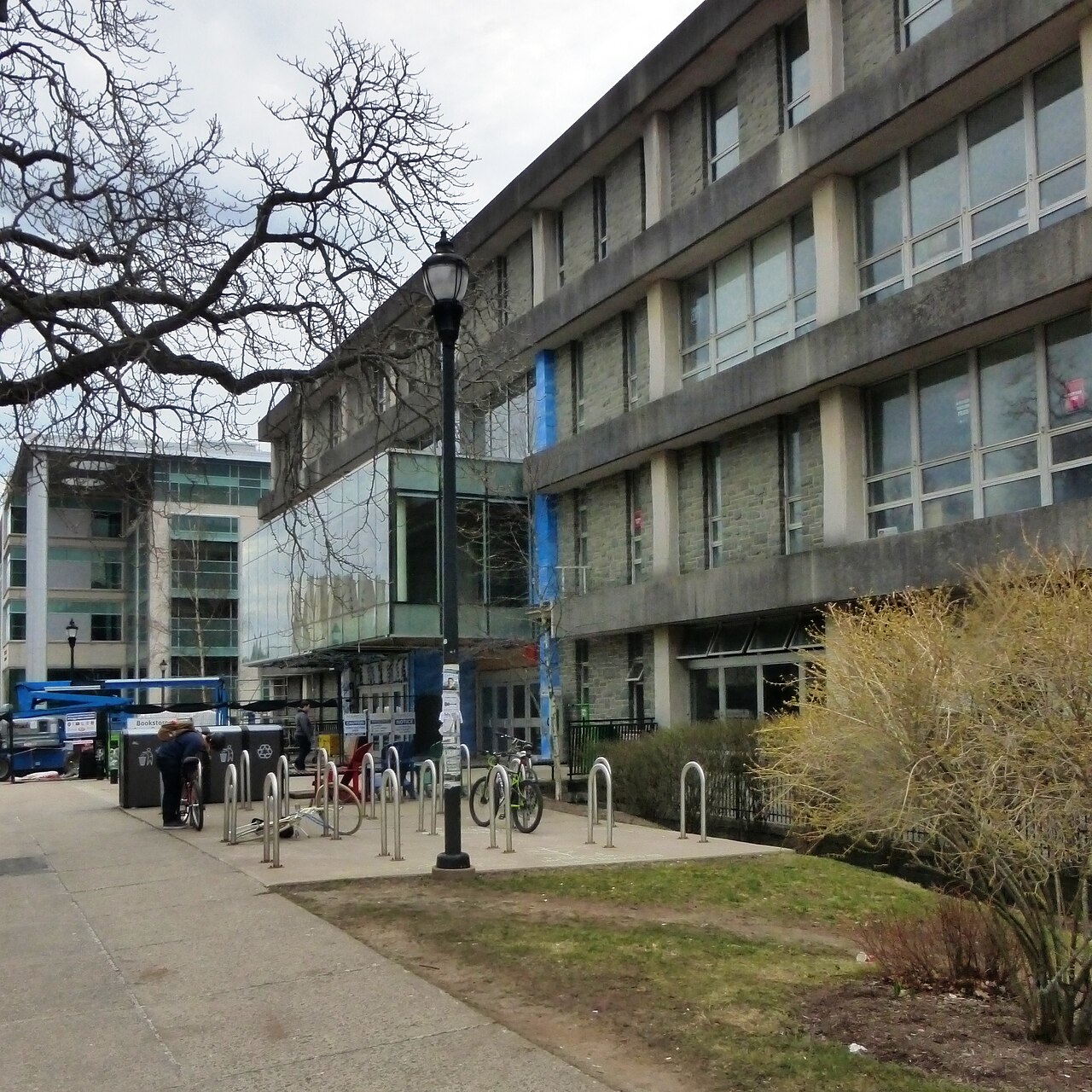
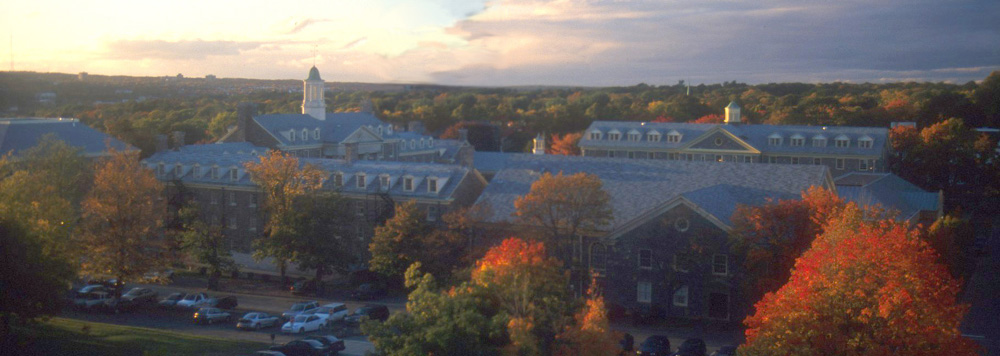
Dalhousie University — campus in pictures
Real, freely-licensed photographs of the campus (via Wikimedia Commons).


Why Dalhousie — Research, Professional Schools & Atlantic Canada
Dalhousie is not just Atlantic Canada's largest research university — it is one of Canada's most distinctive academic environments, combining world-class ocean and marine science, complete professional faculties, and a genuinely liveable seaside city with a lower cost of living than Canada's other major university centres.
Dalhousie Acceptance Rate & Admissions Profile
Stats
Profile Stats
Rea Vs Rd
Dalhousie Admissions Requirements — Grades, International Qualifications & English Proficiency
- Stronger averages needed for competitive programmes (Nursing, Health Sciences)
- Course rigour matters — IB Diploma, A-Levels, and AP courses are valued
- Upward grade trajectory in senior secondary school is positive
- Country-specific equivalencies published on Dal's admissions portal
- IB Diploma: benchmark score of 30 for competitive entry
- A-Levels: three full A-Level subjects expected; strong grades required
- AP: scores of 4–5 can earn course credits at Dal
- National curricula: country-specific equivalency tables published by Dal
- IELTS Academic: minimum 6.5 overall (no band below 6.0)
- TOEFL iBT: minimum 90 overall (minimum 20 per section)
- Duolingo English Test: minimum 115
- Scores required by May 15 for September admission
Dalhousie Application Components — Direct Apply, Grades-First
Dalhousie uses a direct application portal — not Common App or any Canadian centralised system. The application is primarily grades-driven for most programmes. Here is every component of a complete Dalhousie application.
Dalhousie Application Statements — Writing What Works
Tips
Prompts
What Dalhousie Admissions Officers Are Looking For
Dalhousie's admissions process is transparent, merit-based, and primarily grade-driven for most programmes. Understanding what admissions evaluators look for in each context — general programmes, competitive health programmes, and scholarship consideration — is the foundation of a strong Dal application strategy.
Dalhousie Financial Aid & Scholarships for International Students
Dalhousie offers meaningful financial support through its entrance award programme — over 2,000 awards annually for incoming students. International students are eligible for General Entrance Awards (GEA) by submitting the scholarship application by February 15. The average aid package covers approximately 30% of costs for recipients.
Aid amounts are estimates based on Dal's published information. Individual awards are determined by the Scholarships and Student Aid Office on a cycle-by-cycle basis. Always verify current figures on dal.ca.
Stats
Contribution Tiers
| Note | Range | Percent | Percent Value |
|---|---|---|---|
| Full scholarship recipients (top academic performers) | GEA Top Awards | Significant portion covered | 60 |
| Merit awards covering partial tuition and fees | Standard GEA Awards | ~30% of costs | 30 |
| No award; full tuition and living expenses apply | No Award | ~$35,100 USD/year | 0 |
Key Dates
Advantages
- Faster admissions decision — rolling offers issued within 2–3 weeks
- More time to complete the study permit (PAL) process
- Guaranteed residence if applied by May 1
- Scholarship consideration — GEA application by Feb 15 unlocks 2,000+ awards
- Competitive health programmes close Feb 15 — early is mandatory, not optional
Disadvantages
- Most programmes do not have Early Action — rolling means early application is simply faster processing
- Competitive health programmes have a hard Feb 15 deadline — missing it means waiting a full year
- Scholarship deadline (Feb 15) is earlier than most students realise and requires a separate application form
- Study permit (PAL) process takes time — late applicants risk study permit delays affecting September start
- Housing guarantee requires May 1 application — late applicants risk housing uncertainty in a competitive rental market
Dalhousie Interviews — What to Expect (and What to Do Instead)
Most undergraduate programmes at Dalhousie do not require an interview. Admissions decisions are based on academic records and, for competitive programmes, supplementary personal statements. However, some health and professional programmes may require the CASPer situational judgment test. Verify the specific requirements for your programme each application cycle on the Dal admissions portal.
Meta
Questions
Dalhousie's Residences & Campus Housing
Dalhousie does not have a residential college system like Harvard's houses. Instead, students live in a range of traditional residence halls and apartment-style facilities across Dal's Studley and Carleton campuses in Halifax. First-year international students who apply for residence by May 1 are guaranteed on-campus accommodation.
Houses
Lottery Steps
- First-year international students apply for residence when accepting their offer of admission
- Applying by May 1 guarantees on-campus housing for first-year students
- Residence options range from traditional double-occupancy hall rooms to suite-style and apartment buildings
- Howe Hall is popular among Engineering students; Risley Hall is known for arts and culture programming
- LeMarchant Place and Glengary Hall offer more independent apartment-style living
- Upper-year students typically move off-campus; Halifax has a wide range of student housing close to campus
Dalhousie's Faculties & Academic Programmes
- {"label":"Flagship strength","value":"Ocean & Marine Sciences"}
- {"label":"Research cluster","value":"Sustainable Ocean"}
- {"label":"Industry partner","value":"Fisheries & Oceans Canada"}
- {"label":"IB benchmark","value":"30+"}
- {"label":"Distinctive offering","value":"Ocean Engineering"}
- {"label":"Accreditation","value":"Engineers Canada (CEAB)"}
- {"label":"Co-op available","value":"Yes"}
- {"label":"Key subject","value":"HL Mathematics + Physics"}
- {"label":"Tuition lock","value":"Yes"}
- {"label":"Industry demand","value":"High (Halifax tech sector)"}
- {"label":"Research area","value":"AI & Machine Learning"}
- {"label":"Co-op","value":"Available"}
- {"label":"Accreditation","value":"AACSB"}
- {"label":"Tuition lock","value":"Yes"}
- {"label":"Co-op","value":"Available"}
- {"label":"Key strength","value":"Entrepreneurship & Finance"}
- {"label":"Application deadline","value":"February 15 (hard)"}
- {"label":"Supplement required","value":"Yes"}
- {"label":"Selectivity","value":"High"}
- {"label":"Career pathway","value":"Nova Scotia health system"}
- {"label":"Admission","value":"Graduate entry (post-undergraduate)"}
- {"label":"National standing","value":"One of Canada's leading law schools"}
- {"label":"Specialisation","value":"Ocean and environmental law"}
- {"label":"LSAT","value":"Required for JD admission"}
Research & Extracurricular Opportunities at Dalhousie
Career Outcomes & Dalhousie Alumni Network
Dalhousie's career outcomes reflect its position as Atlantic Canada's leading research university. The 90% employment or graduate school placement rate, U15 research status, and professional school pipelines in medicine, law, and dentistry create direct pathways into competitive careers across Canada and internationally.
Stats
Categories
Our Dalhousie Admissions Track Record & Student Success Stories
Faqs
Do I need to write a personal statement or supplemental essay to apply to Dalhousie?+
For most undergraduate programmes, no — Dalhousie is primarily grades-driven and does not require a personal essay for general admission. However, competitive programmes including Nursing, Health Sciences, Medical Sciences, Social Work, and Architecture do require supplementary applications including personal statements with a February 15 deadline.
Is Dalhousie test-optional for international students?+
Yes — Dalhousie does not require the SAT or ACT for undergraduate admission. International students are assessed on their secondary school grades and English language proficiency tests (IELTS 6.5, TOEFL 90, Duolingo 115). Standardised tests are optional and supplementary.
What is the tuition lock guarantee?+
International students admitted to Agriculture, Arts & Social Sciences, Computer Science, Engineering, Management, or Science faculties have their tuition rate frozen for the standard programme length plus one additional year. This protects you from annual tuition increases — a significant financial planning advantage unique to Dalhousie among major Canadian universities.
How competitive is admission to Nursing and Health Sciences?+
These are among Dal's most competitive programmes. They have a February 15 hard deadline, require a supplementary application with a personal statement, and consider relevant healthcare or volunteer experience. The overall 66% acceptance rate does not reflect the selectivity of these specific programmes — they are significantly more competitive.
When should I apply to maximise my scholarship chances?+
Submit your application and General Entrance Awards (GEA) scholarship application by February 15. Dal distributes over 2,000 entrance awards annually, but scholarship consideration closes on that date. Early applications are processed faster and may receive decisions in time to meet the GEA deadline.
Can I guarantee on-campus housing as an international student?+
Yes — first-year international students who apply for residence by May 1 are guaranteed on-campus housing. This is a significant assurance given the pressure on student accommodation in Halifax in recent years.
What is a Provincial Attestation Letter (PAL) and do I need one?+
Following Canadian federal immigration changes, international students at Dalhousie require a PAL to apply for their study permit. Once you accept your offer and pay your deposit by May 15, Dal will issue your PAL. You must then apply for your study permit promptly. Contact Dal's International Centre for current guidance as immigration regulations evolve.
Is Halifax a safe and welcoming city for international students?+
Yes — Halifax consistently ranks among Canada's safest cities. With 23% of Dal's enrolment being international, there is a strong, well-supported international community. The Dal International Centre runs programmes specifically to help newcomers settle, connect, and thrive in the city.
Book a Free Dalhousie Admissions Strategy Session
In 60 minutes our Dalhousie admissions specialists will evaluate your academic profile, identify your application strengths and gaps, develop your supplementary statement strategy for competitive programmes, and make sure you never miss the February 15 scholarship deadline.
- No commitment required
- Dalhousie and Canadian university specialists
- Personalised strategy — not generic advice
Dalhousie Academic Requirements
Dalhousie Academic Requirements — The Honest Breakdown for International Students
What GPA, IB score, English test, and academic profile do Dal's admitted students actually need? And how does Dal's admissions office evaluate IB Diploma, A-Levels, AP, and other international curricula?
GPA & Academic Benchmarks
Dalhousie and GPA — What the Benchmarks Actually Mean
The honest picture: Dalhousie's minimum GPA is 3.0 on a 4.0 scale for general undergraduate entry. In practice, students targeting competitive programmes — Nursing, Health Sciences, Computer Science — should aim significantly above the minimum. Dal's overall 66% acceptance rate conceals considerable variation across faculties.
A 3.0 GPA is a floor, not a target. Students aiming for Dal's most competitive programmes — Nursing, Health Sciences, Computer Science — should treat the minimum as the threshold below which the application cannot proceed, not as an acceptable academic target.
Academic Context
How Dal Reads International Academic Performance — Context and Curriculum
Dalhousie does not require class rank, and many international schools do not provide it. Dal has extensive experience evaluating academic performance across widely different school systems — from Indian secondary boards to IB schools in Southeast Asia to UK A-Level programmes.
Standardised Testing — SAT
SAT at Dalhousie — What You Need to Know
Dalhousie does not require the SAT for undergraduate admission. For international students from countries where the SAT is common (United States, some South Asian countries), this means SAT preparation is not a priority for a Dal application.
| Label | Score | Percent |
|---|---|---|
| Required? | No | 0 |
| Optional if strong? | May be included as supplementary | 50 |
| Weight in admissions | Not a gatekeeping criterion | 10 |
Standardised Testing — ACT
ACT at Dalhousie — Not Required, Not Weighted
Dalhousie does not require the ACT for undergraduate admission. Like the SAT, the ACT is not evaluated as a criterion in Dal's admissions process.
Metrics
Comparison Cards
Testing Strategy
Dalhousie Test-Optional — What It Means and What It Doesn't
Dalhousie's test-optional policy for SAT/ACT is a permanent, structural policy — not a COVID-era temporary measure. Understanding what this actually means for international students is important for clear-headed application planning.
Submit Items
Withhold Items
International Curricula
IB Diploma and A-Levels at Dalhousie — Specific Benchmarks and Context
- {"label":"Competitive benchmark","value":"30 / 45 points"}
- {"label":"Higher Level expectations","value":"HL subjects should align with your intended programme"}
- {"label":"Predicted grades","value":"Accepted for conditional offers; final grades must be submitted when issued"}
- {"label":"Extended Essay","value":"Noted positively — demonstrates research engagement"}
- {"label":"Typical expectation","value":"Three A-Level subjects; strong grades (B and above for most programmes)"}
- {"label":"Subject alignment","value":"Choose A-Levels relevant to your intended Dal programme"}
- {"label":"Predicted grades","value":"Reviewed alongside the predicted grade argument for conditional offers"}
- {"label":"Advanced entry","value":"Strong A-Levels may qualify for some advanced course standing"}
Advanced Placement
AP Courses at Dalhousie — Credits, Value, and Strategy
For students from US-curriculum schools or international schools offering AP courses, Advanced Placement performance is recognised at Dalhousie and can earn course credits — a meaningful benefit that accelerates degree progression.
Academic Rigour
Secondary School Rigour — Why Course Selection Matters as Much as Grades
Like all serious Canadian research universities, Dalhousie looks at the rigour of your secondary school record — not just the grades. A student who challenged themselves with the hardest available courses is viewed more favourably than one who chose easier paths to maintain a high average.
Taking the most challenging courses available at your specific school, in the subjects most relevant to your intended programme.
Subject Preparation by Programme
Subject Preparation — What Dalhousie Expects by Faculty
Dal has specific subject preparation expectations that vary by programme. Unlike US universities where undeclared admission is common, Dal applicants choose their programme at the point of application — making subject alignment a direct criterion.
English Language Requirements
English Language Requirements at Dalhousie — What You Need and How to Prepare
All international students from non-English-first-language backgrounds must demonstrate English proficiency through an approved test. Scores must be submitted by May 15 for September admission. Dal accepts several tests — IELTS, TOEFL, Duolingo, and others.
Dal's supplementary statements for competitive programmes are themselves an English writing assessment. Students whose English proficiency allows them to write a clear, well-structured personal statement are well-placed. Students who struggle to express themselves in writing in English will face challenges both in the written component of their application and in Dal's academic environment.
By Programme
Academic Requirements by Programme — What Each Dal Faculty Looks For
Dalhousie students choose their programme at the point of application — unlike US universities where undeclared entry and late declaration are common. The academic profile should be coherent with the programme stated. The following table outlines the academic signals Dal looks for by programme area.
| Signals | Expectation | Concentration |
|---|---|---|
| HL Maths (IB) or A-Level Maths; physics/science background | Senior Mathematics and Physics; calculus strongly recommended | Engineering (all streams) |
| Strong senior Maths; programming projects or coursework | Mathematics at advanced level | Computer Science |
| Senior Biology and Chemistry; healthcare volunteering experience | Biology and Chemistry required; Math recommended | Nursing / Health Sciences |
| Senior Biology and Chemistry; research or science fair involvement | Biology + Chemistry at highest available level | Marine Biology / Ocean Sciences |
| Economics and Mathematics; quantitative interest | Mathematics and Economics at senior level | Commerce / Management |
| Biology and Chemistry; environmental projects or field work | Biology + Chemistry; Geography or Environmental Studies helpful | Environmental Science |
| Strong English and writing; History or Social Sciences | Broad humanities preparation | Arts & Social Sciences |
| Creative portfolio; design or art projects; interest in built environment | Portfolio of creative work required; no specific academic subjects mandatory | Architecture (Environmental Design Studies) |
International Systems
How Dalhousie Evaluates International Education Systems — A Country-by-Country View
Strategic Roadmap
Building an Academic Profile for Dalhousie — What to Do at Each Stage
- Identify which Dal faculty interests you and trace back the required secondary school subjects.
- Prioritise Mathematics and Sciences for engineering, health, and science programmes.
- Begin involvement in relevant extracurriculars — science fairs, community health volunteering, environmental projects.
- Explore whether your school offers IB Diploma, A-Levels, or AP courses for senior years.
- Enrol in the most rigorous track available — IB Diploma, A-Levels, or AP — with Higher-Level subjects aligned to your intended Dal programme.
- Begin English language test preparation if English is not your first language. Target IELTS 7.0+ for competitive programmes.
- If interested in Nursing, Health Sciences, or Social Work, begin building relevant volunteer or work experience — this directly supports the supplementary statement.
- Sit your first IELTS or TOEFL attempt by the end of Grade 11 — this leaves time for retakes before the May 15 deadline.
- Target above the minimum: IELTS 7.0+ for competitive programmes, 6.5 minimum for general programmes.
- Test centres have booking delays of 4–6 weeks; do not leave registration until the last moment.
- Dal applications open October 15 — submit as soon as possible for rolling consideration.
- For competitive programmes (Nursing, Health Sciences, Architecture), the February 15 deadline is firm — begin your supplementary statement now.
- Begin the General Entrance Awards (GEA) scholarship application simultaneously.
- February 15: Deadline for Nursing, Health Sciences, Medical Sciences, Social Work, and GEA scholarship.
- March 1: Architecture deadline.
- Do not miss the GEA application — 2,000+ awards are distributed annually to students who apply on time.
- Submit any remaining supplementary materials and reference letters.
- Accept your offer and pay the admission deposit by May 15.
- Apply for guaranteed on-campus residence by May 1.
- Submit your English language test results by May 15.
- Begin the study permit (PAL) process immediately after receiving your PAL from Dal — time-sensitive for September start.
Common Pitfalls
Academic Mistakes That Cost Dal Applications — And How to Avoid Them
Student Profiles
What Academic Profiles Look Like for Dal-Admitted Students
The following profiles represent the academic backgrounds of students Tychr has helped gain Dalhousie admission. They illustrate the range of academic preparation that works across Dal's diverse faculties.
Faqs
What IB score do I need for Dalhousie?+
The competitive benchmark is 30 / 45 for general entry. Higher scores — particularly with relevant Higher Level subjects — strengthen applications to competitive programmes. For Nursing and Health Sciences, a score above 30 with strong HL Biology and Chemistry is expected. Confirm current programme-specific requirements on the Dal admissions portal.
Does Dalhousie accept predicted IB grades?+
Yes — Dal accepts predicted IB grades for conditional offers. You will receive a conditional offer based on predicted grades, and your final IB results must be submitted to Dal when issued. If you meet the conditions of your offer, the admission is confirmed. If you fall short, contact Dal's admissions office immediately.
Do I need the SAT or ACT to apply to Dalhousie?+
No. Dalhousie does not require SAT or ACT scores for undergraduate admission. The primary criteria are secondary school grades and English language proficiency. SAT/ACT scores can be submitted as supplementary information but are not evaluated in Dal's admissions process.
Can I apply to Dalhousie from a non-English-speaking country without IELTS?+
Students who completed their last three or more years of secondary education at a recognised English-medium school may qualify for an English language requirement waiver. Check Dal's list of qualifying countries and institutions on the international admissions page. If in doubt, submit an IELTS or TOEFL score — it removes uncertainty and demonstrates proficiency clearly.
What is the minimum GPA for Dalhousie admission?+
The published minimum is 3.0 on a 4.0 scale for general undergraduate entry. Competitive programmes — particularly Nursing, Health Sciences, and Medical Sciences — expect averages significantly above this minimum. The 66% overall acceptance rate conceals meaningful variation in selectivity across Dal's faculties.
Cost & Financial Aid
Dalhousie Is One of Canada's More Affordable Research Universities for International Students
Dal's approximate $24,100 USD annual international tuition, combined with Halifax's lower cost of living, makes the total cost of attendance meaningfully lower than comparable programmes at University of Toronto, UBC, or McGill. Here is what Dal actually costs and how to fund it.
Cost Transparency
What Dalhousie Actually Costs — The Full Annual Figure
Halifax's cost of living is substantially lower than Toronto, Vancouver, or Montreal. Off-campus rent and food costs for upper-year students are typically well below the residence rates — students who move off campus after first year often spend less than the residence estimate above.
Merit-Based Awards
Dalhousie's Financial Aid Policy — Merit-Based Entrance Awards for Internationals
International students are fully eligible for Dal's entrance award programme — over 2,000 awards distributed annually. Unlike some Canadian universities that limit scholarship access to domestic students, Dal's General Entrance Awards are open to international applicants who submit the GEA application by February 15.
Institutional Commitment
Why Dal's Affordability Is Genuine — The Tuition Lock and the Award Programme
Funding Walkthrough
Applying for Financial Support at Dalhousie — Step by Step
Dalhousie's financial aid process requires proactive steps beyond your admissions application. Here is the complete process for maximising your scholarship access.
- Apply via apply.dal.ca as soon as applications open October 15
- List your two programme choices
- Submit the $60 USD application fee
- Access the GEA application through Dal's financial aid portal
- Complete the personal profile section — academic goals, community involvement, reasons for choosing Dal
- Submit by February 15 without exception
- Visit your target faculty's website for additional award programmes
- Note any faculty-level awards with separate application requirements
- Some industry-funded scholarships (particularly in Engineering) may require additional applications
- Home country government scholarships (explore 12–18 months before start)
- Commonwealth Scholarship Commission (for eligible countries)
- International development and diaspora-funded awards
- Nova Scotia provincial international student awards (where available)
- Review Dal award notification
- Confirm external scholarship funding
- Pay admission deposit by May 15
- Begin PAL (Provincial Attestation Letter) process for study permit
International Students Specifically
Financial Aid for International Students at Dalhousie — The Honest Picture
Dalhousie's financial support for international undergraduates operates through merit-based entrance awards. Unlike US universities with need-blind, full-need grant programmes (Harvard, Princeton, MIT), Dal's aid model is primarily merit-based — your academic record is the main determinant of award size.
Aid Estimates
Dalhousie Financial Aid — What Recipients Actually Receive
Approximate Aid by Academic Profile
These are approximate figures based on Dal's published average aid percentage. Individual award amounts vary significantly by programme, academic performance, and available funds in each cycle. Always verify current award amounts on dal.ca.
The 30% average aid coverage for award recipients means most international students who receive GEA awards still pay approximately $24,000–$28,000 USD annually. Students targeting Dal should budget for this level of contribution and supplement Dal awards with external scholarship sources.
| Grant | Income | Contribution |
|---|---|---|
| Significant award — partial to full tuition covered | Top academic performers | Reduced significantly |
| Moderate entrance award (~30% of costs average) | Strong academic record + GEA by Feb 15 | ~$24,000–$28,000 USD/year remaining |
| No award | Missed GEA deadline or average academic record | ~$35,100 USD/year (full cost) |
Table Headers
Scholarships & Awards
Dalhousie Scholarships — What Exists, Who Qualifies, and How to Access Them
Dalhousie's primary scholarship mechanism is merit-based through entrance awards. Unlike Harvard and some US universities that are exclusively need-based, Dal rewards academic achievement — the strongest academic performers are the most likely award recipients.
External Funding Sources
External Scholarships for Dalhousie-Bound International Students
For international students with significant financial need, external scholarships are essential — Dal's internal aid covers approximately 30% of costs for average award recipients, which means the majority of funding must come from other sources.
Loan & Debt Policy
Loans at Dalhousie — What You Need to Know as an International Student
Dalhousie does not operate a no-loan financial aid policy comparable to Harvard, Princeton, or MIT. Dal's aid is provided as entrance awards (grants that do not require repayment), but the coverage is partial — not full-cost. Students who need additional funding beyond grants will typically need to consider loans.
Student Employment
Working While Studying at Dalhousie — What International Students Can Do
International students on Canadian study permits are permitted to work on and off campus during their studies, subject to their study permit conditions. This is a meaningful source of supplementary income for Dal international students.
- Research assistant positions in faculty labs (particularly in Science, Engineering, and Health — often paid hourly)
- Library and administrative roles on campus
- Dalhousie food services and campus hospitality
- Peer tutoring and academic support
- Dal International Centre as a peer mentor or student ambassador
- Co-op placements in Halifax's tech, ocean, and health sectors (Engineering, CS, Management programmes)
- Off-campus employment in Halifax's service sector, retail, and hospitality
Canadian University Comparison
Dalhousie vs. Other Canadian Universities — Financial Aid Comparison
| Policy | School | No Loans | Typical Cost |
|---|---|---|---|
| Merit-based entrance awards; tuition lock; GEA open to internationals | Dalhousie (Dal) | Awards are grants (not loans); partial coverage | ~$24,000–$35,100 USD/year (after average award) |
| Merit and need-based; international scholarships limited | University of New Brunswick (UNB) | Awards are grants; partial | Similar range |
| Merit-based; strong entrance scholarship programme | University of Calgary | Awards are grants; partial | Higher tuition; lower living costs than Vancouver/Toronto |
| Merit and need-based; International Student Award available | McGill University | Partial award coverage | ~$28,000–$38,000 USD/year; Montreal higher COL than Halifax |
| Limited international merit scholarships; high tuition | University of Toronto (U of T) | Partial; very limited international need-based | ~$45,000–$60,000 USD/year for many programmes |
| Limited international merit scholarships; high tuition | UBC | Partial; limited international need-based | ~$40,000–$55,000 USD/year; Vancouver high COL |
True Cost Analysis
Dalhousie vs. Alternatives — What You Actually Pay Over Four Years
For international students comparing Canadian university costs, Dalhousie's combination of lower tuition (approximately $24,100 USD vs $40,000–$55,000 USD at UBC or U of T for comparable programmes) and Halifax's significantly lower cost of living creates a meaningful four-year cost difference. A student paying full cost at Dal spends approximately $140,000 USD over four years versus $180,000–$240,000 USD at Canada's two most expensive cities.
| Policy | School | Contribution | Four Year Cost |
|---|---|---|---|
| Tuition lock; GEA awards open to internationals; Halifax COL advantage | Dalhousie (no award) | ~$35,100 USD/year | ~$140,400 USD (4 years) |
| Average GEA merit award (~30% of costs) | Dalhousie (with average award) | ~$24,500 USD/year | ~$98,000 USD (4 years) |
| High international tuition; Toronto high COL | University of Toronto | ~$50,000–$60,000 USD/year | ~$200,000–$240,000 USD (4 years) |
| High international tuition; Vancouver high COL | UBC | ~$45,000–$55,000 USD/year | ~$180,000–$220,000 USD (4 years) |
| Montreal COL moderate; competitive tuition | McGill | ~$35,000–$45,000 USD/year | ~$140,000–$180,000 USD (4 years) |
| UK 3-year degree; London high COL | UK Russell Group (London) | ~$35,000–$50,000 USD/year | ~$105,000–$150,000 USD (3 years) |
Award Appeals
Appealing a Dalhousie Award Decision — When and How
Dal's initial entrance award determination is based on your academic record and the GEA application submitted by February 15. If your circumstances change or if you believe your file was not evaluated accurately, Dal has a process for reviewing award decisions.
Dal's scholarship appeals are most successful when based on a clear change in circumstances — family financial hardship, a documented error in the award calculation, or information that was not available at the time of the original application. General dissatisfaction with the award amount without additional supporting information is less likely to result in a changed outcome.
How To Appeal
- Contact Dal's Scholarships and Student Aid office directly after receiving your initial award notification
- Submit a written request explaining the specific basis for your appeal
- Provide documentation supporting the appeal (new financial information, additional academic achievements, corrected application information)
- Allow 2–4 weeks for a response — award appeals are reviewed individually
When To Appeal
- Family financial circumstances have changed significantly since the GEA application was submitted (job loss, medical emergency, currency devaluation)
- The initial award was significantly lower than expected given your academic profile
- You have received a competing offer from another comparable Canadian university with a more generous award
- A scholarship from an external source has fallen through and your funding situation has changed
Financial Planning Timeline
Planning for Dalhousie Costs — What to Do and When
APPLICATION & STATEMENT GUIDE
Dalhousie Applications: What Writing Actually Matters
Dalhousie is a Canadian university with a direct, grades-first application process. For most programmes, there is no application essay or personal statement required for standard admission. However, competitive health and professional programmes require compelling supplementary statements — and the scholarship application rewards students who can articulate their ambitions clearly.
This tab guides you through the written components that matter at Dalhousie: the supplementary statements required by selective programmes, the scholarship personal profile, and how to position your application narrative even when the form asks for grades, not stories.
HONEST OVERVIEW
The Dalhousie Application: No US-Style Essays for Most Programmes
Unlike US universities where supplemental essays are universal and strategic, most Dalhousie programmes admit students based almost entirely on academic grades. The written component becomes relevant in two scenarios:
PROGRAMME-SPECIFIC STATEMENTS
Written Components for Competitive Programmes
The following programmes require supplementary written materials. Exact prompts and formats change each cycle — verify on the Dal admissions portal before applying. These descriptions reflect the general character of what is asked.
PERSONAL STATEMENT STRATEGY
Writing a Strong Dal Personal Statement
Whether you are writing for a competitive health programme or for the GEA scholarship, the same principles apply. Dal is not a US university — they are not asking you to craft a literary personal narrative. They are asking: who are you academically, what have you done, why this programme, why Dal?
Answer those four questions clearly and specifically. Admissions readers at Dal value clarity and honesty over polished prose. A straightforward account of a meaningful experience in healthcare, environmental science, or community service — told with precision and reflection — will outperform an over-edited but generic narrative.
Avoid the US Common App style of opening with a dramatic scene ('I stared at the ocean and knew I wanted to study marine biology'). Canadian admissions readers respond better to direct, structured writing that demonstrates self-awareness and programme-relevant motivation.
SUPPLEMENT STRATEGY
Programme-by-Programme Written Strategy
WHAT TO WRITE ABOUT
Choosing Your Topics & Approach
The Canadian application context rewards honest, focused writing. Here is how to approach topic selection for Dal's written components:
COMMON MISTAKES
Application Writing Mistakes to Avoid
- Writing a US-style narrative personal statement for a Dal programme that does not require one — most programmes do not want this and it will not help your application
- Missing the GEA scholarship deadline (February 15) — this is separate from your admissions application and many students miss it
- Using the same statement for every Canadian university without tailoring it to Dal and Halifax specifically
- Writing a generic 'I want to help people' statement for Nursing or Health Sciences without grounding it in real experience
- Overclaiming clinical or research experience — Dal admissions readers will notice inflated descriptions and it undermines the entire application
- Ignoring the Architecture portfolio requirement and focusing all energy on the statement — the portfolio carries more weight
- Using complex, flowery language in a Canadian admissions context — clarity and structure are valued over literary polish
- Not asking for feedback on your statement from someone who knows the Canadian higher education context — stylistic expectations differ significantly from US and UK applications
ESSAY FAQS
Frequently Asked Questions: Dalhousie Written Components
Does Dalhousie require a personal statement for general undergraduate admission?+
No — the vast majority of Dalhousie undergraduate programmes admit students based on academic grades alone, with no personal statement or supplemental essay required. The exceptions are competitive health and professional programmes (Nursing, Health Sciences, Medical Sciences, Social Work, Architecture) which require supplementary applications with a February 15 deadline.
Should I still submit a personal statement even if my programme does not require one?+
Only if there is a designated place to do so in the application portal and the programme specifically invites one. Submitting an unsolicited personal statement to a Dal programme that does not require it is generally not useful and may not even be read.
Is the GEA scholarship application the same as the admissions application?+
No — the General Entrance Awards scholarship application is a separate form from your admissions application. You must complete both. The GEA application typically includes a personal profile section that functions as a short scholarship statement. The deadline is February 15.
How long should my supplementary statement be for Nursing or Health Sciences?+
Dal's supplementary application forms specify word or character limits for each component. Adhere strictly to the limits given. If no limit is specified, aim for 400–600 words per question — concise and specific is always better than long and generic in a Canadian admissions context.
Can I write about a personal health experience in my Nursing statement?+
Yes — personal experiences with the healthcare system (as a patient or a family member) can be powerful material if handled with reflection and maturity. The key is to move beyond 'the experience was hard' to 'this is what I learned and why it shaped my choice of nursing as a profession'. Do not centre the statement on the negative experience itself — centre it on what it taught you.
Does Dal use the Common App or a coalition platform?+
No — Dalhousie uses its own direct application portal at apply.dal.ca. There is no Common App, Coalition App, or OUAC (Ontario Universities' Application Centre) route for Dalhousie. International students apply directly through Dal's portal.
Are supplementary statements reviewed by faculty or by admissions staff?+
For competitive programmes like Nursing and Health Sciences, supplementary applications are reviewed by programme-specific admissions committees that typically include faculty members. This means programme knowledge and professional awareness in your statement matter — write for a reader who knows the field, not a general audience.
What tone should I use in a Canadian university personal statement?+
Direct, clear, and honest. Canadian university admissions readers value structured prose over literary flourish. State your motivation clearly, support it with specific experience, explain why Dal and the specific programme, and close with a clear sense of what you intend to do with the degree. Avoid over-dramatisation, excessive self-promotion, or overly informal language.
Courses — schools, degrees & intake
66 degrees across 8 groupings.
Faculty of Agriculture (Truro Campus) · 8 degrees
Bachelor of Agriculture – International Food Business (BAgr)
Bachelor of Science in Agriculture – Agricultural Business (BSc Agr)
Bachelor of Science in Agriculture – Animal Science (BSc Agr)
Bachelor of Science in Agriculture – Aquaculture (BSc Agr)
Bachelor of Science in Agriculture – Plant Science (BSc Agr)
Bachelor of Science in Agriculture – Environmental Sciences (BSc Agr)
Bachelor of Science – Bioveterinary Science (BSc)
Bachelor of Technology – Small Business Management (BTech)
Faculty of Architecture and Planning · 1 degrees
Bachelor of Environmental Design Studies (BEDS)
Faculty of Arts and Social Sciences · 19 degrees
Bachelor of Arts – Black and African Diaspora Studies (BA)
Bachelor of Arts – Classics (BA)
Bachelor of Arts – English Language and Literature (BA)
Bachelor of Arts – Environment, Sustainability and Society (BA)
Bachelor of Arts – French (BA)
Bachelor of Arts – Gender and Women's Studies (BA)
Bachelor of Arts – Geography (BA)
Bachelor of Arts – German (BA)
Bachelor of Arts – History (BA)
Bachelor of Arts – International Development Studies (BA)
Bachelor of Arts – Law, Justice and Society (BA)
Bachelor of Arts – Philosophy (BA)
Bachelor of Arts – Political Science (BA)
Bachelor of Arts – Religious Studies (BA)
Bachelor of Arts – Sociology and Social Anthropology (BA)
Bachelor of Arts – Spanish and Latin American Studies (BA)
Bachelor of Music (BMus) – Fountain School of Performing Arts
Bachelor of Arts – Theatre (BA) – Fountain School of Performing Arts
Bachelor of Arts – Cinema and Media Studies (BA) – Fountain School of Performing Arts
Faculty of Computer Science · 2 degrees
Bachelor of Computer Science (BCS)
Bachelor of Applied Computer Science (BACS)
Faculty of Engineering · 7 degrees
Bachelor of Engineering – Civil and Resource Engineering (BEng)
Bachelor of Engineering – Chemical Engineering (BEng)
Bachelor of Engineering – Computer Engineering (BEng)
Bachelor of Engineering – Electrical Engineering (BEng)
Bachelor of Engineering – Environmental Engineering (BEng)
Bachelor of Engineering – Industrial Engineering (BEng)
Bachelor of Engineering – Mechanical Engineering (BEng)
Faculty of Health · 11 degrees
Bachelor of Science in Nursing (BScN)
Bachelor of Science in Nursing – Arctic Stream (BScN)
Bachelor of Health Sciences – Diagnostic Medical Ultrasound (BHSc)
Bachelor of Science – Health Promotion (BSc)
Bachelor of Science – Kinesiology (BSc)
Bachelor of Health Sciences – Nuclear Medicine Technology (BHSc)
Bachelor of Health Sciences – Radiological Technology (BHSc)
Bachelor of Health Sciences – Respiratory Therapy (BHSc)
Bachelor of Science – Recreation Management (BSc)
Bachelor of Science – Therapeutic Recreation (BSc)
Bachelor of Social Work (BSW)
Faculty of Management · 2 degrees
Bachelor of Commerce Co-op (BComm Co-op)
Bachelor of Management (BMgmt)
Faculty of Science · 16 degrees
Bachelor of Science – Actuarial Science (BSc)
Bachelor of Science – Biochemistry and Molecular Biology (BSc)
Bachelor of Science – Biology (BSc) / Bachelor of Arts – Biology (BA)
Bachelor of Science – Marine Biology (BSc) / Bachelor of Arts – Marine Biology (BA)
Bachelor of Science – Chemistry (BSc) / Bachelor of Arts – Chemistry (BA)
Bachelor of Science – Earth Sciences (BSc) / Bachelor of Arts – Earth Sciences (BA)
Bachelor of Science – Environmental Science (BSc) / Bachelor of Arts – Environmental Science (BA)
Bachelor of Science – Economics (BSc) / Bachelor of Arts – Economics (BA)
Bachelor of Science – Mathematics (BSc) / Bachelor of Arts – Mathematics (BA)
Bachelor of Science – Statistics (BSc) / Bachelor of Arts – Statistics (BA)
Bachelor of Science – Medical Sciences (BSc)
Bachelor of Science – Microbiology and Immunology (BSc)
Bachelor of Science – Ocean Sciences (BSc) / Bachelor of Arts – Ocean Sciences (BA)
Bachelor of Science – Physics (BSc) / Bachelor of Arts – Physics (BA)
Bachelor of Science – Psychology (BSc) / Bachelor of Arts – Psychology (BA)
Bachelor of Science – Neuroscience (BSc) / Bachelor of Arts – Neuroscience (BA)
Want your real chances at Dalhousie University?
Create a free TYCHR account for your personalised admit-chance, a shortlist you can track, exact entry requirements, and essay + counselling help.