Columbia University
New York, United States · Urban
Columbia sits at the heart of New York City — and at the intersection of intellectual rigour, global ambition, and urban possibility. Gaining admission to one of the world's most selective universities demands more than excellent grades; it demands a coherent, distinctive, and genuinely human application.
Campus
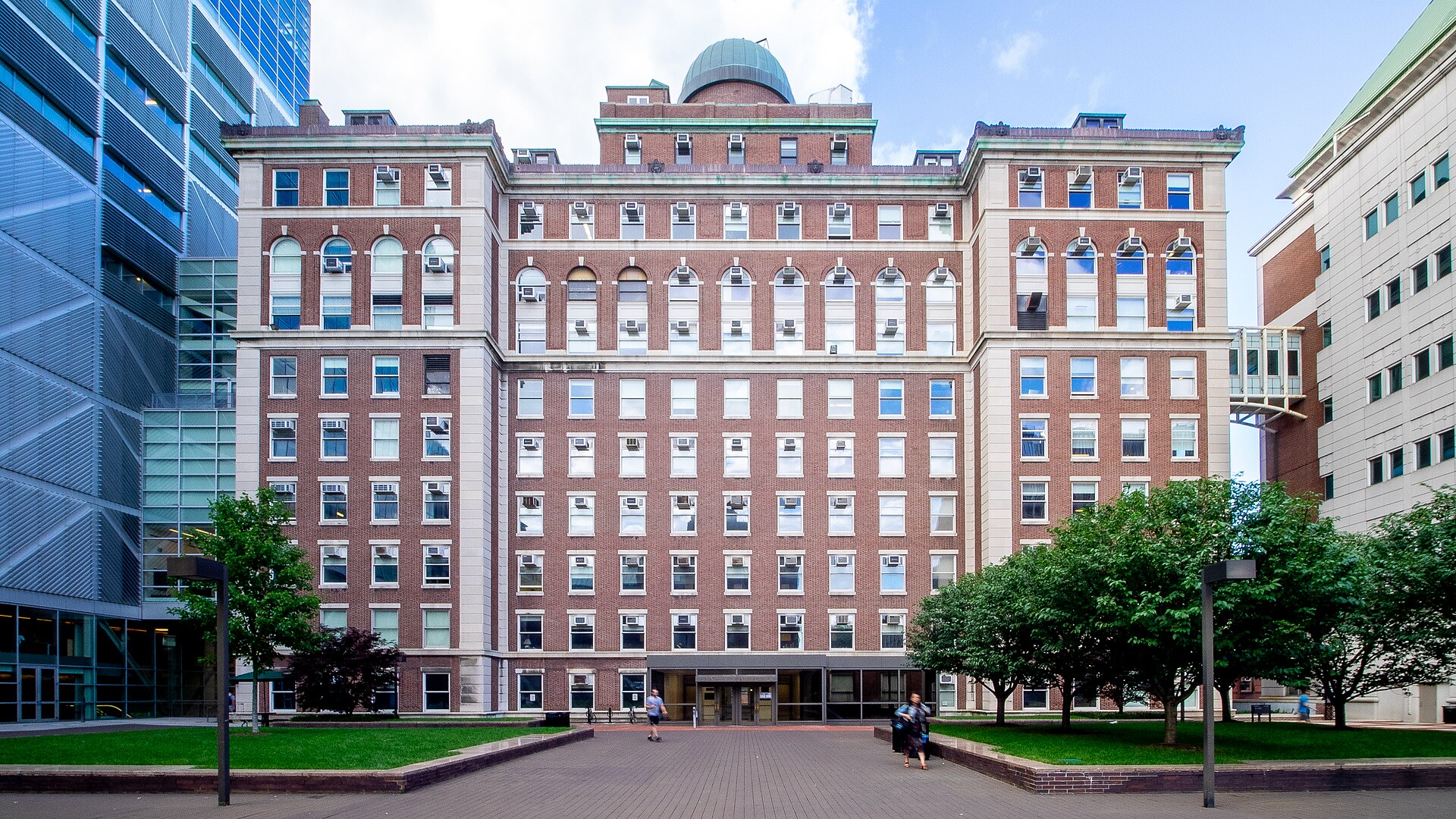
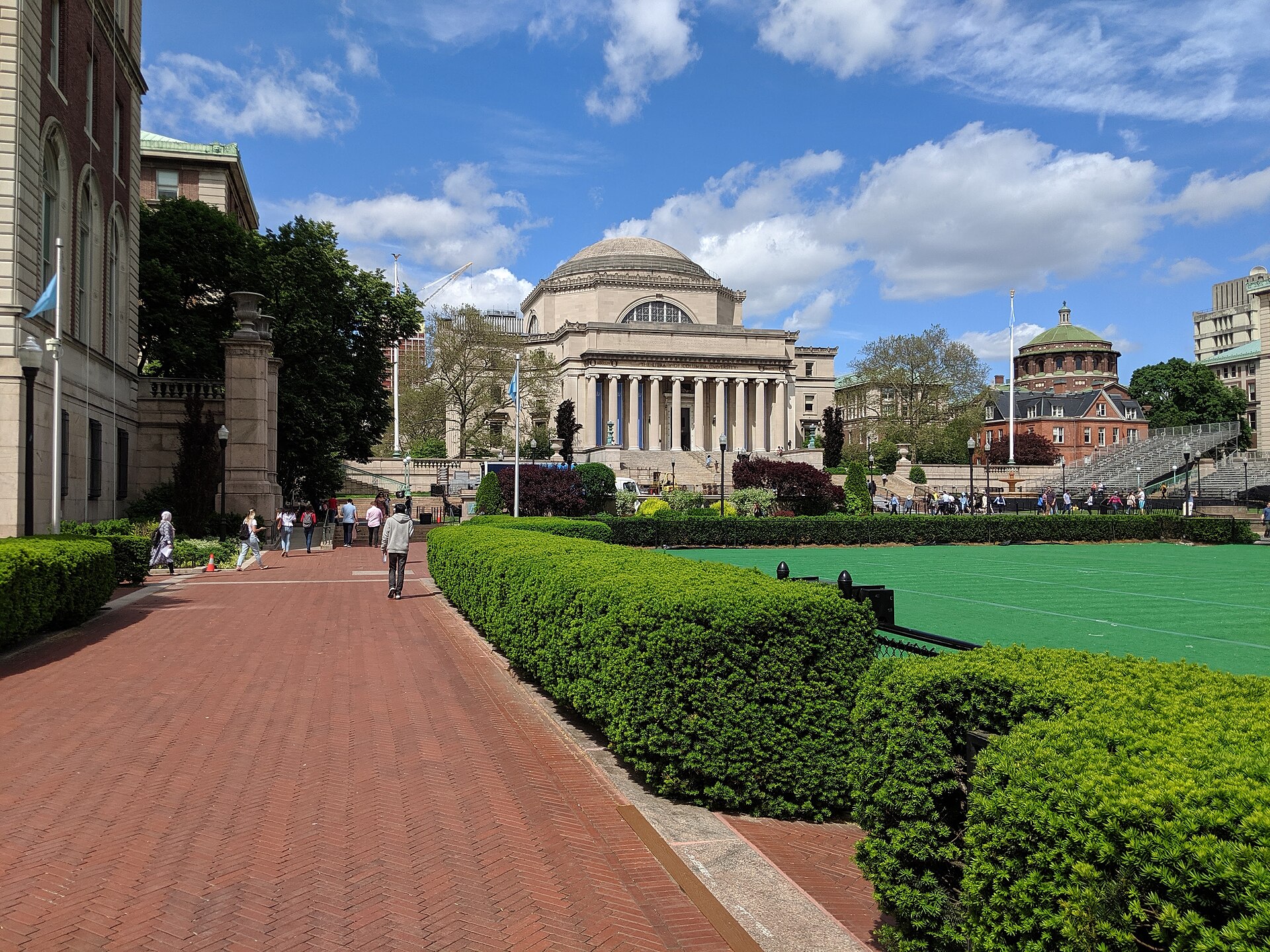
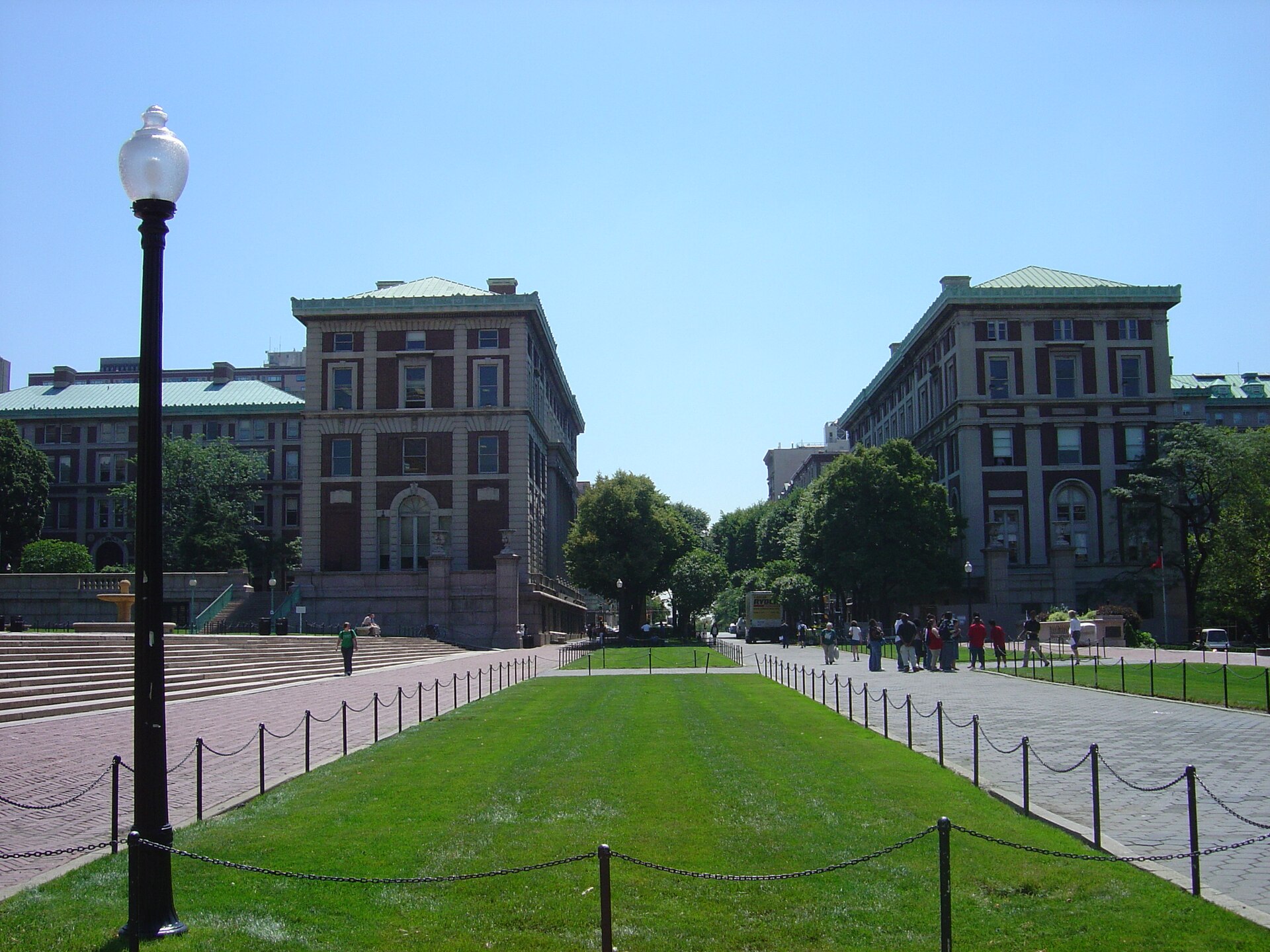
Columbia University — campus in pictures
Real, freely-licensed photographs of the campus (via Wikimedia Commons).



Why Columbia — Core Curriculum, New York City & Global Network
Columbia is not simply an Ivy League university in New York — it is an institution shaped by the city around it. The Core Curriculum, SIPA, the Pulitzer Prizes, and proximity to the world's most competitive professional markets make Columbia distinctively different from its peer institutions.
Columbia Acceptance Rate & Admitted Student Profile
Stats
Profile Stats
Rea Vs Rd
Columbia Admissions Requirements — GPA, Test Scores & International Qualifications
- Near-perfect grades in the most rigorous courses available
- Columbia reads your transcript in the context of your school's offerings
- Upward grade trajectory is viewed positively
- Teacher recommendations validate academic character and intellectual engagement
- Columbia is currently test-optional
- Middle 50% SAT: 1510–1560
- Middle 50% ACT: 34–36
- Strong scores above 1510 are generally worth submitting
- IB: 43+ points, 7s in relevant HLs expected
- A-Levels: AAA–A*AA in relevant subjects
- CBSE/ISC: 95%+ in relevant subjects
- Competitive academic achievements and olympiad results are valued
Columbia Application Components — Common App, Essays & Recommendations
Columbia uses the Common Application with a distinctive six-part supplement. Below is every component of a complete Columbia application — with strategic notes for international applicants.
Columbia Essays — Writing All Six Supplemental Responses
Tips
Prompts
What Columbia Admissions Officers Are Looking For
Columbia uses a holistic evaluation process. Every application is read by multiple admissions officers and rated across multiple dimensions. The distinctive emphasis on the Core Curriculum, intellectual engagement, and life in New York City shapes what admissions officers are specifically looking for.
Columbia Financial Aid & Scholarships for International Students
Columbia meets 100% of demonstrated financial need for all admitted students. However, unlike Harvard, Princeton, and MIT, Columbia is need-aware for international applicants — meaning that an applicant's financial need may be considered as part of the admissions decision. Once admitted, all need is met through grants.
Financial aid figures are based on Columbia's published data. Individual packages are determined by Columbia's Financial Aid Office on a case-by-case basis using the CSS Profile.
Stats
Contribution Tiers
| Note | Range | Percent | Percent Value |
|---|---|---|---|
| Full demonstrated need met through grants | All admitted students | 100% | 100 |
Key Dates
Advantages
- Substantially higher acceptance rate (~13% ED vs ~3% RD)
- Signals genuine first-choice commitment to Columbia
- Earlier decision — notified by mid-December
- Smaller, more self-selected applicant pool
- Demonstrated interest counts in Columbia's holistic process
Disadvantages
- Binding commitment — must withdraw all other applications if admitted
- Cannot compare financial aid offers from other universities
- Application must be fully complete by November 1
- Less time to strengthen senior-year grades
- If deferred, must wait until April without other early options
Columbia Interview — What You Need to Know
Columbia discontinued its undergraduate alumni interview programme starting with the 2023–2024 admissions cycle. The decision was made to ensure all candidates have equal access to the admissions process as application volume has grown significantly. No interviews are offered or required for Columbia College or SEAS undergraduate applicants.
Meta
Questions
Columbia Housing & Residential Life
Columbia does not use a house or college system like Harvard or Yale. Instead, first-year students at Columbia College and SEAS are guaranteed on-campus housing in one of five first-year residence halls. After their first year, students enter a housing lottery for upperclassman accommodation on or near campus.
Houses
Lottery Steps
- All first-year students are guaranteed on-campus housing
- First-year residence hall options: Carman, Furnald, John Jay, Wallach, Wien (new 2025)
- After Year 1: students enter the Columbia Housing lottery for upperclassman buildings
- Upperclassman buildings include Broadway, Hartley, East Campus, and others
- Many upperclassmen choose to live in Morningside Heights or the Upper West Side
Columbia Schools & Undergraduate Programmes
- {"label":"Undergraduate majors available","value":"100+"}
- {"label":"Core Curriculum courses required","value":"9"}
- {"label":"Founded","value":"1754"}
- {"label":"Declaration of major","value":"Year 2"}
- {"label":"Undergraduate programmes","value":"8+"}
- {"label":"Student:faculty ratio","value":"6:1"}
- {"label":"Top programmes","value":"CS, Biomedical, Chemical"}
- {"label":"Modified Core Curriculum","value":"Required"}
- {"label":"Founded","value":"1912"}
- {"label":"Administers","value":"Pulitzer Prizes"}
- {"label":"Flagship degree","value":"M.S. in Journalism"}
- {"label":"Rankings","value":"#1 Journalism School"}
- {"label":"Countries represented","value":"140+"}
- {"label":"Flagship degree","value":"MPA / MIA"}
- {"label":"Rankings","value":"Top 3 globally"}
- {"label":"Undergraduate connection","value":"Joint BA/MPA possible"}
- {"label":"Flagship degree","value":"J.D."}
- {"label":"Founded","value":"1858"}
- {"label":"US law school ranking","value":"Top 5"}
- {"label":"Notable programme","value":"Accelerated JD"}
Research & Extracurricular Opportunities at Columbia
Career Outcomes & Columbia Alumni Network
Columbia's New York City location creates an employment network unlike any other Ivy League university. Recruiters from the world's leading financial, technology, media, and policy organisations recruit directly from Columbia's campus. The alumni network in finance and law is particularly powerful.
Stats
Categories
Our Columbia Admissions Track Record & Student Success Stories
Faqs
Should I apply Early Decision to Columbia?+
Columbia offers Early Decision — a binding round with an approximately 13% acceptance rate for the Class of 2028, compared to an overall rate of 3.9%. If Columbia is your clear first choice and your application is complete, Early Decision provides a meaningful advantage. Unlike Harvard's REA, Columbia's ED is binding — you must withdraw all other applications if admitted.
Does Columbia interview undergraduate applicants?+
Columbia discontinued its undergraduate alumni interview programme starting with the 2023–2024 admissions cycle. There are no interviews for Columbia College or SEAS applicants. Everything the interview once conveyed now travels through your written application.
Is Columbia need-blind for international students?+
Columbia is need-aware for international students — meaning financial need may be considered as part of the admissions decision. This is different from Harvard, Princeton, and MIT, which are need-blind for international students. However, once admitted, Columbia meets 100% of demonstrated financial need through grants.
What is Columbia's Core Curriculum and do all students take it?+
The Core Curriculum is Columbia's renowned general education programme. Every Columbia College student completes courses in Literature Humanities, Contemporary Civilization, Art Humanities, Music Humanities, and Frontiers of Science. It is one of the most distinctive features of a Columbia education and a genuine intellectual commitment — not a box-ticking exercise.
How many supplemental essays does Columbia require?+
Columbia has six supplemental responses: a 100-word list of intellectual influences and five 150-word essays on your life experience, a moment of disagreement, adversity, why Columbia, and your area of study. This is more writing than some Ivy League schools and should be taken very seriously.
What is the difference between Columbia College and SEAS?+
Columbia College (humanities, social sciences, natural sciences, with Core Curriculum) and the Fu Foundation School of Engineering and Applied Science (SEAS) are the two undergraduate schools. You apply to one specifically — the application asks which school you prefer, and your Why area of study essay is tailored accordingly.
Does Columbia offer merit scholarships for international students?+
Columbia awards no merit scholarships. All institutional financial aid is need-based, calculated using the CSS Profile. External scholarships from governments, foundations, and other organisations are available and can supplement Columbia's need-based grant.
Do engineering students at Columbia have to take the Core Curriculum?+
Columbia's Core Curriculum is designed to broaden every student regardless of major. SEAS students take a modified version. Engineering students take Literature Humanities or Contemporary Civilization, plus Art Humanities or Music Humanities, plus University Writing and the Art of Engineering course.
Book a Free Columbia Admissions Strategy Session
In 60 minutes our Columbia admissions specialists will evaluate your academic profile, review your essay approach across all six supplemental prompts, advise on Early Decision vs Regular Decision, and identify what makes your application genuinely distinctive.
- No commitment required
- Columbia specialists with Ivy League knowledge
- Personalised strategy — not generic advice
Columbia Admissions Requirements
Columbia Academic Requirements — The Honest Breakdown for International Students
What GPA, test scores, and academic profile do Columbia's admitted students actually have? And what does Columbia's holistic review mean for IB, A-Level, and other international curriculum students?
GPA & Class Rank
Columbia and GPA — What the Data Shows
Columbia does not publish a minimum GPA. In practice, the vast majority of admitted students have a GPA of 3.9 or above on a 4.0 scale, achieved in the most rigorous courses available at their school.
A 3.9 GPA is the floor of the competitive range, not a distinguishing feature. What distinguishes admitted Columbia students is the combination of exceptional grades in the most rigorous courses available — IB, A-Level, AP — not grades alone.
Academic Context
Class Rank and School Context — How Columbia Reads Academic Performance
Columbia does not require class rank, and many international schools do not provide it. Columbia's admissions office has extensive experience evaluating academic performance across widely different school systems around the world.
Standardised Testing
SAT Scores at Columbia — What You Actually Need
Columbia SAT Data — Admitted Students
| Label | Score | Percent |
|---|---|---|
| 25th percentile | 1510 | 62 |
| 75th percentile | 1560 | 85 |
| Estimated median | ~1535 | 73 |
Standardised Testing
ACT Scores at Columbia — The Data and the Strategy
Columbia ACT Data — Admitted Students
Metrics
Comparison Cards
Testing Strategy
Columbia Test-Optional Policy — The Strategic Decision Explained
Columbia has maintained a test-optional policy since the pandemic and continues this policy. Understanding what test-optional means in practice — and when not submitting scores is or is not strategic — is important for Columbia applicants.
Submit Items
Withhold Items
Curricula
A-Levels and IB at Columbia — Specific Benchmarks
- {"label":"Competitive range","value":"43+ points"}
- {"label":"HL expectations","value":"7,7,6 or 7,7,7 at Higher Level in subjects relevant to intended area of study"}
- {"label":"Subject rigour","value":"HL Mathematics (Analysis & Approaches preferred for quantitative fields), HL sciences or humanities per intended path"}
- {"label":"Extended Essay","value":"A or B grade; treated as evidence of independent research capability"}
- {"label":"Competitive range","value":"AAA – A*AA"}
- {"label":"Subject rigour","value":"Mathematics + Further Mathematics for engineering applicants; three rigorous humanities for Columbia College liberal arts applicants"}
- {"label":"AS results","value":"Reviewed alongside predicted grades; strong AS supports the predicted grade argument"}
Advanced Placement
AP Courses at Columbia — What Counts and What to Take
For students in the US system or at schools that offer AP courses, Advanced Placement performance is a meaningful component of the academic profile submitted to Columbia.
Academic Rigour
Rigour of Secondary School Record — Columbia's Key Academic Factor
Columbia lists rigour of secondary school record as one of the most important factors in its admissions process. Understanding what this means concretely — and how to demonstrate it — is fundamental to a competitive application.
Taking the most challenging courses available at your specific school, in the subjects most relevant to your intellectual interests and intended area of study.
Subject Preparation
Subject Preparation — What Columbia Expects by Field
Columbia College has no formal prerequisites for admission — students apply to the college broadly and declare their major in the second year. However, the most competitive applicants demonstrate preparation coherent with their intended area of study.
Language Proficiency
English Language Requirements for International Columbia Applicants
Columbia requires English language proficiency documentation from applicants whose primary language of instruction is not English. Standardised English test scores are one of several ways to demonstrate proficiency.
Columbia's supplemental essays are themselves a demonstration of English writing ability. A student who writes compelling, precise, and distinctive essays in the six Columbia prompts demonstrates English fluency in the most relevant possible way.
By Concentration
Academic Profile by Intended Area of Study — What Columbia Expects
Students at Columbia College are admitted to the college broadly and declare a major in their second year. However, the academic profile should be coherent with the student's stated area of interest. Students apply specifically to Columbia College or SEAS — engineering applicants must indicate their intended programme.
| Signals | Expectation | Concentration |
|---|---|---|
| AMC/AIME; proof-level thinking; independent research | HL Maths AA / Further Maths A* | Mathematics |
| USACO; original projects; coding competitions | HL Maths + strong CS background | Computer Science (SEAS) |
| Quantitative research; econometric projects | HL Maths AA + Economics | Economics |
| Published writing; essay competitions; debate | Strong humanities profile; Advanced English | English & Comparative Literature |
| Model UN; policy writing; internships | Strong social sciences profile | Political Science |
| Original research; science fair; lab experience | HL Chemistry + Biology | Biological Sciences (pre-med track) |
| Engineering competitions; design projects | HL Maths + Physics | Biomedical / Chemical Engineering (SEAS) |
| Economics research; financial modelling | HL Maths + Economics | Financial Economics |
| Journalism work; published articles; media projects | Strong writing record | Journalism (via CC; grad school route) |
International Systems
Columbia and International Education Systems — How Your Curriculum Is Evaluated
Roadmap
Building an Academic Profile for Columbia — What to Do at Each Stage
- Select IGCSE or MYP subjects that preserve the widest options for IB HL or A-Level choices.
- Prioritise mathematics and sciences alongside strong humanities — the Core Curriculum at Columbia requires both.
- Begin exploring intellectual interests beyond the curriculum through independent reading, online courses, and engagement with ideas.
- Select IB Higher Level subjects that reflect genuine intellectual strengths, not grade optimisation.
- Finalise A-Level subject combination with rigour and coherence in mind.
- Begin SAT or ACT preparation if applying to US universities — aim to complete testing by December of Year 12.
- Identify summer research or enrichment programmes to apply for: Columbia's own SURE programme, Polygence, or competitive external placements.
- Pursue research, community engagement, or creative work actively — depth matters more than breadth.
- Engage with academic competitions in your strongest subject.
- Maintain or improve academic performance throughout.
- Begin researching specific Columbia programmes, faculty, and Core Curriculum courses for the Why Columbia essay.
- Predicted grades finalised — Tychr works with students on predicted grade optimisation during mock exam season.
- SAT/ACT completed and decision made whether to submit.
- Columbia supplemental essays drafted, revised, and finalised well before November 1 (ED) or January 1 (RD).
Common Pitfalls
Academic Mistakes That Cost Columbia Applications — And How to Avoid Them
Real Outcomes
What Academic Profiles Tychr's Columbia-Admitted Students Had
The following profiles represent the academic backgrounds of students Tychr has helped gain Columbia admission or Columbia-equivalent outcomes. They illustrate the range of academic preparation that works — and what made each application compelling.
Faqs
Is a 3.9 GPA enough for Columbia?+
A 3.9 GPA is expected, not sufficient. Columbia receives thousands of applications from students with 3.9+ GPAs. The academic profile must combine exceptional grades with exceptional course rigour and supplementary intellectual engagement.
What IB score do I need for Columbia?+
Competitive IB applicants to Columbia typically have predicted scores of 43 or above, with 7,7,6 or 7,7,7 at HL. Scores below 40 are below the competitive range for most Columbia applicants.
Does Columbia prefer SAT or ACT?+
No preference. Take the test you score higher on. Take a diagnostic of both before committing to either.
Can I apply to Columbia without test scores?+
Yes, Columbia is currently test-optional. For international students, Tychr generally recommends submitting scores that are 1510 or above, as strong scores provide a standardised academic benchmark that complements international transcripts.
Does Columbia accept students who were not top of their class?+
Yes. Columbia evaluates every application in the context of the student's school and available curriculum. A student who is the top performer at a strong school is competitive — what matters is demonstrating that you challenged yourself relative to what was genuinely available.
Financial Aid & Scholarships
Columbia's True Cost — What International Families Actually Pay.
Columbia's list price is approximately $99,000 per year. For families with demonstrated financial need, the real cost is substantially lower — but Columbia's need-aware policy for international students means financial circumstances may affect the admissions decision. Here is exactly what Columbia costs and how the aid system works.
Cost Transparency
What Columbia Actually Costs — The Full Annual Figure
Columbia's total cost of attendance for 2024–25 is approximately $99,044 annually. For families with demonstrated financial need who are admitted, Columbia meets 100% of that need through grant-based aid — money that does not need to be repaid.
Admissions Policy
Columbia's Need-Aware Policy for International Students — What It Means
For admitted international students, Columbia meets 100% of demonstrated financial need through a combination of Columbia grants (which do not need to be repaid) and a student work component. The average financial aid award for international students is approximately $79,375.
Institutional Commitment
Why Columbia Can Meet Full Need — The Commitment to Access
Financial Aid Walkthrough
Applying for Columbia Financial Aid — The Process Step by Step
Columbia financial aid requires a separate application through the CSS Profile. International students must declare their intention to apply for aid at the time of submitting their admissions application. Here is the complete step-by-step process.
- International students must indicate their request for financial aid on the admissions application
- This request cannot be changed after the application is submitted
- Failure to indicate need at the time of application means no aid will be considered
- Access cssprofile.collegeboard.org
- Register or log into a College Board student account
- Add Columbia University as a recipient
- Parent income from all sources, documented
- Parent assets (savings, investments, real estate, business interests)
- Household size and number in college
- Non-custodial parent information if parents are separated
- Student income and assets
- Any unusual financial circumstances
- {"date":"November 15","label":"Early Decision Applicants"}
- {"date":"February 15","label":"Regular Decision Applicants"}
GLOBAL ADMISSIONS AID
Columbia Financial Aid for International Students — How It Works
Columbia's financial aid programme for international students is need-based and grant-funded. The critical distinction from Harvard, Princeton, and MIT is that Columbia is need-aware for international applicants — meaning the admissions process may consider financial need. Here is how the programme works in practice for international families.
FINANCIAL AID OVERVIEW
Columbia Financial Aid — What the Numbers Look Like
Columbia Aid by Financial Need Level (Approximate)
Figures are approximate. Individual packages are determined by Columbia's Financial Aid Office using the CSS Profile. Confirm current figures with Columbia's financial aid office.
Columbia meets 100% of demonstrated need for all admitted students. The average international aid package is approximately $79,375. The exact amount depends on the CSS Profile assessment of your family's financial situation.
| Grant | Income | Contribution |
|---|---|---|
| Up to full need covered | Low-income families (significant need) | Minimal or $0 |
| Substantial grant award | Middle-income families | Scaled by CSS Profile |
| Partial grant possible | Upper-middle-income families | Larger contribution expected |
| Limited or no grant | High-income families | Full cost of attendance |
Table Headers
AID QUALIFICATION
Columbia Scholarships — What Exists and Who Qualifies
Columbia does not award merit scholarships to undergraduate students. All Columbia financial aid is need-based, awarded based on family financial circumstances as assessed through the CSS Profile.
EXTERNAL FUNDING
External Scholarships — Additional Funding for Columbia Students
While Columbia offers only need-based grants, numerous external organisations award scholarships to Columbia applicants and students, providing additional funding that can supplement the Columbia grant.
GRANT-BASED AID
Columbia's No-Loan Aid Policy — Why It Matters
Columbia's financial aid packages contain no institutional loans — all institutional support is in the form of grants that do not need to be repaid. This is one of the most important features of Columbia's aid programme.
STUDENT EMPLOYMENT
Work-Study at Columbia — What to Expect
Columbia financial aid packages typically include a student work component — an expected contribution from on-campus employment that is part of the overall aid package.
- Research assistant positions in faculty labs (particularly valuable for STEM students — provides income and research experience)
- Library and administrative roles
- Columbia University Dining Services
- Tutoring and academic support roles
- Office of Undergraduate Admissions ambassador and tour guide roles
- Columbia Athletics and campus event staff
BENCHMARKING
Columbia vs. Other Ivies — Financial Aid Comparison
| Policy | School | No Loans | Typical Cost |
|---|---|---|---|
| Need-blind (domestic + international) | Harvard | Yes | $0 (low income) |
| Need-blind (domestic + international) | Princeton | Yes | $0 (low income) |
| Need-blind (domestic + international) | MIT | Yes | $0 (low income) |
| Need-aware (internationals) | Columbia | Yes | Varies by need; avg grant ~$79K |
| Need-aware (internationals) | Yale | Minimal | ~$5,000–$15,000 |
| Need-aware (internationals) | Penn | No | ~$10,000–$25,000 |
| Need-aware (internationals) | Cornell | No | ~$10,000–$25,000 |
COST ANALYSIS
Columbia vs. Alternatives — What You Actually Pay
For families with demonstrated financial need who are admitted, Columbia's list price of ~$99,000/year may reduce dramatically — in some cases below the cost of alternatives. The key caveat: Columbia's need-aware admissions policy for international students means financial need may affect the admissions decision.
| Policy | School | Contribution | Four Year Cost |
|---|---|---|---|
| Need-blind, full-need, no loans | Harvard | ~$0 | ~$0 |
| Need-aware (intl), full-need, no loans | Columbia | Varies by need | Varies; avg grant ~$79K/yr |
| Need-aware (intl), full-need, minimal loans | Yale | ~$5,000–$10,000 | ~$20,000–$40,000 |
| Limited international aid | Top state university (out-of-state) | ~$30,000–$45,000 | ~$120,000–$180,000 |
| Limited international aid | UK Russell Group (London) | ~$30,000–$40,000/year | ~$120,000–$160,000 |
FINANCIAL APPEALS
Appealing a Columbia Financial Aid Decision — When and How
Columbia's initial financial aid offer is based on the information provided in the CSS Profile. If circumstances have changed or the initial offer does not accurately reflect your family's financial situation, Columbia has an appeals process.
The honest note: Columbia's financial aid formula is designed to be comprehensive. Appeals are most successful when based on a genuine change in financial circumstances or a clear error — not on disagreement with the formula's assessment of a stable situation.
How To Appeal
- Contact Columbia's Office of Financial Aid and Educational Financing directly
- Submit a written appeal explaining the specific circumstances clearly
- Provide documentation supporting the appeal — income verification, medical expenses, job loss documentation, or other relevant records
When To Appeal
- Family financial circumstances have changed since the CSS Profile was submitted — job loss, medical expenses, family crisis
- The CSS Profile contained an error or omission
- The initial offer seems significantly inconsistent with the family's actual financial situation
- Another university has offered substantially different aid (useful for domestic students comparing packages)
TIMELINE & PLANNING
Planning for Columbia Costs — What to Do and When
Admissions Strategy
Columbia Essays — Everything You Need to Know to Write All Six Well.
A complete guide to Columbia's six-part supplemental essay requirements, what each prompt is really asking, how Columbia evaluates written work, and the specific strategies that produce responses admissions officers remember.
Requirement Overview
Columbia Essay Requirements — The Full Picture
Columbia's supplemental application consists of six responses: one 100-word list and five 150-word essays. Compared to most Ivy League schools, Columbia's supplement is both more numerous and shorter — each response must be more precise and purposeful than a longer essay would need to be.
The Six Prompts
Columbia's Essay Prompts — Official Text and Strategy
The 650-Word Foundation
The Common App Personal Statement at Columbia — What It Needs to Accomplish
Columbia's supplemental essays are shorter and more numerous than many Ivy League schools — which places significant weight on the Common App personal statement. This 650-word essay goes to every school on the applicant's list, but must be crafted with an awareness of what Columbia values: intellectual curiosity, genuine engagement with ideas, authentic voice.
The personal statement must work for Columbia but also for every other school on the list. It should not reference Columbia specifically (the supplements handle that) but should be written with awareness of what Columbia values: intellectual vitality, genuine curiosity, authentic engagement with community and ideas.
Looking For List
- A genuine, distinctive perspective on something the student cares about — not a general topic but a specific angle
- Evidence of how the student's mind works — not what they have achieved but how they think and engage
- Authentic voice — the essay should sound unmistakably like the person who wrote it
- Intellectual or personal character that is not already captured in grades, activities, or recommendations
Tired Of List
- Essays that describe the activity list in narrative form without adding new dimension
- Generic lessons-learned-from-challenge essays that don't reveal genuine character
- Essays that start with a famous quote or a dictionary definition
- Essays that are technically excellent but emotionally flat — well-crafted sentences, nothing remembered
Supplement Strategy
Columbia Supplement Strategy — How to Approach All Six Responses
Topic Selection
Choosing What to Write — The Decisions That Shape Everything
With six Columbia prompts plus the Common App personal statement, the most important strategic decision is not how to write any single essay — it is how to distribute your story across all seven pieces of writing so they work together as a coherent, complete portrait.
Criteria
Caution Topics
- A Why Columbia essay that mentions New York City as the primary draw — without naming anything specific inside Columbia
- An adversity essay that describes a very common difficulty (pandemic, sports injury) without a truly specific angle
- A life experience essay that describes demographic background without connecting it concretely to Columbia's collaborative environment
- A disagreement essay that resolves in a comfortable 'we both learned something' without revealing genuine intellectual engagement
Common Pitfalls
Columbia Essay Mistakes — What Costs Applications
- Writing a Why Columbia essay that mentions New York City, the Core Curriculum, and 'diverse perspectives' without naming a single specific faculty member, course, programme, or organisation
- Treating the disagreement prompt diplomatically — writing about a minor difference of opinion that resolves without genuine intellectual engagement or stakes
- Submitting a list of intellectual influences that is curated to impress rather than to accurately reflect your actual reading and media habits
- Using the same narrative thread across multiple responses — the life experience essay and the adversity essay both referencing the same event, adding no new information
- Writing at the full 150-word limit but filling the space with vague, hedged prose rather than precise, specific content
- Forgetting that the six responses are read together — failing to ensure they present a coherent, complete picture of who the applicant is
- Neglecting the Common App personal statement in favour of the supplements — the personal statement is equally important and should be tailored to work for Columbia specifically
Essay FAQs
Columbia Essay Frequently Asked Questions
How many supplemental essays does Columbia require?+
Columbia requires six supplemental responses: one 100-word list of intellectual influences and five 150-word essays on life experience/contribution, disagreement/dialogue, adversity/growth, why Columbia, and your area of study.
Which Columbia essay is the most important?+
The Why Columbia essay and the Disagreement prompt are where most applicants make critical errors. The Why Columbia essay is too generic in most submissions; the Disagreement prompt is too diplomatically resolved. Both deserve the most strategic attention.
Does the 100-word list really matter?+
The list of intellectual influences (100 words) is not a throwaway. Columbia uses it to understand how you engage with ideas outside class. A list that reveals genuine, diverse intellectual curiosity — specific podcasts, journals, websites, plays — is a positive signal. A generic list of famous books is not.
How specific should the Why Columbia essay be?+
The Why Columbia essay should name specific things about Columbia — a faculty member whose research interests you, a Core Curriculum text you want to engage with, a specific student organisation or research programme. Generic answers about New York City or 'world-class faculty' are the most common mistake in this prompt.
How should the Area of Study essay differ for Columbia College vs. SEAS?+
For a student applying to Columbia College, the Area of Study essay should connect your intellectual interests to Columbia College's strengths and the Core Curriculum. For SEAS applicants, the essay should connect your engineering interests to Columbia Engineering's specific programmes and culture.
Is there anything like an interview that replaces the essays?+
Columbia does not conduct alumni interviews for undergraduate applicants as of the 2023–2024 cycle. Everything that an interview once conveyed now travels through your written application. There is no interview process to prepare for.
How should I approach writing within the 150-word limit?+
Plan to draft each response at roughly double the word limit (300 words for 150-word prompts), then cut ruthlessly. The first cut removes vague qualifiers, hedging phrases, and general observations. The second cut removes any sentence that is not doing essential work. What remains should be tight, specific, and precise.
Should the six responses work together as a package?+
Yes. The six responses are read together as a package alongside the personal statement, activity list, and recommendations. They should present a coherent, multi-dimensional portrait of who you are — each response adding new information rather than repeating ground covered elsewhere.
Courses — schools, degrees & intake
79 degrees across 3 groupings.
Columbia College · 54 degrees
African American and African Diaspora Studies
American Studies
Ancient Studies
Anthropology
Archaeology
Architecture
Art History and Archaeology
Astronomy
Biological Sciences
Business Management
Chemistry
Classics
Cognitive Science
Comparative Literature and Society
Computer Science
Creative Writing
Drama and Theatre Arts
Earth and Environmental Sciences
East Asian Languages and Cultures
Ecology, Evolution and Environmental Biology
Economics
Education
English and Comparative Literature
Ethnicity and Race Studies
Film and Media Studies
French
Germanic Languages
Global Affairs and Public Policy
History
Human Rights
Italian
Jazz Studies
Jewish Studies
Latin American and Caribbean Studies
Latin American and Iberian Cultures
Linguistics
Mathematics
Medieval and Renaissance Studies
Middle Eastern, South Asian, and African Studies
Music
Philosophy
Physics
Political Science
Psychology
Public Health
Religion
Science and Society
Slavic Languages
Sociology
Statistics
Sustainable Development
Urban Studies
Visual Arts
Women's and Gender Studies
Fu Foundation School of Engineering and Applied Science (SEAS) · 12 degrees
Applied Mathematics
Applied Physics
Biomedical Engineering
Chemical Engineering
Civil Engineering
Computer Engineering
Computer Science
Earth and Environmental Engineering
Electrical Engineering
Industrial Engineering and Operations Research
Materials Science and Engineering
Mechanical Engineering
School of General Studies · 13 degrees
African American and African Diaspora Studies (GS)
Anthropology (GS)
Biological Sciences (GS)
Computer Science (GS)
Economics (GS)
History (GS)
Mathematics (GS)
Philosophy (GS)
Political Science (GS)
Psychology (GS)
Sociology (GS)
Statistics (GS)
Sustainable Development (GS)
Want your real chances at Columbia University?
Create a free TYCHR account for your personalised admit-chance, a shortlist you can track, exact entry requirements, and essay + counselling help.