← All universities
CA

Carnegie Mellon University

Pittsburgh, United States · Urban

PrivateResearch
Acceptance
11.7%
QS World
#52
Tuition/yr
$68,776
Students
16,000
Founded
1900

Carnegie Mellon is where technical mastery meets artistic imagination — a place that has produced more AI researchers, roboticists, and tech founders than almost any institution on earth. Getting in demands more than ability; it demands a focused, authentic narrative about why your mind belongs here.

Carnegie Mellon University Admissions Guide for

Campus

Carnegie Mellon University — campus in pictures

Real, freely-licensed photographs of the campus (via Wikimedia Commons).

Carnegie Mellon Cohon University Center 2016
Carnegie Mellon Cohon University Center 2016Dllu · CC BY-SA 4.0 · via Wikimedia Commons
Hamerschlag Hall (right) and Scott Hall (left) at Carnegie Mellon University, as seen from Schenley Bridge.
Hamerschlag Hall (right) and Scott Hall (left) at Carnegie Mellon University, as seen from Schenley Bridge.Dllu · CC BY-SA 4.0 · via Wikimedia Commons
The main campus of Carnegie Mellon University in Pittsburgh as seen from the 36th floor of the Cathedral of Learning.
The main campus of Carnegie Mellon University in Pittsburgh as seen from the 36th floor of the Cathedral of Learning.Dllu · CC BY-SA 4.0 · via Wikimedia Commons
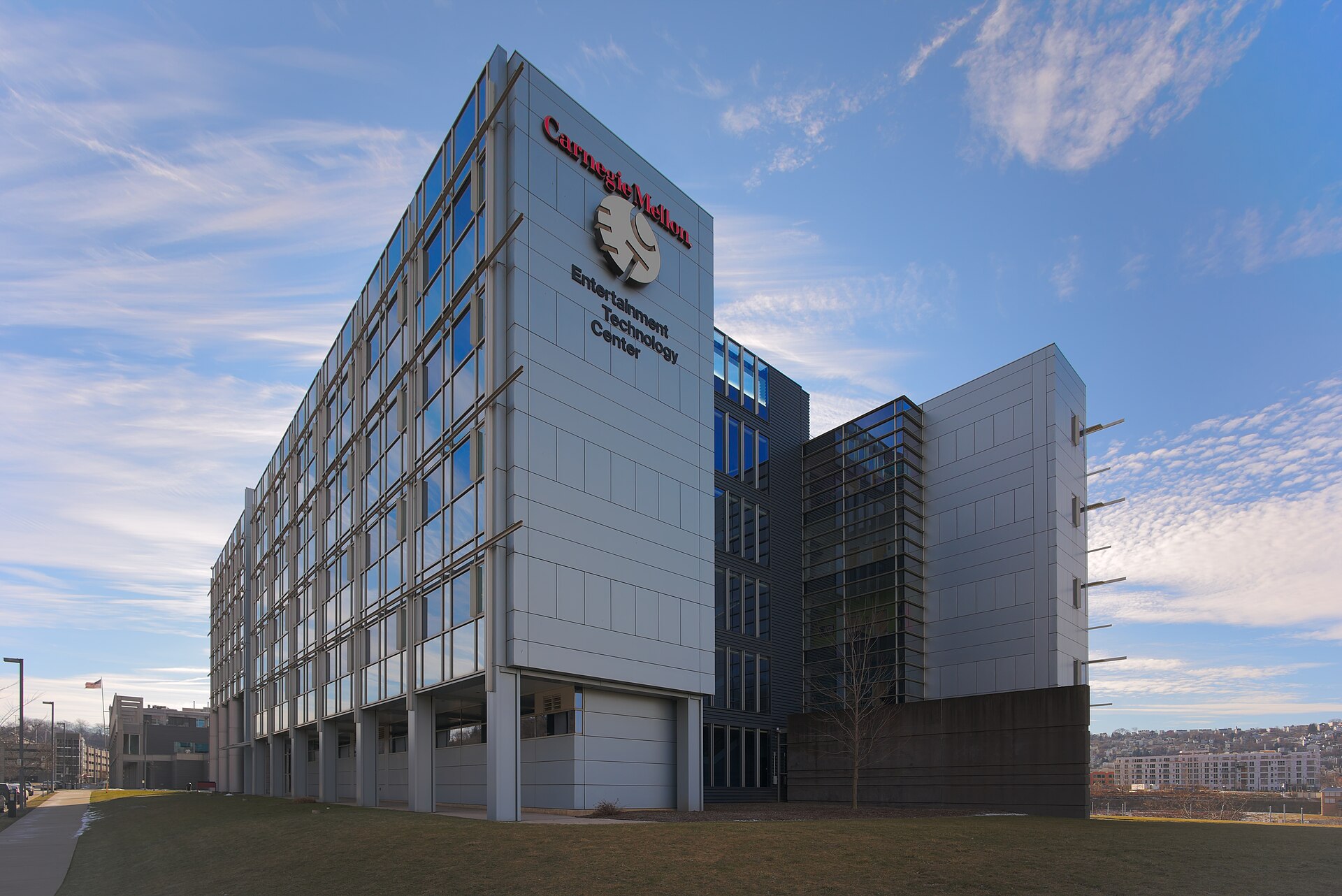
Entertainment Technology Center, Carnegie Mellon University
Entertainment Technology Center, Carnegie Mellon UniversityDllu · CC BY-SA 4.0 · via Wikimedia Commons
Cmu panorama
Cmu panoramaPiotrus · CC BY-SA 3.0 · via Wikimedia Commons
Hunt Library illuminated at night, Carnegie Mellon University, Pittsburgh, Pennsylvania, USA.
Hunt Library illuminated at night, Carnegie Mellon University, Pittsburgh, Pennsylvania, USA.Daderot · Public domain · via Wikimedia Commons

Why Carnegie Mellon — World-Class CS, Robotics & Interdisciplinary Innovation

Carnegie Mellon is not a traditional research university that happens to be strong in technology. It was built from the beginning around the idea that rigorous, applied thinking — in science, engineering, and the arts — produces people who change the world. For international students who want to work at the absolute frontier of technology, innovation, or creative practice, CMU is a singular opportunity.

01World's Top Computer Science Programme
CMU's School of Computer Science is consistently ranked #1 in the world. Its graduates built the internet economy: alumni founded or co-founded companies including Lyft, Duolingo, Pinterest, and iRobot.
02Robotics & AI at the Frontier
CMU invented the modern field of robotics. The Robotics Institute, founded in 1979, remains the world's largest robotics research organisation. The undergraduate AI degree — America's first — launched in 2018.
03Interdisciplinary by Design
CMU's colleges deliberately break disciplinary walls. Computer Science meets drama, business meets engineering, and statistics meets machine learning — the institutional structure rewards boundary-crossing thinkers.
04Faculty at the World's Research Edge
CMU faculty hold more than 4,000 patents. The university has produced 20 Nobel laureates and 14 Turing Award winners — more than any other institution in the field of computer science.
05Pittsburgh's Reinvention as a Tech City
Pittsburgh has transformed from a steel city into a major technology hub. Google, Apple, Uber, and Amazon all maintain major engineering offices there, largely because of proximity to CMU talent.
06Arts Meets Technology
Uniquely among elite technical universities, CMU houses a world-class College of Fine Arts — training actors, architects, and artists alongside engineers and computer scientists. The School of Drama is among the best in the US.

Carnegie Mellon Acceptance Rate & Admitted Student Profile

Stats

11.7%
Overall Acceptance Rate
1510–1560
SAT Middle 50%
34–35
ACT Middle 50%
39+
Typical IB Score

Profile Stats

1510–1560
SAT Middle 50%
34–35
ACT Middle 50%
3.8
Minimum GPA (Unweighted)
~22%
International Students
39+
IB Typical Band

Rea Vs Rd

Rd Label: Regular Decision
Rd Value: ~8–10%
Rea Label: Early Decision
Rea Value: ~15–20%

Carnegie Mellon Admissions Requirements — Academics, Testing & Profile

GPA & Coursework
Value: 3.8+ Unweighted
  • Top 5–10% of graduating class expected
  • Rigour of curriculum matters as much as grades
  • IB, A-Level, AP, and national curricula all evaluated
  • Strong performance in mathematics is particularly important for STEM programmes
CMU expects outstanding academic performance in a challenging curriculum. A minimum unweighted GPA of 3.8 is the baseline; competitive applicants to SCS and CIT typically have 4.0 or near-perfect equivalents.
SAT / ACT
Value: 1510–1560 / 34–35
  • Test-optional for most applicants
  • SCS applicants strongly encouraged to submit SAT/ACT math scores
  • Math subscore especially important for STEM applicants
  • TOEFL 102+ or IELTS 7.5+ for non-native English speakers
CMU is test-optional for most programmes. For applicants to the School of Computer Science, CMU strongly encourages submission of test scores — particularly the math subscore — as additional academic evidence.
International Grades
Value: 39+ IB / A*A*A
  • IB: 39+ points, strong Higher Level scores in relevant subjects
  • A-Levels: A*A*A or A*A*A* for most competitive programmes
  • AP: 4s and 5s in relevant subjects reinforce the academic profile
  • Deep subject preparation in intended area of study
For IB students, 39+ points with strong Higher Level performance in subjects relevant to your intended programme is the competitive range. A-Level students should expect A*A*A as a minimum for engineering and CS programmes.

Carnegie Mellon Application Components — Common App, Essays & More

Carnegie Mellon uses the Common Application with a distinctive writing supplement. The college you apply to within CMU — SCS, CIT, Dietrich, Tepper, MCS, CFA — shapes how your application is reviewed, so choose intentionally.

01RequiredCommon Application
CMU accepts the Common App exclusively. Applicants select their intended college or school within CMU during the application process — this is a binding choice that shapes evaluation.
02RequiredCMU Writing Supplement (3 Essays)
Three 300-word essays: your academic passion, how you define a successful college experience, and what you want to emphasise from your application. Each is evaluated individually.
03RequiredSchool Report & Transcripts
Official transcripts from all secondary schools attended. Non-English transcripts must be accompanied by certified English translations verified by school officials.
04RequiredTwo Teacher Recommendations
Two teacher evaluations from academic subjects. At least one should be from a teacher in mathematics or a science if applying to SCS, CIT, or MCS.
05RequiredCounsellor Recommendation
Your school counsellor submits a recommendation and school profile. The school profile helps CMU contextualise your grades against your school's curriculum and grading norms.
06OptionalSAT / ACT Scores
Test-optional for most applicants. SCS applicants are strongly encouraged to submit. When submitting, the math subscore carries particular weight for STEM-focused applications.
07RecommendedInitialView / Vericant Interview
For non-native English speakers, CMU recommends (but does not require) an InitialView or Vericant video interview to provide additional evidence of English proficiency and communication ability.
https://www.cmu.edu/admission/admission/apply

Carnegie Mellon Essays — Writing the Perfect Supplement

Tips

Apply to the right college within CMU
CMU is a collection of specialised colleges, not a general liberal arts university. Your intended college shapes how your application is read. Applying to SCS as a fine arts student, or CFA as a pure scientist, creates a misalignment that will show.
Essay 1 must be specific, not generic
The academic passion essay is where most applicants write the least compelling version of themselves. Name specific courses, researchers, CMU programmes, or projects — not just a general field. Generic STEM enthusiasm reads as underprepared.
Essay 2 reveals your learning identity
The successful college experience essay is a values question. CMU wants collaborative, curious, self-directed learners who pursue difficulty. An essay about GPA optimisation or credential collection sends the wrong signal.
Essay 3 is your gap-filler
The 'tell us what else' prompt is most valuable when used to provide genuine context — a circumstance not covered, a dimension the application missed, or a commitment that deserves more than 150 characters.

Prompts

Essay 1 — Academic Passion (300 words)
Most students choose their intended major or area of study based on a passion or inspiration that's developed over time — what passion or inspiration led you to choose this area of study?
Essay 2 — Successful College Experience (300 words)
Many students pursue college for a specific degree, career opportunity or personal goal. Whichever it may be, learning will be critical to achieve your ultimate goal. As you think ahead to the process of learning during your college years, how will you define a successful college experience?
Essay 3 — Tell Us What Else (300 words)
Consider your application as a whole. What do you personally want to emphasise about your application for the admission committee's consideration? Highlight something that's important to you or something you haven't had a chance to share.
The most common CMU essay mistake. Writing about a general passion for technology or computer science without connecting it to something specific you've done, built, researched, or thought about in depth.
https://admissionsight.com/carnegie-mellon-supplemental-essays/

What Carnegie Mellon Admissions Officers Are Looking For

Carnegie Mellon uses holistic review with a strong weighting toward demonstrated excellence in the intended area of study. Because applicants select a specific college within CMU, the review is necessarily more specialised than a standard liberal-arts admissions process — your academic preparation must match your stated direction.

01Technical or Creative Depth
CMU is not looking for well-rounded generalists — it is looking for students who are exceptionally deep in something. Whether that is coding, robotics, music composition, or architectural design, depth of engagement matters more than breadth.
02Intellectual Specificity
The supplemental essays exist precisely to test this. Applicants who can name specific professors, labs, CMU courses, or research groups they want to engage with demonstrate preparation. Those who write generically about 'the best CS programme' do not.
03Fit with Intended College
CMU evaluates you against the specific college you have chosen within CMU. Your academic profile, essays, and activities should coherently point toward Computer Science, or Engineering, or Fine Arts — not be a general 'smart student' application.
04Academic Rigour & Mathematics
For SCS, CIT, and MCS, mathematical preparation is explicitly evaluated. This means not just high grades, but evidence of deep mathematical thinking — competition mathematics, research, or advanced coursework beyond the standard curriculum.
05Creative and Entrepreneurial Mindset
CMU values students who build things, launch things, and create things. Independent projects, startups, research outputs, creative works, or innovative applications of technical skills all signal the kind of initiative CMU cultivates.
06Interdisciplinary Curiosity
The students who thrive at CMU are those who can move across disciplines. An engineer who writes, a computer scientist who composes music, a drama student who codes — these are profiles CMU actively seeks out.

Carnegie Mellon Financial Aid for International Students

Carnegie Mellon University does not offer need-based financial aid to most international undergraduate applicants. This is a critical distinction from institutions like Harvard, Princeton, and MIT. International students considering CMU should plan realistically for the full cost of attendance before applying.

CMU does not offer institutional financial aid to most international undergraduate students. All cost figures are from CMU's published data and should be confirmed on the official financial aid pages each year.

Very limited
International students eligible for CMU institutional aid
$68,776
Annual tuition (2024–25)
$87,700
Total annual cost of attendance
$75
Application fee
What International Students Must Know. CMU meets 100% of demonstrated financial need for eligible domestic students. International students are largely excluded from institutional financial aid and should plan to fund the full cost of attendance through family resources, external scholarships, or home-country government funding.
https://www.cmu.edu/admission/admission/international-applicants

Key Dates

Early Decision Application Deadline
Date: Nov 1
Early Decision Notification
Date: Mid-Dec
Regular Decision Application Deadline
Date: Jan 1
Regular Decision Notifications
Date: Apr

Advantages

  • Higher acceptance rate than Regular Decision
  • Demonstrates clear first-choice commitment to CMU
  • Earlier decision — mid-December notification
  • Signals focus and intentionality to admissions reviewers
  • Binding commitment may be viewed positively by the college

Disadvantages

  • Binding commitment — you must attend if admitted
  • Cannot compare financial aid packages from multiple schools
  • Particularly disadvantageous for international students who receive no CMU aid
  • Application must be complete by November 1
  • Less time to strengthen senior-year grades and activities
Early Decision vs Regular Decision. CMU offers binding Early Decision with meaningfully higher acceptance odds. For international students who receive no institutional financial aid, the binding nature is less financially risky — but Tychr still recommends careful consideration before ED commitment.
Tychr's Early Decision Recommendation. For international students who are certain CMU is their first choice and whose families can fund the full cost of attendance, Early Decision provides a meaningful admissions advantage. Because CMU does not offer need-based aid to most international applicants, the financial comparison loss associated with binding ED is less relevant — but families should confirm they can afford the full cost before committing.
Carnegie Mellon Early Decision — Pros, Cons & Strategy for International Students
https://www.cmu.edu/admission/admission/apply

Carnegie Mellon Interview Policy — What International Students Need to Know

Carnegie Mellon University does not offer alumni or admissions interviews for undergraduate applicants. Unlike Harvard, Yale, or Princeton, there is no standard interview process. For non-native English speakers, an InitialView or Vericant video interview is recommended — though not required — to provide supplementary English proficiency evidence. The supplemental essays function as the primary qualitative evaluation tool.

Meta

CMU does not conduct interviews for undergraduate applicants
Standard Interview
InitialView or Vericant interview recommended (not required)
For Non-Native English Speakers
Non-evaluative information sessions available with admissions staff
Information Sessions
Information sessions are non-evaluative; InitialView/Vericant provide English proficiency evidence
Impact on Admission

Questions

Should I schedule a campus visit or information session?
Tip: Attend CMU's virtual or in-person information sessions to demonstrate genuine interest and learn specifics you can reference in essays.
Should I submit an InitialView or Vericant interview?
Tip: Non-native English speakers should strongly consider the InitialView or Vericant video interview to provide additional English language evidence beyond test scores.
How does CMU evaluate character without interviews?
Tip: Your three 300-word supplemental essays function as CMU's character evaluation. Treat them with the seriousness other schools' interviews receive.

Carnegie Mellon Residential Life — Housing & Campus Communities

Carnegie Mellon does not have a house system like Harvard or Yale. Instead, housing is organised through traditional residence halls, apartment-style units, suites, and small houses. First-year students are required to live on campus, and CMU guarantees housing for all four undergraduate years for students who remain in university housing continuously.

Houses

Residence Halls (Mudge, Morewood, Donner, etc.)
Tag: First-Year
Traditional residence hall communities for first-year students. All freshmen are required to live on campus. Halls offer singles, doubles, triples, and quads with close proximity to academic buildings.
Apartment-Style Housing
Tag: Upper-Year
Upper-class students can move into apartment-style units offering more independence, with shared common spaces and kitchen facilities. These are available on and near campus.
Suite-Style Living
Tag: Community
Suite-style residences mix shared bedroom arrangements with semi-private common spaces. Popular with students who want a balance of community and privacy.
Program Houses & Small Houses
Tag: Special Interest
CMU maintains a number of small houses and special-interest living communities for students with shared academic or cultural interests, from language houses to maker communities.
Fraternity & Sorority Houses
Tag: Greek Life
Approximately 17% of CMU students participate in Greek life. Fraternity and sorority houses offer an alternative residential community with their own traditions and culture.
Pittsburgh Neighbourhoods
Tag: Off-Campus
Many upper-class students live in Squirrel Hill, Shadyside, and Oakland — Pittsburgh neighbourhoods directly adjacent to campus, with excellent transit links and a thriving local culture.

Lottery Steps

  • First-year students are assigned to residential halls on campus — housing is guaranteed
  • Students select housing preferences through CMU's housing portal before each academic year
  • Upper-class students choose from residence halls, apartments, suites, or small houses based on seniority
  • Many upper-class students move to Pittsburgh neighbourhoods near campus (Squirrel Hill, Shadyside, Oakland)
  • 400+ student organisations provide community beyond the residential structure

Carnegie Mellon Colleges & Undergraduate Programmes

School of Computer Science (SCS)
Label: World's #1 CS Programme
  • {"label":"Global ranking in Computer Science","value":"#1"}
  • {"label":"Year America's first AI degree launched","value":"2018"}
  • {"label":"Acceptance rate (most selective college at CMU)","value":"~5–7%"}
  • {"label":"Key undergraduate degrees","value":"CS, AI, Computational Biology, HCI"}
The most selective and internationally famous college at CMU. SCS undergraduates work alongside faculty who invented the internet's infrastructure, autonomous vehicles, and natural language processing.
College of Engineering (CIT)
Label: Carnegie Institute of Technology
  • {"label":"Undergraduate engineering programmes","value":"8+"}
  • {"label":"Industry partners for research and co-op","value":"100+"}
  • {"label":"Key programmes","value":"ECE, MechE, ChemE, Civil, Materials"}
  • {"label":"Co-op opportunities","value":"Widely available"}
CMU's engineering college produces graduates who build the systems that power the modern world — from semiconductor design to autonomous vehicle software to biomedical devices.
Tepper School of Business
Label: Quantitative Business
  • {"label":"Undergraduate programme","value":"BS in Business Administration"}
  • {"label":"Signature strength","value":"Quantitative & analytical methods"}
  • {"label":"Key interdisciplinary paths","value":"Business + CS, Business + Statistics"}
  • {"label":"Graduate school ranking (MBA)","value":"Top 10 globally"}
Tepper is one of the most quantitatively rigorous business schools in the world. Undergraduates learn finance, operations, and strategy through a data-driven lens uncommon at traditional business schools.
Dietrich College of Humanities & Social Sciences
Label: Interdisciplinary Humanities
  • {"label":"Undergraduate programmes","value":"Economics, Psychology, Statistics, Policy"}
  • {"label":"Signature programme","value":"Statistics & Machine Learning"}
  • {"label":"Interdisciplinary ethos","value":"Social sciences + data science"}
  • {"label":"Career pathways","value":"Research, policy, finance, tech"}
Dietrich's signature is the Statistics & Machine Learning programme — a quantitatively elite degree that draws as heavily from SCS as from traditional social science. Economics and psychology are also exceptionally strong.
Mellon College of Science (MCS)
Label: Physics, Chemistry, Biology, Mathematics
  • {"label":"Core disciplines","value":"Physics, Chemistry, Biology, Mathematics"}
  • {"label":"Signature interdisciplinary programme","value":"Biological Sciences + Chemistry"}
  • {"label":"Research integration","value":"From Year 1"}
  • {"label":"Graduate school placement","value":"Top PhD programmes globally"}
MCS is a research-intensive science college for students committed to fundamental science. Its close integration with CMU's engineering and computing resources makes it uniquely strong for computational biology and physical sciences.
College of Fine Arts (CFA)
Label: Architecture, Art, Design, Drama, Music
  • {"label":"Schools within CFA","value":"5 (Architecture, Art, Design, Drama, Music)"}
  • {"label":"School of Drama founding","value":"1914 — one of America's oldest"}
  • {"label":"Drama/Music RD deadline","value":"December 1 (earlier than standard)"}
  • {"label":"Unique to CMU","value":"Arts + technology integration"}
CMU's College of Fine Arts is unique among elite technical universities — world-class training in architecture, drama, art, design, and music, embedded in a research university culture that encourages creative-technical fusion.

Research & Extracurricular Opportunities at Carnegie Mellon

Robotics Institute Summer Scholars (RISS)
Category: Undergraduate Research
An 11-week summer research immersion in robotics and AI — one of the most prestigious undergraduate research programmes globally. Students work with CMU faculty on autonomous vehicles, field robotics, computer vision, and AI systems. Open to students from universities worldwide.
Summer Undergraduate Research Fellowship (SURF)
Category: Summer Research
CMU's undergraduate research fellowship connects students with faculty labs across SCS, CIT, and MCS during the summer. Students receive a stipend and produce original research under faculty mentorship.
National Fellowships Office (FSO)
Category: Fellowships & Awards
CMU's Fellowships and Scholarships Office supports students pursuing Rhodes, Gates-Cambridge, Fulbright, Churchill, and other prestigious external fellowships. CMU consistently produces strong fellowship applicants.
400+ Student Organisations
Category: Student Life
CMU has over 400 active student organisations — from professional societies (IEEE, ACM) to cultural groups, arts ensembles, entrepreneurship clubs, and the student-run WRCT radio station. The CMU Activities Board runs major campus events throughout the year.
Scroll right to explore CMU's research programmes and student life opportunities.

Career Outcomes & Carnegie Mellon Alumni Network

CMU graduates are among the most sought-after in the world for technical roles. The 93% employment or graduate school placement rate reflects both the strength of the curriculum and the intensity of the CMU career ecosystem. Top employers recruit on campus every year, and the CMU alumni network — particularly in Silicon Valley, New York, and Pittsburgh — is a genuine professional resource.

Stats

93%
Employment or graduate school within 6 months
$88,000
Average starting salary
$161,723
CS graduates average salary
#52
QS World Ranking
#24
THE World Ranking
Google, Apple, Amazon, Meta, Microsoft
Major tech employers recruiting on campus

Categories

Technology
Google, Apple, Amazon, Meta, Microsoft, Uber, and nearly every major technology company have established engineering presences in Pittsburgh specifically because of CMU. SCS graduates are among the most recruited technical candidates in the world.
Finance & Quantitative
Goldman Sachs, Morgan Stanley, Citadel, and Two Sigma heavily recruit CMU Tepper and Dietrich graduates for quantitative roles in finance, algorithmic trading, and investment management.
Entrepreneurship & Startups
CMU graduates regularly found companies. Notable alumni-founded ventures include Duolingo, Lyft, iRobot, and CMU spin-outs in robotics, autonomous vehicles, and AI. The Pittsburgh entrepreneurship ecosystem is growing rapidly around CMU.
https://www.cmu.edu/career/outcomes/index.html

Our Carnegie Mellon Admissions Track Record & Student Success Stories

Aryan S.
Tychr helped me realise that my SCS application was too generic — 'I love coding' is not a CMU essay. We rewrote my academic passion essay around my specific work on NLP models for regional Indian languages. The specificity made all the difference.
Country: India
Program: CMU — School of Computer Science
Class Year: Class of 2026
Academic Profile: 1555 SAT · IB 41
Lena M.
I was applying to CMU's architecture programme and couldn't figure out how to talk about technical skill and artistic vision at the same time. Tychr helped me frame my portfolio and essays as two sides of the same story. CMU was the only school I wanted.
Country: Germany
Program: CMU — College of Fine Arts (Architecture)
Class Year: Class of 2025
Academic Profile: A*A*A A-Levels
Kevin T.
My Tepper application needed to show quantitative depth, not just business interest. Tychr pushed me to lead with my statistics competition work and my internship doing financial modelling. I hadn't thought to connect those dots until we worked together.
Country: Singapore
Program: CMU — Tepper School of Business
Class Year: Class of 2027
Academic Profile: 1560 SAT · IB 42

Faqs

Can I change my college within CMU after admission?+

Internal transfers between CMU's colleges are possible but not guaranteed and are relatively uncommon. The most common transfers are from CIT to SCS. The process is competitive and requires maintaining a strong GPA. Apply to the college that genuinely fits your intended path — don't apply to a less selective college hoping to transfer internally.

Is Carnegie Mellon test-optional for international students?+

CMU is test-optional for most programmes, including for international students. However, applicants to the School of Computer Science are strongly encouraged to submit SAT or ACT scores, particularly the math subscore. For SCS, strong test scores provide an additional academic signal that complements international transcripts.

Does CMU offer financial aid to international undergraduate students?+

CMU does not offer institutional need-based financial aid to most international undergraduate students. International applicants and their families are expected to fund the full cost of attendance. A very small number of students from specific countries may be eligible for limited grants. Tychr strongly advises international students to research external scholarships and government funding programmes before applying.

What makes CMU different from MIT for technology students?+

Both are world-class, but they differ in culture and structure. CMU's SCS is arguably the world's top standalone computer science school — deeply focused, with strong interdisciplinary connections to arts and the humanities. MIT has broader STEM depth across physics and engineering. CMU has a stronger culture of building practical, deployed systems; MIT has stronger physics and chemistry foundations. Which fits better depends on your specific interests and working style.

How does CMU evaluate IB students?+

CMU is familiar with the IB Diploma and evaluates it seriously. Competitive IB applicants typically have 39+ points overall, with strong Higher Level performance in subjects relevant to their intended college. For SCS and CIT, HL Mathematics (Analysis & Approaches) and HL sciences or HL Computer Science are important. The Extended Essay is read as a research signal.

Does CMU conduct undergraduate admissions interviews?+

CMU does not conduct interviews for undergraduate admissions. Non-native English speakers are encouraged — but not required — to submit an InitialView or Vericant interview as supplementary English proficiency evidence. Non-evaluative information sessions are available but do not affect admissions decisions.

How important is the 'Why CMU' element in the supplemental essays?+

Extremely important. Because applicants apply to a specific college within CMU, the academic passion essay functions as a Why CMU essay implicitly. Reviewers expect to see evidence that the applicant understands the specific programme, knows relevant CMU faculty or research groups, and has a genuine intellectual fit with the college's culture — not just a general affinity for 'the best CS programme'.

What is Pittsburgh like for international students?+

Pittsburgh has transformed significantly from its steel-industry past into a technology and academic city. The cost of living is substantially lower than Boston, New York, or San Francisco. The city has a growing international community, excellent food options, and a genuine arts scene. Major tech companies including Google, Apple, and Uber maintain large Pittsburgh engineering offices — primarily due to CMU's talent pipeline.

Book a Free Carnegie Mellon Admissions Strategy Session

In 60 minutes our Carnegie Mellon specialists will evaluate your academic profile against the specific college you are targeting, identify your application strengths and gaps, develop your essay strategy for all three supplemental prompts, and advise on Early Decision versus Regular Decision for your situation.

  • No commitment required
  • CMU-specialist advisors with inside knowledge of SCS, CIT, Tepper, and CFA admissions
  • Personalised strategy — not generic advice
At Carnegie Mellon, the applicant who earns admission isn't the smartest in the room — it's the one who can show exactly what they will build once they get there.

CMU Academic Requirements

Carnegie Mellon Academic Requirements — The Honest Breakdown for International Students

What GPA, test scores, and academic profile do CMU's admitted students actually have? And what does applying to a specific college within CMU mean for how your academic profile is evaluated?

3.8
Minimum Unweighted GPA
Competitive baseline
1510–1560
SAT Middle 50%
Admitted band
34–35
ACT Middle 50%
Admitted band
39+
IB Typical Score
Strong HL performance expected
11.7%
Acceptance Rate
Overall undergraduate
6:1
Student:Faculty Ratio
Among the lowest at major research universities

GPA & Academic Performance

Carnegie Mellon and GPA — What the Data Shows

Carnegie Mellon does not publish a minimum GPA, but in practice, admitted students to competitive programmes carry unweighted GPAs of 3.8 and above — with SCS and CIT applicants typically closer to 4.0.

A 3.8 GPA is a floor, not a differentiator. The students who gain admission to CMU's most selective programmes combine near-perfect grades with exceptional course rigour and demonstrable intellectual achievement outside the classroom.

3.8
Minimum unweighted GPA in the facts profile
3.95+
SCS and CIT competitive applicants typically at or above
What this means for international students. International students from IB, A-Level, or other non-GPA systems are evaluated on grade equivalence relative to their school's known performance range. CMU's admissions officers are experienced readers of international transcripts. What matters is not converting your grades to a GPA — it is demonstrating that your academic performance represents the top of your cohort in a demanding curriculum.
Grade trajectory and rigour. CMU values consistent academic performance throughout secondary school, with particular attention to performance in mathematically rigorous subjects. An upward trajectory in mathematics and sciences is a strong signal. A plateau or decline in the critical pre-application years reads negatively.

Academic Context

Class Rank and School Context — How CMU Reads International Academic Performance

Because applicants apply to a specific college within CMU, the contextualisation of academic performance is inherently more targeted than at a general liberal arts university. CMU's SCS reviewers are specifically evaluating whether the academic profile supports CS ambitions.

How CMU contextualises your record
CMU's admissions offices use the school profile submitted through the Common App to understand the curriculum available to each applicant. A student at a school without IB or AP is evaluated against what was available at their specific institution — not against the most rigorous international curriculum in the abstract.
What this means practically for STEM applicants
Taking the most rigorous available courses in subjects relevant to your intended college is more important than maintaining the highest possible GPA in easier options. A student applying to SCS with HL Mathematics AA and HL Physics, even with a slightly lower overall score, reads more competitive than one with high grades across softer subjects.
For students at less well-known international schools. Your school counsellor's letter provides CMU with the institutional context needed to evaluate your academic performance fairly. If you attend a less well-known international school, ensure your counsellor's letter provides context on your school's curriculum, grading norms, and your class standing relative to peers.

Standardised Testing

SAT Scores at Carnegie Mellon — What You Actually Need

CMU SAT Data — Admitted Class (Middle 50%)

LabelScorePercent
25th percentile151062
75th percentile156088
Median (estimated)~154076
The SAT Math subscore for STEM applicants. For SCS, CIT, and MCS applicants, the SAT Math subscore carries disproportionate weight. CMU's engineering and CS programmes expect students with genuine mathematical facility — a high Math subscore (770–800) is the clearest standardised signal of this.
Preparation strategy. Tychr's SAT preparation programme targets 150+ point improvements over 8–12 weeks. Students targeting SCS should aim for 1530+ overall and 780+ in Math before submitting. For non-STEM colleges (Tepper, Dietrich, CFA), the bar is slightly lower but still competitive.
Submitting vs. withholding scores at CMU. CMU is test-optional for most programmes. For SCS applicants, Tychr strongly recommends submitting scores if they are above 1510, given CMU's own guidance that SCS applicants are 'strongly encouraged' to submit. For other colleges, scores above the 25th percentile add positive value; below 1480, withholding is typically the better strategy.
https://www.cmu.edu/admission/standardized-testing

Standardised Testing

ACT Scores at Carnegie Mellon — The Data and the Strategy

CMU ACT Data — Admitted Class (Middle 50%)

Metrics

25th percentile
Score: 34
75th percentile
Score: 35

Comparison Cards

Both accepted equally
CMU does not prefer one over the other. Choose based on which test matches your strengths — particularly relevant for STEM applicants weighing the ACT Science section against SAT Math emphasis.
SAT rewards
Careful reading comprehension and precise mathematical reasoning. The Math section rewards deep algebra and geometry fluency.
ACT rewards
Speed across four sections and strong data interpretation in the Science section. Science is not a separate CMU signal the way Math is for the SAT.
CMU superscore policy. CMU accepts the highest section scores from multiple ACT sittings (superscoring). Students who have taken the ACT more than once should ensure their highest composite and individual section scores are reported.
Tychr's recommendation. Take diagnostics for both tests before committing. For SCS or CIT applicants, if your SAT Math is 780+ but ACT Science is weak, the SAT is the stronger vehicle. If your ACT composite is 35+, it is a competitive submission regardless of programme.

Testing Strategy

CMU Test-Optional Policy — The Strategic Decision Explained

CMU adopted test-optional admissions and has maintained this policy. The practical implications differ by college — SCS applicants are treated differently from CFA applicants under the same policy.

Submit Items

Your SAT is at or above 1510 and you are applying to SCS, CIT, or MCS — submit. CMU explicitly encourages SCS applicants to include scores.
Your ACT is at or above 34 — submit. Above the 25th percentile, scores add positive academic context.
You are an international student applying to a STEM programme — strong scores provide standardised benchmarking that complements international transcripts.

Withhold Items

Your score is below 1480 (SAT) or below 33 (ACT) — withholding is typically the better strategy for any CMU college.
You are applying to CFA (arts programmes) where the portfolio and creative work are the primary evaluation — scores are a secondary signal.
Current policy. Carnegie Mellon accepts applications without test scores and does not formally penalise students who do not submit. Applications are reviewed holistically whether or not scores are included.
The misconception about test-optional. CMU's test-optional policy does not remove the value of strong test scores — it removes the penalty for not having them. SCS reviewers, evaluating applicants for the world's most selective CS programme, find test score evidence useful. The policy creates a choice, not a preference for non-submission.
https://www.cmu.edu/admission/standardized-testing

International Curricula

A-Levels and IB at Carnegie Mellon — Specific Benchmarks

IB Diploma
Note: CMU values IB applicants who have challenged themselves with rigorous HL subject combinations relevant to their intended college. For SCS: HL Maths AA and HL Computer Science or HL Physics are the strongest signals. For Tepper: HL Maths and HL Economics. The Extended Essay in a relevant subject adds research evidence to the profile.
  • {"label":"Competitive range","value":"39+ points"}
  • {"label":"HL expectations (STEM)","value":"HL Maths AA (7), HL Physics or CS (6–7), third HL relevant to programme"}
  • {"label":"Subject rigour","value":"HL Mathematics Analysis & Approaches preferred for SCS, CIT, MCS, Tepper"}
  • {"label":"Extended Essay","value":"A or B in a relevant subject; treated as research signal"}
A-Levels
Note: CMU is experienced evaluating A-Level applicants. Predicted grades matter alongside final results. For SCS and CIT: A*A*A or A*A*A* in Mathematics, Further Mathematics, and a science or CS. Strong GCSE/IGCSE results alongside strong predicted A-Level grades create a coherent academic picture.
  • {"label":"Competitive range","value":"A*A*A to A*A*A*"}
  • {"label":"Subject rigour (STEM)","value":"Mathematics + Further Mathematics + Physics or Computer Science"}
  • {"label":"AS results","value":"Reviewed alongside predicted A-Level grades"}

Advanced Placement

AP Courses at Carnegie Mellon — What Counts and What to Take

For students in the US system or at schools offering AP courses, AP performance is an important component of the academic profile — particularly for SCS and CIT applicants.

What CMU is looking for in AP scores
AP Calculus BC (5), AP Physics C: Mechanics (5), AP Computer Science A or Principles (5), AP Statistics (5) for STEM applicants; AP English Language, AP History, AP Economics for Tepper or Dietrich applicants. The pattern of AP choices should reflect genuine intellectual direction, not grade optimisation.
How many APs?
CMU doesn't publish an expectation, but the most competitive SCS and CIT applicants typically present 5–10 APs with predominantly 5s in relevant subjects. Quantity matters less than subject relevance and score quality.
AP credit at CMU
CMU awards credit for AP scores of 4 or 5 in many subjects, allowing students to place out of introductory courses and begin advanced work immediately. This is a genuine academic benefit — arriving with AP credit enables faster engagement with CMU's research culture.
CMU awards AP credit for scores of 4 or 5 in many subjects. Check CMU's official AP credit policy by college — credit policies differ between SCS, CIT, MCS, and Dietrich.
International students at schools that don't offer AP should not artificially pursue AP self-study at the expense of their primary curriculum (IB, A-Level). Their core qualification is what CMU evaluates primarily — AP is supplementary evidence for students in the US system.

Academic Rigour

Rigour of Secondary School Record — CMU's Core Academic Signal

CMU evaluates 'rigour of secondary school record' as a primary academic factor. This means the combination of courses chosen and grades achieved — particularly in subjects relevant to the intended college within CMU.

The most rigorous available courses in the subjects most relevant to your intended programme, with outstanding performance in those subjects.

The contextual element. Rigour is always contextualised. A student at a school offering only three AP courses is evaluated differently from one at a school with fifteen. What matters is whether the student challenged themselves relative to what was possible — and whether the subjects chosen point toward their stated college within CMU.
What rigour means at CMU — by college. For SCS applicants: mathematical rigour is the key variable. Taking the hardest available mathematics course and performing at the top is the most important academic signal. For CFA applicants: portfolio and creative practice carry more weight than academic rigour alone.
What CMU is looking for. An SCS applicant who has taken the highest available mathematics course, performed in competition mathematics, and built independent technical projects alongside strong grades is demonstrating the academic courage CMU's rigour criterion rewards. A student with the same grades in less challenging subjects is not.

Subject Preparation

Mathematics and Science Preparation — What CMU Expects

CMU has no formal prerequisites for admission — students are admitted to a specific college and begin their programme directly. However, competitive applicants to SCS and CIT demonstrate mathematical and scientific preparation well beyond standard curriculum expectations.

Mathematics
HL Mathematics: Analysis & Approaches (IB) or A-Level Mathematics + Further Mathematics is expected for SCS, CIT, and MCS applicants. Competition mathematics (AIME qualification, national mathematical olympiad, or equivalent) is a meaningful differentiator for SCS. Computational Mathematics or Statistics background strengthens Tepper and Dietrich applications.
Sciences
HL Physics or HL Chemistry at IB level (strong 6s or 7s), or A*s in A-Level Physics and Chemistry for CIT applicants. Research experience in a science lab — even informal or school-based — signals the hands-on disposition CMU's engineering culture values.
Computer Science (for SCS applicants)
Independent projects with real technical depth are the strongest differentiator for SCS applicants. USACO Silver or Gold level, original machine learning projects deployed at scale, contributions to open-source projects, or research-level work in AI or systems programming all signal genuine CS capability beyond coursework.

Language Proficiency

English Language Requirements for International Carnegie Mellon Applicants

Carnegie Mellon requires English language proficiency evidence from non-native English speakers. The minimum standards are published and enforced for all international applicants.

CMU's supplemental essays — three 300-word responses — are themselves a significant English writing test. Applicants whose written English is weak will reveal this in their essays, which are read carefully by admissions reviewers. Strong language test scores and strong essay writing should align.

Test: TOEFL iBT
Score: 102+
Test: IELTS
Score: 7.5+
Test: Duolingo
Score: 120+
Practical guidance for non-native English speakers. Non-native English speakers may also submit an InitialView or Vericant video interview as additional evidence of spoken English proficiency. This is recommended — not required — but Tychr generally advises completing it if your primary language of instruction is not English, as it adds a positive English proficiency signal without risk.
https://www.cmu.edu/admission/admission/international-applicants

By College

Academic Requirements by CMU College — What Different Paths Expect

CMU applicants choose a specific college at application — the academic profile must align with that college's expectations. The table below provides the clearest academic profile signals by programme.

SignalsExpectationConcentration
USACO Silver/Gold; original AI/ML projects; competition mathsHL Maths AA (7) / Further Maths A*; top CS/maths gradesSchool of Computer Science (SCS)
Competition maths; physics olympiad; hands-on engineering projectsHL Maths AA + HL Physics / A*A*A in relevant subjectsCollege of Engineering (CIT)
Quantitative finance projects; economics research; statistics competitionsHL Maths + HL Economics / A*A*A Business + MathsTepper School of Business
Statistics competitions; data science projects; research papersHL Maths AA (7) + strong sciencesStatistics & Machine Learning (Dietrich)
Science research; biology olympiad; chemistry competitionsHL Chemistry + HL Biology (6–7s)Mellon College of Science (MCS)
Portfolio; creative work; strong arts practice alongside academicsStrong overall grades; portfolio evaluated separatelyCollege of Fine Arts (CFA)

International Education Systems

Carnegie Mellon and International Education Systems — How Your Curriculum Is Evaluated

IB Diploma
Well understood and valued. CMU's SCS and CIT admissions teams are experienced IB readers. The IB Diploma's mathematical rigour — particularly HL Mathematics: Analysis & Approaches — is highly regarded. The Extended Essay in mathematics, CS, or sciences adds research-level evidence that strengthens STEM applications.
A-Levels (Cambridge and Edexcel)
Equally well understood. A-Levels, particularly A*s in Further Mathematics and Physics, are strong signals for SCS and CIT. CMU reads predicted grades alongside GCSE/IGCSE performance to form a holistic academic picture.
Indian Boards (CBSE / ISC)
Accepted and contextualised carefully. CMU is aware of CBSE grading norms and looks for top-of-cohort performance alongside strong JEE performance (where applicable) and competition mathematics results as supplementary academic signals.
Chinese Gaokao
Gaokao results are one signal among several. International curriculum study (IB or A-Level) alongside or instead of the Gaokao, combined with strong SAT scores and technical projects, typically makes for a more competitive CMU application, particularly for SCS.
Other international systems
CMU accepts applications from students across a wide range of national curricula. For less familiar systems, the admissions team contextualises performance using school profiles and the counsellor letter — ensuring accurate evaluation against peers from the same educational background.

Academic Roadmap

Building an Academic Profile for Carnegie Mellon — What to Do at Each Stage

Year 10 (Grade 9–10)Lay the technical foundation
Year: Year 10 (Grade 9–10)
  • Select IGCSE/MYP subjects that keep the path to HL Mathematics and sciences open.
  • Identify your intended college within CMU early — this shapes subject selection from Year 10.
  • Explore programming, robotics, or independent academic projects in your area of interest.
  • Begin mathematics competition preparation if targeting SCS or CIT.
Year 11 (Grade 10–11)The critical subject selection year
Year: Year 11 (Grade 10–11)
  • IB subject and level selection: choose HL Maths AA and relevant HL sciences or HL CS for SCS/CIT applications.
  • Begin SAT or ACT preparation if targeting US universities — prioritise the Math section for STEM applications.
  • Identify and apply for summer research or internship opportunities relevant to your intended programme.
  • USACO Bronze and Silver preparation for SCS applicants.
Year 12 (Grade 11–12)Build the evidence
Year: Year 12 (Grade 11–12)
  • Pursue technical projects with genuine depth — original software, research, or creative work.
  • USACO Gold/Platinum or national mathematics competition results for SCS applicants.
  • Maintain or improve academic performance in the final years.
  • Begin preliminary research into specific CMU programmes, labs, and faculty.
Year 13 (Grade 12)Application year
Year: Year 13 (Grade 12)
  • Predicted grades finalised — Tychr works with students during mock exam season.
  • SAT/ACT completed (if submitting).
  • Three 300-word CMU supplemental essays drafted, reviewed, and refined.
  • Full application submitted November 1 (Early Decision) or January 1 (Regular Decision).

Common Pitfalls

Academic Mistakes That Cost CMU Applications — And How to Avoid Them

Choosing easier mathematics to protect the IB total score
SCS reviewers know the difference between HL Maths Analysis & Approaches and HL Maths Applications & Interpretation. Choosing Applications to protect your grade while applying to the world's top CS programme sends a contradictory signal. Take the harder mathematics course.
Going test-optional for SCS when you have strong scores
CMU explicitly states that SCS applicants are 'strongly encouraged' to submit standardised test scores. Applying test-optional to SCS while having strong scores is a missed opportunity. Apply test-optional only if your scores are below the 25th percentile.
Misunderstanding that CMU has one application per college
Applying to SCS as your 'reach' college and a different CMU college as your 'safety' is not possible — you apply to one college within CMU. Research which CMU college genuinely matches your academic profile and interests, and apply there with full conviction.
No evidence of intellectual depth beyond grades
Your grades demonstrate academic performance. CMU — especially SCS — expects evidence of intellectual engagement beyond grades: technical projects, research, competitions, or creative work. Grades alone, however strong, do not distinguish the top SCS applicants.
Underinvesting in the three 300-word supplemental essays
All three CMU supplemental essays are evaluated carefully. Rushing them or treating them as afterthoughts misses the primary qualitative evaluation mechanism. Each essay should take as much effort as a major academic assignment.

Real Outcomes

What Academic Profiles CMU-Admitted Students Had

The following profiles represent academic backgrounds of students Tychr has helped gain admission to Carnegie Mellon or equivalent outcomes. They illustrate the range of preparation that works — and what made each application compelling.

Profile 1 — SCS Focus
HL Maths AA (7), HL Physics (7), HL Computer Science (6). USACO Silver. Built a deployed NLP application used by 3,000 users. Tychr helped connect the technical project to the academic passion essay.
Stats: IB 40 · SAT 1555 (Math 790)
Takeaway: The USACO achievement and independent project elevated the application above many stronger IB scores without comparable technical evidence.
Profile 2 — Tepper Business
A*A*A in Mathematics, Further Mathematics, and Chemistry. Published a short paper in a university undergraduate journal through a mentorship programme. Tepper application focused on quantitative finance career goals.
Stats: A-Levels A*A*A · SAT 1540
Takeaway: The mathematical A-Level combination (Maths + Further Maths) alongside a quantitative internship distinguished this business application from standard Tepper applicants.
Profile 3 — Mellon College of Science
HL Biology (7), HL Chemistry (7), HL Mathematics AA (6). Participated in Regeneron ISEF at regional level. Presented research at a local science fair.
Stats: IB 42 · SAT 1520
Takeaway: Research evidence at the science fair level, combined with HL Biology and Chemistry 7s, made this MCS application distinctive against peers with similar IB scores but no research engagement.

Faqs

What IB score is needed for Carnegie Mellon SCS?+

There is no published minimum. Competitive SCS applicants typically present IB scores of 39+ with 7s in HL Mathematics AA and at least one other HL science or CS subject. The IB score alone is not sufficient — technical projects, CS competitions, and the supplemental essays carry significant additional weight.

Is a 3.8 GPA enough for Carnegie Mellon?+

3.8 is the stated minimum in the admissions profile, but the competitive reality for SCS and CIT is higher — typically 3.95+ unweighted for admitted students to these colleges. Course rigour and intellectual evidence beyond grades matter alongside the GPA itself.

Does CMU prefer SAT or ACT?+

No preference. Take the test that plays to your strengths. For SCS applicants, the SAT Math subscore is particularly important — a 780–800 Math subscore signals quantitative capability directly.

Can I apply to multiple colleges within CMU?+

No. You apply to one specific college within CMU through the Common Application. Your application is evaluated by that college's admissions team. If denied, you are not automatically considered for other colleges within CMU.

What is the acceptance rate for CMU's School of Computer Science specifically?+

CMU does not publish college-specific acceptance rates. Based on available data and consulting experience, SCS acceptance rates are estimated to be significantly below the overall CMU rate of 11.7% — likely in the 5–7% range, making SCS among the most selective undergraduate CS programmes globally.

Cost & Financial Aid

Carnegie Mellon Cost — What International Students Actually Need to Plan For

Carnegie Mellon is a world-class university with a world-class price tag — and unlike Harvard, MIT, or Princeton, it does not offer institutional need-based financial aid to most international undergraduate students. Here is the complete, honest picture of what CMU costs and what funding options actually exist.

No Aid for Most Internationals
CMU does not offer need-based financial aid to most international undergraduates
Full Cost Planning Required
International families must plan for the full annual cost of attendance

Cost Transparency

What Carnegie Mellon Actually Costs — The Full Annual Figure

Pittsburgh has a significantly lower cost of living than Boston, New York, or San Francisco. While the tuition is comparable to other elite US private universities, the cost of living component is substantially more affordable. International students who plan their finances carefully can manage personal expenses within CMU's published estimates.

Tuition
Cost: $68,776
Student fees
Cost: ~$2,500
Room (university housing)
Cost: ~$10,000
Board (meal plan)
Cost: ~$5,424
Books and supplies
Cost: ~$1,000
Living expenses (Pittsburgh)
Cost: ~$18,000
Total (Approximate)
Cost: $87,700
Pittsburgh Cost Advantage. Lower than Ivy League cities
Annual Cost of Attendance. $87,700
CMU Cost of Attendance 2024–25 (Approximate Annual)
Pittsburgh's cost of living is significantly lower than Boston, New York, or San Francisco — meaningful for international students self-funding.
The full annual cost international students must plan for without institutional aid.

International Aid Reality

CMU's Financial Aid Policy for International Students — The Honest Picture

Unlike Harvard, Princeton, and MIT — which are need-blind and offer full-need aid to international students — Carnegie Mellon does not offer institutional need-based financial aid to most international undergraduate applicants. International students are expected to self-fund the full cost of attendance.

Why This Matters: CMU vs. Other Elite US Universities. At need-blind institutions (Harvard, Princeton, MIT), financial need has no impact on admission and aid covers the full demonstrated need. At CMU, international students do not have access to the same institutional aid — making financial planning critical before applying.
What Happens After Admission for International Students. After admission, international students receive no institutional financial aid offer. CMU does connect students with information about external scholarship opportunities and the National Fellowships Office, which supports applications for prestigious external awards.
CMU vs. Need-Blind Institutions — A Critical Difference
CMU does not offer financial aid to international students. International applicants and their families must plan to pay the total cost of attendance. Only DACA students and a small number of students from specific countries may be eligible for limited Carnegie Mellon grants.
https://www.cmu.edu/admission/admission/international-applicants

Institutional Reality

Why CMU's Aid Structure Is Different — And What That Means for International Applicants

Why CMU Doesn't Offer International Aid
CMU's endowment, while significant, is substantially smaller than Harvard's ($53B) or Princeton's ($35B). CMU's annual research funding — over $1 billion — is directed toward research programmes and graduate education rather than undergraduate financial aid. The institutional financial model does not support the same undergraduate aid structure as the wealthiest Ivies.
Subtitle: Endowment and model differ from need-blind schools
The CMU Value Proposition for International Students
CMU's value proposition for international students is not financial accessibility — it is access to the world's top CS, robotics, and engineering programmes. Students who choose CMU over need-blind alternatives are typically making a career ROI calculation: the investment in tuition is justified by placement outcomes and the CMU network in technology.
Subtitle: Career ROI over financial accessibility
CMU Annual Research Budget. CMU's over $1 billion annual research budget fuels the world-leading labs in robotics, AI, and computer science that make CMU degrees so valuable — but this funding supports research infrastructure, not undergraduate financial aid for international students.
"Carnegie Mellon's mission is to create a transformative educational experience for students focused on deep inquiry and creative innovation."
Carnegie Mellon University Mission Statement

Financial Planning Walkthrough

Financial Aid at Carnegie Mellon — Step-by-Step for International Students

The financial aid pathway for international CMU students is fundamentally different from need-blind institutions. Here is the complete process and what to realistically expect.

01Confirm Your Eligibility
  • International students are generally not eligible for CMU institutional aid
  • DACA students and some country-specific exceptions may apply
  • Domestic US citizens and permanent residents should complete the FAFSA
Before investing time in the financial aid application process, confirm whether you are eligible for CMU institutional aid. Most international students are not.
02Research External Scholarships
  • Home-country government scholarship programmes
  • Fulbright Foreign Student Program
  • Mastercard Foundation Scholars Program
  • Country-specific bilateral scholarship programmes
  • CMU's National Fellowships Office resources
Most funding for international CMU students comes from external sources. Research your home country's government scholarship programmes, bilateral education agreements, and major international scholarship organisations.
03Complete the CSS Profile (If Eligible)
  • Access cssprofile.collegeboard.org
  • Required for domestic need-based aid applicants
  • Submit by application deadline
Domestic students (US citizens and permanent residents) who wish to be considered for CMU institutional need-based aid must complete the CSS Profile.
04Contact CMU Financial Aid Office
  • CMU's Student Financial Services can clarify eligibility questions
  • Ask about any country-specific aid programmes
  • Review all options before making final enrollment decisions
Contact CMU's Student Financial Services directly to understand all available options for your specific situation.
05Plan for Full Cost of Attendance
  • Budget $87,700 per year (current estimate)
  • Four-year total: approximately $350,800 at current rates
  • Build in currency exchange risk for non-USD families
If you are an international student without external scholarships, plan realistically for the full cost. CMU is a significant financial commitment for families self-funding.

INTERNATIONAL AID REALITY

Carnegie Mellon Financial Aid for International Students — The Complete Picture

The honest reality: Carnegie Mellon University does not provide institutional need-based financial aid to most international undergraduate students. This is one of the most important facts for international families to understand before investing significant effort in a CMU application.

CMU's official policy
CMU's official admissions page for international students states clearly: 'Carnegie Mellon doesn't offer financial aid to international students. If you're an international student who plans to enroll at Carnegie Mellon, you and your family must plan to pay the total cost of attendance.'
Exceptions to the policy
DACA students and a small number of students from specific countries may be eligible for limited Carnegie Mellon institutional grants. Contact CMU's admissions office directly to understand if your country of citizenship falls within any such programme.
External funding opportunities
Many international students at CMU are funded through home-country government scholarship programmes, bilateral education agreements, or prestigious external fellowships. These vary significantly by country. Tychr maintains awareness of major country-specific scholarship programmes and advises relevant students on their options.
Implications for application strategy
International students who need financial support for their undergraduate education should prioritise need-blind institutions (Harvard, Princeton, MIT — which offer the same generous aid to international students as domestic) alongside CMU if career goals specifically require the CMU SCS or robotics programmes.
https://www.cmu.edu/admission/admission/international-applicants

FINANCIAL AID REALITY

Carnegie Mellon Aid Landscape — What International Students Actually Pay

CMU Aid by Applicant Type

Domestic US students are eligible for need-based aid calculated through the CSS Profile. International students are generally not eligible for institutional aid. Figures for external scholarships vary widely by programme and country.

For international students, the CMU financial aid picture is stark: plan for the full cost of attendance from family resources, external scholarships, or home-country government funding. Unlike Harvard or Princeton, CMU does not have a formula that adjusts family contribution based on income for international students.

GrantIncomeContribution
$0 from CMUAny income level (international students)Full $87,700/year
Need-based (domestic only)Under $65,000 (domestic US)Calculated individually
Need-based (domestic only)$65,000–$150,000 (domestic US)Calculated individually
External scholarships varyAny (external awards)Reduced by external scholarship amount

Table Headers

Grant: CMU Institutional Grant
Income: Applicant Category
Contribution: Expected Annual Contribution

AID REALITY

Carnegie Mellon Scholarships — What Exists and Who Actually Qualifies

Carnegie Mellon does not offer merit scholarships at the undergraduate level as a general practice. Aid for domestic students is need-based. International students are not eligible for most institutional aid.

What this means for international applicants
A student with a perfect SAT score from a family that cannot afford CMU's tuition will not receive institutional aid if they are an international student. CMU's financial model does not have a mechanism to fund international undergraduate need.
Post-admission fellowship support
CMU's National Fellowships and Scholarships Office (FSO) supports currently enrolled students in applying for prestigious external awards — Rhodes, Fulbright, Gates-Cambridge, NSF Graduate Research Fellowship, and others. These are post-admission opportunities, not pre-admission scholarships.
Departmental awards for enrolled students
Some specific CMU programmes, research centres, or departmental awards may provide funding to outstanding students. These are typically awarded after enrollment based on academic performance and are not guaranteed aid for incoming students.
External scholarships as the primary mechanism
External scholarships are the primary realistic funding mechanism for international CMU students. These range from home-country government programmes (which can be substantial) to international organisations like the Mastercard Foundation, Aga Khan Foundation, or bilateral education agreements.

EXTERNAL FUNDING

External Scholarships for Carnegie Mellon International Students

For international students, external scholarships are the primary realistic source of financial support for attending Carnegie Mellon. A number of well-funded programmes exist globally that can substantially reduce or eliminate the cost of CMU attendance.

Home-Country Government Scholarships
Many governments fund citizens at elite US universities — Gulf state governments, Indian government schemes (ICCR), Singapore scholarships, Chinese government programmes (CSC). Research specifically what your home government offers.
Mastercard Foundation Scholars Program
Full funding including tuition, accommodation, travel for eligible African students at partner universities. Research current CMU partnership status.
Aga Khan Foundation International Scholarship
For students from developing countries — a combination of 50% grant and 50% loan. Competitive; strong academic record required.
Fulbright Foreign Student Program
For graduate study and research; not typically applicable to undergraduate applicants but relevant for CMU graduate programmes.
Tychr's scholarship database: As part of every full admissions programme, Tychr identifies external scholarship opportunities relevant to the student's country of origin, intended field, and the specific CMU college they are targeting. This guidance is provided alongside admissions strategy coaching.
External scholarships awarded to CMU students may be applied toward the cost of attendance. Check with CMU's Student Financial Services about how external awards are handled — in some cases they reduce the expected family contribution dollar-for-dollar.

LOAN POLICY

Carnegie Mellon Loan Policy — What International Students Need to Know

For domestic US students, CMU's financial aid packages may include a loan component alongside grants and work-study. For international students, CMU does not provide institutional loans — the entire cost must be self-funded or covered by external sources.

Domestic student loan options
Domestic students who demonstrate financial need may receive federal student loans as part of their financial aid package. These are US government loans (Stafford, PLUS) available only to US citizens and permanent residents.
International student loan reality
International students are not eligible for US federal student loans or CMU institutional loans. Private student loans from international banks or home-country financial institutions may be available but vary widely by country and lender. These carry market interest rates and should be evaluated carefully.
CMU vs. no-loan institutions
Unlike Harvard, MIT, and Princeton — which have no-loan policies for qualifying domestic students — CMU does not guarantee a no-loan aid package. Domestic students with significant financial need may receive some loan component in their financial aid award alongside grants.

STUDENT EMPLOYMENT

Work and Employment at Carnegie Mellon

For eligible domestic students, CMU financial aid packages may include a student employment (work-study) component. International students are generally not eligible for federally funded work-study but may work on campus within visa restrictions.

  • Research assistant positions in SCS, robotics, and engineering labs (paid and often career-building)
  • Teaching assistant roles for undergraduate courses (stipend-based; competitive)
  • Campus dining and administrative roles
  • Library and computing services positions
  • CMU Career & Professional Development Centre ambassador roles
  • Off-campus internships and co-op placements (permitted on F-1 visa with Curricular Practical Training)
International students on F-1 visas may work on campus up to 20 hours per week during academic terms and full-time during holidays. Paid research assistant and teaching assistant positions are competitive but available and provide both income and valuable academic experience. Off-campus internship opportunities are available through Curricular Practical Training (CPT) with the appropriate authorisation.
Many CMU students — international and domestic — supplement their finances through paid research assistantships in CMU's labs. These positions typically pay $15–20/hour and provide experience that is directly valuable for graduate school applications and technology industry recruitment.
For domestic students receiving work-study as part of an aid package, employment is technically optional but the aid is not replaced if work is declined. For international students, on-campus employment is a practical option within visa restrictions, not a formal aid component.

BENCHMARKING

Carnegie Mellon vs. Other Elite US Universities — Financial Aid Comparison for Internationals

PolicySchoolNo LoansTypical Cost
Need-blind for allHarvardYes (domestic)$0 (families under $85k)
Need-blind for allPrincetonYes$0 (families under $65k)
Need-blind for allMITYes$0 (families under $90k)
Need-aware for intlYaleMinimal~$5,000–$20,000
No intl aidCarnegie MellonN/A for internationals$87,700 (full sticker)
No intl aidCornellN/A for internationals~$86,000+ (full sticker)
For international students at CMU, applying Early Decision involves less financial risk than at need-aware schools offering aid — because CMU's position is consistent regardless of round: no institutional aid for most internationals. The financial commitment is the same whether admitted ED or RD.
For international students with significant financial need, Harvard, Princeton, and MIT are far more financially accessible than CMU — despite similar or higher sticker prices. CMU should be considered primarily when career goals specifically require SCS, robotics, or CMU's unique programmes, and families can self-fund or access external scholarships.

COST ANALYSIS

What International Students at Carnegie Mellon Actually Pay

For an international family at any income level, Carnegie Mellon costs roughly $87,700 per year — the same regardless of ability to pay. Harvard, Princeton, and MIT may cost $0 for the same family if financial need qualifies. The counterintuitive truth is that for international students with financial need, the most prestigious US institutions are also the most affordable — just not CMU.

PolicySchoolContributionFour Year Cost
Need-blind, full-need, no loansHarvard~$0~$0
Need-blind, full-need, no loansPrinceton~$0~$0
Need-blind, full-need, no loansMIT~$0~$0
No intl aid — full costCarnegie Mellon~$87,700/year~$350,800
No intl aid — full costCornell~$86,000/year~$344,000
Higher-cost alternativeUK Russell Group (London)~$35,000–$45,000/year~$140,000–$180,000
Illustrative Comparison: International Family, Any Income Level

FINANCIAL APPEALS

Appealing a Carnegie Mellon Financial Aid Decision

For domestic students who receive a CMU institutional financial aid offer, an appeal is possible if circumstances have changed or the initial offer doesn't reflect the family's true situation. For international students without an initial aid offer, the appeal process is fundamentally different.

For international students: because CMU does not offer institutional aid to most international undergraduates, there is typically no aid decision to appeal. The appropriate step is to contact Student Financial Services to discuss whether any exceptional circumstances or country-specific programmes might apply.

How To Appeal

  • Contact CMU's Student Financial Services office directly at 412-268-2068 or sfs@andrew.cmu.edu
  • Submit a written request explaining your specific circumstances and why you believe aid may be available
  • Provide any documentation supporting your case (unusual financial circumstances, country-specific programme eligibility)
  • Ask specifically about any country-of-origin programmes or exceptional circumstances that may create eligibility

When To Appeal

  • For domestic students: family financial circumstances have changed significantly since application
  • For domestic students: the initial offer does not reflect a major financial circumstance (medical expenses, job loss, divorce)
  • For international students: to ask specifically whether your country of citizenship creates any eligibility exceptions
  • For all students: if you have received a substantially more generous offer from a comparable institution
CMU's Student Financial Services reviews appeals individually. For domestic students with changed circumstances, appeals are taken seriously. For international students seeking exceptions to the standard no-aid policy, responses will typically confirm the policy unless a specific exception applies.

TIMELINE & PLANNING

Planning for Carnegie Mellon Costs — What to Do and When

Assess your financial reality honestly
Timeframe: Grade 10–11
Use CMU's Net Price Calculator to understand the full cost. For international students, the output will be close to the full cost of attendance — $87,700 per year as an approximate baseline. Assess honestly whether this is financially feasible for your family over four years.
Research external scholarship options
Timeframe: Grade 11–12
Identify home-country government scholarship programmes, bilateral education agreements, and major international scholarship organisations. Many of these have application deadlines separate from CMU's admissions timeline. Tychr advises on country-specific options as part of the full admissions programme.
Compare CMU against need-blind alternatives
Timeframe: Grade 12, early
Evaluate Harvard, Princeton, and MIT alongside CMU if financial need is a factor. For international families with demonstrated need, these institutions may cost significantly less than CMU despite similar or higher published sticker prices.
Apply for external scholarships simultaneously
Timeframe: Grade 12, September–February
Most external scholarship applications run concurrently with university applications. Coordinate deadlines carefully — some country-specific government awards require applying before or alongside the CMU application.
Make enrollment decision with full financial picture
Timeframe: Grade 12, April–May
CMU's enrollment decision deadline is typically May 1. Before committing, confirm all external scholarship decisions and the complete financial plan for all four years, not just year one.

Essay Strategy

Carnegie Mellon Essays — Everything You Need to Know to Write Them Well

A complete guide to CMU's three supplemental essay requirements, what each prompt is really asking, and the specific strategies that produce essays admissions officers at SCS, CIT, Tepper, and CFA remember.

Requirement Overview

Carnegie Mellon Essay Requirements — The Full Picture

Carnegie Mellon uses the Common Application with a writing supplement consisting of three short essays, each with a 300-word maximum. The essays are not long — but they are intensely evaluated. At SCS and CIT, where applicants are technically exceptional, the essays are often what differentiates admitted students from those not admitted.

RequiredCommon App Personal Statement
Word Count: 650 words
One of the seven Common App prompts, or an open topic. Goes to every school on the list. For CMU, it should demonstrate intellectual depth and genuine character — the supplemental essays do the programme-specific work.
Required — 300 wordsCMU Essay 1: Academic Passion
Word Count: 300 words
What passion or inspiration led you to choose this area of study? This essay should trace intellectual development over time and connect specifically to your intended CMU college.
Required — 300 wordsCMU Essay 2: Successful College Experience
Word Count: 300 words
How will you define a successful college experience? This essay evaluates your learning mindset and approach to academic challenge — not your achievements.
Required — 300 wordsCMU Essay 3: Tell Us What Else
Word Count: 300 words
What do you personally want to emphasise that hasn't been covered elsewhere? A gap-filler and final impression — use it deliberately.
https://admissionsight.com/carnegie-mellon-supplemental-essays/

The Personal Statement

The Common App Essay at Carnegie Mellon — What It Needs to Accomplish

For CMU, the Common App personal statement plays a supporting role to the supplemental essays. It should build a picture of who you are as a person — your curiosity, character, and intellectual identity. The supplemental essays handle the programme-specific and motivation content; the personal statement provides the human context.

The Common App personal statement must work for CMU and every other school on the list. For CMU specifically, the key question is whether the essay reveals the kind of mind that will thrive in CMU's intense, collaborative, interdisciplinary environment — not whether it mentions CMU by name.

Tired Of List

  • Essays that describe the activity list in narrative form rather than revealing genuine character
  • Generic 'I love technology' essays without intellectual depth or specificity
  • Essays that start with action sequences or famous quotations
  • CMU-specific references (save these for the supplemental essays)

Looking For List

  • A distinctive perspective on something the student genuinely cares about — not what they think CMU wants to hear
  • Evidence of how the student's mind works: curious, analytical, creative, boundary-crossing
  • Authentic voice — the essay should sound like the person who wrote it, not a generic 'elite applicant'
  • Character or intellectual dimension not visible from grades, activities, or recommendations alone

Essay Topic Strategy

Choosing Your Essay Approach — The Decision That Shapes Everything

For Essay 1 specifically, the topic selection is the most important creative decision in the CMU application. CMU reviewers read thousands of academic passion essays — the ones remembered are those that trace a genuine intellectual development and connect specifically to CMU's programmes.

Criteria

Intellectual Specificity
The topic should be specific enough that the essay couldn't have been written by any other student. Not 'I love machine learning' but a specific problem, dataset, discovery, or moment of intellectual breakthrough that changed how the student sees something.
Connection to Intended Programme
For CMU, the topic should (at least in the supplemental essays) connect visibly to the intended college and programme. An SCS applicant writing exclusively about their passion for theatre creates a misalignment unless the connection is made explicit and genuine.
Authentic Development
The best CMU essays trace a genuine intellectual journey — how an interest developed, changed, deepened. Static descriptions of what the student knows are less compelling than narratives of how they came to know it and what they want to learn next.

Caution Topics

  • Generic STEM passion essays that could apply to any technical university
  • Essays about admiring a famous researcher without demonstrating personal intellectual engagement
  • Activity-list recaps dressed up as academic passion
  • Essays that name-drop CMU rankings without explaining what specifically draws the student to CMU's programmes
The Tychr CMU Brainstorming Framework. 90 minutes of structured questions exploring the student's genuine academic interests, formative intellectual moments, and specific CMU programme connections — before a single word of the essay is written. Most students find their strongest topic is not what they initially considered writing about.

The Three CMU Essays

Carnegie Mellon's Three Required Essays — What to Write and How

CMU's three 300-word essays are not optional. Each is evaluated separately. Because each essay has a specific purpose — academic passion, learning mindset, and application context — they should each do distinct work. Overlapping content across essays wastes limited space.

Academic Passion — Required · 300WEssay 1: What Passion or Inspiration Led You to This Area of Study?
Official Text: Most students choose their intended major or area of study based on a passion or inspiration that's developed over time — what passion or inspiration led you to choose this area of study?
Strategic Guide: This is CMU's Why Programme essay. Do not write about a general love for technology or science. Trace a specific intellectual development — a moment, a project, a question, a book — that drew you to your intended field. Connect it specifically to what you want to study at CMU: a programme, a lab, a research direction, or a faculty member's work. At SCS, this essay should include something you have actually built or researched, not just thought about.
Source: https://admissionsight.com/carnegie-mellon-supplemental-essays/
Learning Mindset — Required · 300WEssay 2: How Will You Define a Successful College Experience?
Official Text: Many students pursue college for a specific degree, career opportunity or personal goal. Whichever it may be, learning will be critical to achieve your ultimate goal. As you think ahead to the process of learning during your college years, how will you define a successful college experience?
Strategic Guide: This essay is not asking about your career goals — it is asking about your learning identity. CMU values students who are collaborative, intellectually curious, self-directed, and comfortable with difficulty. An essay about collecting credentials, achieving a high GPA, or networking your way to a top job is not what CMU wants to see here. Write about what excites you about learning in CMU's specific environment — working in labs, failing productively, collaborating across disciplines.
Source: https://admissionsight.com/carnegie-mellon-supplemental-essays/
Gap Filler — Required · 300WEssay 3: What Do You Want to Emphasise About Your Application?
Official Text: Consider your application as a whole. What do you personally want to emphasise about your application for the admission committee's consideration? Highlight something that's important to you or something you haven't had a chance to share.
Strategic Guide: This essay is most powerful when it fills a genuine gap — a context the rest of the application missed, a commitment that deserves more than 150 characters in the activity list, or a dimension of your identity that shapes how you approach academic work. It is least powerful when it repeats what has already been said elsewhere. Before writing, audit your full application: what is missing? What would leave an incomplete picture without this essay?
Source: https://admissionsight.com/carnegie-mellon-supplemental-essays/

Writing Process

Writing Strong CMU Essays — The Process That Works

300 words is shorter than it feels. At 300 words, every sentence must earn its place. The most common mistake in CMU essays is using 150 words on context and only 150 words on substance — when the ratio should be reversed. Begin in the middle of the story. Name the specific thing immediately. Trust the reader.

Start with the specific, not the general
The best opening line names something concrete: a line of code, a robotics competition moment, a chemistry result that surprised you. Not 'Since childhood, I have been fascinated by computers.' That sentence has been written millions of times.
Show development, not just interest
The academic passion essay asks how your passion 'developed over time.' Show the progression — early interest, specific turning point, current depth, future direction. A static declaration of interest reads as underdeveloped.
Connect explicitly to CMU
Essay 1 should name something specific about CMU that connects to your intellectual journey — a research group, a programme, a faculty member's work, or a CMU-specific resource. Generic references to 'the world's best CS programme' read as uninformed.
Draft at 450 words, cut to 300
Write your first draft with no word limit. Then cut ruthlessly to 300. Every sentence that survives the cut is there for a reason. This process produces denser, more powerful essays than writing to the limit from the start.

Common Pitfalls

CMU Essay Mistakes That Cost Applications — And How to Avoid Them

Writing the same essay for every school
The CMU academic passion essay must reference CMU specifically. An essay that could be submitted to MIT, Stanford, or Georgia Tech without changing a word signals that the student has not engaged seriously with what CMU specifically offers.
Listing achievements rather than revealing character
CMU's supplemental essays are not a second activity list. They should reveal how you think, what you value, and who you are as a learner — not what awards and titles you have collected.
Misreading Essay 2 as a career goals essay
The successful college experience essay is about learning and growth — not about career outcomes. Students who write about landing a Google internship or getting into CMU's PhD programme are answering the wrong question.
Wasting Essay 3 on something already covered
Essay 3 is most valuable when it adds something new. Repeating content from Essay 1 or the Common App personal statement wastes the opportunity to provide a fuller picture of who you are.
Underestimating the word limit
300 words is tight, but tightness forces precision. Students who pad to fill the limit produce weaker essays than those who cut aggressively. The CMU reviewers read hundreds of 300-word essays; they can feel the difference between a crafted 300 and a padded 300.

International Student Strategy

Writing CMU Essays as an International Student

International students applying to CMU face a specific challenge: demonstrating genuine familiarity with CMU's programmes and culture without having visited the campus or studied in the US system. The essays must overcome geographic distance with intellectual specificity.

Research before you write
Spend two to three hours on CMU's website before drafting Essay 1. Identify the specific research groups, faculty, courses, or CMU-unique programmes (like the undergraduate AI degree, or CMU's robotics dual degree) that connect to your interests. Reference these specifically — not generically.
Your international context is a strength
CMU's interdisciplinary culture means your international experience — working across language, cultural, or disciplinary boundaries — is genuinely valued. Essay 3 is an appropriate place to provide context about how your educational background has prepared you for CMU's environment.
English language in the essays
Your essays are a direct demonstration of your English writing ability. For international students who are non-native English speakers, having a native-English reviewer read your essays for clarity and flow before submission is strongly recommended. CMU reviewers are experienced readers of non-native writing, but poor grammar or unclear phrasing will disadvantage your application.

Faqs

Are all three CMU essays required?+

Yes. All three 300-word essays are required components of the CMU supplemental application. Unlike some universities that have optional supplements, CMU's three essays are mandatory. Each is read and evaluated separately.

Can I reuse a CMU essay for another university's supplement?+

Not effectively. Essay 1 in particular should reference CMU-specific programmes, faculty, or resources — making it non-transferable. Essays 2 and 3 are more portable in concept but should still be crafted with CMU's specific learning culture in mind. Tychr advises drafting CMU essays specifically for CMU.

Is the Common App personal statement important for CMU, or are the supplemental essays more important?+

Both matter, but the supplemental essays carry particular weight for programme-specific evaluation. The personal statement provides character context; the three CMU essays provide programme-fit evidence. An outstanding personal statement with weak supplemental essays is a weaker application than the reverse.

Should Essay 1 mention specific CMU faculty by name?+

Yes — if the faculty member's work genuinely connects to your interests and you can speak to it with specificity. Mentioning a faculty name as a performative gesture without demonstrating knowledge of their work reads poorly. Name a professor only if you have read their work or can describe specifically why their research direction interests you.

How specific should the connection to CMU be in Essay 1?+

More specific than most applicants make it. Name a programme (e.g., the undergraduate AI degree, the MSCS dual-degree pathway, CMU's Human-Computer Interaction Institute, the Robotics Institute), a specific research area CMU leads in, or a CMU-unique resource. 'CMU has an excellent CS programme' is not specific enough — every applicant writes that.

What is the most common reason CMU supplemental essays fail?+

Generic content. Essay 1 essays that describe a general love for technology, Essay 2 essays that talk about GPA or career goals, and Essay 3 essays that repeat the personal statement are the most common failure modes. Specificity — to CMU's programmes, to the student's actual intellectual journey, to what they specifically want to do — is what distinguishes the essays that work.

Is there an advantage to applying Early Decision for the essay evaluation?+

Not in terms of essay evaluation — both ED and RD essays are read the same way. The ED advantage is in the overall acceptance rate, not in how the essays are evaluated. However, applying ED allows more time after submission to prepare for other schools' essays without the CMU application still in progress.

Should I address my country of origin or international background in my essays?+

Only if it genuinely adds something to the application picture. If your international background has shaped your academic interests in a specific, non-generic way — working across language barriers, applying technical skills in a different cultural context, pursuing research opportunities not available in the US system — Essay 3 is an appropriate place to discuss it. Avoid writing a generic 'as an international student' framing that could apply to any applicant from your country.

Courses — schools, degrees & intake

16 degrees across 6 groupings.

School of Computer Science · 3 degrees

Computer Science (BS)

BachelorsDeadline 4 Jan 2026

Artificial Intelligence (BS)

BachelorsDeadline 4 Jan 2026

Computational Biology (BS)

BachelorsDeadline 4 Jan 2026

College of Engineering · 3 degrees

Electrical & Computer Engineering (BS)

BachelorsDeadline 4 Jan 2026

Mechanical Engineering (BS)

BachelorsDeadline 4 Jan 2026

Chemical Engineering (BS)

BachelorsDeadline 4 Jan 2026

College of Fine Arts · 3 degrees

Drama (BFA)

BachelorsDeadline 4 Jan 2026

Design (Bachelor of Design)

BachelorsDeadline 4 Jan 2026

Architecture (Bachelor of Architecture)

BachelorsDeadline 4 Jan 2026

Dietrich College of Humanities and Social Sciences · 2 degrees

Statistics and Data Science (BS)

BachelorsDeadline 4 Jan 2026

Psychology

BachelorsDeadline 4 Jan 2026

Mellon College of Science · 3 degrees

Mathematical Sciences (BS)

BachelorsDeadline 4 Jan 2026

Physics (BS)

BachelorsDeadline 4 Jan 2026

Biological Sciences (BS)

BachelorsDeadline 4 Jan 2026

Tepper School of Business · 2 degrees

Business Administration (BS)

BachelorsDeadline 4 Jan 2026

Economics (BS)

BachelorsDeadline 4 Jan 2026

Want your real chances at Carnegie Mellon University?

Create a free TYCHR account for your personalised admit-chance, a shortlist you can track, exact entry requirements, and essay + counselling help.