← All universities

Brown University

Providence, United States · Urban

Ivy LeaguePrivateResearch
Acceptance
5.7%
QS World
#64
Tuition/yr
$71,700
Students
10,700
Founded
1764

Brown's Open Curriculum gives you more academic freedom than any other Ivy League university — but getting in requires demonstrating intellectual self-direction, not just outstanding grades. This guide tells you exactly what Brown looks for and how to build the strongest possible application.

Campus

Brown University — campus in pictures

Real, freely-licensed photographs of the campus (via Wikimedia Commons).
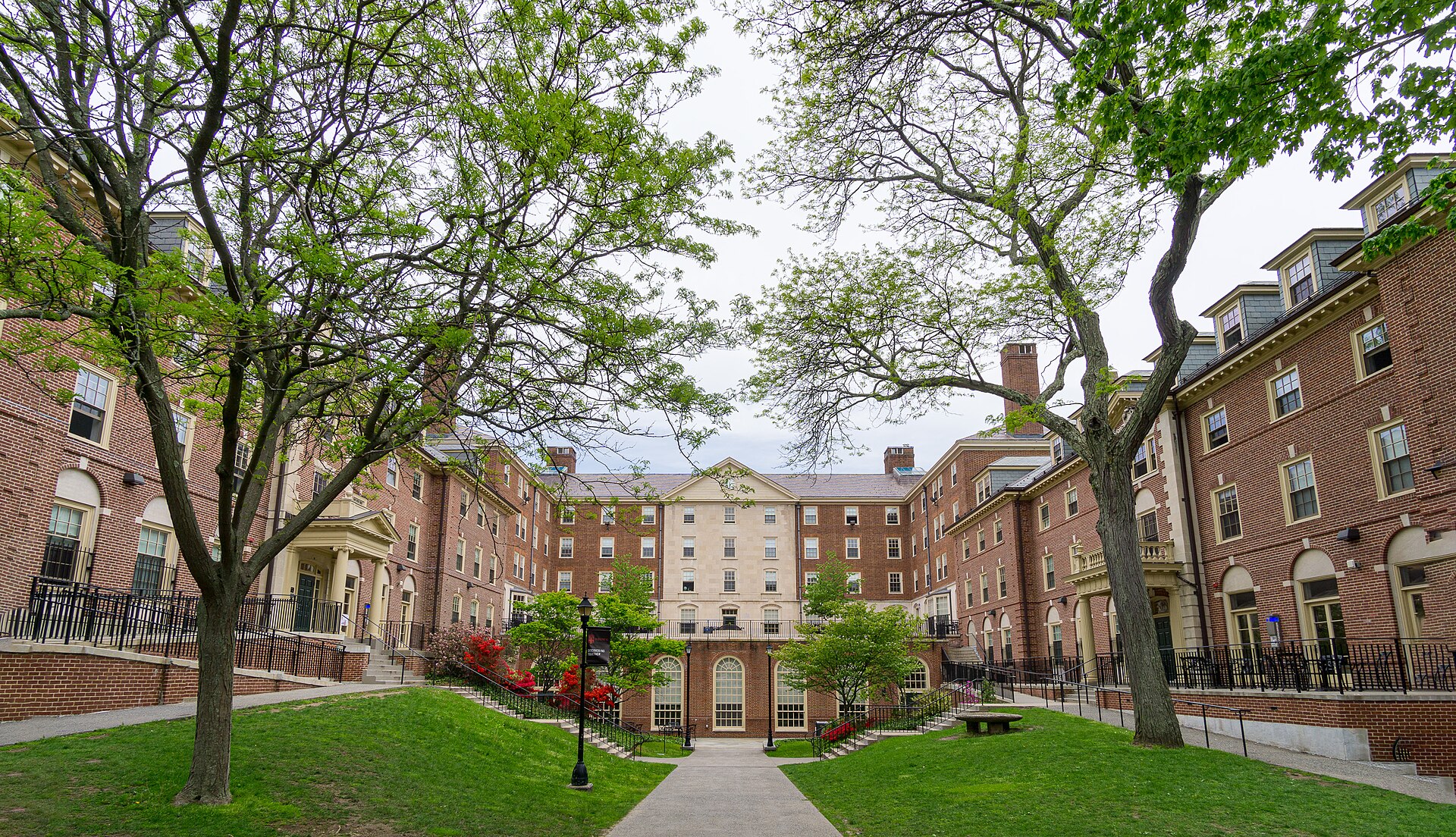
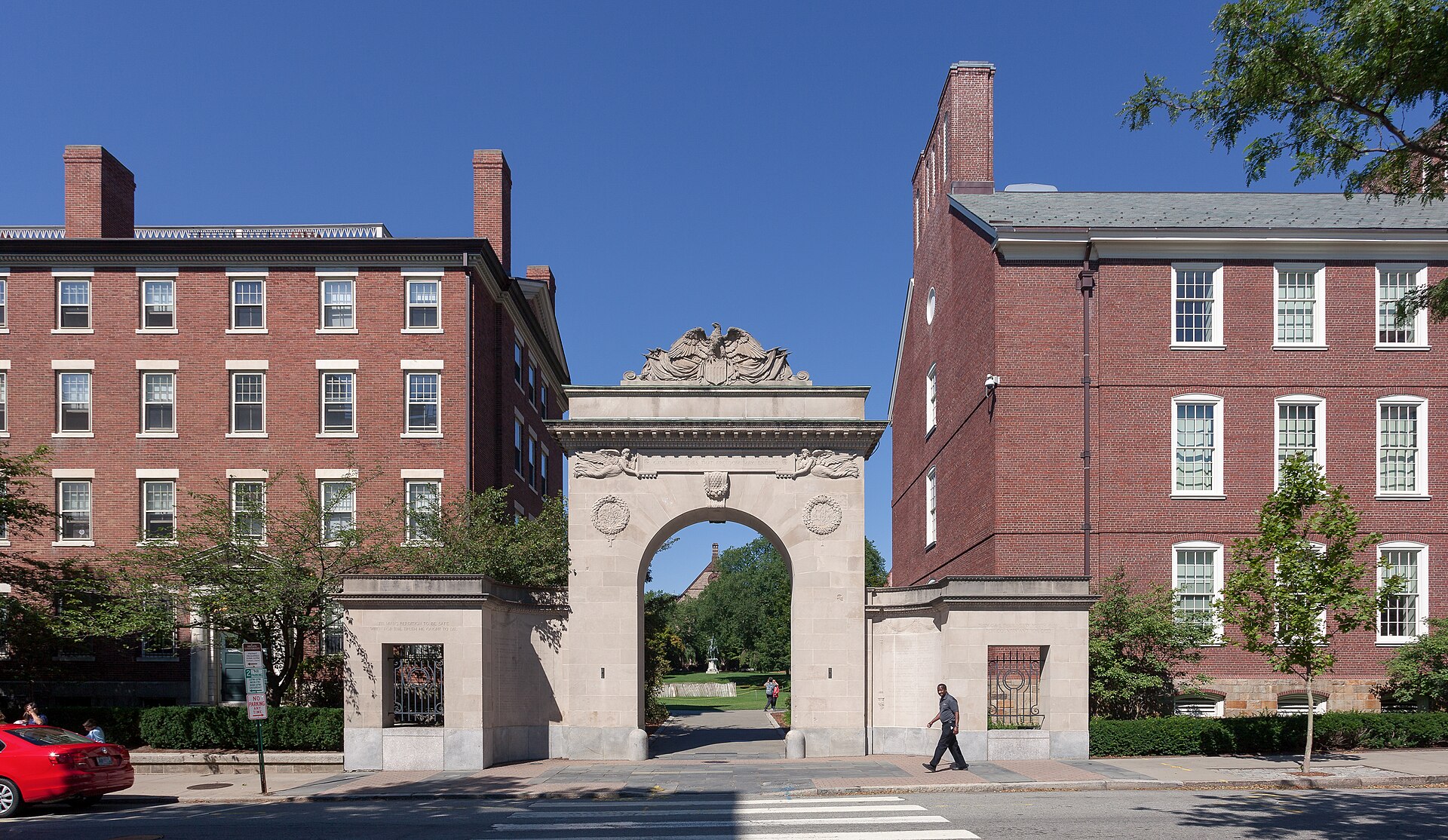
Left to right: Metcalf Hall (1919); Andrews Hall (1947, Thomas Mott Shaw); Miller Hall (1910, Andrews, Jacques and Rantoul of Boston).
Left to right: Metcalf Hall (1919); Andrews Hall (1947, Thomas Mott Shaw); Miller Hall (1910, Andrews, Jacques and Rantoul of Boston).Kenneth C. Zirkel · CC BY-SA 4.0 · via Wikimedia Commons
Soldiers Memorial Gate, Brown University. Dedicated on April 6, 1921.
Soldiers Memorial Gate, Brown University. Dedicated on April 6, 1921.Marco Almbauer · Public domain · via Wikimedia Commons
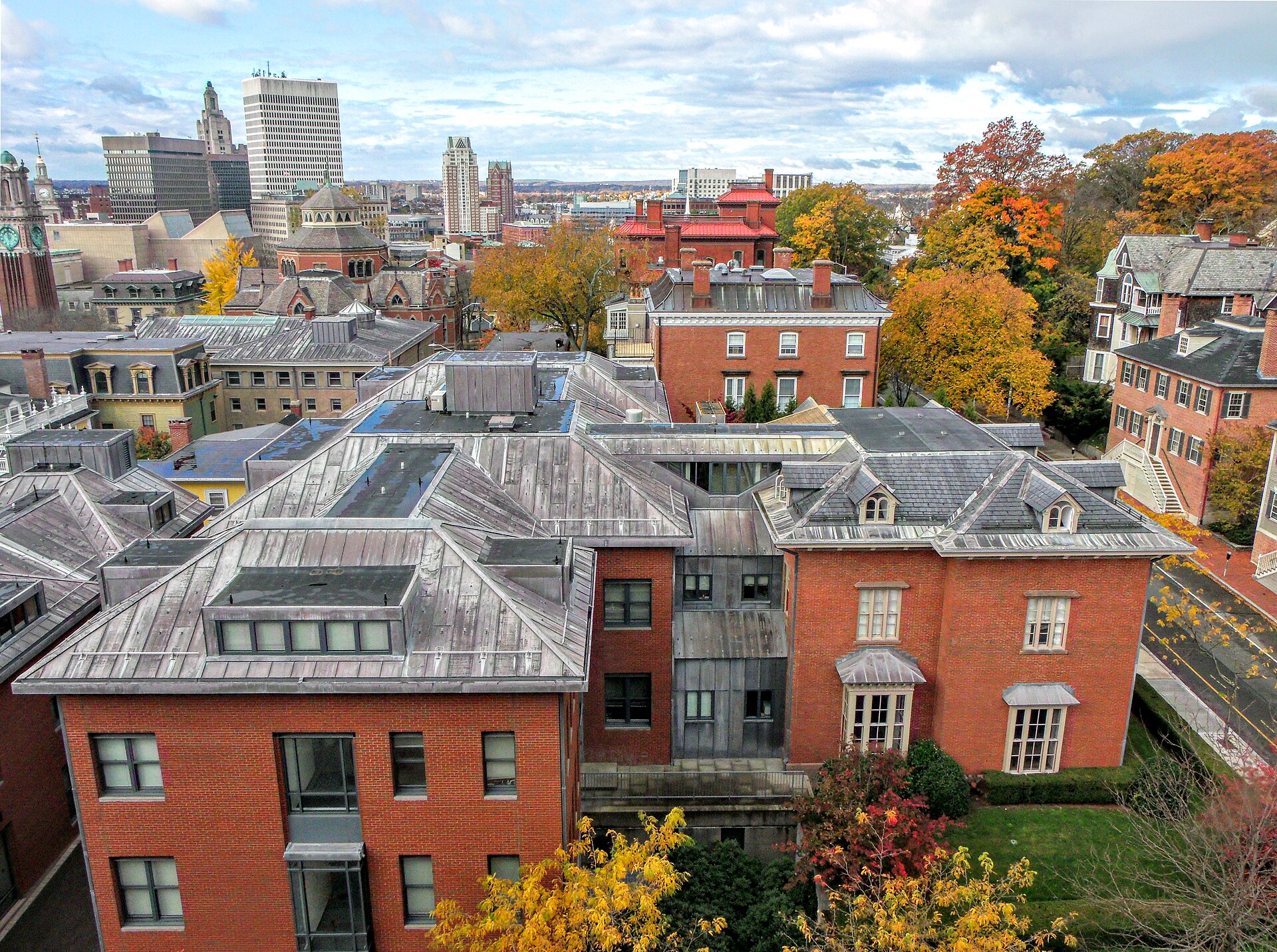
Autumn view over Brown University, Providence, RI
Autumn view over Brown University, Providence, RIInning Club · CC BY 2.0 · via Wikimedia Commons
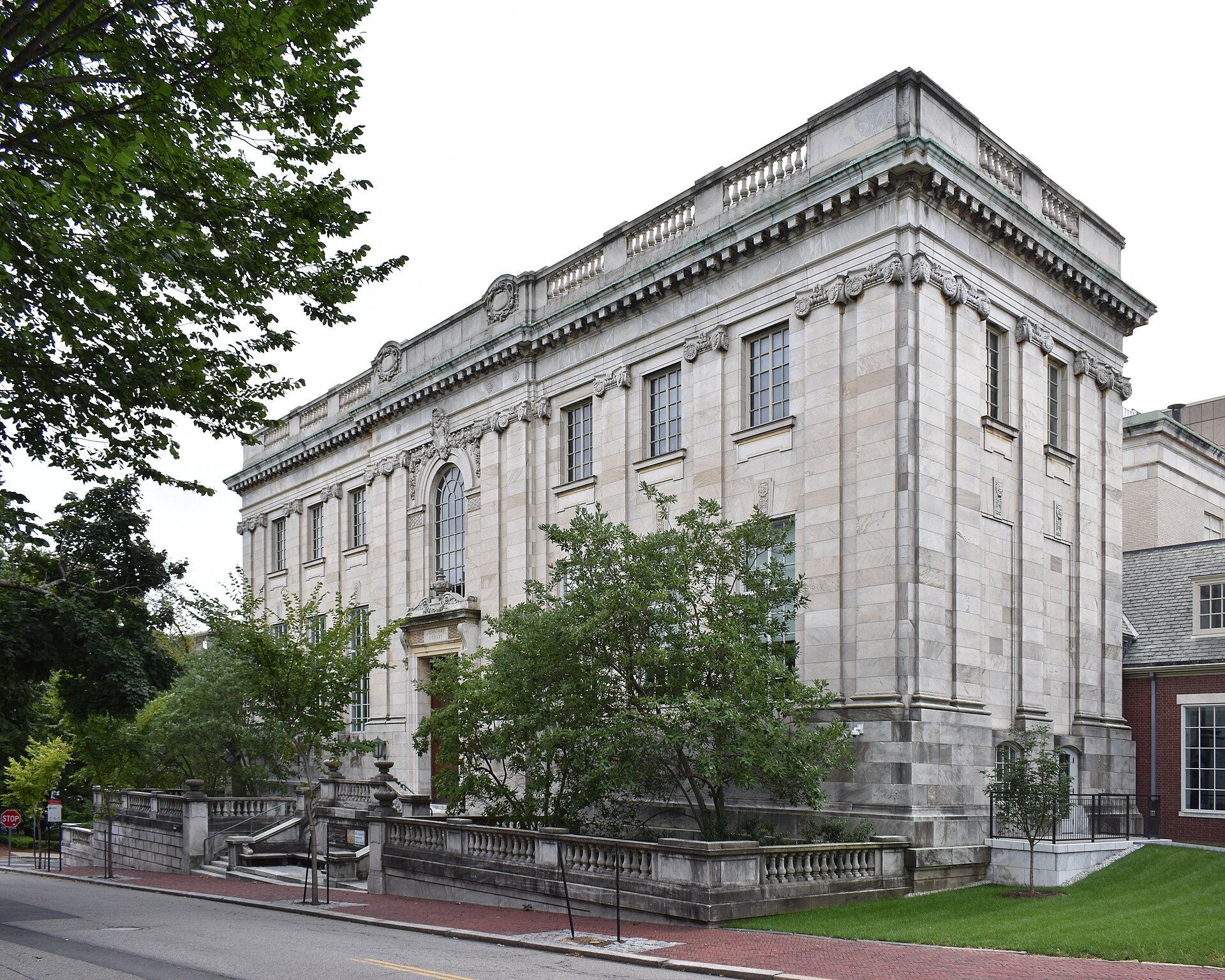
John Hay Library (Brown)
John Hay Library (Brown)Filetime · CC BY-SA 4.0 · via Wikimedia Commons
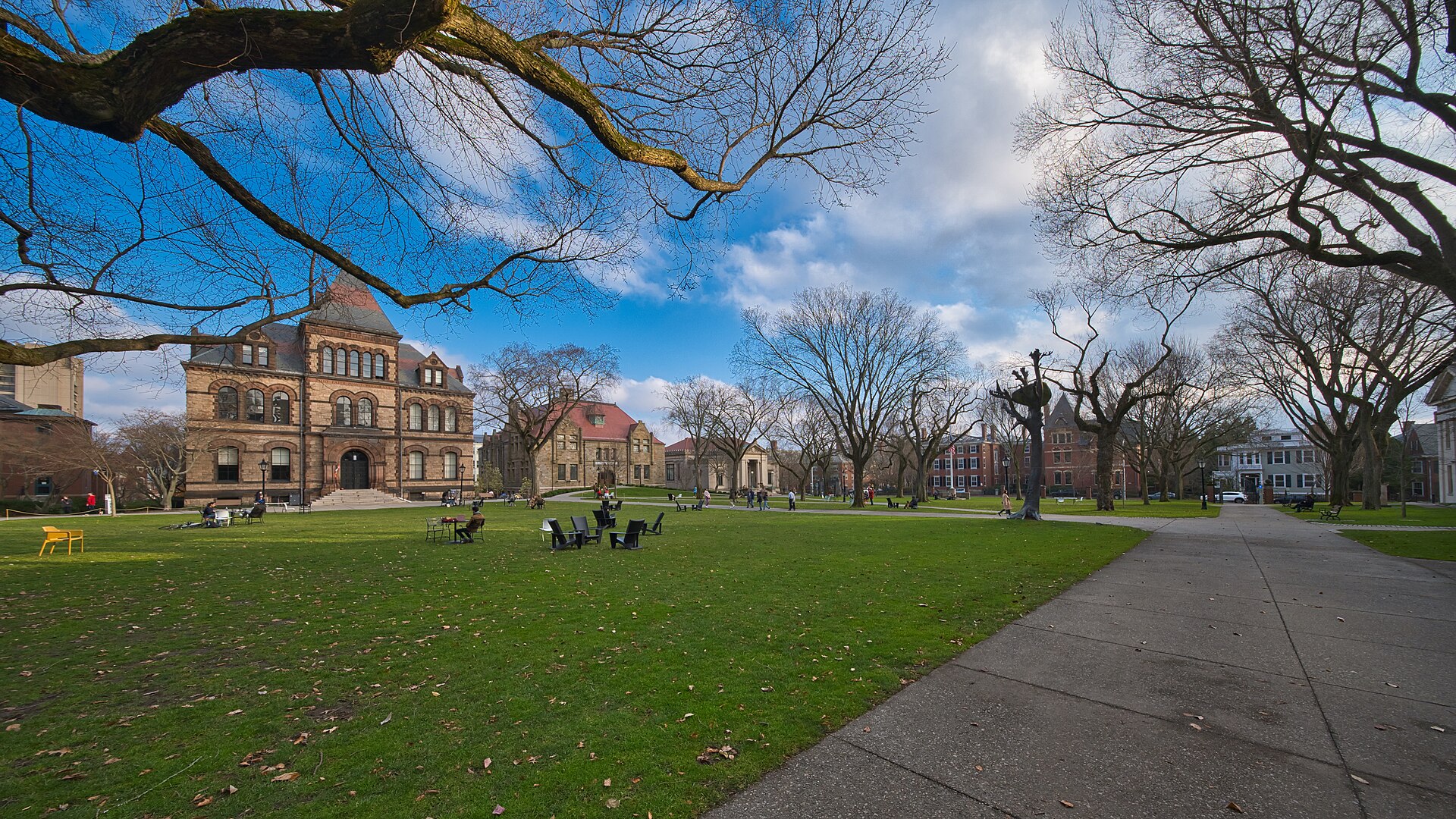
The Main Green at Brown University in Providence, Rhode Island.
The Main Green at Brown University in Providence, Rhode Island.Chris Rycroft · CC BY 2.0 · via Wikimedia Commons
Cropped and straightened version of File:Brown university robinson hall 2009a.JPG
Robinson Hall at Brown University in Providence RI
Cropped and straightened version of File:Brown university robinson hall 2009a.JPG Robinson Hall at Brown University in Providence RIchensiyuan · CC BY-SA 4.0 · via Wikimedia Commons

Why Brown — Open Curriculum, Ivy Prestige & Intellectual Freedom

Brown University is the Ivy League's most student-centred institution. Founded in 1764 in Providence, Rhode Island, Brown is the only Ivy where undergraduates face no mandatory distribution requirements — you design your own education, combining concentrations, independent study, and courses across all departments. For students who know their intellectual direction, or who want to discover it on their own terms, Brown offers something no peer can match.

01The Open Curriculum
No core requirements — no mandatory courses, no distribution lists. Brown students build their own academic programmes from more than 2,000 courses across all fields. This is not a marketing claim; it is a genuinely distinct educational philosophy found nowhere else in the Ivy League.
02Ivy Prestige & Rankings
QS World Ranking #64 and US News national ranking #13, with particular strength in neuroscience, applied mathematics, computer science, economics, and the biomedical sciences. A Brown degree opens global doors — particularly in medicine, finance, and public policy.
03Undergraduate Research
UTRA (Undergraduate Teaching and Research Awards) and SPRINT Fellowships fund hundreds of students annually to collaborate with Brown faculty on active research projects — during the academic year and over summer, both on campus and internationally.
04Distinctive Programmes
The 8-year Program in Liberal Medical Education (PLME) combines an undergraduate degree with Brown's Alpert Medical School — one of the most competitive joint programmes in the US. The Brown-RISD Dual Degree offers a simultaneous Ivy and art-school education.
05Providence & the Northeast
College Hill in Providence, Rhode Island is a walkable, arts-rich neighbourhood. Boston is 60 minutes by train; New York City is 3 hours. Providence has the highest restaurant-per-capita ratio of any US city — it is a genuinely liveable, affordable city for a top-tier university.

Brown Acceptance Rate & Class Profile

Stats

5.65%
Overall Acceptance Rate
18%
International Students
6:1
Student:Faculty Ratio

Profile Stats

1480–1560
SAT Middle 50%
34–35
ACT Middle 50%
38+
IB Typical Score
18%
International Students
3.9
Minimum GPA (unweighted)
Overall acceptance rate, most recent cycle
https://admission.brown.edu/apply/how-apply

Rea Vs Rd

Rea Label: Early Decision
Rea Value: ~17–18%
Rd Label: Regular Decision
Rd Value: ~3–4%

Brown Admissions Requirements — Academics, Test Scores & Profile

GPA & Coursework
Value: 3.9+ Unweighted
Brown expects near-perfect academic performance in the most rigorous courses available to you. Brown holistically evaluates your transcript relative to your school's specific curriculum and grading norms.
  • Minimum unweighted GPA in facts: 3.9
  • Most admitted students: top 5–10% of class
  • AP, IB, or A-Level courses strongly expected
  • Grade rigour counts as much as GPA itself
SAT / ACT
Value: 1480–1560 / 34–35
Brown returned to requiring standardised test scores. Middle 50%: SAT 1480–1560; ACT 34–35. Superscoring is accepted for both. Submit your best sitting.
  • SAT middle 50%: 1480–1560
  • ACT middle 50%: 34–35
  • Brown superscores both SAT and ACT
  • TOEFL/IELTS required for non-native English speakers
International Qualifications
Value: IB 38+ / A*AA
IB students: aim for 38 or above total, with strong HL grades in subjects aligned with your intended concentration. A-Level students: A*AA is a competitive baseline. All qualifications evaluated in full context.
  • IB: 38+ total with 6–7s in relevant HLs
  • A-Levels: A*AA or AAA with strong GCSE/IGCSE foundation
  • CBSE/ISC: top 1–2% in relevant subjects expected
  • Gaokao: top provincial percentile applicants considered

Brown Application Components — Common App, Essays & Checklist

Brown accepts the Common Application. Below is every component of a complete Brown application — required and optional — with notes for international applicants.

01RequiredCommon Application
Brown accepts the Common Application exclusively. The platform opens August 1 each year. Apply for Early Decision by November 1 or Regular Decision by January 5.
02RequiredBrown Supplemental Essays
Four writing components: an Open Curriculum essay (250 words), a community/upbringing essay (250 words), a Joy essay (150 words), and a short answer on what you'd teach (150 words).
03RequiredOfficial Transcripts
Official transcripts from all secondary schools attended. A Midyear Report is due February 27 for Regular Decision candidates; a Final Report upon enrollment by June 30.
04RequiredTwo Teacher Recommendations
Two letters from teachers in academic subjects. PLME and BS applicants must include at least one recommendation from a science or mathematics teacher. Give recommenders at least six weeks.
05RequiredCounsellor Recommendation
Your school counsellor submits the School Report form through the Common App. For students at international schools without a counsellor, Brown provides guidance on alternatives.
06RequiredSAT or ACT Scores
Brown returned to requiring standardised test scores. Submit your best sitting — Brown superscores both tests. TOEFL or IELTS required for non-native English speakers.
07Optional90-Second Video Introduction
Brown permanently eliminated alumni interviews in 2022. Applicants may instead submit a 90-second Video Introduction. Not evaluated for production quality — simply an opportunity to be heard.
08OptionalArts Portfolio (SlideRoom)
Music or visual art portfolios submitted via SlideRoom. Deadline: November 4 for Early Decision, January 7 for Regular Decision.
https://admission.brown.edu/first-year/application-checklist

Brown Essays — Writing the Open Curriculum & Supplement

Prompts

Open Curriculum Essay
Brown's Open Curriculum allows students to explore broadly while also diving deeply into their areas of interest. How will you navigate Brown's Open Curriculum, and how do you hope to shape your own educational path? (250 words)
Community / Growing Up Essay
Students entering Brown often find that making their home on College Hill naturally invites reflection on where they came from. Share a formative experience, community, or influence from your past that will shape how you contribute to Brown's community. (250 words)
Joy Essay
Brown students care deeply about their work and the world around them. Describe something that brings you joy — whether mundane or spectacular, personal or universal. (150 words)
Short Answer: Teach a Class
If you could teach a class on any one thing, whether academic or otherwise, what would it be? (150 words)

Tips

The Open Curriculum essay is the most important Brown-specific essay
Brown wants students who have a genuine relationship with intellectual self-direction — not students who are excited about the absence of requirements. Show how you'd actually use the freedom, not that you like the sound of it.
Shorter essays demand more precise writing
The 150-word Joy and Teach-a-Class prompts require economy of language. Write at 250 words, then cut with discipline until every word earns its place.
Don't write what Brown wants to read
Brown readers recognise applications that have been reverse-engineered from what students think Brown values. Be genuinely specific about your own intellectual life — the essays that read as authentic are the ones that succeed.
The Joy essay is deceptively revealing
Brown uses the Joy prompt to understand what you're like when no one is grading you. An unexpected, specific choice reveals more intellectual character than a conventional answer.
The most common Brown essay mistake. Writing that you love the Open Curriculum because there are 'no requirements' — instead of demonstrating a clear intellectual purpose that makes the freedom meaningful.

What Brown Admissions Officers Are Looking For

Brown's admissions process is holistic. Every file is read by multiple evaluators who assess academic achievement, intellectual character, and fit with Brown's distinctive educational culture. Understanding what each dimension means — specifically — is the starting point for a strong application.

01Intellectual Curiosity Beyond the Classroom
Brown is looking for students who pursue ideas because they want to, not because they're required to. The student who started a journal club, taught themselves a new language, or wrote genuinely original analysis in their essay signals this — not just high grades.
02Alignment with the Open Curriculum
The Open Curriculum is a genuine commitment, not a selling point. Brown asks: would this student know what to do with the freedom? Students who have clear intellectual direction — or can articulate how they plan to find it — are more compelling than those who simply like the idea.
03Academic Excellence in Context
Near-perfect grades in the most challenging courses available are expected. Brown evaluates your transcript in context — a 3.9 from a school with rigorous IB courses reads differently from a 4.0 from a school without AP options. Rigor matters as much as the number.
04Depth in Extracurricular Commitment
Brown prefers one transformative commitment over a resume padded with surface-level activities. The question is not how many things you've done, but how meaningfully you've engaged with the things that matter to you.
05Distinct Personal Voice
Brown's admissions readers evaluate your essays closely. They are looking for students with a genuine point of view — not students who have performed what they think a Brown applicant should sound like. Authentic voice is one of the most meaningful differentiators.
06Contribution to Brown's Community
Brown selects students who will add to its community of learners, creators, and citizens. The question is not what Brown will do for you, but what you will bring to the community — intellectually, personally, and culturally.

Brown Financial Aid & Scholarships for International Students

Beginning with the Class of 2029, Brown became need-blind for all first-year applicants — including international citizens — making it one of only eight US universities to extend this policy to all students regardless of nationality. Brown is committed to meeting 100% of demonstrated financial need for all eligible undergraduates through the Brown Promise, which replaces loans with scholarships in all aid packages.

Financial aid packages are determined individually by Brown's Office of Financial Aid based on CSS Profile data. Amounts vary by family circumstances. Confirm current policy at finaid.brown.edu.

Yes
Need-blind for all applicants including international
100%
Financial need met — no exceptions
$0
Loans in Brown aid packages
$97,284
Total annual cost of attendance (2025–26)
The Brown Promise — No Loans. Under the Brown Promise, no undergraduate aid package at Brown includes loans. All financial aid is provided as grants — money you never repay. For families who qualify for need-based aid, this is a transformative commitment.
https://admission.brown.edu/financial-aid

Key Dates

Early Decision Application Deadline
Date: Nov 1
ED Decision Notification
Date: Mid-Dec
Regular Decision Application Deadline
Date: Jan 5
RD Decision Notification
Date: Late Mar
RD Enrollment Commitment Deadline
Date: May 1

Advantages

  • Significantly higher acceptance rate (ED ~17–18% vs RD ~3–4%)
  • Signals genuine first-choice commitment to Brown
  • Earlier decision — mid-December notification
  • Smaller pool of applicants with strong institutional fit
  • Financial aid evaluated identically to RD — no disadvantage

Disadvantages

  • Binding — you must withdraw all other applications if admitted
  • Cannot compare financial aid offers from other universities
  • Application must be complete and strong by November 1
  • Less time to include senior-year grades or autumn achievements
  • If deferred, you wait until April without other early acceptances
Early Decision vs Regular Decision. Brown offers Early Decision (binding) and Regular Decision. Unlike Harvard's non-binding REA, Brown's ED is a binding commitment — if admitted, you are expected to enroll and withdraw all other applications. The tradeoff: a meaningfully higher admission rate for a fully prepared application.
TYCHR's ED Recommendation. Apply ED if Brown is your clear first choice and your application is fully ready by October. The significantly higher ED acceptance rate makes this a strong strategic move for prepared applicants. The one key consideration: if comparing financial aid packages matters to your family's decision, Regular Decision preserves that ability.
Brown Early Decision — Binding Commitment, Strategic Advantage
https://admission.brown.edu/apply/how-apply

Brown Interview Policy — Video Introduction

Brown permanently eliminated alumni interviews in October 2022, after finding that interview access was inequitable across geographic regions. Brown replaced this with an optional 90-second Video Introduction that all applicants worldwide can submit. The video is not evaluated for production quality or editing — it is simply an opportunity to share your voice and personality beyond your written application.

Meta

Permanently eliminated (2022)
Alumni Interviews
Optional 90-second Video Introduction
Alternative
Voice and personality — not production quality
Evaluated For
~84% of enrolled students submit one
Submission Rate

Questions

What does the video introduction allow you to convey?
Tip: Speak naturally about something that matters to you — a project, an idea, a question you're working through. Authenticity outperforms scripted polish.
Should you submit the video introduction?
Tip: Yes, for nearly all applicants. ~84% of Brown's enrolled class submitted one. Not submitting is a missed opportunity to add dimension to your application.
What should you avoid in the video?
Tip: Avoid reading directly from a script, re-summarising your resume, or performing a persona. Speak as you would to a thoughtful adult who is genuinely interested in you.
https://www.browndailyherald.com/article/2022/10/brown-permanently-eliminates-alumni-interviews-introduces-alumni-ambassadors-program

Brown Residential Life — Housing on College Hill

Brown does not have a house system like Harvard or a residential college system like Yale. Instead, all first-year students live in designated freshman residence halls on College Hill, Brown's main campus in Providence. On-campus housing is required through semester seven (typically the first semester of junior year). After that, many students move to Providence off-campus housing, which is among the most affordable of any top-20 US university.

Houses

Andrews Hall
Tag: Freshman
Large first-year dorm with traditional corridor layout; central to campus life
Keeney Quad
Tag: Freshman
Complex of interconnected buildings; the social hub of freshman year for most Brown students
Champlin Hall
Tag: Freshman
Modern dormitory with suite-style rooms; popular for its updated facilities
Young Orchard
Tag: Upperclassman
Apartment-style housing on the edge of campus; favored by upperclassmen
Grad Center
Tag: Upperclassman
Tower-style complex; popular with upperclassmen, known for strong community
Gregorian Quad
Tag: Upperclassman
Apartment-style suites with kitchen facilities; popular for international students

Lottery Steps

  • All first-year students are assigned to designated freshman residence halls by Residential Life
  • Freshmen complete a housing questionnaire (sleep/study habits, lifestyle preferences) for compatible roommate matching
  • Roommate assignments are made algorithmically based on questionnaire responses
  • Specialty housing options available: substance-free, quiet floors, and single-gender housing
  • From Year 2 onward, students select housing in a lottery based on class standing
  • On-campus housing required through semester 7; many upperclassmen choose Providence off-campus apartments

Brown's Divisions & Undergraduate Concentrations

Faculty of Arts & Sciences
Label: ~6,500 Undergraduates
Brown's core undergraduate faculty spanning the humanities, social sciences, and natural sciences. The Open Curriculum lives here — more than 80 concentrations with full flexibility in design.
  • {"label":"Undergraduate concentrations","value":"80+"}
  • {"label":"Independent concentration option","value":"Available"}
  • {"label":"Courses per academic year","value":"2,000+"}
  • {"label":"When students declare concentration","value":"Year 2"}
School of Engineering
Label: Engineering Concentrations
Brown's engineering programmes blend quantitative rigour with the humanities through the Open Curriculum. All engineering students take courses across disciplines — producing graduates who communicate as well as they compute.
  • {"label":"Engineering concentrations","value":"7"}
  • {"label":"BS and ScB degree options","value":"Both available"}
  • {"label":"Biomedical Engineering","value":"Top 20 US"}
  • {"label":"Integration with Open Curriculum","value":"Full"}
PLME — Program in Liberal Medical Education
Label: 8-Year BS/MD Programme
One of the most selective pathways in US medical education. PLME applicants apply to undergraduate and medical school simultaneously; if admitted, they complete their BS and MD at Brown over eight years without MCAT requirements.
  • {"label":"Programme length","value":"8 years"}
  • {"label":"MCAT required","value":"No"}
  • {"label":"Acceptance rate","value":"~2–3%"}
  • {"label":"Apply via","value":"Common App (PLME supplement)"}
Brown | RISD Dual Degree
Label: Ivy + Art School Combined
A unique 5-year programme combining a Brown degree with a degree from the Rhode Island School of Design (RISD), one of the world's top art and design schools. Applicants are evaluated and admitted by both institutions simultaneously.
  • {"label":"Programme length","value":"5 years"}
  • {"label":"Two degrees awarded","value":"Brown BA + RISD BFA"}
  • {"label":"Class size","value":"~30 students/year"}
  • {"label":"Application","value":"Common App + Brown|RISD supplement"}

Research & Extracurricular Opportunities at Brown

UTRA — Undergraduate Teaching and Research Awards
Category: Undergraduate Research
UTRAs fund Brown undergraduates to collaborate with faculty on research and teaching projects during the academic year and summer. Applications open each February. Both full-semester and summer research awards are available.
SPRINT Fellowships
Category: Funded Experiential Learning
SPRINT supports experiential learning — research, creative work, international projects, and entrepreneurship — by providing stipends and structured funding. UTRAs are a subset of the SPRINT family. Hundreds of Brown students receive SPRINT funding annually.
Carney Institute for Brain Science
Category: Research Centre
Brown is a national leader in neuroscience. The Carney Institute provides undergraduates with direct research access alongside faculty conducting work in cognition, neural engineering, and clinical neuroscience. A rare opportunity at the undergraduate level.
400+ Student Organisations
Category: Campus Life
The Brown Daily Herald (one of the oldest college newspapers in the US), Model UN, debate, cultural organisations, a cappella, 37 varsity sports, 45+ club sports — Brown's student life is as diverse as its curriculum.
Scroll to explore Brown's research programmes and student life.

Career Outcomes & Brown Alumni Network

Brown graduates enter every major industry with a combination of intellectual depth and genuine professional preparation. The 6:1 student-faculty ratio means Brown undergraduates build real relationships with faculty who open doors to graduate schools, research positions, and employers. Brown's alumni network is active and career-engaged across technology, medicine, public policy, finance, and the arts.

Stats

92%
Employed or in graduate school within 6 months
$75,000
Average starting salary
6:1
Student-faculty ratio
#64
QS World Ranking
#13
US News National Ranking
18%
International students in class

Categories

Technology & Engineering
Google, Amazon, Meta, Microsoft, and leading startups recruit Brown computer science and engineering graduates heavily. Brown's open curriculum means tech hires from Brown often have interdisciplinary depth — in design, policy, or social science — that pure CS programmes do not produce.
Medicine & Biomedical Research
Brown's PLME pipeline and strong pre-medical track produce graduates who attend top medical schools. The Alpert Medical School and affiliated hospitals provide research continuity from undergraduate into graduate study.
Finance, Consulting & Public Policy
Goldman Sachs, McKinsey, BCG, Deloitte, and the State Department recruit actively at Brown. Public policy graduates from Brown's IPA programme enter international organisations, NGOs, and government at all levels.

Our Brown Admissions Track Record

Anika S.
Country: India
Program: Brown — Neuroscience
Class Year: Class of 2027
Academic Profile: 1540 SAT · IB 40
TYCHR helped me understand that Brown's Open Curriculum essay wasn't about the absence of requirements — it was about articulating a genuine intellectual project. Rewriting that essay three times with my counsellor made the difference.
Lucas F.
Country: Brazil
Program: Brown — Computer Science / Economics
Class Year: Class of 2026
Academic Profile: 35 ACT · 4.0 GPA
My first draft Joy essay described something I thought Brown would appreciate. My final draft described something I actually love. TYCHR pushed me there. The authentic version was the one that worked.
Mina O.
Country: Nigeria
Program: Brown — PLME (BS/MD)
Class Year: Class of 2028
Academic Profile: 1560 SAT · IB 42
The PLME application has a layer of complexity most applicants underestimate. TYCHR's guidance on how to frame my research experience and my commitment to medicine as a vocation — not just a career — was decisive.

Faqs

Does Brown prefer students with a declared intended major?+

Brown admits students to Brown University — not to a specific department or concentration. Students declare concentrations in their second year. That said, having a clear intellectual direction described in your application is helpful. Brown is looking for students who know how they'd use the Open Curriculum, not students who haven't yet thought about it.

Is Early Decision at Brown binding in the same way as other universities?+

Yes. Brown's Early Decision is fully binding. If admitted ED, you are required to enroll at Brown and withdraw all other applications. The one standard exception is if your financial aid package is insufficient for your family — Brown allows ED admits to be released from the binding commitment under such circumstances.

Does Brown superscore the SAT and ACT?+

Yes. Brown superscores both the SAT (combining highest Evidence-Based Reading and Writing with highest Math across sittings) and the ACT (using the highest composite score from any single sitting). Submit all sittings to maximise your superscore.

Is Brown need-blind for international students?+

Yes — beginning with the Class of 2029 (students entering Fall 2025), Brown became need-blind for all first-year applicants regardless of citizenship. Brown is now one of only eight US universities to offer need-blind admission to international undergraduates.

What is the Brown Promise and does it apply to international students?+

The Brown Promise is Brown's commitment to replace all loans in undergraduate financial aid packages with grants. It applies to all eligible undergraduates including international students who receive aid. This means your aid package — if offered — will consist entirely of money you do not repay.

Does Brown offer merit scholarships?+

No. As an Ivy League member, Brown does not offer scholarships based on academic achievement, athletic ability, or any other merit criterion. All financial aid is need-based, determined through the CSS Profile.

What happened to Brown's alumni interviews?+

Brown permanently eliminated alumni interviews in October 2022 after finding that interview access was inequitable across geographic regions (more than 8,000 applicants in one cycle requested an interview and never received one). Brown replaced this with an optional 90-second Video Introduction available to all applicants worldwide.

Is PLME harder to get into than regular Brown?+

Yes, significantly. PLME acceptance rates are roughly 2–3%, compared to Brown's overall 5.65%. PLME applicants are evaluated for both undergraduate academic strength and their genuine commitment to medicine as a vocation. Research experience and clinical exposure are important for PLME applicants.

Book a Free Brown Admissions Strategy Session

In 60 minutes, our Brown admissions specialists will evaluate your academic profile, identify your application strengths and gaps, develop your Open Curriculum and supplemental essay strategy, and determine whether Early Decision or Regular Decision gives you the best chance.

  • No commitment required
  • Brown specialists with insider knowledge
  • Personalised strategy — not generic advice
Getting into Brown is about demonstrating intellectual self-direction — not just exceptional grades.

Brown University Academic Requirements

Brown Academic Requirements — The Honest Breakdown for International Students

What GPA, test scores, and academic profile do Brown's admitted students actually have? And what does Brown's holistic review mean for IB, A-Level, AP, and other international curricula?

3.9
Minimum Unweighted GPA
From facts file
1480–1560
SAT Middle 50%
Admitted band
34–35
ACT Middle 50%
Admitted band
38+
IB Typical Score
With strong HLs
5.65%
Acceptance Rate
Most recent cycle
6:1
Student:Faculty Ratio
Undergraduate focus

GPA & Class Rank

Brown and GPA — What the Data Shows

Brown does not publish a minimum GPA requirement. The facts file notes 3.9 as the minimum unweighted GPA for competitive applicants. In practice, the vast majority of admitted students rank in the top 5–10% of their graduating class.

A 3.9 GPA is a floor, not a distinguishing feature. What separates Brown admits is the combination of near-perfect grades in genuinely rigorous courses — not grades in easier options chosen for the number.

3.9
Minimum unweighted GPA (facts file)
5–10% of class
Admitted students typically in top
What this means for international students. International students from systems without formal class rank — IB, UK A-Levels, Indian CBSE, Singapore's system — are evaluated on their grades relative to their school's known performance range and in comparison to other applicants from the same educational background. Brown's admissions officers are experienced readers of international transcripts.
Grade trajectory matters. An upward trajectory reads positively — a student who strengthened their academic performance across Years 10–12 is viewed differently from one whose grades plateaued. A single weak term early in secondary school, followed by consistent excellence, is context, not a disqualifier.

Academic Context

How Brown Reads Academic Performance Across School Systems

Brown's admissions office evaluates every application in the context of the specific school and educational system the student came from. This is not a formality — it is a genuine part of the review.

School profiles contextualise your record
Every Common Application includes a school profile submitted by your counsellor — describing your school's curriculum, grading norms, course offerings, and the range of grades in your class. Brown's readers use this to understand what your grades mean in your specific context. A 3.9 at a highly competitive international school with full IB provision reads differently from the same number at a school with limited advanced options.
Taking the most rigorous courses available is the key criterion
Brown explicitly evaluates 'strength of curriculum' as a factor. A student who chose easier courses to protect their GPA will be seen as having made a strategically conservative choice — not an academically ambitious one. Brown rewards the student who took the harder path.
For students at less well-known international schools. Your counsellor's letter is especially important when Brown's admissions readers may be unfamiliar with your school. TYCHR coaches counsellors and school liaisons on how to write school profiles that give Brown the context to evaluate your record accurately and fairly.

Standardised Testing

SAT Scores at Brown — What You Actually Need

Brown SAT Data (from facts file)

LabelScorePercent
25th percentile148060
75th percentile156088
Midpoint (estimated)~152074
The SAT Math subscore. For students targeting STEM concentrations at Brown — engineering, applied mathematics, computer science — a strong Math subscore (740–800) is particularly meaningful. Brown's engineering programmes are quantitatively demanding, and the SAT Math subscore is one signal of quantitative readiness that admissions readers use.
Strategy for submitting. Brown returned to requiring standardised test scores (as of the most recent admissions cycle). Submit your best superscore. If your SAT is at or above 1480, it falls within the admitted band and should be submitted. Aim for 1520 or above to be competitive; scores above 1560 put you in the upper 25th percentile.
Preparation. TYCHR's SAT preparation programme targets meaningful score improvement over 8–12 structured weeks. Students aiming for Brown should target a composite score of 1500 or above before finalising their test-submission strategy.
https://admission.brown.edu/first-year/application-checklist

Standardised Testing

ACT Scores at Brown — The Data and the Strategy

Brown ACT Data (from facts file)

Metrics

25th percentile
Score: 34
75th percentile
Score: 35

Comparison Cards

Both accepted equally
Brown does not prefer one test over the other. Choose based on your demonstrated strengths across diagnostic tests of both.
SAT rewards
Analytical reading, evidence-based reasoning, and precise mathematical problem-solving — advantages for students strong in written analysis.
ACT rewards
Speed, data interpretation in the Science section, and efficiency under time pressure — advantages for students strong in natural sciences.
Superscore policy. Brown superscores both tests — using the highest section scores from multiple SAT sittings, and the highest composite from any single ACT sitting. Submit all your sittings to take full advantage of Brown's superscore policy.
TYCHR's recommendation. Take a diagnostic of both tests early in Grade 11. If your ACT diagnostic is already at 33 or above, it may be worth pursuing. If your ACT Science section is a consistent weakness, the SAT may be the more reliable path to a competitive score at Brown.

Testing Policy

Brown's Test Policy — Scores Are Now Required

Brown was test-optional during the COVID-19 period. The university has returned to requiring standardised test scores (SAT or ACT) as part of the application. Understanding what 'required' means in practice — and how to optimise your score submission — is important for Brown applicants.

Submit Items

Your SAT is at or above 1480 — within the admitted middle 50%. Submit it.
Your SAT is at or above 1520 — strongly competitive. Submitting adds significant positive value.
Your ACT is at or above 34 — within the admitted middle 50%. Submit it.
As an international student, a strong score provides additional academic context beyond your transcript.

Withhold Items

Note: Brown now requires scores — you cannot withhold them for strategic reasons as under test-optional policy.
Focus on maximising your superscore across multiple sittings rather than withholding a weaker score.
Current policy. As of the most recent admissions cycle, Brown requires applicants to submit SAT or ACT scores. Applications without test scores are not considered complete. TOEFL, IELTS, or Duolingo English test scores are additionally required for non-native English speakers.
The key strategic implication. Because Brown now requires scores, the strategy is not whether to submit — it is how to achieve the strongest possible score. Plan for two or three sittings across Grade 11 and early Grade 12. TYCHR recommends beginning SAT/ACT preparation no later than the summer before Grade 11.
When your score strengthens your application
https://admission.brown.edu/first-year/application-checklist

Curricula

A-Levels and IB at Brown — Specific Benchmarks

IB Diploma
  • {"label":"Competitive score","value":"38+ (from facts file)"}
  • {"label":"HL expectations","value":"6–7 in subjects aligned with intended concentration"}
  • {"label":"Subject rigour","value":"HL Maths AA preferred for STEM; HL science or humanities for other concentrations"}
  • {"label":"Extended Essay","value":"A or B grade viewed as evidence of independent research capability"}
Note: Brown values IB applicants whose subject choices demonstrate genuine intellectual curiosity and alignment with their stated interests. An EE in a subject close to your intended concentration is a meaningful additional signal of depth.
A-Levels
  • {"label":"Competitive range","value":"A*AA – AAA"}
  • {"label":"Subject rigour","value":"Mathematics + Further Mathematics + a science for STEM applicants; English, History, or Languages for humanities"}
  • {"label":"Predicted grades","value":"Brown understands A-Level prediction conventions; strong predicted grades backed by strong GCSE/IGCSE results are expected"}
Note: A-Level applicants: Brown does not require three A-Levels — it evaluates the full context of your academic record. Strong AS results, GCSE/IGCSE performance, and predicted A-Level grades together form the picture Brown assesses.

Advanced Placement

AP Courses at Brown — What Counts and What to Take

For students in the US system or at schools offering AP courses, Advanced Placement performance is an important part of the academic profile.

What Brown is looking for
Strong AP scores (4s and 5s) in challenging subjects — Calculus BC, Physics, Chemistry, Biology, US/World History, Economics, English Literature, Statistics. The pattern of AP choices should reflect genuine intellectual ambition, not grade optimisation.
How many APs?
Brown doesn't publish an expected number. Competitive applicants typically complete 5–8 AP exams over Grades 10–12, with predominantly 4s and 5s. Rigor of subject choices matters more than raw count.
AP credit at Brown
Brown awards course credit for strong AP scores (typically 4s and 5s in relevant subjects), allowing students to skip introductory courses and begin at a higher level. This is a real educational benefit — especially in mathematics and sciences where the Open Curriculum rewards jumping ahead.
International students at schools without AP access should not artificially pursue AP — the IB or A-Level system is fully appropriate for their context. AP is evaluated relative to what was accessible to each student.
Brown's admissions readers are experienced at evaluating non-US curricula. IB or A-Level students are not disadvantaged by the absence of AP courses in their background.

Academic Rigour

Rigour of Secondary School Record — Brown's Primary Academic Factor

Brown, like all highly selective US universities, evaluates 'strength of curriculum' as a core academic criterion. This means: did you take the most challenging courses available at your school?

Taking the most rigorous courses available to you, in the subjects most relevant to your intellectual interests.

What rigour means at Brown. Rigour at Brown means choosing the harder path available to you in your specific school environment. A student at a school offering full IB who takes only Standard Level courses will be evaluated differently from a student at the same school who took HL Maths, HL Physics, and HL Chemistry. The question is always relative to what you had access to.
The contextual element. Brown evaluates rigour always relative to what was available. A student at a school that offers only a limited number of advanced options is evaluated differently from one at a school with thirty AP or full IB provision. What matters is whether the student challenged themselves relative to what was possible.
What Brown is looking for. The Open Curriculum's promise — that you design your own education — extends to Brown's expectations before you arrive. Students who have already demonstrated the ability to make rigorous, self-directed academic choices in secondary school are the students Brown believes will thrive in its environment.

Subject Preparation

Mathematics and Subject Preparation — What Brown Expects

Brown has no formal subject prerequisites for admission. Students are admitted to Brown broadly and declare concentrations in Year 2. In practice, however, competitive applicants show preparation well beyond the standard curriculum in their intended direction.

Mathematics
For STEM-oriented applicants: HL Mathematics Analysis & Approaches (IB) or A-Level Mathematics with Further Mathematics is expected at the competitive level. Mathematics olympiad experience (national or international) or AMC/AIME qualification is a meaningful differentiator for the most competitive Brown STEM admits.
Sciences
HL sciences with strong grades (6–7 in IB, or A/A* in A-Level) in two or more science subjects for pre-medical or life sciences applicants. Research experience — whether through school, a university attachment, or a competitive programme like RSI or Simons — is the strongest academic differentiator for science-focused Brown applicants.
Humanities & Social Sciences
Brown's humanities and social science concentrations — History, English, Political Science, International and Public Affairs, Literary Arts — admit students who demonstrate genuine written analytical ability. The quality of your application essays is the most direct evidence of this. Strong teachers of writing who know your work well are particularly valuable recommenders.

Language Proficiency

English Language Requirements for International Brown Applicants

Brown requires English language test scores from applicants whose primary language of instruction is not English. The minimum thresholds are sourced from Brown's facts file.

Non-native English speakers who attended an English-medium school for six or more years may be eligible for a waiver — check Brown's official financial aid and admissions websites for the current waiver policy. When in doubt, submit the score.

Test: TOEFL
Score: 100+
Test: IELTS
Score: 7.5+
Test: Duolingo
Score: 120+
Practical guidance. Brown's supplemental essays — especially the Open Curriculum essay (250 words) — function as a de facto English proficiency test. Applicants who write fluent, precise, analytically sharp essays in English demonstrate English capability far more effectively than a test score alone. Focus first on writing quality; the test score is the threshold, not the differentiator.
https://admission.brown.edu/international/financial-aid

Brown admits students to the university, not to a specific concentration. Concentrations are declared in Year 2. However, your academic profile should be coherent with your stated intellectual interests.

Rows

ConcentrationExpectationSignals
Computer ScienceHL Maths / AP Calc BC; strong programming backgroundIndependent coding projects; competitive programming (USACO)
Applied MathematicsHL Maths AA / A-Level Further MathsAMC/AIME participation; quantitative research projects
EconomicsHL Maths + HL Economics (IB) or equivalentEconometric research; policy writing; data analysis projects
NeuroscienceHL Biology + HL Chemistry; strong sciencesResearch lab experience; science fair achievement
Biology / BiochemistryHL Biology + HL Chemistry with 6–7Original research; RSI or similar; clinical exposure
International & Public AffairsStrong humanities + social science backgroundPolicy writing; Model UN; community leadership
Literary Arts / EnglishStrong A-Level/HL English LiteraturePublished writing; creative portfolio; reading depth
Engineering (all tracks)HL Maths + relevant science at HL; A-Level FM + PhysicsEngineering competition; design projects; prototypes

Curriculum Evaluation

How Brown Evaluates International Curricula — A Framework

Brown's admissions office reads transcripts from more than 100 countries annually. Here is how different curriculum systems are evaluated in practice.

IB Diploma
The IB Diploma is well-understood by Brown's admissions team. Total score (38+ competitive), HL selection and grades, and EE grade are all reviewed. The combination of HL subjects tells admissions about your intellectual priorities — choose them deliberately.
UK A-Levels
A-Levels are evaluated alongside GCSE/IGCSE results and predicted grades. Brown understands that A-Level prediction conventions differ from US grade reporting. Strong predicted grades backed by strong prior results are the key academic signal.
Indian CBSE / ISC
Indian board results are evaluated relative to known grading standards and school context. Top 1–2% performance in relevant subjects is expected for competitive admission. Additional academic achievements — olympiads, competitive exams, research — carry significant weight for Indian applicants given the large applicant pool.
Other International Systems
French Baccalauréat, Singapore A-Levels, Chinese Gaokao, German Abitur, and other national systems are all evaluated with reference to Brown's experience with those systems and the context provided by your school's profile submission.

Profile Building

How to Build a Brown-Competitive Academic Profile — Year by Year

1Grade 9: Build the Foundation
Establish consistently strong performance in all academic subjects. Begin identifying intellectual interests that will drive your extracurricular direction. Take the most rigorous courses your school offers at this level.
2Grade 10: Increase Rigour
Begin advanced coursework (IB SL or AP) and demonstrate strong performance. Deepen one extracurricular commitment rather than spreading across many activities. Identify a first research or independent intellectual project.
3Grade 11: The Most Important Year
Take the highest level courses available — HL IB, A-Level, or AP. Begin SAT/ACT preparation and complete first sittings. Pursue summer research, competitive programmes (RSI, PRIMES, Simons), or an independent project with depth. Your Grade 11 record is the strongest academic signal in your application.
4Grade 12: Complete and Submit
Complete second SAT/ACT sittings if needed. Begin application materials in August. Finalise teacher recommenders (give them 6+ weeks). Complete Brown's supplemental essays with time to revise thoroughly. Submit by November 1 (ED) or January 5 (RD).

Common Mistakes

Academic Mistakes That Weaken Brown Applications

  • Choosing easier courses to protect GPA — Brown reads your transcript with full context and rewards genuine rigour
  • Taking SAT/ACT only once — Brown superscores; multiple sittings almost always produce a stronger result
  • Submitting a score below 1480 (SAT) or below 34 (ACT) now that Brown requires testing — scores below the admitted band are visible and negative
  • Writing an Open Curriculum essay that focuses on the absence of requirements rather than your specific intellectual project
  • Requesting teacher recommendations from the wrong teachers — choose those who know your intellectual character, not just those who gave you top grades
  • Leaving the Video Introduction blank — ~84% of enrolled students submit one; it is a meaningful missed opportunity
  • Applying ED without a complete, fully reviewed application — a binding commitment with a weak application is worse than waiting for RD
  • Failing to engage a school counsellor who can write a strong contextual letter — the counsellor letter is especially important for students at less well-known schools

Admitted Student Profiles

What Brown-Admitted Students Actually Look Like

Brown's admitted class is diverse in background, curriculum, and intellectual focus. The common thread is not a single achievement type — it is genuine intellectual self-direction, academic seriousness, and a clear sense of what the Open Curriculum would mean to them specifically.

The Research-Driven STEM Student
A student with IB 40+ or SAT 1540+, HL Mathematics and science, who has conducted genuine independent or supervised research — not just participated in it. May have a science fair award, a published paper, or a competitive programme (RSI, Simons) on record. Applies to concentrations in Applied Mathematics, Neuroscience, or Computer Science.
The Creatively Rigorous Humanist
A student with strong humanities grades and a genuine writing or creative body of work — a poetry collection, a literary magazine, independent journalism, or a significant research project in history or political science. The Brown-RISD Dual Degree attracts the strongest art-academic combination students.
The Public-Minded Leader
A student with a meaningful record of community impact — not title-collection — who has used their school or community context to genuinely change something. May target International and Public Affairs or the Policy concentration. Strong in social science and analytical writing.

Items

Does Brown evaluate IB students differently from AP students?+

No — Brown evaluates all applicants in the context of their educational system. An IB student is not at a disadvantage relative to an AP student, or vice versa. What matters is the rigour of your choices within your system and the strength of your performance.

How important is the Extended Essay (EE) in IB for Brown?+

The EE is a useful signal of independent research capability. An A or B grade in a subject aligned with your intellectual interests adds contextual depth. It is not decisive, but it is a genuine piece of evidence that Brown's readers do consider.

Can I apply to PLME and regular Brown simultaneously?+

No. PLME and regular Brown admission are separate pathways. You can apply to PLME, or to Brown as a regular applicant, but not both simultaneously. PLME applicants are evaluated first as PLME candidates; if not admitted to PLME, Brown may consider them for regular admission (confirm on the current PLME admissions page).

How much does Grade 9 performance matter?+

Grade 9 is reviewed as part of the full four-year transcript, but it carries less weight than Grades 11 and 12. A weak Grade 9 followed by strong upward trajectory across Grades 10–12 is a positive contextual story, not a disqualifier.

What should I do if my school doesn't offer IB or AP?+

Brown explicitly evaluates rigour relative to what was available. If your school does not offer AP or IB, your counsellor's school profile explains this to Brown's readers. Take the most rigorous courses your school offers, and pursue independent intellectual depth through research, competitions, or self-directed projects.

Brown University Cost & Financial Aid

What Does Brown Actually Cost? An Honest Breakdown for International Families

Brown's sticker price is significant — but as a need-blind, 100%-need-meeting institution with no loans in aid packages, the actual cost for qualifying families can be dramatically different from the listed cost of attendance.

$71,700
Annual tuition (2025–26)
From facts file
$97,284
Total cost of attendance
Including room, board & fees
$75
Application fee
From facts file; waivers available

Cost Breakdown

Brown University Annual Cost of Attendance — 2025–26

The following figures are sourced from Brown's facts file and represent the estimated annual cost for new students in 2025–26. All figures are in USD.

ComponentAmountNote
Tuition$71,700All students; no in-state/out-of-state distinction
Room & Board (estimated)~$18,000Approximate; varies by housing selection
Other Fees, Books & Personal~$7,584Estimated indirect costs
Total Cost of Attendance$97,284Official figure from facts file, 2025–26
Application Fee$75Non-refundable; waivers available for qualifying students
https://admission.brown.edu/financial-aid

Financial Aid Overview

Brown Financial Aid — Need-Blind, No-Loan, 100% of Need

Brown's financial aid programme is built on three commitments: need-blind admission (for all students including international), meeting 100% of demonstrated financial need, and the Brown Promise — which replaces all loans in aid packages with grants.

Need-Blind Admission for All
Beginning with the Class of 2029, Brown became need-blind for all first-year applicants including international citizens. This means your application for financial aid does not affect your admission decision. Brown is one of only eight US universities to have made this commitment.
100% of Demonstrated Need Met
Brown commits to meeting 100% of each admitted student's demonstrated financial need as calculated by the Office of Financial Aid using the CSS Profile. This is not conditional — every eligible admitted student's full demonstrated need is covered.
Brown Promise — No Loans
Under the Brown Promise, Brown has replaced all loans in undergraduate financial aid packages with grants. Your Brown aid package — if you receive one — consists entirely of money you do not repay. This is a genuinely important distinction from universities that include loans in aid offers.
https://president.brown.edu/president/need-blind-admission-international-undergraduates

Affordability Commitment

What Brown's Affordability Commitment Means in Practice

The convergence of need-blind admission, 100% need-meeting, and the no-loan Brown Promise makes Brown one of the genuinely most affordable highly selective universities in the world for families who qualify for aid.

No-loan means no-debt at graduation
Every year at Brown, if your aid package covers your demonstrated need, you graduate with no student loan debt from Brown. For international families with moderate or lower incomes who receive full need-based aid, this is a transformative financial outcome.
Consistency across ED and RD
Brown's financial aid calculation is identical for Early Decision and Regular Decision applicants. Applying ED does not disadvantage you financially — you receive the same need-based evaluation either way. The one implication of binding ED is that you cannot compare Brown's offer against other institutions.
Total cost, not sticker price, is what matters
For families who qualify for significant need-based aid, Brown's net cost after grants may be substantially below the $97,284 sticker price. The calculation is specific to each family's circumstances — the CSS Profile is how you find out your actual number.

Applying for Aid

How to Apply for Financial Aid at Brown — Step by Step

1Complete the CSS Profile
The CSS (College Scholarship Service) Profile is the primary financial aid application at Brown. Brown's CSS code is 3189. Submit electronically — Brown does not accept paper copies. Note: Brown does not provide CSS Profile fee waivers.
2Know the Deadlines
CSS Profile deadline aligns with your application round: Early Decision applicants submit CSS by November 2; Regular Decision applicants by February 1. Late CSS submissions may result in delayed or reduced aid consideration.
3Prepare Supporting Documents
Brown may request supporting tax and income documents through the College Board IDOC service. Have parent/guardian tax returns and employer earnings statements ready for potential submission. Brown does not require IDOC from every family — only those specifically requested.
4Submit by the Priority Deadline
Brown's priority aid deadline is February 2. Submitting after this date may limit the aid available to you. Early Decision applicants should prioritise completing the CSS Profile by November 2.
5Review Your Aid Package
Aid packages are communicated with admission decisions. Review your package carefully — it will be all grants under the Brown Promise. If you have questions about the calculation, contact Brown's Office of Financial Aid directly.
https://finaid.brown.edu/apply/first-year-international

International Students

Financial Aid for International Students at Brown — Specific Guidance

International students at Brown are now admitted need-blind and are eligible for the same need-based aid as domestic students. The application process for international students has some specific considerations.

CSS Profile for international families
International families complete the CSS Profile in the same way as US families, reporting income and assets in local currency (Brown's system converts to USD). Families from countries where standard tax documentation differs from the US should contact Brown's financial aid office for guidance on appropriate supporting documents.
Iran and North Korea
Applicants from Iran and North Korea cannot use the standard CSS Profile due to regulatory restrictions. These applicants should contact financial_aid@brown.edu directly for alternative arrangements.
Policy applies from admission forward
Students admitted under need-aware policies (prior to Class of 2029) remain under those policies. The need-blind commitment applies to students entering Fall 2025 (Class of 2029) and onward. Financial aid eligibility cannot be renegotiated for earlier admits.
https://finaid.brown.edu/apply/first-year-international

Aid Amounts

Average Financial Aid at Brown — What to Expect

Brown does not publicly publish average aid amounts broken down by income band in the same way as some peer institutions. The following reflects qualitative guidance from Brown's financial aid office and public disclosures.

Aid is calculated individually
Brown's financial aid amount is specific to each family's circumstances as reported through the CSS Profile. Two families with the same listed income may receive different aid offers depending on assets, unusual expenses, and other factors. Brown's office reviews each file individually.
100% of demonstrated need is covered
Whatever Brown calculates as your family's demonstrated financial need, 100% of that amount is covered — entirely through grants (no loans) under the Brown Promise. The key variable is what Brown calculates as your family's 'ability to contribute', not the listed sticker price.
Total cost of attendance: $97,284 (2025–26)
This is the official figure from Brown's facts file. Your net cost is this figure minus your grant award. For families receiving substantial aid, net cost can be significantly lower than $97,284 — potentially much lower for families with limited financial means.

Merit vs Need-Based Aid

Merit Scholarships and Need-Based Aid at Brown

Brown, as a member of the Ivy League, does not offer merit-based scholarships — aid is entirely need-based. Understanding this clearly is important for families who may be accustomed to merit scholarships at other universities.

No merit scholarships
Brown does not award scholarships based on academic achievement, athletic ability, artistic talent, or any other non-need criterion. There are no named Brown merit scholarships for undergraduates. This is an Ivy League commitment — common to all eight Ivy members.
Need-based aid is genuine and substantial
For families who demonstrate financial need, Brown's commitment is strong and fully grant-based. The absence of merit scholarships is offset by one of the most generous need-based programmes in US higher education.
External scholarships can supplement
External scholarships from governments, foundations, or private organisations can supplement Brown's aid package. Brown accommodates external scholarship awards in coordination with your aid package — contact the financial aid office to understand how external awards interact with your Brown grant.

External Scholarships

External Scholarships for Brown-Bound International Students

Because Brown offers no merit scholarships, external awards from governments and private foundations are particularly important for international students with financial need who want additional funding security.

Government Scholarships
Many national governments sponsor scholarships for students admitted to top international universities. Examples include the Fulbright Foreign Student Program (for eligible nationals), MEXT (Japan), CSC (China), and numerous Gulf and Southeast Asian government scholarship programmes. Check your country's education ministry or equivalent for available programmes.
Foundation Awards
The QuestBridge National College Match is an important resource for high-achieving, low-income students — Brown is a QuestBridge partner. Davis UWC Scholars, Mastercard Foundation Scholars Program, and similar foundation awards may be accessible depending on your background and country.
IB and Pre-University Awards
Several IB scholarship foundations and national academic competition bodies award scholarships to high-performing students. Research what's available in your country — external scholarships do not reduce Brown's financial aid commitment.
https://www.questbridge.org/partners/college-partners/brown-university/application-requirements

Loan Policy

Brown's No-Loan Policy — The Brown Promise Explained

The Brown Promise is Brown's commitment that no undergraduate financial aid package will include student loans. This is a significant and genuine policy.

What the Brown Promise means
All financial aid at Brown is provided as grants — money that does not need to be repaid. This applies to all eligible undergraduates who demonstrate financial need, including international students. Students who receive Brown financial aid graduate with zero institutional student loan debt.
Why this matters
Many universities meet 100% of demonstrated need — but they use a mix of grants, work-study, and loans to do so. Brown's commitment is all-grant, which means the full $97,284 cost of attendance is offset by money you never repay (to the extent your need is met). This is a substantially more generous commitment than superficially similar policies.
External loans are your choice
Families who wish to supplement their Brown grant with private loans for personal reasons may do so — but Brown will not include loans in your aid package. Any borrowing is your family's independent decision, not a Brown requirement.
https://admission.brown.edu/financial-aid

Work-Study

Work-Study Opportunities at Brown

Brown's financial aid packages may include a self-help component through campus employment. Work-study at Brown allows students to earn income that supplements their grant award — typically 8–10 hours per week in positions across campus.

Types of campus employment
Work-study positions at Brown span library assistants, research lab support, administrative roles, and peer tutoring. Many positions are directly relevant to students' academic and professional interests. The experience is considered an educational benefit in addition to its financial contribution.
Self-help vs. pure grant
Work-study is a form of self-help in financial aid — you earn the money through work rather than receiving it as a direct grant. Brown's aid packages are largely grant-based under the Brown Promise, but may include a self-help component through work-study depending on your individual aid calculation.
International students and work authorisation
International students on F-1 visas are generally eligible for on-campus employment in the US, including Brown work-study positions. Off-campus employment requires separate authorisation. Confirm your eligibility and any visa-related work restrictions with Brown's Office of International Student and Scholar Services.

Aid Comparison

How Brown's Financial Aid Compares — An Honest Assessment

Brown's financial aid programme is genuinely among the strongest in US higher education, particularly for international students. Here is an honest comparison across the key dimensions.

Need-blind for internationals: rare
Only eight US universities are need-blind for international undergraduates. Brown is now one of them (from Class of 2029). Most highly selective US universities — including many that rank above Brown — remain need-aware for international applicants. This is a meaningful and real distinction.
All-grant vs. grant-plus-loans
The Brown Promise (no loans) is more generous than programmes that meet 100% of need but include loans in the package. When comparing aid offers across universities, subtract any loans from the aid total — loans are not aid, they are debt. Brown's all-grant commitment is the strongest possible structure.
No merit scholarships means no partial awards
At merit-scholarship universities, a student who doesn't qualify for need-based aid may still receive a merit award. At Brown, if you don't have financial need, you receive no institutional award. The tradeoff: if you do have need, Brown's programme is among the most generous available.

True Cost

The True Cost of Brown — After Aid

The sticker price of $97,284 is not what most Brown students pay. The true cost depends on your family's financial circumstances and the aid Brown calculates you need.

The sticker price is the starting point, not the destination
For families with demonstrated financial need, Brown's grant award reduces the actual cost substantially. The scale of reduction depends on your specific CSS Profile submission. Families should complete the CSS Profile to find out their actual net cost — do not make decisions based on the listed $97,284 alone.
Providence is an affordable city
Beyond Brown's campus costs, Providence, Rhode Island is one of the most affordable cities near a top-20 US university. Off-campus living costs (for students who move off campus in Year 3 and beyond) are significantly lower than comparable cities like Boston, New York, or San Francisco. The $18,000 room and board estimate from the facts file is a reasonable annual benchmark for on-campus life.
Factor in all costs before deciding
True annual cost = tuition + room/board + fees + books + personal expenses + travel. From the facts file: tuition $71,700; living costs ~$18,000; additional costs ~$7,584; total $97,284. After Brown's need-based grant, your family's actual contribution may be substantially less.

Aid Appeals

How to Appeal Your Brown Financial Aid Package

If your family's financial circumstances have changed significantly, or if you believe Brown's aid calculation does not reflect your true financial situation, you have the right to appeal your aid package.

1Contact Brown's Office of Financial Aid directly
Brown's financial aid staff are accessible and used to working with international families. Contact finaid.brown.edu or email the office explaining the nature of your changed circumstances before initiating a formal appeal.
2Document the specific change in circumstances
Appeals are most successful when tied to a specific, documented change: job loss, medical expenses, currency devaluation affecting family income, or a significant family change. Provide documentation in writing with supporting evidence.
3Submit a Professional Judgement Request
Brown's financial aid office can exercise Professional Judgement to adjust your Expected Family Contribution based on circumstances not captured by the CSS Profile formula. This is a formal request process — ask the financial aid office for the current procedure.
4Be specific and timely
Appeals submitted early in the financial aid cycle are more likely to result in adjustments. Do not wait until the last moment — contact Brown's financial aid office as soon as your circumstances change.
https://finaid.brown.edu/apply/first-year-international

Financial Planning

Planning for Brown — A Financial Timeline

Financial planning for a Brown application should begin well before November. Here is a practical timeline for international families.

1Summer Before Grade 12: Gather Documents
Collect family tax returns, employer income statements, and financial documents in the format your country produces. Understand how these will map to the CSS Profile. If uncertain, contact Brown's financial aid office in advance.
2October: Complete the CSS Profile
Brown's CSS code is 3189. Complete the CSS Profile for early submission alongside your ED or RD application. The CSS opens for submission in October. Note: Brown does not waive the CSS Profile application fee.
3November 2 (ED) / February 1 (RD): Priority Deadline
Submit your CSS Profile by this date to ensure full consideration for aid. Late submissions may limit your options.
4March–April: Review Aid Package
Aid packages are communicated with admission decisions. Review your package carefully, comparing the grant amount against your family's expected contribution. Contact the aid office with questions within the stated response window.
5May 1: Enrollment Decision
If you receive a RD offer, your enrollment commitment deadline is May 1. Use the period between late March and May 1 to finalise your financial understanding and compare offers if you have them from other universities.

Brown University Essays

Why Brown Essays Matter More Than at Almost Any Other Ivy

Brown's Open Curriculum is a genuine educational philosophy — and the essays are how admissions determines whether your intellectual instincts actually fit it. At most universities, essays personalise an otherwise academic application. At Brown, the essays are the primary evidence that you have the intellectual self-direction to thrive in an environment without required courses. Weak essays at Brown are a far more serious problem than at peer institutions.

https://admission.brown.edu/first-year/application-checklist

Essay Overview

Brown's Essay Requirements — What You're Writing

Brown's application through the Common App includes four writing components specific to Brown (in addition to the Common App personal essay). All four are read carefully — there are no throwaway prompts.

PLME and Brown|RISD Dual Degree applicants complete additional programme-specific essays on top of these four.

EssayWordsTypePlatform
Open Curriculum Essay250RequiredCommon App — Brown Supplement
Community / Growing Up Essay250RequiredCommon App — Brown Supplement
Joy Essay150RequiredCommon App — Brown Supplement
Short Answer: Teach a Class150RequiredCommon App — Brown Supplement
Common App Personal Statement650 maxRequiredCommon Application
https://www.collegeessaymentor.com/post/how-to-write-brown-supplemental-essays

Current Prompts

Brown's Supplemental Essay Prompts — 2025–26

The following prompts are sourced from the 2025–26 admissions cycle. Verify on Brown's official admissions site before submitting — prompts occasionally change between cycles.

REQUIRED · 250 WORDSOpen Curriculum Essay
Official Text: Brown's Open Curriculum allows students to explore broadly while also diving deeply into their areas of interest. How will you navigate Brown's Open Curriculum, and how do you hope to shape your own educational path?
Strategic Guide: This is the most important Brown-specific essay and the one most applicants write badly. The failure mode: writing about how exciting it is to have 'no required courses.' The success mode: demonstrating a specific intellectual project and explaining how the Open Curriculum would allow you to build it in ways no other university could. Name specific courses, concentrations, faculty, or programmes. Show you've thought about your education at Brown concretely — not just conceptually.
Source: https://www.collegeessaymentor.com/post/how-to-write-brown-supplemental-essays
REQUIRED · 250 WORDSCommunity / Growing Up Essay
Official Text: Students entering Brown often find that making their home on College Hill naturally invites reflection on where they came from. Share a formative experience, community, or influence from your past that will shape how you contribute to Brown's community.
Strategic Guide: This prompt asks two things simultaneously: where you came from and how that shapes what you'll give. The weaker version focuses entirely on the experience itself. The stronger version uses the experience as context and focuses on the contribution — what you will bring to Brown's community because of where you came from. Be specific about both the experience and the contribution. 250 words demands economy — no long scene-setting.
Source: https://www.collegeessaymentor.com/post/how-to-write-brown-supplemental-essays
REQUIRED · 150 WORDSJoy Essay
Official Text: Brown students care deeply about their work and the world around them. Describe something that brings you joy — whether mundane or spectacular, personal or universal.
Strategic Guide: The Joy prompt at 150 words is the one where students reveal most about who they are when no one is evaluating them. A generic or impressive-sounding choice — 'quantum mechanics brings me joy' — reads as constructed. The most effective Joy essays pick something unexpected and specific, then describe it with genuine energy. The prompt explicitly invites 'mundane or spectacular' — take the unexpected path. Brown readers have read thousands of these; the unusual, precisely written choice is the one remembered.
Source: https://www.collegeessaymentor.com/post/how-to-write-brown-supplemental-essays
SHORT ANSWER · 150 WORDSShort Answer: Teach a Class
Official Text: If you could teach a class on any one thing, whether academic or otherwise, what would it be?
Strategic Guide: This prompt is asking what you know with unusual depth and what you care enough about to share. The best answers choose something specific (not 'economics' but 'the economics of informal markets in West Africa'), explain why it matters, and describe what the class would actually involve. The topic choice itself is a signal — choose something that genuinely reflects your intellectual life, not something that sounds impressive in the abstract.
Source: https://www.collegeessaymentor.com/post/how-to-write-brown-supplemental-essays

Common App Essay

The Common App Personal Statement — How Brown Reads It

The Common App personal essay is 650 words maximum. Brown reads all seven prompt options equally — the prompt you choose matters less than what you do with it.

Brown reads the Common App personal essay alongside the Brown-specific supplements. The personal statement should not duplicate what you write in the Brown supplements — it should add a genuinely different dimension of who you are. Choose from the seven Common App prompts (or write your own) based on what story you haven't told elsewhere in your application. The essay that Brown most remembers is specific, honest, and written in your own voice — not the voice of a student who has reverse-engineered what Brown wants to read.

Choose the prompt that unlocks your best story
The seven Common App prompts are designed to be entry points, not constraints. Choose the one that most naturally leads to a story you can tell specifically and honestly. Many strong Brown personal statements begin with an unexpected observation and work outward from there.
Don't repeat your Brown supplements
Your Brown supplements already address the Open Curriculum, your community background, and your intellectual interests. The Common App essay should show a different facet — a personal characteristic, a private intellectual obsession, or a story that adds something your supplements cannot.
Specificity over scope
650 words is not enough space for a life story. The strongest Common App essays stay narrow and go deep — a specific moment, a specific realisation, a specific person — rather than trying to summarise who you are across many experiences.

Supplement Strategy

How to Approach Each Brown Supplement — Strategic Notes

Open Curriculum Essay Strategy
Research before writing. Browse Brown's course catalogue, concentration requirements, and faculty research. Name specific courses you'd take in Year 1, specific faculty work you've read, and specific independent projects the Open Curriculum would make possible. Vague enthusiasm for academic freedom is the most common failure here.
Community Essay Strategy
Structure: introduce your formative context briefly (50 words), show what it taught you (100 words), then pivot entirely to the contribution — what will you bring to College Hill because of where you've come from (100 words). The 250-word limit forces this balance. Don't let the backstory consume the answer.
Joy Essay Strategy
Choose your Joy topic first, then draft. Avoid topics that sound intellectual-by-design. The test: would you genuinely talk about this at dinner with friends? If not, it's a performance, not a revelation. Write the draft at 250 words, then cut to 150 with discipline — every word cut should improve the remaining ones.
Teach a Class Strategy
Be specific about the subject — not 'biology' but 'the evolutionary genetics of antibiotic resistance.' Then describe one thing students would do in your class that they couldn't do anywhere else. 150 words is very tight — plan at 200 words and cut to the essential argument.

Topic Selection

How to Choose Your Brown Essay Topics

The most important decision in your Brown application is not which essay topics to choose — it is whether your essays, taken together, tell a coherent story about who you are. Brown's admissions readers read your full application at once. By the end of the fourth essay, they should have a clear, specific picture of an intellectual person with a genuine perspective, particular knowledge, and a defined sense of what the Open Curriculum would mean for them.

Map what your application already says
Before writing any essay, list what your transcript, activities list, and recommendations already communicate. Your essays should add to this picture, not repeat it. If your application already emphasises your STEM research, your essays might explore your humanistic reading life or your commitment to a specific community.
Choose the Open Curriculum topic that shows the most research
The Open Curriculum essay is most effective when it references specific Brown resources — courses, professors, programmes, research centres. Spend time on Brown's website before writing. The student who names three courses they'd take in Year 1 and explains why is far more compelling than the one who describes the Open Curriculum in the abstract.
Let the Joy and Teach-a-Class prompts be genuinely personal
These two shorter prompts are where Brown gets to know the person behind the application. Use them to show something that doesn't appear elsewhere. The student whose Joy essay describes a niche culinary tradition from their home country and whose Teach-a-Class essay describes teaching the economics of informal street markets is far more memorable than one who writes about academic subjects they've already discussed.

Common Mistakes

The Most Common Brown Essay Mistakes — and How to Avoid Them

  • Writing an Open Curriculum essay that celebrates the absence of requirements — without demonstrating intellectual purpose
  • Using the Community essay entirely to describe your background, with no pivot to what you will contribute at Brown
  • Choosing a generic or impressive-sounding Joy topic rather than something that is genuinely, specifically yours
  • Writing the Teach-a-Class answer about a broad academic field rather than a specific, unusual course idea
  • Repeating the same information across multiple essays — the supplements should each reveal something different
  • Writing essays that are grammatically correct but emotionally flat — Brown's readers have high standards for both accuracy and authenticity
  • Skipping revision — the shorter essays (150 words) typically require more revision cycles than longer ones to reach the necessary precision
  • Not verifying current prompts on Brown's official site before submitting — prompts change between cycles and using an outdated prompt text is a preventable error

Essay FAQs

Brown Essay Questions — Answered

How many essays does Brown require in total?+

Brown requires four supplemental writing components through the Common App: the Open Curriculum essay (250 words), the Community essay (250 words), the Joy essay (150 words), and the Teach-a-Class short answer (150 words). In addition, all applicants complete the Common App personal statement (up to 650 words). PLME and Brown|RISD Dual Degree applicants complete additional programme-specific essays.

Do essay prompts change from year to year?+

Yes — Brown has changed its supplement prompts in recent cycles. Always confirm the current prompts on Brown's official admissions website (admission.brown.edu) before writing. The prompts described in this guide reflect the 2025–26 cycle.

How important is the Open Curriculum essay relative to the others?+

It is the most important Brown-specific essay because it most directly assesses fit with Brown's distinctive educational philosophy. A weak Open Curriculum essay — one that describes enthusiasm for academic freedom without showing intellectual purpose — is a more serious problem at Brown than at other universities where the curriculum is more prescribed.

Can I reuse essays I wrote for other universities in my Brown supplements?+

For the Common App personal statement, yes — it is the same across all Common App schools. For Brown's supplements, no — they are Brown-specific and tailored to Brown's culture. A recycled 'Why Brown' essay from another school will be recognisable as such and will read as a lack of genuine interest.

How should I approach the Joy essay if my genuine joy is academic?+

If your genuine joy is academic, write about a very specific, surprising corner of your academic interest — not the field broadly. 'Joy: topology in mathematics' reads as constructed; 'Joy: the moment in a proof when abstraction becomes physical intuition' reads as genuinely felt. The specificity is what makes the difference.

Is the 90-second Video Introduction considered part of the essay package?+

The Video Introduction is separate from the written essays and entirely optional (though ~84% of enrolled students submit one). It does not replace any written component. It adds an audio-visual dimension — your voice, energy, and personality — to a file that is otherwise entirely text.

How long should I spend on the Brown supplements?+

TYCHR recommends beginning the Brown supplements in August and submitting no earlier than mid-October (for ED). Plan for at least three full revision cycles per essay. The 150-word essays are typically harder to get right than the 250-word ones — budget more time, not less, for the shorter pieces.

What if I'm applying to PLME — how do the essays change?+

PLME applicants complete the full Brown supplement (all four essays) plus PLME-specific essays. PLME essays focus on your commitment to medicine as a vocation, your clinical or research experience in health contexts, and your intended path through the 8-year programme. The PLME supplement is read by a separate PLME admissions committee.

Courses — schools, degrees & intake

88 degrees across 5 groupings.

School of Engineering · 10 degrees

Biomedical Engineering

BachelorsEntry SAT 1480–1560 or ACT 34–35; IB 38+; GPA 3.9+ unweightedDeadline 2025-11-01

Chemical Engineering

BachelorsEntry SAT 1480–1560 or ACT 34–35; IB 38+; GPA 3.9+ unweightedDeadline 2025-11-01

Computer Engineering

BachelorsEntry SAT 1480–1560 or ACT 34–35; IB 38+; GPA 3.9+ unweightedDeadline 2025-11-01

Design Engineering

BachelorsEntry SAT 1480–1560 or ACT 34–35; IB 38+; GPA 3.9+ unweightedDeadline 2025-11-01

Electrical Engineering

BachelorsEntry SAT 1480–1560 or ACT 34–35; IB 38+; GPA 3.9+ unweightedDeadline 2025-11-01

Engineering

BachelorsEntry SAT 1480–1560 or ACT 34–35; IB 38+; GPA 3.9+ unweightedDeadline 2025-11-01

Engineering and Physics

BachelorsEntry SAT 1480–1560 or ACT 34–35; IB 38+; GPA 3.9+ unweightedDeadline 2025-11-01

Environmental Engineering

BachelorsEntry SAT 1480–1560 or ACT 34–35; IB 38+; GPA 3.9+ unweightedDeadline 2025-11-01

Materials Engineering

BachelorsEntry SAT 1480–1560 or ACT 34–35; IB 38+; GPA 3.9+ unweightedDeadline 2025-11-01

Mechanical Engineering

BachelorsEntry SAT 1480–1560 or ACT 34–35; IB 38+; GPA 3.9+ unweightedDeadline 2025-11-01

Division of Arts and Humanities · 35 degrees

Africana Studies

BachelorsEntry SAT 1480–1560 or ACT 34–35; IB 38+; GPA 3.9+ unweightedDeadline 2025-11-01

American Studies

BachelorsEntry SAT 1480–1560 or ACT 34–35; IB 38+; GPA 3.9+ unweightedDeadline 2025-11-01

Architecture

BachelorsEntry SAT 1480–1560 or ACT 34–35; IB 38+; GPA 3.9+ unweightedDeadline 2025-11-01

Classics

BachelorsEntry SAT 1480–1560 or ACT 34–35; IB 38+; GPA 3.9+ unweightedDeadline 2025-11-01

Comparative Literature

BachelorsEntry SAT 1480–1560 or ACT 34–35; IB 38+; GPA 3.9+ unweightedDeadline 2025-11-01

Contemplative Studies

BachelorsEntry SAT 1480–1560 or ACT 34–35; IB 38+; GPA 3.9+ unweightedDeadline 2025-11-01

Early Modern World

BachelorsEntry SAT 1480–1560 or ACT 34–35; IB 38+; GPA 3.9+ unweightedDeadline 2025-11-01

East Asian Studies

BachelorsEntry SAT 1480–1560 or ACT 34–35; IB 38+; GPA 3.9+ unweightedDeadline 2025-11-01

Egyptology and Assyriology

BachelorsEntry SAT 1480–1560 or ACT 34–35; IB 38+; GPA 3.9+ unweightedDeadline 2025-11-01

English

BachelorsEntry SAT 1480–1560 or ACT 34–35; IB 38+; GPA 3.9+ unweightedDeadline 2025-11-01

French and Francophone Studies

BachelorsEntry SAT 1480–1560 or ACT 34–35; IB 38+; GPA 3.9+ unweightedDeadline 2025-11-01

Gender and Sexuality Studies

BachelorsEntry SAT 1480–1560 or ACT 34–35; IB 38+; GPA 3.9+ unweightedDeadline 2025-11-01

German Studies

BachelorsEntry SAT 1480–1560 or ACT 34–35; IB 38+; GPA 3.9+ unweightedDeadline 2025-11-01

Hispanic Literatures and Cultures

BachelorsEntry SAT 1480–1560 or ACT 34–35; IB 38+; GPA 3.9+ unweightedDeadline 2025-11-01

History

BachelorsEntry SAT 1480–1560 or ACT 34–35; IB 38+; GPA 3.9+ unweightedDeadline 2025-11-01

History of Art and Architecture

BachelorsEntry SAT 1480–1560 or ACT 34–35; IB 38+; GPA 3.9+ unweightedDeadline 2025-11-01

Independent Concentration

BachelorsEntry SAT 1480–1560 or ACT 34–35; IB 38+; GPA 3.9+ unweightedDeadline 2025-11-01

Italian Studies

BachelorsEntry SAT 1480–1560 or ACT 34–35; IB 38+; GPA 3.9+ unweightedDeadline 2025-11-01

Judaic Studies

BachelorsEntry SAT 1480–1560 or ACT 34–35; IB 38+; GPA 3.9+ unweightedDeadline 2025-11-01

Latin American and Caribbean Studies

BachelorsEntry SAT 1480–1560 or ACT 34–35; IB 38+; GPA 3.9+ unweightedDeadline 2025-11-01

Linguistics

BachelorsEntry SAT 1480–1560 or ACT 34–35; IB 38+; GPA 3.9+ unweightedDeadline 2025-11-01

Literary Arts

BachelorsEntry SAT 1480–1560 or ACT 34–35; IB 38+; GPA 3.9+ unweightedDeadline 2025-11-01

Medieval Cultures

BachelorsEntry SAT 1480–1560 or ACT 34–35; IB 38+; GPA 3.9+ unweightedDeadline 2025-11-01

Middle East Studies

BachelorsEntry SAT 1480–1560 or ACT 34–35; IB 38+; GPA 3.9+ unweightedDeadline 2025-11-01

Modern Culture and Media

BachelorsEntry SAT 1480–1560 or ACT 34–35; IB 38+; GPA 3.9+ unweightedDeadline 2025-11-01

Music

BachelorsEntry SAT 1480–1560 or ACT 34–35; IB 38+; GPA 3.9+ unweightedDeadline 2025-11-01

Philosophy

BachelorsEntry SAT 1480–1560 or ACT 34–35; IB 38+; GPA 3.9+ unweightedDeadline 2025-11-01

Physics and Philosophy

BachelorsEntry SAT 1480–1560 or ACT 34–35; IB 38+; GPA 3.9+ unweightedDeadline 2025-11-01

Portuguese and Brazilian Studies

BachelorsEntry SAT 1480–1560 or ACT 34–35; IB 38+; GPA 3.9+ unweightedDeadline 2025-11-01

Religious Studies

BachelorsEntry SAT 1480–1560 or ACT 34–35; IB 38+; GPA 3.9+ unweightedDeadline 2025-11-01

Science, Technology, and Society

BachelorsEntry SAT 1480–1560 or ACT 34–35; IB 38+; GPA 3.9+ unweightedDeadline 2025-11-01

Slavic Studies

BachelorsEntry SAT 1480–1560 or ACT 34–35; IB 38+; GPA 3.9+ unweightedDeadline 2025-11-01

South Asian Studies

BachelorsEntry SAT 1480–1560 or ACT 34–35; IB 38+; GPA 3.9+ unweightedDeadline 2025-11-01

Theatre Arts and Performance Studies

BachelorsEntry SAT 1480–1560 or ACT 34–35; IB 38+; GPA 3.9+ unweightedDeadline 2025-11-01

Visual Art

BachelorsEntry SAT 1480–1560 or ACT 34–35; IB 38+; GPA 3.9+ unweightedDeadline 2025-11-01

Division of Life Sciences · 13 degrees

Applied Mathematics-Biology

BachelorsEntry SAT 1480–1560 or ACT 34–35; IB 38+; GPA 3.9+ unweightedDeadline 2025-11-01

Behavioral Decision Sciences

BachelorsEntry SAT 1480–1560 or ACT 34–35; IB 38+; GPA 3.9+ unweightedDeadline 2025-11-01

Biochemistry and Molecular Biology

BachelorsEntry SAT 1480–1560 or ACT 34–35; IB 38+; GPA 3.9+ unweightedDeadline 2025-11-01

Biology

BachelorsEntry SAT 1480–1560 or ACT 34–35; IB 38+; GPA 3.9+ unweightedDeadline 2025-11-01

Biophysics

BachelorsEntry SAT 1480–1560 or ACT 34–35; IB 38+; GPA 3.9+ unweightedDeadline 2025-11-01

Cognitive Neuroscience

BachelorsEntry SAT 1480–1560 or ACT 34–35; IB 38+; GPA 3.9+ unweightedDeadline 2025-11-01

Cognitive Science

BachelorsEntry SAT 1480–1560 or ACT 34–35; IB 38+; GPA 3.9+ unweightedDeadline 2025-11-01

Computational Biology

BachelorsEntry SAT 1480–1560 or ACT 34–35; IB 38+; GPA 3.9+ unweightedDeadline 2025-11-01

Computational Neuroscience

BachelorsEntry SAT 1480–1560 or ACT 34–35; IB 38+; GPA 3.9+ unweightedDeadline 2025-11-01

Health and Human Biology

BachelorsEntry SAT 1480–1560 or ACT 34–35; IB 38+; GPA 3.9+ unweightedDeadline 2025-11-01

Neuroscience

BachelorsEntry SAT 1480–1560 or ACT 34–35; IB 38+; GPA 3.9+ unweightedDeadline 2025-11-01

Psychology

BachelorsEntry SAT 1480–1560 or ACT 34–35; IB 38+; GPA 3.9+ unweightedDeadline 2025-11-01

Public Health

BachelorsEntry SAT 1480–1560 or ACT 34–35; IB 38+; GPA 3.9+ unweightedDeadline 2025-11-01

Division of Physical Sciences · 15 degrees

Applied Mathematics

BachelorsEntry SAT 1480–1560 or ACT 34–35; IB 38+; GPA 3.9+ unweightedDeadline 2025-11-01

Applied Mathematics-Computer Science

BachelorsEntry SAT 1480–1560 or ACT 34–35; IB 38+; GPA 3.9+ unweightedDeadline 2025-11-01

Astronomy

BachelorsEntry SAT 1480–1560 or ACT 34–35; IB 38+; GPA 3.9+ unweightedDeadline 2025-11-01

Chemical Physics

BachelorsEntry SAT 1480–1560 or ACT 34–35; IB 38+; GPA 3.9+ unweightedDeadline 2025-11-01

Chemistry

BachelorsEntry SAT 1480–1560 or ACT 34–35; IB 38+; GPA 3.9+ unweightedDeadline 2025-11-01

Computational Chemistry and Chemical Physics

BachelorsEntry SAT 1480–1560 or ACT 34–35; IB 38+; GPA 3.9+ unweightedDeadline 2025-11-01

Computer Science

BachelorsEntry SAT 1480–1560 or ACT 34–35; IB 38+; GPA 3.9+ unweightedDeadline 2025-11-01

Earth and Planetary Science

BachelorsEntry SAT 1480–1560 or ACT 34–35; IB 38+; GPA 3.9+ unweightedDeadline 2025-11-01

Earth, Climate, and Biology

BachelorsEntry SAT 1480–1560 or ACT 34–35; IB 38+; GPA 3.9+ unweightedDeadline 2025-11-01

Geochemistry and Environmental Chemistry

BachelorsEntry SAT 1480–1560 or ACT 34–35; IB 38+; GPA 3.9+ unweightedDeadline 2025-11-01

Geophysics and Climate Physics

BachelorsEntry SAT 1480–1560 or ACT 34–35; IB 38+; GPA 3.9+ unweightedDeadline 2025-11-01

Mathematics

BachelorsEntry SAT 1480–1560 or ACT 34–35; IB 38+; GPA 3.9+ unweightedDeadline 2025-11-01

Mathematics-Computer Science

BachelorsEntry SAT 1480–1560 or ACT 34–35; IB 38+; GPA 3.9+ unweightedDeadline 2025-11-01

Physics

BachelorsEntry SAT 1480–1560 or ACT 34–35; IB 38+; GPA 3.9+ unweightedDeadline 2025-11-01

Statistics

BachelorsEntry SAT 1480–1560 or ACT 34–35; IB 38+; GPA 3.9+ unweightedDeadline 2025-11-01

Division of Social Sciences · 15 degrees

Anthropology

BachelorsEntry SAT 1480–1560 or ACT 34–35; IB 38+; GPA 3.9+ unweightedDeadline 2025-11-01

Applied Mathematics-Economics

BachelorsEntry SAT 1480–1560 or ACT 34–35; IB 38+; GPA 3.9+ unweightedDeadline 2025-11-01

Archaeology and the Ancient World

BachelorsEntry SAT 1480–1560 or ACT 34–35; IB 38+; GPA 3.9+ unweightedDeadline 2025-11-01

Computer Science-Economics

BachelorsEntry SAT 1480–1560 or ACT 34–35; IB 38+; GPA 3.9+ unweightedDeadline 2025-11-01

Critical Native American and Indigenous Studies

BachelorsEntry SAT 1480–1560 or ACT 34–35; IB 38+; GPA 3.9+ unweightedDeadline 2025-11-01

Economics

BachelorsEntry SAT 1480–1560 or ACT 34–35; IB 38+; GPA 3.9+ unweightedDeadline 2025-11-01

Education Studies

BachelorsEntry SAT 1480–1560 or ACT 34–35; IB 38+; GPA 3.9+ unweightedDeadline 2025-11-01

Environmental Sciences and Studies

BachelorsEntry SAT 1480–1560 or ACT 34–35; IB 38+; GPA 3.9+ unweightedDeadline 2025-11-01

Ethnic Studies

BachelorsEntry SAT 1480–1560 or ACT 34–35; IB 38+; GPA 3.9+ unweightedDeadline 2025-11-01

International and Public Affairs

BachelorsEntry SAT 1480–1560 or ACT 34–35; IB 38+; GPA 3.9+ unweightedDeadline 2025-11-01

Mathematics-Economics

BachelorsEntry SAT 1480–1560 or ACT 34–35; IB 38+; GPA 3.9+ unweightedDeadline 2025-11-01

Political Science

BachelorsEntry SAT 1480–1560 or ACT 34–35; IB 38+; GPA 3.9+ unweightedDeadline 2025-11-01

Social Analysis and Research

BachelorsEntry SAT 1480–1560 or ACT 34–35; IB 38+; GPA 3.9+ unweightedDeadline 2025-11-01

Sociology

BachelorsEntry SAT 1480–1560 or ACT 34–35; IB 38+; GPA 3.9+ unweightedDeadline 2025-11-01

Urban Studies

BachelorsEntry SAT 1480–1560 or ACT 34–35; IB 38+; GPA 3.9+ unweightedDeadline 2025-11-01

Want your real chances at Brown University?

Create a free TYCHR account for your personalised admit-chance, a shortlist you can track, exact entry requirements, and essay + counselling help.