Boston University
Boston, United States · Urban
With a 12.8% acceptance rate, an urban campus woven into the fabric of one of America's great college cities, and 17 schools spanning business, engineering, communication, and global affairs, Boston University rewards applicants who know exactly who they are and what they want to build.
Campus
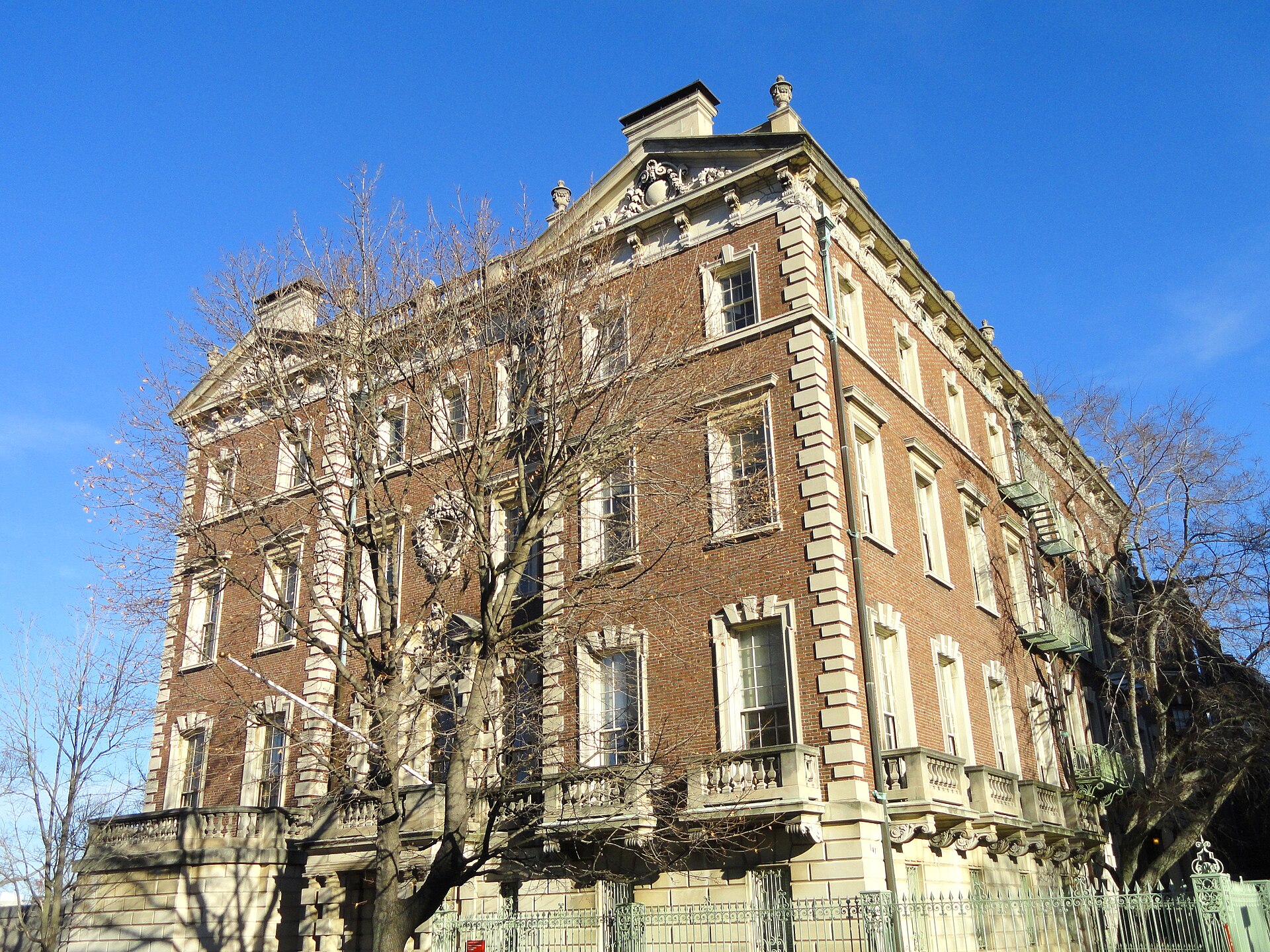
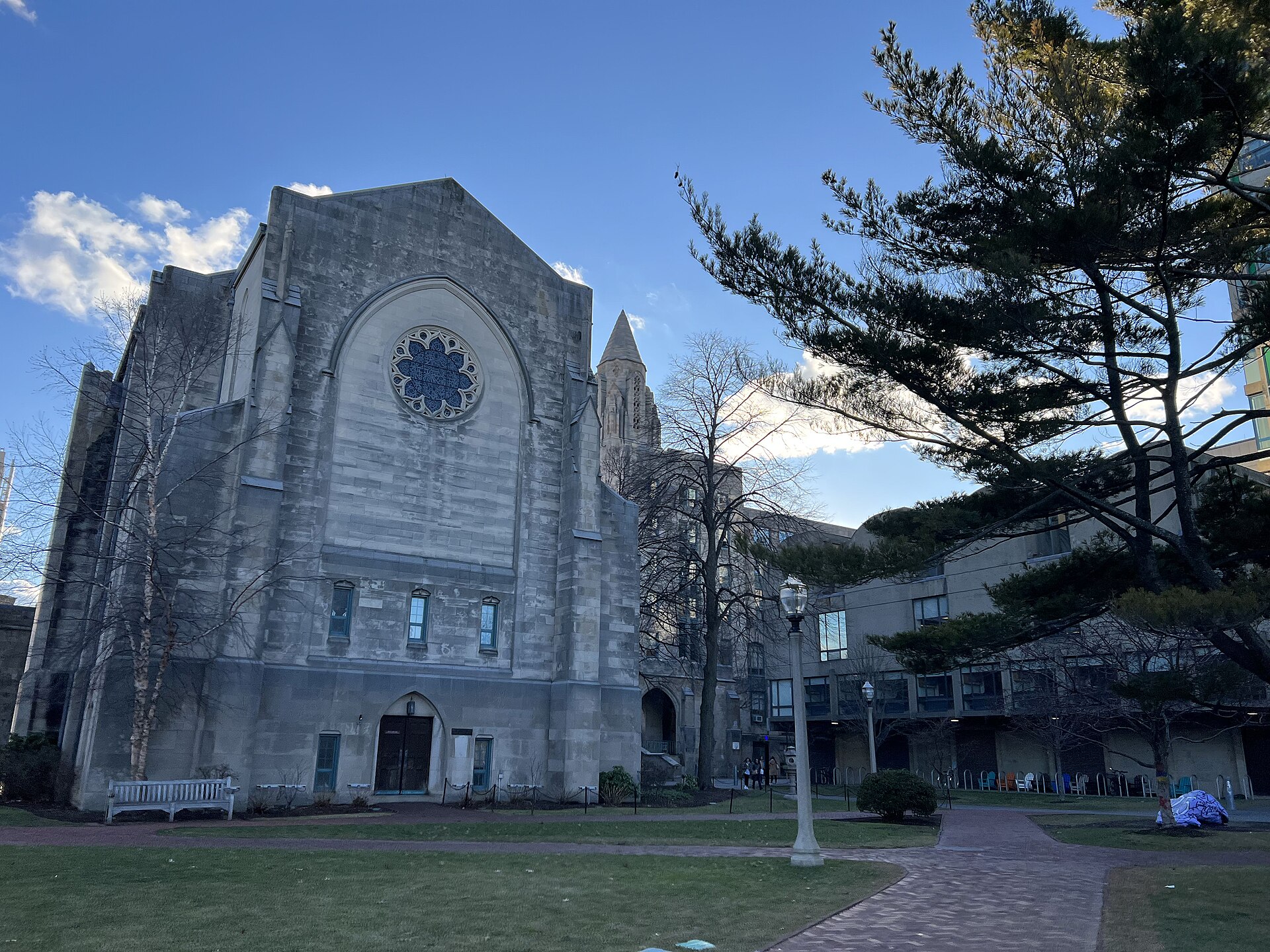
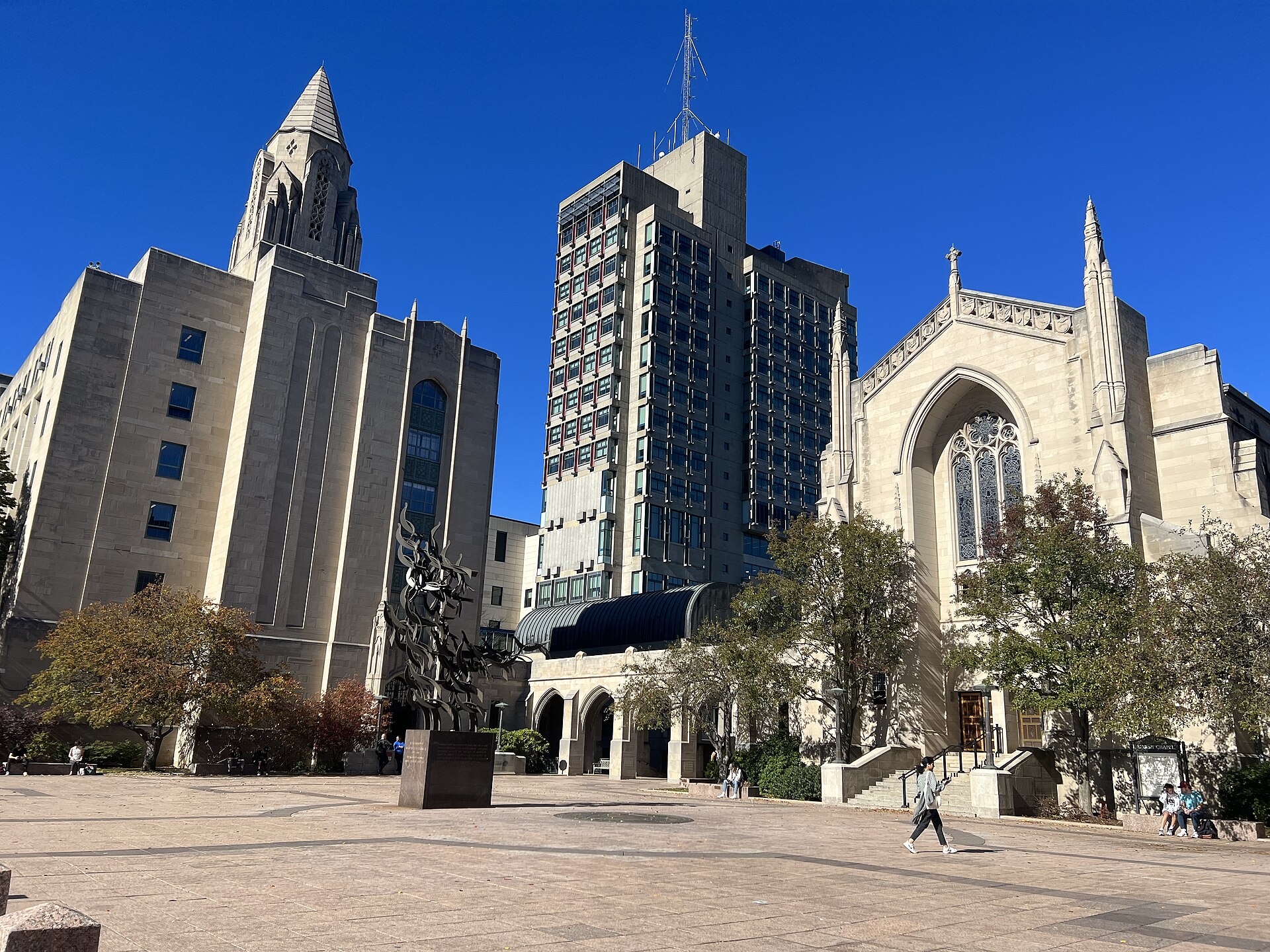
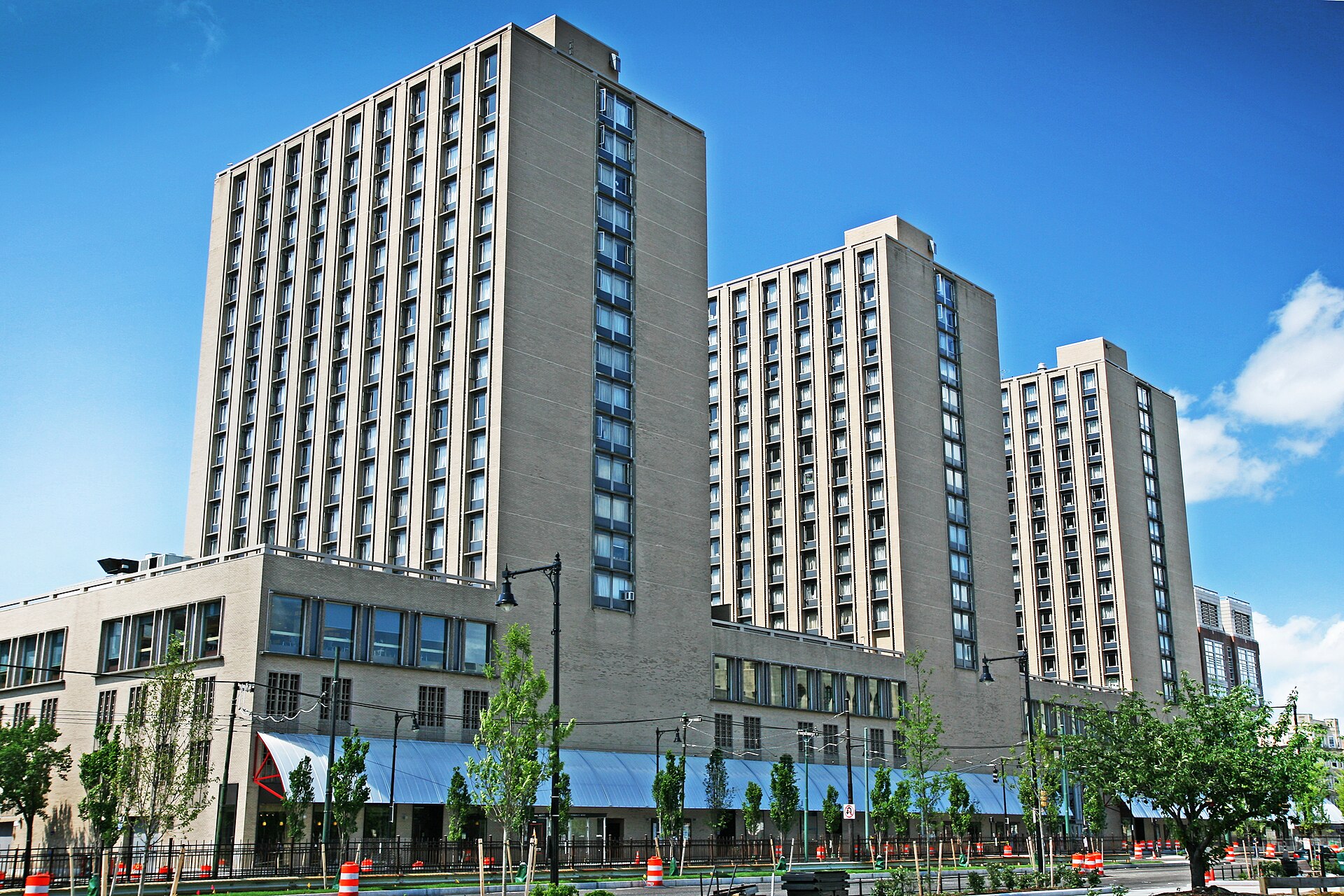
Boston University — campus in pictures
Real, freely-licensed photographs of the campus (via Wikimedia Commons).

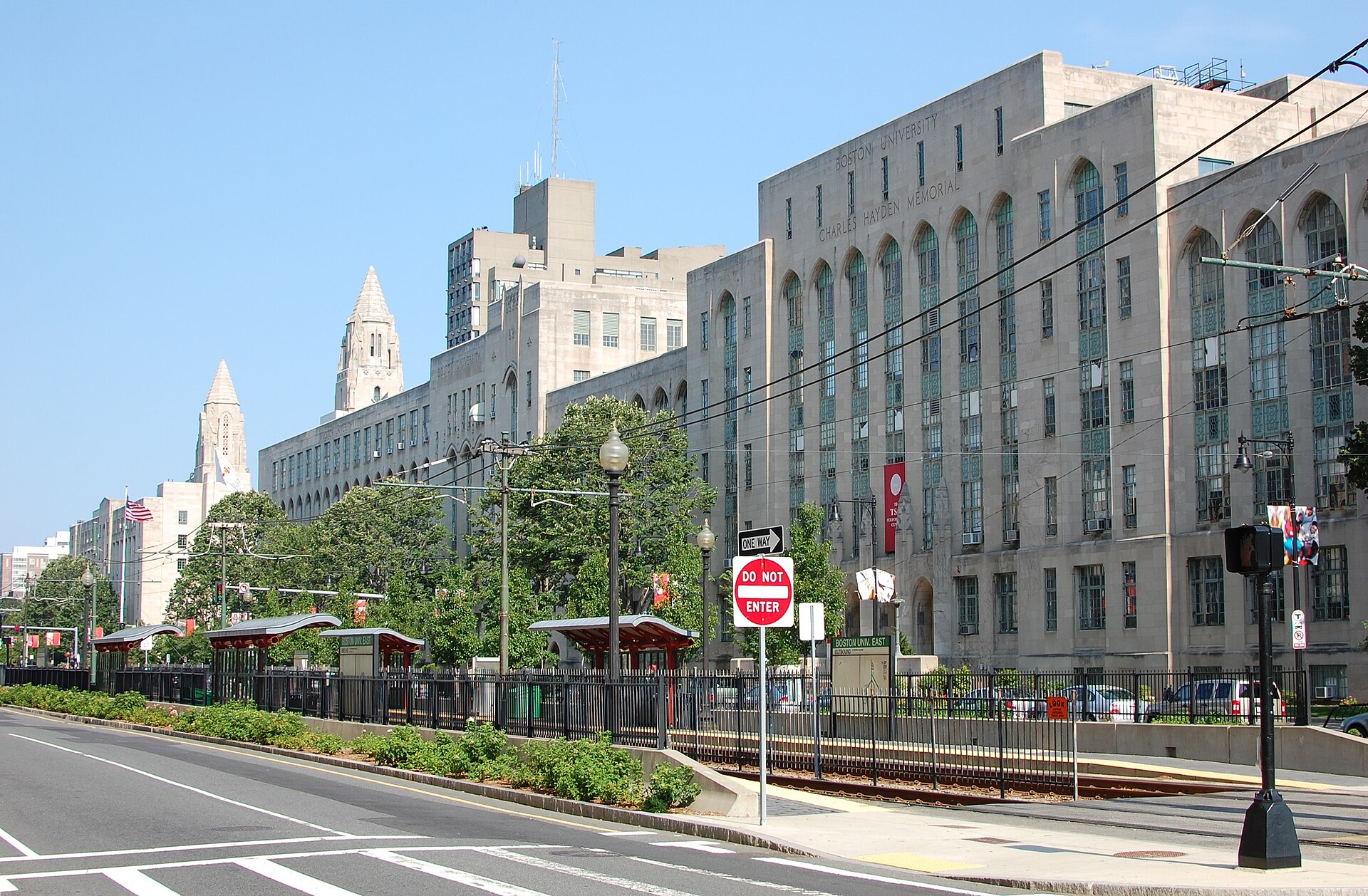
Why Boston University — Research, City, and Global Community
Boston University is one of America's largest private research universities — and one of the most genuinely international, with 24% of its student body coming from outside the United States. Its Commonwealth Avenue campus sits directly in Boston, integrating student life with one of the world's greatest concentrations of universities, hospitals, and innovation companies.
Boston University Acceptance Rate & Class Profile
Stats
Profile Stats
Rea Vs Rd
Boston University Admissions Requirements — Academics, Scores & Profile
- BU minimum GPA: 3.5
- Most competitive applicants: 3.8–4.0 or equivalent
- Strongest possible curriculum expected
- Upward grade trajectory valued
- Test-optional policy currently in effect
- SAT middle 50%: 1420–1510
- ACT middle 50%: 33–34
- Both accepted equally; strong scores add positive value
- IB typical competitive score: 36+
- A-Level: A*AA or AAA in relevant subjects
- National curriculum top performers welcome
- Contextual evaluation across all systems
Boston University Application Components — Common App, Essays & Requirements
Boston University accepts the Common Application. Below is every component of a complete BU application — required and optional — with notes for international applicants.
Boston University Essays — Writing the Perfect Supplement
Prompts
Tips
What Boston University Admissions Officers Are Looking For
BU's admissions process is holistic, but with a university of this size — over 37,000 students across 17 schools — the review process pays particular attention to fit with the specific school or programme the student is applying to. Knowing what BU values in each dimension is the foundation of a strong application.
Boston University Financial Aid & Scholarships for International Students
Boston University's financial aid model differs importantly for domestic versus international students. US citizens and permanent residents receive need-based aid meeting 100% of demonstrated need. International students are not currently eligible for need-based BU aid, but are fully eligible for BU's merit scholarships — including the Trustee Scholarship (full tuition) and Presidential Scholarship (half tuition), which are among the most substantial merit awards offered by any major US research university.
Need-based aid from BU is not currently available to international students. Only merit scholarships are available to international applicants. Domestic US students receive need-based grant packages.
Key Dates
Advantages
- Statistically higher acceptance rate than Regular Decision
- Signals genuine first-choice commitment to BU
- Earlier decision — mid-December notification
- Strongest signal of demonstrated interest
- Applying by December 1 triggers merit scholarship consideration
Disadvantages
- Binding commitment — if admitted, you must enrol
- Cannot compare financial aid offers from other universities
- International students without merit aid may be committing without knowing true cost
- Application must be complete by November 1
- Less time to strengthen senior-year grades or test scores
Boston University Interview — Policy and What Replaces It
Boston University does not conduct standard evaluative interviews as part of undergraduate admissions. Unlike Harvard, Princeton, or Oxford, there is no alumni interview programme for regular applicants. This is the norm, not an exception — BU evaluates applications holistically through grades, essays, recommendations, and activities without a conversational interview component.
Meta
Questions
Boston University Residential Life & Housing
BU operates one of the largest private university housing systems in the United States, with over 20 residence halls accommodating 76% of the undergraduate population. Unlike Harvard's house system or Yale's residential colleges, BU's housing is not a named house system — but it is extensive, genuinely campus-integrated, and guaranteed for all four undergraduate years.
Lottery Steps
- All incoming first-year students are offered university housing
- Freshmen typically live in Warren Towers, the traditional West Campus residences, or the Bay State Road brownstones
- Upperclass housing includes apartment-style options on West Campus and South Campus
- Housing is guaranteed for all four years for students who wish to remain on campus
- 76% of undergraduates live on campus — BU is one of the most residential large universities in the US
Houses
Boston University Schools, Colleges & Undergraduate Programmes
- {"label":"Departments","value":"20+"}
- {"label":"Programmes","value":"Broad liberal arts"}
- {"label":"Notable","value":"Economics, Biology, Psychology, Political Science"}
- {"label":"Research","value":"UROP access from Year 1"}
- {"label":"Specialisations","value":"15"}
- {"label":"Focus","value":"Global business orientation"}
- {"label":"Dual degrees","value":"Available across BU colleges"}
- {"label":"Career outcomes","value":"Finance, consulting, tech"}
- {"label":"Flagship programme","value":"Biomedical Engineering"}
- {"label":"Research access","value":"Faculty labs from Year 1"}
- {"label":"City connection","value":"Boston biotech and medtech sector"}
- {"label":"Dual degrees","value":"ENG + CAS joint programmes"}
- {"label":"Programmes","value":"Journalism, PR, Film & TV, Advertising"}
- {"label":"Admission","value":"More selective than general BU"}
- {"label":"Location advantage","value":"Boston media market access"}
- {"label":"Internship pipeline","value":"Boston Globe, WGBH, local studios"}
- {"label":"Focus","value":"International relations & global policy"}
- {"label":"Language requirement","value":"Strong language study"}
- {"label":"Career paths","value":"Diplomacy, NGOs, international business"}
- {"label":"Study abroad","value":"Embedded in curriculum"}
- {"label":"Flagship","value":"Physical Therapy (7-year BS/DPT)"}
- {"label":"Setting","value":"Integrated with BU Medical Campus"}
- {"label":"Admission","value":"Highly competitive for PT programme"}
- {"label":"Career outcomes","value":"Health professions, clinical research"}
Research & Extracurricular Opportunities at Boston University
Career Outcomes & BU Alumni Network
BU graduates benefit from Boston's dense professional ecosystem — a city where a Terrier degree carries genuine weight — as well as a global alumni network of 350,000+ across 175 countries. The 10:1 student-faculty ratio means personal connections that directly translate to professional introductions.
Stats
Categories
Our Boston University Admissions Track Record
Faqs
Does BU offer financial aid to international students?+
Need-based financial aid from BU is not currently available to international applicants. However, international students are fully eligible for BU's merit scholarships — including the Trustee Scholarship (full tuition) and Presidential Scholarship (half tuition). Apply by December 1 to be considered.
Is Boston University test-optional for international students?+
Yes, BU's test-optional policy applies to all applicants including international students. If you choose to submit, your SAT or ACT scores are evaluated as part of the holistic review. For international students with strong scores (SAT 1420+ or ACT 33+), Tychr generally recommends submitting.
How important is the BU supplemental essay?+
Very important. With only 300 words, the supplement must be precise, specific, and genuinely personalised. Generic essays are easy to identify at this word count. It is the primary place BU evaluates fit with the specific school or programme — invest serious time in it.
Can I apply to multiple BU schools?+
Students apply to a specific BU school or college on the Common App. While some programmes allow dual-degree paths after admission, the initial application targets one college. Choose carefully and demonstrate genuine fit with that specific school in your essays.
What is Early Decision I vs Early Decision II at BU?+
Both ED I (November 1) and ED II (January 6) are binding — if admitted, you must enrol and withdraw all other applications. ED I offers the best admissions advantage and is also the most important round for merit scholarship consideration. ED II is for students who need more time to complete their application.
Does BU interview applicants?+
No. BU does not offer standard evaluative interviews for undergraduate applicants. The exception is the College of Fine Arts, which requires auditions or portfolio reviews for specific programmes. For all other applicants, the application is evaluated through grades, essays, and recommendations.
How international is Boston University?+
Very. With 24% of students from outside the United States — among the highest percentages of any large US research university — BU is genuinely internationally diverse. Students from over 130 countries are enrolled. For international applicants, this is a meaningful indicator of how welcomed and represented you will be.
What GPA do I need for Boston University?+
BU's stated minimum is 3.5. Most competitive admitted students present higher averages in rigorous courses. The quality of your curriculum (IB, A-Level, AP, or equivalent) matters as much as the GPA number — BU evaluates both together.
Book a Free Boston University Admissions Strategy Session
In 60 minutes our BU admissions specialists will evaluate your academic profile, identify your strengths and gaps, advise on which application round gives you the best odds, and build your essay and scholarship strategy — including whether you should target the December 1 merit scholarship deadline.
- No commitment required
- BU school-specific strategy
- Merit scholarship guidance for international students
BU Admissions Requirements
Boston University Academic Requirements — The Honest Breakdown for International Students
What GPA, test scores, and academic profile do BU's admitted students actually have? And what does BU's holistic review mean for students from IB, A-Level, AP, and international curricula applying to its 17 distinct schools?
GPA & Class Rank
Boston University and GPA — What the Data Shows
BU states a minimum GPA of 3.5 for undergraduate admissions. In practice, competitive applicants present substantially stronger academic records — particularly students applying to selective programmes within BU such as the College of Communication, the 7-year Physical Therapy programme at Sargent, or Questrom School of Business.
BU is selective but not hyper-selective on grades alone. A 3.8 in a rigorous IB programme with strong extracurriculars is more competitive than a 4.0 in a low-rigor programme. Course quality and the school context matter substantially.
Academic Context
How BU Reads Academic Performance Across Different School Systems
Boston University receives applications from students in over 130 countries representing dozens of different educational systems. BU's admissions office is experienced at contextualising academic records — they read grades, curriculum type, and school profile together rather than in isolation.
Standardised Testing
SAT Scores at Boston University — What You Actually Need
BU SAT Data — Middle 50% Range
| Label | Score | Percent |
|---|---|---|
| 25th percentile | 1420 | 65 |
| 75th percentile | 1510 | 88 |
| Competitive target | 1480+ | 80 |
Standardised Testing
ACT Scores at Boston University — The Data and the Strategy
BU ACT Data — Middle 50% Range
Metrics
Comparison Cards
Testing Strategy
Boston University Test-Optional Policy — The Strategic Decision Explained
BU's test-optional policy is genuine — applications are reviewed holistically whether or not scores are submitted, and BU does not disadvantage applicants who choose not to submit. However, understanding when submitting helps versus when it is neutral or harmful is critical.
Submit Items
Withhold Items
Curricula
A-Levels and IB at Boston University — Specific Benchmarks
- {"label":"Competitive score range","value":"36+ points"}
- {"label":"HL expectations","value":"6,6,5 or better in Higher Level subjects relevant to intended programme"}
- {"label":"Subject rigour","value":"HL Mathematics (AA for STEM/Business), HL sciences or social sciences matching programme fit"}
- {"label":"Extended Essay","value":"Reviewed as evidence of independent research capability"}
- {"label":"Competitive grade range","value":"AAB – A*AA depending on programme"}
- {"label":"Subject alignment","value":"Choose A-Level subjects that connect to the intended BU school — sciences for ENG, economics/maths for Questrom, humanities/languages for CAS or COM"}
- {"label":"AS results","value":"Reviewed alongside A-Level predicted grades as early performance evidence"}
Advanced Placement
AP Courses at Boston University — What Counts and What to Take
For students in US high schools or international schools offering AP courses, AP performance is a meaningful academic signal in the BU application — and can also translate into real course credit, allowing students to place out of introductory requirements.
Academic Rigour
Rigour of Secondary School Record — BU's Core Academic Criterion
Like all selective US universities, BU lists the rigour of your secondary school record as a primary academic factor. Understanding what this means in practice is essential for a competitive BU application.
Taking the most challenging courses available at your specific school — in the subjects most relevant to the BU programme you are applying to.
Subject Preparation
Academic Preparation by BU School — What Each College Expects
Because students apply to a specific BU school or college (not to 'BU' generally), the expected academic preparation varies meaningfully. Here is what each major BU school looks for in academic background.
Language Proficiency
English Language Requirements for International BU Applicants
Boston University requires demonstrated English language proficiency for all international applicants whose primary language of instruction is not English. BU's minimum requirements are published and enforced.
Students applying to COM (journalism, film, PR) face particularly high writing standards — the essays are effectively a writing sample, and language quality is evaluated as part of the portfolio.
By School / Programme
Academic Requirements by BU School — What Different Paths Expect
Students apply to a specific BU school or college — not to the university generally. The academic profile should be coherent with the programme applied to.
| Concentration | Expectation | Signals |
|---|---|---|
| Questrom School of Business | HL Maths / AP Calculus + Economics | Analytical projects; business club leadership; internship experience |
| Computer Science (CAS/ENG) | HL Maths AA / AP CS + strong quantitative profile | Coding projects; competitive programming; hackathon achievement |
| Biomedical Engineering (ENG) | HL Maths + HL/AP Biology and/or Chemistry | Research experience; science fair; clinical volunteering |
| Journalism / PR / Film (COM) | Strong English + writing-heavy curriculum | Published writing; media production; student press; documentary work |
| Health Sciences / PT (Sargent) | Strong sciences: Biology, Chemistry, Physics | Clinical experience; health-focused volunteering; research |
| International Relations (Pardee) | Strong humanities + language study | MUN; policy writing; community or advocacy work; language fluency |
| Economics (CAS) | HL Maths + Economics or equivalent | Quantitative research; economics competitions; data analysis projects |
International Systems
How BU Evaluates International Education Systems
Roadmap
Building an Academic Profile for Boston University — What to Do at Each Stage
- Select IGCSE or MYP subjects that leave open the widest possible IB HL or A-Level options.
- Identify whether you are aligned with a STEM, business, communication, or humanities path — this shapes course choices significantly for BU's specific schools.
- Begin exploring BU's schools and colleges to understand which programme fits you best.
- Pursue one or two extracurricular areas with depth rather than breadth.
- IB HL subject selection or A-Level subject combination finalised — align choices with target BU school.
- Begin SAT or ACT preparation if targeting US universities.
- Identify BU's merit scholarship deadline (December 1 in senior year) and work backward to ensure a strong application.
- Pursue research, journalism, business, or community engagement in alignment with intended BU school.
- Complete UROP-style or independent research relevant to intended programme.
- For COM applicants: build a real portfolio of writing, media, or production work.
- For ENG applicants: pursue STEM competitions, coding projects, or research placements.
- Begin university-specific essay brainstorming — the BU supplement requires genuine programme-level specificity.
- Finalise BU school of choice and write a highly specific, non-generic supplemental essay.
- Apply ED I by November 1 if BU is your clear first choice — and apply by December 1 for merit scholarship consideration.
- SAT/ACT completed and submission decision made.
- Request recommendations from teachers who know your work deeply in relevant academic subjects.
Common Pitfalls
Academic Mistakes That Cost BU Applications — And How to Avoid Them
Real Outcomes
What Academic Profiles Tychr's BU-Admitted Students Had
The following profiles represent the academic backgrounds of students Tychr has helped gain BU admission. They illustrate the range of academic preparation that works — and what made each compelling for the specific BU school they targeted.
Faqs
Is a 3.5 GPA enough for Boston University?+
3.5 is BU's stated minimum, but competitive applicants typically present higher averages in rigorous courses. A 3.5 in a strong IB or AP programme may be reviewed differently than a 3.5 in a less rigorous curriculum. Course quality matters alongside the GPA number.
What IB score is competitive for BU?+
A score of 36 or above is generally competitive, with higher scores and stronger HL grades in subjects relevant to the target BU school strengthening the application significantly. Specific programme selectivity within BU varies — COM and Sargent PT are more selective than general CAS admission.
Does BU prefer SAT or ACT?+
No preference. BU accepts both equally. Take a diagnostic of each and commit to the test that plays to your strengths.
Can I apply to BU without test scores?+
Yes. BU's test-optional policy applies to all applicants. For international students with strong scores (SAT 1420+ or ACT 33+), Tychr generally recommends submitting — it provides useful standardised context alongside an international grading system.
Does BU consider my intended major in the admissions decision?+
Yes — significantly more than many universities. Because students apply to a specific BU school or college (not to 'BU' generally), the admissions team for that school evaluates whether your academic profile and interests match the programme. This makes programme fit a central consideration.
Financial Aid & Scholarships
Boston University Costs — What International Students Actually Pay, Honestly.
BU's list price is substantial, but merit scholarships — including the Trustee Scholarship (full tuition) and Presidential Scholarship (half tuition) — are available to international applicants. Here is exactly what BU costs, how scholarships work, and what you need to do to access them.
Cost Transparency
What Boston University Actually Costs — The Full Annual Figure
BU's tuition of $73,024 is the sticker figure. The Trustee Scholarship removes the tuition component entirely for recipients — reducing total annual costs to room, board, health insurance, and living expenses. The Presidential Scholarship halves the tuition, reducing it to approximately $36,500 plus living costs. For international students who cannot access need-based aid, merit scholarship strategy is the most important financial planning step.
Admissions & Financial Aid
BU Financial Aid Policy — What International Students Need to Know
BU's need-based financial aid programme meets 100% of demonstrated financial need for US citizens and permanent residents. International students are explicitly excluded from need-based BU aid at this time. The financial pathway for international students is merit-based scholarships.
Institutional Commitment
BU's Commitment to Access — Domestic and International Pathways
Financial Aid Walkthrough
Applying for Financial Aid and Scholarships at BU — Step by Step
The process differs by student type. Domestic US students apply for need-based aid through FAFSA and CSS Profile. International students are automatically considered for merit scholarships when they apply to BU, with the December 1 deadline being the critical trigger.
- Submit via Common App by December 1
- Trustee and Presidential scholarship consideration is automatic
- Applying after December 1 may disqualify merit scholarship consideration
- FAFSA opens October 1 for the following academic year
- Priority deadline: November 1 for ED I applicants; February 1 for RD
- fafsa.ed.gov
- Access cssprofile.collegeboard.org
- Documents needed: tax returns, bank statements, asset information
- Required for BU institutional grant consideration
- ED I decisions and scholarship awards: mid-December
- RD decisions: March/April
- Contact BU Student Financial Services
- Submit documentation of changed circumstances
- Appeals are reviewed individually
International Students — Financial Reality
BU Financial Aid for International Students — How It Actually Works
International students face a different financial landscape at BU than domestic students. Understanding this clearly — and planning your application strategy accordingly — is essential. Here is the honest picture.
Financial Aid Data
What BU Financial Aid Looks Like — By Student Type
Domestic vs. International Financial Support at BU
Need-based aid data reflects domestic US student aid. International student support is merit-based only. Figures are approximate based on BU's published information.
For international students, the merit scholarship strategy is the entire financial plan at BU. Apply by December 1. For domestic students, the need-based aid programme is generous, and 85% of eligible students receive grants.
| Income | Grant | Contribution |
|---|---|---|
| US domestic — under $30,000 | Significant need-based grant (may approach full cost) | Near $0 |
| US domestic — $30,000–$60,000 | Substantial need-based grant | Modest contribution |
| US domestic — $60,000–$100,000 | Partial need-based grant | Meaningful family contribution expected |
| International — Trustee Scholar | Full tuition (~$73,024/year) | Room, board, living (~$25,000–$30,000) |
| International — Presidential Scholar | Half tuition (~$36,512/year) | ~$60,000–$65,000 remaining annually |
| International — No merit scholarship | No BU grant | Full cost of attendance (~$98,419) |
Table Headers
Qualification Criteria
BU Scholarships — What Exists and Who Qualifies
BU's scholarship landscape is more nuanced than purely need-based schools. Understanding what each award is, who qualifies, and what the process is enables strategic planning.
External Funding
External Scholarships — Additional Funding for BU Students
Because BU does not offer need-based aid to international students, external scholarship sources are particularly important for international applicants. A range of private, governmental, and institutional external scholarships may supplement or replace BU merit awards.
Debt & Financing
Loans at BU — What Domestic and International Students Need to Know
BU's approach to loans differs by student type. Domestic students who receive need-based aid packages may have some loan component. International students who do not receive merit scholarships face the full cost of attendance and may need to plan for private or government-backed educational loans.
Student Employment
Work-Study and Student Employment at BU — What to Expect
BU domestic financial aid packages typically include a student employment (work-study) component. International students on F-1 visas are permitted to work on campus under certain conditions, providing an additional income source.
- Research assistant positions in faculty labs (providing both income and research experience)
- Library, administrative, and office roles
- Dining services and residence hall support
- Tutoring and academic support
- Admissions office ambassador and campus tour roles
- Computing, IT support, and media production positions
Benchmarking
BU vs. Other US Universities — Financial Aid Comparison for Internationals
| School | Policy | No Loans | Typical Cost |
|---|---|---|---|
| Harvard / Princeton / MIT | Need-blind, full-need, no loans | Yes | $0–$10,000 for qualifying families |
| Boston University (Trustee Scholar) | Merit scholarship, full tuition | N/A (merit-based) | ~$25,000–$30,000 (living costs) |
| Boston University (Presidential Scholar) | Merit scholarship, half tuition | N/A | ~$60,000–$65,000 |
| Boston University (no scholarship) | No international need-based aid | N/A | ~$98,419 |
| NYU / Tufts / Emory (comparable) | Need-aware; limited international aid | No | ~$80,000–$100,000 |
| Top state universities (out-of-state) | Limited international aid | No | ~$50,000–$70,000 |
Cost Analysis
BU vs. Alternatives — What International Students Actually Pay
For an exceptional international applicant who receives the BU Trustee Scholarship, BU's effective annual cost drops to approximately $25,000–$30,000 (room, board, health insurance, and living expenses) — comparable to or lower than many public universities. The sticker price of $98,419 is not the real price for Trustee Scholars.
| School | Policy | Contribution | Four Year Cost |
|---|---|---|---|
| BU — Trustee Scholar | Full tuition merit award | ~$25,000–$30,000/year | ~$100,000–$120,000 |
| BU — Presidential Scholar | Half tuition merit award | ~$60,000–$65,000/year | ~$240,000–$260,000 |
| BU — No scholarship | Full sticker price | ~$98,419/year | ~$393,000 |
| Harvard (qualifying family) | Need-blind, full-need, no loans | $0–$5,000/year | $0–$20,000 |
| UK Russell Group (international fees) | Fixed international tuition | ~$30,000–$40,000/year | ~$120,000–$160,000 |
Financial Appeals
Appealing a BU Financial Aid or Scholarship Decision — When and How
If your financial circumstances have changed, or if you believe your initial financial aid or scholarship determination does not accurately reflect your situation, BU has an appeals process through its Student Financial Services office.
For merit scholarships: BU's merit awards are based on the academic and personal profile at the time of application. Appeals for merit scholarship upgrades are less commonly successful than need-based appeals, but documenting changed circumstances or providing supplementary academic evidence may support a reconsideration request.
When To Appeal
- Family financial circumstances have changed significantly since the application (job loss, medical expenses, other crisis)
- Initial scholarship determination seems inconsistent with academic profile
- Another university has offered a substantially different merit scholarship (for RD students still deciding)
How To Appeal
- Contact BU Student Financial Services directly — finaid@bu.edu
- Submit a written appeal clearly describing the specific circumstance
- Provide supporting documentation (income verification, medical or other relevant documentation)
Timeline & Planning
Planning for BU Costs — What to Do and When
Admissions Strategy
Boston University Essays — Everything You Need to Know to Write Them Well.
BU asks for one 300-word supplement that is deceptively simple. Get it wrong and no amount of academic strength rescues the application. Get it right — with precision, specificity, and genuine BU-programme knowledge — and it becomes a decisive argument for admission.
Requirement Overview
Boston University Essay Requirements — The Full Picture
BU's application uses the Common Application and requires one short supplemental essay. While this seems minimal compared to schools with multiple supplements, the 300-word constraint is extremely demanding — there is no room for padding or generality. Every word must work.
Required Items
Optional Items
Boston University Essay Prompts — Official Text and Strategy
The 650-Word Anchor
The Common App Essay at BU — What It Needs to Accomplish
Because BU's supplemental essay is only 300 words on a specific topic, the Common App personal statement carries significant weight as the primary window into your character, intellectual life, and authentic voice. It is the document that answers: who is this person, really?
The Common App essay must be broad enough to work for all your schools, while being specific enough to reveal genuine depth. For BU, whose reviewers are evaluating fit with a specific school (Questrom, ENG, COM, etc.), an essay that reveals intellectual interests coherent with the target programme is quietly more effective than a generic personal narrative.
Looking For List
- A genuine, specific perspective — an argument, an insight, a question that only you would ask
- Evidence of intellectual engagement beyond coursework — curiosity that drives you outside of assignments
- Authentic voice — the essay should sound unmistakably like its author
- Character that is not already fully captured in grades, activities, or recommendations
Tired Of List
- Essays that narrate the activity list in prose form
- Generic overcoming-adversity stories without genuine reflection
- Essays beginning with famous quotes or dictionary definitions
- Essays written to impress rather than to reveal
Supplement Deep-Dive
The BU 300-Word Supplement — How to Write It Well
Three hundred words is shorter than most university supplemental essays. The constraint means every sentence must serve a purpose. Here is how to approach each component of the prompt.
Creative Strategy
Choosing Your Common App Essay Topic — The Decision That Shapes Everything
For BU specifically, the Common App essay is an opportunity to show the intellectual or personal depth behind the programme interest you state in your supplement. The right topic is one that reveals something about your character or mind that isn't already fully visible in your grades, activities, or the supplement itself.
Criteria
Caution Topics
- Sports injury and the life lessons of perseverance (extremely common)
- Mission trip or volunteer trip transformation essays
- Any essay primarily structured around describing the activity list in narrative form
- Topics chosen to impress rather than to genuinely reveal character
Common Pitfalls
Boston University Essay Mistakes — What Costs Applications
- Writing a generic Why BU essay that could apply to any Boston-area university — no specific programmes, faculty, or opportunities named
- Neglecting the contribution half of the BU supplement — answering only 'what excites me' without substantive answers about how you will give back
- Using AI-generated language in essays — BU explicitly notes that compelling personal statements reflect authentic voice; AI-generated prose is increasingly detectable
- Treating the 300-word limit as a suggestion — go over and your submission may be cut or disqualified
- Writing the Common App essay about the same topic as the BU supplement — missing the opportunity to show a different dimension of who you are
- Applying with a recycled Why School essay that was written for a different university — specific programme references from other schools occasionally slip through and are immediately disqualifying
- Writing to impress rather than to reveal — BU readers have read thousands of applications; performed enthusiasm is obvious
- Not verifying the current prompt — BU updated its supplement for 2026-27 to a single required question. Always confirm the exact prompt in the current Common App cycle before submitting
Essay FAQs
Boston University Essay FAQs
How long is the BU supplemental essay?+
300 words maximum. This is a firm limit. The word constraint makes specificity and economy of language essential — every sentence must earn its place.
Does BU have multiple supplemental essays?+
For most applicants, BU requires one supplemental essay of 300 words through the Common App, plus the Common App personal statement. CFA (College of Fine Arts) applicants have additional programme-specific requirements (portfolio, audition, or interview).
What is BU's current supplement prompt?+
'What about being a student at BU most excites you? How do you hope to contribute to our campus community?' (300 words max) — the current prompt as of 2026-27. Always verify the exact wording in the current Common App cycle before drafting.
How important is the BU supplement vs. the personal statement?+
Both matter — but they serve different purposes. The personal statement shows who you are as a person and thinker. The supplement shows why you belong at BU specifically and what you will contribute. With only 300 words, the supplement has very little room for generality — the quality of your BU-specific research directly determines the quality of this essay.
Should I write about Boston in my BU supplement?+
Briefly referencing Boston as part of why BU excites you is fine — but it should not be the centrepiece. BU's specific programmes, faculty, research, and institutional culture are more compelling than the city alone. Boston is also home to Northeastern, BC, Tufts, and MIT — saying you're excited about the city is not a BU-specific argument.
Can I use the same supplement for multiple schools?+
No. BU's prompt asks specifically about BU programmes and community. A supplement written for another school will be immediately recognisable to BU readers — and a recycled essay with another school's name accidentally left in is grounds for disqualification.
How do I research BU programmes specifically enough for the supplement?+
Go beyond the admissions website. Read course syllabi, faculty research pages, department newsletters, and student organisation websites. Visit if possible — or attend a virtual information session with specific questions. The depth of your supplement is a direct signal of how seriously you have researched BU.
Does BU read the Common App personal statement carefully?+
Yes. All BU schools read the full application including the personal statement. For selective programmes like COM and Sargent PT, the personal statement quality is a meaningful differentiator. A weak or generic personal statement at BU is a missed opportunity.
Courses — schools, degrees & intake
79 degrees across 9 groupings.
College of Arts & Sciences · 40 degrees
African American & Black Diaspora Studies
American Studies
Anthropology
Archaeology
Asian Studies
Astronomy
Astronomy & Physics
Biochemistry & Molecular Biology
Biology
Chemistry
Chemistry & Physics
Cinema & Media Studies
Classical Studies
Computer Science
Computer Science & Economics
Earth & Environmental Sciences
Economics
English
Environmental Analysis & Policy
European Studies
History
History of Art & Architecture
Holocaust, Genocide & Human Rights Studies
International Relations
Latin American Studies
Linguistics
Marine Science
Mathematics
Middle East & North Africa Studies
Neuroscience
Philosophy
Physics
Political Science
Psychology
Religion
Romance Studies
Science Education
Sociology
Women's, Gender & Sexuality Studies
World Languages & Literatures
College of Communication · 5 degrees
Advertising
Film & Television
Journalism
Media Science
Public Relations
College of Engineering · 4 degrees
Biomedical Engineering
Computer Engineering
Electrical Engineering
Mechanical Engineering
College of Fine Arts · 17 degrees
Music — Composition (BM)
Music — General, Musicology, Theory or Global Music (BA)
Music Education (BM)
Music — Performance (BM)
Theatre — Acting (BFA)
Theatre — Costume Design & Production (BFA)
Theatre — Lighting Design (BFA)
Theatre — Scene Design (BFA)
Theatre — Sound Design (BFA)
Theatre — Stage Management (BFA)
Theatre — Technical Production (BFA)
Visual Arts — Art (BA)
Visual Arts — Art Education with Initial License (BFA)
Visual Arts — Graphic Design (BFA)
Visual Arts — Painting (BFA)
Visual Arts — Printmaking (BFA)
Visual Arts — Sculpture (BFA)
College of General Studies · 1 degrees
Liberal Arts (2-year Division Program)
Questrom School of Business · 1 degrees
Business Administration (BSBA)
Sargent College of Health & Rehabilitation Sciences · 8 degrees
Behavior & Health
Health Science
Human Physiology
Nutrition & Dietetics
Physical Therapy (BS/DPT)
Public Health
Speech, Language & Hearing Sciences
Linguistics & Speech, Language & Hearing Sciences
School of Hospitality Administration · 2 degrees
Hospitality Administration
Hospitality & Communication
Wheelock College of Education & Human Development · 1 degrees
Education & Human Development
Want your real chances at Boston University?
Create a free TYCHR account for your personalised admit-chance, a shortlist you can track, exact entry requirements, and essay + counselling help.