Beijing Normal University
Beijing, China (Mainland) · Urban
CHINA'S PREMIER EDUCATION UNIVERSITY · QS RANK #270
Beijing Normal University (BNU / 北京师范大学), founded in 1902, is the oldest teacher-training university in China and the country's undisputed leader in Education, Psychology, and Chinese Language. A member of both Project 985 and the Double First-Class initiative — China's two highest-tier designations for research universities — BNU sits inside Beijing's Second Ring Road, offering international students direct access to China's political, cultural, and academic capital. With annual tuition under USD 4,000 and a generous scholarship ecosystem anchored by the Chinese Government Scholarship, BNU is one of the world's most affordable elite research universities.
Campus
Beijing Normal University — campus in pictures
Real, freely-licensed photographs of the campus (via Wikimedia Commons).


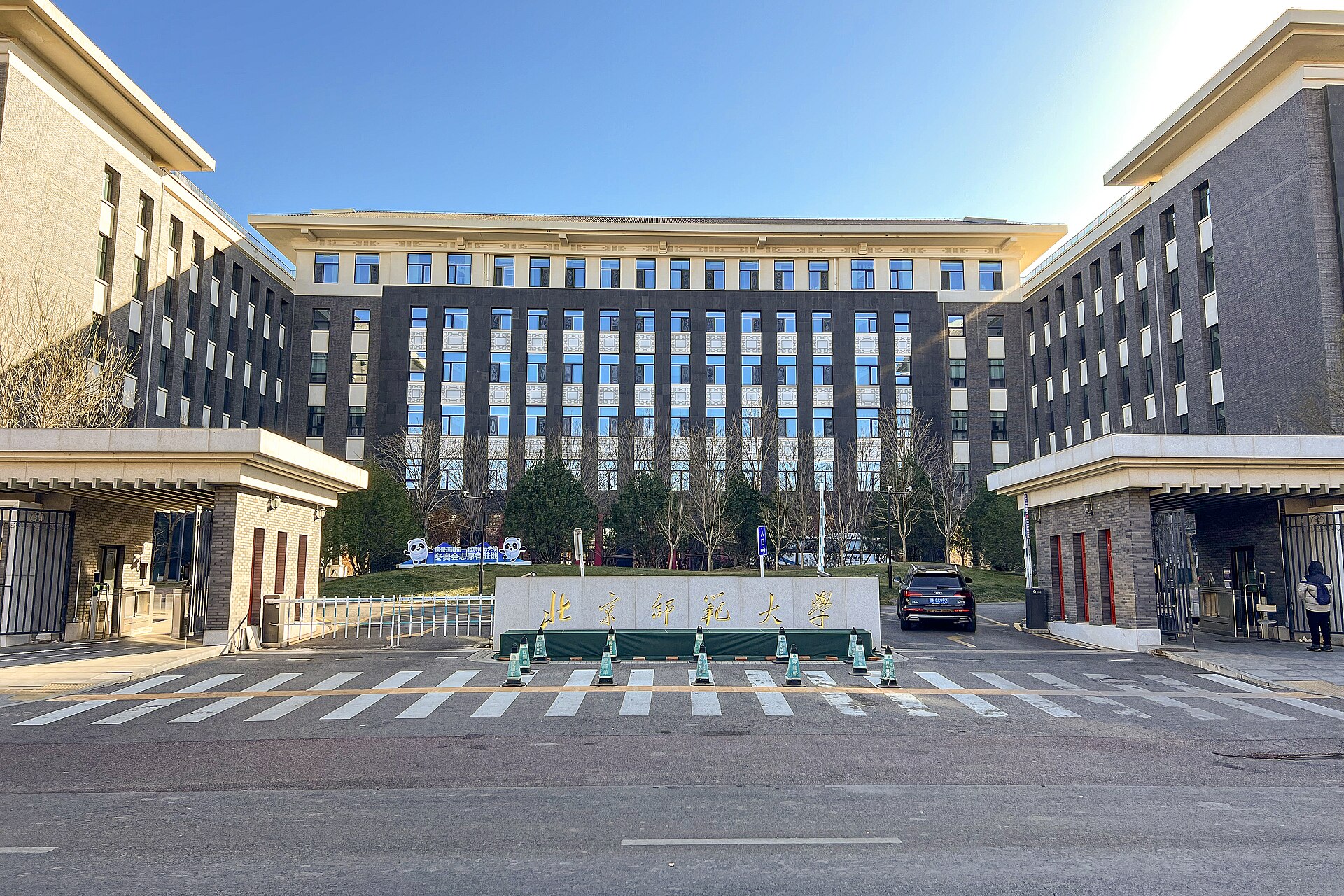

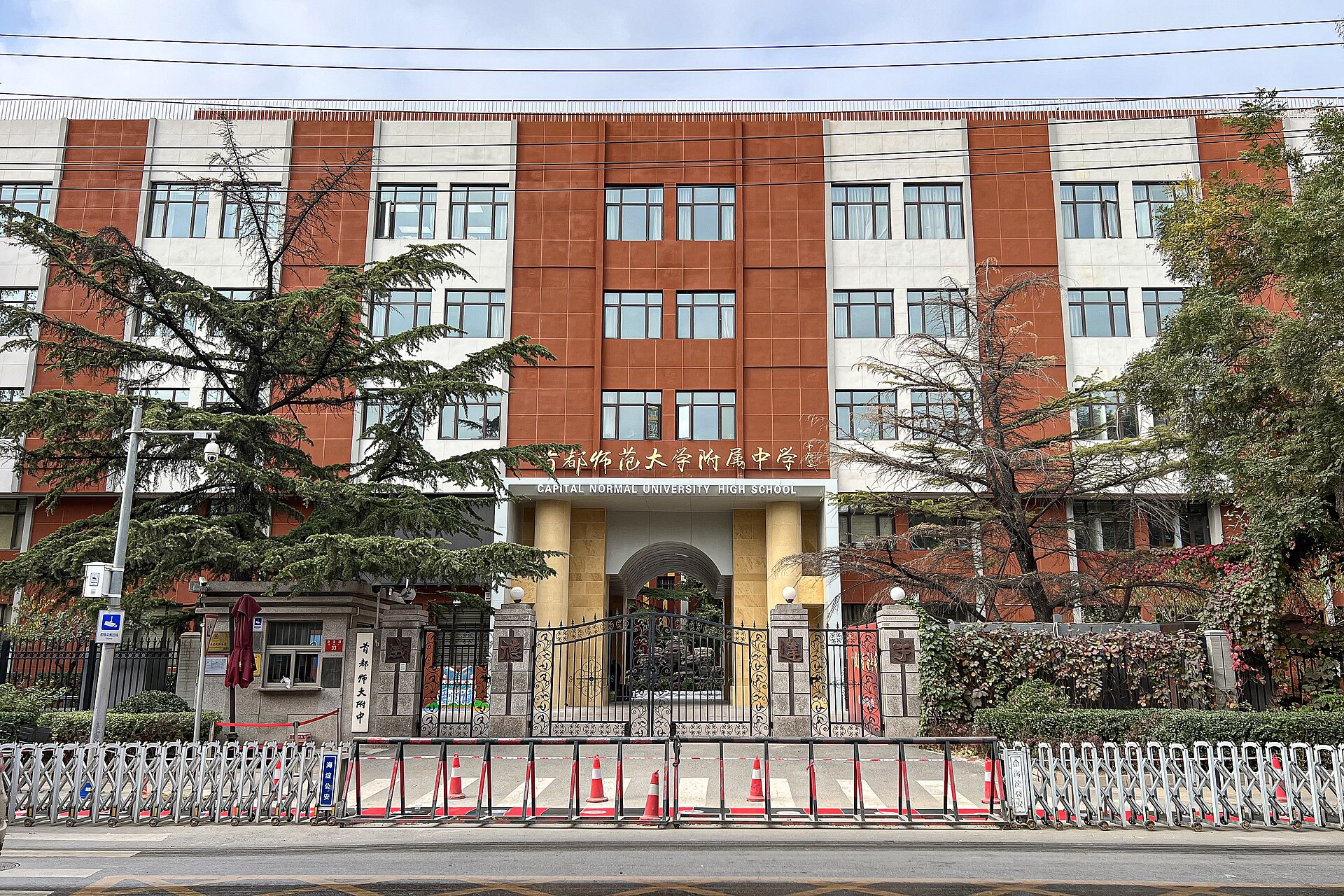
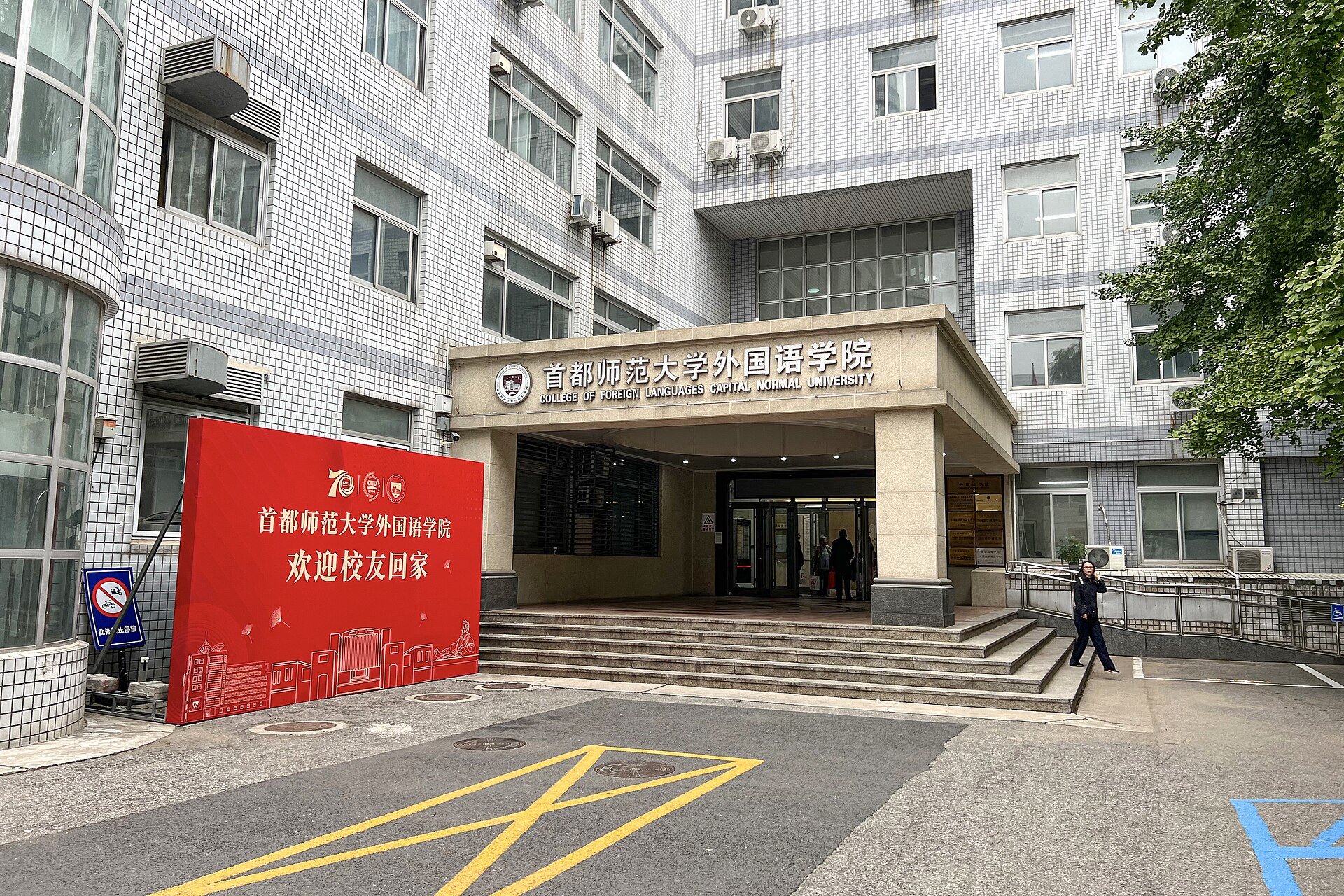
Why Beijing Normal University — Education Excellence, Beijing Location & Remarkable Value
BNU is not a generalist university — it is China's national authority on human learning, social science, and knowledge transmission. For an international student aiming to build a career in education, psychology, environmental science, or the humanities in or around China, there is no comparable institution in the country.
Beijing Normal University Acceptance Rate & Admitted Student Profile
For domestic Chinese applicants, BNU is among the most competitive universities in the country. International students apply on a separate track through BNU's International Students and Scholars Centre (ISSC), where the primary filters are academic transcripts, language proficiency, and the Study Plan. The most selective programmes — Psychology, Chinese Language, and research-track postgraduate programmes — are competitive even on the international track. The real differentiator is language readiness and specificity of purpose.
Stats
Profile Stats
BNU Admissions Requirements — Academics, Language & Application Profile
- IB Diploma of 33 or above (35+ for competitive programmes)
- UK A-Levels: BBB or above; ABC–ABB for high-demand programmes
- Minimum GPA of 3.0 on a 4.0 scale
- Subject alignment with intended major is closely evaluated
- Chinese-taught programmes: HSK Level 4 minimum (score 180); Level 5–6 recommended
- English-taught tracks: IELTS 6.0 overall or TOEFL iBT 80
- Applicants from English-medium schools may apply for language-test waiver
- HSK proficiency above the minimum is a competitive differentiator
- 800–1,500 words (or 1,500–3,000 Chinese characters) recommended
- Must explain academic background, reasons for BNU, research interests, and career goals
- Two academic recommendation letters required
- Certified/notarised academic documents in Chinese or English mandatory
BNU International Application Components —
BNU's international admissions does not use Common App, UCAS, or any Western centralised system. You apply directly through BNU's online portal (https://international.bnu.edu.cn/) or via the Chinese Government Scholarship system for CSC applicants. The required materials are practical and document-based — centred on your academic record, language ability, and a Study Plan.
BNU Application — The Study Plan & Supporting Documents
Prompts
Tips
What BNU Admissions Officers Are Looking For
BNU's international admissions is more holistic than a pure grades-filter, but academic record and language readiness are the two pillars of every decision. BNU is not looking for a generic 'well-rounded' profile — it rewards purposeful applicants with a specific reason to study this subject, at this university, in this city.
Financial Aid & Scholarships for International Students at BNU
BNU does not operate a US-style need-based aid system for international students. Instead, funding flows through a three-tier scholarship structure: the Chinese Government Scholarship (CSC), the Beijing Municipal Scholarship, and BNU's own institutional awards. Approximately 25% of BNU's international students receive some form of scholarship support — a meaningful proportion for a research university at this price point.
Scholarship availability and amounts are confirmed annually. Verify current rates with BNU's International Students and Scholars Centre.
Key Dates
Advantages
- Full programme availability — most degrees only admit in September
- Larger international student cohort arrives together — better orientation community
- CSC scholarship is aligned to the autumn intake
- More time to prepare language certificates and notarised documents
- Beijing's best season for settling in — mild September weather vs. harsh January
Disadvantages
- Limited programme availability — not all majors offer spring entry
- Smaller incoming cohort — less structured orientation support
- CSC scholarship is not aligned to the spring intake for most countries
- Starting mid-year can complicate housing and administrative logistics
BNU Interview Policy — What to Expect
Interviews are not a universal requirement in BNU's international undergraduate admissions process. However, for certain competitive programmes — particularly Psychology, Chinese Language & Literature, and research-track postgraduate degrees — BNU conducts individual interviews as part of the selection process. Undergraduate applicants for Chinese-taught programmes may be required to sit a written assessment (the China Scholastic Competency Assessment, CSCA) followed by an individual interview conducted by BNU faculty.
Meta
Questions
BNU's Campus Housing & Residential Life for International Students
Beijing Normal University does not operate a Harvard-style residential 'house' system. International students are housed in dedicated international student dormitories on BNU's main campus — a compact 1,031-acre urban campus within Beijing's Second Ring Road. There is no lottery or blocking-group system; housing is assigned and booked through BNU's online housing portal after admission.
Lottery Steps
- After receiving your admission letter, log into BNU's housing portal to select your dormitory preference
- Beijing campus international dorms: six dedicated buildings, numbered 1–3 plus Xinsong Apartment and additional blocks
- Room types: twin share (most common for new students) and single rooms at a modest premium
- All rooms furnished with: bed, desk, bookshelf, chair, lamp, telephone, refrigerator, safe, air conditioning, electric kettle, wardrobe
- Shared kitchen and laundry facilities; study lounges and recreational spaces within each building
- On-campus booking for Autumn intake typically opens July 1 – August 15
Houses
BNU Faculties, Schools & Undergraduate Programmes
- {"label":"QS subject rank (Education)","value":"Top 50"}
- {"label":"English doctoral programmes","value":"4+"}
- {"label":"Research orientation","value":"Policy + theory"}
- {"label":"Flagship international programmes","value":"Ed.D., PhD Education"}
- {"label":"National rank (Psychology)","value":"#1 in China"}
- {"label":"Research specialisation","value":"Educational & developmental psych"}
- {"label":"Undergraduate language","value":"Chinese (HSK 5–6 required)"}
- {"label":"Postgraduate English tracks","value":"Selected programmes"}
- {"label":"Founded","value":"1902"}
- {"label":"Research institutes","value":"13"}
- {"label":"HSK requirement","value":"Level 5–6"}
- {"label":"Focus","value":"Classical + modern Chinese"}
- {"label":"Double First-Class subject","value":"Yes"}
- {"label":"Research focus","value":"Environmental change + GIS"}
- {"label":"Field sites","value":"Across China's geographic zones"}
- {"label":"Undergraduate language","value":"Primarily Chinese"}
- {"label":"Research orientation","value":"Pure + applied maths"}
- {"label":"Postgraduate English tracks","value":"Selected PhD supervision"}
- {"label":"IB preparation expected","value":"HL Maths AA / A-Level Further Maths"}
- {"label":"Graduate outcomes","value":"Academia + financial sector"}
- {"label":"Flagship undergraduate","value":"Economics"}
- {"label":"Location advantage","value":"Beijing central government proximity"}
- {"label":"Industry links","value":"Finance, SOEs, public policy"}
- {"label":"Undergraduate language","value":"Chinese"}
Research & Extracurricular Opportunities at BNU
Career Outcomes & BNU Alumni Network
BNU's employment outcomes reflect its academic identity: the majority of graduates enter education, public administration, research, and high-skilled professional roles in China and internationally. The Chinese government, state-funded research institutes, and international organisations competing for China expertise are the dominant employers. In 2011, BNU was rated by the Ministry of Education as a 'National Model University for Graduate Employment'.
Stats
Categories
Our BNU Admissions Track Record & Student Guidance
Faqs
Do I need to speak Chinese to study at BNU?+
It depends on your programme. Most undergraduate programmes and many master's programmes are taught in Chinese and require HSK Level 4 or higher. BNU does offer English-medium postgraduate programmes in selected fields including Education, Environmental Science, and Economics. Verify availability for your specific programme on the official admissions portal before applying.
What is the difference between applying directly to BNU and applying via the CSC scholarship?+
Applying directly (self-funded) means you pay tuition and submit your application on BNU's international admissions portal. Applying via the Chinese Government Scholarship (CSC) means your home country's scholarship authority nominates you to the Chinese embassy, which then forwards your file to BNU — the scholarship covers full tuition, accommodation, and a monthly stipend. The academic requirements are similar, but CSC competition is fierce and home-country deadlines fall earlier (often February or March).
Is the IB Diploma accepted at BNU?+
Yes. IB Diploma results are accepted as proof of secondary-school completion for undergraduate applicants. A competitive BNU applicant typically holds an IB score of 33 or above. Strong scores in subjects relevant to your intended programme — Psychology HL for Psychology applicants, Mathematics HL for Statistics — are weighted favourably.
How important is the Study Plan?+
The Study Plan is the closest equivalent to a US personal statement or UK personal statement — it is your main chance to demonstrate intellectual purpose, research interest, and cultural readiness. For postgraduate applicants, a vague Study Plan is the most common reason for rejection among otherwise competitive files. Treat it with the same rigour you would a US statement of purpose.
Is Beijing expensive for students?+
By the standards of world capitals, Beijing is affordable for students. Campus canteens serve filling meals for RMB 10–25 (USD 1.40–3.50). Public transit is inexpensive. The estimated cost of living is USD 7,000 per year — significantly less than London, Sydney, or New York.
What scholarship options exist beyond the CSC?+
Beyond the Chinese Government Scholarship, BNU offers its own New International Student Scholarship, the Silk Road Muduo Scholarship, the Belt and Road School Scholarship, and the Beijing Government Scholarship for international students enrolled at Beijing institutions. Many students combine partial scholarships with family support.
Is BNU recognised outside China?+
BNU holds QS rank #270 and THE rank #350 globally — solidly inside the world's top 400 institutions. Its national rank of #13 in China signals elite standing within the Chinese system. In Education specifically, BNU's reputation extends internationally through UNESCO partnerships and research collaborations. For careers outside China, the BNU degree is best complemented by Mandarin proficiency and China-specific experience.
Are there interviews as part of the admissions process?+
Interviews are not universal, but some competitive programmes — particularly Psychology, Chinese Language & Literature, and research-track postgraduate degrees — may require a faculty interview by video call or in person. Undergraduate applicants for Chinese-taught programmes may also sit a written assessment (CSCA) prior to interview. Check specific programme requirements on the admissions portal.
Book a Free BNU Admissions Strategy Session
In 60 minutes our BNU admissions specialists will evaluate your academic profile, assess your HSK readiness and Study Plan strategy, identify which scholarship pathways you should pursue, and help you build a competitive application narrative for BNU's international admissions committee.
- No commitment required
- China university specialists with insider knowledge
- Personalised strategy — not generic advice
BNU Academic Requirements
Beijing Normal University Academic Requirements — The Honest Breakdown for International Students
What academic profile, language credentials, and intellectual preparation do competitive international students need for BNU? And how does BNU evaluate IB, A-Level, AP, and other international curricula?
GPA & Academic Record
BNU and GPA — What the Requirements Actually Mean
BNU publishes a minimum GPA of 3.0 on a 4.0 scale for international undergraduate applicants. In practice, competitive applicants for popular programmes exceed this meaningfully — but BNU is not looking for perfect grades as a filter. The academic record is evaluated alongside your language proficiency and the coherence of your intended programme with your prior subject preparation.
A 3.0 GPA is a baseline threshold, not a differentiating feature. What distinguishes admitted international students is the combination of solid academic performance, strong language credentials (HSK or IELTS/TOEFL), and a purposeful Study Plan that makes their application coherent and compelling.
Academic Context
Class Rank and School Context — How BNU Reads Your Academic Record
BNU does not require class rank. Its admissions committee evaluates academic performance in the context of the applicant's school system and the specific programme applied for. BNU is experienced at reading international qualifications across more than 30 countries.
Standardised Testing
SAT Scores at BNU — Limited Relevance for International Applicants
BNU does not require or formally consider SAT scores in its international admissions process. The SAT is a US-centric examination designed for US university admissions — BNU's application system is built around academic transcripts, language proficiency certificates (HSK/IELTS/TOEFL), and the Study Plan.
| Label | Score | Percent |
|---|---|---|
| SAT required | No | 0 |
| SAT considered if submitted | Optionally | 30 |
| Primary academic evidence | Transcripts + IB/A-Level | 100 |
Standardised Testing
ACT Scores at BNU — Not Required
The ACT is not a required or formally considered component of BNU's international admissions process. Like the SAT, it is a US-focused examination that BNU does not use as an admissions filter.
Metrics
Comparison Cards
Testing Strategy
BNU Test Policy — What It Means in Practice
BNU's policy on Western standardised tests (SAT, ACT, GRE for undergraduates) is effectively test-optional: these tests are not part of the published application requirements and are rarely considered as a primary admissions factor. Language proficiency tests (HSK, IELTS, TOEFL) are, however, mandatory for the relevant programme tracks.
Submit Items
Withhold Items
International Curricula
A-Levels and IB at BNU — Specific Benchmarks
- {"label":"Competitive range","value":"33–40 points"}
- {"label":"Minimum competitive floor","value":"33 points"}
- {"label":"HL subject expectation","value":"Strong alignment with intended programme"}
- {"label":"Extended Essay","value":"Recognised; relevant EE subject is a positive signal"}
- {"label":"Competitive range","value":"BBB – AAB"}
- {"label":"Subject relevance","value":"Essential — take subjects aligned to your intended major"}
- {"label":"AS results","value":"Reviewed alongside predicted grades"}
- {"label":"GCSE/IGCSE","value":"Not typically required but supports predicted grade credibility"}
Advanced Placement
AP Courses at BNU — How They Are Read
Advanced Placement examinations are accepted by BNU as evidence of secondary academic achievement, though they are less commonly submitted than IB Diplomas or A-Level results by BNU's international applicant pool. AP is evaluated as a supplementary academic credential, not a primary one.
Academic Rigour
Rigour of Your Secondary School Record — What BNU Evaluates
BNU evaluates the rigour of your secondary school curriculum as one component of the academic profile — specifically, whether you have taken the most challenging courses available to you in subjects relevant to your intended programme.
Taking the most demanding courses available at your specific school, in subjects that align directly with what you intend to study at BNU.
Academic Preparation by Programme
Academic Preparation — What BNU Expects by Discipline
BNU's strongest programmes have distinct academic preparation expectations for international applicants. Below are the key preparation signals by discipline — the academic background that positions you most competitively for each major.
Language Proficiency
English Language Requirements for International BNU Applicants
English language proficiency requirements apply only to applicants for English-medium programmes at BNU. For Chinese-taught programmes, Mandarin (HSK) proficiency is the language requirement — English test scores are not relevant for those tracks.
The most consequential language decision for BNU is not IELTS vs TOEFL — it is whether you will apply to a Chinese-taught or English-taught programme. Chinese-taught programmes are more numerous, more integrated with BNU's research culture, and more closely aligned to China career outcomes. The trade-off is genuine immersion in Mandarin from day one. English-taught programmes are available but more limited in scope. Make this decision deliberately.
By Programme
Academic Requirements by Programme at BNU — What Different Majors Expect
BNU admits international students to specific programmes, not to the university broadly. The academic profile must be coherent with the chosen programme. Below are the expected profiles for BNU's major international student programmes.
| Concentration | Expectation | Signals |
|---|---|---|
| Education (undergraduate) | HL Psychology / History / Social Sciences | Teaching or tutoring experience; awareness of Chinese education policy |
| Psychology (undergraduate) | HL Psychology + HL Biology or Maths | Research interest in developmental or educational psychology |
| Geography & Environmental Science | HL Geography + Sciences (Biology/Chemistry) | Field projects; environmental research; GIS experience |
| Mathematics | HL Maths AA / A-Level Further Maths | Competition maths; proof-based reasoning ability |
| Chinese Language & Literature | HSK 5–6 (near-native); HL Chinese (if available) | Prior immersion in China; advanced written Chinese ability |
| History (undergraduate) | HL History / A-Level History | Reading in Chinese history; strong analytical writing |
| Economics | HL Maths + Economics or equivalent | Quantitative research interest; awareness of Chinese economic policy |
| Philosophy | HL Humanities profile | Familiarity with Chinese philosophical traditions; analytical writing ability |
| Master's / PhD (all fields) | Strong undergraduate degree in relevant field | Research proposal; faculty contact; publications or research output preferred |
International Systems
How BNU Evaluates Different International Education Systems
Roadmap
Building an Academic Profile for BNU — What to Do at Each Stage
- Select IB or A-Level subjects aligned to your target BNU programme.
- If BNU is a genuine goal, begin HSK-track Mandarin study — reaching HSK 3–4 by graduation opens Chinese-taught programmes.
- Identify BNU's core programmes and the entry benchmarks you need to meet.
- Explore China-related activities: Chinese language classes, cultural events, online courses from Chinese universities.
- IB subject and level selection — HL choices should reflect genuine alignment with your BNU target programme.
- Conduct an extended essay, independent research project, or science fair entry in your intended field.
- For Education applicants: begin teaching, tutoring, or mentorship activities and document your experience.
- Pursue HSK exam at Level 3 or 4 if targeting Chinese-taught programmes.
- Research BNU faculty in your intended department. Read their recent published work.
- For postgraduate applicants: email potential supervisors briefly and specifically — faculty support significantly improves outcomes.
- Maintain or improve academic performance in the critical final two years.
- Sit HSK Level 4 or 5 if applying for Chinese-taught programmes; IELTS or TOEFL if applying for English-taught tracks.
- Write multiple drafts of your Study Plan — it is your primary voice in the process.
- Gather all certified and notarised documents early — this takes longer than students expect in most countries.
- Check your home country's CSC scholarship deadline (often February or March) and submit if eligible.
- Submit BNU application portal by the relevant intake deadline (typically March–April for autumn entry).
Common Pitfalls
Academic Mistakes That Cost BNU Applications — And How to Avoid Them
Real Outcomes
What Academic Profiles BNU's Admitted International Students Have
The following profiles illustrate the range of academic backgrounds of international students Tychr has helped gain admission to Beijing Normal University or equivalent Chinese research universities. They show what works — and what each case required beyond grades alone.
Faqs
Does BNU prefer certain programmes for international applicants?+
BNU's most internationally recognised programmes are Education, Psychology, Geography & Environmental Science, Chinese Language & Literature, and Mathematics. These programmes have the most developed infrastructure for international students and the strongest research reputations. That said, BNU offers 40 undergraduate majors to international students across humanities, sciences, and social sciences.
What IB score do I need for BNU?+
The published minimum is equivalent to approximately 33 IB points. Competitive applicants for selective programmes typically hold 35 or above. More important than the total score is the alignment of HL subjects with the intended programme — a 34 with relevant HL subjects is stronger than a 37 with misaligned subject choices.
Can I apply to BNU without any Mandarin?+
Yes — for English-taught programmes. IELTS 6.0 or TOEFL 80 replaces the HSK requirement for English-medium tracks. However, English-taught programmes at BNU are fewer in number and more limited in scope than Chinese-taught ones. For most international students who want full academic integration at BNU, some Mandarin ability is essential.
Does BNU require a writing sample or portfolio?+
For most undergraduate and taught master's programmes, no. The Study Plan is the primary written document. Some research postgraduate programmes in humanities or social sciences may request a writing sample — check the specific programme requirements. For arts-related programmes, a portfolio may be required.
Is the physical examination mandatory even for online programmes?+
The physical examination is required for the Chinese student visa (X-visa) for students entering China. If you are applying to a fully online or distance programme, confirm with BNU's ISSC whether a physical examination is still required. For all on-campus programmes, it is mandatory.
Cost & Financial Aid
Beijing Normal University May Cost Less Than You Think — Here's the Full Picture.
BNU is one of the most affordable elite research universities in the world for international students. Annual tuition under USD 4,000, a total cost of attendance around USD 11,500, and a robust scholarship ecosystem — anchored by the Chinese Government Scholarship — means that many international students pay zero in tuition and receive a monthly living stipend. Here is exactly what BNU costs, how the scholarship system works, and what you need to do to access it.
Cost Transparency
What Beijing Normal University Actually Costs — The Full Annual Figure
BNU's annual cost of attendance of approximately USD 11,500 is already significantly below comparable institutions in the UK, Australia, Canada, or the US. For the roughly 25% of international students who receive the Chinese Government Scholarship or other scholarship support, the effective cost drops dramatically — often to zero or near-zero.
Scholarship System
BNU's Scholarship System for International Students — How It Works
The Chinese Government Scholarship (CSC) is available to students from most countries in the world, subject to national quota allocation. Over 100 countries participate in the CSC programme. BNU's own institutional scholarships are available to all nationalities. The Beijing Government Scholarship covers students enrolled at any Beijing institution including BNU.
Why BNU Is Affordable
Why BNU Can Be This Affordable — The Government Funding Model
Scholarship Application Walkthrough
Applying for BNU Scholarships — The Process Step by Step
There is no single BNU financial aid application — different scholarships have different application pathways and deadlines. Here is the complete process for the three main routes to scholarship funding at BNU.
- CSC: Check eligibility via your home country's Chinese embassy or national CSC agency
- BNU institutional scholarships: All nationalities welcome; apply through BNU ISSC after admission
- Beijing Government Scholarship: Apply after enrolment, not before
- Visit studyinchina.csc.edu.cn to create an account
- Complete the CSC application form and upload all required documents
- Download the completed application form and mail to BNU's Provost's Office (for self-nominated Type B)
- Simultaneously apply on BNU's portal (international.bnu.edu.cn)
- {"label":"Autumn Intake Application Deadline","date":"~March–April (verify annually)"}
- {"label":"CSC Scholarship National Deadline","date":"~31 March (varies by country)"}
- {"label":"Spring Intake Application Deadline","date":"~15 December"}
INTERNATIONAL STUDENT FUNDING
BNU Financial Support for International Students — How It Actually Works
BNU's scholarship ecosystem is built for international students from developing and emerging economies in particular — the Belt and Road initiative and CSC programme are explicitly designed to make Chinese elite universities accessible to students from Africa, Central Asia, Southeast Asia, South Asia, Latin America, and the Middle East. Students from these regions typically have access to the strongest scholarship programmes.
SCHOLARSHIP COVERAGE
What BNU Scholarship Support Actually Covers
BNU Scholarship Coverage by Type
Stipend amounts are set by the Chinese Scholarship Council and Chinese government and may vary by year. Verify current amounts with BNU's ISSC or the CSC website.
For CSC scholarship recipients, BNU's effective annual cost is zero tuition plus a meaningful monthly stipend — making it financially positive for many recipients compared to studying at home. For self-funded students, the all-in cost of approximately USD 11,500 per year is already highly competitive for a university ranked in the world's top 300.
| Income | Grant | Contribution |
|---|---|---|
| Chinese Government Scholarship (CSC) | 100% tuition | CNY 3,000–3,500/month |
| BNU New International Student Scholarship | Partial to full tuition | Not typically provided |
| Beijing Government Scholarship | Partial tuition (CNY 26,000–40,000) | Not included |
| Silk Road Muduo Scholarship | Full tuition | Accommodation support |
| Belt and Road School Scholarship | Full tuition | Programme-specific |
| Self-funded (no scholarship) | Full sticker price (~$3,900/year) | None |
Table Headers
QUALIFICATION CRITERIA
BNU Scholarships — What Exists and Who Qualifies
BNU does not offer need-based aid in the Western sense. All BNU-affiliated scholarships are either merit-based (awarded for academic excellence), country-based (reserved for students from specific countries or regions), or government-administered (CSC and Beijing Government scholarships). Understanding which scholarship your background makes you eligible for is the first step.
EXTERNAL FUNDING
External Scholarships and Funding for BNU Students
Beyond BNU's own scholarships and the CSC programme, students at BNU may be eligible for external funding from their home-country governments, international organisations, and private foundations.
LOANS & DEBT
Student Loans at BNU — What You Need to Know
International students at Chinese universities, including BNU, are not eligible for Chinese domestic student loans. All international student funding must come from personal savings, family support, scholarships, or home-country student loan programmes. This makes upfront financial planning essential for self-funded students.
PART-TIME WORK
Part-Time Work for International Students at BNU — What Is Possible
International students on a Chinese student visa (X1) are permitted to work part-time in China under limited conditions. Work rights are more restricted than in the UK, Australia, or Canada — and Mandarin ability is a practical prerequisite for most available roles.
- English language tutoring or instruction (accessible to native English speakers without strong Mandarin)
- Campus research assistant positions in faculty labs (limited, competitive, often unpaid)
- Translation and interpretation work (requires high Mandarin proficiency)
- International student ambassador or orientation roles (often paid by BNU ISSC)
- Online freelance work in digital services, content creation, or translation
GLOBAL BENCHMARKING
BNU vs. Other Global Universities — Cost and Scholarship Comparison
| School | Policy | No Loans | Typical Cost |
|---|---|---|---|
| Beijing Normal University | Government + merit scholarships | N/A (no loan system) | ~$11,500/year (self-funded) or $0 (CSC) |
| Peking University | CSC + PKU scholarships | N/A | ~$5,000–13,000/year (self-funded) or $0 (CSC) |
| University of Melbourne | Limited international aid | Government loan (HELP — Australians only) | ~AUD 35,000–45,000/year |
| University of Edinburgh | Limited international scholarships | UK student loans (UK citizens only) | ~GBP 22,000–30,000/year |
| University of Toronto | Some merit awards for international | Some Canadian provincial loans | ~CAD 45,000–60,000/year |
| Harvard University | Need-blind, full-need, no loans | Yes | $0 for qualifying families |
REAL COST ANALYSIS
BNU vs. Alternatives — What You Actually Pay
For a self-funded international student, BNU's all-in annual cost of approximately USD 11,500 is one of the lowest at any research university ranked in the world's top 300. For a CSC scholarship recipient, the effective cost is zero. No comparable institution in the UK, Australia, Canada, or the US approaches this level of cost-quality combination — though Harvard and a handful of US need-blind universities offer zero effective cost for qualifying lower-income families via need-based grants.
| School | Policy | Contribution | Four Year Cost |
|---|---|---|---|
| BNU (CSC scholarship) | Full scholarship | $0 | $0 |
| BNU (self-funded) | No aid | ~$11,500/yr | ~$46,000 |
| Average UK Russell Group (international) | Limited aid | ~$28,000–38,000/yr | ~$112,000–152,000 |
| Average Australian Group of Eight (international) | Limited aid | ~$30,000–40,000/yr | ~$120,000–160,000 |
| US public flagship (out-of-state/international) | Limited aid | ~$35,000–50,000/yr | ~$140,000–200,000 |
| Harvard (qualifying family income <$85K) | Need-blind full grant | $0 | $0 |
SCHOLARSHIP APPEALS & RE-APPLICATION
Appealing or Reapplying for BNU Scholarship Support
BNU does not operate a formal financial aid appeals process in the Western university sense. However, there are legitimate ways to strengthen your scholarship position if an initial application is unsuccessful or if your circumstances change during enrolment.
If your primary goal is to minimise the cost of a BNU education and you were not initially awarded a scholarship, the most effective strategy is to perform strongly in your first year and position yourself for the Beijing Government Scholarship or other continuing-student awards.
When To Appeal
- Your CSC scholarship application was not nominated by your home country — apply again in the next cycle with a stronger profile or through a different pathway (some countries allow self-nomination through the CSC website directly)
- You were admitted self-funded and your financial circumstances have changed significantly — contact BNU's ISSC to ask about emergency support or scholarship availability
- You performed exceptionally in your first year of study — you may become eligible for the Beijing Government Scholarship as a continuing student
- A specific BNU institutional scholarship you did not initially receive has new availability in a subsequent cycle
How To Appeal
- Contact BNU's International Students and Scholars Centre (ISSC) directly with a written explanation of changed circumstances
- Provide documentation supporting any claim of changed financial situation
- Ask specifically about which institutional scholarships may be available to continuing students
- Reapply to the CSC programme through your home-country agency in the next annual cycle if the previous application was unsuccessful
FINANCIAL TIMELINE
Planning for BNU Costs — What to Do and When
APPLICATION & STUDY PLAN
BNU Does Not Use Application Essays — Your Study Plan Is What Matters
Beijing Normal University is a Chinese university, not a US or UK institution. There are no Common App essays, no UCAS personal statement, and no supplemental short-answer questions. The equivalent document is the Study Plan (学习计划) — a structured written statement that is your primary opportunity to explain who you are, why you want to study at BNU, and what you intend to do with that education. This guide explains how to write a Study Plan that actually works.
THE APPLICATION SYSTEM
How BNU International Admissions Works
International students apply directly through BNU's online admissions portal (https://international.bnu.edu.cn/) or — for Chinese Government Scholarship applicants — through their home country's Chinese embassy and the CSC website. The application is document-heavy and sequential: you upload certified academic records, language test scores, a physical examination form, and your Study Plan, all in a single application window.
There is no rolling admissions or early-decision mechanism. Applications are reviewed in batch after the deadline closes. Most applicants receive a decision within 4–8 weeks of the portal closing. Interviews are required for some competitive programmes (Psychology, Chinese Language, and research-track postgraduate degrees) but are not universal. The Study Plan is your primary long-form written opportunity to distinguish yourself.
THE STUDY PLAN
What the Study Plan Must Cover
BNU does not publish a fixed prompt for the Study Plan — it is an open-format document. However, all competitive Study Plans address the same core questions. Below are the five components every BNU Study Plan should contain, with strategic guidance on each.
STUDY PLAN STRATEGY
Writing a Study Plan That Stands Out
The Study Plan is a professional document, not a personal essay in the Western sense. Chinese academic culture values clarity, structure, and explicit goal-orientation over narrative storytelling or emotional reflection. This does not mean the document should be dry or generic — it means the personal and the intellectual must be framed in purposeful, concrete terms.
Write in clear, formal language. If you are applying to a Chinese-medium programme, the Study Plan should ideally be submitted in Chinese — a well-written Chinese Study Plan signals genuine language ability and respect for the institution. For English-medium programmes, English is standard. Aim for 800–1,500 words (or equivalent in Chinese). Use clear paragraph headings if the portal format allows. Have a native or advanced speaker of the submission language review the document before you submit.
SUPPORTING DOCUMENTS
Making Every Application Document Count
CHOOSING YOUR ANGLE
How to Frame Your China and BNU Motivation Authentically
The most common weakness in Study Plans from international applicants is vague, tourist-level motivation: 'I am fascinated by Chinese culture and want to experience it firsthand.' Admissions committees read hundreds of these. The most effective Study Plans connect the applicant's specific academic interest to something that can only — or is best — pursued in China, and specifically at BNU.
COMMON MISTAKES
Study Plan and Application Mistakes to Avoid
- Writing a generic Study Plan that could be submitted to any Chinese university — every competitive Study Plan names BNU specifically and explains why BNU, not Peking University or Tsinghua or Fudan
- Using storytelling and emotional narrative in the style of a US personal essay — the Study Plan is a professional, purposeful document; keep it structured and goal-oriented
- Submitting a Study Plan shorter than 600 words — brevity reads as insufficient seriousness in Chinese academic culture
- Failing to mention any Mandarin ability, even basic — this is a missed opportunity to signal cultural commitment even for English-medium applicants
- Submitting uncertified or untranslated documents — they will be rejected without exception
- Contacting BNU's admissions office at the last minute about missing documents — begin all verification and notarisation processes at least two months before the deadline
- Applying without researching whether your target programme is taught in Chinese or English — this is the single most consequential practical question for your entire application
APPLICATION FAQs
Application & Study Plan — Frequently Asked Questions
Is the Study Plan submitted in Chinese or English?+
Either is accepted, but the language choice is strategic. For Chinese-medium programmes, a well-written Chinese Study Plan is strongly preferred and signals HSK-level fluency. For English-medium programmes, English is standard. Do not submit a Study Plan in a language you cannot write at a high level — a poor Chinese Study Plan is worse than a strong English one.
How long should the Study Plan be?+
BNU does not specify a word or character limit, but 800–1,500 English words (or 1,500–3,000 Chinese characters) is the standard range for competitive applicants. Shorter is not a virtue here — the Study Plan is your only long-form document, and it should be substantive.
Can I contact my potential supervisor before applying?+
Yes, and for postgraduate applicants it is strongly advisable. Email a brief, specific message introducing yourself, referencing the supervisor's recent published work, and asking about research fit. A positive reply is not a guarantee of admission but significantly improves your file's standing in the committee review.
Are interviews part of the BNU application process?+
Interviews are required for some programmes. Undergraduate applicants to Chinese-taught programmes may be required to sit the China Scholastic Competency Assessment (CSCA) written exam followed by an individual faculty interview. Some competitive postgraduate tracks — particularly research master's and PhD programmes in Psychology, Education, and Sciences — also require a video-call interview. Check the specific programme requirements.
Can I apply to multiple programmes at BNU in the same application cycle?+
BNU's online portal typically allows applicants to list a first-choice and second-choice programme. Tailor your Study Plan primarily to your first-choice — but ensure your stated interests are coherent if your second choice is in a related field.
What happens if my application is incomplete at the deadline?+
Incomplete applications are typically not reviewed. BNU's portal may flag missing documents, but there is no guarantee of a grace period. Submit all documents at least one week before the stated deadline, and keep PDF copies of every uploaded file.
Do I need to write different Study Plans for different Chinese universities?+
Yes. A Study Plan written for BNU should specifically reference BNU — its faculties, research strengths, and Beijing location. Submitting a generic 'I want to study in China' document to multiple universities without customisation is the most common reason for rejection among academically qualified international applicants.
Is there a word limit for the Study Plan?+
BNU's official guidance does not specify a strict word limit. In practice, 800–1,500 English words is the accepted professional standard. Documents shorter than 600 words are generally considered insufficiently substantive; documents longer than 2,000 words should be tightened for clarity and focus.
Courses — schools, degrees & intake
36 degrees across 20 groupings.
School of International Chinese Language Education · 2 degrees
Chinese as a Second Language
Teaching Chinese to Speakers of Other Languages
School of Chinese Language and Literature · 1 degrees
Chinese Language and Literature
School of Journalism and Communication · 1 degrees
Communication
College of Philosophy · 1 degrees
Philosophy
School of History · 1 degrees
History
Faculty of Education · 4 degrees
Education
Pre-school Education
Special Education
Educational Technology
School of Foreign Languages and Literature · 3 degrees
English
Japanese
Russian
Law School · 1 degrees
Law
School of Sociology · 1 degrees
Sociology
Business School · 2 degrees
International Economics and Trade
Business Administration
School of Arts and Communication · 7 degrees
Theatre, Film and TV Literature
Digital Media Arts
Calligraphy
Fine Arts
Design
Musicology
Dance
College of Physical Education and Sports · 1 degrees
Physical Education
Faculty of Psychology · 1 degrees
Psychology
School of Artificial Intelligence · 2 degrees
Computer Science and Technology
Artificial Intelligence
School of Mathematical Sciences · 1 degrees
Mathematics and Applied Mathematics
School of Statistics · 1 degrees
Statistics
School of Physics and Astronomy · 2 degrees
Physics
Astronomy
Faculty of Geographical Science · 1 degrees
Geographical Science
College of Chemistry · 1 degrees
Chemistry
School of Environment · 2 degrees
Environmental Science
Environmental Engineering
Want your real chances at Beijing Normal University?
Create a free TYCHR account for your personalised admit-chance, a shortlist you can track, exact entry requirements, and essay + counselling help.