Al-Farabi Kazakh National University
Almaty, Kazakhstan · Urban
Kazakhstan's top-ranked university sits at the crossroads of Central Asia — a research powerhouse in Almaty that offers internationally competitive education at a fraction of the cost of Western institutions.
Campus
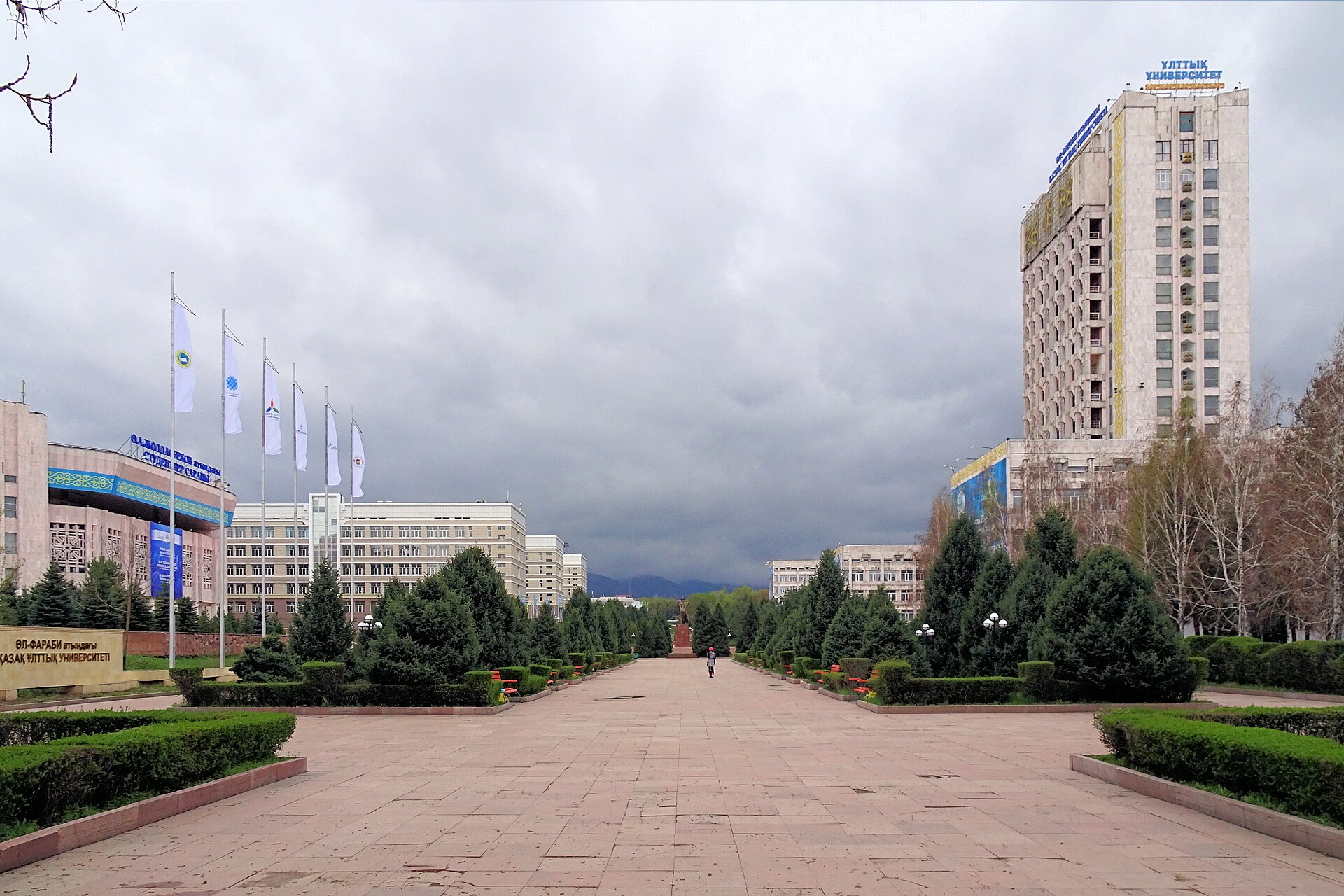
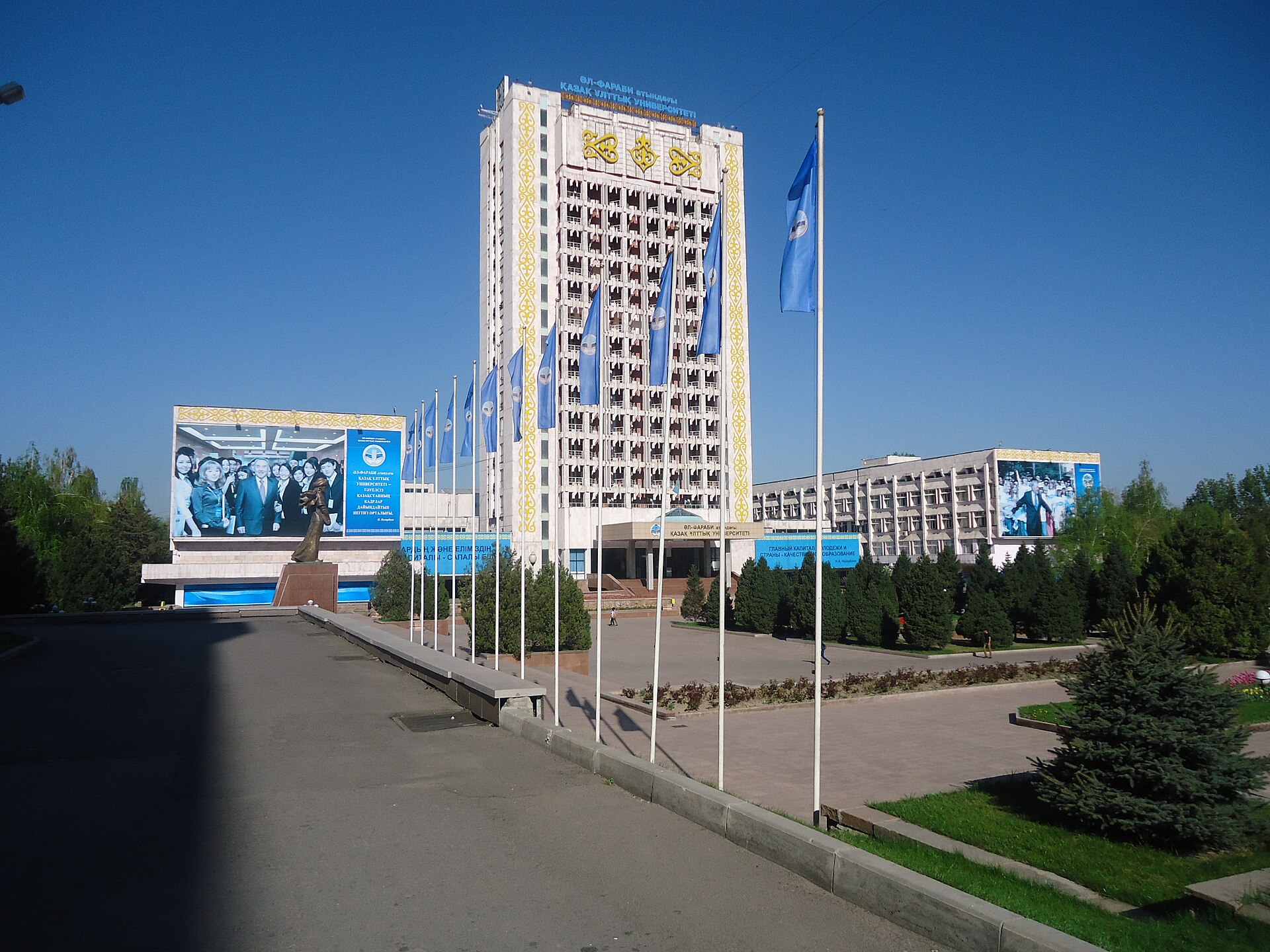
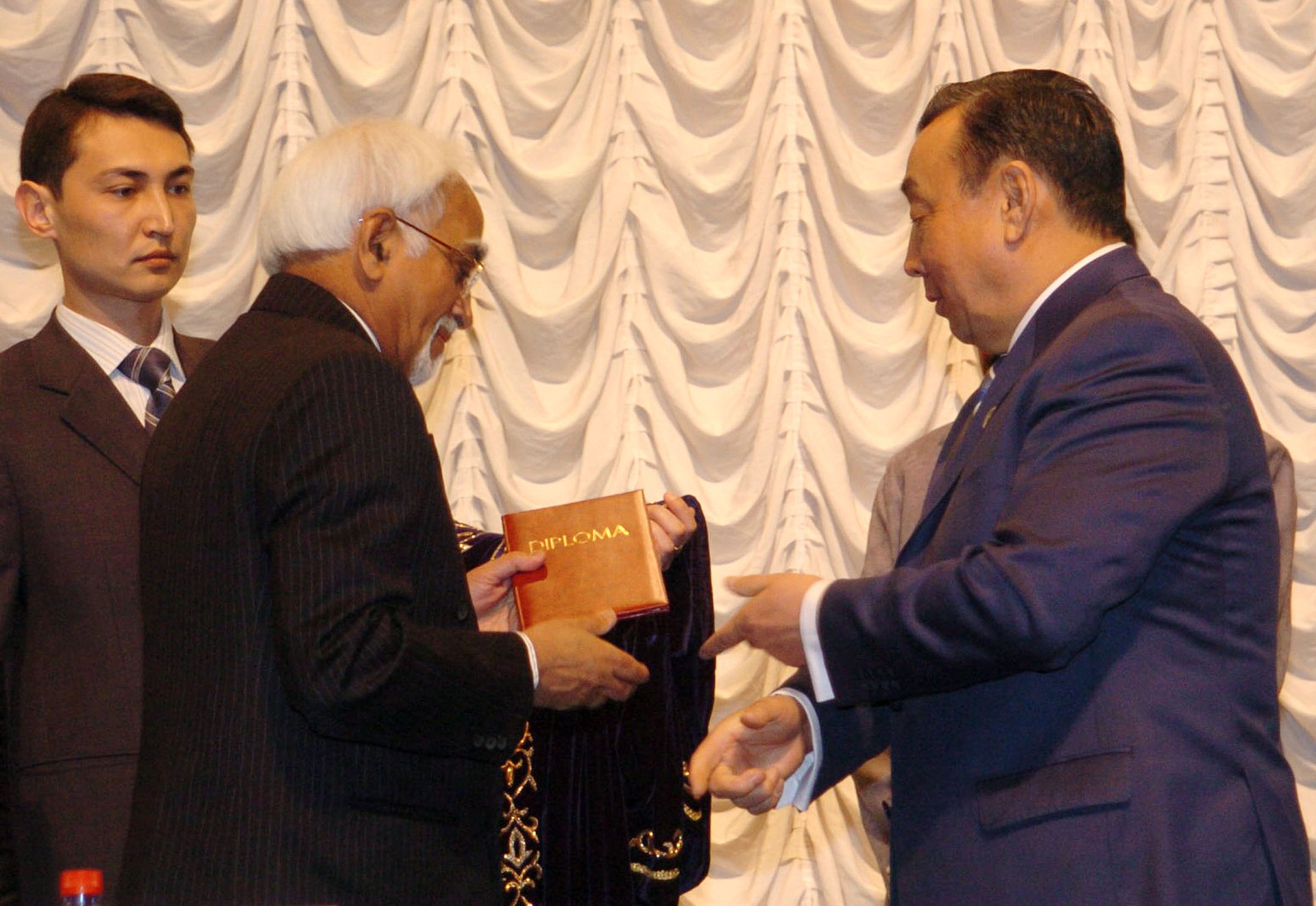
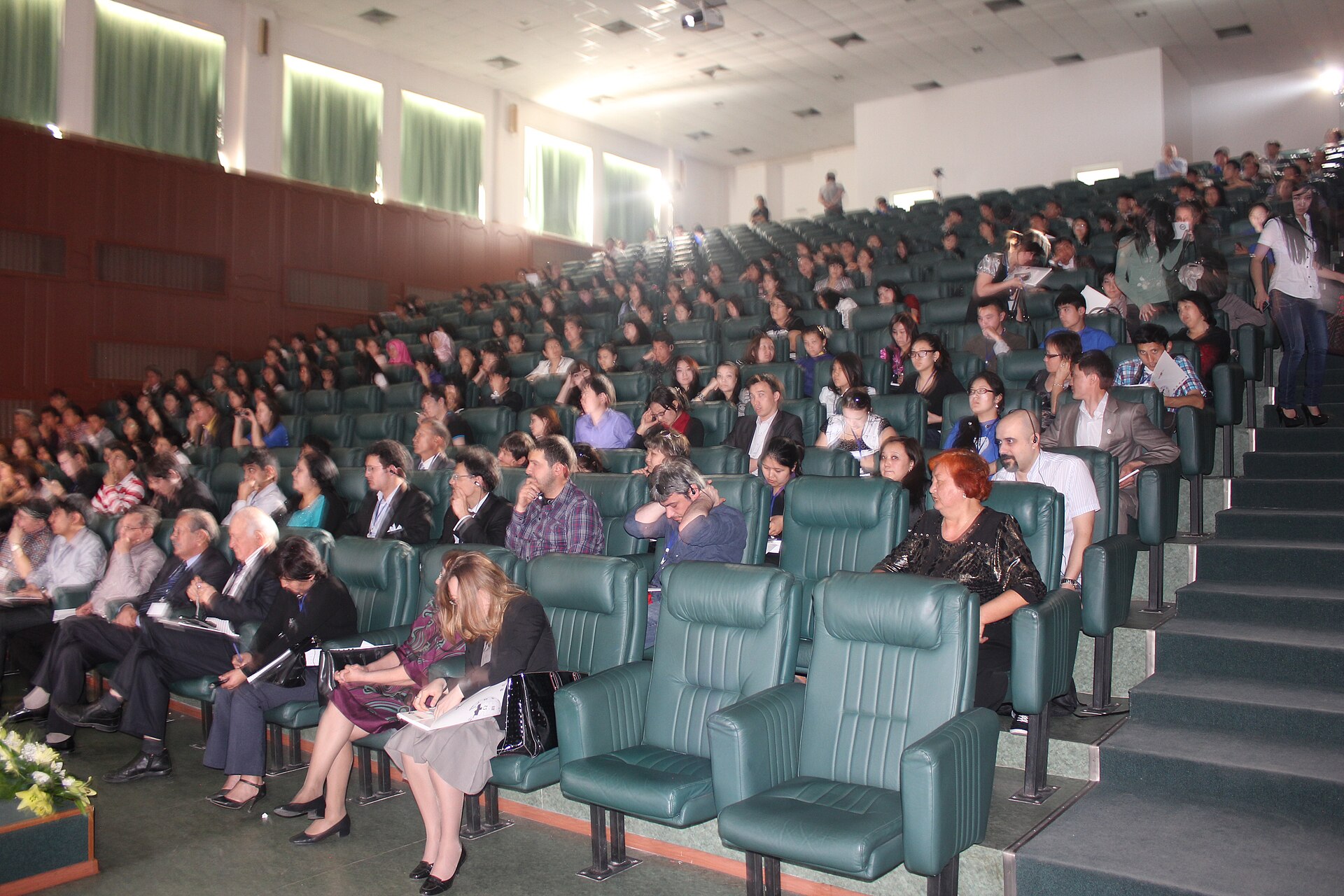
Al-Farabi Kazakh National University — campus in pictures
Real, freely-licensed photographs of the campus (via Wikimedia Commons).


Why Al-Farabi KazNU — Central Asia's Leading Research University
Al-Farabi Kazakh National University is not simply the oldest university in Kazakhstan — it is the country's intellectual and scientific centre, a QS top-200 institution that combines research depth, academic breadth, and remarkable affordability in one of Central Asia's most dynamic cities.
KazNU Admissions Profile & Student Profile
Stats
Profile Stats
Rea Vs Rd
KazNU Admissions Requirements — Academics, Language & Entrance Assessment
- Secondary school leaving certificate (10+2 or equivalent)
- Transcripts from all secondary schools attended
- Apostille or notarised copy required
- Strong grades in relevant subjects for your chosen faculty
- IELTS minimum 5.5 for English-taught programmes
- TOEFL iBT minimum 87 for English-taught programmes
- Kazakh/Russian-taught programmes require language certification
- Department of Language Training available for pre-programme preparation
- Subject-based entrance testing for most programmes
- Interview for selective programmes (Medicine, Law, Journalism)
- All documents undergo Nostrification (official recognition)
- Valid passport required throughout
KazNU Application Components — Direct Admissions Portal
KazNU uses a direct online admissions portal — not Common App, UCAS, or any centralised system. Applications are submitted at welcome.kaznu.kz. Here is every component of a complete KazNU application for international students.
KazNU Application — Written Work, Interviews & What to Prepare
Tips
Prompts
What KazNU Admissions Officers Are Looking For
KazNU's admissions process is primarily academic: your subject knowledge, language proficiency, and document preparation determine your outcome. Understanding what each stage assesses — and preparing accordingly — is the foundation of a successful application.
KazNU Financial Aid & Scholarships for International Students
KazNU offers one of the most cost-effective university educations in the QS top-200. The Bolashak International Scholarship (Kazakhstan government) and a range of merit-based university scholarships are available to qualifying students.
Tuition and cost figures are approximate annual estimates from the university's facts profile. Individual costs may vary by programme and accommodation choice.
Stats
Contribution Tiers
| Note | Range | Percent | Percent Value |
|---|---|---|---|
| Annual tuition for international students | Tuition | ~$4,500 | 40 |
| On-campus dormitory accommodation | Housing | ~$1,300–$1,400 | 12 |
| Food, transport, personal expenses | Living Costs | ~$5,000–$6,000 | 48 |
Key Dates
Advantages
- Applying early (February–May) gives maximum time to complete Nostrification
- Earlier applications allow more time to arrange visas and housing
- Some scholarship deadlines precede the general application close
- Early applicants have more time to prepare for the entrance examination
- More time to resolve document issues before the semester start
Disadvantages
- Applying too early may require updated transcripts later
- Early applicants must wait longer for admissions decisions
- Spring intake is not available for all programmes
KazNU Interview Policy — When and How
KazNU does not universally require undergraduate interviews for all programmes. Most programmes admit based on academic records and entrance exam performance. However, Medicine, Law, and some Humanities programmes may require an interview, which for international applicants is typically conducted online. If required, the interview assesses your academic motivation, professional goals, and language ability.
Meta
Questions
KazNU Campus Housing & Residential Life
KazNU's 100-hectare 'Kazgugrad' campus — the largest in Kazakhstan — has 13 on-campus dormitory buildings. Housing is allocated on a first-come, first-served basis for international students. Early application strongly recommended to secure a dormitory place.
Houses
Lottery Steps
- Apply for dormitory housing as part of your admissions application
- Housing is allocated after enrolment contract is signed
- International students are typically housed in mixed-nationality dormitory blocks
- Annual hostel fee approximately $1,300–$1,400 USD
- All dormitories include Wi-Fi, study rooms, and 24/7 security
KazNU Faculties & Academic Divisions
- {"label":"Programme duration","value":"5 years + 1 year internship"}
- {"label":"Language of instruction","value":"English (international stream)"}
- {"label":"Accreditation","value":"WHO-recognised"}
- {"label":"Admission requirement","value":"Physics, Chemistry, Biology"}
- {"label":"Core subjects","value":"Mathematics, Informatics"}
- {"label":"Research access","value":"University Supercomputer"}
- {"label":"Industry partners","value":"POSCO, KazMunayGas"}
- {"label":"Language of instruction","value":"English/Russian"}
- {"label":"Languages taught","value":"English, Russian, Kazakh"}
- {"label":"Regional focus","value":"Central Asia, CIS, East Asia"}
- {"label":"Career paths","value":"Diplomacy, NGOs, government"}
- {"label":"Programme type","value":"Bachelor's + Master's"}
- {"label":"Languages offered","value":"Arabic, Chinese, Japanese, Persian, Turkish"}
- {"label":"Unique strength","value":"Silk Road & Central Asian studies"}
- {"label":"Programme type","value":"Bachelor's + Master's + PhD"}
- {"label":"Research partnership","value":"Confucius Institute on campus"}
- {"label":"Programme types","value":"Bachelor's, Master's, MBA"}
- {"label":"Regional strength","value":"Central Asian business & economics"}
- {"label":"Industry connections","value":"KazMunayGas, major Kazakhstani firms"}
- {"label":"Language of instruction","value":"English/Russian/Kazakh"}
- {"label":"Legal system","value":"Kazakhstani law, civil law tradition"}
- {"label":"Career paths","value":"Public law, corporate, international"}
- {"label":"Admission","value":"Entrance exam + possible interview"}
- {"label":"Programme duration","value":"4 years (Bachelor's)"}
Research & Extracurricular Opportunities at KazNU
Career Outcomes & KazNU Graduate Network
KazNU graduates are well-positioned for careers in Kazakhstan's rapidly developing economy — particularly in energy, technology, law, and public service. The university's annual career fairs and partnerships with major domestic and international employers create direct pathways to employment.
Stats
Categories
Our KazNU Admissions Track Record & Student Stories
Faqs
Is Al-Farabi KazNU accredited internationally?+
Yes. KazNU is recognised by major international bodies including the WHO (for its Medical programmes), and its degrees are generally accepted for further study in many countries. International students are advised to verify recognition in their specific home country before enrolling.
Can I study in English at KazNU?+
Yes. Several programmes including Medicine (General Medicine / MBBS), Information Technology, International Relations, and Economics offer English-medium streams for international students. IELTS 5.5 or TOEFL iBT 87 is the minimum requirement.
What is the application deadline for international students?+
Applications are accepted from approximately February to August each year for the autumn semester. TYCHR recommends applying by May to allow time for Nostrification, entrance exam preparation, and visa processing.
Is the Nostrification process difficult?+
Nostrification (official recognition of foreign qualifications) is a mandatory administrative step for all international applicants. It can take 4–8 weeks. KazNU's international admissions office guides students through the process, and TYCHR advisors can help ensure documents are prepared correctly.
What scholarships are available at KazNU?+
KazNU offers merit-based scholarships to academically strong students. Kazakhstan's government Bolashak scholarship (for study abroad) does not apply to KazNU directly but indicates the government's commitment to academic excellence. Check the official admissions portal for current scholarship availability.
Is campus housing guaranteed for international students?+
KazNU has 13 on-campus dormitories and makes significant efforts to accommodate international students. Housing is allocated after enrolment and is not formally guaranteed. Apply early and request dormitory accommodation as soon as your application is submitted.
What is student life like in Almaty?+
Almaty is Kazakhstan's largest city — a cosmopolitan hub of 2 million people at the foot of the Alatau mountains. The city offers an active cultural scene, modern infrastructure, skiing and hiking nearby, and a large international student community. Cost of living is significantly lower than comparable cities in Europe or North America.
Is a visa required to study at KazNU?+
Yes. International students require a Kazakhstani student visa. After admission and contract signing, KazNU provides an official invitation letter which is used to apply for the visa at the nearest Kazakhstani embassy or consulate.
Book a Free KazNU Admissions Strategy Session
In 60 minutes, our KazNU admissions specialists will evaluate your academic profile, walk you through the full application process including Nostrification, help you prepare for the entrance exam, and ensure your visa and housing arrangements are on track.
- No commitment required
- KazNU admissions specialists with process expertise
- Document, Nostrification & entrance exam guidance
KazNU Academic Requirements
KazNU Academic Standards — The Honest Picture for International Students
What academic preparation do international students need for Al-Farabi KazNU? Here is an honest breakdown of entrance requirements, language thresholds, subject expectations, and how to build a competitive academic profile for Kazakhstan's top university.
Academic Profile
GPA and Academic Performance — What KazNU Expects
KazNU does not publish a formal minimum GPA for international applicants. Admission to most programmes is competitive, based on secondary school performance and entrance examination results. The level of preparation required depends significantly on your chosen faculty.
Strong grades in the specific subjects most relevant to your chosen programme are more important than an overall GPA. A student with excellent Biology and Chemistry results who applies to Medicine is more competitive than one with a high overall average but weak science subjects.
Academic Context
How KazNU Evaluates International Academic Records
KazNU evaluates international students' academic backgrounds through Nostrification — the official Kazakhstani process for recognising foreign educational credentials. This process assesses the equivalence of your qualifications against Kazakhstani educational standards.
SAT at KazNU
SAT Scores and KazNU — What US-Curriculum Students Should Know
KazNU does not use the SAT as an admissions requirement. International students who hold SAT scores may submit them as supplementary evidence of academic ability, but they are not a standard part of the KazNU application.
| Label | Score | Percent |
|---|---|---|
| SAT — Required? | No | 0 |
| SAT — Accepted as supplement? | Yes | 50 |
Standardised Testing
ACT and KazNU — Standardised Tests in Context
Like the SAT, the ACT is not a required component of a KazNU application. KazNU follows the Kazakhstani direct admissions model based on secondary school credentials and entrance examinations.
Metrics
| Label | Score | Percent |
|---|---|---|
| ACT — Required? | No | 0 |
| Primary admission filter | Entrance Exam | 100 |
Comparison Cards
Testing Policy
KazNU Test Policy — What Is and Isn't Required
KazNU's test policy for international students is effectively test-optional for standardised international tests (SAT/ACT/IB). The mandatory test is KazNU's own subject-based entrance examination, which is not optional.
Submit Items
Withhold Items
Curriculum Assessment
A-Levels and IB at KazNU — How They Are Evaluated
- {"label":"Assessment","value":"Via Nostrification"}
- {"label":"HL subjects","value":"Directly relevant to chosen faculty strongly preferred"}
- {"label":"Total points","value":"No published minimum; competitive range varies by programme"}
- {"label":"EE/TOK","value":"Useful supplementary evidence of research ability"}
- {"label":"Typical expectation","value":"B grades or above in relevant subjects"}
- {"label":"Subject alignment","value":"Match A-Level choices to intended KazNU faculty"}
- {"label":"Predicted grades","value":"Accepted for conditional admission"}
Advanced Placement
AP Courses at KazNU — What Role They Play
KazNU does not require or specifically evaluate AP courses as a formal admissions component. However, AP scores can serve as supplementary evidence of subject-area mastery, particularly for US-curriculum students applying to STEM or Science programmes.
Academic Rigour
Strength of Secondary School Record — What KazNU Looks For
KazNU evaluates the rigour of your secondary school programme primarily through your final exam grades and the entrance examination. The specific courses you took matter less than your demonstrated mastery of the subjects most relevant to your intended faculty.
Demonstrating genuine mastery in the subjects most critical to your chosen programme — through your final school grades and entrance examination performance.
Programme Expectations
What KazNU Expects by Faculty — Subject Preparation
KazNU's academic expectations vary significantly by faculty. Science and medical programmes have the most demanding subject preparation requirements; humanities programmes prioritise language skills and broader academic performance.
Language Requirements
English Language Requirements for International KazNU Applicants
For English-taught programmes at KazNU, IELTS minimum 5.5 or TOEFL iBT minimum 87 are the stated requirements. These are formal admission thresholds — students who do not meet them will not be admitted to English-medium programmes.
IELTS 5.5 is the minimum, not the recommended level. Students entering professional programmes like Medicine or International Relations with exactly 5.5 will find the academic language demands challenging. TYCHR recommends aiming for IELTS 6.0–6.5 for a more comfortable academic experience.
By Programme
Academic Requirements by Programme at KazNU
KazNU has 14 faculties covering the full range of academic disciplines. Below is a summary of the academic expectations for the most internationally popular programmes.
| Signals | Expectation | Concentration |
|---|---|---|
| Strong Biology and Chemistry grades; motivated medical candidates | Biology, Chemistry, Physics — all strong | Medicine (MBBS) |
| Strong Mathematics background; interest in computing | Mathematics, Informatics — high level | Information Technology / CS |
| Geography, History, Social Sciences; strong English | Social Sciences, strong English | International Relations |
| Interest in Asian/Middle Eastern languages; multilingual | Languages, History, Social Sciences | Oriental Studies |
| Mathematics, Economics, strong analytical skills | Mathematics, Economics | Economics & Business |
| Social sciences, critical thinking, strong language skills | Strong humanities, good English | Law / Jurisprudence |
| Strong Chemistry and Mathematics | Chemistry, Mathematics, Physics | Chemistry & Chemical Technology |
| Biology, Chemistry; interest in life sciences research | Biology, Chemistry | Biology & Biotechnology |
International Systems
How KazNU Evaluates International Qualifications
Admissions Roadmap
Building Your Profile for KazNU — What to Do at Each Stage
- Identify your intended faculty early — Medicine, IT, International Relations — and focus on the two or three subjects most critical to that field.
- Pursue additional preparation in those subjects beyond the standard curriculum if possible.
- Begin English language preparation if planning to apply to English-taught programmes — IELTS 5.5 minimum is required, 6.0+ is recommended.
- Identify all documents required for Nostrification and begin the apostille process for your secondary school certificates.
- Take IELTS or TOEFL if applying to English-taught programmes.
- Research specific entrance examination requirements for your chosen faculty.
- Begin practising for KazNU's subject-based entrance examination.
- Register on welcome.kaznu.kz and begin the online application.
- Submit all documents including apostilled certificates, language test results, and passport.
- Pay any required application processing fees.
- Allow 4–8 weeks for Nostrification processing.
- Sit the subject-based entrance examination when scheduled.
- Receive admission offer and sign enrolment contract.
- Apply for Kazakhstan student visa using KazNU's official invitation letter.
- Arrange accommodation — on-campus dormitory or private rental in Almaty.
Common Pitfalls
Academic Mistakes That Cost KazNU Applications — And How to Avoid Them
Student Profiles
What Academic Profiles Successful KazNU Applicants Have
The following profiles represent the academic backgrounds of international students TYCHR has supported in gaining admission to KazNU. They illustrate the range of academic preparation that is competitive and what differentiates successful applicants.
Faqs
Do I need to take the SAT or ACT for KazNU?+
No. KazNU does not require SAT or ACT scores. Admission is based on secondary school credentials, the university's own subject-based entrance examination, and language certification for English-taught programmes.
What is the minimum IELTS for KazNU?+
IELTS minimum 5.5 for English-taught programmes. TOEFL iBT minimum 87. These are hard thresholds. Students below the minimum should consider KazNU's preparatory language programme before entering their degree programme.
How competitive is KazNU's Medicine programme for international students?+
KazNU's Medicine (MBBS) programme is the most competitive English-medium programme for international applicants. Strong PCB (Physics, Chemistry, Biology) grades are essential. The entrance examination in Biology and Chemistry must be passed. Apply early — between February and May — to maximise your chances.
Can I study at KazNU in English even if I don't speak Kazakh or Russian?+
Yes. Several programmes including Medicine, Information Technology, International Relations, and Economics offer full English-medium streams. You do not need to know Kazakh or Russian to study in these streams, though some Kazakh/Russian language courses may be integrated.
What is the Nostrification process and how long does it take?+
Nostrification is the mandatory process for recognising foreign secondary qualifications in Kazakhstan. You submit your original certificates (with apostille) to the Kazakhstani Ministry of Education. The process typically takes 4–8 weeks. KazNU's admissions office guides international students through it.
Costs & Financial Aid
KazNU Costs More Affordable Than You Might Expect — Here's the Full Picture.
Al-Farabi KazNU offers QS top-200 education at a fraction of the cost of comparable institutions in the West. Here is exactly what KazNU costs, how scholarships work, and how to plan your finances for study in Almaty.
Cost Transparency
What KazNU Actually Costs — The Full Annual Figure
KazNU's cost of attendance — approximately $10,000–$11,500 per year including accommodation and living costs — makes it one of the most accessible QS top-200 universities in the world for international students. Comparable institutions in the UK or Australia cost 3–5 times as much annually.
Financial Aid Policy
Financial Aid at KazNU — What's Available and Who Qualifies
KazNU offers merit-based scholarships to high-performing students — both domestic and international. Academic performance in the entrance examination and in-programme grades are the primary criteria. Specific award amounts and eligibility criteria are confirmed by KazNU's financial aid office annually.
Value Context
Why KazNU Delivers Exceptional Value — The Context
Scholarship Process
How to Apply for Financial Support at KazNU — Step by Step
KazNU's financial aid process is less formalised than US/UK institutions. Here is the practical step-by-step approach to accessing available support.
- Contact KazNU International Department: welcome@kaznu.kz
- Ask specifically about scholarships available to international students
- Inquire about merit scholarship criteria and current award levels
- Merit scholarships are primarily linked to entrance examination performance
- Prepare rigorously in your programme's core subjects
- High entrance exam scores are the primary pathway to institutional scholarship consideration
- Your home country government may offer scholarships for study in Kazakhstan
- Research bilateral scholarship programmes between your country and Kazakhstan
- The Kazakhstani government's Bolashak programme funds Kazakhstani citizens for study abroad — not applicable to international incoming students
- Merit scholarships at KazNU typically require continued strong academic performance
- Ask about GPA thresholds for scholarship renewal when you receive your award
- Strong performance in Year 1 increases scholarship access in subsequent years
- If your financial circumstances change significantly after enrolment, contact KazNU's student affairs office
- Document any hardship with supporting evidence
- KazNU's administration is generally responsive to genuine hardship cases
INTERNATIONAL STUDENT FUNDING
Financial Aid for International Students at KazNU — How It Works
KazNU's approach to financial support for international students is primarily through merit scholarships awarded for academic performance. Unlike US need-blind models, there is no systematic income-based aid formula. The fundamental affordability advantage is KazNU's very low base tuition.
AID CALCULATIONS
What Financial Support Actually Looks Like at KazNU
KazNU Financial Support Scenarios
These figures are approximate. Contact KazNU's International Department for current scholarship availability and specific award amounts.
For most international students, the base tuition of approximately $4,500 per year is already the primary financial advantage. Merit scholarships can reduce this further for high-performing students. The total cost of $10,000–$11,500 per year is the realistic planning figure for most international applicants.
| Grant | Income | Contribution |
|---|---|---|
| Potential merit award | All income levels | Based on performance, not income |
| Full tuition ($4,500) | High-performing students | Living costs only (~$6,000) |
| Partial reduction | Strong students | Partial tuition + living costs |
| No institutional aid | Standard intake | Full tuition + living costs (~$11,500) |
Table Headers
SCHOLARSHIP OVERVIEW
KazNU Scholarships — What Exists and Who Qualifies
KazNU's institutional aid model is primarily merit-based. Unlike Harvard or other US need-blind institutions, KazNU does not operate a need-based financial aid formula. However, KazNU's exceptionally low tuition already provides significant financial advantage to all students.
EXTERNAL FUNDING
External Scholarships for KazNU Students
While KazNU's own scholarship offerings are primarily merit-based and institutional details vary year to year, numerous external organisations fund study in Kazakhstan or at specific universities including KazNU.
LOAN POLICY
Student Loans at KazNU — What Exists and What to Expect
KazNU does not offer institutional student loans to international students. The affordability of studying at KazNU comes from its inherently low tuition cost — approximately $4,500 per year — rather than from a loan or grant programme. For most international students, tuition must be paid from personal or family funds, supplemented by any scholarships secured.
STUDENT EMPLOYMENT
Working While Studying at KazNU — What International Students Should Know
KazNU does not operate a formal work-study programme equivalent to US university models. However, international students in Kazakhstan can work on a part-time basis during their studies, subject to Kazakhstani visa and labour regulations.
- Research assistant positions in KazNU's 9 research institutes (available to strong academic students)
- Teaching assistant roles for language preparation courses
- Student ambassador roles for KazNU's International Department
- Part-time employment in Almaty's service sector (restaurants, retail, international companies)
- Tutoring and academic support for fellow students
BENCHMARKING
KazNU vs. Comparable Universities — Total Cost Comparison
| Policy | School | No Loans | Typical Cost |
|---|---|---|---|
| Merit-based scholarships; low tuition | KazNU (Kazakhstan) | No institutional loans | ~$10,000–$11,500/yr |
| Need-blind; no-loan; full-need grants | Harvard (USA) | No loans in aid package | $0–$86K/yr (depends on family income) |
| Merit + need based | NUS Singapore | Limited; MOE Tuition Grant (bond required) | ~$15,000–$25,000/yr |
| Low tuition (EU rates for some) | KTH Royal Institute of Technology (Sweden) | Limited scholarships | ~$18,000–$25,000/yr (non-EU) |
| High tuition; merit/need mix | University of Manchester (UK) | Limited external scholarships | ~$30,000–$35,000/yr |
| High tuition; government loans available | University of Melbourne (Australia) | HELP loans for domestic only | ~$30,000–$40,000/yr |
COST ANALYSIS
KazNU vs. Alternatives — What You Actually Pay Over 4 Years
KazNU's 4-year total cost of approximately $44,000–$46,000 makes it more affordable than a single year at most Western universities. For families whose primary consideration is the total cost of a high-quality internationally recognised education, KazNU is one of the most compelling value propositions in global higher education.
| Policy | School | Contribution | Four Year Cost |
|---|---|---|---|
| Low tuition, low cost of living | KazNU | ~$10,000–$11,500 | ~$44,000–$46,000 |
| Need-blind, full-need grants | Harvard (family income $75K) | ~$0–$5,000 | ~$0–$20,000 |
| MOE Tuition Grant + service bond | NUS Singapore | ~$8,000–$12,000 | ~$32,000–$48,000 |
| International tuition | University of Toronto (Canada) | ~$35,000–$50,000 | ~$140,000–$200,000 |
| International fees | University of Manchester (UK) | ~$30,000–$35,000 | ~$120,000–$140,000 |
| International fees | Monash University (Australia) | ~$35,000–$45,000 | ~$140,000–$180,000 |
FINANCIAL APPEALS
Addressing Financial Difficulties at KazNU — Practical Steps
KazNU does not operate a formal financial aid appeal process equivalent to US universities. However, if your financial circumstances change significantly during your studies, or if there has been an error in how your scholarship application was assessed, there are steps you can take.
KazNU's aid process is less formalised than US/UK institutions. Personal communication with the International Department and, where necessary, the Dean's office of your faculty is the most effective approach.
How To Appeal
- Contact KazNU's International Department (welcome@kaznu.kz) directly to explain your situation
- Submit a written request with clear explanation of circumstances and any supporting documentation
- Request a meeting with the Dean of Students or International Affairs office if email communication is insufficient
When To Appeal
- Family financial circumstances have changed significantly since enrolment (job loss, medical emergency, etc.)
- You believe your academic performance qualifies you for a scholarship you have not yet received
- There has been an administrative error in your scholarship application
- You have received an external scholarship and want to understand how it interacts with any KazNU support
FINANCIAL PLANNING
Planning Your KazNU Finances — What to Do and When
Application Strategy
KazNU Application & Written Work — Everything International Students Need to Know to Succeed
Unlike US or UK universities, Al-Farabi KazNU does not use personal essays as a primary admissions filter. This guide explains how the KazNU application process actually works for international students, what written work matters, and how to prepare strategically for the entrance examination and interview.
KazNU Application Overview — Written Components
KazNU uses a direct application system — not Common App, UCAS, or any centralised platform. Applications are submitted at welcome.kaznu.kz. The written components of a KazNU application are significantly different from Western university applications.
KazNU Entrance Examination — The Primary Written Challenge
The entrance examination is the most important written component of a KazNU application. Unlike a personal essay, it tests subject-area knowledge directly. Here is what you need to know about each programme's examination.
Application Strategy
KazNU vs. US/UK Applications — A Fundamentally Different Process
Students who have also applied to US or UK universities may be tempted to adapt their personal statement for KazNU. This is not necessary — and misunderstands how KazNU's admissions process works. Here is the honest comparison.
The most important written challenge in a KazNU application is not an essay — it is the entrance examination. A student who writes an excellent motivation letter but performs poorly on the entrance exam will likely not be admitted. Allocate your preparation time accordingly.
Tired Of List
- Generic 'I have always wanted to be a doctor/engineer/diplomat' openings
- Vague references to Kazakhstan without specific knowledge of the country or university
- Motivation letters that simply repeat information already in your transcript
- Over-claiming extracurricular achievements that are not verifiable
Looking For List
- Clear, honest statement of academic background and its relevance to the chosen programme
- Genuine and specific reason for choosing Kazakhstan and KazNU specifically
- Realistic professional goal that connects to Kazakhstan or Central Asia in some meaningful way
- Evidence of awareness of what studying in Kazakhstan will involve
Application Components
Strategic Approach to Each Component of the KazNU Application
Motivation Letter Strategy
How to Write a Strong Motivation Letter for KazNU
While KazNU does not require a personal essay like US universities, a well-crafted motivation letter for competitive programmes can meaningfully strengthen your application. Here is how to approach it.
Common Application Mistakes
Application Mistakes That Hurt KazNU Candidates — And How to Avoid Them
- Treating the entrance examination as a formality rather than the primary admissions filter — prepare rigorously in your core subjects
- Applying in July or August without accounting for the 4–8 week Nostrification process — documents may not be processed before the semester starts
- Submitting apostille-free certificates — unapostilled documents cannot be Nostrified and will stall your application
- Meeting the IELTS minimum of 5.5 but not investing in further language development before arrival — academic-level English in Medicine or Law demands more than the minimum
- Writing a generic motivation letter that could apply to any university in any country — KazNU readers value specific, honest motivation
- Not researching the specific entrance examination content for your chosen programme — the subjects tested vary significantly between faculties
- Applying to a programme without understanding whether it is taught in English, Kazakh, or Russian — confirm the language of instruction before applying
- Assuming that Kazakhstan student visas are straightforward and leaving visa applications too late — allow 6–8 weeks after receiving your invitation letter
Application FAQs
KazNU Application & Written Work — Frequently Asked Questions
Does KazNU require a personal statement or essay?+
Not as a formal requirement for most programmes. KazNU's admissions process is based primarily on academic credentials (secondary school grades), the subject-based entrance examination, and language certification. A motivation letter is optional but recommended for competitive programmes like Medicine and International Relations.
What is the KazNU entrance examination like?+
The entrance examination tests subject-area knowledge relevant to your chosen programme. Medicine applicants are tested in Biology and Chemistry; IT applicants in Mathematics and Informatics; Humanities applicants in social sciences and language. The format and specific content should be confirmed with KazNU's admissions office (welcome@kaznu.kz) as it can vary year to year.
Should I submit my Common App personal statement with my KazNU application?+
KazNU does not use Common App and has no personal statement requirement equivalent. If you wish to provide additional written context about your academic background and motivations, a brief motivation letter (300–500 words) is the appropriate format. Do not submit a 650-word US-style personal statement as your KazNU motivation letter.
Do I need to prepare for an interview at KazNU?+
An interview is required for some competitive programmes including Medicine and Law. International applicants are typically interviewed online. The interview covers your academic background, subject knowledge, reasons for choosing KazNU and Kazakhstan, and professional goals. Prepare to speak honestly and specifically — KazNU interviewers value genuine motivation.
What language should I write my motivation letter in?+
Write your motivation letter in English if applying to English-taught programmes. If applying to Kazakh or Russian-medium programmes, a motivation letter in the relevant language demonstrates commitment. Always check the specific requirements of your programme with KazNU's admissions office.
Can a strong motivation letter compensate for a weak entrance exam?+
No. The entrance examination is the primary academic filter. A well-written motivation letter can strengthen an already competitive application, but it cannot substitute for weak entrance exam performance. Focus the majority of your preparation time on the entrance examination.
Where can I find past papers for KazNU's entrance examination?+
KazNU does not always publish past papers directly. However, similar content is tested in national medical entrance examinations (NEET for Medicine), national university entrance examinations in Kazakhstan, and standard secondary school exit examinations in key subjects. Contact KazNU's International Department for any available past paper resources.
How is KazNU's application process different from UCAS or Common App?+
KazNU uses its own direct application portal (welcome.kaznu.kz). There is no centralised UCAS-style or Common App system. You apply directly to one university, submit your documents for Nostrification, take the university's own entrance examination, and sign an enrolment contract if admitted. The process is straightforward but document-heavy and requires early planning.
Courses — schools, degrees & intake
136 degrees across 15 groupings.
Faculty of Biology and Biotechnology · 11 degrees
Biology
Biomedicine
Biotechnology
Microbiology
Genetics
Biological Engineering
Neuroscience
Zoology
Fish Industry and Industrial Fishery
Aquaculture and Aquatic Biological Resources
Applied Biophysics
Faculty of Physics and Technology · 17 degrees
Physics
Physics and Astronomy
Cyberphysics
Technical Physics
Physics and Nanotechnology
Nuclear Physics
Physical Electronics and Photonics
Nuclear Medicine
Electric Power Engineering
Radio Engineering, Electronics and Telecommunications
Materials Science and Technology of New Materials
Thermal Power Engineering
Nuclear Engineering
Industrial Electronics and Control Systems
Applied Physics and Electrical Engineering
Energy Systems and Renewable Energy
Standardization and Certification
Faculty of Chemistry and Chemical Technology · 8 degrees
Chemistry
Chemical Engineering
Chemical Technology of Organic Substances
Pharmaceutical Manufacturing Technology
Nanomaterials and Nanochemistry
Food Chemistry and Technology
Chemical Expertise and Analytical Control of Production
Petrochemistry and Chemmotology
Faculty of Mechanics and Mathematics · 8 degrees
Mathematics
Actuarial Mathematics
Applied Mathematics
Mechanics
Mathematical and Computer Modelling
Computational Sciences and Statistics
Space Engineering and Technologies
Robotic Systems
Faculty of Information Technology and Artificial Intelligence · 10 degrees
Computer Science
Information Systems
Computer Engineering
Information Security Systems
Data Science
Artificial Intelligence
Highly Loaded Information Systems with Artificial Intelligence
Intelligent Control Systems
Cryptology
Computational Engineering
Faculty of Geography and Environmental Sciences · 13 degrees
Geography
Ecology
Hydrology
Meteorology
Natural and Technogenic Risks
Geodesy and Cartography
Geoinformatics
Land Management
Cadastre
Life Safety and Environmental Protection
Tourism
Restaurant and Hotel Business
Unmanned Aircraft Systems
Higher School of Economics and Business · 7 degrees
Economics
Management
Finance
Accounting and Audit
State and Local Government
Logistics
Digital Economics
Faculty of Law · 6 degrees
Jurisprudence
Public Service
Customs Affairs
Financial Law
Law Enforcement Activity
Corporate Law
Faculty of History, Archaeology and Ethnology · 8 degrees
History
Archaeology
Archival Studies, Documentation and Documentation Provision
Digital Archival Studies and Documentation Science
Library Information Systems
History with Knowledge of the Foreign Language
Museology and Historical and Cultural Tourism
Sociocultural Anthropology
Faculty of Philology and World Languages · 12 degrees
Kazakh Language and Literature
Russian Language and Literature
Foreign Language: Two Foreign Languages
Translation (Western Languages)
Foreign Philology (Western Languages)
Russian Philology
Kazakh Philology
Literary Study
Russian as a Foreign Language
Applied Kazakh Linguistics
Turkology
Foreign Philology: French
Faculty of Journalism · 9 degrees
Journalism
International Journalism
Publishing Studies
Design
Media Communications
Film and Media
Dramaturgy of Digital Media
Public Relations
Military Journalism
Faculty of Oriental Studies · 5 degrees
Oriental Studies
Foreign Philology (Oriental Languages)
Translation (Oriental Languages)
Foreign Philology (Chinese Language)
Translation Studies: Chinese Language in the Field of Jurisprudence
Faculty of International Relations · 6 degrees
International Relations
International Law
Regional Studies
World Economy
Translation Studies in International and Legal Relations
International Economy
Faculty of Philosophy and Political Science · 10 degrees
Philosophy
Political Science
Sociology
Psychology
Cultural Studies
Religious Studies
Islamic Studies
Pedagogy and Psychology
Social Work
Social Pedagogy
Higher School of Medicine · 6 degrees
General Medicine
Dentistry
Pharmacy
Public Health
Nursing
Physical Culture and Sport
Want your real chances at Al-Farabi Kazakh National University?
Create a free TYCHR account for your personalised admit-chance, a shortlist you can track, exact entry requirements, and essay + counselling help.