← All universities

Aarhus University

Aarhus, Denmark · Urban

Coimbra GroupThe GuildPublicResearch
Acceptance
42.0%
QS World
#131
Tuition/yr
$11,900
Students
38,000
Founded
1928

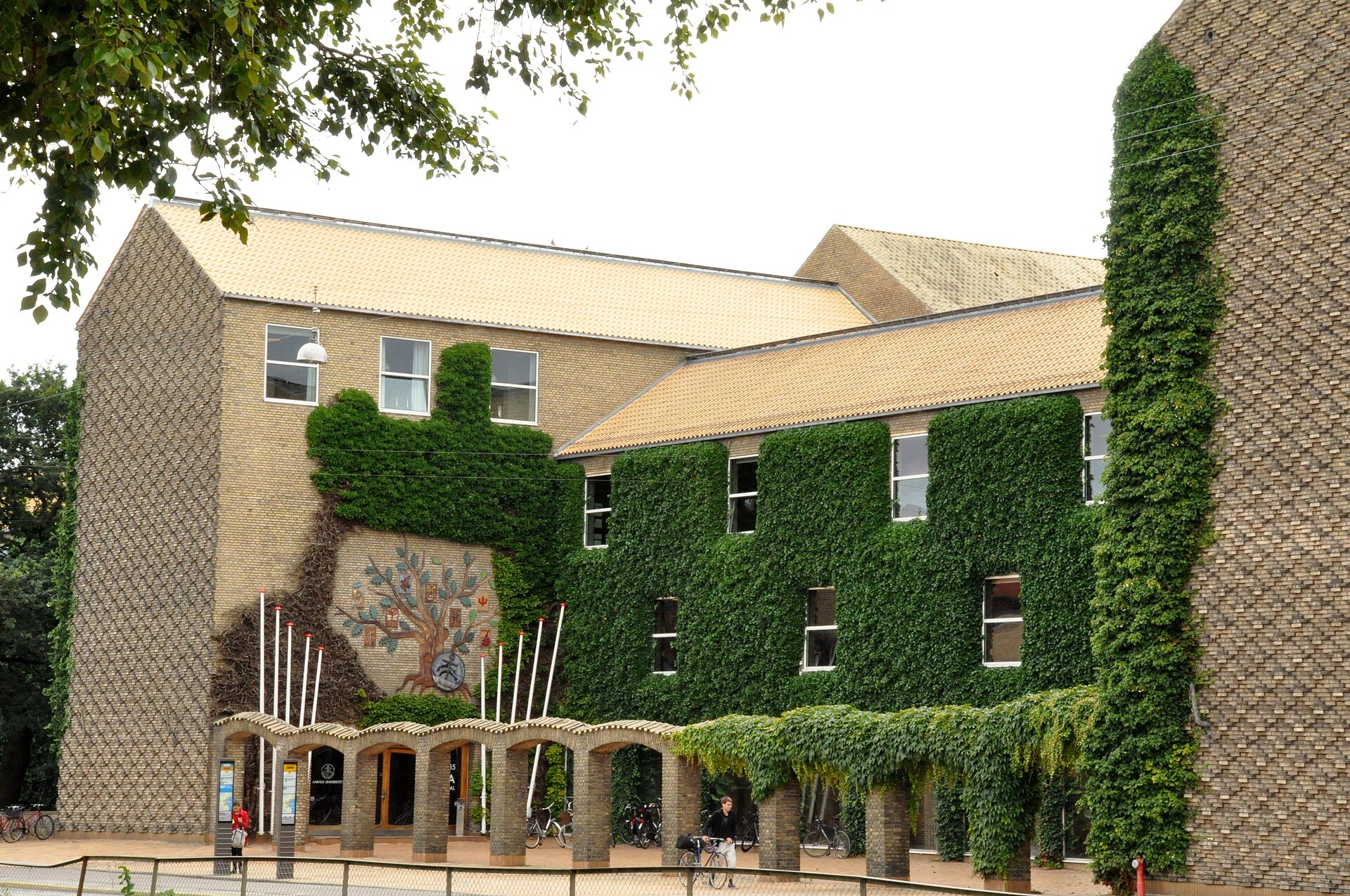
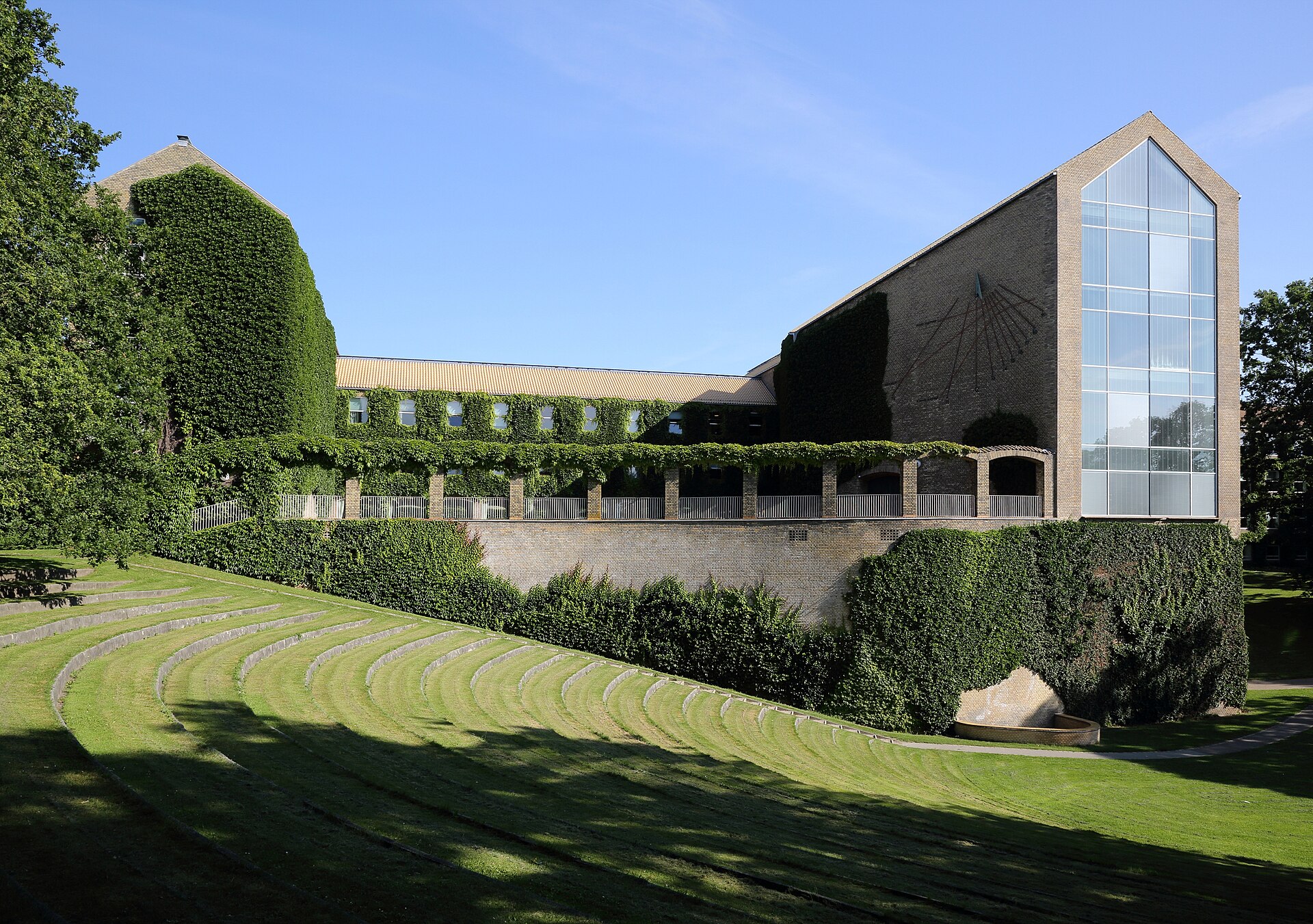
Aarhus University sits on a landmark yellow-brick campus in a landscaped park at the heart of Denmark's vibrant second city. Founded in 1928, it has grown into Scandinavia's most comprehensive research university outside Copenhagen — ranked #131 by QS and #106 by Times Higher Education, with particular strength in business, life sciences, cognitive science, and nanoscience. With an acceptance rate of 42% and tuition well below UK or US equivalents, Aarhus is the destination for international students who want genuine research immersion in a liveable, affordable European city.

Campus

Aarhus University — campus in pictures

Real, freely-licensed photographs of the campus (via Wikimedia Commons).
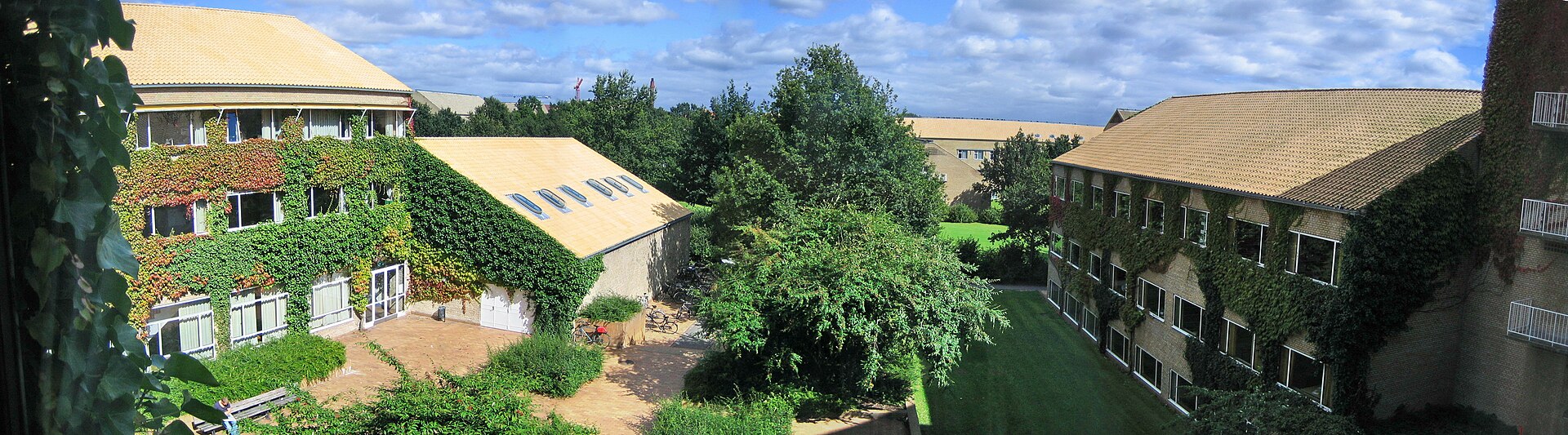
IMFPanorama
IMFPanoramaNicolaj Knudsen · CC BY-SA 2.5 · via Wikimedia Commons
Aarhus University
Aarhus UniversityFurya · CC BY 2.0 · via Wikimedia Commons
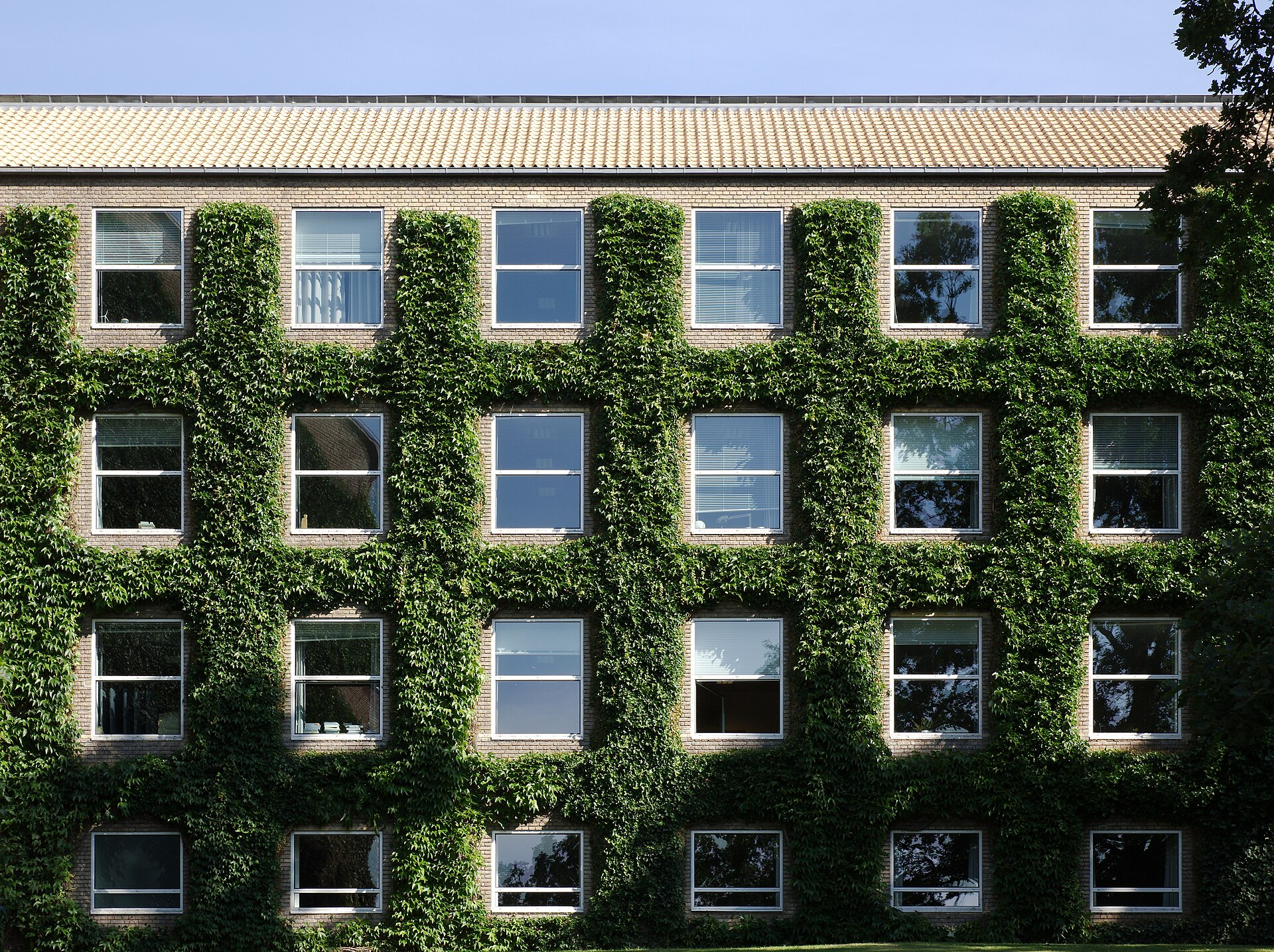
Ivy around the windows, facade facing the University Park
Ivy around the windows, facade facing the University ParkVilly Fink Isaksen · CC BY-SA 4.0 · via Wikimedia Commons
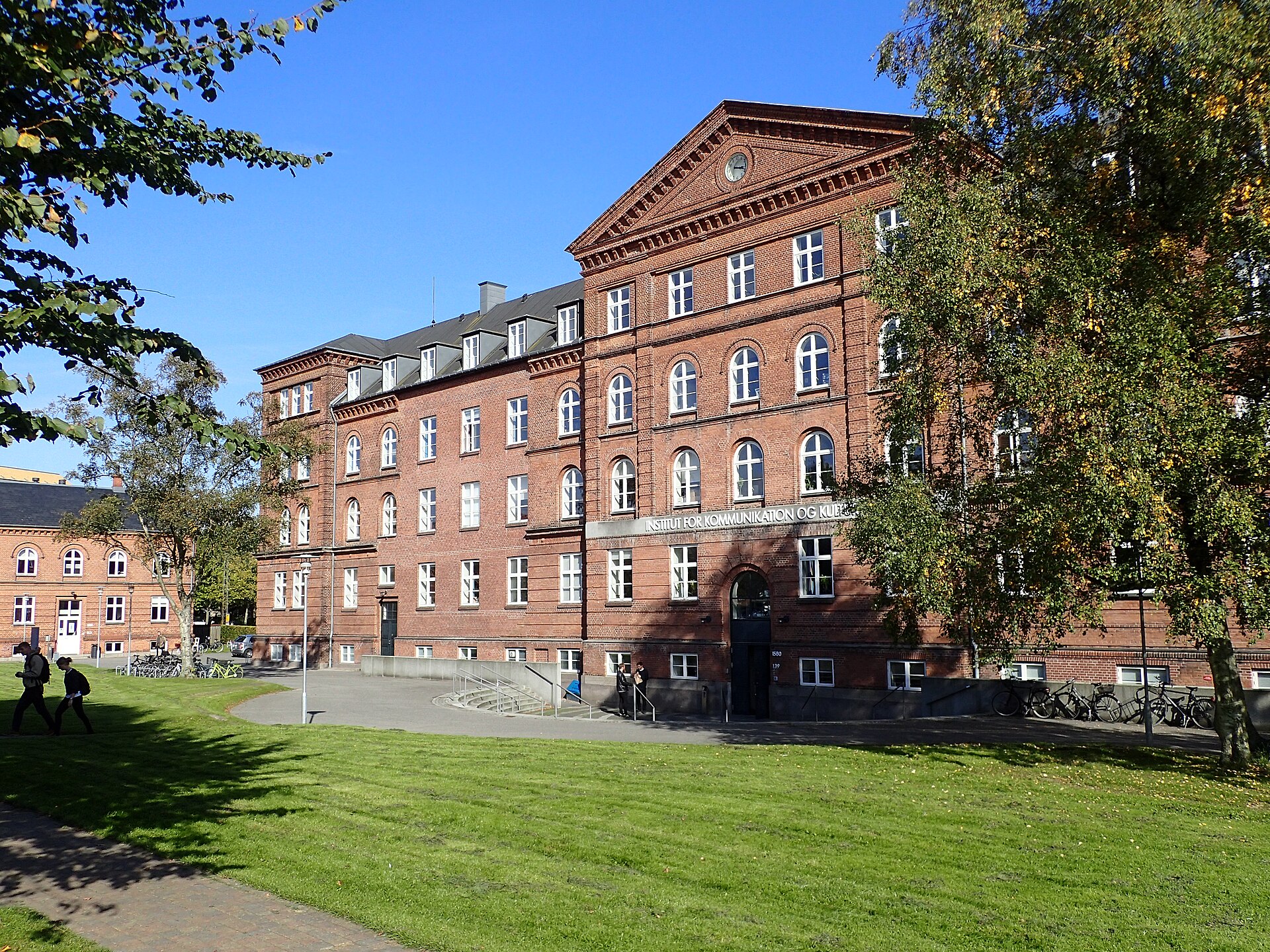
Langelandsgades Kaserne
Langelandsgades KaserneRhinoMind · CC BY-SA 4.0 · via Wikimedia Commons
Aarhus University, Aarhus (1931)
Aarhus University, Aarhus (1931)Saier+Seier · CC BY 2.0 · via Wikimedia Commons
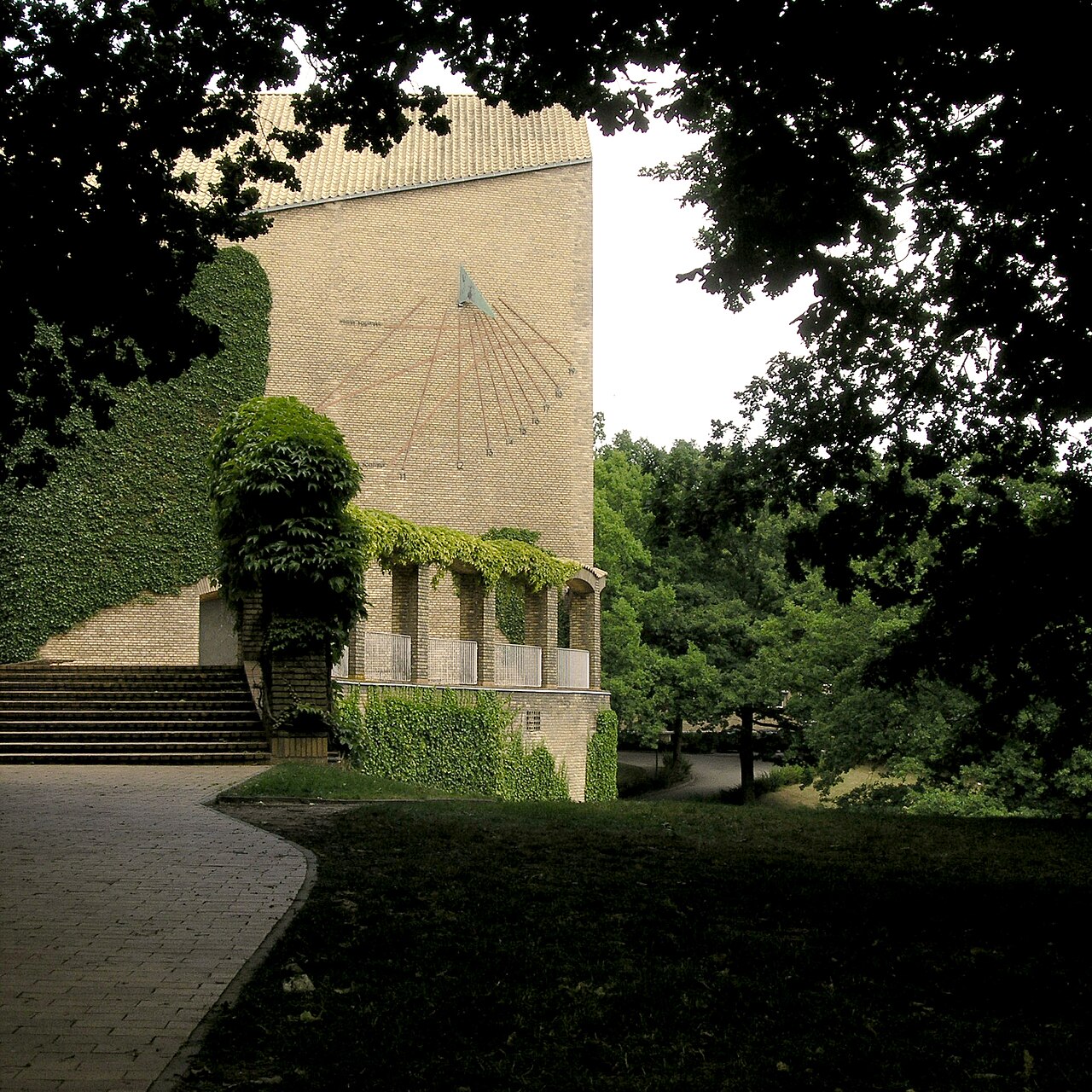
Aarhus University's main building as seen from the park
Aarhus University's main building as seen from the parkVilly Fink Isaksen · CC BY-SA 4.0 · via Wikimedia Commons

Why Aarhus University — Research Excellence, Nordic Value, and a City Worth Living In

Aarhus University combines the academic depth of a major research institution with the openness, quality of life, and cost structure of the Nordic model. For international students, it offers a rare combination: world-class research access, an English-taught degree, and a total annual cost of approximately USD 23,800 — far below comparable research universities in the UK, US, or Australia.

01Global Research Standing
#131 QS, #106 Times Higher Education. Member of The Guild and the Coimbra Group — the two most selective European research university networks. Home to 15 Danish National Research Foundation Centres of Excellence.
02Distinctive Research Centres
The Interdisciplinary Nanoscience Centre (iNANO) is among Europe's leading nanoscience hubs. MINDlab and the Centre for Functionally Integrative Neuroscience (CFIN) push the frontier of cognitive science and brain research — fields where Aarhus is ranked among the global top 50.
03Nordic Value Proposition
EU/EEA students pay zero tuition. Non-EU/EEA students pay approximately USD 11,900/year — a fraction of comparable UK or US research university fees. Full cost of attendance including living is approximately USD 23,800/year.
0450+ English-Taught Programmes
Aarhus offers fully English-taught bachelor's and master's degrees across business, science, social sciences, health, engineering, and arts. International students can complete a full degree without learning Danish.
05Distinguished Alumni
Alumni include Bjarne Stroustrup (inventor of C++), Nobel Laureate in Chemistry Jens Christian Skou (1997), and former NATO Secretary General Anders Fogh Rasmussen. The Coimbra Group and Guild memberships connect Aarhus graduates to 40+ leading European universities.
06Aarhus: Europe's Most Liveable Student City
Denmark's second city (350,000 people) combines a compact walkable centre, world-class food scene, Viking history, and Scandinavia's largest music festival. Highest concentration of students per capita in Denmark. Consistently ranked among Europe's safest, happiest cities.

Aarhus University Acceptance Rate & Admitted Student Profile

Stats

42%
Overall acceptance rate
38,000
Student population
12%
International students

Profile Stats

32+
IB Diploma — competitive band
6.5
IELTS minimum
83
TOEFL minimum
3.0 / 4.0
Minimum GPA equivalent
12%
International student share
85%
Employment within 6 months
Overall acceptance rate across all programmes

Rea Vs Rd

Rea Label: Bachelor's Deadline
Rea Value: 15 March
Rd Label: Master's Deadline
Rd Value: Feb 1 / May 1

Aarhus University Admissions Requirements — Grades, English, and Academic Profile

Academic Record
Value: Strong grades in relevant subjects
Aarhus University is primarily a grades-based admissions system. Your secondary school certificate — IB Diploma, A-Levels, national leaving certificate, or equivalent — is the foundation of your application. There is no separate application essay or personal interview for bachelor's programmes.
  • IB Diploma: competitive band is 32+ points (facts file); minimum eligibility is lower
  • A-Levels: typically AAB–AAA depending on programme
  • Minimum GPA equivalent: 3.0/4.0 as per admissions guidelines
  • Course rigour and subject relevance to your intended programme matter
  • Some programmes have specific required subject prerequisites
English Proficiency
Value: IELTS 6.5 / TOEFL 83
All English-taught programmes require demonstrated English proficiency unless you are from an English-speaking country or your secondary education was conducted entirely in English.
  • IELTS Academic minimum: 6.5 overall
  • TOEFL iBT minimum: 83
  • Duolingo English Test minimum: 115
  • IB English A or B at Higher Level may satisfy the requirement
  • Cambridge Advanced (CAE/CPE) accepted — confirm minimum with your programme
Eligibility & Documentation
Value: Official transcripts + certificate
International applicants must submit official transcripts, a completed secondary school certificate, English language test results, and a copy of their passport. For master's programmes, a bachelor's degree in a relevant field is required, and a motivation letter is typically expected.
  • Official secondary school certificate (IB diploma, A-Level results, national certificate)
  • Official academic transcripts from all institutions attended
  • English proficiency test results (unless exempt)
  • Copy of valid passport
  • Motivation letter for master's programmes (typically 1–2 pages)

Aarhus University Application Components — Portal, Documents & Process

Aarhus University bachelor's applicants apply through Denmark's coordinated online portal (optagelse.dk). Master's applicants apply directly through the Aarhus University admissions portal. Below are all components of a complete international application.

01RequiredApplication via optagelse.dk (Bachelor's)
Bachelor's international applicants apply through www.optagelse.dk — Denmark's coordinated university admissions portal. The portal opens February 1 each year. Deadline for non-EU international applicants: 15 March.
02RequiredOfficial Academic Transcripts
Upload official transcripts from all secondary schools attended. If your final certificate is not yet issued, upload predicted/interim results and submit the final certificate once received.
03RequiredSecondary School Certificate
Your IB Diploma, A-Level results, national leaving certificate, or equivalent must be uploaded. IB students must also upload the full Diploma results, not just individual subject results.
04RequiredEnglish Proficiency Evidence
IELTS (min 6.5), TOEFL iBT (min 83), or Duolingo (min 115) results — unless you qualify for an exemption (e.g., native English speaker, prior English-medium education).
05RequiredPassport Copy
A copy of your valid passport is required for identity verification during the application process.
06Required for Master'sMotivation Letter
Master's programmes require a motivation letter — typically 1–2 pages. This is the primary written element of an Aarhus master's application and is taken seriously, especially for competitive programmes and scholarship consideration.
07Required for Master'sBachelor's Degree Transcript
Master's applicants must provide an official transcript and certificate from their bachelor's degree. Programmes specify the required field of study.
https://bachelor.au.dk/en/international-applicants

Aarhus University Application Writing — Motivation Letter & Supporting Statements

Prompts

Master's Motivation Letter
Why do you want to study this programme at Aarhus University? What is your academic background, research interests, and professional goals? How does this programme align with your ambitions? Typically 1–2 pages.
Bachelor's Application
Bachelor's programmes do not require a personal statement or motivation letter. Admission is based on grades and academic qualifications only, submitted via optagelse.dk.

Tips

Name specific Aarhus research groups or professors
Aarhus AOs read hundreds of generic letters. The ones that succeed name specific research centres, faculty members, or published work that aligns with the applicant's background — not generic references to 'world-class research.'
Connect your academic record to the programme
The motivation letter should explain why your undergraduate degree and academic interests make you a strong match for the specific programme — not just for a general field.
For scholarship consideration, make the academic case
The Danish State Scholarship automatically considers all eligible non-EU/EEA master's applicants. Your motivation letter is the primary way to demonstrate the exceptional academic quality that distinguishes scholarship recipients.
Keep it direct and substantive
Danish academic culture values directness and substance over flowery language. State your background, your interests, and your reasons for choosing Aarhus concisely and specifically.
The most common mistake in Aarhus master's applications. Writing a generic motivation letter that could apply to any programme — instead of demonstrating specific intellectual alignment with Aarhus's research strengths.

What Aarhus University Looks for in International Applicants

Aarhus University's bachelor's admissions is primarily grade-based — a competitive academic record in the right subjects is the foundation. For master's programmes and scholarship consideration, academic excellence, research potential, and a clear intellectual direction carry the most weight.

01Strong Academic Record
The IB Diploma, A-Level results, or equivalent national certificate is the primary selection criterion. Aarhus evaluates the level and rigour of subjects taken, not just the total grade. Subject prerequisites for specific programmes are strictly enforced.
02Relevant Subject Background
Many Aarhus programmes specify required subjects. Business programmes expect mathematics. Science programmes expect relevant science subjects. Medicine requires chemistry and biology. Mismatched subject backgrounds are not compensated for by high total scores.
03English Proficiency
A minimum IELTS of 6.5 or TOEFL of 83 is required for English-taught programmes. Strong English proficiency — well above the minimum — makes the academic experience easier and is noted in competitive master's applications.
04Research Potential (Master's)
For master's programmes and particularly for the Danish State Scholarship, evidence of research engagement — thesis work, publications, conference participation, or independent projects — distinguishes the strongest applicants.
05Clarity of Purpose (Master's)
The motivation letter must demonstrate a clear intellectual reason for choosing both the specific programme and Aarhus specifically — not just a general interest in the subject area. Vague letters from otherwise strong applicants routinely underperform.
06Academic Integrity and Context
Aarhus evaluates academic records in context of the educational system. An excellent IB result is read differently from an excellent Indian board result — both are understood and valued, but within their own grading conventions.

Aarhus University Financial Aid & Scholarships for International Students

Aarhus University offers meaningful financial support for non-EU/EEA master's students through the Danish State Scholarship programme — an automatic tuition waiver (and in some faculties, a living grant) awarded to the most academically qualified applicants. EU/EEA students pay no tuition at all.

Aid information reflects Aarhus University's published policies. Individual scholarship awards depend on programme, faculty, and academic profile. Verify current terms on the official AU financial aid pages.

Stats

€0
Annual tuition for EU/EEA students
~$11,900
Annual tuition for non-EU students
Full tuition + living grant (Arts/BSS)
Danish State Scholarship coverage
85%
Employment rate of Aarhus graduates

Contribution Tiers

RangePercentPercent ValueNote
EU/EEA students100%100Tuition fully waived — same as Danish citizens
Non-EU/EEA — Danish State Scholarship (Arts/BSS)100%100Full tuition waiver + monthly living grant for most qualified
Non-EU/EEA — Danish State Scholarship (Natural/Technical Sciences)100%100Full tuition waiver; no living grant
Non-EU/EEA — self-funded0%0Full tuition applies (~$11,900/year)
EU/EEA Students: Tuition-Free Education. Students from EU/EEA countries are entitled to study at Aarhus University tuition-free, in the same way as Danish citizens. EU/EEA students are also entitled to SU (the Danish State Educational Grant), providing a monthly stipend to support living costs during their studies.

Key Dates

optagelse.dk portal opens for bachelor's applications
Date: 1 Feb
Bachelor's application deadline (non-EU international applicants)
Date: 15 Mar
Typical master's application deadlines (programme-specific)
Date: 1 Feb / 1 May
Winter intake deadline (selected master's programmes)
Date: 15 Sep
Admission decisions for September intake
Date: July
Semester start — September intake
Date: 1 Sep

Advantages

  • Early applications allow more time to gather supporting documents
  • Some master's programmes close early when seats fill — apply by February 1 if possible
  • Earlier application allows more lead time for visa, housing, and travel arrangements
  • The Danish State Scholarship pool is limited — earlier applications receive full consideration
  • Housing demand in Aarhus is high in September — early applicants get more AU Housing options

Disadvantages

  • The March 15 bachelor's deadline is strict — late applications are not accepted
  • optagelse.dk requires a signature page printed and received by AU — allow postal lead time
  • English test results must be valid and submitted by the deadline
  • Some programmes are numerus clausus (limited places) — grades relative to other applicants determine entry
  • Master's deadlines vary by programme — always check your specific programme's page
Application Rounds at Aarhus University. Aarhus University does not operate US-style Early Decision or Early Action rounds. There is one annual intake (September) for most programmes. Bachelor's international applicants face a single hard deadline; master's deadlines vary by programme.
TYCHR's Recommendation. For bachelor's programmes, treat March 15 as a firm deadline with a personal target of 1 March. For master's programmes, apply in the February round rather than May — this maximises scholarship consideration and housing options. Begin gathering documentation (English tests, transcripts, certified copies) at least 3 months before the deadline.
Bachelor's March Deadline vs Master's Rolling Intakes — Key Differences
Applying Early — Why It Matters at Aarhus
https://bachelor.au.dk/en/international-applicants/deadlines-important-dates

Does Aarhus University Interview Applicants?

Aarhus University does not conduct admissions interviews for the vast majority of its bachelor's programmes. Admission to bachelor's programmes is determined by academic qualifications and grades alone, assessed through the optagelse.dk portal. Some competitive master's programmes and scholarship processes may involve a brief evaluation conversation — but this is programme-specific, not a university-wide practice.

Meta

Not required — grades-based admission only
Bachelor's interview
Some programmes; check your specific programme page
Master's interview
Not standard; Danish State Scholarship is auto-assessed
Scholarship interview
Academic transcript + motivation letter (master's)
What replaces the interview

Questions

Why this specific programme at Aarhus?
Tip: If a master's programme does conduct a selection conversation, expect this question. Name specific courses, research groups, or faculty — not general rankings or 'the Scandinavian experience.'
Describe your most relevant academic or research experience.
Tip: Connect your undergraduate work specifically to the master's programme. Be concrete about methodology, outcomes, and what you learned.
What do you intend to do after this degree?
Tip: Have a clear answer that connects the Aarhus programme to a realistic professional or academic goal. Vague ambitions raise questions about programme fit.

Housing at Aarhus University — AU Housing & Student Accommodation

Aarhus University does not own its own dormitories. Instead, AU Housing provides international students access to approximately 700 rooms across a range of student dormitories and shared houses throughout Aarhus. These are administered in partnership with external housing organisations and are significantly cheaper than the private rental market due to Danish government subsidies.

Lottery Steps

  • Apply to AU Housing as early as possible — demand exceeds supply in September intake
  • AU Housing rooms are allocated based on application timing and availability
  • Rooms are located throughout Aarhus — most within cycling or public transport distance of campus
  • Dormitories house a mix of Danish and international students across all programmes and ages
  • Some rooms are furnished; others are unfurnished — confirm before accepting
  • AU Housing rooms are significantly cheaper than private market rentals in Aarhus
  • If AU Housing cannot provide a room, AU's housing advisers help find private alternatives

Houses

Student Dormitories
Tag: AU Housing
Shared facilities, mix of Danish and international students, common areas (gym, bar, social spaces in many)
Shared Apartment Houses
Tag: AU Housing
Smaller group houses with shared kitchen/bathroom — often more social than dormitories
Private Rentals
Tag: Private
Available through lejebolig.dk and ungdomsbolig.dk — more expensive than AU Housing but more flexibility
Private Dormitories
Tag: Private
Several independent student housing organisations in Aarhus (KOLLEGIER) — apply separately and early
How AU Housing Works for International Students
https://international.au.dk/life/locations/housing/auhousing

Aarhus University Faculties & Programmes

Faculty of Arts
Label: Humanities, Culture & Social Sciences
History, philosophy, linguistics, literature, media studies, global studies, anthropology, theology. Strong in digital humanities and area studies. Several English-taught programmes.
  • {"label":"Key programmes","value":"Global Studies, Digital Design, Linguistics"}
  • {"label":"Research strength","value":"Digital humanities, Nordic studies"}
  • {"label":"Language of instruction","value":"Mix: Danish + English-taught options"}
  • {"label":"QS subject rank","value":"Top 100 Arts & Humanities"}
School of Business & Social Sciences (Aarhus BSS)
Label: Business, Economics & Social Sciences
One of Denmark's largest and most internationally recognised business schools. AACSB, EQUIS, and AMBA triple-crown accredited. Programmes in economics, business administration, political science, sociology, law, and psychology.
  • {"label":"Accreditations","value":"AACSB + EQUIS + AMBA (Triple Crown)"}
  • {"label":"Key programmes","value":"Economics, Business Administration, Political Science"}
  • {"label":"Research strength","value":"Behavioural economics, finance, political behaviour"}
  • {"label":"Language of instruction","value":"Many English-taught programmes available"}
Faculty of Natural Sciences
Label: Science, Mathematics & Computing
Biology, chemistry, physics, mathematics, computer science, data science, and nanoscience. Home to iNANO (Interdisciplinary Nanoscience Centre) — one of Europe's leading nanoscience research hubs.
  • {"label":"Key programmes","value":"Molecular Biology, Nanoscience, Computer Science"}
  • {"label":"Research strength","value":"Nanoscience, bioinformatics, theoretical physics"}
  • {"label":"Research centres","value":"iNANO, Bioinformatics Research Centre"}
  • {"label":"Language of instruction","value":"Mix: Danish bachelor's + English master's"}
Faculty of Technical Sciences
Label: Engineering & Technology
Mechanical engineering, computer engineering, electrical engineering, environmental science, food science, and agrobiology. Strong focus on sustainability and renewable energy systems.
  • {"label":"Key programmes","value":"Engineering, Food Science, Environmental Science"}
  • {"label":"Research strength","value":"Renewable energy, sustainable engineering"}
  • {"label":"Campus locations","value":"Aarhus + Herning"}
  • {"label":"Language of instruction","value":"Mix; growing English-taught master's portfolio"}
Faculty of Health
Label: Medicine, Public Health & Dentistry
Medicine, public health, dentistry, biomedicine, nursing science, and clinical medicine. Affiliated with Aarhus University Hospital — one of Denmark's largest teaching hospitals.
  • {"label":"Key programmes","value":"Medicine, Public Health, Biomedicine"}
  • {"label":"Teaching hospital","value":"Aarhus University Hospital"}
  • {"label":"Research strength","value":"Epidemiology, neuroscience, cancer research"}
  • {"label":"Note for internationals","value":"Medicine bachelor's primarily in Danish"}

Research & Extracurricular Opportunities at Aarhus University

iNANO — Interdisciplinary Nanoscience Centre
Category: Research Access
One of Europe's leading nanoscience research environments. Students in natural and technical sciences can engage with iNANO's 200+ researchers across chemistry, biology, physics, and engineering. Undergraduate research internships and master's thesis projects available.
AU Sports — 16 Member Sports Clubs
Category: Sport & Fitness
Aarhus University Sports runs 16 student sports clubs including basketball, football, rowing, fencing, water polo, skiing, and running. Fitness centre access costs less than €20 per month. Annual Sports Day and the legendary Kapsejlads (student boat race) are highlights of the academic year.
Student Organisations & Societies
Category: 400+ Active Groups
From the AU International Students Network to debating societies, cultural clubs, entrepreneurship groups, and faculty-specific societies — Aarhus has an active student organisation ecosystem. Many operate in English. Friday bars (fredagsbar) organised by student associations are a cornerstone of Danish university culture.
MINDlab & Cognitive Neuroscience
Category: Research Access
The Centre for Functionally Integrative Neuroscience (CFIN) and MINDlab give students in cognitive science and psychology access to cutting-edge neuroimaging facilities (MRI, EEG). Research assistantships available for top master's students.
Scroll right to explore Aarhus University's research programmes and student life.

Career Outcomes & Aarhus University Alumni Network

Aarhus University graduates are well regarded by Danish, Nordic, and European employers. The Aarhus BSS triple-crown accreditation in particular opens doors in finance, consulting, and management across Europe. With 85% of graduates employed within six months and an average starting salary of approximately USD 45,000, AU graduates compare favourably to peers from other major European research universities.

Stats

85%
Employed or in further study within 6 months
~$45,000
Average starting salary
#131
QS World University Ranking
#2
National rank in Denmark
Yes
Member of The Guild (top EU research universities)
Yes
Member of Coimbra Group

Categories

Business & Consulting
Aarhus BSS graduates enter McKinsey, Deloitte, KPMG, Maersk, Vestas, and Novo Nordisk. The triple-crown accreditation is recognised across European consulting and finance hiring processes.
Science & Technology
Natural and technical sciences graduates enter Danish and European pharma, biotech, and tech firms. Novo Nordisk, Lundbeck, Oticon, and wind energy leaders Vestas and Ørsted are significant AU employers.
Public Sector & International Organisations
Political science, economics, and global studies graduates frequently enter Danish ministries, the EU institutions, UN agencies, and Nordic NGOs. Aarhus's proximity to Copenhagen and Brussels connections through The Guild facilitates these pathways.

Our Aarhus University Admissions Track Record & Student Experiences

Priya N.
Country: India
Program: Aarhus University — MSc in Economics
Class Year: Class of 2025
Academic Profile: IB 38 · IELTS 7.0 · Bachelor's in Economics (First Class)
Residential: AU Housing dormitory, central Aarhus
TYCHR helped me understand that the Aarhus master's motivation letter is not a formality — it's the primary way to differentiate yourself. The guidance on connecting my undergraduate thesis to specific Aarhus research groups was the deciding factor in both my admission and Danish State Scholarship.
Marcus T.
Country: Nigeria
Program: Aarhus University — BSc in Molecular Biology
Class Year: Class of 2026
Academic Profile: IB 34 · IELTS 6.5
Residential: Student dormitory, 10 min from campus
I was applying from a system where the IB isn't the norm. TYCHR made sure my transcript was presented clearly on optagelse.dk and that all my certifications were correctly certified and translated. The process felt manageable with the right guidance.
Yuki S.
Country: Japan
Program: Aarhus University — MSc in Cognitive Science
Class Year: Class of 2024
Academic Profile: Bachelor's GPA 3.8 · TOEFL 98
Residential: Shared house through AU Housing
Cognitive science at Aarhus is genuinely world-class — the access to MRI facilities and the CFIN research environment as a master's student was something I couldn't get at most universities. TYCHR's research on Aarhus's programme-specific strengths helped me write a motivation letter that was specific enough to stand out.

Faqs

Do I need to speak Danish to study at Aarhus University?+

No. Aarhus offers 50+ fully English-taught degree programmes at both bachelor's and master's level. You can complete a full degree without any Danish. Learning basic Danish will enrich your daily life and social experience, but it is not required for your studies or admission.

What is the application deadline for international bachelor's applicants?+

Non-EU international applicants must apply through www.optagelse.dk by 15 March (noon) for the September intake. The portal opens on 1 February. This deadline is strict — late applications are not accepted.

Can non-EU students get financial support to study at Aarhus?+

Yes. Non-EU/EEA master's students are automatically considered for the Danish State Scholarship when they apply for admission. No separate application is required. The scholarship provides a full tuition waiver; Arts and Business & Social Sciences faculties additionally provide a monthly living grant for awardees.

Is the IB Diploma accepted at Aarhus University?+

Yes. The IB Diploma is a well-recognised qualification at Aarhus University. A competitive IB score for admission is 32 or above (facts file). The IB English qualification also satisfies the English language requirement, so separate IELTS/TOEFL submission may not be required for IB students.

Does Aarhus University require a personal statement for bachelor's applications?+

No. Bachelor's admissions at Aarhus is grades-based. No personal statement, motivation letter, or interview is required. Admission is determined entirely by your academic record and qualifications.

How is housing arranged for international students?+

Aarhus University does not own dormitories but provides housing assistance through AU Housing — access to approximately 700 rooms across external student dormitories and shared houses in Aarhus. Apply to AU Housing as early as possible; September intake demand is high and rooms fill quickly.

How does Aarhus compare to other Danish universities?+

Aarhus is Denmark's second-largest university and ranks #2 nationally. The University of Copenhagen ranks first. Aarhus has comparative strengths in nanoscience, cognitive science, business (BSS), and life sciences. Both are part of the elite Coimbra Group and The Guild — considered the top tier of European research universities.

What is the student-to-faculty ratio at Aarhus University?+

15:1 (facts file). This gives students meaningful access to faculty and research supervision, particularly at the master's level where small research groups and thesis supervision are central to the academic experience.

Book a Free Aarhus University Admissions Strategy Session

In 60 minutes our Aarhus admissions specialists will evaluate your academic profile against specific programme requirements, help you understand the optagelse.dk process, advise on English test strategy, and — for master's applicants — develop your motivation letter framework. We'll also identify Danish State Scholarship eligibility and strategy.

  • No commitment required
  • Aarhus and Nordic university specialists
  • Personalised strategy — not generic European university advice
Getting into Aarhus is not only about your grades — it is about presenting the right academic narrative for the right programme.

Aarhus University Academic Requirements

Aarhus University Academic Requirements — The Honest Breakdown for International Students

What grades, qualifications, and academic profile do Aarhus University's admitted students actually have? How does Aarhus read IB, A-Level, and other international curricula? And what does a strong academic application look like for Denmark's second-largest research university?

32+
IB Diploma competitive band
Facts file benchmark
3.0 / 4.0
Minimum GPA equivalent
Stated minimum
6.5
IELTS minimum
English-taught programmes
83
TOEFL minimum
iBT
42%
Acceptance rate
Across all programmes
15:1
Student:faculty ratio
Aarhus University

GPA & Academic Record

GPA and Academic Record at Aarhus University — What the Numbers Mean

Aarhus University does not use the US GPA system. Academic performance is assessed through your secondary school certificate (IB Diploma, A-Levels, national leaving certificate, or equivalent). The stated minimum GPA equivalent is 3.0/4.0 — but competitive programmes regularly have effective thresholds significantly above the minimum.

A minimum 3.0 GPA is the floor, not the target. For competitive English-taught programmes at Aarhus, aim for the equivalent of 3.7+ / IB 35+ to be competitive. Check specific programme pages for numerus clausus grade thresholds published annually.

3.0/4.0
Stated minimum GPA equivalent for admission
32+
IB competitive band (facts file)
What this means for international students. The 3.0 GPA minimum is the university-wide eligibility threshold. Individual programmes — particularly competitive ones in business, computer science, and medicine — have effective grade thresholds significantly higher than the university minimum. For popular English-taught programmes that attract many applicants, grades relative to other applicants determine who gets a place (numerus clausus).
Grade trajectory matters. Aarhus reviews transcripts from all years of secondary school. An upward trajectory — improving grades across Years 10–12 — is viewed more favourably than a flat record with a single peak. Final year predicted/actual grades carry the most weight, but the full record is seen.

Academic Context

How Aarhus University Reads Academic Records from Different School Systems

Aarhus University admissions officers have experience evaluating qualifications from dozens of countries. Each national certificate is mapped against Danish grading conventions — but the process is not always intuitive for applicants from unfamiliar systems.

How Aarhus contextualises your academic record
Aarhus uses an established equivalency table to convert international grades to the Danish 7-point scale. The IB Diploma, A-Levels, and most national European qualifications have well-established conversion tables. For applicants from less common systems (e.g., African national certificates, Central Asian leaving exams), the conversion process may require additional documentation.
Numerus clausus and relative ranking
For programmes with limited places (numerus clausus), your grade equivalent is ranked against all other applicants for that programme. Getting in depends not just on your absolute grade but on how it compares to the applicant pool for that specific intake year. Grade thresholds vary annually — check the published thresholds on optagelse.dk.
For students from less common school systems. If your secondary school certificate is from a country without a direct equivalency table in Denmark's admission system, you may need to obtain a credential evaluation. The Danish Agency for Higher Education and Science (Styrelsen for Forskning og Uddannelse) handles equivalency queries. TYCHR can help identify what additional documentation your application may need.

Standardised Testing — SAT

SAT at Aarhus University — Not Part of the Standard Process

Aarhus University does not require or formally consider SAT scores in its admissions process. Admission is based on secondary school qualifications only. International students following a US curriculum who do not have an IB Diploma or A-Levels may submit SAT scores as supporting documentation — but this is the exception, not the rule.

LabelScorePercent
SAT required for admissionNo0
SAT used in admissions processNot formally0
US curriculum applicants — SAT roleSupporting evidence30
What US-curriculum applicants should do. If you are completing a US high school diploma without IB or A-Levels, contact Aarhus admissions directly (international.au.dk) to confirm what documentation they require for your specific situation. A strong SAT score (1400+) may serve as evidence of academic capability, but is not a substitute for a recognised secondary school qualification.
Subject prerequisites still apply. Regardless of test scores, Aarhus requires that you have completed specific subjects relevant to your intended programme — typically mathematics and a science for STEM; social sciences for BSS programmes. SAT scores do not substitute for missing subject prerequisites.
Our recommendation. If you are a US-curriculum student applying to Aarhus without an IB or A-Level qualification, speak to an Aarhus admissions adviser early — before your deadline — to understand exactly what your application needs.

Standardised Testing — ACT

ACT Scores at Aarhus University — Not Required

ACT scores are not required and not formally considered in Aarhus University's admissions process. Aarhus is a European public university whose admissions process is based entirely on secondary school qualifications and English proficiency tests.

Metrics

ACT required
Score: No
ACT used in evaluation
Score: No

Comparison Cards

What Aarhus uses instead
Secondary school certificate (IB Diploma, A-Levels, national qualification) + English proficiency test (IELTS/TOEFL/Duolingo). These are the admission criteria — not standardised aptitude tests.
For US-curriculum students
If you are completing a US high school diploma, contact Aarhus admissions to discuss how your specific qualifications are evaluated. SAT/ACT scores may be submitted as supporting evidence but do not replace a secondary school certificate.
What strong applicants focus on instead
A strong IB Diploma result, A-Level grades, or equivalent national certificate — plus meeting specific subject prerequisites for your intended programme — is what determines admission at Aarhus.
Bottom line. Do not spend time and money on ACT preparation for Aarhus admission. Direct those resources toward achieving the strongest possible result in your secondary school curriculum (IB, A-Level, or national certificate).
Preparing for Aarhus. Focus on your IB Diploma or A-Level performance. Prepare for IELTS or TOEFL if required. Research subject prerequisites for your specific programme. These are the levers that determine your Aarhus application outcome.
US Tests vs European University Admissions

Testing Policy

Aarhus University Testing Policy — What Is and Isn't Required

Aarhus University does not operate a US-style test-optional or test-required policy for aptitude tests (SAT/ACT). The university's testing requirements relate specifically to English language proficiency — not academic aptitude. Understanding exactly which tests you do and don't need is essential to a clean application.

Submit Items

You are applying to an English-taught programme AND your previous education was not conducted in English
You are NOT from a country where English is an official first language
Your IB qualification does NOT include English A or B at Higher Level (which exempts many IB students)
You are applying to a master's programme — English tests are more uniformly required than at bachelor's level

Withhold Items

You completed your secondary or undergraduate education entirely in English
You hold an IB Diploma with English A or English B at Higher Level
You are a citizen of an English-speaking country (UK, US, Canada, Australia, New Zealand, Ireland, etc.)
Your home country's official language is English — verify with your programme whether this alone suffices
Current policy. Admission to Aarhus University is based on your secondary school certificate and subject grades. English language proficiency tests (IELTS, TOEFL, or Duolingo) are required for English-taught programmes unless you qualify for an exemption. No aptitude test (SAT, ACT, GMAT, GRE) is required or considered for bachelor's admission.
The common misconception. Many applicants assume they need to submit SAT or ACT scores for a European university because those tests are familiar from US applications. At Aarhus, they are irrelevant to admission. The English proficiency test is the only standardised test that matters — and even that can often be waived. Focus on your secondary school grades and subject coverage.
When you DO need to submit an English test
When you may be EXEMPT from English tests

IB & A-Level Curricula

IB Diploma and A-Levels at Aarhus University — What Is Expected

IB Diploma
  • {"label":"Competitive band (facts file)","value":"32+ total points"}
  • {"label":"Minimum eligibility","value":"Above the minimum threshold; confirm with your programme"}
  • {"label":"Subject prerequisites","value":"HL or SL subjects relevant to intended programme typically required"}
  • {"label":"English exemption","value":"English A or B at HL satisfies English proficiency requirement"}
  • {"label":"Minimum subject grade","value":"Grade 3 or above in all subjects typically required"}
Note: Aarhus evaluates IB Diploma applicants on total points and subject coverage. For STEM programmes, HL Mathematics and relevant HL sciences are important. For BSS programmes, HL Economics and/or HL Mathematics (Analysis and Approaches) strengthens the application. The EE and TOK are part of the qualification but secondary to the subject grades for admission purposes.
A-Levels (Cambridge International & UK Boards)
  • {"label":"Typical competitive range","value":"ABB to AAA depending on programme"}
  • {"label":"Number of A-Levels required","value":"Typically 3 A-Levels"}
  • {"label":"Subject prerequisites","value":"Programme-specific; STEM programmes typically require Mathematics and a relevant science"}
  • {"label":"AS-Level results","value":"Reviewed as supporting evidence"}
  • {"label":"Predicted grades","value":"Accepted for applications submitted before final results"}
Note: A-Levels are well understood by Aarhus admissions. The combination of subjects taken matters — particularly for programmes with subject prerequisites. Mathematics A-Level is a prerequisite for most science, engineering, and business economics programmes.

Advanced Placement

AP Courses and Scores at Aarhus University — Relevance for International Applicants

Advanced Placement (AP) courses and scores are not part of the Aarhus University admissions process. Aarhus is a European public university whose admissions framework is built around European secondary school qualifications — primarily the IB Diploma, A-Levels, and national leaving certificates.

AP scores at bachelor's level
AP exam scores are not considered in the optagelse.dk admissions process. They do not substitute for IB or A-Level qualifications. For US-curriculum students who have taken APs without IB or A-Levels, the admissions pathway to Aarhus bachelor's programmes may be more complex — contact admissions directly.
AP for credit at Aarhus
Unlike some US universities that award course credit for AP 5s, Aarhus does not have a formal AP credit system. Your qualification for entry to a specific year level of a programme depends on your overall secondary school certificate, not individual AP scores.
What to prioritise instead
For students planning to apply to Aarhus, the IB Diploma is the strongest pre-university qualification — it is widely understood, has a clear equivalency, and the English A/B Higher Level satisfies the English proficiency requirement. A-Levels are the second-best option. US high school diploma + strong APs is a significantly less straightforward pathway.
International students whose secondary schools offer IB or A-Levels should strongly consider completing one of these qualifications if Aarhus — or any major European university — is a target. The US-curriculum pathway to European university admission is consistently more complicated.
Aarhus University does not publish a formal AP credit equivalency table. Enquire with your specific faculty about advanced standing or course exemptions if you have completed relevant APs alongside an IB or A-Level qualification.

Academic Rigour

Rigour of Secondary School Record — How Aarhus Reads Your Academic Ambition

Unlike US universities that explicitly weight 'strength of curriculum' as a named admissions factor, Aarhus University's admissions process is primarily quantitative. However, the subjects you studied — not just your total grade — determine whether you are eligible for your chosen programme.

Having the right subjects at the right level in your secondary school certificate is as important as having a high grade.

What rigour means at Aarhus. At Aarhus, rigour manifests as subject prerequisites. A student with a high IB total but without HL Mathematics cannot enter an engineering programme — regardless of their overall score. A student with HL Biology and HL Chemistry is better positioned for the medical and life sciences path than one with equivalent grades but different HL choices.
Subject selection as a strategic decision. IB and A-Level subject selection should be made with target university programme prerequisites in mind. Choosing HL subjects for grade protection rather than programme alignment is a mistake that cannot be corrected by a high total score.
What Aarhus's competitive applicants demonstrate. Top applicants to Aarhus's competitive English-taught programmes combine: (a) grades at or above the numerus clausus threshold for their programme from the previous year; (b) subjects that clearly match the programme requirements; (c) for master's programmes, a bachelor's degree with strong academic results in a closely related field and a specific motivation letter.

Subject Preparation

Subject Preparation — What Aarhus University's Programmes Expect

Aarhus University programmes have specific subject prerequisites that are strictly enforced at the application stage. Unlike holistic review systems, meeting the subject requirements is a binary condition — without the right subjects, even outstanding grades in other areas will not secure admission to a programme with prerequisites.

Mathematics
Required for all engineering, computer science, natural sciences, and economics programmes. For IB applicants: HL Mathematics (Analysis and Approaches) preferred; HL Mathematics (Applications and Interpretation) accepted for some programmes. For A-Level applicants: A-Level Mathematics required; Further Mathematics advantageous for STEM programmes.
Sciences
Natural science programmes require relevant HL sciences (Biology, Chemistry, Physics) in the IB or A-Level equivalents. Medicine and biomedicine require both Biology and Chemistry. Physics and engineering require Physics and Mathematics. Environmental science requires Biology and/or Chemistry.
Social Sciences & Economics
Aarhus BSS programmes (economics, business, political science) benefit from IB Economics, HL Mathematics, and social science subjects. Political science and global studies accept broader humanities profiles — confirm specific requirements per programme.
Language & Humanities
Arts faculty programmes require a strong humanities profile. English language and literature subjects are viewed favourably. For Danish-language programmes, Danish language qualification is required — international students should research which specific programmes have this prerequisite.

English Language Requirements

English Language Requirements for International Aarhus University Applicants

For English-taught programmes at Aarhus University, demonstrating English proficiency is a mandatory admission requirement for most non-native English speakers. The minimum thresholds are clearly published and strictly enforced.

The minimum thresholds (IELTS 6.5, TOEFL 83) represent the floor, not the target. For highly competitive programmes, submitting a strong English score — IELTS 7.0+ or TOEFL 95+ — strengthens the application, particularly at master's level where the motivation letter and academic discussion are evaluated for written quality.

Test: IELTS Academic
Score: 6.5 minimum overall
Test: TOEFL iBT
Score: 83 minimum
Test: Duolingo English Test
Score: 115 minimum
Practical guidance for IB students. IB students who completed English A or B at Higher Level are typically exempt from submitting a separate English test — the IB qualification itself satisfies the requirement. Confirm this exemption with your specific programme page before skipping the English test, as some master's programmes or faculties may still require a formal score.
https://bachelor.au.dk/en/admission/moreinfo/language-requirements

By Programme

Academic Requirements by Programme — What Different Paths Expect at Aarhus

Aarhus University has specific subject prerequisites per programme. The grade thresholds below are indicative — numerus clausus thresholds change annually based on the applicant pool. Always verify current thresholds on optagelse.dk.

ConcentrationExpectationSignals
BSc EconomicsHL Mathematics (IB) or A-Level MathematicsStrong quantitative background; high Mathematics grade
BSc Business Administration (Aarhus BSS)Mathematics required; broad academic profileTop IB total or A-Level grades; Mathematics above minimum
BSc Molecular BiologyHL Biology + HL Chemistry (IB) or A-Level equivalentsStrong sciences; experimental research interest
BSc NanoscienceHL Mathematics + HL Physics or HL ChemistryTop science grades; quantitative mindset
BSc Computer ScienceHL Mathematics (IB) or A-Level MathematicsProgramming experience advantageous; Mathematics essential
BSc Cognitive ScienceMathematics + science or social science subjectsInterdisciplinary profile; strong analytical foundation
BSc Political ScienceBroad humanities/social sciences; no specific prerequisiteStrong grades across subjects; essay-based analytical ability
BSc Engineering (various)HL Mathematics + HL Physics (IB) or A-Level Mathematics + PhysicsTop technical grades; design/engineering interest
Medicine (primarily Danish-taught)HL Biology + HL Chemistry; very high total scoreExceptional grades across all subjects; note: primarily Danish-language
MSc Public HealthRelevant bachelor's degree in health, social science, or natural scienceStrong GPA; research experience; clear public health motivation

International Curricula

How Aarhus University Evaluates International Education Systems

IB Diploma
Fully accepted and well understood. The IB-to-Danish grade conversion is established. Total points + specific HL subject grades determine eligibility. IB English A/B HL satisfies the English proficiency requirement. The EE and TOK are part of the qualification but not independently evaluated for admission purposes.
A-Levels (UK & Cambridge International)
Fully accepted. Three A-Levels with grades ABB–AAA (programme-dependent) are the standard expectation. AS-Level results are reviewed as supplementary information. Predicted grades accepted for applications before final results are available.
Indian Boards (CBSE / ISC / State Boards)
Accepted and evaluated against published equivalency tables. Strong results (90%+ in relevant subjects) are generally competitive for non-numerus clausus programmes. For competitive programmes, supplementary documentation of English proficiency (IELTS/TOEFL) is typically required.
North American High School Diploma
A US or Canadian high school diploma without IB or A-Levels is evaluated case-by-case. The pathway is less straightforward. SAT scores may be considered as supporting evidence but do not replace a recognised European secondary qualification. Contact Aarhus admissions directly if you hold a standard US diploma.
Other European National Leaving Certificates
Most European national leaving certificates (French Baccalauréat, German Abitur, Dutch VWO, etc.) have established Danish equivalency tables and are fully accepted. Grade conversions are handled through the standard admissions process on optagelse.dk.

Roadmap

Building an Academic Profile for Aarhus University — What to Do at Each Stage

Year 10 (Age 14–15)Choose your curriculum path wisely
Year: Year 10 (Age 14–15)
  • If Aarhus or another European research university is a target, the IB Diploma is the most internationally transferable pre-university qualification.
  • Identify the Aarhus programme(s) you are interested in and note their subject prerequisites.
  • Begin IGCSE/MYP subject selection with IB HL options in mind — prioritise Mathematics and sciences early if targeting STEM programmes.
Year 11 (Age 15–16)IB HL selection — the critical academic decision
Year: Year 11 (Age 15–16)
  • Choose IB Higher Level subjects that align with Aarhus programme prerequisites — not for grade optimisation.
  • HL Mathematics (Analysis & Approaches) is the most valuable HL for keeping maximum programme options open.
  • For STEM: HL Maths + HL Physics/Chemistry/Biology. For BSS: HL Maths + HL Economics. For Arts: HL languages + humanities.
  • Begin IELTS or TOEFL preparation if you will need an English test — aim to take it in Year 11 or early Year 12.
Year 12 (Age 16–17)Build the full academic and extracurricular case
Year: Year 12 (Age 16–17)
  • Maintain strong grades across all subjects — not just HLs.
  • Research Aarhus's numerus clausus thresholds for your target programme (published on optagelse.dk each year).
  • For master's target: pursue relevant research experience, project work, or thesis-linked activities.
  • Complete English proficiency test if required — target well above the minimum (IELTS 7.0+ or TOEFL 95+).
  • Begin preliminary research on AU programme requirements, housing, and scholarship eligibility.
Year 13 (Age 17–18)Application year — submit early, document carefully
Year: Year 13 (Age 17–18)
  • optagelse.dk portal opens 1 February — apply as early as possible, before the 15 March deadline.
  • Gather all required documents: transcripts, IB predicted results, English test certificate, passport copy.
  • For master's programmes: draft and refine your motivation letter — this is the most important written work in your application.
  • Apply to AU Housing simultaneously — September intake demand is high and rooms fill before August.

Common Pitfalls

Academic Mistakes That Cost Aarhus University Applications — And How to Avoid Them

Choosing IB HL subjects for grade protection rather than programme alignment
Selecting easier HL subjects to boost your IB total is a common mistake when applying to European universities. At Aarhus, missing a required subject prerequisite eliminates your eligibility for a programme — regardless of your total score. A student with IB 38 but no HL Mathematics cannot enter the economics programme.
Underestimating numerus clausus thresholds
Popular English-taught programmes at Aarhus fill by grade ranking among applicants. Check the previous year's published threshold on optagelse.dk before deciding whether a programme is realistic for your profile. Do not assume a 42% acceptance rate means your target programme is uncompetitive.
Missing the 15 March deadline
The bachelor's international application deadline is strict. Late submissions are not accepted. The optagelse.dk portal requires a printed and signed signature page received by AU — not just digital submission. Build in postal lead time if you are sending from outside Denmark.
Submitting an IELTS below 6.5 or TOEFL below 83
Submitting a test score below the minimum threshold immediately disqualifies the application. Retake the test before the deadline rather than submitting a below-minimum score. Many students underestimate how achievable IELTS 6.5 is with focused preparation.
Writing a generic master's motivation letter
The motivation letter for Aarhus master's programmes — the primary written element of the application — is frequently underestimated. A generic letter that could apply to any programme at any university is the most common and most damaging mistake in master's applications.

Real Outcomes

What Academic Profiles Successful Aarhus University Applicants Have

The following profiles represent the academic backgrounds of students TYCHR has helped gain admission to Aarhus University or equivalent outcomes. They illustrate the range of academic preparation that works — and what made each application compelling.

Profile 1 — Natural Sciences
Stats: IB 35 · IELTS 7.0 · HL Maths AA (6), HL Biology (7), HL Chemistry (6)
MSc Molecular Biology applicant. Clear prerequisite coverage (HL Biology + HL Chemistry), strong overall IB score above the competitive band, and a bachelor's research project directly relevant to the master's programme. English test well above minimum.
Takeaway: Meeting subject prerequisites with strong grades in relevant HLs was more important than having the highest possible total IB score.
Profile 2 — Business & Economics
Stats: IB 38 · TOEFL 96 · HL Maths AA (7), HL Economics (7), HL English A (6)
BSc Economics applicant. HL Mathematics and HL Economics are the core prerequisite pair. Strong English score. Numerus clausus threshold for the programme was IB 34 in the application year — this profile was comfortably above it.
Takeaway: At Aarhus BSS, having the right HL subjects AND a score above the numerus clausus threshold for that year's applicant pool is the complete formula for admission.
Profile 3 — Master's with Scholarship
Stats: Bachelor's GPA 3.8 · IELTS 7.5 · Research assistant experience in cognitive neuroscience
MSc Cognitive Science applicant. Bachelor's in psychology from a recognised university with a strong GPA. Twelve months of research assistant experience in a neuroscience lab. Motivation letter specifically referenced iNANO and CFIN research groups at Aarhus and named a faculty supervisor.
Takeaway: The Danish State Scholarship was awarded on the strength of the research profile and the specificity of the motivation letter. A generic letter with the same academic grades would not have received scholarship consideration.

Faqs

Does Aarhus University have a minimum IB score?+

There is a minimum eligibility threshold for IB applicants below which applications are not considered. The competitive band from the facts file is 32+. For specific numerus clausus programmes, the effective threshold is typically higher — check the published thresholds on optagelse.dk for your specific programme each year.

Is Aarhus University selective for international students?+

The overall acceptance rate is 42% (facts file). However, this varies significantly by programme. Competitive English-taught programmes in business, computer science, and natural sciences have effective thresholds that make them significantly more selective. The university-wide figure should not be taken as the benchmark for your specific target programme.

Can I study in English without speaking Danish?+

Yes. 50+ programmes are fully taught in English. You do not need Danish for your studies. Learning Danish will improve your daily life and open more social and employment opportunities in Denmark, but it is not required for admission or for completing a degree.

What is the minimum IELTS for Aarhus University?+

6.5 overall IELTS Academic score (facts file). TOEFL iBT minimum is 83; Duolingo minimum is 115. For competitive master's programmes, submitting a score comfortably above the minimum strengthens the application.

Do I need research experience for a master's degree at Aarhus?+

Research experience is not a formal requirement for most master's programmes. However, for competitive programmes and for the Danish State Scholarship, demonstrated research experience significantly strengthens your motivation letter and overall application.

Tuition, Fees & Financial Aid

Aarhus University May Cost Significantly Less Than You Think — Here's the Full Picture.

Aarhus University's cost structure for international students is among the most competitive of any major global research university. EU/EEA students pay zero tuition. Non-EU/EEA students pay approximately USD 11,900/year — and can compete for full tuition waivers through the Danish State Scholarship. Here is exactly what Aarhus costs, how aid works, and what you need to do to access it.

EU/EEA Tuition
Free — same as Danish citizens
Danish State Scholarship
Full tuition waiver for top non-EU master's applicants, automatic consideration

Cost Transparency

What Aarhus University Actually Costs — The Full Annual Figure

Aarhus University's total cost of attendance — approximately USD 23,800/year including tuition and living — is typically less than tuition alone at many UK, US, or Australian research universities. The combination of moderate tuition and Denmark's well-organised, cost-efficient student housing system makes Aarhus one of the most affordable high-ranked research university options for non-EU international students.

Tuition (non-EU/EEA)
Cost: ~$11,900
Student union / activity fees
Cost: ~$200
Accommodation (AU Housing dormitory)
Cost: ~$6,000–$8,000
Food / groceries
Cost: ~$3,600–$4,800
Transport (bike + public transit)
Cost: ~$600–$800
Books and study materials
Cost: ~$400–$600
Health insurance (non-EU)
Cost: ~$400–$600
Personal expenses / leisure
Cost: ~$1,200–$2,400
Total estimated annual cost
Cost: ~$23,800
Non-EU Annual Tuition. $11,900
EU/EEA Annual Tuition. €0
Aarhus University campus yellow-brick architecture
Aarhus University Annual Cost Estimate (Non-EU/EEA Students, 2024–25)
Annual tuition for non-EU/EEA students (facts file)
EU/EEA citizens study at Aarhus University tuition-free, like Danish students

Financial Aid Policy

Aarhus University Financial Aid — EU/EEA Free Tuition and the Danish State Scholarship

Non-EU/EEA master's students are automatically considered for the Danish State Scholarship when they apply for admission — no separate application required. The scholarship provides a full tuition waiver. In the Arts and Business & Social Sciences faculties, it also includes a monthly living grant for the duration of the programme.

Why This Matters: Aarhus vs Other Non-EU Destinations. At most non-EU destinations (UK, US, Australia), international students pay significantly higher tuition than domestic students, with limited scholarship access. At Aarhus, non-EU students who qualify for the Danish State Scholarship pay zero tuition — and at Arts/BSS faculties, receive living support as well. This model is significantly more generous than the international scholarship landscape at most comparable research universities.
After Admission — What Happens. Admitted non-EU students who are awarded the Danish State Scholarship will be notified with their admission offer. No financial CSS Profile or income documentation is required — the scholarship is based purely on academic merit, not financial need. Self-funded non-EU students pay the published tuition rate directly to Aarhus.
Students from EU/EEA countries are entitled to study at Aarhus University without paying tuition — the same entitlement as Danish citizens. EU/EEA students are also eligible for SU (the Danish State Educational Grant), a monthly stipend of approximately DKK 6,000–7,000 to support living costs.
Danish State Scholarship — Automatic Tuition Waiver

Institutional Commitment

Why Aarhus Can Offer This — The Danish Public University Model

Government-Funded Higher Education
Subtitle: EU/EEA Tuition-Free Since 1954
Danish public universities have offered free education to EU/EEA citizens for decades, funded by Danish tax revenues. This is not a promotional offer — it is the structural funding model of Danish higher education.
Danish State Scholarship Programme
Subtitle: Automatic Merit-Based Selection
The Danish State Scholarship for non-EU/EEA students was established to attract international academic talent to Danish universities. The programme is funded by the Danish Ministry of Higher Education and is administered entirely on academic merit — no income test, no separate application.
Annual Danish Government University Funding. Danish public universities, including Aarhus, are primarily funded by the Danish government on a per-student basis. This public funding model means that EU/EEA students can study at the same cost as Danish citizens. Non-EU tuition fees are set to cover direct instructional costs — not to generate profit. The Danish State Scholarship is separately funded by the government to attract high-achieving international talent.
Aarhus University yellow-brick main building
"Aarhus University's mission is to generate, apply, and disseminate knowledge for the benefit of society — and that mission requires attracting the best students internationally."

Financial Aid Walkthrough

How to Secure Financial Support at Aarhus University — Step by Step

Financial support at Aarhus depends on your student category. EU/EEA students access tuition-free study automatically and can apply for SU. Non-EU/EEA students are automatically considered for the Danish State Scholarship with their admission application. Here is the complete process.

01Determine your student category
EU/EEA citizens: tuition-free, eligible for SU stipend. Non-EU/EEA citizens: tuition-paying, eligible for Danish State Scholarship consideration. Check the official AU page to confirm your category.
  • EU/EEA and Swiss citizens: free tuition + SU eligibility
  • Non-EU/EEA: tuition fees apply unless Danish State Scholarship awarded
02Apply to your programme
Submit your application through the relevant portal: optagelse.dk for bachelor's; direct AU portal for master's. Ensure all documents are complete and submitted by the deadline.
  • Bachelor's: optagelse.dk by 15 March
  • Master's: AU master's portal by programme-specific deadline (typically Feb 1 or May 1)
  • Upload all required documents: transcripts, certificate, English test, passport copy
  • Master's applicants: upload motivation letter
03Danish State Scholarship — no separate application needed
Non-EU/EEA master's applicants are automatically assessed for the Danish State Scholarship when their admission application is reviewed. No additional form, income documentation, or scholarship application is required.
  • Scholarship awarded to most academically qualified non-EU/EEA applicants
  • Decision communicated with or shortly after admission decision
  • Arts and BSS faculties: tuition waiver + living grant
  • Natural and Technical Sciences: tuition waiver only
04EU/EEA students — apply for SU
EU/EEA students who qualify for SU (the Danish State Educational Grant) can apply through the SU portal after receiving admission. SU provides a monthly stipend that covers a significant portion of living costs.
  • Apply at su.dk after enrolment
  • Monthly stipend approximately DKK 6,000–7,000 (confirm current rates on su.dk)
  • SU is available for the duration of the programme
  • Conditions: full-time study, Danish resident, within age limits
05Receive and review your financial package
Your admission decision will confirm your tuition status and, for eligible non-EU students, whether the Danish State Scholarship has been awarded. Review all conditions carefully.
  • Tuition payment schedule provided with admission offer
  • Scholarship conditions: typically requires maintaining academic standing
  • Housing applications should be submitted simultaneously — do not wait for the financial decision

Aid for International Students

Financial Support at Aarhus University for International Students — How It Works

Aarhus University's financial support landscape for international students differs from the US need-based model entirely. There is no income-assessed aid for non-EU/EEA students — financial support is either structural (EU/EEA free tuition) or merit-based (Danish State Scholarship for top master's applicants).

EU/EEA students: tuition-free by right
EU/EEA students pay no tuition — not because they received a scholarship, but because Danish law entitles them to the same access as Danish citizens. This is structural, automatic, and unconditional on academic performance.
Non-EU/EEA master's students: Danish State Scholarship
Automatically assessed for all non-EU/EEA master's applicants. Awarded on academic merit alone — no financial need test, no separate application, no income documentation. The scholarship provides a full tuition waiver; Arts and BSS faculties add a monthly living grant.
No need-based aid for non-EU undergraduates
Non-EU bachelor's students pay full tuition (~$11,900/year) and are not eligible for Danish State Scholarships (which are for master's level) or SU (which requires EU/EEA status). External scholarships are the primary route to financial support for this group.
What 'automatically considered' means in practice
The Danish State Scholarship pool is limited and competition is high. Automatic consideration does not mean automatic award. The most academically distinguished non-EU master's applicants in each faculty receive the scholarship. A strong academic record and a compelling motivation letter are the strongest predictors of scholarship success.

Financial Aid Breakdown

What Financial Support Looks Like at Aarhus University — By Student Category

Support by Student Category

SU amounts and scholarship terms are set by Danish government policy and may change. Verify current figures on su.dk and the official AU scholarship pages.

The most financially advantageous path for non-EU/EEA students is a master's degree at Aarhus with the Danish State Scholarship — which can eliminate tuition costs entirely and, in Arts/BSS faculties, also provide living support. For non-EU bachelor's students, external scholarships are the primary financial support route.

IncomeGrantContribution
EU/EEA citizens (bachelor's or master's)100% tuition waiver (automatic)SU stipend available (~DKK 6,000–7,000/month)
Non-EU/EEA master's — Danish State Scholarship (Arts/BSS)100% tuition waiverMonthly living grant for programme duration
Non-EU/EEA master's — Danish State Scholarship (Nat. Sci./Tech. Sci.)100% tuition waiverNo living grant
Non-EU/EEA master's — self-fundedNo institutional aidNo institutional support
Non-EU/EEA bachelor's — all studentsNo institutional aidNo institutional support; external scholarships only
The Danish State Scholarship is not income-based. It is awarded on academic merit relative to other applicants in the same faculty. Applications are not ranked by need; they are ranked by academic profile.

Table Headers

Income: Student Category
Grant: Tuition Support
Contribution: Monthly Living Support

Scholarship Types

Merit vs Need-Based Aid at Aarhus University — What Exists and Who Qualifies

Aarhus University's financial support system is predominantly merit-based, not need-based. There is no income-assessed financial aid programme equivalent to the US CSS Profile system. Understanding this distinction is essential for planning.

Merit-based: Danish State Scholarship
For non-EU/EEA master's students. Awarded purely on academic excellence relative to the applicant pool. No income documentation, no financial need test. A student from a wealthy family and a student from a low-income family are equally eligible — the award is decided by academic profile alone.
Structural: EU/EEA free tuition
Not a scholarship — a statutory right. EU/EEA citizens pay no tuition regardless of income, grades, or programme. This is funded by the Danish government and is available to all qualifying citizens automatically upon enrolment.
No need-based aid for non-EU undergraduates
Non-EU bachelor's students pay full tuition and are not eligible for the Danish State Scholarship or SU. Financial planning for this group should account for the full cost of attendance (~$23,800/year) and explore external scholarship sources.
SU — Danish State Educational Grant for EU/EEA
The SU stipend is available to EU/EEA students enrolled at Danish universities. It is income-assessed only in the sense that students who earn above a certain threshold may have their SU reduced. For most full-time international students, SU provides meaningful monthly support.

External Funding

External Scholarships for Aarhus University Students — Additional Funding Options

While Aarhus's institutional aid is primarily merit-based and limited to specific categories, a range of external organisations fund study at Aarhus University. The following are verified, named sources relevant to Aarhus-bound international students.

Danish State Scholarship (AU-administered)
Non-EU/EEA master's applicants automatically considered. Tuition waiver ± living grant by faculty. No separate application required.
Erasmus+ (EU citizens)
EU students may receive Erasmus+ mobility grants for study abroad semesters at partner universities, supplementing their Aarhus education.
DAAD (German students)
The German Academic Exchange Service offers scholarships for German students studying abroad in Europe, including at Aarhus. Competitive application process.
Home-country government scholarships
Many governments fund citizens studying at ranked European universities. Examples: India (ICCR), China (CSC), Saudi Arabia (SACM), UAE (various). Research your home country's scholarship landscape — Aarhus's global ranking (#131 QS) typically qualifies it for such programmes.
Faculty-specific research grants
Some Aarhus faculties offer research assistantship funding to master's and PhD students. Enquire directly with faculty after admission.
TYCHR's scholarship research: As part of every full admissions programme, TYCHR identifies external scholarship opportunities relevant to the student's country of origin, intended field, and programme level. Guidance on scholarship applications is provided alongside admission preparation.
External scholarships and Danish State Scholarship: Check whether an external scholarship affects your Danish State Scholarship entitlement before accepting. In some cases, receiving an external scholarship may affect the living grant component. Confirm with AU's financial aid office.
Home-country government scholarships are among the most valuable funding sources for non-EU Aarhus bachelor's students, who are not eligible for institutional aid. Research your home ministry of education or foreign affairs scholarship programmes specifically for European university study.
https://international.au.dk/education/admissions

Student Loans

Student Loans at Aarhus University — What Is and Isn't Available for International Students

Aarhus University does not offer institutional student loans to international students. Unlike US universities that include loan components in aid packages, Aarhus operates in a grant-only support model — but this model is available only to EU/EEA citizens (through SU) and qualifying non-EU master's students (through the Danish State Scholarship).

Danish SU loan (EU/EEA students)
EU/EEA students who exhaust their SU grant entitlement can access an SU loan — a low-interest government loan available to all Danish-system students. Terms and eligibility are set by the Danish Ministry of Education. This is separate from the SU stipend and is optional.
Non-EU/EEA students — no institutional loans
Non-EU/EEA students who are self-funded have no access to Danish government loans (SU loan) or institutional Aarhus loans. Funding must come from personal savings, external scholarships, or home-country loans/scholarships.
Home-country student loans
Many students fund Aarhus study through student loan programmes in their home country. Given Aarhus's relatively low tuition (~$11,900/year) compared to UK or US alternatives, the loan burden for Aarhus study is typically significantly lower.
Cost advantage vs loan burden
Even for non-EU self-funded students, the total cost of an Aarhus degree is substantially lower than equivalent programmes in the UK, US, or Australia. The lower loan burden required to fund an Aarhus degree is a genuine financial advantage over higher-cost English-speaking university destinations.

Student Employment

Working While Studying at Aarhus University — What International Students Need to Know

Aarhus University does not administer a formal work-study programme. However, international students can work in Denmark subject to visa conditions, and Aarhus provides career and employment support through its student career services.

  • Research assistant positions in faculty labs (paid; open to high-performing master's students)
  • Student assistant roles within university departments and administration
  • Teaching assistant and student tutoring positions (often faculty-specific)
  • Part-time employment in Aarhus — particularly service, hospitality, and retail sectors
  • Internship programmes connected to Aarhus BSS and engineering programmes
Non-EU/EEA students on a Danish student visa are typically permitted to work up to 20 hours per week during the academic year, and full-time during summer. EU/EEA students have full Danish labour market access. Student employment in Aarhus typically pays well above minimum wage — Denmark's labour market rates are among the highest in Europe.
Working 10–15 hours per week in Aarhus can contribute meaningfully to living costs. Danish employment typically pays DKK 120–180/hour for student positions. At 15 hours/week, this represents approximately DKK 1,500–2,700/week — a significant contribution to the ~$14,000/year cost of living estimate.
Working is optional, not required. Unlike some US university work-study programmes that are technically part of the financial aid package, working in Denmark is a personal choice. Students who work typically find it both financially useful and socially integrating — the Danish workplace is international and English-friendly.

Benchmarking

Aarhus University vs Other Major Research Universities — Financial Aid Comparison

SchoolPolicyNo LoansTypical Cost
Aarhus University (EU/EEA student)Tuition-free by right; SU stipend availableYes (SU grant, not loan)~$0 tuition + ~$14K living
Aarhus University (non-EU, Danish State Scholarship)Full tuition waiver; living grant at Arts/BSSYes~$0 tuition + ~$14K living
Aarhus University (non-EU, self-funded)No institutional aidN/A~$11,900 tuition + ~$14K living
University of Edinburgh (UK)Limited scholarships for internationalsNo (loans available)~$30,000+ tuition alone
University of Melbourne (Australia)Limited graduate scholarshipsNo~$28,000–$38,000 tuition alone
Harvard University (US, international)Need-blind, full-need grantsYes$0 for income-qualifying families
KU Leuven (Belgium, EU/EEA)Low-tuition public universityN/A~€1,100 tuition + living costs
LMU Munich (Germany, EU/EEA)Minimal or no tuition (public)N/A~€120–€350 semester fee + living
For EU/EEA students, Aarhus compares very favourably to UK and Australian alternatives — tuition-free with a monthly SU stipend vs $30,000–$38,000/year. For non-EU students who receive the Danish State Scholarship, the comparison is similarly favourable. For non-EU self-funded bachelor's students, the total cost (~$23,800/year) remains below comparable quality destinations.
Unlike US Early Decision, Aarhus does not lock students into a single institution financially. You can compare offers from multiple European universities before committing to Aarhus.

Cost Analysis

Aarhus vs Alternatives — What You Actually Pay

For a non-EU student who does not qualify for the Danish State Scholarship, Aarhus's ~$95K four-year total cost is approximately half the cost of a comparable UK university and a fraction of a US private university. For scholarship recipients, it is competitive with any university in the world.

SchoolPolicyContributionFour Year Cost
Aarhus (EU/EEA student)Free tuition + SU stipend~$0 tuition; stipend covers ~30% of living~$56K total living (SU helps)
Aarhus (non-EU, Danish State Scholarship)Tuition waiver + living grant (Arts/BSS)~$0 tuition; grant helps with living~$56K total living
Aarhus (non-EU, self-funded)Full non-EU tuition~$11,900 tuition + ~$12,000 living~$95K over 4 years
University of Manchester (non-EU)International fees~$25,000 tuition + ~$15,000 living~$160K over 3 years
University of Melbourne (non-EU)International fees~$32,000 tuition + ~$18,000 living~$200K over 3 years
Boston University (US, non-US)Limited international aid~$60,000 tuition + living~$280K over 4 years
Illustrative Comparison: Non-EU/EEA Student, Annual All-In Cost

Financial Appeals

Appealing or Enquiring About Financial Support at Aarhus University

Aarhus University's scholarship and financial support decisions are primarily structural (for EU/EEA students) or merit-based (Danish State Scholarship). There is no CSS Profile-style financial appeal process. However, if you believe your application was not correctly assessed, or if your circumstances have changed significantly, there are steps you can take.

Honest note: The Danish State Scholarship is awarded on academic merit by faculty. Appeals based on financial circumstances are not part of the process — the scholarship is not means-tested. The strongest way to improve scholarship outcomes is a stronger academic record and a more compelling motivation letter.

When To Appeal

  • You believe an administrative error occurred in the processing of your admission application
  • Your financial category (EU/EEA vs non-EU) was incorrectly assessed
  • Your SU entitlement has been miscalculated or denied (for EU/EEA students)
  • You received a scholarship decision that does not appear to reflect your programme or faculty

How To Appeal

  • Contact Aarhus University's International Centre (international.au.dk) for admission-related queries
  • For SU disputes (EU/EEA students), contact the Danish Students' Grants and Loans Agency (su.dk) directly
  • Submit a written query with documentation supporting your claim
  • Allow 2–4 weeks for a formal response from the relevant office
For EU/EEA category queries, responses are typically prompt as the entitlement is clear in Danish law. For Danish State Scholarship queries, the faculty admissions committee may not re-evaluate awards — scholarship pools are limited and final decisions are made holistically across the applicant pool.

Timeline & Planning

Planning for Aarhus University Costs — What to Do and When

Assess your cost category and scholarship eligibility
Timeframe: Year 11 (2 years before entry)
Determine whether you are an EU/EEA or non-EU/EEA student — this determines your tuition category and scholarship options. Research the Danish State Scholarship for non-EU master's targets. Use Aarhus's published cost estimates to model the total 3–4 year cost and compare to alternative destinations.
Research external scholarship options
Timeframe: Year 12 (1 year before entry)
Non-EU bachelor's students: identify home-country government scholarships, private foundation awards, and bilateral scholarship programmes relevant to Denmark/Aarhus. Begin applications for any scholarships with early deadlines (some government scholarships open 18 months before study begins).
Apply for AU Housing simultaneously with admission
Timeframe: September of application year
AU Housing allocation is independent of financial decisions but is time-sensitive. Apply to AU Housing as early as possible — September intake demand is high. Dormitory housing is significantly cheaper than private Aarhus rentals and should be secured early in the planning process.
Submit complete application with all financial documentation
Timeframe: Application deadline (Feb 1 or 15 March)
Ensure your application includes all required documents. Non-EU master's applicants: the motivation letter that supports your scholarship consideration is submitted as part of this application — not separately. For EU/EEA students: confirm EU citizenship documentation is included.
Review financial package and plan arrival
Timeframe: After admission decision
EU/EEA students: apply for SU at su.dk after receiving admission. Non-EU scholarship recipients: confirm scholarship terms and any conditions. Self-funded students: arrange payment schedule with Aarhus. All students: confirm AU Housing arrangements and book travel.

Application & Written Statements

Aarhus University Application Writing Guide — Motivation Letters and How Admission Actually Works.

A complete guide to Aarhus University's application writing requirements — what is genuinely needed, what is not, and the specific strategies that produce the strongest motivation letters for master's programmes and scholarship consideration.

Requirement Overview

Aarhus University Application Writing Requirements — The Full Picture

Aarhus University's application writing requirements depend entirely on whether you are applying at bachelor's or master's level. This distinction is fundamental: bachelor's admission is entirely grades-based with no written statement; master's admission requires a motivation letter that is the primary — and sometimes only — written element of your application.

Required Items

Required — Master's onlyMotivation Letter
Word Count: Typically 1–2 pages
The motivation letter for Aarhus master's programmes is the primary written component of the application. It explains your academic background, research interests, and specific reasons for choosing this programme at Aarhus. It is also the primary basis for Danish State Scholarship assessment for non-EU/EEA applicants.
Not Required — Bachelor'sPersonal Statement / Motivation Letter
Word Count: Not applicable
Aarhus University bachelor's applications through optagelse.dk do not require a personal statement or motivation letter. Admission is determined entirely by academic grades and qualifications.

Optional Items

Programme-SpecificPortfolio / Supplementary Materials
Some arts, design, and creative programmes at Aarhus may require a portfolio or supplementary creative submission. Check your specific programme page — this is not a university-wide requirement.
Master'sResearch Statement or Writing Sample
Some master's programmes, particularly at PhD-track or research-intensive programmes, may request a research statement or academic writing sample. Check individual programme requirements.
https://international.au.dk/education/admissions

Motivation Letter — What to Write

The Aarhus University Motivation Letter — What It Must Contain

The Aarhus University master's motivation letter is not a US-style 'Why School?' supplement. It is a substantive academic statement that must address four core questions. Strong motivation letters are specific, evidence-based, and demonstrate genuine knowledge of the programme and university.

CORE ELEMENTYour Academic Background
Official Text: Describe your academic background and how it has prepared you for this master's programme. What did you study? What were your strongest academic achievements? What research or project work is relevant?
Strategic Guide: Be specific and concise. Name relevant courses, your thesis or major project, your GPA context, and any awards or distinctions. This section should establish your academic credibility for the specific programme — not summarise your CV.
CORE ELEMENTResearch Interests and Intellectual Direction
Official Text: What are your specific intellectual or research interests within the field? What questions motivate you? What areas of the subject do you want to explore further?
Strategic Guide: The most effective motivation letters name a specific research question, problem area, or intellectual theme — not a general interest in the subject. 'I am interested in behavioural economics' is generic. 'I am interested in how nudge theory applies to sustainable consumption in Nordic contexts' is specific and memorable.
CRITICAL — Scholarship ImpactWhy This Programme at Aarhus
Official Text: Why do you want to study this specific programme at Aarhus University specifically? What aspects of the programme, the research environment, or the university make it the right choice for your goals?
Strategic Guide: This is where most motivation letters fail. Generic statements about 'world-class research' or 'international environment' are indistinguishable across hundreds of applications. Name specific courses, faculty members, research groups, or centres (iNANO, CFIN, Centre for Democratic Network Governance...) that align with your interests. Demonstrate that you have read the programme curriculum and researched the faculty.
CORE ELEMENTProfessional and Academic Goals
Official Text: What do you plan to do after completing this degree? How does this master's programme connect to your short and long-term professional or academic goals?
Strategic Guide: Be realistic and specific. Whether you intend to pursue a PhD, enter industry, work in a specific sector, or return to your home country — state it clearly. The goal does not need to be prestigious; it needs to be coherent with your background and the programme you are applying to.

Bachelor's vs Master's

Bachelor's Admission at Aarhus — Why There Is No Personal Statement and What That Means

Bachelor's admission at Aarhus University is a grades-based process conducted through the Danish coordinated admissions system (optagelse.dk). There is no personal statement, motivation letter, activity list, or extracurricular submission. This is a fundamentally different model from US or UK admissions — and understanding it prevents wasted effort and misplaced expectations.

For students accustomed to US or UK admissions — where the personal statement is a key differentiator — the Aarhus bachelor's process can feel both simpler and more anxiety-inducing. Simpler, because there is nothing to write. More anxiety-inducing, because your grade profile is everything: grades, subject coverage, and where your grades rank against other applicants in the numerus clausus pool. The strategy is entirely about the academic record — not the narrative around it.

Looking For List

  • Strong grades in all secondary school subjects
  • Meeting the specific subject prerequisites for your chosen programme
  • English proficiency above the minimum threshold
  • Grades at or above the numerus clausus threshold for your specific programme

Tired Of List

  • Personal statements — not part of the application
  • Extracurricular activity lists — not evaluated
  • Letters of recommendation — not required for bachelor's
  • Interviews — not conducted for most bachelor's programmes

Motivation Letter Strategy

How to Write a Competitive Aarhus University Motivation Letter — Strategy by Programme Type

The Aarhus master's motivation letter strategy differs by faculty. Business and Social Sciences programmes value professional direction and programme-specific reasoning. Natural Sciences programmes value research specificity and technical background. Arts programmes value intellectual engagement with the field.

Criteria

Aarhus BSS Programmes (Economics, Business, Political Science)
Emphasise quantitative or analytical academic background. Connect your undergraduate work to specific BSS programme elements (specific courses, the AACSB accreditation context, specific faculty research). State clear professional direction — what role or sector you are targeting after graduation, and how the Aarhus BSS degree is the specific enabler.
Natural Sciences & Engineering Programmes
Lead with research. Name your undergraduate thesis or research project, methodologies used, and findings. Reference specific Aarhus research centres (iNANO, Bioinformatics Research Centre) and faculty members whose work aligns with yours. The more specific the research alignment, the stronger the letter — and the stronger the scholarship case.
Arts & Humanities Programmes
Demonstrate intellectual depth in the specific field. Reference your strongest academic work, relevant fieldwork, language skills, or cultural engagement. Explain why Aarhus's specific approach to the subject — its research traditions, methodology, faculty — is aligned with your intellectual interests, not just your career goals.

Caution Topics

  • Generic references to 'Aarhus's global ranking' or 'world-class research environment' — too vague
  • Opening with biographical background rather than intellectual substance
  • Restating the CV rather than adding analytical depth
  • Writing about why you want to study the subject in general rather than why you want to study this programme at Aarhus specifically
The TYCHR Motivation Letter Framework. A structured 90-minute session exploring your academic history, research interests, and professional goals before a single word is written. Most applicants find that the specific angle for their Aarhus motivation letter is not what they initially planned — the session surfaces the connection between their background and Aarhus's specific strengths that makes the letter genuinely distinctive.
Student researching university programmes

Content Strategy

What to Write About in Your Aarhus Motivation Letter — Choosing the Right Focus

The single most important decision in your Aarhus motivation letter is the specific intellectual or research angle you lead with. A compelling motivation letter is not a list of everything you have done — it is a focused argument for why this applicant and this programme are the right combination.

Start with a specific intellectual problem, not a biographical narrative
The most effective motivation letters open with a specific question, observation, or research finding that motivated the application — not with 'I have always been interested in...' or 'My name is X and I am from Y.' Get to substance immediately.
Find the specific Aarhus connection before you write
Research the programme curriculum in detail. Identify two or three courses, faculty members, or research groups that connect directly to your background and interests. These are the specific Aarhus references that make your letter distinctive. If you cannot find them, you have not researched the programme enough yet.
Make the 'why Aarhus' case, not just the 'why this subject' case
A motivation letter that argues for why you want to study your subject could be sent to any university. The Aarhus motivation letter must argue for why you want to study it specifically at Aarhus — and that argument requires specific knowledge of what Aarhus offers that is genuinely relevant to you.
Connect your background to the programme's research environment
For Danish State Scholarship consideration, the academic committee is looking for applicants whose existing research or academic profile makes them likely to contribute to the programme's intellectual environment. Make that connection explicit — do not leave it for the reader to infer.

Common Pitfalls

Motivation Letter Mistakes That Cost Aarhus University Applications — And How to Avoid Them

Writing a generic letter applicable to any university
This is the most common and most damaging mistake. A motivation letter that could be sent to five other universities with the programme name swapped out demonstrates no real knowledge of or interest in Aarhus specifically. Admissions readers identify this immediately.
Focusing on grades and achievements rather than intellectual direction
The motivation letter is not a second transcript. Admissions readers have already seen your grades. The letter should add something the transcript cannot show: your intellectual interests, your specific research questions, your connection to Aarhus's programme.
Being vague about professional goals
Stating that you want to 'make a difference' or 'contribute to the field' is not a professional goal — it is a placeholder. Be specific: what industry, what role, what research question, what country.
Ignoring the programme curriculum
Applicants who have not read the programme's specific courses and faculty research cannot write a compelling 'why this programme' section. Spend an hour on the programme page before drafting a single word.
Over-length or under-structured letters
A motivation letter longer than two pages is rarely better than a focused one-page letter. Structure the letter in clear sections (background, interests, why this programme, goals) rather than a single flowing narrative — admissions readers in a hurry scan for these elements.

FAQs

Aarhus University Application Writing — Frequently Asked Questions

Does Aarhus University require a personal statement for bachelor's applications?+

No. Bachelor's admission at Aarhus is entirely grades-based through optagelse.dk. No personal statement, motivation letter, or extracurricular submission is required or accepted.

How long should the Aarhus master's motivation letter be?+

Typically 1–2 pages (approximately 500–800 words). Check your specific programme's application instructions — some programmes specify a maximum. Favour concise, specific writing over length.

Can I use the same motivation letter for multiple Aarhus master's programmes?+

Only if you are applying to very similar programmes. Each letter should reference the specific programme's curriculum, research environment, and faculty. A letter that reads as generic will underperform against those written specifically for the programme — and could hurt Danish State Scholarship consideration.

Does the motivation letter affect the Danish State Scholarship?+

Yes. For non-EU/EEA master's applicants automatically considered for the scholarship, the motivation letter is the primary written evidence of academic quality and research potential. A strong, specific motivation letter demonstrating clear alignment with Aarhus's research strengths significantly improves scholarship prospects.

Should I contact a professor before applying?+

For research-intensive master's programmes — particularly in natural sciences — reaching out to a specific faculty member whose research aligns with your interests before applying is considered positive in Nordic academic culture. It demonstrates initiative and genuine interest. Keep the email brief, professional, and focused on your specific research interests and how they connect to their work.

What language should the motivation letter be written in?+

English, for all English-taught programmes. For Danish-language programmes, the letter may need to be in Danish — check your programme's requirements. For all English-taught programmes, the letter serves as additional evidence of your written English quality, so write carefully.

Is there a specific format required for the motivation letter?+

Most Aarhus programmes do not specify a strict format. Standard academic letter format is appropriate: clear headings or paragraph structure, professional font, and no decorative elements. The content is what matters, not the visual presentation.

What if I am applying to both a bachelor's and a master's programme at Aarhus?+

Each application is handled separately. The bachelor's application (optagelse.dk) requires no written statement. The master's application requires a motivation letter. Prepare them independently and do not assume documentation from one application carries over to the other.

Courses — schools, degrees & intake

69 degrees across 7 groupings.

Faculty of Natural Sciences · 12 degrees

Biology

BachelorsEntry IB 32 (typical admitted band; minimum 24 to apply; Danish language required)Deadline 2026-03-15

Chemistry

BachelorsEntry IB 32 (typical admitted band; minimum 24 to apply; Danish language required)Deadline 2026-03-15

Computer Science

BachelorsEntry IB 32 (typical admitted band; minimum 24 to apply)Deadline 2026-03-15

Data Science

BachelorsEntry IB 32 (typical admitted band; minimum 24 to apply)Deadline 2026-03-15

Geoscience

BachelorsEntry IB 32 (typical admitted band; minimum 24 to apply; Danish language required)Deadline 2026-03-15

IT Product Development

BachelorsEntry IB 32 (typical admitted band; minimum 24 to apply)Deadline 2026-03-15

Mathematics

BachelorsEntry IB 32 (typical admitted band; minimum 24 to apply; Danish language required)Deadline 2026-03-15

Mathematics-Economics

BachelorsEntry IB 32 (typical admitted band; minimum 24 to apply; Danish language required)Deadline 2026-03-15

Medicinal Chemistry

BachelorsEntry IB 32 (typical admitted band; minimum 24 to apply; Danish language required)Deadline 2026-03-15

Molecular Biology and Molecular Medicine

BachelorsEntry IB 32 (typical admitted band; minimum 24 to apply; Danish language required)Deadline 2026-03-15

Nanoscience

BachelorsEntry IB 32 (typical admitted band; minimum 24 to apply; Danish language required)Deadline 2026-03-15

Physics

BachelorsEntry IB 32 (typical admitted band; minimum 24 to apply; Danish language required)Deadline 2026-03-15

Faculty of Technical Sciences · 9 degrees

Animal Science

BachelorsEntry IB 32 (typical admitted band; minimum 24 to apply; Danish language required)Deadline 2026-03-15

Plant and Food Science

BachelorsEntry IB 32 (typical admitted band; minimum 24 to apply; Danish language required)Deadline 2026-03-15

Veterinary Medicine

BachelorsEntry IB 32 (typical admitted band; minimum 24 to apply; Danish language required)Deadline 2026-03-15

BSc in Engineering – Biotechnology

BachelorsEntry IB 32 (typical admitted band; minimum 24 to apply; Danish language required)Deadline 2026-03-15

BSc in Engineering – Civil and Architectural Engineering

BachelorsEntry IB 32 (typical admitted band; minimum 24 to apply; Danish language required)Deadline 2026-03-15

BSc in Engineering – Chemical Engineering

BachelorsEntry IB 32 (typical admitted band; minimum 24 to apply; Danish language required)Deadline 2026-03-15

BSc in Engineering – Computer Engineering

BachelorsEntry IB 32 (typical admitted band; minimum 24 to apply; Danish language required)Deadline 2026-03-15

BSc in Engineering – Electrical Engineering

BachelorsEntry IB 32 (typical admitted band; minimum 24 to apply; Danish language required)Deadline 2026-03-15

BSc in Engineering – Mechanical Engineering

BachelorsEntry IB 32 (typical admitted band; minimum 24 to apply; Danish language required)Deadline 2026-03-15

Aarhus BSS – School of Business and Social Sciences · 12 degrees

Economics and Business Administration (BSc)

BachelorsEntry IB 32 (typical admitted band; minimum 24 to apply)Deadline 2026-03-15

Economics and Business Administration (HA)

BachelorsEntry IB 32 (typical admitted band; minimum 24 to apply; Danish language required)Deadline 2026-03-15

Business Administration

BachelorsEntry IB 32 (typical admitted band; minimum 24 to apply; Danish language required)Deadline 2026-03-15

Business Administration and Commercial Law

BachelorsEntry IB 32 (typical admitted band; minimum 24 to apply; Danish language required)Deadline 2026-03-15

Business Development Engineer (Herning)

BachelorsEntry IB 32 (typical admitted band; minimum 24 to apply; Danish language required)Deadline 2026-03-15

Economics and Management

BachelorsEntry IB 32 (typical admitted band; minimum 24 to apply; Danish language required)Deadline 2026-03-15

Global Management and Manufacturing (Herning)

BachelorsEntry IB 32 (typical admitted band; minimum 24 to apply)Deadline 2026-03-15

Law

BachelorsEntry IB 32 (typical admitted band; minimum 24 to apply; Danish language required)Deadline 2026-03-15

Political Science

BachelorsEntry IB 32 (typical admitted band; minimum 24 to apply; Danish language required)Deadline 2026-03-15

Psychology

BachelorsEntry IB 32 (typical admitted band; minimum 24 to apply; Danish language required)Deadline 2026-03-15

Public Policy

BachelorsEntry IB 32 (typical admitted band; minimum 24 to apply; Danish language required)Deadline 2026-03-15

Social Science

BachelorsEntry IB 32 (typical admitted band; minimum 24 to apply; Danish language required)Deadline 2026-03-15

Faculty of Arts – School of Communication and Culture · 16 degrees

Aesthetics and Culture

BachelorsEntry IB 32 (typical admitted band; minimum 24 to apply; Danish language required)Deadline 2026-03-15

Art History

BachelorsEntry IB 32 (typical admitted band; minimum 24 to apply; Danish language required)Deadline 2026-03-15

Comparative Literature

BachelorsEntry IB 32 (typical admitted band; minimum 24 to apply; Danish language required)Deadline 2026-03-15

Cognitive Science

BachelorsEntry IB 32 (typical admitted band; minimum 24 to apply)Deadline 2026-03-15

Digital Design – IT, Aesthetics and Interaction

BachelorsEntry IB 32 (typical admitted band; minimum 24 to apply; Danish language required)Deadline 2026-03-15

Dramaturgy

BachelorsEntry IB 32 (typical admitted band; minimum 24 to apply; Danish language required)Deadline 2026-03-15

English

BachelorsEntry IB 32 (typical admitted band; minimum 24 to apply; Danish language required)Deadline 2026-03-15

French Language, Literature and Culture

BachelorsEntry IB 32 (typical admitted band; minimum 24 to apply; Danish language required)Deadline 2026-03-15

German Language, Literature and Culture

BachelorsEntry IB 32 (typical admitted band; minimum 24 to apply; Danish language required)Deadline 2026-03-15

Information Studies

BachelorsEntry IB 32 (typical admitted band; minimum 24 to apply; Danish language required)Deadline 2026-03-15

International Business Communication

BachelorsEntry IB 32 (typical admitted band; minimum 24 to apply; Danish language required)Deadline 2026-03-15

Linguistics

BachelorsEntry IB 32 (typical admitted band; minimum 24 to apply; Danish language required)Deadline 2026-03-15

Media Studies

BachelorsEntry IB 32 (typical admitted band; minimum 24 to apply; Danish language required)Deadline 2026-03-15

Musicology

BachelorsEntry IB 32 (typical admitted band; minimum 24 to apply; Danish language required)Deadline 2026-03-15

Scandinavian Languages and Literature

BachelorsEntry IB 32 (typical admitted band; minimum 24 to apply; Danish language required)Deadline 2026-03-15

Spanish and Spanish American Language, Literature and Culture

BachelorsEntry IB 32 (typical admitted band; minimum 24 to apply; Danish language required)Deadline 2026-03-15

Faculty of Arts – School of Culture and Society · 14 degrees

Anthropology

BachelorsEntry IB 32 (typical admitted band; minimum 24 to apply; Danish language required)Deadline 2026-03-15

Arab and Islamic Studies

BachelorsEntry IB 32 (typical admitted band; minimum 24 to apply; Danish language required)Deadline 2026-03-15

Archaeology

BachelorsEntry IB 32 (typical admitted band; minimum 24 to apply; Danish language required)Deadline 2026-03-15

Brazilian Studies

BachelorsEntry IB 32 (typical admitted band; minimum 24 to apply; Danish language required)Deadline 2026-03-15

Chinese Studies

BachelorsEntry IB 32 (typical admitted band; minimum 24 to apply; Danish language required)Deadline 2026-03-15

Classical Archaeology

BachelorsEntry IB 32 (typical admitted band; minimum 24 to apply; Danish language required)Deadline 2026-03-15

Classical Languages

BachelorsEntry IB 32 (typical admitted band; minimum 24 to apply; Danish language required)Deadline 2026-03-15

History

BachelorsEntry IB 32 (typical admitted band; minimum 24 to apply; Danish language required)Deadline 2026-03-15

History of Ideas

BachelorsEntry IB 32 (typical admitted band; minimum 24 to apply; Danish language required)Deadline 2026-03-15

India and South Asia Studies

BachelorsEntry IB 32 (typical admitted band; minimum 24 to apply; Danish language required)Deadline 2026-03-15

Philosophy

BachelorsEntry IB 32 (typical admitted band; minimum 24 to apply; Danish language required)Deadline 2026-03-15

Russian Studies

BachelorsEntry IB 32 (typical admitted band; minimum 24 to apply; Danish language required)Deadline 2026-03-15

Study of Religion

BachelorsEntry IB 32 (typical admitted band; minimum 24 to apply; Danish language required)Deadline 2026-03-15

Theology

BachelorsEntry IB 32 (typical admitted band; minimum 24 to apply; Danish language required)Deadline 2026-03-15

Faculty of Arts – Danish School of Education (DPU) · 1 degrees

Education Science

BachelorsEntry IB 32 (typical admitted band; minimum 24 to apply; Danish language required)Deadline 2026-03-15

Faculty of Health · 5 degrees

Medicine

BachelorsEntry IB 32 (typical admitted band; minimum 24 to apply; Danish language required; highly competitive)Deadline 2026-03-15

Dentistry

BachelorsEntry IB 32 (typical admitted band; minimum 24 to apply; Danish language required; highly competitive)Deadline 2026-03-15

Biomedicine

BachelorsEntry IB 32 (typical admitted band; minimum 24 to apply; Danish language required)Deadline 2026-03-15

Public Health Science

BachelorsEntry IB 32 (typical admitted band; minimum 24 to apply; Danish language required)Deadline 2026-03-15

Sports Science

BachelorsEntry IB 32 (typical admitted band; minimum 24 to apply; Danish language required)Deadline 2026-03-15

Want your real chances at Aarhus University?

Create a free TYCHR account for your personalised admit-chance, a shortlist you can track, exact entry requirements, and essay + counselling help.